
Crypto World
Korea Targets 20-Year Sentence for Delio CEO in Crypto Fraud Case


South Korean prosecutors are seeking a 20-year prison term for Delio’s chief executive, Jeong Sang-ho, in a case prosecutors describe as a large-scale breach that harmed thousands of investors. Closing arguments at the Seoul Southern District Court framed the allegations as deliberate deception and false promotion tied to the crypto deposit platform’s operations, as reported by Yonhap.
The prosecutors emphasized the alleged misconduct, saying that the defendant’s actions created broad and lasting damage to investors while he allegedly avoided accountability and maintained an uncooperative stance. Delio suspended withdrawals on June 14, 2023, freezing customer assets valued at 250 billion won (about $169 million), and the company was declared bankrupt in November 2024. Jeong was later indicted in April 2025 on charges of embezzling roughly $169 million in crypto assets from victims over a two-year period.
Key takeaways
- Prosecution seeks a 20-year term for Delio CEO Jeong Sang-ho under South Korea’s Act on Aggravated Punishment of Specific Economic Crimes, reflecting the scale and alleged deception in the case.
- Massive investor impact prosecutors describe the scheme as affecting nearly 2,800 victims, with funds locked when withdrawals were halted in June 2023.
- Criminal charges detail embezzlement Jeong faces allegations of diverting about $169 million in crypto assets from victims between August 2021 and June 2023.
- Regulatory tightening in Korea the case unfolds as Seoul strengthens oversight of crypto exchanges, levying AML-related penalties on firms such as Coinone and Bithumb in recent months.
- Enforcement and investor protection the Delio proceedings highlight ongoing regulatory focus on licensing, AML/KYC compliance, and enforcement risk for platform operators in Korea.
Prosecution case and charges
During closing arguments, prosecutors urged the court to impose a two-decade sentence on Jeong Sang-ho, invoking the Act on Aggravated Punishment of Specific Economic Crimes to address what they termed deliberate deception and false promotion. They asserted that the alleged scheme inflicted harm on thousands of investors and that the defendant showed little willingness to accept responsibility or cooperate with investigators. The court is weighing the facts as it prepares to render a first-instance verdict on July 16.
According to Yonhap, the prosecutors highlighted the scale of the damage, describing it as “massive” and note that the defendant’s alleged actions exposed a large number of victims to financial harm. The case centers on claims that Delio offered high returns on deposits of cryptocurrencies and then abruptly suspended withdrawals, effectively freezing investor funds.
In the charging timeline, Jeong was indicted in April 2025 on accusations of embezzling about $169 million in crypto assets from customers over roughly two years, spanning August 2021 to June 2023. The prosecutors’ framing during closing arguments underscores the court’s consideration of both the alleged deception and the financial magnitude of the losses when determining an appropriate penalty.
Delio’s collapse and investor impact
Delio operated a deposit service promising elevated yields on cryptocurrencies deposited for fixed terms. The platform’s June 2023 withdrawal suspension marked a turning point, with 250 billion won ($169 million) in customer assets effectively locked. A Seoul court subsequently declared Delio bankrupt in November 2024, signaling a full collapse of the platform and a difficult path for creditors and investors seeking recovery.
Jeong’s defense acknowledged the harm caused to investors. An attorney for Jeong stated that the defense “is aware of the victims’ suffering and feels a deep sense of responsibility,” and that the defendant would explore avenues to compensate victims if acquitted. The legal process remains ongoing, with the first-instance verdict scheduled for mid-July.
Regulatory crackdown and industry implications in South Korea
The Delio case coincides with a broader, intensifying regulatory crackdown on crypto exchanges in South Korea. Earlier this month, Coinone—the country’s third-largest exchange—faced penalties and a partial business suspension over Anti-Money Laundering failures. In March, Bithumb incurred a $24.5 million fine accompanied by a six-month partial suspension for similar AML shortcomings. The drive for stricter compliance follows a series of high-profile missteps, including instances of operational risk and recent enforcement actions aimed at strengthening customer protections and regulatory oversight.
The intensified enforcement environment underscores the ongoing push to align crypto-asset platforms with robust AML/KYC frameworks and licensing obligations. In a broader policy context, the Korean regime is part of a global movement toward stricter industry standards on exchange conduct, asset handling, and investor safeguards, with regulatory reforms paralleling initiatives in other jurisdictions and ongoing discussions around cross-border compliance and supervision.
Past incidents—such as the episode where Bithumb reportedly transferred a large quantity of Bitcoin by mistake—have amplified public and regulatory scrutiny over exchange governance, risk controls, and customer asset protections. Korea’s actions reflect an emphasis on narrowing compliance gaps and ensuring transparent, verifiable processes across crypto service providers, a stance that is likely to shape licensing regimes and enforcement priorities in the near term.
From a policy perspective, the Delio case reinforces the importance of clear disclosure, accountable leadership, and proven liquidity management for platform operators. Regulatory observers will be watching how the court’s ruling aligns with ongoing AML/KYC enhancements and with any future licensing updates that affect exchange operations, stablecoins, and cross-border activity within the Korean market.
Closing perspective
The ongoing proceedings against Delio’s leadership, set against a backdrop of intensified regulatory scrutiny, illustrate the resilience of investor protection frameworks in Korea’s crypto sector and the continued risk management focus for institutional participants. The coming verdict will signal how aggressively South Korea intends to pursue high-scale misconduct in crypto services and what this portends for exchanges, custodians, and other market infrastructure operators.


Quick Overview
- Alphabet delivered Q1 earnings per share of $5.11, demolishing the analyst consensus of $2.63, while revenue reached $109.9B — representing 22% growth year-over-year
- Cloud division revenue exploded 63% to $20B, while the backlog nearly doubled quarter-over-quarter to surpass $460B
- Shares of GOOGL rallied nearly 10% during Thursday’s trading session after the earnings release
- Scotiabank upgraded its price objective to $450, suggesting approximately 30% potential upside; Barclays set a $405 target
- The company increased its quarterly dividend payment by 5% to $0.22 per share
Alphabet unveiled its Q1 2026 financial results on Thursday, significantly exceeding Wall Street’s projections and propelling GOOGL stock upward nearly 10% — climbing from an opening level of $347.31 to approximately $383.69 by midday trading.
Adjusted earnings per share registered at $5.11, essentially doubling the Street consensus of $2.63. Total revenue reached $109.9 billion, surpassing expectations of $106.81 billion and representing 22% year-over-year expansion.
The quarter marked Alphabet’s 11th consecutive period of double-digit revenue expansion.
Cloud Division Delivers Outstanding Results
The Google Cloud business emerged as the quarter’s star performer. Revenue skyrocketed 63% to $20 billion, powered by enterprise artificial intelligence offerings and fundamental cloud infrastructure services.
The Cloud division’s committed backlog almost doubled from the previous quarter, now exceeding $460 billion. Chief Executive Sundar Pichai attributed AI solutions for enterprise customers as the primary catalyst behind Cloud’s exceptional growth.
Google Services revenue advanced 16% to $89.6 billion. Search revenue expanded 19%, YouTube advertising increased 11%, and the subscriptions, platforms, and devices segment rose 19%.
Operating margin widened by two percentage points to 36.1%. Net income surged 81%, benefiting partially from a $37.7 billion gain on unrealized equity securities.
Total paid subscription count hit 350 million. Gemini Enterprise experienced 40% quarter-over-quarter expansion in paid monthly active users.
Wall Street Responds with Higher Targets
Scotiabank elevated its price objective from $400 to $450 after reviewing the quarterly results, keeping a “sector outperform” recommendation. This target represents approximately 30% upside potential from pre-earnings price levels.
Barclays analyst Ross Sandler increased his objective to $405, noting that Alphabet’s comprehensive positioning throughout the AI technology stack is fueling the strongest growth in four years across virtually every business segment.
The consensus recommendation among Wall Street analysts stands at “Buy,” with an average price objective of $355.07. Seven analysts have assigned Strong Buy recommendations and 29 have issued Buy ratings.
Wells Fargo elevated GOOGL to “strong-buy” during February. JPMorgan increased its objective to $395 with an “overweight” recommendation.
Alphabet simultaneously announced a 5% dividend boost to $0.22 per share on a quarterly basis.
Challenges Remain Despite Strong Quarter
Some concerns persist despite the impressive results. Swiss regulators initiated an investigation into alleged keyword-bidding tactics, while the European Union continues adjusting oversight regulations concerning cloud and AI operations.
Insider transactions have been notable. Chief Executive Sundar Pichai divested 32,500 shares during February at $335.18 per share, reducing his holdings by 1.47%. Director John Hennessy similarly reduced his position in March.
Substantial AI infrastructure investments and reported cloud capacity limitations could potentially squeeze margins in upcoming quarters.
Employee opposition regarding Pentagon contracts and classified AI initiatives has also introduced some reputational concerns for the technology giant.
The Scotiabank $450 price objective was established on April 30, 2026, coinciding with Alphabet’s Q1 earnings announcement.



MEGA is live on Binance, Coinbase, and 11 other venues a week after the Ethereum Layer 2 network cleared its first performance milestone.

There is a moment in most industries when a new entrant does something well enough that it stops being a differentiator and starts being a baseline expectation. Players who experience fast crypto withdrawals do not go back to waiting five days. Players who understand rakeback do not go back to accumulating points they cannot value. Players who explore a library of 11,000 games from 63 providers do not settle for 1,500 titles from 10 suppliers.
This is how expectations shift. Not through announcements or marketing campaigns but through player experience. Once a player knows what better looks like they carry that knowledge into every platform evaluation they make from that point forward. The platform that showed them better raised the bar — not just for itself but for everyone it is competing against.
ZunaBet launched in 2026 and is one of those platforms. What it offers across payments, game library depth, sportsbook coverage, and loyalty program design is not just better than the standard in several important areas — it is different enough to change what players consider acceptable from any platform they evaluate going forward. This article looks at where those expectation shifts are happening and what they mean for players choosing where to spend their time.
The Withdrawal Expectation Has Already Changed
The five-day withdrawal window was the industry standard for so long that most players accepted it as an unavoidable feature of online gambling rather than a choice built into platform design. It is not. It is the consequence of building a payment infrastructure around fiat banking — bank transfers, card networks, e-wallet processors — where delays are structural rather than incidental.
Players who have experienced crypto withdrawals on a natively built platform know this now. Minutes rather than days. No banking intermediaries. No processing windows. No weekend hold. The money moves when the player requests it.

ZunaBet supports more than 20 cryptocurrencies natively — BTC, ETH, USDT across multiple chains, SOL, DOGE, ADA, XRP, and others — with no platform processing fees. A player who withdraws from ZunaBet and receives their funds within minutes has a new reference point. Every subsequent platform evaluation includes the question of whether withdrawals are that fast. For most traditional platforms the answer is no — and that answer now costs them in a way it did not before players knew what fast actually looked like.
The expectation has shifted. A platform that cannot offer fast crypto withdrawals is not neutral on that dimension anymore. It is behind.
The Coin Support Expectation Has Shifted
Bitcoin support used to be enough to call a platform crypto-friendly. It is not anymore — not for players who hold a range of cryptocurrencies and expect their gambling platform to accommodate their existing portfolio rather than requiring them to convert before depositing.
ZunaBet supports more than 20 coins. BTC, ETH, USDT across multiple chains, SOL, DOGE, ADA, XRP, and others are all available natively. A player who uses ZunaBet and experiences genuine multi-coin support without forced conversions or third-party processing layers carries that expectation forward. Platforms supporting three or four coins look limited by comparison in a way they did not when Bitcoin-only was the crypto casino standard.
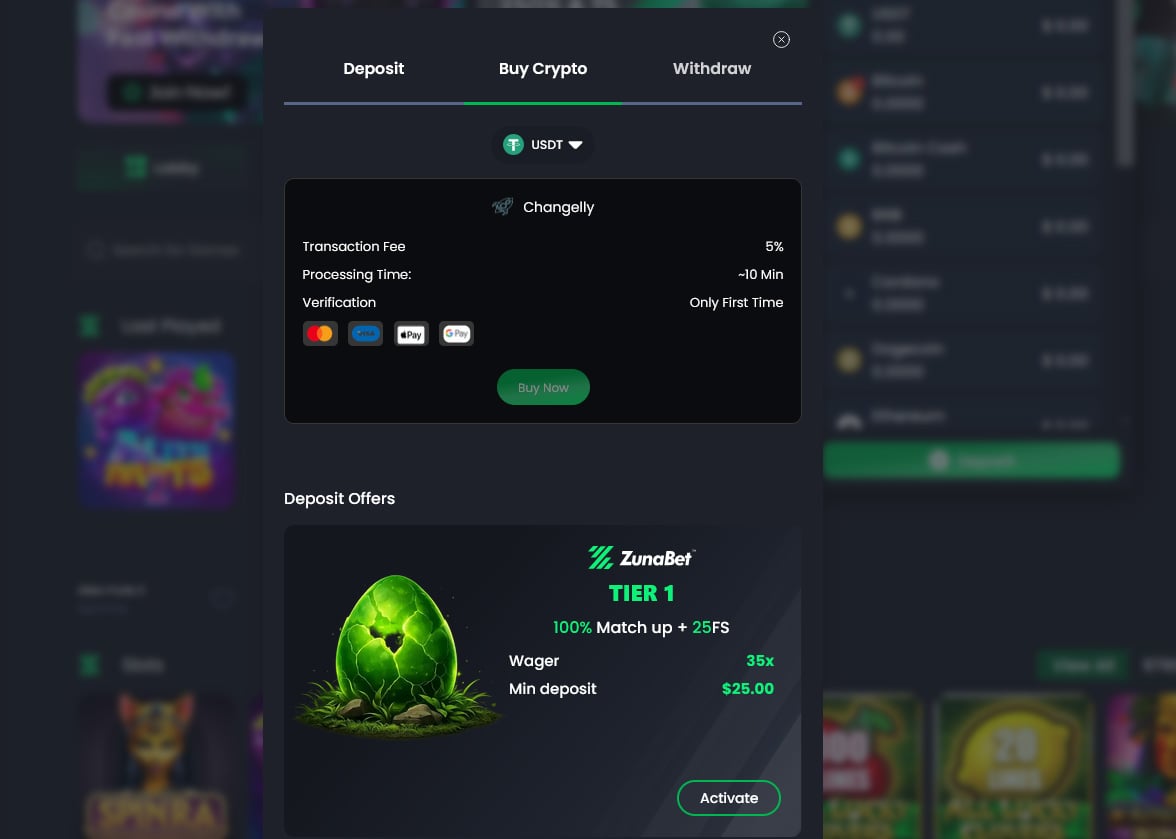
The practical consequence for the industry is that the coin support threshold for what counts as genuinely crypto-friendly has moved. Players who have experienced broad native support do not consider limited support adequate. ZunaBet did not invent multi-coin support but at 20-plus coins it is contributing to a shift in where players set their expectations.
The Game Library Expectation Has Shifted
A library of 1,500 titles from 15 providers used to be considered a well-stocked casino. That assessment was made in a market where players had limited visibility into what else was available. That market no longer exists. Players can compare libraries across platforms in minutes and the ones that have seen what a library of 11,000-plus titles from 63 providers looks like do not evaluate 1,500 titles from 15 providers the same way they did before.
ZunaBet’s library is 11,294 titles from 63 providers. Evolution for live dealer, Pragmatic Play across multiple categories, Hacksaw Gaming for high-volatility mechanics, Yggdrasil for slots and table variants, BGaming and dozens of others. The provider diversity is as important as the title count because it produces genuine variety in mechanics, volatility profiles, and visual design rather than a large selection of similar content from a small pool of suppliers.
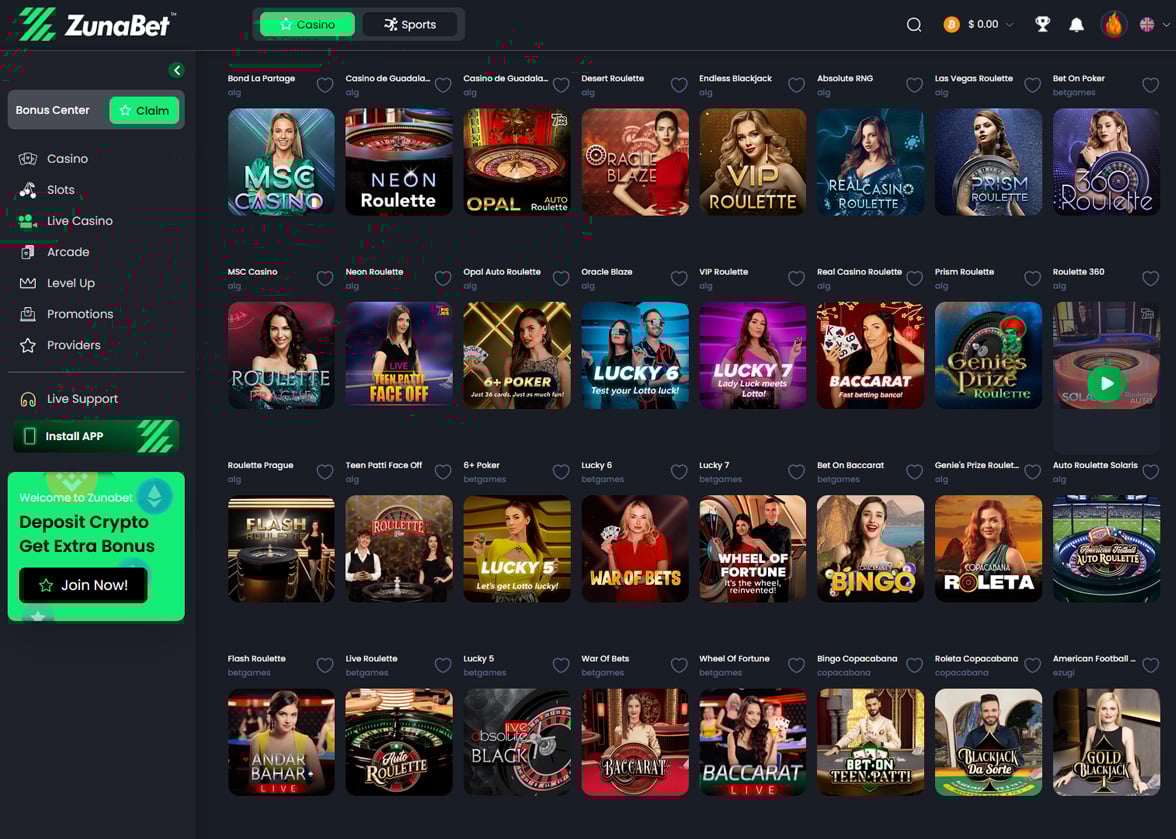
A player who has spent time in a library of this scale and provider diversity brings a new frame of reference to every platform evaluation they make. Libraries that felt adequate before feel limited now. The expectation of what a casino library should offer has moved and platforms that have not invested in content depth are increasingly visible as behind rather than normal.
The Loyalty Expectation Has Shifted
The points-based loyalty program is one of the oldest and most persistent design choices in online gambling. It survived as long as it did partly because players lacked a clear alternative to compare it against. Rakeback existed in poker rooms but was not standard in casino loyalty programs. Once players encountered it and did the comparison the points system lost its cover.
ZunaBet’s dragon evolution loyalty system runs across six tiers — Squire, Warden, Champion, Divine, Knight, and Ultimate — with a gamified mascot called Zuno and direct rakeback rates of 1%, 2%, 4%, 5%, 10%, and 20%. A player at the Ultimate tier receives 20% of their activity value back as a direct cash return. No points. No conversion rates. No redemption process.
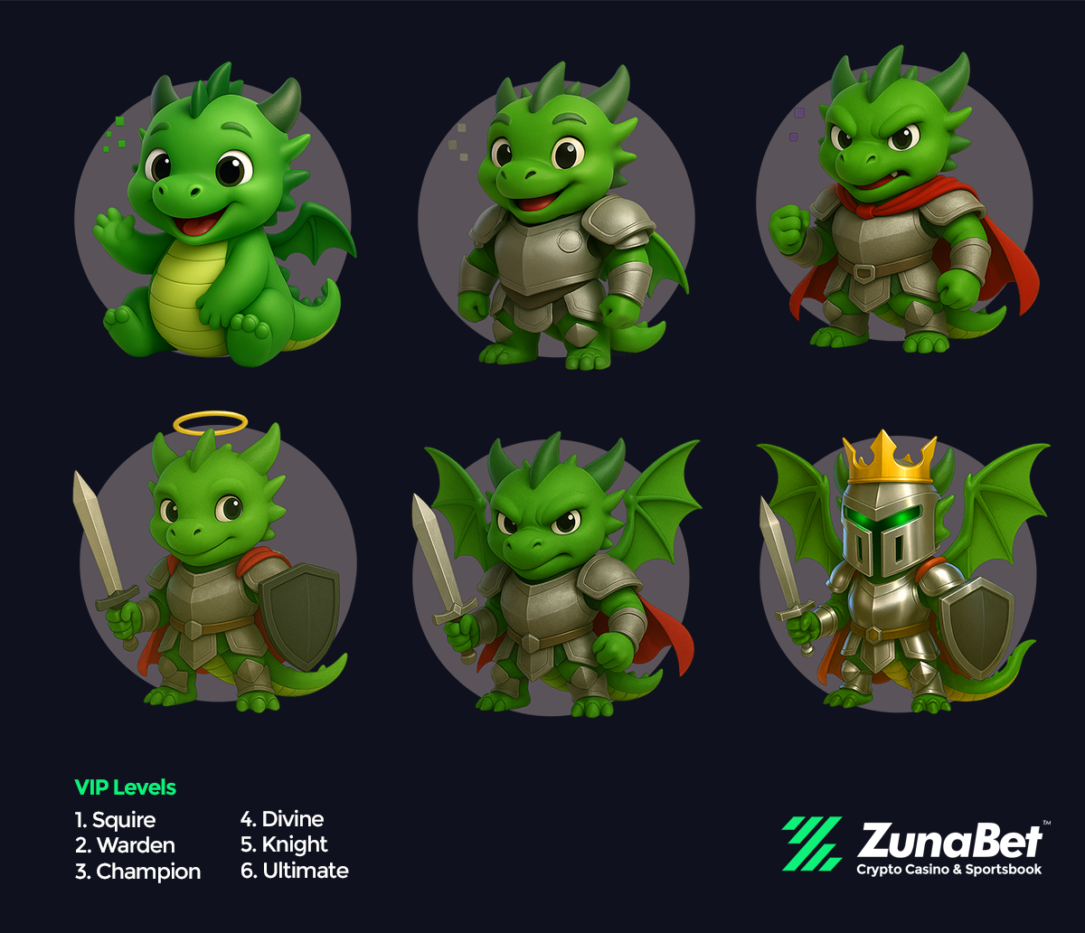
A player who has experienced that directness and then looked at what their previous platform’s points system was actually delivering per dollar spent has had their loyalty program expectations permanently recalibrated. The question is no longer whether a loyalty program exists — it is what it actually returns and whether that return is stated clearly enough to evaluate without reading the terms document.
Additional benefits at higher ZunaBet tiers — up to 1,000 free spins, VIP club access, double wheel spins — build on a core structure that already delivers direct financial value. For players who have experienced this level of loyalty program design, programs that obscure their value behind points conversion are no longer an acceptable alternative.
The Sportsbook Expectation Has Shifted
The sportsbook at most online casinos has historically been a supporting feature — functional enough to justify the label without being built seriously enough to serve as a player’s primary betting destination. Major football leagues, some basketball, basic odds. A player who wanted serious sports betting coverage went to a dedicated sportsbook.
ZunaBet’s sportsbook covers football, basketball, tennis, NHL, and other major global sports alongside a full esports offering — CS2, Dota 2, League of Legends, and Valorant — plus virtual sports and combat sports. It is a complete sportsbook operating within the same platform as the casino, under the same account and the same loyalty program.
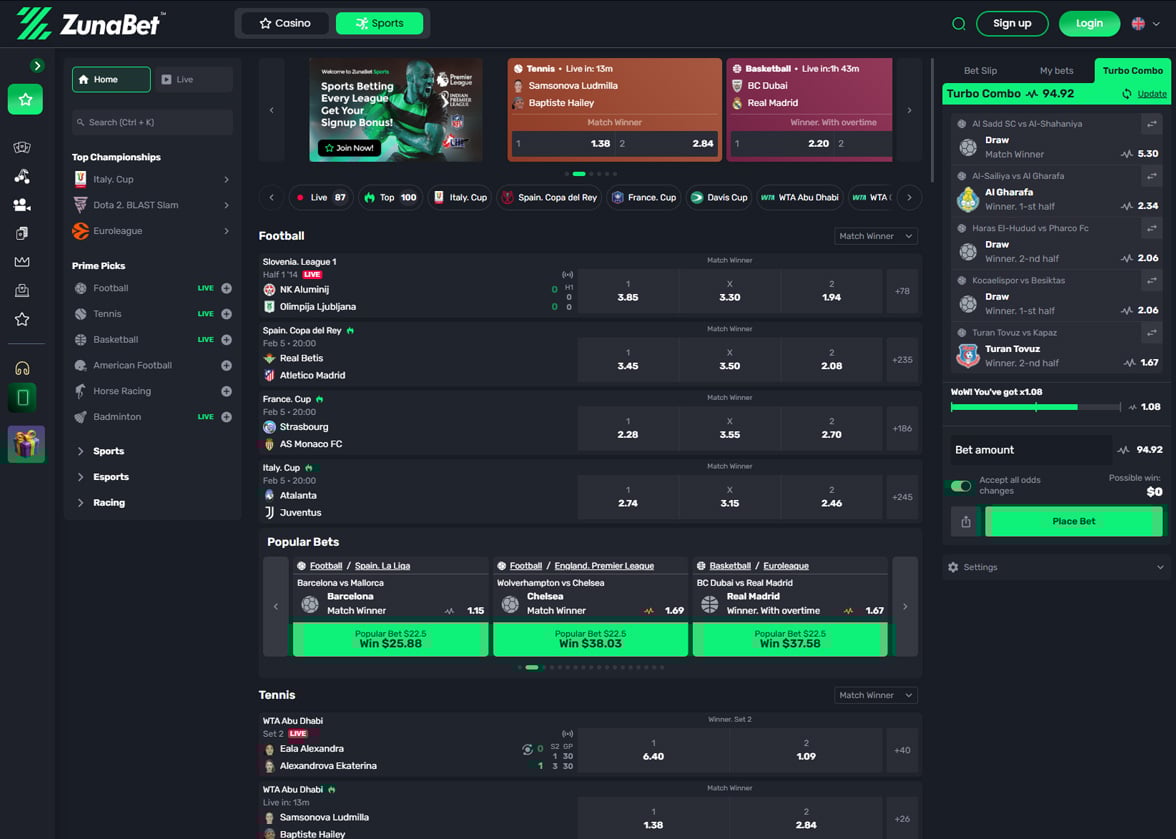
For players who bet on both traditional sports and esports — an audience that is large and growing — experiencing a platform where everything is consolidated in one place raises the expectation of what a casino sportsbook should be. A token sports section with three leagues and no esports no longer reads as neutral. It reads as inadequate.
The esports coverage in particular is reshaping expectations for a younger demographic of players who follow competitive gaming alongside traditional sports. CS2, Dota 2, League of Legends, and Valorant are mainstream betting markets now. A platform that does not cover them seriously is behind the expectation curve.
The Welcome Bonus
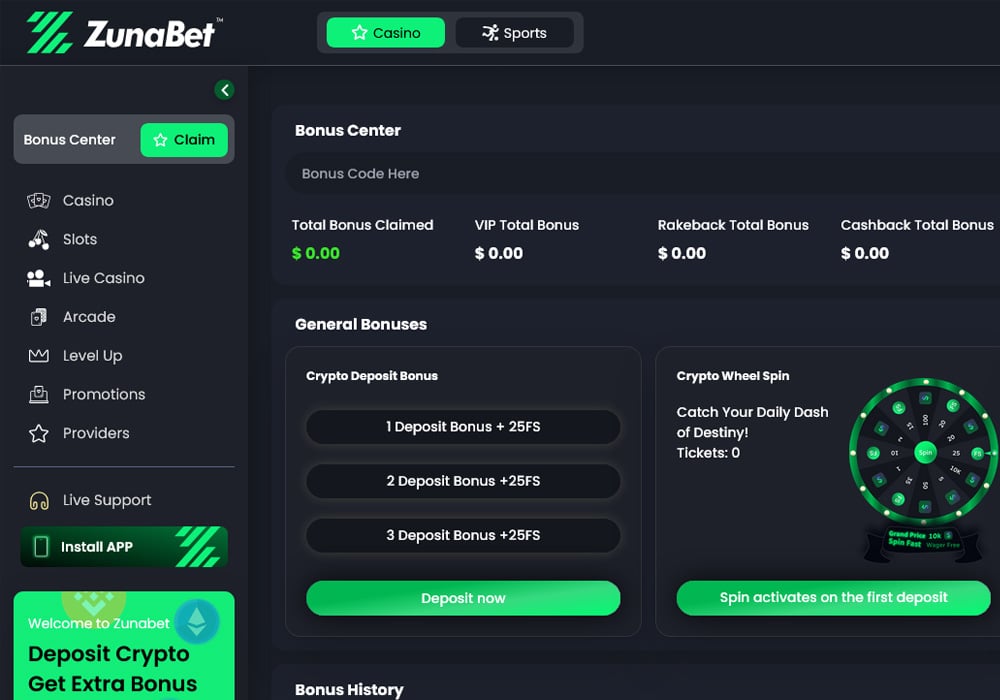
New players receive a bonus across three deposits totalling up to $5,000 plus 75 free spins. The first deposit is matched 100% up to $2,000 with 25 free spins. The second is matched 50% up to $1,500 with 25 spins. The third is matched 100% up to $1,500 with 25 spins. The multi-deposit structure distributes value across the early period of engagement giving players time to explore the full platform before the promotional period ends.
ZunaBet’s Credentials
ZunaBet is owned by Strathvale Group Ltd, operates under an Anjouan gaming license, and is registered in Belize. The team behind it brings over 20 years of combined industry experience. Apps run on iOS, Android, Windows, and MacOS. Live chat support operates around the clock. The platform runs on modern HTML5 technology with a dark-themed interface and fast load times across devices.
ZunaBet launched in 2026 and its operational track record is still being built. That is worth acknowledging plainly — long-term trust requires long-term operation and newer platforms carry a different risk profile than established ones. But the expectation shifts it is contributing to are already visible in how players evaluate platforms after experiencing what it offers.
What Raised Expectations Mean for Players
Raised expectations are good for players. When a platform demonstrates that fast withdrawals are possible, that 20-coin support is achievable, that 11,000 games from 63 providers can sit under one roof, and that a loyalty program can state its return rate clearly without a conversion table — every other platform is evaluated against those standards.
The platforms that meet those standards benefit. The platforms that do not face increasing pressure from players who know what better looks like. ZunaBet launched in 2026 as a platform that meets them — and in doing so is contributing to a shift in what the next generation of online casino players will accept from any platform they consider.
For those players the bar is higher now. ZunaBet helped raise it.
Disclaimer: This is a Press Release provided by a third party who is responsible for the content. Please conduct your own research before taking any action based on the content.
Bitcoin reclaims $76,000 despite U.S. spot ETFs posting a third consecutive day of outflows.

Elon Musk is pushing forward with one of the most ambitious transformations of the financial ecosystem: turning X into a fully integrated banking and payments platform through X Money.
Early tests suggest that the platform could combine traditional banking features with fintech innovation, potentially reshaping how users interact with money on a global scale.
What X Money Is Offering So Far
According to early users cited by Bloomberg, X Money is already experimenting with a compelling set of features:
- Up to 3% cash back on eligible purchases
- Around 6% interest on cash savings, significantly higher than traditional bank averages
- Peer-to-peer (P2P) transfers directly within the app
- An AI-powered financial assistant tracking spending behavior
- A metal debit card powered by Visa, customized with users’ X handle
These offerings position X Money as a direct competitor to fintech companies like SoFi Technologies Inc., Block Inc., and LendingClub Corp.
Another key shift is that creators monetizing on X may soon receive payments directly through X Money instead of relying on external processors like Stripe, effectively internalizing the entire financial flow.
A Super App Vision Becoming Reality
This move aligns with Musk’s long-term ambition of turning X into a “super app”, similar to Asian platforms like WeChat, where messaging, payments, and financial services coexist seamlessly.
The integration of payments into chats and user profiles is particularly notable. It transforms social interaction into economic interaction, removing friction between communication and transactions.
If fully implemented, this could redefine digital identity itself. Your social profile would no longer just represent who you are, but also how you transact, save, and invest.
Regulatory Challenges and Political Scrutiny
Despite the promising features, X Money faces significant regulatory hurdles.
The platform has yet to secure payment licenses in key jurisdictions such as New York, which could delay or limit its rollout. Additionally, U.S. Senator Elizabeth Warren has raised concerns about:
- Potential stablecoin integrations
- Data privacy and financial surveillance
- Fraud prevention and compliance mechanisms
These concerns highlight a broader issue. When a tech platform becomes a financial institution, the regulatory expectations increase dramatically.
The Impact on Traditional Banking
If X Money scales successfully, it could challenge the traditional banking model in several ways:
1. Higher Yield Expectations
Offering 6% interest on savings sets a new benchmark. Traditional banks, often constrained by legacy systems and regulatory costs, may struggle to compete.
2. Disintermediation
By embedding payments directly into a social platform, X removes intermediaries. Users no longer need separate apps for banking, payments, and communication.
3. User Experience Advantage
Banks typically lag in UX innovation. X, on the other hand, is built as a digital-native ecosystem with AI at its core.
This could accelerate the ongoing shift from traditional banks to fintech and platform-based finance.
The Crypto Connection
While X Money is not officially a crypto product yet, the potential connection is hard to ignore.
Musk has historically supported digital assets, and there has been speculation around stablecoin integration within X’s ecosystem. If implemented, this could:
- Enable instant global transfers without banking friction
- Reduce dependency on fiat rails
- Open the door to hybrid financial systems combining fiat and crypto
In this context, X Money could act as a bridge between traditional finance and decentralized finance (DeFi).
A New Financial Paradigm?
X Money represents more than just another fintech product. It signals a broader transformation of the financial system:
- Finance is becoming embedded in everyday digital platforms
- AI is becoming a core layer of financial decision-making
- Social networks are evolving into economic ecosystems
If successful, X could become one of the first truly global, consumer-facing financial platforms operating at the intersection of technology, banking, and potentially crypto.
Final Thoughts
X Money is still in its early stages, and many uncertainties remain, particularly around regulation and execution.
However, the direction is clear. The convergence of social media, payments, and AI is no longer theoretical. It is happening now.
For users, this could mean more convenience and better returns. For banks, it represents a serious competitive threat. For the broader financial system, it may mark the beginning of a new era where money is no longer managed by institutions alone, but embedded directly into the platforms we use every day.
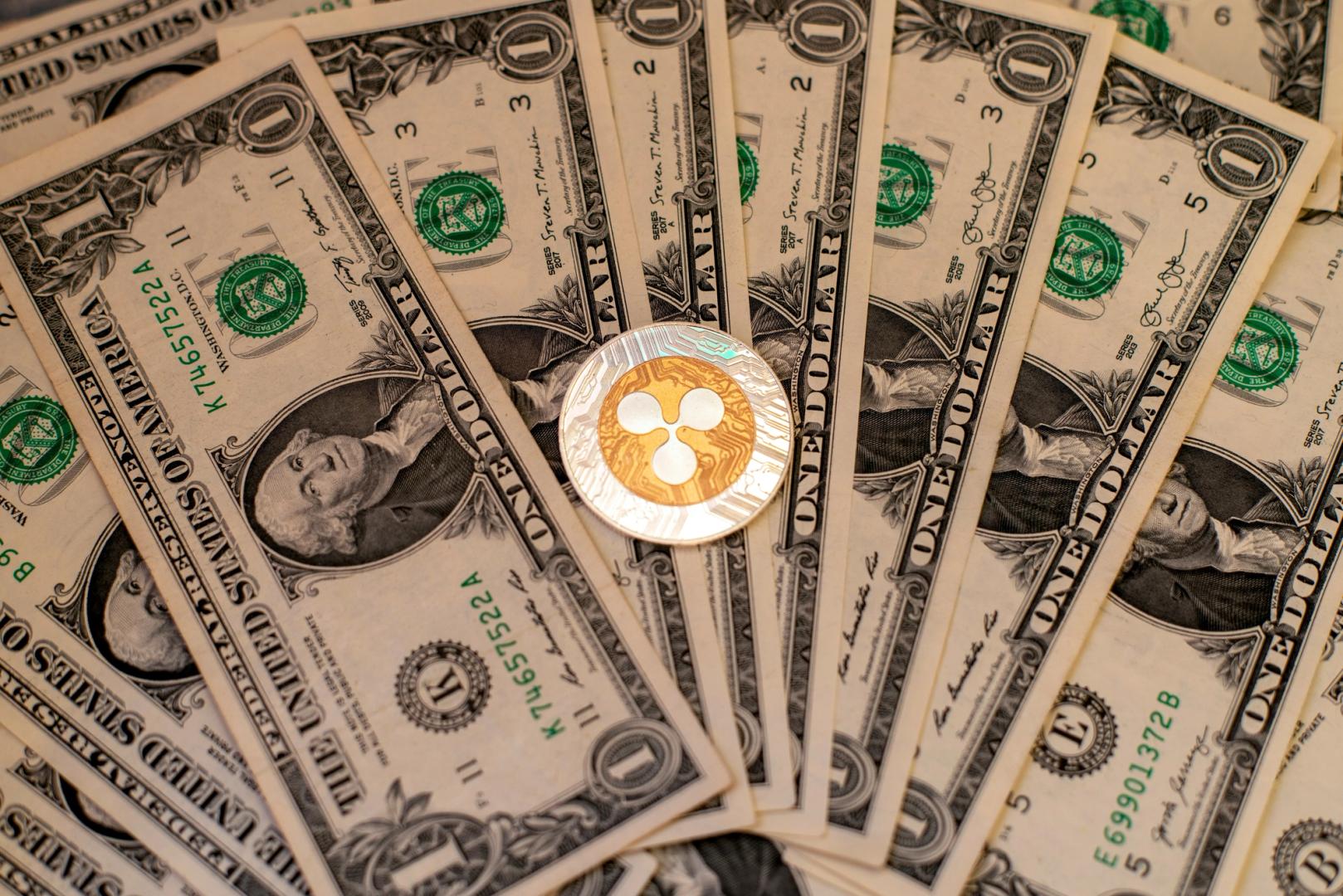
Ripple-linked xrp tokens are back in positive social media chatter in a historically contrarian price signal.
The token’s positive-to-negative sentiment ratio on social media spiked into what Santiment calls the “FOMO zone” on April 29, hitting 3.9 on the firm’s tracker, per data shared on X. The reading is the highest since March 19, when a similar spike preceded a sharp pullback.
Sentiment ratios above the FOMO line indicate that crowd commentary is overwhelmingly positive, which Santiment treats as a contrarian signal. Historically, when retail chatter hits these levels, the token tends to consolidate or correct in the days that follow as the buyers driving the social wave run out of fresh demand.
🥳 In part due to the new integration of XRP with Rakuten, allowing points to being converted into $XRP, the asset is seeing its 2nd highest bullish sentiment across social media in the past 2 years!
Traders are showing excitement over the fact that the #4 market cap in crypto… https://t.co/9JqJV2leBE pic.twitter.com/CXvfJ2KZW9
— Santiment Intelligence (@SantimentData) April 30, 2026
The trigger appears to be the Rakuten Pay integration that went live in the first week of April, which added XRP as a payment method across the major Japanese wallet application’s ecosystem. The deal an estimated 44 million Rakuten users spend XRP at over 5 million merchant locations, spot trade it inside the Rakuten Pay app, and convert their Rakuten points, of which 3 trillion are in circulation worth roughly $23 billion, directly into XRP.
That announcement was framed by Ripple’s senior ecosystem growth manager Tatsuya Kohrogi as “one of the most significant XRP milestones.” The market took two weeks to fully process the implications, with sentiment building gradually before spiking this week.
XRP traded at $1.37 on Thursday, down 2.1% over 24 hours and 3.7% on the week, despite the social heat.
Santiment also flagged March 29 as the prior “buy the dip” window, when XRP sentiment hit the FUD zone and the token bounced shortly after. The pattern through 2026 has been consistent, as crowd sentiment leads price by 24 to 72 hours in either direction, and crowd extremes have marked reversals more often than continuations.
XRP has spent most of April between $1.37 and $1.60. A clean break of either side resolves whether the Rakuten integration is the start of a sustained re-rating or another headline that fades into the chart.

The United States has announced a substantial seizure of Iranian cryptocurrency assets, pegged at nearly $500 million, as part of a broad economic pressure campaign against Tehran. Treasury Secretary Scott Bessent disclosed the figure during an appearance on Fox Business, framing the effort as a continuation of Operation Economic Fury, a sanctions program ordered in March 2025 to sever Iran’s financial lifelines through asset seizures, bank account freezes and secondary sanctions on jurisdictions that continue to purchase Iranian oil.
During the interview, Bessent said: “We are freezing bank accounts everywhere. More importantly, we are making people less willing to deal with the regime,” and he added that retirement funds and overseas real estate held by Iranian officials are also being targeted. The update on crypto seizures marks a sharp increase from earlier disclosures, which put the crypto asset total at about $344 million.
According to Cointelegraph, the latest figure surpasses the previously reported total. Last week, the Treasury’s Office of Foreign Assets Control sanctioned several crypto wallets tied to Iran, and stablecoin issuer Tether confirmed it had frozen more than $344 million in USDt (USDT) at the request of U.S. authorities. Cointelegraph reached out to the U.S. Treasury and Tether seeking comment on the discrepancy between the two figures, but did not receive a response by publication.
In the evolving narrative around Iran’s use of crypto and its broader financial ties, the United States has emphasized a holistic approach: sanctions on crypto rails, traditional financial assets, and the shadow banking network to disrupt illicit funding channels. This strategy, described as a multi-front pressure campaign, aligns with a broader regulatory posture that seeks to deter black-market finance and deter third-country facilitation of Iranian oil revenues.
Key takeaways
- Nearly $500 million in Iranian crypto assets are reportedly seized, representing a concrete extension of Operation Economic Fury aimed at cutting Tehran’s access to international finance.
- The latest disclosures surpass an earlier $344 million crypto-seizure figure; USDT freezes by Tether reportedly account for a substantial portion of the crypto-related enforcement actions.
- OFAC has sanctioned crypto wallets tied to Iran and expanded enforcement against Iran’s financial networks, including 35 entities and individuals linked to shadow banking and roughly 40 shipping firms tied to Iran’s oil trade; additional targets include a Chinese refinery and components tied to missiles and drones.
- Since February 2025, more than 1,000 Iran-related persons, vessels, and aircraft have been sanctioned under the Economic Fury initiative, signaling a sustained, expansive approach to enforcement across asset classes.
- Iran’s broader economic distress—bank collapses, a currency decline of 60–70% against the dollar—provides context for the intensifying use and monitoring of crypto channels in sanction evasion and revenue flows.
Operation Economic Fury: scope, tools, and implications for compliance
Operation Economic Fury, described by Treasury officials as a comprehensive pressure campaign against Tehran, was officially directed in March 2025 and centers on depriving Iran of financial support networks. The initiative uses a combination of asset seizures, bank account freezes and secondary sanctions to deter both domestic and foreign actors from engaging with Iran’s economy. In public remarks, Bessent framed the effort as not only a financial crackdown but a strategic effort to discourage international actors from facilitating Iran’s financial operations. The emphasis on crypto assets signals a recognition that blockchain rails can serve both sanctioned actors and third-country intermediaries in moving value, underscoring the need for rigorous AML/KYC controls and cross-border cooperation among regulators and financial institutions.
From a regulatory standpoint, the actions illustrate how cryptomarkets intersect with traditional sanctions enforcement. The Treasury’s OFAC has expanded its reach to crypto wallets connected to sanctioned entities, a move that places additional obligations on exchanges, wallet providers and other crypto infrastructure operators to screen for sanctioned parties and to execute asset freezes when identified. The case also highlights the role of stablecoins in sanctioned environments: Tether’s confirmation that USDt was frozen in response to official requests demonstrates how stablecoins can become de facto conduits for sanctioned flows or, conversely, for compliance-aligned enforcement actions. As observed by industry observers, this area remains under close scrutiny, particularly given questions about the adequacy of international coordination and the speed with which sanctions can be enforced on chain.
Regulatory filings and public statements show a layered approach: while crypto asset seizures are a component of the broader regime, OFAC’s actions extend into conventional financial networks and maritime supply chains. The Treasury has sanctioned 35 entities and individuals tied to Iran’s shadow banking network and, separately, targeted a Chinese oil refinery and approximately 40 shipping firms implicated in moving Iranian crude in violation of sanctions. Additionally, 14 entities and individuals were sanctioned for procuring components used in Shahed-series attack drones and ballistic missile propellants. Since February 2025, the department has sanctioned more than 1,000 Iran-related persons, vessels and aircraft as part of the Economic Fury program. These measures collectively illustrate a multi-dimensional enforcement strategy that seeks to constrain Iran’s ability to monetize and move value internationally.
Iran’s economy under pressure and the crypto policy backdrop
Beyond asset seizures, Iran’s economy has faced a destabilizing sequence of events. One of the country’s largest banks collapsed in December, amplifying a currency crisis that authorities say has driven the rial’s value down by roughly 60–70% against the U.S. dollar. In parallel, Treasury actions have intensified sanctions across multiple fronts, including a broader crackdown on Iran’s shadow banking networks and maritime corridors used to export oil to buyers in China and beyond. This constellation of measures compounds the economic strain and provides a backdrop for the government’s apparent interest in controlling cross-border value flows through innovative means, including discussions about tolls in crypto for maritime traffic through critical chokepoints such as the Strait of Hormuz.
Earlier in the month, reports emerged that Iran was weighing Bitcoin tolls for vessels crossing Hormuz, with empty tankers allowed free passage and loaded ships taxed at a nominal rate per barrel of oil. Forbes cited claims that Tehran had begun collecting tolls in practice, though the Iranian government has not publicly confirmed the policy. Separately, maritime risk firm Marasis warned of fraud schemes in which actors impersonate Iranian security services and solicit payments in Bitcoin or USDt to clear ships through Hormuz. These developments underscore the evolving intersection of geopolitics, sanctions enforcement and crypto-based value movement, and highlight the ongoing need for vigilant compliance and risk assessment by banks, exchanges and lenders operating in or with Iran-related traffic.
Regulatory and institutional implications for crypto markets
The unfolding events place heightened emphasis on how crypto assets are regulated and monitored across borders. The convergence of sanctions enforcement with blockchain analytics raises questions about licensing, registration and ongoing oversight of cross-border crypto activities. In the European Union, ongoing implementation of the Markets in Crypto-Assets Regulation (MiCA) intersects with U.S. sanctions policy, reinforcing the expectation that crypto service providers maintain robust AML/KYC programs and cooperate with authorities to identify and freeze sanctioned assets. For U.S. and allied institutions, the episode reinforces the imperative to implement rigorous sanctions screening, enhanced due diligence for counterparties, and real-time monitoring of cross-border crypto flows connected to sanctioned states. It also highlights the potential role of stablecoins in sanctioned environments and whether such tokens will face heightened scrutiny, including limits on on-chain transfers to or from sanctioned wallets and counterparties.
From a policy history perspective, the operation sits at the intersection of traditional financial sanctions and emerging digital-asset enforcement. It signals a shift toward more proactive asset tracing and seizure capabilities across both fiat and crypto rails, with implications for exchanges, banks, and payment processors that must implement resilient compliance programs to withstand cross-border enforcement. The regulatory narrative is likely to evolve as authorities assess the efficacy of such measures, the availability of traceable on-chain data, and the readiness of market participants to align with expanded sanctions regimes.
Closing perspective
As authorities extend their enforcement horizon, the coming months will test whether sanctions-driven crypto seizures deter illicit flows and shift Tehran’s strategic calculus. While the exact methodology behind reconciling disparate asset tallies remains under discussion, the broader message is clear: cross-border enforcement, AML/KYC rigor and international regulatory coordination will continue to shape how crypto markets interface with traditional finance and geopolitics.
Crypto World
Crypto hacks continue as Wasabi Protocol drained of $4.5 million in admin key compromise


DeFi can’t stop bleeding, and Wasabi Protocol is the latest to find out why.
The protocol, a perpetuals trading platform built on Ethereum and Base, was drained of about $4.55 million on Thursday after attackers compromised its deployer key, security firm Blockaid said in an X post.
The hack is the latest in a month that has produced over $605 million in DeFi losses across at least 12 incidents. The attack closely mirrors the Drift Protocol exploit on April 1, when North Korea-linked attackers used a compromised admin key to drain $285 million from the Solana-based perpetuals exchange.
The mechanics operated through an externally owned account, or EOA, called wasabideployer.eth, which held the sole ADMIN_ROLE in Wasabi’s permission system.
An EOA is a wallet controlled by a private key, as opposed to a smart contract. Whoever holds the key controls the wallet. Once the attacker had access to the deployer key, they gave themselves admin privileges with zero delay by calling grantRole on the permission contract.
Their helper contract then upgraded Wasabi’s perp vaults and Long Pool to malicious implementations that drained the balances, Blockaid said.
The exploit relied on a standard known as Universal Upgradeable Proxy Standard (UUPS), which allows a smart contract to change its underlying code while keeping the same address.
UUPS is widely used because it lets developers fix bugs without migrating users. The downside is that if an attacker controls admin permissions, they can replace the contract’s logic with anything they want, including code designed to steal funds.
Wasabi had no timelock or multisig protecting the admin role, Blockaid said. A timelock forces a delay between when an admin action is announced and when it executes, giving users time to react. A multisig requires multiple signers to approve a change. Wasabi had neither, leaving a single key holding full control over the protocol.
🚨 Blockaid’s exploit detection system identified an on-going admin-key compromise exploit on @wasabi_protocol across Ethereum and Base. The Wasabi: Deployer EOA was used to grant ADMIN_ROLE to an attacker helper contract, which then UUPS-upgraded the perp vaults and LongPool to…
— Blockaid (@blockaid_) April 30, 2026
Compromised contracts include Wasabi’s wWETH, sUSDC, wBITCOIN, wPEPE, and Long Pool vaults on Ethereum, plus its sUSDC, wWETH, sBTC, sVIRTUAL, sAERO, and sBRETT vaults on Base, according to Blockaid.
Users holding Wasabi LP tokens were urged to revoke any active approvals to the vault contracts because the underlying assets backing those tokens had either been drained or remained at risk.
A month of exploits
In the case of Drift, the attackers also exploited a single-key admin setup with no governance timelock, listing a fake token as collateral and raising withdrawal limits to drain real assets in roughly 12 minutes.
Three weeks later, on April 19, Kelp DAO lost $292 million when an attacker exploited a single-verifier configuration in the protocol’s LayerZero bridge, releasing 116,500 unbacked rsETH that was then used as collateral to borrow real ether (ETH) from Aave.
The cumulative DeFi loss total for 2026 has now passed $770 million across more than 30 reported incidents. April alone accounts for the majority of that figure.
Smaller breaches this month have hit CoW Swap ($1.2 million), Grinex ($13.74 million), Resolv Labs ($23 million), Volo Protocol ($3.5 million), among others.
What ties them together is not a new vulnerability. Each incident produces the same post-mortem language about lessons learned, but the next exploit usually arrives before the lessons get implemented.
Wasabi has not yet issued a public statement on the incident.
UPDATE (April 30, 11:34 UTC): General edits throughout. Moves Drift Protocol exploit to third paragraph.


The US Senate unanimously approved a resolution from Senator Bernie Moreno that bars sitting senators from trading on prediction markets. The measure took effect immediately under the chamber’s internal Standing Rules.
The voice vote came one week after Moreno introduced the resolution on April 24. It targets event contracts offered by platforms such as Polymarket and Kalshi.
Inside the Prediction Market Ban
Moreno said the resolution amends Rule XXXVII of the Senate Standing Rules. It bars senators from entering agreements that depend on the occurrence, nonoccurrence, or scope of a specific event.
That language directly captures event contracts on Polymarket and Kalshi. Users on those platforms wager on elections, legislation, economic data releases, and geopolitical outcomes.
An amendment from Senator Alex Padilla narrowed the text. The change prevents the rule from sweeping in conventional financial products such as insurance policies. Enforcement runs through the Senate Ethics Committee.
Industry Backs the Move
Kalshi chief executive Tarek Mansour applauded the rule. He noted that the platform already blocks members of Congress and polices insider trading internally.
“I applaud the Senate for passing this resolution to ban Senators and their offices from trading on prediction markets… Now, let’s pass this in the House!” said Mansour.
The rule does not extend to House members or congressional staff. Candidates, executive branch officials, and family members of senators are also excluded. That carve-out leaves room for indirect exposure to event contracts.
The resolution arrives during a wave of broader 2026 legislation targeting prediction markets, including bills aimed at all federal officials.
Senate Majority Leader Chuck Schumer publicly praised the measure ahead of the vote. House action would require a separate resolution. That makes the lower chamber’s response the next test of bipartisan appetite.
The post US Senate Passes Resolution Banning Senators From Prediction Market Trading appeared first on BeInCrypto.
Crypto World
From Cathie Wood to Cantor Fitzgerald, the big money is betting that Robinhood’s (HOOD) crypto slump is just a temporary speed bump


Robinhood’s (HOOD) nearly 12% drop since its big earnings miss is being waived off by some big investors and Wall Street analysts.
The popular trading platform missed its first-quarter earnings and revenue estimates on April 28, mainly due to weaker crypto trading activities. The market punished the stock on the miss, but Cathie Wood’s Ark Invest saw that as an opportunity and bought roughly $39.7 million worth of shares the next day, signaling confidence in the trading platform’s future. Robinhood remains a meaningful position across Ark’s portfolios, accounting for roughly 3% and ranking among the top holdings in all three funds.
The contrarian move seems to have come at the same time as Wall Street analysts, who agreed that the miss was just a blip for the company, and early April data points to improving momentum. They added that equity and options trading volumes are trending toward some of the strongest levels this year, offering a potential counterbalance to continued softness in crypto.
Cantor Fitzgerald, which reiterated its ‘Overweight’ rating and $110 price target, said recent activity suggests stabilization. “Preliminary April equity/option trading volumes are tracking toward the highest monthly level this year,” the firm wrote, adding that the earnings miss was tied more to market conditions than core business issues.
Another firm, Compass Point, echoed that view, maintaining a ‘Buy’ rating while slightly lowering its price target to $107. The firm said the market reaction appears “backwards looking,” given expectations for a stronger second quarter.
While both brokers are bullish on Robinhood’s outlook, some analysts cautioned that there are still risks, particularly in crypto trading, which is likely to continue weighing on results in the near term amid lower volumes and pricing pressure across the sector.
Investment bank Keefe, Bruyette & Woods (KBW), which already had the lowest price target on the stock, according to FactSet data, cut it further. The firm’s analysts, who rate the stock a ‘Hold,’ warned that declining transaction fees could persist and cut its target to $65 from $75.
“Capture rates [are] missing across the board,” the firm’s analysts said, noting that both crypto and options take rates have continued to fall into the second quarter. That trend has led to lower long-term forecasts, with KBW trimming earnings estimates through 2028.
That concern didn’t seem to deter one of the top bullish analysts. Bernstein’s analysts, who maintained their ‘Outperform’ rating and a $130 price target, pointed to signs that crypto activity may be stabilizing, as April hasn’t shown any further declines in prices while equities and options remain strong.
Moreover, beyond trading, bullish investors are now turning their attention to new revenue streams.
Prediction markets are emerging as a key area, with firms highlighting growth in event-based contracts and upcoming catalysts such as product launches and global events. Robinhood’s planned prediction markets platform, Rothera, is viewed as a potential driver of future revenue and margin expansion, Cantor said.
For now, the outlook hinges on whether recent gains in trading activity can continue. If they do, Robinhood may return to growth sooner than expected. If not, pressure on transaction revenue could persist into the second half of the year.
The stock was up about 3% on Thursday, but fell about 37% this year. One of its crypto peers that tends to partially trade in tandem, Coinbase (COIN), rose about 3% on the day and is down about 19% year-to-date.

Salad of roast tomatoes and fennel with preserved lemon

Hindustan Labs, RK Steel get Sebi nod to launch IPOs
Alphabet (GOOGL) Stock Soars 10% as Q1 Results Demolish Analyst Projections

Manchester United reach agreement with Casemiro over contract clause amid transfer speculation

US brings back mandatory military draft registration

Steven Gerrard disagrees with Gary Neville over ‘shock’ Chelsea and Arsenal claim | Football


-

 Tech3 days ago
Register Renaming | Hackaday
-

 Fashion6 days ago
Weekend Open Thread – Corporette.com
-
 Crypto World5 days ago
Hyperliquid $HYPE Rally Builds Momentum as AI Sector Enters Prove-It Phase
-

 Business7 days ago
Patterson-UTI Energy, Inc. (PTEN) Q1 2026 Earnings Call Transcript
-

 Politics3 days ago
Drax board avoid their own AGM, accused of greenwashing & environmental racism
-
 Sports4 days ago
IPL 2026: Ruturaj Gaikwad registers slowest fifty of the season, enters all-time unwanted list | Cricket News
-

 NewsBeat5 days ago
LK Bennett closes all stores after entering administration
-

 Crypto World6 days ago
Michael Saylor says BTC winter is over. Market analyst disagrees, says bitcoin was in a pullback
-

 Fashion2 days ago
Kylie Jenner’s KHY Enters a New Era with ‘Born in LA’
-

 Tech4 days ago
Why Blue Badges Disappeared From Toyota Hybrids
-

 Tech3 days ago
Images of Samsung’s rumored smart glasses have leaked
-
 Entertainment5 days ago
Mariah Carey Slams Deposition Claims In Brother’s Lawsuit
-
Crypto World7 days ago
Is Algorand One of the Few Quantum-Resistant Blockchains? Here’s What the Data Shows
-

 Business2 days ago
Most Commercial Energy Audits Miss the Real Losses
-
 NewsBeat7 days ago
Trump threatens to review UK’s claim to Falkland Islands and punish Nato allies over Iran war disagreement
-

 Business6 days ago
Jeanine Pirro announces closure of Federal Reserve building cost probe
-

 Business3 days ago
(VIDEO) Charlize Theron Climbs Times Square Billboard to Promote New Netflix Thriller ‘Apex’
-

 Tech5 days ago
Microsoft to roll out Entra passkeys on Windows in late April
-

 Crypto World2 days ago
CFTC’s AI will review U.S. crypto registration applications, chairman tells CoinDesk
-
 Crypto World6 days ago
Nvidia (NVDA) Stock Jumps 5% as Intel Earnings Ignite Semiconductor Rally
You must be logged in to post a comment Login