
Crypto World
Ledger hires Circle’s (CRCL) John Andrews as CFO, opens NYC office



Ledger has appointed a new chief financial officer and opened a New York office as the crypto security firm expands its U.S. presence ahead of a planned public listing.
The company said John Andrews, a former Circle (CRCL) executive, will take on the CFO role. Andrews spent more than two decades in finance and most recently led capital markets and investor relations at the stablecoin issuer. His appointment comes as Ledger positions itself for closer engagement with institutional investors and public markets.
The New York office, backed by a multi-million dollar investment, will serve as a hub for Ledger’s enterprise business. The firm is hiring across institutional and marketing roles as it builds out services for banks, asset managers and other financial firms entering digital assets.
Ledger said the move reflects growing demand for secure infrastructure as more institutions hold and manage crypto.
The expansion lands as Ledger explores an initial public offering in the United States. The company is reportedly working with major banks including Goldman Sachs, Jefferies and Barclays on a listing that could value the firm at more than $4 billion. CEO Pascal Gauthier has previously pointed to rising revenue tied to an increase in crypto hacks, which has driven demand for secure storage.
Ledger is best known for its hardware wallets, but it has pushed deeper into enterprise services in recent years. Its platform offers tools for institutions to store, manage and trade digital assets with internal controls, similar to how a bank might oversee client funds across multiple approvals.
The company says it secures a large share of retail-held stablecoins and has sold more than 8 million devices globally. Still, its track record includes setbacks. A 2020 data breach exposed customer information, and a later exploit in 2023 affected decentralized finance integrations tied to its ecosystem.
Ledger’s U.S. push follows a broader shift in the crypto sector, where firms are again testing public markets after a volatile period. Custodian BitGo (BTGO) recently went public, marking one of the first listings in the sector this year. Tokenization firm Securitize has plans to IPO as soon as it receives the green light from regulators. Meanwhile, crypto exchange Kraken has paused its IPO plans as it waits for better market conditions, CoinDesk reported earlier this week.



An ongoing bear market combined with wider global economic struggles has hit crypto firms hard, causing delays, staff layoffs, and AI pivots.
This week, crypto protocol Algorand announced it was reluctantly reducing its workforce by 25%.
Algorand claimed the “tough” layoff was in response to “the uncertain global macro environment as well as the broader downturn in crypto markets.”
Indeed, as the year continues, bitcoin’s price is struggling to gain upward momentum after dropping to $63,000 in late February.
The escalating war between the US, Irael and Iran is also causing the price of oil to rocket, and threatens deeper economic turmoil across the globe.
Crypto layoffs, cuts, and delays
Firms including Gemini, Messari, Crypto.com, OP Labs, OpenSea, and Kraken, have announced various cuts to their operations, be it through trimming staff or delaying planned operations.
Meanwhile, Crypto.com announced a 12% staff layoff yesterday while citing an AI pivot. The firm’s CEO, Kris Marszalek, claimed the roles of the fired staff “do not adapt in our new world.”
Read more: Mass crypto layoffs are a short-term solution with long-term consequences
Gemini similarly let 25% of its staff go in February, claiming AI has allowed its workforce to operate more efficiently with fewer staff.
Gemini also let three of its execs go, including Chief Operating Officer Marshall Beard, Chief Financial Officer Dan Chen, and Chief Legal Officer Tyler Meade.
On Monday, crypto analytics firm Messari announced that it’s “doubling down” on becoming an “AI-first company,” and announced that it had let various team members go as new CEO, Diran Li, took the reins.
Protocol contributor OP Labs fired 20 of its staff last week in a memo that also alluded to the possibility of an AI pivot. CEO Jing Wang said, “This is about doing fewer things well, making decisions faster, and reducing coordination overhead.”
These all follow what was one of the more dramatic AI pivots from Jack Dorsey’s Block, which fired 50% of its staff (around 4,000 people) while citing the advancements AI offers to workplace efficiency.
Read more: How bombing Iran shifted oil and bitcoin prices
This week, the NFT platform OpenSea announced that it was delaying the launch of its $SEA token because of “challenging” market conditions across crypto that may affect its launch.
Another delay was announced yesterday to Kraken’s initial public offering (IPO). According to sources familiar with the matter, Kraken’s parent company, Payward, is pausing the IPO plans until “market conditions improve.”
Layoffs often come with reputational costs and further long-term consequences down the line, as staff are left burdened with the workloads of their departed teammates.
However, with more companies citing AI as a reason for workforce reduction, it’s hard to ignore its ability to mitigate the burden of cutting staff.
Got a tip? Send us an email securely via Protos Leaks. For more informed news and investigations, follow us on X, Bluesky, and Google News, or subscribe to our YouTube channel.


Bitcoin is holding just below $70k after a hawkish FOMC, ETF outflows, and a shift to Fear, with weak long conviction but easing miner selling and difficulty.
Summary
- BTC slipped roughly 5% post-FOMC, from near $74k to testing $70k, as the Fed signaled fewer 2026 cuts, ETFs flipped from $1.1b inflows to a $129m outflow, and the Fear & Greed Index fell to 28.
- Bitcoin’s 30-day correlation to the S&P 500 has climbed to 0.74, while CoinGlass data show shorts built into the $68,750 dip but open interest barely moved on the rebound, implying range-bound, low-conviction trade.
- Miner net outflows are down 82% from February peaks and a ~7.5% difficulty drop should ease cost pressure, leaving BTC parked between $66,827 long-liquidation risk and $73,757 short-squeeze resistance.
Bitcoin is trading above $69,900 on Friday evening, clinging to key support levels after a bruising week shaped by the Federal Reserve’s hawkish tone, a reversal in ETF flows, and broad risk-off sentiment across global markets. The crypto Fear & Greed Index sits at 28 — deep in Fear territory — as investors weigh the durability of BTC’s recovery against a deteriorating macro backdrop.
The week’s defining moment came on Wednesday, when the Fed held rates steady at its March FOMC meeting but signaled that fewer rate cuts are likely in 2026 than previously expected. Bitcoin fell roughly 5% in the immediate aftermath, sliding from near $74,000 to test the $70,000 level, as institutional players moved to de-risk. The reaction was compounded by a sharp reversal in ETF flows: after a highly bullish seven-day inflow streak that had brought in over $1.1 billion, US-listed spot Bitcoin ETFs recorded a $129 million net outflow on Wednesday alone — snapping the positive run and rattling sentiment.
The sell-off dragged the broader crypto market with it. Ethereum and Solana each fell 5–6% in tandem, confirming that Bitcoin’s near-term correlation with risk assets remains elevated. With BTC’s 30-day correlation to the S&P 500 sitting at 0.74 — the highest of 2026 — the asset is currently trading less like a macro hedge and more like a high-beta tech proxy, a dynamic that leaves it exposed to any further deterioration in equity markets.
Despite the fear reading, there are structural factors that have prevented a more severe breakdown. Open interest data tracked by CoinGlass shows that during yesterday’s dip to $68,750, shorts were actively adding positions — forming what the firm described as a “clean short position buildup.” The price has since rebounded, though OI has not increased meaningfully, suggesting range-bound rather than trending conditions. The lack of new long entry confirms that conviction on the buy side remains cautious, but the shorts have also not fully pressed their advantage.
On the supply side, the picture is more constructive. Miner selling pressure — a persistent headwind throughout the first quarter — is showing signs of fading, with net miner outflows down 82% from their February peak. A significant difficulty adjustment tonight, expected to drop ~7.5%, will further ease cost pressure on the mining industry and reduce near-term forced selling from that cohort.
For now, Bitcoin finds itself in a holding pattern: above the critical $66,827 level where over $1.87 billion in leveraged longs sit exposed, but well below the $73,757 resistance that would trigger a short squeeze. With macro uncertainty elevated, geopolitical tensions unresolved, and sentiment firmly in fear, the burden of proof lies with the bulls to demonstrate fresh conviction before the market can credibly call the bottom in.


Bhutan has sold over $110m in Bitcoin in 2026, cutting sovereign holdings by about 65% from their peak as Druk Holding shifts from mining-led accumulation to steady liquidation.
Summary
- Druk Holding & Investments has offloaded more than $110m in BTC this year, including a 973 BTC transfer worth about $72.3m on March 17–18 routed partly through QCP Capital and Binance.
- Bhutan’s stash has shrunk from roughly 13,000 BTC (over $1.4b and 40% of GDP at peak) to around 5,400 BTC worth about $374m, with no inflows over $100k in more than a year, implying mining has largely stopped.
- The kingdom’s methodical $5–10m clip sales, built on hydropower-funded mining since 2019, now act as a recurring sovereign overhang for Bitcoin just as macro conditions and sentiment remain fragile.
The Kingdom of Bhutan has quietly become one of the most closely watched sovereign Bitcoin sellers of 2026, with its state investment arm offloading more than $110 million worth of BTC since the start of the year — a systematic drawdown that has cut its holdings by 65% from their peak and raised questions about the future of one of crypto’s most unlikely national success stories.
The latest and largest transaction occurred on March 17 and 18, when Druk Holding & Investments — the sovereign wealth fund that manages Bhutan’s digital asset reserves — transferred 973 BTC worth approximately $72.3 million across multiple addresses. Among the recipients was QCP Capital, a Singapore-based institutional trading firm, indicating structured OTC selling designed to minimize market impact rather than distressed dumping onto open exchanges. A portion was also directed toward Binance hot wallets.
Bhutan’s Bitcoin journey began in 2019, when the country began quietly mining BTC using surplus hydroelectric power from its Himalayan rivers — a near-zero marginal cost energy source that made mining highly profitable even at modest price levels. At its peak, Bhutan held approximately 13,000 BTC, valued at over $1.4 billion — a sum representing more than 40% of the country’s entire gross domestic product at the time. Those holdings have since contracted to roughly 5,400 BTC, worth around $374 million at current prices.
A critical detail flagged by on-chain analytics firm Arkham Intelligence adds a new dimension to the story: Bhutan has not recorded a Bitcoin inflow of over $100,000 in more than a year. This strongly suggests the country has halted or severely curtailed its mining operations, shifting from an accumulation-and-hold strategy to a pure liquidation mode. The reasons remain officially unconfirmed, but analysts have pointed to declining mining profitability following the April 2024 halving, rising operational costs, and competing demands on the country’s hydropower infrastructure.
The selling pattern has been methodical rather than reactive. Bhutan typically transacts in $5–10 million clips, with occasional larger tranches when market conditions are favorable. The $72.3 million move this week is an outlier in size, suggesting either an acceleration of the drawdown timeline or an opportunistic decision to lock in prices near the $71,000 level before further deterioration.
For the broader market, the sustained presence of sovereign-scale selling at these volumes is a non-trivial headwind. Unlike retail or even institutional fund selling, sovereign liquidations tend to be price-insensitive and recurring — features that can create persistent ceiling pressure on any attempted recovery. As Bitcoin navigates a fragile macro environment with fear sentiment elevated and ETF flows recently reversing, Bhutan’s quiet but relentless selling is one more structural force the bulls must absorb on the path back to new highs.
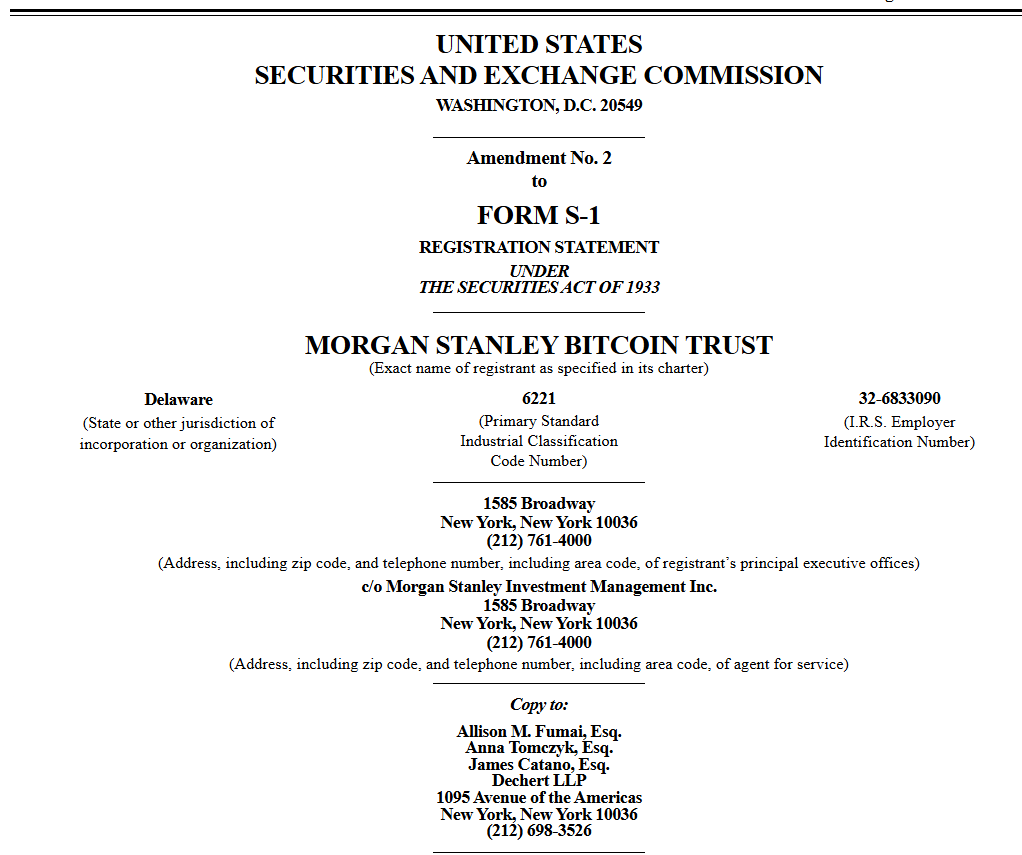
Morgan Stanley filed a second amended S-1 for its proposed spot Bitcoin exchange-traded fund (ETF), detailing seed capital, trading partners and listing plans as the Wall Street bank moves closer to launching the product under the ticker MSBT.
The amended filing says the trust expects to raise $1 million through the sale of 50,000 initial seed shares to its delegated sponsor ahead of listing on NYSE Arca, then use the proceeds to buy Bitcoin (BTC) for the fund. Morgan Stanley said the fund remains subject to regulatory approval before it can begin trading.
The filing lists Jane Street, Virtu Americas and Macquarie Capital as authorized participants, allowing them to create or redeem large blocks of shares and profit from the arbitrage between Bitcoin’s price and the ETF’s share price. This keeps the ETF’s price close to the value of Bitcoin.
Morgan Stanley recommended a 2% to 4% allocation to crypto portfolios for investors and financial advisers in October 2025 and allowed its financial advisors to recommend crypto funds to clients with individual retirement accounts (IRAs) and 401(k)s.

“Morgan Stanley is moving from distributing BlackRock’s IBIT to issuing its own product, capturing management fees directly rather than earning distribution commissions,” Marcin Kazmierczak, co-founder of RedStone, told Cointelegraph, adding that the bank’s 15,000 financial advisors will introduce a real “distribution muscle” for the ETF.
Related: Morgan Stanley, other top holders add Bitmine exposure amid sell-off
Wall Street moves closer to crypto funds
The move adds to a broader push by large US financial institutions to expand access to crypto-related products.
On Jan. 5, 2026, the second-largest US bank, Bank of America, began allowing advisers in its wealth management businesses to recommend exposure to four Bitcoin ETFs, which were previously only available upon request, Cointelegraph reported.
A day earlier, Vanguard, the world’s second-largest asset manager, enabled crypto ETF trading for its clients, reversing its previous stance on digital asset ETFs.
Related: Wells Fargo sees ‘YOLO’ trade driving $150B into Bitcoin and risk assets
BlackRock, the world’s largest asset management firm, recommended an up to 2% Bitcoin allocation to its clients in December 2024.
Magazine: Bitcoin’s ‘biggest bull catalyst’ would be Saylor’s liquidation — Santiment founder

A trader works on the floor of the New York Stock Exchange (NYSE) at the opening bell in New York on March 18, 2026.
Angela Weiss | Afp | Getty Images
The Russell 2000 has fallen more than 10% off its recent high, becoming the first of the major U.S. benchmarks to fall into correction territory.
A correction is defined as a decline of more than 10% and less than 20%.

Russell 2000, 1-year
Small caps actually outperformed to start the year, with the Russell 2000 just 1% off in 2026 as the hope of easier monetary policy and a pivot away from large caps boosted the asset class.
But the benchmark has tumbled this month amid the ongoing war in Iran, which has spurred a more than 50% spike in Brent crude oil futures. The Russell 2000, which has greater exposure to cyclical sectors, is especially sensitive to changes in oil prices and a slowdown in the economic cycle. It’s down more than 6% this month.
The small cap index could soon be joined by other of the major averages. The Dow Jones Industrial Average and the Nasdaq Composite were last more than 9% off their all-time highs. The S&P 500 was off by more than 6%.
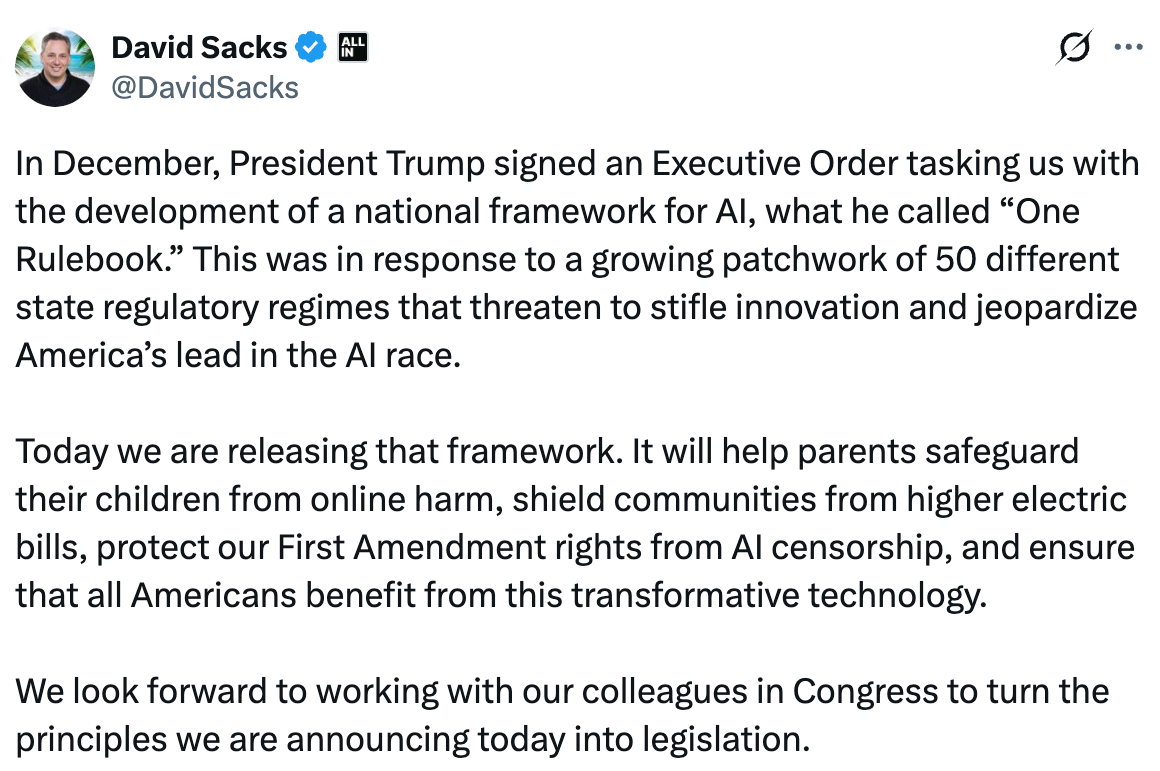
The Trump administration has released a national AI legislative framework for the United States, calling on Congress to establish a unified federal framework and warning that a patchwork of state laws could hinder innovation and competitiveness.
The framework is structured around six core policy areas: protecting children and empowering parents, strengthening communities, intellectual property and creator rights, free speech protections, accelerating AI innovation and workforce development.
At the center of the proposal is a push for a unified federal approach, with the administration urging Congress to preempt state-level AI laws it says could burden developers.

“Congress should preempt state AI laws that impose undue burdens,” the framework states, warning that “a patchwork of conflicting state laws would undermine American innovation and our ability to lead in the global AI race.”
The framework also calls for fewer barriers to AI deployment, regulatory sandboxes and expanded access to federal datasets, while opposing the creation of a new dedicated AI regulator.
On intellectual property, the proposal states:
Although the Administration believes that training of AI models on copyrighted material does not violate copyright laws, it acknowledges arguments to the contrary exist and therefore supports allowing the Courts to resolve this issue.
It also ties AI expansion to energy policy, urging faster permitting for data centers and support for on-site power generation, while saying residential ratepayers should not bear the cost of new infrastructure.
Additional measures include tools to protect minors online, efforts to combat AI-enabled fraud and workforce training initiatives aimed at preparing workers for AI-driven shifts.
The framework is nonbinding and will require Congressional action to be enacted.
Related: Super Micro co-founder arrested over alleged $2.5B AI chip smuggling scheme
Layoffs begin to mount as AI adoption accelerates across crypto
While the White House framework emphasizes workforce development and job creation in an AI-driven economy, it does not address the risk of job displacement as adoption accelerates across industries.
That shift has already become visible in the crypto sector, where companies are rapidly integrating AI across operations. Over the past two months, a growing number of fintech and crypto companies have reported layoffs.
In February, Jack Dorsey’s payments company Block said it would cut roughly 40% of its workforce, with the co-founder pointing to the rapid use of AI tools as a key driver behind the restructuring.
More recently, blockchain data provider Messari announced layoffs alongside a leadership change, as the company pivots toward an AI-first strategy following an earlier round of cuts in 2025.
The trend continued this week, with Crypto.com saying it plans to cut up to 12% of its workforce as it integrates AI across its operations. On Thursday, CEO Kris Marszalek warned on X that “companies that do not make this pivot immediately will fail.”
Volatility in the crypto market has also led to staff reductions. On Wednesday, the Algorand Foundation said it would cut about 25% of its workforce, citing broader market downturns and macroeconomic uncertainty.

Magazine: Are DeFi devs liable for the illegal activity of others on their platforms?


The FBI just issued a warning about a new crypto scam hitting Tron wallets.
Fake tokens impersonating the bureau are being airdropped directly into user wallets. The tokens mimic official seizure notices, telling holders their assets are frozen over money laundering violations. The goal is simple: panic the user into interacting with the token and hand over their credentials.
This is not a generic phishing attempt. It is a targeted social engineering campaign aimed at high-net-worth wallets, some holding 7-figure USDT balances. The FBI’s New York office issued the warning explicitly, telling users to ignore any token claiming to be from the agency.
The scam tokens were created 8 days before the warning dropped. By the time the alert went out, at least 728 wallets were already holding them.
- Impersonation Tactic: Scammers are deploying TRC-20 tokens branded as “FBI” assets to intimidate users into disclosing private keys under threat of AML investigation.
- Wallet Exposure: The campaign specifically targets active Tron wallets, with initial data showing multiple targeted addresses holding over $1 million in USDT.
- Market Impact: This tactic contributes to a 45% year-over-year increase in crypto fraud losses, signaling a shift from simple smart contract exploits to psychological coercion.
The Anatomy of the ‘FBI Token’ Scam
The attack is low cost and high volume. Tron’s cheap fee structure makes it easy to carpet-bomb wallets with fake TRC-20 tokens. One identified address executed roughly 920 transactions for just $40 in TRX fees.
The mechanic runs on fear. Tokens land in wallets with memos claiming assets are frozen over regulatory violations. From there, users are pushed toward phishing sites demanding personal details.
Others fall for address poisoning, where attackers generate addresses matching the first and last characters of legitimate contacts, banking on panic-induced copy-paste errors.
The numbers behind this kind of fraud are not small. The FBI confirmed crypto fraud losses reached billions in 2024, up 45% compared to 2022. The shift is clear. Hackers are targeting the user, not the code.
For exchanges handling TRX transactions, this federal advisory creates a direct compliance problem. A documented warning linking the network to law enforcement impersonation is not something compliance officers can ignore.
With the stablecoin bill in its final stages and pressure mounting on platforms to prove anti-fraud controls, Tron’s dominance in USDT transfers cuts both ways. It is critical infrastructure and the preferred rail for this exact type of scam.
That said, If an unverified token appears in your wallet, do not touch it.
Discover: The best new crypto in the world
The post FBI Warns of Fake Crypto Tokens Impersonating the Agency on Tron Network appeared first on Cryptonews.
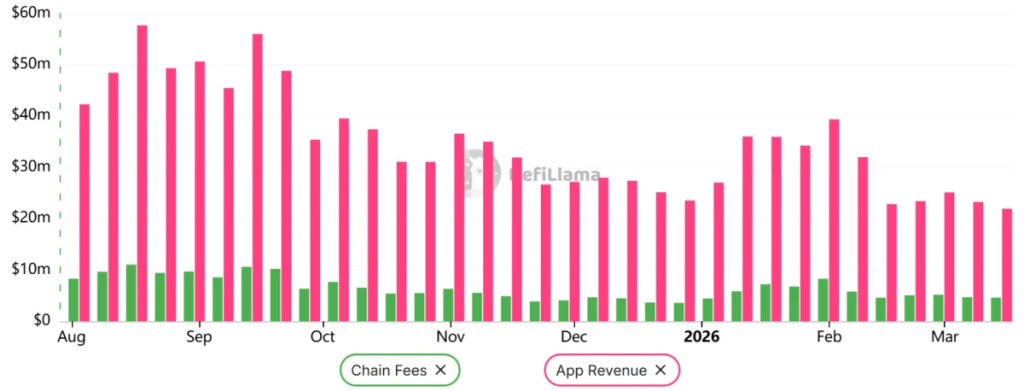
Solana’s on-chain numbers just flashed a major warning sign.
DApp revenue collapsed to $22 million last month. That is the lowest it has been in 18 months. And for a network that was supposed to be thriving, that is a rough number to ignore.
The bulls still holding their SOL bags might want to pay attention. Because when revenue dries up like this, lower support levels tend to follow.
- Revenue Collapse: Ecosystem revenue dropped to $22 million, plunging from $36 million just two months prior.
- Derivatives Bearish: Funding rates have flatlined at 0% while put options trade at a significant 12% premium.
- Price Risk: Weak hands and whale hedging are pressing price against the $87 support, with $80 as the immediate downside target.
Solana DApp Revenue at 18-Month Low: What the Data Shows
Solana DApps just had their worst revenue month in over a year. We are talking $22 million, down from $36 million two months ago. That is a big drop.
To be fair, the whole market is hurting. BNB Chain revenue fell 52% in the same stretch. But Solana has a specific problem.
It is losing the perps war.

Spot DEX volume? Still solid. Raydium and Orca hold that down. But perpetual contracts are where the real money flows, and platforms like Hyperliquid, Edgex, and Zklighter now control over 80% of that market.
Hyperliquid even added licensed S&P 500 perps. Traders want broader exposure, and they are going wherever they can get it. That is not Solana right now.
The liquidity is still there. The revenue capture just is not.
Can Solana Price Hold Support or Is an $80 Retest Coming?
SOL is sitting at $87 right now. And the market is not feeling confident about it holding.
Price is down 70% from its all-time high. Derivatives data is not helping the case either.

Funding rates on SOL perps are sitting near 0%. Normal markets run around 9%. That gap tells you nobody wants to be long right now.
Options markets say the same thing. Delta skew has hit 12%, meaning puts are trading at a premium over calls. The big money is paying extra to hedge against a crash.
Lose $87 on a daily close and the next real support is $80. That retest is very much on the table.
For bulls to flip the script, SOL needs to reclaim $100 and hold it. Until that happens, the trend is down and the bears are in control.
Discover: The best new crypto in the world
The post Solana DApp Revenue Falls to 18-Month Low as SOL Price Risks $80 Retest appeared first on Cryptonews.
Crypto World
XRP Price Prediction: DeepSnitch AI Races XRP Towards $4 As Its March Launch Date Draws Near, while Solana Signals Comeback

Evernorth, an XRP treasury firm, has submitted an S-4 registration form to the United States Securities and Exchange Commission (SEC) to secure approval for a public merger with special purpose acquisition company Armada Acquisition Corp. II.
Amid this development, DeepSnitch AI, an emerging cryptocurrency project, is making rounds for deploying AI agents that can track money flows across chains. With these tools, traders and analysts can determine what institutions are buying at any given time.
Since its presale began, DeepSnitch AI has raised over $2.25 million and is currently in stage seven, with its token, DSNT, trading at $0.04577. While recent XRP price predictions hint at a rally to $4, 100x projections around DeepSnitch AI turn this target into a race between both projects.
Evernorth submits S-4 filing to close a $1 billion SPAC deal
The S-4 filing Evernorth submitted to the SEC on March 18 stipulated that the merged entities will operate as Evernorth Holdings Inc subsequent to the merger. It will appear on Nasdaq under the ticker XRPN for its Class A common stock and XRPNW for warrants.
According to the filing details, Evernorth Holdings Inc will receive roughly 473 million XRP, derived from Ripple’s contribution and proceeds from open-market transactions.
Initial reports noted that the yield from the merger transaction will exceed $1 billion, consisting of investments from Pantera Capital, SBI, GSR, Ripple, and Kraken. The XRP price prediction has since turned bullish following this move.
Latest Ripple price prediction for 2026 as presale crypto takes centre stage
1. DeepSnitch AI stuns non-believers with 203% uptick ahead of March exchange debut
Most investors learn about a token only after it’s printed 10x, 100x, or 1000x in gains. DeepSnitch AI is a new crypto-AI project focused on helping investors spot projects like this in their early stages, before they become public knowledge.
The platform is basically an intelligence hub of on-chain data. Therefore, you can track on-chain events and stay ahead of the curve information-wise. In terms of making better trading decisions, this will be a game-changer.
At the core of DeepSnitch AI are five AI agents that bring its functionalities to life. Not only do they gather actionable intelligence across chains, but they also perform security audits to ensure that you do not fall victim to scams.
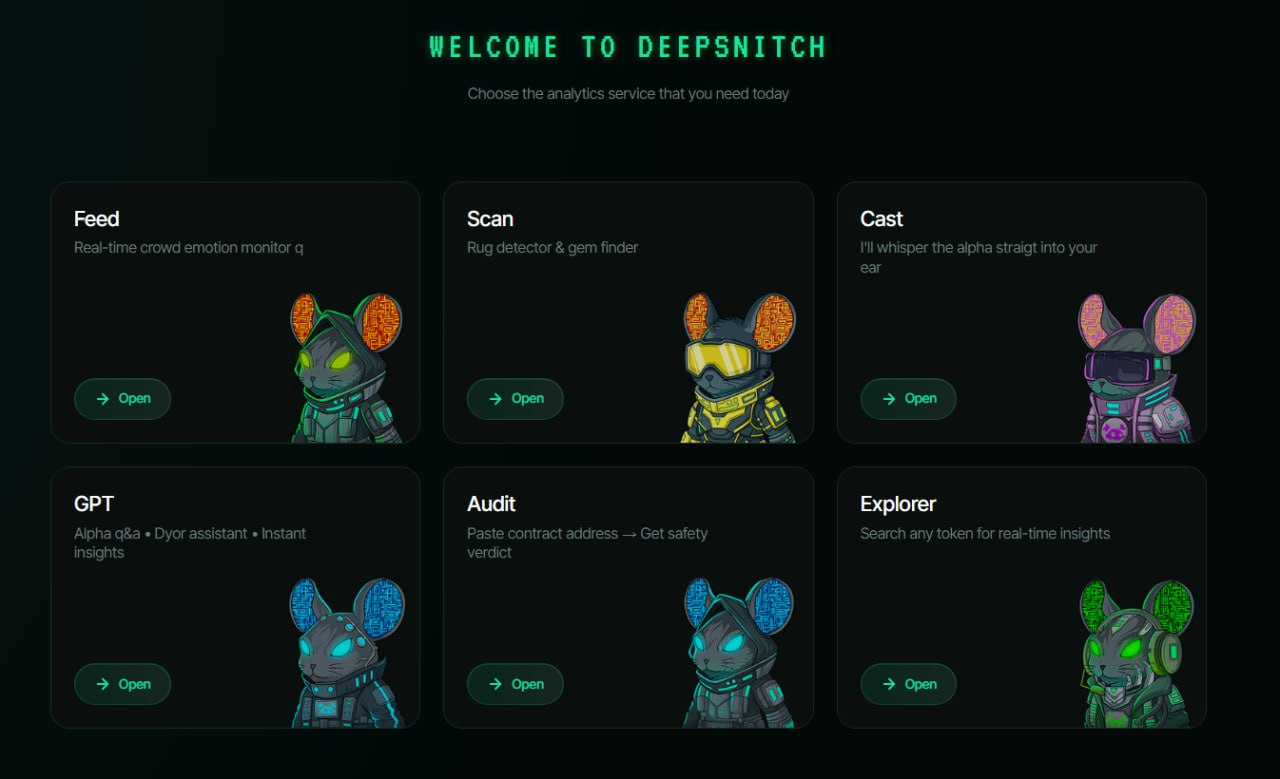
As of now, DeepSnitch AI is gearing up for its exchange listing on March 31st after raising $2.25 million, during which it will make its official entry on Uniswap. Some believe it could beat XRP to $4, representing a 100x increase from its current price of $0.04577.
2. XRP price prediction: Can XRP touch $4 after pundits highlight a crucial breakout level?
Mounting selling pressure across the crypto market sparked a surge in volatility in XRP on March 18, sending the asset into a sideways trade.
In the last seven days, however, XRP registered a notable price surge, rising 5.8% to $1.45, outshining most large-cap cryptocurrencies over the same period.
Market analyst Ali Martinez called attention to the price of XRP arriving at a critical breakout zone that has been forming for years on the higher timeframe.
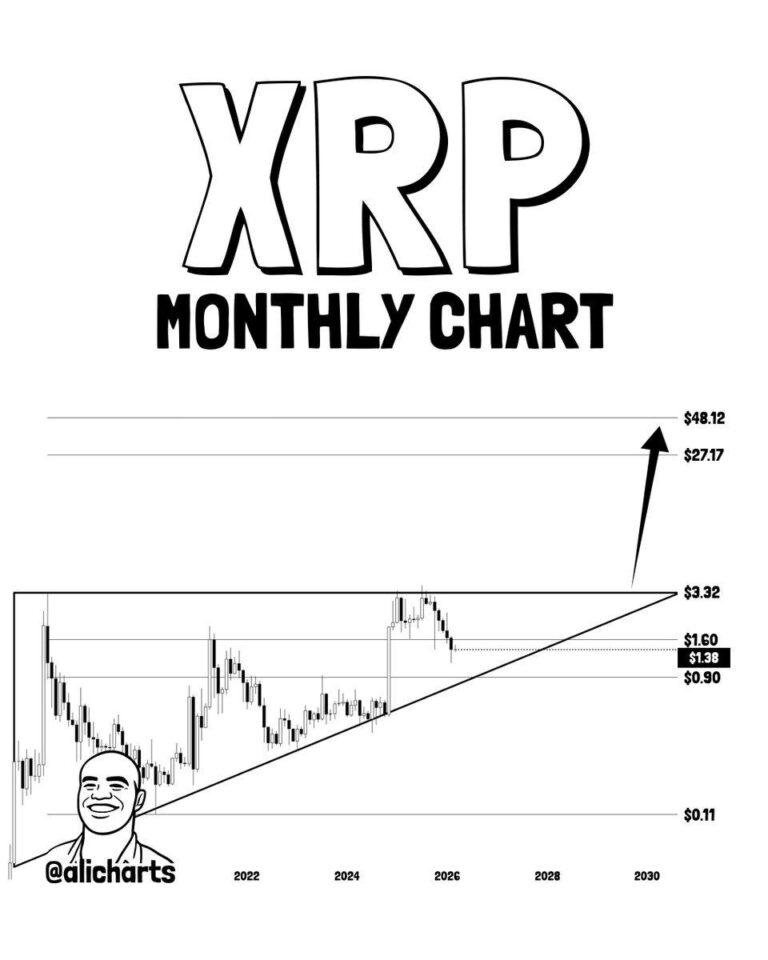
According to him, breaking out of this level could usher XRP to $4. This XRP forecast for 2026 mirrors DeepSnitch AI’s post-launch target.
3. Solana price prediction: SOL sets for recovery from $90 support
Following the unexpected US PPI data release, the broader crypto market entered a downward trend, including Solana, which fell 4% over the past seven days to the $90 support level.
Based on the report published by the US Bureau of Labour Statistics, PPI jumped 0.6% in February, while core PPI rose 0.3%, both figures surpassing economists’ forecasts and signalling persistent inflationary pressures.
Notwithstanding, the chart shows SOL on an ascending trendline that has provided support to the price. If this support holds, the price could head towards $100 in the days ahead.
Conclusion
The race between XRP and DeepSnitch AI is driven by investor sentiment and the adoption of narratives. AI-driven innovations are taking over the crypto space, and DeepSnitch AI offers game-changing solutions built on this technology.
While the current XRP market outlook and Ripple price prediction for 2026 are bullish, DeepSnitch AI has taken centre stage. It has secured over $2.25 million in investments from investors and is set to soar 100x post-launch.
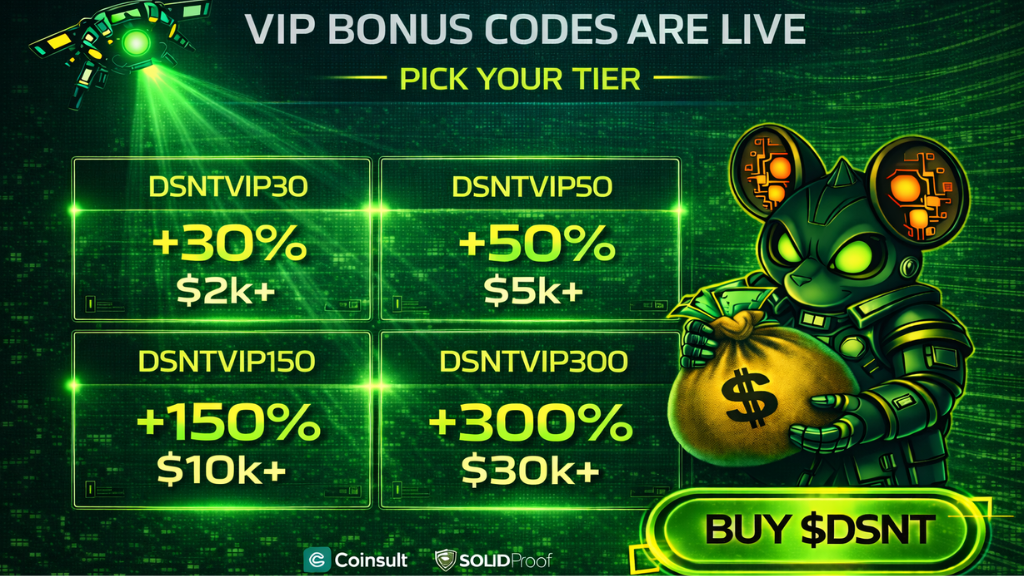
Before its launch on March 31, investors can get a 300% bonus on purchases of $30,000 or more. After launch, this investment can reach $1 million as DSNT’s price grows. However, how high DeepSnitch AI will trade post-launch remains to be seen.
Visit the official website for more information, and join X and Telegram for community updates.
FAQs
1. What is the XRP price prediction for 2026?
Crypto analyst Ali Martinez forecasts XRP’s potential ascent to $4. More optimistic projections suggest XRP could trade at $6 by the end of the year. DeepSnitch AI could also reach this level if it achieves the 100x growth it’s predicted to achieve.
2. Can XRP reach $10?
Even though this price point is reachable, it is quite ambitious for the current XRP market outlook. Experts opine that this would be a realistic target for 2029-2030. DeepSnitch AI, on the other hand, riding on fresh project momentum, could hit this target within the year.
3. What is the long-term Ripple price prediction for 2030?
While long-term projections vary, experts have shared several targets for XRP in 2030. Estimates put XRP between $10 and $15, with more bullish targets set between $20 and $25, provided XRP dominates the payment market. DeepSnitch AI’s 2030 projection suggests asset trading above $500, making now the best time to buy.
Disclaimer: This is a Press Release provided by a third party who is responsible for the content. Please conduct your own research before taking any action based on the content.

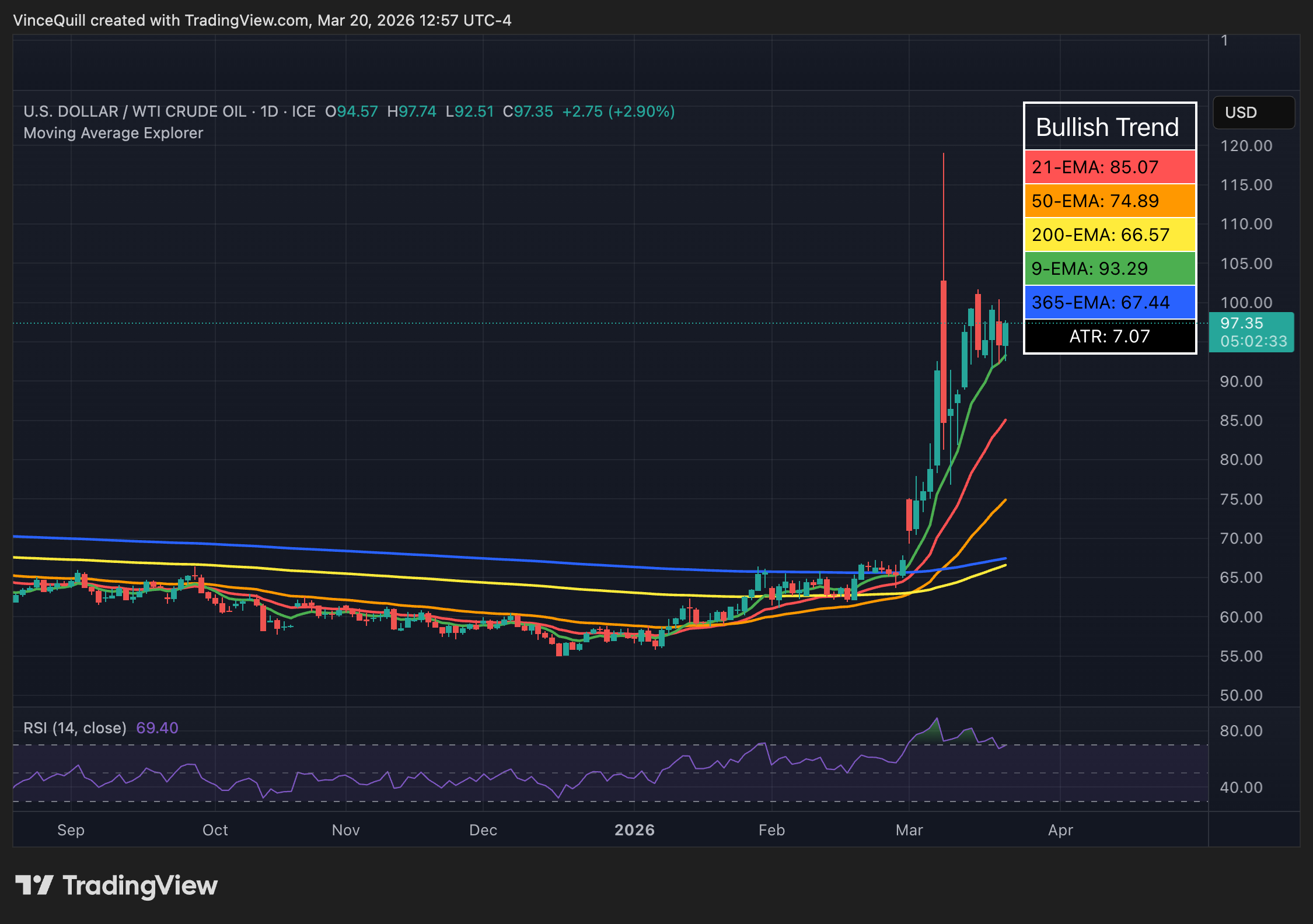
Traders are miscalculating the severity and the duration of economic fallout from the Middle East conflict and are pricing in a “TACO” trade, which stands for “Trump always chickens out,” according to market analyst and founder of the Coin Bureau, Nic Puckrin.
The term was coined by Wall Street and refers to US President Donald Trump backing down in geopolitical conflicts. However, Puckrin warned that “Trump is not in sole control of the situation,” and there are no easy or quick exits from the war.
If oil continues to trade above $100 per barrel, economic growth will slow, and Personal Consumption Expenditures (PCE) inflation will rise by up to 1 percentage point, Puckrin said.

This environment could lead to stagflation, an economic scenario where inflation rises, while economic growth and employment fall, a “dreaded” situation, Puckrin said. He added:
“If oil stays above $100 throughout Q2 and into Q3, stagflation becomes a real problem for the Fed. In the 1970s, the S&P 500 went essentially nowhere in real terms for an entire decade once stagflation took hold.”
Markets might have a “rude awakening” to the war in the Middle East, Puckrin said, stressing that the longer the Strait of Hormuz, a waterway that 20% of the global oil supply passes through, remains closed, the economic effects will worsen.
“Even if the Strait of Hormuz were to open today, the disruption to the Gulf’s oil-producing infrastructure will take months to rebuild,” he said.

Energy is a critical input to all economic activity, and a rise in energy prices typically raises the price of all other goods and services.
Elevated inflation means interest rate cuts, which are stimulative to risk assets like crypto, will not materialize, and the Federal Reserve may raise rates to combat inflation, quashing any hopes of easing liquidity conditions to spur a crypto market rally.
Related: Bitcoin whales shift $100M+ as oil spike rattles markets
Federal Reserve chairman says Middle East war clouds the central bank’s forecasts
The Federal Open Market Committee (FOMC), the group that determines interest rate policy in the United States, held interest rates steady in March, leaving the Federal Funds rate between 3.5% and 3.75%.
Rate cut odds have all but vanished for the upcoming April FOMC meeting. Meanwhile, there’s a small but growing probability — aorund 12% — that the FOMC will raise rates next month, according to the Chicago Mercantile Exchange’s (CME) FedWatch tool.

“The implications of events in the Middle East for the US economy are uncertain in the near term. Higher energy prices will push up overall inflation,” Federal Reserve Chairman Jerome Powell said at a press conference on Wednesday.
However, Powell clarified that it is still “too soon” to accurately gauge the scope and severity of the potential economic effects from the war and the disruption to the global energy infrastructure.
Magazine: Bitcoin is ‘funny internet money’ during a crisis: Tezos co-founder
Mormon Wives’ Jessi, Jordan Ngatikaura’s Relationship Timeline

A ticket or receipt can tell a story from your holiday

Gold Falls as Iran War Clouds Rate Outlook


-
 Crypto World7 days ago
HYPE Token Enters Net Deflation as HyperCore Buybacks Outpace Staking Rewards
-

 Tech5 days ago
Your Legally Registered ‘Motorcycle’ Might Not Count Under Proposed US Law
-
 Tech3 days ago
Are Split Spacebars the Next Big Gaming Keyboard Trend?
-
Sports6 days ago
Why Duke and Michigan Are Dead Even Entering Selection Sunday
-

 Business5 days ago
Search for Savannah Guthrie’s Mother Enters Seventh Week with No Arrests
-

 Business6 days ago
US Airports Launch Donation Drives for Unpaid TSA Workers as Partial Government Shutdown Enters Fifth Week
-
Crypto World6 days ago
Coinbase and Bybit in Investment Talks: Could Bybit Finally Enter the US Crypto Market?
-

 Business4 days ago
Australian shares drop as Iran war enters third week
-

 Business6 days ago
Country star Brantley Gilbert enters growing non-alcoholic beer market
-

 Politics2 days ago
The House | The new register to protect children from their abusers shows Parliament at its best
-

 Crypto World4 days ago
Crypto Lender BlockFills Enters Chapter 11 with Up to $500M in Liabilities
-

 Sports7 days ago
College Basketball Best Bets: Conference Tournament Semifinal Picks
-

 News Videos2 days ago
RBA board divided on rate cut, unusually buoyant share market | Finance Report | ABC NEWS
-

 Fashion4 days ago
25 Celebrities with Curly Hair That Are Naturally Beautiful
-

 Tech14 hours ago
inKONBINI Lets You Spend Summer Days Behind the Register
-

 Crypto World2 days ago
Canada’s FINTRAC revokes registrations of 23 crypto MSBs in AML crackdown
-
 Politics3 days ago
Real-time pollution monitoring calls after boy nearly dies
-

 Crypto World6 days ago
Crypto Losses Drop 87% in February, But Hackers Are Now Targeting People, Not Code
-
 NewsBeat2 days ago
Residents in North Lanarkshire reminded to register to vote in Scottish Parliament Election
-

 Business4 days ago
Meta planning major layoffs as AI spending and automation reshape workforce


You must be logged in to post a comment Login