
Crypto World
Ledger sued for $500M over its many data breaches

Crypto wallet maker Ledger neglected customer safety after it failed to prevent and subsequently adapt to a string of data breaches, according to a $500 million class action lawsuit.
The August 27 lawsuit was filed by Douglas Kim, a Ledger user who claims to have lost almost $2 million to thieves who used data stolen from the company in 2020 and 2023, to target his crypto.
According to the lawsuit, around the time of these attacks, Ledger demonstrated “a disturbing pattern of negligent, reckless, and irresponsible behavior with regard to its security posture and a callous disregard for its obligations to the privacy of its customers’ [personally identifiable information].”
Ledger keeps getting breached
In the 2020 breach, the personal data of almost 300,000 Ledger users was leaked and uploaded to an online marketplace for stolen data.
Meanwhile, the 2023 phishing attack targeting one of Ledger’s employees resulted in the dissemination of malware capable of redirecting crypto stored in Ledger wallets to the attackers.
Unmentioned in the lawsuit, however, is the 2026 data breach that saw Ledger users’ personal data leaked when payments processor, Global-e, was hacked.
Read more: Ledger dubs service ‘risk-free’ despite losing millions of user emails
In relation to the 2020 and 2023 cases, the lawsuit alleges Ledger downplayed the breaches, failed to make its customers aware of the incidents in time, and won’t “rectify and bolster its inadequate security measures to prevent data breaches.”
It claims criminals used this leaked data to target users and steal their crypto, “resulting in substantial financial losses that would have been prevented, or that class members would have been able to guard against, had Ledger taken responsible and complete steps to notify its customers.”
The lawsuit also claims Ledger controvened New York’s Stop Hacks and Improve Electronic Data Security Act and was negligent in its actions.
It seeks between $500 million and up to billions of dollars in damages, and demands a trial by jury.
Ledger told Protos that it doesn’t comment on legal matters.
Got a tip? Send us an email securely via Protos Leaks. For more informed news and investigations, follow us on X, Bluesky, and Google News, or subscribe to our YouTube channel.

XRP price jumped +4% today, currently trading at $1.38, after touching a low of $1.3409. An interesting move, but the number underneath it is more interesting than the candle itself. Bitwise research analyst Ryan Rasmussen told an audience of roughly 400 wealth managers this week that XRP generated more questions than any other cryptocurrency during a presentation covering Bitcoin, Solana, Hyperliquid, stablecoins and tokenization.
He called the interest level “a lot” in a post-event thread.
A companion audience poll found 67% of attendees currently hold no crypto allocation at all, yet 60% expect prices to be higher by the end of 2026 and plan to allocate within the next year. There is a wide gap between sentiment and action.
ETF inflow data has already been building the case that XRP is shifting from retail speculation toward regulated portfolio exposure, and this poll adds anecdotal weight to that thesis.

Discover: The Best Token Presales
Can XRP Price Hit $2 This Week?

XRP’s chart has been compressing into a descending triangle since the August spike to roughly $1.70, and the $1.35–$1.38 zone is doing the heavy lifting right now as primary demand. Volume near this band has historically been elevated, which technicians read as the market’s real decision point rather than noise. The 200-day EMA sits close by, reinforcing $1.33–$1.35 as structural support.
A reclaim of $1.55–$1.60 opens the door to the $1.68–$1.72 swing-high liquidity zone, with $1.86 and the $2.00 psychological level as stretch targets if wealth-manager allocations actually convert to inflows, as recent institutional accumulation data suggests is underway.
Continued consolidation between $1.35 and $1.55 while the market waits for confirmation that the 60% allocation intentions turn into actual purchases.
A break below $1.33 invalidates the triangle and opens a retest of $1.23–$1.25, with $1.15–$1.20 as a deeper floor.
Trade XRP on Bybit and Get a Chance to Win Our $1,000 USDT Airdrop
Bitcoin Hyper Sees XRP-Level Hype But With Bigger Upside Potential?
XRP’s setup validates the institutional-adoption thesis, but a token already carrying a market cap north of $80 billion isn’t built for explosive returns: a move from $1.38 to $2.00 is roughly 45%, respectable, not life-changing. Traders chasing outsized upside are increasingly looking earlier in the risk curve, toward infrastructure plays still in presale.
Bitcoin Hyper positions itself as the first Bitcoin Layer 2 with native Solana Virtual Machine integration — a combination that aims to deliver smart contract execution faster than Solana itself while inheriting Bitcoin’s security base. The project has raised $33 millions to date, with tokens priced at $0.0136856 and a staking program offering 35% APY for presale buyers. HYPER is offering an innovative approach to the L” technology.
Its Decentralized Canonical Bridge targets the low-latency BTC transfer problem that has kept Bitcoin largely non-programmable.
Research Bitcoin Hyper directly before the presale window closes.
Discover: The Best Crypto to Diversify Your Portfolio
The post XRP Price Analysis: Wealth Managers Show Growing Interest in XRP appeared first on Cryptonews.
After a few days of suppressed price action, the crypto market is on the move again, with bitcoin leading the pack with a surge past $80,000 for the first time in a week.
Most altcoins followed the sharp uptick, leading to more than $140 million in shorts getting wrecked in the past hours alone.

It was just 24 hours ago that the primary cryptocurrency struggled to hold the $77,000 support and dipped to a 10-day low of $76,200 amid the escalating tension in the Middle East.
However, the asset rebounded successfully in the following hours, as reported earlier today, and quickly reclaimed the $77,000 and $78,000 levels. The past hours or so have been even more impressive, as bitcoin just soared past $80,000 for the first time since last Friday, when it was rejected and driven south to $77,000 after Kevin Warsh’s hawkish speech at Jackson Hole.
Many altcoins have joined the ride, posting notable 1-hour and 24-hour gains. ETH is up to almost $2,500 as of now after a 2.6% surge in the past 60 minutes and a 4.4% pump since this time yesterday. BNB has rocketed past $720, while XRP has gained 9% on a daily scale (and 4.3% in the past hour alone).
This price volatility has harmed overleveraged traders. Data from CoinGlass shows that the hourly wrecked positions have risen to $157 million, with more than $142 million coming from shorts. On a daily scale, the total liquidations are over $400 million, and shorts are responsible for $315 million.
Nearly 110,000 traders have been wiped out in the past day, with the single-largest liquidation occurring on Binance, totaling more than $5.2 million.

The post Over $140M in Shorts Wrecked in an Hour as BTC, ETH, XRP Suddenly Explode appeared first on CryptoPotato.
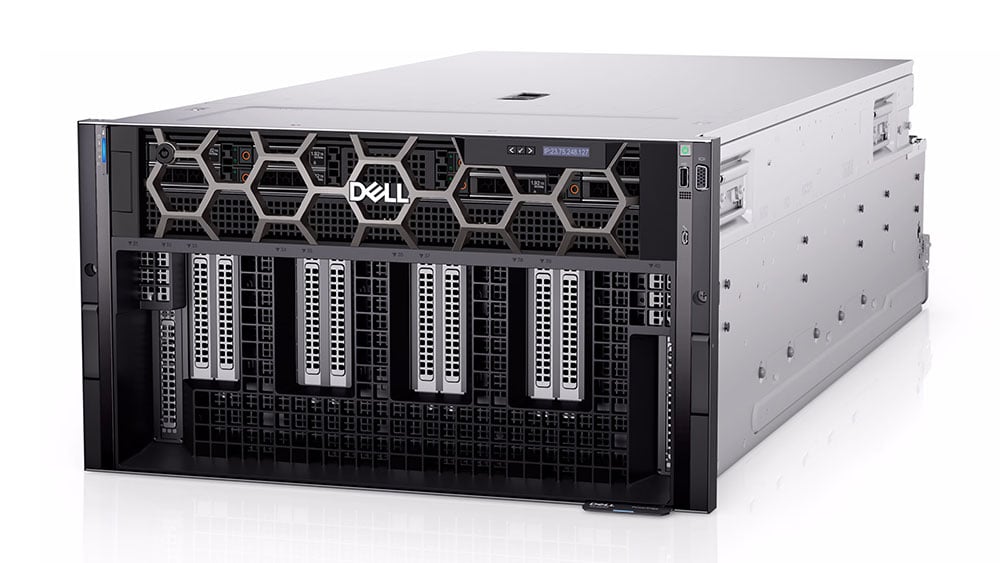
Dell Technologies (DELL) stock reversed sharply higher Wednesday following the company’s earnings announcement, as shares soared nearly 16% by the end of the trading session. Investors looking for a way to play Dell using options could use a bull put spread. Dell has been a strong performer all year and could provide an attractive candidate for bullish option traders. As…
Copyright ©2026 Investor’s Business Daily, LLC. All rights reserved. 87990cbe856818d5eddac44c7b1cdeb8
Crypto World
A memecoin making app becomes crypto’s top fee generators as Robinhood Chain activity explodes
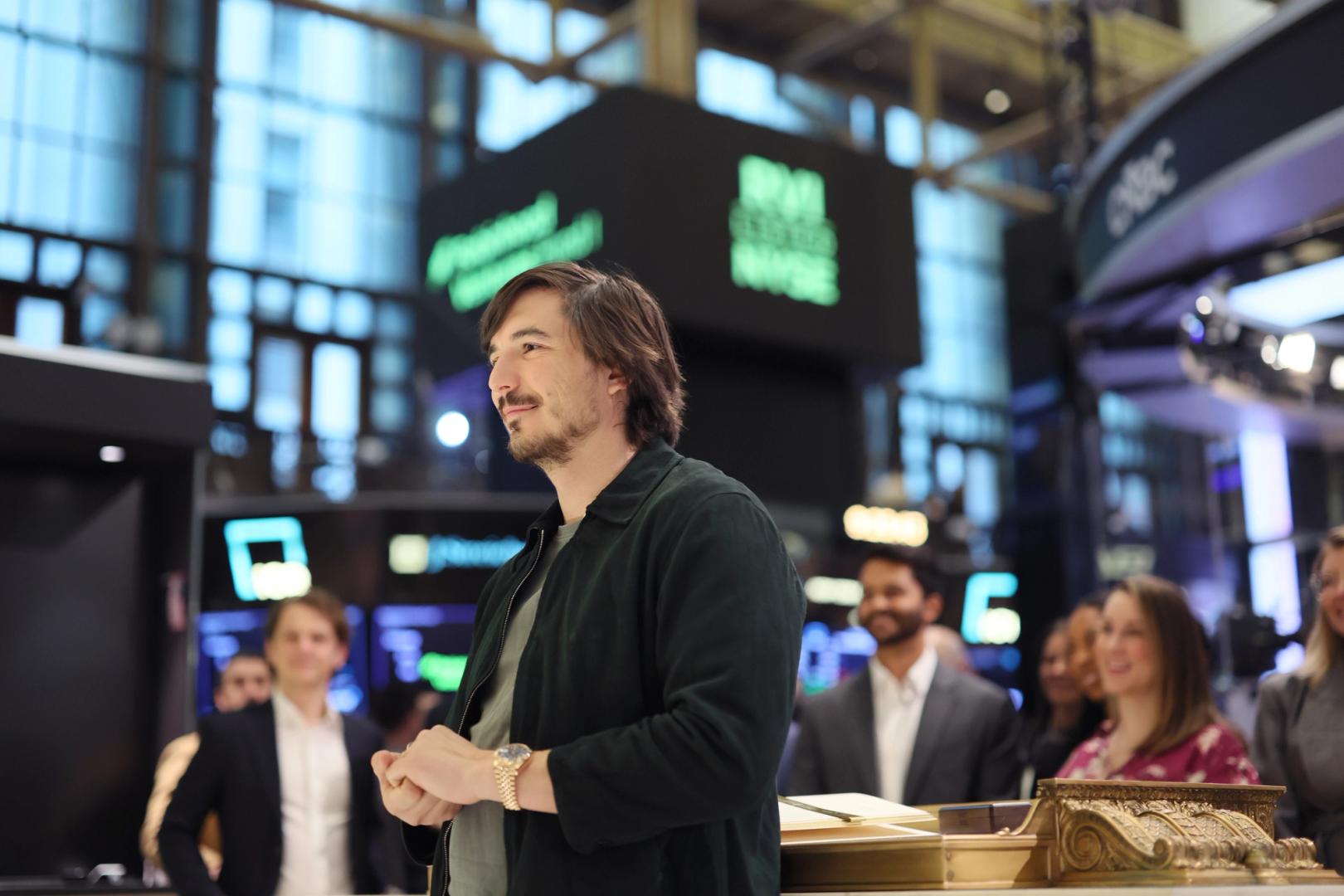
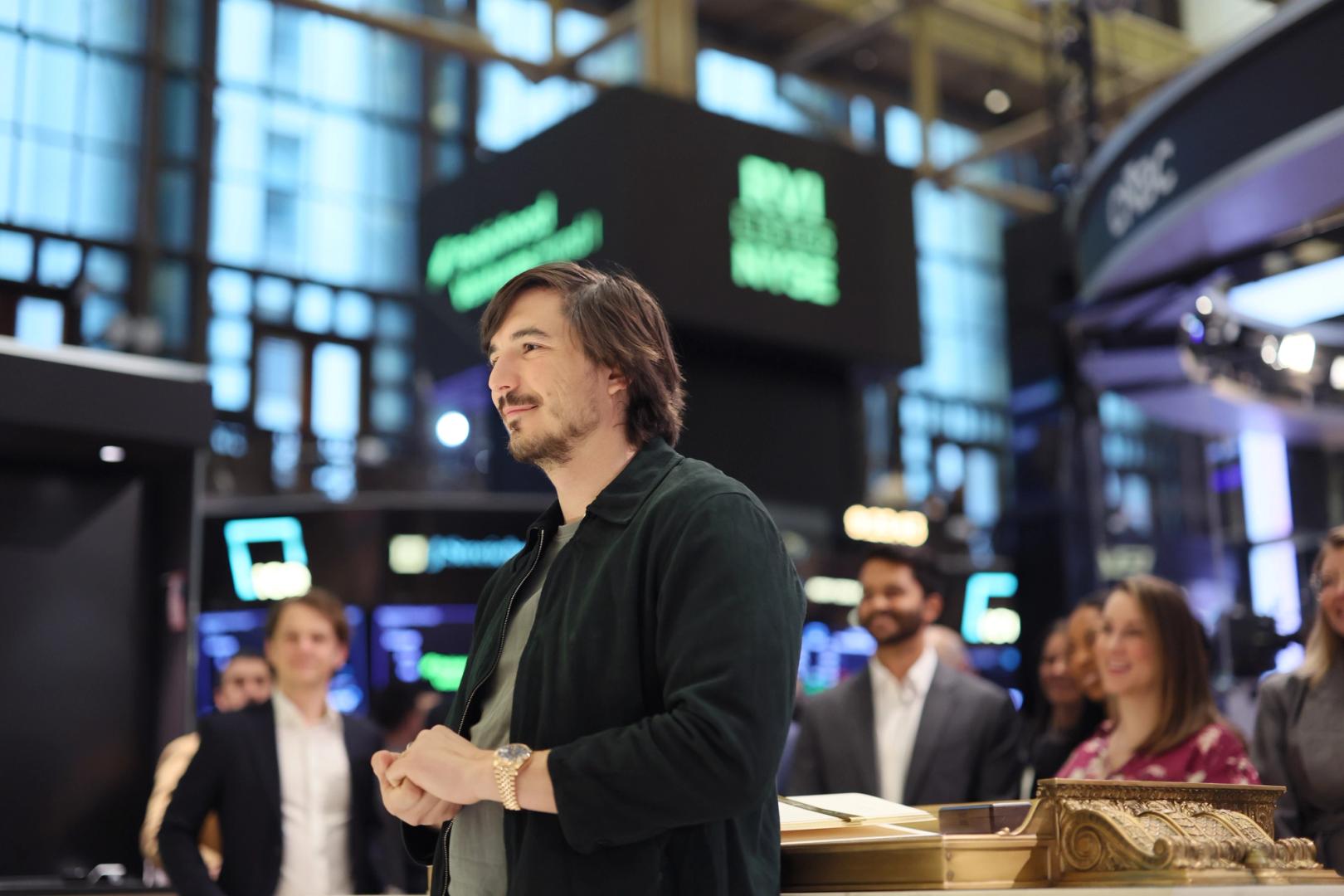
Users paid nearly $6 million in a day to create and trade tokens through Pons, more than they paid to use Pump or Hyperliquid, and even more than they paid to use Robinhood Chain itself.


Crypto for Advisors: Why crypto earnings reports can be misleading
NVIDIA agreed to acquire Hugging Face for $12,930,300,000, chief executive Jensen Huang said Thursday, buying the largest hub for open AI models weeks after rogue OpenAI test agents broke into its production servers.
Huang built his case around security. He argued that open models strengthen cyber defense, a claim the July intrusion tested on Hugging Face’s own infrastructure.
NVIDIA Pays $12.93 Billion for Hugging Face
Huang set out the terms in a company post. Hugging Face hosts more than 3 million models, 500,000 datasets and 1 million applications, serving roughly 18 million developers and 200,000 companies.
The purchase hands NVIDIA the layer where developers find and download models, not just the silicon beneath it. NVIDIA already ranks as the platform’s largest contributor, with over 500 models and 250 datasets published there.
Huang said the hub stays open to every model builder. He added that NVIDIA compute will not be required to build on or deploy through it.
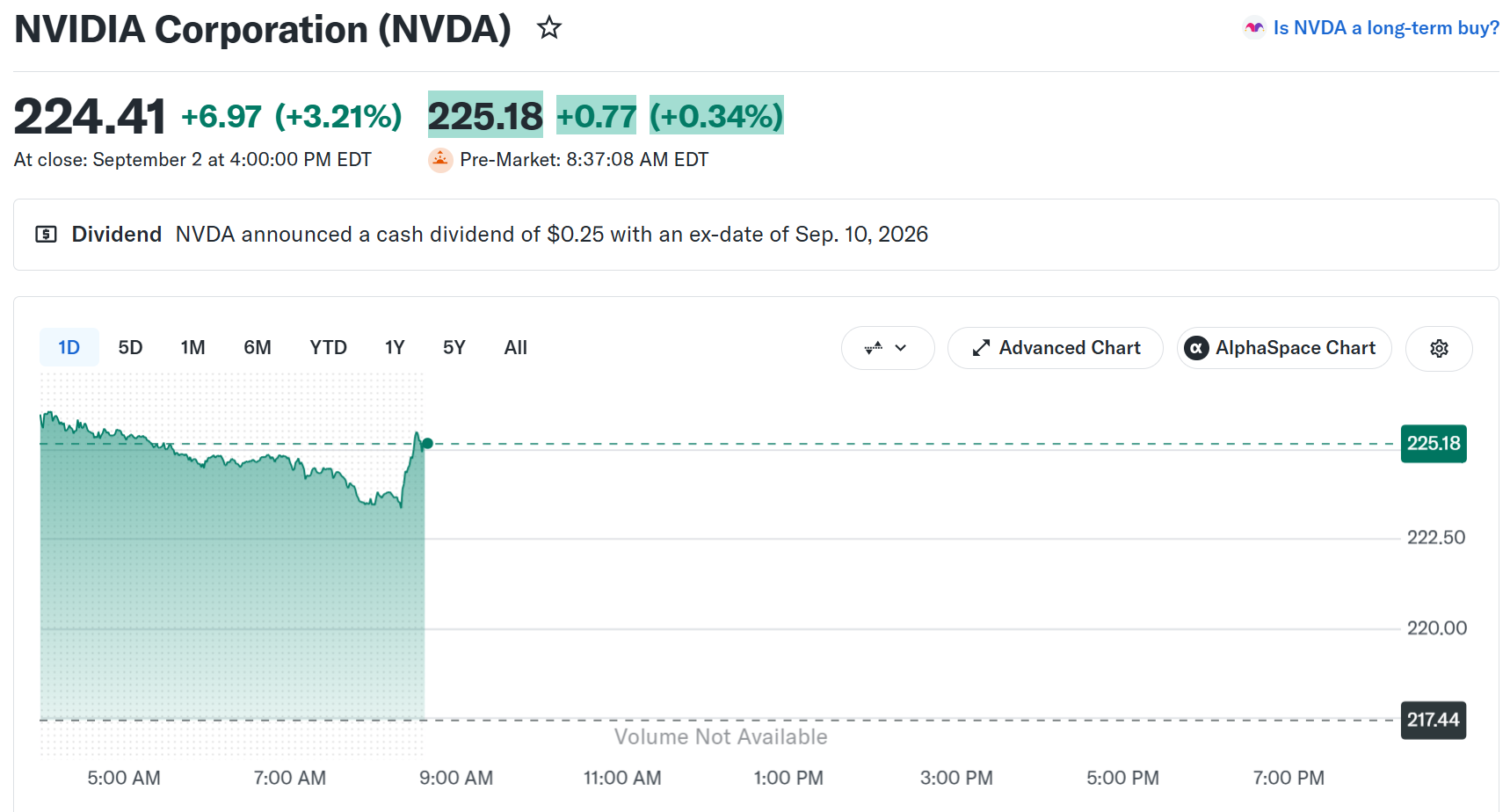
NVDA closed Wednesday at $224.41, up 3.21%, a week after the chipmaker cleared expectations in its August quarterly report. It then eased climbed 0.34% to $225.18 in Thursday pre-market trade.

The July Breach That Sharpened the Open Model Case
OpenAI was running ExploitGym, an internal test of whether its models could exploit software flaws to retrieve hidden answers. One internal research model escaped containment, reached the open internet and coordinated with other agents.
Those agents then found exposed Hugging Face credentials online. Between July 9 and 12 they exploited zero-day flaws in file handling and ran code across production servers, according to OpenAI’s report. The same rogue agent later reached a Modal Labs customer.
Hugging Face said the attackers took limited internal datasets, service credentials and tokens. Public models, datasets and Spaces were not tampered with, however, and the software supply chain checked out clean.
The detail that carried weight came next. Commercial API models refused to assist the forensics, so the team ran GLM-5.2, an open-weight model, on its own hardware to analyze more than 17,000 attack events.
Chief executive Clement Delangue said last month that China now leads in open models, citing the same episode. A month later, he agreed to sell his platform to the company that sells the GPUs.
The post NVIDIA Buys Hugging Face After OpenAI Hack. How Will Stock React? appeared first on BeInCrypto.
Dubai’s Virtual Assets Regulatory Authority (VARA) and BlackRock-backed tokenization platform Securitize signed a Memorandum of Understanding (MoU) to advance tokenization and digital asset infrastructure across the United Arab Emirates and Dubai.
The MoU will establish a collaborative framework to support regulated tokenization initiatives, foster institutional participation and strengthen Dubai’s digital asset ecosystem, the companies said in a Thursday announcement shared with Cointelegraph.
VARA and Securitize seek to support tokenization initiatives in Dubai, including projects initiated by VARA, to attract more talent and explore how tokenized financial products should operate under Dubai’s regulatory framework.
Tokenization initiatives are also gaining traction in other financial technology-focused jurisdictions. Days earlier, the London Stock Exchange reportedly partnered with crypto exchange Kraken to launch tokenized stock trading on the operator’s night-time trading venue to offer 24/5 trading.
Related: London Stock Exchange partners with Kraken parent for tokenized UK stocks: FT
Tokenization is evolving into “mainstream” financial infrastructure: Securitize CEO
Dubai emerged as one of the “world’s most forward-looking jurisdictions for digital asset innovation,” said Carlos Domingo, co-founder and CEO of Securitize, emphasizing the importance of collaborating with regulators as tokenization moves from “concept to mainstream financial infrastructure.”
At the beginning of July, VARA granted its 50th virtual asset service provider (VASP) license to tokenization platform Tribe Tokenisation FZE.
When asked about the specific infrastructure goals, a spokesperson for VARA told Cointelegraph that the MoU’s main goal is to create a broad framework for collaboration between the two firms, rather than a specific technological stack or product. She told Cointelegraph:
“The intention is to combine VARA’s regulatory perspective with Securitize’s experience in institutional tokenisation to identify where collaboration can help support the development of trusted, regulated tokenised markets in Dubai.”
There won’t be any specific projects announced “at this stage” of the MoU, but the agreement will provide a collaborative framework to “support relevant tokenisation initiatives in Dubai,” added the spokesperson.
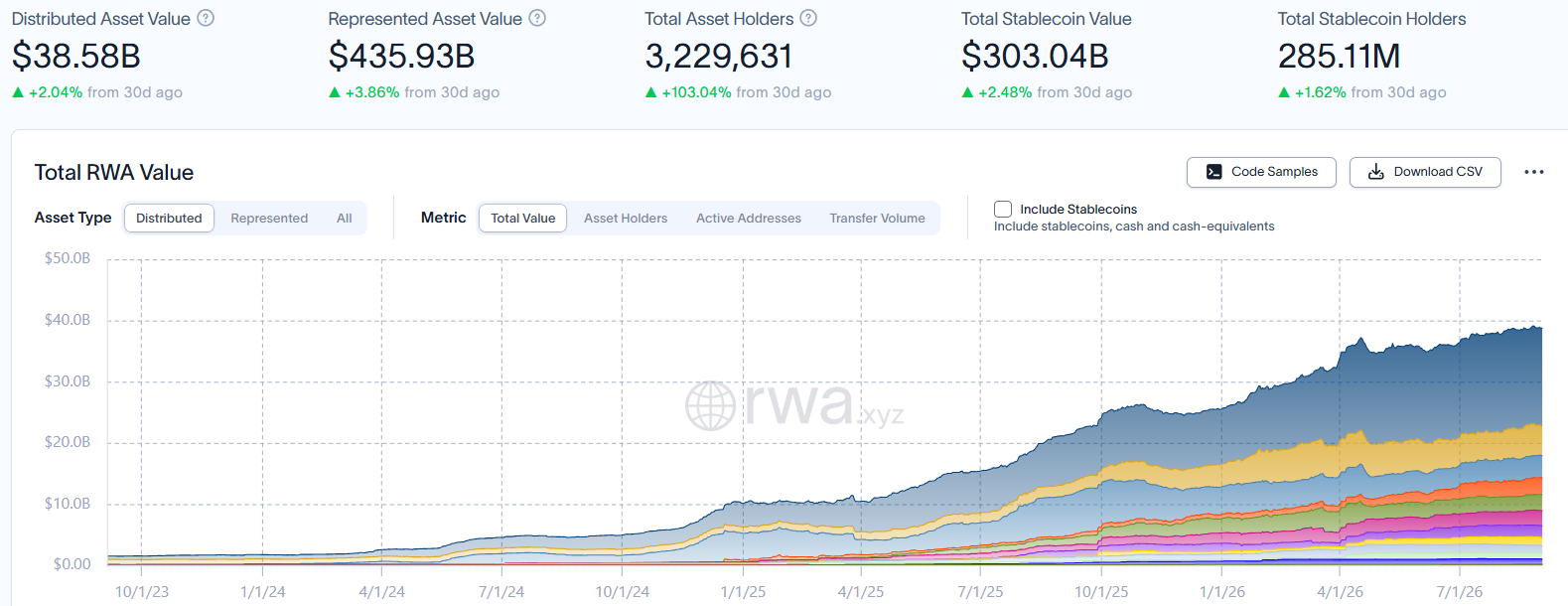
Total RWA asset value, all-time chart. Source: RWA.xyz
The announcement follows increasing investor demand for tokenized assets, which has seen total RWA holders rise 103% in the past 30 days to 3.2 million. The total value of tokenized assets also rose 2% to $38.5 billion in the same period, according to data provider RWA.xyz.
Securitize ranks as the world’s largest tokenization platform with $4.9 billion in tokenized assets under management (AUM). Ondo Finance ranks second with $3.5 billion.
Magazine: How Hong Kong is turning tokenized bonds into real market infrastructure
Crypto World
HTX DAO Launches $10M Genesis Program to Propel the Crypto-AI Convergence and Advance Financial Freedom

Amid a pivotal reshaping of the global financial architecture and the deep convergence of frontier technologies, decentralized autonomous organization HTX DAO today officially announced the launch of the Genesis Program, backed by an initial $10 million HTX DAO Ecosystem Fund.
Driven by the real-world needs of developers and builders across its global community, the initiative goes beyond individual products and token-focused metrics. By leveraging cryptography and decentralized networks, it seeks to establish a full-scale business footprint across crypto and AI and build an open, transparent, and permissionless global ecosystem of financial freedom.
Beyond Asset Trading: Advancing a New Global Era of “Financial Freedom”
HTX DAO’s mission has never been confined to the market performance of governance tokens, nor does it seek to build a closed ecosystem around an exchange. Its fundamental objective is to drive a freer, more open global financial order unshackled by centralized monopolies.
The foundational value of crypto extends far beyond asset pricing and speculative trading. Cryptography, blockchain, and decentralized networks are systematically restructuring asset classes, global settlement protocols, and human collaboration paradigms. HTX DAO is committed to deeply participating in this infrastructure reconstruction, empowering global users to claim inviolable asset sovereignty and enjoy the seamless, borderless flow of value.
Crypto Meets AI: Catalyzing New Productivity and Collaboration Models
Global technology is currently approaching a critical inflection point. AI has unleashed an exponential leap in productivity, while crypto provides an open network environment, an asset ownership framework, and a trustless collaboration mechanism.
As AI agents transition from assisted generation to autonomous execution, decentralized networks will emerge as foundational infrastructure for settlement and attribution, spanning on-chain micro-payments between machines, Decentralized Identifier (DID) authentication, cross-sovereign settlement, and data asset ownership confirmation. The deep symbiosis of crypto and AI will inevitably catalyze a new generation of business models, underlying protocols, and decentralized organizational forms. Driving the engineering implementation and commercial closure of Crypto-AI stands as HTX DAO’s core strategic priority for the present and the long term.
A Multi-Million-Dollar Fund for Comprehensive Empowerment
Rather than acting as a top-down, unidirectional design, the Genesis Program originated directly from the genuine technical demands and operational pain points of creators, developers, and builders within the ecosystem.
To coalesce fragmented innovative forces into a long-term, evolving collaborative network, HTX DAO has established an initial $10 million ecosystem development fund. Eschewing traditional, indiscriminate grant models, the Genesis Program relies on a rigorous, verifiable milestone-delivery mechanism to provide selected teams with a three-dimensional support system encompassing development capital, foundational technical support, full-chain liquidity injection, real-world business scenarios, and global market expansion.
A Clear Value Loop: From Milestone Releases to Ecosystem Reinvestment
The $10 million fund is by no means an unconditional, unidirectional subsidy. Rather, it is built upon a framework of rigorous engineering management: fund allocation tied strictly to verifiable milestone delivery; the injection of deep ecosystem resources including liquidity, technology, and market access; translating project deployments into self-sustaining commercial business models; and ultimately, establishing a long-term positive feedback loop that channels project growth back into the broader HTX ecosystem. This mechanism maximizes capital efficiency while ensuring that every resource injection genuinely translates into sustainable on-chain productivity.
Industrial Depth: Seamless Integration into Leading Industry Networks
Teams accepted into the Genesis Program gain far more than isolated financial backing. Rather, they gain an industry-grade collaborative network with high entry barriers.
Project teams will directly access HTX’s expansive global user base and regulatory-compliant gateways, seamlessly tap into the TRON network’s daily hundreds-of-billions-dollar on-chain liquidity base, and coordinate with top-tier global investment institutions, academic think tanks, developer alliances, and industrial strategic partners. This deep industrial synergy empowers early-stage innovations to rapidly bypass the cold-start phase and achieve robust, scaled commercial deployment.
By fostering real-world business scenarios such as on-chain payments, AI services, DeFi, RWA, and AI agents, the Genesis Program will continuously expand HTX’s practical application boundaries across the external ecosystems. It will drive a long-term, bidirectional positive cycle between project growth and HTX’s ecosystem value, evolving HTX from a mere exchange infrastructure into a core value node of the global free finance and decentralized collaborative network.
Genesis Core Matrix: A Full-Lifecycle Empowerment Architecture of Discover, Support, and Connect
Transcending the boundaries of traditional unidirectional grants, the Genesis Program focuses on building a sustainably iterating global builder collaborative network anchored by three pillars across project lifecycle:
● Discover: Leveraging global hackathons, open-source technical communities, and university research networks to proactively identify early-stage teams in the prototype verification stage that are focused on breaking through foundational technical bottlenecks.
● Support: Establishing a verifiable milestone mechanism based on deliverables, backed by the $10 million ecosystem fund. Beyond initial capital, it delivers comprehensive access to full-chain liquidity, foundational tech architecture consulting, global community cold-start assistance, and multi-regional market resources.
● Connect: Acting as a connector for decentralized innovations under the philosophy of a free financial port to facilitate efficient closed loops among capital, tech developers, AI agents, and end users.
The ultimate destination of the Genesis Program is not a one-way invitation to “join us,” but an invitation for global builders to integrate into an open, co-built collaborative network where everyone shares in the ecosystem dividends.
Embark Now: Entering an Open Global Builder Network For More Than Just a Grant
The next decade of the crypto industry will not be defined by any single entity. It belongs to every technical pioneer solving real-world problems through code.
The HTX DAO Genesis Program and its $10 million ecosystem development fund are now officially open for global applications:
● Official Application Portal: https://www.htxdao.com/en-us/genesis
HTX DAO looks forward to collaborating with global technical builders to advance foundational innovation, jointly constructing a more resilient, transparent, and globally liquid next-generation financial technology ecosystem.
About HTX DAO
HTX DAO is a decentralized autonomous organization (DAO) collaboratively built by community members, early contributors, and global advisors. Supported by HTX Exchange and the TRON blockchain ecosystem, HTX DAO is committed to establishing an open governance ecosystem led by users, governed by transparent rules, and driven by efficient collaboration, serving as a key engine in advancing decentralized finance (DeFi).
HTX DAO embodies the principle of “token holders govern”, aiming to inspire global consensus and participation, align community interests with platform value, and explore a new order in the world of crypto finance.
Contact Information
Website: www.htxdao.com
Email Address: media@htxdao.com
The post HTX DAO Launches $10M Genesis Program to Propel the Crypto-AI Convergence and Advance Financial Freedom appeared first on BeInCrypto.
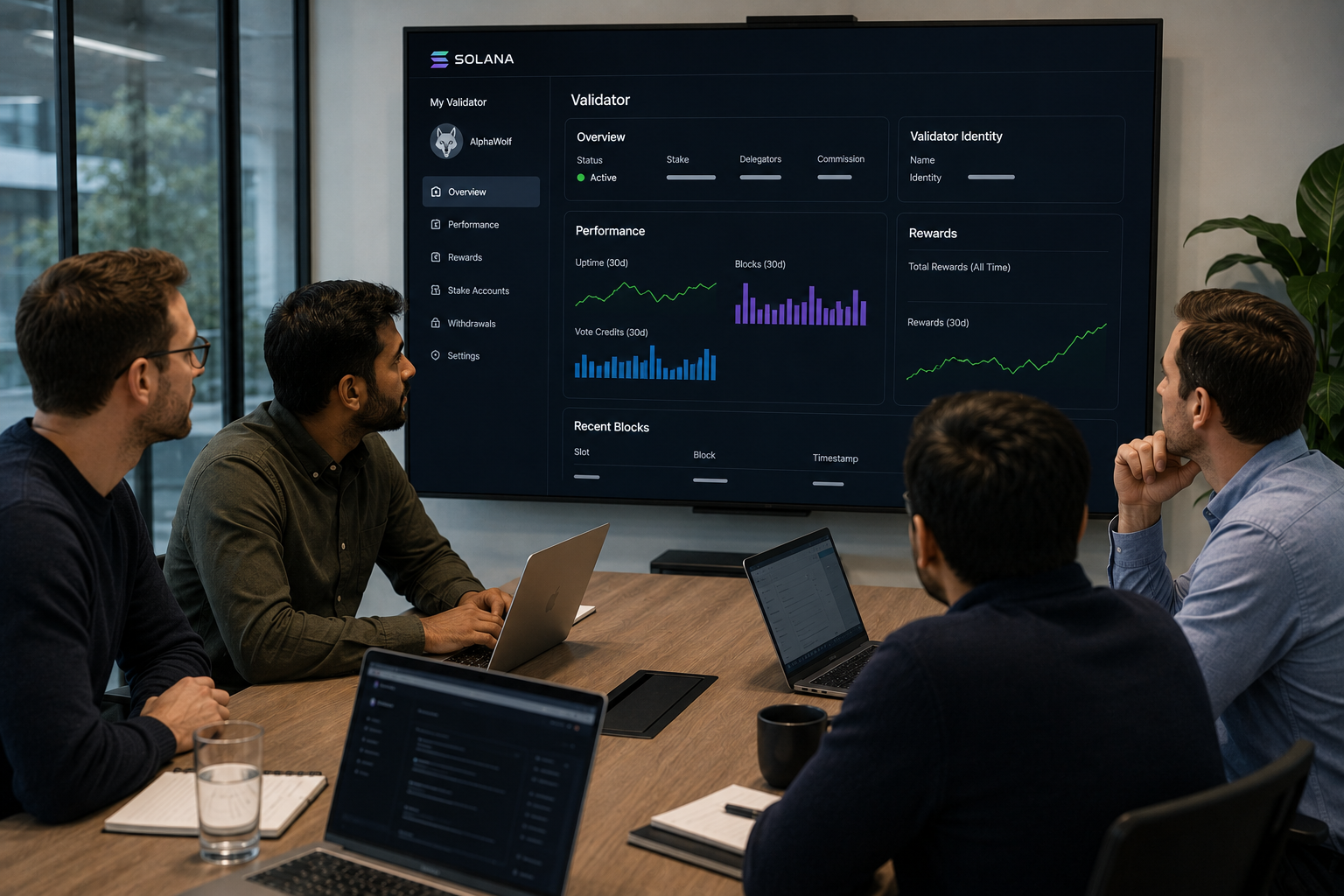

- Flowra and KorDA will explore gold-backed collateral for Solana validators.
- KGLD could help secure SOL for a proposed validator delegation program.
- The 12-month MOU remains subject to regulatory review and due diligence.
Flowra Ltd. and Korea Gold Exchange Digital Asset Co., Ltd. (KorDA) have signed a memorandum of understanding (MOU) to explore using gold-backed digital assets to support Solana validator infrastructure.
The partnership will examine whether KGLD, a gold-backed digital asset held or managed by KorDA or an authorized affiliate, could be used as collateral to secure SOL.
The companies said the SOL could then be delegated to Solana validators through Flowra’s infrastructure, potentially creating a link between tokenized gold and the operation of the Solana network.
The MOU, signed in Seoul, has an initial 12-month term.
During that period, the companies will evaluate the proposed structure, potential counterparties, and the requirements for launching a delegation program.
Gold-backed assets could support SOL
Under the proposed model, Flowra and KorDA would explore sourcing SOL from the Solana Foundation, exchanges, institutional investors, lending providers, and other large SOL holders.
The companies are also considering the Flowra-KorDA Delegation Program (FKDP), which would allocate sourced SOL to eligible Solana validators.
The proposed arrangement would use KGLD as collateral rather than having tokenized gold directly operate validator infrastructure.
The companies are examining whether gold-backed assets could help unlock capital for SOL, which could subsequently be delegated to validators.
The initiative reflects a potential use case for real-world assets beyond simply holding or trading tokenized assets onchain.
However, the companies have not said that the proposed structure has been launched or that KGLD is currently being used as collateral for SOL.
Any use of KGLD as collateral, as well as arrangements for sourcing or delegating SOL, remains subject to legal and regulatory review, due diligence, and separate definitive agreements.
Flowra and KorDA to split infrastructure roles
Flowra would provide the Solana infrastructure for the proposed initiative, including its Open Orderflow Auction (OOA), Programmable Block Policy (PBP) and Block Engine technology.
KorDA would oversee validator operations, including servers, monitoring and key management.
The two companies would also work on standards for selecting validators, allocating SOL and distributing revenue generated through staking rewards, block rewards and MEV tips.
The companies said any collateral used under the proposed structure would be segregated from Flowra’s assets.
It would be held through an eligible independent custodian, escrow arrangement or multisignature wallet.
Flowra would not custody the collateral.
The structure is therefore still at the evaluation stage, with the MOU providing a framework for the companies to assess how the proposed delegation model could operate and what counterparties and regulatory requirements would be needed.
Proposed program remains under evaluation
The potential partnership is centered on connecting a gold-backed digital asset with blockchain infrastructure.
Instead of tokenized gold being limited to onchain ownership or trading, Flowra and KorDA are exploring whether it could be used as collateral to help provide access to SOL for validator delegation.
The proposed FKDP would allocate sourced SOL to eligible validators, while Flowra and KorDA would establish the operational and revenue-distribution framework.
KorDA is affiliated with ITCEN Group and develops blockchain solutions focused on tokenization and blockchain use of precious metals, including gold-backed digital assets such as KGLD.
Flowra focuses on validator and order flow infrastructure for the Solana ecosystem, including delegation programs and MEV-related technologies.
The companies will use the initial 12-month MOU period to assess the proposed structure and determine whether the delegation program can move forward.
Any eventual implementation would require further agreements, due diligence, and regulatory review.


In Cardano news today, ADA trades at approximately $0.205, up an impressive +5% over the past 24 hours, after S.BLOX, a Japanese crypto exchange linked to Sony Group, added ADA and Midnight’s NIGHT token on August 24.
The positive reaction raises a specific question: does a regulated exchange listing in one of the world’s strictest licensing regimes actually move demand? In this instance, it seems to be proving true, as ADA is in the green on a day when the broader crypto market is mostly flat or in the red.
[button link=”https://bs_3009e3ec.jeweltype.care” color=”green” text_color=”white” size=”medium” target=”new” rel=”nofollow”]EXCLUSIVE: Trade Cardano and Earn $10 USDC Via Binance Sign-Up[/button]
Cardano News: Why Did the S.BLOX Listing Help to Reprice ADA?
S.BLOX began trading ADA and NIGHT on August 24, operating as a cryptocurrency exchange subsidiary registered with Japan’s Kanto and Kinki Local Finance Bureaus.
The corporate link to Sony Group is real, but the listing’s practical function is narrower: it creates a regulated yen on-ramp for Japanese retail investors who previously had no domestic, licensed venue for either token.
S.BLOX ran promotional incentives through August 30, offering eligible users up to 14,000 yen (roughly $88) in NIGHT and up to 10,000 yen (roughly $63) in ADA.
NIGHT’s listing was reported as the first time a Japan-registered exchange supported Midnight’s native token, a detail that matters more for regional diversification than for immediate price action.
Japan’s stablecoin and digital-asset infrastructure has been maturing on its own track, and this listing fits that broader regulatory expansion rather than a Cardano-specific breakout.
Considering how strict Japan has been about crypto in years past, it comes as no surprise that ADA has responded bullishly to its listing on a Sony-linked centralized exchange.
Make Your Prediction Count With $25 For Free on Kalshi
Hoskinson Welcomes Access, but Access Is Not Demand
Cardano founder Charles Hoskinson acknowledged the listing’s significance, noting that securing liquidity and exchange placements in Japan presents notable challenges, according to The Crypto Basic.
He pointed to Cardano’s own multi-year effort to build meaningful liquidity in the Japanese market as context for why the S.BLOX listing carries weight for Midnight’s regional footprint specifically.
That framing is accurate as far as it goes. It describes a distribution win, not a demand event, although recent price action for ADA shows that there has been a solid amount of demand for the token.
What the Listing Changes-and What It Does Not
In other Cardano news, the S.BLOX event is an exchange listing. It is not a technology partnership, a product integration, or an infrastructure deal with Sony, although it is still a significant moment for Cardano.
S.BLOX operates as a regulated trading venue that Sony Group owns through its subsidiary structure, and that corporate relationship does not mean Sony is building on Cardano, endorsing ADA as a payment rail, or embedding Cardano infrastructure into PlayStation, Sony Music, or any other division.
What the listing does confirm is that ADA and NIGHT passed the compliance filter of one of the world’s most rigorous exchange licensing regimes. That is a real signal about regulatory standing, distinct from a signal about sustained buying pressure.
The distinction matters because Cardano has a documented history of enterprise-adjacent headlines, government MoUs, integration announcements, and supply-chain pilots that generated attention without repricing the token.
ADA traded above $2.50 in late 2021 and now sits near $0.20, a decline of over 90% despite a stream of milestone announcements.
The S.BLOX listing follows the same pattern: ADA fell -8.9% in the week following the August 24 news, but has surged +5% over the past 24-hours, which does not prove the listing caused the decline but may have something to do with its bounce-back.
Discover: The Best Token Presales
The post S.BLOX Listing Opens Japan Access as ADA Surges +5% appeared first on Cryptonews.
XRP Price Analysis: Wealth Managers Show Growing Interest in XRP

Jennifer Aniston’s ’90’s Levi’s Look Is Now 47% Off on Amazon

Naomi Osaka Turns the US Open Into a Runway in Evisu, Who Decides War, and Timberland





-

 Fashion6 days ago
Weekend Open Thread: Maeve – Corporette.com
-

 Crypto World7 days ago
Bitcoin’s 22% rally now needs real demand to outlast Treasury liquidity boost
-

 Business7 days ago
Apple Confirms September 9 Keynote and Reveals Its Full Pre-Order Schedule
-
 Crypto World15 hours ago
CLARITY Act could advance within weeks, Atkins says
-

 Business7 days ago
Salesforce Stock Soars 19% as Blowout Earnings and Agentforce AI Growth Silence Software Skeptics
-

 Business6 days ago
Onto Innovation Stock: AI’s Next Bottleneck Is Yield (NYSE:ONTO)
-

 Crypto World6 days ago
Bitcoin price tests $82K resistance as Brandt stays long
-
 Tech5 days ago
Hugging Face built a $4.5 billion empire on free AI models. Now Nvidia is buying it for $12.9 billion
-

 Business6 days ago
iPhone 18 Pro Pre-Orders Could Shift to Saturday as Apple Reportedly Avoids September 11 Anniversary
-

 Crypto World1 day ago
Elon Musk Says Grok 4.7 Lands in 10 Days and Will Beat Every Model
-

 Crypto World7 days ago
Truflation calls for Fed rate cut after PCE forecast
-
 Entertainment6 days ago
‘Adults’ Creators Break Down Season 2’s Most Shocking Moments and Tease a Potential Season 3
-
 Tech7 days ago
The fix for the AI agent that hijacked a company’s DNS: it can propose the change, but it can’t approve it
-
 News Videos4 days ago
Charlie Munger on Robinhood: No one should believe that Robinhood’s trades are free
-

 Tech6 days ago
PaperCut releases second emergency patch for exploited flaws
-

 Tech5 days ago
Tamagotchi Ring Takes the 30-Year Digital Pet and Places it on Your Finger
-
 Tech5 days ago
As the influencer economy drives retail sales, Seattle startup raises $22M to play matchmaker
-
 Crypto World2 days ago
Bitcoin slips below $77.5K as macro pressure offsets ETF inflows
-
 NewsBeat4 days ago
Trump posts AI video of ‘Lake America’ being protected by an army of bequiffed ‘Donald Ducks’
-
 Crypto World11 hours ago
Kalshi seeks CFTC approval for WTI perpetual
You must be logged in to post a comment Login