
Crypto World
Mark Zuckerberg Meta AI Predicts Bitcoin to Hit $230,000


The Mark Zuckerberg Meta AI predicts Bitcoin could not only hit a new all-time high in 2026, but nearly double the $126,000 high from October 2025.
Following that move, BTC then corrected roughly -47% to around $80,000 in November. It fell further to the low-$60,000s by mid-2026 before recovering back toward the $80,000s by late summer 2026. So the past year has been a proper boom-bust-rebuild cycle, and not a straight line up.
However, Meta AI has predicted an explosive finish to the year for BTC USD, with a peak bull-run scenario of $210,000–$230,000 by Jan 1, 2027.

ETF and institution-driven demand has stretched the traditional 4-year halving cycle (April 2024 halving) longer than the 2017/2021 cycles, because spot ETFs and corporate/sovereign treasury buying create steadier, less reflexive demand than retail-driven futures leverage did in past cycles.
A blow-off top, consistent with how every prior Bitcoin cycle has ended, euphoric retail FOMO piling in on top of the institutional base once BTC reclaims and breaks its old ATH.
Supercharge Your Trading in 2026 With BloFin AI Trading Bots
Mark Zuckerberg Meta AI Predicts Bitcoin to $230K: Does the Technical Analysis Back it Up?
The clearest technical argument is a Fibonacci extension off the 2022 bear-market low. Bitcoin bottomed near $15,500 in November 2022; the rally to the October 2025 high of ~$126,000 represents roughly a 7.1x move.
Applying a 1.618 Fibonacci extension of that same $15,500 to $126,000 range projects a target zone of approximately $195,000–$225,000, a level that lines up closely with several institutional forecasts (Bernstein, Standard Chartered’s revised targets, Tom Lee’s $150K–$200K range) clustering in the same neighborhood.
That confluence of a chart-based extension level and fundamental analyst targets makes $200K+ the natural “peak euphoria” number for a bull scenario, rather than an arbitrary round figure.
Supporting that reading: the logarithmic growth channel that has bounded Bitcoin’s price action since 2013 has its upper resistance band tracking into the $180K–$240K range by early 2027, which is roughly where the Fibonacci extension also lands.
Two independent technical methods pointing to a similar ceiling add credibility to that zone as a “peak” resistance level, not just noise.
Earn $50 and Enter $300K Prize Draw on EdgeX
LiquidChain Targets Early Mover Upside as Pi Network Tests Key Levels
The quill knows what comes after L2. — LiquidChain (@getliquidchain) September 17, 2026
 https://t.co/vqvBcdSQYC pic.twitter.com/BSumZRCBFg
For traders watching PI bleed through support, the instinct to rotate capital toward earlier-stage projects with room to grow makes sense, especially when the alternative is waiting around for a $940M market cap coin to reclaim ground it’s already lost twice.
Enter LiquidChain ($LIQUID), a Layer 3 infrastructure project fusing Bitcoin, Ethereum, and Solana liquidity into a single execution environment. The presale is priced at $0.014956 with $967,410.09 raised so far.
Its core pitch, Deploy-Once Architecture, lets developers build a single application and reach all three ecosystems without rewriting code for each chain, backed by a Unified Liquidity Layer and Single-Step Execution for cross-chain trades.
Those curious can dig into the background on its cross-chain approach, which is also covered in this earlier breakdown.
Gain Special Access to Layer 3 Trading Here Supercharge Your Trading in 2026 With BloFin AI Trading Bots
The post Mark Zuckerberg Meta AI Predicts Bitcoin to Hit $230,000 appeared first on Cryptonews.


WisdomTree and MoonPay have announced a partnership aimed at widening U.S. investor access to a tokenized money market mutual fund tied to U.S. Treasuries. The companies say MoonPay will provide technology that helps power a distribution and access layer for WisdomTree’s tokenized product, the WisdomTree Treasury Money Market Digital Fund (WTGXX).
According to the Thursday announcement, the tokenized fund is designed to maintain a $1 share price, and the issuer will use MoonPay’s infrastructure to connect to a broader user base. The firms also disclosed that MoonPay plans to incorporate WTGXX into its stablecoin reserve management workflow.
Key takeaways
- WisdomTree says MoonPay will supply technology that forms an access point for WTGXX, a tokenized U.S. Treasury money market fund.
- The fund targets a $1 per-share price; the issuer plans to leverage MoonPay’s network of more than 35 million accounts.
- MoonPay intends to use WTGXX as part of its stablecoin reserve management stack.
- RWA.xyz data cited by the companies places tokenized U.S. Treasury market value at about $15.4 billion, with WTGXX representing about $1.23 billion.
- WTGXX saw net token flows of $466 million over the past 30 days, based on the difference between tokens minted and burned.
How MoonPay’s infrastructure plugs into WTGXX
The partnership centers on distribution infrastructure rather than on changing the fund’s core strategy. WisdomTree’s WTGXX is a tokenized money market mutual fund that aims to keep its value stable at $1 per share. Under the deal, the issuer plans to use MoonPay’s technology to build an access point that can route eligible participants into the tokenized fund.
The companies say this access layer is expected to give WisdomTree reach into MoonPay’s broader network, described as spanning more than 35 million accounts. For investors, that matters less for the “tokenization” branding and more for the practical question of whether they can actually reach and transact in these products efficiently. Expanding access points has often been a gating factor for real-world assets (RWAs), where compliance and onboarding complexity can slow distribution.
WTGXX as a stablecoin reserve tool
MoonPay’s involvement is not limited to retail-style access. The company also said it plans to use WTGXX as part of its stablecoin reserve management stack. MoonPay is a financial technology firm that provides infrastructure for moving between fiat and digital assets, and it issues dollar-denominated stablecoins backed by U.S. dollars and other high-quality liquid assets held in segregated accounts.
In the announcement, MoonPay pointed to its earlier buildout of an enterprise stablecoin business, which it says it launched in November 2025. The stated reserve architecture—assets held in segregated accounts—highlights one of the recurring themes in stablecoin infrastructure: reserve management needs can be as operational and regulatory-heavy as they are technical. Using a tokenized Treasury-linked money market product could, in theory, align reserve workflows with on-chain settlement and compliance-friendly custody structures, though the announcement does not detail the mechanics beyond saying WTGXX will be part of MoonPay’s stack.
For market participants, the implication is that tokenized Treasuries are increasingly being treated not only as standalone investment vehicles, but also as building blocks inside broader digital-asset financial plumbing.
Market footprint and recent momentum in tokenized Treasuries
The announcement situates the partnership within the growth of tokenized U.S. Treasury markets. On Thursday, the tokenized U.S. Treasury market was cited at about $15.4 billion, with WTGXX accounting for roughly $1.23 billion, according to RWA.xyz data.
Momentum metrics were also provided. WisdomTree and MoonPay said WTGXX logged net flows of $466 million over the past 30 days. The companies define net flows as the difference between tokens minted and tokens burned. By that measure, WTGXX was not alone in positive movement, but it stood out among tokenized Treasury offerings: Ondo’s U.S. Dollar Yield fund (USDY) was described as the only other tokenized Treasuries fund to show positive net flows in the same period, totaling $66 million.
Those figures matter because they frame the partnership as a bet on demand and distribution at a time when tokenized Treasury funds are competing for inflows. If the tokenization ecosystem’s growth is still concentrated in a small set of products, expanding access via established on-ramps could further skew which funds attract additional capital.
What could follow: more tokenized funds and broader geography
Beyond WTGXX, the partners suggested the collaboration could extend to other tokenized funds. WisdomTree said the arrangement may expand, including into markets outside the United States, though it did not specify which products or regions would come next.
For investors and builders, that “optionality” is a meaningful signal. Tokenized money market funds and Treasury-linked instruments rely on a combination of legal structure, investor onboarding, custody and settlement design, and ongoing operations. If a tech-enabled access point proves effective for one fund—particularly one that aims for a stable share price—it may become a reusable distribution model for additional offerings.
However, readers should also note what is not spelled out in the announcement: the companies did not provide details on timeline, target jurisdictions for expansion, onboarding prerequisites, or how MoonPay’s role changes once investors move from access into ongoing investment/redemption flows. Those are key operational variables that typically determine whether demand converts into sustained AUM growth.
With WTGXX already showing significant net flows over the past month and a substantial share of the tokenized Treasury market by the companies’ cited RWA.xyz data, the partnership’s next test will be execution: whether MoonPay’s expanded access layer translates into continued inflows and whether MoonPay’s stablecoin reserve use case scales smoothly as the stablecoin business grows. Investors watching RWAs and stablecoin infrastructure should look for updates on adoption, jurisdictional rollout, and any additional funds that may be brought into the same access framework.
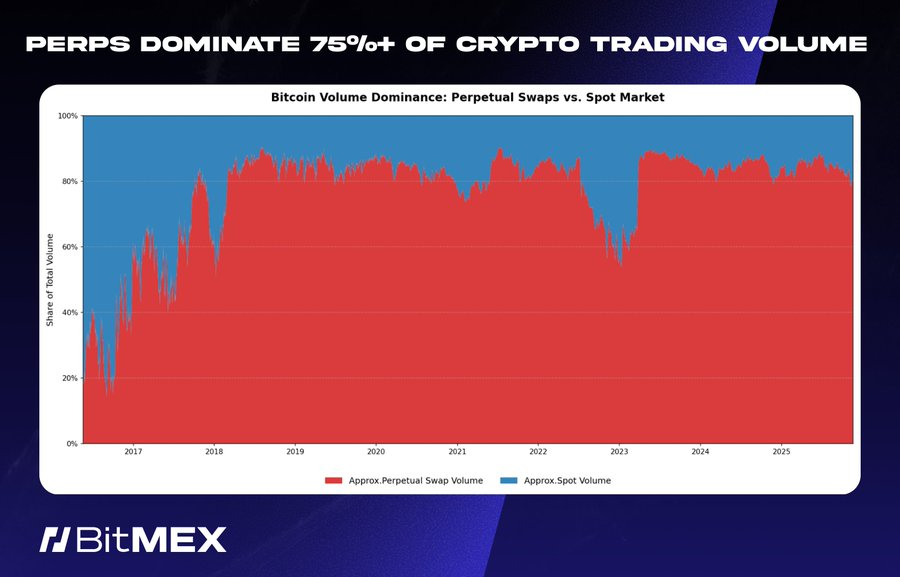
BitMEX has settled and delisted XBTUSD, ending one of the most influential trades in crypto history. The Bitcoin contract ran for more than 10 years and became the template for the perpetual futures market that dominates crypto trading today.
BitMEX itself will shut down on September 23. Yet the product it created is everywhere.
The Bitcoin Trade Every Major Exchange Copied
XBTUSD launched on May 13, 2016. It allowed traders to bet on Bitcoin without an expiry date.
Traditional futures expire on fixed dates. XBTUSD did not. That kept traders in one continuous market instead of splitting liquidity between different contracts.
BitMEX also introduced a funding system to keep the contract close to Bitcoin’s spot price. When too many traders crowded onto one side, they paid the other side.
Then came leverage. At launch, traders could control up to $100 of Bitcoin exposure for every $1 they put down. BitMEX later raised the ceiling to 250x for users who activated its Leverage Booster feature in April 2024.
The model spread quickly. Binance, Bybit, OKX and Hyperliquid now run their own versions.
BitMEX says perpetual contracts account for more than 75% of all crypto trading volume.

Now Wall Street Wants Perpetuals Too
The format is now moving beyond crypto. Kalshi filed with US regulators in August to offer stock index perpetual futures.
Kraken’s parent company also plans to bring Hyperliquid perpetuals to US traders through a regulated venue.
“12 years. 0 customer funds lost. Every bull and bear cycle crypto has ever had,” BitMEX wrote in its closing post.
That claim refers to customer funds lost through security breaches, rather than losses from trading.
Celsius, for example, sued five BitMEX entities on September 12 over 6,360 Bitcoin lost during forced liquidations in the March 2020 crash.
XBTUSD is gone. The market structure it created is still expanding.
Where the Perpetual Swap Design Is Spreading Now
The design is pushing into ordinary stock markets. Kalshi filed with US regulators in August to list stock index perpetual futures, and Kraken’s parent company plans Hyperliquid perpetuals for Americans through a regulated venue.
“12 years. 0 customer funds lost. Every bull and bear cycle crypto has ever had,” BitMEX wrote that in its closing post.
That record covers hacks, not trading losses. BeInCrypto reported that Celsius sued five BitMEX entities on September 12 over 6,360 Bitcoin lost to forced liquidations in the March 2020 crash.
The product outlived the company that invented it.
The post BitMEX Just Killed the Trade That Changed Crypto Forever appeared first on BeInCrypto.


Polymarket has hired Jacob Horne, the co-founder of Zora, the app behind Coinbase’s failed creator-coin experiment, to rebuild its onchain trading product. Chief executive Shayne Coplan announced the move Thursday.
Horne left Zora eight days ago after more than six years running it. His new job sets him against Kalshi, the exchange that now powers Coinbase’s own prediction markets across the United States.
What Coplan Asked Horne to Fix
Polymarket runs two venues:
- Traders outside the US use a market that settles on the Polygon blockchain, a corner of the industry known as Decentralized Finance (DeFi).
- Americans use a separate exchange licensed by the Commodity Futures Trading Commission (CFTC).
Coplan said Horne will work with him directly on product, and pointed at the crypto side of that split.
“He will be working closely with me on product, in particular making Polymarket DeFi great again,” the Polymarket executive shared.
Coplan added that the onchain product had weakened as the company grew, and that longtime users believed it was abandoned. He promised a town hall to set out a fix.
Horne Comes From a Product Coinbase Shut Down
Zora let people turn social posts into tokens others could trade on Base, the blockchain network Coinbase built. Coinbase pushed the idea for over a year before Pollak admitted the bet failed.
Brian Armstrong said the coins did not work. Zora was one of several Base experiments dropped this year, and Coinbase restored the Coinbase Wallet name this month.
Coinbase did not abandon prediction markets. It routed its US product through Kalshi instead. Kalshi handled $13.1 billion of the $15.8 billion traded across both platforms in the week to September 13, leaving Polymarket with 17%.
Three Senior Hires in Eight Days
Horne is the third. Warren Jenson became Polymarket’s first chief financial officer on September 10.
Collin McKinney Hill, a former DoorDash general manager, joined as vice president of operations on September 15.
The post Polymarket Hires Coinbase's Failed Social-Coin Architect appeared first on BeInCrypto.



Mortgage rates are hovering around 7.2% following the Federal Reserve’s first interest rate hike in three years.
The latest move is a bit of relief following a bruising few weeks in which they reached as high as 7.24%, the highest levels since early 2025, according to Mortgage News Daily.
The Fed doesn’t directly control mortgage rates, and by the time the central bank voted to raise benchmark rates by 25 basis points on Wednesday, mortgage rates had already moved higher in anticipation of that hike.
The 10-year Treasury yield, which mortgage rates closely track, dropped 6 basis points to 4.94% on Thursday as investors grew confident that the Fed was kicking off a new rate-hiking cycle to address persistently high inflation.
Fed hikes normally aren’t good news for the housing market or the bond market, but the latest move may be an exception.
Wednesday’s rate hike “is the medicine the housing market needs to recover,” Zillow chief economist Mischa Fisher said in a statement. “Greater market confidence in inflation being under control is more likely to bring mortgage rates lower in 2027 and get the recovery back on track.”
Freddie Mac, which conducts a weekly survey of mortgage rates, said rates averaged 6.95% in the week through Wednesday, a steep jump from 6.76% a week earlier that reflects rising bond yields before the Fed’s latest hike.
Read more: Discover the best mortgage refinance lenders
Today’s mortgage rates
Here are the current purchase mortgage rates for today, Thursday, September 17, 2026, according to the latest Zillow data:
-
30-year fixed: 7.01%
-
20-year fixed: 7.00%
-
15-year fixed: 6.44%
-
5/1 ARM: 7.08%
-
7/1 ARM: 6.74%
-
30-year VA: 6.46%
-
15-year VA: 5.95%
-
5/1 VA: 6.30%
Remember, these are the national averages and rounded to the nearest hundredth.
Here are 8 strategies for getting the lowest mortgage rate possible.
Today’s mortgage refinance rates
Here are the current refinance mortgage rates for today, Thursday, September 17, 2026, according to the latest Zillow data:
-
30-year fixed: 7.00%
-
20-year fixed: 6.76%
-
15-year fixed: 6.42%
-
5/1 ARM: 7.14%
-
7/1 ARM: 6.76%
-
30-year VA: 6.62%
-
15-year VA: 6.15%
-
5/1 VA: 5.88%
As with mortgage rates for purchase, these are national averages that we’ve rounded to the nearest hundredth. Refinance rates can be higher than purchase mortgage rates, but that isn’t always the case.
Monthly mortgage payment calculator
Use the mortgage calculator below to see how various mortgage rates will impact your monthly payments.
This embedded content is not available in your region.
You can bookmark the Yahoo Finance mortgage payment calculator and keep it handy for future use, as you shop for homes and lenders. Be sure to use the dropdown to include private mortgage insurance costs and HOA dues if they apply to you. These monthly expenses, along with your mortgage principal and interest rate, will give you a realistic idea of what your monthly payment could be.
How do mortgage rates work?
A mortgage interest rate is the fee charged by a lender for borrowing money, expressed as a percentage. There are two basic types of mortgage rates: fixed and adjustable rates.
A fixed-rate mortgage locks in your rate for the entire life of your loan. For example, if you get a 30-year mortgage with a 6% interest rate, your rate will remain at 6% for the entire 30 years. (Unless you refinance or sell the home.)
An adjustable-rate mortgage keeps your rate the same for the first few years, then changes it periodically. Let’s say you get a 5/1 ARM with an introductory rate of 6%. Your rate would be 6% for the first five years, and then the rate would increase or decrease once per year for the last 25 years of your term. Whether your rate goes up or down depends on several factors, such as the economy and the U.S. housing market.
At the beginning of your mortgage term, most of your monthly payment goes toward interest. As time passes, less of your payment goes toward interest, and more goes toward the mortgage principal or the amount you originally borrowed.
Read more: Learn how to choose between an adjustable-rate vs. fixed-rate mortgage.
How are mortgage rates determined?
Two categories determine mortgage rates: those you can control and those you cannot.
What factors can you control? First, you can compare the best mortgage lenders to find the one that gives you the lowest rate and fees.
Second, lenders typically extend lower rates to people with higher credit scores, lower debt-to-income (DTI) ratios, and considerable down payments. If you can save more or pay down debt before securing a mortgage, a lender will probably give you a better interest rate.
What factors can you not control? In short, the economy.
The list of ways the economy impacts mortgage rates is long, but here are the basic details. If the economy — for example, employment rates — is struggling, mortgage rates decrease to encourage borrowing, which helps boost the economy. If the economy is strong, mortgage rates go up to temper spending.
With all other factors being equal, mortgage refinance rates are typically slightly higher than purchase rates. So don’t be surprised if your refinance rate is higher than you may have expected.
30-year vs. 15-year fixed mortgage rates
Two of the most common mortgage terms are 30-year and 15-year fixed-rate mortgages. Both lock in your rate for the entire loan term.
A 30-year mortgage is popular because it has relatively low monthly payments. But it comes with a higher interest rate than shorter terms, and because you’re accumulating interest for three decades, you’ll pay a lot of interest in the long run.
A 15-year mortgage can be a good choice because it has a lower rate than you’ll get with longer terms, so you’ll pay less in interest over the years. You’ll also pay off your mortgage much faster. But your monthly payments will be higher because you’re paying off the same loan amount in half the time.
Basically, 30-year mortgages are more affordable from month to month, while 15-year mortgages are cheaper in the long run.
Current mortgage rates: FAQs
What bank is offering the lowest mortgage rates?
According to Yahoo Finance’s weekly survey of lenders with the lowest rates, some of the banks with the lowest median mortgage rates include Chase and Citibank, among others. However, it’s a good idea to shop around for the best rate, not just with banks, but also with credit unions and companies specializing in mortgage lending.
Is 2.75% a good mortgage rate?
Yes, 2.75% is an amazing mortgage rate. You’re unlikely to get a 2.75% rate in today’s market unless you take on an assumable mortgage from a seller who locked in this rate in 2020 or 2021, when rates were at all-time lows.
What is the lowest-ever mortgage rate?
According to Freddie Mac, the lowest-ever 30-year fixed mortgage rate was 2.65%. This was the national average in January 2021. It is extremely unlikely that rates will dip below 3% again anytime soon.
At what rate should you refinance your mortgage?
Some experts say it’s worth refinancing when you can lock in a rate that’s 2% less than your current mortgage rate. Others say 1% is the magic number. It all depends on your financial goals when refinancing, how long you plan to stay in the same house, and on your break-even point after paying the refinance closing costs.
The second-largest cryptocurrency saw significant volatility over the past week, eventually falling below $2,500.
Despite the slight decline, many analysts still expect a strong rally, with targets extending to $3,000 and higher.
Big Move Incoming?
Ethereum (ETH) has slipped to around $2,440 (per CoinGecko), but according to Ali Martinez, it remains contained within its 4-hour channel. The analyst said the price has reached the structure’s lower boundary and that he’s now monitoring a potential rebound toward the mid-range and eventually the upper boundary near $2,570.
Martinez described this as a key level, predicting that a strong 4-hour close above (backed by volume) could confirm a breakout and set the stage for a jump toward $2,700 and even $3,000.
BLADE and Mikybull Crypto also weighed in. The former spotted a double-bottom formation on ETH’s price chart and predicted the asset is gearing up for “the biggest move of the cycle,” anticipating an explosion beyond $10,000 sometime next year.
The latter maintained that Ethereum looks “extremely bullish” in its current condition, arguing that investors wouldn’t want to miss the big run about to unfold.
The declining amount of ETH stored on crypto exchanges strengthens the positive outlook. Earlier this week, the figure dropped to a fresh ten-year low of around 14.6 million coins, suggesting that investors continue to shift from centralized platforms to self-custody solutions. This, in turn, reduces immediate selling pressure.

Meanwhile, whales keep accumulating Ethereum. Just a few days ago, BitMine announced another ETH acquisition worth around $660 million, increasing its total holdings to 5,956,378 units and bringing it closer to its goal of controlling 5% of the asset’s circulating supply. Moreover, Lookonchain revealed that a mysterious market player swapped 512 WBTC ($38.64 million) and 354 cbBTC ($26.73 million) for 26,924 ETH ($64.57 million).
The Concerning Elements
On the downside, ETH’s Relative Strength Index (RSI) hints that bearish momentum could persist in the near term. The ratio has climbed to 76, signaling that the asset has entered overbought territory, which typically signals an impending pullback.

Waning institutional interest is also a concern. Spot ETH ETFs attracted substantial capital over the last several weeks, yet in the past two days there were massive outflows, suggesting that hedge funds, pension funds, and other conservative investors have reduced their exposure to the asset.

The post Ethereum’s Path to $3,000: All Eyes on This Level Now appeared first on CryptoPotato.
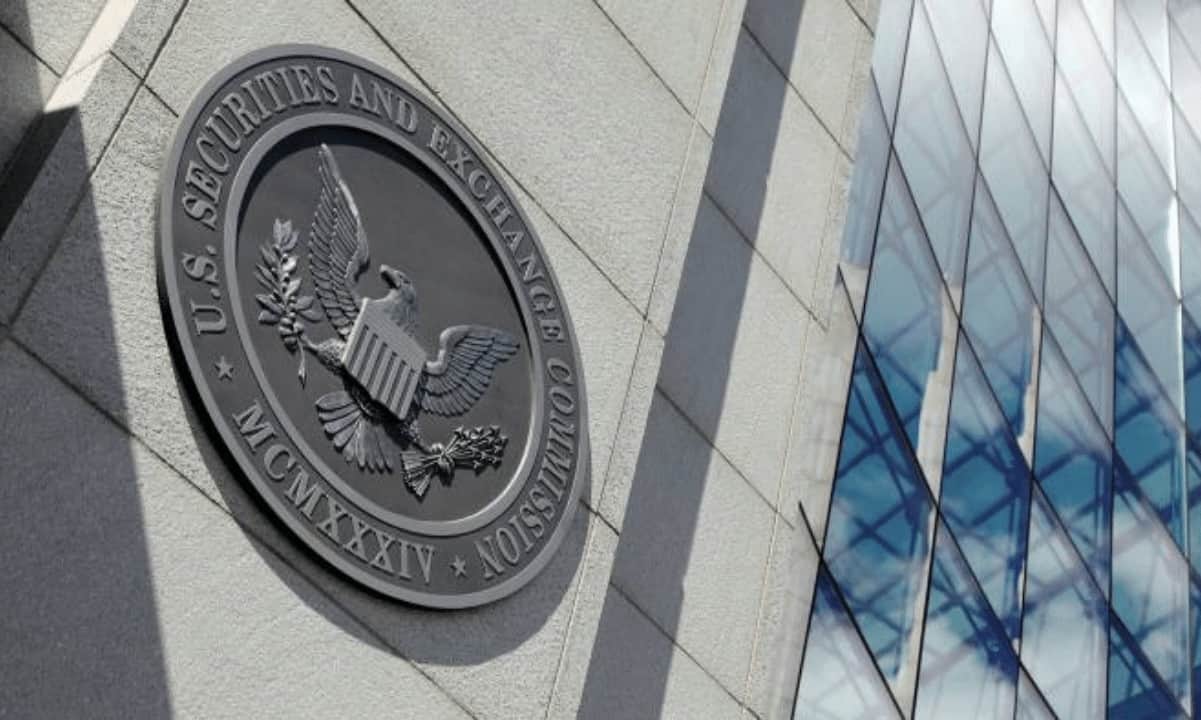
The US Securities and Exchange Commission has introduced an “Innovation Exemption” that’s designed to facilitate secondary trading of tokenized stocks on blockchain-based protocols.
Under the order, which was issued on September 17, Tokenized Securities Venues (TSVs) can receive temporary, conditional relief from being classified as exchanges under the Securities Exchange Act. The venues will be able to facilitate trading of tokenized National Market System stocks through permissioned AMMs (Automated Market Makers) and liquidity pools.
However, it’s important to note that there are a few safeguards that come in place with the exemption. Tokenized shares must provide holders with the same rights as the equivalent traditional stock, while trading volumes and the number of available securities will be limited.
Smart contracts used by TSVs must also be publicly auditable and deployed on public, permissionless blockchains. Trading has to halt whenever the underlying stock is suspended on its primary exchange.
The SEC also granted conditional relief from dealer registration requirements to certain liquidity providers who supply tokenized stocks to these pools.
Speaking on the matter was SEC Chairman Paul Atkins, who said:
“The Innovation Exemption, while temporary, would allow TSVs to trade tokenized NMS stock in a permissioned environment today while the Commission considers the need for additional action to facilitate onchain trading. As we take this important first step, we invite public comment on all aspects of the Innovation Exemption to help inform the Commission as it considers further changes.”
The post SEC Opens Door to Onchain Stock Trading With New ‘Innovation Exemption’ appeared first on CryptoPotato.

As the Dow Jones Industrial Average and other stock indexes rose during Wednesday’s session, Apple (AAPL), Nvidia (NVDA) chipmaker Taiwan Semiconductor Manufacturing (TSM), Bloom Energy (BE) and Advanced Micro Devices (AMD) were among the names to watch. With the S&P 500 and Nasdaq composite threatening to fall below support at their 50-day moving averages, traders who use Investor’s Business Daily’s…
Copyright ©2026 Investor’s Business Daily, LLC. All rights reserved. 87990cbe856818d5eddac44c7b1cdeb8

Salesforce (CRM) stock dipped Wednesday ahead of an investor briefing after the market close and reports of a global system outage impacting the enterprise software maker’s services. The global outage hit early Wednesday and was fixed in the morning, said reports. Salesforce’s annual Dreamforce customer conference started Tuesday. At the event, Salesforce unveiled AIforce, a software interface layer that brings…
Copyright ©2026 Investor’s Business Daily, LLC. All rights reserved. 87990cbe856818d5eddac44c7b1cdeb8

The US Commodity Futures Trading Commission (CFTC) has issued a no-action position expanding regulatory relief for what it describes as “passive software” providers—entities that connect users to CFTC-registered derivatives firms and exchanges without taking on the role of regulated intermediaries.
In a no-action letter released Thursday, the agency’s Market Participants Division said it would not recommend enforcement against qualifying providers or their personnel for failing to register as introducing brokers or associated persons, provided they meet specific conditions that limit discretion over users’ trading decisions. The move is expected to lower compliance friction for crypto wallets and other applications that want to link users to regulated venues, including derivatives such as perpetual contracts and prediction markets.
Key takeaways
- The CFTC’s no-action stance covers “passive software” that facilitates trading with CFTC-registered firms and exchanges without triggering introducing broker or associated person registration—if conditions are met.
- Eligibility hinges on limiting provider discretion, including restrictions on exercising judgment over users’ orders.
- The guidance builds on an earlier relief letter for Phantom Technologies’ self-custodial wallet software, extending the framework to a broader set of passive software use cases.
- The announcement arrives shortly after the CLARITY Act failed to advance in the US Senate, while CFTC and SEC leadership reiterated plans to proceed under existing regulatory authority.
What the CFTC is granting, and who it’s for
The Thursday no-action position is aimed at software providers that act as a technical bridge between end-users and regulated derivatives infrastructure. According to the CFTC, the Market Participants Division will not recommend enforcement for qualifying providers—or their personnel—if they facilitate trading with CFTC-registered entities and exchanges, but do not cross into intermediary functions that would require registration as an introducing broker or an associated person.
The crux of the relief is that the software must remain “passive.” The CFTC’s letter indicates that qualification requires conditions designed to keep the provider’s role constrained—for example, by restricting how much discretion the software provider can exert over user orders.
This distinction matters for crypto product design. Many wallets, onchain apps, and trading interfaces can be configured to route users toward regulated marketplaces. Without relief, providers may face the argument that they are effectively brokering or advising, even if they are not taking custody of assets or manually placing trades themselves.
From Phantom’s wallet software to a wider passive-software rule
The new position extends a similar approach previously granted by the CFTC. In March, the agency issued a no-action letter to Phantom Technologies covering its self-custodial crypto wallet software, subject to conditions. The earlier letter allowed Phantom—again, under defined constraints—to provide and market software that connects users with registered futures brokers and exchanges without registering as an introducing broker.
In July, Phantom and the Hyperliquid Policy Center also advocated for broader protections from the CFTC. Their request focused on shielding non-custodial wallet providers from introducing broker requirements and clarifying how existing rules apply when blockchain developers and regulated derivatives firms use onchain infrastructure. The Thursday move suggests at least part of that line of reasoning is being carried forward: the CFTC is treating certain software-mediated connections to regulated trading venues as distinct from regulated brokerage activity.
While the no-action letters are not blanket permission for every conceivable integration, the pattern is clear: regulators appear willing to carve out compliance space for interfaces that limit discretion and do not function as intermediaries in the traditional sense.
Regulatory momentum after the CLARITY Act setback
The CFTC’s decision comes just two days after the CLARITY Act failed to advance in the US Senate. A cloture motion received 49 votes—short of the 60 needed to move forward to debate, according to the reporting referenced in the original coverage.
After that vote, both CFTC Chair Michael Selig and Securities and Exchange Commission Chair Paul Atkins indicated their agencies would keep working on crypto-related regulation using existing authority. Selig said the CFTC is “locked in and ready to ship its rules for the new frontier of finance,” as referenced in a post on X. Atkins said the SEC would act “with or without legislation” to provide regulatory certainty for digital assets, also referenced via X.
Thursday’s actions reflect that stated resolve. Alongside the CFTC’s no-action position, the SEC approved a temporary exemption permitting qualifying platforms to facilitate limited onchain trading of tokenized US stocks through permissioned automated market makers and liquidity pools, according to the cited coverage.
Why this matters for crypto wallets and derivatives access
For builders and operators, the operational takeaway is that the compliance burden may be reduced when software design keeps the provider away from discretionary trading decisions. In practical terms, the CFTC’s relief signals that developers can build user-facing routing or connectivity layers—potentially including wallet functionality or other application interfaces—without automatically inheriting introducing broker registration obligations, so long as they adhere to the conditions laid out in the no-action framework.
For traders and users, the downstream effect could be smoother access to regulated derivatives-like products through familiar interfaces. If software providers can integrate with CFTC-regulated firms and exchanges more easily, users may encounter fewer friction points when seeking exposure to compliant venues—whether those venues involve perpetual derivatives or other CFTC-regulated market structures such as prediction markets.
Still, the relief is not unlimited. The CFTC’s letter makes clear that qualification depends on meeting the “passive” requirements, including limits on discretion over orders. Observers will likely watch how broadly “passive” is interpreted in future guidance and how regulators evaluate real-world products where user interaction can blur the line between simple routing and active brokerage decision-making.
Next, the industry will be looking for further clarity on how these “passive software” principles apply across different architectures—especially as more crypto applications seek integration with regulated derivatives platforms—while also monitoring whether lawmakers’ failure to move the CLARITY Act shifts the pace and direction of agency rulemaking.

JIO FINANCIAL SERVICE NEWS | JIO FINANCIALS LATEST NEWS | Market support

Experts share the everyday habit that can slash hospital risk for heart patients

Wall St closes higher as oil eases, Treasury yields dip



-

 Fashion6 days ago
Weekend Open Thread – Corporette.com
-

 Tech4 days ago
The Latest Weird Thing to Play Doom Is the Mapped-Out Brain of a Fruit Fly
-

 Business7 days ago
10 Most-Streamed Songs On Spotify In 2026 So Far, Led By Ella Langley’s Dominant Run On The Charts This Year
-

 Crypto World7 days ago
XAG/USD: Silver’s Short-Term Rally Meets Its Moment of Truth
-

 Crypto World7 days ago
Diesel Tops $6 a Gallon for the First Time as 28 States Set Records
-

 News Videos6 days ago
Facing Financial Fears
-

 Crypto World3 days ago
Elon Musk Drops a Bombshell: Grok 5 Could Be the AGI Breakthrough
-

 Crypto World3 days ago
Kraken Lets xStocks Holders Earn Yield Through DeFi
-

 Crypto World1 day ago
US Charges Robinhood Engineers Over Crypto Listing Trades
-

 Business5 days ago
Rivals Sam Altman and Elon Musk Rally Behind Dario Amodei’s Call for a Slowdown in AI Development
-

 Crypto World5 days ago
Can AI Build a Startup in 72 Hours? Elon Musk's Team Will Livestream the Test
-

 Entertainment6 days ago
News Specials, Movies, Shows, More
-
 NewsBeat3 days ago
‘Sick conspiracy’: Trump says only guardrails AI needs is ‘a strong and smart (High IQ!) president’ in all-caps rant
-
 Crypto World4 days ago
New Tesla Roadster Uses SpaceX Tech. Will It Impact the Stock Price?
-

 Crypto World7 days ago
Bitcoin ETFs Pull $167M as 2026’s Best Inflow Run Slows
-

 Crypto World6 days ago
Robinhood Chain Never Stopped But its Blobs Did Stop Reaching Ethereum For 14 Minutes
-

 Crypto World2 days ago
What Is the Status of the U.S.-Iran Peace Talks? Here's What Both Sides Are Saying
-
 Entertainment6 days ago
New Horror Movie Officially Earns a Rare Stephen King Recommendation
-

 Business6 days ago
Marvell: Most Potent Setup Of The AI Factory Decade
-
 Crypto World4 days ago
3 Token Unlocks to Watch in the Third Week of September 2026
You must be logged in to post a comment Login