
Crypto World
Markets Signal Stress as El Salvador Sticks to Its Bitcoin Playbook

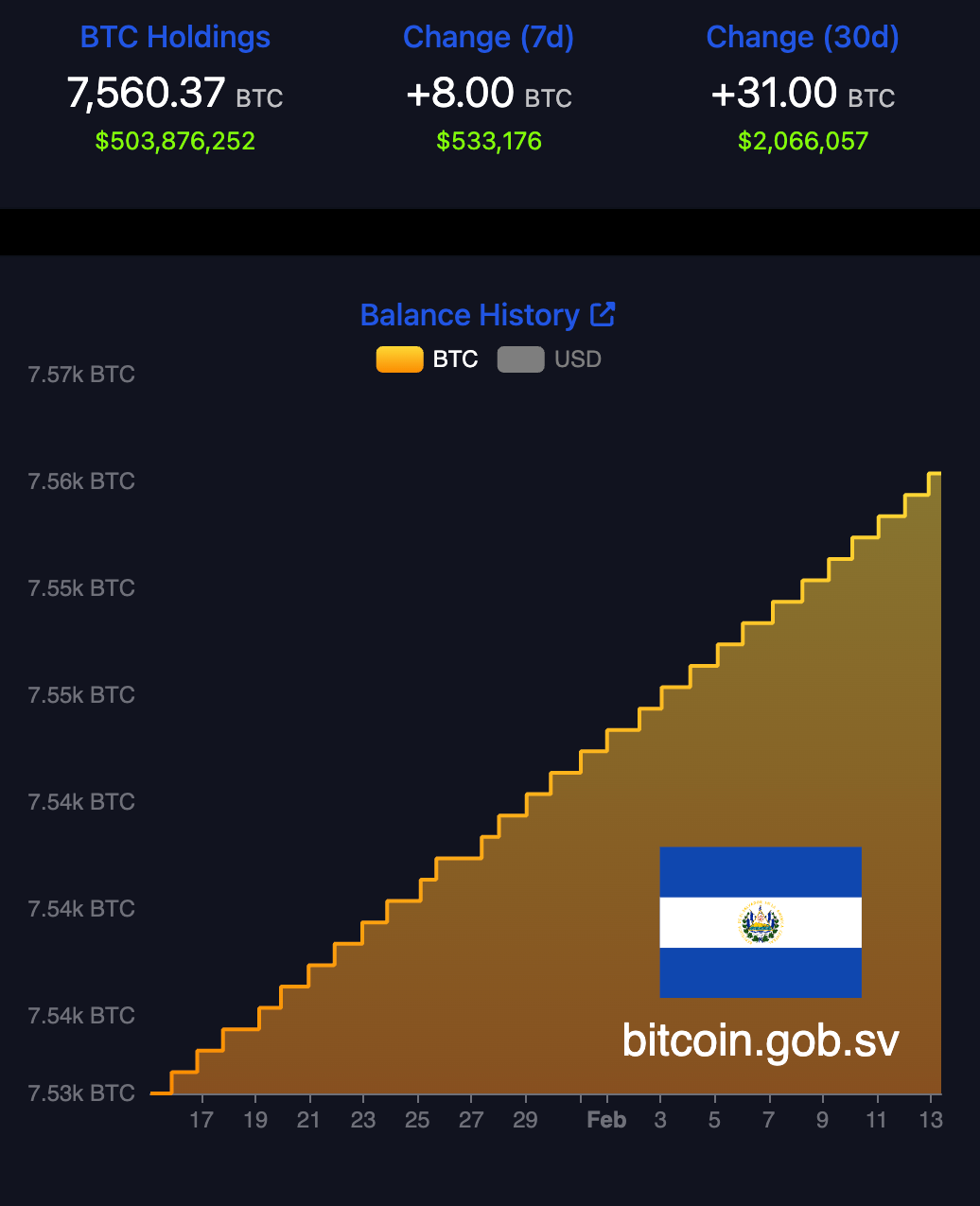
Bitcoin’s (BTC) bear market has weighed heavily on investors across the spectrum. Corporate treasuries, major whales, and even nation-state holders have all felt the pressure.
The cryptocurrency’s slide has slashed the value of El Salvador’s holdings as credit default swaps rise to a five-month high, raising concerns over the country’s IMF program and debt outlook.
Sponsored
El Salvador’s Bitcoin Bet Under Pressure as Portfolio Drops
According to the latest data from El Salvador’s Bitcoin Office, the country’s Bitcoin reserves stand at 7,560 BTC, worth approximately $503.8 million. Bloomberg reported that the portfolio’s value has fallen from around $800 million at Bitcoin’s October 2025 peak, marking a drop of nearly $300 million in just four months.
Bukele, an ardent Bitcoin advocate, has continued purchasing one Bitcoin per day. However, this strategy increases the country’s exposure to market volatility.
In contrast, Bhutan recently sold $22.4 million worth of Bitcoin. The divergent strategies of El Salvador and Bhutan reflect fundamentally different risk philosophies.
Bhutan’s Bitcoin mining operations generated more than $765 million in profit since 2019. However, the 2024 Bitcoin halving significantly increased mining costs, compressing margins and reducing returns. Bhutan now appears to be liquidating part of its holdings, while El Salvador continues to prioritize long-term accumulation.
Nonetheless, the country has also diversified its portfolio. Last month, it spent $50 million to acquire gold as demand for the safe-haven metal rose amid macroeconomic tensions.
IMF Loan Talks Face Strain Over El Salvador’s Bitcoin Policy
El Salvador’s deepening commitment to cryptocurrency has impacted relations with the International Monetary Fund. The government’s continued Bitcoin purchases, combined with delays in implementing pension reforms, have complicated the country’s IMF agreement.
Sponsored
The Fund has expressed concern about Bitcoin’s potential impact on fiscal stability. A disruption to the IMF program would weaken one of the key supports behind El Salvador’s sovereign debt recovery. Over the past three years, the country’s bonds have returned more than 130%, making them one of the standout turnaround stories in emerging markets.
“The IMF may take issue with disbursements potentially being used to add Bitcoin. Bitcoin being down also doesn’t help to ease investors’ concerns,” Christopher Mejia, an EM sovereign analyst at T Rowe Price, told Bloomberg.
The IMF approved a 40-month Extended Fund Facility on February 26, 2025, unlocking about $1.4 billion in total, according to official IMF documentation. The first review ended in June 2025, with $231 million disbursed.
However, the second review has remained on hold since September, following the government’s delay in publishing a pension system analysis. During that period, El Salvador continued to add to its Bitcoin reserves despite repeated warnings from the IMF.
Sponsored
A third review is scheduled for March, with each review tied to additional loan disbursements.
“The continued purchase of Bitcoin, in our view, does create some potential challenges for the IMF reviews. The market would react quite poorly if the anchor provided by the IMF were no longer present.” Jared Lou, who helps manage the William Blair Emerging Markets Debt Fund, said.
Meanwhile, bond markets are signaling rising concern over El Salvador’s fiscal outlook. Credit default swaps have climbed to a five-month high, reflecting increasing investor anxiety about the country’s repayment capacity.
According to data compiled by Bloomberg, El Salvador faces $450 million in bond payments this year, with obligations increasing to nearly $700 million next year.
El Salvador’s Bitcoin policy now sits alongside key fiscal and IMF negotiations. The outcome of upcoming IMF reviews and the country’s bond repayment schedule will play a significant role in shaping investor confidence and the sustainability of its debt trajectory.


TLDR:
- The memecoin market cap holds above $45B even as the Fear & Greed Index drops to a low of 10.
- Only 0.00009% of PumpFun tokens captured over 55% of FDMC, exposing extreme memecoin market concentration.
- OG memecoins like DOGE, PEPE, and BONK show stronger retention through utility, trust, and trading volume.
- Over 90% of memecoins launched in late 2025 and early 2026 have already lost liquidity and user interest.
Memecoins continue to struggle with user retention even as the total market cap holds above $45 billion. The Fear & Greed Index has fallen to 10, yet the sector remains structurally active.
Thousands of new tokens launch weekly, but the overwhelming majority collapse within weeks. The gap between surviving and failing projects keeps widening, pointing to deep retention problems across the memecoin space.
Weak Fundamentals Drive Rapid User Exits From New Tokens
Most new memecoins share a common failure pattern rooted in poor design. They launch with heavy hype, attract early buyers, then collapse once whale selling begins. That cycle has repeated consistently throughout late 2025 and into 2026.
Data from PumpFun shows only around 12 tokens, roughly 0.00009% of all launches, captured over 55% of fully diluted market cap.
The remaining thousands lost liquidity extremely fast. Users had little reason to stay once early momentum faded.
Crypto analyst Tanaka pointed this out directly on X, noting that whale concentration and full dependence on hype culture leave most tokens without a retention foundation. When there is no utility, no community incentive, and no roadmap, users simply move on to the next launch.
The numbers back this up clearly. Over 90% of memecoins launched in late 2025 and early 2026 have already died.
Tokens that once reached $1 to $2 billion in market cap are now sitting at tens of millions or have vanished entirely. That collapse rate reflects a market where retention was never prioritized.
Utility and Track Record Separate Survivors From Short-Term Projects
Established memecoins retain users far better because they offer more than speculation. FLOKI expanded into the Valhalla play-to-earn metaverse and operates across both BSC and Ethereum. That cross-chain utility gives holders a reason to stay engaged beyond price movement.
PEPE demonstrated strong user confidence by reclaiming a $1.7 billion market cap. It led a market recovery with a 20.5% daily gain on March 16, backed by a 287% volume surge to $790 million. That kind of organic volume reflects genuine user participation, not just short-term speculation.
BONK similarly retained its Solana user base, gaining 10% with a 228% trading volume spike to $131 million. Gemini’s decision to launch BONK perpetual contracts with 100x leverage further reinforced its credibility among active traders seeking longer-term exposure.
DOGE remains the clearest example of sustained retention, holding its position as the leading memecoin even in a weak market. Its potential integration with X Money adds a forward-looking narrative that newer tokens simply cannot compete with.
As Tanaka noted, OG memecoins continue to prove that brand trust, community depth, and utility pathways are what ultimately keep users from walking away.

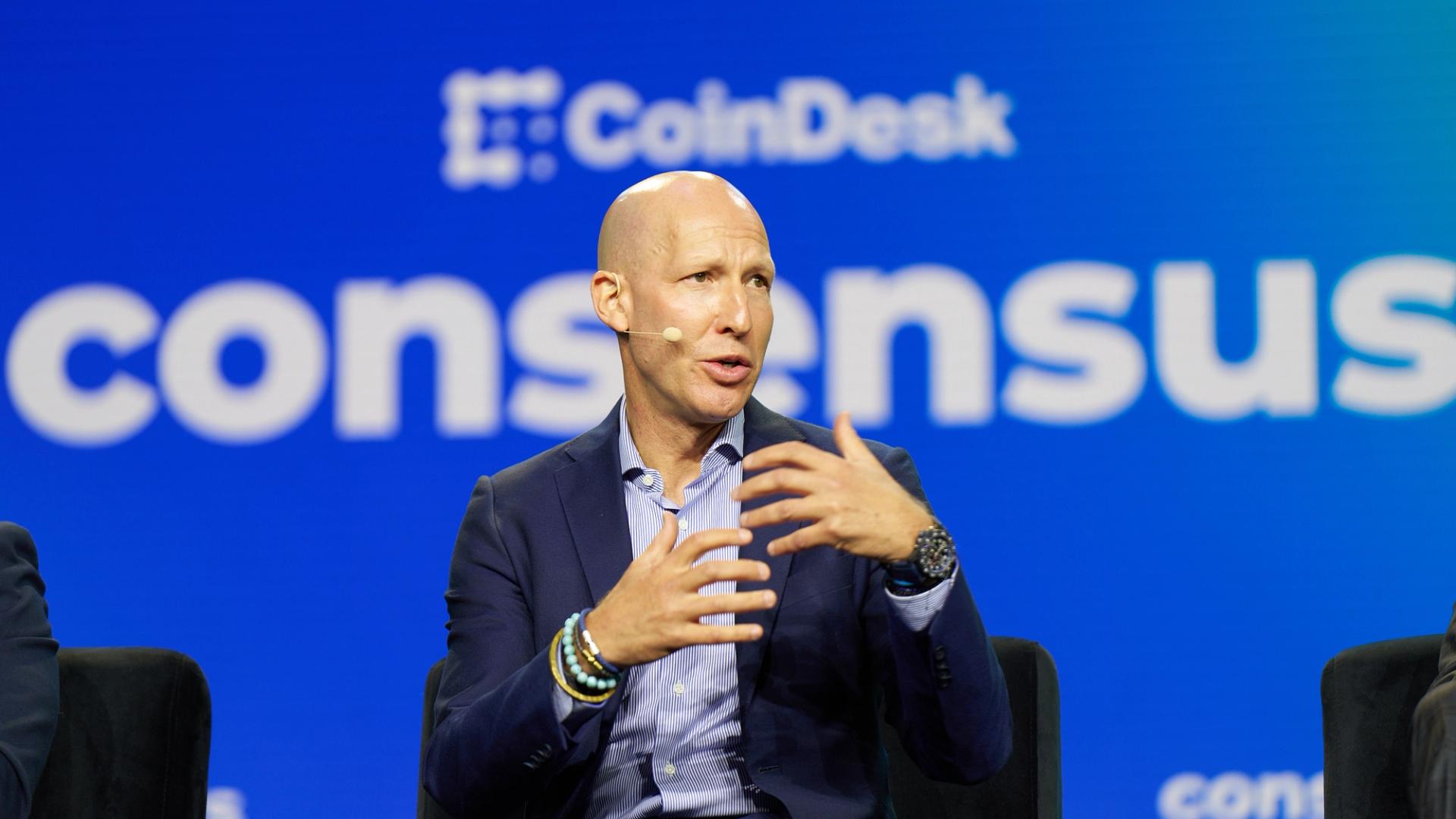
Artificial intelligence agents will be deployed starting Wednesday by law enforcement agencies using analytical tools provided by TRM Labs, which added the new agents that are meant to allow investigators to use regular language to frame their searches.
The new investigative assistant is embedded in the TRM Forensics service that’s extended to law enforcement agencies, crypto businesses and financial firms, and it “translates natural language prompts into complex investigative actions,” TRM said in a press release. A user can request information about the flow of funds without needing highly technical inputs, speeding up the time-dependent process of chasing bad actors.
Last year, illicit crypto volume hit $158 billion, according to the analysis firm.
“What we’re seeing every day is that the caseload is growing faster than the workforce, and investigators are being asked to operate across dozens of blockchains, jurisdictions, and typologies simultaneously,” said Ari Redbord, head of legal and government affairs for TRM.
An AI tool on investigators’ side, he said, could help overcome “a sharp acceleration in AI-enabled fraud and scams,” which TRM data puts at a 500% increase “as criminal actors use automation, deepfakes and AI-driven tools to scale operations with speed and precision that simply didn’t exist before.”
Welcome to our institutional newsletter, Crypto Long & Short. This week:
- Ryan Kirkley on how crypto prediction markets can risk incentivizing manipulation and amplify misinformation at scale.
- Top headlines institutions should pay attention to by Francisco Rodrigues.
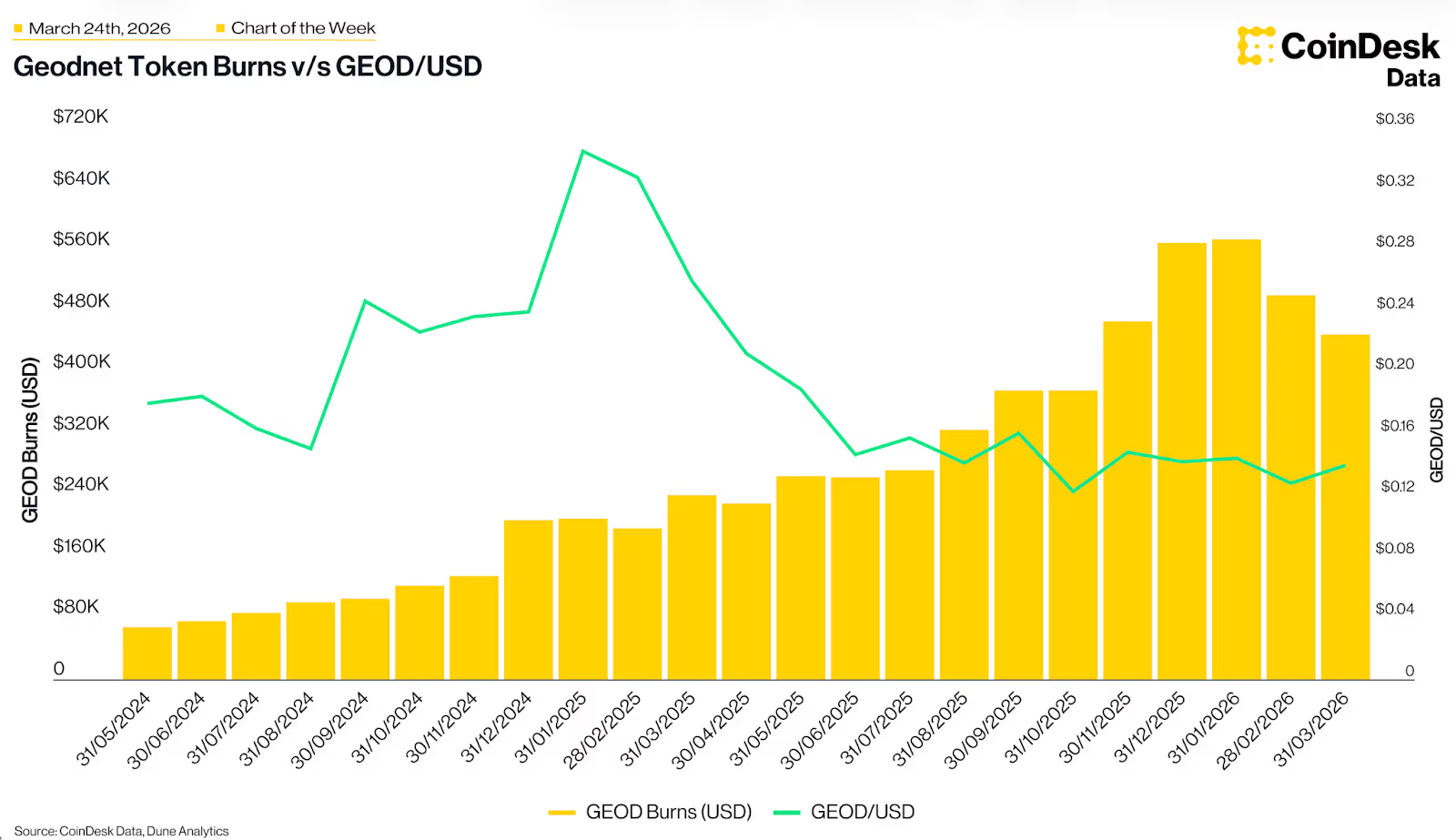
- Geodnet decoupling suggests fundamental re-rating in Chart of the Week.
Thanks for joining us!
Expert Insights
Prediction Markets Don’t Just Forecast Power – They Reshape It
By Ryan Kirkley, Co-Founder and CEO of Global Settlement Network
Prediction markets are often pitched as neutral forecasting tools: efficient ways to aggregate information and convert collective belief into a price. That case is not entirely wrong. The academic literature has long found that prediction markets can produce forecasts that outperform many conventional benchmarks. But as someone who believes in crypto’s role in modernizing market infrastructure, I think we should be honest about what the sector is building here. The crypto version of prediction markets is no longer just about forecasting. It is about financializing real-world instability.
That distinction matters. On Polymarket, for example, users can bridge assets from Ethereum, Solana, Bitcoin and other chains; those deposits are converted into USDC.e on Polygon, where fully backed yes/no positions trade and settle on-chain as tokenized claims. In other words, crypto does not merely host these markets. It gives them global reach, cross-chain funding and low-friction settlement. That is impressive market design. It is also exactly what makes the social risk larger.
Once you turn war, political violence, public disorder or institutional breakdown into tradable crypto instruments, you create new incentives for bad actors. The first is obvious: people with privileged information can try to monetize it. U.S. regulators have long recognized that not every event belongs inside a financial market. CFTC Regulation 40.11 bars event contracts involving terrorism, assassination and war, among other categories deemed contrary to the public interest. That is not anti-market moralizing. It is recognition that some contracts do more than reveal information; they can distort behavior around the underlying event.
The second problem is even more serious: prediction markets can reward people who are not just informed about an outcome, but capable of influencing it. Academic research has warned that when traders have outside incentives, or can take actions that affect the underlying event, information aggregation can break down. A market is supposed to measure probability. But when the market itself becomes a source of incentive, it starts to reshape the probability it claims to observe.
That concern is no longer theoretical. Reuters reported this month that markets on Iran strikes and Ayatollah Ali Khamenei’s ouster drew ethics and insider-trading scrutiny after unusually well-timed bets were flagged; in a separate report, Reuters noted that Polymarket removed bets on a nuclear explosion after public backlash. Even if only a small number of traders are acting on nonpublic information, the message to everyone else is corrosive: access, not insight, may be what gets rewarded.
There is a third risk, and it is deeply crypto-native: these platforms increasingly function as media engines as much as markets. Axios reported in February that prediction-market accounts were spreading false, misleading or context-free claims to millions on social media, turning market odds into viral narratives before facts were established. When screenshots of thin or sensational markets circulate as “truth,” bad actors do not need to influence the event itself. They only need to influence the information environment around it.
For advisors and allocators, the mistake is to treat every liquid market as legitimate simply because price discovery exists. Crypto has real work to do: modernizing settlement, improving transparency and making capital markets more programmable. But building the most efficient rails for speculating on war, regime change or civic breakdown is not financial innovation. It is moral hazard at internet scale. Prediction markets do not just forecast power. In their current crypto form, they reshape it by rewarding those most willing to exploit instability.
Headlines of the Week
While this week has shown clear progress on the regulatory front, market anxiety coupled with AI disruption has started to affect the crypto industry.
Chart of the Week
Geodnet decoupling suggests potential fundamental re-rerating
Geodnet, a Decentralized Physical Infrastructure Network (DePIN) protocol providing high-precision positioning for Robotics and Physical AI, shows a clear fundamental decoupling. While its price has trended sideways alongside an underperforming DePIN index (down 3% relative to BTC, as per CoinDesk Data), monthly token burns have reached $500,000, currently neutralizing roughly 60–80% of new emissions. This divergence is driven by the growing data revenue from autonomous drone fleets and humanoid robot developers. As the network pivots from infrastructure build-out to a high-margin data layer for the machine economy, the current supply-demand imbalance suggests a potential fundamental re-rating.

Listen. Read. Watch. Engage.
Looking for more? Receive the latest crypto news from coindesk.com and market updates from coindesk.com/institutions.
Note: The views expressed in this column are those of the author and do not necessarily reflect those of CoinDesk, Inc., CoinDesk Indices or its owners and affiliates.

Ripple has joined the Monetary Authority of Singapore’s (MAS) BLOOM sandbox to pilot trade finance settlements using its RLUSD stablecoin. The initiative, conducted in partnership with fintech Unloq, utilizes the XRP Ledger to automate payment release upon programmable triggers.
This is not a proof-of-concept for the future. It is a live test of replacing traditional letters of credit with smart contracts to cut settlement time from days to seconds. By entering the sandbox, Ripple is positioning its enterprise stablecoin directly inside the regulated financial infrastructure of Singapore.
- Pilot Scope: Ripple and Unloq are testing programmable RLUSD payments within Singapore’s BLOOM sandbox to automate cross-border trade settlements.
- Settlement Mechanism: The system replaces manual letters of credit with XRP Ledger smart contracts that trigger instant funds release upon cargo verification.
- Strategic Context: The move leverages Ripple’s existing Singapore Major Payment Institution license to target the $9 trillion trade finance market.
The Mechanism: How Programmable Settlement Works
This system eliminates the ‘dead air’ in trade finance, the 5-10 day gap between delivery and payment confirmation. Fintech Unloq provides the SC+ infrastructure, a smart-contract layer that digitizes trade obligations. When a predefined condition is met, such as a customs API confirming cargo arrival, the smart contract triggers the XRP Ledger.
The XRPL then executes the settlement using RLUSD, Ripple’s enterprise-grade stablecoin. This is an atomic swap of documentation for capital. There is no correspondent bank intermediary. There is no manual reconciliation. The stablecoin liquidity moves instantly, reducing counterparty risk to near zero.
— Xaif Crypto
 BREAKING
Ripple just joined Singapore's MAS BLOOM initiative.
Partnering with Unloq to settle cross-border trade using $XRP Ledger + RLUSD. MAS doesn't let anyone in. They chose Ripple.$XRP is becoming regulated financial infrastructure in real time and most of you are… pic.twitter.com/aDBGbgF7w7
 |
| (@Xaif_Crypto) March 25, 2026
Prior to this setup, exporters relied on paper-heavy letters of credit and expensive bank guarantees. The BLOOM sandbox allows Ripple to demonstrate that a tokenized bank liability or regulated stablecoin can function as a legally binding settlement instrument.
The pilot specifically targets smaller businesses often priced out of traditional trade finance due to high fees. By automating the verification-to-payment loop, Unloq and Ripple effectively compress the financing cycle.
The Strategic Signal: Why MAS Matters
Joining the MAS BLOOM initiative is a credibility play, not a tech demo.
Singapore runs one of the strictest regulatory environments for digital assets in the world. Operating under MAS oversight means Ripple is stress-testing RLUSD where the standards are highest. Pass here and the compliance argument becomes hard to dispute anywhere else.

The bull case is straightforward. Successful execution in the sandbox validates RLUSD as a viable Swift replacement in trade finance. It stops being a speculative asset and becomes critical B2B infrastructure. If programmable settlement captures even a fraction of regional trade flows, demand for RLUSD liquidity spikes on fundamentals, not speculation.
The market Ripple is targeting is not small. Trade finance is a $9 trillion sector running on paper and trust. Ripple is betting it can run on code and collateral instead.
The BLOOM pilot is the test. Graduate from crypto asset to global trade instrument or stay a speculative play waiting for a use case. The outcome answers that question directly.
Discover: The best new crypto in the world
The post Ripple XRP Enters MAS BLOOM Sandbox to Pilot RLUSD Trade Finance Settlement appeared first on Cryptonews.


Interactive Brokers now lets clients transfer supported crypto from external wallets into IBKR accounts without selling first, extending its low-fee, multi-asset platform push.
Summary
- Interactive Brokers (NASDAQ: IBKR) announced on March 25 that clients can transfer supported cryptocurrencies from external wallets directly into their IBKR-linked crypto accounts without first liquidating their positions.
- The feature covers Bitcoin, Ethereum, Solana, and other supported assets, with custody handled through Paxos or zerohash, and commissions ranging from 0.12% to 0.18% of trade value — significantly below the industry norm of up to 2.00%.
- The move follows IBKR’s January launch of 24/7 stablecoin account funding and deepens its push to position itself as a single destination for both traditional and digital asset management.
Interactive Brokers (NASDAQ: IBKR) launched a crypto portfolio transfer feature on Wednesday, allowing clients to move existing digital asset holdings from external wallets or platforms directly into their IBKR-linked crypto accounts — without selling first. According to a BusinessWire press release, eligible clients of Interactive Brokers LLC and Interactive Brokers (U.K.) Limited can now transfer Solana, Bitcoin, Ethereum, and other supported cryptocurrencies directly into accounts held at Paxos or zerohash, and manage them alongside stocks, options, futures, currencies, and bonds from a single interface.
CEO Milan Galik framed the announcement as a direct response to friction in the crypto trading experience. “Crypto investors should be able to access competitive crypto pricing and diversified investment opportunities without managing multiple accounts or liquidating their positions,” Galik said. “By enabling direct crypto portfolio transfers, we’re making it easy for traders to benefit from IBKR’s low-cost crypto trading and gain access to our full range of global markets within the same professional trading environment.”
The pricing angle is central to IBKR’s pitch. The brokerage charges commissions of 0.12% to 0.18% of trade value — with a minimum of $1.75 per order and no added spreads or markups — compared to fees of up to 2.00% or more on many retail crypto platforms, often with additional embedded costs. In a previous crypto.news story, IBKR launched 24/7 stablecoin account funding in January, enabling clients to deposit USDC and have it converted to USD almost instantly through zerohash, replacing cross-border wires that typically take one to three business days and carry fees of $25 to $50 per transaction.
Wednesday’s feature is part of a broader, deliberate build-out. IBKR began offering crypto trading in 2021 with Bitcoin and Ethereum, before adding Solana, XRP, and other tokens in subsequent years. In February 2026, the brokerage expanded further, adding Coinbase Derivatives perpetual-style futures contracts to its platform. Crypto custody is handled through two regulated partners — Paxos Trust Company, supervised by the New York Department of Financial Services, and zerohash, a FinCEN-registered money services business with a BitLicense from the NYDFS.
The move puts IBKR in increasingly direct competition with crypto-native exchanges for active traders, particularly those who want access to traditional markets alongside digital assets. That pressure is coming from both sides — a previous crypto.news story noted that Morgan Stanley plans to offer crypto trading on E-Trade in 2026, signaling that legacy brokerages are collectively accelerating their digital asset integrations.
Interactive Brokers serves individual investors, hedge funds, proprietary trading groups, financial advisors, and introducing brokers across more than 170 markets globally. The group is a member of the S&P 500. The firm has long differentiated itself on low costs and broad market access, and the portfolio transfer feature extends that model to users who currently hold crypto elsewhere but want lower trading costs and integrated access to traditional markets — without the tax and timing complications of liquidating to move.
“Perpetual-style crypto futures have become popular with traders because they provide long-dated exposure and greater flexibility,” Galik said at the February launch of Coinbase Derivatives contracts. The portfolio transfer feature now means those same traders can bring their existing crypto holdings onto the platform in a single step. As a previous crypto.news story noted, the stablecoin-funded account initiative earlier this year already pointed to a firm that views crypto infrastructure not as a bolt-on, but as a core part of its long-term platform strategy.


The partnership brings growth, large-cap, fixed income, equity income, and gold ETFs onchain through Ondo Global Markets.
Ondo Finance has partnered with Franklin Templeton to tokenize five of the asset manager’s exchange-traded funds (ETFs). The deal marks the first time Templeton-managed ETFs are available on-chain, extending the $1.7 trillion asset manager’s blockchain footprint beyond its tokenized money market fund.
The five ETFs span a broad range of asset classes: the Franklin Focused Growth ETF (FFOG), an actively managed fund targeting innovative U.S. companies; the Franklin U.S. Large Cap Multifactor Index ETF (FLQL); the Franklin Responsibly Sourced Gold ETF (FGDL); the Franklin High Yield Corporate ETF (FLHY); and the Franklin Income Equity Focus ETF (INCE). The products will be available through Ondo’s Global Markets platform.
Under the arrangement, Franklin Templeton continues to manage the underlying ETFs while Ondo provides tokenization infrastructure and digital distribution. Ondo will acquire shares of the ETFs and issue blockchain-based tokens representing their economic exposure — tokens that do not grant direct ownership of the underlying shares but instead pass through returns to holders. That structure opens the door to DeFi use cases, such as on-chain collateralization, that are not available with traditional fund shares.
The tokenized ETFs will initially be available in Europe, Asia-Pacific, the Middle East, and Latin America, with U.S. availability contingent on further regulatory clarity around how third parties can distribute registered funds on-chain.
The structure bypasses the need for a brokerage account, targeting crypto-native investors who hold assets primarily in wallets and stablecoins. Liquidity will be supported by Ondo’s market makers, including during periods when traditional markets are closed, enabling around-the-clock trading.
The deal also represents a significant expansion for Ondo Global Markets, which launched in September 2025 with over 100 tokenized U.S. stocks and ETFs on Ethereum. Since then, the platform has grown into the largest tokenized securities platform by TVL, with over $700 million locked, according to DeFiLlama.
The Franklin Templeton tie-up adds a new dimension: rather than tokenizing individual equities, Ondo is now wrapping actively managed funds from a top-tier asset manager, offering diversified exposure through a single token.
Ondo’s Rapid Rise
Ondo Finance’s overall TVL stands at roughly $2.7 billion, according to DeFiLlama. The protocol first crossed $1 billion in March 2025 following the launch of Ondo Nexus, and broke through $2 billion less than a year later in January 2026. Ethereum remains the dominant network for Ondo’s tokenized assets, with Solana and BNB Chain accounting for smaller shares.
The platform also received a regulatory boost in late 2025, when the SEC closed a multi-year investigation into Ondo Finance without bringing charges.
The ONDO token is trading at approximately $0.26 with a market cap of about $1.2 billion, according to CoinGecko, down more than 85% from its all-time high of $2.14 in December 2024.
This article was written with the assistance of AI workflows. All our stories are curated, edited and fact-checked by a human.
TLDR
- BlackRock CEO Larry Fink warned that oil prices near $150 could trigger a global recession.
- He said prolonged supply disruptions could keep oil prices above $100 for years.
- Fink stated that high energy costs would raise production and transport expenses worldwide.
- He explained that lower-income households would face greater pressure from rising fuel bills.
- Goldman Sachs raised the probability of a US recession to 30% due to oil-driven inflation risks.
BlackRock CEO Larry Fink warned that soaring oil markets could tip the world into recession. He said prolonged supply shocks could lift crude toward $150 per barrel. He outlined two economic paths based on how the Iran conflict develops.
Oil Prices Could Stay Above $100 for Years
Fink spoke on the BBC Big Boss Interview podcast on March 25. He said oil prices could climb sharply if tensions restrict supply and trade. He warned that crude near $150 would strain growth and fuel inflation.
He stated, “We could have years of oil prices above $100, closer to $150 oil.” He added that such levels would carry “profound implications in the economy.” He said high energy costs would likely trigger a global recession.
He explained that elevated fuel costs would raise transport and production expenses. As a result, businesses would face tighter margins and slower expansion. Lower-income households would also feel stronger pressure from higher energy bills.
He contrasted this outlook with a full de-escalation scenario. He said Iran’s reintegration into global markets could push oil toward $40 per barrel. He argued that increased supply would support growth and ease inflation pressures.
However, he warned that a partial resolution presents greater risks. He said Iran could still threaten trade routes and Gulf stability. In that case, oil prices could remain elevated for years.
He stressed that sustained prices near $150 would almost certainly lead to recession. He said energy costs at that level would ripple across sectors. He linked the outlook directly to supply disruptions and trade threats.
Goldman Sachs and JPMorgan Raise US Recession Odds
Other major financial institutions have also raised recession probabilities. Goldman Sachs increased its United States recession odds to 30%. The bank cited rising inflation tied to oil prices and weaker growth forecasts.
JPMorgan placed recession odds at 35%. The bank said markets may underestimate the economic drag from prolonged energy shocks. Both institutions connected their outlooks to persistent crude price strength.
Oil markets have shown volatility in recent weeks. Reports about ceasefire talks caused brief price declines on Wednesday. However, traders continued to track risks around key shipping lanes.
The Strait of Hormuz remains central to global energy flows. Any disruption there could tighten supply quickly. As tensions evolve, oil prices continue to respond to geopolitical signals.
Fink’s remarks add to the ongoing debate within financial circles. He tied recession risk directly to crude levels above $100 and approaching $150. His comments followed recent market swings linked to developments involving Iran.
He reiterated that a clear end to hostilities could lower oil prices sharply. Yet he maintained that unresolved threats would keep prices high. The interview aired on March 25 and detailed both economic scenarios.
Crypto World
Bitcoin Price News Reveals 1000x Setup as Trump Demands Iran Surrender and Oil Rises While Pepeto BTC and SOL React
On March 6, President Trump declared there would be no deal with Iran except a surrender, sending Brent crude oil above $90 for the first time in more than a year and dragging stocks and crypto down with it. The BTC cycle is full of instability, but the same conditions that push the market down create the best entry points for the projects that thrive when the cycle turns.
The bitcoin price news also shows Pepeto raised more than $8 million with a live exchange and the Binance listing approaching. Analysts project 1000x, and the wallets entering during this fear are the early believers that every cycle rewards the most.
President Trump declared no deal with Iran except surrender on March 6, sending Brent crude above $90 for the first time in over a year and pulling crypto lower alongside equities, according to CoinDesk.
The correction hit BTC and most altcoins while a few early stage projects kept their ascending trends through the selling, according to CoinMarketCap.
The BTC headlines remind investors that macro pressure creates the entries that produce the biggest returns, and the presale that kept raising through the fear is where those returns live.
Where the Market Pays Most to the People Who Entered Before the Recovery
Pepeto
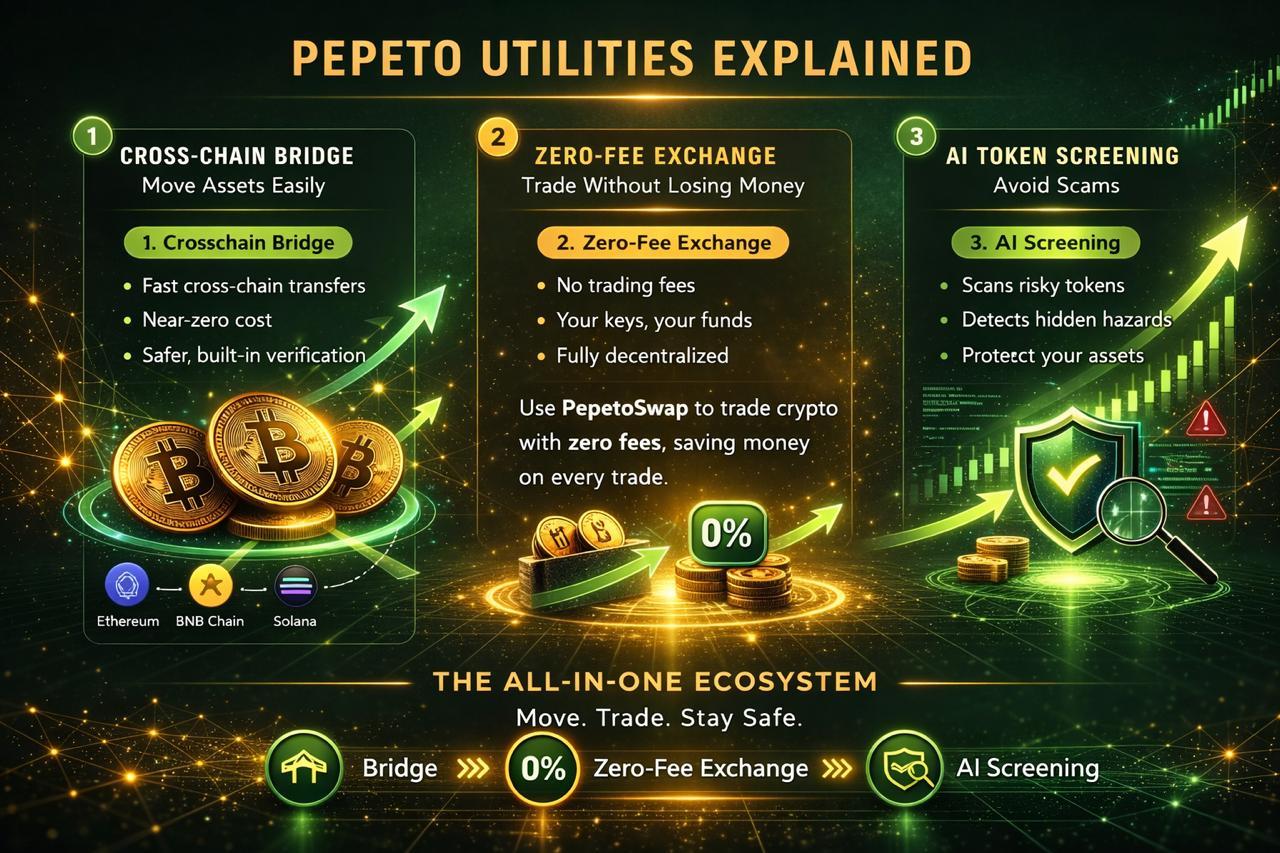
The current environment is full of instability, but investors have also become more demanding. AI is driving technological change, and the projects that address real problems are the ones that thrive in the new market. Pepeto fits that reality completely because the exchange already runs the contract checking, zero fee trading, and cross chain transfers the market is moving toward.
The risk scorer checks every contract for hidden drains, honeypot functions, and fake minting before your capital goes near them, and explains what it found in plain language so you decide with facts. PepetoSwap keeps every position at full value with zero fees, and the cross chain bridge moves tokens at zero cost.
More than $8 million raised during the correction with 193% APY staking compounding in early wallets while stages fill faster proves serious conviction. The SolidProof audit cleared every contract, a former Binance expert is on the dev team, and the cofounder who built the original Pepe coin to $11 billion with the same 420 trillion supply is behind the platform.
Pepeto is at $0.000000186, and analysts project 1000x once the Binance listing opens public trading. The bitcoin price news confirms the best entries happen during fear, and the exchange with the product already shipping and the listing days away is the kind of opportunity that produces the returns people reference for the rest of the cycle.
BTC
Bitcoin trades near $71,299 as of March 24 after a 21% recovery from lows below $60,000 with $225 million in net ETF inflows on Tuesday led by BlackRock’s $322 million IBIT day, according to CoinMarketCap.
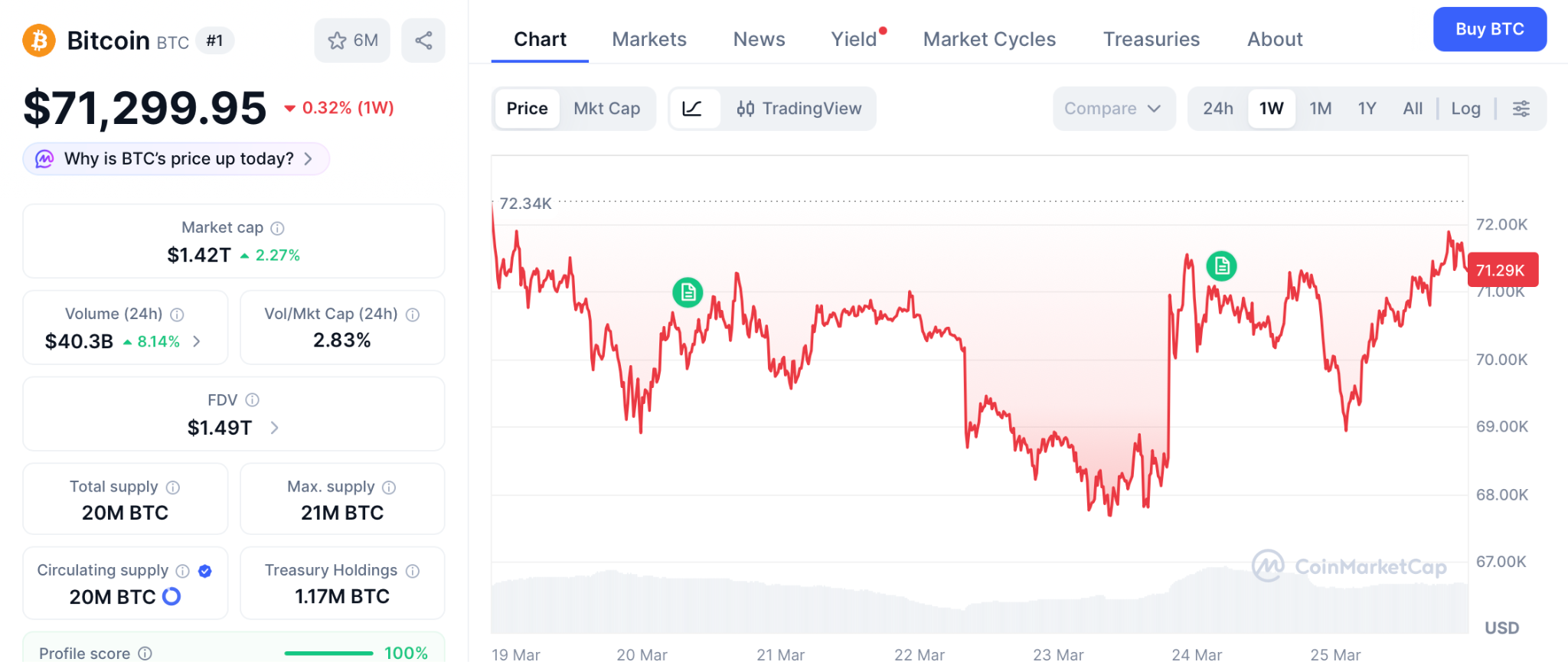
The BTC outlook projects Bitcoin between $74,000 and $93,000 through 2026, a 28% gain at the upper end. Solid foundation, but the return from $71,299 is not the math that changes your life the way 1000x from one listing does.
SOL
Solana trades near $92 as of March 24 bouncing 4% alongside the broader market with the appchain utility narrative giving it an edge in the sector rotation, according to CoinMarketCap.
SOL holds $92 support with $92 resistance overhead. Analysts project $92 to $135 for 2026, a 1.6x that rewards steady holders. Dependable infrastructure, but the return ceiling cannot match what the presale delivers from one listing event.
Bitcoin Price News Confirms That the Market Pays Most to Early Believers and the Window Is Open Now
The bitcoin price news has confirmed once more that production quality platforms at presale pricing are what the current market rewards most. The market always pays the biggest returns to the early believers, and Ethereum was under $10 once before it reached $2,057, and the people who got in when nobody believed in it are the ones who built real wealth.
Millions in capital entering Pepeto’s presale during extreme fear proves those same kinds of wallets expect the same outcome, and following their moves is how you position on the right side of the listing. The Pepeto official website is where that entry is still open.
Click To Visit Pepeto Website To Enter The Presale

FAQ:
What does the latest bitcoin price news mean for presale entries?
Institutional inflows lifting BTC from lows creates the backdrop where presale tokens with live products see the biggest listing returns. The Pepeto official website is where those entries are secured now.
How does the bitcoin price news cycle help identify the best opportunities?
The bitcoin price news reveals broader market direction, and the exchange that checks contracts in real time positions you ahead of the moves the news reports after.
Why are early stage entries important during this bitcoin price news cycle?
When the market recovers from fear, early entries see the largest returns because the listing compresses what months of recovery deliver into one event.
Disclaimer: This is a Press Release provided by a third party who is responsible for the content. Please conduct your own research before taking any action based on the content.
TLDR
- Coinbase has started streaming its order book, perps, and futures data onchain through Chainlink’s DataLink service.
- Onchain protocols can now access data feeds from Coinbase International Exchange and Coinbase Derivatives Exchange.
- The integration includes perpetual futures, equities, and commodities benchmarks for decentralized applications.
- Coinbase said its benchmarks will support developers building derivatives and tokenized asset platforms.
- Chainlink confirmed that DataLink delivers enterprise data securely from off-chain systems to blockchain networks.
Coinbase has started sending its exchange market data directly onchain through Chainlink’s DataLink service. The rollout gives onchain protocols access to Coinbase order books, futures, and perpetual contracts data. The companies said the integration supports secure and verifiable data delivery for decentralized applications.
Coinbase Expands Onchain Data Access Through DataLink
Coinbase confirmed that it now streams spot and derivatives data onchain using Chainlink’s DataLink bridge. The service distributes feeds from Coinbase International Exchange and Coinbase Derivatives Exchange. As a result, developers can access order book depth and futures pricing in real time.
The exchange said the rollout covers perpetual futures, equities, and commodities benchmarks. It also provides standardized datasets designed for institutional and decentralized platforms. Coinbase aims to monetize its proprietary market data while expanding infrastructure services.
Liz Martin, Vice President of Coinbase Markets, outlined the company’s objective. She said, “Our benchmarks enable DeFi and TradFi developers to build more robust onchain apps across derivatives, tokenized assets, and more.” Her statement accompanied the formal announcement of the integration.
Coinbase operates the largest crypto exchange in the United States by trading volume. The company continues efforts to grow into an “everything exchange” model. It also seeks to strengthen its prime brokerage capabilities for institutional clients.
The DataLink bridge enables enterprise users to push off-chain information into blockchain networks. Chainlink launched DataLink late last year as part of its enterprise strategy. The service focuses on secure data transfer between traditional systems and smart contracts.
Coinbase said developers can verify order book and futures data directly onchain. The company expects broader integration across decentralized protocols. The rollout marks the first time Coinbase distributes its exchange market data onchain at scale.
Chainlink Strengthens Infrastructure Role with Enterprise Integrations
Chainlink Labs confirmed that DataLink now carries Coinbase exchange benchmarks. Johann Eid, Chief Business Officer at Chainlink Labs, described the integration as infrastructure-focused.
He said, “The future of finance requires a foundation of uncompromising security.”
Eid added, “We aren’t just moving data; we are building the programmable market infrastructure defining the next era of tokenization.”
He said the effort accelerates the convergence of institutional finance and DeFi systems. Chainlink positions DataLink as a secure enterprise-grade bridge.
Chainlink said it has secured nearly $100 billion in total value locked across decentralized finance applications. The network also reported facilitating more than $25 trillion in onchain transaction value. These figures reflect cumulative activity supported by Chainlink services.
The Coinbase integration follows earlier collaborations between the two companies. Coinbase selected Chainlink as its exclusive bridging solution for wrapped assets such as cbBTC, cbETH, and cbDOGE. It also uses Chainlink services for the Base-Solana Bridge infrastructure.
Chainlink has expanded enterprise relationships beyond crypto-native firms. The company provides Oracle services for Swift, JPMorgan, and Mastercard. DataLink also supports institutional data providers including S&P Global and FTSE Russell.
Bitmine Immersion Technologies has launched MAVAN, an institutional-grade Ethereum staking platform that will run validator infrastructure for its own holdings and external clients.
Staking involves locking up Ether to help validate transactions on the network in exchange for rewards.
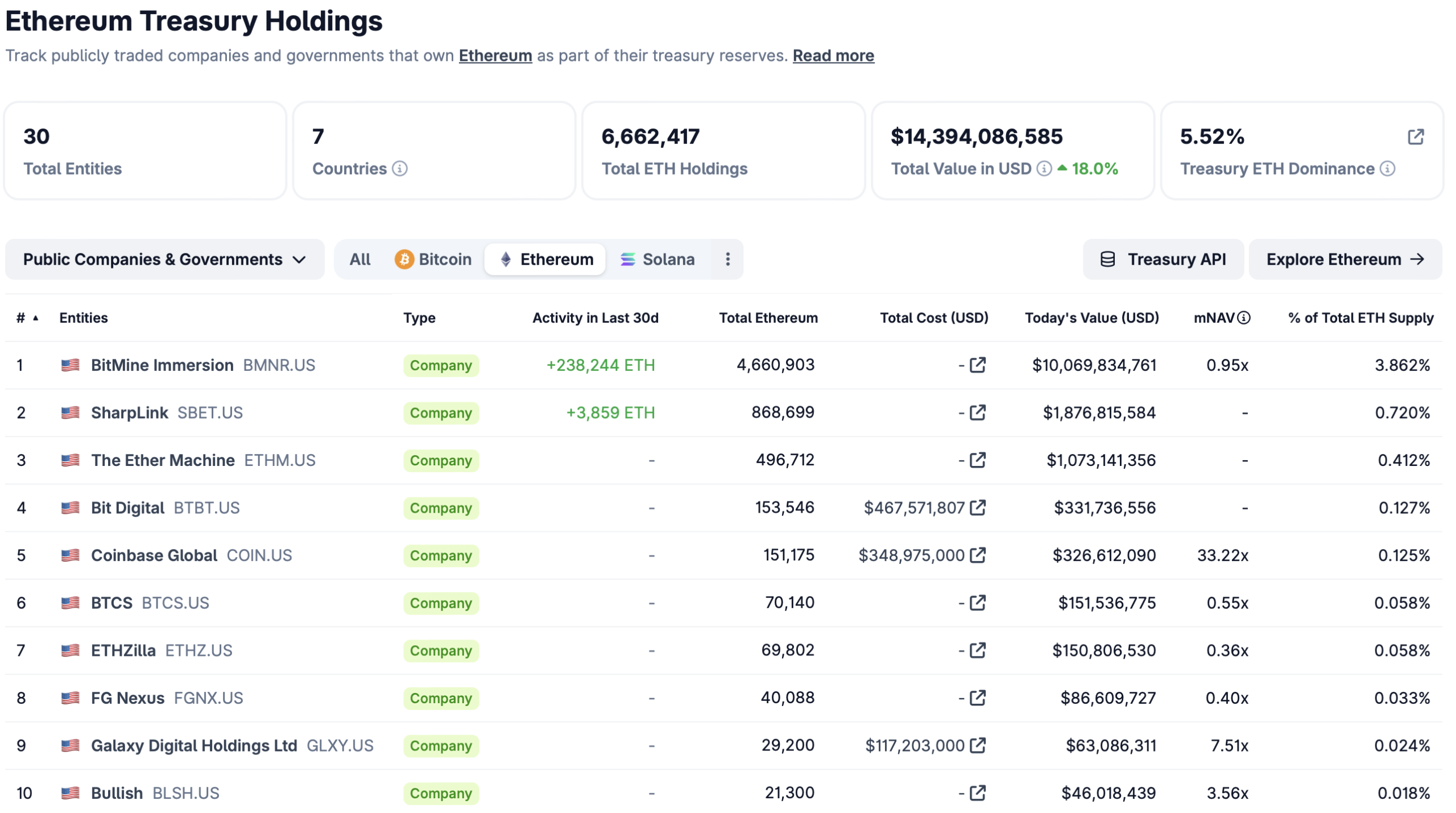
The rollout takes advantage of Bitmine’s position as the largest public company holder of Ether (ETH), with more than 3.1 million ETH already staked. MAVAN, or Made in America Validator Network, is the company’s proprietary Ethereum staking platform.
The platform was initially developed to support Bitmine’s existing Ethereum treasury and is now being opened to institutional clients and custodians, who are expected to bring additional ETH holdings onto the platform in the coming weeks.
Bitmine said it staked 101,776 ETH over the past week and plans to continue increasing the amount allocated to MAVAN as it moves to stake most of its remaining Ether holdings. The company estimates staking rewards could approach $300 million annually based on current yields.
The new staking platform will use US-based infrastructure alongside a globally distributed setup and is expected to be expanded onto additional proof-of-stake networks and blockchain services.
Bitmine is targeting institutions, custodians and exchanges, with backing from investors including ARK Invest, Founders Fund, Kraken, Pantera Capital, Digital Currency Group and Galaxy Digital.
According to data from CoinGecko, Bitmine currently holds 4,660,903 ETH, has added 238,244 ETH over the past 30 days, and accounts for approximately 3.86% of the total Ether supply.
The company said it plans to continue increasing its Ether holdings, with a stated goal of acquiring 5% of the total ETH supply.

Related: Ethereum devs up security efforts with new ‘Post-Quantum’ team
Institutional demand reshapes Ethereum staking infrastructure
Ethereum staking has become increasingly tailored to institutional users, as demand grows for yield alongside compliant, institution-grade infrastructure.
In February, Lido, the largest liquid staking protocol, introduced a modular upgrade that allows institutions to customize staking setups, including validator configuration and withdrawal parameters. Konstantin Lomashuk, a founding contributor at Lido, said institutional users already make up a significant share of its total value locked, with demand continuing to grow.
The trend extends to the protocol level. The same month, the Ethereum Foundation announced it had begun staking part of its treasury, with plans to allocate around 70,000 ETH to validators and direct rewards toward ecosystem development.
Staking is also being integrated into investment products. In October, Grayscale introduced staking for its Ether ETFs, allowing the funds to generate income from staking. Earlier this month, BlackRock debuted the iShares Staked Ethereum Trust (ETHB), a Nasdaq-listed product that combines spot Ether exposure with staking-based yield.
Ether was trading around $2,164 at last look, up roughly 4.6% over the past year, according to CoinGecko data. The asset has remained well below its mid-2025 highs above $4,000.

Magazine: The dirty secret about quantum signatures: No one knows if they work

The Gen Z Retirement Plan #shorts #finance

Celebrity hair stylist Jay Birmingham shares his best prepping and styling hair tips

NAACP hires DOJ civil rights chief in Biden administration


-
 Crypto World5 days ago
NIO (NIO) Stock Plunges 6.5% as Shelf Registration Sparks Dilution Worries
-

 Fashion5 days ago
Weekend Open Thread: Adidas – Corporette.com
-

 Politics5 days ago
Jenni Murray, Long-Serving Woman’s Hour Presenter, Dies Aged 75
-
 NewsBeat9 hours ago
Manchester United reach agreement with Casemiro over contract clause amid transfer speculation
-

 Crypto World4 days ago
Best Crypto to Buy Now: Strategy Just Spent $1.57 Billion on Bitcoin During Fear While Early Investors Quietly Enter Pepeto for 150x Potential
-

 Crypto World4 days ago
Bitcoin Price News: Bhutan Sells $72 Million in BTC Under Fiscal Pressure, but the Smart Money Entering Pepeto Sees What the Market Does Not
-

 Tech6 days ago
inKONBINI Lets You Spend Summer Days Behind the Register
-

 Sports2 days ago
Remo Stars and Kano Pillars Strengthen Survival Hopes in NPFL
-
 NewsBeat7 days ago
Residents in North Lanarkshire reminded to register to vote in Scottish Parliament Election
-

 Politics6 days ago
Gender equality discussions at UN face pushbacks and US resistance
-

 Business3 days ago
No Winner in March 21 Drawing as Prize Rolls to $133 Million for Next
-

 Business7 days ago
Who Was Alex Pretti? 5 Key Facts About the ICU Nurse Killed by Federal Agents in Minneapolis
-

 Sports2 days ago
Gary Kirsten Accuses Pakistan Cricket Board Of ‘Interference’, Mohsin Naqvi Responds
-

 Tech3 days ago
Give Your Phone a Huge (and Free) Upgrade by Switching to Another Keyboard
-

 Tech7 days ago
Inventec’s bizarre VeilBook laptop hides its touchpad under a sliding keyboard just to give cooling fans a little breathing room
-

 Sports5 days ago
2026 Kentucky Derby horses, odds, futures, preview, date: Expert who nailed 12 Derby-Oaks Doubles enters picks
-
Sports6 days ago
Vikings Free Agency Enters Phase 2 with Key Questions
-

 Tech3 days ago
AI enters the chat: New Seattle dating app relies on tech to facilitate meaningful human connections
-

 News Videos7 days ago
Amazing Cardboard Gadget That Turns Paper Into Money #techgadgets #ytshorts
-

 Tech7 days ago
Corsair K100 Air Wireless Mechanical RGB Keyboard Packs Full Power Into a Slim Frame
You must be logged in to post a comment Login