
Crypto World
Masterclass in OTC Liquidation: How Bhutan Moved $72M Bitcoin Without Moving the Price

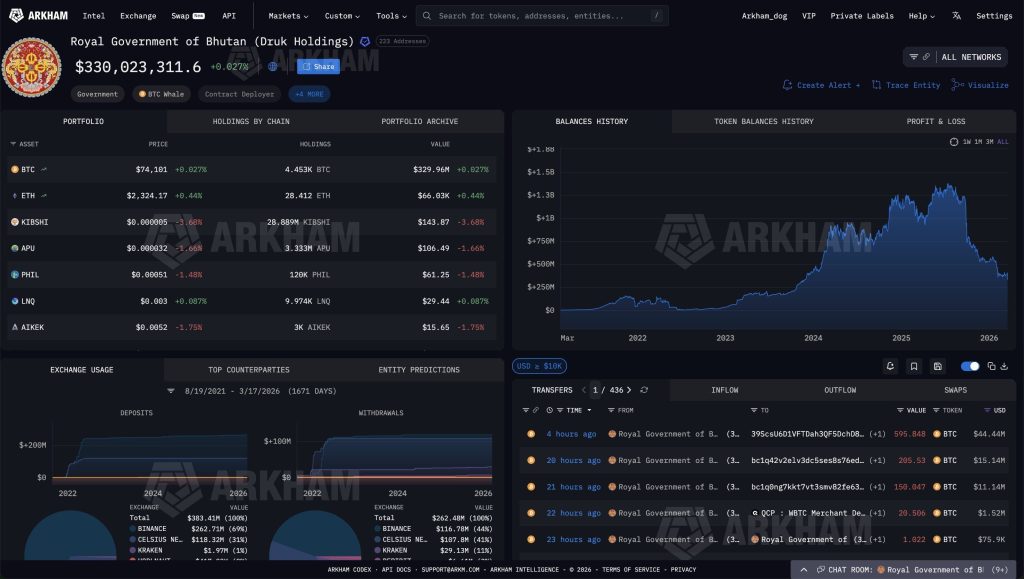
Bhutan just moved $72.3 million worth of Bitcoin to Binance. 929 BTC sent Tuesday morning while Bitcoin price consolidated near $71,000.
Most sovereign sell-offs hit the order book hard. This one barely registered. Price did not move.
That silence is the entire story. Bhutan is not just a Bitcoin miner anymore. It is actively managing an institutional-grade portfolio. And the market absorbed nearly $73 million in supply without flinching.
Key Takeaways:
- Bhutan transferred 929 BTC ($72.3M) to Binance deposit wallets.
- Price impact was negligible due to probable OTC execution.
- DHI still holds approximately 12,574 BTC in reserves.
How Do You Sell $72M in Bitcoin Without Crashing the Price?
Dumping 929 BTC on a standard spot order book wipes out buy support instantly. Price crashes. That is what unsophisticated sellers do.
Bhutan did not do that.

By routing through Binance, Druk Holding and Investments almost certainly used an OTC desk. Large block trades get matched with institutional buyers privately. The transaction settles off the public order book entirely. Market makers absorb the risk themselves and quote a fixed price for the block.
The coins change hands. The seller gets stablecoins. The retail chart never sees a red candle.
This is textbook institutional execution. And it signals that sovereign crypto entities are operating at a completely different level than they were even two years ago.
Did Bhutan’s Sale Move Bitcoin Price? Here Is What the Data Shows
Bitcoin did not move during the transfer window. Zero unusual sell pressure on Coinbase orderbooks. The liquidity was sourced externally or netted internally by Binance.
Arkham Intelligence confirmed funds cleared directly from DHI wallets into Binance hot wallets. Bhutan’s total BTC outflows have exceeded $114 million in recent weeks.

This is hedge fund level execution. Active market makers managing yield and liquidity instead of panic dumping into thin order books.
The market has absorbed it cleanly. But Bhutan still holds roughly $886 million in Bitcoin. If that starts moving with the same frequency, the real stress test begins.
Discover: The best new crypto in the world
The post Masterclass in OTC Liquidation: How Bhutan Moved $72M Bitcoin Without Moving the Price appeared first on Cryptonews.

The negotiation to get a crypto market structure bill through its next stages in the Senate have hovered over an almost-there status for weeks, and Republican lawmakers met on Thursday to figure out how to bridge the final gaps.
The White House was expected to get some updated legislative language on Thursday, reflecting the ongoing work on the Digital Asset Market Clarity Act, according to people familiar with the situation. But the talks are still going, and even if the previously uncertain senators (such as Republican Thom Tillis) become satisfied with the bill’s stablecoin yield treatment, other distinct compromises (such as the approach to decentralized finance) also need to be secured before the Senate would be able to send the crypto industry’s top policy priority to President Donald Trump for a signature.
The longstanding debate that had focused on stablecoin yield — on which bankers and crypto businesses have been divided over the structure of stablecoin rewards programs — is close to a finish, the people said, though lawmakers have been discussing what else the community bankers might be offered to get their support while resolving some of their other priorities. That could include some unrelated provisions tied to Congress’ recent housing legislation, according to reporting from Politico.
Officials from Trump’s administration were said to be involved with the meeting of Republican members of the Senate Banking Committee, which is the second panel that needs to advance the bill before it would be repackaged into a final version that can get a vote of the overall Senate. Even if the effort advances from the committee by the end of April, as Senator Cynthia Lummis predicted this week, a couple of further hurdles may be out of lawmakers’ hands.
Democrats involved in the talks have said they still want senior government officials and lawmakers from profiting off of personal crypto interests — most pointedly aimed at Trump. And they want Democrats appointed to the party’s vacant seats at the Commodity Futures Trading Commission before the agency adopts new crypto rules. Those are both points that could require concessions from the White House, and crypto insiders are expecting those controversial points to be the last matters settled once the lawmakers are working on a final bill.
On the yield issue, Lummis has said that stablecoin rewards programs that steer clear of bank-line language on savings and interest may survive the compromise, insisting they’re more akin to credit-card rewards than interest from bank-account deposits.
Lummis said Coinbase CEO Brian Armstrong, whose opposition to a previous draft bill helped derail an earlier effort to get to a Senate hearing, has been more flexible in recent talks. The company didn’t immediately respond Thursday to a request for comment on its position.
As Congress works, the Securities and Exchange Commission spent much of the week issuing and discussing new crypto policy points, including a first-ever taxonomy that sets out regulatory definitions for U.S. crypto assets. In a CoinDesk op-ed on Thursday, Chairman Paul Atkins and the two Republican commissioners suggested they’re eager to have a new law back up the policy they’re working on.
“Only Congress can rewrite the law, and we stand ready to work with [Commodity Futures Trading Commission] Chairman Michael Selig to implement the CLARITY Act,” they wrote. “In the meantime, we are providing the responsible regulatory approach that markets demand.”


JPMorgan cuts its S&P 500 target and warns investors are dangerously complacent about Iran war risks, oil above $110, and the hit to growth, earnings, and stocks.
Summary
- JPMorgan trims its year-end S&P 500 target from 7,500 to 7,200, arguing markets are making a high-risk bet on a quick Middle East resolution.
- With Brent crude above $110 and shut-ins near record levels, the bank warns each sustained 10% oil rise can shave 15–20 bps from GDP and cut S&P earnings 2–5%.
- Strategists say a deeper selloff could push the S&P 500 below its 200-day moving average toward 6,000–6,200 as demand destruction and wealth effects bite.
JPMorgan became the latest — and most prominent — Wall Street institution to sound the alarm on Thursday, cutting its year-end S&P 500 price target from 7,500 to 7,200 and warning that equity markets are making a “high-risk assumption” by pricing in a quick resolution to the Middle East conflict. The downgrade, issued as Iranian strikes on Gulf energy infrastructure sent Brent crude surging above $110 per barrel, signals a growing conviction among institutional analysts that the war’s economic fallout has been systematically underpriced.
“We believe the market is pricing in a quick end to the Middle East conflict and reopening of the Strait, giving a low probability to a potential demand hit,” JPMorgan wrote in its note. “This is a high-risk assumption given that S&P 500 and oil correlations typically turn increasingly more negative after a ~30% oil spike.”
Oil prices have surged more than 46% since the U.S. and Israel launched their initial strikes on Iran, yet the S&P 500 has fallen less than 4% — a divergence that JPMorgan’s strategists view as a sign of dangerous market complacency rather than genuine resilience. While high-risk segments such as software stocks, South Korean equities, and crypto have sold off, broad equity positioning has barely shifted, with investors hedging rather than derisking in earnest.
The bank’s core warning centers not on inflation — the conventional oil shock narrative — but on demand destruction. JPMorgan argues that if the supply disruption persists, “GDP, demand, and revenues will adjust lower through forced demand destruction.” The bank estimates that each sustained 10% increase in oil prices shaves 15 to 20 basis points off GDP growth. If Brent holds near $110, consensus S&P 500 earnings estimates could fall by 2 to 5%.
The structural supply picture compounds the concern. Oil supply shut-ins have already climbed to 8 million barrels per day — the highest on record — and JPMorgan warned that cuts could reach 12 million barrels per day, equivalent to roughly 11% of global production.
JPMorgan Private Bank strategists Joe Seydl and Kriti Gupta laid out the transmission mechanism in stark terms earlier this week: oil sustained above $90 per barrel risks a 10–15% correction in the S&P 500, with international and emerging markets facing even larger spillover losses due to their higher sensitivity to global growth shocks. At $120 oil, the selling could intensify materially.
The wealth effect adds a secondary channel. With U.S. households holding over $56 trillion in stocks and mutual funds, a sustained equity drawdown would feed back into consumer spending — JPMorgan estimates a 10% drop in the S&P 500 could reduce U.S. consumer spending by approximately 1%. “The combined impact of persistently high oil prices and a bear market in the S&P 500 has a detrimental effect on demand, significantly amplifying the negative impact on growth,” the bank concluded.
If the S&P 500 selloff extends below the 200-day moving average near 6,600, the bank said meaningful support may not emerge until the 6,000–6,200 range. For now, with the war entering a dangerous new energy-infrastructure phase and no diplomatic off-ramp in sight, JPMorgan’s revised target may prove optimistic rather than cautious.
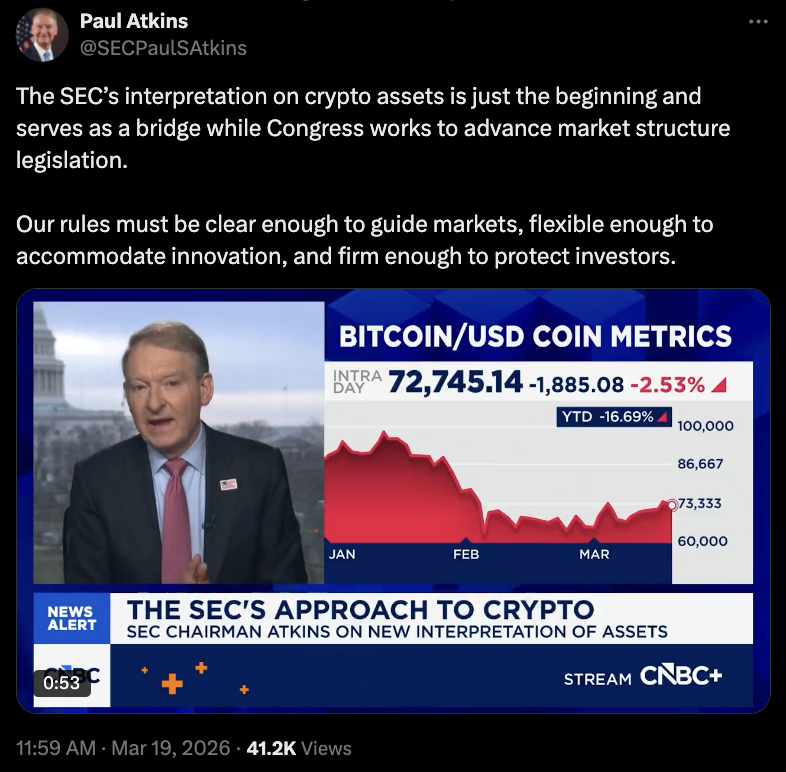
US Securities and Exchange Commission (SEC) Chair Paul Atkins has clarified how the agency intends to approach digital asset regulation following an interpretative notice issued this week.
In prepared remarks for a Thursday speech at the Practising Law Institute, Atkins said that the SEC would take a different approach to digital assets than its previous “regulation by enforcement” campaign. According to the SEC chair, the agency would first focus on its interpretation of how federal securities laws apply to crypto following the signing of a memorandum of understanding with the Commodity Futures Trading Commission (CFTC) last week.
“[…] While the interpretation provides long-needed clarity, I should like to assure this audience that it amounts to a beginning, not an end,” said Atkins.

The agency’s interpretation, released on Tuesday, specified that most cryptocurrencies were likely not securities under federal law, with the chair telling attendees at the DC Blockchain Summit that “only one crypto asset class remains subject to the securities laws” under the agency’s interpretation: namely, “traditional securities that are tokenized.”
Atkins later clarified that digital commodities, digital tools, digital collectibles including non-fungible tokens (NFTs), and stablecoins were digital assets typically not falling under the SEC’s purview.
Related: SEC gives go-ahead to Nasdaq for tokenized trading trial
While the SEC interpretation could significantly change how the agency approaches crypto regulation and enforcement, a market structure bill working its way through Congress is also expected to give the CFTC more authority in regulation and oversight of digital assets. The bill, called the CLARITY Act when it passed the House of Representatives in July 2025, had not been scheduled for a markup in the Senate Banking Committee as of Thursday.
White House meets with US lawmakers behind closed doors
A spokesperson for Wyoming Senator Cynthia Lummis confirmed with Cointelegraph that Republican senators met with White House crypto adviser Patrick Witt on Thursday to discuss advancing the market structure bill. While the Senate Agriculture Committee advanced its version of the legislation in January, concerns over how to address stablecoin yield in the crypto and banking industry have effectively stalled progress in the Senate Banking Committee.
According to Lummis’ team, the meeting was “very productive and positive,” adding that lawmakers were “99% of the way there on stablecoin yield,” and “negotiations on the digital asset portions of the bill are in a good place.”
Magazine: Are DeFi devs liable for the illegal activity of others on their platforms?
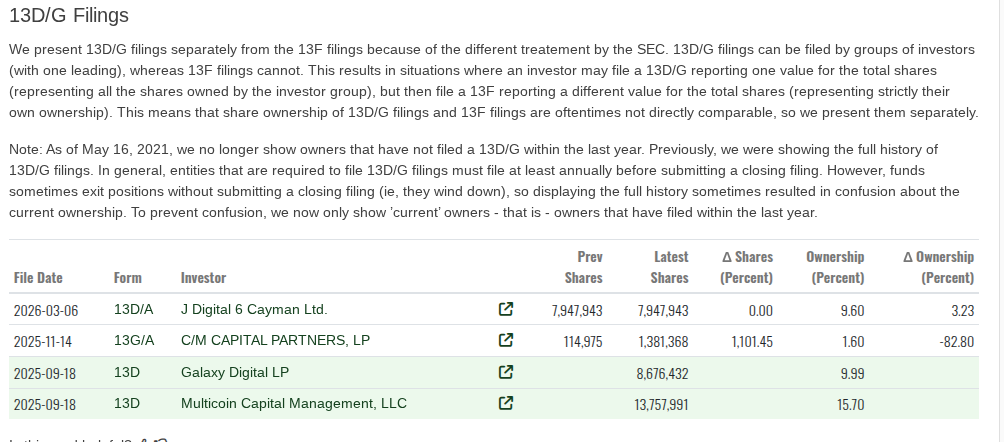
Forward Industries, a publicly traded company with a Solana-focused treasury strategy, has launched a share repurchase program funded through a crypto-backed loan from Galaxy Digital LLC, underscoring how digital assets are increasingly being used in traditional corporate finance.
The company said Thursday it will repurchase 6,164,324 shares of its common stock from an unnamed institutional investor for approximately $27.4 million, reducing total shares outstanding to 76,977,809.
Cointelegraph’s email to Forward seeking further information on the identity of the selling institutional investor was not answered prior to publication.

Public filings indicate that only six institutional investors in Forward Industries hold enough shares to sell that volume back to the company. According to filings data compiled by Fintel.io, one of those holders is Galaxy Digital LP (8.68 million shares, as of Sept. 18, 2025) and another is Galaxy Group Investments LLC (8.11 million shares, as of Feb. 18, 2026.)
To fund the buyback, Forward secured a $40 million loan from Galaxy Digital LLC at an interest rate of 3.4%. The loan is collateralized by the company’s Solana (SOL) holdings, which total 7,013,536 SOL — valued at approximately $613 million at current market prices.
The structure allows Forward to access liquidity without liquidating its crypto reserves, while continuing to generate yield through staking. The move reflects a broader trend of companies leveraging digital asset treasuries to optimize capital structure and potentially enhance shareholder returns.
The share repurchase appears to be part of Forward Industries’ November authorization to buy back up to $1 billion of its stock on an ongoing basis. At the time, the company said the program would provide financial flexibility amid heightened volatility in the crypto market.
That volatility has intensified in recent months, with Solana’s price falling below $90. The buyback may also help support Forward Industries’ stock, which is down 87% from its September peak.

Related: Crypto’s 2026 investment playbook: Bitcoin, stablecoin infrastructure, tokenized assets
Crypto treasury strategies face pressure
Forward Industries began aggressively accumulating Solana last year, when crypto treasury strategies gained traction during the bull market. The company has since built the largest publicly traded SOL treasury, with at least 18 other public companies adopting similar strategies, according to industry data.
By February, these companies collectively held more than $1.5 billion in unrealized losses tied to the broader crypto market downturn. A significant portion of those losses is attributed to Forward Industries, which is down roughly $972 million.

The sector’s volatility is likely to result in broad consolidation among crypto treasury companies, Wojciech Kaszycki of crypto infrastructure company BTCS told Cointelegraph.
Many treasury companies are under pressure as declining crypto prices push their valuations below the value of the digital assets they hold, while limited cash flow makes it harder to sustain operations.

Cardano advances toward its protocol 11 upgrade, with a key node release expected within days. The network continues structured preparations for the van Rossem hard fork. Developers now focus on testing, integration, and performance validation across the ecosystem.
Node Release Drives Upgrade Timeline
Cardano plans to release Node 10.7.0 as a critical step toward the protocol 11 upgrade. This version follows the earlier 10.6.2 release, which began the preparation phase. The upcoming release introduces features beyond hard fork readiness.
Moreover, developers expect Node 10.7.0 to trigger wider ecosystem upgrades across tools and services. Teams will integrate the node into existing infrastructure and begin coordinated testing efforts. This process ensures compatibility before any major network transition.
However, performance results will determine the next steps in the rollout sequence. Additional minor updates may follow if testing reveals areas needing refinement. This staged approach helps maintain network stability during the transition.
Testing Phase Expands Across Ecosystem
Cardano’s ecosystem will begin integration testing once the new node version becomes available. Developers aim to validate performance, stability, and compatibility across various applications. This phase plays a central role in preparing for the hard fork.
Besides node integration, supporting tools such as DBSync will align with the new version. The updated DBSync release will match Node 10.7.0 without introducing serialization changes. This decision reduces the risk of disruptions for hardware wallet users.
Meanwhile, prerelease versions allow developers to test new features in controlled environments. These tests provide early feedback and highlight potential issues before broader deployment. Consequently, the network can address concerns before reaching mainnet activation.
Protocol 11 Introduces New Capabilities
Protocol version 11 will introduce several new Plutus built-in functions to enhance smart contract performance. These additions include array types, modular exponentiation, and multi-scalar cryptographic operations. Each feature aims to improve efficiency and expand developer capabilities.
Furthermore, the upgrade will refine ledger rules while maintaining compatibility with existing contracts. The changes avoid altering transaction structures, which simplifies adoption across the ecosystem. This approach reduces the need for extensive modifications by developers.
SanchoNet has already upgraded to support these new built-ins for testing purposes. Additionally, smart contract tools such as Scalus now support the updated functionality. These preparations ensure developers can experiment before the main network transition.
Intra-Era Upgrade Minimizes Disruption
The van Rossem upgrade represents a small intra-era change rather than a major structural shift. It focuses on performance improvements and added functionality without disrupting existing operations. This design allows smoother adoption across the network.
Moreover, the upgrade enhances cryptographic capabilities while maintaining system consistency. Developers gain access to more efficient tools without needing to rebuild deployed applications. This balance supports innovation while preserving stability.
Consequently, Cardano positions protocol 11 as a measured upgrade with targeted benefits. The network strengthens performance and expands functionality without introducing major risks. This strategy reflects a controlled and incremental development approach.

Bybit has unveiled a yield-bearing tokenized gold product built on Tether Gold (XAUT), enabling users to earn interest on their XAUT holdings while staying exposed to gold’s price movements. The offering marks a concrete step in Bybit’s broader push into tokenized real-world assets (RWAs) and signals growing industry interest in turning traditionally non-yielding assets into income-generating instruments.
Marketed as the largest tokenized gold product, the Bybit service centers on XAUT, a tokenized form of gold intended to provide on-chain exposure with the potential for yield. Bybit described the arrangement as a way for holders to generate passive income without relinquishing their exposure to gold prices. Earlier this month, CoinMarketCap data placed Tether Gold’s market capitalization at just under $3 billion, underscoring the scale of tokenized gold as a tradable, on-chain asset.
The introduction sits within a wider industry move to tokenize real-world assets and harness capital markets mechanics on blockchain rails. Bybit’s move is part of a broader expansion into tokenized RWAs, a trend that includes specialized investment structures and yield strategies designed to monetize asset classes traditionally viewed as buy-and-hold stores of value. Industry trackers have highlighted a rapid rise in tokenized RWAs in recent years, with DeFiLlama data showing growth in 2026 and continued momentum into this year.
In another notable development this week, tokenization platform Theo disclosed a $100 million structured investment facility backing its gold-linked yield-stablecoin thUSD. The arrangement combines tokenized gold acquisitions with hedging via gold futures to lock in financing and arbitrage-driven returns, rather than depending solely on outright price appreciation. The approach illustrates a broader appetite for finance-on-rails strategies that use tokenized gold as a collateral or reference asset while attempting to harvest spreads from markets beyond simple price moves.
Gold’s recent price action provides a complex backdrop for these products. After a historic rally that propelled the metal to multi-decade highs, gold has experienced pronounced volatility as macro expectations shift. Prices remain elevated relative to historical norms, even as they pulled back from peaks. The market’s positioning has also drawn attention: in January, Bank of America’s global fund manager survey identified long gold as the most crowded trade, reflecting crowded bets as participants weighed inflation, rate trajectories, and geopolitical risk alongside the metal’s traditional role as a hedging asset. Bloomberg has also noted that gold’s premium versus its long-term trend reached its highest level since 1980, underscoring a disconnect between price levels and macro fundamentals in the near term.
Beyond individual assets, the broader tokenized commodities landscape continues to expand. Cointelegraph reported that the market for tokenized commodities surpassed $6 billion in February, driven in large part by gold’s historic rally and ongoing demand for on-chain exposure to traditional assets. The surge in tokenized RWAs—already a focus for Bybit and others—highlights a shift toward more sophisticated, yield-oriented wrappers around real-world assets as participants seek new sources of income in a market environment of rising yields and evolving regulatory frameworks.
Key takeaways
- Bybit launches a yield-bearing product on Tether Gold (XAUT), enabling holders to earn passive income while maintaining gold exposure.
- XAUT is described as the largest tokenized gold offering, with Tether Gold’s market cap approaching $3 billion earlier this month.
- The move aligns with a broader push into tokenized real-world assets (RWAs) as crypto platforms explore income-generating wrappers around traditional assets.
- Theo’s $100 million structured facility backing thUSD illustrates a parallel model: tokenized gold assets financed with hedging and derivatives to capture spreads, not just price moves.
- Gold remains volatile after a historic rally; long gold was flagged as the most crowded trade by Bank of America, and Bloomberg notes the metal’s premium to trend at a multi-decade high, complicating the outlook for tokenized gold strategies.
Bybit’s yield model and the RWAs push
Bybit’s yield-bearing on XAUT represents a practical application of tokenized gold beyond passive price tracking. By converting tokenized gold into an income-generating instrument, Bybit aims to attract yield-oriented investors who want exposure to gold’s price dynamics without forgoing potential returns from the lending, financing, or staking-like mechanics embedded in the token’s structure. While the precise mechanics—such as how yields are generated, risk controls, and withdrawal terms—were not exhaustively disclosed, the product fits a pattern of increasingly sophisticated RWAs that blend traditional asset classes with on-chain liquidity and structured finance concepts.
The broader RWAs trend, already visible in research noting growth in tokenized RWAs and the acceleration of tokenized commodities, suggests that institutions and retail users alike are testing whether blockchain rails can support more complex financial products. The Theo facility underscores the appetite for gold-linked yield strategies, pairing physical collateral with derivative hedges to seek returns from financing markets. If these structures prove robust at scale, they could broaden the menu for asset owners seeking liquidity and for traders seeking yield opportunities in a market that has historically rewarded patience over quarterly income streams.
Gold’s path and what it means for tokenized assets
The gold market’s volatility remains a central factor for investors in tokenized gold vehicles. While the metal’s ascent captured broad attention, the subsequent pullback has reminded market participants that macro dynamics—rising real yields, a stronger dollar, and evolving expectations for monetary policy—continue to shape gold’s risk-reward profile. The crowded-long-position signal from Bank of America’s survey highlights a potential risk of a sharp shift in sentiment if macro catalysts shift again. Meanwhile, Bloomberg’s observation that gold’s premium to its long-term trend is at levels not seen since 1980 adds another layer of watchfulness for investors weighing tokenized versions of the metal against conventional futures and spot markets.
Industry data also reinforces a broader shift toward tokenized assets as viable income streams. The February milestone of tokenized commodities crossing the $6 billion mark points to persistent demand for on-chain access to traditional asset classes. As tokenized RWAs become more commonplace, observers will be watching how risk management, regulatory clarity, and interoperability across chains influence the speed and scope of adoption. Bybit’s move into yield-bearing XAUT sits at the intersection of these trends—demonstrating both the appeal of yield opportunities and the ongoing need to manage price risk in a connected, asset-backed crypto economy.
What readers should watch next
Market participants should monitor how yield-bearing tokenized gold products perform across different market regimes, especially as macro conditions evolve and as liquidity and risk controls mature. Investors will want clarity on fee structures, collateral arrangements, and redemption terms, as well as how these products fare during periods of heightened volatility or stress in traditional capital markets.
As tokenized RWAs continue to mature, the coming quarters could reveal whether yield-based structures around gold and other real-world assets become mainstream tools for portfolio construction, or whether they remain specialized instruments used by a subset of traders and institutions. The evolving regulatory backdrop will also shape which models gain traction and how quickly durable, scalable offerings can emerge.
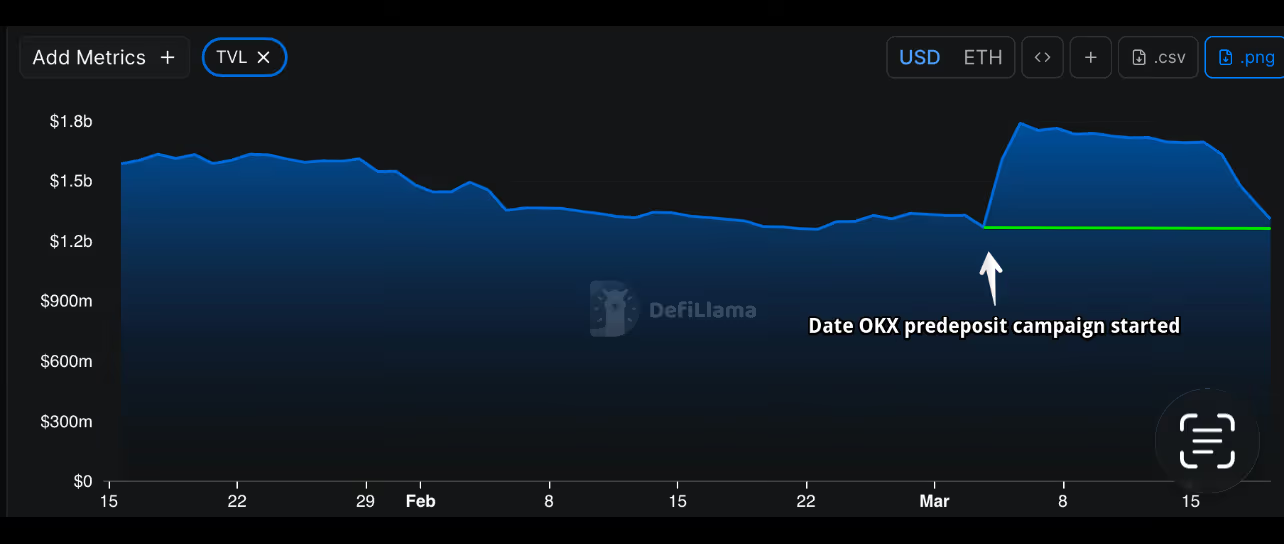
Gauntlet, one of decentralized finance’s (DeFi) leading providers for risk management tools, has seen its total value locked (TVL), a measure of the assets deposited across its vaults, fall sharply over the past seven days, dropping 22.84% to $1.325 billion.
That has erased roughly $380 million in dollar-denominated value from a week-ago peak of approximately $1.72 billion, according to DeFiLlama data. The decline accelerated Thursday with a single-day slide of 7.57%.
The primary driver, according to Gauntlet, was the conclusion of OKX’s pre-deposit campaign on the DeFi-focused blockchain, Katana. Pre-deposit campaigns — where users are incentivized to park capital ahead of a protocol launch — can produce sharp TVL spikes that unwind quickly once the campaign ends or if a token airdrop occurs. The chart bears this out: Gauntlet’s TVL surged sharply around March 2 before reversing just as steeply.

The asset outflows are predominantly stablecoin-based, Gauntlet noted.
The scale of the move is notable given what Gauntlet actually does. Think of it as a risk management consultancy for DeFi — the firm helps protocols understand, for example, what percentage of a borrower’s collateral would be at risk of liquidation if ETH fell 30% overnight. It doesn’t hold funds itself; instead, it sets the parameters that govern how lending markets and vaults behave.
Its TVL is a measure of the capital held within systems that Gauntlet is responsible for safeguarding. When that number falls sharply, it can reflect either market stress or, as in this case, the mechanical end of an incentive program.
Gauntlet, which received a $1 billion valuation in 2022, currently manages three vaults — essentially pooled deposit accounts where users lock up capital in exchange for a yield. The vaults hold USDC, BTC, and WETH, respectively. The USDC vault is the most liquid, offering an APY of 4.86%, while the others offer between 2% and 2.3%. The outflows could also reflect DeFi traders rotating capital to higher-yielding alternatives — SOL-based protocols like Jito, for example, currently offer 5.69%.
Gauntlet has navigated large capital swings before. In October 2025, its USDT vaults absorbed a $775 million single-transaction deposit — a 40x TVL increase — and recovered to pre-deposit levels within ten days through active reallocation and new collateral market additions. The firm framed this week’s outflows in similar terms, noting that incentive campaign endings, token generation events, and shifts in market conditions regularly produce short-period swings in either direction.
“Institutional risk managers manage through these events,” the firm said in a statement to CoinDesk. “Working to maintain rates, preserve capital supplied to vaults, and adjusting to market conditions.”
Oliver Knight contributed reporting to this story.
Read more: Tokenized Apollo Credit Fund Makes DeFi Debut With Levered-Yield Strategy by Securitize, Gauntlet
Crypto World
DeepSnitch AI Presale Launch Date Locked In For 100x, While Bitcoin Hyper and Remittix Lack of Clarity Leave Investors Weary

Investors watching the market know timing is everything, and the confirmed DeepSnitch AI presale launch date gives them certainty that other projects lack. Bitcoin Hyper and Remittix have stalled for months despite raising millions. However, DeepSnitch AI is live, with a clear path from presale to Uniswap listing.
DeepSnitch AI ($DSNT) has raised $2.21 million in stage 7 at $0.04487. The March 31 deadline marks the final window for early access as investors target 100x. After this, there is the DeepSnitch AI token release. This makes it one of the few projects where investors can secure allocations with confidence.
Whales accumulate TRUMP tokens ahead of Mar-a-Lago gala
Whale activity for the TRUMP (MAGA) memecoin has surged to a five-month high following the announcement of an exclusive April 25 luncheon at Mar-a-Lago. Santiment reports that 83 wallets now hold over one million tokens each. This accumulation is driven by the limitation of access to only the top 297 holders.
Beyond the meeting with Trump, the presence of Tether CEO Paolo Ardoino as a guest speaker has also fueled interest in the launcheon. His involvement has sparked speculation about potential ecosystem integrations or stability partnerships. This narrative pushed the token price up over 50% shortly after the news.
DeepSnitch AI presale launch date set in stone as verification layer turns heads
Investors have been excited after the DeepSnitch AI launch announcement, which clearly fixed the presale end date to March 31. This marks the final window for early entry. After that, a seven-day claim period begins, followed by the official Uniswap launch. Additional exchange listings are expected soon after as adoption grows.
This transition from presale to open market is heating up, as many other presales have yet to announce a launch date after nearly a year.
Beyond the DeepSnitch AI presale launch date, what’s driving visibility is its positioning. DeepSnitch AI is already live while in presale.
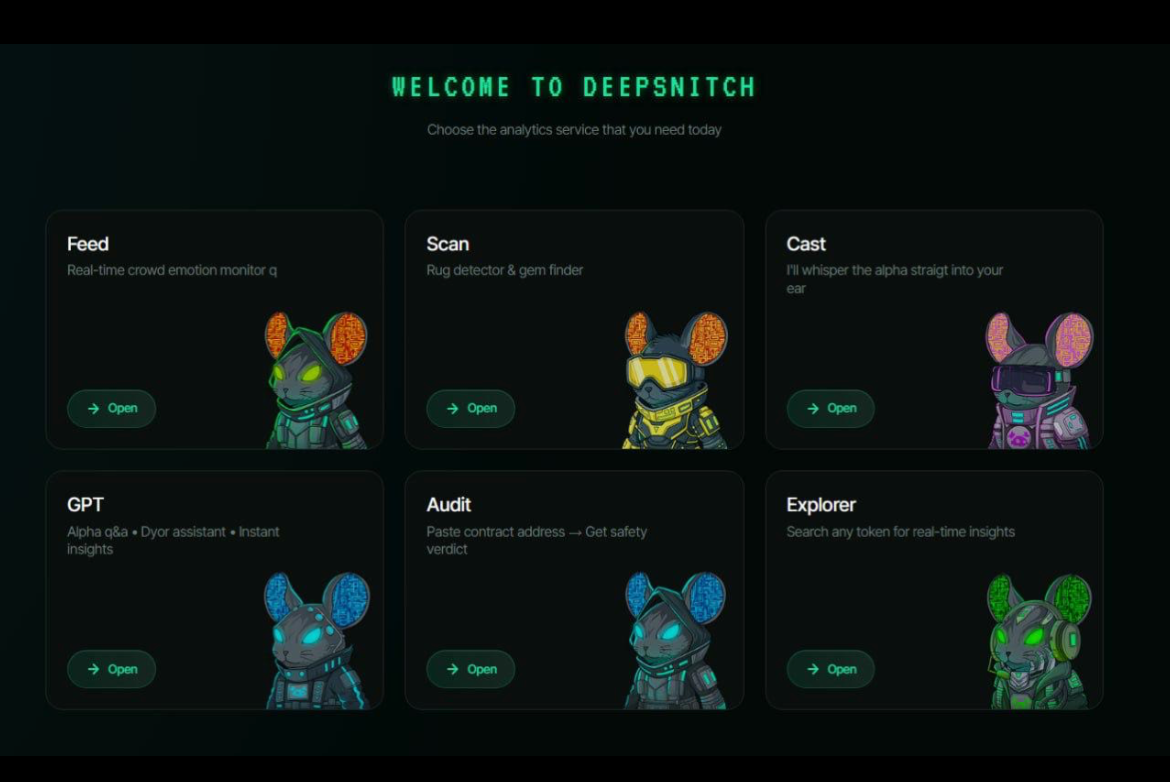
It’s operating on a verification layer that remains essential in every market cycle. While trends shift, the need to track smart contracts, liquidity, and whale activity never disappears. The five AI agents make this possible by tracking critical market movements, acting as Investors’ eyes and ears.
Its system continuously delivers these insights via its intuitive dashboard. This helps traders stay ahead of risks and opportunities regardless of market direction.
As the deadline approaches, early access is running out quickly. Once $DSNT launches, the entry advantage disappears.
Bitcoin Hyper presale stalls as Layer‑2 Launch remains unseen
Bitcoin Hyper began its presale in May 2025, but it still hasn’t delivered an actual Layer‑2 network or a mainnet launch. It’s being promoted as a Bitcoin Layer‑2 solution with claims of high scalability and support for smart contracts. However, there’s no public testnet and no live infrastructure to show that its technology works beyond the marketing narrative.
The presale continues with $32 million raised. Investors are showing exhaustion following countdown resets, yet there has been no tangible progress. This has made DeepSnitch AI a more attractive option, as it has not only launched its platform but also set a fixed DeepSnitch AI presale launch date.
Remittix promises continue as the platform launch keeps delaying
Since its December 2024 launch, Remittix has raised over $29.7 million. It successfully released its iOS beta wallet in late 2025. However, Remittix was supposed to hit its most significant milestone on February 9, with the official launch of its PayFi platform, but the team failed to launch on that date.

Investors have ever since complained about the lengthy presale duration. Besides the beta wallet, all the team has offered are promises and excuses. This sets DeepSnitch AI apart, as it has consistently delivered with a clear DeepSnitch AI presale launch date in place.
Conclusion
DeepSnitch AI continues to stand out as the presale investors can actually rely on. With the DeepSnitch AI presale launch date set, early participants can secure allocations before $DSNT hits Uniswap. With utilities already live, it’s one of the few projects delivering results and a fixed timeline.
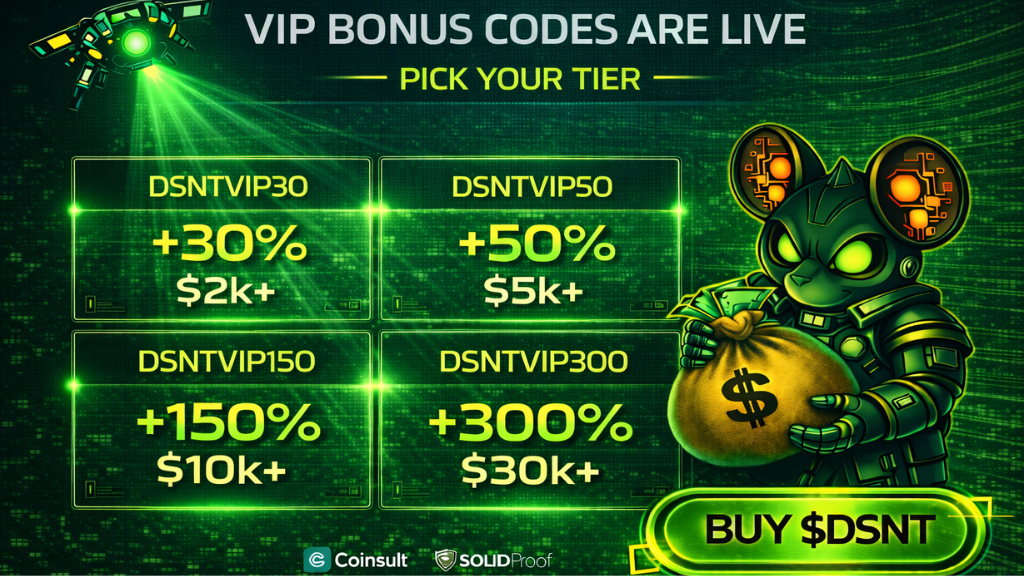
A $2,000 allocation currently delivers 44,620 $DSNT tokens. With the 30% presale bonus, investors receive an extra 13,386 tokens. Missing this window could mean losing the early positioning and watching the momentum pass by.
Visit the official website today. Also, join the community on X and Telegram to stay updated.
FAQs
When is the DeepSnitch AI presale launch date?
The DeepSnitch AI presale launch date is set for after March 31, with a 7-day claim window. Then, $DSNT will officially list on Uniswap. This clear timeline gives investors certainty, unlike stalled presales without launch dates.
What can investors expect from the DeepSnitch AI launch announcement?
The DeepSnitch AI launch announcement will follow the presale claim period, officially marking the transition to public trading. Investors will see $DSNT listed on Uniswap, with additional exchange listings expected soon after.
How does the DeepSnitch AI presale timeline affect token release?
The DeepSnitch AI presale timeline ensures a structured rollout. Presale ends March 31; a seven-day claim window opens, and the DeepSnitch AI token release follows immediately.
Disclaimer: This is a Press Release provided by a third party who is responsible for the content. Please conduct your own research before taking any action based on the content.

Europe’s largest asset manager has launched its second on-chain fund, leveraging Chainlink oracles to publish NAV data.
Amundi, Europe’s largest asset manager with €2.4 trillion in AUM, and tokenized fund platform Spiko have launched the Spiko Amundi Overnight Swap Fund (SAFO), a tokenized UCITS vehicle with its shareholder register hosted on Ethereum and Stellar, with Chainlink providing on-chain NAV oracle infrastructure.
The fund is Amundi’s second blockchain-based issuance following a tokenized money market fund on Ethereum in November.
Chainlink oracles bridge the gap between off-chain fund valuation and on-chain execution, recording SAFO’s net asset value across both networks. The dual-chain architecture pairs Ethereum’s smart contract ecosystem with Stellar’s lower-cost transfer rails.
Total Return Swaps
SAFO is structurally different from the tokenized Treasury bill funds that dominate the on-chain real-world asset (RWA) market today. Rather than investing in government securities, the fund holds a portfolio of assets on behalf of a major bank, which pays the fund an agreed rate above risk-free benchmarks in exchange for the portfolio’s investment returns. Banks are willing to pay this premium because holding assets on their own balance sheet is expensive due to regulatory capital requirements.
The fund uses fully collateralized total return swaps with top banks, starting with BNP Paribas, to deliver stable yields and provide overnight liquidity. Eligible counterparties include Société Générale, Crédit Agricole CIB, Goldman Sachs, JP Morgan, Citi, Morgan Stanley, Barclays, UBS, and HSBC.
The product is available in EUR, USD, GBP, and CHF. CACEIS serves as a depositary bank and fund administrator, while Spiko acts as transfer agent, tokenization platform, and broker.
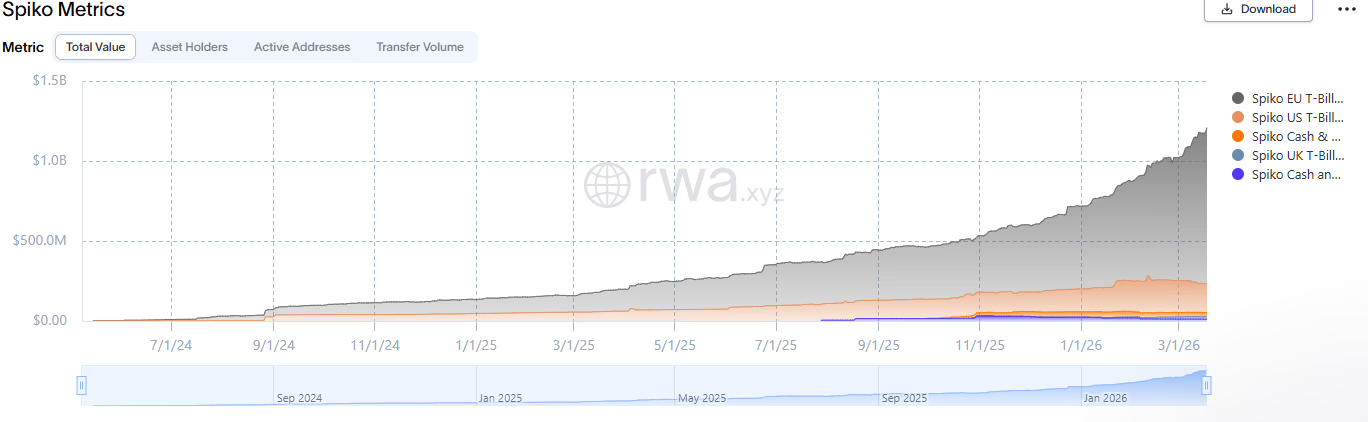
The launch extends Spiko’s rapid rise in European tokenized finance. The platform surpassed $1 billion in distributed asset value in February, according to RWAxyz, up from $190 million a year ago.

RWA Boom
SAFO arrives as the tokenized RWA market continues to expand. Distributed asset value stood at $27.3 billion as of March 19, up 9% over the past 30 days, according to RWAxyz.
2025 was a breakout year for RWAs. The sector was valued at around $5.5 billion in early 2025 but tripled to roughly $18.6 billion over the course of the year. Tokenized Treasuries and private credit have fueled the growth, with institutional products such as BlackRock’s BUIDL and Franklin Templeton’s BENJI driving adoption.


The dollar index fell below 100 as traders sold the greenback after the Fed meeting, with USD/JPY sliding on rising BOJ hike and intervention risks and mixed signals for emerging markets and Bitcoin.
Summary
- DXY slid 0.5% to 99.79 and USD/JPY dropped 1% to 158.22 as traders unwound crowded dollar longs after the Fed flagged sticky inflation but acknowledged rising macro uncertainty.
- Markets now eye a possible BOJ move toward 1% and FX intervention if USD/JPY threatens 160, shifting rate divergence away from a one-way dollar trade.
- A weaker dollar gives only limited relief to crypto, with Bitcoin still down over 4% around $71,313 as the Fed’s higher-for-longer stance and oil shock overshadow FX tailwinds.
The U.S. Dollar Index (DXY) fell below the psychologically significant 100 level on Thursday, sliding 0.5% to 99.79 as markets digested the aftermath of Wednesday’s Federal Reserve meeting and recalibrated positions across currency markets. USD/JPY dropped 1% to 158.22, one of its sharpest single-session declines in weeks, as a combination of post-FOMC profit-taking, rising rate divergence expectations, and the looming prospect of Bank of Japan intervention weighed on the dollar against the yen.
The move is notable precisely because of its direction. As recently as last week, the DXY had broken back above 100 for the first time since late 2025, driven higher by safe-haven demand from the Iran conflict and inflation fears stemming from the Strait of Hormuz disruption. That rally had pushed USD/JPY as high as 159.40 during Tuesday’s Asian session. Thursday’s reversal therefore represents a meaningful technical breakdown, with the 100 level now flipping from support to resistance.
The dollar’s weakness in the wake of a hawkish Fed statement appears counterintuitive on its surface — Powell raised the 2026 inflation forecast to 2.7%, signalled only one rate cut for the year, and explicitly cited the oil shock as a persistent inflationary risk. In a traditional macro framework, that combination should support the dollar. But currency markets have responded differently, focusing instead on three complicating factors.
First, much of the hawkish repricing had already occurred in the days leading up to the FOMC meeting, with market expectations for Fed easing having compressed from two-to-three cuts earlier in the year to just one. With that narrative largely priced, the announcement became a sell-the-news event for dollar bulls who had positioned for upside. Second, Powell’s acknowledgement of heightened economic uncertainty — including the risk that the oil shock could simultaneously depress growth while keeping inflation elevated — raised fresh concerns about the dollar’s medium-term trajectory if the U.S. economy weakens while the Fed’s hands remain tied by inflation. Third, and critically, the divergence between the Fed and other major central banks is shifting.
The Bank of Japan held its policy rate unchanged at 0.75% on Thursday — its highest since September 1995 — but markets are pricing a rate increase to 1.00% by end-June. Mizuho Financial’s markets co-chief Kenya Koshimizu told Reuters in February that up to three BOJ hikes in 2026 are entirely possible. Japan’s Finance Minister has also stated explicitly that authorities stand ready to intervene in FX markets if yen weakness persists, with USD/JPY above 160 viewed as a potential trigger for BOJ action. Thursday’s 1% drop in USD/JPY, pulling the pair to 158.22, suggests markets are pre-empting that intervention risk.
The dollar’s stumble below 100 is also a signal to emerging markets and commodity-linked currencies. The Philippine peso breached the 60-per-dollar level on Thursday as oil costs weighed on the country’s import bill, while gold stabilised following a sharp 4% decline in the prior session. For crypto markets, a weaker dollar historically provides modest tailwind support — but with Bitcoin already down 4.62% to $71,313 on the day, macro headwinds from the Fed’s inflation posture are currently overwhelming any currency-driven relief.

easyJet passenger who was stranded after onboard emergency hits out

US considers lifting sanctions on some Iranian oil

Crypto Clarity Act inches toward Senate hearing as lawmakers weigh legislative trades


-
 Crypto World6 days ago
HYPE Token Enters Net Deflation as HyperCore Buybacks Outpace Staking Rewards
-

 Tech4 days ago
Your Legally Registered ‘Motorcycle’ Might Not Count Under Proposed US Law
-

 Fashion6 days ago
Weekend Open Thread: Addict Lip Glow
-
 Tech2 days ago
Are Split Spacebars the Next Big Gaming Keyboard Trend?
-
Sports5 days ago
Why Duke and Michigan Are Dead Even Entering Selection Sunday
-

 Business4 days ago
Search for Savannah Guthrie’s Mother Enters Seventh Week with No Arrests
-

 Business5 days ago
US Airports Launch Donation Drives for Unpaid TSA Workers as Partial Government Shutdown Enters Fifth Week
-
Crypto World5 days ago
Coinbase and Bybit in Investment Talks: Could Bybit Finally Enter the US Crypto Market?
-

 Business3 days ago
Australian shares drop as Iran war enters third week
-

 Business5 days ago
Country star Brantley Gilbert enters growing non-alcoholic beer market
-

 Crypto World3 days ago
Crypto Lender BlockFills Enters Chapter 11 with Up to $500M in Liabilities
-

 Sports6 days ago
College Basketball Best Bets: Conference Tournament Semifinal Picks
-

 Politics2 days ago
The House | The new register to protect children from their abusers shows Parliament at its best
-

 Fashion3 days ago
25 Celebrities with Curly Hair That Are Naturally Beautiful
-

 News Videos1 day ago
RBA board divided on rate cut, unusually buoyant share market | Finance Report | ABC NEWS
-

 Crypto World1 day ago
Canada’s FINTRAC revokes registrations of 23 crypto MSBs in AML crackdown
-

 Crypto World5 days ago
Crypto Losses Drop 87% in February, But Hackers Are Now Targeting People, Not Code
-
 Politics2 days ago
Real-time pollution monitoring calls after boy nearly dies
-
 NewsBeat1 day ago
Residents in North Lanarkshire reminded to register to vote in Scottish Parliament Election
-
 Entertainment6 days ago
Blake Lively Fights To Keep Justin Baldoni Case Alive


You must be logged in to post a comment Login