
Crypto World
Metaplanet Raises $50M in Zero-Interest Bonds to Buy Bitcoin

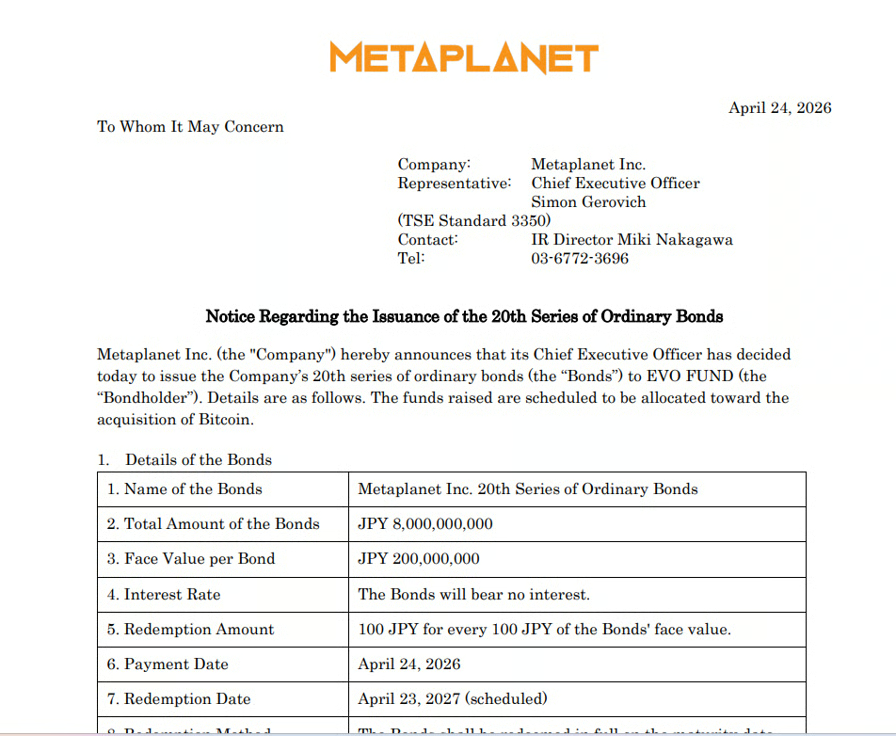
Tokyo-listed Metaplanet has issued 8 billion Japanese yen ($50 million) in zero-interest bonds to EVO FUND, with the proceeds earmarked for additional Bitcoin purchases, according to a Thursday filing.
According to the filing, the 20th series of ordinary bonds matures in April 2027 and is unsecured, giving Metaplanet another source of zero-interest funding as it expands one of the largest corporate Bitcoin treasuries in the market.
EVO FUND, a Cayman-based fund at the core of Evolution Financial Group, specializes in structured financings for digital asset-focused companies and is the main subscriber to Metaplanet’s zero-interest bonds used to fund Bitcoin purchases.
Under the terms of the deal, the bonds will be redeemed at par on maturity, though EVO FUND can request early redemption with five business days’ notice. Metaplanet may also redeem part or all of the bonds if it completes future financings with the same investor.
Related: Nakamoto sells $20 million in Bitcoin and cuts Metaplanet stake
The latest raise extends a financing strategy Metaplanet has used repeatedly as it leans further into its Bitcoin treasury model, tapping capital markets rather than relying solely on operating cash flow.
Metaplanet’s share price was down around 3.69% at the time of writing, according to data from Yahoo! Finance.
Metaplanet expands Bitcoin holdings with debt-funded strategy
The latest raise follows an aggressive first quarter in which Metaplanet added 5,075 BTC, lifting its total holdings to about 40,177 BTC and cementing its position as the third-largest publicly listed Bitcoin holder.
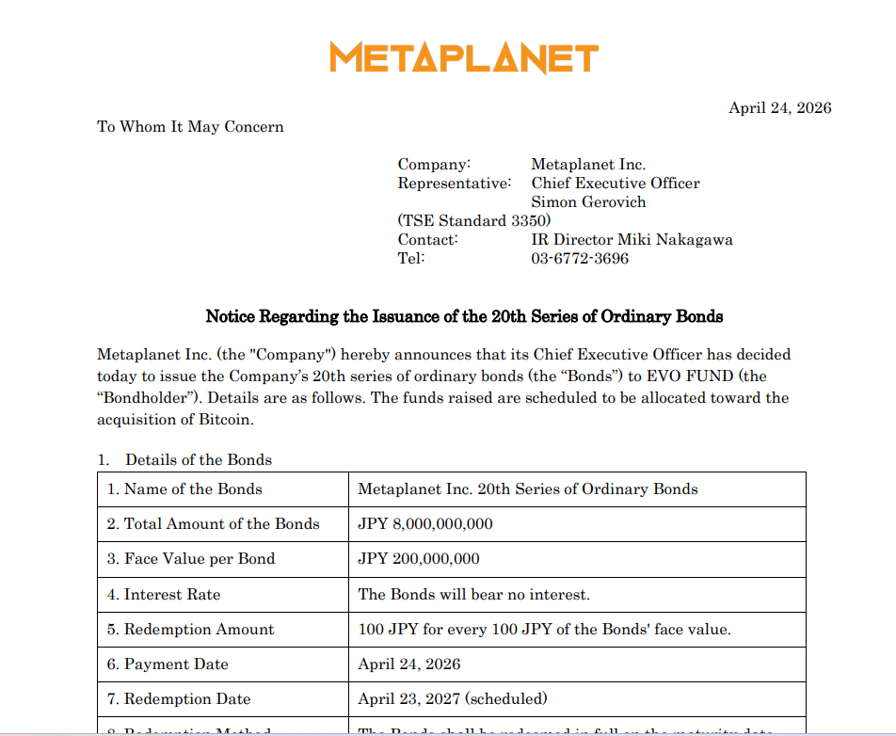
Metaplanet Issues $50 million in 0% Ordinary Bonds to Purchase Additional $BTC. Source: Metaplanet
That expansion has made the company one of the clearer examples in Asia of a public firm using debt and equity financing to accumulate Bitcoin as a treasury asset, drawing frequent comparisons to MicroStrategy’s balance sheet strategy in the United States.
With the new issuance, Metaplanet is signaling that it intends to keep buying even after a volatile stretch for crypto markets, with BTC trading around $77,000 in recent sessions.
The company said in the filing that the bond sale is expected to have only a minimal impact on its consolidated results for fiscal 2026, and that, if “any material impact” on its financial performance or other matters arises, it will provide an update promptly.
Magazine: AI-driven hacks could kill DeFi — unless projects act now

President Donald Trump’s command of U.S. financial and economic policy may have taken a step closer now that his Department of Justice has backed down from an investigation of Federal Reserve Chair Jerome Powell, meaning his nominee to replace Powell may now have an open path to confirmation.
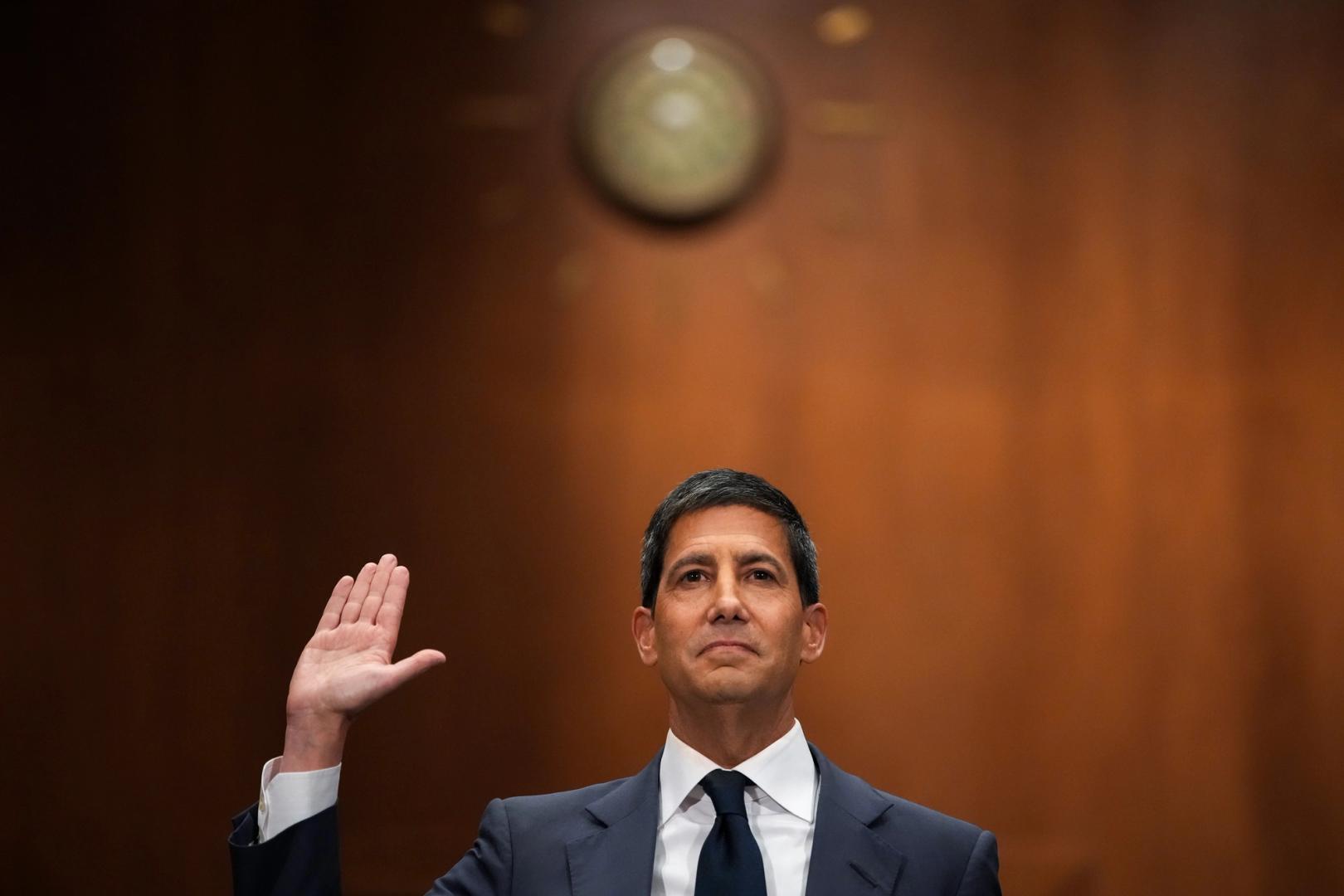
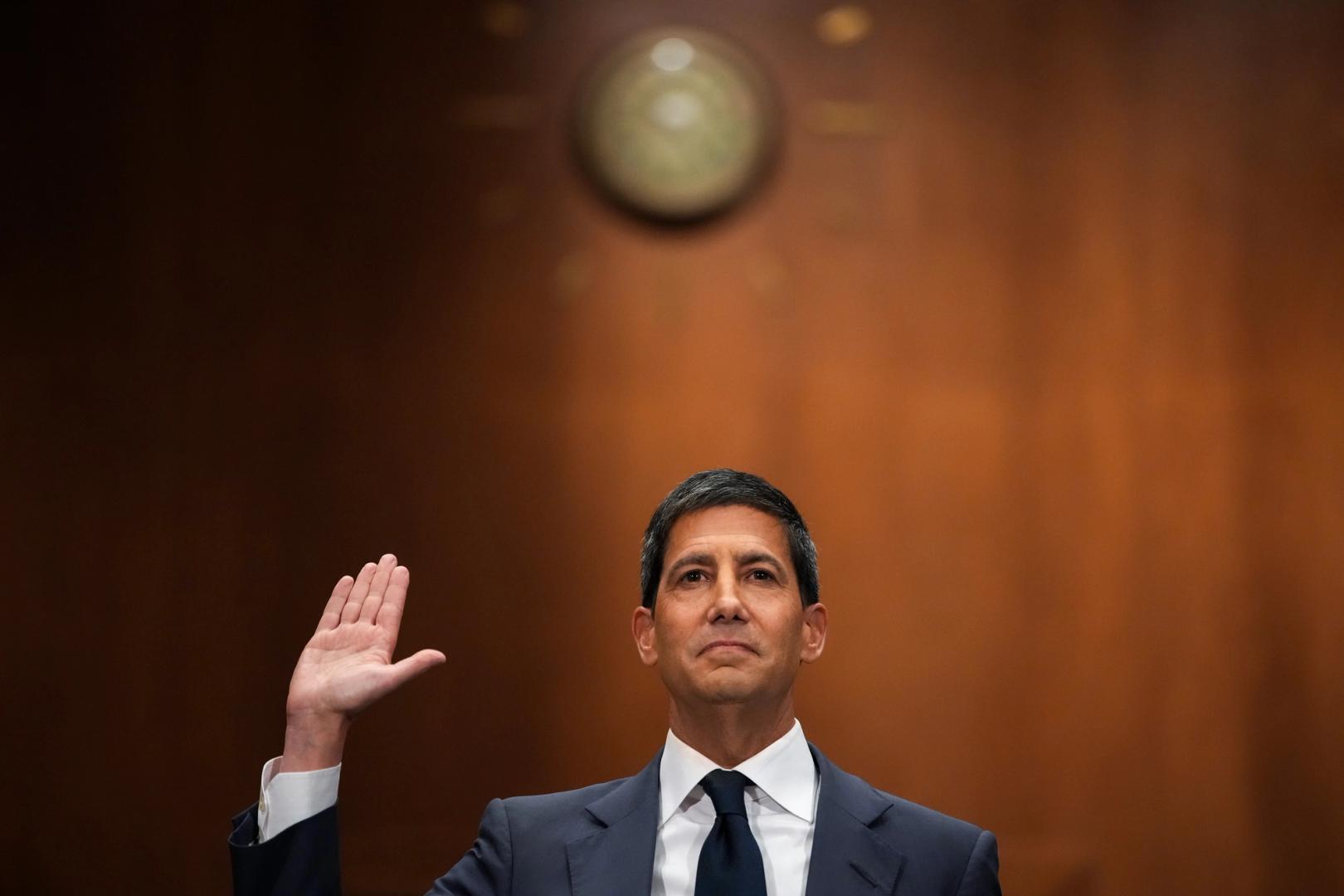
Fed chair nominee Kevin Warsh, whose own considerable wealth includes some crypto-world assets, is awaiting a final vote from the Senate after appearing in a confirmation hearing this week. Trump, who has relentlessly blamed Powell for maintaining overly high U.S. interest rates, chose Warsh to remedy that, but Republican Senator Thom Tillis had promised to block the confirmation as long as the DOJ pressed an investigation against Powell for cost overruns in a Fed building project.
That criminal probe was dropped on Friday, and Attorney General Jeanine Pirro said the DOJ asked the Fed’s inspector general to look into the renovation situation and issue a report. When the news emerged, Kalshi’s prediction betting on Walsh’s confirmation before May 15 shot up from about 30% odds to more than 80%.
“I expect a comprehensive report in short order and am confident the outcome will assist in resolving, once and for all, the questions that led this office to issue subpoenas,” Pirro wrote in a post on social media site X. “Accordingly, I have directed my office to close our investigation as the IG undertakes this inquiry. Note well, however, that I will not hesitate to restart a criminal investigation should the facts warrant doing so.”
Putting his own people atop the Federal Reserve not only equates with Trump’s greater influence over U.S. monetary policy, but it also leaves him with more allies on the Fed board as it makes decisions about financial policy — including implementing rules that govern the crypto industry and stablecoin issuers.
Because of Tillis’ threat, Warsh may have been in a holding pattern as long as the DOJ pursued its investigation, which could have left Powell in charge of the Fed indefinitely, well beyond the May 15 expiration of his term. Now, the Republican-majority Senate may be able to move more quickly toward confirmation of the nominee, who insisted during his hearing that he would act independently of White House direction.
Senator Elizabeth Warren, the ranking Democrat on the Senate Banking Committee that’s considering his nomination, dismissed the move and noted the administration is still pursuing Fed Governor Lisa Cook in court.
“This is just an attempt to clear the path for Senate Republicans to install President Trump’s sock pocket Kevin Warsh as Fed chair,” Warren said in a statement. “Let’s be clear what the Justice Department announced today: They threatened to restart the bogus criminal investigation into Fed Chair Powell at any time while failing to drop their ridiculous criminal probe against Governor Lisa Cook.”
Tillis called Warsh a “great nominee.” In his own posting this week on X, the senator said he’d vote yes on Warsh once the DOJ backs off of Powell:
“I look forward to supporting him out of committee once the DOJ drops their bogus investigation into Chairman Powell that threatens the independence of the Fed.”


DeFi heavyweights urge the SEC to turn its temporary “non‑custodial UI” safe harbor into binding broker rules that shield neutral infrastructure from creeping regulation.
Summary
- The DeFi Education Fund, Aave Labs, Uniswap Labs, Paradigm, Andreessen Horowitz, and others have sent a joint letter urging the SEC to codify its recent “non‑custodial user interface” broker guidance into formal rules.
- The coalition backs the SEC staff’s view that neutral, self‑custodial front ends should not be treated as brokers, but warns that vague definitions risk sweeping in validators, RPC/API providers, oracles, and cloud services.
- With the CLARITY Act stalled in the Senate, the letter frames SEC rulemaking as the only near‑term path to legal certainty for DeFi infrastructure in the U.S.
A broad coalition of DeFi builders and investors is pressing the U.S. Securities and Exchange Commission to lock in its recent staff guidance on “non‑custodial user interfaces” through formal rulemaking, arguing that only clear, durable definitions of “broker” will prevent neutral infrastructure from being regulated out of existence. In a letter filed this week, the DeFi Education Fund, Aave Labs, Uniswap Labs, Paradigm, Andreessen Horowitz and other signatories responded to the SEC Division of Trading and Markets’ April 13 staff statement on when crypto asset front ends must register as brokers.
The coalition “strongly supports” the staff’s conclusion that a non‑custodial user interface “that merely converts user‑initiated instructions into blockchain‑legible commands” and leaves users in full control of their assets does not need broker‑dealer registration. They argue that such tools function as technical infrastructure rather than transaction intermediaries, aligning with Commissioner Hester Peirce’s call for a “more permanent regulatory approach” that reflects how DeFi actually works.
From interim guidance to binding rules
The April 13 statement carved out a five‑year no‑action framework for “Covered User Interface Providers,” allowing certain DeFi front ends and self‑custodial wallets to operate without broker registration so long as they meet 12 conditions, including strict limits on discretion, order handling, and recommendations. In a notable departure from traditional practice, the staff said it would not object if these providers receive transaction‑based fees, provided compensation is flat, objective, and agnostic to product or venue, while still banning payment for order flow.
But the guidance is explicitly temporary and can be withdrawn in 2031 absent Commission action, a sunset the DeFi coalition says is not good enough for businesses making multi‑year infrastructure bets. Their letter urges the SEC to open a notice‑and‑comment rulemaking that would hard‑code a modern broker definition, explicitly excluding neutral software providers, validators, RPC/API operators, oracle networks, and cloud infrastructure that never take custody or exercise trading discretion.
“Absent clear, technology‑neutral rules, future staff or Commissions could reinterpret the broker definition in ways that chill innovation and push core U.S. infrastructure offshore,” the groups warn, echoing concerns that ad hoc guidance can be reversed as quickly as it is issued.
Regulatory vacuum as Congress stalls
The timing of the letter is not accidental. With the CLARITY Act — the main federal crypto market‑structure bill — stuck in the Senate Banking Committee and facing a hard end‑of‑May deadline set by Senator Bernie Moreno, industry groups increasingly see the SEC’s rulebook as the only near‑term lever for clarity. Legal memos from firms including Sidley, Jones Day, and Deloitte have already framed the April 13 statement as a “path” for DeFi interface providers but stressed that it only addresses broker‑dealer rules, not exchange registration, AML obligations, or anti‑fraud liability.
In its own weekly “DeFi Debrief,” the DeFi Education Fund called the staff move “a significant first step” but emphasized that “lasting regulatory certainty requires Commission‑level action,” not just staff statements. Until Congress acts or the SEC completes a full rulemaking, the coalition’s push underscores a broader reality: the fate of U.S. DeFi infrastructure still hinges on how a 90‑year‑old broker definition is applied to lines of code.
AWS Marketplace now offers Chainlink’s oracle stack as a native service, letting banks and fintechs wire tokenization, stablecoins, and RWA apps into existing cloud workflows.
Summary
- AWS Marketplace has listed Chainlink services including Data Feeds, Data Streams, and Proof of Reserve, giving AWS developers direct access to oracle infrastructure inside their existing cloud workflows.
- Amazon says Chainlink’s oracle stack now provides a secure, two‑way connection between AWS resources and on-chain smart contracts, aimed at institutions building tokenization, stablecoin, and digital asset applications.
- The integration strengthens Chainlink’s role as a default oracle layer for capital markets, following earlier work with firms like Swift, Euroclear, and UBS on tokenized asset rails.
According to a report from The Block, AWS Marketplace has integrated multiple Chainlink data services, including its Data Feeds, low‑latency Data Streams, and Proof of Reserve products, into a single listing that any AWS customer can deploy. The move lets developers plug Chainlink oracles directly into AWS compute, storage, database, and API stacks, turning off‑chain enterprise systems into data sources and execution engines for on-chain smart contracts without leaving the AWS environment.
On its Marketplace page, Amazon describes the Chainlink Platform as an “all‑in‑one oracle solution” that brings tamper‑resistant price data, reserve attestations, and other external inputs onto blockchains, while also enabling secure callbacks from smart contracts to AWS workloads. Chainlink’s Proof of Reserve, for example, provides on-chain attestations on the collateralization of stablecoins, wrapped assets, and tokenized real‑world assets, helping issuers enforce 1:1 backing and implement “circuit breakers” that halt minting if reserves fall below supply.
AWS has been signaling this direction for some time. A previous Partner Solution showed enterprises how to run highly available Chainlink nodes on Amazon EKS to deliver external APIs, price data, and verifiable randomness to smart contracts, while a March 2026 AWS sample project walked through integrating AWS services with the Chainlink Runtime Environment (CRE) for tokenization use cases such as price feeds and reserve verification. In a separate announcement about CRE, Jane Ginsburg, AWS’s go‑to‑market head for capital markets and fintech, said the environment “enables customers to integrate AWS workloads with smart contracts, unlocking use cases such as custom price feeds, stablecoin reserve verification, and off‑chain computation within trusted execution environments.”
For Chainlink, the Marketplace listing deepens its pitch as the “industry‑standard oracle platform” for on‑chain capital markets. The company has highlighted adoption of its stack — including Data Feeds, Proof of Reserve, and cross‑chain interoperability protocol CCIP — by major financial institutions and Web3 protocols, and says CRE is being used by Swift, Euroclear, UBS, J.P. Morgan’s Kinexys, Mastercard, AWS itself, and others to tap into what it estimates as an $867 trillion tokenization opportunity.
By putting Chainlink’s services behind the familiar AWS Marketplace paywall and deployment model, Amazon is effectively telling banks, asset managers, and fintechs they can experiment with tokenized assets and smart contracts using the same procurement and security processes they already use for cloud. For developers, it compresses the distance between a traditional microservice running on AWS and a live on‑chain application, making it far easier to move real‑world data, reserves, and workflows into blockchain‑based systems without having to build custom oracle plumbing from scratch.
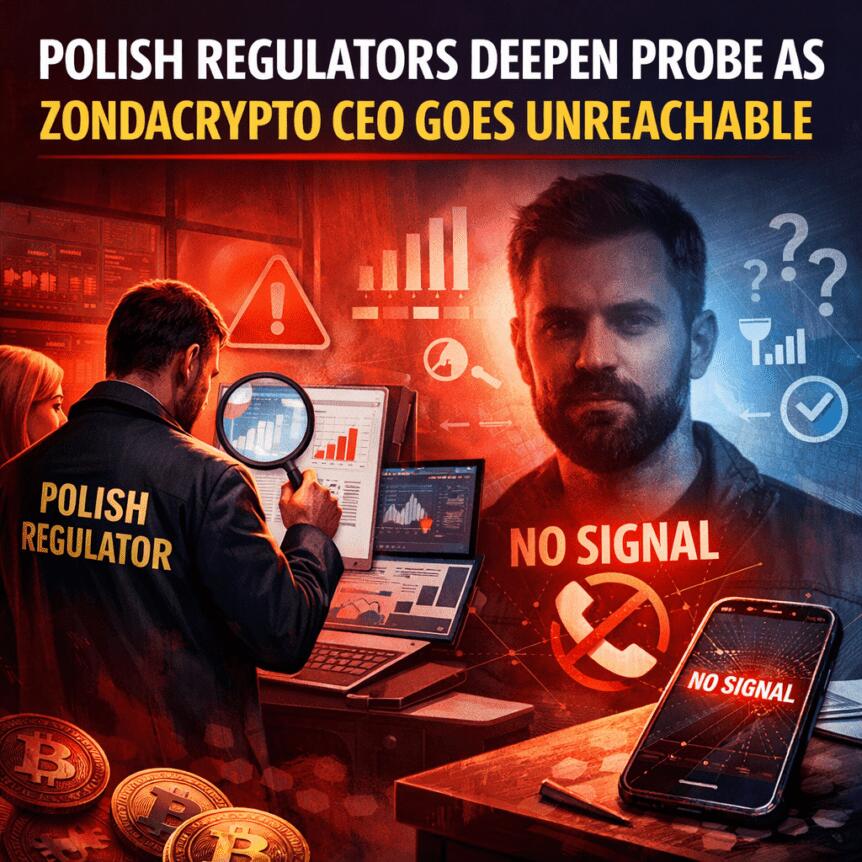
The crisis surrounding Zondacrypto deepened this week as Polish prosecutors opened a formal investigation into alleged fraud and investor losses at the Central European crypto platform. The move follows a string of disclosures surrounding the exchange’s leadership, liquidity access, and governance, and comes amid heightened scrutiny of cross-border crypto activities within Poland and the wider European Union.
According to Onet, the Polish investigative authorities are looking into potential fraud and investor losses tied to Zondacrypto. The report also notes that CEO Przemysław Kral has been in Israel for about a week and holds Israeli citizenship, a detail that could complicate any potential extradition proceedings to Poland. Polish prosecutors opened their inquiry last Friday after collecting complaints from local customers. Cointelegraph confirmed that Kral’s email address—previously used to communicate with him—has since become unavailable, underscoring deteriorating channels of contact amid the crisis.
The developments come on the heels of Kral’s earlier admission that Zondacrypto’s cold wallet, which reportedly held 4,500 Bitcoin, was inaccessible. This admission marked his last publicly documented communication before the current escalation. Prosecutors in Poland have identified several hundred potential victims and estimated losses at least PLN 350 million, roughly USD 97 million, according to Notes from Poland, which cited a prosecutor spokesperson.
Key takeaways
- Polish authorities have opened a criminal probe into Zondacrypto for alleged fraud and investor losses, signaling a formal step beyond private complaints.
- The CEO, Przemysław Kral, is reported to be in Israel and to hold Israeli citizenship, raising potential extradition complications for Polish authorities.
- Disclosures indicate a significant loss exposure to creditors, with several hundred potential victims and losses measured in the mid-to-high nine-figure PLN range.
- Board and governance pressures intensified as resignations from the Estonian operator’s supervisory board point to governance breakdowns and inconsistencies between public statements and internal information.
- The episode feeds into a broader EU regulatory debate around MiCA implementation, centralized supervision, and the adequacy of investor protection regimes in member states.
Polish investigation, exposure, and the evolving regulatory landscape
Although Zondacrypto is registered in Estonia via BB Trade Estonia OÜ, its user base remains concentrated in Poland, with a substantial Polish-speaking community and a significant operational footprint in the country. The Polish investigation reflects regulatory and enforcement realities where cross-border crypto platforms can fall under multiple jurisdictions, especially when customer complaints arise from a specific locale. The case has thus raised questions about how Poland, and the EU more broadly, apply investor protections and enforce sanctions when a platform operates across borders.
Analysts note that the episode occurs within a broader policy framework under discussion in Europe. The Markets in Crypto-Assets Regulation (MiCA) aims to standardize oversight of crypto activities across EU member states, but national authorities continue to wrestle with timely, effective enforcement. Prime Minister Donald Tusk has publicly connected the case to broader concerns about political influence and the movement of capital, highlighting what he characterized as potential links between crypto flows and external funding. In remarks cited by Poland’s government, Tusk said as many as 30,000 Zondacrypto users may have been affected and argued that the country’s investor-protection regime—already constrained by a historically slow pace of legislative adoption—faced challenges due to MiCA’s ongoing implementation timeline.
From a compliance and enforcement standpoint, the case underscores the regulatory tension between national oversight and EU-wide harmonization. Several Polish authorities have described a governance model in which ownership and executive management were concentrated in a single individual, a structure that can impair oversight, transparency, and accountability. Former supervisory board member Georgi Džaniašvili stated that the board learned about the scale of the crisis through media reports rather than internal channels, signaling “material inconsistencies” between public statements and available information. The LinkedIn post by Džaniašvili emphasizes the importance of transparent governance, effective oversight, and mutual trust—elements that are critical to institutional resilience in the crypto sector.
The pushback against the governance model has also fed into political discourse surrounding the case. Polish officials noted that the absence of a robust investor-protection framework delayed the ability to act decisively, a position aligned with ongoing criticisms of MiCA implementation in member states. Some observers argue that a more centralized, EU-level approach to crypto supervision—beyond national lines—could mitigate fragmentation and improve cross-border consumer protection, though achieving consensus on enforcement and licensing remains contested.
Contextually, Zondacrypto’s origin story—having been founded in Katowice in 2014 as BitBay by Sylwester Suszek, who has been missing since 2022—casts a shadow over the company’s earlier trajectory. In recent public statements, Kral contended that Suszek bore responsibility for the platform’s inability to access its cold wallet, a claim that further complicates the legal narrative around accountability and ownership. The Polish investigation, paired with governance concerns and the founder’s absence, raises questions about risk management, internal controls, and the due diligence that regulators require of exchange operators operating across jurisdictions.
Regulatory and governance implications for cross-border crypto firms
The Zondacrypto case illustrates the practical implications of regulatory fragmentation and the push toward more centralized oversight within the EU. For exchanges and platforms operating in or with customers in Poland, the investigation underscores the need for robust cross-border compliance programs—encompassing AML/KYC protocols, ongoing due diligence, and clear governance structures that withstand leadership transitions or disputes. It also highlights the risk that regulatory actions in one jurisdiction can spill over into regulatory expectations elsewhere, particularly in EU member states seeking to align with MiCA provisions while managing national enforcement priorities.
Moreover, the episode reinforces the importance of timely information-sharing between regulators, prosecutors, and market participants. As authorities pursue accountability—whether related to fraud, mismanagement, or operational failures—firms must demonstrate resilient governance, transparent disclosures, and robust safeguarding of customer assets. The case also places a spotlight on how political dynamics, including perceptions of foreign influence and capital flows, can influence regulatory discourse and policymaking in crypto markets.
According to Cointelegraph, the unfolding events in Poland are likely to influence the regulatory conversation around how smaller crypto firms are supervised under MiCA, including considerations of licensing, cross-border activity, and the capacity of national authorities to protect investors while enabling legitimate innovation. The balance between robust enforcement and competitive viability for regional platforms remains a central concern for policymakers, industry groups, and financial institutions engaging with crypto services.
In the near term, observers will be watching for developments on several fronts: whether Polish authorities secure extradition or pursue alternative legal avenues, the pace and scope of governance reforms within Zondacrypto’s operating entities, and how EU regulators calibrate MiCA implementation to address gaps revealed by cross-border cases like this one.
Closing perspective: The Zondacrypto case is a reminder that regulatory clarity, governance integrity, and robust asset safeguarding are now essential prerequisites for crypto platforms seeking legitimacy and continuity across multiple jurisdictions.
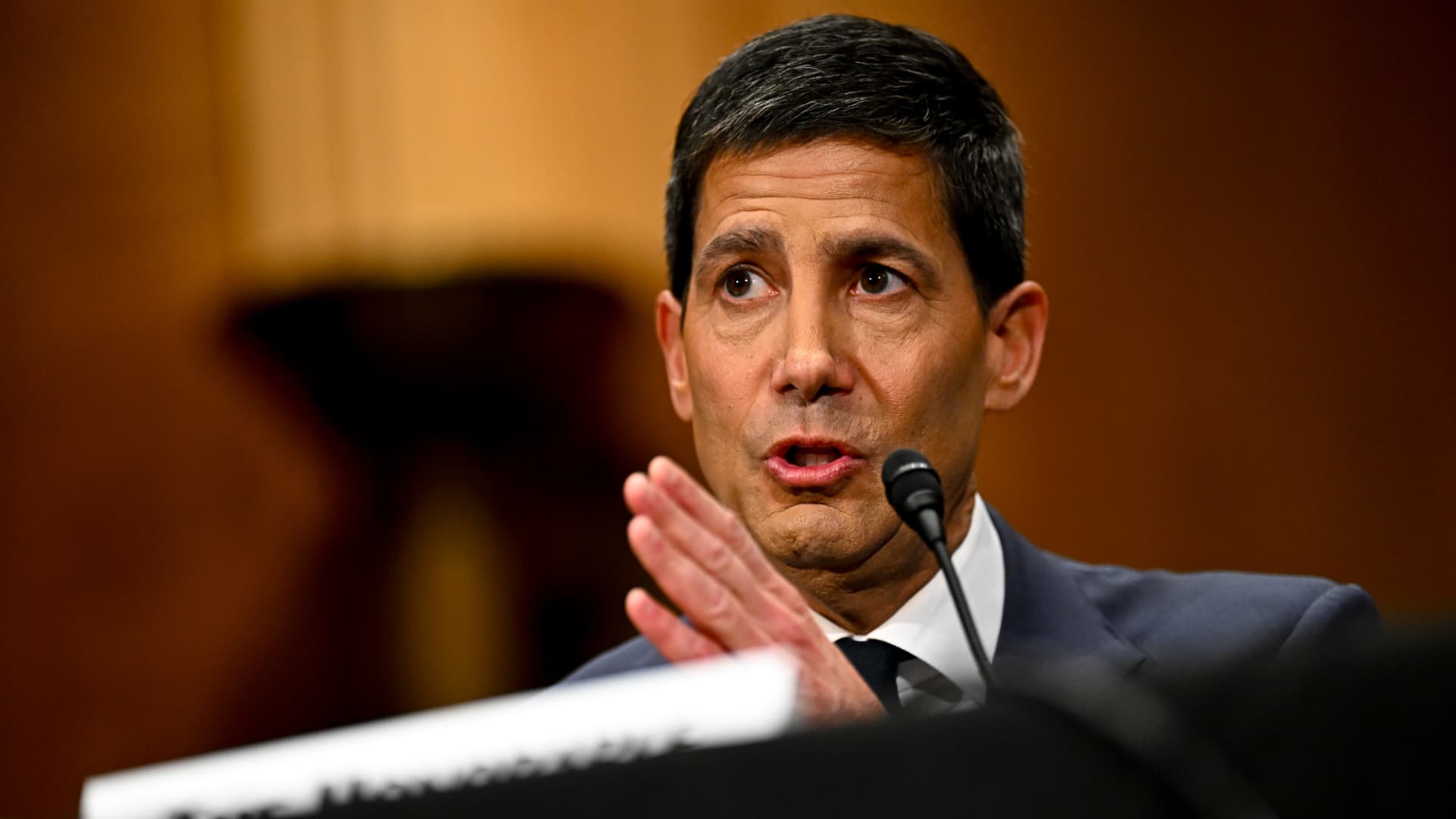
Kevin Warsh, chairman of the US Federal Reserve nominee for US President Donald Trump, during a Senate Banking, Housing, and Urban Affairs Committee confirmation hearing in Washington, DC, US, on Tuesday, April 21, 2026.
Graeme Sloan | Bloomberg | Getty Images
Odds that Kevin Warsh will be confirmed as chairman of the Federal Reserve in less than a month from now surged on prediction markets platform Kalshi after the Department of Justice said Friday it was dropping its inquiry into current Fed Chair Jerome Powell.
Bettors on the platform now see an 86% chance that Warsh’s nomination is approved by the U.S. Senate by May 15, and a more than 97% chance that happens by June 1.
Before the probe into Powell was dropped on Monday morning, bettors placed the chance of confirmation by May 15 at about 30% odds.
The end of the inquiry meets a key demand of Sen. Thom Thillis, a North Carolina Republican. While he said he supported Warsh for the role of Fed chair, he said he could not vote to advance the nomination until the criminal investigation into Powell ended.
Tillis sits on the Senate Banking Committee, which will need to vote to send Warsh’s nomination to the full Senate. If Tillis voted against advancing Warsh’s nomination, that would block his chances of making it to the Senate floor if all Democrats on the committee also opposed the selection by President Donald Trump.
While the probe ending today likely clears the path for Warsh’s candidacy to make it out of committee, Tillis has not made an official statement since the inquiry was dropped. CNBC has reached out to his office for comment.
Bettors, though, think the news is an all clear signal. On Polymarket, bettors now place a similar 81% chance Warsh is confirmed by May 15, and 98% chance by June 1.
Disclosure: CNBC and Kalshi have a commercial relationship that includes a CNBC minority investment.
Markets shift and headlines fade, but the core principles of building long-term wealth remain constant. Join us for our third CNBC Pro LIVE, where investors of all backgrounds – from financial professionals to everyday individuals – come together to cut through the noise and gain actionable strategies for smarter, more disciplined investing. No matter where you’re starting from, you’ll leave with clearer thinking, stronger strategies. Enter your email here to get a discount code


Paul Sztorc, the Bitcoin developer behind drivechains and Bitcoin Improvement Proposal 300 (BIP-300), has announced a new Bitcoin hard fork called eCash.
This project will apparently “be manually reassigning some” of Satoshi’s tokens on this fork to investors in this new project.
To justify this “controversial decision,” Sztorc has claimed that it was necessary to prevent the project from becoming a “zombie,” saying that without this way for “collaborators” to get involved, it will end up failing.
On his drivechain website, Sztorc has claimed that he “never launched an actual altcoin,” a claim that must now be updated
Drivechains
The announcement makes clear that the team behind this intends to launch with drivechains, claiming it has “7 in developement [sic].”
Drivechains, which are meant to facilitate Bitcoin scaling, are a type of sidechain — chains without native tokens that you can transfer your mainnet bitcoin (BTC) to.
Sztorc has claimed that this technology would facilitate an ability to onboard much more people to Bitcoin and use BTC in ways more familiar to DeFi.
Read more: Sztorc vs Gladstein: Can Lightning scale Bitcoin?
LayerTwoLabs, a firm that Sztorc is associated with, lists the possible uses for drivechains:
- Smart contracts
- Privacy-focused transactions
- Instant, low-cost payment channels
- DeFi applications
- Tokenization of assets and securities
Previous eCash projects
Other projects have previously used the name “eCash,” including, famously, David Chaum’s eCash, one of the first digital cash projects.
This project is often considered one of the precursors to Bitcoin.
Additionally, it’s a name that’s previously been used for cryptocurrencies, including, as acknowledged by Sztorc, “XEC” which launched in 2021.
Currently, the website for Sztorc’s new projects lists a launch in approximately 119 days.
Got a tip? Send us an email securely via Protos Leaks. For more informed news, follow us on X, Bluesky, and Google News, or subscribe to our YouTube channel.
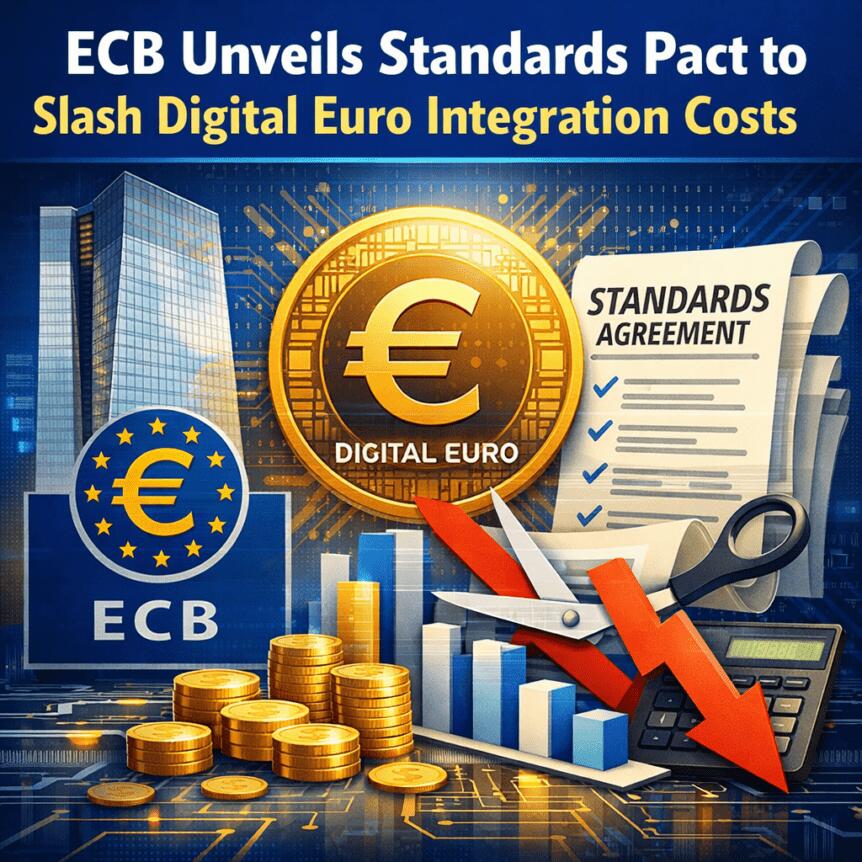
The European Central Bank has moved to smooth the path for a potential digital euro by signing agreements with three European standards bodies to reuse existing open payment standards for digital euro transactions. The move, announced Friday, aims to reduce integration costs for banks, merchants, and payment service providers as Europe contemplates a common, cross-border digital tender.
The ECB said it struck partnerships with the European Card Payment Cooperation, Nexo standards, and the Berlin Group. The agreements will allow the central bank to apply standards covering contactless tap-to-pay, merchant-to-payment-provider connections, and alias-based payments (such as transactions initiated by a mobile phone number). In effect, the ECB hopes to sidestep the need to build a bespoke set of payment rails from scratch, at least at the outset, by leaning on established European open standards.
Using existing open standards is framed by the ECB as a cost-mitigation step designed to speed up market readiness and deliver a more uniform digital euro user experience across the euro area. Yet the central bank cautions that the arrangements are not a guarantee of inexpensive implementation. An earlier analysis cited by Reuters estimated that the digital euro could cost EU banks between 4 billion and 6 billion euros over a four-year horizon, underscoring the substantial work still required despite the standards collaboration.
The standards push is part of a broader effort to lower technical barriers ahead of any potential rollout. It addresses one facet of the costly, multi-year preparation that banks, merchants, and PSPs would face even if a decision to launch is ultimately taken.
The standards to be included. Source: ECB
Key takeaways
- The ECB has formalized agreements with the European Card Payment Cooperation, Nexo standards, and the Berlin Group to reuse open payment standards for digital euro transactions, covering tap-to-pay, merchant-to-PSP connections, and alias-based payments.
- The move is designed to cut adoption costs and promote a consistent user experience across the euro area, but it does not guarantee low implementation costs for banks and PSPs.
- Cost concerns remain significant: Reuters estimates EU banks could bear 4–6 billion euros in costs over four years related to a potential digital euro deployment.
- Technical standards are expected to be clarified ahead of a pilot, with the ECB targeting a summer unveiling of key standards and a 12-month pilot starting in the second half of 2027.
- PSPs will be actively recruited to participate in the pilot, which will involve a limited number of banks, merchants, and Eurosystem staff to test distribution and use cases.
Aligning standards with a possible rollout
The ECB’s coordinated approach reflects a shift toward leveraging established European payment frameworks rather than building a wholly new, closed system. By aligning with the European Card Payment Cooperation, Nexo standards, and the Berlin Group, the ECB aims to give banks and merchants a clearer, more interoperable path to integrating digital euro functionality into existing payment ecosystems. This could translate into smoother experiences for merchants accepting digital euro payments and for consumers using digital wallets or mobile devices for euro-denominated transactions.
Europe’s payment landscape has long been fragmented by proprietary rails and non-uniform protocols. The ECB’s emphasis on open standards seeks to reduce this fragmentation and promote a more consistent interface for end users. The central bank has emphasized that while standardization can ease technical onboarding, it does not eliminate all costs—particularly those tied to updating back-end systems, compliance, risk management, and staff training.
Setting the stage for a pilot
As part of its broader digital euro program, the ECB is moving toward a real-world test environment. In February, the central bank said the digital euro pilot will span 12 months and involve a limited set of payment service providers, merchants, and Eurosystem staff, with PSPs anticipated to play a central role in distribution. The pilot is planned to run in the latter half of 2027, contingent on progress in technical standardization and market readiness.
The ECB has previously signaled that a summer milestone would include concrete technical standards. In March, ECB Executive Board member Piero Cipollone indicated that key standards would be announced by the summer, providing banks and merchants with a clearer blueprint for their internal preparations. The ECB has also stressed the importance of a coordinated, phased approach—beginning with clear standards, followed by targeted pilots—to minimize disruption and encourage orderly adoption if a decision to launch is taken in the future.
The move to anchor the digital euro on open European standards dovetails with ongoing efforts to ensure the project remains technologically accessible to a broad swath of market participants. It also signals a recognition that the most stubborn barrier to wide-scale adoption may be compatibility with existing payment terminals, wallets, and settlement processes rather than the conceptual design of the digital euro itself.
As Europe builds out its own framework, observers will watch how these agreements translate into actual cost realizations, the speed with which standards are rolled out, and how merchants and PSPs adjust their systems. The balance between standardization and innovation will be important to track, as will the willingness of banks to participate in the pilot and commit resources to integration ahead of any formal decision on launch.
Analysts and market participants will also be looking for how the cost estimates evolve as banks begin to map integration milestones to open-standard adoption. If the ECB can demonstrate lower friction through interoperable interfaces, it could tilt the economics in favor of earlier and broader participation in a future digital euro ecosystem, even as total costs remain a consideration for financial institutions and policymakers alike.
In the near term, the headline from the ECB is one of pragmatic progress: aligning European payment standards to reduce one of the clearest technical barriers to a digital euro while keeping the door open for a methodical, evidence-based rollout. The coming months will reveal how quickly standards are adopted, how the pilot participants are selected, and what the actual cost profile looks like as banks begin to align their infrastructure with the new framework.
Readers should keep an eye on announcements anticipated this summer regarding the finalization of key technical standards and the ongoing process to recruit PSPs for the 2027 pilot. As the ECB’s plan unfolds, the compatibility of existing European payment rails with a digital euro and the real-world costs borne by banks will remain central to the feasibility discussion and investor interest alike.
Crypto World
Trump Just Confirmed He Will Speak at the TRUMP Memecoin Gala: Will His Words Move the Crypto Market?
Trump has confirmed. The speech is happening. And the crypto market is watching every word. The broader market holds its breath ahead of Saturday’s Mar-a-Lago gala, the most politically charged crypto event of the year.
What the president actually says could swing sentiment fast in either direction.
The White House confirmed via Reuters that Trump will deliver a keynote address at the exclusive TRUMP crypto memecoin holder gala luncheon at Mar-a-Lago on April 25.
Only the top 297 TRUMP token holders qualify to attend, the top 29 get a private reception with the president directly. Earlier this month, attendance wasn’t even guaranteed; the event terms explicitly noted Trump “may not be able to attend.”
That uncertainty is now resolved. What remains open: the substance of the remarks.
Lawmakers have flagged the event as a potential conflict of interest, given Trump’s direct financial stake in the TRUMP memecoin ecosystem. That political friction, layered over growing US government involvement in crypto infrastructure, makes this speech a genuine market catalyst — not just a media moment.
Can Bitcoin Price Break Out of Its Consolidation Range This Week?
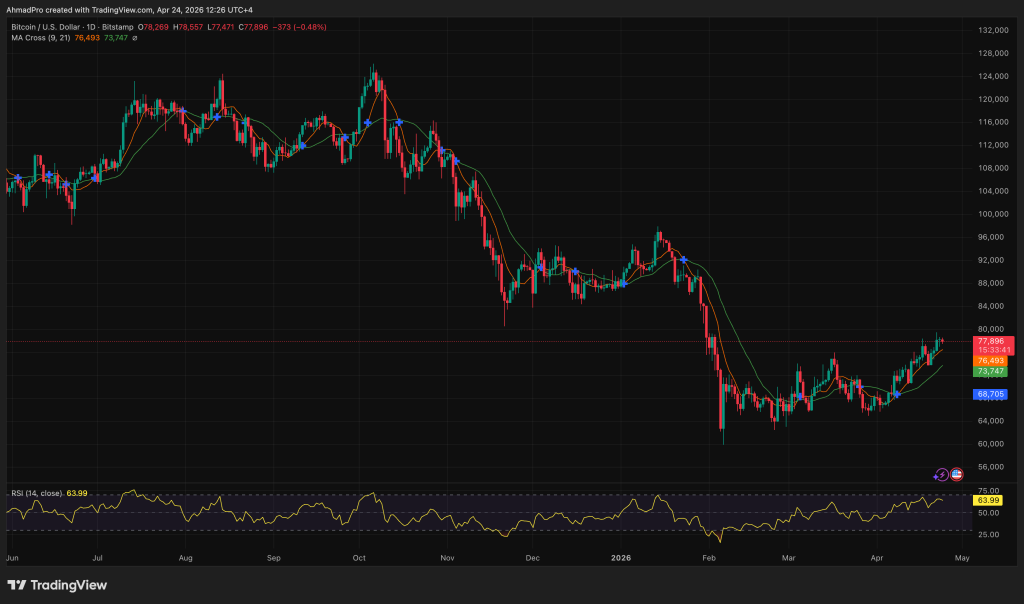
Bitcoin is compressing just under resistance, and this kind of tight range with fading volume usually does not last; it resolves with a move, not more sideways.
Right now, the setup is neutral. Moving averages are flattening, momentum is weak on both sides, and support is holding, but without strong conviction.
The upcoming speech could be a trigger.
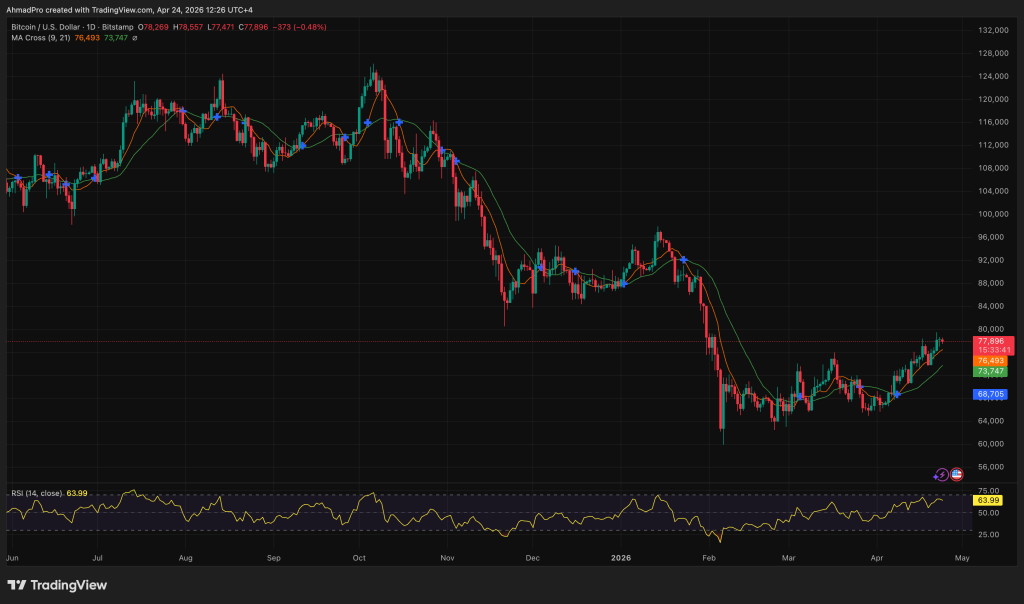
If it delivers real substance, something concrete on regulation or adoption, that is where BTC can break above $78K with volume and pull the market higher.
More likely, it is positive but vague, which leads to a quick pop and then back into the same range.
The risk is if sentiment flips negative around it, because with positioning already cautious, that can push price down fast and test support levels.
Is Bitcoin Hyper Going to Be The Highest Gainer Among Crypto Market Post Trump Speech?
The issue with chasing a Bitcoin breakout here is simple: the higher it goes, the harder it is to get outsized returns. By the time momentum is obvious, most of the move is already priced in.
That is why capital starts rotating earlier, especially into infrastructure plays tied to Bitcoin itself, where the upside is not fully captured yet.
Bitcoin Hyper is trying to position right in that gap, building a Layer 2 on Bitcoin with SVM integration to bring faster execution and smart contracts without leaving the Bitcoin ecosystem. The idea is to combine Bitcoin’s security with the kind of speed and flexibility usually seen elsewhere.
The presale is already showing strong traction, with over $32.5M raised and a current price around $0.013679, which points to steady accumulation rather than a one-off spike.
Early incentives like staking and the bridge design are aimed at making the ecosystem usable, not just speculative.
That said, it is still a presale, and that comes with real uncertainty around execution and liquidity once it launches.
So the setup is clear, Bitcoin is consolidating with limited upside in the short term, while projects building around it offer higher potential, but with higher risk.
The post Trump Just Confirmed He Will Speak at the TRUMP Memecoin Gala: Will His Words Move the Crypto Market? appeared first on Cryptonews.

Ethereum price is trading near $2,314, down roughly 1% in 24 hours, and yet one of Wall Street’s most-watched crypto bulls just endorsed a price target that would require a 100x move from here.
Fundstrat Global Advisors co-founder Tom Lee has thrown his weight behind a $250,000 ETH price target, and the thesis is more structured than it sounds. Whether the market timeline matches the model is a separate question entirely.
Lee’s backing follows a detailed report from Etherealize that reframes ETH not as a speculative token but as a yield-bearing monetary asset.
To me, this is a fresh and comprehensive take by @Etherealize_io on the importance of ethereum and how the $ETH coin will play an increasingly important role as a unit of exchange — Thomas (Tom) Lee (not drummer) FundstratDirect.com (@fundstrat) April 22, 2026
– the case for $250,000 ETH 
 https://t.co/0IEoNEmwRe pic.twitter.com/dGCWL40NHb
The core argument: Ethereum combines network utility with staking income, roughly 2% to 4% annually, in a way that neither gold nor Bitcoin does.
Applying that framework to a total addressable monetary premium of $31.5 trillion, spread across 121 million circulating ETH, produces the $250,000 figure.
Lee signaled agreement via his official account, amplifying a thesis that had already been circulating among institutional researchers. Notably, the report does not offer a near-term price target, this is explicitly a long-range valuation model. Full breakdown of the $250K framework here.
Meanwhile, spot ETH ETFs recorded $96 million in net inflows on Wednesday, the largest single-day figure in two months, suggesting institutional appetite hasn’t evaporated despite the price softness.

Discover: The best pre-launch token sales
Can Ethereum Price Reclaim $3,000 Before Bears Take Control?
Ethereum price is not trending right now, it is just stuck in a messy range, and even the price feeds do not fully agree, which tells you liquidity is fragmented and conviction is low.
Technically it is mixed. Momentum indicators lean slightly bullish, but trend strength is fading, so you get movement without follow-through. Price is holding above key medium-term averages, which keeps the structure alive, but still sitting under short-term resistance, so it cannot break out.
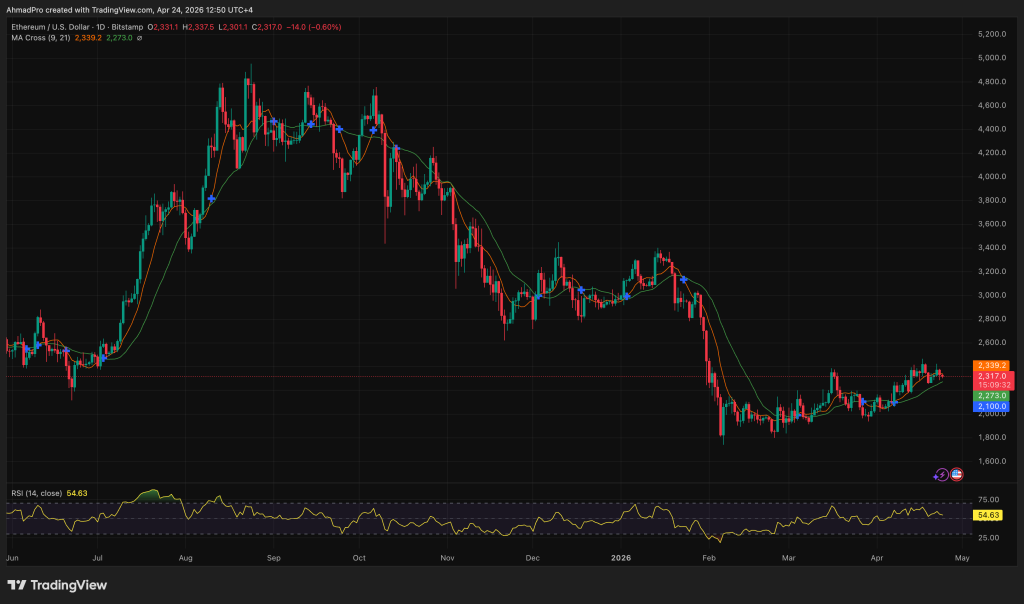
If ETH can push back above $2,500 and hold, that is where momentum builds again and opens the path toward $3,000.
More realistically, it keeps chopping between roughly $2,200 and $2,600 while the market waits for clearer macro direction.
The risk is $2,100, because if that breaks, the entire short-term bullish structure is gone and a deeper move lower becomes likely.
Discover: The best crypto to diversify your portfolio with
Other Coins That Could Go 100X? Bitcoin Hyper
The $250K ETH thesis is a long game, built on staking yield and monetary premium over years, not something that plays out quickly.
That is why attention is shifting toward earlier-stage infrastructure, especially around Bitcoin, where the upside is still forming.
Bitcoin Hyper is aiming right at that gap, building a Layer 2 on Bitcoin with SVM integration to bring speed and smart contracts without leaving the Bitcoin ecosystem. The pitch is simple, fix Bitcoin’s limitations while keeping its core strengths.
The presale has already pulled in over $32.5M at around $0.013679, which shows strong early demand, and features like staking and a native bridge are designed to make the system usable from day one.
But it is still a presale, and that matters. Liquidity is unproven, execution is not guaranteed, and early valuations can move fast in both directions.
So the trade-off is clear, ETH is a slower, long-term thesis, while something like Bitcoin Hyper offers earlier positioning with higher upside, but also higher risk.
The post Tom Lee Just Backed a $250,000 Ethereum Price Target: Is It Actually Possible? appeared first on Cryptonews.
Disclosure: This article does not represent investment advice. The content and materials featured on this page are for educational purposes only.
Little Pepe gains investor attention as presale nears final stages with over $28 million already raised.
Summary
- Little Pepe has raised $28M+ in presale, with Stage 13 priced at $0.0022 and Stage 14 at $0.0023.
- Built on a Layer 2 ecosystem, Little Pepe offers zero-tax trading, staking rewards, DAO governance, and anti-sniper protection.
- A giveaway campaign boosts demand for Little Pepe, offering $77,000 in tokens plus ETH rewards.
With time, the cryptocurrency industry is becoming more sophisticated, and therefore, there have been changes in the kinds of coins that traders seek to invest in. While traditional cryptos may yield constant value growth, it is always a combination of new startups and highly momentum-driven altcoins that yield impressive returns during bullish trends. However, picking such coins requires some level of foresight, and there are quite a few cryptocurrencies that are catching many people’s eyes.
Dogecoin (DOGE)
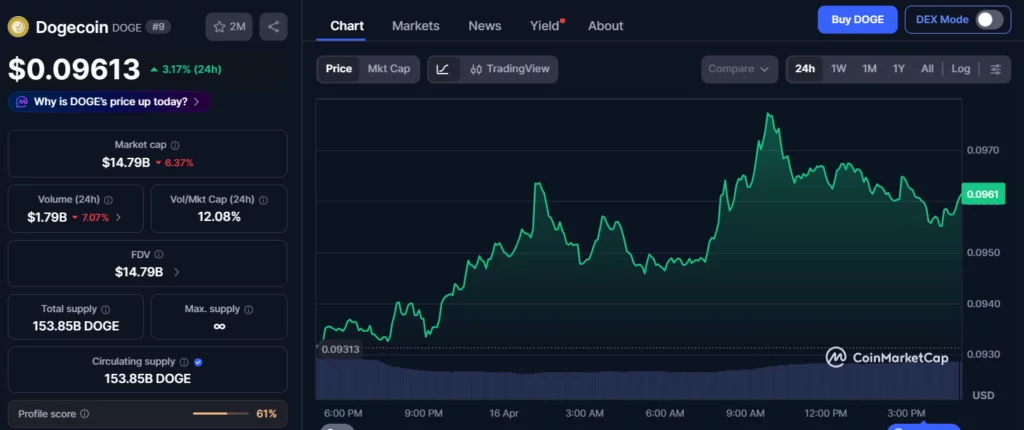
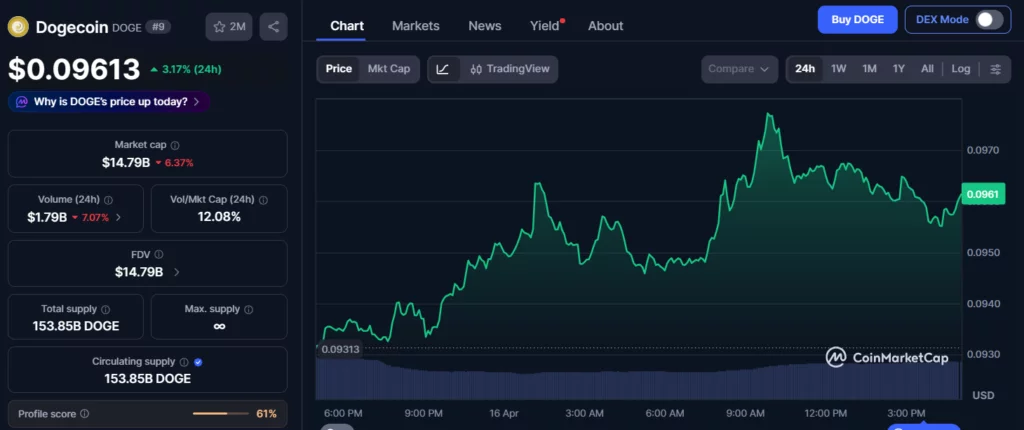
One of the most famous memecoins is Dogecoin. There are millions of followers of this coin. It also has very good liquidity all around the world. The coin is currently trading at $0.0980 and has a market cap of $14.79 billion. The 24-hour trading volume stands at $1.5 billion. Though it is a very old coin, there is no doubt that DOGE can surge quickly when there is an uptrend in the markets. Being a memecoin with huge gains, there is little chance that this coin will lose its relevance in the coming time.
TRON (TRX)
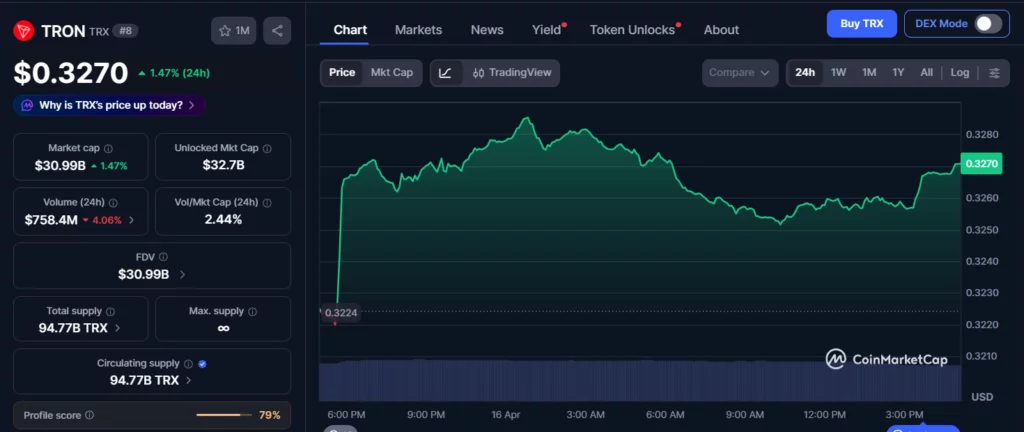
Though there has been no improvement in the price action of TRON, it remains the most-used cryptocurrency network in terms of total blockchain transactions with stablecoins and dApps built on top of it. The coin stands at $0.33 with a market cap of $30.87 billion as of the publishing. The trading volume is at $521.6 million. The high usage of the network will definitely generate profits with higher adoption.
Chainlink (LINK)
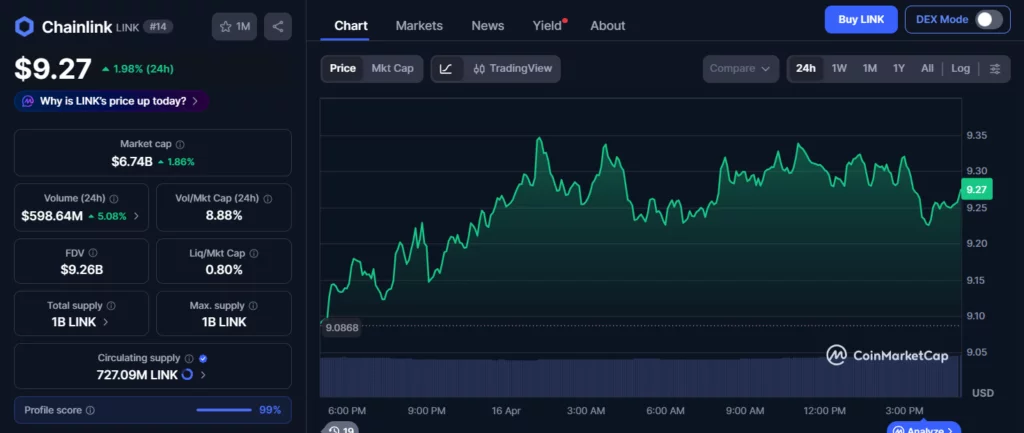
There are several aspects to consider when thinking about Chainlink, with one of the key elements being that Chainlink offers an opportunity for data interaction between blockchain technology and external data sources through the use of its oracle system.
LINK is now at $9.36 with a slight rise of 0.11% and a market cap of $6.81 billion. The trading volume is at $256.65 million. The increase in DeFi initiatives and other blockchain-powered services means that data feeds are more important than ever, making LINK a crucial part of Web3 infrastructure.
Hyperliquid (HYPE)
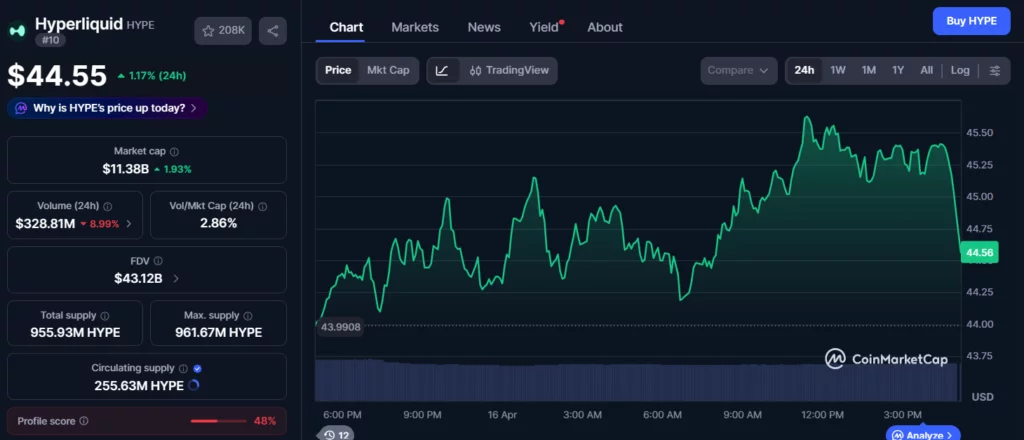
Hyperliquid is a developing force in the realm of decentralized trading. With the rise in the usage of derivatives and trading on blockchain, it has been garnering liquidity and attention from users very quickly. The token is at $41.16 with a market cap of $9.31 billion. The 24-hour trading volume is at $209.43 million. Considering the future potential of Decentralized Finance, Hyperliquid could grow significantly, thus offering investors with upside potential.
Little Pepe (LILPEPE)
However, Little Pepe ranks among these tokens because of its early position and great presale results. The project has raised over $28 million and is currently priced at $0.0022 in Stage 13 (Stage 14 is priced at $0.0023). This is close to the end of the presale stage, and this low price makes it an interesting investment to explore its possible 50x potential.
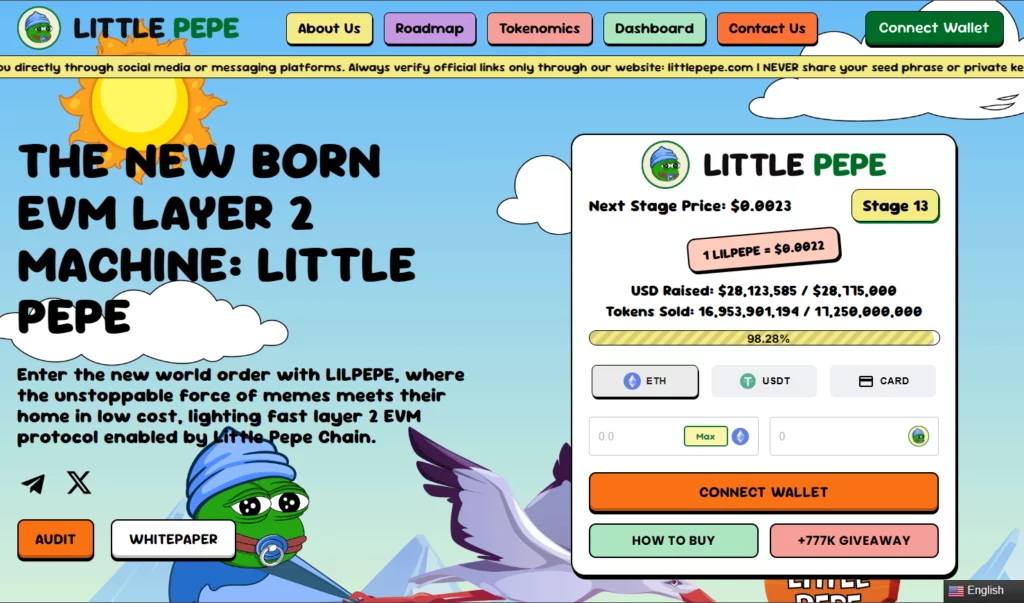
As a token of Layer 2 blockchain that guarantees quick transactions, low costs, and scalability, Little Pepe has such interesting perks as zero tax trading, anti-sniper bots, staking rewards, meme launchpad, and even DAO governance. Besides, the characteristics of the project go beyond just being an intriguing speculative meme coin, as they serve some purpose.
In addition to that, the current giveaway program, which promises ten participants to receive $77,000 worth of LILPEPE coins plus $15 or more of ETH for the top three buyers, adds to the appeal of the coin and successful presales.
Finding the balance between risk and reward
Even though earning 50x returns is not guaranteed with certainty, all of the above-mentioned investments have both advantages and opportunities. They are all quite different, yet all have growth drivers that may help achieve the desired result. The only problem is that assets like Little Pepe have much higher upside potential since their price points are lower and the demand for them keeps rising. This is what might become critical for making substantial money in the future.
For more information about Little Pepe, visit the official website, X, and Telegram.
Disclosure: This content is provided by a third party. Neither crypto.news nor the author of this article endorses any product mentioned on this page. Users should conduct their own research before taking any action related to the company.

Rights Groups Warn Fans to Be Careful Travelling to USA for World Cup

15 products that defined Tim Cook’s Apple legacy

Amazon ditches its original Kindles, so we found the best replacements

Manchester United reach agreement with Casemiro over contract clause amid transfer speculation

US brings back mandatory military draft registration

Steven Gerrard disagrees with Gary Neville over ‘shock’ Chelsea and Arsenal claim | Football


-

 Fashion7 days ago
Weekend Open Thread: Theodora Dress
-

 Business5 days ago
Powerball Result April 18, 2026: No Jackpot Winner in Powerball Draw: $75 Million Rolls Over
-

 Politics7 days ago
Palestine barred from entering Canada for FIFA Congress
-
Entertainment5 days ago
NBA Analyst Charles Barkley Chimes in on Ice Spice McDonald’s Fiasco
-

 Tech6 days ago
Auto Enthusiast Scores Running Tesla Model 3 for Two Grand and Turns It Into Bare-Bones Go-Kart
-

 Politics5 days ago
Zack Polanski demands ‘council homes not luxury flats for foreign investors’
-

 Crypto World7 days ago
Russia Pushes Bill to Criminalize Unregistered Crypto Services
-

 Politics4 days ago
Gary Stevenson delivers timely reminder to register to vote as deadline TODAY
-

 Business2 days ago
Rolls-Royce Voted UK’s Most Iconic Trade Mark as IPO Register Hits 150
-

 Politics2 days ago
Disabled people challenge government SEND proposals over segregation concerns
-

 Politics2 days ago
Making troops accountable for war crimes threatens US alliance, ex-SAS colonel warns
-

 Crypto World7 days ago
Russia Introduces Bill To Criminalize Unregistered Crypto Services
-

 Politics2 days ago
Starmer handler McSweeney to be dragged from shadows by Foreign Affairs Committee
-
Politics2 days ago
Wings Over Scotland | How To Get Away With Crimes
-

 Politics2 days ago
Zack Polanski responds to home secretary’s taser threat
-
 Crypto World6 days ago
Kelp DAO rsETH Bridge Hack Drains $292M as DeFi Losses Top $600M in Two Weeks
-

 Politics2 days ago
‘Iran is still a nuclear threat’
-

 Crypto World3 days ago
New York sues Coinbase, Gemini over prediction market offerings
-

 News Videos7 days ago
AP Politics, Buggana Analyzes Reasons For Financial Instability Due To Amaravati
-

 Business2 days ago
The Job Benefits Most Men Don’t Know to Negotiate
You must be logged in to post a comment Login