

Crypto World
Missing layer in distributed energy


Disclosure: The views and opinions expressed here belong solely to the author and do not represent the views and opinions of crypto.news’ editorial.
The energy transition is accelerating. Rooftop solar is scaling. Batteries are proliferating. Electric vehicles are becoming mainstream. Virtual Power Plants are aggregating distributed resources into grid-responsive portfolios. But beneath this progress lies a structural weakness that few are talking about: we are trying to run a real-time energy system on delayed financial rails.
Summary
- Energy moves fast, money doesn’t: Distributed energy and EV participation are growing, but settlement lags by days or weeks, creating friction, mistrust, and weak incentives.
- Tokenized accounting aligns finance with physics: Representing kilowatt-hours and flexibility as digital tokens enables verifiable, programmable transactions tied directly to energy flows.
- Real-time settlement drives behavior: Instant compensation and loyalty rewards encourage active participation, reduce reconciliation costs, and make distributed energy markets efficient and scalable.
Electricity moves in milliseconds, while settlement still moves in days. If distributed energy resources, independent power producers, behind-the-meter assets, and EV charging networks are going to deliver on their promise, we must modernize the accounting and settlement layer that underpins them. In my view, on-chain, real-time settlement is not a speculative upgrade. It is the financial backbone required for the next phase of energy market design.
Distributed energy is growing, but settlement hasn’t caught up
Distributed energy resources are no longer peripheral. The International Energy Agency has highlighted the growing role of distributed energy and flexibility resources in modern grids, particularly as systems integrate higher shares of renewables.
At the same time, research in renewable and sustainable energy reviews shows the rapid expansion of blockchain-based energy pilots designed to enable peer-to-peer trading and decentralized market participation.
Despite this progress, most energy markets still reconcile transactions through batch processing and legacy billing cycles. Meter data may be granular and near real-time, but financial settlement is often delayed by weeks, particularly in demand-side programs that rely on post-event measurement and verification.
This lag introduces friction:
- Delayed compensation for energy exports
- Opaque reconciliation processes
- Reduced trust between participants
- Weak incentives for real-time behavior
For centralized generation, settlement delays are manageable. For distributed markets, where thousands or millions of small assets interact dynamically, they are corrosive. The grid is becoming distributed and programmable. The financial layer supporting it is not.
Why real-time accounting changes market behavior
Tokenization in energy is often misunderstood. Properly implemented, it does not represent financial abstraction. It represents physical reality. Tokenization transforms physical grid resources (kilowatts of capacity, kilowatt-hours of flexibility, verified load reductions) into standardized, digital representations that can be measured, dispatched, and settled with precision.
Each token can represent a verifiable unit of capacity or flexibility, backed by telemetry and revenue-grade measurement. Integrated into open and standardized VPP architectures, tokenized energy enables granular coordination across millions of distributed devices while maintaining auditability and regulatory compliance.
This is not about creating new financial instruments. It is about creating digital accounting units aligned with physical energy flows. When standardized digital representations of flexibility exist, grid operators gain clearer visibility, utilities reduce reconciliation costs, and customers receive transparent and immediate value for participation. The missing piece is settlement frequency.
EV charging makes the problem visible
Electric vehicles illustrate this mismatch clearly. An EV plugged into the grid is not just consuming electricity. It may:
- Respond to time-of-use pricing
- Participate in demand response
- Provide vehicle-to-grid (V2G) services
- Export stored energy during peak demand
Research exploring blockchain-enabled EV energy trading shows how distributed ledgers can automate pricing and settlement between EVs and grids. Yet in most real-world deployments, compensation for these services flows through traditional billing systems.
Imagine an EV owner exporting energy during a peak pricing window, but waiting weeks for a credit to appear on a statement. That delay erodes trust and reduces participation. If the grid is becoming dynamic, settlement must be dynamic too.
Loyalty and rewards should be embedded in the settlement
We often talk about energy markets in engineering terms. But adoption is a customer experience issue. Behavioral economics consistently shows that immediate feedback is far more effective than delayed rewards. Traditional loyalty systems, airline miles, and retail points operate on delayed accounting models. Energy markets cannot.
When settlement becomes near real-time, loyalty can be integrated directly into the transaction layer. For example:
- Instant credits for charging during off-peak hours
- Immediate rewards for exporting solar during grid stress
- Automated incentives for participating in demand-response events
Market research on blockchain in energy trading notes its potential to enable transparent, tokenized credits and automated reconciliation across participants. The point is not token speculation. It is behavioral alignment. If customers can see, verify, and access value instantly, they become active market participants rather than passive ratepayers.
The strategic imperative
The global energy system is undergoing digital transformation through smart meters, AI-based load forecasting, distributed storage, and electrified transport, which are reshaping grid architecture. But digitization without financial modernization creates an imbalance.
Distributed energy resources are increasing system flexibility, as emphasized by the IEA. But flexible markets only function if incentives are immediate and reliable (IEA).
Real-time settlement closes that gap.
- It reduces reconciliation costs.
- It improves working capital efficiency.
- It strengthens trust between participants.
- It enables loyalty mechanisms that reward beneficial behavior instantly.
Most importantly, it aligns financial infrastructure with physical infrastructure.
The future is participation, not just generation
The next phase of the energy transition is not just about generating clean electricity. It is about enabling and widening participation. This means households with solar panels, EV drivers, battery owners, and commercial facilities with flexible loads have to become market actors. But markets are defined by how value is exchanged.
If energy participation remains tied to delayed settlement and opaque billing cycles, distributed systems will underperform their potential. And if settlement becomes transparent, programmable, and near real-time, energy markets begin to feel modern, because they are.
So real-time, on-chain accounting is not a peripheral innovation; it is the infrastructure layer that determines whether distributed energy remains experimental or becomes foundational. Electricity already moves at the speed of physics. Data already moves at the speed of networks. Capital must move at the same speed, or the system will never fully evolve.



TLDR
- The Himalayan nation transferred 175 Bitcoin valued at $11.85 million from its sovereign reserves on Monday, per Arkham Intelligence blockchain tracking data.
- The kingdom’s Bitcoin treasury has declined 58% from approximately 13,000 BTC in late 2024 to about 5,400 BTC currently.
- Throughout 2026, Bhutan has liquidated roughly $42.5 million in Bitcoin and USDT, with several transfers directed to QCP Capital trading firm.
- The nation’s sovereign wealth fund, Druk Holding and Investments, oversees these assets accumulated via hydroelectric-powered mining operations with virtually no cost basis.
- Last December, the country committed up to 10,000 BTC toward financing the Gelephu Mindfulness City special economic zone development.
The small Himalayan kingdom of Bhutan has been systematically liquidating portions of its sovereign Bitcoin treasury during the early months of 2026, with on-chain analysis revealing a methodical reduction of the nation’s cryptocurrency reserves.
Druk Holding and Investments, the state-controlled investment vehicle, transferred 175 Bitcoin valued at $11.85 million on Monday to a wallet address that had previously received 184 Bitcoin during February.
The February receiving address subsequently forwarded its assets to yet another wallet, which has accumulated 1,910 Bitcoin since 2024.
Blockchain intelligence firm Arkham Intelligence, which monitors these transactions, reports that Bhutan has transferred approximately $42.5 million in Bitcoin and USDT from its sovereign holdings throughout 2026.
February witnessed four distinct transfers: the 184 Bitcoin transaction, two separate transfers to QCP Capital trading firm totaling approximately 200 Bitcoin valued at $15 million, and a $1.5 million USDT deposit to a Binance wallet.
Arkham observed that when Bhutan previously moved comparable Bitcoin volumes in February, the transaction was associated with a $7 million sale executed through QCP Capital.
The consistent pattern of transfers to identical counterparties in comparable amounts suggests a deliberate treasury management strategy rather than emergency liquidation.
How Bhutan Built Its Bitcoin Stack
The Buddhist kingdom launched government-backed Bitcoin mining operations in 2019, utilizing nearly exclusively surplus hydroelectric power generated from its mountainous river systems.
By the end of 2024, Bhutan had amassed approximately 13,000 Bitcoin, establishing itself among the world’s most significant sovereign Bitcoin holders.
After the April 2024 Bitcoin halving event reduced mining rewards to 3.125 Bitcoin per block, mining economics deteriorated and accumulation rates decreased.
Since Bhutan acquired its Bitcoin through mining operations powered by excess renewable energy, its acquisition cost is essentially negligible — resulting in pure profit from every sale, contrasting sharply with corporate entities that purchased at prevailing market rates.
What Bhutan Is Doing With the Money
Prime Minister Tshering Tobgay disclosed in a March 2025 Al Jazeera interview that revenue from Bitcoin liquidations has financed healthcare initiatives, environmental conservation programs, and government employee compensation.
In December 2025, Bhutan unveiled a national Bitcoin Development Pledge, allocating up to 10,000 BTC to capitalize Gelephu Mindfulness City, a proposed special economic zone designed to utilize digital assets as monetary reserves.
The Numbers Today
Bhutan’s current Bitcoin holdings stand at approximately 5,400 Bitcoin, ranking it seventh globally among sovereign holders.
The United States maintains the largest government-held Bitcoin position at 328,372 Bitcoin, valued at nearly $22 billion.
Bhutan’s treasury, which peaked above $1.5 billion when Bitcoin approached $119,000, now carries a valuation near $374 million with Bitcoin trading around $69,000.
Druk Holding and Investments has not issued a response to media inquiries.


Decentralized exchange Hyperliquid’s permissionless platform, which lets anyone create perpetual futures tied to any asset, is more popular than ever.
Since its debut on Oct. 13, the so-called HIP-3 market has steadily gained traction, with open interest — the total value of all active contracts — hitting a record $1.2 billion on Sunday, according to data source ASXN. It has since remained at all time highs in a sign of growing adoption and activity on the platform.
The growth has been driven by booming activity in futures tied to equities and commodities, including oil, gold, and silver. It highlights how decentralized markets are increasingly being used to trade traditional assets, especially as a tool for price discovery over weekends when traditional exchanges are closed.
This story is worth discussing, Arca said in a weekly update, nothing the massive surge in activity on Hyperliquid.
“Interestingly, on Hyperliquid, just 7 of the top 30 markets are crypto pairs, while the vast majority are commodity and equity pairs on Trade.XYZ. This makes sense given the moves in silver, gold, and oil over the past few months, and it is a testament to Hyperliquid that we finally have a real platform where tokenized trading of RWAs is happening in meaningful size,” the firm said.
As of writing, the tokenized equity futures contract XYZ100-USDC led the pack, with open interest of $213 million, followed by the oil-focused CL-USDC at $169.8 million. Other top contracts included futures tied to Brent crude, the S&P 500, silver, and gold.
CL-USDC led in trading volume, seeing $1.62 billion in activity over 24 hours.
This follows the weekend surge in prices for select few crude oil grades, like the Murban crude, which traded at $103 per barrel, as conflict in the Middle East intensified, disrupting tanker flows through the Strait of Hormuz. Major oil benchmarks, such as Brent and WTI, surged above $110 per barrel on Monday, before crashing into two figures.
HIP-3, Hyperliquid’s builder-deployed perpetual futures, have shaken up how markets are made. Instead of limiting new contracts to a small set of validators, anyone can launch a market by staking 500,000 HYPE tokens — which serve as both a security deposit and a guard against spam.
This essentially puts the power to create markets in the hands of the community, opening the door to a far wider range of trading opportunities than traditional platforms allow.


The TRON network has joined the Agentic AI Foundation (AAIF), marking a new step in its push to integrate blockchain infrastructure with emerging artificial intelligence technologies.
Summary
- TRON joined the Agentic AI Foundation as a Gold Member and will serve on its governing board.
- The foundation, backed by the Linux Foundation, aims to develop open infrastructure for autonomous AI agents.
- TRON plans to explore how blockchain networks can support payments and economic activity between AI systems.
According to an announcement from TRON DAO, the blockchain ecosystem has joined the foundation as a Gold Member and will serve on its governing board, participating in the organization’s oversight and development initiatives.
The AAIF operates under the umbrella of the Linux Foundation and aims to build open, interoperable infrastructure for agentic AI systems—autonomous AI programs capable of executing tasks, interacting with digital tools and collaborating with other AI agents.
The foundation was created to support the development of standardized tools and protocols that allow AI agents to operate across platforms and interact with real-world systems more efficiently. Major technology companies and open-source contributors have backed the initiative as part of a broader effort to ensure transparency and interoperability in the emerging AI-agent ecosystem.
TRON said its participation will focus on exploring how blockchain infrastructure can support machine-to-machine economic activity, particularly payments and settlement layers for autonomous software agents. The network processes large volumes of stablecoin transactions and positions its infrastructure as suitable for high-frequency micro-transactions that AI agents could require.
“Excited to see @trondao join @AgenticAIFdn! TRON continues to support and build for this next phase of autonomous economic innovation,” wrote Tron founder Justin Sun.
Agentic AI, systems capable of planning actions and executing tasks independently, has become a growing area of interest across the technology sector as companies explore how autonomous software could perform business processes, financial transactions and digital services.
By joining the foundation, TRON aims to collaborate with other technology organizations and open-source developers working on standards for this emerging “agent economy,” where autonomous AI systems may interact directly with blockchain-based financial infrastructure.
The move highlights a broader trend of convergence between blockchain networks and artificial intelligence, as both sectors experiment with decentralized systems capable of supporting automated digital economies.
Meanwhile, the news did not have much impact on the native token of the Tron (TRX) blockchain. TRX was trading at $0.28 at press time, down 0.7% in the last 24 hours.

AI Summary
- In the evolving landscape of artificial intelligence, India is emerging as a key player in the global AI infrastructure race, with significant investments in computing power, data centers, and specialized chips.
- This blog post delves into the technical foundations, investment dynamics, and future outlook of India’s AI infrastructure ecosystem.
- With explosive data generation and massive global investments, India is witnessing a surge in GPU-powered data centers and AI infrastructure services.
- The rise of AI infrastructure as a service model allows enterprises to access compute resources and AI tools on demand, reducing barriers to AI adoption.
- Despite the capital-intensive nature of building AI infrastructure, strategic opportunities abound for enterprises across sectors.
Artificial Intelligence is no longer just an algorithmic breakthrough; it is an infrastructure race. Around the world, governments and technology companies are investing billions into computing power, data centers, and specialized chips. India is rapidly positioning itself as one of the most strategic locations in this new AI economy.
From hyperscale data centers and GPU clusters to sovereign cloud environments and enterprise-ready AI platforms, the country is building the digital backbone required to support large-scale AI deployments. But behind the headlines lies a deeper story: massive capital investments, infrastructure gaps, and an evolving ecosystem where enterprises increasingly rely on specialized AI infrastructure services to operationalize AI at scale. This article explores the technical foundations, investment dynamics, costs, and long-term outlook of India’s evolving AI infrastructure ecosystem.
The Infrastructure Layer Behind AI Innovation
Most conversations about artificial intelligence revolve around models like GPT, multimodal AI, or generative systems. However, these systems depend heavily on large-scale compute environments. Training a modern large language model requires thousands of GPUs operating simultaneously, high-bandwidth networking, and distributed storage systems capable of processing petabytes of data.
These components collectively form what is now referred to as enterprise AI infrastructure. This infrastructure stack typically includes:
- GPU clusters for training and inference
- High-speed networking such as InfiniBand
- Distributed data pipelines
- Model training frameworks
- Scalable orchestration systems
Companies deploying AI at scale rely on an AI infrastructure platform that integrates these components into a unified environment capable of handling model development, training, deployment, and monitoring. In many cases, enterprises no longer build this stack from scratch. Instead, they partner with an AI Development company that provides end-to-end AI development infrastructure tailored to enterprise workloads.
Why India is Emerging as a Global AI Infrastructure Hub
India’s emergence as an AI infrastructure destination is driven by several macroeconomic and technological factors.
1. Explosive Data Generation
India generates nearly 20% of the world’s data, yet it currently accounts for only about 3% of global data center capacity. This imbalance is rapidly driving infrastructure expansion across the country.
As AI adoption increases across industries like banking, healthcare, telecom, and logistics, demand for computing infrastructure is accelerating.
To meet future demand, experts estimate India will require 45–50 million square feet of additional data center space and roughly 40-45 terawatt hours of power by 2030. This scale of expansion signals a massive opportunity for companies delivering AI infrastructure services.
2. Massive Global Investments
Global technology companies are pouring capital into India’s AI ecosystem.
For example, Microsoft recently announced a $17.5 billion investment to expand cloud and AI infrastructure in India between 2026 and 2029, including hyperscale data centers and sovereign cloud capabilities.
The initiative includes:
- New hyperscale cloud regions
- AI compute clusters powered by GPUs
- Sovereign cloud architecture for regulated industries
- National AI skilling initiatives
This type of investment is transforming India into a strategic node in the global AI cloud infrastructure landscape.
3. Data Center Expansion and GPU Clusters
India’s AI boom is strongly tied to the rapid development of GPU-powered data centers.
Specialized AI facilities now deploy thousands of GPUs connected through high-bandwidth networking to support large-scale model training.
Recent industry deployments indicate:
- AI data centers hosting 8,000-10,000 cloud GPUs per facility
- High-speed networking reaching 3.2 Tbps interconnect speeds
- Rack densities exceeding 200 kW per rack for AI workloads
Such environments form the backbone of modern AI infrastructure platforms used by enterprises building generative AI and predictive models.
The Rise of AI Infrastructure as a Service (AIaaS)
While hyperscalers build massive infrastructure environments, enterprises increasingly prefer consuming these capabilities as managed services.
This shift has led to the rise of AI infrastructure as a service, a model where organizations access compute resources, GPU clusters, and AI development tools on demand. Instead of investing millions into physical infrastructure, companies can deploy AI workloads through scalable cloud environments. Typical AIaaS offerings include:
- GPU-based compute clusters
- Model training pipelines
- Automated ML infrastructure
- Data engineering frameworks
- AI model hosting and inference services
This model drastically reduces the barrier to entry for enterprises adopting artificial intelligence. Organizations can focus on building AI applications rather than managing the underlying AI development infrastructure.
The Cost of Building AI Infrastructure in India
Despite the rapid expansion, building AI infrastructure is an extremely capital-intensive process. A typical hyperscale AI data center includes several cost layers:
AI compute hardware is the most expensive component. Advanced GPUs used for AI workloads can cost between $25,000 and $40,000 per unit, depending on the architecture and memory configuration. Large training clusters often require thousands of GPUs operating in parallel.
AI data centers are highly energy intensive. High-performance compute environments require an enormous electricity supply for both compute and cooling. In many facilities, electricity consumption per rack can exceed 100-200 kW, far higher than traditional data centers. Power costs, therefore, become a critical factor when designing enterprise AI infrastructure.
Training large models requires an extremely fast networking infrastructure. Technologies such as RDMA networking and InfiniBand enable GPU clusters to communicate with minimal latency. At the same time, distributed storage systems must handle massive training datasets efficiently. These layers form the core of a scalable AI infrastructure platform.
- Talent and Operational Costs
Infrastructure alone does not guarantee AI success. Organizations must also invest in:
- ML engineers
- Data scientists
- Infrastructure specialists
- AI operations teams
This talent layer is often delivered through specialized AI infrastructure services offered by advanced AI Development companies.
Strategic Opportunities for Enterprises
India’s AI infrastructure expansion is creating a wide range of opportunities across sectors.
Banks, insurance companies, and healthcare providers are increasingly deploying AI to automate operations, detect fraud, and deliver predictive insights. Access to scalable AI cloud infrastructure enables these organizations to build enterprise AI capabilities without building data centers internally.
India’s startup ecosystem is rapidly embracing AI. Access to GPU clusters and AI infrastructure as a service allows startups to experiment with large models and generative AI applications that were previously accessible only to major technology companies.
- Sovereign AI and National AI Platforms
Governments and enterprises are also exploring sovereign AI strategies. These initiatives focus on building national AI models trained on local data and hosted on domestic infrastructure. This approach strengthens regulatory compliance, data privacy, and technological independence.
Challenges India Must Overcome
Despite strong momentum, India’s AI infrastructure journey faces several challenges.
AI workloads require massive GPU availability. However, global supply chains remain constrained, creating bottlenecks in infrastructure deployment.
AI data centers consume large amounts of electricity. Scaling AI infrastructure while maintaining sustainable energy usage will become a critical challenge.
While India produces a large number of engineers annually, the number of professionals with deep AI infrastructure expertise remains limited. Bridging this gap will require continued investment in AI education and skill development.
Now is the time to Build the Foundation for India’s AI Revolution
The Future Outlook: India’s AI Infrastructure in the Next Decade
India’s AI infrastructure expansion is still in its early stages. Over the next decade, several major trends will shape the ecosystem.
- Hyperscale AI Data Centers
Large-scale AI compute facilities capable of hosting tens of thousands of GPUs will become more common. These data centers will serve as regional AI hubs supporting enterprises, governments, and startups.
Businesses will increasingly rely on integrated AI infrastructure platforms that combine compute, data pipelines, model management, and deployment tools. These platforms will simplify AI adoption across industries.
- AI Infrastructure as a Strategic Industry
Infrastructure providers, cloud companies, and specialized AI Development companies will play a central role in enabling enterprise AI transformation. Companies that deliver scalable AI infrastructure services will become essential partners for enterprises navigating the AI economy.
The Road Ahead for AI Infrastructure
India is entering a decisive phase in the global AI economy where infrastructure capacity will determine how quickly innovation moves from research labs to real-world deployment. As enterprises adopt large language models, real-time analytics, and autonomous systems, the demand for scalable enterprise AI infrastructure will continue to accelerate. Organizations must therefore prioritize resilient compute environments, secure data pipelines, and high-performance deployment frameworks that support long-term AI initiatives. Building this capability often requires collaboration with a specialized AI Development company experienced in designing production-grade AI infrastructure platforms.
Antier enables enterprises to establish scalable AI development infrastructure, helping organizations deploy advanced AI systems with robust AI infrastructure services tailored for enterprise-scale innovation and operational efficiency.


- Arthur Hayes predicts the Hyperliquid crypto price could reach $150.
- Hayes’ prediction is supported by strong trading activity, which fuels more buybacks.
- The immediate resistance levels to watch sit at $35.03, $39.87, and $43.82.
The price of Hyperliquid (HYPE) has climbed steadily as it responds to growing bullish sentiment around the fast-rising derivatives exchange.
At press time, the token was trading at around the $33 after a strong recovery from recent lows.
Why is the price of Hyperliquid crypto rising?
Much of today’s Hyperliquid crypto price surge can be attributed to the excitement around Arthur Hayes’ prediction that the HYPE token could surge to $150 this year.
My essay on why $HYPE is going to $150 by August 2026.
— Arthur Hayes (@CryptoHayes) March 9, 2026
This bold forecast has quickly become one of the most talked-about topics in the crypto derivatives market.
Hayes believes the rally could unfold over the next few months as the Hyperliquid exchange continues to expand its ecosystem and attract new trading activity.
He even described HYPE as his largest liquid altcoin bet, a statement that immediately caught the attention of traders looking for the next major breakout project.
Notably, Hayes’ prediction comes at a time when decentralised derivatives platforms are gaining ground in the broader crypto industry.
More traders are exploring alternatives to centralised exchanges, especially platforms that offer deep liquidity and fast execution, and Hyperliquid has managed to capture that demand by focusing on high-performance infrastructure and a streamlined trading experience.
As a result, Hyperliquid has rapidly built a reputation as one of the most active decentralised derivatives venues in the market.
Strong trading activity supports the bullish HYPE outlook
One of the key factors supporting the bullish narrative is the platform’s growing trading activity.
Higher trading volumes translate directly into revenue for the protocol, and a large portion of this revenue is used to buy back HYPE tokens from the market.
These buybacks tighten the supply of HYPE tokens available on exchanges and help strengthen price momentum during periods of rising demand.
Nevertheless, analysts believe that reaching Hayes’s ambitious $150 target would likely require a major expansion in exchange revenue.
That kind of growth would depend heavily on continued adoption of derivatives trading within the crypto sector.
The key technical levels to watch
Beyond the fundamental story, technical indicators are also providing clues about where the Hyperliquid (HYPE) price could move next.
Recent price movements show that $32.28 has emerged as a short-term support zone since it has repeatedly held during recent pullbacks.
If that support gives way, the next support level appears near $28.98, which has acted as a historical price floor.
On the upside, traders should closely watch the $35.03 resistance level.
The cryptocurrency has tested this zone several times in recent sessions.
A clear breakout above that level could open the door for a move toward $39.87, which analysts say represents the next major resistance area.
If momentum continues beyond that point, the third resistance level sits around $43.82.
Breaking through these resistance levels would likely confirm a stronger bullish trend in the months ahead, likely towards the Arthur Hayes-predicted price target.
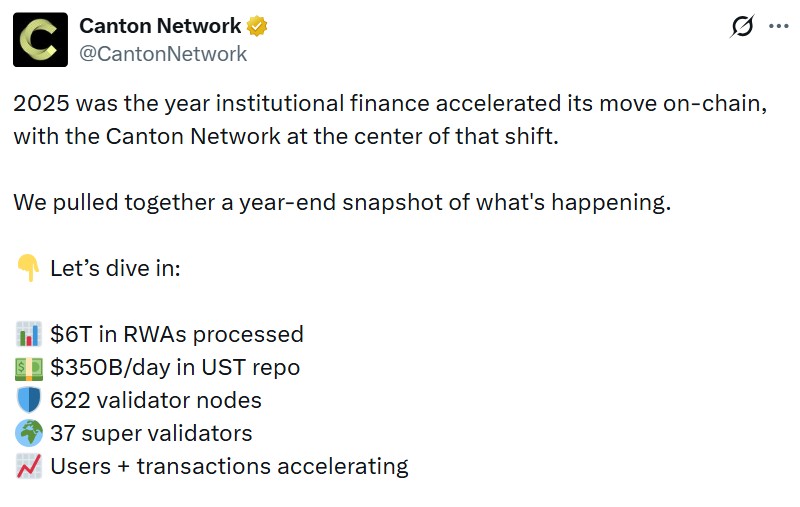
Institutional adoption of real-world assets (RWAs) is splitting between public and permissioned networks, exposing a divide between the liquidity advantages of blockchains like Ethereum and the privacy demands driving systems such as Canton Network.
The divergence is becoming more pronounced as tokenized assets gain traction among major asset managers.
Marcin Kaźmierczak, co-founder of blockchain oracle provider RedStone, said product development is likely to occur on public blockchains, while permissioned systems are better suited for institutional processes that require confidentiality.
“There are some operations between institutions that simply have to stay private, and this is the value proposition that Canton offers very effectively,” Kaźmierczak told Cointelegraph.
Digital Asset’s Canton Network lets banks and asset managers tokenize and settle RWAs while keeping transaction details visible only to involved parties. The network says it processed $6 trillion in RWA value in 2025.
Rather than converging on a single architecture, banks and asset managers are building parallel systems designed to serve different functions within the tokenized financial stack, according to Kaźmierczak.

Ethereum’s Merge was Wall Street’s tokenization moment
Tokenization has become one of the main narratives behind institutional blockchain adoption beyond spot crypto exposure and exchange-traded funds (ETFs).
In June 2024, McKinsey estimated that tokenized assets could reach around $2 trillion by 2030. More optimistic projections have much higher forecasts, including a $30.1-trillion target by 2034 set by Standard Chartered and Synpulse.
Regulatory clarity in the US has contributed to the shift. The GENIUS Act, passed in 2025, created a federal framework for stablecoins, which serve as the settlement layer for many tokenized assets.

Kaźmierczak said confidence in Ethereum began improving earlier, after the network transitioned to proof-of-stake in 2022.
“In 2022, when I was talking to institutions, the Merge was like a big question mark for those institutions,” Kaźmierczak said. “They saw it worked without any hiccups, so it gave them this confidence.”
Kaźmierczak claimed that RWA projects among institutions started in 2023 or 2024, but as institutions work with yearly budgets, developments and project launches don’t occur in weeks or months like they do in crypto. That led to a cluster of institutions announcing tokenization projects last December, he said.
“It’s not that they started in Q4 last year. No, they started a year before, and now we are seeing the fruits.”
Today, over $26.4 billion worth of RWA tokens use blockchains as distribution layers, and over $15 billion of those are on Ethereum. It also holds the deepest liquidity as the veteran in the smart contracts circle, with over $160 billion in stablecoins.
Related: Why institutions still prefer Ethereum despite faster blockchains
Banks are splitting activity across public and private chains
Institutions separate market-facing activity from internal operations. On one hand, public blockchains provide liquidity, composability and access to decentralized finance (DeFi) strategies such as lending and tokenized vaults. On the other hand, permissioned networks are preferred for settlement processes, bilateral transactions and internal asset management workflows that cannot be exposed on open networks.
Systems such as Canton allow financial firms to automate those processes while keeping transaction details restricted to counterparties. That structure is closer to existing traditional financial (TradFi) infrastructure.

That division suggests institutional blockchain adoption may not converge on a single network model. Instead, financial firms appear to be building parallel infrastructure, with public chains handling liquidity and permissioned systems supporting operational processes behind the scenes, according to Kaźmierczak.
“There are some operations between institutions that just have to stay private, and this is the value proposition that Canton offers very effectively. That’s the reason we want to be on both of those legs,” he said.
Several major financial institutions were involved in the Canton Network from its inception. Digital Asset and a consortium of firms, including Microsoft, Goldman Sachs and Deloitte, announced the network’s launch in May 2023. In September 2024, Digital Asset and the Depository Trust & Clearing Corporation completed a pilot of the US Treasury Collateral Network on Canton.
According to RWA.xyz, the Canton Network has over $313 billion in represented RWA tokens, referring to assets that use the blockchain as a recordkeeping layer.
Related: Privacy tools are rising behind institutional adoption, says ZKsync dev
ZK-proofs vs. permissioned privacy
One of the clearest distinctions between the two institutional tracks lies in how privacy is achieved. While many blockchain projects pursue confidentiality through cryptographic tools such as zero-knowledge (ZK) proofs, Canton relies on permissioned data sharing, where transactions are visible only to the parties involved.
Not everyone in the industry agrees that this is the strongest model. Matter Labs CEO Alex Gluchowski said in a social media exchange with Digital Asset’s Yuval Rooz that ZK systems strengthen blockchain security by requiring cryptographic proofs that every state transition follows the protocol’s rules. Even if operators or administrators are compromised, attackers cannot insert invalid transactions into the ledger without generating a valid proof of execution.
Rooz, in a blog post, claimed that fully opaque implementations of ZK systems could make it harder to audit activity in financial markets. If transaction data becomes entirely hidden, errors or fraud could remain undetected, potentially recreating the kind of “black box” conditions that once enabled corporate scandals such as Enron.

The disagreement highlights a broader architectural question for institutional blockchain adoption, as Kaźmierczak pointed out.
Financial firms are experimenting with multiple approaches to balancing privacy, verifiability and control. Public networks continue to host market-facing liquidity and DeFi activity, while permissioned systems replicate institutional processes that require confidentiality, forming parallel rails for the tokenized financial system.
Magazine: Bitcoin may face hard fork over any attempt to freeze Satoshi’s coins
Crypto World
How United Nations Development Programme is using blockchains for public infrastructure

A new United Nations Development Programme report outlines how blockchain can support public systems.

Public institutions are under pressure to modernize faster than their systems were built to handle. In its recent report, New Tech, New Partners: Transforming development in the digital era, the United Nations Development Programme (UNDP) outlines a model for using blockchains as part of a broader effort to modernize public systems. The publication showcases over 40 pilot projects around the world that apply blockchain technology to improve transparency, speed and accountability of public systems. This ranges from payment infrastructure and social safety nets to climate finance and community-level funding mechanisms, enabled by fundraising platforms, wallets and digital certificates.
The UNDP uses a pipeline model, which creates purpose-built partnerships that bring governments, blockchain startups and local companies together to solve public sector problems. Institutions get an opportunity to test new tools through small, problem-led initiatives and specific use cases. These tools are implemented on a local level and designed to solve specific problems, such as inefficient payment rails for micro-entrepreneurs or regional ESG control.
In its framework, UNDP treats blockchains as a trusted ledger for coordination and verification. The ability of blockchains to support shared records, traceable transactions and rule-based processes across multiple actors makes them a useful tool for governmental systems. UNDP also makes clear that these benefits are conditional. Poor governance, weak privacy protections and flawed technical design can create serious risks, such as defects in smart contracts or Illicit use of payment systems. The report reaches a pragmatic conclusion: Blockchain can be useful, but only when institutional safeguards are built in from the start and the technology is adopted responsibly with robust oversight.

Central to UNDP’s approach is a commitment to platform-agnostic ways of working, which ensures that no single provider or protocol creates new dependencies, and that the digital infrastructure being built today remains open, interoperable, and genuinely in service of people and public purpose.
The report showcases how blockchains can be used to make public institutions more efficient and transparent, with examples from more than 40 countries across payments, financial access, identity systems and climate-related programs. Examples include projects such as crypto wallets for informal business payments, the use of eco-credit tokens and more. The cases also show how digital tools can help institutions extend services in developing nations, where trust is limited and infrastructure is fragmented.
Explore the full UNDP report to see the complete framework, lessons and portfolio of use cases.
This article does not contain investment advice or recommendations. Every investment and trading move involves risk, and readers should conduct their own research when making a decision. This article is for general information purposes and is not intended to be and should not be taken as, legal, tax, investment, financial, or other advice. The views, thoughts, and opinions expressed here are the author’s alone and do not necessarily reflect or represent the views and opinions of Cointelegraph. Cointelegraph does not endorse the content of this article nor any product mentioned herein. Readers should do their own research before taking any action related to any product or company mentioned and carry full responsibility for their decisions. While we strive to provide accurate and timely information, Cointelegraph does not guarantee the accuracy, completeness, or reliability of any information in this article. This article may contain forward-looking statements that are subject to risks and uncertainties. Cointelegraph will not be liable for any loss or damage arising from your reliance on this information.
Ethereum co-founder Vitalik Buterin has revealed the Ethereum Foundation used a simplified distributed validator technology called DVT-lite to stake 72,000 Ether in February, tech he says could make staking for institutions much easier.
“My hope for this project is that in the process, we can make it maximally easy and one-click to do distributed staking for institutions,” said Buterin on X on Monday.
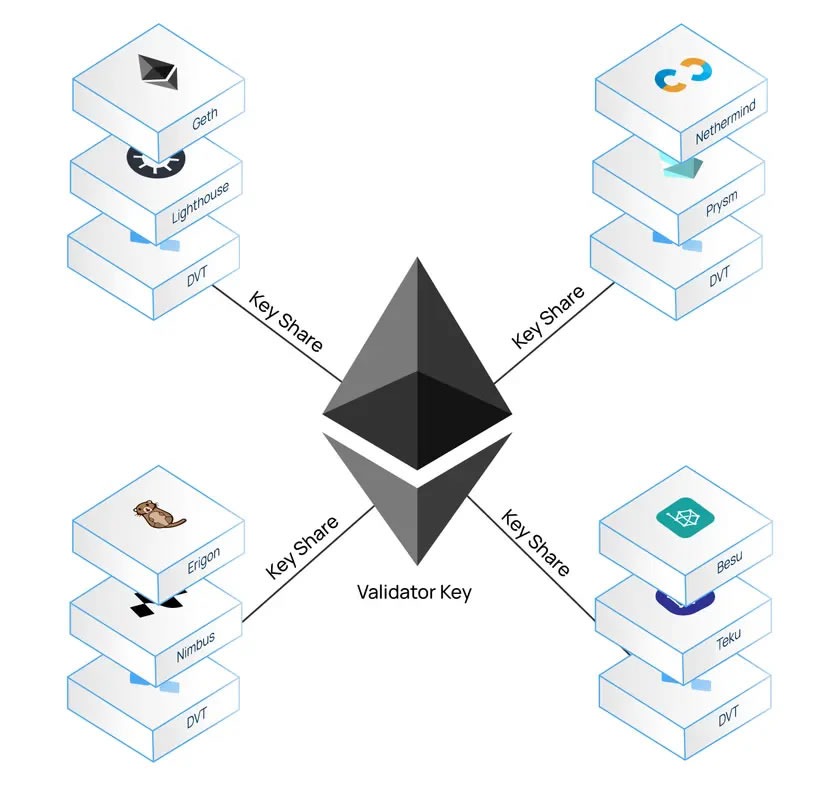
Buterin explained that with DVT-lite, users can “choose which computers run their nodes, make a config file where they all have the same key, and then from there everything gets set up automatically.”
DVT-lite is a simplified form of distributed validator technology tailored for easier deployment, especially in institutional or semi-professional Ethereum staking setups.
In regular solo staking, everything is run on one computer, which can result in “slashing” or penalties if it crashes, gets hacked, or loses internet. Full DVT splits the secret keys across many computers that constantly communicate, which is very secure, but complicated to set up.
DVT-lite uses the same validator key on several computers, so if one computer dies, another quickly takes over, resulting in almost no downtime and very low risk of penalties.
The Ethereum Foundation started its staking program using the technology in late February, and the assets are currently sitting in the validator entry queue waiting to be staked on March 19.

“One click” staking for institutions
Buterin said that the idea that running infrastructure is this “scary complicated thing” where each person participating must be a professional is “awful and anti-decentralization, and we must attack it directly.”
He added that there should be a “docker container” or “nix image” or similar, which has “one click” or command line per node that automates the process of staking.
Related: AI ‘vibe coding’ could put Ethereum roadmap ahead of schedule: Vitalik Buterin
Buterin said he plans to use DVT-lite soon and hopes more institutions holding ETH can stake in this way.
“We want the authority over staking nodes to be highly distributed, and the first step to doing this is to make it easy.”
In January, he suggested “native DVT” network integration, which would allow stakers to “stake without fully relying on one single node.”
Big demand for staking despite low prices
There is still a huge demand for Ether (ETH) staking despite its bear market price action.
There are currently 3.2 million ETH in the validator entry queue, with a 55-day wait, and just 29,000 in the exit queue with a 12-hour wait, according to ValidatorQueue.
There are currently 37.5 million ETH staked, worth around $76.5 billion at current prices (around the same as the market cap of DoorDash or Motorola), and representing 31% of the total supply.
Magazine: China’s ‘50x’ blockchain boost, Alibaba-linked AI mines Bitcoin: Asia Express
Crypto markets are entering a cautious holding pattern as traders prepare for the upcoming U.S. Consumer Price Index (CPI) report, a key macroeconomic indicator that could shape expectations for interest rate policy and risk asset performance.
Summary
- Bitcoin is consolidating near $70,000 ahead of the upcoming U.S. CPI inflation report.
- Technical indicators show moderate accumulation and improving momentum after February’s pullback.
- Analysts expect heightened volatility in crypto markets depending on whether inflation data surprises to the upside or downside.
Crypto market eyes CPI data as Bitcoin rebounds toward $70K
Bitcoin (BTC), the largest cryptocurrency by market capitalization, was trading near $70,000 on Tuesday after rebounding from February lows.
Market participants are closely watching the inflation data due on Wednesday, which could influence the Federal Reserve’s next policy moves and drive volatility across global financial markets.
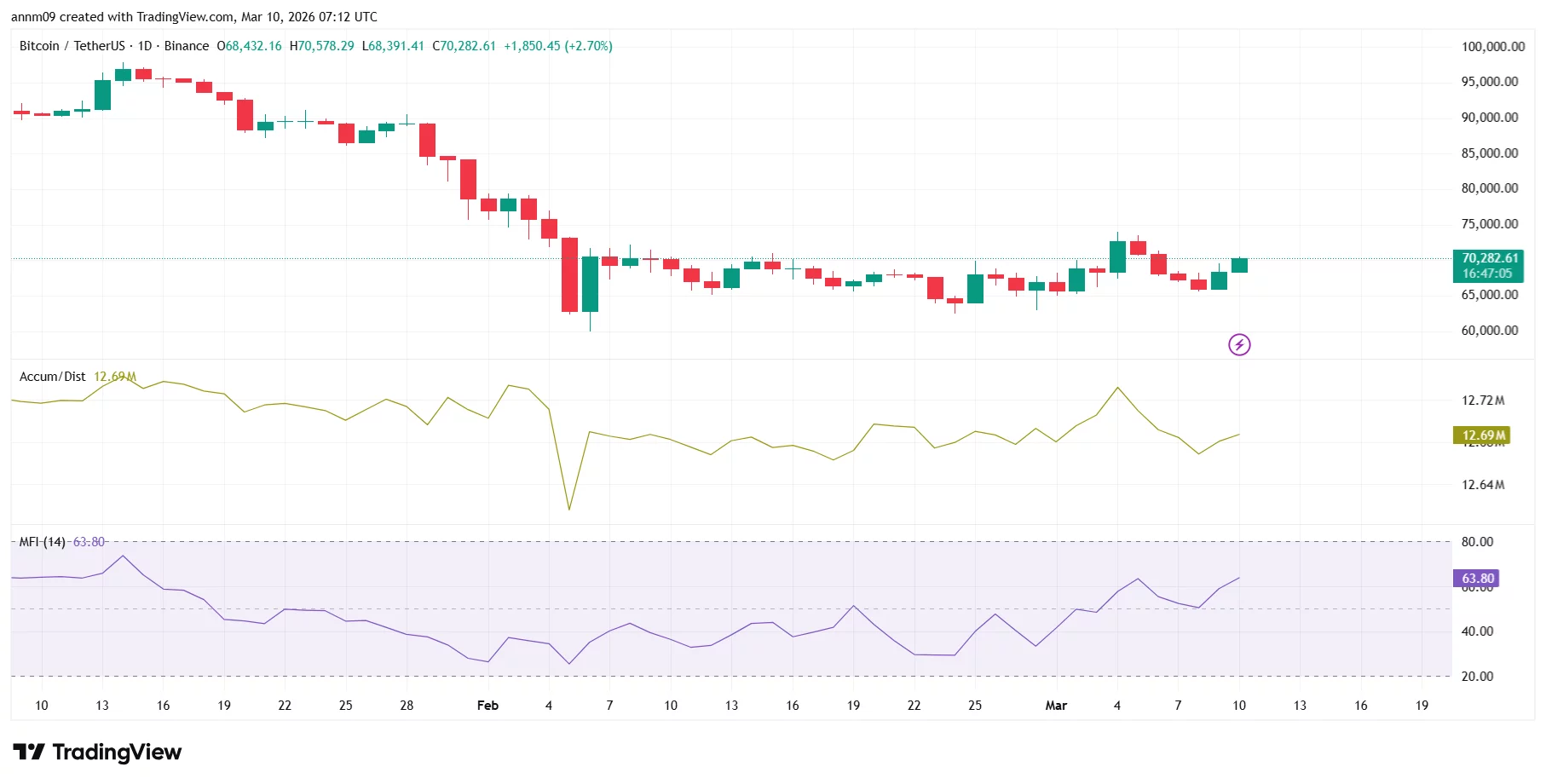
Technical charts show Bitcoin recovering modestly after a prolonged pullback earlier this year. The daily chart indicates the asset fell from highs near $95,000 in January amid tariffs and Iran tensions. Bitcoin then stabilized around the $60,000–$65,000 range in February.
Since then, Bitcoin has gradually climbed back toward the $70,000 level, a zone analysts view as an important resistance area.
Momentum indicators suggest improving sentiment. The Money Flow Index (MFI) on the daily timeframe has climbed toward the mid-60s, signaling strengthening buying pressure but not yet entering overbought territory.
Meanwhile, the Accumulation/Distribution indicator has stabilized after a sharp drop earlier in February, suggesting that selling pressure may be easing as investors accumulate positions ahead of the macro event.
Macro data remains the primary driver of near-term sentiment.
Historical data comparing Bitcoin’s price performance with U.S. inflation trends shows that crypto markets have often responded sharply to shifts in CPI expectations, particularly when inflation surprises alter forecasts for Federal Reserve interest rate decisions.
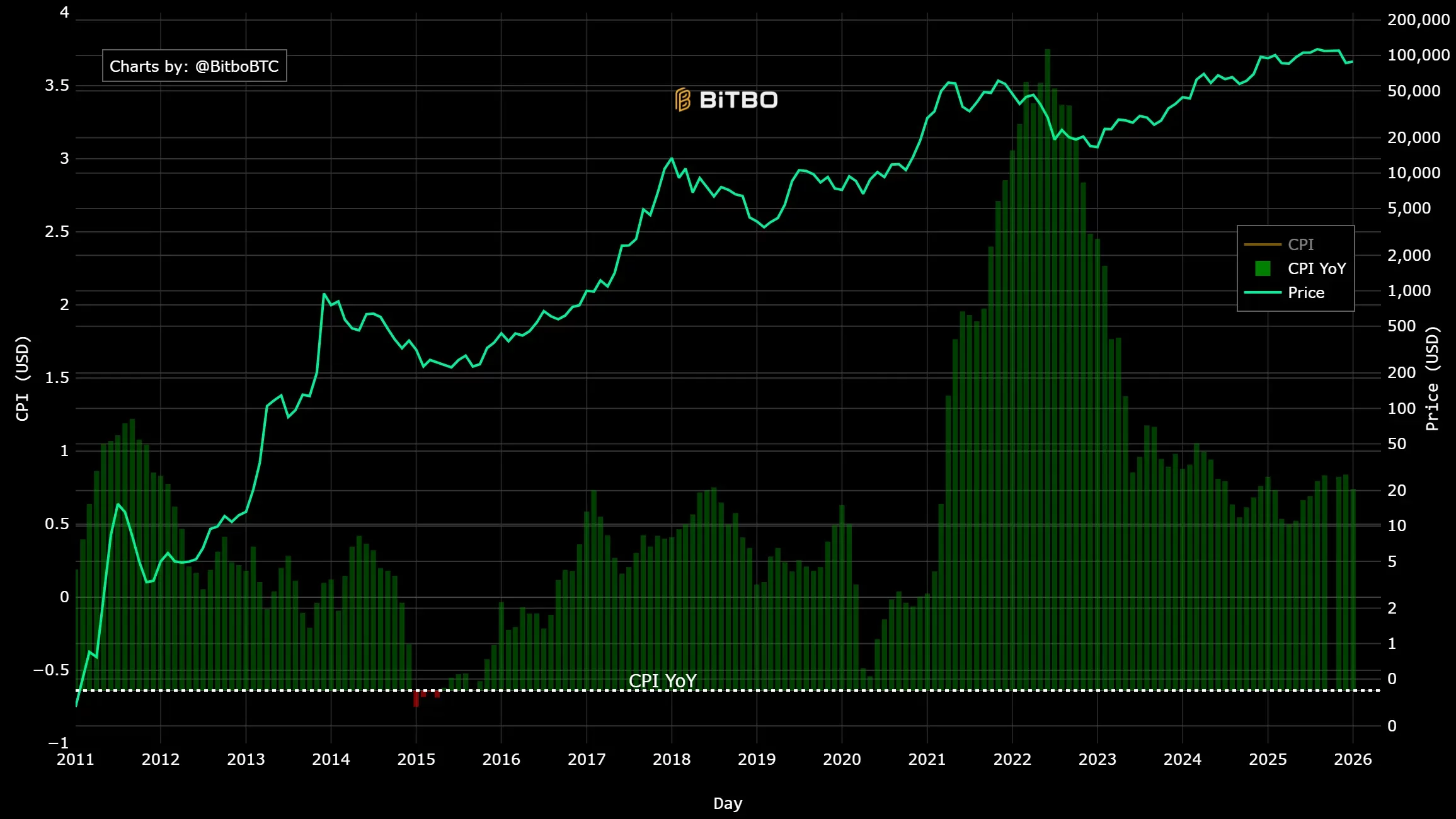
According to market commentary from Morningstar, economists expect that consumer prices rose 0.3% on a monthly basis in February. That would lower the annual inflation rate to 2.9% from 3.0% in January.
Traders expect the upcoming CPI release to act as a major volatility trigger, with Bitcoin likely to test nearby resistance or revisit recent support levels depending on how the inflation data shapes market expectations.

Bhutan, one of the world’s largest nation-state Bitcoin holders, has just moved 175 Bitcoin from its main holding address as cryptocurrency markets posted modest gains on Monday.
Data from the blockchain analytics platform Arkham shows that the South Asian country moved $11.85 million worth of BTC to an address created a month ago, which had previously received 184 Bitcoin from the government.
The 175 Bitcoin are still at the address as of Tuesday, according to blockchain data. However, the previous transfer of 184 was sent to a third address, which has received a total of 1,910 Bitcoin since 2024 and currently holds 126.
In an X post on Monday, Arkham said the last time Bhutan moved a similar amount of Bitcoin — in February — it was to sell $7 million of Bitcoin with QCP Capital. The kingdom has made several sales this year.
“Bhutan periodically sells portions of its Bitcoin in clips of $5-10M, with a particularly heavy period of selling around mid-late September 2025,” Arkham said.
Arkham estimates that as of Monday, Bhutan’s holdings are around 5,400 Bitcoin, making its holdings the seventh-largest among countries. The United States has the largest country-held stash with 328,372 Bitcoin, worth just under $22 billion as of Tuesday.

Bhutan also holds various other cryptocurrencies in varying amounts, all managed by Druk Holding and Investments, the country’s sovereign wealth fund, including 28 Ether (ETH) and 28 KiboShib, an AI-generated memecoin.
Cointelegraph reached out to Druk Holding and Investments for comment, but didn’t receive an immediate response.
Bhutan has been using Bitcoin to fund services
Bhutan has accumulated roughly 13,000 Bitcoin since launching state-backed mining operations in 2019, primarily fueled by hydroelectric energy, according to Arkham.
However, following the 2024 halving, mining became less efficient due to increased costs.
Related: Strategy buys $1.3B in Bitcoin as holdings top 738,000 BTC
Bhutanese Prime Minister Tshering Tobgay told Al Jazeera last April that during the summer months, the kingdom’s hydropower plants generate surplus energy due to increased water flow. This abundance of power makes it highly practical to utilize the excess energy for Bitcoin mining.
In an interview with Al Jazeera in March 2025, Tobgay also noted that proceeds from Bhutan’s Bitcoin have been used to fund healthcare, environmental initiatives and public servant salaries.
A growing number of Bitcoin miners have redirected their energy resources toward artificial intelligence and high-performance computing services since the April 2024 halving, which reduced mining rewards to 3.125 Bitcoin and negatively impacted overall profitability.
Magazine: Would Bitcoin really be at $200K if not for Jane Street? Trade Secrets

Golden Boot Contenders to Watch in 2026 World Cup Futures Markets

Startup Wants To Launch a Space Mirror

My honest advice to someone who wants financial freedom


-
Business4 days ago
Form 8K Entergy Mississippi LLC For: 6 March
-

 Fashion4 days ago
Weekend Open Thread: Ann Taylor
-

 News Videos21 hours ago
10th Algebra | Financial Planning | Question Bank Solution | Board Exam 2026
-

 Crypto World17 hours ago
Paradigm, a16z, Winklevoss Capital, Balaji Srinivasan among investors in ZODL
-

 Tech5 days ago
Bitwarden adds support for passkey login on Windows 11
-
 Sports5 days ago
499 runs and 34 sixes later, India beat England to enter T20 World Cup final | Cricket News
-

 Sports3 days ago
Three share 2-shot lead entering final round in Hong Kong
-

 Sports2 days ago
Braveheart Lakshya downs Lai in epic battle to enter All England Open final | Other Sports News
-

 Business6 days ago
Guthrie Disappearance Enters Fifth Week as Family Visits Memorial
-

 Politics4 days ago
Top Mamdani aide takes progressive project to the UK
-

 NewsBeat5 days ago
Piccadilly Circus just unveiled ‘London’s newest tourist attraction’ and it only costs 80p to enter
-

 Business2 days ago
Search for Nancy Guthrie Enters 37th Day as FBI Probes Wi-Fi Jammer Theory
-

 Entertainment3 days ago
Hailey Bieber Poses For Sexy Selfies In New Luscious Lip Thirst Traps
-
 NewsBeat8 hours ago
Pagazzi Lighting enters administration as 70 jobs lost and 11 stores close across Scotland
-

 Tech18 hours ago
Despite challenges, Ireland sixth in EU for board gender diversity
-

 Crypto World5 days ago
New Crypto Mutuum Finance (MUTM) Reports V1 Protocol Progress as Roadmap Enters Phase 3
-

 Tech5 days ago
ACIP To Discuss COVID ‘Vaccine Injuries’ Next Month, Despite That Not Being In Its Purview
-
Entertainment5 days ago
Harry Styles Has ‘Struggled’ to Discuss Liam Payne’s Death
-

 Business13 hours ago
Search Enters 39th Day with FBI Tip Line Developments and No Major Breakthroughs
-
 NewsBeat5 days ago
Good Morning Britain fans delighted as Welsh presenter returns to host ITV show