

Crypto World
Most Litecoin nodes ignore patch for double-spending bug



Earlier this year, a hacker tried to double-spend litecoin (LTC) before an emergency, 13-block reorganization thwarted the attack.
Even though developers have released a flurry of code patches to prevent a repeat, most of the Litecoin network’s nodes have still not installed the fix.
The patch has been available for free download for nearly two months. Nonetheless, of the nodes tracked by a major monitoring service, less than 30% are running up-to-date software that would reject the type of transactions behind April’s double-spending attempt.
Sadly, the largest cohort of node operators on the Litecoin network by software version run v0.21.4. This vulnerable version is live on roughly 39% of reachable nodes, most of which are non-mining.
Fortunately, most mining Litecoin nodes have updated their software, despite most validating nodes, which comprise the majority of the network, still operating with old, buggy code.
Read more: Bitcoin thieves got away with ATM double-spending spree across Canada
A post-incident review admitted that adoption of the patched software was a meager 23% after nearly two weeks of public release.
As weeks roll on, malformed transactions that triggered April’s reorg would still find a temporarily receptive majority today on the internet, even though miners wouldn’t be fooled and continue building on the correct chaintip.
The original vulnerability sat in Litecoin Core’s handling of MimbleWimble Extension Block (MWEB) transactions. MWEB is a Litecoin privacy layer the project activated in 2022.
Earlier this year, a malformed MWEB peg-out transaction allowed a tiny input to back a far larger withdrawal of LTC, effectively creating coins that should never have existed.
Nodes ignore the patch for Litecoin’s double-spending bug
It would be far more secure if most — or ideally all — nodes patched their software to reject invalid peg-out transactions containing unfairly minted LTC, but despite the fix being public for weeks, the network has declined or simply been too lazy to install it.
The major incident involving the exploit occurred on April 25. Non-upgraded mining nodes accepted an invalid MWEB transaction, and an attacker pegged out coins to third-party venues in an attempt to convert the fake LTC for other assets.
A 13-block reorganization beginning at block 3,095,931, documented in the post-mortem, fortunately reversed those transactions and wiped out roughly half an hour of blockchain activities.
The official Litecoin account admitted on social media, “A zero-day bug caused a DoS attack that disrupted major mining pools.” Litecoin creator Charlie Lee also posted about the double-spending attempt.
Litecoin node software developers shipped v0.21.5.4 the day after the reorg to stop the immediate threat of mining denial-of-service.
They soon followed with another patch in early May, v0.21.5.5, to add consensus-level MWEB validation hardening. Many node operators have simply ignored it.
Litecoin has a market cap of $3.4 billion. Its long-term security depends on software updates that most node operators have ignored for almost two months.
Got a tip? Send us an email securely via Protos Leaks. For more informed news and investigations, follow us on X, Bluesky, and Google News, or subscribe to our YouTube channel.

Former Ethereum Foundation contributor Trenton Van Epps warned that Ethereum is facing a core development funding crisis that will highlight the need for new funding sources in the next three to nine months.
The former contributor wrote in a blog post on Thursday that the Ethereum Foundation’s spending reduction and the expiration of the Client Incentive Program in April left the network’s core development ecosystem requiring about $30 million in annual funding.
Citing recent conversations with core development contributors, Epps said Ethereum risks entering a “slow-burning funding crisis.”
Van Epps’ article follows a wave of departures from the Ethereum Foundation, including co-executive director Hsiao-Wei Wang’s announcement on Thursday that she would step down from her role, bringing the estimated number of layoffs and departures at the organization to 19 so far this year.
Related: Ethereum can quantum-proof accounts for just 7 cents, says Ethereum’s Kohaku lead
Cointelegraph was unable to independently verify the estimated $30 million annual funding requirement and reached out to the Ethereum Foundation for comment.
Ethereum Foundation shifts treasury policy
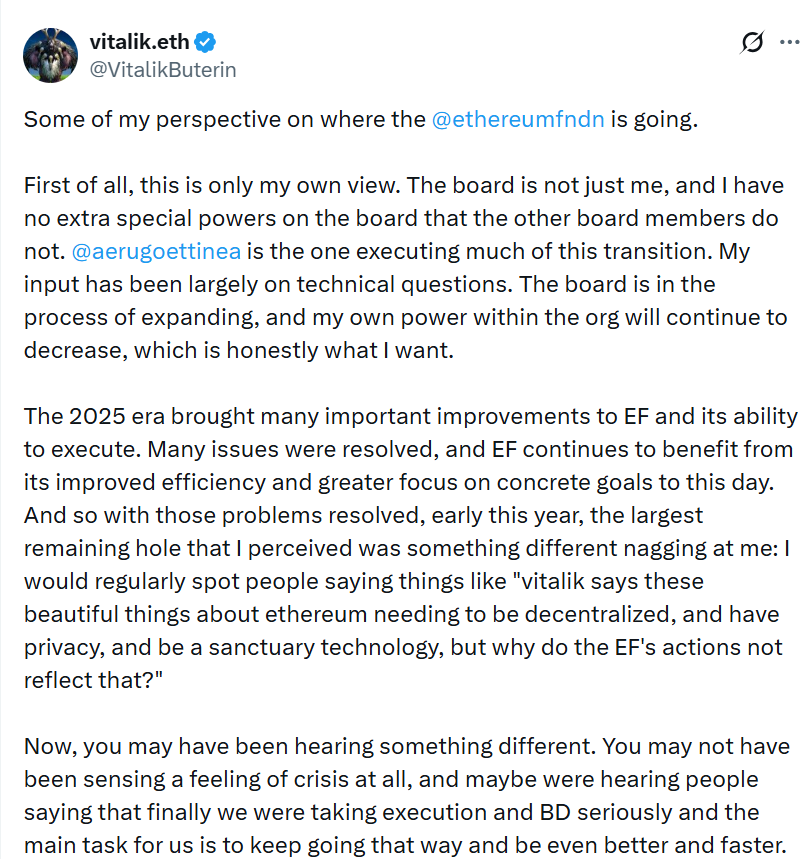
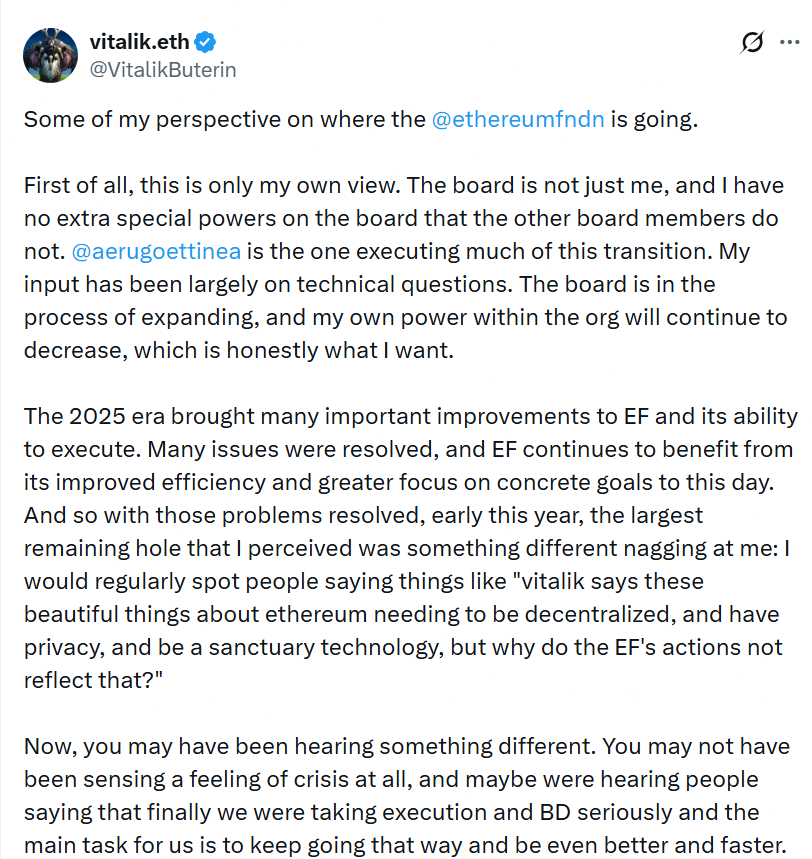
In a May 24 X post, Ethereum co-founder Vitalik Buterin said the Ethereum Foundation’s resources were limited, noting that the organization held only about 0.16% of Ether’s (ETH) total supply, far below the share controlled by foundations associated with some other blockchain networks.
Buterin said the Ethereum Foundation was originally designed to fulfill a limited scope of work, including developing Ethereum’s core software and helping the network progress through its major roadmap milestones, which he said were largely completed by 2022.
“And so today, the EF is choosing to use its remaining resources to pursue longevity over breadth (yes, this means we sell less ETH),” Buterin wrote.
Source: Vitalik Buterin
The Ethereum Foundation unstaked 17,000 ETH in late April and another 21,270 ETH (then worth $50 million) in early May, shortly after nearly surpassing 70,000 ETH staked earlier this year. The foundation also sold 10,000 ETH to the largest corporate ETH holder, Bitmine, in an OTC deal on May 1.
Blockchain analytics platform Arkham said the unstaking may have occurred due to the foundation’s need for funds to further develop the network.
The transactions marked another adjustment to the Ethereum Foundation’s treasury strategy. The foundation said in a June 2025 policy update that increasing its staking participation would help fund protocol development while limiting future ETH sales after community backlash over earlier disposals.
Magazine: Why is Ethereum Foundation selling? BTC futures warning signs: Market Moves


Crypto traders are spending more time looking outside crypto for returns. They still want to stay inside crypto platforms.
Because of this gap, most exchanges pushing into tokenized global equities. Zoomex is one of them. Its ZoomexStocks product lets users trade exposure to major stocks and indices without moving funds away from the crypto exchange environment.
In a recent episode of the BeInCrypto Podcast, Zoomex Chief Marketing Officer Fernando Lillo Aranda said the move reflects how traders are behaving in a slower, range-bound market. Crypto remains the platform’s core market, but traders are looking for more places to rotate capital when volatility dries up.
The Real Test Is Whether the Platform Holds
For derivatives exchanges, speed has long been a selling point. Platforms compete on latency, matching engines, and execution times.
Aranda said that misses the bigger issue. Speed matters only if the platform keeps working when traders need it most.
“When we talk about ‘speed you can trust,’ we are trying to refer to the entire execution of the experience of the trader on a platform,” Aranda explained. “It’s not only the matching of the order, but it’s more how the engine, the infrastructure that we have, match everything when the trader launched the order on the market.”
That concern becomes sharper during sudden market moves. Traders may care about low latency in normal conditions, but crashes expose whether order books, engines, and execution systems can handle stress.
Aranda pointed to last year’s October crash as an example.
“We saw in October last year with this crash, a lot of centralized exchanges they were like having a lot of issues to match the order… on Zoomex on our side, we didn’t have any issue on that point, and that’s our goal: build this solid infrastructure for them.”
Why Order Books Can Be Misleading
Aranda also warned that traders often look at the wrong signals when judging an exchange.
Order book depth can look healthy on the surface. The real question is whether that liquidity is executable when the market moves.
If traders cannot enter or exit positions at the expected price, the numbers on the screen become less useful.
That is where trust becomes part of the product. Aranda said traders need to feel confident that the exchange can process orders cleanly and that the platform is not working against them.
This is also where ZoomexStocks fits into the company’s wider strategy. The product gives crypto traders a way to move into traditional market exposure without leaving the platform.
“I don’t see the Zoomex stock or TradFi as if we are trying to pivot away from crypto,” Aranda stated. “What we see from Zoomex is like the traders who are looking for opportunities. And right now, the opportunities we can see on the crypto market, as well as in the traditional markets. And what the trader is looking for is a platform that can offer you everything simple, that you don’t need to move your funds from one crypto platform to another.”
The All-in-One Exchange Bet
That idea points to a wider shift in exchange design. Crypto platforms are no longer competing only on coin listings or leverage. They are trying to become broader trading hubs.
When asked how he would build an exchange from scratch in today’s market, Aranda said he would focus on coverage. Traders want access to crypto, traditional markets, and new tools in one place.
“I would try to build a platform that covers most of the services that right now the traders are looking for,” Aranda said. “So I would try to cover the services from the crypto traders, but also from the traditional markets, but also I will try to build these new tools to help them to make more profit.”
AI is part of that picture, though Aranda sees its main role in data analysis rather than replacing traders.
As the current market is increasingly shaped by macro shocks, geopolitical risk, and sudden liquidity changes, better data may become one of the key tools traders use to manage risk.
His advice for 2026 is rather simple. Spread exposure and avoid relying on one market.
“You need to diversify… I will do like a split, thirty percent, twenty-five percent on different things, TradFi. You need to be smart on that weight.”
The post Why Crypto Exchanges are Starting to Look Like Stock Brokers appeared first on BeInCrypto.


Hsiao-Wei Wang resigned as co-executive director and board member of the Ethereum Foundation on Thursday, the second co-ED exit at the Switzerland-based nonprofit in four months. Her departure deepens a leadership turnover that has been running through the organization since the spring. Wang… Read the full story at The Defiant
Crypto World
PremiumBlock Launches Non-Custodial Risk Hub for User-Created Prediction Markets, Perps and Web3 Poker
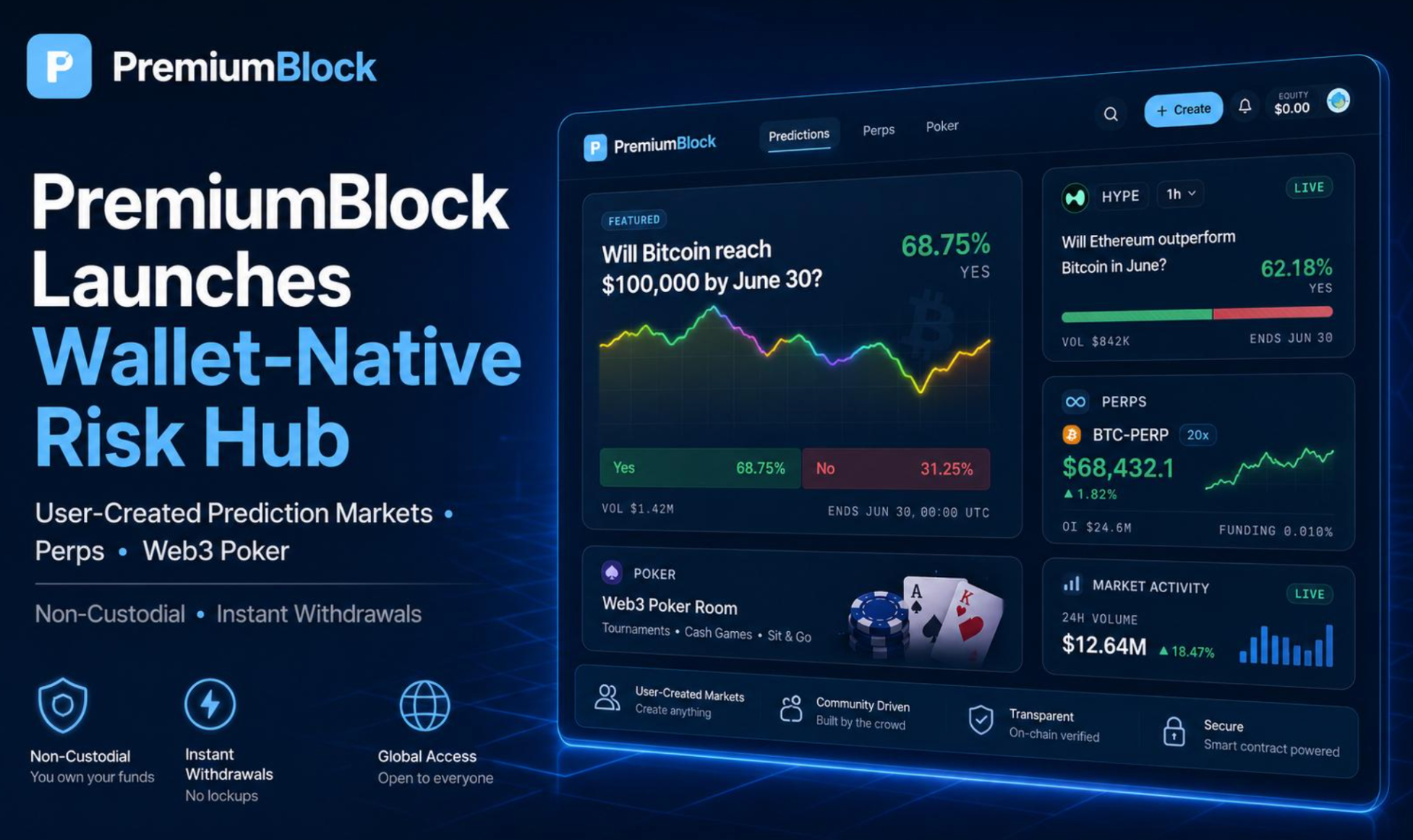

PremiumBlock brings leveraged prediction markets, liquid 24/7 FX perpetuals and Web3 poker together in one wallet-native platform via premiumblock.org
PremiumBlock today announced the launch of its non-custodial risk hub for decentralized prediction markets, perpetual futures and Web3 poker, giving crypto users one wallet-native destination to create markets, trade outcomes, access perps and participate in on-chain poker without relying on a centralized custodian.
PremiumBlock is built around a simple idea: the next generation of crypto speculation will not be limited to order books or one-directional prediction markets. Users want to price real-world events, express conviction with leverage, trade crypto volatility, and control their bankroll from the same wallet. PremiumBlock brings those use cases together in a single interface designed for speed, maximal liquidity and instant withdrawals.
The platform’s prediction market layer allows users to create and participate in markets around crypto, sports, politics, culture, macro events and world news. Unlike platforms where market creation is tightly curated, PremiumBlock is designed for user-created markets, giving communities the ability to surface the questions they believe deserve liquidity.
PremiumBlock also supports leveraged prediction-market positions, with up to 2.5x leverage available on selected markets. The feature gives experienced users a way to express stronger conviction on event outcomes while operating inside a defined collateral framework. As with any leveraged product, participants should understand volatility, liquidation risk, and market-resolution rules before entering a position.
Alongside prediction markets, PremiumBlock offers crypto perpetual futures for traders who want long or short exposure without traditional expiry dates. The perps layer brings a familiar derivatives format into the same wallet-native environment as the platform’s event markets, reducing the need for users to move capital between separate prediction-market, exchange and gaming applications.
PremiumBlock’s Web3 poker product adds a third pillar to the platform’s risk ecosystem. Built for crypto-native users who value bankroll control, the poker experience is designed around fast deposits, instant withdrawals and non-custodial fund management. The goal is to offer a transparent alternative to legacy poker rooms where withdrawal delays, account controls and operator custody can create unnecessary friction.
“PremiumBlock was built for users who want direct market access without waiting on approvals, custodians or withdrawal queues,” said Baqir Hussain at PremiumBlock. “Prediction markets, perps and poker all revolve around information, timing and risk. Bringing them together in one non-custodial environment gives users a more flexible way to participate in the markets they understand.”
PremiumBlock enters the market as prediction platforms continue to move further into mainstream crypto conversation. Polymarket helped popularize event markets for crypto-native users, while Kalshi brought regulated event contracts into broader public discussion. PremiumBlock expands the category with a model focused on user-created leveraged markets, perpetual futures and wallet-based bankroll control.
The platform is available now for users seeking a crypto-native environment where event markets, leverage, perps and poker can exist side by side. PremiumBlock does not provide investment advice. Users are responsible for understanding applicable laws, smart contract risk, market volatility and the rules of any market or game before participating.
About PremiumBlock
PremiumBlock is a non-custodial risk hub for decentralized prediction markets, perpetual futures and Web3 poker. The platform combines user-created event markets, up to 2.5x leverage, crypto perps and instant withdrawals in a wallet-native experience designed for crypto users who want direct control over funds.
The post PremiumBlock Launches Non-Custodial Risk Hub for User-Created Prediction Markets, Perps and Web3 Poker appeared first on BeInCrypto.
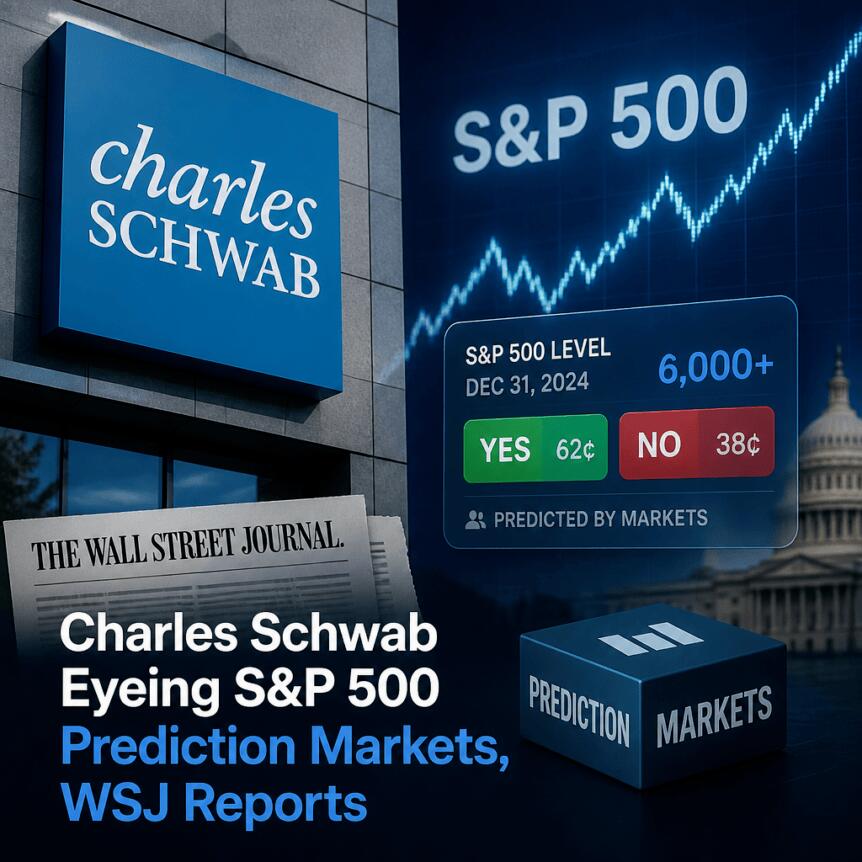
Charles Schwab is reportedly preparing to enter the prediction markets space, starting with options contracts tied to a widely tracked benchmark: the S&P 500. According to a Friday Wall Street Journal report, the firm plans to offer yes-or-no wagers on whether the S&P 500 closes above or below a specified level.
The project is expected to roll out within months as part of a partnership with Cboe Global Markets, potentially marking Charles Schwab’s first step into prediction-market-style contracts for retail customers.
Key takeaways
- Schwab is reportedly developing yes-or-no options on whether the S&P 500 finishes above or below a target price.
- The initiative is expected to be launched in partnership with Cboe Global Markets, according to the Wall Street Journal.
- The contract structure would mirror a narrow category of existing S&P 500 event markets already offered by platforms such as Kalshi and Polymarket.
- Prediction markets in the US remain subject to intense regulatory scrutiny and ongoing litigation between regulators and market operators.
- Schwab’s move follows its earlier expansion into crypto trading services, signaling continued push into newer financial markets.
A broker’s likely first foray into event-style derivatives
Prediction market platforms have gained mainstream attention by allowing users to trade event outcomes—ranging from politics and sports to weather and corporate developments—using event contracts. The reported Schwab offering, however, appears more limited in scope.
As described by the Wall Street Journal, the planned product would rely on yes-or-no positions tied to a single metric: whether the S&P 500 closes above or below a predetermined price level. That narrower design is notable because it suggests Schwab may start with a product that maps more cleanly to index exposure than to broader “anything can be predicted” event trading.
It also positions Schwab against already established S&P 500-oriented contracts. Both Kalshi and Polymarket have previously offered similar event structures related to projections of the index’s range or directional outcomes.
Why Schwab’s timing could matter for investors
For retail participants, the significance of the move isn’t just that prediction markets exist—it’s where they may be accessed from. Charles Schwab is a widely used financial services brand, and if it brings event contracts into its product lineup, it could lower friction for some users who currently interact with prediction platforms through crypto-native or specialized venues.
Schwab’s reported entry also comes at a moment when parts of the financial industry appear to be moving closer to prediction-market concepts. Cryptocurrency exchanges, in particular, have increasingly discussed or explored prediction offerings. Earlier coverage from Cointelegraph noted that Coinbase has moved closer to prediction-related offerings, with many market watchers projecting large growth in prediction-market volume over the long term.
In that broader context, a major legacy broker adopting a restricted, benchmark-based prediction format could serve as a bridge between traditional retail brokerage channels and the fast-evolving derivatives ecosystem that prediction platforms have helped popularize.
Regulatory friction remains the central question
Despite rising interest, prediction markets in the US have been under close scrutiny from lawmakers and regulators. State-level gaming authorities have questioned whether certain event-contract products fit within existing rules, including challenges involving sports-related markets. Separately, members of US Congress have called for oversight, with concerns often focused on conflicts of interest—such as the potential for elected officials to profit from nonpublic information.
Regulatory classification also remains a core issue. The US Commodity Futures Trading Commission (CFTC), under Chair Michael Selig, has taken the view that event contracts in prediction markets can qualify as “swaps,” giving the agency the relevant jurisdiction for regulation and enforcement. The result has been ongoing litigation involving the CFTC, as well as cases touching platforms such as Kalshi and Polymarket, alongside actions from state authorities.
For Schwab, that environment matters because it will likely shape product design and rollout pace. A yes-or-no index close bet may be simpler than a broader library of event categories, but it still falls within the same contested regulatory territory that has defined the prediction-market debate in the US.
Schwab’s wider expansion into modern markets
This reported initiative would also fit within Schwab’s broader efforts to expand beyond conventional trading offerings. In May, Charles Schwab announced the launch of spot Bitcoin and Ether trading for retail clients, marking another step into digital-asset related services.
The company has also continued reporting strong financial performance. Charles Schwab reported net income of $2.5 billion for the first quarter of 2026.
Against that backdrop, the prediction-market proposal reads less like a random new product bet and more like a continuation of Schwab’s push into alternative market structures—where derivatives-like contracts can be packaged in ways that appeal to retail risk-taking and speculation.
As details emerge—especially around contract settlement mechanics, product scope, and regulatory approach—market participants will watch closely to see whether Schwab’s limited S&P 500 yes-or-no design can navigate the same legal and oversight hurdles that have surrounded prediction platforms like Kalshi and Polymarket, and whether broader retail access changes how quickly the sector evolves.
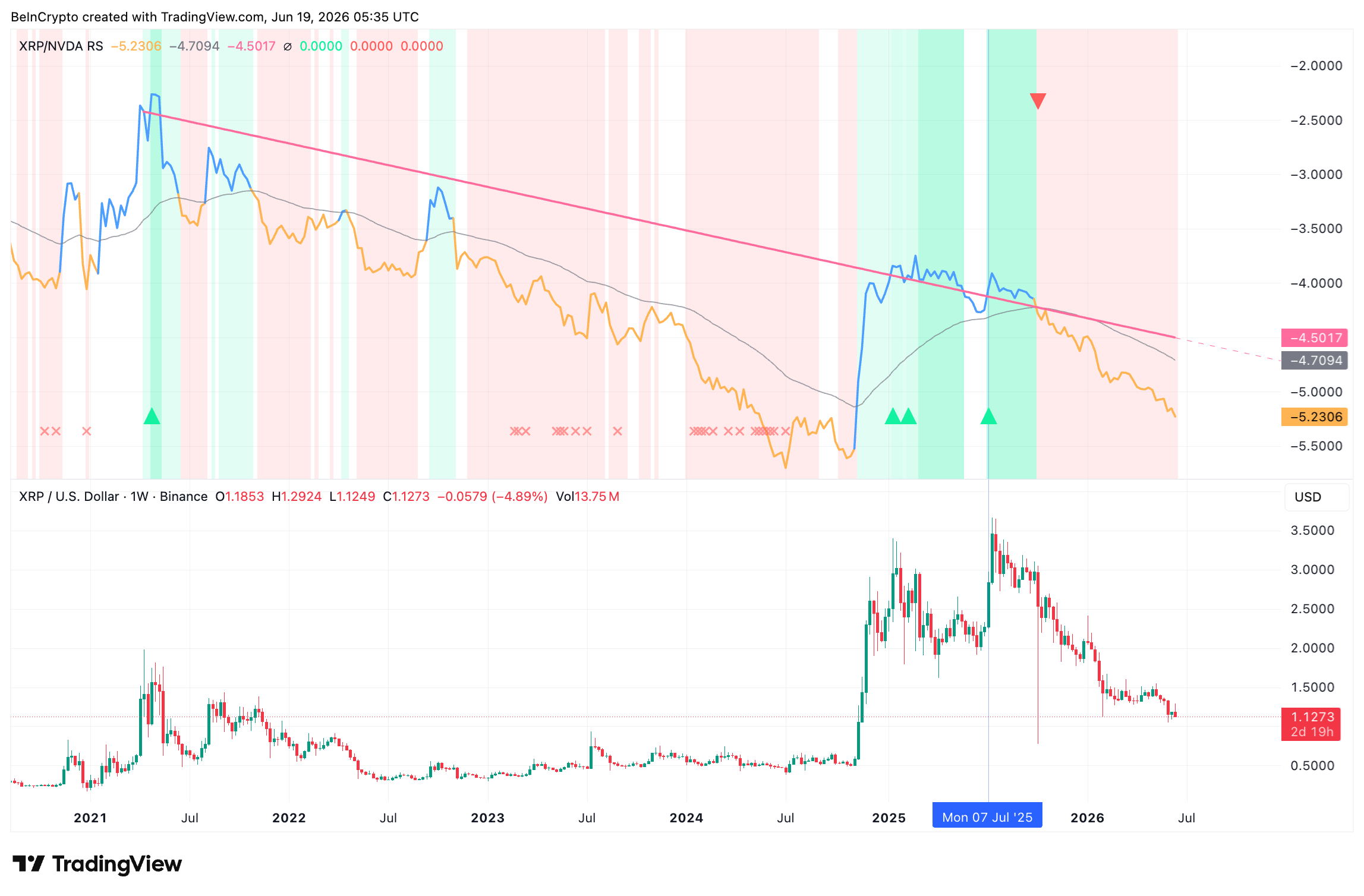
XRP has spent years losing ground against NVIDIA, one of the strongest assets in global markets. Now, a widely shared analyst chart suggests a break above a long-running resistance line could mark the start of XRP’s next major move.
The setup sounds bullish, but the history is less convincing. BeInCrypto rebuilt the XRP-to-NVIDIA comparison and tested past breakouts. Since 2021, those breaks have usually marked exhaustion, with XRP falling sharply afterward.
XRP Bleeds Against NVIDIA on a Long Falling Line
The following chart shows XRP’s relative strength, which means XRP’s price divided by NVIDIA’s price. When the line rises, XRP is winning. When it falls, XRP is losing.
Want more token insights like this? Sign up for Editor Harsh Notariya’s Daily Crypto Newsletter here.
For years, that line has dropped. Cryptollica marks a long descending resistance and argues that a break starts XRP’s real move. The 2018, 2021, and 2025 peaks all stalled there. It wasn’t until 2017 that a break occurred, pushing XRP higher.
A real breakout should also hold on a slower chart. So, BeInCrypto tested the idea on weekly closes, not the analyst’s five-day chart. A weekly relative strength move is harder to fake.
The rule was simple. BeInCrypto drew one descending line across the same relative-strength highs the analyst marks. His chart runs back to 2018, but this weekly view starts in 2021 and includes all the breaks. Price then sits above or below the line on its own.
A break counts when a weekly close finishes above that line. After each break, BeInCrypto measured XRP’s return over the next twelve weeks. That left four breaks since 2021, and each now needs a verdict.
Every Break Has Marked a Top, Not a Launch
So far, the pattern lacks conviction. All four breaks led to sharp drops from the peak rather than fresh rallies. Twelve weeks after a break, XRP fell a median 39%.

Two numbers show how reliable that was. The hit rate is the share of breaks that ended higher, and each window is measured separately. So one break can be up at one mark and down at the next.
That is why the readings differ. One of four breaks was up at four weeks. None were up at twelve weeks. One had recovered by twenty-six weeks. Twelve weeks is the washout low, where every break was underwater, so the piece uses that mark.
The base rate is the other number. A normal twelve-week stretch, any random period with no break, returned about negative 2%. Because the breaks did far worse, the break behaves like exhaustion rather than ignition.

Next, BeInCrypto checked whether NVIDIA is special. The test looks for a falling relative-strength line, meaning years of XRP steadily losing to an asset. XRP shows that falling line against only NVIDIA and Bitcoin. The S&P 500, the Nasdaq, and gold do not.
So only NVIDIA and Bitcoin match the analyst’s setup. A break against the S&P 500 preceded a 35% gain, yet the S&P has no falling line. Therefore, that number is not a fair comparison here.

Among the two that qualify, the gap is stark. A Bitcoin break preceded a small 5% rise. However, the NVIDIA break preceded a 39% drop. So the damage is unique to NVIDIA, even versus the only other asset with the same setup.
That record raises one question. Why did the most recent break fail so cleanly?
On-Chain Data Shows Why One of the Breaks Failed
The answer sits on the XRP Ledger. Around early July 2025, the XRP exchange net position change turned sharply positive. That metric tracks coins moving in and out of exchanges, and rising inflows often signal selling pressure.
This shift happened near XRP’s mid-2025 peak above $3. So holders appear to have moved coins onto exchanges to sell into the strength.

The next metric tells the same story. The XRP hodler net position change turned negative around July 17. It tracks whether long-term holders are adding or reducing coins, and it stayed red through August.
That timing matters. Because even high-conviction holders sold during the correction, the break appears to have lacked underlying demand.

On-chain weakness explained the last failure. So the next break needs the opposite signal.
What XRP Price Needs Before the Next Break Counts
Here is the catch for bulls. XRP must rise by about 459% against NVIDIA just to reach the line again, per the 7-day chart calculations. So, a break is nowhere close today.

Even a clean break alone would not be enough.
Instead, it would need continuous on-chain support, such as steady exchange outflows and holder accumulation.
Encouragingly, recent flows have turned more constructive. Coins have left exchanges lately, and long-term holders have started adding again. Still, XRP price near $1.16 sits far below its old highs.
History offers one caution, too. On the analyst’s chart, 2017 was the only break that truly worked. However, XRP was a micro-cap then, and NVIDIA was a fraction of today’s size. That single win came from a market that no longer exists.
So, What Do All of These Mean? Is XRP Bullish?
XRP has been losing badly against NVIDIA for years. Some analysts say XRP could finally rally if it breaks above a long-term comparison line, but BeInCrypto’s test shows the opposite has happened since 2021.
Every time XRP broke that line against NVIDIA, it usually marked a short-term top, followed by a sharp drop. The last failed breakout was likely because holders moved XRP to exchanges and sold.
For a real bullish signal, XRP would need much stronger demand, fewer coins moving to exchanges, and long-term holders buying again. Right now, the breakout is still far away.
The post XRP Has an NVIDIA Connection, But is It Strong Enough This Cycle? appeared first on BeInCrypto.
Crypto World
Pepeto Price Prediction: Why $5,000 Could Become $750K as G7 Leaders Put Crypto on the Global Stage
The pepeto price prediction gets sharper every week, and this time the signal comes from the highest level of global politics. G7 leaders at the Évian summit on June 17 placed digital asset security next to nuclear policy, calling for joint action against North Korean crypto theft totaling over $1.74 billion.
When the seven largest economies treat crypto as a sovereign concern, the market has moved past speculation. A $5,000 presale entry maps to 150x if Pepeto matches the cap the same builder already reached with Pepe.
The pepeto price prediction points to a Binance listing as the trigger, and $10.28 million committed proves the smart money already moved.
Meme Coins That Turned Small Wallets Into Generational Wealth
Every major crypto cycle produced at least one meme coin that rewrote the financial story of ordinary wallets. Dogecoin moved from $0.002 to $0.73 between 2020 and 2021, turning $1,000 entries into six-figure exits.
Shiba Inu repeated the pattern with one wallet putting $8,000 into SHIB in early 2021 and reaching over $5 billion at the peak per CoinDesk.
Pepe launched in April 2023 with zero product yet ripped past $11 billion on community conviction alone. Each token shared one trait: the biggest returns went to wallets that entered before the first listing. The pepeto price prediction follows that pattern, except this time a working exchange and verified contract sit behind the entry.
What Makes the Pepeto Price Prediction Different From Every Meme Coin Before It
The Builder, the Exchange, and Why This Entry Carries a Floor
Pepeto was created by the same person who took Pepe to an $11 billion market cap on 420 trillion tokens with nothing built behind it. This time, a former Binance executive with listing experience runs the exchange side.
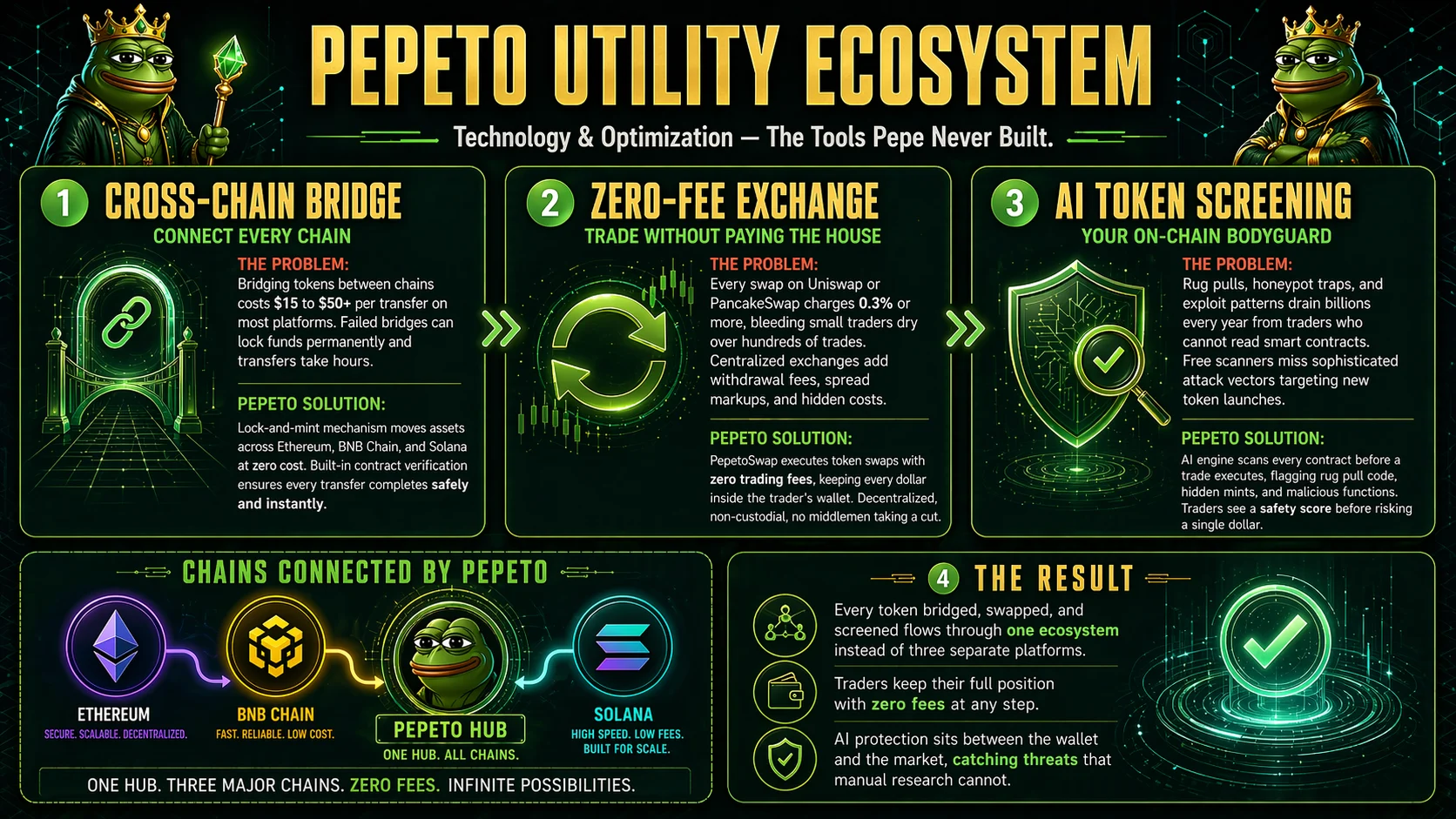
PepetoSwap handles trades across Ethereum, BNB Chain, and Solana at zero cost, keeping the full value inside the trader’s wallet. The bridge moves tokens between chains for free, and the built-in contract scanner reads every token’s code before capital gets close, catching traps that wiped billions from wallets across past meme runs.
Both SolidProof and Coinsult finished independent reviews before the presale opened. Staking at 170% APY grows every locked position daily while the listing timeline tightens.
And $10.28 million raised during a Fear and Greed reading of 22 shows this is not retail impulse, these are wallets that calculated the outcome before committing.
Pepeto Price Prediction: The Path From $0.0000001877 to Pepe’s All-Time High
Here is why the pepeto price prediction keeps drawing attention. The original Pepe hit $0.000028 on a $11 billion cap with the same 420 trillion supply and zero tools. Pepeto sits at $0.0000001877 today, and the distance lands at exactly 150x.
That turns $5,000 into $750,000 if the token reaches what the same builder already achieved. Even half of Pepe’s old cap delivers 75x.
The question is not whether 150x is possible when the person who produced it once is running it again. The question is why it would fall short, when every input that created $11 billion is back and a live exchange adds what Pepe holders always wanted.
The Binance listing expected ahead closes this window, and the pepeto price prediction math only works for wallets that enter before it arrives.
Conclusion
You have watched this exact pattern play out in every cycle, where early DOGE entries became millions and one Shiba Inu wallet turned $8,000 into a $5 billion peak, and the pepeto price prediction is pointing at that same window right now.
Because the person who already built an $11 billion meme coin is running Pepeto with a live exchange, verified audits, 170% APY staking, and a Binance listing that reprices $0.0000001877 the moment trading opens, so the question is whether you finally catch one early enough to feel what it is like when a single entry clears the debt and covers a year of freedom.
Whether you find this article after the listing and carry the weight of knowing you saw the pepeto price prediction math, understood it, and still did not move through Pepeto.
Click To Visit Pepeto Website To Enter The Presale

FAQs
What is the Pepeto price prediction based on the original Pepe market cap?
The pepeto price prediction targets 150x from the current $0.0000001877 presale price if the token matches Pepe’s $11 billion all-time high on the same 420 trillion supply. A $5,000 entry at this level grows to $750,000 at that cap.
What is Pepeto and why are large wallets entering during extreme market fear?
Pepeto is a zero-fee meme coin exchange built by the original Pepe creator with a former Binance executive and backed by SolidProof and Coinsult audits. Over $10.28 million raised at a Fear and Greed reading of 22 shows calculated conviction, not retail impulse.
Disclaimer: This is a Press Release provided by a third party who is responsible for the content. Please conduct your own research before taking any action based on the content.



The European Union has approved anti-money laundering rules that will ban regulated crypto firms from supporting privacy coins while leaving direct Bitcoin transfers between private wallets outside the scope of mandatory identification requirements.
Summary
- EU AML rules will bar regulated crypto firms from supporting privacy coins starting July 2027.
- Bitcoin transfers between self-hosted wallets remain outside direct EU identity verification requirements.
- The regulation also introduces a €10,000 cash payment cap and stricter KYC rules for crypto transactions.
According to Regulation (EU) 2024/1624, which will take effect on July 10, 2027, crypto-asset service providers operating in the bloc will face stricter customer verification obligations and new restrictions on services that enhance transaction anonymity.
The regulation arrives alongside a bloc-wide €10,000 (around $11,500) limit on commercial cash payments and introduces additional compliance requirements for several industries considered vulnerable to money laundering risks.
Bitcoin transfers between private wallets remain outside AML checks
Under the new framework, regulated crypto businesses, including exchanges and custodians, must conduct full customer due diligence for occasional crypto transactions worth €1,000 (around $1,150) or more.
For transactions below that threshold, providers must still identify customers, although they are not required to complete the same level of verification applied to larger transactions or ongoing business relationships.
At the same time, the regulation explicitly prohibits anonymous crypto accounts and services that allow transaction anonymization or increased obfuscation, including those involving anonymity-enhancing cryptocurrencies.
While the rules effectively prevent regulated crypto firms from listing, custodying, or facilitating transactions involving privacy-focused assets, the legislation does not prohibit individuals from owning or privately using those cryptocurrencies.
Clarification published alongside the regulation states that the identification requirements apply to crypto-asset service providers rather than every blockchain transaction. Direct transfers conducted between self-hosted wallets remain outside these obligations.
Separate requirements under Regulation (EU) 2023/1113, commonly known as the Travel Rule framework, require regulated providers to transmit sender and recipient information during crypto transfers. Additional checks apply when transfers involving self-hosted wallets reach €1,000 or more and a regulated intermediary is involved.
As a result, users transacting through exchanges and other regulated platforms must complete know-your-customer procedures, while peer-to-peer Bitcoin transactions conducted without an intermediary do not trigger direct identity verification requirements under EU law.
Cash payments face new limits across the bloc
Beyond crypto, Regulation (EU) 2024/1624 establishes a harmonized €10,000 ceiling for commercial cash payments throughout the European Union. Individual member states may continue enforcing lower limits if national authorities choose stricter controls.
For cash transactions valued at €3,000 (about $3,450) or more, traders and other obligated entities must verify customer identities and perform due diligence checks before completing the transaction.
The regulation notes that the new cap does not apply to deposits or payments made through banks, payment institutions, or electronic money issuers. Those transactions remain subject to existing monitoring systems and suspicious activity reporting requirements where warning signs are detected.
Another major component of the legislation expands the list of entities covered by EU anti-money laundering obligations. Professional football clubs, football agents, crowdfunding operators, investment migration businesses, luxury goods dealers, and several other sectors will now be required to carry out compliance checks and report suspicious activity.
Beneficial ownership transparency rules have also been strengthened. According to the regulation, legal entities across the bloc must disclose their ultimate owners through national registries, with ownership thresholds generally set at 25% and reduced to 15% for certain higher-risk structures.
Trusts, foundations, and non-EU entities involved in specific EU business activities or real estate transactions will also be subject to disclosure requirements, with trustees required to update ownership information within 28 calendar days.
Three altcoins are trading within striking distance of their record highs as the weekend begins. Rain (RAIN), Hyperliquid (HYPE), and ADI each sit close enough that one strong push could deliver a fresh all-time high (ATH).
Each token tells a slightly different story. RAIN is retesting its peak after a shallow dip, while HYPE and ADI recover from deeper corrections. The setups vary in strength, and the technical levels below explain why.
Rain (RAIN) Sits Less Than 3% From Its Record
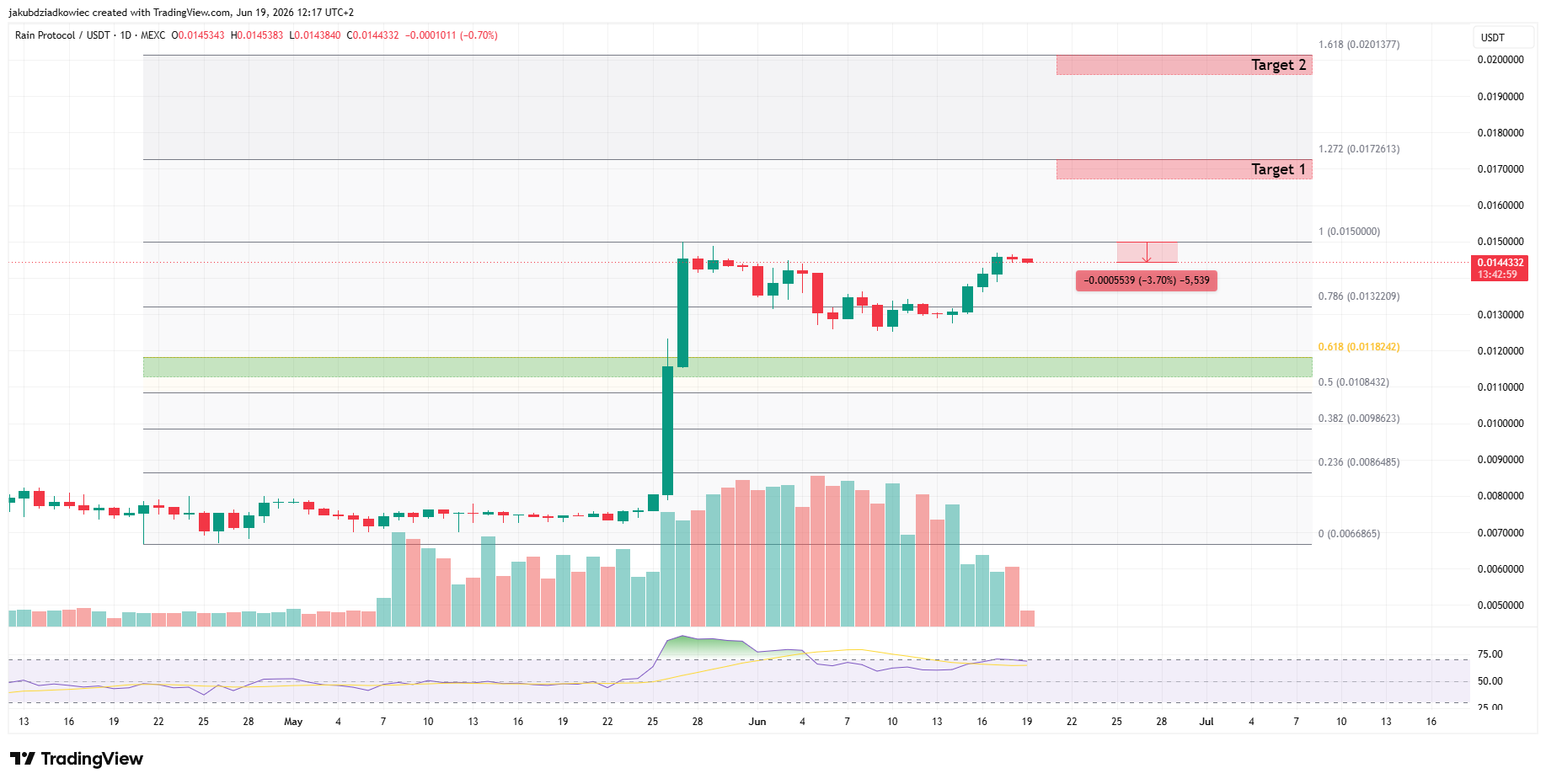
Rain Protocol (RAIN) is the closest of the three to a breakout. The token trades near $0.0144, about 2.4% below its all-time high of $0.0148 set on May 27.
The recent correction was shallow. Price held the 0.786 reversed Fibonacci level and bottomed near $0.0125 before turning higher. RAI is now pressing directly into prior resistance.

A clean break opens the 1.272 Fibonacci extension near $0.0173 as the first target. The 1.618 extension near $0.020 marks the second. On the downside, the 0.618 reversed Fib level near $0.012 should act as support.
Fundamentals add weight to the setup. Rain recently entered the top three prediction markets by value locked, helped by fresh liquidity ahead of the 2026 FIFA World Cup. That demand could fuel the final move toward records.
Hyperliquid (HYPE) Holds Above $63 in Price Discovery
Hyperliquid (HYPE) remains in price discovery despite a pullback. The token trades near $66.70, roughly 13% under its record high of $76.70 printed on June 16.
So far, the dip has held above the 0.236 Fib retracement near $63.66. A standard continuation correction would target the 0.382 level near $55.40, which lines up closely with the previous all-time high around $59.40. That confluence forms strong support.

A deeper flush could reach the golden pocket near $42, where an ascending trendline also sits. Buyers would likely defend that zone.
Momentum has cooled slightly, with volume easing and the RSI slipping back toward neutral. Even so, the broader trend stays bullish, and continued institutional demand for spot Hyperliquid products keeps the path toward $77 open.
ADI Shows the Strongest Momentum of the Three
ADI looks the most explosive of the group. The token trades near $3.96, about 13% below its all-time high of $4.55 from April 3, yet its recovery stands out.
Price corrected into the 0.618 golden pocket near $3.65 and held firmly. Since then, volume has expanded steadily, a sign that buyers are stepping back in with conviction.

One hurdle remains. The 0.382 retracement near $4.00 is acting as resistance, and ADI needs a daily close above it to clear the way back to records. The RSI has turned higher without reaching overbought territory, leaving room to run.
The token also carries real catalysts. ADI Chain recently launched its mainnet as an institutional network for stablecoins, and its Predictstreet platform was named an official prediction market partner of the 2026 FIFA World Cup.
The post 3 Altcoins Trading Near All-Time High This Weekend appeared first on BeInCrypto.
Crypto World
The Best Crypto to Invest in Right Now as XRP ETF Draws $5.3M and Cardano Builds Toward August Catalyst
The best crypto to invest in right now reveals itself when capital moves before headlines catch up. XRP spot ETFs pulled $5.3 million in weekly net inflows on June 18 while Bitcoin ETFs posted outflows per CoinGecko, and Cardano’s Leios testnet launches June 23 with the SEC spot ETF threshold landing in August per CoinMarketCap.
The wallets that captured the biggest returns in every past cycle shared one habit. They bought infrastructure setups before the product went live, and one presale is pulling heavier committed capital right now than anything sitting on exchanges.
Altcoin ETF Rotation Signals Where Smart Money Goes Next
On June 18, XRP-focused ETFs absorbed $5.3 million while Bitcoin products saw net redemptions per CoinGecko. Chainlink landed the official oracle deal for FIFA World Cup 2026 prediction markets through ADI Predictstreet per PRNewswire.
Cardano’s Leios protocol hit 705,000 lines of code with the testnet going live June 23, while CME ADA futures complete their six-month window in August, opening the door for Grayscale’s spot ETF per CoinMarketCap. Every signal points at institutional capital rotating into real infrastructure while retail sits on the sidelines in extreme fear.
Best Crypto to Invest in Compared: Chainlink, Cardano, and the Presale That Stands Apart
Pepeto: The Entry No Listed Token Can Match This Cycle
Anyone who sat through the last bull run holding nothing life-changing knows that feeling. The same builder who pushed Pepe past $11 billion is back on Pepeto alongside a senior Binance developer, and both SolidProof and Coinsult reviewed the entire contract set.
Every wallet that caught the biggest returns last cycle shares one move: they committed before the market priced in what they saw.
PepetoSwap runs a working zero-fee trading engine today, and its scanner reads every token contract for exploit code before a dollar touches the pool. Presale entries cost $0.0000001877, and 170% APY staking compounds every position while the Binance listing timeline draws closer. The best crypto to invest in this cycle fills in real time because the gap between entry and listing carries the entire return.
Locking in through Pepeto at this price sets up the kind of return that rewrites a financial story, and the $10.28 million committed during extreme fear proves the outcome is calculated.
Chainlink (LINK) Price at $8.02 as FIFA Oracle Deal Fuels Network Demand
Chainlink (LINK) trades at $8.02 per CoinMarketCap, sitting 85% below its $52.99 all-time high. The FIFA World Cup 2026 oracle partnership settled billions in prediction bets, and active Chainlink addresses hit 5,679 in June.
Changelly projects $7.73 to $10.03 for 2026. A $1,000 buy targeting $10 returns about $1,247, real but measured. From $8.02 the path to portfolio-level returns stretches months, and the best crypto to invest in for that move sits earlier in its lifecycle.
Cardano (ADA) Price at $0.1639 as Leios Testnet and ETF Threshold Approach
Cardano (ADA) trades near $0.1639 per CoinMarketCap, down 94% from its $3.10 all-time high. The Leios testnet launches June 23 and the SEC spot ETF threshold arrives in August. 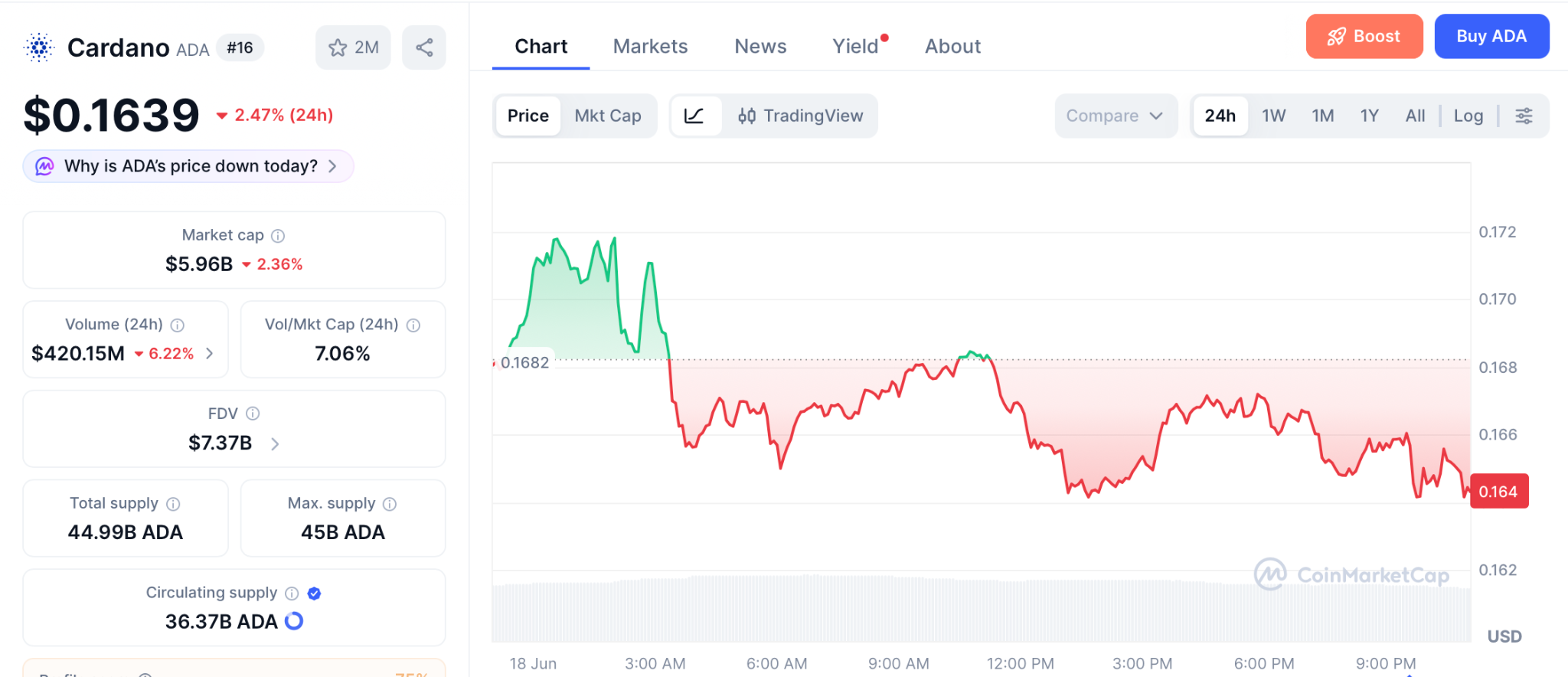
Coinpedia targets $0.28 by late 2026 if the breakout above $0.22 holds. A move from $0.1639 to $0.28 gives roughly 70% upside, solid for a large-cap hold but nowhere near the return math inside a presale at $0.0000001877 with a verified builder and listing ahead.
Conclusion
A 25% gain on LINK or a 70% recovery on ADA is not the kind of return that changes anything about the way you live, and the best crypto to invest in has always been the one you find before the listing when $250 can still become over $1 million like it did for one PEPE wallet and $8,000 can touch billions like Shiba Inu.
And Pepeto is sitting at $0.0000001877 right now with the same builder who proved this at $11 billion, a live exchange, verified audits, and 170% APY while the Binance listing gets closer.
So this is about whether you take the entry that erases the debt and turns one decision into the best crypto to invest in story you tell forever, or close this page and carry the same regret from the last cycle because you knew and did not move through Pepeto.
Click To Visit Pepeto Website To Enter The Presale

FAQs
What is the best crypto to invest in right now ahead of the next listing catalyst?
Pepeto stands out as the best crypto to invest in right now with $10.28 million raised at $0.0000001877, backed by the original Pepe builder and a former Binance developer. The SolidProof audit and live zero-fee exchange separate this entry from every other presale on the market.
How does Chainlink (LINK) at $8.02 compare to Pepeto for portfolio returns?
Chainlink at $8.02 targets roughly 25% toward $10 resistance following the FIFA World Cup oracle deal per CoinMarketCap. Pepeto targets 150x from $0.0000001877 through its upcoming Binance listing, with 170% APY staking compounding every position daily.
Disclaimer: This is a Press Release provided by a third party who is responsible for the content. Please conduct your own research before taking any action based on the content.

York stay was ‘one of best experiences of my life’

Dorchester Minerals: Overselling Pressures Increased, Buying Opportunities Widened

Former Ethereum Foundation Contributor Warns of ‘Slow-Burning’ Funding Crisis


-

 Business5 days ago
No Jackpot Winner as $257 Million Prize Rolls Over to $269 Million Monday Draw
-
 Crypto World5 days ago
Zimbabwe Requires Crypto Businesses to Register Annually Under New FIU Regulations
-

 Crypto World7 days ago
Bitget enters Argentina’s regulated crypto market through PSAV registration
-

 Tech7 days ago
NanoClaw integrates JFrog registries to secure AI agent downloads
-
 Entertainment5 days ago
Matt Damon’s Viral Sci-Fi Thriller Has Taken Over HBO Max
-

 Business5 days ago
Anthropic staff to meet White House officials next week, Axios reports
-

 Tech5 days ago
As AI companies race to go public, who else is along for the ride?
-
 Crypto World5 days ago
Bitcoin could crash to $48,000, if this historical pattern is triggered
-

 Politics5 days ago
“Israel’s” ban on ICRC visits ruled illegal, but Knesset moves to stop them permanently
-
 NewsBeat5 days ago
Warning of disruption as Cardiff Crossrail works to start
-

 News Videos5 days ago
Financial Accounting | Last Day Revision Strategy and Booster | CMA Inter – June 2026
-
 NewsBeat5 days ago
Tributes to former deputy head teacher at Cambridge school among death and funeral notices
-
 NewsBeat5 days ago
what doctors are seeing in ebike crashes
-

 Entertainment6 days ago
Deion Sanders Shares Powerful Post After Viral Advice To Deiondra
-
 Entertainment5 days ago
Kate Middleton Glare Goes Viral After Kids Booed At Royal Event
-

 Crypto World5 days ago
XRP ETFs Outperform As Bitcoin And Ethereum Funds Extend Outflow Trend
-
 Crypto World5 days ago
Market Preview: SpaceX (SPCX) IPO Record, Federal Reserve Meeting, and Iran Nuclear Agreement
-

 Tech5 days ago
Over 400 Arch Linux packages compromised to push rootkit, infostealer
-

 Business5 days ago
Invesco Quality Income Fund Q1 2026 Commentary
-
 Entertainment7 days ago
44 Years Later, This Is the Greatest Star Trek Quote in Sci-Fi History
You must be logged in to post a comment Login