

Crypto World
Most of Ripple’s bank partners never touch XRP. Here is the real problem



Ripple says it has more than 300 institutional partners. The XRP community hears that as 300 banks buying XRP. The reality is that most of them use Ripple’s software without ever touching the token, and even the ones that do rarely hold it. This is the structural gap at the heart of why XRP’s price stays stuck while Ripple keeps winning.
Summary
- Ripple has more than 300 institutional partners, but roughly 60 percent use its messaging and software rails without ever touching XRP, while only about 40 percent use the On-Demand Liquidity product that involves the token.
- Even the partners that use On-Demand Liquidity generally do not hold XRP, because licensed exchanges and market makers handle the buying and selling, and the banks see only fiat in and fiat out.
- This split is the mechanical explanation for the long-standing gap between Ripple’s corporate success and XRP’s stuck price, since network adoption does not automatically translate into sustained token demand.
- The bullish rebuttal is that On-Demand Liquidity volume is real where it runs, that even momentary XRP demand creates buy pressure, and that token demand can come from ETF flows and regulation independent of settlement.
- For holders, the honest read is that partner counts measure Ripple’s business, not XRP demand, and the token’s fate depends on whether the On-Demand Liquidity share grows and its volume scales, plus channels like ETFs and regulatory clarity.
Ripple likes to say it has more than three hundred institutional partners, and the number sounds like exactly the validation XRP holders have waited years to see: hundreds of banks and payment companies, all signed up to Ripple, all presumably driving demand for the token. That is how the figure is usually heard in the community, as three hundred institutions buying and using XRP. The reality is very different, and confronting it honestly is essential for anyone who holds the token.
The large majority of Ripple’s partners use the company’s messaging and payment software without ever touching XRP, and even among the minority that use the product built around the token, almost none actually hold XRP. The partner count measures the size of Ripple’s business, not the demand for its associated asset, and the gap between those two things is the single best explanation for one of the most frustrating puzzles in crypto: why XRP’s price has stayed pinned near a dollar through 2026 even as Ripple racks up settlement deals, bank partnerships, and institutional wins.
This is not an argument that Ripple is failing or that XRP is worthless. It is an argument that the popular story, in which corporate adoption mechanically pulls the token price up with it, rests on a misunderstanding of how Ripple’s products actually work. There are really two Ripples: one that sells messaging and payment software to banks, which does not require XRP, and one that offers a liquidity service that uses XRP as a bridge, which does. Most partners signed up for the first. Understanding that split, and what it means for whether Ripple’s success ever reaches the token, is the purpose of this piece.
It covers the two different products Ripple sells, why even the token-using product rarely puts XRP on a bank’s balance sheet, the value-accrual problem this creates, the genuine bull-case rebuttal, the geographic concentration of the volume that does exist, and what would actually have to change for Ripple’s growth to start pulling XRP demand with it. The goal is to give holders an accurate map of where the token stands in Ripple’s empire, rather than the flattering version the partner count implies.
There are two different Ripples
The root of the confusion is that Ripple sells more than one thing, and only some of what it sells involves XRP. For most of its history, Ripple’s core enterprise offering has had two distinct components. The first is messaging and payment-connectivity software, historically associated with products that let banks send payment instructions and connect to one another more efficiently than the old correspondent system allows.
This software improves how banks communicate and process cross-border payments, but it does not require XRP at all; a bank can adopt it, become a Ripple partner, and never go near the token. The second component is On-Demand Liquidity, or ODL, the service that actually uses XRP as a bridge asset to move value between currencies without pre-funded accounts. ODL is the part of Ripple’s business that creates real XRP usage.
The crucial fact is how Ripple’s partners split between these two. By most accounts, only around forty percent of Ripple’s roughly three hundred partners use On-Demand Liquidity, the XRP-based product, while the other sixty percent or so use the messaging and software rails that do not touch XRP at all. So when the community hears three hundred partners and pictures three hundred sources of XRP demand, the accurate picture is closer to a bit more than a hundred partners using the token-based product, and a larger group using Ripple software that bypasses XRP entirely.
This is not hidden or scandalous; it simply reflects that many institutions wanted Ripple’s payments technology without taking on a volatile crypto asset. But it has enormous implications for the token, because it means the headline partner count overstates XRP demand by a wide margin. A bank can be a proud, public Ripple partner and contribute precisely nothing to XRP usage, and many are exactly that. The first step to understanding XRP’s stuck price is to stop counting all of Ripple’s partners as XRP customers, because most of them are not.
Even ODL partners do not hold XRP
It would be natural to assume that the forty percent of partners using On-Demand Liquidity are therefore buying and holding XRP, generating steady demand, but even that is largely not the case, and the reason cuts to the core of the value-accrual problem. The way ODL works, banks do not generally buy or hold XRP themselves. Instead, licensed exchanges and liquidity providers sit in the middle of the transaction.
When a bank uses ODL to send value across a corridor, the source currency is converted into XRP, the XRP moves across the ledger in seconds, and it is converted into the destination currency on the other side, but this buying and selling is handled by market makers and exchanges, not by the bank. From the bank’s perspective, it puts fiat in on one side and receives fiat out on the other, never holding the token in between. The XRP is touched only momentarily, by the liquidity providers facilitating the swap, before it is converted back.
This structure is deliberate and is actually part of ODL’s appeal to institutions: it lets banks access the speed and capital efficiency of XRP-based settlement while staying in their regulatory comfort zone, seeing only fiat on their books and never holding a volatile crypto asset. For the banks, that is a feature.
For XRP holders hoping that institutional adoption means institutions accumulating XRP, it is a disappointment, because it means even the token-using corner of Ripple’s business does not create the kind of sustained, buy-and-hold demand that would steadily lift the price. The demand ODL creates is real but fleeting: XRP is bought and sold in the same moment to bridge a payment, generating transactional throughput rather than lasting accumulation.
The momentary buying does create some genuine buy pressure, which the bull case rightly emphasizes, but it is a different and weaker force than the image of banks adding XRP to their reserves. So the picture sharpens: most partners do not touch XRP, and most of those that do touch it only in passing, through intermediaries, without ever holding it.
The value-accrual problem this creates
Put these facts together and you arrive at the deepest issue in the entire XRP story, the one that explains the stuck price more convincingly than any other: the problem of how value accrues to the token. A blockchain network, or in this case a payments business built around a token, can grow impressively while the token itself fails to capture that growth, if the activity does not translate into sustained demand for the asset.
That is precisely the situation the two-Ripples split creates. Ripple the company can keep signing partners, opening corridors, and processing more payments, and most of that growth flows through software that bypasses XRP or through an ODL process that touches XRP only momentarily via intermediaries. The corporate success is real, but the channel connecting it to token demand is far narrower than the partner count suggests.
This is the mechanical explanation for the puzzle that has frustrated XRP holders all year: Ripple keeps winning, and XRP keeps trading near a dollar beneath its major moving averages. The wins are concentrated in parts of the business that do not require holding the token, so they do not generate the buy-and-hold demand that would lift the price.
Layered on top is XRP’s large supply, including the enormous quantity Ripple holds in escrow and periodically releases, which means that even meaningful transactional demand must contend with substantial available supply. For demand to overwhelm that supply and move the price durably, the token would need usage on a scale that the current adoption pattern, heavy on XRP-free software and light on XRP accumulation, does not produce.
None of this means XRP cannot rise; it means the path from Ripple’s business growth to XRP’s price is not the automatic, mechanical link the bullish narrative assumes. The token does not appreciate simply because Ripple succeeds. It would appreciate if usage of the specific XRP-based product grew large enough that the momentary demand it generates, compounded across enormous volume, finally outweighed the supply. That is a much higher bar than signing the three-hundredth partner.
The escrow overhang that makes it worse
There is a supply-side dimension to the value-accrual problem that deserves its own attention, because it raises the bar that token demand must clear. A very large quantity of XRP sits in escrow controlled by Ripple, released into the market on a schedule over time, and this steady stream of new available supply is a structural feature of the token that has no equivalent in a fixed-supply asset. Whatever demand the network generates, whether the momentary buying of On-Demand Liquidity or the buy-and-hold demand of ETFs, must contend not only with the XRP already circulating but with the additional supply that periodically enters from escrow. This is part of why even real demand has struggled to move the price durably: it is pushing against a supply that keeps replenishing.
The interaction between the demand pattern and the supply schedule is the crux. If the token-using share of Ripple’s business were large and growing fast, the transactional demand it generates might comfortably absorb the escrow releases and then some, letting the price rise. But because most of Ripple’s activity bypasses the token, and the part that uses it does so only momentarily through intermediaries, the demand side has been too thin to overwhelm the supply side decisively. The result is a token that can trade sideways even during periods of corporate success, because the modest, fleeting demand from settlement is roughly matched by available and incoming supply.
Critics of Ripple have long pointed to the escrow releases as a persistent headwind, while the company argues the releases are managed responsibly and that it has an incentive not to suppress its own largest holding. Either way, the practical point for holders is that the value-accrual gap is not only about weak demand capture; it is about weak demand capture meeting a large and replenishing supply, which together explain why the price has been so resistant to the steady drumbeat of adoption headlines. For the token to break higher durably, demand would need to grow enough to clear both the circulating float and the escrow overhang at once, which is a higher bar than demand alone.
The bull case deserves a fair hearing
The picture so far is sobering, but the bullish rebuttal is substantive and deserves a fair hearing, because the situation is not as one-sided as the skeptical read alone implies. The first point in XRP’s favor is that the momentary demand ODL creates is still real demand. Every time the XRP-based product bridges a payment, XRP is genuinely bought, even if it is sold moments later, and at sufficient volume that continuous buying and selling represents real, ongoing market activity rather than nothing.
If the corridors using ODL grow and the volume flowing through them scales up, the cumulative buy pressure from all that bridging could become a meaningful force, particularly because it recurs constantly instead of being a one-time event. The bull case holds that the token-touching share of Ripple’s business is the part that matters, and that as it grows, so does the demand that flows through XRP.
The second point is that the forty percent is not fixed. Partners that adopted Ripple’s messaging software first can later convert to On-Demand Liquidity, and Ripple has every incentive to push that conversion, since it is the largest holder of XRP and benefits directly when XRP usage rises. If a meaningful share of the messaging-only majority converts to the XRP-based product over time, the demand base expands substantially.
The third and perhaps strongest point is that settlement throughput is not the only channel to XRP demand. The forces most capable of moving XRP, the institutional flows into spot ETFs and the regulatory clarity that the CLARITY Act would provide, operate largely independent of whether banks hold XRP in their settlement flows. ETF demand is buy-and-hold demand of exactly the kind ODL does not generate, and it has already drawn over a billion dollars into XRP funds.
Tokenized real-world assets settling on the XRP Ledger represent another growing source of activity. So the bull case is that the partner-count critique, while accurate about settlement mechanics, misses the channels, ETFs and regulation, that could drive XRP regardless of how banks handle their payment corridors. These are genuine counterpoints, and an honest holder should weigh them against the structural concern instead of dismissing either.
The geographic reality nobody mentions
A further dimension that rarely makes it into the bull-or-bear debate is where Ripple’s XRP-based volume actually flows, and it complicates the global-rail narrative in an important way. On-Demand Liquidity has been live in production for years, but its real usage has been concentrated in specific cross-border corridors instead of spread evenly across global finance.
The meaningful volume has historically clustered in particular regions, such as certain Middle East and Southeast Asia corridors, and more recently in Latin American routes involving institutions like Braza Bank and Mexican corridors involving Bitso. These are real flows with real value, and the busiest names on the XRP Ledger include identifiable financial institutions instead of anonymous wallets, which is a genuine point in the network’s favor. But the volume is geographically concentrated, not the worldwide banking rail the headline narrative implies.
This concentration matters for two reasons. First, it means XRP’s settlement demand depends heavily on a relatively small set of corridors, so the token’s utility-driven demand is less diversified and more exposed to the fortunes of those specific routes than a global-rail framing would suggest. Second, in the corridors where institutional settlement does happen on-chain, XRP increasingly competes for share against alternatives, including dollar stablecoins like USDC and Ripple’s own RLUSD, as well as emerging central-bank digital-currency projects, according to blockchain-analytics observations.
So even within the settlement niche where XRP is used, it is not unchallenged; it is one option competing for institutional flow against instruments that offer dollar stability. The honest synthesis is that XRP’s real settlement footprint is meaningful but concentrated and contested, which is a more accurate and more modest picture than the image of a token quietly powering the world’s bank transfers. For holders, this is another reason to track the actual volume in the actual corridors instead of the partner count or the global ambition.
What would actually change the picture
If the partner count is the wrong thing to watch, the natural question is what the right things are, and identifying them gives holders a far better framework than counting Ripple’s deals. The first and most direct change would be conversion: the messaging-only majority of partners moving onto On-Demand Liquidity, which would expand the share of Ripple’s business that actually uses XRP.
Watching whether the roughly forty percent figure grows over time is more informative than watching the total partner number rise, because growth in the token-using share is what expands XRP demand. The second is volume: even within the existing ODL base, the total value flowing through XRP-bridged corridors is what generates the cumulative buy pressure, so rising corridor volume matters more than new logos. A handful of high-volume corridors can move more XRP than dozens of low-volume partnerships.
Beyond settlement, the channels most likely to drive durable XRP demand are the ones that operate independent of how banks handle payments. Spot ETF flows are the clearest, because they represent genuine buy-and-hold demand, and their trajectory, whether they compound or stall, will say more about XRP’s institutional demand than any partner announcement. Regulatory clarity from the CLARITY Act is the second, because codifying XRP’s status could unlock institutional capital that settlement adoption alone never reaches. The growth of tokenized real-world assets on the XRP Ledger is a third, since it brings a different kind of activity and demand to the network.
The honest framework for a holder is therefore to stop treating Ripple’s partner count and corporate wins as proxies for XRP demand, because most of that activity bypasses or only momentarily touches the token, and to focus instead on the metrics that actually connect to demand: the ODL share and its volume, ETF flows, regulatory progress, and on-chain asset growth. The partner count tells you Ripple is a successful company. It tells you very little about whether XRP, the token, is capturing that success, which is the only question that matters for the price.
Frequently Asked Questions
Do banks that partner with Ripple actually use XRP?
Mostly not. Ripple has more than three hundred institutional partners, but only around forty percent use On-Demand Liquidity, the product that involves XRP as a bridge asset. The other sixty percent or so use Ripple’s messaging and payment software, which does not touch XRP at all. So a large majority of Ripple’s partners can be active customers without ever using the token. This is the key reason the partner count overstates XRP demand: many partners signed up for Ripple’s payments technology specifically without taking on a volatile crypto asset, and they contribute nothing to XRP usage despite being counted as partners.
If a bank uses On-Demand Liquidity, does it hold XRP?
Generally no, and this surprises many people. In On-Demand Liquidity, banks do not buy or hold XRP themselves. Licensed exchanges and liquidity providers handle the conversion: the source currency becomes XRP, the XRP moves across the ledger in seconds, and it is converted to the destination currency, all managed by market makers. The bank sees only fiat in and fiat out, never holding the token. This is deliberate, letting banks access XRP-based settlement speed while staying in their regulatory comfort zone. The result is that even the token-using part of Ripple’s business creates only momentary, transactional XRP demand instead of the buy-and-hold accumulation that would steadily lift the price.
Why does XRP’s price stay stuck if Ripple is so successful?
Because most of Ripple’s success flows through channels that bypass the token or touch it only momentarily. The majority of partners use XRP-free software, and even On-Demand Liquidity touches XRP only in passing through intermediaries, so Ripple’s corporate growth does not mechanically translate into sustained XRP demand. Add XRP’s large supply, including the escrow Ripple periodically releases, and transactional demand has to be very large to move the price durably. This value-accrual gap, between a thriving business and a token that does not capture its success, is the clearest explanation for why XRP has stayed near a dollar through 2026 even as Ripple keeps winning deals.
Is this a reason to be bearish on XRP?
Not necessarily, but it is a reason to be realistic about what drives the token. The structural critique shows that partner counts and corporate wins are poor proxies for XRP demand. But the bull case has real merit: On-Demand Liquidity volume is genuine demand where it runs, the token-using share of partners can grow as banks convert from messaging to liquidity, and the strongest demand channels, spot ETF inflows and regulatory clarity from the CLARITY Act, operate independent of bank settlement entirely. So the picture is not simply bearish; it is that XRP’s demand depends on specific things, the growth of On-Demand Liquidity volume and the independent channels of ETFs and regulation, instead of on Ripple’s overall business success.
Where is XRP actually used for settlement?
On-Demand Liquidity volume has historically been concentrated in specific cross-border corridors instead of spread across global banking. Meaningful usage has clustered in certain Middle East and Southeast Asia routes and, more recently, Latin American corridors involving institutions such as Braza Bank and Mexican routes involving Bitso. These are real flows, and the busiest names on the XRP Ledger are identifiable financial institutions. But the volume is geographically concentrated, not the worldwide rail the narrative implies, and within those corridors XRP competes for share against dollar stablecoins like USDC and Ripple’s own RLUSD. So XRP’s settlement footprint is meaningful but concentrated and contested instead of dominant.
What should XRP holders watch instead of the partner count?
Focus on the metrics that actually connect to token demand. The most direct is the share of partners using On-Demand Liquidity, currently around forty percent; whether that grows matters more than the total partner number. The second is the volume flowing through XRP-bridged corridors, since cumulative throughput is what generates buy pressure. Beyond settlement, watch spot ETF flows, which represent true buy-and-hold demand, regulatory progress on the CLARITY Act, which could unlock institutional capital, and the growth of tokenized assets on the XRP Ledger. These tell you whether XRP the token is capturing demand, which the partner count does not, because most partners never touch XRP.
This article is information, not investment advice. Figures on Ripple’s partners, On-Demand Liquidity usage, and corridor volumes reflect reporting and estimates available as of June 27, 2026, and can change. The relationship between Ripple’s business and XRP demand is a debated topic. Nothing here is a recommendation to buy or sell XRP or any asset. Verify current details from primary sources and consider your own circumstances before making any decision.



Sen. Cynthia Lummis said Tuesday she will introduce CLARITY Act bill text "in the next few days," marking the latest step in the Senate's push to pass a crypto market structure law before its August recess. "We've been working on the Clarity Act every day for 10 months, and we'll introduce bill… Read the full story at The Defiant
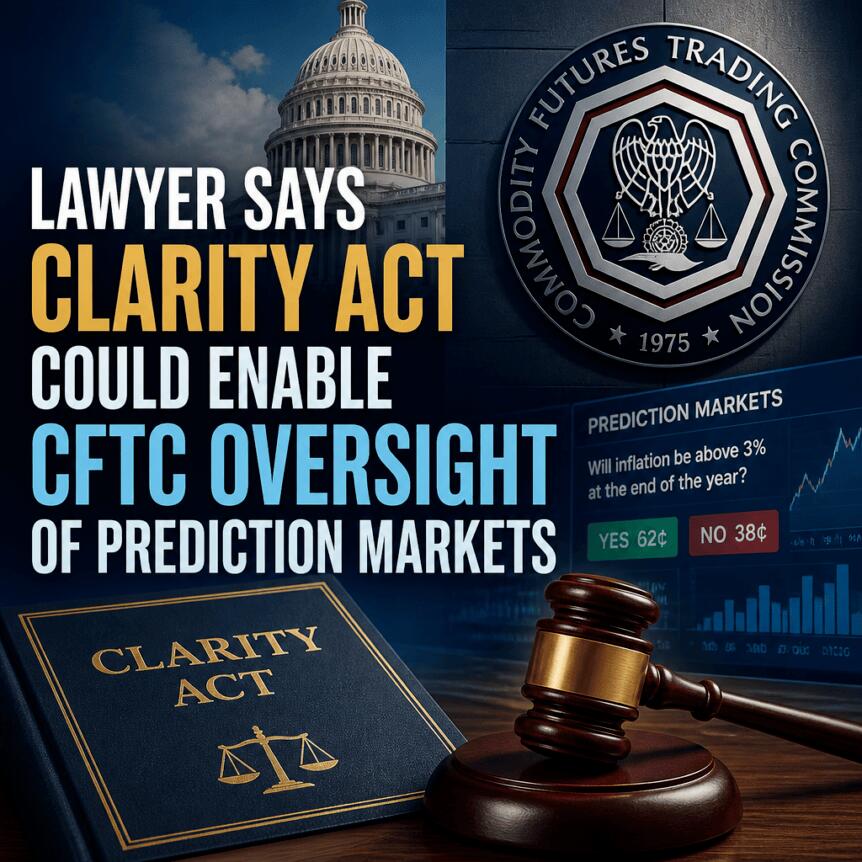
US lawmakers used a House Agriculture Subcommittee hearing this week to press the Commodity Futures Trading Commission (CFTC) on oversight of sports event prediction market platforms—while also pointing to a pending Senate effort, the Digital Asset Market Clarity (CLARITY) Act, as a potential source of clearer authority and funding.
At the hearing titled “Examining Customer Protections and Market Integrity in Sports Event Prediction Markets,” Carl Kennedy, a partner at law firm Katten Muchin Rosenman, argued that the CFTC may be unable to fully regulate and enforce rules for rapidly expanding prediction markets, citing staffing constraints. Kennedy said the CLARITY Act could expand the agency’s jurisdiction beyond digital assets and help it address the “explosive growth” of prediction markets.
Key takeaways
- Carl Kennedy told the House Agriculture Subcommittee that the CFTC is likely “short-staffed” to effectively oversee prediction market platforms.
- Kennedy said the CLARITY Act could grant the CFTC additional authority covering not only digital assets but also the fast-growing prediction market sector.
- CFTC Chair Michael Selig has argued the agency has “exclusive jurisdiction” over event contracts on major prediction platforms, treating them as “swaps.”
- State regulators have increasingly challenged that federal position, including through lawsuits and court disputes involving platforms such as Kalshi and Polymarket.
- Senate supporters of the CLARITY Act expect the bill text to be released soon, but details on prediction market provisions were not publicly available as of Tuesday.
Why lawmakers are focusing on prediction market oversight
The hearing, chaired around customer protections and market integrity in sports event prediction markets, highlighted how the legal and regulatory question has shifted from whether prediction platforms can operate to who is responsible for regulating them.
Kennedy’s core point was that even if the CFTC has jurisdiction, it may not have the resources to supervise new and complex markets at the pace they are growing. He suggested that an expanded mandate under the CLARITY Act would need to be paired with additional capacity so the agency can handle oversight and enforcement across cash markets and crypto as well as prediction markets.
“With additional resources… to address these new asset classes in the cash markets and crypto… as well as to deal with the explosive growth of prediction markets, I think that the CFTC certainly should receive additional resources,” Kennedy said during the Tuesday hearing.
The subcommittee discussion also reflected that prediction markets—often built on event contracts linked to real-world outcomes—have become a regulatory stress test for existing derivatives rules, especially as platforms attract broader participation.
The CFTC’s “exclusive jurisdiction” position under scrutiny
Legal and regulatory experts at the hearing referenced the CFTC’s approach under Chair Michael Selig, who was confirmed by the Senate in December and is the only Senate-confirmed member heading the commission in a leadership panel that would normally include five commissioners.
Since taking the role, Selig has taken the position that the CFTC has “exclusive jurisdiction” over prediction market companies. The argument is that the event contracts on these platforms fall under the CFTC’s authority because they can be classified as “swaps.”
This stance has drawn criticism—particularly from Democratic senators—who have described it as an “assault” on state authority to regulate prediction markets.
That federal-versus-state tension has produced a growing body of litigation. Some states have pursued lawsuits against platforms including Kalshi and Polymarket over what they see as state-level sports betting concerns.
State court clashes and the path toward the Supreme Court
One recent flashpoint involved a dispute where the CFTC chair’s position came into direct conflict with a state court ruling. Last week, Selig ordered Kalshi to ignore a Michigan court decision, according to prior coverage, with Kalshi arguing that the directive placed it in an “impossible position” between federal and state authorities.
More broadly, experts have suggested that the legal conflict between state regulators and the CFTC could eventually end up before the US Supreme Court. That possibility centers on the same foundational question raised by lawmakers: whether the CFTC’s reading of its jurisdiction leaves room for states to regulate event contracting tied to sports and related forms of wagering.
For market participants, this matters because jurisdiction affects compliance obligations, product design decisions, and the legal risk profile of operating in different states. For consumers, it affects who sets the rules for customer protections and how those rules are enforced—particularly when the platforms operate nationwide.
What the CLARITY Act could change—and what remains unclear
Much of Tuesday’s discussion pointed toward the CLARITY Act as the most significant potential legislative change on the horizon. Republican senators pushing for a vote before August recess have indicated they expect to release the bill’s text soon.
As of Tuesday, details of how the CLARITY Act would address prediction markets, ethics provisions, and other concerns raised by lawyers were not yet public.
However, earlier reporting indicates there is active political pressure to shape the bill’s scope. In June, gambling industry groups petitioned the Senate to add language to CLARITY that would explicitly prohibit event contracts tied to sports and casino-style gaming. Separately, reports cited by earlier coverage said the White House had confirmed that the Trump administration agreed to ethics provisions described as comprehensive, while also accommodating Democrats’ concerns.
That mix—requests for tighter boundaries around wagering-linked event contracts alongside broader ethics requirements—underscores that CLARITY is not only about regulatory authority for digital assets. Kennedy’s remarks at the hearing framed the bill as potentially relevant to prediction markets as a category, particularly in relation to customer protections and market integrity.
For traders, platform operators, and state regulators, the immediate watch item is the CLARITY Act’s released text and how it addresses the core jurisdiction conflict: whether it expands and clarifies federal oversight for event contracts, and whether it limits or displaces state enforcement where prediction markets intersect with sports wagering. Until the bill language is published, the questions raised in court and in Congress—about who regulates, who enforces, and how resources match the scale of these markets—are likely to keep escalating.


Balaji Srinivasan’s Network School, a community of “digital nomads,” is eyeing a new campus in Kazakhstan after its Forest City campus had its business license revoked over alleged premises-use violations.
A memorandum of understanding was signed between Kazakhstan’s Minister of Digital Development, Innovation and Aerospace Industry, Zhaslan Madiyev and Srinivasan to establish the first Network School campus in Kazakhstan, according to a statement from the ministry.
The Kazakhstan agreement gives the Network School a potential new base after its Johor operation was ordered to cease operations effective Wednesday. Kazakhstan has been positioning itself as an emerging technology hub, including plans for Central Asia’s first “crypto city” in Alatau.
“Ironically, this whole drama with Balaji literally validated the network state thesis,” said Dragonfly Capital managing partner Haseeb Qureshi. “The whole idea of a network state is taking a dense group of talent and capital, and collectively negotiating with states. The Malaysia drama set up Balaji to negotiate better terms with another state to copy and paste the network there. “
“Our new campus will become a haven for global techno-optimism, with expedited visas, streamlined redomiciliation, and active recruitment of talent,” Srinivasan said Tuesday.
Network School faces loss of Malaysia Digital status
The new memorandum of understanding with Kazakhstan comes as the Forest City campus faces regulatory action on several fronts.
On Tuesday, the Iskandar Puteri City Council (MBIP) revoked the business license of NSO Malaysia Sdn Bhd, which operates the Network School, alleging the company breached licensing conditions and premises usage requirements.
This led to the Malaysia Digital Economy Corporation (MDEC) announcing it is taking immediate steps to revoke the Malaysia Digital status of NSO Malaysia, which requires companies under the program to follow all local and federal laws.
Malaysia Digital is a recognition awarded to qualified technology and digital companies, providing them with tax incentives, freedom of ownership and allowing the employment of local and foreign workers, among other incentives.
Meanwhile, Onn Hafiz Ghazi, Chief Minister of Johor State, has urged Malaysia’s federal authorities to continue investigating whether the Network School violated immigration laws.
Related: Balaji seeks Malaysia deal, threatens exit after Network School probe
“This matter cannot be taken lightly, especially since Johor is a strategic entry point for the country bordering Singapore. Any weaknesses or abuse of the immigration system must be addressed promptly, firmly, and without compromise,” said Onn.
On Friday, Srinivasan denied reports that the Network School was shutting down, claiming that it had received two notices, with one notice requiring it to “change the text of a sign” and the other regarding a coworking site, created by joining two adjacent units, that had a valid license on one side, not on the other.
“We have a remedial period for both issues, and will remediate them shortly. But our members are otherwise unaffected,” he said.
Cointelegraph reached out to Srinivasan and Network School for comment.
Magazine: Binance & OKX users face $1,900 fines in Vietnam, Coinbase in China? Asia Express


Coinbase began offering a High Yield tier on its USDC lending product paying about 7.02% APY, roughly double the 3.63% APY on its standard Core tier, days after Robinhood Earn launched a competing 7% campaign. Both products route deposits through Morpho, a decentralized lending protocol with $7.11… Read the full story at The Defiant
Traders on Hyperliquid, the onchain exchange that settles the largest share of crypto perpetual futures volume, are trading more money through builder-deployed markets for stocks, commodities and indices than through the platform's native crypto contracts. Those builder markets, deployed under… Read the full story at The Defiant


Crypto companies already licensed under the European Union’s Markets in Crypto-Assets Regulation (MiCA) could still exit the market as compliance costs mount, according to Gate Europe’s CEO.
Giovanni Cunti told Cointelegraph’s Chain Reaction on Monday that stricter regulatory requirements have made it increasingly difficult for new entrants to compete and that some licensed firms could ultimately be unable to absorb the ongoing costs of operating under the framework.
“I think there are going to be quite a few more of the ones that acquire MiCA license that will not be capable to sustain the cost and the resources that are needed to carry on this business in the long term,” Cunti said.
MiCA is the EU’s regulatory framework for crypto assets. The bloc’s 18-month transition period ended on July 1, requiring crypto firms serving EU customers to operate under authorization or cease offering regulated services.
The deadline prompted several exchanges to restrict or withdraw services in parts of Europe while licensed firms began operating under the new regime. Binance, the world’s largest crypto exchange by trading volume, was not able to secure a MiCA license before the deadline.
Compliance costs reshape Europe’s crypto market
Cunti also warned that MiCA’s stricter regulatory requirements could drive some crypto startups and projects outside Europe. While the framework has strengthened investor protections, he said it leaves less room for innovation than jurisdictions with lighter rules.
He said some projects may choose to launch in jurisdictions with less restrictive regulatory requirements instead of navigating the bloc’s compliance regime.
“We may need to be prepared that some projects, possibly some important projects, may be looking at other jurisdictions with different guidelines,” he said.
Related: ESMA MiCA warning puts Binance EU service changes under scrutiny
To be sure, the number of companies authorized under MiCA continues to grow, albeit at a slower pace.
On Friday, the European Securities and Markets Authority added 14 crypto-asset service providers (CASPs) to its register, bringing the total to 294 after adding 37 firms in ESMA’s first update following the July 1 transition deadline.
Cunti said the higher regulatory burden is reshaping Europe’s competitive landscape, but the shrunken market also presents an opportunity for those remaining crypto service providers.
“There was a market with thousands of operators, and now there is a market with only hundreds,” Cunti said.
“So definitely there is a big opportunity for all of us. There is an ongoing migration because customers do not want to lose access to this market,” he added.
Magazine: The British Virgin Islands are a top crypto hub no one ever talks about: Here’s why


Grayscale filed an S-1 registration statement with the U.S. Securities and Exchange Commission on July 20, 2026, to launch a spot Worldcoin ETF, according to the filing's EDGAR record. The filer entity, Grayscale Worldcoin ETF, is registered under file number 333-297570 and accession number… Read the full story at The Defiant


Lending protocol Morpho has launched Morpho Midnight on Base, adding fixed-rate, fixed-term loans to its onchain credit network alongside the variable-rate markets offered through Morpho Blue.
In an announcement sent to Cointelegraph, Morpho said the offer-driven protocol lets lenders and borrowers propose their own interest rates, maturities and other loan terms instead of relying on a protocol-defined utilization curve. Loans are issued as fixed obligations, with terms set through competing offers rather than algorithmic pool pricing.
Predictable rates and defined maturities are standard features of traditional credit markets. However, they remain uncommon in decentralized finance (DeFi), where borrowing costs generally fluctuate based on market utilization. Fixed terms could make onchain lending more attractive to institutions and businesses that need to manage funding costs, returns and risk exposure in advance.
A Morpho spokesperson told Cointelegraph that Midnight is live on the Base mainnet, initially supporting cbBTC and USDC across multiple maturity dates. The spokesperson said Morpho deliberately kept the launch contained as part of a progressive rollout that prioritizes security.
The spokesperson said crypto-native lenders, borrowers and curators already active on Morpho Blue had shown interest in Midnight. Several unidentified enterprises and institutions are also building products on the protocol in beta, with announcements expected as those products go live.
Morpho’s fixed-rate lending plans take shape
Morpho first outlined the fixed-rate system in 2025 under a broader “Morpho V2” roadmap. It described an intent-based, peer-to-peer marketplace where users could submit custom offers, price loans through market demand and keep capital earning variable yield until a fixed-rate offer was matched.
In April, Morpho named the fixed-rate protocol Midnight and clarified that it was not a replacement for Morpho Blue. While Blue provides open-ended, variable-rate lending pools, Midnight externalizes loan risk, interest rate and duration to market participants.
The protocol then released Midnight’s whitepaper and codebase in May, saying that its “offered capital” model was intended to avoid a recurring problem for fixed-rate DeFi protocols: liquidity being locked or fragmentation across maturity dates.
Related: Grayscale plans regular cash payouts from ETH, SOL staking rewards
Midnight’s launch follows Morpho’s $175 million funding round in June, led by Paradigm, Andreessen Horowitz’s a16z crypto and Ribbit Capital. At the time, Morpho said it planned to expand integrations with banks, asset managers and large platforms while adding features associated with traditional credit markets.
Morpho’s infrastructure already underpins variable-rate lending products distributed through major crypto platforms. In April, Coinbase launched Morpho-powered USDC loans for United Kingdom users, allowing them to borrow against Bitcoin (BTC), Ether (ETH) and cbETH on Base.
The loans carried variable rates and no fixed repayment schedule, illustrating the open-ended borrowing model that Midnight intends to complement.
Magazine: Ethereum’s EEZ could pull other blockchains into its orbit
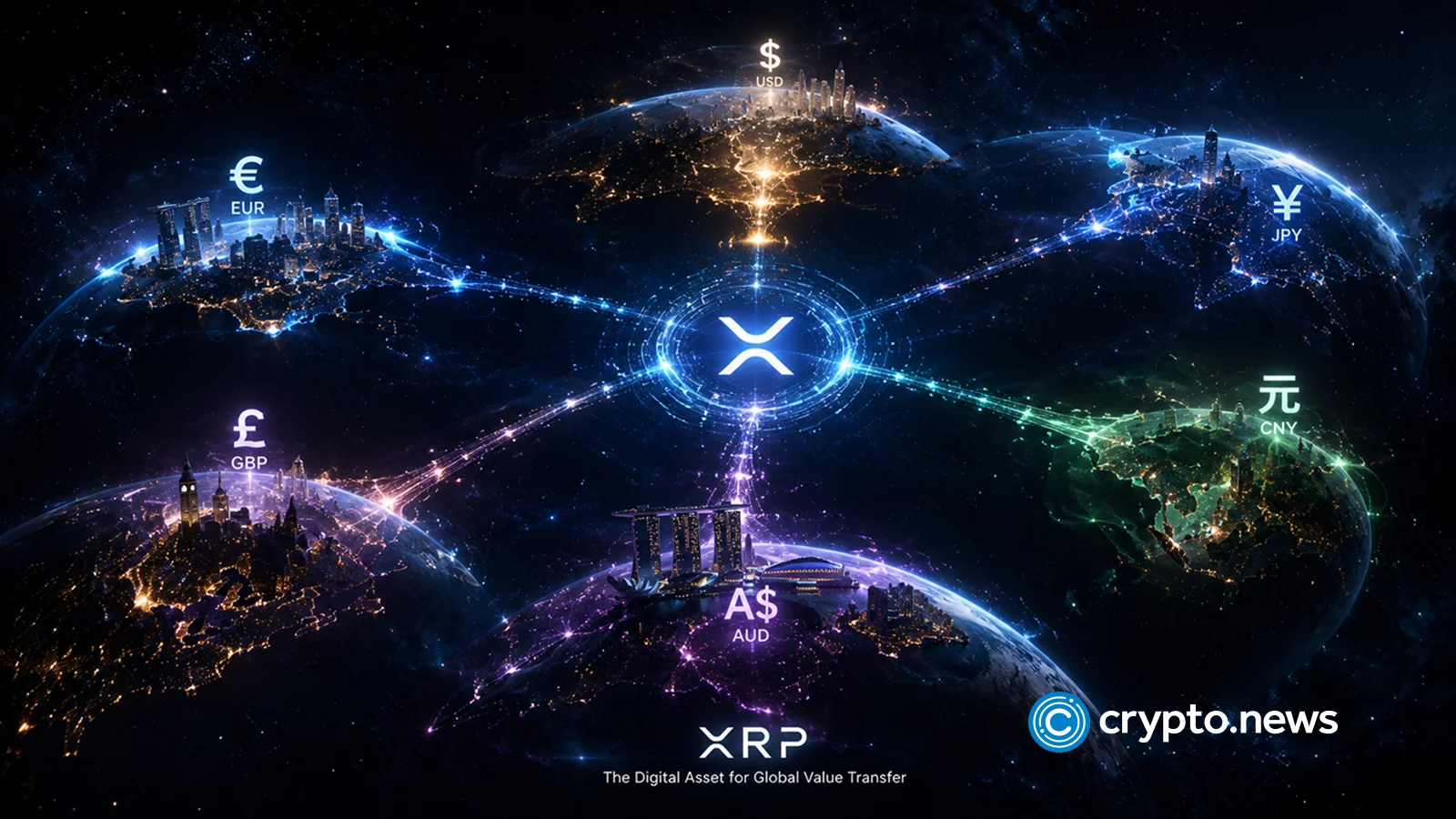
XRP Ledger’s v3.2.0 software has reached 66% validator adoption, with 99 validators now running the release as the network approaches a July 29 amendment activation.
Summary
- XRP Ledger v3.2.0 now runs on 66% of tracked validators and 57.33% of nodes.
- The fixCleanup3_2_0 amendment holds 85.71% support ahead of its July 29 activation.
- The update fixes vault, lending, and permissioned DEX issues while renaming rippled to xrpld.
According to recent XRPL Explorer data, 481 nodes, or 57.33% of the tracked network, have installed v3.2.0. The figures show that the latest software has gained ground since its June rollout, although a sizeable share of operators remain on the previous release.
Version 3.1.3 still runs on 42 validators, equal to 28% of the validator set covered by the tracker. Another 323 nodes, representing 38.41% of the 825 observed nodes, also continue to use the older software.
Software adoption and amendment approval are separate processes on the XRP Ledger. Installing v3.2.0 gives operators access to the latest fixes, while an amendment requires support from at least 80% of trusted validators for two consecutive weeks before its rules can take effect.
The fixCleanup3_2_0 amendment has already crossed that voting threshold. XRP Ledger governance data shows 85.71% support, with 30 validators voting in favor and five opposing the proposal.
Having secured the required backing, the amendment is scheduled to activate on July 29, 2026, at 09:57 UTC. Support must remain at or above 80% throughout the countdown; otherwise, the network’s two-week timer will restart.
Validator backing keeps the amendment on schedule
XRPL validator Vet has urged node operators to update their software before activation so their infrastructure remains compatible with the amended protocol. Operators using unsupported versions can become amendment-blocked once new rules go live, preventing their servers from determining the valid state of the ledger.
Unlike a feature release built around new user-facing products, fixCleanup3_2_0 combines maintenance changes for functions already available on XRPL. The official v3.2.0 release announcement identifies fixes covering Single Asset Vaults, the Lending Protocol, the Permissioned decentralized exchange, Multi-Purpose Tokens, and Permissioned Domains.
For Single Asset Vaults, the package addresses accuracy and rounding issues that can affect how deposited assets and shares are calculated. Lending Protocol changes correct related accounting behavior, while the Permissioned DEX and Permissioned Domains receive fixes for problems found after their earlier implementation.
Amendment voting allows validators to decide whether those consensus-level changes should become binding across the ledger. Even though v3.2.0 is already running on most tracked validators, the amendment will not alter mainnet behavior until the waiting period ends successfully.
Crypto.news reported earlier in July that fixCleanup3_2_0 had entered its final activation window after approval moved above 80%. The current 85.71% reading leaves a buffer of 5.71 percentage points, but XRPL rules still require support to hold until the scheduled activation time.
XRPSCAN’s amendment tracker lists fixCleanup3_2_0 as a proposal introduced through version 3.2.0. Its status also means operators must install compatible software even though running the release does not automatically count as an affirmative amendment vote.
Version 3.2.0 prepares XRPL infrastructure for new activity
Released in mid-June, v3.2.0 has also changed the name of the XRP Ledger’s core server software from “rippled” to “xrpld.” The rename follows XLS-0095, a technical proposal intended to align the server’s identity more directly with the XRP Ledger.
The change affects more than the executable’s name. Under XRPL’s migration instructions, operators moving from version 3.1.3 must update the configuration file from rippled.cfg to xrpld.cfg, along with related paths and deployment settings.
Node operators may also need to revise database directories, package references, scripts, service definitions, and server metadata. XRPL documentation provides a migration process designed to preserve existing node data while replacing the former server naming conventions.
Beyond the rename, the XRP Ledger development team describes v3.2.0 as a cleanup and maintenance release. The software retires amendments that have remained active for more than two years and continues work to divide the libxrpl codebase into smaller modules, which can make future development and maintenance easier.
Those infrastructure changes arrive while projects are testing new payment uses on the ledger. Ripple-backed t54.ai recently reported that XRPL had processed more than 1 million AI-driven payments through the x402 protocol and launched an AI Hub for agents, developers and payment services.
According to t54.ai, the hub was developed with support from Ripple developers and the XRP Ledger Foundation. It collects AI projects, autonomous agents, developer tools, payment services and technical resources in one place for teams building XRPL applications.
With eight days remaining before the scheduled amendment date, validator voting has kept fixCleanup3_2_0 on course. The remaining task falls to node operators still running older software, as the July 29 activation will apply the maintenance rules across the XRP Ledger if approval stays above the required level.


Disclosure: This article does not represent investment advice. The content and materials featured on this page are for educational purposes only.
Bitcoin’s recent rally and ETF inflows are boosting market sentiment as traders look beyond BTC to emerging projects such as Remittix.
Summary
- Bitcoin’s rally shifts attention to Remittix as its presale surpasses $31 million and ecosystem expansion continues.
- Remittix tops $31 million in presale funding as Bitcoin’s rebound fuels interest in emerging crypto projects.
- Remittix nears a $32 million presale milestone as Bitcoin strength revives demand for altcoin opportunities.
Bitcoin has returned to the centre of market attention after climbing to around $65,500, its highest level in roughly two weeks. The move came as risk appetite improved, chip stocks rebounded and U.S. spot Bitcoin ETFs recorded five straight sessions of inflows worth more than $600 million.
The return of Bitcoin momentum is now pushing traders to look across the wider crypto market for altcoins with stronger growth potential. One of the projects gaining attention is Remittix, which has now passed $31 million in its presale after announcing a major ecosystem expansion through Remittix Markets.
Bitcoin momentum puts altcoins back on watch
Bitcoin remains the biggest signal for the wider crypto market. Recent coverage showed Bitcoin reaching the $65,500 area before traders began watching whether the move could hold, while CoinDesk also reported that Bitcoin had previously pulled back after hitting a similar monthly high as profit-taking entered the market.
That matters because Bitcoin strength often helps bring attention back to higher-growth altcoin plays. When Bitcoin stabilises or pushes higher, investors usually begin searching for smaller projects with clearer catalysts, stronger upside narratives and upcoming launch events.
Remittix surpasses $31m as RTX momentum builds
Remittix has now passed $31 million in its presale, putting the project close to the key $32 million milestone where the team is expected to reveal the official launch date.
That gives RTX a clear near-term catalyst at a time when traders are looking beyond Bitcoin for new opportunities. The project has also confirmed a wider ecosystem direction, with PayFi, Remittix Markets and future Earn products becoming the core story around RTX.
This is why Remittix is starting to stand out. It is not only a presale with a launch countdown. It is becoming a product-led ecosystem built around crypto payments, trading access and real-world utility.
PayFi targets a massive payments problem
The strongest part of the Remittix story is still its PayFi platform.
Crypto is easy to buy, hold and trade, but using it for normal bank payments remains difficult. Users often need exchanges, wallet transfers, conversions and withdrawal steps before digital assets can become usable fiat.
Remittix is designed to solve that problem by letting users send crypto to any bank account in the world, while the recipient receives fiat directly. That gives the project a clear use case in the global payments industry, which Remittix positions as a $19 trillion opportunity.
The platform is now fully developed and has already been tested by members of the community. That gives RTX a stronger foundation before launch than projects relying only on future promises.
Remittix markets expands the ecosystem
Remittix has also revealed Remittix Markets, its new perpetual futures trading platform.
This adds a second major growth layer to RTX. PayFi gives Remittix its real-world payments angle, while Remittix Markets adds trading activity, perps demand and another reason for users to engage with the ecosystem.
As Bitcoin hits a two-week high and traders search for the next high-growth altcoin story, Remittix is building momentum with a developed PayFi platform, a major ecosystem expansion and a $32 million launch date reveal milestone now approaching.
Discover the future of PayFi with Remittix by checking out their project here.
FAQ
Why is Bitcoin in focus right now?
Bitcoin is in focus after climbing to around $65,500, its highest level in roughly two weeks, supported by renewed risk appetite and spot Bitcoin ETF inflows.
How much has Remittix raised so far?
Remittix has now passed $31 million in its presale and is approaching the $32 million milestone for its official launch date reveal.
What makes Remittix different from other presales?
Remittix has a fully developed PayFi platform tested by community members and has expanded the RTX ecosystem with Remittix Markets, its new perps trading platform.
Disclosure: This content is provided by a third party. Neither crypto.news nor the author of this article endorses any product mentioned on this page. Users should conduct their own research before taking any action related to the company.

Spain win World Cup by beating Argentina 1-0 – World Cup Debrief

Garmin Cirqa Smart Band Quietly Tracks Everything Without Asking for Attention

Trump ordered coal plants to stay in operation. It’s costing taxpayers in one state $117 million


-
 NewsBeat5 days ago
London Mayor Sadiq Khan handed a peerage by Keir Starmer alongside 15 other Labour figures… just days before the PM leaves No10
-

 Fashion4 days ago
Weekend Open Thread – Corporette.com
-

 Politics4 days ago
The House | The City of London can help the new chancellor deliver growth in every postcode
-

 Politics7 days ago
Young campaigners urge incoming PM to act on outdoor junk food ads
-
 Crypto World5 days ago
Two July Windows Left: The CLARITY Act’s Senate Fight and What Failure Means
-

 Crypto World6 days ago
CFTC blocks Kalshi from unwinding Michigan trades after court order
-

 Crypto World4 days ago
Ripple Payments Joins MiCA With 14 Firms, Does It Mean Anything For XRP?
-

 Business6 days ago
Nvidia Stock Slips After Big Tuesday Rally as Huang Confirms Vera Rubin Chip Is Now in Production Today
-

 Politics3 days ago
Democrats look to World Cup watch parties to register thousands of voters
-
 Entertainment6 days ago
Disney’s Most Ambitious Failed Star Wars Attraction Is Coming to SDCC
-

 Crypto World4 days ago
Ripple wins EU-wide access as ESMA adds it to MiCA register
-

 Crypto World17 hours ago
Grayscale Files For Worldcoin ETF, WLD Registers Sharp Rise
-

 Crypto World5 days ago
Injective Submits SEC Transfer-Agent Registration to Onchain Ownership Records
-

 Business6 days ago
Palantir Shares Rise After Expanded Nvidia Partnership and Fresh Analyst Upgrades Ahead of Earnings Day
-

 Tech1 day ago
Sail Virtually Aboard The “Itanic” With IA-64 Emulator
-
 Tech22 hours ago
Turtle Beach Command Series KB7 review: a nifty screen-equipped gaming keyboard
-

 NewsBeat5 days ago
Registration is now open for March for Men with Kev 2026
-

 NewsBeat2 days ago
Unregistered fitter used Gas Safe logo on business flyers
-
 Sports6 days ago
New Cornerback Enters Vikings Trade Rumor Mill
-

 News Videos5 days ago
Money | Class 12 Economics | CBSE Board Exam 2026-27
You must be logged in to post a comment Login