

Crypto World
Nansen to Set Up Operations in Bhutan’s Gelephu Mindfulness City



On-chain analytics platform Nansen is establishing an operational presence in Bhutan’s Gelephu Mindfulness City (GMC). The move marks another step in the small Himalayan kingdom’s push to build a sovereign digital asset ecosystem.
More broadly, the deal underscores Bhutan’s accelerating ambition to build a sovereign-backed digital asset jurisdiction from the ground up. For Nansen, it is a bet that the next wave of growth will come from exactly that kind of ecosystem.
Not a Relocation
Under the collaboration announced Tuesday, Nansen plans to incorporate a local entity in GMC and hire a Bhutan-based team. In addition, the company will develop on-the-ground analytics capabilities to support the special administrative region’s expanding digital asset infrastructure.
The move is not a relocation. Nansen CEO and co-founder Alex Svanevik told BeInCrypto the company is keeping its Singapore headquarters intact.
“We’re not leaving Singapore — this is an additional entity,” Svanevik said. “We chose GMC because of the vision behind it. Most crypto-friendly jurisdictions are optimizing for what exists today. Bhutan is building something fundamentally different — a values-driven economic zone with digital assets baked into the foundation, not bolted on as an afterthought.”
Why Bhutan
Established as a purpose-built special administrative region in southern Bhutan, GMC is designed around sustainable economic development. The region has attracted attention for its integration of digital assets at the sovereign level. That includes holding crypto in its strategic reserves and developing a regulatory framework purpose-built for the sector.
For Svanevik, that sovereign-level commitment is the key differentiator.
“GMC has crypto in its strategic reserves, a progressive regulatory framework purpose-built for digital assets, and genuine sovereign conviction behind it. That’s rare. We want to be pioneers in that ecosystem,” he said.
Expanding Beyond Analytics
The partnership reflects a broader shift in Nansen’s own strategy. The company in January rolled out AI-powered trade execution on Base and Solana and launched its AI agent on the web, moving beyond its roots as a wallet-labeling and analytics tool toward a full-stack on-chain trading platform.
“Nansen is becoming an AI-first platform for on-chain investing — analytics, trading execution, and AI agents working together,” Svanevik said. “In GMC’s ecosystem, that positions us well as the infrastructure matures around custody, tokenization, and institutional liquidity.”
Nansen currently tracks over 500 million labeled wallet addresses across major blockchains.
Building Blocks, Not Hype
Still, the Nansen collaboration is the latest in GMC’s series of digital asset partnerships, spanning custody infrastructure, tokenization, institutional liquidity, and legal frameworks.
Jigdrel Singay, a board director at GMC, framed the approach as deliberately incremental.
“At GMC, we are focused on building the supporting layers — data, governance, and human capability — that enable innovation to develop responsibly,” Singay said.
Svanevik described Bhutan’s model as forward-looking rather than reactive.
“Bhutan is building something genuinely new — a jurisdiction designed for the future of finance, not retrofitted from the past,” he said.
Meanwhile, specific details on team size, office setup, and hiring timelines are still being finalized. Svanevik said the operational buildout will take shape over the coming months.

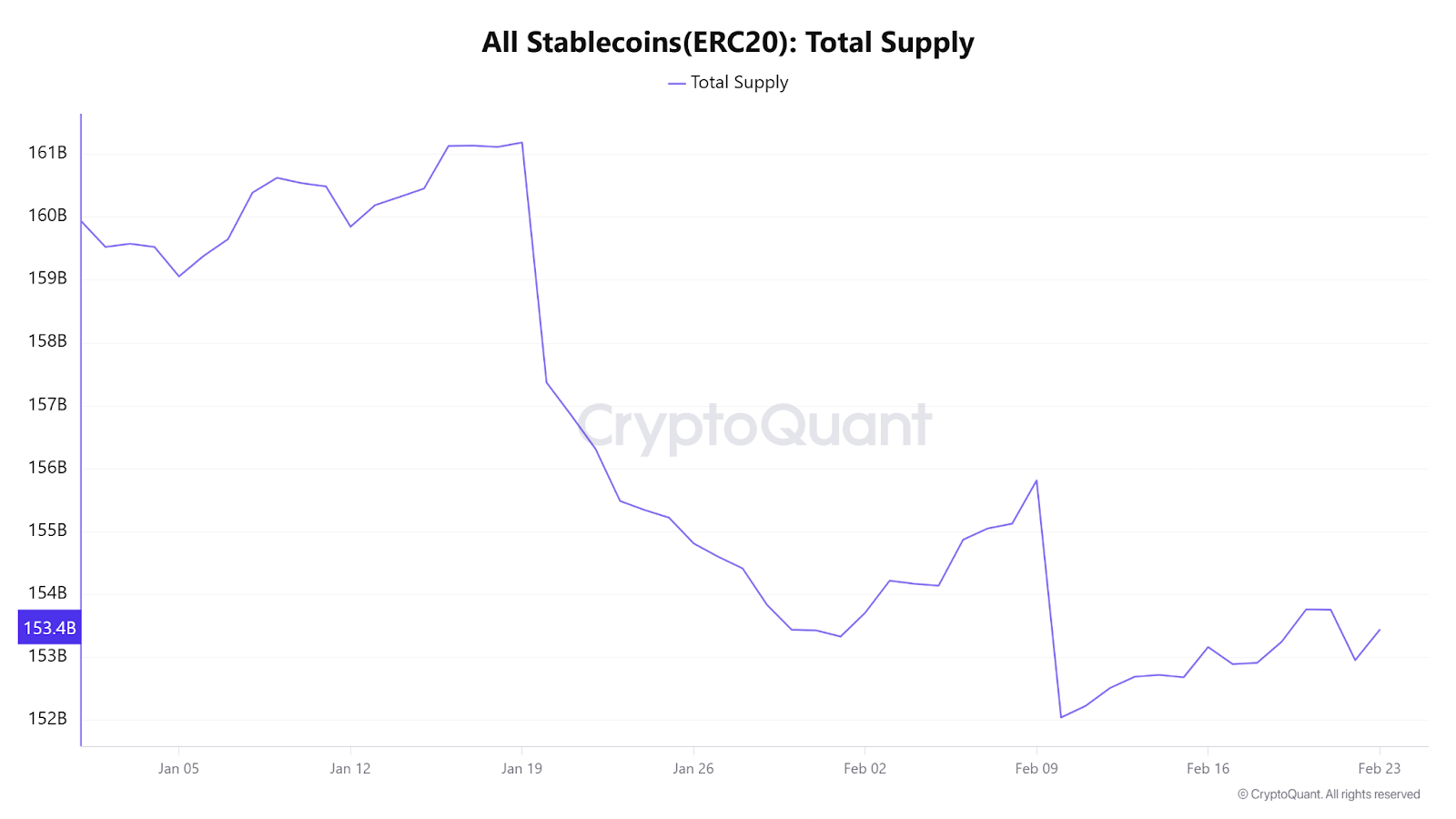
Shrinking crypto market liquidity is a concerning sign for crypto asset valuations, as investors gravitate towards safe-haven assets like precious metals amid growing global trade uncertainty.
The stagnating stablecoin supply is presenting a “notable headwind” for Bitcoin (BTC) and the broader crypto ecosystem, according to Matrixport. “Stablecoins serve as the primary liquidity rail within digital assets and stagnation in supply often signals that capital is being off-ramped back into fiat rather than redeployed within crypto markets,” said the digital asset platform in a Tuesday X post.
The stablecoin supply has fallen by $5.6 billion year-to-date, from $159 billion on Jan. 1, to $153.4 billon on Tuesday, according to analytics platform CryptoQuant. Stablecoin reserves on the leading crypto exchange, Binance, also shrank by 19% since November 2025, Cointelegraph reported earlier on Tuesday.

Bitcoin no longer trading like “digital gold,” says CryptoQuant CEO
Bitcoin also appears to be decoupling from gold in the short term. BTC’s 90-day Pearson correlation with gold has turned negative, falling near -0.75, according to analytics platform CryptoQuant.
The Pearson correlation measures how closely the returns of Bitcoin and gold move together at a given period, with a -1 marking a perfect negative correlation.
“Bitcoin is in a ‘not digital gold’ period,” said Ki Young Yu, the founder and CEO of CryptoQuant, in a Tuesday X post.

Tariff uncertainty, precious metal rotation are thinning crypto liquidity: analyst
The backdrop has been complicated by renewed tariff uncertainty. On Saturday, US President Donald Trump announced a global tariff plan that has fueled uncertainty, with a 10% rate taking effect while an increase to 15% has been discussed.
Related: Tether USDT supply set for biggest monthly decline since 2022 FTX collapse
The renewed geopolitical concerns are accelerating the crypto capital exodus towards precious metals, according to crypto exchange Bitget’s chief analyst, Ryan Lee.
The tariff fears are limiting the upside of digital assets, which are now competing with other defensive and growth assets, the analyst told Cointelegraph, adding:
“The ongoing slide in Bitcoin and Ethereum reflects a broader risk-off macro backdrop, where tariff uncertainty, geopolitical tensions, and capital rotation into precious metals and AI-linked equities have thinned crypto liquidity and weakened narratives.”
Crypto market upside will remain limited until “recovery catalysts” such as clearer US policy or more “constructive” Federal Reserve signals emerge on interest rate cuts, added Lee.
Related: Bitcoin treasuries log rare selling streak as BTC trades near $66K
The precious metal rotation is also visible in the charts, as gold and silver rose 19% and 21% year-to-date, respectively, while Bitcoin’s price fell by 27%, according to TradingView.

Tokenized real-world-assets (RWAs) are also showing signs of a rotation towards safe-haven assets, as Tehter Gold’s (XAUT) value rose 20% to $2.7 billion during the past 30 days, while holders increased by 33%, data from RWA.xyz shows.

The tokenized commodities market surpassed $6 billion on Feb. 11, logging an 53% increase in less than six weeks, as more gold investment moved on the blockchain.
Magazine: Bitcoin’s ‘biggest bull catalyst’ would be Saylor’s liquidation — Santiment founder

Russian authorities have opened a criminal case against Pavel Durov, the co‑founder and chief executive of Telegram, in what state media describe as an investigation into the alleged facilitation of terrorist activities. Rossiyskaya Gazeta, the official government newspaper, reported on February 24, 2026 that the Federal Security Service (FSB) is pursuing the case, with Kremlin spokesperson Dmitry Peskov confirming that the matter rests on materials produced by the FSB as part of its operational duties. The development marks a significant escalation in Russia’s ongoing scrutiny of Telegram, coming as state regulators previously tightened restrictions on the platform in early February. Telegram has not publicly responded to the reports by the time of publication, and attempts by media and Reuters could not secure an immediate comment from the company.
Key takeaways
- The case centers on allegations that Telegram facilitated terrorist activities, with the FSB providing the core evidentiary basis for investigators.
- Roskomnadzor, Russia’s communications watchdog, expanded and intensified restrictions on Telegram in early February, signaling a broader push to curb perceived extremist content on the platform.
- Telegram has reportedly refused to remove material flagged as extremist content, and authorities are considering whether the platform itself could be designated extremist, which would carry additional legal risks for users and the service.
- Analysts warn that a formal label of extremism could complicate or criminalize certain financial transactions on the platform, including payments for premium services and advertising, if such activity is deemed to facilitate prohibited activity.
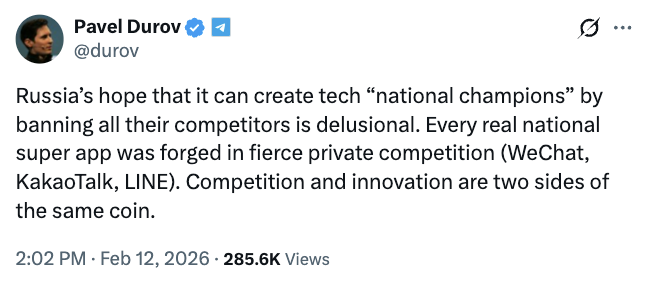
- Pavel Durov argues the pressure is a broader political maneuver aimed at steering users toward a state-backed messenger, MAX, and he has pointed to similar attempts in other countries, including Iran, where authorities have sought to restrict usage while many citizens continue to favor Telegram for privacy and free expression.
Market context: The case in Russia emerges amid a broader global tightening of regulation around encrypted messaging services and online content moderation. Regulators in multiple jurisdictions are weighing how to balance security concerns with privacy and freedom of expression, a dynamic that increasingly intersects with fintech and digital payments as platforms expand into financial services and commerce.
Why it matters
The investigation underscores the vulnerability of large messaging platforms to state demands for content control in environments where authorities maintain broad powers to regulate information flows. For Telegram users in Russia and abroad, the case raises questions about access, censorship, and the potential criminalization of routine platform use in the event of extremism labeling. While Telegram has built a reputation for privacy protections and opposition to state surveillance, governments exploring how to police content on messaging apps could reconfigure the operating risks for the service and its users. The tension also highlights how geopolitical friction can spill over into digital platforms that cross borders, complicating compliance for a service with a global user base.
Beyond the immediate regulatory landscape, the incident feeds into a longer-running debate about how tech platforms should be regulated when they serve as conduits for information, finance, and social organization. Durov’s public comments and the high-profile nature of the investigation may influence both user sentiment and the strategic choices Telegram makes as it navigates competing demands from regulators, advertisers, and users who prize a degree of privacy and uncensored communication. The ongoing scrutiny also has implications for developers, investors, and policymakers who watch how platforms respond to perceived security risks while balancing civil liberties on an increasingly complex digital stage.
From a geopolitical perspective, the Russian case sits at the intersection of domestic policy and international diplomacy. Durov has framed the pressure as part of a broader effort to promote a state-controlled alternative messenger, a theme that has resonances in other jurisdictions where authorities seek to shape the digital communications landscape. While Russia emphasizes extremism and national security, observers note that the outcomes could influence global norms around the governance of encrypted messaging apps, particularly for platforms that operate across a mosaic of regulatory regimes and market priorities.
What to watch next
- Any formal public statements from the FSB or Roskomnadzor outlining the charges, evidence, or procedural steps in the case against Durov.
- Developments in Russia’s regulatory stance toward Telegram, including whether the platform faces further restrictions or a potential extremism designation.
- Responses from Telegram regarding the investigation, including any new compliance measures or policy changes in Russia or elsewhere.
- Related legal actions or investigations in other countries, such as France, where Durov has faced inquiries, and any outcomes that could affect cross-border service provisions.
- Any changes in the global regulatory environment for encrypted messaging services and how those shifts could impact user access and platform opportunities in the crypto and digital payments space.
Sources & verification
- Rossiyskaya Gazeta report detailing the FSB-led criminal probe and referencing the Kremlin spokesperson’s confirmation.
- Statement attributed to Dmitry Peskov confirming the investigation and referencing FSB materials.
- Roskomnadzor’s reported tightening of Telegram restrictions in early February as covered by major Russian tech outlets.
- Public reporting on Telegram’s response or lack thereof, and coverage of Durov’s broader legal exposure, including investigations abroad.
Russian case against Durov sheds light on Telegram’s regulatory pressure
Russia’s latest move against Telegram places Pavel Durov at the center of a high-stakes intersection between digital freedom, security, and the state’s capacity to police online content. The FSB’s involvement signals a level of scrutiny that goes beyond routine regulatory complaints, elevating the Telegram platform into the realm of criminal investigations when linked to alleged facilitation of extremist activity. Rossiyskaya Gazeta’s reporting on February 24, 2026, describes a case that is being handled with the involvement of the country’s premier security institution, a development that could have lasting implications for both the platform’s operations in Russia and its reputation globally.
The Kremlin’s confirmation, via Dmitry Peskov, that the investigation rests on FSB materials, reinforces the perception that Moscow regards Telegram as a strategic communications channel with potential cross-border impact. While the exact charges remain undisclosed in public materials, the use of criminal procedures in this context signals a hardening stance toward platforms that resist state-directed content moderation. The case aligns with a broader push by Roskomnadzor to tighten the screws on messaging apps, particularly those with robust privacy features and the capacity to host large volumes of user-generated content outside centralized control.
Telegram’s stance has been consistently positioned as a defense of user privacy and a refusal to remove content that authorities deem extremist or harmful. This friction is illustrated by the ongoing tension surrounding content moderation, with Russian regulators insisting on compliance and the platform resisting what it views as overreach. The numbers cited by state-connected outlets—namely, that roughly 155,000 channels, chats, and bots have not been removed in response to local requests—underscore the scale of Telegram’s footprint in Russia and the challenge regulators face in enforcing content rules across a platform that migrates between jurisdictions and languages. The broader implication is that a potential extremism designation could alter Telegram’s business model, affect user access, and complicate any monetization strategy anchored to the platform’s freedom of use.
Industry observers have flagged that the extremism label could carry far-reaching consequences beyond speech restrictions. German Klimenko, a former adviser to the Russian president on internet policy, warned that such a designation could criminalize payments related to Telegram Premium subscriptions and advertising on the platform. This kind of impact would affect not just end users but also service providers and advertisers who rely on Telegram as a channel for outreach and revenue. The possibility of criminal penalties or significant legal exposure for seemingly routine activities signals a broader risk landscape for digital platforms operating in regulated environments where state interests are closely aligned with national security imperatives.
Durov has publicly framed the investigation as part of a broader strategy to push users toward a state-backed messenger known as MAX, a claim that dovetails with his long-standing emphasis on privacy and freedom of expression. He has drawn parallels with other jurisdictions, including Iran, where authorities have attempted to restrict access to messaging apps while users continue to rely on them. In a February post on his Telegram channel, Durov argued that restricting citizens’ freedom is not a legitimate response and reiterated Telegram’s mission to defend privacy and speech rights in the face of pressure. This framing places Telegram’s predicament within a broader debate about how states balance security concerns with civil liberties in the digital era.
The legal and political dynamics surrounding Durov’s case extend beyond Russia’s borders. Durov’s international exposure—captured in ongoing inquiries abroad and previously including an arrest in France in 2024 and a travel ban that was lifted in 2025—illustrates how actions in one jurisdiction can resonate across multiple regulatory environments. The French developments, though not resolved in the public sphere at the time, emphasize that Telegram’s legal and regulatory challenges are not confined to a single country. As regulators and lawmakers reassess the balance between security, privacy, and platform openness, Telegram’s approach to compliance and user protection will likely shape the trajectory of encrypted messaging apps in the coming years. In the Russian context, the FSB-backed investigation remains a focal point for observers seeking to gauge how far the state will go in policing online communications and what this means for services that operate globally but must navigate local laws.
XRP products gained ~$3.5m last week while crypto funds lost ~$288m.
Summary
- Crypto investment products saw ~$288m in weekly outflows, extending a five-week streak that has pulled about $4b from digital asset funds amid the lowest trading volumes since mid‑2025.
- BTC products lost ~$215m last week, taking YTD outflows to ~$1.3b, while ETH, TRX and multi‑asset products saw ~$36.5m, ~$18.9m and ~$32.5m exit respectively; short‑BTC vehicles drew ~$5.5m in fresh capital.
- XRP drew ~$3.5m of inflows on the week and ~$33.4m the week before, lifting month‑to‑date and YTD inflows to about $105m and $151m; SOL added ~$3.3m and LINK ~$1.2m over the same period.
XRP (XRP)-linked investment products attracted approximately $3.5 million in net capital inflows last week, even as broader cryptocurrency products experienced outflows totaling $288 million, according to the latest CoinShares weekly flow report.
The data marks the fifth consecutive week of net withdrawals from crypto investment vehicles, pushing cumulative outflows to approximately $4 billion over this period, the report stated. Trading volumes have declined to their lowest levels since July 2025.
The United States represented the largest source of global outflows, with investors withdrawing $347 million in a single week, according to the report. In contrast, Switzerland recorded $19.5 million in inflows, Canada added $16.8 million, and Germany attracted $16.2 million, totaling approximately $59 million in combined inflows.
Bitcoin-linked investment products recorded $215 million in outflows during the week, pushing year-to-date withdrawals to around $1.3 billion, the data showed. Ethereum-related products experienced $36.5 million in weekly outflows, while Tron-related products recorded $18.9 million in outflows and multi-asset products saw $32.5 million exit. Short-Bitcoin products attracted $5.5 million in inflows, according to CoinShares.
XRP remained among the few cryptocurrencies to attract new capital during the market pullback, drawing $3.5 million in fresh inflows last week and $33.4 million the week prior, the report stated. The token’s month-to-date inflows reached $105 million, with year-to-date inflows totaling $151 million.
Solana-linked products recorded inflows of $3.3 million last week, bringing its month-to-date total to approximately $41.6 million and its year-to-date figure to about $102.5 million, according to the data. Chainlink products attracted $1.2 million in inflows.
The divergence in flows suggests investors are reallocating capital within the cryptocurrency sector rather than exiting entirely, according to market analysts. XRP trades at a lower price point than Bitcoin, potentially lowering barriers to entry for some investors. The token has also benefited from regulatory clarity following legal proceedings, analysts noted.
Total crypto trading volume fell to its lowest level since mid-2025, reflecting reduced market participation, the CoinShares report indicated.
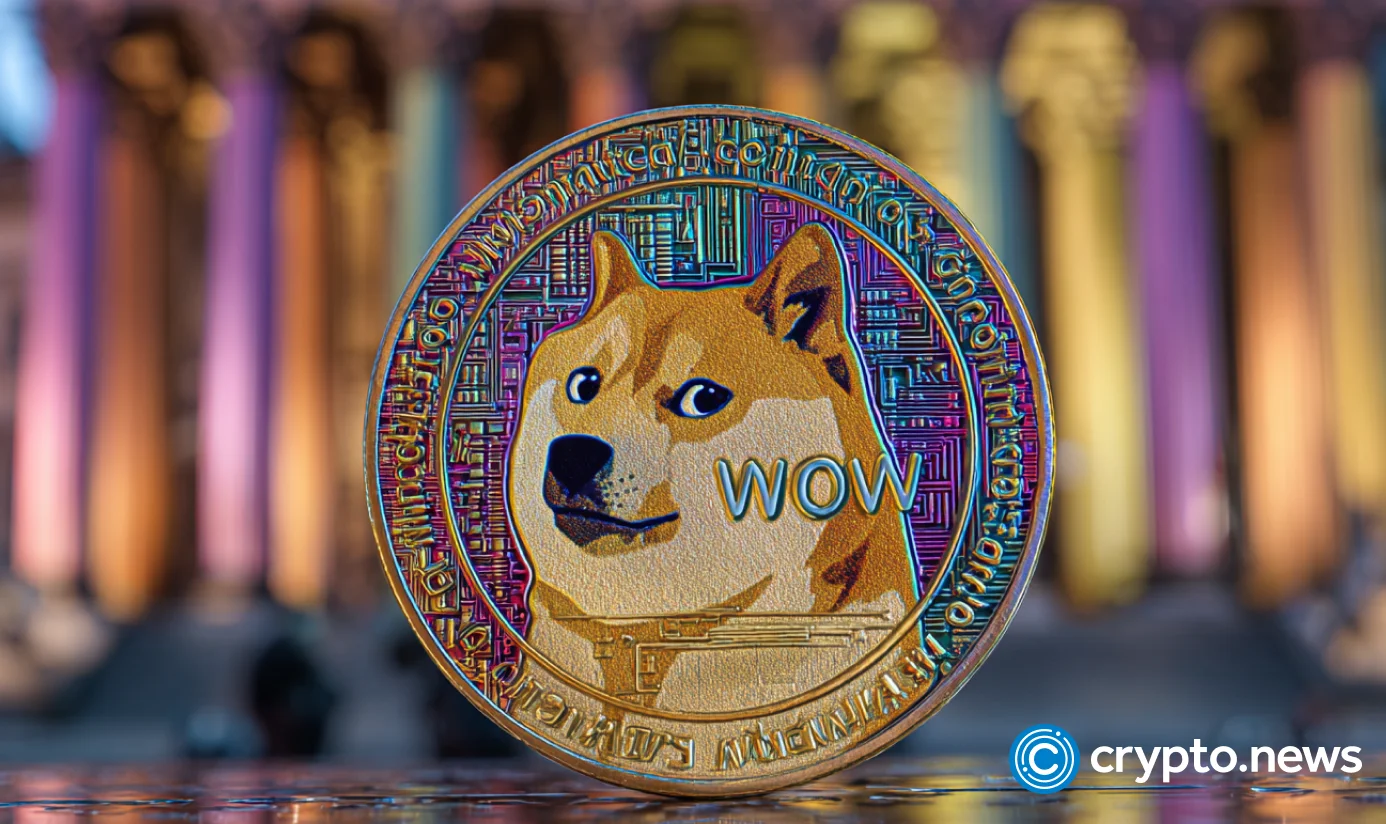
DOGE has slid below key weekly MAs, risking a drop toward $0.06 on weak volume and downside Bollinger pressure.
Summary
- DOGE trades below weekly 8 EMA, 34 EMA, 50 SMA and 200 SMA, keeping structure bearish until reclaimed.
- Price sits near the lower Bollinger Band with low volume, reinforcing downside risk toward the analyst’s $0.06 target.
- DOGE recently broke below the Oct. 10 crash low; next support aligns with the August 2024 bottom near prior weekly demand.
A cryptocurrency analyst has warned that Dogecoin (DOGE) could decline to $0.06, citing technical indicators that suggest continued downside pressure, according to a chart analysis posted on social media.
The analyst shared a weekly chart from TradingView showing the memecoin trading below multiple key moving averages on the Coinbase exchange, according to the post reviewed by NewsBTC.
The technical setup shows Dogecoin trading beneath the 8-period exponential moving average (EMA), 200-period simple moving average (SMA), 34-period EMA, and 50-period SMA, according to the chart. The positioning below these indicators suggests the weekly structure remains weak unless the price can reclaim those levels, the analyst stated.
Bollinger Bands displayed on the same chart place the asset closer to the lower band than the midline, consistent with downside pressure on the weekly timeframe, according to the analysis. The analyst’s $0.06 target would represent a move below the displayed lower Bollinger Band, framing the projection as a deeper continuation scenario.
The chart indicates continued low trading volume, with the price sliding after failing to hold higher levels visible earlier in the cycle, according to the data.
The token has fallen below the October 10 crash low, the chart shows. The next support level could be near a previous price point visited three weeks ago, which also marked the August 2024 bottom, according to the analysis.
The analyst’s thesis rests on the premise that the asset remains below near-term and medium-term trend references, with buyers needing to reclaim weekly indicator levels, starting with the EMA 8, to invalidate the bearish outlook.
Dogecoin, originally created as a satirical cryptocurrency, has experienced significant volatility throughout its trading history and remains one of the most widely traded memecoins by market capitalization.

TLDR:
- Bitcoin remains trapped in the $64K–$67K range, failing multiple attempts to breach $70K.
- Macro rotation favors commodities, gold, and industrials, pressuring high-beta assets.
- Crypto derivatives show weak conviction: low basis, rising put skew, declining open interest.
- Short-term recovery bids are absent; the market is defensive, and early positioning lacks institutional support.
Bitcoin continues to trade within a tight $64,000–$67,000 range, unable to reclaim the $70,000 level after a recent liquidation event.
Market analysts at Wintermute note that BTC is increasingly behaving like a high-beta growth asset, moving in line with some large-cap altcoins.
Institutional demand remains muted, derivatives signal weakening conviction, and the broader macro backdrop is undergoing what many now describe as a structural regime change heading into 2026.
Macro Forces Are Driving a Broader Market Rotation
For much of this cycle, individual catalysts—tariff headlines, Fed commentary, and earnings results—drove short-term market reactions.
That framework is now breaking down, according to Wintermute’s latest market update. Investors are beginning to price in deeper, slower-moving structural forces that cannot be resolved with a single policy pivot.
Two concurrent trades are reshaping the macro landscape. The AI rerate is compressing growth multiples as software moats face reassessment.
Meanwhile, deglobalization continues as the Trump administration signals tariffs are structural, not temporary.
These forces are eroding the valuation premium embedded in globally integrated, software-leveraged growth businesses.
As a result, gold, hard commodities, industrials, and defense are outperforming. Growth assets are being sold off, and Bitcoin sits directly in the path of that rotation.
The Federal Reserve remains paralyzed between sticky inflation and slowing growth. It cannot cut rates without risking inflation, and it cannot tighten without threatening growth. That paralysis is shaping the entire trade environment right now.
Crypto Derivatives Signal Weak Conviction as Selling Dominates Flow
Bitcoin has now failed the $70,000 level multiple times since the liquidation cascade two weeks ago. The absence of a recovery bid tells a clearer story than the range itself. Liquidity is thin, and price action lacks directional conviction throughout the week.
Ethereum also dipped below $1,900, a psychologically notable level for the market. However, Wintermute analysts point to $1,600 as the more technically relevant support zone for ETH to watch going forward.
Derivatives data paints a cautious picture across the board. Basis is sitting at multi-month lows, put skew is elevated and rising, and open interest has been declining since October.
These metrics confirm that institutional demand has not returned despite price stabilization seen at the earlier $85,000–$95,000 range.
On the trading desk, Wintermute reported that flow skewed heavily toward selling activity through the week. A brief midweek signal emerged when high-net-worth individuals stepped into select altcoins. That appetite faded quickly, however, leaving the market in a defensive posture.
The marginal activity remains protection-driven rather than conviction-driven, suggesting the market is not yet ready to reward early positioning in this environment.


Strategy (formerly MicroStrategy) founder Michael Saylor has piled up cash for over two years of dividend payments and claims that the company can survive a bitcoin (BTC) crash all the way to $8,000.
Although the company itself might survive that crash, common shareholders will actually lose every last theoretical claim to the company’s treasury below a BTC price of $20,094 — far higher than Strategy’s $8,000 corporate survival threshold.
Claims on Strategy’s BTC are, in actual fact, entirely theoretical.
Despite the company’s proud publication of metrics like BTC per share (BPS) or multiple-to-Net Asset Value (mNAV), its lawyers carefully disclaim that neither common nor preferred shareholders have any redemption right to Strategy’s treasury.
No publicly-traded Strategy stock confers any ownership interest in the BTC the company holds.
Nonetheless, MSTR shareholders often talk about BPS or mNAV as shorthand, colloquial valuation metrics for their shares.
To that end, with BTC down over 40% in just six months and crashing below $63,000 last night, it’s worth recalculating the value of MSTR, the common stock of the world’s largest BTC treasury company.
$16.672 billion in senior claims above MSTR
Today, there are $16.672 billion in senior claims above MSTR on Strategy’s capital stack: $8.214 billion in debt and $8.459 billion in preferred shares.
Although preferreds don’t mature, they’re senior to commons in the event of bankruptcy. The company must also make $896 million in annual interest and dividend payments, not to mention salaries, compliance obligations, legal expenses, and other costs to service real estate, equipment, and payables.
As assets for all of its series of stock outstanding, Strategy owns a small software business, 717,722 BTC, and $2.25 billion in cash, worth a combined $47.65 billion at a BTC price of $63,270.
This is excluding the small software business that was worth less than $1.8 billion for the three years prior to Strategy pivoting into becoming a BTC acquisition company.
If BTC were to fall below $20,094, bondholders and preferred shareholders would consume the entire value of the company’s BTC and USD treasuries, leaving no claim for MSTR beyond residual, pure call option-like premium on the hope that BTC might rally again.
Read more: 100% of Strategy’s convertible debt is now out-of-the-money
MSTR can wave goodbye to Strategy’s treasury below $20,094
At $20,094 per BTC, the value of Strategy’s 717,722 BTC and $2.25 billion would equal its convertible and preferred claims of $16.672 billion, leaving nothing for MSTR.
Perhaps the software business might cushion a few hundred dollars more per BTC, although it’s been declining in both top and bottom line performance for years.
In any case, the calculation as to what BTC level consumes the entire treasury above MSTR on Strategy’s capital stack is a revealing exercise in basic accounting. Although Strategy prefers its own, self-serving calculators and dashboards, alternative tools exist to recalculate those figures using more conservative assumptions.
Got a tip? Send us an email securely via Protos Leaks. For more informed news, follow us on X, Bluesky, and Google News, or subscribe to our YouTube channel.
Here are the possible reasons behind XRP’s daily correction to under $1.35 and what’s next.
The cryptocurrency market is in retreat once again as of the start of the current business week, with BTC dumping to a new local low of under $63,000. Most altcoins have followed suit, and Ripple’s cross-border token is no exception.
The broader ecosystem’s state, in which over $150 billion left the total market cap in 36 hours, is the most apparent reason behind XRP’s 4.5% correction to $1.33. However, there might be another one lurking.
ETFs See No Action
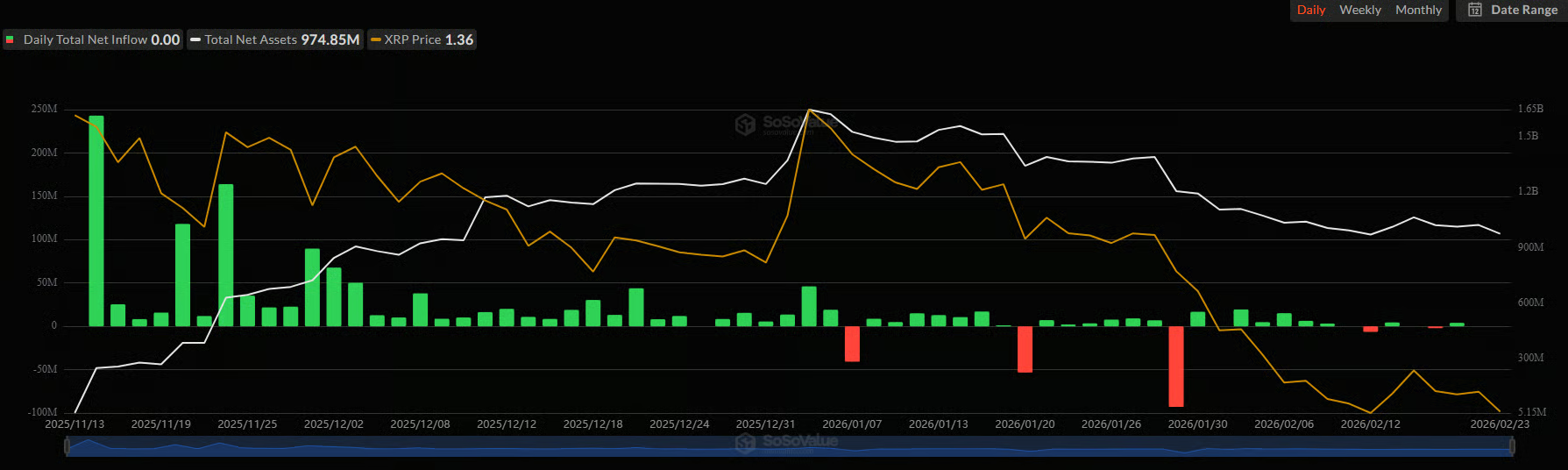
Data from SoSoValue shows that investors who opt to gain XRP exposure through the spot Ripple ETFs in the US have seemingly disappeared. Half of the trading days last week saw no reportable net inflows, and the streak continued on February 23.
As of now, three of the last five trading days have seen an emphatic “$0.00” next to the total daily net inflow number. Consequently, the cumulative net inflows since the first such product saw the light of day in mid-November have remained flat at $1.23 billion.
The current investor behavior is entirely different than the products’ initial days, in which they surpassed the $1 billion mark in precisely a month.
XRP Price Down but Not Out
As mentioned above, XRP has declined by over 4.5% in the past 24 hours. It’s also down 8% weekly and a whopping 30% monthly. As such, it currently fights to stay above $1.30, prompting prominent analyst CryptoWZRD to conclude that the asset had, as expected, closed bearish yesterday.
However, they explained that the XRP/BTC trading pair “printed bullish,” and predicted more gains for Ripple’s token against the market leader. This, in turn, would help XRP “turn bullish.”
You may also like:
Merlijn The Trading said yesterday that the cross-border token was “holding structure while alts bleed.” He outlined the significance of the $1.36 support, but the asset has since broken below it.
Nevertheless, he added that the more macro XRP behavior is different than what people expect, as it’s trading less than a speculative altcoin at this point. In fact, it shows more signs of an infrastructure token as it’s being supported by “real utility narratives.”
“We are talking about payments, tokenization, on-chain settlement rails, and growing real-world activity on XRP.”
XRP IS HOLDING STRUCTURE WHILE ALTS BLEED.
Support: $1.36
Range high: $1.60 (no breakout yet)This isn’t hype price action.
It’s infrastructure positioning:Payments
Tokenization
Settlement railsUtility takes time to price in.
Accumulation comes before expansion. pic.twitter.com/mGPffvRaG3— Merlijn The Trader (@MerlijnTrader) February 23, 2026
Binance Free $600 (CryptoPotato Exclusive): Use this link to register a new account and receive $600 exclusive welcome offer on Binance (full details).
LIMITED OFFER for CryptoPotato readers at Bybit: Use this link to register and open a $500 FREE position on any coin!

Disclosure: The views and opinions expressed here belong solely to the author and do not represent the views and opinions of crypto.news’ editorial.
While you read this piece, countless AI agents are furiously negotiating contracts, initiating payments, managing treasury functions, and accessing sensitive data. Their remit is expanding from advisory tools to autonomous economic actors at a frenetic pace, yet there is still no standardized way to prove who they are, what they are authorized to do, or who is accountable when something goes wrong.
Summary
- AI agents are becoming economic actors: Autonomous systems are already executing payments, reallocating capital, and managing treasury functions, but lack standardized identity and accountability.
- The identity gap is a systemic risk: API keys and cloud credentials weren’t built for autonomous decision-makers. Without verifiable onchain identity, trust in AI-driven finance will fracture.
- Blockchain as the trust layer: Verifiable, programmable agent identity (KYA) could anchor authorization, liability, and auditability — or centralized platforms will fill the void.
As AI agents begin to transact at scale, blockchain-based identity and authorization infrastructure will become a crucial trust layer for the digital economy, not an optional enhancement. This argument may not sit comfortably with everyone, as some folks in crypto argue that decentralized identity has failed to gain traction and that enterprises will default to centralized cloud credentials and private APIs. Others firmly believe AI agents remain experimental and years away from meaningful financial autonomy.
Both views underestimate how quickly autonomous systems are integrating into enterprise workflows and how unprepared the current infrastructure is to manage the associated risk. Centralized infrastructure is too slow to keep pace with the unprecedented speed of AI adoption, underscoring the crucial need for decentralized infrastructure to bridge the gap.
AI agents are becoming economic actors
According to Gartner, more than 40% of enterprise workflows will involve autonomous agents in 2026. This near-term projection reflects a shift already visible across fintech, supply chain management, and treasury operations, where AI systems are increasingly authorized to execute transactions rather than merely recommend them.
As tokenization initiatives expand across global banks and asset managers, AI agents are being positioned to rebalance portfolios, route payments, and optimize liquidity in real time. Consumer behavior signals a similar shift.
A recent YouGov study found that 42% of US consumers would allow an AI agent to purchase on their behalf if it ensured the lowest price. At the same time, research from Keyfactor shows that 86% of cybersecurity professionals believe autonomous systems should have unique, dynamic digital identities. While demand for AI-powered commerce is accelerating, trust frameworks remain inadequate.
The missing identity and accountability layer
The core problem is not intelligence but verification. As AI agents begin to manage treasury operations, process payroll, or transact on decentralized exchanges, there is still no standardized way to verify an agent’s identity, evaluate its risk profile, or assign accountability if it misallocates funds. Traditional API keys and static credentials were designed for software tools, not for autonomous systems capable of independent decision-making.
This gap is particularly acute in blockchain environments, where transactions are irreversible and pseudonymous by design. If an AI agent interacts with tokenized assets, executes trades across DeFi protocols, or manages stablecoin flows, counterparties need cryptographic assurance about the agent’s authority and constraints. Blockchain-based identity frameworks, anchored in verifiable credentials and programmable permissions, offer a path forward by allowing agents to prove who issued their mandate, what limits apply, and how liability is structured.
Skeptics may argue that embedding identity into onchain systems risks undermining decentralization or increasing regulatory oversight. Others will contend that centralized identity providers can solve the same problem more efficiently. Yet centralized credentials do not provide the transparency, portability, or composability required for agents operating across multiple blockchains and jurisdictions.
Tokenization and AI demand new infrastructure
As ever, institutional skepticism remains strong. Many executives still treat AI agents as experimental, even as adoption accelerates across payments, treasury, and procurement. The same institutions are aggressively pursuing tokenization of real-world assets, stablecoin settlement rails, and automated compliance systems. The infrastructure supporting tokenized securities and programmable money cannot rely on ad hoc identity models if autonomous agents are expected to manage billions in digital assets.
The convergence of AI and tokenization creates a new market structure in which machine-driven actors may outnumber human traders in certain domains. Without standardized KYA (Know Your Agent) frameworks — verifying an agent’s identity, who it acts for, and what it’s authorized to do — the result will be fragmented trust silos and increased systemic vulnerability. With them, a new class of verifiable, accountable AI agents could transact across decentralized networks with clearly defined permissions and audit trails.
Looking ahead, payment providers that fail to integrate verifiable AI identity risk being sidelined as autonomous commerce scales. DeFi protocols that embed agent-level permissions and dynamic credentials may attract institutional capital seeking compliance-compatible automation. Conversely, a major failure involving an unverified AI agent could trigger regulatory backlash that slows tokenization and autonomous finance for years.
The debate now confronting the industry is not whether AI agents will transact, but how they will be trusted when they do. Blockchain’s most durable contribution may not be speculative tokens or memecoin cycles, but the ability to anchor machine identity, authorization, and accountability in tamper-resistant infrastructure. As autonomous systems begin executing payments and reallocating capital at machine speed, trust cannot remain an afterthought.
The next phase will test whether code can also carry identity, mandate, and responsibility for non-human actors. If blockchain fails to provide that foundation, centralized platforms will fill the void. If it succeeds, decentralized networks could become the default trust layer for an economy increasingly powered by autonomous agents.

The overall cost of Web3 game development is rarely about the game itself. It is about the ecosystem behind it. The cost can typically range between $40,000 and $500,000+, depending on complexity, blockchain integration, NFT systems, multiplayer architecture, smart contracts, security requirements, and production quality. A practical Web3 game development cost breakdown is as follows:
- A simple Web3-enabled game can start around $40,000
- A competitive mid-scale Web3 game often lands between $150,000 and $300,000
- Large-scale, multiplayer, token-driven ecosystems frequently exceed $400,000 to $700,000+
However, these numbers are meaningless without understanding what is being built. The cost of Web3 games is usually determined by five structural layers:
- Game architecture
- Blockchain architecture
- Economic design
- Infrastructure scalability
- Security and compliance depth
Let us now dive deeper into understanding each layer and typically what percentage of cost it involves.
Detailed Web3 Game Development Cost Breakdown
Let’s break down cost drivers more specifically.
Layer 1: Gameplay & Core Game Architecture (20–30%)
Before blockchain enters the conversation, it is to be kept in mind that you are still building a game. Game development cost varies based on:
- Engine selection (Unity vs Unreal)
- Visual fidelity (2D vs stylized 3D vs high-end 3D)
- Gameplay complexity (casual loop vs real-time multiplayer combat)
- AI logic systems
- Cross-platform compatibility
A simple 2D Web3 game may require a small team of:
- 1–2 game developers
- 1 designer
- 1 UI/UX resource
A 3D multiplayer Web3 game may require:
- Gameplay engineers
- Network engineers
- Technical artists
- Environment artists
- QA specialists
This is exactly where the cost of Web3 game development tends to jump significantly.
Layer 2: Blockchain Integration Complexity & Smart Contract Development (20–35%)
Web3 is not a plug-in. It changes how data flows. Traditional games store the following on centralized servers:
- Inventory
- Rewards
- Points
- Assets
On the other hand, Web3 games must decide:
- What goes on-chain?
- What stays off-chain?
- How frequently transactions occur?
- Who pays gas fees?
- How are assets validated?
Every blockchain decision affects:
- Development time
- Infrastructure cost
- Transaction efficiency
- User experience
Smart contract development alone can range from $20,000 to $80,000, depending on:
- Token complexity
- NFT minting rules
- Staking mechanisms
- Vesting logic
- Governance integration
Security audits can add another $15,000 to $60,000, depending on the overall scope of the project. However, many tend to underestimate this layer entirely.
Layer 3: Tokenomics & Economic Engineering (10–20%)
This is where Web3 projects either survive or collapse. Tokenomics design includes:
- Emission rates
- Reward balancing
- Inflation control
- Sink mechanisms
- Marketplace fee structure
- Liquidity strategy
Designing a sustainable economy is not “whitepaper work.” It directly affects:
- Backend logic
- Reward distribution
- Smart contract rules
- Player retention
- Long-term viability
Improperly designed token systems destroy ecosystems quickly. Professional economic modeling often adds $10,000 to $40,000 to total project cost. However, skipping it can cost millions later.
Layer 4: Infrastructure & Scalability (15–25%)
Web3 games often operate with a hybrid architecture:
- On-chain asset ownership
- Off-chain game logic
- Cloud-based state management
- API layers connecting wallet systems
Infrastructure must handle:
- Concurrent users
- Real-time gameplay (if multiplayer)
- Transaction logging
- Fraud detection
- Analytics pipelines
Initial backend setup may cost $25,000 to $100,000, depending on the complexity involved. In addition to this, ongoing cloud costs can range from:
- $3,000/month for moderate usage
• $15,000+/month for large-scale operations
This is exactly where enterprise-grade projects differ from hobby builds.
Layer 5: Security & Fraud Prevention (10–20%)
Web3 games attract exploit attempts. Attack vectors include:
- Smart contract vulnerabilities
- Reward manipulation
- Wallet exploitation
- Bot farming
- Marketplace abuse
Security engineering includes:
- Smart contract testing
- Load testing
- Anti-bot systems
- Activity anomaly detection
- Secure wallet session management
Skipping serious security is one of the fastest ways to destroy trust and lose credibility.
Want the Best Quote for Your Next Web3 Game Development Project?
Web3 Game Development Cost by Project Scale
Tier 1: Web3 MVP (Startup-Level Build)
Estimated Cost: $40,000 – $80,000
This tier includes:
- Basic gameplay loop
- Simple NFT asset structure
- Wallet integration (MetaMask or similar)
- Basic smart contract for rewards
- Limited backend infrastructure
- Minimal multiplayer support
This build is ideal for:
- Concept validation
• Token pre-launch engagement
• Community building
• Early-stage Web3 startups
What it does not include:
- Advanced tokenomics modeling
- Complex PvP systems
- Real-time multiplayer scaling
- In-game marketplace with high liquidity
- Multi-chain integration
Most early-stage founders fall into this category.
Tier 2: Mid-Scale Web3 Game (Growth Stage)
Estimated Cost: $100,000 – $250,000
At this level, you’re building a scalable product. This includes:
- Advanced gameplay mechanics
- NFT minting and trading
- In-game marketplace
- Token reward logic
- Multiplayer features
- Backend cloud infrastructure
- Security testing
- Analytics dashboard
- Admin control panels
This is suitable for:
- Venture-backed startups
• Web3-native gaming studios
• Token-launch ecosystems
• Projects targeting 50K+ users
At this stage, blockchain development and backend engineering significantly impact the budget.
Tier 3: Enterprise / AAA Web3 Game
Estimated Cost: $300,000 – $500,000+
This includes:
- AAA-level graphics
- Unreal/Unity advanced rendering
- Complex multiplayer networking
- Cross-chain asset compatibility
- Advanced tokenomics & staking
- DAO governance integration
- Fraud prevention systems
- High-scale backend architecture
- Full smart contract auditing
- LiveOps infrastructure
This is not just a game; it’s a Web3 platform. This tier is typical for enterprises or well-funded Web3 projects.
Timeline Correlation with Cost
Web3 game development timelines typically look like:
- 3–4 months: Basic Web3 MVP
- 6–9 months: Scalable mid-tier game
- 9–15 months: Enterprise-grade ecosystem
Shorter timelines require larger teams. Larger teams increase short-term budget burn. Time compression always increases cost.
Ongoing Operational Costs
It is to be always kept in mind that only development is not the final expense. You can expect:
- Smart contract audit: $10,000 – $50,000
• Cloud hosting: $2,000 – $15,000 monthly
• Security monitoring
• LiveOps management
• Token economy balancing
Web3 games require continuous maintenance for flawless performance.
Should You Hire Web3 Game Developers In-House or Outsource?
If you try to hire Web3 game developers in-house, it involves:
- Higher fixed cost
- Long hiring cycles
- Web3 talent scarcity
On the other hand, outsourcing the task to a trusted Web3 game development company often provides:
- Faster deployment
- Cross-domain expertise
- Scalable team allocation
- Lower operational overhead
- Reduced recruitment risk
It is exactly the reason as to why many startups as well as enterprises prefer outsourcing.
The Real Risk Behind “Cheap Web3 Game Development”
Cheap Web3 builds usually mean:
- No smart contract audit
- Weak backend
- Poor token balancing
- Inadequate security
- Limited scalability
Initial savings often lead to:
- Token collapse
- Security breach
- User churn
- Rebuild costs
This, in turn, can ultimately lead to doubling total expenditure and hence not recommended.
So How Much Should You Budget?
If you are a:
- Startup founder
Minimum realistic serious Web3 game development budget can range between: $75,000 and $150,000. - Mid-scale company
The budget can lie anywhere between $150,000 and $300,000. - Enterprise-scale vision
For enterprise-level game development, where the vision is crafting a sustainable Web3 economy, the budget can range from $300,000 to $700,000+.
Why Choosing the Right Web3 Game Development Company Matters
Choosing solely based on lowest bid can result in increasing the long-term cost. Antier, a capable Web3 game development company ensures:
- Secure smart contracts
- Sustainable tokenomics
- Scalable infrastructure
- Audit readiness
- Optimized gas usage
- Long-term viability
Ultimately, it is the overall development quality that determines ecosystem survival.
Final Thoughts
If you want to understand how much does it cost to develop a Web3 game, the answer varies dramatically based on ambition and scale. A realistic starting budget can be something around $40,000 for MVP-level builds and can exceed half a million dollars for enterprise-grade ecosystems. The difference lies in:
- Blockchain architecture
• Multiplayer complexity
• NFT systems
• Security measures
• Infrastructure scalability
If your goal is long-term sustainability and ecosystem growth, structured engineering investment is non-negotiable. You need to understand that Web3 game development is not simply about adding NFTs or tokens to a game. It is about building:
- A functioning digital economy
- A secure blockchain architecture
- A scalable multiplayer environment
- A sustainable reward system
The cost reflects the complexity of these systems working together. Working with a reliable Web3 game development company helps you clearly understand where the money goes allows you to invest intelligently instead of underfunding critical layers.
Frequently Asked Questions
01. What is the typical cost range for Web3 game development?
The cost of Web3 game development typically ranges from $40,000 to over $500,000, depending on factors like complexity, blockchain integration, and production quality.
02. What are the main cost drivers in Web3 game development?
The main cost drivers include game architecture, blockchain integration complexity, economic design, infrastructure scalability, and security and compliance depth.
03. How does the complexity of a Web3 game affect its development cost?
The complexity of a Web3 game affects its development cost significantly, with simple games starting around $40,000, mid-scale games ranging from $150,000 to $300,000, and large-scale games often exceeding $400,000 to $700,000+.
Russian authorities have initiated a criminal investigation into Telegram co-founder and CEO Pavel Durov, according to state media reports.
Durov is being investigated in Russia as part of a criminal case involving allegations of facilitation of terrorist activities, official state publication Rossiyskaya Gazeta reported on Tuesday, citing the Federal Security Service (FSB).
Kremlin spokesman Dmitry Peskov reportedly confirmed the investigation, saying the news reports were based on materials from the FSB, which was “carrying out its functions.”
The latest news adds to an ongoing pressure campaign against Telegram in Russia since state media regulator Roskomnadzor tightened messenger restrictions in early February.
Telegram had not responded to the reports by the time of publication. Cointelegraph contacted Telegram for comment but did not immediately receive a response.
Telegram refuses to cooperate with Russian authorities
The reported investigation builds on Telegram’s refusal to comply with Roskomnadzor’s demands to remove what it said was extremist-linked content.
According to the state-linked Komsomolskaya Pravda, Telegram has not removed almost 155,000 channels, chats and bots flagged for illegal or harmful content locally.
The largest categories include 104,093 channels containing false information, 10,598 promoting extremism, 4,168 justifying extremist activity and 3,771 related to drugs.
The investigation could lead to the entire platform being labeled as extremist, former Russian presidential internet adviser German Klimenko reportedly warned. He said that could criminalize payments for Telegram Premium subscriptions and advertising on the platform.
Durov accuses Russia of attacking Telegram to promote state-owned messenger
Durov has previously said the pressure is aimed at steering users toward a new state-backed messenger called MAX.

He added that other countries, including Iran, have attempted similar strategies and failed. “Despite the ban, most Iranians still use Telegram and prefer it to surveilled apps,” Durov wrote on his Telegram channel on Feb. 10.
“Restricting citizens’ freedom is never the right answer. Telegram stands for freedom of speech and privacy, no matter the pressure,” Durov added.
Related: TON Pay aims to turn Telegram into a crypto checkout layer for TON
The Russian investigation comes as Durov remains under scrutiny abroad. Durov is also part of an ongoing inquiry in France since his arrest in August 2024.
French authorities lifted Durov’s travel ban in November 2025 after previously saying he could face up to 10 years in prison.
Magazine: How crypto laws changed in 2025 — and how they’ll change in 2026

CryptoQuant Says Bitcoin Is In A ‘Not Digital Gold’ Period

PSG defender Achraf Hakimi ordered to stand trial after being accused of rape

Firefox 148 Now Available With The New AI Controls, AI Kill Switches


-

 Video4 days ago
XRP News: XRP Just Entered a New Phase (Almost Nobody Noticed)
-

 Fashion4 days ago
Weekend Open Thread: Boden – Corporette.com
-

 Politics2 days ago
Baftas 2026: Awards Nominations, Presenters And Performers
-

 Sports18 hours ago
Women’s college basketball rankings: Iowa reenters top 10, Auriemma makes history
-

 Politics19 hours ago
Nick Reiner Enters Plea In Deaths Of Parents Rob And Michele
-

 Business7 days ago
Infosys Limited (INFY) Discusses Tech Transitions and the Unique Aspects of the AI Era Transcript
-

 Entertainment6 days ago
Kunal Nayyar’s Secret Acts Of Kindness Sparks Online Discussion
-

 Tech6 days ago
Retro Rover: LT6502 Laptop Packs 8-Bit Power On The Go
-
 Sports5 days ago
Clearing the boundary, crossing into history: J&K end 67-year wait, enter maiden Ranji Trophy final | Cricket News
-

 Business2 days ago
Mattel’s American Girl brand turns 40, dolls enter a new era
-

 Crypto World5 hours ago
XRP price enters “dead zone” as Binance leverage hits lows
-

 Business2 days ago
Law enforcement kills armed man seeking to enter Trump’s Mar-a-Lago resort, officials say
-

 Entertainment6 days ago
Dolores Catania Blasts Rob Rausch For Turning On ‘Housewives’ On ‘Traitors’
-

 Business6 days ago
Tesla avoids California suspension after ending ‘autopilot’ marketing
-
 NewsBeat1 day ago
‘Hourly’ method from gastroenterologist ‘helps reduce air travel bloating’
-

 Tech2 days ago
Anthropic-Backed Group Enters NY-12 AI PAC Fight
-

 NewsBeat2 days ago
Armed man killed after entering secure perimeter of Mar-a-Lago, Secret Service says
-

 Politics2 days ago
Maine has a long track record of electing moderates. Enter Graham Platner.
-

 Crypto World6 days ago
WLFI Crypto Surges Toward $0.12 as Whale Buys $2.75M Before Trump-Linked Forum
-

 Crypto World5 days ago
83% of Altcoins Enter Bear Trend as Liquidity Crunch Tightens Grip on Crypto Market