

Crypto World
Netflix director sentenced for blowing sci-fi series funds on dogecoin



Carl Rinsch, the director of 47 Ronin, has been sentenced to 30 months in prison after taking $11 million from Netflix, intended to fund the production of his sci-fi series White Horse, and blowing it on luxury goods and investments in dogecoin.
Rinsch was reportedly handed the lenient sentence on Monday after Judge Jed Rakoff heard statements from the likes of Keanu Reeves, and others who knew Rinsch, attesting to his poor mental health and good character.
He was convicted of wire fraud in December 2025 after he misappropriated the millions Netflix gave him in 2020, during the COVID-19 pandemic, to help finish his series that had already cost $44 million.
Rinsch moved the funds to personal brokerage accounts and lost most of it betting on COVID-related market trades. He was eventually left with $4 million and decided to spend it all on dogecoin.
The move sort of paid off, and he managed to make $27 million from the investment. Rinsch later thanked a Kraken online chat representative, telling them, “god bless crypto.”
He then reportedly bought five Rolls-Royces, a Ferrari, luxury watches, designer clothes, and spent millions on high-end furniture, including mattresses and antiques.
Read more: Bitcoiner claims he crashed 70% of Dogecoin network with an old laptop
Rinsch claimed the purchases were for the show and then tried to sue Netflix for another $14 million that he said was contractually his. Netflix beat this case in an arbitration ruling.
Six preliminary episodes of the show were made by Rinsch, partly with his own money, before Netflix agreed to invest.
Judge showed leniency despite dogecoin trades
The prosecution argued that Rinsch should receive a 60-month sentence instead. They claimed he had a “disdain for the law” and had “doomed” the production of White Horse with his spending that ultimately harmed the careers of its cast and crew.
Rinsch’s defence argued that during production he suffered mental health issues and that his doctor “was not doing what he was supposed to be doing.”
Indeed, Rakoff agreed that Rolls-Royce purchases were evidence of “someone who has a manic state of mind beyond simple greed.”
In Reeve’s submitted evidence, he wrote, “I believe circumstances arose where his mental health was compromised by misuse of medications and perhaps other issues, which amplified the acts of his self-sabotage and grandiosity, impacting his relationships, work, and ability to complete [the production].”
Rinsch claimed, “I failed to recognize the danger of the condition I was in,” adding, “I failed to seek help. I accept responsibility.”
Rakoff ordered Rinsch to pay Netflix $11 million in restitution, attend a mental health program, and refrain from taking drugs.
The judge reportedly joked, “I don’t recommend to him that he keep investing in cryptocurrency,” adding that “It’s just a market for gambling.”
Got a tip? Send us an email securely via Protos Leaks. For more informed news and investigations, follow us on X, Bluesky, and Google News, or subscribe to our YouTube channel.

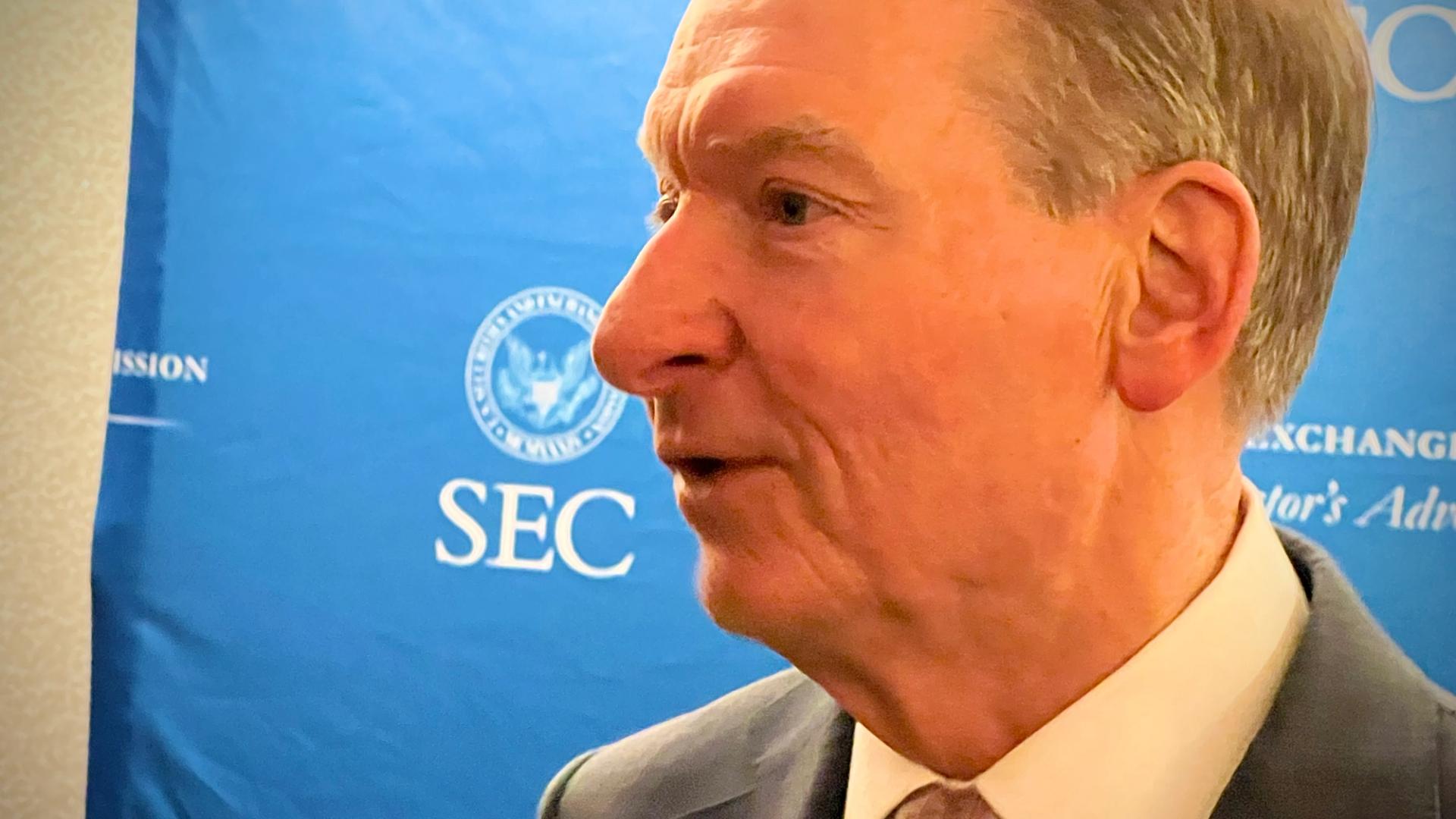
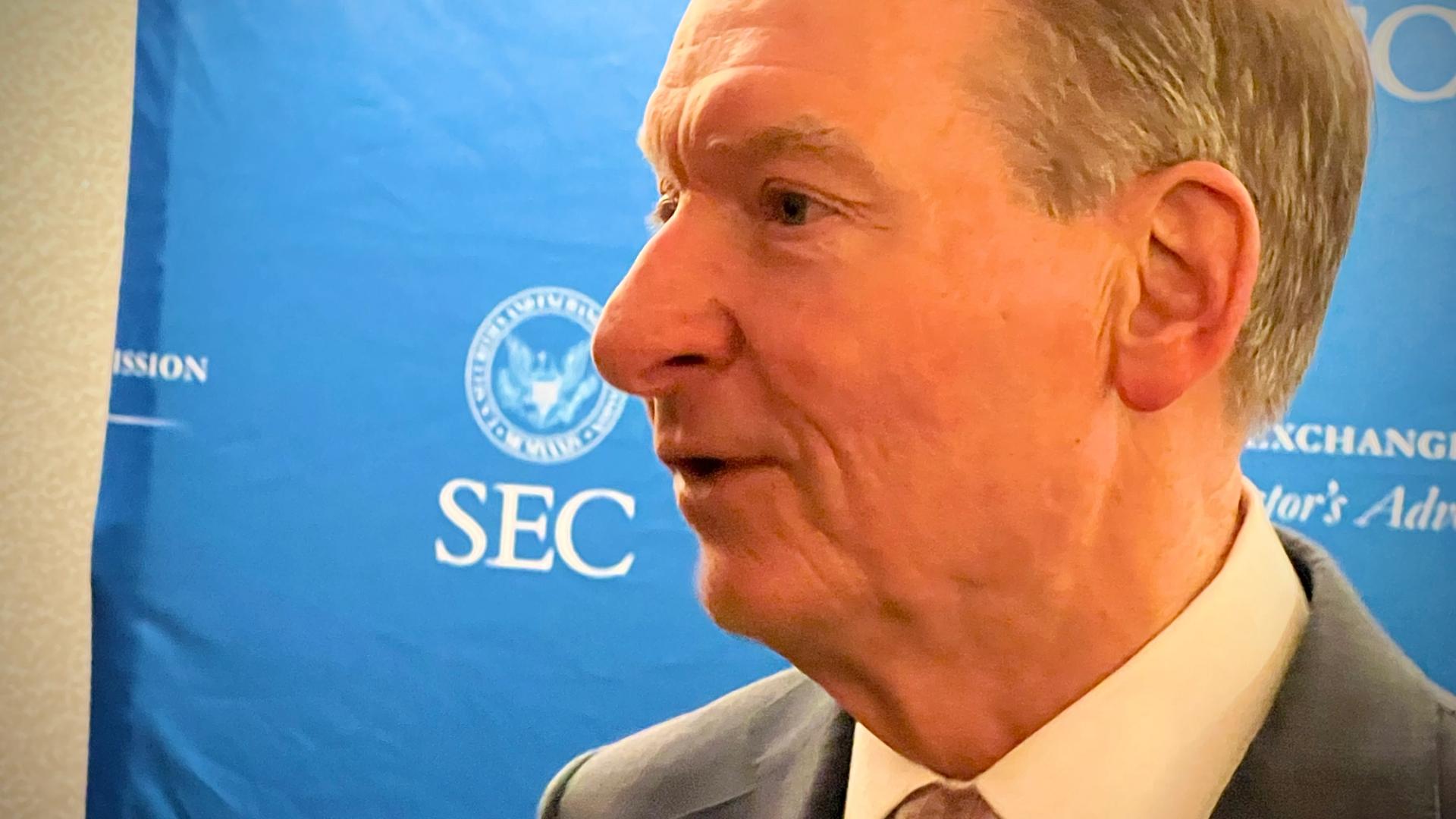
The current process allows ETFs that meet certain conditions to jump into the markets without requiring a complicated request for exemption from the regulator, and that approach has seen an explosive growth from $4 trillion in 2019 to $12 trillion in 2025.
“It is designed to build a record that could be used to justify policy changes in the future that would permit ETFs focused on a broader universe of assets,” said TD Cowen policy analyst Jaret Seiberg, in a note to clients. He said the broader range of ETFs could include “those based on event contracts, crypto assets and single-stock strategies.”
Atkins’ SEC has made it a priority to embrace new technologies, especially cryptocurrency, for which it’s working on major policies to allow for such innovations as tokenization of securities. In the meantime, its ETF stance may also get a rewrite.
“Market participants have raised questions regarding whether novel ETFs with a principal investment strategy to invest in assets that are not securities under the Investment Company Act are investment companies,” according to the SEC’s request, which posed a number of questions on that point. It also asked questions about the time period in which ETFs become effective and what must be disclosed during this process.
Crypto World
Cleveland Fed President Hammack says AI could fuel inflation, rate hikes may be necessary
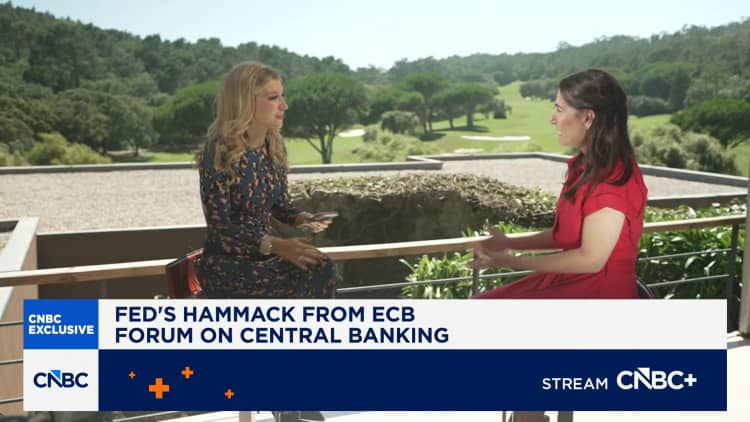

Cleveland Federal Reserve President Beth Hammack said Tuesday that “insatiable” demand for artificial intelligence infrastructure could be a source for inflation.
Should that and other pressures continue to keep prices elevated, that could drive the need for higher benchmark interest rates, the central bank policymaker said in a CNBC interview.
“We’ve got inflation that’s too high, and it’s been too high for the past five years,” Hammack told CNBC’s Sara Eisen on the sidelines of the European Central Bank Conference in Sintra, Portugal. “When I look at policy, if that continues, it may mean that we need higher interest rates to bring inflation back down to target.”
Hammack honed in on AI spending, particularly citing a manufacturer in her district involved in electric switching for data centers.
“What they say is that the demand is insatiable, that these companies — these hyper scalers — will pay almost any price for those inputs, and they need things built yesterday,” she said. “When I look broadly, particularly around large companies, I’m not seeing a lot of restraint in the economy. I’m not hearing from these businesses that interest rates or credit spreads are a reason why they’re holding back from investment and growth.”
Federal Reserve Bank of Cleveland president and CEO, Beth Hammack speaking with CNBC from Sintra, Portugal on June 30th, 2026.
CNBC
Hammack did couch her outlook, saying “the could be impacts in both directions.”
The notion that AI could be fueling inflation runs against a key assertion from Fed Chairman Kevin Warsh, who believes that productivity gains from the technology will decrease the cost of labor and ultimately prove to be disinflationary.
At the same time, Warsh, in his first news conference as head of the central bank, expressed firm commitment to bringing down inflation, something Hammack also emphasized.
“If inflation continues to persist at these elevated levels and I don’t see any restraint from policy, we may need to raise rates to bring that policy restraint in and to bring inflation back down,” she said.
Hammack is a voting participant this year on the rate-setting Federal Open Market Committee. The panel earlier this month voted again to keep its key overnight interest rate steady but penciled in a quarter percentage point increase this year, consistent with market expectations.
Crypto World
Open Standard Unveils Open USD, a Bank- and Tech-Backed Stablecoin Governed by Its Users


A consortium of more than 140 financial and technology companies introduced Open USD on Tuesday, a dollar stablecoin whose reserve earnings and governance are designed to flow to the businesses that adopt it rather than to a single issuer. The token, ticker OUSD, will be operated by Open Standard,… Read the full story at The Defiant

Key Takeaways
- D-Wave Quantum has received $1.6 million in funding from the National Science Foundation via its National Quantum Virtual Laboratory initiative.
- The grant backs D-Wave’s participation in ERASE, a research initiative developing fault-tolerant quantum computing capabilities.
- Over 24 organizations, including IonQ, Nvidia, and Quantinuum, participate in NSF-supported quantum computing programs.
- QBTS shares have declined 8.9% year-to-date in 2026 following a 211% surge in 2025, contrasting with competitors IonQ and Rigetti’s trajectories.
- The company is expanding its technology portfolio to include gate-model computing beyond its core quantum annealing platform.
D-Wave Quantum has secured new federal financial backing. On Tuesday, the quantum computing firm revealed it won a $1.6 million grant from the National Science Foundation.
The funding originates from the NSF’s National Quantum Virtual Laboratory initiative. This collaborative framework connects academic researchers, private sector participants, and federal entities to advance quantum technology toward commercial viability.
D-Wave’s allocation supports its involvement in ERASE—an acronym for Erasure Qubits and Dynamic Circuits for Quantum Advantage.
The ERASE initiative concentrates on creating core infrastructure for fault-tolerant quantum systems. It earned selection as one of six pilot programs the NSF designated over twelve months ago.
The NSF committed an additional $4 million to the project last week, advancing it into its subsequent development stage. Simultaneously, the agency designated five research groups to engineer experimental quantum networking infrastructure.
Quantum networking represents a critical frontier for the sector. Industry experts consider it essential infrastructure for an eventual quantum-enabled internet.
An Expansive Consortium of Industry Players
D-Wave operates within a broader collaborative ecosystem. More than two dozen corporations have joined these NSF-supported programs to accelerate technology maturation.
Notable participants include IonQ, Nvidia, and Quantinuum—backed by Honeywell and recently completing its public market debut this month. Federal support extends broadly throughout the quantum computing sector, benefiting multiple competitors.
This marks another milestone in D-Wave’s federal engagement. Last May, the Commerce Department selected the company for an initiative where quantum firms traded equity positions for government capital.
Most recently, President Trump issued two executive directives aimed at accelerating quantum system deployment. One directive targets delivery of a research-capable quantum computer by 2028. The companion order establishes a 2031 timeline for complete government transition to post-quantum cryptographic standards.
Share Price Movement Contradicts Federal Support
The context around this announcement matters significantly. D-Wave is currently transitioning toward gate-model quantum computing architectures, diverging from the quantum annealing methodology that established its market position.
QBTS shares have experienced headwinds in 2026, declining 8.9% after posting gains exceeding 200% throughout 2025. By comparison, IonQ has advanced 20% this year, while Rigetti Computing has retreated 12%.
D-Wave dominated 2025 performance metrics with a 211% appreciation versus IonQ’s modest 7.4% increase and Rigetti’s approximately 45% climb. This exceptional 2025 performance left limited upside momentum entering 2026.
IonQ’s stronger 2026 showing reflects evolving investor sentiment toward quantum stocks. Market participants increasingly differentiate companies demonstrating tangible revenue expansion from those trading primarily on future potential.
D-Wave’s most recent quarterly revenue contracted 81% on a year-over-year basis. CEO Alan Baratz has acknowledged results will remain “lumpy” due to the irregular timing of complete system transactions.
However, bookings momentum has strengthened, which management highlights as evidence of expanding long-term order commitments. During its recent investor presentation, D-Wave leadership indicated system sales were beginning to contribute more substantially to consolidated growth, complementing stable revenue from its quantum-computing-as-a-service platform.
D-Wave CEO Alan Baratz addressed the grant award directly. “NSF’s continued support for the ERASE project highlights the national importance of accelerating progress toward scalable, fault-tolerant quantum computing,” he stated, noting that D-Wave’s dual-rail technology architecture could contribute significantly to these objectives.



BlackRock, Coinbase, Ripple, Mastercard, and more than a dozen financial firms have partnered to launch OUSD, a new stablecoin that distributes reserve earnings to participating institutions through a shared governance model.
Summary
- BlackRock, Coinbase, Ripple, Mastercard, and other firms will launch the revenue-sharing OUSD stablecoin.
- OUSD offers zero-fee minting and redemption while distributing reserve income to participating partners.
- The stablecoin will debut on Solana and Tempo with shared governance led by institutional members.
Open Standard announced that OUSD is scheduled to launch later this year, introducing a stablecoin framework that allows partner institutions to mint and redeem tokens without fees while sharing income generated from the underlying reserves.
The organization said participating firms will also take part in governing the network through a joint board rather than relying on a single issuer.
OUSD introduces shared governance and reserve revenue model
According to Open Standard, the project was created to address several long-standing issues businesses face when using stablecoins. The organization said many existing products charge high fees for large-scale minting and redemption, while companies using those stablecoins often receive none of the income generated by the reserve assets backing them.
Under the proposed structure, Open Standard said partners will be able to mint and redeem OUSD without artificial volume limits or transaction fees. Reserve income will be distributed among participating organizations after deducting a small management fee intended to cover operational expenses.
Governance will also be handled collectively. Open Standard said its board will include representatives from participating firms, allowing members to make decisions jointly on matters affecting the stablecoin rather than leaving development and policy entirely to a single issuer.
The consortium includes BlackRock, Coinbase, Ripple, Mastercard and several other financial and technology companies. OUSD is expected to launch natively on layer-1 blockchains including Solana and Tempo later this year. Solana has already confirmed native support from day one, highlighting the stablecoin’s decentralized governance model alongside its zero-fee minting and redemption process.
Institutional stablecoin activity continues to expand
The announcement follows another recent collaboration involving several of the same companies.
As crypto.news previously reported, Ripple and Coinbase recently backed Mastercard’s artificial intelligence-powered payment system, which is designed to use stablecoins for AI agent transactions.
Ripple has also continued adding institutional financial infrastructure to the XRP Ledger. As crypto.news reported, the company has proposed a lending protocol that would allow financial institutions to borrow digital assets without selling their holdings.
Ripple said the protocol is intended to support lending markets for tokenized U.S. Treasuries, money market funds, stablecoins, commodities, private credit and other real-world assets while addressing what it considers a missing layer of blockchain-based financial infrastructure.
Industry participants involved in OUSD described the initiative as a practical step for institutional adoption.
Samara Cohen, BlackRock’s Global Head of Market Development, said the company believes stablecoins can play an important role in digital markets when supported by trusted infrastructure and practical utility.
“Open USD is a constructive step toward giving businesses more choice in how they access tokenized value and participate in internet native digital rails.”
Coinbase Chief Business Officer Shan Aggarwal said stablecoins remain one of the most important developments in payments, adding that stronger shared infrastructure can help narrow the gap between today’s payment systems and the capabilities blockchain technology can offer.
If launched as planned, OUSD will enter an increasingly competitive institutional stablecoin market where issuers are moving beyond payments and settlement to offer governance participation, tokenized asset support and revenue-sharing models designed for large financial institutions.
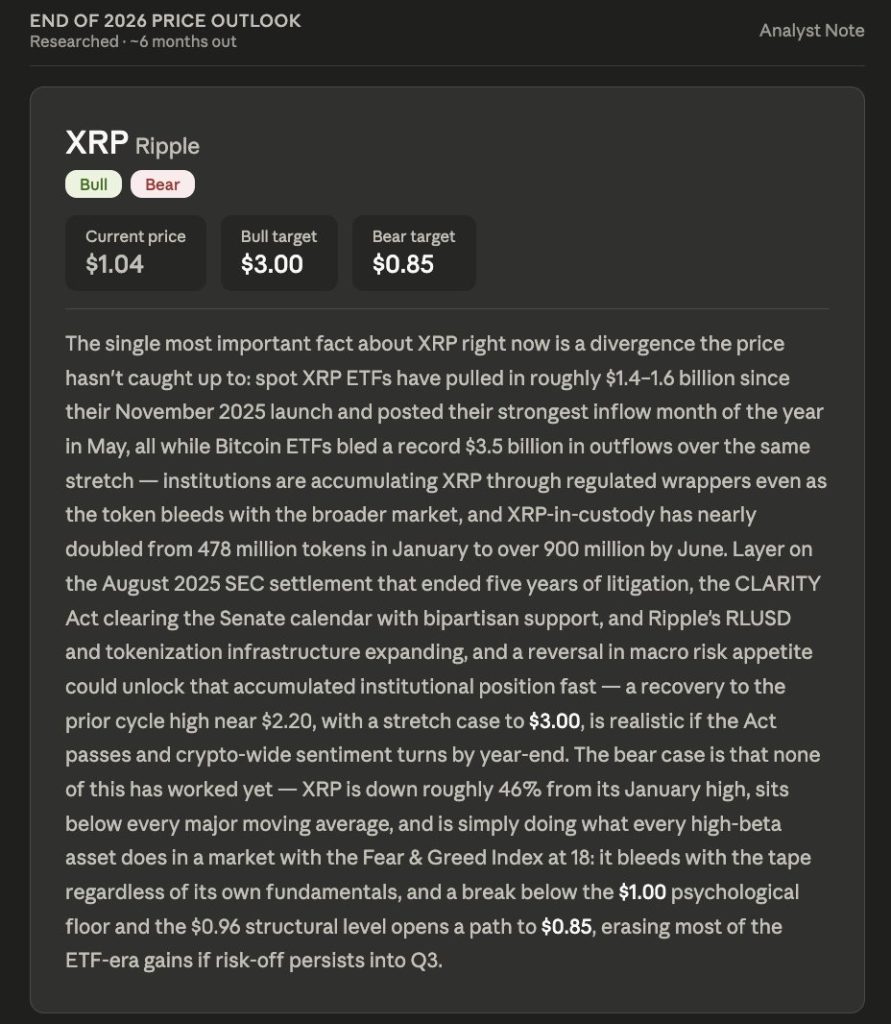
Claude AI Opus 4.8 just zeroed in on a divergence between price action and institutional behavior that most people watching XRP price prediction have completely missed. The model predicts a bull target of $3.00, with a more grounded recovery case sitting near $2.20.
The bull case rests on one core fact that XRP price simply has not caught up to yet. Spot XRP ETFs have pulled in roughly $1.4 to $1.6 billion since their November 2025 launch, and they actually posted their strongest inflow month of the entire year in May, all while bitcoin ETFs were bleeding a record $3.5 billion in outflows over that same stretch.
That kind of divergence matters because it shows institutions are accumulating XRP through regulated wrappers even as the token bleeds alongside the broader market.
XRP price in custody has nearly doubled too, climbing from 478 million tokens in January to over 900 million by June, which is real on chain evidence of accumulation rather than just a headline number.

Layer on top of that the August 2025 SEC settlement that ended five years of litigation, the CLARITY Act clearing the Senate calendar with bipartisan support, and Ripple’s RLUSD and tokenization infrastructure continuing to expand, and you get a fundamental backdrop that looks far stronger than the price chart suggests.
If macro risk appetite reverses, the model sees that accumulated institutional position unlocking fast, with a recovery to the prior cycle high near $2.20 being realistic, and a stretch case toward $3.00 if the Act actually passes and crypto wide sentiment turns more broadly bullish by year end.
The bear case is blunt about where things actually stand today. None of this has worked yet. XRP is down roughly 46% from its January high, sits below every major moving average, and is simply doing what every high beta asset does in a market with the Fear and Greed Index sitting at just 18, meaning it bleeds with the broader tape regardless of its own underlying fundamentals.
A break below the $1.00 psychological floor and the $0.96 structural level beneath it opens a path straight to $0.85, which would erase most of the gains built up during the entire ETF era if risk off conditions persist into the third quarter.

XRP Price Prediction: XRP Sits On A Pile Of Institutional Buying The Chart Refuses To Show
The daily chart shows XRP at $1.04718 after a long, grinding decline from highs above $3.65 set back in July of last year. That slide has been almost uninterrupted, with the steepest leg coming in October when price collapsed from the $2.70 zone down through $1.60 within a matter of weeks.
Since February, price has mostly drifted lower in a series of smaller steps, currently sitting right at the exact $1.00 psychological floor called out as the critical level in this prediction.
That kind of test right at a major round number after such a long downtrend usually marks a real decision point rather than just another stop along the way.
Resistance sits first near $1.40, the level price has failed to reclaim during recent bounce attempts, then a much heavier ceiling near $2.20, which lines up directly with the prior cycle high mentioned as the realistic recovery target.
Support holds right around the current $1.00 to $1.03 zone, with the $0.96 structural level sitting just beneath as the next real test if this floor gives way.
The broader pattern here is a clean series of lower highs and lower lows stretching back nearly a full year, which fits the bear case description of a high beta asset simply bleeding with a weak overall market.
Momentum on the daily candles looks weak and still leaning lower, without much evidence yet of the kind of basing action that typically shows up before a real reversal.
Given how directly current price sits on top of the exact floor named in this prediction, the next move through $1.00 looks like the moment that decides whether this divergence between institutional buying and price finally starts to close.
Don’t Miss Out on Our $1,000 USDT Airdrop on ByBit
Discover: The best crypto to diversify your portfolio with
Here is What Claude AI Predicts For LiquidChain Near Future, Very Bullish
Sitting at resistance is not a strategy. It is a queue.
Bitcoin, Ethereum, and XRP are stuck under the same ceilings. The catalyst is always one print away. The inflows are always next quarter.
Small cap infrastructure plays by different rules. Capital that is noise at Bitcoin’s scale can reshape an undiscovered project entirely. The real asymmetry lives in the gap between what something is worth and what the market has priced it at. That gap closes the moment it gets found.
Cross-chain fragmentation has taxed DeFi since the first bridge launched. Bitcoin, Ethereum, and Solana grew up disconnected. Every transaction crossing those lines pays in fees, slippage, and failures. Bridges were supposed to fix it. They became the toll booth instead.
LiquidChain removes the toll. All 3 networks inside one execution layer. One deployment reaches everywhere. No cross-chain fee, anywhere.
Claude AI flagged it as worth watching. The presale sits at $0.01454 with just over $860,000 raised.
Execution is unproven. Adoption is unknown. Established assets offer a calmer climb toward a ceiling everyone can already see. LiquidChain stays an opportunity only as long as it stays unnoticed.
The post Claude AI Opus Predicts Stunning XRP Price by End of 2026 appeared first on Cryptonews.
Stablecoins are moving quickly from “crypto rails” toward mainstream corporate payment tools, according to a new survey from payments infrastructure firm Cybrid. The report suggests that a large share of businesses are already using stablecoins for cross-border transfers—and that confidence in further adoption will hinge heavily on clearer regulation.
Cybrid’s findings indicate that 42% of surveyed companies are using stablecoins for cross-border payments today, while 88% of respondents said they are likely or very likely to use them within the next 12 months. Among those benefits cited, cost savings stand out: businesses reported average cross-border payment cost reductions of 35%, with firms processing more than $100 million per month reporting average savings up to 47%.
Key takeaways
- Adoption is already underway: 42% of Cybrid’s surveyed businesses report using stablecoins for cross-border payments.
- Momentum looks set to accelerate: 88% said they expect to use stablecoins within the next year.
- Cost savings are a primary driver: average cross-border payment costs are reported down 35%, rising to as much as 47% for higher-volume firms.
- Regulatory clarity is the confidence lever: 71% of respondents said regulation matters more than trusted infrastructure providers or integration with existing systems.
- Stablecoin growth remains concentrated: CoinGecko data places total stablecoin market cap at $307.64 billion, with USDT and USDC leading.
Corporate stablecoin use is expanding beyond niche payments
Cybrid’s report is based on a survey of 468 executives and business leaders conducted between April 28 and May 4. Respondents represented technology, financial services, and ecommerce sectors across the United States, Canada, and the United Kingdom, including C-suite executives as well as finance and treasury, payments, and operations leadership.
While cross-border payments are the headline use case, the survey also points to a range of corporate applications. Payroll and contractor payments were cited as the most common use case after cross-border transfers, followed by supplier and vendor payments. Additional reported activities included customer payments and uses tied to investment and yield generation, along with treasury and liquidity management.
That breadth matters for investors and operators because it suggests stablecoins are not being evaluated solely as an alternative to one payment moment. Instead, businesses appear to be testing stablecoins across operating workflows—particularly where speed, settlement, and international reach can reduce friction.
Cost advantages reported by businesses
Cybrid’s survey quantifies the economic appeal. Businesses using stablecoins reported average cross-border payment cost savings of 35%. For companies handling more than $100 million in monthly payment volume, the average savings reportedly increased to as much as 47%.
These figures are particularly relevant because stablecoin adoption often depends on whether the technology can deliver measurable improvements over established banking and remittance channels. Cybrid also noted that only 2% of respondents described themselves as “committed” users of traditional payment rails, a contrast that implies stablecoin workflows may be winning share where they provide clearer cost or operational benefits.
Regulation is emerging as the deciding factor
Beyond pricing, the survey highlights a key decision-making variable: regulatory clarity. According to Cybrid, 71% of respondents said it would increase their confidence to expand stablecoin use—and did so more than other considerations such as trusted infrastructure providers or integration with existing systems.
This emphasis aligns with broader market dynamics. The report points to momentum driven by U.S. legislation for payment stablecoins. It references the emergence of GENIUS Act-compliant stablecoins, noting that these have reached a combined market cap above $76 billion—marking the first federal regulatory framework for payment stablecoins in the United States.
At the same time, the survey’s geography and respondent profile indicate that corporations are actively looking for frameworks that can be relied on at the point of operational deployment, not just pilot testing.
Stablecoin market size continues to grow as infrastructure upgrades
The Cybrid report arrives as stablecoins continue to scale. CoinGecko data cited in the report puts total stablecoin market cap at $307.64 billion. Tether’s USDT leads at $184.7 billion, followed by Circle’s USDC at $73.51 billion. The same data set is referenced to highlight how GENIUS Act-compliant stablecoins have grown to more than $76 billion in market cap.
Additional industry signals cited alongside Cybrid’s survey reinforce the shift toward business demand. Paybis previously said business customers accounted for nearly 98% of stablecoin payout volume processed through its platform in the first four months of 2026, up from 36% in 2023. Paybis also referenced McKinsey research estimating that business-to-business transactions represent roughly 60% of the $390 billion in global stablecoin payment volume recorded in 2025.
Meanwhile, major infrastructure providers continue expanding regulated pathways for stablecoin issuance, custody, and transfers. In May, Falcon Finance debuted fUSD—a dollar-backed stablecoin—through Anchorage Digital Bank’s federally regulated issuance platform, aiming at institutional trading, collateral, and treasury workflows. More recently, BNY expanded its digital asset custody platform to support Circle’s USDC, enabling institutional clients to store, transfer, mint, and redeem the stablecoin through the bank.
Together, these developments suggest that corporate interest is increasingly meeting operational capability. For businesses, the practical question is no longer whether stablecoins can move value, but whether they can be integrated into compliant, bank-adjacent processes that reduce operational risk.
What to watch in the next 12 months
Cybrid’s survey indicates stablecoin adoption is likely to intensify, but the data also implies that expansion may depend on continued regulatory progress and on how quickly corporate infrastructure becomes easier to deploy. Investors and teams should watch whether compliance-driven infrastructure keeps pace with demand—and whether businesses that are “likely” to use stablecoins convert into consistent, long-term users.
Ethereum (ETH) enters July 2026 trading near $1,570, close to multi-month lows, after recording its first run of three consecutive red quarterly candles in its history.
On-chain data and price charts now tell competing stories. Network usage keeps falling, yet large holders appear to be buying, which leaves July’s direction wide open.
ETH in July 2026: Active Addresses Fall to Fresh Lows
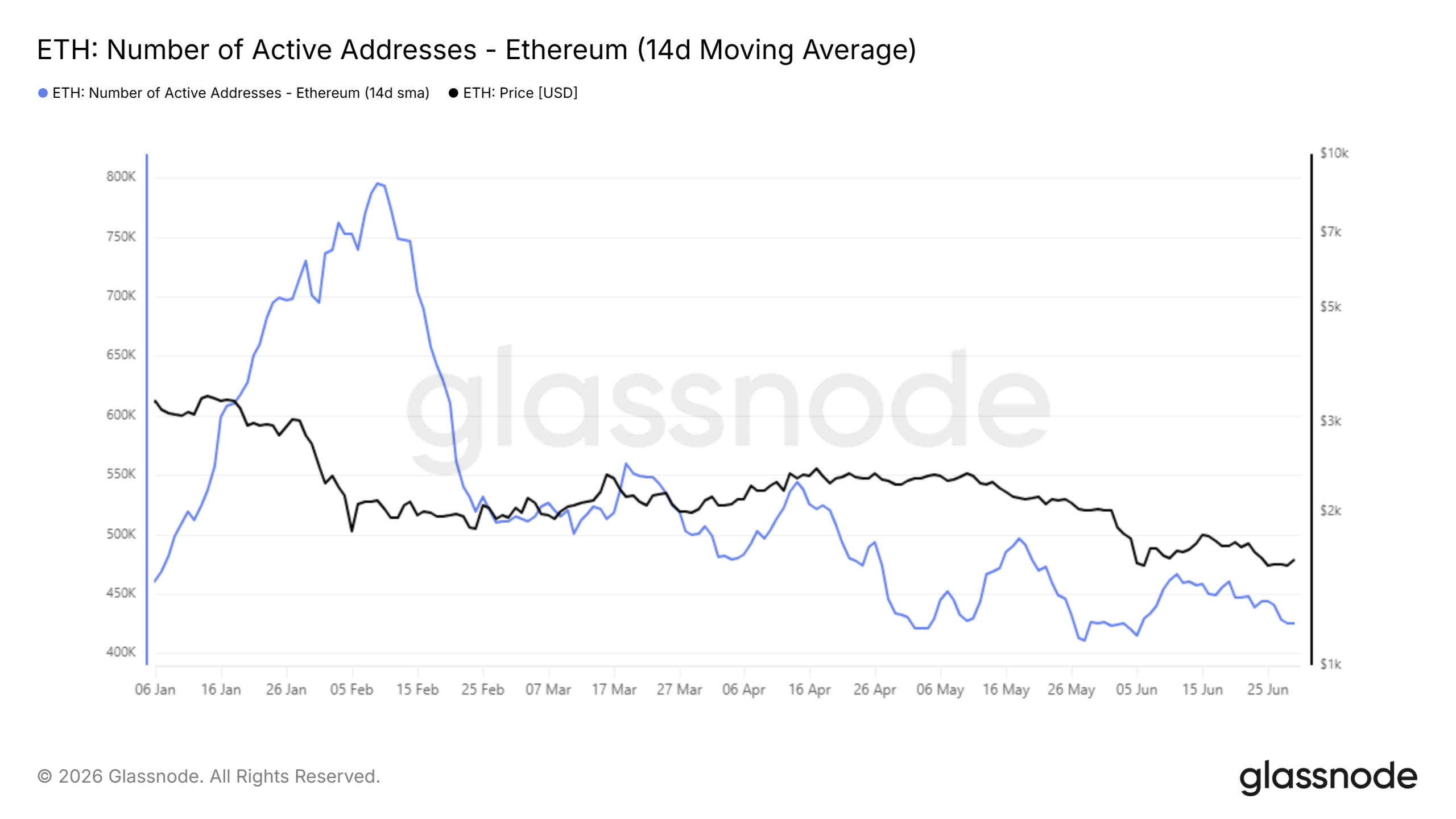
Glassnode data on active addresses points to weakening engagement. The 14-day moving average peaked near 795,000 in early February 2026. It has since dropped to roughly 420,000, a decline of about 46%.
The early move was unusual. Addresses climbed through January while prices fell, a sign of speculative churn rather than durable demand. Both metrics then rolled over together.
Through the spring, prices held up better than usage. Brief rebounds in active addresses during March, April, and May each failed to hold. The June reading marks the lowest on the chart, and the trend has not yet bottomed.
For this signal to flip, active addresses would need a sustained recovery rather than another short-lived spike.

Whale Address Count Climbs Into the Weakness
The address picture looks bleak. However, the whale data complicates that read. Glassnode’s count of addresses holding 1,000 to 10,000 ETH spiked in the final days of June.
That move produced the greatest 30-day change on the chart, and it happened while the price sat at its lowest point. Accumulation into a low price can suggest that larger holders are positioning early.
External flow data supports the mixed signal. Some reports show whales adding tens of millions of dollars in ETH, while spot Ethereum ETFs recorded net outflows through June. Bitmine chairman Tom Lee tied part of the recent drop to quarter-end fund behavior.
One caveat matters. A similar whale-count surge in late February coincided with a local top before price fell, so rising whale numbers have not been a clean buy signal this cycle.

3 Straight Red Quarters Mark Uncharted Territory
The quarterly view frames why the technical picture matters. CoinGlass data shared by analyst Ted Pillows shows ETH closing Q4 2025 down 28.28%, Q1 2026 down 29.26%, and Q2 2026 down 24.77%.
That run is the first stretch of three consecutive red quarters in the dataset, which begins in 2016. The longest prior streaks reached only two quarters, in 2018 and again in 2019.
The character of this decline also stands out. Rather than one violent crash, ETH has bled steadily across three roughly equal quarters. The broader market has softened alongside it.
Monthly Chart Tests a Key Fibonacci Level
The monthly chart shows ETH near a level that has mattered before. Price trades around $1,570, and a close here would mark the lowest monthly close since March 2023.
The 0.786 Fibonacci retracement, drawn from the $881 low to the $4,956 high, sits at roughly $1,753. That zone acted as support on four prior occasions, and it lines up with the heaviest volume node on the profile.
Price now trades below that level on an intra-month basis. A monthly close beneath it would confirm the break, opening room toward $1,200 and then the $881 swing low. Monthly RSI sits near 40, so momentum is not yet oversold.

ETH Price Prediction Hinges on the $1,500 Line
The daily chart sharpens the near-term question. ETH has lost three layered support bands, near $2,375, $2,175, and $1,925, and each now acts as resistance.
Price has also broken below a descending channel and failed two retests of that broken structure in June. It is now holding just above a final demand zone around the psychological $1,500 mark.
Volume has faded through the decline, and Bollinger Band width sits at compressed levels. Low volatility often precedes a larger move, though compression signals magnitude rather than direction.
The setup leaves a clear binary. A daily close below $1,500 would expose the $1,200 area, while a reclaim of $1,753 would invalidate the bearish thesis. The prior monthly outlook flagged the same battle zone.

What Could Decide ETH in July 2026
The evidence pulls in two directions. The trend, the lost supports, and falling active addresses argue for caution. Meanwhile, whale accumulation and the volatility squeeze hint at a possible snapback.
Two levels frame the month. Holding $1,500 keeps a recovery toward $1,753 on the table, while losing it points lower. Roughly $10.63 billion in June options expiry has already cleared, which may reduce one source of pressure.
For now, the data suggests a market in balance rather than a confirmed move. July’s first weekly closes around $1,500 and $1,753 should indicate which side wins control.
This article is for informational purposes only and does not constitute financial advice.
The post What to Expect From Ethereum (ETH) in July 2026 appeared first on BeInCrypto.


Three $ME token buyers sued Magic Eden and its four co-founders, alleging the company promoted the token's use cases — multichain trading, governance, staking rewards, and revenue sharing — then delayed, diminished, or abandoned them, according to a class-action complaint filed in federal court in… Read the full story at The Defiant


Coinmetro, an Estonian-based cryptocurrency exchange, has claimed that it has filed “a reorganisation application to the Estonian court.”
In its announcement, it states that this is required because of “an extraordinary situation caused by a failure of one of our financial service providers.”
It further claims that it had already suspended user registrations, deposits, and withdrawals back on June 22.
Interestingly, in the Estonian register both Coinmetro OÜ and Coinmetro Group OÜ are past due on annual reports. Coinmetro Group OÜ is also listed as having a tax debt.
The announcement didn’t disclose which financial service partner led to this failure, and Coinmetro has yet to respond to Protos’ questions regarding that issue.
During a YouTube based “Ask Me Anything” with Coinmetro Chief Executive (and beneficial owner) Kevin Murcko, he claimed that it was actually more than one provider that failed, despite the announcement only claiming one.
He also claimed that there was a multi-year internal investigation, suggesting that this failure happened well before this current announcement.
Additionally, he stated that he originally believed that Coinmetro’s balance sheet was strong enough that this wasn’t originally material, but has become material as Coinmetro has approached the July 1 licensure deadline for compliance with Markets in Crypto Assets regulations.
Prime Trust
The Prime Trust bankruptcy estate (PCT Litigation Trust) filed an adversary proceeding against Coinmetro in August of last year.
This proceeding attempted to clawback withdrawals made in the days immediately preceding bankruptcy.
This proceeding claims that Prime transferred $1,205,751.10 to Coinmetro in the days before Prime’s failure.
Read more: Prime Trust accused of using customer funds to cover lost deposits
The mistakes and fraud committed by Prime apparently make it extraordinarily difficult to determine who was owed which funds from Prime Trust.
This means that Coinmetro didn’t necessarily withdraw more funds than it deposited because of the failure, and Prime Trust is trying to clawback many of the withdrawals from the final days.
Protos reached out to Coinmetro for comment, but it didn’t respond before publication.
Got a tip? Send us an email securely via Protos Leaks. For more informed news and investigations, follow us on X, Bluesky, and Google News, or subscribe to our YouTube channel.

The ‘conversion therapy’ ban is a Trojan horse for trans extremism

NPFL Unveils 2026/27 Season Calendar, Sets August 28 Kick-Off Date

WhyQ spent a decade pivoting. It might have finally found the model that works.


-
 Sports7 days ago
Two goals and an assist by sheer aura: Cristiano Ronaldo just entered the World Cup chat
-

 Fashion4 days ago
Weekend Open Thread: Staud – Corporette.com
-

 Politics4 days ago
The House | Manchesterism won’t survive the painful trade-offs unless it gets citizens on board
-

 Crypto World16 hours ago
Strategy authorizes up to $1.25B in Bitcoin sales under new capital plan
-

 Politics5 days ago
Potential 2028er World Cup attendee leaderboard
-

 Business4 days ago
Asia stock markets slide as tech shares slump
-

 News Videos2 days ago
MAJOR BITCOIN & MARKET UPDATE!!!! (MUST WATCH ASAP!!!)
-

 Tech5 days ago
A Look At A Gaggle Of Transputer Boards
-

 Crypto World6 days ago
Securitize Wraps Roubini's SEC-Registered ETF as Dubai VARA Digital Security
-
Crypto World7 days ago
Bitcoin (BTC) Dips Below $62K, Ethereum (ETH) Plunges 6% Daily: Market Watch
-
 Crypto World5 days ago
Dell (DELL) Shares Tumble Over 5% Following Analyst Downgrade to Hold
-

 Crypto World3 days ago
Coinbase, Circle Deepen Crypto Stock Losses Despite Resilient S&P 500
-
Business7 days ago
Entergy settles forward sale agreements, raises $672 million in cash proceeds
-

 Crypto World4 days ago
Kraken's xStocks Opens Bending Spoons IPO Registration to EEA Retail
-

 Sports4 days ago
FIH Pro League: India defeat Pakistan 7-1, register biggest win of campaign | Other Sports News
-

 Crypto World5 days ago
Bitcoin Sparks $600M Hourly Liquidations With $65,000 Set To Become Resistance
-

 Business15 hours ago
Australia treasurer says alleged access of prime minister’s bank data ’incredibly concerning’
-

 Tech3 days ago
Bluekit phishing kit adopts browser-in-the-middle for login theft
-

 Tech3 days ago
Russian hackers now target Signal backup recovery keys
-
 Crypto World4 days ago
Hyperliquid Named on Singapore MAS Investor Alert Register
You must be logged in to post a comment Login