
Crypto World
Next Pepe Coin: Why Investors Are Choosing Pepeto Over AlphaPepe and Other Presales as Exchange Listings Approach

Pepeto is emerging as the strongest point of interest among presale buyers in 2026 as investors become more selective about where they place capital. In a market still full of empty promises and roadmap heavy launches, Pepeto is gaining traction by offering something most meme coins cannot: three real products close to launch, the PEPE cofounder, and $8.1 million in presale funding according to CoinDesk.
That distinction is becoming increasingly important. Early stage crypto buyers are paying closer attention to whether a project has real infrastructure, verified audits, and a team with a track record. On that basis, Pepeto is starting to stand apart from every other presale in the market, including projects like AlphaPepe according to Cointelegraph.
Why Pepeto is resonating more strongly with investors
1. Pepeto
A major part of Pepeto’s appeal is that it does not ask buyers to trust a team with no track record. The PEPE cofounder who built PEPE Coin is behind this project, which gives participants real confidence in what they are buying. The difference may sound minor at first, but it changes the entire investment case. Instead of putting money into a meme coin with nothing behind it, buyers get three real products approaching launch and a SolidProof audited contract.
That makes Pepeto feel more like a real investment and less like a gamble, even though it still sits firmly in the high upside segment of the market where the next Dogecoin will come from. Investors are also responding to the fact that Pepeto has built 196% APY staking directly into the presale phase, compressing supply every single day.

Rather than limiting the experience to buying and waiting, Pepeto has created an ecosystem where PepetoSwap, Pepeto Bridge, and Pepeto Exchange will keep holders engaged long after listings begin.
That makes the ecosystem easier to believe in and gives the presale more momentum than a typical meme coin launch. One reason Pepeto is drawing more attention than competing presales is that $8.1 million raised and three products close to launch present it as an active ecosystem, not a static fundraise.
The broader structure, including PepetoSwap, Pepeto Bridge, Pepeto Exchange, and 196% APY staking, gives buyers the impression that this token is attached to a growing ecosystem instead of a one dimensional meme coin pump.
2. AlphaPepe
AlphaPepe offers instant token delivery and a participation model that keeps buyers engaged after the initial purchase. The project includes features like reward claims and rank progression that give the presale more activity than a typical token sale page.
For investors who want immediate visibility over their position, AlphaPepe delivers on that front. But AlphaPepe does not have the infrastructure depth that Pepeto brings with three announced products, a SolidProof audit, and the PEPE cofounder behind the entire build.
3. Kaspa
Kaspa holds at $0.035 as of March 17 with a loyal community and consistent on chain transaction volumes that reflect real usage. But analysts project a potential dip toward $0.027 by mid April before any meaningful recovery comes through. 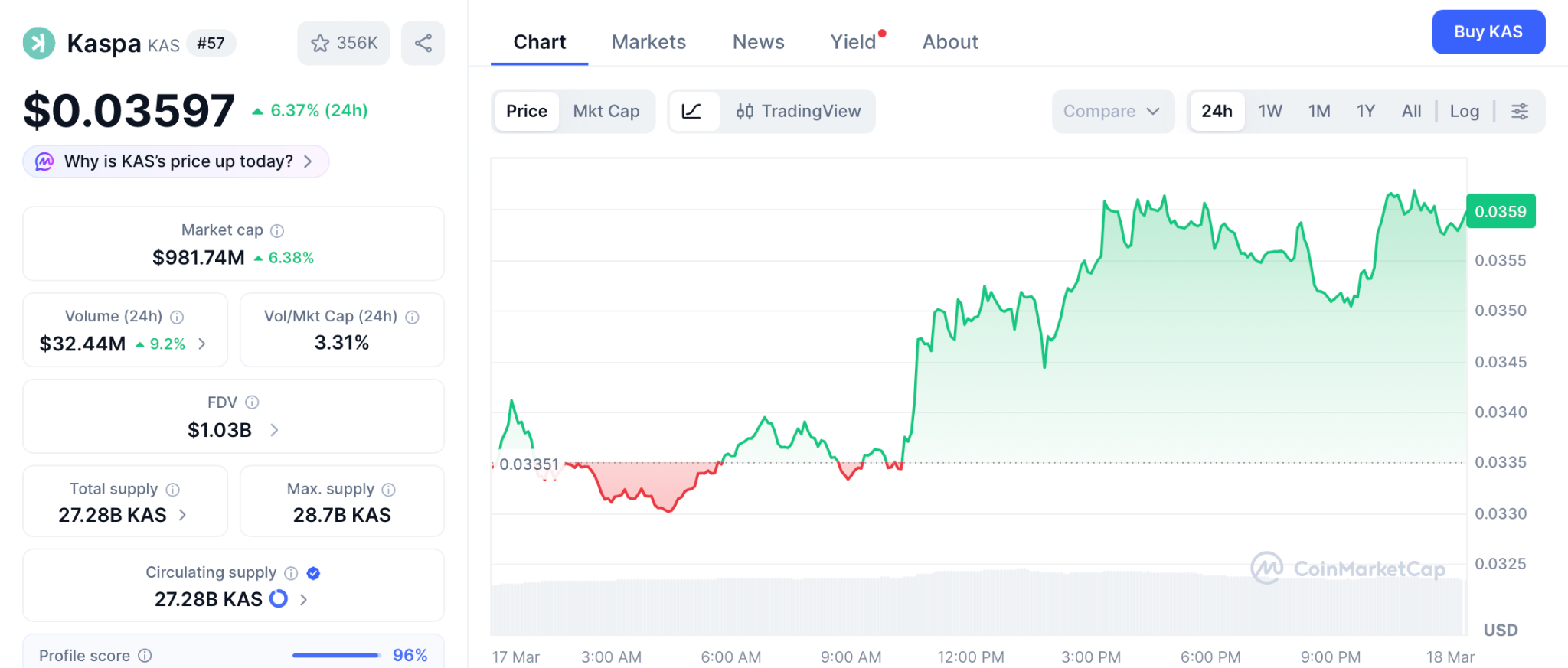
The fully diluted valuation already bakes in significant adoption, and the returns from here are measured in modest single or low double digit percentages. For investors looking for the next Shiba Inu level entry, Pepeto at six zeros offers a fundamentally different opportunity category with far more upside potential.
Do not be the person who watches from the sidelines
Pepeto is gaining an edge over every other presale because it offers something no other meme coin has: three real products, the PEPE cofounder, and $8.1 million in proof that investors believe in it. The people who hesitated on DOGE at fractions of a penny and SHIB before it exploded know exactly what it feels like to miss a life changing entry.
That regret is what drives smart investors to act early on projects like Pepeto. They can see the $8.1 million raised, the three products approaching launch, and the SolidProof audit, and they know this is the kind of setup that creates the next wave of crypto millionaires.
Do not be the person who watches Pepeto list on exchanges and realizes they should have bought when it was still at six zeros. Visit the Pepeto official website and enter the presale today.
Click To Visit Pepeto Website To Enter The Presale

FAQs
Why are investors choosing Pepeto over other presales?
Three products close to launch, the PEPE cofounder, SolidProof audit, and $8.1M raised set it apart.
What makes Pepeto the next Pepe coin?
The same cofounder who built PEPE Coin is behind Pepeto, with real infrastructure this time.
Could Pepeto have stronger upside than rival presales?
At $0.000000186 with three products approaching launch, Pepeto has the steepest trajectory in the presale market.
The post Next Pepe Coin: Why Investors Are Choosing Pepeto Over AlphaPepe and Other Presales as Exchange Listings Approach appeared first on Blockonomi.

Explore all the latest and most important advancements across the Pi Network ecosystem.
The team behind the controversial crypto project Pi Network unveiled several important updates lately, while the community celebrated its symbolic Pi Day.
PI’s price had its glory moments, briefly climbing to a five-month peak, but then experienced a massive correction.
The Latest Developments
March has been quite eventful for Pi Network. At the start of the month, the Core Team announced that the protocol v19.9 migration was successfully completed, while version 20.2 was scheduled for release around March 12. The official confirmation about the migration arrived with the Pi Day celebratory announcement.
Another major development was Kraken’s decision to allow trading services with Pi Network’s native cryptocurrency. This happened just a day before Pi Day – the community’s special date, celebrated because it matches the mathematical constant π (3.14), and which is logically held annually on March 14.
This year, the team marked the occasion by rolling out several ecosystem upgrades designed to boost utility, attract more developers, and strengthen the network’s overall infrastructure. Some of the improvements include new Mainnet capabilities for Pi App Studio, advancements that enable future smart contract functionality, KYC validator rewards, and more.
Most recently, Pi Network’s team disclosed that second migrations have started and “will continue with a gradual rollout, opening the door for Pioneers to bring additional PI to Mainnet and further participate in the ecosystem.” The post on X received mixed reactions: some users praised the move, whereas others questioned why the team had launched a second migration when the first one hadn’t been properly completed.
PI Remains Trending
The numerous developments surrounding Pi Network led to significant volatility in PI. The protocol updates, the listing on Kraken, and the anticipation of Pi Day boosted the price to a five-month peak of almost $0.30. At one point, the asset’s market capitalization neared $3 billion, making PI the 36th-largest cryptocurrency.
You may also like:
However, over the past few days, the price headed south just as rapidly in what appeared to be a classic “sell-the-news” moment. As of this writing, PI trades at around $0.18 (per CoinGecko’s data), representing a 9% daily decline and a 19% collapse over the week.
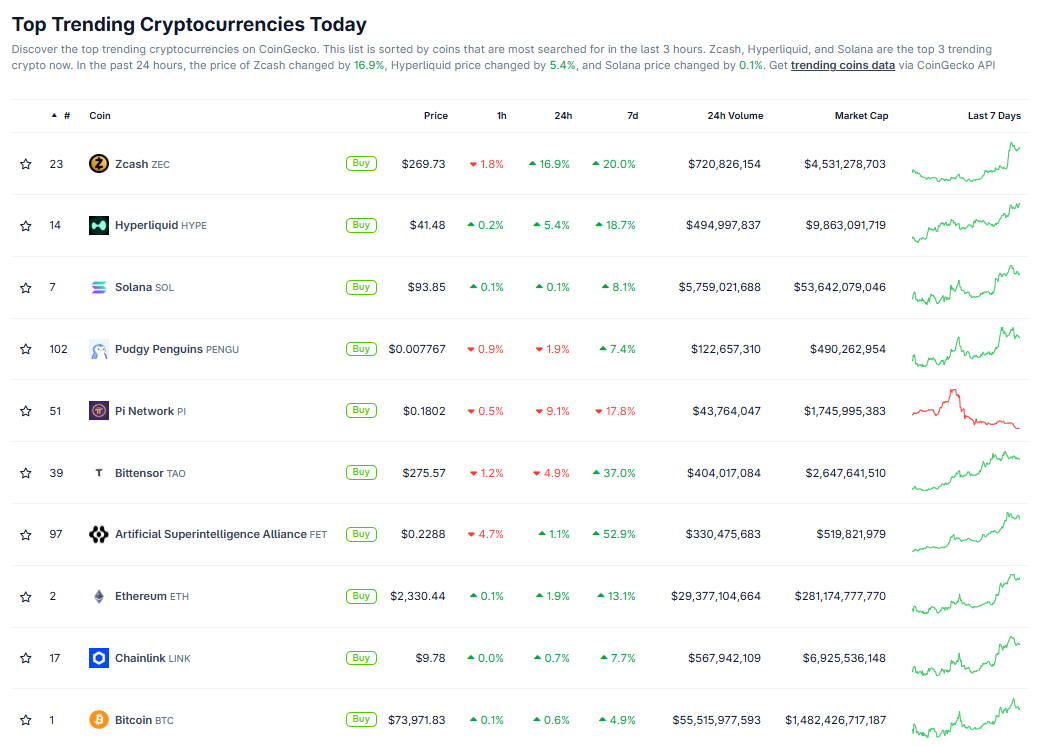
Despite the downtrend, the asset remains one of the most-searched digital assets. It is the fifth-most trending cryptocurrency on CoinGecko today, surpassing well-known names such as Bittensor (TAO), Ethereum (ETH), and Bitcoin (BTC).

What Lies Ahead?
In the following days, the daily token unlocks will exceed 15 million on a couple of occasions. Nonetheless, the end of March and the beginning of April are expected to be much calmer on that front, which could stabilize the price and slow down the recent pullback.

Moreover, PI’s Relative Strength Index (RSI) has fallen to 10, signaling oversold conditions that can sometimes precede a resurgence. The technical analysis tool ranges from 0 to 100, and conversely, anything above 70 is considered bearish territory and indicates that a short-term correction could be on the way.

Binance Free $600 (CryptoPotato Exclusive): Use this link to register a new account and receive $600 exclusive welcome offer on Binance (full details).
LIMITED OFFER for CryptoPotato readers at Bybit: Use this link to register and open a $500 FREE position on any coin!
Disclaimer: Information found on CryptoPotato is those of writers quoted. It does not represent the opinions of CryptoPotato on whether to buy, sell, or hold any investments. You are advised to conduct your own research before making any investment decisions. Use provided information at your own risk. See Disclaimer for more information.
VersaBank, a federally chartered Canadian digital bank focused on institutional lending, is adding foreign exchange functionality to its tokenized deposit platform, allowing users to convert between US and Canadian dollars within a blockchain-based system.
Announced Tuesday, the upgrade enables real-time, 24/7 currency conversion using Real Bank Tokenized Deposits (RBTDs), that is, digital representations of fiat deposits issued and backed by the Ontario-based institution.
The feature is designed to improve cross-border transactions by reducing reliance on traditional foreign exchange rails, which are often slower and limited by banking hours.
The update marks an incremental step toward commercialization rather than a full product launch. VersaBank has been piloting its tokenized deposit system since last year, and the addition of US dollar and Canadian dollar conversion expands its functionality for cross-border payments, particularly between the two countries.
RBTDs are tokenized versions of bank deposits that can be transferred on blockchain infrastructure while remaining liabilities of the issuing bank and backed 1:1 by customer deposits, according to the American Bankers Association. Unlike stablecoins, which are typically issued by nonbank entities, they operate within the traditional banking system.
Related: Columbia Business professor casts doubt on tokenized bank deposits
Financial institutions explore tokenized deposits
Banks are increasingly exploring tokenized deposits as a way to combine blockchain-based speed and programmability with the safety of traditional deposits, particularly for use cases like cross-border payments and financial settlement, as outlined by KPMG.
One notable example is BNY’s launch of tokenized deposits for institutional clients, aimed at supporting collateral and margin requirements. BNY said the move comes as institutions seek “faster and more efficient ways to move assets.”
Globally, Singapore’s Project Guardian is exploring asset tokenization in financial markets, including pilot programs involving tokenized deposits and other digital assets.
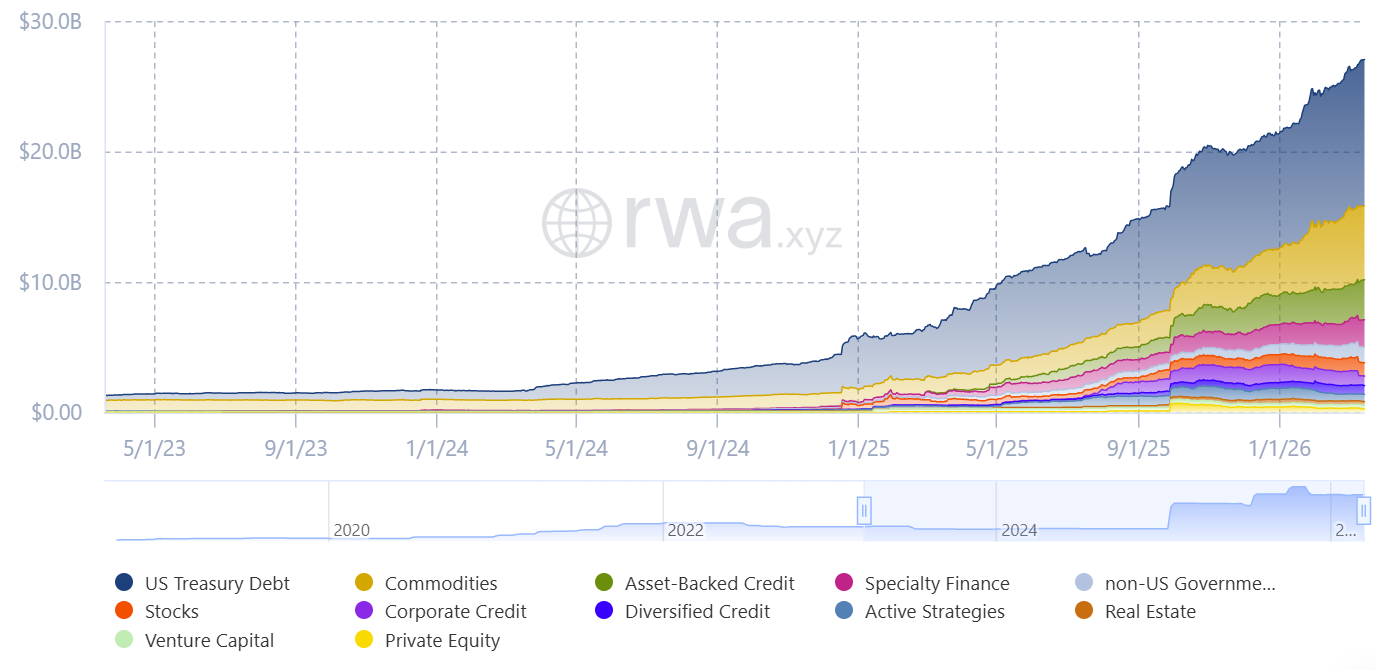
The push comes as tokenization emerges as one of blockchain’s fastest-growing use cases. Industry data shows more than $27 billion in tokenized assets across products ranging from private credit to US Treasury bonds and equities.

Related: Crypto’s 2026 investment playbook: Bitcoin, stablecoin infrastructure, tokenized assets
Crypto World
Ethereum Derivatives and Technicals Align as Bullish Signals Stack Up Across the Market
TLDR:
- Ethereum’s derivatives market saw Bybit record a rise of around 2.51 million ETH, pointing to active liquidity redistribution across platforms.
- Ethereum’s SuperTrend indicator flipped from Sell to Buy for the first time since September, previously triggering gains of 52% and 174%.
- ETFs accumulated roughly 83,000 ETH worth approximately $193 million over three weeks, adding real institutional demand pressure.
- Ethereum reclaimed $2,200 as support after 39 days below it, with traders now watching $2,400 and $2,600 as the next key levels.
Ethereum is drawing renewed attention as derivatives market data points to a structural shift in trader behavior. Open interest figures across major exchanges show clear signs of liquidity redistribution rather than outright capital outflows.
Technical indicators are flipping bullish for the first time in months. ETF demand over recent weeks adds another layer of confidence to the trend currently taking shape.
Open Interest Data Points to Liquidity Redistribution
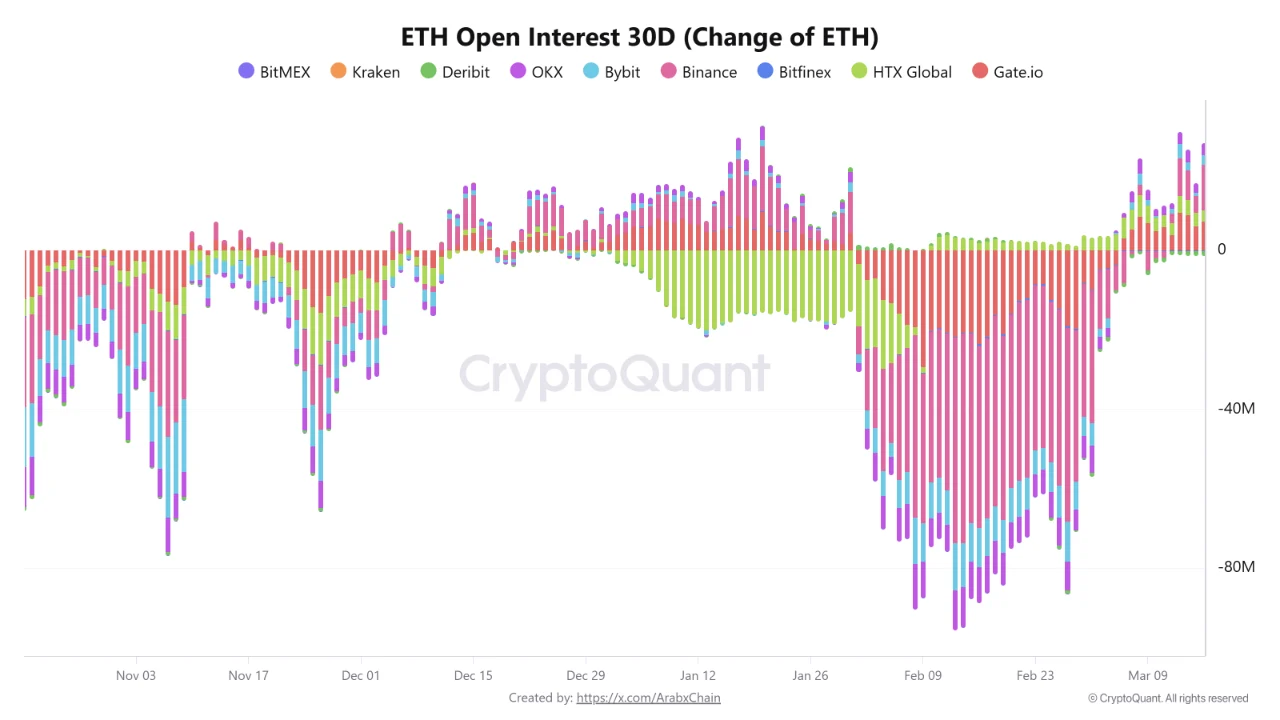
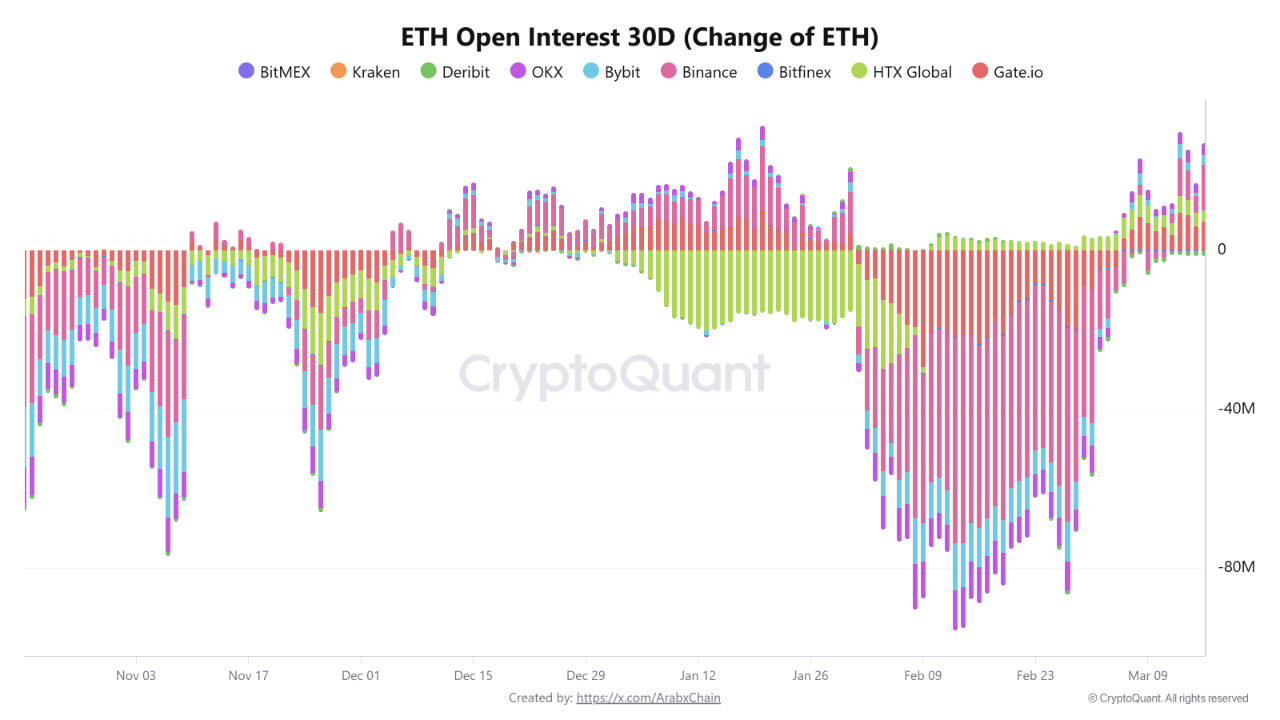
Ethereum’s derivatives market is showing a notable divergence across trading platforms. The ETH Open Interest 30D Change indicator reveals clear shifts in the structure of open positions.
Source: Cryptoquant
Binance recorded an increase of approximately 11,400 ETH, indicating continued liquidity inflows. This points to ongoing activity despite recent market fluctuations.
Bybit also posted a notable rise of around 2.51 million ETH. This further supports the idea of redistribution rather than a wholesale exit from positions.
Bitfinex, however, saw a decrease of roughly 35,700 ETH, while Kraken dropped by around 4,300 ETH. Gate.io also recorded limited movement compared to other major platforms.
These figures reflect weaker activity or reduced risk appetite on certain exchanges. Still, the contrast between platforms does not point to a market breakdown.
Rather, it suggests a state of caution and repositioning ahead of stronger moves. Traders closing positions on some platforms are opening new ones elsewhere.
Sustained liquidity inflows into the derivatives market support the stability of Ethereum’s uptrend. Elevated or rising open interest signals trader confidence and a willingness to hold positions.
This pattern reinforces the persistence of bullish momentum rather than pointing to a temporary move. The data overall leans toward continued upward pressure on price.
Technical Indicators and ETF Demand Reinforce the Uptrend
Ethereum recently triggered a key technical signal that traders have been watching closely. Analyst Ali Charts noted that the SuperTrend indicator flipped from Sell to Buy for the first time since September.
In the previous two instances, price surged by 52% and 174% respectively. This kind of reversal signal tends to attract both technical and momentum-driven traders.
A critical part of the breakout involves reclaiming a key price level. Ethereum managed to hold above $2,200 after spending 39 days trading below it. This reclaim marks a clear structural shift in price action. The next levels to watch are $2,400 and $2,600.
ETF demand has also played a measurable role in reinforcing the current move. Over the past three weeks, ETFs accumulated approximately 83,000 ETH, worth around $193 million.
This level of institutional buying adds real demand pressure to the market. It also reduces the likelihood of a sharp reversal in the near term.
As Ethereum continues building on these technical and structural developments, traders are watching for follow-through.
The combination of rising open interest, a trend reversal signal, and ETF-driven demand creates a layered bullish case.
Whether price can sustain gains above current levels will be key. The coming weeks will test the strength of this recovery.
The post Ethereum Derivatives and Technicals Align as Bullish Signals Stack Up Across the Market appeared first on Blockonomi.
Cango sold approximately $305 million in bitcoin holdings in February to repay debt and finance an artificial intelligence infrastructure transformation.
Bitcoin miner Cango (NYSE: CANG) has sold 4,451 bitcoin to reduce financial leverage and fund an AI makeover, the company announced. The February sale generated approximately $305 million, with proceeds used to partially repay a bitcoin-collateralized loan and strengthen the company’s balance sheet.
The strategic divestment reflects Cango’s pivot toward AI-driven operations alongside its core mining business. The move signals the company’s effort to reduce debt obligations while repositioning itself in an increasingly competitive landscape where AI infrastructure has become a focal point for technology-focused enterprises.
Sources: PR Newswire | Yahoo Finance
This article was generated automatically by The Defiant’s AI news system from publicly available sources.

In one of its first actions since signing a memorandum of understanding with the Commodity Futures Trading Commission (CFTC), the US Securities and Exchange Commission (SEC) unveiled a formal interpretation of how non-security crypto assets fall under federal securities laws. The agency framed the move as an essential bridge as Congress debates market-structure legislation that would codify regulatory oversight for digital assets. The interpretation aims to craft a coherent taxonomy for digital commodities, digital collectibles, digital tools, stablecoins, and digital securities, while clarifying when a non-security crypto asset may or may not be considered an investment contract. The timeline places the SEC’s action at a moment of heightened scrutiny of the crypto sector, as federal agencies seek clearer lines amid ongoing legislative debates.
Key takeaways
- The SEC’s interpretation seeks to separate most crypto assets from traditional securities, with only traditional securities that are tokenized remaining subject to securities laws under this framework.
- A formal “token taxonomy” would categorize assets into digital commodities, digital collectibles, digital tools, stablecoins, and digital securities, aiming to reduce ambiguity about jurisdiction and treatment.
- Regulatory coverage would extend to common crypto activity concepts, including airdrops, protocol mining, protocol staking, and the wrapping of a non-security asset.
- The move is framed as a step to provide clear regulatory lines while lawmakers craft market-structure legislation that could expand the SEC’s and CFTC’s oversight over crypto markets.
- The shift follows leadership changes in the SEC enforcement division, with critics arguing the agency’s posture has evolved beyond traditional investor protection toward broader market facilitation for large financial players.
Market context: The interpretation arrives as the U.S. Senate negotiates terms for a digital asset market-structure bill, a process that regulators say would clarify jurisdiction between the SEC and the CFTC and shape how market infrastructure operates in practice.
Why it matters
The SEC’s bid to articulate a taxonomy and boundary lines for crypto assets matters for issuers, exchanges, developers, and investors. By attempting to delineate when a token is a security versus a non-security, the agency aims to reduce regulatory uncertainty that has long clouded token launches, staking protocols, and cross-border activity. The emphasis on a taxonomy that includes digital commodities and stablecoins signals a broader view of what crypto can be within existing securities law, potentially influencing how projects structure token sales, airdrops, and governance mechanisms.
The framing also acknowledges a practical reality: investment contracts can evolve or terminate as projects mature, and the SEC is signaling that not all crypto assets should be treated as securities for their entire lifecycle. The emphasis on a coherent taxonomy is intended to help market participants assess regulatory jurisdiction with greater clarity, especially for novel mechanisms that fall outside traditional securities paradigms. This is a shift from a posture that some participants perceived as sweeping, toward a more granular approach that aligns regulatory focus with the economic function of a given asset.
At the same time, the announcement intersects with political dynamics shaping crypto policy. By stressing that most crypto assets are not securities under the proposed interpretation, the SEC appears to push back against the notion of universal securities regulation for digital assets while reaffirming that certain traditional securities, when tokenized, remain within the securities framework. The agency underscored that this interpretive stance is meant to complement, not replace, ongoing legislative efforts in Congress to codify market oversight. As a practical matter, market participants will be watching how this interpretive framework interacts with future rulemaking and enforcement decisions, particularly around complex products and protocols that blend finance with decentralized technology.
The SEC’s remarks and the accompanying notice also emphasize the ongoing dialogue about jurisdiction between the SEC and the CFTC. The agency has repeatedly framed the issue as one of clarity—where one agency’s remit ends and another’s begins—so that firms can navigate compliance without duplicative or conflicting requirements. The message is that regulatory lines should be predictable, even as innovation continues to press the boundaries of traditional financial law.
A notable backdrop to these developments is the leadership shakeup within the SEC’s enforcement division. Earlier in the week, the agency confirmed the resignation of enforcement division director Margaret Ryan, with principal deputy director Sam Waldon stepping in as acting enforcement director. Critics have argued that the agency’s enforcement posture has shifted in ways that some view as less like a traditional regulator and more like a facilitator for the interests of large financial players. These debates, while focused on tone and strategy, matter because enforcement priorities often determine how quickly and aggressively new interpretations are tested in markets and courts.
Within the SEC’s leadership lineup, Chair Paul Atkins and fellow Republican commissioners Mark Uyeda and Hester Peirce stood as the agency’s remaining bipartisan balance on a five-member board. As of the week of reporting, President Donald Trump had not filled the remaining seats, leaving the commission with limited confirmation support to chart a longer-term direction. The agency’s contemporaneous messaging—emphasizing investor protection while drawing sharper lines on regulatory jurisdiction—reflects a broader tension at the heart of U.S. crypto policy: how to sustain innovation without compromising market integrity or consumer protection.
For readers tracing the practical implications, the SEC’s Monday to Tuesday communications included explicit references to the agency’s stance and linked materials. The agency’s official statements and supporting remarks frame the interpretation as both a clarifying exercise and a bridge to anticipated legislative action. The emphasis on clear lines—while acknowledging that meaningful investment contracts can end—suggests a regulatory philosophy aimed at balancing orderly markets with space for experimentation in a rapidly evolving asset class.
In practical terms, the SEC’s move could influence how projects design token incentives, airdrops, and liquidity mechanisms, as well as how exchanges categorize listed assets and how custodians implement enforcement-compliant custody and settlement workflows. The agency’s interpretation is designed to provide a reference point for market participants seeking to understand where the line lies between innovation and traditional securities regulation, especially as the crypto market continues to mature and attract institutional interest. For stakeholders who monitor regulatory developments closely, the emphasis on taxonomy and jurisdiction is a reminder that clarity—however gradual—can matter as much as a formal rulemaking in shaping market behavior.
Additional context comes from the SEC’s own communications channel and the remarks captured during the DC Blockchain Summit, which reinforce the message that the agency remains focused on articulating a principled, enforceable framework that acknowledges both the realities of crypto markets and the need for congressional leadership to codify oversight structures. The address and related materials can be reviewed through the SEC’s official releases and linked statements to assess how the interpretation may evolve as market participants begin to interpret and implement the guidance in real-world scenarios.
Notably, the broader policy dialogue continues to place a premium on practical clarity. The agency’s emphasis on a non-universal securities regime—while maintaining robust oversight of tokenized securities—reflects a nuanced stance on where crypto assets fit within the U.S. financial regulatory mosaic. For practitioners, this means staying abreast of new interpretive guidance, monitoring enforcement signals, and aligning token economics with the evolving taxonomy to reduce compliance risk and to improve transparency for users and investors alike.
Links to primary materials accompany the announcement, including the SEC’s formal notice and the remarks offered at the DC Blockchain Summit, which together illustrate how the agency intends to operationalize the taxonomy and jurisdiction framework in a way that supports informed participation in a rapidly changing market. As the sector continues to negotiate settlement with regulators and legislative bodies, the emphasis on regulatory clarity remains a central variable shaping liquidity, risk appetite, and innovation within the crypto ecosystem. For readers seeking to verify specifics, the linked materials provide direct access to the SEC’s official documents and the associated commentary from senior agency leadership.
Source: SEC press release.
Source: Atkins remarks.
Source: SEC on X.
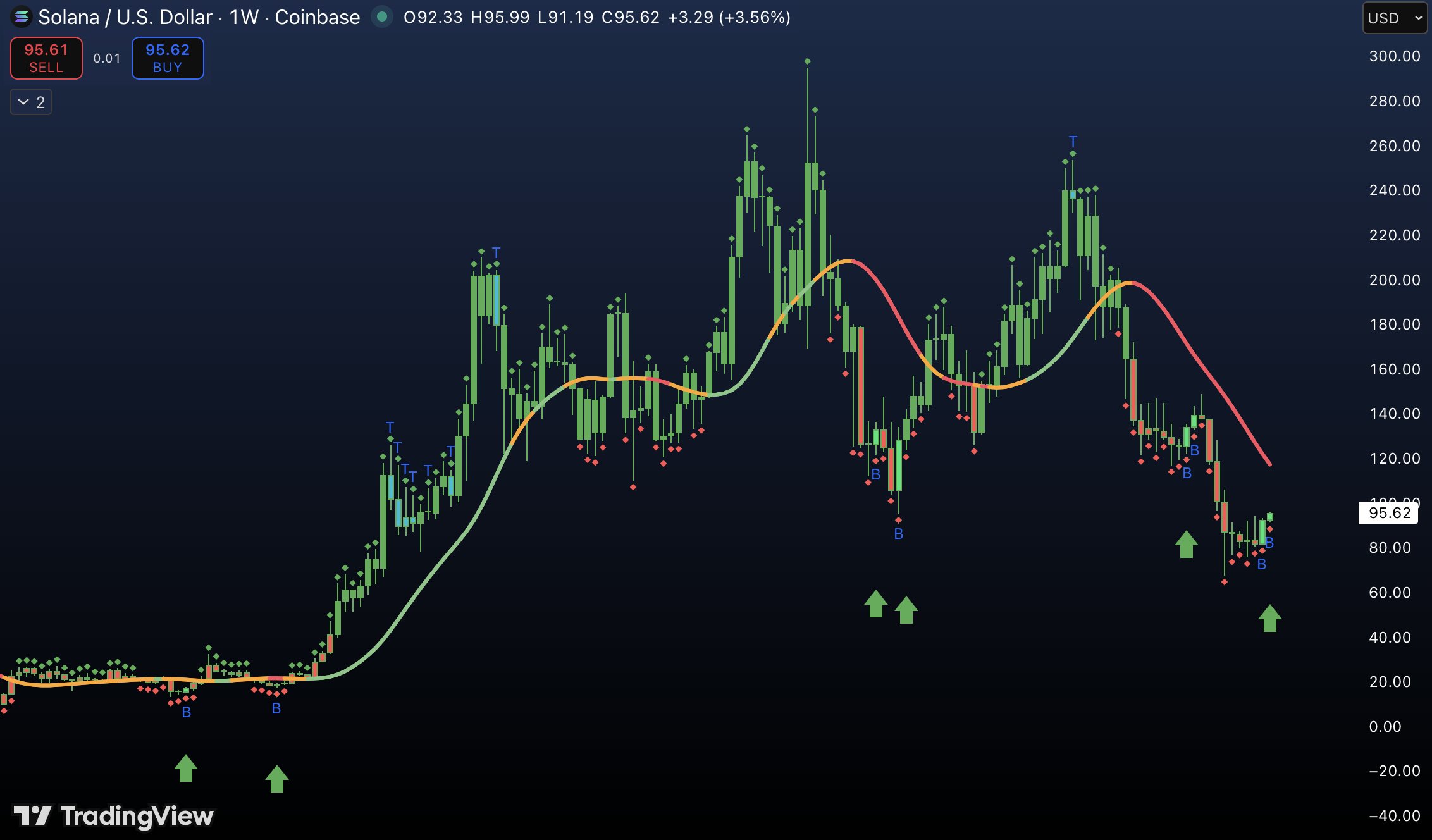
A recurring bottom signal for Solana’s SOL (SOL) token has flashed on its weekly chart. The pattern was first seen in 2023 when SOL went on a 1,604%, rally, then again in 2025 when the altcoin gained 142%.
Currently, SOL futures and spot market data point to a slow pickup in market activity, with the price approaching a key weekly level that may reinforce the bullish bias.
Crypto analyst WebTrend has highlighted that the pattern on the weekly chart is marked by consecutive candles with long lower wicks. This structure often signals that selling pressure is being absorbed as the buyers consistently step in at lower levels.

“We are currently confirming a macro bottom setup with the same signal that successfully called the 2 most meaningful bottoms in the last 3 years.”
Crypto trader Bluntz noted that Solana may have completed an accumulation phase following a strong breakout on the daily chart. The move aligns with an ascending triangle breakout where higher daily lows meet a flat resistance level. The price is now holding above $93.50, a key level that previously acted as resistance.
Based on the pattern, the next upside target sits near $120, a level that served as support for much of 2024 and 2025. If reclaimed, it may act as a strong base for further upside, with $145 emerging as the next potential level if momentum continues.

Related: Altseason is dead, expect shorter cycles and ‘violent’ rotations: Crypto exec
Market activity shows early recovery signs
While the price structure looks constructive, the derivatives data suggest the recovery is still developing.
SOL’s open interest has remained below $2.3 billion since the Feb. 6 price bottom, indicating that traders are not aggressively increasing leverage yet. This points to a cautious environment rather than what may be a longer-duration rally.
On the spot side, the cumulative volume delta (CVD), which tracks net buying and selling, has stabilized over the past month, showing that selling pressure has eased.

In the futures markets, the CVD has improved to -$2.8 billion from -$3.5 billion since Feb. 24, reflecting a $700 million reduction in selling. This suggests that while the bearish pressure is fading, a strong buy demand has not emerged yet.
The aggregated funding rate has also remained neutral, meaning neither bullish nor bearish positions are dominant.
Overall, the data points to a spot-driven recovery. The $120 level remains a key zone to watch, acting as an important threshold for both trader positioning and market sentiment.
Related: XRP holders hit a record 7.7M: Will price break through $1.60 next?
This article does not contain investment advice or recommendations. Every investment and trading move involves risk, and readers should conduct their own research when making a decision. While we strive to provide accurate and timely information, Cointelegraph does not guarantee the accuracy, completeness, or reliability of any information in this article. This article may contain forward-looking statements that are subject to risks and uncertainties. Cointelegraph will not be liable for any loss or damage arising from your reliance on this information.
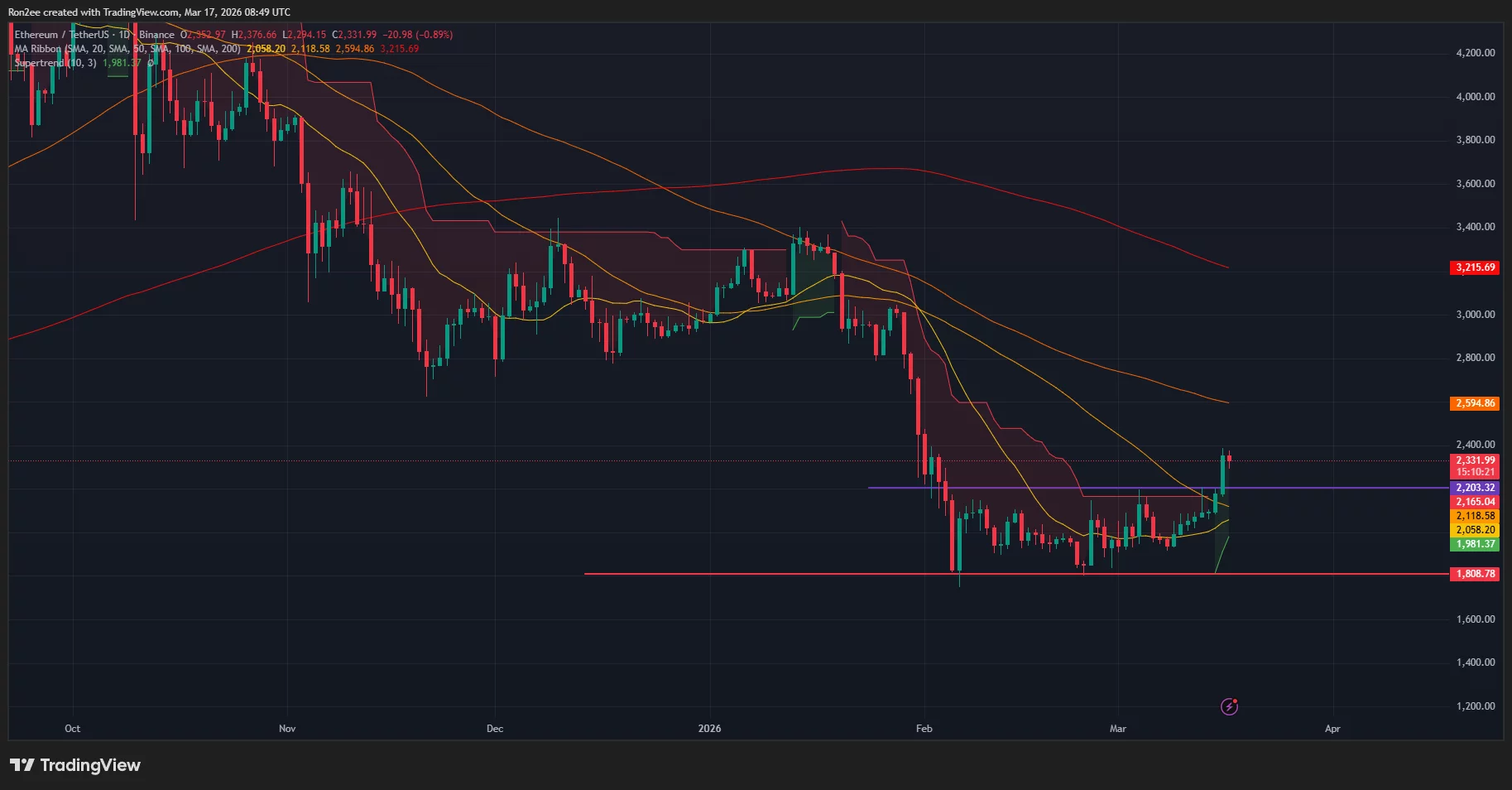
Ethereum price rallied to a six-week high of $2377.64 on Tuesday as institutional investors continue to accumulate the asset.
Summary
- Ethereum price climbed to a six-week high near $2,377 as institutional accumulation and continued spot ETF inflows supported bullish momentum.
- Tom Lee’s treasury firm Bitmine purchased nearly 61,000 ETH over the past week, lifting its total holdings to roughly 4.6 million ETH.
- A short squeeze above $2,300 triggered liquidations of clustered bearish positions, adding momentum to the rally.
According to data from crypto.news, Ethereum (ETH) price rose 6% to hit $2,377.64 on March 17, its highest level since the beginning of February, before settling around $2,334 at press time. It extends its positive run for the fourth straight day, clocking gains of 13% in the period.
A major catalyst driving its gains came from aggressive buying from institutional investors. Notably, Tom Lee’s Ethereum Treasury company, Bitmine, has been a driving force that bolstered market confidence. Notably, the firm purchased nearly 61,000 ETH in the past week, bringing its total ETH stash to nearly 4.6 million, or around 3.81% of the ETH token supply.
In its latest Ethereum acquisition, Lee noted that the treasury company has accelerated purchases as analysts at the firm believe that the asset’s price has nearly approached a local bottom amidst the ongoing crypto bloodbath triggered by macroeconomic and geopolitical concerns.
Ethereum, along with other major crypto assets, has so far outperformed U.S. tech stocks since the start of the U.S.-Iran war, which sent crude oil prices surging to multi-year highs, sparking concerns of runaway inflation.
Ethereum price has also been backed by back-to-back inflows in spot Ethereum ETFs, which have drawn in retail attention. Data from SoSoValue show that U.S. spot ETH ETFs have hit a 5-day inflow streak for the first time since mid January, drawing in $248 million in net inflows.
Meanwhile, today’s rally was also supported by a short squeeze after ETH broke past $2,300, where a large cluster of short positions was liquidated.
On the daily chart, Ethereum price has recently broken above the 20-day and 50-day moving averages, suggesting that bulls are regaining control of the market. It has also surpassed the $2,200 key resistance that had served as a formidable ceiling in at least two earlier attempts in March.
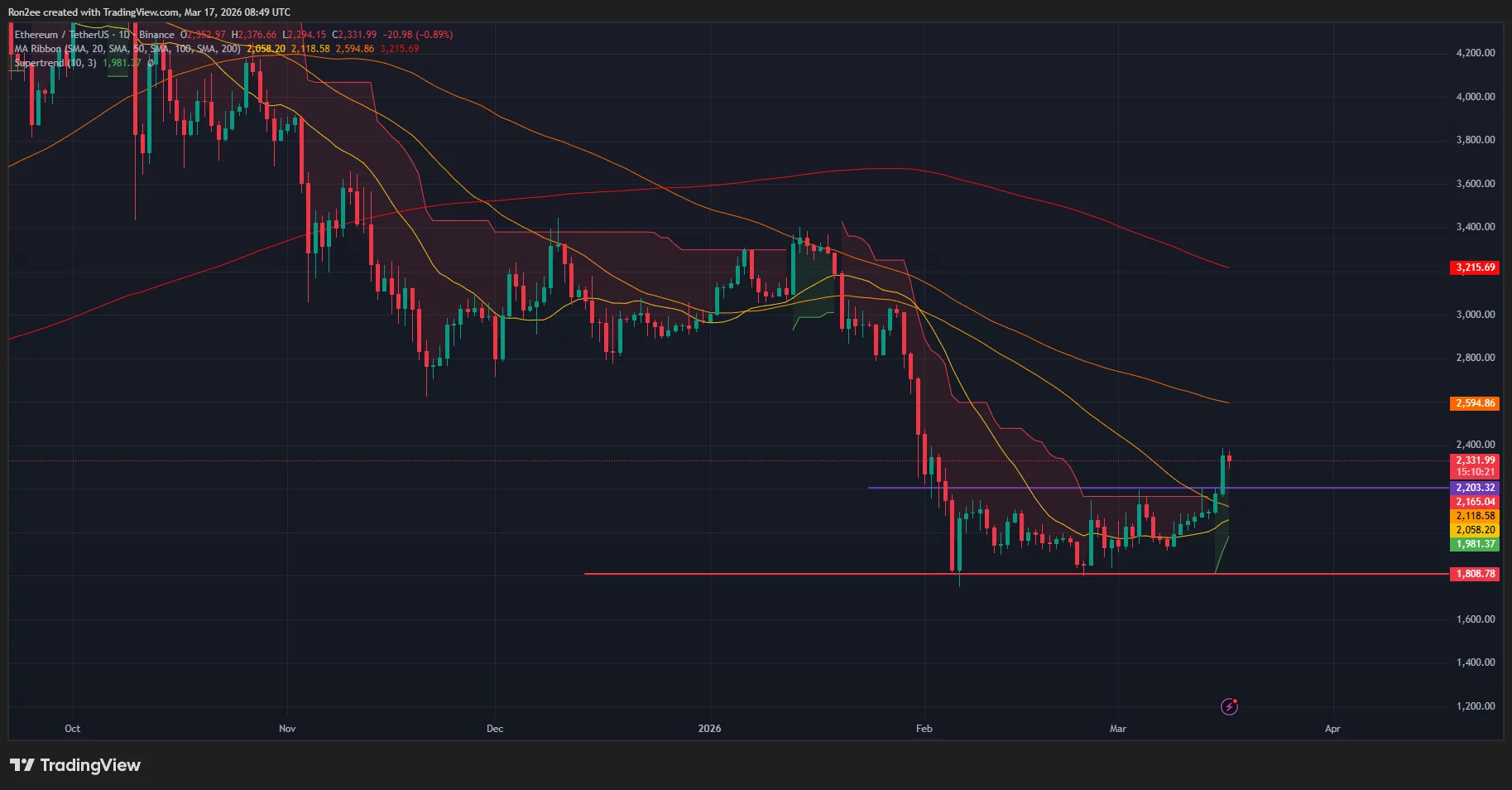
The Supertrend has flashed green for the first time since Jan. 20. Typically, when the Supertrend indicator turns green, an asset’s price enters a sustained bullish phase. Additionally, the 20-day and 50-day SMAs are approaching a bullish crossover, a sign that upward momentum is gathering strength.
For now, $2,594 acts as the next key resistance area bulls would likely aim to challenge. A break above that level would mark a major shift in market sentiment and could lay the groundwork for a retracement towards the $3,000 psychological milestone.
On the contrary, failure to hold the 50-day SMA at $2,118 could lead to a retest of lower support levels as sellers look to capitalize on any signs of weakness.
Disclosure: This article does not represent investment advice. The content and materials featured on this page are for educational purposes only.


An ex-Los Angeles County Sheriff’s Department deputy was sentenced to prison for his role in extorting victims alongside a jailed crypto figure.
Summary
- Former LA County deputy Michael Coberg was sentenced to 63 months in prison and ordered to pay $127,000 for assisting crypto founder Adam Iza in multiple extortion schemes.
- Prosecutors said Coberg received at least $20,000 a month and used his position to help detain victims, force crypto transfers, and orchestrate a drug-related arrest setup.
Michael Coberg, who served as a deputy with the department, was handed a 63-month prison sentence for helping jailed crypto founder Adam Iza extort victims.
He has also been ordered to pay $127,000 in restitution.
According to prosecutors, Coberg received at least $20,000 a month for his services from Iza, who founded the crypto trading platform Zort and was known as “The Godfather.”
The incident dates back to October 2021, when Coberg was part of a team that picked up a man identified only as “L.A.” amid a financial dispute tied to Iza.
Coberg then brought L.A. to Iza’s house, where Iza recorded a video and forced him to transfer $127,000 to his bank account while Coberg stood watch.
Subsequently, Coberg was also accused of taking the victim to a firing range, where Iza held him at gunpoint and demanded the transfer of funds.
Prosecutors further noted that Coberg conspired to set up another victim, identified only as “R.C.,” in a drug-related arrest scheme.
Prosecutors also noted that R.C. had been targeted in coordination with Christopher Cadman, another former deputy who has also pleaded guilty in the case.
Coberg pleaded guilty in September to conspiracy to commit extortion and conspiracy against rights. Meanwhile, Iza is currently awaiting sentencing after pleading guilty last year to extorting multiple victims.
Cases involving crypto-related extortion, often referred to as wrench attacks, have been on the rise in recent years. As previously reported by crypto.news, a couple in western Paris was held hostage and forced to transfer roughly $980,000 in Bitcoin, underscoring how physical coercion is increasingly being used to bypass digital security measures.
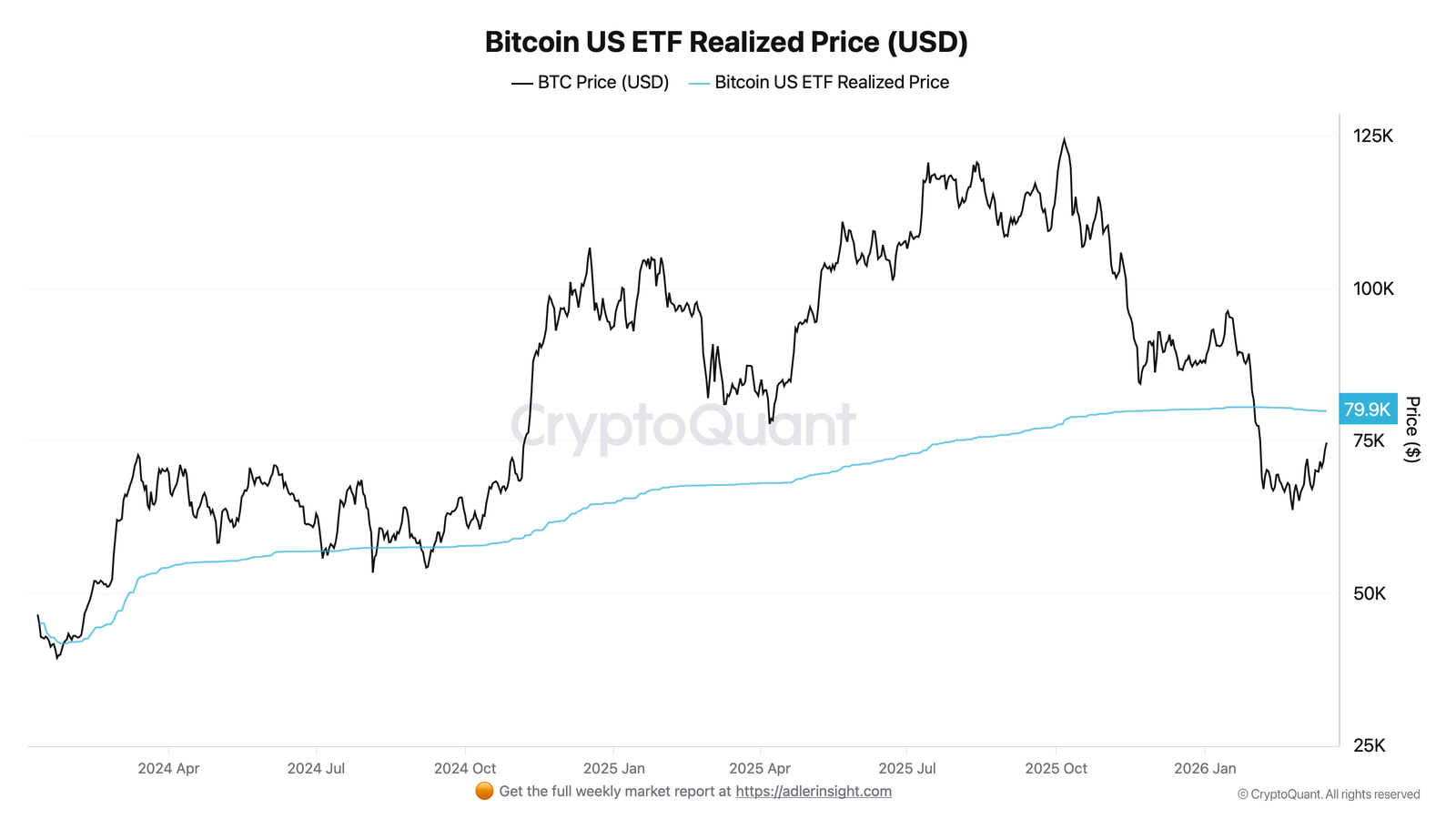
Bitcoin (BTC) is closing in on its average entry price for US spot BTC exchange-traded fund (ETF) investors at $79,900. The narrowing gap between Bitcoin’s market price and the ETF holders’ cost basis coincides with onchain data that shows early signs of accelerated buying from investors.
Bitcoin ETF breakeven level nears key trend test
Bitcoin’s sustained price rally above $70,000 puts a key investor cohort back in focus. The ETF cost basis level acted as support in mid-2024, and a break above this level brings many ETF holders closer to breakeven.

The flow data adds further context to this shift. According to Bitcoin researcher Axel Adler Jr., the ETF flows flipped positive after persistent outflows through mid-February.
The seven-day average has since moved to steady inflows, with daily flows peaking above 3,300 BTC on March 2. The ETF holdings have expanded to 1,291,618 BTC from 1,264,982 BTC, a 26,636 BTC increase over the past month.
Investors’ ETF cost basis also aligns with a key daily trend. A decisive move through this range marks a reclaim of the 100-day exponential moving average (EMA) on the daily chart for the first time since October 2025.

A move above the 100-day EMA signals a shift into a long-term uptrend, which also reinforces the bullish momentum. It also serves as a key trend filter where sustained price action above it often leads to continued upside gains.
Related: ‘Bitcoin Standard’ author explores reality where decentralized gold stopped WWI
Bitcoin buyers begin to outpace sellers
The order flow across major exchanges shows a gradual shift in market behavior. Crypto analyst Darkfost noted that the 30-day volume delta on Binance and Coinbase has turned positive after sustained selling pressure in February. Both the retail and institutional flows are now collectively skewing toward accumulation.

Bitcoin’s futures data reinforces this trend. Amr Taha noted that Binance’s cumulative volume delta (CVD) has rebounded by nearly $6 billion from its lows, tracking a rise in aggressive market buying since BTC traded near $63,000.
The metric remains below zero, though a significant portion of earlier sell pressure has now been absorbed during the recovery.

CryptoQuant data shows that short-term holder activity also aligns with this shift. The spent-output profit ratio (SOPR) metric, which shows whether coins are sold at a profit or loss, has moved back above 1, signaling that the selling pressure has eased and coins are now trading around or above their cost. Analyst miracleyoon said,
“While this capitulation was not as severe as the August 5, 2024, event (which saw SOPR approach ~0.9), the series of recent capitulation signals appears sufficient to have flushed out weak hands.”

The data suggests that Bitcoin remains on track to test the $80,000 level, but a move above the key breakeven zone may determine the strength and direction of the trend in the coming weeks.
Related: Bitcoin analysis sees $68K support as gold slips at key $5K level
This article does not contain investment advice or recommendations. Every investment and trading move involves risk, and readers should conduct their own research when making a decision. While we strive to provide accurate and timely information, Cointelegraph does not guarantee the accuracy, completeness, or reliability of any information in this article. This article may contain forward-looking statements that are subject to risks and uncertainties. Cointelegraph will not be liable for any loss or damage arising from your reliance on this information.
Crypto World
Cari Network launches tokenized deposit platform on ZKsync’s Prividium for US regional banks: Cari Network
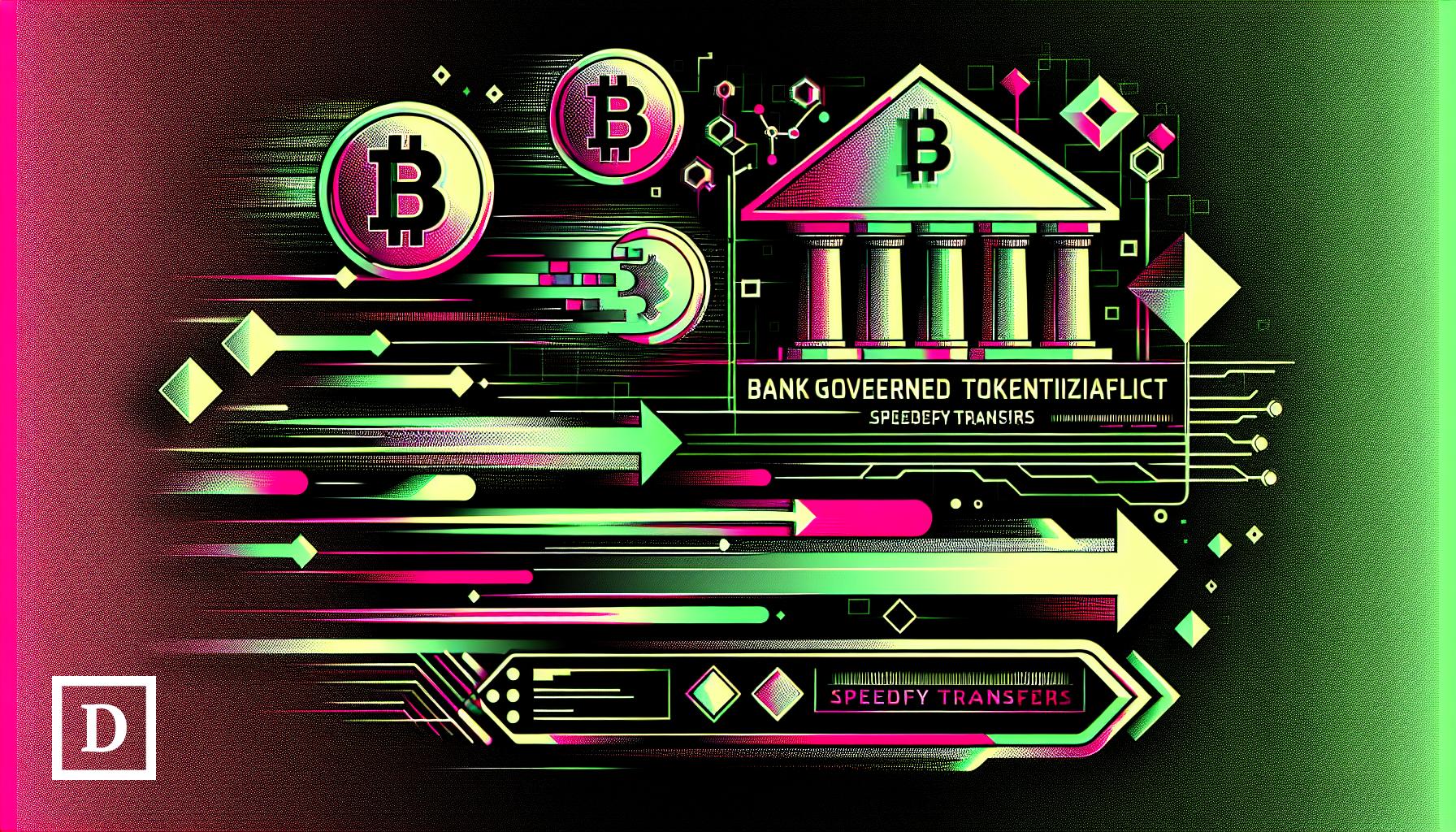
Cari Network is building a bank-governed tokenized deposit platform on ZKsync’s Prividium stack, offering US regional lenders an onchain payments rail with stablecoin-like speed and transferability.
Cari Network has selected ZKsync’s Prividium stack to build a bank-governed tokenized deposit platform aimed at US regional banks. The platform will enable regional lenders to offer customers tokenized deposits that function like stablecoins in terms of speed and transferability, while retaining the benefits of traditional banking and compliance.
Prividium is purpose-built for institutions requiring privacy, compliance, and full data control, offering user-level privacy, compliance tools, cross-chain connectivity, and Ethereum-grade security. The move reflects growing interest from traditional financial institutions in integrating blockchain-based payment rails and tokenized assets into their existing services.
Sources: ZKsync Prividium | Banking Exchange
This article was generated automatically by The Defiant’s AI news system from publicly available sources.

Northern Ireland Childcare Subsidy Scheme to continue into 2026-27

Ad for AI editing app which said it could 'remove anything' banned

Pi Network (PI) News Today: March 17


-
 Tech7 days ago
A 1,300-Pound NASA Spacecraft To Re-Enter Earth’s Atmosphere
-
 Crypto World4 days ago
HYPE Token Enters Net Deflation as HyperCore Buybacks Outpace Staking Rewards
-

 Fashion4 days ago
Weekend Open Thread: Addict Lip Glow
-

 Tech2 days ago
Your Legally Registered ‘Motorcycle’ Might Not Count Under Proposed US Law
-
Sports3 days ago
Why Duke and Michigan Are Dead Even Entering Selection Sunday
-

 NewsBeat6 days ago
Residents reaction as Shildon murder probe enters second day
-

 Business2 days ago
Search for Savannah Guthrie’s Mother Enters Seventh Week with No Arrests
-

 Business7 days ago
Search Enters Sixth Week With New Leads in Tucson Abduction Case
-

 Sports6 days ago
PWHL, Senators discussing plan to keep Charge in Ottawa
-

 Business3 days ago
US Airports Launch Donation Drives for Unpaid TSA Workers as Partial Government Shutdown Enters Fifth Week
-
 Tech7 hours ago
Are Split Spacebars the Next Big Gaming Keyboard Trend?
-
Crypto World3 days ago
Coinbase and Bybit in Investment Talks: Could Bybit Finally Enter the US Crypto Market?
-

 NewsBeat6 days ago
I Entered The Manosphere. Nothing Could Prepare Me For What I Found.
-

 Business4 days ago
Country star Brantley Gilbert enters growing non-alcoholic beer market
-

 Business2 days ago
Australian shares drop as Iran war enters third week
-

 Crypto World2 days ago
Crypto Lender BlockFills Enters Chapter 11 with Up to $500M in Liabilities
-

 Sports4 days ago
College Basketball Best Bets: Conference Tournament Semifinal Picks
-

 Politics7 days ago
Trump Says Middle East Is ‘Very Lucky’ That He’s President
-
 Crypto World6 days ago
Three Binance Charts May Be Hinting at Bitcoin’s Next Move
-
 Business5 days ago
Trump demands Powell cut rates as Iran conflict raises energy prices


You must be logged in to post a comment Login