

Crypto World
Obfuscation May Enable Private On-Chain Voting

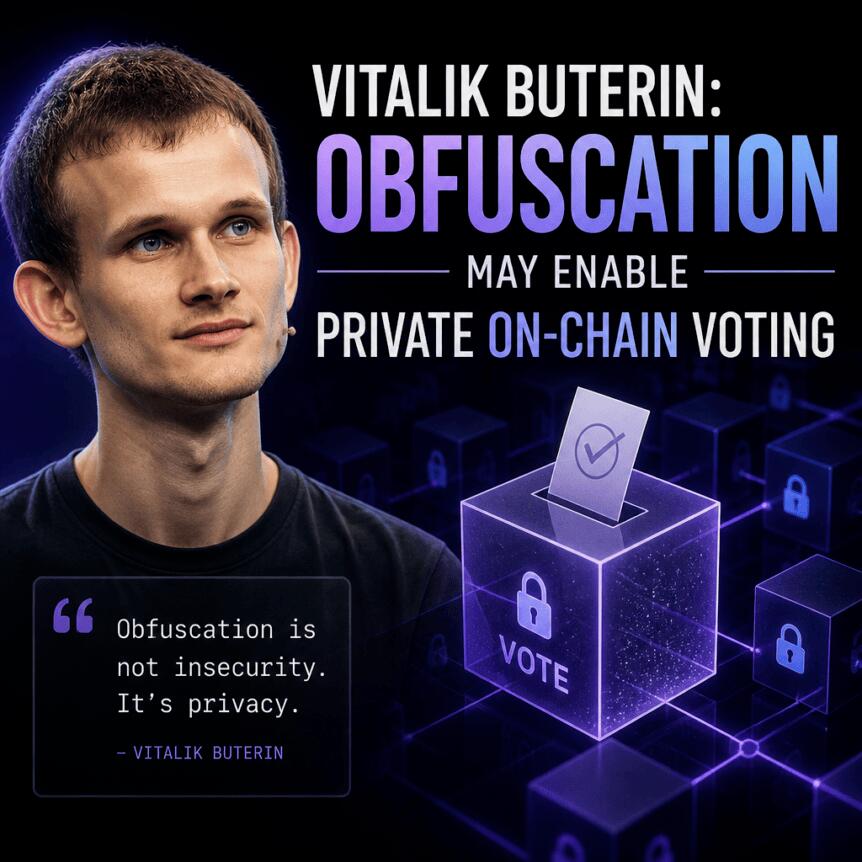
Ethereum co-founder Vitalik Buterin has laid out a longer-term cryptography blueprint for private, onchain voting that aims to avoid the need for a trusted group to handle ballots. In a technical essay published Monday, Buterin argues that a cryptographic technique known as indistinguishability obfuscation (iO) could let blockchain systems compute voting results while keeping individual votes hidden and limiting opportunities for collusion.
The proposal centers on replacing traditional threshold-style committees—groups that collectively decrypt encrypted votes—with protected programs designed to reveal only the final outcome. Buterin cautions, however, that the approach is not yet practical, with the most conservative versions requiring extremely heavy computation and faster variants depending on less-tested security assumptions.
Key takeaways
- Buterin’s proposal uses indistinguishability obfuscation (iO) to create “protected programs” that can compute vote tallies without exposing ballot contents.
- The design is intended to reduce reliance on threshold committees that jointly decrypt results, potentially lowering the trust needed for private onchain voting.
- Even with iO, blockchains remain essential because protected programs can’t stop being copied or support state updates on their own.
- Buterin describes current constructions as computationally impractical, positioning the idea as research direction rather than a near-term deployment plan.
From encrypted ballots to protected programs
Buterin frames iO as a method for hiding software logic. In his explanation, iO transforms a piece of code into a protected program such that others can run it to obtain the intended output, but cannot inspect the internal code or retrieve embedded sensitive data. He emphasizes that this approach focuses on concealing the program itself, rather than solely masking the data it processes.
In the context of voting, the idea would be to package the tallying and eligibility logic into an obfuscated program. Voters could submit encrypted ballots, and the system would execute the protected program to produce a final tally without exposing how individual participants voted. In effect, this would remove a key requirement of many private voting schemes: coordinating a set of operators (a threshold committee) that holds decryption capabilities and must behave honestly.
Buterin also notes that blockchains still have to do the heavy lifting for public coordination and evolving state. While iO can hide computation details, it cannot prevent copying or manage changing information by itself, so a blockchain—or similar distributed infrastructure—would remain necessary for the system to function over time.
Why dropping threshold committees matters
Private onchain voting typically involves operational trust assumptions, even when votes remain cryptographically protected. In many designs, groups of operators must safeguard information and follow the protocol correctly—particularly during decryption or tallying. Buterin argues that eliminating (or sharply reducing) the need for threshold committees could make decentralized governance more resistant to manipulation.
In his view, reducing this dependency could also lower the risk of insider interference and enable voters to participate without exposing voting behavior. However, the core promise is not only privacy for individuals; it is also a shift in who has meaningful control over the outcome. Instead of multiple parties jointly controlling decryption, the tally would be derived from running a protected program intended to reveal only what the system needs to disclose.
That said, the essay’s emphasis on security assumptions and computational feasibility underlines that the practical challenge is formidable. The approach is designed to minimize trust—but it still must be engineered so that security holds under realistic operating constraints.
Security trade-offs and why deployment is still out of reach
Buterin’s assessment is explicit: the idea, while conceptually aligned with “almost no trust assumptions,” is not ready for real-world use. He describes the most conservative constructions as requiring what he calls “galactic” amounts of computation—suggesting that the computational overhead would overwhelm any system intended for everyday participation.
He also points to a tension faced by cryptographic research more broadly: faster constructions tend to rely on weaker or less-tested security assumptions. In other words, an implementation that is technically feasible may not yet offer the same level of assurance as the most conservative theoretical design. This leads Buterin to characterize iO-based private voting less as a deployment-ready system and more as a long-term research direction.
For investors and builders watching Ethereum’s roadmap, the takeaway is that privacy research is moving toward more rigorous “how it’s computed” privacy—yet the path from cryptographic theory to production-grade systems will require major advances in efficiency and confidence in assumptions.
How this fits into Buterin’s broader privacy agenda
This iO voting essay builds on earlier work by Buterin linking advanced cryptography to stronger privacy and reduced coercion risk. In October 2024, he connected iO with private voting in an Ethereum roadmap he published, arguing that the technique could improve privacy guarantees.
He has also pushed for practical privacy steps within Ethereum’s ecosystem. In April 2025, Buterin proposed a more immediate privacy roadmap that called for integrating privacy tools into existing wallets. That proposal also advocated for stronger protections against data collection by infrastructure providers used by wallets to access Ethereum, reflecting an emphasis on privacy not just at the cryptographic layer but in the surrounding network services.
Buterin has additionally directed personal funds toward privacy-preserving projects. According to earlier coverage by Cointelegraph, on Jan. 30 he earmarked 16,384 Ether (ETH) (about $45 million at the time) to support initiatives focused on privacy, open infrastructure, and self-sovereign tools.
Read together, these threads show a consistent direction: privacy improvements are being pursued both through long-horizon cryptographic designs like iO and through nearer-term engineering changes that could reduce exposure to tracking and data collection.
For now, the most important question is what—if anything—can be improved to make iO-based voting computationally viable without sacrificing security confidence. Readers should watch for follow-up research that narrows the performance gap and clarifies which security assumptions would be acceptable for real deployments.



In attempting to modernize and better meet its customers’ needs, MoneyGram has partnered with the Stellar network, which has underpinned many of the company’s blockchain initiatives over the past five years. But the company has also started exploring other ecosystems: while Stellar remains a core partner, MoneyGram has also become a validator on Solana and Tempo. For MoneyGram, the immediate payoff isn’t speculative crypto activity, it’s replacing legacy financial rails.
Today’s cross-border settlement still largely depends on banking hours and weekday processing. Blockchain-based infrastructure, Soohoo argued, enables real-time settlement around the clock, reducing operational costs while improving the customer experience.
“We believe if we do it right, we can achieve all three,” he said, referring to helping customers save time, effort and money. Instant settlement also allows MoneyGram to lower back-office costs, savings the company hopes to eventually pass on through lower prices. Currently, MoneyGram’s fees start at $1.89 and vary depending on what country you send them to.
Soohoo doesn’t believe consumers need to understand the technology powering those improvements. He compared blockchain to the processors inside Apple’s iPhone.
“I can’t tell you what processor is inside my iPhone,” he said. “I just know it’s faster.” In the same way, he argued, remittance customers care about whether money arrives quickly and reliably, not whether it traveled over a blockchain.

July has been historically a positive month for bitcoin and this edition hasn’t disappointed so far. The cryptocurrency began the month on the wrong foot, dipping below $58,000 for the first time in nearly two years, but it rebounded swiftly in the following weeks.
Earlier today, it rocketed past $66,000 for the first time in over a month, gaining over $8,000 since that July 1 low. Here are some of the possible reasons behind it.
Whale and ETF Accumulation
As June was coming to an end and it became known that it would be a highly painful month for the asset with a nosedive of over 20%, we outlined several factors that had to change in July for a price resurgence. One of them was the ETF inflows. The financial vehicles went on a violent eight-week withdrawal-only streak, which was finally snapped a couple of weeks ago.
Moreover, investors continued to pour funds into the ETFs, which ended two weeks in the green in a row for the first time in months. July 20 extended the streak as the funds attracted almost $227 million.
The second major reason for the price revival is whale behavior. Data shared by CryptoQuant indicated that large market participants holding between 1,000 and 10,000 BTC increased their 60-day net accumulation to roughly 66,700 units, which is close to the recent record seen a month ago.
“This is the cohort’s strongest accumulation reading since February 17, when net accumulation briefly exceeded 106,000 BTC.”
News From the US
The third reason has a more macro scent. It came a week ago when the US CPI numbers for June were announced, showing softer-than-expected inflation rates. BTC rallied immediately after the news went live as lower inflation reduced the pressure on the Fed to hike interest rates. Similar market conditions are regarded as beneficial for risk-on assets like bitcoin.
Last but perhaps most importantly at the moment comes a development on the CLARITY Act. After the odds of approval dropped toward 30% just days ago, reports emerged that the White House had agreed on an ethics package for the key legislation and sent the language to certain Senate republicans for further validation.
Although the details are still scarce, industry experts believe this is a major step in the right direction for the bill, and it increases the chances for a 2026 approval.
The post 4 Key Reasons Behind Bitcoin’s (BTC) Rally Above $66K appeared first on CryptoPotato.


Prism, a token that pays a share of trading fees to everyone who holds it, is relaunching on a new Ethereum contract after disclosing that an attacker spent most of July siphoning off nearly 40% of those fees. The original PRISM token, which the project is now abandoning, plunged about 91% in the… Read the full story at The Defiant
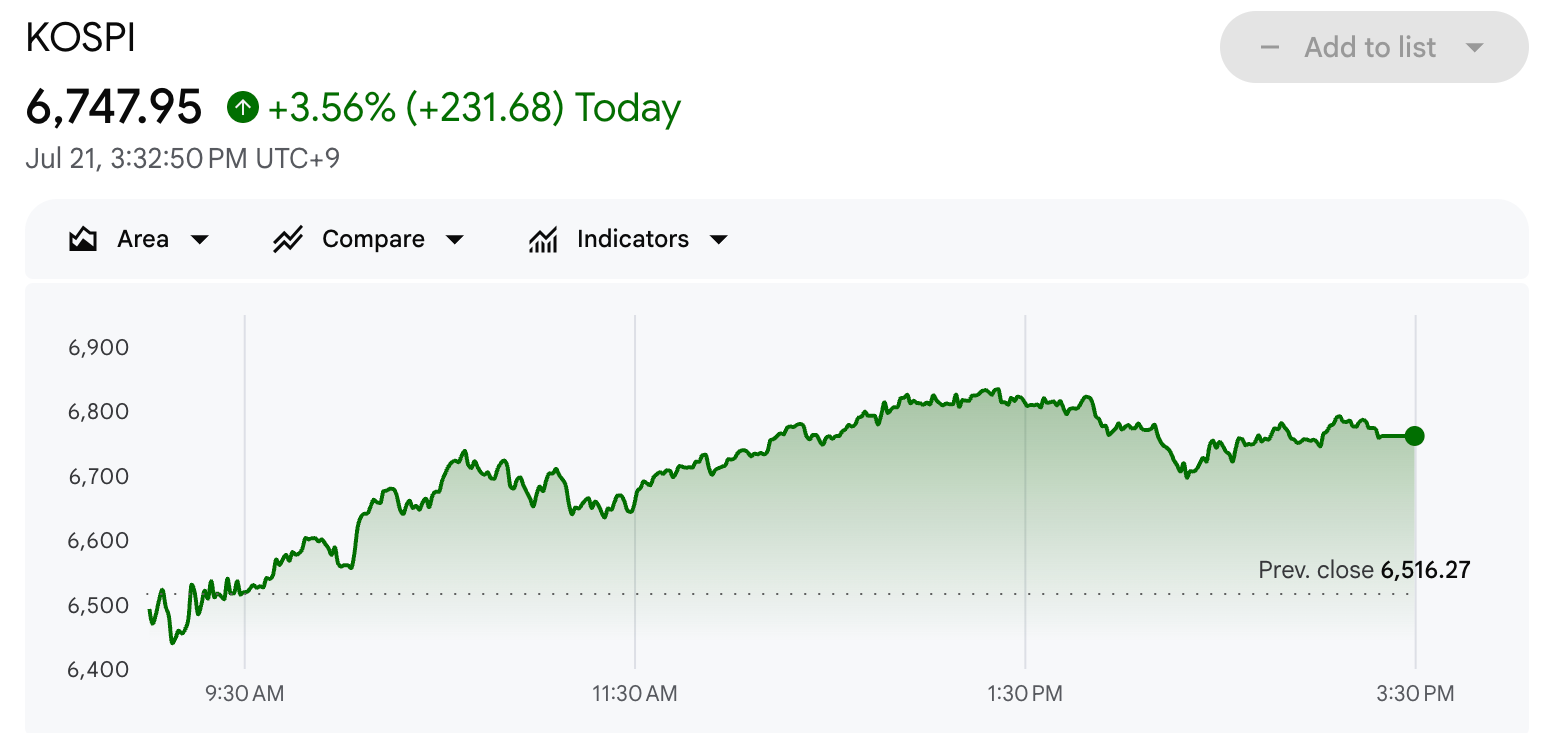
Citigroup has reaffirmed its KOSPI price target of 10,000, projecting that the recent sell-off in South Korean stocks could soon reverse.
The index has shown notable volatility in 2026, forcing the Korea Exchange to trigger sidecars and circuit breakers across repeated sessions.
Why Citi Sees a Buying Opportunity For KOSPI
The KOSPI has slid into a broader decline since setting a record closing high of 9,114.55 on June 22. Citi remains bullish on a revival.
The bank’s analysts told clients in a Monday note that the market’s headwinds have peaked. Citi argues that strong economic fundamentals and a market-friendly policy mix can drive the recovery.
“We think the recent share price pullback of KOSPI equities, led by KR memory suppliers, is more of a technical correction driven by market-wide profit-taking and therefore could represent a potential buying opportunity,” the analysts stated.
Meanwhile, the index posted another red session on Monday, dropping more than 4%. It reversed sharply on Tuesday. The surge tripped a buy-side sidecar at 12:41 p.m., a curb that briefly suspends program buy orders when KOSPI 200 futures rise 5% or more for at least a minute.
The KOSPI closed Tuesday up 3.56% at 6,747.95. From that level, Citi’s 10,000 target implies a 48% gain, and it sits nearly 10% above the previous closing record.
Follow us on X to get the latest news as it happens

Notably, volatility remains the KOSPI’s defining feature. Volatility on the index has topped 60% this year, almost double Japan’s Nikkei 225 and higher than Bitcoin (BTC).
The turbulence forced the Korea Exchange to trigger circuit breakers seven times through mid-July, up from none in 2025.
Tuesday’s rebound closed part of the distance Citi flagged. Whether it holds remains to be seen.
Subscribe to our YouTube channel to watch leaders and journalists provide expert insights
The post Citi Keeps 10,000 KOSPI Target Despite Market Selloff appeared first on BeInCrypto.
Crypto World
Pi Network (PI) Rises 25% in a Week But Warning Signs Point to Another Possible Pullback
Pi Network’s PI has emerged as one of the strongest performers in the top-100 crypto ranking over the past week, outpacing countless major digital assets.
However, this rally may prove short-lived and could be followed by another sharp pullback in the near future.
PI Flashes Green
In mid-July, the native token of the controversial crypto project tumbled to a new all-time low of around $0.07, while its market capitalization slipped well below the $1 billion psychological level.
Since then, though, the bulls have stepped in, and now PI trades at around $0.093 (per CoinGecko), representing a roughly 25% increase on a weekly basis.
The exact catalyst of the resurgence remains unclear since Pi Network’s team has been rather silent over the past few days and has not unveiled any new ecosystem updates. Of course, one potential factor could be the overall revival of the crypto market, where Bitcoin (BTC) crossed $66,000, while Ethereum (ETH) aims to reach $2,000.
Many analysts are now optimistic that PI can post further gains. X user Crypto With Gopal claimed that the asset is printing a “Falling Wedge” after a prolonged downtrend where selling pressure is fading, and the price is “squeezing toward the wedge apex.” They believe this formation often signals that momentum is shifting back to the bulls.
“Buyers are quietly defending support while lower highs continue to compress. A strong breakout above the wedge resistance could spark a sharp relief rally as sidelined buyers step in. If bulls reclaim the trendline with volume, PI could be setting up for a major expansion move. Market sentiment is cautiously turning bullish,” they added.
Prior to that, OxNeena argued that after months of selling pressure, PI has finally shown signs of accumulation. They believe that if buyers step in, this could mark the beginning of a strong trend reversal, with $0.20 and $0.32 set as potential upside targets.
Brace for Potential Drop
PI investors should remain cautious, as previous pumps like this have often been abruptly ended by another major move downward. The prolonged bear market and the concerning condition of the entire crypto sector reinforce those fears.
Meanwhile, the PI community must take other factors into account, including the upcoming token unlocks. Around 127.5 million coins are set for release in the next 30 days: a development that doesn’t guarantee a price drop but increases selling pressure.
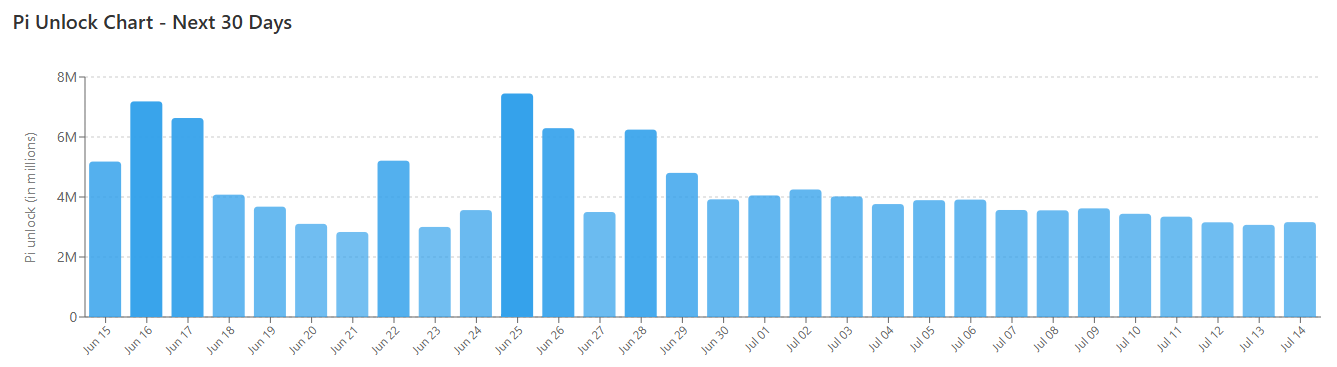
- PI Token Unlocks, Source: piscan.io
X user Travladd told their nearly 500,000 followers on X that PI is “looking cooked,” noting that there is too much supply. “Won’t catch me buying into any relief rally,” they added.
The post Pi Network (PI) Rises 25% in a Week But Warning Signs Point to Another Possible Pullback appeared first on CryptoPotato.
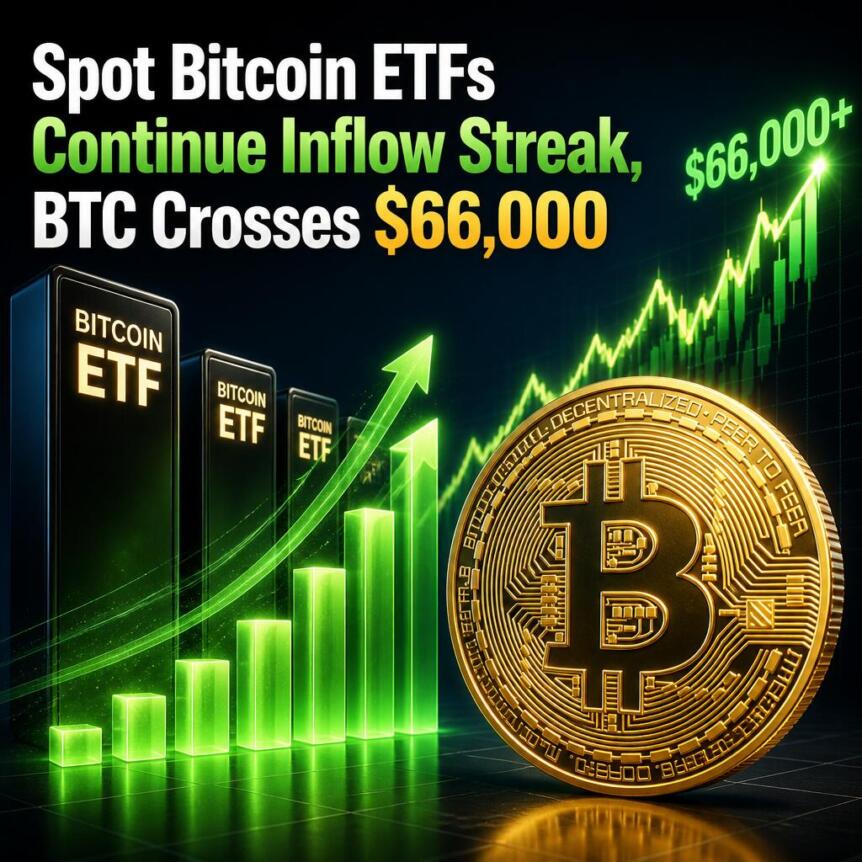
US spot Bitcoin ETFs recorded their fifth consecutive day of inflows, their longest streak since May, as the flagship cryptocurrency crossed $66,000. Strong inflows suggest price action and investor sentiment could be stabilizing after a period of sustained outflows.
Bitcoin (BTC) has regained momentum over the past seven days, reclaiming $65,000 on Monday and extending its gains on Tuesday to surpass $66,000. BTC registered an increase of over 3% in the past 24 hours and is currently trading around $66,158.
Spot Bitcoin ETFs Extend Inflows
Spot Bitcoin ETFs registered their fifth consecutive day of inflows, recording $226.80 million on Monday, the highest single-day inflow since July 6, as institutional demand returned. The ETFs have recorded a total net inflow of $727.3 million over the five-day streak and posted back-to-back positive weeks for the first time since May.
BlackRock’s IBIT recorded the highest inflows on Monday with $116.5 million, followed by ARK Invest’s ARKB with $72.7 million. Fidelity’s FBTC recorded $24.1 million in net inflows, while Bitwise’s BITB added $8.8 million and VanEck’s HODL registered $1.8 million in net inflows. Morgan Stanley’s MSBT recorded inflows of $6.9 million. However, Grayscale’s Bitcoin Trust recorded $45.4 million in outflows. Those outflows were offset by Grayscale’s Mini Bitcoin Trust, which recorded $41.4 million in net inflows.
Institutional Interest Returning?
Consistent inflows have returned after a period of sustained outflows as institutional investors pulled capital from Bitcoin ETFs. Analysts believe the inflows suggest returning institutional interest in Bitcoin and their preference for ETFs for crypto exposure. However, Simon-Peter Massabni, the head of business development at XS, believes the inflows indicate easing sell-side pressure rather than returning institutional interest and demand. According to Massabni, BTC must break and hold above $65,000 to strengthen the bullish argument.
Richard Galvin, executive chairman of DACM, believes the inflows suggest Bitcoin was beginning to find a bottom. BTC is trading above $66,000, a level it must sustain to convince the market of a sustained uptrend. The flagship cryptocurrency has largely traded between $60,000 and $65,000 in recent weeks amid geopolitical and macroeconomic headwinds.
Damien Loh, CIO at Ericsenz Capital, warned of rising inflation and interest rate hikes if the conflict between the US and Iran continues dragging on. Loh believes this could make institutional investors reluctant to put capital in BTC and other risk assets. However, he added that if the CLARITY Act passes before the August recess, it could provide the catalyst needed to push prices higher.
Strategy Building $3.23 Billion Warchest
Rising ETF inflows come amid Strategy’s efforts to improve its liquidity. The Bitcoin treasury company sold some of its Bitcoin holdings for the first time since June 2022, as it attempts to mitigate the impact of BTC’s recent decline and meet its dividend obligations. BTC is down nearly 50% from its October 2025 high of $126,000, and recently sold $263.5 million in common stock. However, it did not use the proceeds from that sale to purchase additional BTC. Instead, the company used the funds to bolster its dollar reserve.
Disclaimer: This article is provided for informational purposes only. It is not offered or intended to be used as legal, tax, investment, financial, or other advice.

Bernstein just raised its price target on Robinhood stock to $160, and the key driver is not crypto trading volume. Instead, the firm sees long-term value in Robinhood’s blockchain infrastructure. Robinhood Wrapped ETH on Robinhood Chain has gained about 2% over the past week, while daily trading volume sits near $44 million. Those numbers suggest the network is attracting steady activity rather than short-lived hype.

Bernstein analysts, led by Gautam Chhugani, lifted their HOOD target from $130 to $160, based on a 2028 EPS estimate of $4.56 and a 35x forward P/E multiple. The firm expects prediction markets, perpetual futures, and Robinhood Chain to generate 18% of total revenue by 2027, rising to 23% in 2028. Prediction markets alone could contribute $1.7 billion by 2028.
Discover: The Best Crypto to Diversify Your Portfolio
Robinhood, The Stock Platform Juggernaut
Robinhood’s second-quarter earnings arrive on July 29, and Bernstein expects new businesses to soften any slowdown in crypto trading revenue. That fits a growing trend across the market. Investors increasingly reward companies building the rails for digital assets instead of simply benefiting from speculative token rallies. Building the highway often pays better than collecting tolls during rush hour.
Robinhood Chain could also benefit the crypto market beyond its own ecosystem. More Layer 2 infrastructure gives users cheaper transactions and faster settlement while helping Ethereum scale. As more developers deploy applications and liquidity spreads across new networks, on-chain activity becomes easier to access for retail users. Fresh competition rarely hurts innovation, especially in crypto.
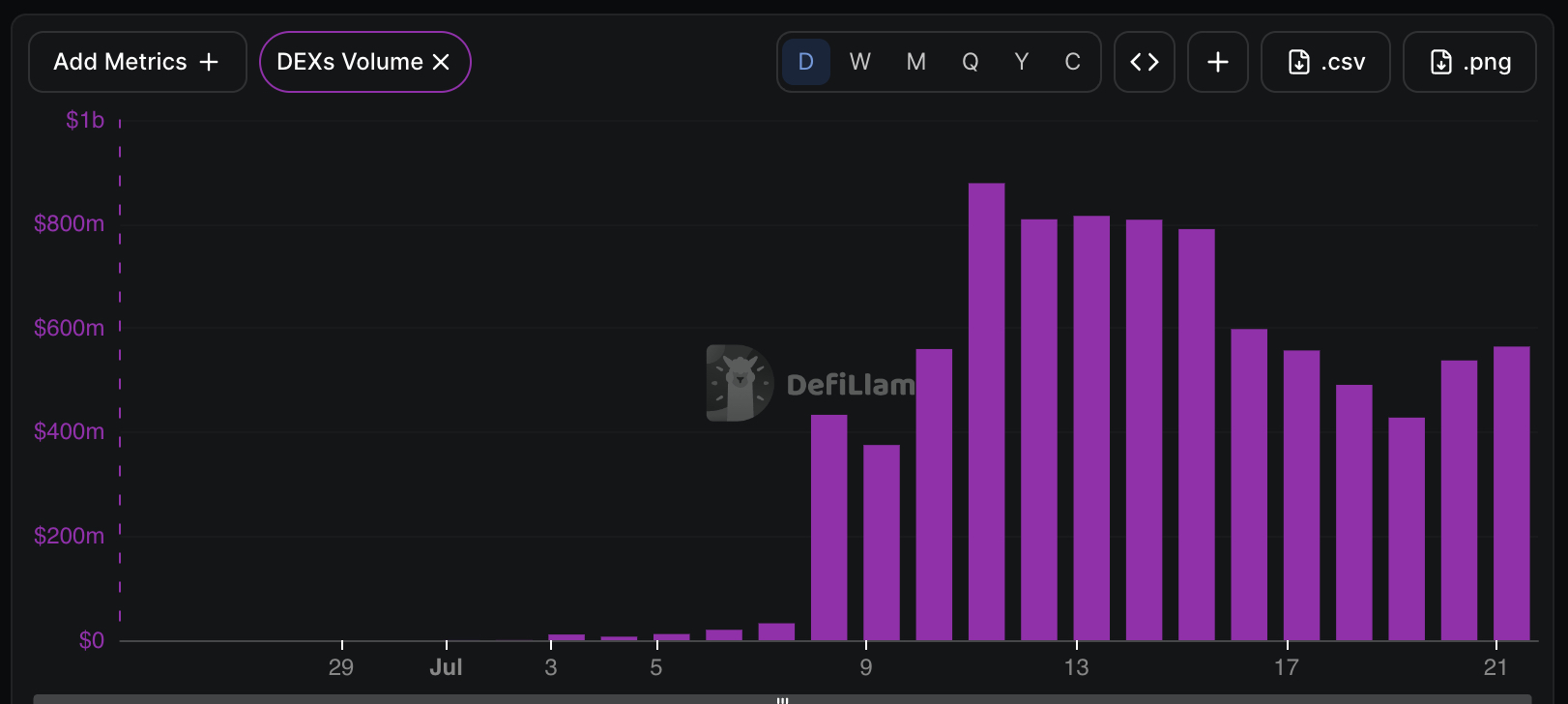
For traders, the takeaway is simple. Robinhood Chain appears to be gaining real usage, and that matters more than any single token’s price action. If network adoption keeps climbing, it could strengthen Ethereum’s ecosystem and encourage more capital to flow into decentralized finance. In crypto, the flashiest coin grabs headlines, but the strongest infrastructure often wins the longest race.
Bridge to Robinhood Chain With The Lowest Fee Using RocketX
LiquidChain Targets Cross-Chain Infrastructure as HOOD Token Tests Lows
The Robinhood Chain story is a reminder that chain-level infrastructure can capture value before native tokens catch up. That gap is exactly where early-stage infrastructure finds its pitch. Investors rotating out of speculative token exposure are increasingly looking at what’s being built at the execution layer.
LiquidChain is positioning as a Layer 3 infrastructure project with a specific structural thesis: fuse Bitcoin, Ethereum, and Solana liquidity into a single execution environment. The USP is architectural with a Unified Liquidity Layer with Single-Step Execution, Verifiable Settlement, and a Deploy-Once framework that lets developers access all three ecosystems without rebuilding for each chain.
The next generation of infrastructure won't stand alone. — LiquidChain (@getliquidchain) July 21, 2026
It'll connect everything around it.  ⟁https://t.co/vqvBcdSQYC pic.twitter.com/mWc9fGndPd
The presale is live at $0.01482 per $LIQUID, with $915K raised to date. As covered in earlier presale reporting, the project is approaching the $1M milestone.
Research LiquidChain here before sizing any position.
Trade Memecoins like DOGE on Bybit and Get a Chance to Win Our $1,000 USDT Airdrop
The post Robinhood Chain Booming, Bernstein Puts Higher Target on HOOD appeared first on Cryptonews.
Twenty One Capital (XXI) CEO Jack Mallers stepped down on Monday, seven months after the company went public. Tether also dropped its plan to merge the Bitcoin treasury firm with Strike, Mallers’ payments company.
The bigger story is the new game plan. Twenty One listed five fresh priorities, and buying more Bitcoin (BTC) is not one of them.
Why Tether Is Rewriting Its Bitcoin Treasury Playbook
Back on April 29, Tether pitched a grand plan. It wanted to fold Twenty One, Strike, and Elektron Energy, a Bitcoin mining firm, into a single Bitcoin platform.
Galaxy Research said the combined group could rival Strategy’s dominance among corporate holders. Now, Jack Mallers is leaving, and has announced his step-down as CEO of Twenty One.
That vision lasted less than 12 weeks. Strike now stays independent. A deal with Elektron is still possible, but talks are early. There is also a catch. Tether owns majority stakes on both sides, so any deal would face extra review as a related-party transaction.
The timing is no accident. Digital asset treasury (DAT) companies, firms that mainly buy and hold crypto, are under pressure. Bloomberg reported that Bitcoin’s price slump has brought losses and job cuts across the sector.
XXI has felt that pain. The stock listed on the New York Stock Exchange (NYSE) in December after a rocky market debut. It closed Monday at $5.32, down about 43% this year. The company is now worth about $1.85 billion.
Zagury Takes Over With a Cash Flow Mandate
New CEO Raphael Zagury comes from the money side of the business. He held senior roles at Goldman Sachs, Deutsche Bank, and Merrill Lynch. He later ran finances at OpenCo, once among Brazil’s largest fintech lenders.
His plan reads simply. Buy and build businesses that earn money, and keep the Bitcoin. The company compared its new model to Berkshire Hathaway. It also wants to lend against Bitcoin, so holders can access cash without selling.
“My job is to build the operating company around it, with the discipline, governance, and executional rigor of an institution. I believe our business will perform best when we also focus on the cash flow we generate and the rigor with which we allocate capital, not only by the Bitcoin we hold,” Zagury said in a statement.
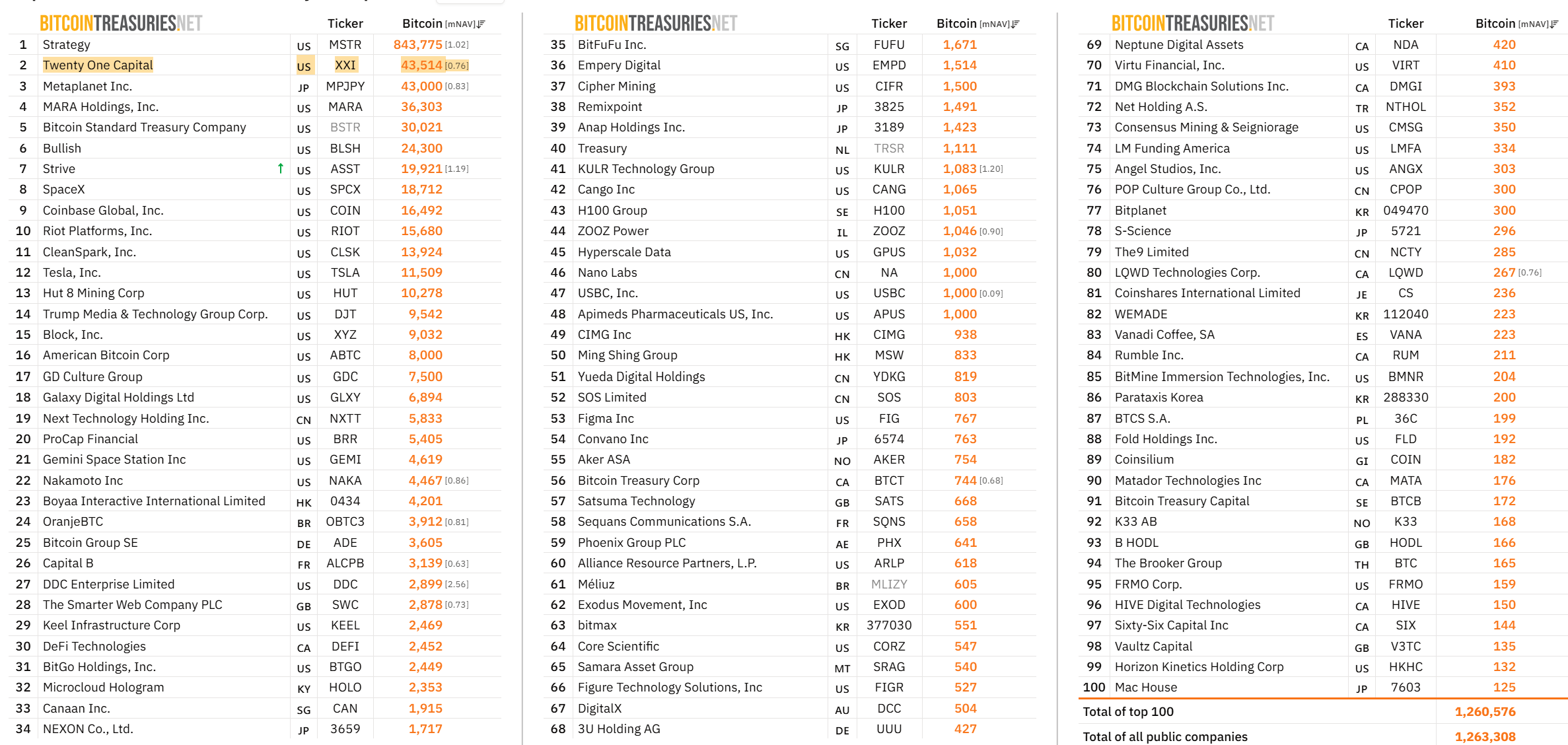
Tether saw this coming. It took full control in May by buying SoftBank’s 25% stake. Twenty One still holds 43,514 BTC, second only to Strategy in BitcoinTreasuries.net data. It also keeps its strict Bitcoin-only treasury stance.

The big question is what happens next. If the second-largest Bitcoin treasury needs more than Bitcoin, others may follow. The Elektron talks should offer the first clue.
The post Tether Rethinks XXI’s Bitcoin Treasury Model After Just 7 Months appeared first on BeInCrypto.
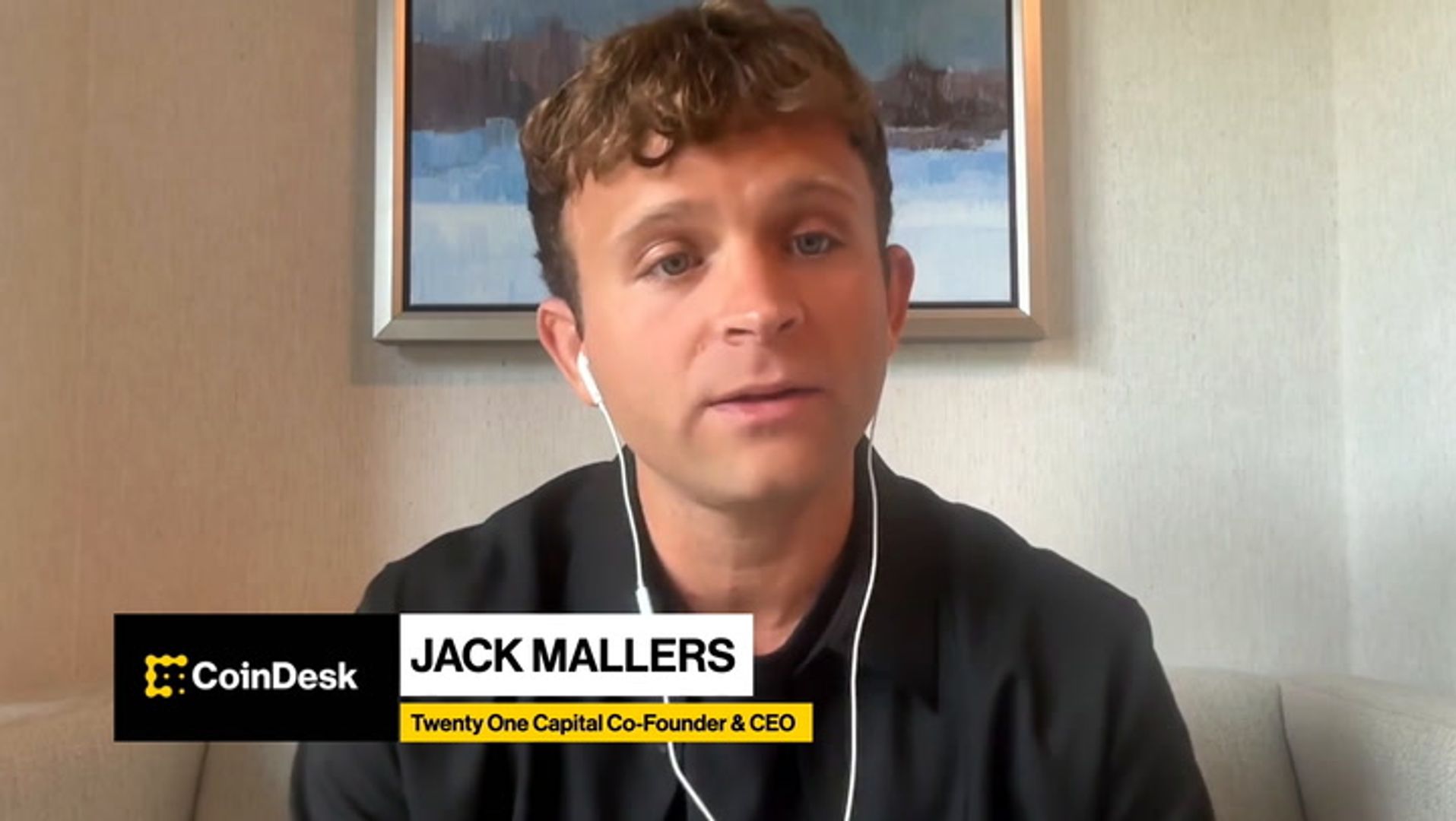
Tether-controlled Twenty One Capital (XXI) named Raphael Zagury as CEO, replacing Jack Mallers, and dropped Strike from a proposed three-way merger, the companies said.
Mallers stepped down effective July 20 to focus on Strike, the bitcoin payments firm he founded. Strike will remain independent and is no longer being considered for a business combination with Twenty One, according to a press release.
Tether, Twenty One’s controlling shareholder, confirmed the changes in a separate announcement.
Tether proposed combining Twenty One, Strike and Elektron in April, seeking to place bitcoin treasury, financial services and mining under one listed company.
Twenty One’s revised strategy will focus on acquiring operating businesses, expanding capital markets capabilities and developing bitcoin-backed lending.
XXI is little changed in pre-market trading.
CoinDesk has reached out to all three companies, but hasn’t heard back at the time of writing.


Strike will remain a standalone company after the proposed three-way merger was scrapped, while Twenty One Capital and Elektron continue discussions, Bloomberg reported.

Celtic & Rangers cited after unrest ‘near miss’ at Ibrox

Does dark energy really exist? Our work identifies cracks in the foundations of today’s cosmological model

Dow Rebounds as Chip Stocks Rally and Iran Signals a Diplomatic Opening Ahead of Earnings This Week

Renter of Home in Anne Heche Crash Denies Settlement With Son

No Jackpot Winner as $257 Million Prize Rolls Over to $269 Million Monday Draw

Weekend Open Thread: Staud – Corporette.com

YS Jagan Mohan Reddy Extended Financial Support To Vishakapatnam Fisherman Families #trending #viral

$10,000 ETHEREUM ROBINHOOD TO START ALTCOIN SEASON? #ethereum #xrp #robinhood #stocks

Crypto Gold Live Trading 20 JULY | Market Trader | #goldtrading #cryptotrading #bitcoin
-
 NewsBeat5 days ago
London Mayor Sadiq Khan handed a peerage by Keir Starmer alongside 15 other Labour figures… just days before the PM leaves No10
-

 Fashion4 days ago
Weekend Open Thread – Corporette.com
-

 Politics3 days ago
The House | The City of London can help the new chancellor deliver growth in every postcode
-

 Politics6 days ago
Young campaigners urge incoming PM to act on outdoor junk food ads
-

 Crypto World6 days ago
CFTC blocks Kalshi from unwinding Michigan trades after court order
-
 Crypto World4 days ago
Two July Windows Left: The CLARITY Act’s Senate Fight and What Failure Means
-

 Crypto World3 days ago
Ripple Payments Joins MiCA With 14 Firms, Does It Mean Anything For XRP?
-

 Business5 days ago
Nvidia Stock Slips After Big Tuesday Rally as Huang Confirms Vera Rubin Chip Is Now in Production Today
-

 Politics2 days ago
Democrats look to World Cup watch parties to register thousands of voters
-
 Entertainment6 days ago
Disney’s Most Ambitious Failed Star Wars Attraction Is Coming to SDCC
-

 Crypto World4 days ago
Ripple wins EU-wide access as ESMA adds it to MiCA register
-

 Business5 days ago
Palantir Shares Rise After Expanded Nvidia Partnership and Fresh Analyst Upgrades Ahead of Earnings Day
-

 Crypto World5 hours ago
Grayscale Files For Worldcoin ETF, WLD Registers Sharp Rise
-

 Crypto World5 days ago
Injective Submits SEC Transfer-Agent Registration to Onchain Ownership Records
-

 Tech13 hours ago
Sail Virtually Aboard The “Itanic” With IA-64 Emulator
-
 Tech10 hours ago
Turtle Beach Command Series KB7 review: a nifty screen-equipped gaming keyboard
-

 Tech7 days ago
Dark Secrets Emerge When Jailbreaking LLMs
-

 NewsBeat4 days ago
Registration is now open for March for Men with Kev 2026
-

 News Videos7 days ago
XRP BOMBSHELL… XRP OMBOARDED FOR TRANSACTIONS!!!
-

 NewsBeat1 day ago
Unregistered fitter used Gas Safe logo on business flyers
You must be logged in to post a comment Login