

Crypto World
Odds extremely low if not passed before April, Exec


The push for a clearer regulatory framework around digital assets in the United States remains one of the thorniest policy debates in Washington, with a fast-approaching deadline that could determine whether key crypto legislation advances in the near term. The US CLARITY Act, designed to bring regulatory clarity to exchanges, wallets and developers, faces a narrow window to secure traction. A crypto executive warned that if the bill does not move through committee by the end of April, the odds of its passage in 2026 look markedly worse. The clock is ticking as lawmakers weigh competing priorities and a crowded calendar in both chambers.
Key takeaways
- The CLARITY Act has a tight timetable: committee advancement by the end of April is framed as a prerequisite for any chance of floor action in 2026, according to industry observers.
- Senate leadership has signaled appetite to prioritize other measures, such as the SAVE Act, before considering crypto market structure legislation, complicating the CLARITY Act’s path.
- Stablecoin rewards stand out as a major hurdle, but observers warn they may not be the final obstacle; the bill could face concerns over DeFi, developer protections and the scope of regulatory authority.
- While some lawmakers have been optimistic about an April timeline, independent analysts have warned that a delayed vote could push enactment further into the decade, potentially into 2027 or beyond.
- Public commentary from political leaders underscores a broader need for compromise, with lawmakers and industry participants acknowledging concessions are likely on both sides.
Sentiment: Neutral
Market context: The regulatory spotlight on crypto remains intense as U.S. policymakers balance investor protection, financial stability and innovation incentives amid a shifting macro and regulatory backdrop.
Why it matters
The debate over the CLARITY Act crystallizes the broader tension between fostering innovation in the crypto sector and imposing safeguards that could stabilize a fragmented market. The central question for many stakeholders is whether a coherent, principles-based framework can be achieved without stifling experimentation, especially in areas like DeFi and wallet infrastructure where developers argue that current rules are vague or uneven in their application. Advocates say a well-defined set of rules would reduce uncertainty for exchanges, custodians and developers, potentially attracting more legitimate players into the U.S. crypto ecosystem. Opponents, however, warn that rushed legislation could impose overly broad or ambiguous standards that hamper innovation or push activities offshore.
The dialogue around stablecoins—sometimes framed as the bill’s linchpin—highlights the delicate balance lawmakers seek between consumer protection, financial-market stability and the speed at which new technologies evolve. Critics worry that focusing too narrowly on yield practices of stablecoins could miss larger questions about how stableassets interact with traditional banking rails and what protections should apply to on-chain protocols and developers. In the broader arc, the conversation signals a broader shift in how policymakers envisage regulatory authority across on-chain and off-chain activities, from scripting and DeFi governance to KYC/AML compliance for crypto service providers.
Within the policymaking process, internal dynamics also matter. For instance, a key Democrat on the Senate Banking Committee indicated that compromises will be necessary as both crypto advocates and banking interests push for favorable terms. The reality, many observers say, is that lawmakers will walk away with some concessions from both sides, rather than a pristine, perfect bill. This moderation could be the only viable path to a workable framework that gains bipartisan support while addressing substantive risk concerns. In parallel, commentary from industry leaders underscores a pragmatic approach: the CLARITY Act may not be the final word on regulatory design, with evolving oversight, enforcement priorities and technology-neutral standards likely to shape subsequent iterations.
On the legislative calendar, optimism about an April passage has given way to caution as Senate leadership weighs competing bills and priorities. Notable voices in the debate have warned that the timing is everything: a late ballot or postponed committees could push key decisions beyond midterms into a new political reality, complicating any immediate enactment. The urgency is partly tethered to the fact that other measures—such as voter verification initiatives under the SAVE Act—may receive precedence, effectively delaying crypto-specific legislation even if inputs from the crypto industry are deemed constructive.
Beyond the ideological divides, the policy conversation intersects with broader market dynamics. Investors and builders watch how regulators will interpret new authority in areas like stablecoins, on-chain governance and DeFi protocols. As discussions unfold, the industry continues to push for clarity about which actors would be regulated, what standards would apply, and how enforcement would be structured, all with an eye toward reducing the current patchwork of rules that many consider a drag on capital formation and innovation. The evolving dialogue suggests that even if a form of CLARITY bill emerges, its practical impact will depend on the specifics of the final text and the regulatory guardrails that accompany it.
One notable takeaway from industry commentators is that the debate over stablecoin yields may not be the definitive obstacle. While yield-related concerns dominate headlines, the bill’s proponents and opponents alike acknowledge that other contentious topics — including DeFi governance protections, developer liabilities, and the scope of regulatory authority — could surface once the immediate yield question is addressed. In short, passage hinges on a broader consensus about how a modern financial system can responsibly integrate programmable digital assets without creating systemic risk or stifling innovation.
A tweet from a prominent industry voice captured the urgency of the moment, underscoring the need for movement. The message, shared with the broader crypto community, signals that stall events could set the stage for a longer regulatory drag and a more uncertain roadmap for developers seeking clarity on permissible activities. The tweet and related discussions reflect a wider industry appetite for predictable rules, even as stakeholders acknowledge that any final framework will require careful calibration to satisfy both market participants and lawmakers.
On the political front, the rhetoric around crypto regulation remains varied. A senior Democrat on the Senate Banking Committee recently spoke about the need for compromise, noting that both crypto and banking lobbies will likely walk away with some dissatisfaction. The sentiment mirrors a broader pattern in which policymakers recognize that a workable framework will emerge only through negotiation, careful drafting and a willingness to adjust expectations on both sides of the aisle. The legibility of this compromise—how clearly it delineates responsibilities, protections and oversight—will greatly influence the sector’s trajectory in the coming years.
In parallel, some observers have floated more cautious timelines. While a handful of lawmakers previously suggested an April path, industry-facing research from investment banks has offered more conservative forecasts, predicting that market-structure legislation could slip into 2027 or even later, with enactment potentially delayed until 2029 if the political dynamics shift post-midterms. Such projections illustrate how the regulatory road map remains uncertain, even as the appetite for a formal, nationwide framework persists among many industry participants and policymakers alike.
Across the spectrum, the insistence on a credible regulatory approach—one that supports innovation while protecting investors—remains a central theme. The ongoing negotiations produce a mixed signal: steady calls for a clear regime juxtaposed with pragmatic caveats about timing, political capital and the potential need for additional adjustments beyond a single bill. That tension is likely to define the near-term landscape for the U.S. crypto industry, as stakeholders monitor committee votes, floor calendars and the evolving posture of the administration toward market structure proposals.
What to watch next
- Committee movement on the CLARITY Act by end-April and any statements detailing a concrete floor timeline in May.
- Interactions between crypto and banking lobbies shaping compromise terms ahead of any Senate action.
- Further discussions on stablecoins, DeFi protections and regulatory reach that could affect the final text.
- Public comments and lobbying activity around the SAVE Act and its scheduling relative to crypto legislation.
Sources & verification
- Alex Thorn, Galaxy Digital, comments on the April committee deadline and the 2026 passage odds, via X: https://x.com/intangiblecoins/status/2032853696824873429?s=20
- US Senate leadership and timing remarks on crypto market structure legislation and prioritization of the SAVE Act: https://cointelegraph.com/news/us-senate-thune-crypto-market-structure-april
- TD Cowen’s assessment that crypto market structure legislation may not pass until 2027 and could take effect in 2029: https://cointelegraph.com/news/us-crypto-market-structure-bill-delayed
- Public statements around stablecoin yields and regulatory hurdles, including comments from Senator Bernie Moreno: https://cointelegraph.com/news/crypto-us-clarity-act-coinbase-brian-armstrong-bernie-moreno
- President Donald Trump’s remarks criticizing banks for stalling the bill: https://cointelegraph.com/news/trump-takes-swipe-banks-over-stalled-crypto-bill
- Senator Angela Alsobrooks on the need for compromise in crypto-banking discussions: https://cointelegraph.com/news/crypto-banks-need-to-be-unhappy-crypto-bill-advance-senator
- Context and related analyses including industry perspectives on regulatory paths and market structure narratives: https://cointelegraph.com/editorial-policy
- Additional industry commentary from Sandeep Nailwal’s discussion post: https://x.com/sandeepnailwal/status/2032228011651842197?s=20
Regulatory clock tightens for the CLARITY Act and what it means for the market
The central dynamic in Washington is a race against time — and a race against competing agendas. The CLARITY Act is designed to provide a formal blueprint for how a wide range of crypto activities should be regulated, from centralized exchanges to wallets and on-chain developers. Yet the bill’s fate currently hinges on committee momentum and the willingness of lawmakers to balance the interests of a crypto industry that argues for clarity with the concerns of the traditional financial-oversight establishment that pushes for stronger guardrails.
Industry voices argue that clarity, even if imperfect, can catalyze investment and innovation by reducing the ambiguity that currently deters new entrants and strains compliance budgets. Proponents suggest that a well-structured framework could offer a predictable operating environment, enabling legitimate actors to navigate the regulatory landscape with greater confidence. Opponents, conversely, warn that hasty policy could overreach, potentially constraining experimentation or inadvertently stifling emerging technologies. In this context, every procedural milestone — committee votes, floor time, and regulatory clarifications — could meaningfully shift the market’s risk and liquidity dynamics.
The debate also intersects with broader macro factors affecting risk appetite in the crypto space. As policy discussions unfold, traders and investors monitor liquidity conditions, stance of regulators, and any shifts in capital flows tied to ETF and futures product developments. The regulatory frame could influence how institutional participants allocate capital to crypto strategies, how custodians structure risk controls, and how developers plan project roadmaps in a landscape that remains sensitive to political signals and regulatory expectations.
Ultimately, the CLARITY Act’s trajectory will be read through the lens of bipartisan compromise. If lawmakers arrive at a version that allocates clear responsibilities, certain consumer protections, and defined supervisory authority without crippling innovation, it could unlock a period of greater market engagement. If not, the sector may endure a continuation of policy ambiguity that encourages careful risk management but slows capital formation. The coming weeks will reveal whether the administration and Congress manage to align incentives, or whether the debate simply continues to propagate into future sessions and administration cycles.


The proposed US CLARITY Act, a bill intended to establish clearer rules for digital asset markets, may struggle to pass this year unless it advances quickly through Congress, according to a senior executive at Galaxy Digital.
Key Takeaways:
- The US CLARITY Act may fail to pass in 2026 if it does not clear a Senate committee by the end of April.
- Debate over stablecoin yield and broader regulatory authority remains a major obstacle for the bill.
- Competing legislative priorities in Congress are narrowing the window for crypto market structure reform.
Alex Thorn, head of firmwide research at Galaxy Digital, warned that the legislation faces a narrowing window for progress in 2026.
In a post on X on Saturday, Thorn said the bill must clear a Senate committee by the end of April to remain viable.
CLARITY Act Must Clear Committee by April to Stay Alive in 2026: Exec
“If CLARITY doesn’t pass committee by the end of April, odds of passage in 2026 become extremely low,” Thorn wrote, adding that the measure would need to reach the Senate floor by early May to maintain momentum.
The timeline challenge stems partly from competing priorities in Washington. Senate Majority Leader John Thune recently indicated that the chamber is unlikely to address digital asset market structure legislation before April, as lawmakers first focus on the SAVE America Act.
The proposed measure would require individuals to present proof of US citizenship in person when registering to vote.
While scheduling constraints present one obstacle, Thorn said policy disagreements could create additional complications for the bill.
One of the most debated provisions concerns whether stablecoin issuers should be allowed to distribute yield or rewards to users.
Traditional banking groups have warned that such incentives could draw deposits away from banks, while crypto companies argue the feature would expand the usefulness of stablecoins in payments and finance.
Thorn suggested the stablecoin rewards debate may not be the final barrier.
Other unresolved questions surrounding decentralized finance, protections for blockchain developers and the division of regulatory authority between agencies could emerge once the current dispute is resolved.
Lawmakers themselves acknowledge that compromise will likely be necessary. Angela Alsobrooks, a member of the Senate Banking Committee, recently said both crypto advocates and banking interests may need to accept concessions to move legislation forward.
Crypto Market Structure Law May Not Take Effect Until 2029: TD Cowen
Despite earlier optimism from some lawmakers that the CLARITY Act could reach Congress this spring, outside analysts remain cautious.
Investment bank TD Cowen warned earlier this year that comprehensive crypto market structure legislation could face delays until 2027 and may not take effect until 2029 if political gridlock continues.
Under that scenario, the crypto industry would need to accept that presidential election results could shape final rules, while Democrats might have to concede that conflict provisions would not apply retroactively to Trump.
Coinbase’s institutional strategy chief has also said that comprehensive crypto market structure legislation will take longer to finalize than stablecoin rules, but remains confident that bipartisan momentum will carry the bill across the finish line in 2026.
The debate has also drawn attention from the White House. Earlier this month, Donald Trump urged lawmakers to finalize a market structure framework quickly, criticizing banks for slowing the legislative process.
The post CLARITY Act Faces Slim Odds in 2026 Without April Committee Move: Galaxy Exec appeared first on Cryptonews.

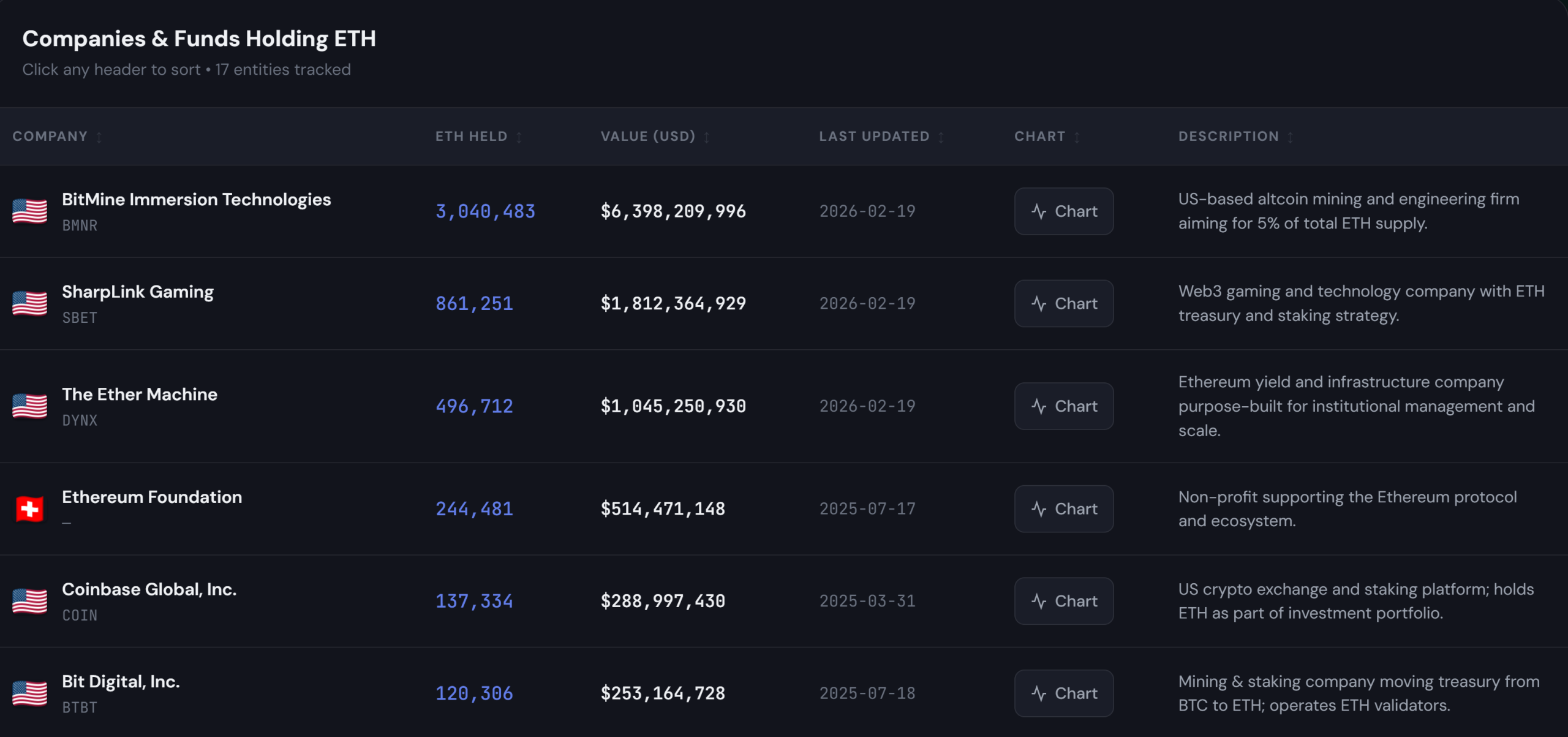
The Ethereum Foundation has completed a direct OTC sale of 5,000 Ether to BitMine Immersion Technologies, a move valued at about $10.2 million at the agreed price of $2,042.96 per ETH. The deal was announced in a Saturday post on X, with proceeds earmarked to support the foundation’s core operations—from protocol research and development to ecosystem growth initiatives and community grant programs. The on-chain transfer will originate from a Safe multisignature wallet, underscoring a cautious approach to treasury management. BitMine Immersion Technologies, a NYSE American-listed company trading under BMNR, has established itself as a major Ether holder, boasting more than 4.5 million ETH worth roughly $9.3 billion according to treasury-tracking services. The arrangement reflects ongoing treasury moves as the ecosystem weighs liquidity against long‑term network security and growth.
The sale represents the Ethereum Foundation’s second direct corporate ETH OTC transaction. In July 2025, the foundation sold 10,000 ETH to SharpLink Gaming at an average price around $2,572.37, a transaction valued at roughly $25.7 million. Those operations fit within a treasury framework the Foundation publicly introduced in June 2025, which aims to convert a portion of ETH holdings into fiat to fund a fiat-based operating reserve. The policy targets annual spending of roughly 15% of treasury holdings while preserving a multi-year runway for core activities.
In tandem with liquidity management, the Foundation has begun staking a portion of its treasury, with plans to deploy around 70,000 ETH into validator infrastructure using open-source tools. The staking initiative aligns with a broader push to diversify the network’s security model while encouraging community-led participation in validator infrastructure. The move follows a broader shift toward leveraging on-chain infrastructure to support long‑term network health, even as treasury activity continues to balance immediate operating needs with future protocol upgrades.
Earlier this week, the Foundation also published a mandate outlining its role in stewarding the Ethereum ecosystem, emphasizing decentralization, user sovereignty over assets and data, and the preservation of openness, censorship-resistance, and privacy. The document reiterates that Ethereum should remain open-source and resilient while scaling to support global adoption. The Foundation says its focus will center on core protocol upgrades, long-term research, cybersecurity, and developer tools, while gradually reducing direct influence over the network’s trajectory.
As part of these broader efforts, the Ethereum Foundation has highlighted the importance of maintaining a balanced treasury—between liquid assets that fund operations and longer-horizon holdings that bolster network security. The ongoing staking program, coupled with selective asset sales, signals a strategy of gradual, governance-aligned treasury management rather than rapid asset liquidation. The organization has also reinforced its stance on decentralization and user sovereignty as guiding principles for future development, a position that remains central to the community’s assessment of Ethereum’s long-term resilience.
Market participants are watching how these treasury decisions influence Ether’s price dynamics and the broader crypto landscape, particularly given the scale of corporate holdings represented by BitMine Immersion Technologies and its peers. The evolving framework could shape how other entities think about treasury diversification, liquidity management, and governance participation in a world where institutional drivers increasingly intersect with open-source protocols.
Why it matters
The Ethereum Foundation’s treasury actions underscore a pragmatic approach to sustaining core protocol work while supporting a broader ecosystem economy. By converting a portion of ETH into fiat to fund operations, the Foundation aims to ensure stable funding for research, development, and community initiatives even as the network continues to evolve through staking, upgrades, and tooling improvements. This approach also highlights how non-profit and corporate treasury strategies can align with long-term network security goals, providing a potential blueprint for other organizations balancing liquidity with stewardship responsibilities.
At the same time, the moves reinforce the role of corporate treasuries as major liquidity anchors in the crypto space. BitMine Immersion Technologies’ distinctive position as a leading Ether holder signals a continued consolidation of ownership among large institutional actors. The presence of such buyers and the timing of OTC sales can influence market depth and price discovery, particularly during periods of macro volatility or shifting risk appetite. For developers and users, the emphasis on decentralization, privacy-preserving design, and censorship resistance remains central to Ethereum’s mission, even as the funding environment evolves to support ongoing protocol work and security enhancements.
From a governance perspective, the Foundation’s renewed mandate suggests a deliberate calibration of influence: funding core work without exerting heavy-handed direction over the network’s day-to-day decisions. This approach may reassure users that the project remains committed to open governance and community-led development while recognizing the practical needs of sustaining a global-scale protocol. For investors and builders, the outlined priorities—protocol upgrades, long-horizon research, cybersecurity, and developer tooling—could translate into meaningful advances in network usability, security, and scalability over the coming quarters.
What to watch next
- Monitoring the cadence of future ETH OTC sales by the Ethereum Foundation, including any disclosures on price, volume, and counterparties.
- Progress on the 70,000 ETH staking plan, including deployment timelines, validator outreach, and integration with open-source infrastructure.
- Updates to the Foundation’s mandate and any governance signals that indicate shifts in focus or funding strategy.
- Shifts in corporate treasury activity among Ether holders, as broader market liquidity and risk sentiment evolve.
Sources & verification
- Ethereum Foundation X post announcing the OTC sale and its use of proceeds.
- July 2025 sale of 10,000 ETH to SharpLink Gaming and related coverage.
- Ethereum Treasuries page documenting large Ether holdings and treasury activity.
- Ethereum Foundation mandate outlining role, goals, and governance stance.
Ethereum Foundation’s second corporate ETH OTC sale and treasury strategy
The Ethereum Foundation announced a second corporate ETH sale in an OTC arrangement, transferring 5,000 Ether to BitMine Immersion Technologies (EXCHANGE: BMNR) for about $10.2 million at roughly $2,042.96 per ETH. The announcement, disseminated via an X post, makes clear that the proceeds will underwrite the foundation’s ongoing core operations: protocol research and development, ecosystem growth initiatives, and community grant programs. The on-chain payment is slated to come from the foundation’s Safe multisignature wallet, a custody mechanism that reflects the group’s emphasis on secure treasury management. BitMine Immersion Technologies—the NYSE American-listed company known by the ticker BMNR—has emerged as a leading corporate holder of Ether, with more than 4.5 million ETH in its treasury, valued at approximately $9.3 billion according to public trackers. This acquisition underlines a broader trend of large institutional actors participating directly in Ethereum’s long‑term funding and asset allocation strategy, complementing the foundation’s funding priorities.
The deal constitutes the federation’s second direct crypto-to-cash sale to a corporate treasury holder and follows a July 2025 transaction in which the foundation sold 10,000 ETH to SharpLink Gaming at an average price of about $2,572.37, totaling roughly $25.7 million. These OTC transactions are part of a formal treasury management framework launched in June 2025, designed to convert a portion of ETH holdings to fiat to sustain a fiat-based operating reserve. The framework sets a target of spending roughly 15% of treasury holdings annually to maintain a viable operating runway across multiple years, while preserving enough liquidity to fund ongoing protocol work and ecosystem initiatives.
The Foundation’s staking initiative also took a step forward this week, signaling a dual-pronged strategy: maintain liquidity for operations while expanding on-chain security through validator deployment. The plan calls for approximately 70,000 ETH to be staked using open‑source infrastructure to bolster the network’s validator base. This move aligns with broader efforts to diversify the treasury beyond liquidity alone, aiming to strengthen long-term security and resilience at a time when Ethereum continues to scale through upgrades and tooling improvements.
In a separate development, the Foundation published a mandate detailing its stewardship of the Ethereum ecosystem, stressing decentralization and user sovereignty as core principles. The document lays out a plan to keep Ethereum censorship-resistant, open-source, and privacy-preserving, while supporting scalable adoption on a global scale. The Foundation emphasizes a focus on core protocol upgrades, sustainable long‑term research, cybersecurity, and developer tooling, with a plan to progressively reduce direct governance influence over the network. This framing signals a deliberate shift toward more community-led governance and transparent, long-horizon funding for the network’s ongoing evolution.
Market observers continue to parse how these treasury moves interact with the broader dynamics of liquidity, risk sentiment, and regulatory developments shaping the crypto sector. By balancing periodic asset sales with strategic staking, the Ethereum Foundation aims to sustain essential operations and fund innovation, while aligning with a decentralization ethos that remains central to Ethereum’s identity. The ongoing evolution of the foundation’s treasury framework will be watched closely by developers, investors, and users who rely on Ethereum’s infrastructure for a wide range of applications.


Due to the resemblance to the mathematical constant π (3,14), March 14 is well known as Pi Day within the vast project community. Consequently, all eyes were on the protocol yesterday, with multiple posts online highlighting the event.
The Core Team also made a highly anticipated statement, with the co-founders praising it on the seventh birthday. They introduced a series of new ecosystem upgrades aimed at expanding utility, developer participation, and overall network infrastructure.
Pi Day Arrived
In an explanatory blog post, the team outlined the introduction of several key developments. These include the Pi Launchpad MVP on Testnet, protocol upgrades enabling future smart contract functionality, second Mainnet migrations, KYC validator rewards, and new Mainnet capabilities for Pi App Studio.
These improvements represent the next stage of the project’s long-term strategy to build an inclusive, utility-driven blockchain ecosystem with real-world applications and broad accessibility for the underlying token. The team added that Pi Day serves as an opportunity to introduce new tools that enable both developers and everyday users to participate more actively in building and using decentralized applications.
The Pi Launchpad on Testnet is among the most notable developments. It’s designed to introduce a new ecosystem token model focused on product utility and user acquisition rather than capital fundraising.
It’s still only available as a Testnet app through the Pi Browser, but it aims to help projects develop ecosystem tokens that are tied directly to functional applications, the team explained. Unlike other Web3 token launches, Pi has focused on “product-first” protocols, requiring applications to already be functional before going live.
The team added that the Launchpad could help strengthen the ecosystem’s future decentralized exchange (DEX) by creating a pipeline of legitimate tokens with real utility, helping avoid speculative or low-quality token launches.
Node Upgrades, Smart Contract Foundations
In addition to the Launchpad release, the Core Team confirmed that all major nodes have upgraded to version 20.2 following other reports from the past few days, with the Mainnet blockchain expected to complete its transition to Protocol 20 soon.
This upgrade lays the technical groundwork for smart contract functionality, enabling developers to build decentralized applications and automate blockchain-based processes. At first, the expected categories will include subscription systems, escrow services, and NFT-related apps.
The announcement also highlighted the start of the second Mainnet migrations, something the community has been asking for months. It allows Pioneers who previously migrated their balances to transfer additional eligible Pi to the blockchain after activating 2FA for Pi Wallets.
Pi Network also released the first round of KYC validator rewards, distributing compensation to community members who helped verify user identities during its massive onboarding process. The pool reached over 16.5 million tokens, supplemented by an additional 10 million Pi contribution from the Pi Foundation.
Separately, Pi App Studio now supports Mainnet applications with integrated Pi payments, which enables select apps to move from Testnet experimentation to live blockchain transactions.
Lastly, the team confirmed the big news from the past week that Kraken has integrated support for the underlying token, expanding external connectivity between the ecosystem and the broader digital asset market. This announcement sent shockwaves, as PI skyrocketed to a multi-month peak at roughly $0.30 before it erased all gains to under $0.20 as of now.
The post Pi Network Core Team Celebrates Pi Day 2026: Here’s What Every Pioneer Needs to Know appeared first on CryptoPotato.
The Ethereum Foundation has finalized an over-the-counter (OTC) sale of 5,000 Ether to BitMine Immersion Technologies, a transaction worth about $10.2 million based on the agreed price of $2,042.96 per ETH.
In a Saturday post on X, the foundation said proceeds from the sale will support core operations, including protocol research and development, ecosystem growth initiatives and community grant programs. The onchain transfer will originate from an Ethereum Foundation Safe multisignature wallet.
BitMine, a publicly traded company on the NYSE American under the ticker BMNR, has emerged as one of the largest corporate holders of Ether (ETH). Chaired by Fundstrat co-founder Tom Lee, the firm holds more than 4.5 million ETH worth roughly $9.3 billion, according to industry treasury trackers.

The company has steadily accumulated Ether since mid-2025, following a strategy similar to Strategy’s Bitcoin (BTC) accumulation model.
Related: Ether accumulation data predicts rally to $2.8K, but there’s a catch
EF conducts second corporate ETH OTC sale
The transaction marks the second time the Ethereum Foundation has sold ETH directly to a corporate treasury buyer via an OTC deal. In July 2025, the organization sold 10,000 ETH to SharpLink Gaming at an average price of $2,572.37, a transaction valued at about $25.7 million.
These periodic sales are part of the Ethereum Foundation’s treasury management framework introduced in June 2025. Under that policy, the organization periodically converts a portion of its ETH holdings to maintain a fiat-based operating reserve. The framework targets annual spending equal to roughly 15% of treasury holdings while maintaining a multi-year operating runway.
The announcement comes shortly after the foundation began staking a portion of its treasury, with plans to deploy around 70,000 ETH into validators using open-source infrastructure.
Related: Ethereum accumulation wallets jump 30%: Will ETH price follow?
EF publishes mandate outlining its role
This week, the Ethereum Foundation released a new mandate outlining its role in stewarding the Ethereum ecosystem, emphasizing decentralization and user sovereignty over assets and data. The document states that Ethereum should remain censorship-resistant, open source and privacy-preserving while scaling to support global adoption.
The foundation said it will focus on core protocol upgrades, long-term research, cybersecurity and developer tools while gradually reducing its direct influence over the network.
Magazine: Bitcoin may take 7 years to upgrade to post-quantum — BIP-360 co-author

TLDR:
- Bitcoin nodes remain connected even if 72–92% of global submarine cables fail simultaneously.
- Random infrastructure failures rarely disrupt more than 5% of Bitcoin nodes worldwide.
- Targeting high-betweenness cables can fragment Bitcoin with only 20% of total cable damage.
- Top hosting providers supporting Bitcoin nodes could cause network disruption with just 5% capacity loss.
Bitcoin network resilience has become the focus of a major academic study examining how the network reacts to internet infrastructure failures.
Researchers from the Cambridge Centre for Alternative Finance analyzed eleven years of node data and submarine cable outages.
Random Infrastructure Failures Show Bitcoin Stability
Bitcoin network resilience remains strong when infrastructure failures occur randomly across the global internet. The Cambridge Centre for Alternative Finance studied data on Bitcoin nodes between 2014 and 2025.
Researchers focused on submarine communication cables, which carry most international internet traffic. They tested scenarios by simulating different portions of global cable failures.
The study found that between 72% and 92% of submarine cables must fail simultaneously before major fragmentation occurs. Fragmentation is defined as more than 10% of nodes losing connectivity.
Reviewing sixty‑eight real cable fault events over the past decade, the study found that most incidents produced minimal disruption. Eighty‑seven percent of the faults caused less than five percent of node disconnection.
A notable case in 2024 occurred off West Africa, where several cables were severed. Regional internet connectivity suffered, yet the global Bitcoin network remained mostly unaffected.
Bitcoin nodes are widely distributed across countries and independent networks. This geographic and network diversity allows block propagation to continue even when certain regions lose connectivity.
Targeted Attacks and Tor Connectivity Reveal Critical Factors
Targeted attacks, however, reveal vulnerabilities in the Bitcoin network’s resilience. Some submarine cables carry disproportionately high traffic and are considered high‑betweenness edges.
Simulations show that disrupting around 20% of these critical cables could produce the same fragmentation as 72–92% of random cable failures. This demonstrates that specific infrastructure matters more than total volume.
Concentration in hosting providers also matters. A few companies—including Hetzner, OVH, Comcast, Amazon, and Google Cloud—host a large portion of reachable nodes. Removing only about five percent of routing capacity in these networks could fragment Bitcoin connectivity.
Tor network adoption further affects resilience. By 2025, approximately 64% of Bitcoin nodes were reachable through Tor, compared to only a few dozen in 2014. Tor routing adds redundancy by providing alternative communication paths.
Tor relays are often located in European countries with dense fiber networks. These alternative routes help maintain connectivity even during regional infrastructure failures.
A tweet summarizing the finding noted: “Bitcoin survives massive random cable outages. Targeting key hosting providers could disrupt the network with minimal infrastructure damage.”
Overall, the study indicates that Bitcoin network resilience depends more on which infrastructure fails rather than how much fails. Random outages rarely impact the network, while targeted disruptions could create critical chokepoints.

TLDR:
- Strategy now holds 738,000 BTC, representing over 3% of total Bitcoin supply.
- Daily purchases average 1,940 BTC, exceeding post-halving Bitcoin issuance.
- Corporate treasury strategy allows public company to fund large-scale BTC accumulation.
- Strategy could surpass Satoshi Nakamoto’s holdings by 2027 if current pace continues.
Strategy Bitcoin Accumulation has propelled the company into the top ranks of global Bitcoin holders. Its treasury now exceeds 738,000 BTC, actively absorbing circulating supply and positioning it alongside Satoshi Nakamoto, institutional ETFs, and major custodians like Coinbase.
Corporate Treasury Strategy and Growth
Strategy Inc., formerly MicroStrategy, has become one of the largest active Bitcoin holders worldwide. Its corporate treasury now holds approximately 738,000 BTC, representing over 3% of the total Bitcoin supply.
This accumulation places Strategy alongside Satoshi Nakamoto and major institutional ETFs. The company’s approach relies on a structured treasury strategy.
In one week, Strategy purchased nearly 18,000 BTC for $1.28 billion. These purchases are funded through equity offerings, preferred stock, and convertible debt instruments, which are converted directly into Bitcoin.
Daily accumulation averages around 1,940 BTC, with peak days exceeding 5,700 BTC. This scale surpasses the daily issuance of new Bitcoin following the 2024 halving.
Strategy’s purchases not only increase its holdings but also remove significant amounts of Bitcoin from liquid markets, emphasizing the influence of corporate accumulation.
The company leverages capital markets to support its acquisitions. Investors often purchase Strategy stock as a proxy for Bitcoin exposure, allowing the company to raise funds above the underlying BTC value.
This creates a self-reinforcing cycle, funding further purchases and reinforcing the company’s role as a large-scale Bitcoin holder.
Comparison with Other Major Holders
Strategy’s holdings are now approaching those of Satoshi Nakamoto, whose estimated stash sits around 1.1 million BTC mined in 2009–2010.
Satoshi’s coins have remained unmoved for over fifteen years, effectively removing them from circulation and creating a historic benchmark for large-scale holdings.
Other major holders include institutional ETFs, like BlackRock’s iShares Bitcoin Trust, and custodians such as Coinbase. However, Strategy stands out because it actively accumulates and absorbs supply rather than passively holding.
This corporate model demonstrates how public companies can now influence Bitcoin distribution at scale. If current trends continue, Strategy could surpass Satoshi’s estimated holdings by 2027.
The company requires roughly 361,000 more BTC to reach this milestone. This trajectory demonstrates a clear shift in Bitcoin ownership, as corporate accumulation begins to rival early adopter and institutional holdings, reshaping the supply landscape.
TLDR:
- US President Trump calls for a global coalition to secure the Strait of Hormuz against Iranian disruptions.
- Iran allows selective shipping while blocking enemy tankers, maintaining strategic leverage.
- The US deploys 2,500 Marines and USS Tripoli to reinforce regional naval presence.
- Strait closure threatens global energy supplies and millions dependent on safe cargo passage.
The Strait of Hormuz blockade has escalated tensions as the US calls for multiple countries to deploy warships. Iran maintains restrictions, allowing selective shipping while threatening strategic disruptions.
Trump Calls for Global Naval Support
US President Donald Trump stated that many countries would send warships to ensure the Strait of Hormuz remains open.
The announcement appeared on Truth Social, naming China, France, Japan, South Korea, and the United Kingdom among potential participants.
He emphasized a “team effort” alongside the United States to keep the critical waterway secure. Trump claimed that the US has destroyed Iran’s military capability entirely.
However, he acknowledged that Tehran could still launch drones, mines, or short-range missiles against ships along the strait. He pledged continuous US military action along the shoreline to maintain open passage.
Alireza Tangsiri, head of Iran’s Revolutionary Guard Navy, stated that the strait remains under control, not militarily closed. He criticized US claims of destroying Iranian naval forces and escorting oil tankers as inaccurate.
The US is also reinforcing its presence in the region with 2,500 Marines and the USS Tripoli amphibious assault ship, following CENTCOM approval. Trump highlighted that nations dependent on the strait must take responsibility, with the US providing coordination and support.
Iran Restricts Passage, Risks Global Supply
Iran clarified that the strait is closed only to tankers and ships considered hostile or allied with enemies. Indian-flagged vessels carrying liquefied petroleum gas received exemptions following direct negotiations between Prime Minister Narendra Modi and Iranian President Masoud Pezeshkian.
Similarly, Turkish-owned vessels received limited clearance after Ankara engaged directly with Tehran. Fourteen more Turkish ships still await authorization to pass through the waterway.
These selective exemptions highlight Iran’s control while maintaining leverage over international shipping.
The closure threatens global energy and food security, as the strait handles a significant portion of oil, LNG, and fertilizer feedstocks. India invoked emergency powers to secure cooking gas for over 333 million homes.
UN humanitarian chief Tom Fletcher warned that millions of people are at risk if cargo cannot pass safely. Experts note that Iran’s primary leverage is economic rather than military.
Occasional strikes or disruptions are sufficient to discourage insurers and shipping companies from transiting the strait. Trump’s call for coalition forces aims to reassure markets, though no diplomatic agreement has yet formalized multinational escorts.
TLDR:
- Polymarket shows Ethereum may lose its #2 market cap position in 2026 at 57% probability.
- Solana’s growth in DeFi and apps challenges Ethereum’s dominance in the crypto market.
- Stablecoins like Tether steadily increase market cap, pressuring Ethereum’s ranking.
- Ethereum retains the largest DeFi ecosystem and layer-2 infrastructure despite market shifts.
Prediction platform Polymarket now indicates a 57% probability that Ethereum may be overtaken by another asset in 2026. Ethereum’s second largest cryptocurrency status is being increasingly priced by the market.
Rising Competitive Pressure on Ethereum
Prediction market data from Polymarket shows traders now assign a 57% chance that Ethereum will lose its second-largest market capitalization.
These markets reflect where capital is being placed, signaling investor confidence beyond social media opinions.
The most immediate competitor is Solana, which has grown rapidly in decentralized finance, memecoin activity, and consumer-focused applications.
Low transaction costs and high throughput have attracted developers and users previously active on Ethereum’s platform. Stablecoins, particularly Tether (USDT), are also contributing to potential shifts.
Rising demand for cross-border payments, on-chain transactions, and store-of-value functions allows stablecoins to steadily increase their market capitalization. This trend may further pressure Ethereum’s ranking.
Ethereum’s Structural Strengths Remain
Ethereum continues to dominate the decentralized finance space with the largest liquidity pools and developer ecosystem. Institutional adoption, staking infrastructure, and layer-2 scaling solutions provide additional support for the network.
Even as prediction markets show rising probabilities of change, Ethereum remains central to major DeFi protocols, NFT platforms, and smart contract deployments. Its security model and liquidity concentration are difficult for competitors to replicate quickly.
Market narratives influence probabilities, as Solana and other networks attract more speculative attention. While these signals show potential risk for Ethereum’s market cap, they do not diminish the network’s functional importance within the crypto ecosystem.
Tweets discussing the likelihood of Ethereum being overtaken highlight growing market awareness. Traders are considering multiple factors, from stablecoin expansion to smart-contract adoption rates, which may impact Ethereum’s position throughout 2026.
Ethereum losing its second-place ranking would reflect competitive pressure rather than failure. Market capitalization is only one measure of network relevance, and Ethereum’s ecosystem remains integral to crypto infrastructure and DeFi development.
Crypto World
Sui vs Near: How Two Blockchain Networks Are Taking Different Roads to Scalable Infrastructure
TLDR:
- Sui finalizes independent transactions in 0.4–0.5 seconds using an object-centric parallel execution model.
- Near’s dynamic sharding allows the network itself to expand capacity as on-chain demand increases over time.
- Stablecoins make up 40–50% of Sui’s DeFi activity, with total DeFi value surpassing $2 billion in 2025.
- Near’s Confidential Intents launched in early 2026, enabling private cross-chain execution and AI-agent automation.
Sui and Near are two blockchain networks that both promise high throughput, low fees, and horizontal scalability. They are often grouped as competitors in the same category.
However, their underlying architectures reflect very different assumptions about how blockchain demand will grow.
Those architectural differences determine what type of activity each network can sustainably support. Understanding these differences helps investors and developers make more informed decisions about where to build or allocate capital.
Architecture and Throughput: Where the Two Networks Diverge
Sui is built around an object-centric model that treats assets as independent objects. When two transactions do not touch the same object, they skip full consensus and execute in parallel.
Only transactions involving shared objects enter the full consensus path. This design allows simple transfers to finalize in the 0.4 to 0.5 second range. As hardware improves, execution capacity on Sui scales accordingly.
Near takes a different structural approach by partitioning the network itself through sharding. State is split across shards, and validators are assigned to specific shard segments.
The protocol can dynamically reshard as demand increases, and finality typically lands between 0.6 and 1.3 seconds.
Developers on Near interact with a protocol that manages scaling internally, reducing the need to handle partition logic manually.
In real-time conditions, neither network is currently constrained by throughput. Observed TPS on Sui ranges around the mid-20s, while Near operates between 30 and 40.
Both chains advertise theoretical ceilings far beyond current usage. The bottleneck today is demand, not execution capacity.
Crypto analyst eye zen hour, who requested a deep dive into both networks, noted that the competitive lens has shifted toward cost efficiency, liquidity depth, and ecosystem traction rather than raw TPS claims. That shift reflects where actual network value accumulates in the current market environment.
Validator design also differs between the two. Sui requires higher hardware specifications and greater stake exposure, creating a performance-oriented validator set.
Near lowers entry barriers through dynamic seat pricing and lighter hardware requirements, distributing workload across shards and broadening validator participation.
Stablecoins and Privacy: Competing Strategies for Institutional Growth
Stablecoins represent a practical stress test for any blockchain network. They simultaneously test settlement speed, liquidity routing, composability, and compliance readiness.
On Sui, stablecoins now account for roughly 40 to 50 percent of DeFi activity, with total DeFi value surpassing $2 billion in 2025.
Assets such as USDsui, suiUSDe, BlackRock-backed USDi, and over-collateralized BUCK reflect a strategy built around high-velocity settlement within a single execution environment. Zero-fee stablecoin transfers are planned for 2026.
Near’s stablecoin strategy focuses on liquidity mobility across multiple environments. USDC and USDT operate under the NEP-141 standard, and the Stablecoin Transport Protocol enables efficient cross-chain routing.
Cross-chain volume through Near Intents surpassed $13 billion in 2025, positioning stablecoins as cross-chain coordination tools rather than purely local settlement assets.
On privacy, Sui currently offers pseudonymity and object-level isolation. Its 2026 roadmap includes protocol-level default privacy through zero-knowledge proofs, homomorphic encryption, and selective disclosure.
Near, on the other hand, already launched Confidential Accounts and Confidential Intents in early 2026, enabling private cross-chain execution and AI-agent automation today.
Near’s active deployment of privacy features contrasts with Sui’s roadmap-based approach. Both paths are coherent, but Near’s execution-layer confidentiality is currently live, while Sui’s embedded privacy remains in development.
Market positioning further separates the two. Sui has established traction in gaming, consumer payments, storage, and institutional products.
Near centers its narrative on AI-native infrastructure, cross-chain coordination, and developer accessibility through JavaScript tooling and intent-based architecture. Both are viable, and adoption distribution over the next cycle will ultimately determine which scaling assumption proves more durable.
Crypto World
Market Divergence: Bitcoin Climbs 12.5% While Stocks and Precious Metals Lose Trillions
TLDR:
- Bitcoin market divergence appears as crypto rises while stocks and metals fall simultaneously.
- U.S. equities lose around $2.4 trillion while Bitcoin climbs nearly 12.5% in the same period.
- Gold and silver briefly spike on conflict headlines before reversing sharply downward.
- Market behavior suggests liquidity pressures and capital rotation may drive crypto gains.
Bitcoin market divergence is drawing attention after an unusual market reaction during recent geopolitical tensions.
Equities and precious metals declined sharply, yet the cryptocurrency market advanced, creating a rare pattern that differs from the typical risk-off behavior seen during global conflicts.
Traditional Safe Havens Fail to Follow the Usual Pattern
Financial markets usually follow a predictable script during geopolitical crises. Investors tend to move capital into assets considered stable when global uncertainty rises.
Precious metals such as Gold and Silver often attract inflows during these periods. Government bonds and the U.S. dollar also benefit from defensive positioning.
Risk assets typically move in the opposite direction. Major equity indices like the S&P 500 and digital assets, including Bitcoin, usually decline when investors shift toward safety.
Comparable reactions appeared during the COVID-19 Market Crash and the Russia–Ukraine War. In both events, precious metals strengthened while equities and crypto weakened.
Recent price behavior differs from that historical template. Stocks declined sharply while gold and silver also moved lower after an initial spike.
Such a move is unusual because precious metals typically retain value during periods of geopolitical stress. Their decline alongside equities indicates an atypical market response.
At the same time, the cryptocurrency market moved higher. This created a divergence in the Bitcoin market that analysts are now discussing across financial platforms.
Liquidity Pressure and Capital Rotation in Markets
One possible explanation centers on liquidity conditions rather than fear. Institutional investors sometimes sell liquid holdings when they need to raise cash quickly.
Precious metals markets provide deep liquidity. Large funds can exit positions rapidly, which sometimes leads to declines even during geopolitical uncertainty.
Another factor involves positioning before the conflict headlines appeared. If hedge funds already held large long positions in gold, the initial price spike may have triggered profit-taking.
This behavior often follows a “buy the rumor, sell the news” pattern. Prices rise before the event and decline after traders close positions.
During the same period, the cryptocurrency market moved in the opposite direction. Bitcoin advanced nearly 12.5 percent while the broader crypto market gained roughly ten percent.
Observers on social media documented the unusual divergence. Several posts noted that equities, gold, and silver fell simultaneously while crypto markets rallied.
Some investors also continue exploring the narrative of Bitcoin as digital gold. The fixed supply model of Bitcoin contributes to that perception among certain market participants.
The recent market configuration, therefore, appears rare. Stocks declined, metals weakened, yet crypto prices advanced during geopolitical tension.
For now, the Bitcoin market divergence remains an uncommon pattern that market participants continue monitoring closely.

There’s a new global factor for a potentially serious price hike for PCs and mobile

He seemed the perfect boyfriend but three months later I was left for dead in a pool of blood

CLARITY Act Faces Slim Odds in 2026 Without April Committee Move: Galaxy Exec


-
 Tech4 days ago
A 1,300-Pound NASA Spacecraft To Re-Enter Earth’s Atmosphere
-

 News Videos6 days ago
10th Algebra | Financial Planning | Question Bank Solution | Board Exam 2026
-
Crypto World1 day ago
HYPE Token Enters Net Deflation as HyperCore Buybacks Outpace Staking Rewards
-

 Business5 days ago
ExxonMobil seeks to move corporate registration from New Jersey to Texas
-

 Crypto World6 days ago
Paradigm, a16z, Winklevoss Capital, Balaji Srinivasan among investors in ZODL
-

 Fashion2 days ago
Weekend Open Thread: Addict Lip Glow
-

 Tech5 days ago
ChatGPT will now generate interactive visuals to help you with math and science concepts
-
Sports17 hours ago
Why Duke and Michigan Are Dead Even Entering Selection Sunday
-

 NewsBeat4 days ago
Residents reaction as Shildon murder probe enters second day
-

 Business7 days ago
Search for Nancy Guthrie Enters 37th Day as FBI Probes Wi-Fi Jammer Theory
-

 Business4 days ago
Search Enters Sixth Week With New Leads in Tucson Abduction Case
-
 NewsBeat5 days ago
Pagazzi Lighting enters administration as 70 jobs lost and 11 stores close across Scotland
-

 Tech6 days ago
Despite challenges, Ireland sixth in EU for board gender diversity
-

 Business18 hours ago
US Airports Launch Donation Drives for Unpaid TSA Workers as Partial Government Shutdown Enters Fifth Week
-

 NewsBeat4 days ago
I Entered The Manosphere. Nothing Could Prepare Me For What I Found.
-
Crypto World14 hours ago
Coinbase and Bybit in Investment Talks: Could Bybit Finally Enter the US Crypto Market?
-

 Business5 days ago
Search Enters 39th Day with FBI Tip Line Developments and No Major Breakthroughs
-

 Sports6 days ago
Skateboarding World Championships: Britain’s Sky Brown wins park gold
-

 Business19 hours ago
Country star Brantley Gilbert enters growing non-alcoholic beer market
-
 Crypto World5 days ago
Will Chainlink price reclaim $10 amid volatility squeeze?

