

Crypto World
Optimism tests stake-based gas priority on OP mainnet



Optimism’s OP mainnet has begun a four-week experiment that lets users boost transaction priority by staking at least 100,000 OP, marking the first time its sequencer has deviated from pure gas-fee ordering.
Summary
- OP mainnet is trialing stake-based transaction ordering alongside its existing priority gas auction.
- Users must stake a minimum of 100,000 OP into a PolicyEngine contract to opt in.
- The four-week pilot runs in two phases, shifting from FIFO to a stake‑weighted gas multiplier
According to an official announcement from Optimism, OP mainnet has “adjusted its transaction sorting rules for the first time,” adding an experimental stake‑based priority track to the long‑standing “highest priority gas fee first” mechanism that currently governs the network’s sequencer. OP users can now voluntarily participate in a four‑week pilot, running through June 23, by staking no less than 100,000 OP into the new PolicyEngine Staking contract.
The goal, as outlined in Optimism governance discussions, is to test whether stake‑based ordering can dampen toxic arbitrage traffic, create new demand for OP, and give sophisticated users a more predictable way to secure blockspace during volatile periods. For now, the experiment runs in parallel to the existing priority gas auction (PGA), and transaction ordering for non‑participants remains unchanged, preserving standard fee‑based competition for block inclusion.
Two-phase design: FIFO to stake‑weighted gas
The pilot is structured in two distinct phases, each probing a different piece of the ordering puzzle. In phase one, covering the first week, all participating addresses that meet the 100,000 OP threshold are treated equally under a strict first‑in, first‑out (FIFO) rule, meaning that “exceeding the minimum staking amount will not affect priority,” according to Optimism’s description of the rollout.
From weeks two through four, the mechanism shifts to a “priority gas multiplier” that is explicitly “weighted by staking duration,” so that the longer an address has locked its OP in the PolicyEngine contract, the higher its effective gas‑priority weight becomes when competing for ordering. In practice, this gives long‑term stakers an edge in securing inclusion for latency‑sensitive flows such as arbitrage, liquidations or high‑frequency trading strategies, a design that resembles the way some exchanges reward resting liquidity over opportunistic takers.
Crucially, the rest of the network stays on the familiar rails. Users who do not opt into the experiment continue to be ordered solely by the PGA system that OP mainnet has used “for many years,” with no change in how standard wallet transactions compete on gas price alone. That parallel track helps isolate the behavioral impact of the new staking queue while reducing the risk that a flawed design could disrupt day‑to‑day activity on one of Ethereum’s most used layer‑2s.
Broader L2 and staking context
The Optimism pilot lands at a moment when Ethereum layer‑2s are experimenting aggressively with new ways to price and allocate blockspace, from shared sequencer proposals to intent‑based architectures and order‑flow auctions. Similar to how liquid staking protocols such as Lido Finance have used incentives to pull staked assets onto networks like Optimism and Arbitrum, OP’s PolicyEngine design explicitly tries to turn governance tokens into a lever for transaction priority rather than just voting power or emissions farming.
The OP ecosystem has also been positioning itself as a core venue for both DeFi and speculative flows, vying with other layer‑2 and sidechain environments that pitch lower fees or specialized features. That competition has helped drive experimentation across the stack, from token economics to sequencer design, and echoes earlier phases of infrastructure innovation that saw protocols from Bitcoin to Ethereum re‑think everything from fee markets to MEV capture.
For now, the stake‑priority experiment is explicitly time‑boxed. Optimism has said that after the four‑week window, OP mainnet will revert to its standard PGA‑only ordering, while governance and core contributors digest the on‑chain data and decide whether stake‑weighted ordering should return in a more permanent form. If the numbers show meaningfully better outcomes for users without unacceptable centralization or fairness trade‑offs, the pilot could become a template for how other rollups treat blockspace as a policy instrument, not just a commodity to be auctioned.
Within the broader crypto market, OP trades alongside other major assets such as bitcoin and ethereum, with investors increasingly weighing not only tokenomics but also how aggressively each ecosystem pushes on scalability and user experience. As more networks, from Ethereum staking leaders like Lido to emergent layer‑2 experiments highlighted in recent crypto.news coverage, try to differentiate on design, Optimism’s stake‑priority gamble will be closely watched by anyone who believes the next phase of competition will be fought at the sequencer, not just in the application layer.



An attacker drained roughly $7.5 million from the JaredFromSubway MEV bot, one of Ethereum’s most active sandwich-attack systems, after tricking it into approving token spending it never should have granted.
Security firm Blockaid, which flagged the incident, said the bot was not hit by a smart-contract bug, a phishing attack, or a private-key leak. Instead, the attacker turned the bot’s own profit-seeking logic against it.
How the MEV Bot was Tricked
The JaredFromSubway MEV bot runs an automated strategy that scans Ethereum’s mempool for profitable trades. The practice is known as maximal extractable value.
The bot front-runs and back-runs other trades to capture the price difference, a tactic called a sandwich attack.
It became infamous in April 2023. In one day, it burned over $1 million in gas, nearly 8% of all Ethereum gas spending.
The attacker spent weeks deploying 66 counterfeit token contracts. The fakes imitated Wrapped Ether (WETH), USD Coin (USDC), and Tether (USDT).
To the bot, these contracts looked like the routes it was built to chase. It took the bait and approved spending to attacker-controlled helper contracts. One approval alone handed over more than 92 WETH.
A final contract then used those open allowances to sweep real funds from the bot.
A Reverse-MEV Trap
The trap turned the bot’s speed and aggression into a weakness. Hunting MEV bots is not new. In 2023, a rogue validator drained about $25 million from MEV sandwich bots.
“attacker-controlled contracts tricking an automated MEV execution system into granting token approvals, later used to drain funds,” Blockaid indicated.
Sandwich attacks like these have long drawn criticism for acting as an invisible tax on everyday traders.
The bot’s operator put the loss closer to $15 million. They also offered a $1 million bounty for the return of the funds. Blockaid and PeckShield valued the on-chain drain at about $7.5 million in WETH, USDC, and USDT.
The operator recovering anything may now depend on the attacker accepting that offer.
The post Ethereum’s Most Notorious MEV Bot Loses $7.5 Million in On-Chain Honeypot Trap appeared first on BeInCrypto.
On-chain tracker Lookonchain said three wallets made $24.25 million in profits from World Cup betting on Polymarket, raising fresh questions about large traders in crypto prediction markets.
Summary
- Lookonchain linked three winning wallets to one Binance deposit address after posting $24.25M in profits.
- The wallets allegedly won several World Cup bets, then stopped trading and withdrew remaining funds.
- The case adds fresh pressure on prediction markets already facing scrutiny over insider-style information advantages.
The tracker described the activity as tied to a “suspected insider,” but the claim remains based on wallet links and public trading data. Polymarket and Binance had not publicly confirmed the finding at the time of review.
Lookonchain points to three winning Polymarket wallets
According to Lookonchain, the wallets named mintblade, GRIMDRIP and endlessFate together made more than $24 million from World Cup markets. Mintblade reportedly made $9.24 million after winning five out of five bets.
GRIMDRIP allegedly made $7.6 million after winning two out of two bets, while endlessFate made $7.41 million after winning six out of nine bets. Lookonchain said all three wallets later sent funds to Binance through the same deposit address, 0xB08B…317D.
The tracker said the common deposit path suggested the same person may control the wallets. It also said the wallets stopped trading and withdrew all remaining funds after the profits.
Large World Cup wagers drew attention
Lookonchain had already flagged several large World Cup wagers before the latest post. On June 17, it said one trader made $9.24 million in one day after winning four bets, including a large position on Iran not beating New Zealand.
The account also tracked endlessFate placing $7.46 million on Colombia to beat Uzbekistan. If the position won, the bettor stood to make $2.71 million, while a loss would erase the full stake.
Other posts showed more large positions across World Cup markets. A wallet called weatherman12 put $1.81 million on Argentina not winning and Algeria covering a spread. Another wallet, LEEEROYJENKINS, reportedly made $5.2 million from Türkiye not winning against Australia and from an Australia spread bet.
Prediction markets face scrutiny
The case comes as prediction markets draw more attention from regulators, sports fans and crypto traders. As previously reported by crypto.news, Congress has moved to ban lawmakers from trading on prediction markets such as Polymarket and Kalshi, citing insider-trading risks.
crypto.news also reported in February that unusual Polymarket betting tied to a ZachXBT insider-trading probe raised questions about whether some traders had access to better information. That report noted that policing non-public information remains difficult when outside users trade through pseudonymous wallets.
Polymarket relies on public markets where users trade outcome contracts tied to real-world events. Supporters say these markets can reflect fast-moving public expectations, while critics argue they can reward private information when outcomes depend on facts known to only a few people.
World Cup betting expands across crypto
The World Cup has become a major test for sports prediction markets in 2026. crypto.news earlier reported that Myriad launched a $100,000 World Cup contest with more than 75 match markets, while Polymarket and Kalshi were already listing live World Cup markets.
LBank also promoted a World Cup prediction event tied to Spain and Saudi Arabia, showing that exchanges and trading platforms are using football to attract users. These campaigns bring more attention to sports markets, but they also put trade monitoring and fair access under closer review.
For now, Lookonchain’s findings do not prove misconduct. They do show how wallet tracking can reveal trading patterns, shared cash-out routes and unusually strong win rates in public crypto markets.

Key Takeaways
- The MEV bot Jaredfromsubway.eth suffered a loss exceeding $7.5 million over the weekend
- A malicious actor created 66 fraudulent token contracts across multiple weeks to deceive the automated system
- The bot was exploited into granting permissions to attacker-controlled contracts for fund transfers
- Blockchain security company Blockaid described the incident as a “counter-MEV honeypot attack”
- Portions of the pilfered assets have been transferred to Tornado Cash
A prominent crypto automation tool has fallen prey to its own methodology. The MEV bot operating under the address Jaredfromsubway.eth, which generated substantial profits by front-running other market participants, lost over $7.5 million this past Saturday.
Blockchain security company Blockaid verified the exploit.
The Mechanics Behind the Exploit
The perpetrator executed a patient, methodical approach spanning multiple weeks. They created 66 counterfeit token contracts mimicking legitimate assets including Wrapped ETH, USDC, and USDT. These fraudulent tokens were matched with deceptive liquidity pools engineered to appear as lucrative trading opportunities.
The automated system performed precisely as programmed. It identified what appeared to be a profitable arbitrage scenario and granted specific contracts authorization to access its treasury.
This authorization was the vulnerability the attacker exploited. Within a single blockchain transaction, all 66 malicious backdoors activated simultaneously, draining the bot’s entire holdings across ETH, USDC, and USDT.
“The irony is that through its own operational processes, it handed the attacker access to millions sitting in the bot’s wallet,” explained Blockaid’s Chief Technology Officer Raz Niv.
Blockaid emphasized this wasn’t a conventional security breach. “This differs from typical phishing schemes and traditional smart-contract exploits,” the company stated. The attack specifically targeted the automated reasoning mechanisms fundamental to MEV bot operations.
Understanding Jaredfromsubway.eth
MEV (Maximal Extractable Value) bots scan pending blockchain transactions and reorder their execution sequence for financial gain. This practice is often described as an “invisible fee” imposed on everyday users.
Sandwich attacks represent a widespread tactic. These bots detect incoming trades, insert their own transactions immediately before and after the target trade, and capture profits from the resulting price fluctuations.
From November 2024 through October 2025, Jaredfromsubway.eth executed approximately 70% of all sandwich attacks on the Ethereum network. Research from Cointelegraph indicates these attacks drain roughly $60 million annually from traders, with monthly attack volumes ranging from 60,000 to 90,000 during peak periods.
Last May, Ethereum creator Vitalik Buterin became a target of this identical bot during a modest DigitalBits token swap. While his monetary loss was negligible, the incident demonstrated that no transaction value is beneath targeting.
Onchain tracking reveals that portions of the stolen cryptocurrency have been routed through Tornado Cash, a privacy-focused mixing protocol.
Community sentiment regarding the incident has been divided. Crypto investor David Gokhshtein commented: “This isn’t something to celebrate; nobody should be cheering… but if this bot has ever sandwiched your trades… I suspect you’re not mourning this development.”
This exploit represents among the most substantial individual losses documented for any MEV bot to date.

TLDR
- A significant deposit of 600,000 SOL landed on exchanges, sparking supply-side concerns
- Market watcher Ali Charts highlights $50 as a critical zone to monitor for potential retracements
- Trader Ardi views the $45–$60 band as a more favorable accumulation opportunity for long-term positions
- SOL has rebounded from recent bottoms and now faces a test at the $80 resistance threshold
- Development activity remains robust across payments, prediction markets, and tokenized assets on the Solana network
Solana has captured significant market attention following a substantial token transfer to trading venues, prompting analysts to reassess critical price thresholds.
Crypto market analyst Ali Charts documented a notable event on June 20: approximately 600,000 SOL tokens were transferred to centralized exchanges within a compressed timeframe. Market participants typically scrutinize such sizable exchange deposits as they often precede selling activity or position adjustments by large holders.
Major Token Transfer Highlights $50 Price Zone
Ali Charts characterized the sudden surge in exchange-bound tokens as a sign that holders are relocating liquid assets from self-custody solutions. He interpreted this movement as growing uncertainty regarding the sustainability of present valuation levels.
He further noted that should this influx of spot inventory catalyze a rapid sell-off, the $50 mark represents his primary downside target. According to his assessment, a retracement into this price zone could neutralize near-term selling pressure and establish a more resilient foundation for subsequent upward momentum.
It’s important to recognize that exchange deposits don’t automatically translate to immediate liquidations. Certain transfers serve purposes such as collateralization or platform-internal operations. Market participants are awaiting concrete price action before committing to directional positions.
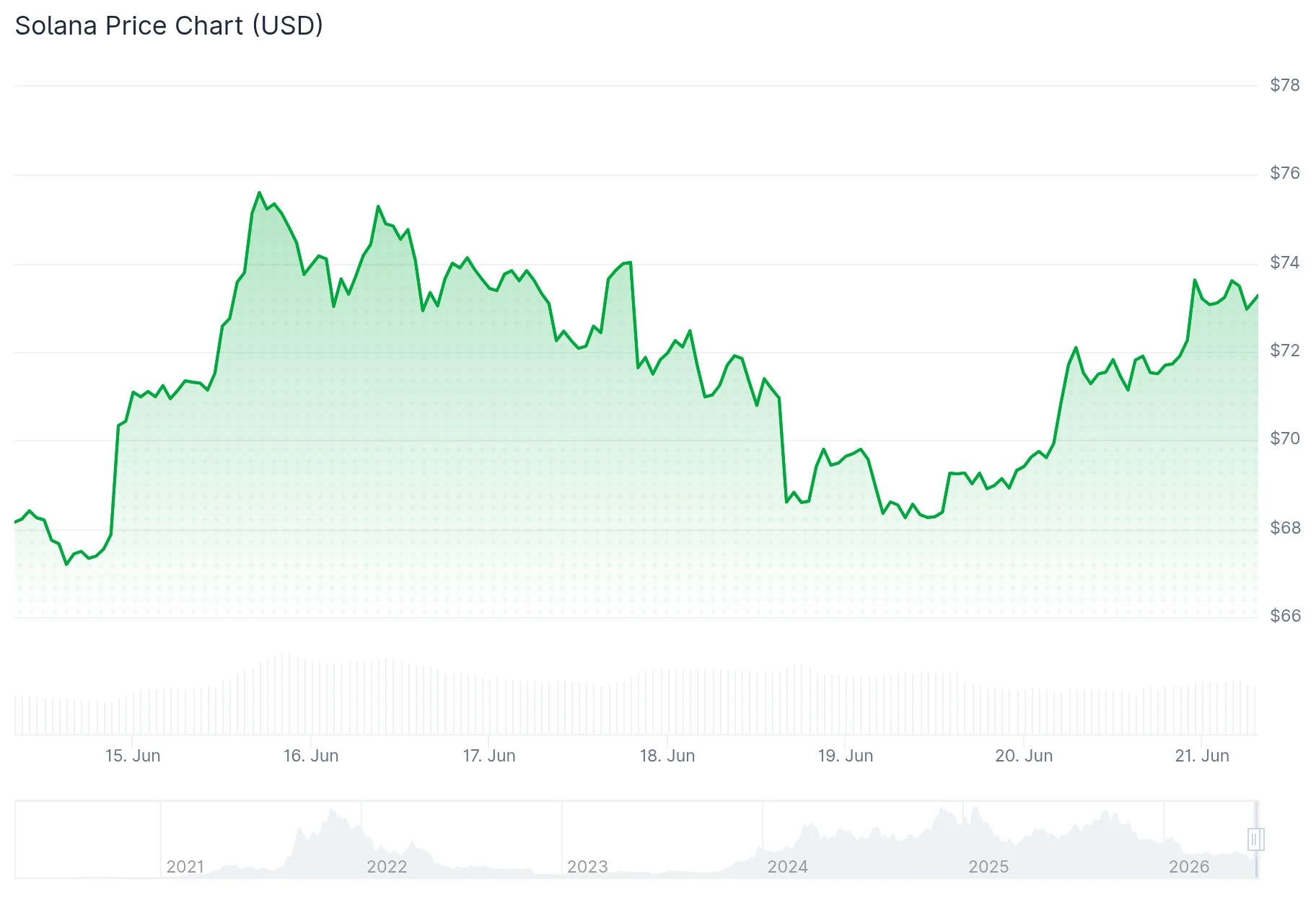
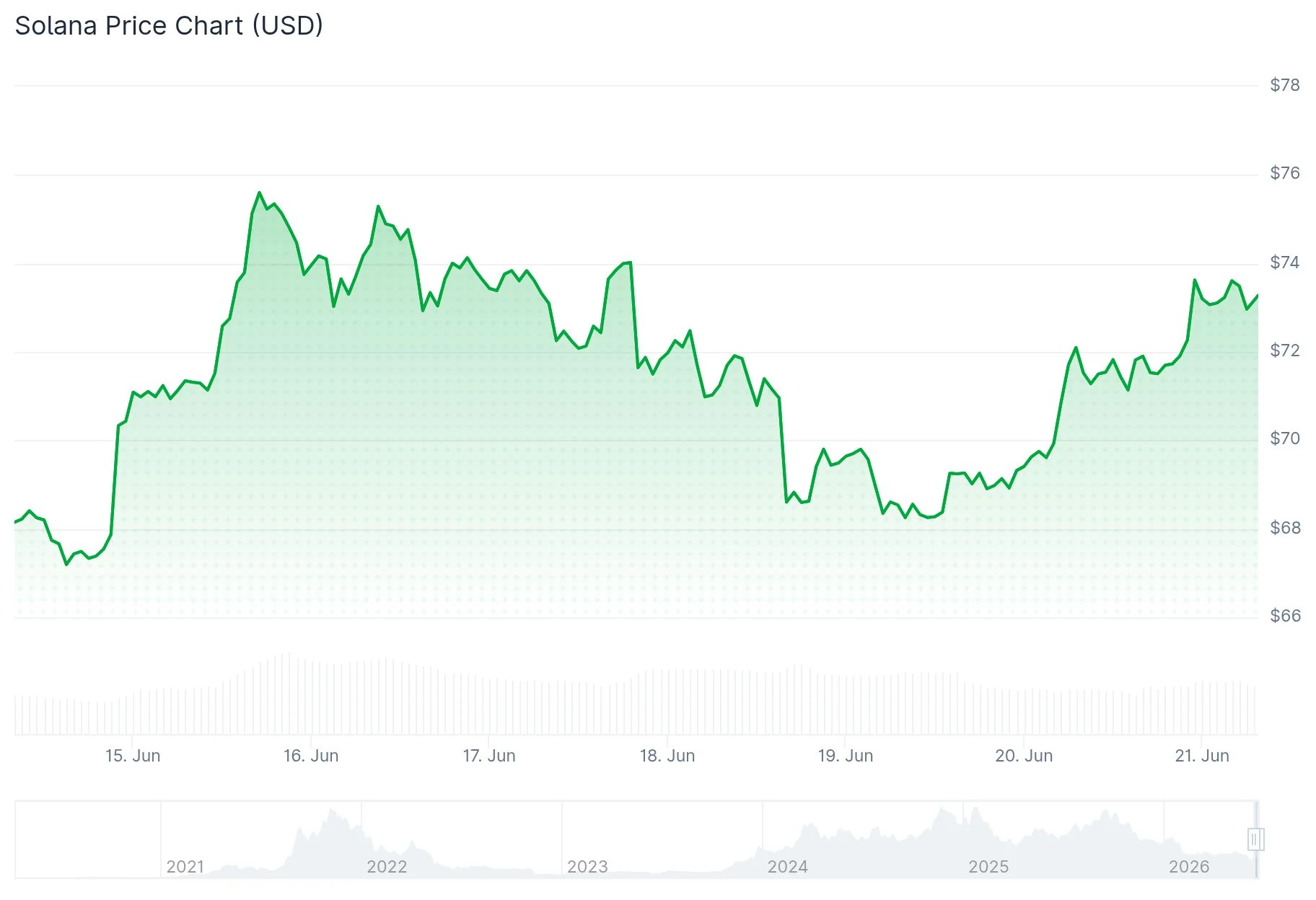
SOL has staged a recovery from its recent nadirs, climbing back toward the $68 area. This rebound has redirected focus to the $80 resistance barrier, which analysts now identify as the next significant hurdle.
Market Observer Prefers Entry Points Below $60
Crypto trader Ardi has been examining Solana through a historical cycle perspective. He observed that SOL peaked near $295 before entering its current downtrend, and an 80% to 85% retracement from that high would position the asset within the $45–$60 corridor.
He indicated this price band corresponds with the bottom boundary of his multi-year valuation framework. Ardi has explicitly stated he’s avoiding purchases at present prices, preferring instead to wait for a descent into that support region before establishing long positions.
Ardi also referenced Solana’s previous bear cycle, when the FTX implosion drove SOL down to approximately $8 following an already severe 90% decline from its all-time high. He noted that investors who accumulated near $17 prior to that final capitulation event still realized substantial returns during the subsequent recovery phase.
Technical analysis using Elliott Wave methodology from More Crypto Online suggests SOL may be constructing a higher low formation. Should buying pressure persist, this pattern could facilitate a challenge of the $80 resistance level.
Regarding ecosystem development, prominent Solana community figure Mert emphasized that the network has validated its performance capabilities through years of high-throughput usage. He identified prediction markets, tokenized equities, enterprise-grade payment solutions, and privacy-preserving applications as potential growth vectors for on-chain activity.
According to current market dynamics, the $50 and $80 thresholds remain the two pivotal price zones commanding the greatest attention from active traders.


Pudgy Penguins has expanded its physical retail push by bringing Vibes Series 3 trading cards to Target stores across the United States.
Summary
- Pudgy Penguins Vibes Series 3 cards are now available at Target stores across the U.S.
- The rollout gives the NFT-born brand more exposure to collectors outside traditional crypto markets nationwide.
- Moonbirds characters and new gameplay features aim to broaden appeal for Vibes trading cards online.
The rollout gives the NFT-born brand more shelf space in a mainstream retail channel.
The launch follows earlier Vibes card releases and builds on the project’s push into toys, games and licensed products. The new set adds more gameplay features, original artwork and characters from the Moonbirds collection.
Cards reach Target shelves
Pudgy Penguins and Vibes TCG said on X that the Vibes Season 3 collection is now available in all Target stores nationwide. The post described the launch as “a new chapter for Pudgy Penguins and Web3.”
The project also shared a VibesChecker tool for buyers to find local Target stock and upload card pulls. The rollout marks the largest retail move so far for the Vibes trading card game.
Vibes is a physical and digital trading card game built around Pudgy Penguins IP. The game lets users collect, trade and compete with penguin characters that have different abilities and rarities.
Brand moves further beyond NFTs
Pudgy Penguins began as an Ethereum NFT collection of 8,888 cartoon penguins in 2021. Since then, the project has tried to turn its characters into a consumer brand through plush toys, cards, games and licensing.
As previously reported by crypto.news, PENGU drew market attention earlier this year as analysts pointed to the strength of the Pudgy Penguins brand beyond short-term NFT trading. The report said the project’s value story had moved beyond the original digital collection.
The Target rollout fits that same strategy. Instead of relying only on NFT markets, Pudgy Penguins is placing its characters in stores where customers may have little direct contact with crypto.
Vibes adds Moonbirds characters
Vibes Series 3 includes characters from Moonbirds, another known NFT collection. The set follows earlier Vibes releases and adds new card types and gameplay mechanics for returning players.
NFT Calendar reported in May that the third set, called Birb & Pengu, would include 195 new cards. It also said the set would introduce “Fits,” a card type used to upgrade character cards during gameplay.
Orange Cap Games developed Vibes in partnership with Pudgy Penguins. The studio says Vibes is both a physical and digital trading card game based on the Pudgy Penguins brand.
PENGU remains tied to consumer push
The rollout comes as Pudgy Penguins continues to connect its token, games and consumer products. CoinGecko data showed PENGU trading near $0.0067, with a market cap of about $425 million at the time of review.
The token sits beside the brand rather than replacing its retail push. Buyers of cards at Target may not need to hold PENGU or own a Pudgy Penguins NFT, which gives the brand a different path to reach new users.
Crypto.news also reported that Pudgy World helped lift attention around PENGU earlier in 2026. The project has used games, merchandise and public brand deals to keep the penguin characters visible outside NFT marketplaces.
The Target card rollout adds another retail channel to that plan. It also shows how some NFT projects are testing physical products as a way to stay relevant after the first NFT market boom.
Caesars and DraftKings are two names that show up in nearly every US online betting conversation. Both have spent years building strong recognition through major league deals, polished apps, and nonstop ad spend. But the industry is moving, and a fresh group of crypto-first casinos is starting to win over players who want a quicker, more modern experience. ZunaBet, launched in 2026, is one of the names becoming part of that shift.
Here is how Caesars and DraftKings compare today, and where ZunaBet is starting to make its mark as a different kind of platform.
The Two Big Names in US Betting
Caesars has been part of gambling for decades. The brand built its reputation in physical casinos before moving online through Caesars Palace Online Casino and the Caesars Sportsbook. Everything runs on fiat money, with deposits through cards, bank transfers, and PayPal. The Caesars Rewards program ties online play to perks at Caesars resorts, including hotel stays and dining credits.
DraftKings reached the top another way. It started as a daily fantasy sports site before growing into a full sportsbook and online casino. It is now one of the most familiar names in US sports betting, with sharp mobile apps and partnerships across the major leagues. Like Caesars, it works only in dollars and runs under state-by-state licensing.
Both are reliable picks for players who want a regulated US betting experience. But both also carry the same limits. They only operate in certain states, withdrawals are slower than what crypto sites manage, and their game libraries are smaller compared to global platforms. Their loyalty programs still follow the same tier and points layout that has been around for years.
ZunaBet Joins the Story
ZunaBet is a newer name climbing in player conversations since its 2026 launch. It is owned by Strathvale Group Ltd and operates under an Anjouan gaming license. The biggest gap between ZunaBet and the older brands sits at the foundation. ZunaBet was built around crypto from day one rather than adapted later from a fiat-based system.
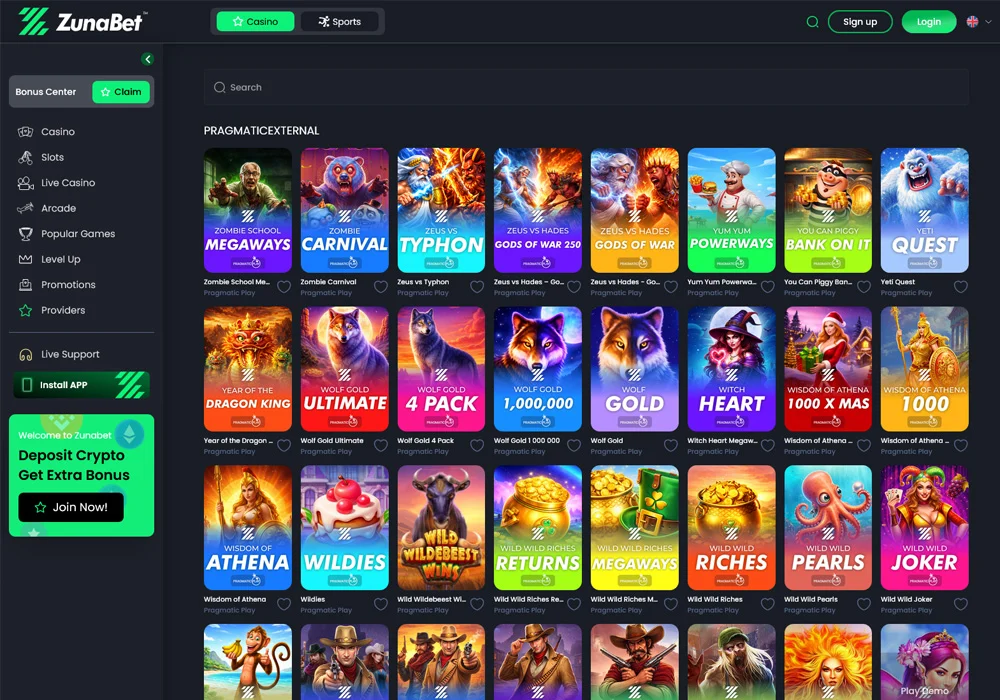
The casino offers more than 11,000 games from over 60 providers, including big studios like Pragmatic Play, Hacksaw Gaming, Yggdrasil, BGaming, and Evolution. That library easily outpaces what most US-licensed casinos can carry. Slots, table games, and live dealer rooms all sit under one account.
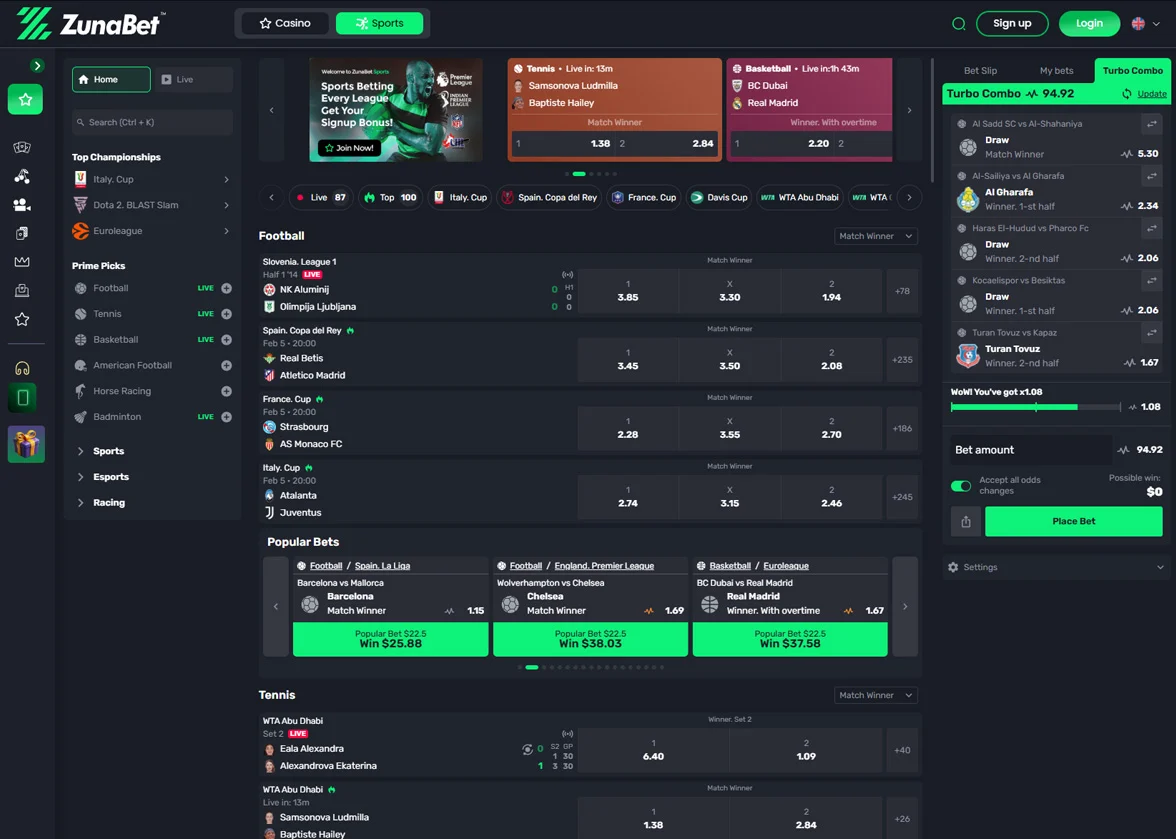
A full sportsbook is part of the package too. It covers football, basketball, tennis, NHL, and the other major sports, alongside esports like CS2, Dota 2, League of Legends, and Valorant. Virtual sports and combat sports finish out the menu. That puts ZunaBet in the same hybrid space as DraftKings, but with broader coverage rolled into one platform.
Crypto vs Traditional Models
This is where ZunaBet really separates from the older brands. Caesars and DraftKings only handle dollars. That means bank processing, possible holds, and slower payouts.
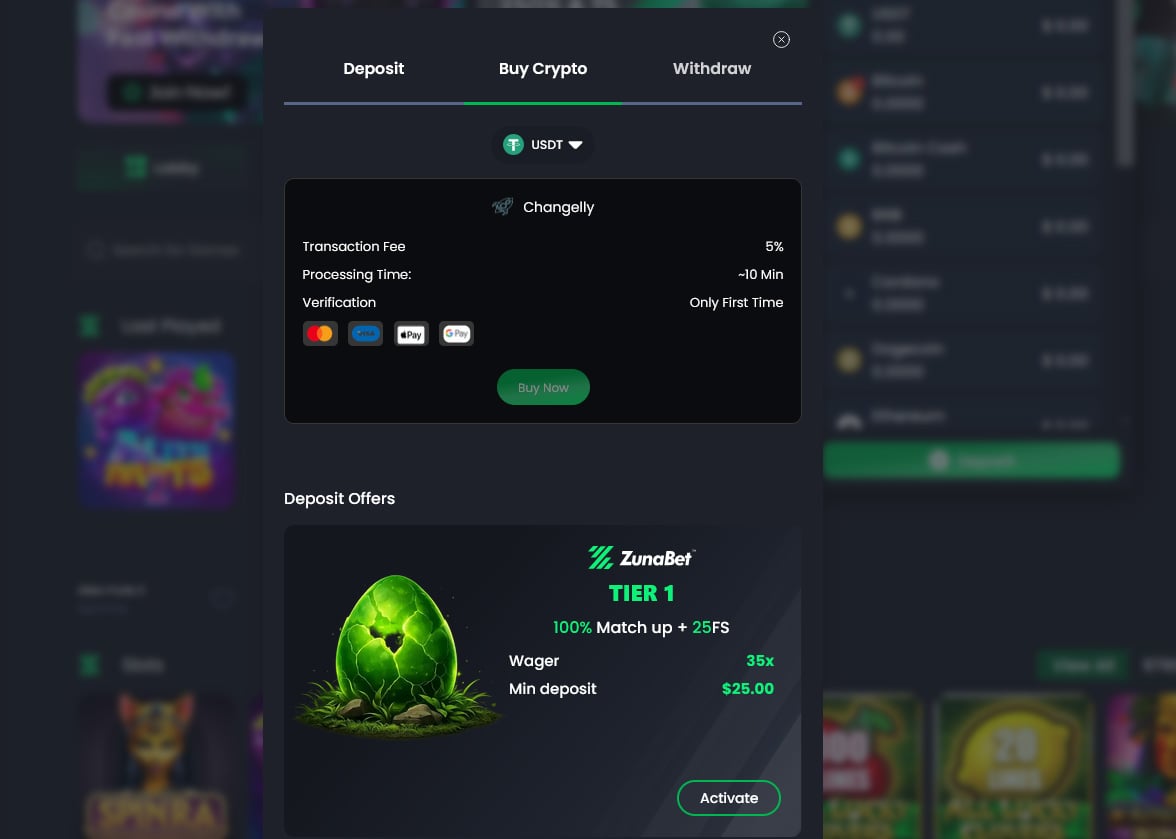
ZunaBet supports more than 20 cryptocurrencies, including Bitcoin, Ethereum, USDT across multiple chains, Solana, Dogecoin, Cardano, and XRP. There are no platform fees on transactions, and withdrawals move quickly. For players who already use crypto or just want quicker and cheaper transfers, the upgrade is clear.
Crypto platforms also tend to operate globally instead of being limited to specific states. Players in many regions can use the full casino and sportsbook without the patchwork rules that come with US brands. For a generation that already spends much of its time in digital, crypto-friendly spaces, that fits how they expect any modern platform to work.
Welcome Offers Side by Side
Caesars and DraftKings both run welcome offers, usually built around a deposit match or a risk-free first bet. The exact terms shift by state, and wagering rules can be strict.
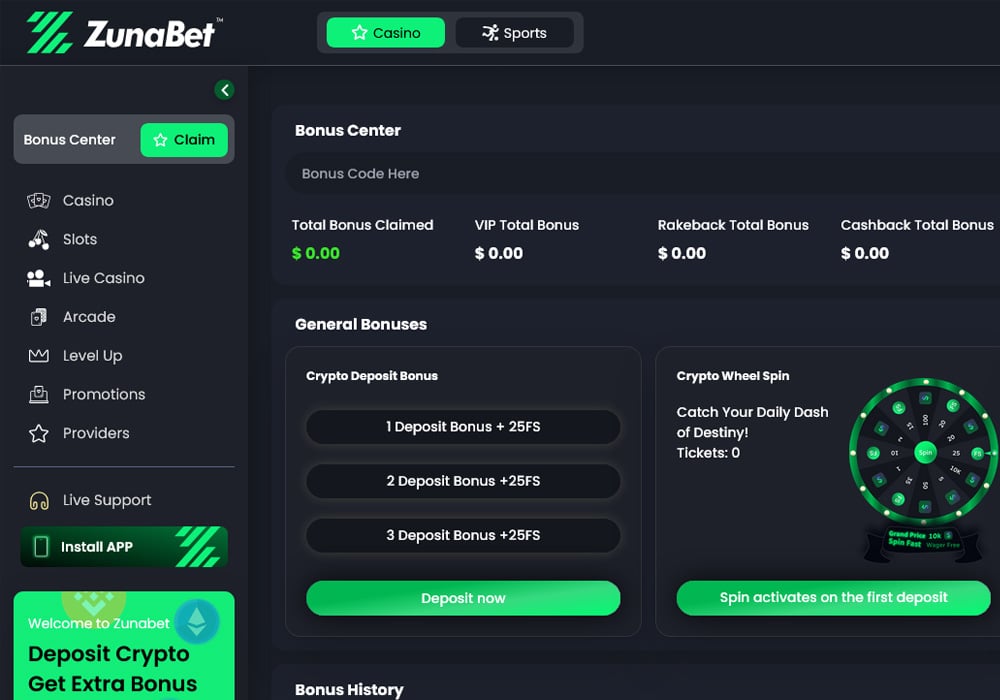
ZunaBet offers a welcome package worth up to $5,000 plus 75 free spins, spread across three deposits. The first deposit gets a 100% match up to $2,000 plus 25 spins. The second adds a 50% match up to $1,500 plus 25 spins. The third gives another 100% match up to $1,500 plus 25 spins. Marketed as a 250% bonus over three deposits, it gives new players more chances to explore the platform than a one-shot offer would.
Loyalty Programs Compared
Caesars Rewards is one of the most established loyalty programs in gambling. The link to physical resort perks is a strong draw for players who visit Vegas or Atlantic City. DraftKings Dynasty Rewards lets players earn points to swap for bonuses, free bets, and event access.
Both work, but both follow the same loyalty card formula the industry has used for decades. ZunaBet takes a different approach. Its program runs on a dragon evolution theme with a mascot called Zuno. There are six tiers: Squire at 1% rakeback, Warden at 2%, Champion at 4%, Divine at 5%, Knight at 10%, and Ultimate at 20% rakeback at the top.
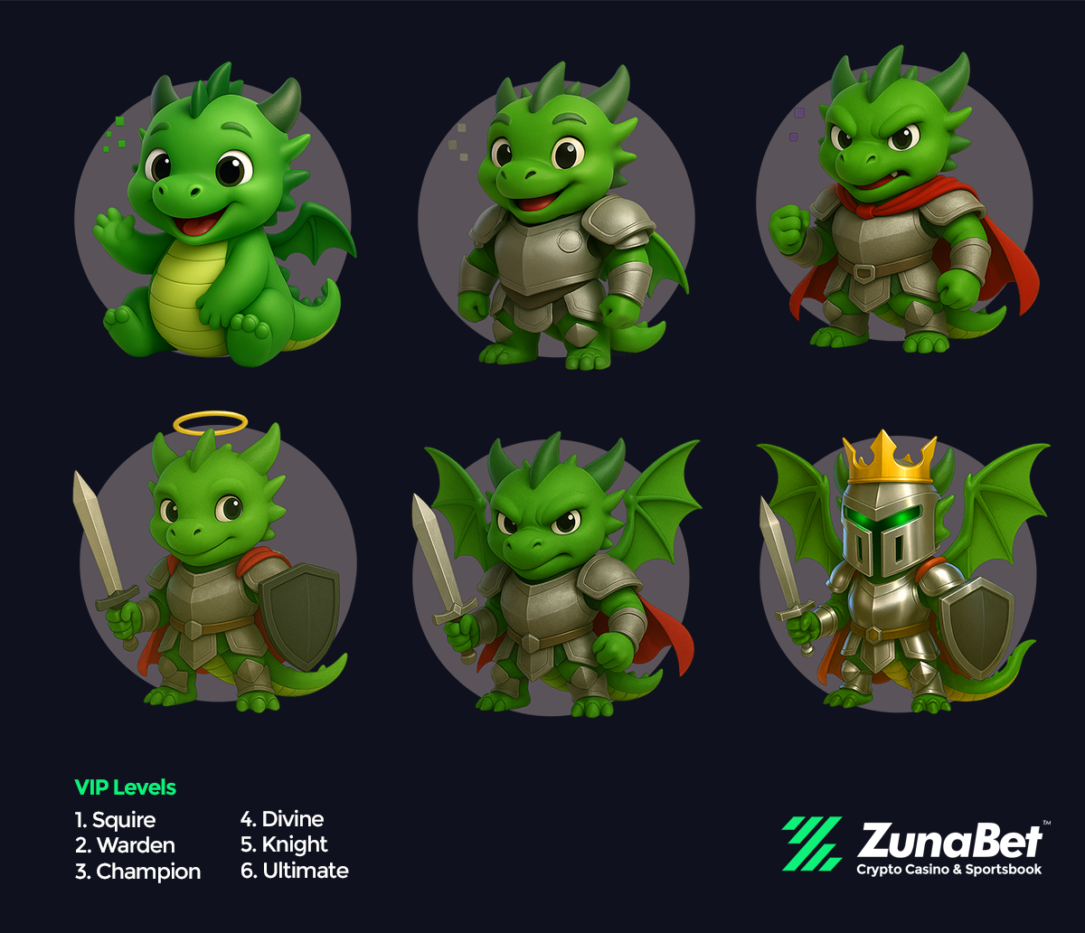
Players also pick up tier-based free spins up to 1,000 spins, VIP club access, and double wheel spins as they climb. The whole setup feels closer to leveling up in a game than swiping a points card. For players who enjoy that kind of system, it lands harder than a standard VIP program.
Why ZunaBet Is Worth a Closer Look
Caesars and DraftKings still make sense for players who want a familiar, regulated US betting experience. Both brands are strong, and neither is going to lose its place. But what players want from these sites is changing fast. Quick payouts, deeper libraries, and more engaging rewards are turning into baseline expectations rather than nice extras.
ZunaBet is built around that baseline. The crypto-first foundation means fast payments and low fees. The game library outpaces what most established brands carry. The sportsbook covers traditional sports and esports together. The dragon loyalty program turns regular play into a journey with clear rewards at every step.
For players who want speed, variety, and a more modern feel, ZunaBet is one of the most exciting options on the market right now. It is still an emerging platform, but the direction is clear. A new generation of players expects crypto support, gamified rewards, and global access as standard features, not extras layered on top.
Caesars and DraftKings shaped what online betting looks like today. ZunaBet is one of the platforms shaping what comes next.
Disclaimer: This is a Press Release provided by a third party who is responsible for the content. Please conduct your own research before taking any action based on the content.
Bitcoin’s gradual price recovery since the Friday dip below $62,400 continues as the asset added two grand from that local low to $64,400 over the past several hours before it lost some traction.
Most altcoins have been quite sluggish over the past 24 hours. XMR and NEAR are among the few exceptions in the green, while ONDO has dropped by over 3.5%.
BTC Reclaims $64K
June began on a highly negative foot, with bitcoin slumping from $73,000 to $59,100 in just five days. The bulls finally stepped up after this calamity and didn’t allow another breakdown. The subsequent bounce-off drove BTC to $64,000 by the start of the next business week, but the actual breakout attempt arrived last Sunday and Monday.
At the time, US President Donald Trump announced a deal with Iran, which was supposed to be signed by June 19. BTC reacted with an immediate uptick to $67,200 on Monday, which became its highest price tag in two weeks. However, it faced another rejection, which was exacerbated after the FOMC meeting on Wednesday, and it dipped below $62,400 by Friday.
The promised deal is yet to be signed, which could be among the reasons behind the market-wide weakness. Nevertheless, bitcoin still managed to regain some traction and tapped $64,400 earlier today. Although it was stopped there, it still trades above $64,000 at press time.
Its market cap remains above $1.285 trillion on CG, while its dominance over the alts is still north of 56%.

LAB Nears Top 20
As mentioned above, there’s little volatility from the larger-cap alts today. Ethereum stands still at $1,730, BNB is at $590, and XPR is just inches below $0.15. Solana, despite some major token deposits to exchanges, is up by over 2% to $73. TRX, CC, and XMR are also in the green, while HYPE and XLM have lost some traction.
NEAR has risen by 3.5% to $2.24, while ONDO is below $0.34 after a 3.2% decline. LAB is today’s top performer once again, surging by over 25%. It now trades well above $15 after a 230% monthly rise, and it’s close to the top 20 alts by market cap. AERO follows suit in terms of daily gains, as an 11% pump has helped it enter the top 100 alts.
The total crypto market cap has tapped $2.290 trillion on CG after another minor increase on a daily scale.

The post LAB Nears Top 20 Alts After 25% Surge, BTC Price Taps $64K: Weekend Watch appeared first on CryptoPotato.


Two Texas brothers pleaded guilty in a federal case tied to the armed robbery of a Minnesota family and the theft of more than $8 million in cryptocurrency.
Summary
- Two Texas brothers pleaded guilty to robbery after an armed $8 million crypto kidnapping case.
- Prosecutors said the victims were held for nine hours while crypto was transferred under threat.
- The case adds to rising global wrench attacks targeting crypto holders and their family members.
The U.S. Attorney’s Office for the District of Minnesota announced the pleas on June 18.
Isiah Angelo Garcia, 25, and Raymond Christian Garcia, 24, both of Waller, Texas, pleaded guilty to one count each of Interference with Commerce by Robbery. Prosecutors said each man faces up to 20 years in federal prison. Sentencing dates have not yet been set.
Guilty pleas follow armed crypto robbery
According to the Justice Department, the Garcia brothers traveled from Texas to Minnesota in September 2025 to carry out the robbery. Prosecutors said they held a family at gunpoint in their home in Grant, Minnesota, while demanding access to crypto accounts.
The defendants admitted in their guilty pleas that they used firearms to threaten the victims and help carry out the robbery. They also agreed to pay more than $8 million in restitution.
“The guilty pleas entered today reflect our commitment to holding the defendants accountable for the choices they made,” U.S. Attorney Daniel Rosen said.
Prosecutors describe hours-long ordeal
Court records said the robbery began on Sept. 19, 2025. Prosecutors said the brothers zip-tied the victim, his wife and his son, and held the family at gunpoint for more than eight hours.
Isiah Garcia then took the main victim to a family cabin in northern Minnesota, where prosecutors said he forced him to retrieve extra crypto storage devices. The brothers ultimately forced the transfer of more than $8 million in digital assets.
The victim’s son later called 911 when one of the suspects left the home. Deputies found the wife and son still zip-tied inside the house. Investigators also found a disassembled AR-15-style rifle, ammunition and other items near the property.
Evidence led police back to Texas
The Justice Department said investigators used items left near the home to identify the suspects. Earlier charging documents said a Wendy’s receipt, rental car records, motel records and video surveillance helped track the brothers after they fled Minnesota.
Police arrested the brothers in Texas on Sept. 22, 2025. Prosecutors said Isiah Garcia later admitted that he and his brother drove to Minnesota, held the family at gunpoint and forced the crypto transfer.
The case moved from state charges to a federal case. The brothers were originally charged in Washington County, Minnesota, with kidnapping, robbery and burglary counts before the federal prosecution moved forward.
Case adds to wrench attack concerns
The guilty pleas come as law enforcement and security firms track more physical attacks against crypto holders. These attacks are often called wrench attacks, a term used when criminals rely on force, threats or kidnapping to steal digital assets.
As previously reported by crypto.news, France has faced a wave of crypto-linked abductions and attempted kidnappings in 2026, including a failed attack involving the wife of The Sandbox co-founder Sébastien Borget. The same report said security experts urged crypto holders to reduce public exposure and improve personal safety.
CertiK reported 34 verified wrench attack cases worldwide between January and April 2026, with estimated losses of about $101 million. Its earlier 2025 report counted 72 verified physical coercion incidents, up 75% from 2024.
The Minnesota case forms part of a wider pattern of physical crypto crime tracked by law enforcement and security firms. Prosecutors will next seek sentencing in federal court. Until then, both brothers remain convicted by guilty plea and await punishment.
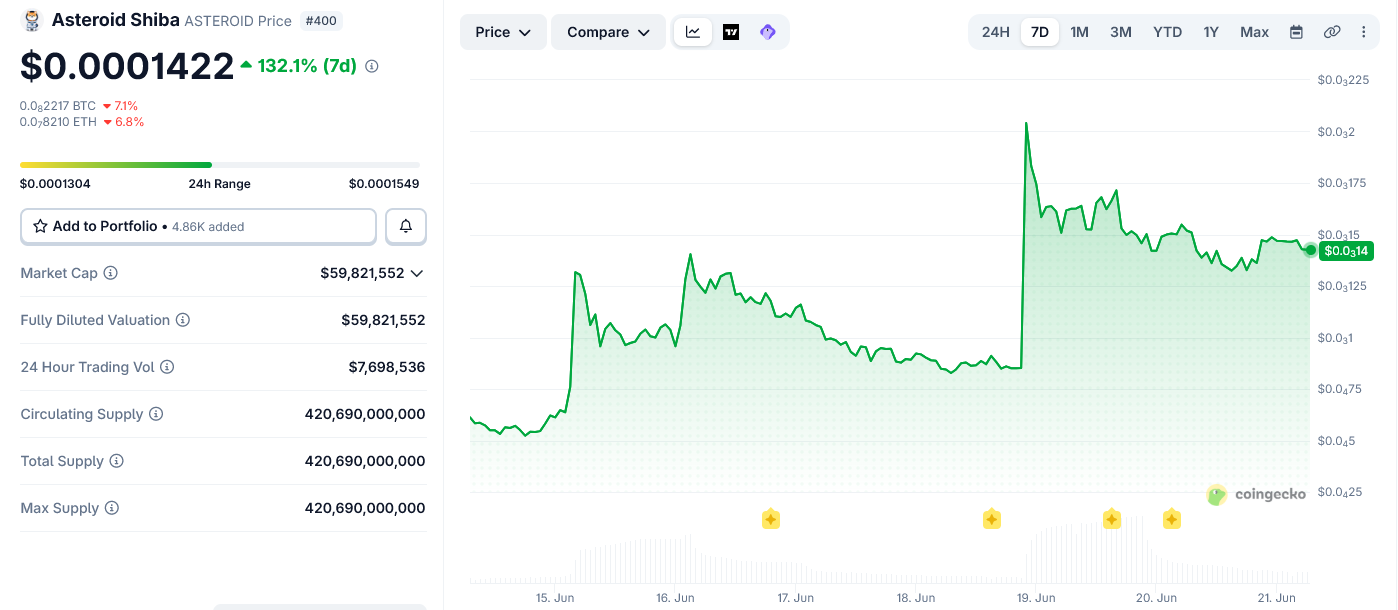
A Shiba Inu plush toy on SpaceX’s online store has sent a parody crypto token or meme coin into another sharp rally.
Asteroid Shiba, an Ethereum-based meme coin built around the “Asteroid” plush from SpaceX’s Polaris Dawn mission, jumped more than 137% over the past week, according to CoinGecko.
Its market value briefly climbed from roughly $22 million at its weekly low to about $86 million at the peak, before cooling to around $60 million.

That means the token briefly added more than $60 million in paper value during the move. Even after the pullback, it remains far above where it traded before the latest wave of SpaceX-linked attention.
A Plush Toy Becomes a Trade
The trigger was simple. SpaceX listed a $35 “SPACEX ASTEROID PLUSH” on its store, marked “coming soon,” with the company saying it expects Asteroid to “land” in September.
The store page describes Asteroid as a Shiba with “the fluffiest of ears” and says it was designed by “Liv P,” an honorary member of the Polaris Dawn team.
Crypto traders read that as fresh fuel for a story that had already gone viral once.

Asteroid was not created as a crypto mascot. It began as a real plush toy designed by Liv Perrotto, a young cancer patient and space fan who became connected to the Polaris Dawn crew through St. Jude-linked spaceflight efforts.
The plush flew on the Polaris Dawn mission in September 2024 as the crew’s zero-gravity indicator. That is the small object astronauts use to show when they have reached microgravity.
The Emotional Origin Story
Liv said Asteroid was inspired by Elon Musk’s Shiba Inu, Floki. She wanted the toy to help other children believe that space was not impossibly far away.
Before her death in January, Liv reportedly left Musk a list of questions. The last question asked whether Asteroid could become SpaceX’s official mascot. Musk later replied publicly, and that response helped turn the toy into a full crypto narrative.
In April, ASTEROID exploded after Musk’s reply. CoinDesk reported that one anonymous wallet turned a $575 trade into about $1.17 million in five days during that first run.
The latest rally is the sequel. This time, the catalyst was not just a social media reply. It was a SpaceX store listing.
The Line Traders Keep Blurring
The key detail is the distinction between the plush and the token. SpaceX is selling the Asteroid plush. It is not selling, endorsing, or backing the ASTEROID token.
The token has no formal ties to SpaceX, St. Jude, Musk, or Liv’s family, and no verified mechanism directing token proceeds to charity.
That has not stopped the market. ASTEROID now trades as a pure narrative asset: part SpaceX lore, part Shiba meme, part emotional internet story.
That combination has been enough to add tens of millions of dollars in market value within days. It also means the same attention that lifted it can disappear quickly.
The post SpaceX’s Mascot Shiba Dog Adds $50 Million to a Parody Token appeared first on BeInCrypto.
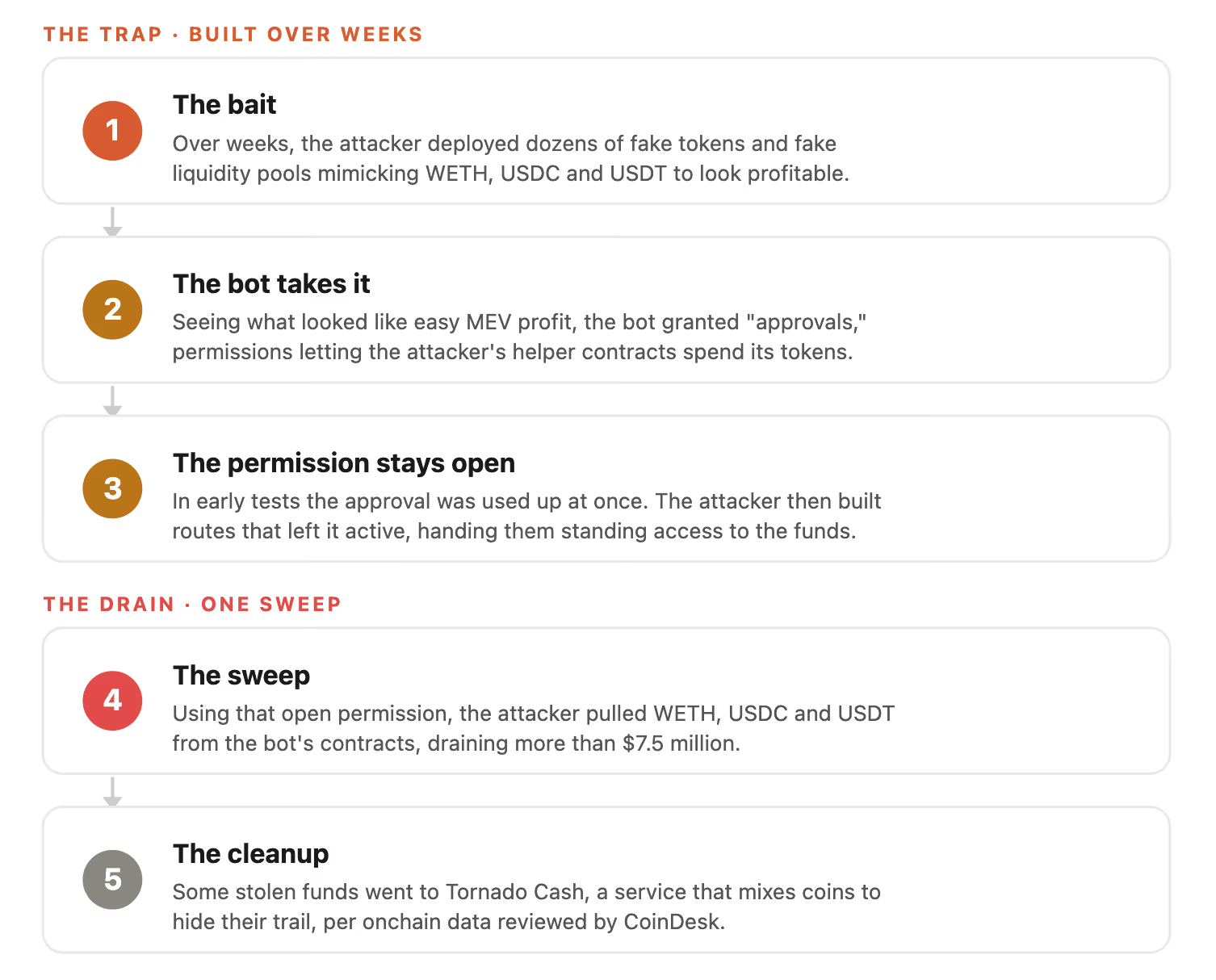
The setup was built over several weeks, where the attacker deployed dozens of fake token contracts and fake liquidity pools – a term for a pile of tokens locked on a decentralized exchange – that looked like profitable trades. Some mimicked familiar assets such as wrapped ether (WETH), and dollar-pegged stablecoins USDC and USDT.
That bait did what it was supposed to do. Jaredfromsubway.eth’s bot saw what looked like MEV opportunities and generated approvals for attacker-controlled helper contracts to spend tokens on its behalf. Those approvals were used immediately as part of the trade in earlier tests, but later, the attacker created routes where the approvals stayed open.
This left the attacker with standing permission to pull funds. And they used those open approvals to transfer WETH, USDC and USDT out of Jaredfromsubway.eth’s contracts, draining more than $7.5 million.
Some of the stolen funds were later sent to Tornado Cash, onchain data reveiwed by CoinDesk showed.

The irony was hard to miss, meanwhile.
Jaredfromsubway.eth has long been one of the most visible symbols of toxic MEV on Ethereum. Sandwich attacks cost Ethereum traders about $60 million a year, with 60,000 to 90,000 attacks per month between November 2024 and October 2025.

Microsoft finds USB worm that steals cryptocurrency through clipboard hijacking and Tor

Starmer is on the precipice as pressure builds for the UK leader to resign

CTO Realty Growth: Hold Common Stock For Dividend, Buy Preferred For 7.5% Yield


-

 Business7 days ago
No Jackpot Winner as $257 Million Prize Rolls Over to $269 Million Monday Draw
-

 Fashion2 days ago
Weekend Open Thread: Miami – Corporette.com
-
Crypto World6 days ago
Zimbabwe Requires Crypto Businesses to Register Annually Under New FIU Regulations
-
 Business1 day ago
Wall Street Week Ahead: Investors see Micron earnings as pulse check of AI rally momentum
-
 Entertainment7 days ago
Matt Damon’s Viral Sci-Fi Thriller Has Taken Over HBO Max
-

 Tech7 days ago
As AI companies race to go public, who else is along for the ride?
-

 Business7 days ago
Anthropic staff to meet White House officials next week, Axios reports
-

 Crypto World1 day ago
HIVE shares jump as $220M AI deal speeds Bitcoin mining pivot
-
 Crypto World7 days ago
Bitcoin could crash to $48,000, if this historical pattern is triggered
-
 NewsBeat7 days ago
what doctors are seeing in ebike crashes
-
 NewsBeat7 days ago
Warning of disruption as Cardiff Crossrail works to start
-
 NewsBeat7 days ago
Tributes to former deputy head teacher at Cambridge school among death and funeral notices
-
 Entertainment7 days ago
Kate Middleton Glare Goes Viral After Kids Booed At Royal Event
-

 Politics7 days ago
“Israel’s” ban on ICRC visits ruled illegal, but Knesset moves to stop them permanently
-

 News Videos7 days ago
Financial Accounting | Last Day Revision Strategy and Booster | CMA Inter – June 2026
-

 Crypto World7 days ago
XRP ETFs Outperform As Bitcoin And Ethereum Funds Extend Outflow Trend
-

 Tech6 days ago
Over 400 Arch Linux packages compromised to push rootkit, infostealer
-

 Business7 days ago
Invesco Quality Income Fund Q1 2026 Commentary
-

 NewsBeat7 days ago
Singer Oliver Tree dies aged 32 in helicopter crash in Brazil
-
 Crypto World7 days ago
Market Preview: SpaceX (SPCX) IPO Record, Federal Reserve Meeting, and Iran Nuclear Agreement
You must be logged in to post a comment Login