
Crypto World
PayPal (PYPL) expands PYUSD stablecoin to 70 markets

PayPal (PYPL) said it is expanding access to its dollar-backed stablecoin, , to users in 70 markets, extending the token’s reach beyond the U.S. as it pushes deeper into digital payments.
Consumers in newly supported countries will be able to buy, hold, send and receive PYUSD directly through their PayPal accounts, with the option to transfer the token to third-party crypto wallets or convert it to local currency when withdrawing funds.
The launch is a “really powerful way to be able to show how stablecoins can actually be integrated into a distribution network for both consumers and merchants and then provide value and cost savings and instant speed and settlement,” May Zabaneh, senior vice president and general manager of crypto at PayPal, told CoinDesk in an interview.
“You’re lowering costs, you’re enhancing speed, you’re providing consumers as well as businesses, the ability to hold, spend and earn.”
Stablecoins, digital tokens backed by assets such as fiat currency or commodities, have become a core payment and settlement layer in the crypto market, widely used for trading and cross-border transfers. The sector is led by Tether’s USDT with a market capitalization of about $143 billion, followed by Circle Internet’s (CRCL) USDC at roughly $78 billion. PYUSD has a market cap of around $4 billion.
The tokens have emerged as one of the fastest-growing segments of the digital asset market, with the sector’s total supply climbing into the hundreds of billions of dollars as demand for dollar-linked digital payments increases.
The growth has attracted traditional financial institutions and payments companies, with firms such as Visa (V) and Mastercard (MA) exploring stablecoin integrations, while banks and fintechs test tokenized deposits and blockchain-based settlement to compete in cross-border payments and digital commerce.
Merchants using PYUSD can access payment proceeds within minutes rather than waiting days for traditional settlement cycles, potentially improving liquidity for cross-border commerce.
PayPal introduced PYUSD in the U.S. in 2023. The token is backed by dollar deposits and short-term Treasuries and issued by Paxos under U.S. regulatory oversight.
The new markets span regions including Asia-Pacific, Europe and Latin America, with countries such as Singapore, the U.K., Peru and Guatemala among those gaining access. PayPal said additional markets will be added in the coming weeks.
Read more: Stablecoin market hits $312 billion as banks, card networks embrace onchain dollars

Crypto World
Vietnam pushes local crypto exchanges as Hanoi moves to block offshore trading: Reuters


Vietnamese firms are racing to secure licences for the country’s first domestic cryptocurrency exchanges as Hanoi moves to restrict trading on foreign platforms.
A government resolution issued in February calls for a pilot program for locally run digital asset exchanges, with a rollout possible as soon as March.
A March 12 Finance Ministry document showed that five companies cleared an initial screening round, Reuters reported. These include affiliates of three private banks in the country including Techcombank, VPBank and LPBank, along with VIX Securities and the Sun Group conglomerate.
The move could reshape a market that has grown fast with little formal oversight. Vietnam has ranked fourth in Chainalysis’ latest Global Crypto Adoption Index, with Vietnamese users having moved an estimated $200 billion in crypto in the year through June 2025.
Officials are concerned that heavy use of crypto and stablecoins could weaken control over capital flows. Vietnam already limits cross-border transfers, and many households have few places to put savings beyond gold and property.
That has helped drive gold prices above global levels and fueled waves of housing speculation, the report points out. Vietnam passed a landmark law officially recognizing digital and crypto assets early last year, outlining a broad framework for managing crypto and fostering innovation in the sector.
Crypto World
World launches agentkit with Coinbase-backed x402 to verify human identity behind AI agents


As AI agents increasingly transact, shop, and act autonomously online — a market that can reach $3 trillion to $5 trillion by 2030 — a key issue comes into focus: how to verify that a real person is behind the activity.
Sam Altman–backed identity project World (formerly WorldCoin) says it has the solution.
On Tuesday, the company rolled out AgentKit, a developer toolkit that allows AI agents to carry cryptographic proof that they are backed by a unique human, using its World ID system. The product works with x402, a protocol developed by Coinbase and Cloudflare that enables “agentic payments” by embedding stablecoin micropayments into the internet’s communication layer so AI Agents and software can pay each other without human intervention.
“Payments are the ‘how’ of agentic commerce, but identity is the ‘who,’” said Erik Reppel, head of engineering at Coinbase Developer Platform and founder of x402. “This is a massive step toward a web where agents aren’t just seen as automated traffic, but as legitimate economic participants.”
The move comes as AI agents are rapidly evolving, handling time-consuming and often frustrating tasks from booking reservations to surfing e-commerce marketplaces for the best deals. Some estimates suggest agentic commerce could reach $3 trillion to $5 trillion by 2030, with agents accounting for up to 25% of U.S. e-commerce, World said.
Coinbase founder Brian Armstrong said he believes “very soon” there will be more AI agents than humans making transactions. Binance founder Changpeng Zhao went further, predicting agents will make one million times more payments than people, “and they will use crypto.”
The missing piece
However, as the agentic commerce market expands, its widespread use creates a problem that payments alone cannot solve: identity.
“One person could run thousands of agents that all pay small fees,” said DC Builder, a research engineer at the World Foundation. “Proof of Human addresses this gap.”
The World spokesperson explained that AgentKit addresses this by linking multiple agents to a single verified human, which allows platforms to impose limits at the identity level.
“AgentKit allows developers to link multiple agents to the same verified human,” the spokesperson said. “This means a platform can allow someone to run several agents while still enforcing limits based on the underlying person.”
That could enable services to cap usage, such as one free trial or a fixed number of bookings per day per human, regardless of how many agents are deployed, the spokesperson added.
Another problem with agentic commerce is that most websites treat automated traffic as suspicious and even block bots outright. That approach, designed to stop abuse, is increasingly at odds with a world in which legitimate software agents are gradually acting on user’s behalf.
AgentKit allows users to delegate their World ID, a privacy-preserving proof that they are a unique human, to AI agents acting on their behalf. And World is positioning this not as a replacement for other identity systems, but as a foundational layer.
“This isn’t necessarily an either-or choice,” a World spokesperson told CoinDesk. “World ID is designed to be a proof of human layer that developers can use on their own or alongside other identity systems.”
The system uses zero-knowledge proofs so platforms can verify that an agent represents a real person without collecting or storing personal data, a design World claims is required for scaling identity in an AI-driven web.
Beyond Orb verification
AgentKit, which is currently in beta version, relies on Orb-based biometric verification, the World’s most controversial component.
But the company says it plans to expand the system to include additional credentials. That will include NFC-enabled passports and IDs via “World ID Credentials,” allowing users to prove attributes about themselves without revealing personal information.
“Beyond the beta, we plan to expand AgentKit alongside the next generation of the World ID protocol,” the spokesperson said.
With the world’s real-time human verification meter reading at 17,912,203 at the time of writing, its networks rank among the largest proof-of-personhood globally. It also makes their broader ambition clear: to become the identity layer for an internet increasingly populated not just by people, but by the AI agents acting on their behalf.
Read more: Visa is ready for AI agents. So is Coinbase. They’re building very different internets


For much of the last three years, a predictable cycle dominated the market: companies announced their intentions to purchase massive volumes of Bitcoin, watched their stock prices soar to a premium and issued new shares to buy more Bitcoin. This feedback loop made Bitcoin accumulation look like an “infinite money glitch”: a guaranteed way for public companies to manufacture shareholder value out of thin air.
As we move through the first quarter of 2026, that cycle has broken. Recent data shows that roughly 40% of publicly traded Bitcoin treasuries are now trading at a discount to their net asset value (NAV). In plain terms, the market now values these companies as a liability, worth less than the market price of the Bitcoin they hold.
This collapse in valuation has invited blistering criticism from institutional veterans. Jan van Eck, CEO of VanEck, recently dismissed the sector as a publicity-driven trend, while veteran analyst Herb Greenberg has characterized the most prominent player, Strategy, as a “quasi-Ponzi scheme.”
These critiques point to a failure in how many of these firms are managed. To remain viable, Bitcoin treasury companies must accept that accretive dilution is no longer a sustainable strategy. They must move beyond holding passively and operate as disciplined asset managers.
Competing philosophies: the promoter vs. the asset manager
Today, most Bitcoin treasury companies are divided into two camps, representing fundamentally different philosophies of corporate management: “Promoters” and “Asset Managers.”
Promoters treat Bitcoin as a passive asset to be hoarded. In this model, the company’s primary job is two-fold. First, the firm must act as an aggressive advocate for the underlying currency and its ecosystem. By investing in community projects and maintaining a constant presence in public discourse, the Promoter works to drive the token price higher and capitalize on gains from its existing holdings. Second, the Promoter must market its own stock to maintain a high premium. When the market values the company significantly higher than the Bitcoin it actually holds, the company can sell new shares at that inflated price to buy more Bitcoin at the normal market rate. This calculated financial maneuver is called accretive dilution.
Together, these strategies create a feedback loop of hype. The Promoter needs the price of Bitcoin to rise to increase its net asset value, and it needs the equity premium to be maintained to continue its accumulation strategy. However, this model is fragile because it relies entirely on external sentiment. If the price of BTC stalls or the equity premium vanishes — as we are seeing across the board in 2026 — the Promoter is left with an unproductive balance sheet and no internal mechanism for growth.
In contrast, asset managers view Bitcoin as a productive commodity akin to “digital oil.” In the physical world, an oil major like Exxon or Shell does not simply sit on reserves and hope for a price rally. They are sophisticated financial operators who treat their inventory as a productive asset. They trade the futures curve to capture premiums and monetize market volatility.
Asset Manager-style treasuries apply this same industrial rigor to the digital realm. By using their balance sheet to generate real, Bitcoin-denominated returns, they ensure growth is driven by operational skill, rather than a byproduct of crypto market sentiment. By treating Bitcoin as a commodity to be managed, the asset manager generates real yield from the skilled management of the asset, not from the continuous issuance of new stock to the public.
The era of accretive dilution is over
The distinction between these two models is no longer academic. One of them has stopped working.
The Promoter approach — relying on equity issuance to finance Bitcoin accumulation — is no longer a viable growth strategy. What once passed as financial sophistication was, in practice, a tactic that depended on unusually favorable market conditions.
Issuing shares at a premium can temporarily increase Bitcoin per share, but it does not create an economic return. It generates no cash flow, no operational advantage and no durable compounding mechanism. It exists entirely at the discretion of new investors. When that demand weakens, the strategy collapses.
For much of 2025, this reality was easy to ignore. Rising Bitcoin prices and abundant liquidity made accumulation strategies look interchangeable. Capital flowed freely, equity premiums expanded, and dozens of treasury companies adopted the same playbook: buy Bitcoin, promote the narrative, raise more equity, repeat. In that environment, differentiation didn’t matter.
It does now.
As the market matures, Bitcoin treasuries that rely solely on passive accumulation face a hard constraint: they lack an internal mechanism for growth. When every firm owns the same asset, holds it the same way and depends on the same equity-market dynamics, there is no basis for sustained outperformance. The model has become commoditized — and investors are growing sick of it.
Only the most prominent players — those with exceptional scale, brand recognition, and Michael Saylor-level fame — will be able to sustain this approach. For most treasury companies, passive accumulation without active management offers no path to differentiation, resilience, or long-term relevance.
Markets are already reflecting this reality. Nearly half of Bitcoin treasury companies have fallen below mNAV, and most won’t recover without a drastic pivot.
Transitioning from passive storage to active management
To transition from a promoter to an asset manager, companies must move beyond the simple HODL strategy and put the balance sheet to work. This means adopting the tools of professional commodity trading.
One primary tool is the basis trade, in which a firm exploits the price difference between the spot price of Bitcoin and the futures contract price. By capturing this spread, a company can grow its Bitcoin holdings even when the asset’s price is flat or declining. Furthermore, a Bitcoin asset manager uses dynamic options strategies to turn market turbulence into income.
This approach provides a “real yield” that does not rely on selling more stock or finding new investors. It transforms the treasury from a cost center into a profit center. Most importantly, it provides a clear path to increasing Bitcoin-per-share through operational excellence rather than capital market maneuvers.
Treasury companies also need to adjust the way they communicate with investors. Too many treasury CEOs posture as low-budget Michael Saylor impersonators — focusing on narrative amplification, public advocacy and symbolic accumulation. It’s an approach designed to generate hype, not project careful financial stewardship.
As investor scrutiny intensifies, CEOs will need to project credibility by explaining how risk is managed, how exposure is structured, and how returns are generated across a range of market conditions. The market will not reward Bitcoin’s loudest cheerleaders; it will reward the firms that deploy their holdings most productively.
Pi Network price has fallen by over 38% as investors sold the Kraken listing news.
Summary
- Pi Network price has fallen over 10% in the past 24 hours and about 38% from its recent peak as bearish technical indicators signal further downside risk.
- A confirmed MACD bearish crossover and weakening momentum suggest sellers have gained control while the token approaches key support near $0.1900.
- Investor sentiment has also turned cautious ahead of a scheduled unlock of roughly 17 million PI tokens, which could increase supply pressure.
Pi Network (PI) price has dropped over 10% over the past 24 hours and 38% from its highest point on Friday, March 13.
It remains at risk of more downside as technical indicators present a bearish outlook for the coming sessions.
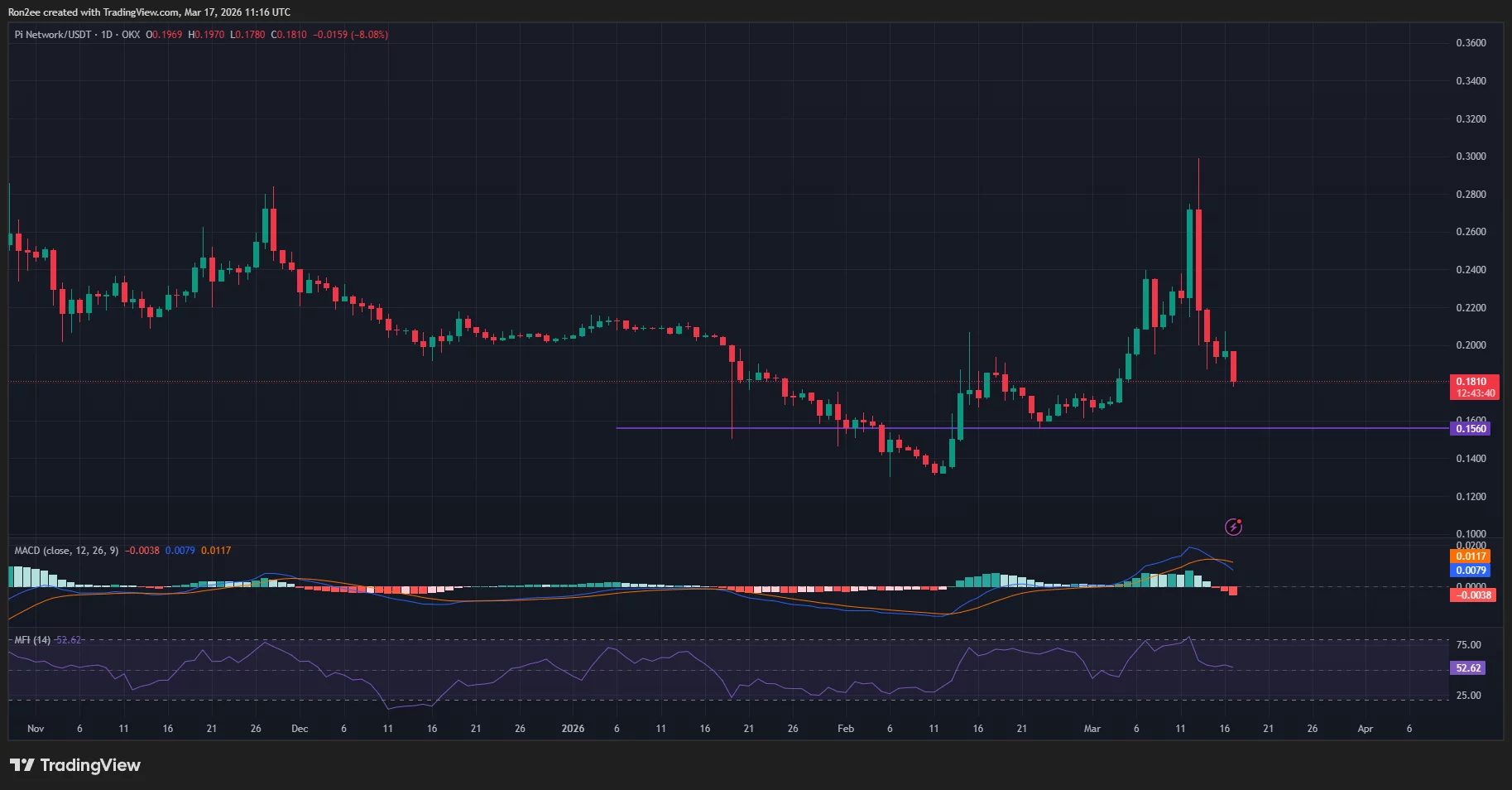
On the 24-hour/USDT price chart, the PI price has confirmed a MACD crossover, which happens when the MACD line crosses below the signal line. When such a bearish crossover forms, an asset has historically signaled a period of consolidation or further price declines as momentum shifts in favour of the sellers.
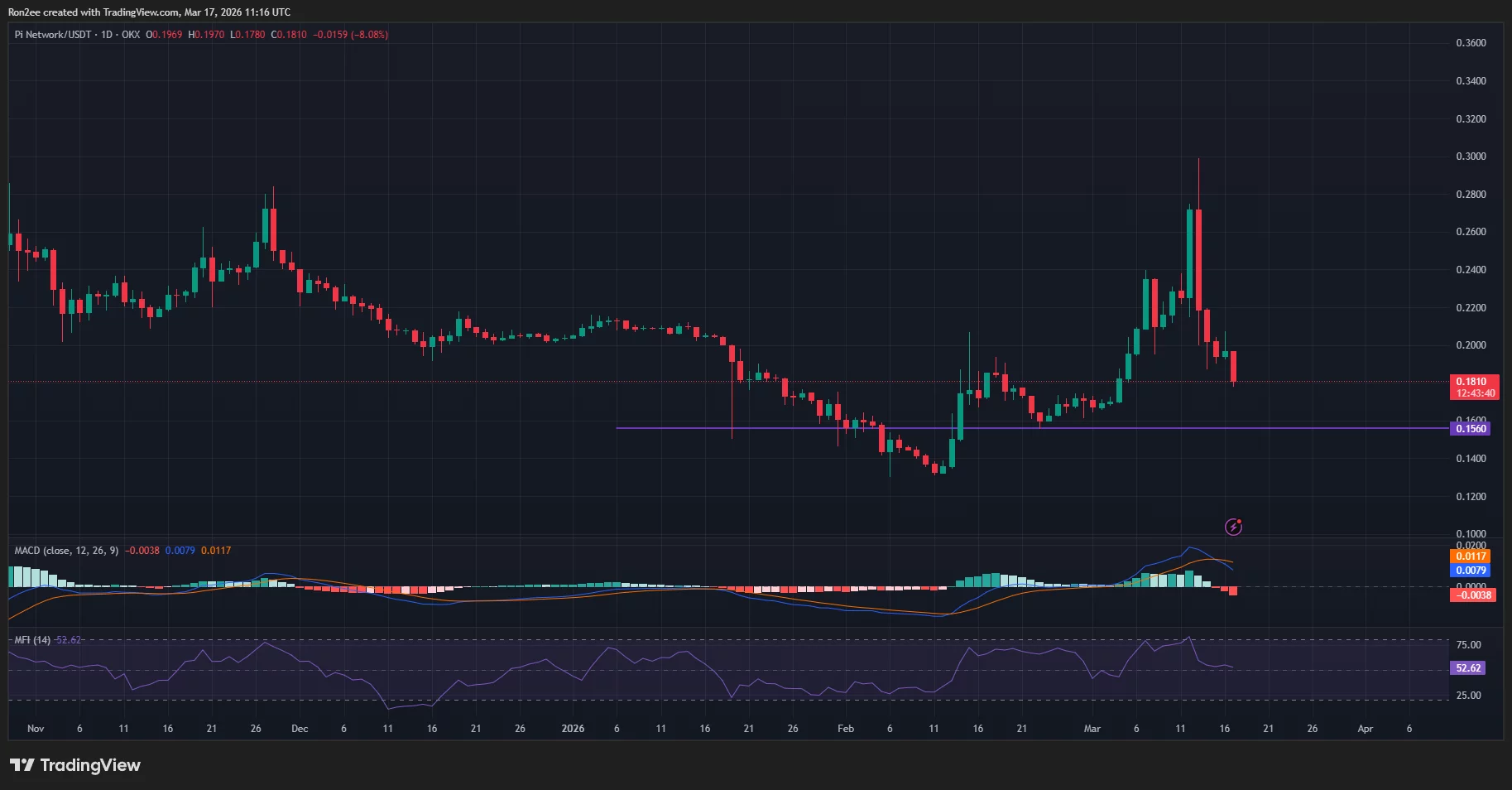
Additionally, the Pi Network price is closing in on the 50-day SMA, which had been serving as key support for the token during its recent recovery phase. A drop below the $0.176 level could trigger a sharp sell-off, potentially leading to a significant price decline toward the next psychological floor.
At the same time, the Money Flow Index is closing in on neutral territory, a sign that the intense buying and selling pressure in the market is starting to balance out after the recent volatility.
Based on the confluence of bearish technicals, the Pi Network risks a drop to its Feb. 23 low of $0.1560 with no immediate support to cushion the fall if current levels fail to hold.
Pi Network’s recent downtrend began after its listing on crypto exchange Kraken on March 13. Investors likely sold the news as they booked profits after the token surged nearly 30% after the listing.
A more recent bearish development that has turned investors cautious is the token unlock event scheduled for later today. Notably, about 17 million PI tokens will be entering circulation following the event, which adds to the existing supply overhead.
Investors are likely reducing exposure to the token as they expect that the market will not be immediately able to absorb the newly released tokens, which tends to reduce scarcity and put downward pressure on the price.
Disclosure: This article does not represent investment advice. The content and materials featured on this page are for educational purposes only.

TLDR
- WULF shares climbed 11.86% during Monday’s trading session, finishing at $16.41
- Morgan Stanley provided a $500M delayed-draw bridge credit facility to the company
- Capital will finance a new data center facility in Hawesville, Kentucky
- The Kentucky location features 480 MW of existing power capacity with expansion potential
- Institutional investors hold 62.49% of shares, while analyst consensus leans Moderate Buy
TeraWulf (WULF) posted impressive gains on Monday, with shares climbing 11.86% to settle at $16.41. The surge came after the company announced a $500 million credit facility with Morgan Stanley designated for data center construction in Hawesville, Kentucky.
The financing arrangement takes the form of a delayed-draw bridge credit facility, allowing TeraWulf to access capital incrementally as construction and development proceed at the new location.
Under the agreement’s terms, TeraWulf has two interest rate structures available. The first option uses SOFR with a 2.75% spread. The alternative base rate option uses the greater of: the federal funds rate plus 0.50%, Morgan Stanley’s prime lending rate, one-month SOFR, or 1% with a 1.75% spread added.
The Kentucky location brings substantial infrastructure advantages. The former industrial property encompasses 250 developable acres and includes high-voltage transmission infrastructure, an existing substation facility, and direct grid connectivity. The site currently supports 480 MW of power with staged expansion capabilities planned.
This credit agreement builds on last month’s disclosure that TeraWulf acquired two separate land parcels — one located in Kentucky and another in Maryland — supporting its strategic data center expansion initiative. The Kentucky acquisition represents the Hawesville location now receiving development funding.
Institutional and Analyst Interest
Beyond the financing announcement, WULF has attracted considerable institutional investor activity. Multiple institutional players established fresh positions during the third quarter of last year.
Fortress Investment Group initiated a position valued at approximately $1.71 million. Azora Capital topped institutional buyers with an $11.89 million new stake. Boothbay Fund Management expanded its holdings by 129.6%. Institutional investors collectively control 62.49% of outstanding shares.
Company insiders maintain a 19.90% ownership stake. Director Michael Bucella purchased 3,171 additional shares on March 4th at $15.78 per share, increasing his total position to 270,129 shares.
Analyst Ratings
Wall Street coverage remains predominantly bullish. Morgan Stanley initiated research coverage in February with an Overweight recommendation and $37 price target — substantially above current trading levels. Cantor Fitzgerald elevated its price objective from $18 to $24. Keefe, Bruyette & Woods made a modest reduction from $24 to $23 while maintaining an Outperform stance.
Rosenblatt Securities increased its price target from $20 to $23 alongside a Buy recommendation. Among 14 covering analysts, the consensus stands at Moderate Buy with a mean price target of $20.62. The rating distribution shows 12 Buy ratings, 1 Hold, and 1 Sell.
WULF began Monday’s session at $14.67 before advancing to higher levels. The stock’s 52-week trading range spans $2.06 to $18.51, illustrating significant appreciation from lows. The 50-day moving average stands at $14.72, while the 200-day average registers $13.35.
The company maintains a market capitalization near $6.22 billion with a beta coefficient of 3.66 — indicating substantial price volatility. The price-to-earnings ratio currently sits at -9.00, reflecting ongoing operational losses.
Shares concluded Monday’s trading at $16.41 following the credit facility disclosure.
The post TeraWulf (WULF) Stock Soars 12% Following $500M Morgan Stanley Financing Deal appeared first on Blockonomi.


Strategy (MSTR) has, for the first time last week, used its perpetual preferred stock as the primary vehicle to accumulate bitcoin, marking a potential shift in how the company funds its bitcoin strategy.
The company Monday announced it purchased 22,337 BTC in the preceding week, its fifth-largest acquisition on record.
Issuance through its STRC perpetual preferred stock was $1.18 billion, equivalent to roughly 16,800 BTC at the average price of $70,000, far exceeding the $396 million raised via its common stock at-the-market (ATM) program, which had historically been the primary tool used to build its bitcoin holdings, now totaling 761,068 BTC.
At STRC’s current 11.5% dividend rate, the $1.18 billion issuance implies roughly $135 million in annual dividend obligations. This has pushed the company’s total annual dividend burden above $1 billion.
That said, the company has set aside approximately $2.25 billion in USD reserves to fund these obligations, providing a buffer amid rising capital costs.
With the company’s common stock down more than 70%, it appears incentivized to support a higher share price without further dilution.
As a result, common equity may be used more selectively, primarily when mNAV (multiple to net asset value) is meaningfully above 1 or when the company looks to build USD reserves. In practice, this suggests reduced reliance on common stock sales, while leaning more heavily on STRC, which avoids issuing new common shares.
Taken together, Strategy is increasingly funding bitcoin accumulation through its preferred capital base, with STRC now at the center of that approach.
Another dividend increase incoming?
STRC is showing early signs of pricing pressure. The preferred has now spent three consecutive days trading below its $100 par value following its March 15 ex-dividend date. With its one-month volume-weighted average price below par, the company may look to increase the dividend by a further 25 basis points to support the price.
Read More: The math behind Strategy’s path to 1 million bitcoin by the end of 2026


There’s a specific type of crypto participant who doesn’t chase price charts. They look for infrastructure. They look for systems that generate Bitcoin — not promises of Bitcoin, not tokens that might convert to Bitcoin someday — but actual BTC, flowing from real network activity.
That participant is exactly who Bitcoin Everlight was built for.
And right now, during an open presale window, those participants are beginning to activate shards.
The question worth asking isn’t whether Bitcoin validation infrastructure is interesting. It clearly is. The question is whether this particular platform has built something worth getting into early — and what “early” actually looks like in practice.

A Network That Pays You in the Only Coin That Matters
Strip away the terminology for a moment and Bitcoin Everlight is doing something genuinely simple: it runs a distributed Transaction Validation Node network, and it shares the fees that network generates with the people who participate in it.
Those fees are paid in BTC.
Not in a governance token. Not in a project-native coin whose value depends entirely on whether the project succeeds. In Bitcoin — the asset that has been the benchmark for the entire crypto industry for over a decade.
The platform introduced Everlight Shards as its participation layer: a simplified activation model sitting on top of the validation node framework. Everlight users don’t need a technical background or a rack of mining equipment. They acquire BTCL tokens, hit a tier threshold, and the shard activates — pulling them into the network automatically.
The project completed dual smart contract audits through Spywolf and Solidproof, alongside dual KYC verifications through Spywolf and Vital Block — all completed before the presale opened.

From First Token to First Reward — The Actual Process
The path from zero to active shard is four steps long, and none of them require anything technical.
You acquire BTCL tokens. The presale is live right now at $0.0008 per token, with entry points beginning at $50 — meaning the barrier to getting a position in this network is quite low.
Once your holdings reach a tier threshold, your shard activates automatically based on the USD value committed at the time of purchase. There’s no manual trigger, no application, no waiting for approval.
From that point, your activated shard participates in validation through the distributed infrastructure — passively, continuously, without any ongoing management on your end.
Rewards begin flowing immediately upon activation. During the presale phase, those rewards are paid in BTCL at a fixed rate tied to your tier. After mainnet launches, the model transitions to performance-based BTC distribution — meaning what you earn scales with how much real transaction activity moves through the network.
How the Shard Tiers Are Structured
The shard tier structure is built around three activation levels, each one carrying a different reward rate and a different level of network participation:
Azure Shard activates at $500 and earns up to 12% APY in BTCL during the presale phase, transitioning to BTC earnings at mainnet.
Violet Shard activates at $1,500 and earns up to 20% APY during presale — the mid-tier entry point for participants looking to deepen their position in the network.
Radiant Shard activates at $3,000 with up to 28% APY during presale, representing the highest participation tier currently available.
Users who hold tokens below any threshold aren’t locked out — they hold a dormant shard position that activates the moment their balance crosses the next tier. The system is designed to reward genuine alignment with the network instead of short-term speculation.

The Thing Most Crypto Reward Systems Get Wrong
The vast majority of passive reward models in crypto share one structural flaw: the reward is the same token you already own. Your earnings are denominated in the project’s own asset, which means their real-world value is completely circular — it depends on whether other people keep buying the same thing you bought.
Bitcoin Everlight breaks that loop. Post-mainnet rewards come from BTC-denominated transaction routing fees generated by actual network usage. Participation isn’t rewarded with inflation. It’s rewarded with a share of real economic activity, paid in an asset that doesn’t depend on the platform’s own price performance to have value.
That’s the structural difference. And for participants thinking beyond the presale phase — thinking about what they’re holding a year from now — it’s the part worth paying attention to.

Six Days. Phase 1 Pricing. Then It Changes.
Bitcoin Everlight’s Phase 1 presale has 472,500,000 tokens remaining at $0.0008 per token. The window is approximately six days from today.
When Phase 1 closes, the pricing available right now closes with it. Shards activated during this phase lock in at the earliest available entry point — and the BTCL rewards begin accumulating from the moment of activation, not from some future launch date.
As Bitcoin Everlight continues expanding its validation infrastructure, early participants are beginning to explore what the shard activation model means for their own BTC exposure strategy.
Users interested in understanding how Everlight Shards work — and what the activation process looks like — can explore the platform directly here.
Disclaimer: The above article is sponsored content; it’s written by a third party. CryptoPotato doesn’t endorse or assume responsibility for the content, advertising, products, quality, accuracy, or other materials on this page. Nothing in it should be construed as financial advice. Readers are strongly advised to verify the information independently and carefully before engaging with any company or project mentioned and to do their own research. Investing in cryptocurrencies carries a risk of capital loss, and readers are also advised to consult a professional before making any decisions that may or may not be based on the above-sponsored content.
Readers are also advised to read CryptoPotato’s full disclaimer.
Binance Free $600 (CryptoPotato Exclusive): Use this link to register a new account and receive $600 exclusive welcome offer on Binance (full details).
LIMITED OFFER for CryptoPotato readers at Bybit: Use this link to register and open a $500 FREE position on any coin!

South Korea’s National Police Agency is moving to standardize how seized cryptocurrencies are stored and managed, drafting guidelines that cover privacy-focused assets as authorities seek more robust asset handling. The initiative comes as investigations increasingly involve digital assets, and past incidents exposed gaps in custody processes. The KNPA’s draft directive outlines compliance requirements at each stage of crypto seizure, including the management of software wallets and private keys. The move mirrors a broader push among regulators to tighten control over the lifecycle of digital assets once they land in government custody, and it places a spotlight on the risks tied to custody for privacy-focused tokens and mainstream coins alike.
Key takeaways
- The KNPA’s draft directive aims to standardize seizure handling, with explicit procedures for wallet addresses, private keys, and custody workflows across cases involving digital assets.
- Plans to select a private custody provider are scheduled for the first half of 2026 after three bidding attempts in 2025 failed to yield a suitable partner.
- Budget constraints are a recurring challenge, with a reported allocation of 83 million won (about $55,600) to manage seized crypto assets, underscoring risk despite limited funding.
- A phishing-related custody incident intensified scrutiny earlier this year when government-held Bitcoin disappeared from prosecutors’ custody, prompting a rapid push to strengthen controls.
- Historically, authorities have disclosed that a substantial share of seized crypto comes from the Bitcoin (CRYPTO: BTC) and Ether (CRYPTO: ETH) ecosystems, with multi-year totals used for public treasuries and ongoing cases.
- The policy also contemplates privacy-focused tokens, such as Zcash (CRYPTO: ZEC), signaling a broader risk-management approach that extends beyond the most liquid assets.
Market context: The move to codify seizure custody aligns with a broader trend of tightening regulatory oversight around digital assets, as authorities increasingly require auditable chains of custody and documented controls. In a market where liquidity and risk sentiment can shift quickly, formal custody arrangements may reduce the potential for asset loss and improve transparency during investigations.
Why it matters
What to watch next
- The KNPA will finalize the bid process for a custody provider in the first half of 2026, clarifying who will manage seized assets going forward.
- A formal, published directive detailing custody procedures, wallet management, and asset tracking is expected to accompany the provider selection, offering a concrete playbook for investigators.
- Regulatory and policy scrutiny around privacy-enhanced assets such as Zcash (CRYPTO: ZEC) will likely shape custody guidelines, especially in relation to privacy-preserving features and auditability.
- Precedents from high-profile custody cases—where assets were temporarily lost or mishandled—will inform risk controls and internal training programs for Korean law enforcement and prosecutors.
Sources & verification
- Asiae article detailing KNPA’s draft directive and custody considerations: https://www.asiae.co.kr/article/2026031702455599002
- Cointelegraph report on privacy-focused tokens and custody implications: https://cointelegraph.com/news/zcash-leads-privacy-coin-rally-market-cap-passes-10b
- Cointelegraph coverage of the January phishing incident and missing BTC: https://cointelegraph.com/news/south-korea-seized-bitcoin-stolen-phishing-scam-report
- Cointelegraph follow-up on recovery of the missing BTC: https://cointelegraph.com/news/south-korea-prosecutors-recover-320-bitcoin-returned-phishing
- Cointelegraph update on the subsequent sale of recovered assets and transfer to the treasury: https://cointelegraph.com/news/south-korea-sells-21-5m-in-recovered-bitcoin-after-custody-breach
South Korea tightens crypto custody protocols amid seizure challenges
The National Police Agency’s forthcoming custody framework is poised to redefine how authorities handle digital assets from the moment of seizure through eventual disposition. By mandating systematic governance of wallet addresses, wallet access controls, and the private keys that unlock asset movement, the draft directive seeks to prevent the kind of misplacement or mishandling that has plagued past cases. In a jurisdiction where public authorities have seized substantial sums in crypto over the years, the ability to demonstrate a clear chain of custody is not merely an administrative concern—it is a matter of due process and public accountability.
In aggregated terms, seizures over the past five years have been substantial, with estimates indicating the value of seized crypto totaling around 54.5 billion won (roughly $36.5 million). The lion’s share of that amount has come from Bitcoin (CRYPTO: BTC) and Ether (CRYPTO: ETH), with about 50.7 billion won in Bitcoin and 1.8 billion won attributed to Ether. This composition underscores the importance of asset-specific storage protocols, as the differing liquidity profiles, transaction speeds, and security considerations of each asset class demand tailored custody solutions. The emphasis on privacy-focused tokens, such as Zcash (CRYPTO: ZEC), further complicates custody, given the additional considerations for privacy-preserving transactions while maintaining verifiable audit trails.
The phishing episode that catalyzed renewed attention to custody didn’t just expose a technical vulnerability; it highlighted the human and procedural gaps that persist in asset handling. Authorities confirmed that around 320 Bitcoin disappeared from prosecutors’ custody during an August 2025 investigation. Although the unknown actor returned the coins in February of the following year, the episode culminated in a March decision to tranfer proceeds totaling roughly 21.5 million USD to the national treasury, illustrating how seized assets transition into public coffers when custody is breached. The incident has underscored the need for formalized, auditable procedures that can withstand the scrutiny of investigations and public reporting.
As the KNPA moves forward, the planned engagement with a private custody provider could help institutionalize best practices across the asset lifecycle—from secure key management to robust access controls and transparent reporting. The procurement effort in 2026, following unsuccessful bids in 2025, signals a shift toward professional asset stewardship, even as budget constraints loom. The combination of regulatory intent, practical risk considerations, and the evolving landscape of digital-asset custody will shape how Korean authorities respond to future investigations and how market participants perceive the reliability of government custody in high-stakes cases.
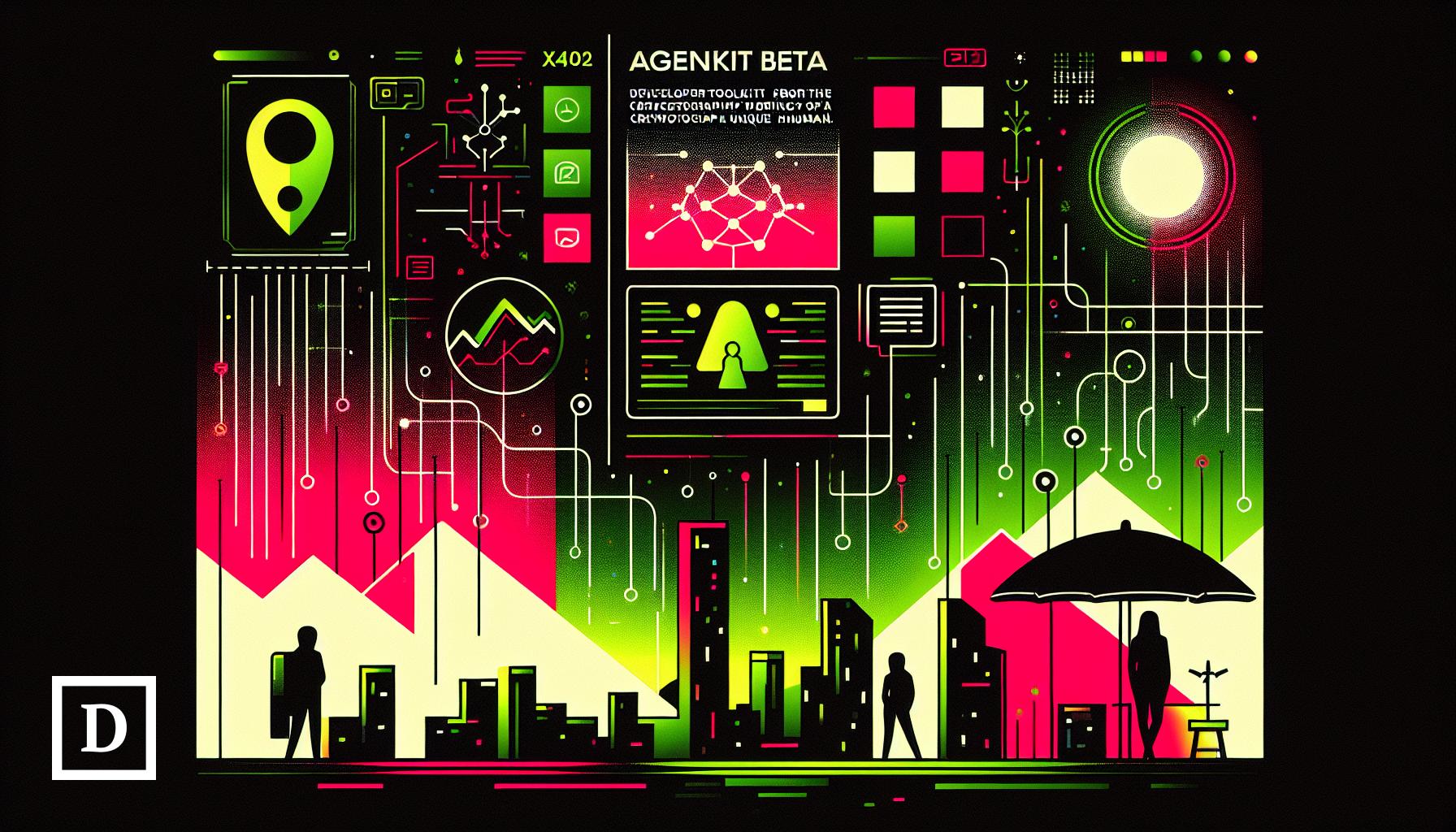
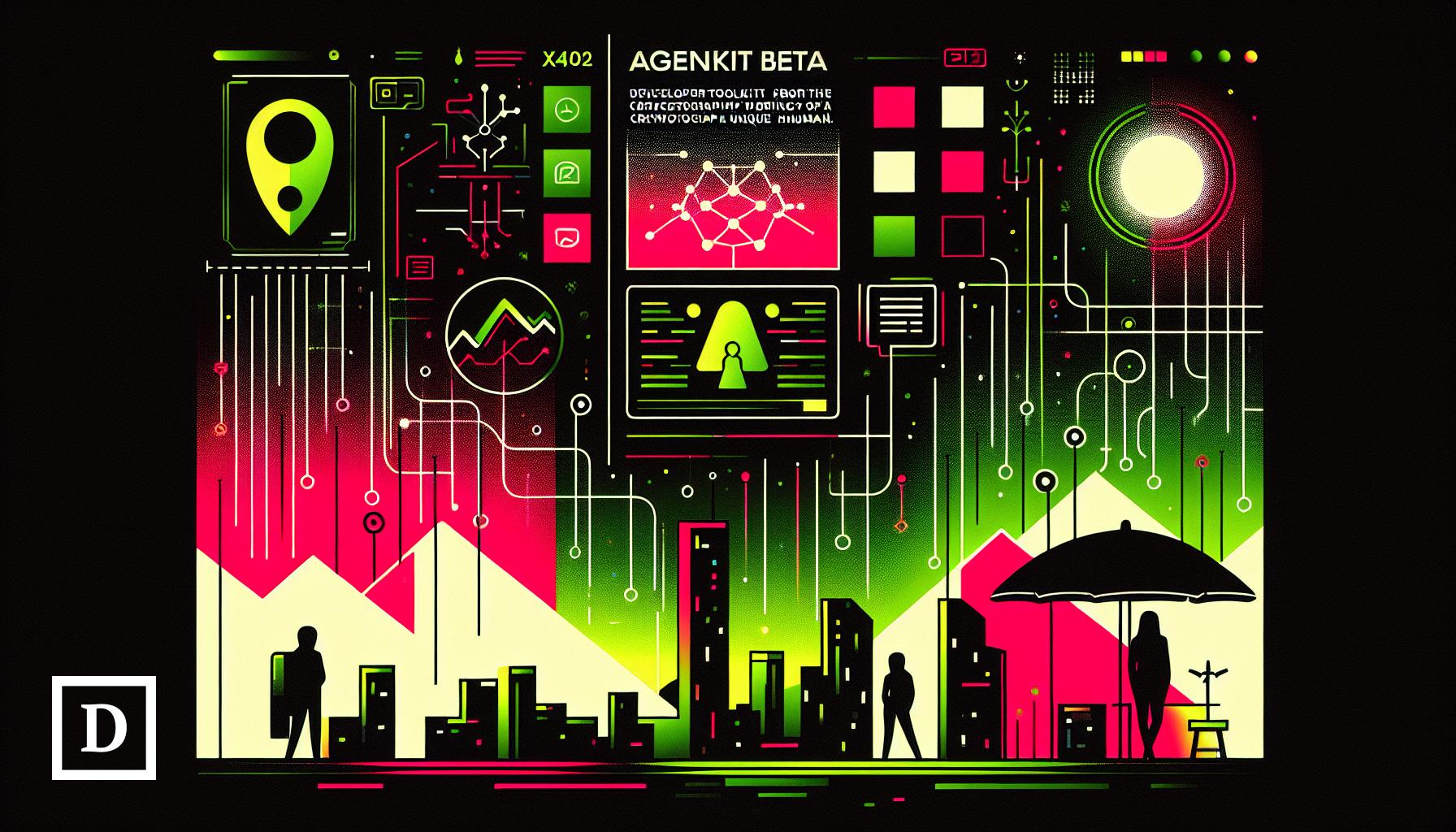
The toolkit integrates with Coinbase’s x402 protocol, giving platforms a way to verify a real person stands behind an automated agent — without revealing who that person is.
World — the crypto project co-founded by Sam Altman — announced today that it has launched AgentKit beta, a developer toolkit that extends its World ID proof-of-human system to AI agents, according to a press release shared with The Defiant.
AgentKit integrates with x402 — an payments protocol for AI agents developed by Coinbase and Cloudflare — and enables verified humans to cryptographically delegate their World ID to AI agents. The result is what World calls a “human-backed agent”: an automated actor that can prove a unique real person stands behind it, without revealing who that person is.
“Payments are the ‘how’ of agentic commerce, but identity is the ‘who,’” said Erik Reppel, Head of Engineering at Coinbase Developer Platform and Founder of x402. “By integrating World ID with the x402 protocol, developers now have a complete trust stack.”
Back in early 2023, when World ID launched alongside GPT-4, the project was already positioning itself as a counterweight to the coming wave of AI-generated accounts and automated activity online. The core pitch has barely changed — what has changed is the urgency. AI agents are now a reality, not a forecast.
The project has repeatedly attracted regulatory intervention globally over its biometric data collection practices, with suspensions and investigations in Kenya, Spain, Portugal, Hong Kong, and South Korea. As recently as last year, the High Court of Kenya ruled that Worldcoin’s collection of biometric data from Kenyan citizens in 2023 was illegal and violated the country’s data protection laws. Spain also mandated deletion of all iris scan data collected there, citing inadequate data handling practices.
Those concerns don’t disappear with AgentKit. While World frames its zero-knowledge architecture as privacy-preserving — users prove uniqueness without sharing personal information — critics have long argued that building a global identity layer on top of biometric iris scans introduces systemic risks that clever cryptography alone cannot resolve. The prospect of that same biometric infrastructure being extended to a sprawling ecosystem of autonomous AI agents is likely to sharpen that debate further.
World reports that its network now includes nearly 18 million verified humans across more than 160 countries. AgentKit beta is available now to developers who hold a verified World ID. The current release is built on existing World ID architecture, with a more advanced version planned as the next generation of the protocol rolls out.
The Rise of the Agent Economy
The announcement arrives at a pivotal moment for on-chain agentic activity. Since the start of 2026, the number of agents using the ERC-8004 standard across blockchain networks has grown from 337 to nearly 130,000 — an increase of over 39,000%, as The Defiant reported this week. As that explosion in agent activity has accelerated, so have questions about trust, accountability, and how platforms can distinguish between legitimate users and coordinated bot swarms.
The broader agentic economy continues to accelerate. Circle recently launched Nanopayments on testnet, offering gas-free USDC transactions designed specifically for AI agents making rapid, sub-cent payments for services like pay-per-call APIs and machine-to-machine marketplaces.
CoinFello last week released an open-source skill allowing agents to execute on-chain transactions via MetaMask without ever accessing a user’s private keys —addressing a core security vulnerability in how most agent wallets currently operate.
World’s AgentKit adds a third pillar to this emerging stack: alongside payments and secure key management, agents can now carry verifiable proof that a real human is behind them.
This article was written with the assistance of AI workflows. All our stories are curated, edited and fact-checked by a human.
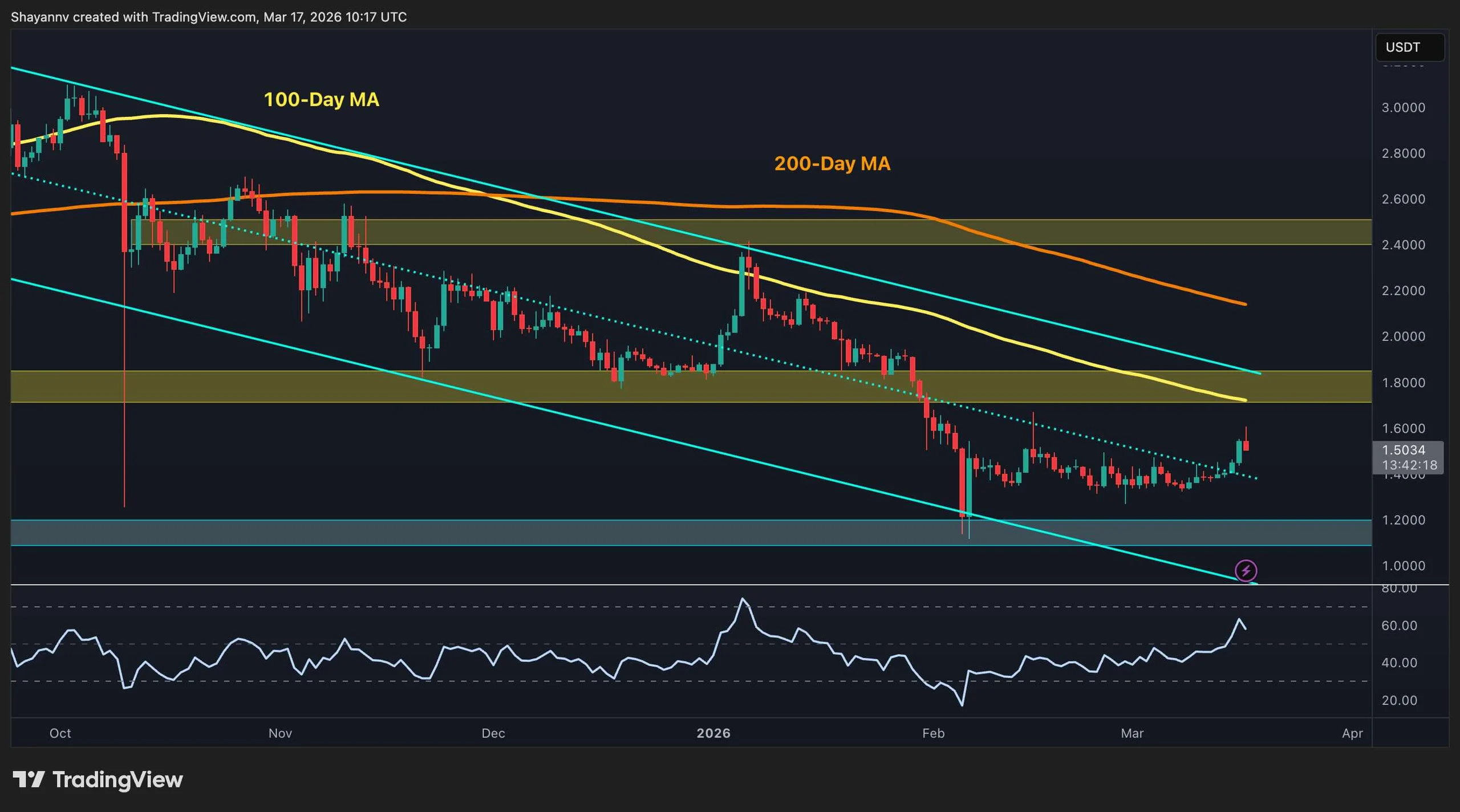
XRP is showing a modest recovery attempt, but the bigger picture still looks cautious on both the USDT and BTC pairs. The price has bounced from recent lows, and short-term momentum has improved, yet XRP is still trading below major moving averages and within broader bearish structures. That means buyers are improving the short-term picture, but they have not fully changed the trend yet.
Ripple Price Analysis: The USDT Pair
On the XRP/USDT chart, the cross-border token has pushed up toward the $1.50 psychological level after spending several sessions consolidating above the $1.10 to $1.20 support zone. This bounce is constructive, especially with RSI pushing higher, but XRP still sits below the descending trendline, 100-day and 200-day moving averages, and the heavy $1.75 to $1.80 resistance area. That zone remains the first major test for buyers.
If the asset can reclaim that region, the next upside target would be the broader $2.40 to $2.50 supply zone. But the price must also break above the 200-day moving average, located around $2.10, before reaching this zone. Until then, the current move looks more like a relief bounce inside a larger downtrend than a confirmed reversal. But as long as the price holds above the $1.10 to $1.20 base, buyers still have a platform to build on.
The BTC Pair
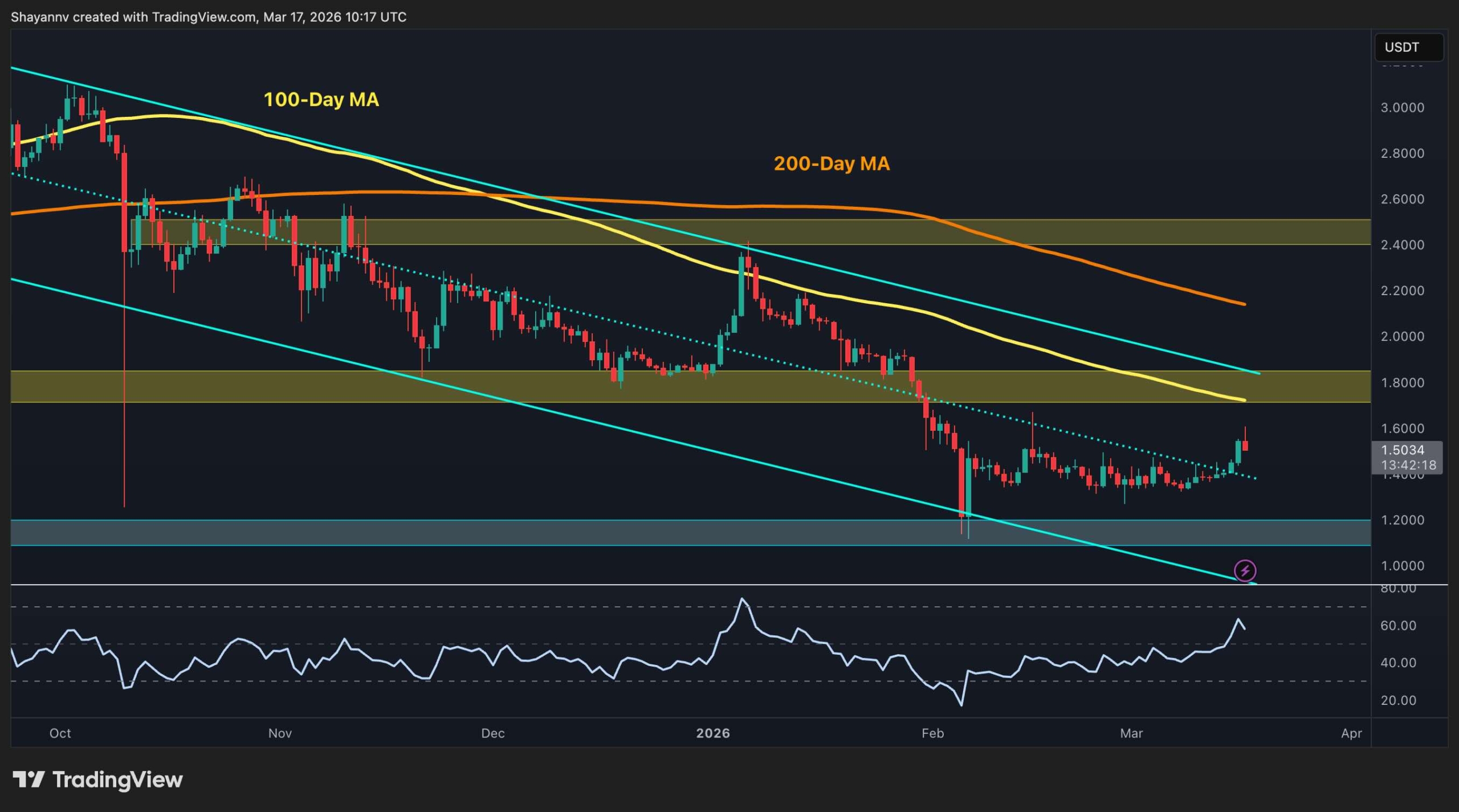
Against Bitcoin, XRP is also trying to stabilize after holding the key 2,000 sats support area. The pair has bounced back above 2,000 sats and is now attempting to regain some short-term momentum, but it remains below both the 100-day and 200-day moving averages, which continue to cap the structure from above.
The first important resistance on the XRP/BTC chart sits around 2,200 sats, where the two major moving averages are located. The next key horizontal level will be the 2,400 to 2,500 sats area. A clean move above those levels would improve the outlook and suggest that relative weakness versus Bitcoin is starting to fade. If the pair gets rejected again, though, the 2,000 sats zone remains the key support to watch, with a break below it reopening the path toward the lower boundary of the channel around 1,700 sats.

Binance Free $600 (CryptoPotato Exclusive): Use this link to register a new account and receive $600 exclusive welcome offer on Binance (full details).
LIMITED OFFER for CryptoPotato readers at Bybit: Use this link to register and open a $500 FREE position on any coin!
Disclaimer: Information found on CryptoPotato is those of writers quoted. It does not represent the opinions of CryptoPotato on whether to buy, sell, or hold any investments. You are advised to conduct your own research before making any investment decisions. Use provided information at your own risk. See Disclaimer for more information.

Fall in equity investment deals in Wales shows new research

Vietnam pushes local crypto exchanges as Hanoi moves to block offshore trading: Reuters

Keith Urban Hurt After Daughter’s Public Snub


![Oil Price Just COLLAPSED [Here’s What Happens To Bitcoin Next]](https://wordupnews.com/wp-content/uploads/2026/03/1773765190_hqdefault-80x80.jpg)

-
 Tech6 days ago
A 1,300-Pound NASA Spacecraft To Re-Enter Earth’s Atmosphere
-
 Crypto World4 days ago
HYPE Token Enters Net Deflation as HyperCore Buybacks Outpace Staking Rewards
-

 Fashion4 days ago
Weekend Open Thread: Addict Lip Glow
-

 Tech7 days ago
ChatGPT will now generate interactive visuals to help you with math and science concepts
-
Sports3 days ago
Why Duke and Michigan Are Dead Even Entering Selection Sunday
-

 NewsBeat6 days ago
Residents reaction as Shildon murder probe enters second day
-

 Business2 days ago
Search for Savannah Guthrie’s Mother Enters Seventh Week with No Arrests
-

 Business6 days ago
Search Enters Sixth Week With New Leads in Tucson Abduction Case
-

 Business3 days ago
US Airports Launch Donation Drives for Unpaid TSA Workers as Partial Government Shutdown Enters Fifth Week
-

 Sports6 days ago
PWHL, Senators discussing plan to keep Charge in Ottawa
-
Crypto World3 days ago
Coinbase and Bybit in Investment Talks: Could Bybit Finally Enter the US Crypto Market?
-

 NewsBeat6 days ago
I Entered The Manosphere. Nothing Could Prepare Me For What I Found.
-

 Business3 days ago
Country star Brantley Gilbert enters growing non-alcoholic beer market
-

 Business1 day ago
Australian shares drop as Iran war enters third week
-

 Sports4 days ago
College Basketball Best Bets: Conference Tournament Semifinal Picks
-

 Crypto World1 day ago
Crypto Lender BlockFills Enters Chapter 11 with Up to $500M in Liabilities
-

 Tech7 days ago
Clarity as strategy
-

 Politics6 days ago
Trump Says Middle East Is ‘Very Lucky’ That He’s President
-
 Crypto World6 days ago
Three Binance Charts May Be Hinting at Bitcoin’s Next Move
-

 Business5 days ago
Trump demands Powell cut rates as Iran conflict raises energy prices


You must be logged in to post a comment Login