

Crypto World
‘Polkadot Is Kind of Done.’ The Once Hyped Layer 0 Faces Falling Usage, and Controversy



Former Polkadot insiders report lack of direction and support from leadership, treasury overspending, and even failure to pay contributors for their work.


Key Takeaways
- AMD delivered $10.3B in Q1 2026 sales, with data center operations emerging as the dominant revenue source
- The company’s 2025 fiscal year set records with $34.6B in total revenue and $16.6B from data center operations
- Qualcomm generated $10.6B in Q2 2026, though smartphone chips contributed $6.93B of that figure
- Qualcomm’s expansion into automotive ($959M) and IoT sectors ($1.58B) continues, yet mobile devices remain its core business
- Analyst sentiment favors AMD with a $385.86 price target compared to Qualcomm’s $172.40 average forecast
Two semiconductor powerhouses are presenting contrasting investment narratives as 2026 unfolds. While one company capitalizes on explosive data center demand, the other struggles to shake its smartphone-centric reputation.
Advanced Micro Devices announced first-quarter 2026 revenues of $10.3 billion. The company achieved a 53% gross margin alongside $1.5 billion in operating profit and $1.4 billion in net earnings.
Advanced Micro Devices, Inc., AMD
Executives highlighted data center operations as the primary catalyst for expansion. Enterprise adoption of AI inferencing capabilities and agentic AI frameworks continues driving demand for both processors and accelerators.
This strong performance followed an exceptional 2025. AMD achieved all-time high annual revenue of $34.6 billion, with data center sales alone contributing $16.6 billion. Annual operating profit reached $3.7 billion.
While AMD continues serving PC, gaming, and embedded sectors, investor attention has decisively pivoted toward server infrastructure and artificial intelligence computing.
Server Infrastructure Drives AMD Forward
MarketBeat analysts assign AMD a Moderate Buy rating, supported by 30 Buy recommendations and 2 Strong Buy assessments. The consensus price target stands at $385.86.
The investment thesis is clear-cut. AMD continues capturing market share from major cloud platforms and enterprises deploying substantial AI capital. However, elevated expectations and fierce competition in high-performance AI computing present notable headwinds.
Qualcomm’s recent financial results paint a contrasting picture. The chipmaker posted fiscal Q2 2026 revenue of $10.6 billion with non-GAAP diluted earnings per share of $2.65.
Handset processors generated $6.93 billion of quarterly revenue. Automotive chip sales reached $959 million, while IoT products contributed $1.58 billion.
Qualcomm Seeks Revenue Diversification
Qualcomm has achieved meaningful traction beyond mobile devices. The company is expanding presence in automotive semiconductors, AI-enabled PCs, edge computing platforms, and industrial applications.
Yet smartphone chips continue representing the majority of revenue. Consequently, markets are not valuing Qualcomm as an AI infrastructure play comparable to AMD.
Reuters coverage indicated Qualcomm’s forward guidance fell short of investor expectations, despite management commentary suggesting supply chain constraints were moderating. Market sentiment remains closely linked to handset market cycles.
MarketBeat data shows 28 analysts following Qualcomm with a consensus price target of $172.40. Recent trading activity placed shares near $206.06, exceeding the average analyst forecast.
Qualcomm maintains a Moderate Buy consensus, though the outlook appears less unified than AMD’s.
The valuation divergence between these semiconductor companies reflects narrative clarity. AMD maintains direct exposure to AI infrastructure capital expenditure. Qualcomm possesses diversification potential but must demonstrate emerging business segments can meaningfully reduce smartphone dependency.
Qualcomm’s automotive segment generated $959 million in the latest reporting period, while IoT operations produced $1.58 billion, representing the most current available data.


Key Takeaways
- First-quarter revenue reached $199M, surpassing analyst projections of $195M by 2.1%, despite a 7.5% decline from the prior year
- Earnings per share of $0.05 aligned with expectations; shares rocketed 30.5% to $16.07 following the announcement
- Second-quarter 2026 EPS outlook ranges from $0.086 to $0.103, signaling potential for incremental improvement
- Wall Street maintains a collective “Hold” stance with a $8.00 average target — significantly under current price levels
- Leadership highlighted automotive initiatives, artificial intelligence applications, and smart eyewear as catalysts for second-half expansion
Himax Technologies (HIMX) unveiled first-quarter 2026 financial results prior to Thursday’s opening bell, triggering a dramatic 30.5% rally that propelled shares to approximately $16.98 — climbing from the previous session’s close of $12.33.
Himax Technologies, Inc., HIMX
Top-line figures registered $199 million, eclipsing the Street’s $195 million projection by 2.1%. However, this performance still represented a 7.5% contraction versus the comparable period twelve months earlier.
Per-share earnings of $0.05 met forecaster expectations. During the equivalent quarter a year prior, the firm delivered $0.11 per share.
Shares commenced premarket activity at $15.43 before advancing higher throughout the session, with trading volume exceeding 9.5 million.
Adjusted EBITDA registered $16.2 million, translating to an 8.1% margin — representing a 35.4% year-over-year compression. Operating profitability narrowed to 5.1% from 9.2% in the first quarter of 2025.
Free cash flow margin experienced a steep decline to 0.4%, contrasting sharply with 23.6% recorded during the same timeframe last year.
Inventory turnover metrics showed 100 days outstanding, modestly elevated from the preceding quarter’s 98 days but remaining 22 days beneath Himax’s five-year historical average — suggesting no immediate concerns.
Executive Commentary
Chief Executive Jordan Wu identified multiple initiatives positioned to accelerate performance throughout the remainder of 2026. He referenced a “meaningful number” of automotive engagements scheduled to commence volume manufacturing during the year’s latter half.
Wu additionally emphasized expansion in non-driver integrated circuit operations, encompassing Tcon and WiseEye AI technologies, alongside nascent opportunities in smart glasses and ultra-low-power artificial intelligence solutions.
For the second quarter of 2026, management projected earnings per share between $0.086 and $0.103 — representing progress beyond Q1’s $0.05 result.
Wall Street Perspective
Notwithstanding the earnings outperformance and share price acceleration, research coverage remains measured. The prevailing recommendation stands at “Hold” with a consensus price objective of $8.00 — approximately half the stock’s current valuation.
Morgan Stanley reaffirmed an “equal weight” position with an $8.00 target during February. Wall Street Zen elevated the stock from “Sell” to “Hold” in March.
Institutional ownership accounts for roughly 69.8% of outstanding shares. Goldman Sachs expanded its holdings by 127.6% during the first quarter, acquiring more than 134,000 additional shares. Royal Bank of Canada similarly increased its position by 3.7% throughout the identical timeframe.
Sell-side projections anticipate revenue advancement of 14% over the coming twelve months, trailing the broader industry benchmark.
The stock’s 50-day moving average rests at $9.29, while the 200-day moving average stands at $8.61 — both substantially beneath Thursday’s trading activity.
Himax exhibits a price-to-earnings multiple of 67.30 and a beta coefficient of 2.03, underscoring its characteristically turbulent trading behavior. The debt-to-equity ratio measures a modest 0.02.
Market capitalization touched $3.00 billion in the wake of Thursday’s movement.

Anthropic finance agents have added new fuel to the debate over AI and jobs. The company’s latest banking tools aim to automate routine finance work, while critics worry about entry-level roles. At the same time, Coinbase says AI already helps teams move faster and work with fewer layers. The discussion now centers on whether AI will cut jobs or change them.
Key insights
- Anthropic finance agents target pitchbooks, KYC checks, valuations, and monthly close tasks.
- Coinbase says AI boosts output and supports smaller, more efficient teams.
- Economists say AI may reshape work and roles more than eliminate jobs.
Anthropic Targets Routine Finance Work
Anthropic introduced 10 AI finance agents for banks, insurers, and other firms. The tools handle common tasks such as pitchbooks, KYC file screening, valuation reviews, monthly book closes, and financial analysis. The company said the system combines skills, connectors, and subagents to support finance workflows.
Anthropic also said firms can customize the agents to fit internal risk rules and approval systems. The launch matters because financial services now rank as the company’s second-largest source of enterprise revenue after technology. That detail has drawn attention from firms watching how fast AI spreads across office work.
Job Fears Spread Across Wall Street
The release quickly triggered concern online. One X user wrote, “Anthropic just automated the first-year analyst job at every bank on Wall Street.” Others used phrases such as “Claude Cowork SaaSpocalypse” to describe the reaction. The comments reflect rising anxiety around junior finance and software roles.
Some users also linked the launch to broader pressure on outsourced services and IT work. Anthropic said humans still review and approve outputs before client delivery or filing. The company added that the agents can work inside Claude tools or through managed workflows that run over longer tasks, including overnight operations.
Coinbase CEO Links AI Shift to Workforce Cuts
Coinbase CEO Brian Armstrong added to the debate after saying the exchange would cut about 14% of its workforce. In an internal email, he pointed to weak market conditions and rapid AI progress. He said AI lets engineers finish in days what used to take weeks.
Armstrong also said Coinbase wants to become more “AI-native,” with smaller AI-assisted teams and fewer management layers. He called the shift an “inflection point” and said the company aims to become “leaner, faster, and more efficient.”
Economists and investors remain split on the broader labor impact. A16z argued that an “AI job apocalypse” is a “complete fantasy.” Its view is that technology often changes work rather than removes it. For now, Anthropic finance agents and similar tools show that AI is already changing how firms organize work.

Bitcoin advocate Samson Mow has pushed back against criticism that Strategy has betrayed its principles by saying it would sell BTC at some point in the future to pay dividends.
In a post published on X on May 7, Mow argued that public companies holding BTC need flexibility to protect shareholders, even if that means selling part of their stash at certain points.
Treasury Firms Need Optionality
According to the JAN3 CEO, the “never sell” rule was guidance for individual holders, not a binding corporate oath.
“As an individual HODLer you shouldn’t sell your Bitcoin for no reason. Avoid selling if you can. That is the message. It is not literally ‘never sell and take it to the grave,’” he wrote.
However, in his opinion, the calculus is entirely different for a publicly traded treasury company. His core point is about optionality. A company that publicly vows to only ever accumulate Bitcoin has, in his words, “handed a map to short sellers and arbitrageurs.” Therefore, the more tools Strategy holds, the fewer angles its opponents can exploit.
“A company with real optionality is hard to game: it might sell, might hedge, might issue, might buy,” he wrote.
Mow insisted that Strategy’s goal shouldn’t be to never sell Bitcoin but to benefit and protect shareholders.
He pointed to his own work, where he has designed Bitcoin bonds for nation-states that have scheduled Bitcoin sales built directly into their structure, allowing the issuer to sell BTC after a lockup period so as to return capital to bondholders. Without that mechanism, he said, “the instrument could not function.”
The BTC enthusiast drew a direct parallel to Strategy’s STRC preferred stock, describing it as an instrument designed to strip out Bitcoin’s volatility and share upside with investors who want asymmetric exposure without the drawdowns.
Mow also flagged a post from Saylor himself, in which the executive chairman wrote that Strategy’s Bitcoin breakeven annual return rate is approximately 2.05%, implying that if the OG crypto grows faster than that, then the company can cover its dividends by selling it without diluting shareholders.
When one X user argued that Saylor should face scrutiny regardless, since he was the one who built his reputation on “never sell,” Mow gave a blunt reply:
“Corp strategy can’t be driven based on cool soundbites from a pod.”
Dividend Pressure and STRC Scrutiny Grow
The debate has grown alongside Strategy’s expanding use of preferred stock offerings, especially STRC. In its financial report for Q1 2026, where it revealed a $12.5 billion loss, Strategy said that STRC issuance has reached $8.5 billion, while the firm has raised nearly $12 billion this year.
Nevertheless, critics have questioned whether the model depends too heavily on issuing new securities, with Bitcoin critic Peter Schiff recently describing STRC as an “obvious Ponzi scheme” and claiming that the company lacks enough operating income outside its software business to sustain payouts.
The post Strategy Right to Keep Bitcoin Sale Option Open: Analyst appeared first on CryptoPotato.


Bitcoin lenders at Consensus Miami 2026 said crypto lending must look and feel more like traditional banking if it wants institutional capital to keep flowing in.
Summary
- Two Prime CEO Alexander Blume said institutional borrowers reject DeFi complexity and demand standardized contracts, transparent custody, and clear legal accountability.
- Ledn CEO Adam Reeds said the most important question for borrowers is where their bitcoin is stored, while Lygos CEO Jay Patel said borrowers must now underwrite the lender.
- The panel reflected a broader post-2022 shift following the collapse of Celsius, Voyager, and BlockFi, which exposed the risks of opaque rehypothecation and weak risk controls.
Bitcoin lenders at Consensus Miami 2026 argued that the future of crypto lending does not lie in making finance more decentralized. It lies in convincing institutional borrowers that bitcoin-backed credit can behave predictably enough to resemble the system they already trust.
Alexander Blume, founder and CEO of Two Prime, said institutional borrowers often reject crypto-native structures not because they oppose bitcoin, but because the operational complexity surrounding DeFi is difficult to justify to boards, risk committees, and shareholders.
“The moment you start trying to explain how any of this stuff works, they’re just like, No… We’ll pay more. Don’t lose my money,” Blume said, capturing the divide between crypto-native structures and institutional risk tolerance. He distilled the gap into a single observation:
“Our whole financial system is set up to have someone else to blame,” arguing that institutions still prefer identifiable intermediaries and standardized processes over fully autonomous financial systems.
Why TradFi standards are reshaping bitcoin credit
Ledn CEO Adam Reeds said the most important question a borrower should ask is “where is your Bitcoin stored.” Lygos CEO Jay Patel added that borrowers now need to “underwrite the lender” before entering any bitcoin-backed credit arrangement.
The panel placed particular weight on rehypothecation, the practice of relending pledged collateral, which Patel called “the biggest point in my mind” and a key driver of the 2022 lending crisis that took down Celsius, Voyager, and BlockFi.
The post-collapse shift has pushed the industry toward products centred on transparent custody, standardized contracts, and clearly identified counterparties.
As crypto.news reported, BitGo launched a unified financing platform in April that allows institutions to borrow and lend from a single custody account, directly addressing the fragmentation the panel described.
The bitcoin credit market has grown to approximately $10 billion in less than a year, with Consensus panelists calling it one of the fastest product launches in capital markets history.
Crypto World
Tether executive warns the 2026 elections could have a ‘seismic impact’ on the crypto industry


Miami — Tether.io Head of Government Affairs Jesse Spiro said the crypto industry sees the 2026 U.S. midterm elections as a critical test for whether Washington’s recent embrace of digital assets will endure.
“What we’ve seen is a lot of good immersion and progress over the last year,” Spiro said during a panel discussion at the Consensus Miami 2026 conference, pointing to the passage of the GENIUS Act and progress on market structure legislation. “But as with anything else, the apple cart can always get upset.”
Spiro warned that the elections could have a “seismic impact” on the industry’s trajectory, even as crypto advocacy groups prepare to deploy major political spending and grassroots organizing.
“Crypto should not be partisan,” Spiro said. “Best case is that we have members that are supportive of the industry, supportive of the ecosystem, supportive of good policy.”
Other panelists argued the industry’s political influence is only growing ahead of November.
Colin McLaren, Head of Government Relations at the Solana Policy Institute, said crypto’s political efforts are now focused on “durability,” ensuring that the future of Congress continues advancing industry priorities, including tax reform and protections for developers.
“You can make the down payment on a house, but you’ve got to keep paying the mortgage,” McLaren said, referring to crypto’s campaign spending efforts after the industry poured hundreds of millions into the 2024 election cycle.
Mason Lynaugh, Executive Director of Stand With Crypto, said the group’s nearly 3 million members are increasingly viewing elections as “an accountability moment.”
“They’re going to show up and support the people that supported them,” Lynaugh said, adding that crypto voters are highly motivated and could sway close races. “If something is decided by 4,000 votes, 5,000 votes … all we have to do is turn them out.”
Read more: Crypto is at bottom of U.S. voters’ priorities heading into elections, CoinDesk survey shows


Senator Ashley Moody took the Consensus Miami 2026 stage on Thursday to tell the crypto industry how she sees the relationship between Washington and digital assets.
Summary
- Senator Ashley Moody appeared at Consensus Miami 2026 on Day 3 alongside Digital Chamber CEO Cody Carbone.
- The session addressed Washington’s relationship with crypto as the CLARITY Act approaches a Senate committee vote.
- Moody joins a historically large cohort of federal policymakers appearing at Consensus 2026 for the first time.
Senator Ashley Moody took the Consensus Miami 2026 stage on Thursday alongside Digital Chamber CEO Cody Carbone to discuss how Washington should engage with the digital asset industry. It is her first Consensus appearance, part of a broader push by federal officials to be seen at the industry’s biggest annual event.
The session comes at a pivotal moment for crypto legislation. The CLARITY Act is racing toward a potential Senate Banking Committee markup before the May 21 Memorial Day recess, with Senators Cynthia Lummis and Bernie Moreno warning that failure pushes the next window to 2030.
As crypto.news reported, Ripple CEO Brad Garlinghouse called the past week a “big positive shift” in Senate momentum from the same stage on Day 1.
A Senate debut for crypto policy
Moody’s appearance follows Senator Kirsten Gillibrand’s Day 2 remarks, covered by crypto.news, in which Gillibrand expressed optimism about the CLARITY Act’s path through Congress.
CFTC Chairman Michael Selig and White House official Patrick Witt also attended Consensus 2026 for the first time, as the Senate Banking Committee targets a CLARITY Act markup the week of May 11.
Consensus 2026 drew more than 20,000 attendees to Miami Beach, with institutional participation at approximately 35% of the audience, representing an estimated $10 trillion in assets under management.
Morgan Stanley and JPMorgan are first-time sponsors. Washington’s engagement with crypto has shifted from occasional to consistent, and Moody’s Consensus debut is one more marker of that change.

XRP price is trading at $1.41, down more than 30% year-to-date, yet bullish prediction derived from institutional appetite are accelerating. Financial strategist Jake Claver made the case at Consensus 2026 that the biggest firms on Wall Street aren’t absent from XRP; they’re simply waiting for the right window. The timing of that window, he argues, may be closer than people expect.
“I think they’re going to roll it out at the opportune time.” Claver also added that guidance from U.S. regulators could become “a big catalyst for BlackRock and these other institutions to feel comfortable moving into the ring and launching those products.”
Separately, BlackRock has filed for an XRP trust product, joining Grayscale and 21Shares in building institutional-grade exposure vehicles. The same move has also triggered XRP’s all crypto ETP inflows last week at approximately $120 million of the $224 million global weekly total.
The confluence of regulatory momentum, a maturing ETF pipeline, and sustained ETP inflows creates a setup that maps with unusual precision.
Discover: The best pre-launch token sales
XRP Price Prediction: Can It Hit $1.50 Before Blackrock?
XRP is currently consolidating at $1.40 are, bracketed by firm support at $1.35 and a resistance ceiling at $1.45. We flagged a symmetrical triangle forming on the 1-hour charts, a pattern that historically resolves with a directional break, with the measured target pointing to $1.58, a more than 10% move from current levels.

If the triangle resolves upward, $1.55 will flip into support, and momentum could carry it toward $1.80–$2.40. Standard Chartered’s Geoff Kendrick maintains a year-end 2026 target of $2.80, with a long-term call of $12.60 by 2028 tied to cross-border settlement adoption and CLARITY Act progress.
But in a bad scenario, a close below $1.28 could reopen the $0.85–$1.10 range on any macro deterioration. The data points to a coiled setup. Whether the spring releases upward depends heavily on what happens in Washington over the next 30 days.
Discover: The best crypto to diversify your portfolio with
LiquidChain Targets Early-Mover Upside as XRP Tests Key Levels
XRP’s current price reflects an asset with proven institutional demand but a market cap large enough that even a strong ETF catalyst might deliver 2x–3x at best over an 18-month horizon.
If we are hunting asymmetric upside at this stage of the cycle are increasingly looking one layer deeper into the infrastructure stack, where valuations are still forming.
LiquidChain ($LIQUID) is an L3 infrastructure project built around a single, specific problem: fragmented liquidity across Bitcoin, Ethereum, and Solana. Its Unified Liquidity Layer fuses all three ecosystems into a single execution environment.
Moving in silence. — LiquidChain (@getliquidchain) April 30, 2026

While the noisy pretend to be progress.  ⟁https://t.co/vqvBcdSQYC pic.twitter.com/wE63W9d7eE
Liquid allows developers to deploy once and access BTC, ETH, and SOL liquidity simultaneously, without bridges, redeployment, or the settlement friction that currently bleeds value from every cross-chain transaction.
The presale is live at $0.01457 per $LIQUID, with more than $700K raised to date, and more than 1500% APY in staking bonus, only for presalers. Key architecture features include Single-Step Execution, Verifiable Settlement, and a Deploy-Once design that targets institutional-grade DeFi builders directly.
Research LiquidChain before the presale closes.
The post XRP Price Prediction: Is Blackrock Into XRP? Expert Believes It’s A Massive Catalyst appeared first on Cryptonews.
OpenAI cannot close roughly $18 billion in financing tied to its Broadcom (AVGO) custom-chip partnership, The Information reported Thursday. The shortfall is the latest sign that AI infrastructure deals are outrunning the capital available to fund them.
The reported gap covers an early tranche of a multi-year accelerator rollout worth 10 gigawatts of OpenAI-designed chips. The custom silicon program is the centerpiece of the company’s plan to reduce its dependence on Nvidia (NVDA).
OpenAI’s Spending Math Gets Tighter
The original Broadcom agreement, unveiled in October 2025, sketched a hardware buildout pegged at roughly $500 billion. That figure spans chips, networking, power, and data center capacity. The 10-gigawatt rollout was meant to ease OpenAI’s reliance on Nvidia hardware.
OpenAI is projected to burn through about $115 billion cumulatively by 2029, even as revenue scales fast. Recent reporting around missed internal growth targets has already drawn fresh investor scrutiny.
Partners have stepped in with their own financing to keep deals moving. Oracle (ORCL) raised $18 billion in bonds last September to back its roughly $300 billion OpenAI commitment.
AI Capex Faces a New Stress Test
Hyperscaler 2026 capital spending is now estimated at $600 to $720 billion. Roughly three-quarters of that total is earmarked for AI infrastructure. Lenders are increasingly cautious that returns will not arrive on schedule.
Nvidia itself has flagged a sharp rise in unpaid customer balances. Receivables now sit near $33 billion as buyers take longer to settle invoices. Investor Michael Burry has called the resulting revenue accounting suspicious.
“The fake Disney-OpenAI deal is reflective of the AI bubble as a whole, where we’re repeatedly told about the existence of multi-billion dollar deals as though they were solid and definitive, like OpenAI’s Broadcom, AMD and $100bn NVIDIA deals,” one user commented.
OpenAI’s options are narrow. The company can restructure the tranche, replace lenders, or trim the chip rollout. Each path will shape how much projected 2026 AI capex actually lands.

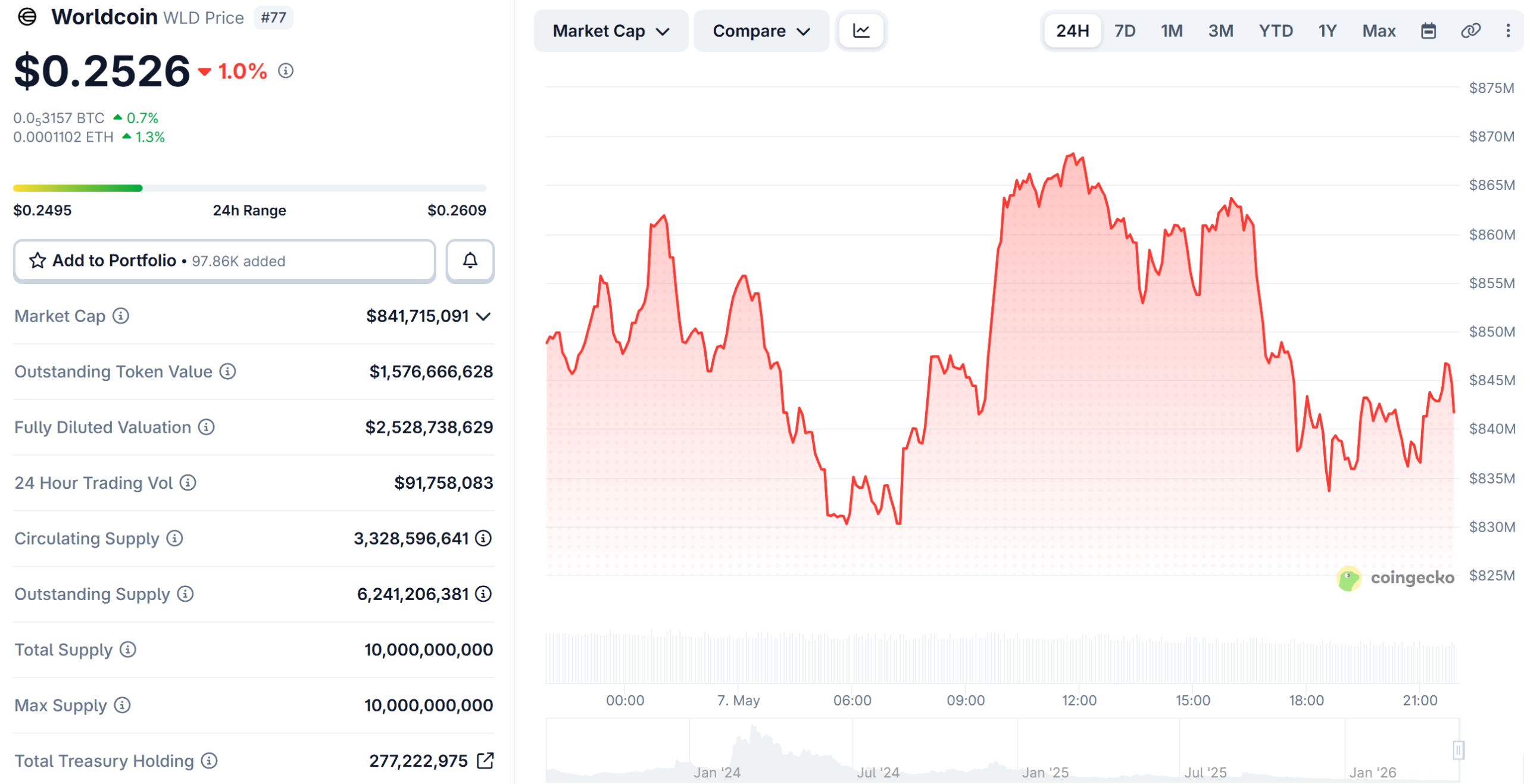
Worldcoin (WLD) price dropped only modestly, falling to $0.2526 on this news.
The post OpenAI’s $18 Billion Chip Financing Trouble Rattles AI Boom Narrative appeared first on BeInCrypto.


Getting Started with Casino Zoccer
Casino Zoccer has quickly become a familiar name on the Irish gambling scene, offering a mix of slots, live tables and a full‑fledged sportsbook. The platform is built on a modern interface that works well on both desktop and mobile devices, meaning you can dip into a game while waiting for the bus or settle in at home for a longer session. For newcomers, the first thing to check is whether the site accepts players from the Republic of Ireland – it does, and it holds a licence from a reputable European regulator. If you’re wondering how to begin, the following steps walk you through registration, verification and the first deposit.
Because the brand aims to be beginner‑friendly, the sign‑up process is stripped down to the essentials: email address, password and a choice of currency. Once you confirm your email, the system will prompt you for a few more details to satisfy KYC (Know Your Customer) requirements – typically a proof of identity and a recent utility bill. This extra step might feel a little formal, but it protects you and ensures that all transactions are secure and compliant with Irish law.
Registration and Account Setup
The registration page on casino zoccer is straightforward. After entering your personal details you will receive a verification email; click the link inside to activate your account. The next screen asks you to set your preferred payment method – you can pick from Visa, Mastercard, Skrill, Neteller or direct bank transfer. Irish players will be pleased to see that many local banks are supported, making deposits feel familiar and safe.
Once your account is live, you can customise your profile, set deposit limits and opt into responsible gambling tools. These features are tucked under the “My Account” menu and are easy to adjust at any time. The platform also offers a two‑factor authentication (2FA) option for added security, which you can enable via a text message or an authenticator app.
Bonuses, Welcome Offers and Wagering Requirements
One of the biggest draws of casino zoccer is its welcome package. New players are greeted with a match bonus on the first deposit – typically 100% up to €200 – plus a batch of free spins on selected slot titles. The bonus comes with a wagering requirement of 35x the bonus amount, which is fairly standard for Irish online casinos.
Beyond the initial welcome, Zoccer runs regular promotions such as reload bonuses, cash‑back on losses, and a loyalty programme that awards points for every euro wagered. These points can be exchanged for bonus credit or even tournament entry tickets. Always read the fine print before you claim a bonus, as some promotions exclude certain game categories like high‑variance slots or live roulette.
Payment Methods and Withdrawal Speed
Depositing funds into casino zoccer is quick and usually processed instantly, especially when you use e‑wallets like Skrill or Neteller. Bank transfers may take a few hours, but the platform often sends a confirmation email as soon as the money hits the casino’s vault. Irish players also appreciate the inclusion of PayPal, which adds another layer of convenience for those who already have a PayPal balance.
When it comes to withdrawals, Zoccer aims for “instant payouts” on e‑wallets, with most requests settled within 24 hours. Bank transfers are a bit slower, typically 2‑3 business days, while credit‑card withdrawals may take up to 5 days due to card network processing. The casino does not charge any hidden fees for withdrawals, though a small administrative fee may apply for certain methods.
Game Selection: Slots, Live Casino and Sports Betting
The catalogue at casino zoccer is built around three pillars: slots, live dealer tables and a sports betting hub. Slot lovers will find everything from classic three‑reel titles to the newest high‑RTP video slots with megaways and progressive jackpots. Each game lists its volatility and RTP (return to player) percentages, helping you choose whether you prefer frequent small wins or the chance of a big payout.
Live casino enthusiasts can join professional dealers for blackjack, baccarat, roulette and poker, streamed in high definition. The live section uses a mix of Evolution Gaming and Pragmatic Play providers, ensuring smooth video and reliable game fairness. Sports betting covers a full range of Irish and international events, from Gaelic games to the Premier League, with competitive odds and in‑play betting options.
Mobile App and Desktop Experience
Irish gamers often switch between devices, and casino zoccer delivers a responsive website that works well on smartphones and tablets without needing a dedicated download. However, for those who prefer a native app, the platform offers iOS and Android versions that can be found in the respective app stores. The app mirrors the desktop layout, giving you quick access to your favourite games, deposit methods and the latest promotions.
The mobile experience is optimised for both portrait and landscape modes, which is handy when you’re on a commute or lounging on the couch. Push notifications can be turned on to alert you about bonus expiries, new game releases or live match starts, keeping you in the loop without constantly checking the site.
Security, Licensing and Responsible Gambling
Casino Zoccer operates under a licence from the Malta Gaming Authority, a regulator respected across the European Union for its strict oversight. Encryption technology (SSL 256‑bit) protects all personal data and financial transactions, meaning your details are safe from prying eyes. The platform also employs independent auditors to verify game fairness, with results posted regularly on the site.
Responsible gambling tools are built into the user dashboard. You can set daily, weekly or monthly deposit limits, self‑exclude for a chosen period, or even opt for a permanent ban if you feel you need it. Links to organisations such as GambleAware Ireland are provided for anyone seeking external help.
Customer Support and Frequently Asked Questions
If you run into an issue, casino zoccer offers several channels for assistance. The live chat feature is available 24/7 and typically answers queries within a couple of minutes. For more detailed concerns you can raise a ticket via the “Help Centre,” and an email response will follow within 24 hours. Phone support is also provided for Irish callers, with a dedicated local number that operates during regular business hours.
Below are the most common questions new players ask:
- How long does it take to verify my identity?
- What are the minimum and maximum deposit limits?
- Can I claim a bonus if I use a PayPal account?
- Are there any fees for withdrawing my winnings?
Answers to these queries are easy to find on the FAQ page, but you can always ask a support agent for clarification. For a deeper dive into the specifics of the site, see the detailed Zoccer casino review Ireland.
Quick Comparison Table
| Feature | Details |
|---|---|
| Licence | Malta Gaming Authority (MGA) |
| Welcome Bonus | 100% up to €200 + 50 free spins (35x wagering) |
| Payment Methods | Visa, Mastercard, Skrill, Neteller, PayPal, Bank Transfer |
| Withdrawal Speed | E‑wallets instant, bank 2‑3 days, card up to 5 days |
| Game Variety | 2000+ slots, live casino, sports betting |
| Mobile Access | Responsive web + native iOS & Android apps |
| Customer Support | Live chat 24/7, email, phone (local Irish number) |
| Responsible Gambling | Deposit limits, self‑exclusion, links to Irish support groups |

DIY Electrolysis Machine Removes Hair Permanently

4 In 5 Brits Fear Iran Conflict Will Send Food Prices Rising
AMD vs. Qualcomm (QCOM): Which Semiconductor Stock Wins the AI Battle in 2026?

Manchester United reach agreement with Casemiro over contract clause amid transfer speculation

US brings back mandatory military draft registration

Steven Gerrard disagrees with Gary Neville over ‘shock’ Chelsea and Arsenal claim | Football


-

 NewsBeat4 days ago
Channel 5 – All Creatures Great and Small series 7 new post
-

 Crypto World11 hours ago
Upbit adds B3 Korean won pair as Base token gains Korea access
-
 Tech6 days ago
Trump’s 25% EU auto tariff breaches Turnberry Agreement that also covers semiconductors and digital trade
-
 NewsBeat13 hours ago
NCP car park operator enters administration putting 340 UK sites at risk of closure
-
 Sports6 days ago
Paul Scholes issues Marcus Rashford reality check as agreement emerges over Man United star
-

 Entertainment6 days ago
Met Gala 2026 Rumored Guest List Is Turning Heads
-

 Business7 days ago
Strait of Hormuz Blockade Persists Amid US-Iran Standoff, Sending Oil Prices Soaring
-
Entertainment6 days ago
New on Prime Video in May 2026 — Full List of Movies and Shows
-

 Entertainment6 days ago
Kylie Jenner Hit With Second Lawsuit From Ex-Housekeeper
-

 Sports6 days ago
Cavaliers vs. Raptors Game 6 live score, updates, highlights from 2026 NBA playoffs first-round series
-
 Sports6 days ago
David Benavidez responds to team Canelo saying the fight will never happen
-
Entertainment5 days ago
New Netflix Movies in May 2026 — My Top 3 Picks to Stream
-

 Tech6 days ago
Meta ends Sama contract after Kenyan workers report seeing intimate footage from Ray-Ban smart glasses users
-

 Entertainment6 days ago
Young and the Restless Next Week: Cane Arrested & Matt’s Deadly New Scheme!
-
 Sports6 days ago
IPL 2026: ‘Love you darling’- Hardik Pandya’s reaction to MS Dhoni steals the show |Watch | Cricket News
-

 Business5 days ago
Luka Doncic Injury Update: Doncic’s Hamstring Recovery Slows Lakers’ Hopes Against Thunder: Can He Run Yet?
-
 Crypto World5 days ago
Pi Network Mandates Protocol 23 Upgrade for All Mainnet Nodes Before May 15 Deadline
-

 Entertainment5 days ago
Melissa Joan Hart and More Stars Attend 2026 Kentucky Derby
-

 Sports6 days ago
Bayern won’t hand bottom side Heidenheim ‘gifts’ despite PSG game
-

 Sports6 days ago
What Preity Zinta Said After Punjab Kings’ First Defeat Of IPL 2026
You must be logged in to post a comment Login