
Crypto World
Polymarket adds 20x perps for crypto, stocks and gold



Polymarket has launched perpetual futures across 10 crypto, equity, index, and commodity markets, allowing eligible international users to trade with leverage of up to 20 times.
Summary
- Polymarket Perps supports long and short positions across 10 initial markets.
- BTC, ETH, SOL, HYPE, gold, silver, oil, and two U.S. equity indices are available.
- Leverage reaches 20x, although access depends on each user’s jurisdiction.
- U.S. customers cannot access the international perps service under Polymarket’s current restrictions.
Polymarket Perps opens with 10 markets
Polymarket said in its launch announcement that the new service gives traders one interface for perpetual futures linked to cryptocurrencies, stocks, market indices, and commodities.
The first 10 markets cover Bitcoin, Ethereum, Solana and Hyperliquid’s HYPE token. Traders can also take positions linked to gold, silver, West Texas Intermediate oil, the S&P 500, and the Nasdaq 100.
SPCX, a contract tracking the price of SpaceX shares, completes the initial selection. Unlike buying shares through a stockbroker, an SPCX perpetual contract does not give its holder ownership, voting rights, or a claim on the company’s assets.
Users can open either long positions, which gain when the referenced price rises, or short positions, which gain when it falls. Polymarket has set the highest available leverage at 20x, but the precise limit can vary by contract, position size, and the platform’s margin rules.
Calling the product a venue with the “deepest liquidity, lowest fees,” the company did not provide comparative data in its announcement to support the claim. Polymarket also did not disclose full figures for trading volume, open interest, or deposited collateral at launch.
Perpetual futures differ from standard futures because they have no scheduled expiry date. Polymarket’s perps platform says a position can remain open while the trader continues to meet the required margin level.
Funding payments pass between long and short traders at regular intervals to keep each contract close to its reference price. When a perpetual contract trades above the underlying index, long traders generally pay short traders; the payment direction typically reverses when the contract trades below the index.
Leverage lets a user control a position worth more than the collateral posted. At 20x, each $1 of margin can support as much as $20 of exposure, magnifying both gains and losses. Polymarket states that positions remain active only while their margin requirements are met, meaning the platform can liquidate a trade after an adverse move reduces its available collateral.
The service takes Polymarket beyond event contracts
Adding perps gives Polymarket a second type of trading product alongside the event contracts on which it built its business. Prediction markets settle according to a defined outcome, while the new contracts track the changing price of an asset without an expiry date.
A Bitcoin event contract, for example, might ask whether BTC will trade above a specified level at a set time. Its payout depends on whether the stated condition occurs. A BTC perpetual future instead moves with Bitcoin’s reference price and remains open until the trader closes it or the platform liquidates the position.
The difference also applies to macroeconomic trading. Polymarket’s event markets may let users take positions on the result of a Federal Reserve meeting, while index, gold, or crypto perps let them trade the price movements that occur before and after the decision.
Offering both products gives users separate ways to express a market view, but the contracts carry different payout structures and risks. Event shares normally settle at a defined value after an outcome is confirmed, whereas a leveraged perp can generate ongoing gains or losses as its reference price moves.
Polymarket’s move follows similar product expansion by other trading companies. As crypto.news reported in September, Coinbase opened 23 crypto futures markets to eligible sophisticated and institutional investors in Canada, with leverage reaching 10x on supported contracts.
The Canadian service also includes products tied to gold, silver, oil, and the COIN50 crypto index. Coinbase provides the contracts through Coinbase Financial Markets, its U.S.-registered futures commission merchant, under an international exemption that does not open the products to Canadian retail traders.
Faster infrastructure supports heavier trading activity
Alongside the derivatives rollout, Polymarket has been working on changes intended to raise the number of orders its systems can process.
The company is targeting a capacity of 200,000 orders per second, according to earlier reporting on its trading infrastructure. The figure would represent about 15 times the platform’s previous throughput, while the underlying architecture is being prepared to eventually process more than 400,000 orders per second.
Tests cited in the report produced a 10- to 20-fold improvement in p99 latency, a measure that tracks the slowest group of transactions during periods of activity. Lower p99 latency can help an exchange process orders more consistently when trading volume rises, although Polymarket had not published a full independent performance assessment at the time of the report.
Execution and pricing controls carry added importance when a platform offers leveraged contracts. Small delays or short-lived price changes can affect margin calculations, liquidations and order execution, especially when a trader controls a position several times larger than the collateral supporting it.
In August, Polymarket changed the settlement method for its short-duration crypto event contracts after researchers examined activity around their final pricing windows. The platform adopted time-weighted prices following a study that identified 821 accounts with a combined $8.2 million in profits from settlement periods classified as likely manipulated.
Under the revised method, five-minute contracts use a 30-second price average, while 15-minute and four-hour markets use a 60-second average. Chainlink Data Streams supplies the pricing information, according to Polymarket’s August update.
U.S. access follows a separate regulatory route
Polymarket has limited its perps rollout to international users in locations where the service is legally available. American customers are not eligible to use the company’s international operation, including its leveraged perpetual futures interface.
The restriction stems from Polymarket’s 2022 settlement with the Commodity Futures Trading Commission. The regulator found that the company had offered event-based binary options without registering as a designated contract market or swap execution facility.
Polymarket agreed to pay a $1.4 million civil penalty and wind down markets that did not comply with U.S. law. Under the settlement, the company also had to prevent U.S. customers from accessing its international platform.
A separate regulated operation provides Polymarket’s route into the American market. Its U.S. venue operates under CFTC oversight, but a contract submitted through the regulator’s self-certification process does not receive an express CFTC endorsement.
Self-certification allows a registered exchange to state that a proposed product complies with the Commodity Exchange Act and CFTC rules. The commission can still examine a filing, request more information, or stop a contract from trading when it identifies regulatory concerns.
In June, the CFTC was preparing a new review framework for event contracts, including products tied to sports, political developments, and events involving war or violence. The proposed approach would let the agency examine certain contracts individually rather than relying only on restrictions covering an entire category.
State authorities have also challenged the treatment of some prediction products as federally regulated derivatives. Recent court disputes have focused mainly on sports contracts, with state regulators arguing that they resemble gambling products and therefore require state licenses.
By August, litigation over prediction markets involved 20 states, while Polymarket had generated more than $1 billion in revenue, according to a recent platform review. The company received approval to operate a U.S. designated contract market before opening general access to its American platform in May 2026.
The international perps interface remains separate from that U.S. venue. American users seeking leveraged derivatives must use products offered by CFTC-regulated exchanges and intermediaries, subject to the contracts, margin limits, and customer eligibility rules available through each registered provider.

Stanley Druckenmiller’s family office put $125.6 million into Bitcoin mining stocks last quarter. It sold out of major American AI chip stocks like Broadcom, Intel, and Micron Technology to make room for BTC.
Druckenmiller is famous for investing without a single year of loss for more than 30 years straight. His average annual return is 30%. During the 1992 currency crisis, he helped George Soros make about $1 billion betting against the British pound.
That’s why Wall Street still watches what Druckenmiller buys.
Understanding Druckenmiller’s $125 Million Bitcoin Bet
Duquesne Family Office listed the four new stakes on August 14. The disclosure came in a Form 13F, the quarterly report big investors must file with regulators. It shows what he held on June 30.
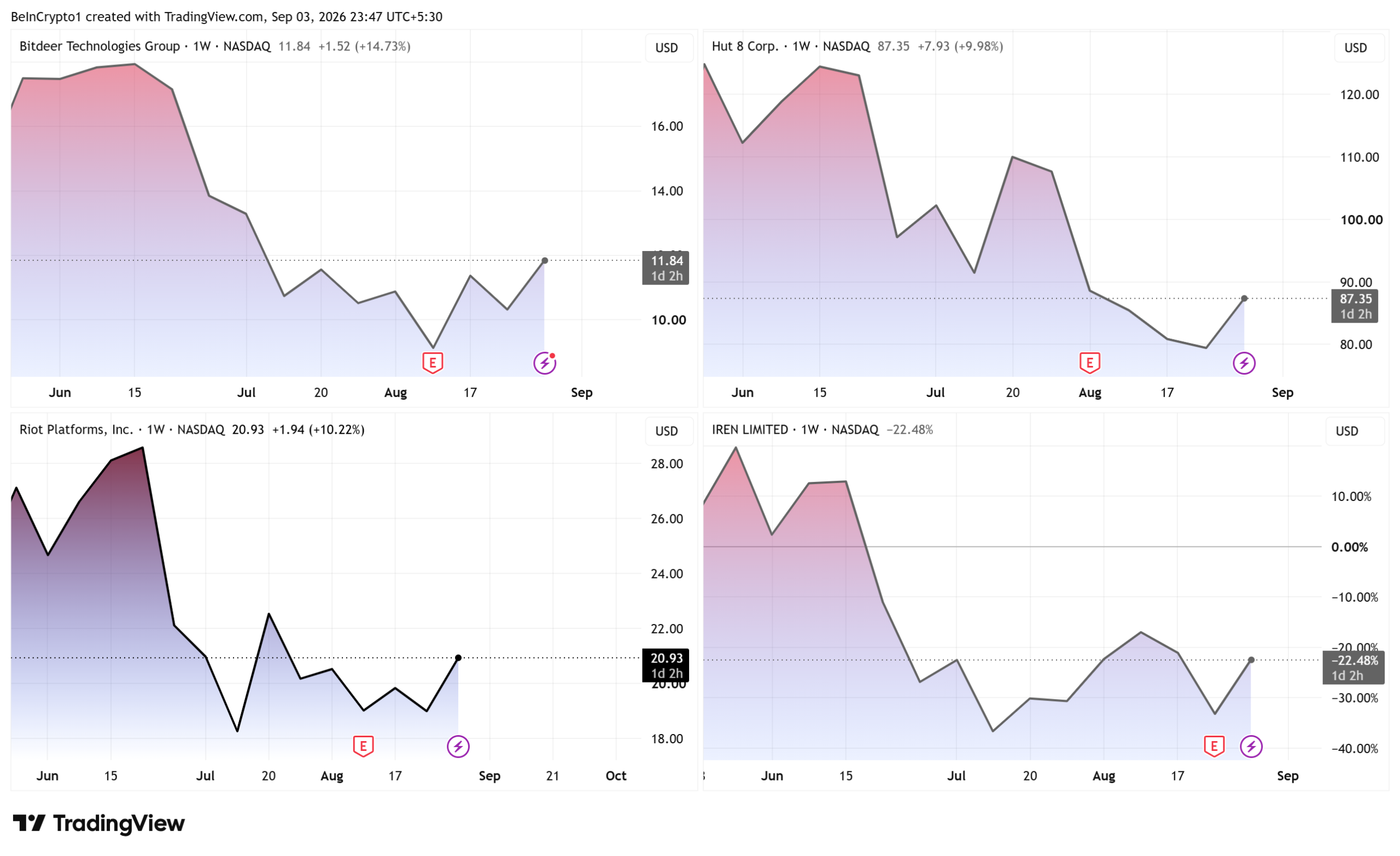
Bitdeer Technologies was the largest at $64.7 million. Hut 8 followed at $36.3 million, then Riot Platforms at $20.7 million and IREN at $4 million.
The total is small, at roughly 2.4% of a $5.21 billion portfolio.
It still marks a change of mind. In October 2023, Druckenmiller said he owned no Bitcoin, adding that he probably should. He had held it earlier and sold. He is back now, but sideways, through the miners.
Why Miners, Not Bitcoin
He skipped Bitcoin (BTC) itself and the spot funds too, buying electricity instead. A new grid connection can take years to secure. Miners spent a decade locking up cheap power. AI firms want that capacity now and cannot wait for their own.
Bitdeer shows the pitch, having mined 2,694 BTC last quarter. It also signed a $4.7 billion, 16-year lease with Volta. The deal covers a Norwegian site running Nvidia chips for an AI lab. Riot’s data center pivot copies the model.
Druckenmiller did not quit AI, though. He raised Taiwan Semiconductor to $281.6 million from $167.4 million. He also opened stakes in Advanced Micro Devices, Lam Research, Equinix, and Alphabet.
The Most Profitable Investor’s Bitcoin Bet is Down 24%
So far, the trade has not worked. All four Bitcoin miner stocks have fallen since June 30. Bitdeer is off 25.5%, Hut 8 is down 24.4%, Riot is down 24.3%, and IREN is down 10%.

Those same share counts are worth about $94.9 million today. That is a paper loss of about $30.7 million. Bitcoin went the other way. It has climbed roughly 33% since late June, from about $58,600 to levels above $81,000 as of this writing.
The bridge trade therefore lagged the asset it was built to capture. MARA and CleanSpark posted heavy quarterly mining losses in August as the same squeeze hit the sector.
Still, there is one caveat that matters. A 13F is a snapshot, not a live feed. Druckenmiller may have bought more or sold out since June 30. His next filing lands in November.
The post Investor Who Went 30 Years Without a Loss Just Bet $125 Million on Bitcoin appeared first on BeInCrypto.
Now, experts across the country are deeply concerned about what might occur in the coming months, whether it’s false allegations that cast doubt on individual races, state officials refusing to certify election results as required by law, or baseless efforts to block House members from taking their seats in January.
The good news is the success of these efforts to undermine the midterms is not inevitable. To the contrary, enormous work has already been done to protect the integrity of November’s election from those who would undermine it.
Now, it is time for leaders who haven’t yet joined that effort to get off the sidelines no matter what their politics are. Losing our system of fair and free elections would not just affect one element of American life. It would affect all elements of American life.
There are many ways for institutions to meet the moment and keep our country’s elections free and fair. First, many leaders, particularly those from the business community, meet regularly with members of the executive branch and Congress. They should use these relationships to remind elected officials of the need to respect election results no matter who wins or loses.

The Administration is now pursuing what amounts to a strategy of intermittent military force combined with sustained economic pressure. Last week, it announced “Operation Economic Outcast,” an effort to further isolate Iran from its remaining trading partners. But the campaign has so far produced limited results, and imposing sanctions aggressive enough to cripple Iranian trade could require confronting countries including China, India, and Russia.
Secretary of State Marco Rubio said this week that the Administration expected the principal pressure on Iran going forward to be economic, while reserving the right to use military force when necessary.
Iranian uprising
Trump himself has resumed publicly encouraged Iranians to challenge the regime, writing on Truth Social on Tuesday, “When are the Iranian people going to rise up and fight?”
When asked by TIME on Thursday whether the Trump Administration was considering arming Iranian dissidents or providing them with other direct assistance, Vance declined to provide more details. “Everything that could happen is on the table: economic pressure, military pressure, diplomatic pressure, covert pressure,” he said. “Of course, these are tools in the President’s toolkit.”

Bitcoin has gained almost 23% over the past month, but a few choppy sessions briefly dragged the asset below $76,500. BTC has since stabilized above $77,700 following a minor 1.4% surge on Thursday.
The latest uptick came mainly from short covering rather than a fresh increase in leverage, according to QCP Capital, as markets continued to face a firm Federal Reserve stance.
Fragile Positioning?
Kevin Warsh reinforced the Fed’s focus on maintaining a 2% PCE inflation target, while headline PCE remains at 3.7%. This leaves little visible support for near-term rate cuts. Treasury long-end buybacks were doubled to $4 billion quarterly, but QCP said the amount represents only 0.013% of the $31.5 trillion Treasury market, which points to liquidity support rather than a policy pivot.
Heavy long-dated investment-grade issuance is also adding pressure, as technology companies account for 38% of 10-year-plus supply. Additionally, ETF inflows near the 95th percentile indicate genuine spot demand, although MSTR’s Bitcoin accumulation was funded through equity issuance.
“With policy guidance scarce and liquidity narrow, is this conviction or fragile positioning?”
Meanwhile, analyst NoName said that Bitcoin’s next major move could depend on whether it can close above $83,000. The analyst is also watching a CME futures gap above the current price and sees it as an important level separating a genuine reversal from another relief rally. A daily close above the level, supported by strong spot volume, would be needed to confirm a new uptrend.
Without that confirmation, NoName said that the recent bounce was a retest of previous supply. They warned that a rejection at $83,000 followed by a break below $74,000 could send the crypto asset toward $50,000-$55,000.
CryptoPatel also flagged the exact level and said that Bitcoin could face further losses if it fails to reclaim it with a higher-timeframe candle close. In that scenario, the analyst expects potential declines toward $70,000, $65,000, and $60,000. If the bearish market structure remains intact, the crypto asset could eventually fall toward the $50,000-$40,000 range. However, a higher-timeframe close above the $83,000 level would invalidate the bearish setup.
Another market watcher, Rain, noted that Bitcoin is starting to lose the demand support that helped the August rally.
The Case for Further Upside
Not everyone sees further downside ahead. Doctor Profit, for one, reiterated his stance that the bear market is over. He had previously stated that BTC broke out above key resistances and entered the Soft Bull Market, which he expects to turn into a full bull market escalation.
“Many desperate investors that wish for a lower Bitcoin price, some even call for a new low, and others say the bear market isn’t over. In fact, and I say it with my full conviction, I consider the bear market as over!”
More on the current market state can be found in our latest video below.
The post Bitcoin (BTC) Rally Driven by Short Covering, Not Fresh Leverage: QCP appeared first on CryptoPotato.

An effective altruism-linked organization, as of last month, is paying $2,000 in weekly compensation for an ostensibly grassroots anti-AI media campaign.
Irreplaceable, which employs a campaign strategist who also works for the effective altruism-funded Center for AI Safety, supports protests against AI as a way to advocate for regulations that could benefit the effective altruism agenda.
“What’s missing is coordinated action that forces the government to respond,” it claimed.
It’s currently recruiting student protest leaders for an anti-AI uprising in October. They’ll help to coordinate walkouts at more than 100 colleges to demand new regulations to affect the AI industry.
Read more: FTX-funded charity Effective Ventures agrees to return donations
Effective altruists want you to vote for AI regulators
Irreplaceable’s campaign says that AI should be paused and placed under public control, allowing effective altruists to recommend further policy changes.
According to a job description, each paid organizer will coordinate about a dozen flagship campuses and will carry out high-volume outreach, forge political partnerships, and run a digital creator program.
A skeptic called it an astroturfing campaign.
Effective altruism has strong historical ties to the crypto industry, especially via its most infamous criminal, Sam Bankman-Fried, a once-devout effective altruist, as well as other criminals who worked with him at FTX like Caroline Ellison and Gary Wang.
Irreplaceable launched on August 28 with veterans of climate change groups like Sunrise Movement and 350.org.
Its privacy page names an Education Fund and Action Fund but discloses no donors, leaving the public guessing about who is funding it, even though The Atlantic has already identified Jeremy Ornstein as an Irreplaceable strategist who concurrently serves at the Center for AI Safety.
The group’s public pages don’t identify Irreplaceable’s literal financiers.
On August 27, the founder of an AI Safety fellowship announced to the effective altruism community that it was proudly introducing 14 new “AI Safety Communicators,” naming Ornstein as an Irreplaceable strategist and describing Irreplaceable as originating from the Center for AI Safety itself.
Got a tip? Send us an email securely via Protos Leaks. For more informed news and investigations, follow us on X, Bluesky, and Google News, or subscribe to our YouTube channel.
Crypto World
Who Will Win the Privacy Coin Battle in 2026: ZEC, XMR, or Another Competitor? (3 AIs Weigh In)
ZEC and XMR are among the market’s top performers over the past 30 days, both experiencing double-digit price increases.
The former remains the largest in the privacy coin sector, so we wanted to check whether it will keep its throne by the end of 2026 or be replaced by some of its competitors. Here’s what three widely used AI-powered chatbots said on the matter.
ZEC Has a Solid Chance
As of this writing, Zcash has a market capitalization of more than $14 billion, making it the 10th-biggest cryptocurrency, and ChatGPT expects the token to finish the year as number one in its niche for various reasons.
First, it noted that ZEC has better exchange accessibility, stating that it is available on major platforms like Binance and Coinbase. In contrast, its biggest competitor, XMR, was removed from the biggest crypto exchange in 2024 and has never been listed on Coinbase.
“This gives ZEC deeper liquidity and easier access for speculative and institutional capital,” the chatbot said.
Another positive development is the recent launch of the first Zcash ETF. The product is issued by Grayscale and represents a conversion from the existing Trust to an exchange-traded fund.
The financial product saw the light of day on August 25, and the social buzz prior to the launch drove a rally to a historic peak above $870. In the following days, ZEC experienced heightened volatility, briefly surpassing that record after reaching nearly $890 before retracing to the current $847 (per CoinGecko).
It is important to note that ChatGPT also praised XMR as a “strong privacy product,” but gave it a 33% chance of topping the ranking by the end of 2026. ZEC, in turn, has a 65% likelihood of keeping its first spot.
Perplexity also ranked Zcash’s token as the leading candidate on this front, giving particular attention to XMR:
“Monero will almost certainly remain the go-to for maximal privacy, but it’s unlikely to outperform ZEC on price and access by year-end under the current regulatory regime.”
More in Favor
Google’s Gemini agreed with the theories presented by the aforementioned chatbots. It claimed that the existence of a ZEC ETF could capture Wall Street liquidity, making it really difficult for XMR to keep pace. Additionally, it noted that the current market cap gap between the two coins is nearly $5 billion.
“For Monero to overtake Zcash by the end of 2026, it would need a massive surge to overcome major hurdles like centralized exchange delistings, slower P2P liquidity, and ZEC’s strong lead from institutional ETF capital. With only a few months remaining, XMR would have to drastically outpace ZEC’s growth – an unlikely scenario barring an unexpected regulatory shift,” Gemini concluded.
The post Who Will Win the Privacy Coin Battle in 2026: ZEC, XMR, or Another Competitor? (3 AIs Weigh In) appeared first on CryptoPotato.

But if the writing sometimes comes off as winking and belabored, the acting is not. Malkovich and Rockwell are a joy to watch, and that, after all, is what we continue to go to the movies for: to see actors at play, even as they work. Malkovich’s Chris and Rockwell’s Lee are an odd-couple duo who have been working together long enough to intuit one another’s thoughts and moods. They also bicker, a lot. Lee seems annoyed by his elder partner’s tendency to tootle down trails of fanciful thought. In an early scene, Chris complains that his apartment in Santiago is riddled with moths, and he doesn’t want them to ruin his clothes. But he also doesn’t want to kill them. Instead, he says, “I’ve been escorting them outside.” It’s 1973, not long before socialist president Salvador Allende will be overthrown in a military coup—Chris and Lee know that’s going to happen, given that their job is to destabilize democratic governments here and there around the world. In one of his many pensive moments, Chris muses, “Sometimes I think I care about the moths in Chile more than I care about the people in Chile.”


Binance has denied that a system or pricing failure caused more than $5 million in alleged trader losses as the AKEUSDT perpetual contract surged from about $0.0076 to nearly $0.045 on Sept. 3.
Summary
- A trader claims that more than 30 funding-rate arbitrage positions lost over 5 million USDT.
- Binance says its pricing and liquidation systems operated normally during the AKE surge.
- The exchange uses external spot-market data because it does not list AKE for spot trading.
- The trader has requested transaction records, liquidation details and Binance’s risk-control logs.
Binance says AKE liquidations followed market volatility
X user xunlu alleged that more than 30 funding-rate arbitrage positions on Binance were liquidated within minutes at around 5:44 a.m. UTC+8 on Sept. 3.
The trader estimated the losses at more than 5 million USDT and alleged that the sudden move resulted from coordinated activity in the AKE market rather than ordinary trading.
Responding to the complaint, Binance Customer Support said AKE recorded large price swings across several exchanges and on-chain markets during the same period. The exchange attributed the liquidations to market conditions and rejected the claim that a technical problem on its platform caused the losses.
Binance also said an internal review found no fault in its pricing model, risk controls or liquidation engine. According to the exchange, its systems remained operational while the contract moved sharply, leaving leveraged positions exposed to an adverse price change.
The distinction matters because a liquidation can occur even when an exchange has not experienced an outage. Once the value of a trader’s collateral falls below the maintenance margin required for a position, the platform can close the trade automatically to prevent the account from building a larger deficit.
An August guide to margin calls published by crypto.news explained that automated crypto liquidations can move from a warning to forced closure within minutes. Unlike traditional markets, crypto derivatives trade around the clock, leaving traders with little time to add collateral during a fast price move.
AKEUSDT mark price relies on external spot markets
Binance does not offer AKE through its spot market, meaning the AKEUSDT perpetual contract cannot use an AKE price formed on Binance’s own spot order book. The exchange said it instead calculates the contract’s mark price from data gathered across several external spot venues.
A multi-market index is designed to reduce the effect of an abnormal print or short-lived price gap on a single exchange. Binance maintained that the index and mark-price process functioned as intended during the Sept. 3 volatility.
Perpetual futures do not represent ownership of the underlying token. Traders post collateral and take long or short exposure to a contract whose value tracks the asset, while recurring funding payments help keep the contract close to spot prices.
As a perpetual futures explainer noted in June, the mark price, rather than the last traded contract price, commonly determines when a leveraged position is liquidated. Exchanges generally calculate that mark from an index and a funding-related adjustment to limit liquidations caused by brief movements in the futures order book.
For AKEUSDT, the absence of a Binance spot pair makes the composition and behavior of the external index central to the disagreement. The trader has asked Binance to disclose the relevant trading records, liquidation data, and risk-control logs so the calculation can be examined.
Publicly available aggregated spot charts showed heavy volatility during the session. However, the highest combined spot reading was below the contract peak cited by the trader. The report said the gap could have resulted from price differences between the futures contract, external spot venues, or the index used to produce the mark price, but it did not establish which factor accounted for the difference.
Trader alleges AKE short squeeze hit arbitrage positions
The complainant described the affected trades as funding-rate arbitrage positions, a strategy that usually seeks to earn payments created by differences in perpetual-market positioning rather than profit from a token’s direction.
Funding-rate arbitrage commonly combines offsetting positions to reduce directional exposure. One version pairs a spot purchase with a short perpetual contract, allowing the trader to collect funding when short holders receive payments from longs. Other structures may spread positions across several exchanges or contracts.
Although such trades are often called market-neutral, they still carry execution, liquidity, collateral and exchange risks. A cash-and-carry guide published in August noted that an arbitrage position can face a margin call when its leveraged leg moves sharply, even if the combined trade is intended to limit exposure to price direction.
AKE’s reported rise from about $0.0076 to nearly $0.045 would amount to an increase of roughly 492%, or almost six times the starting price. A move of that size can rapidly reduce the margin supporting short futures positions, particularly when liquidity is thin and several trades share the same exposure.
The trader characterized the episode as a short squeeze, in which rising prices force short sellers to close their positions by buying back contracts. Such forced purchases can add to upward pressure and trigger further liquidations when nearby short positions breach their maintenance requirements.
During an unrelated market event in August, a $3 billion squeeze liquidated about $2.77 billion in short positions across major exchanges. Binance accounted for approximately $518 million of the total, while forced purchases pushed prices higher and activated more liquidations. The figures show how automated closures can accelerate an existing move, though they do not establish whether manipulation occurred in AKE.
Binance has attributed the Sept. 3 liquidations to the risks attached to leveraged trading and has not accepted the trader’s claim of coordinated market manipulation. No market regulator or independent investigator has publicly reached a finding on the allegation.
U.S. traders face a different perpetual futures market
For U.S. readers, the AKE dispute concerns an offshore Binance product that is not offered through Binance.US. American access to crypto derivatives remains subject to Commodity Futures Trading Commission rules, while offshore perpetual contracts have historically offered assets and leverage levels unavailable on regulated U.S. platforms.
Regulated perpetual futures began entering the U.S. market in 2026. The CFTC approved a Bitcoin perpetual contract from Kalshi in May, followed by contracts tied to other digital assets, while Coinbase secured another regulated path for domestic perpetual products.
U.S. platforms operate under different product approvals, leverage limits, and market-surveillance requirements. CME Group has challenged the CFTC’s treatment of perpetual futures, arguing that the products should fall under swap rules in the Dodd-Frank Act rather than be regulated as standard futures contracts.
In his complaint, the AKE trader also referred to an earlier TUT liquidation incident and said competing exchanges compensated some affected users. Binance has not agreed that the two events are comparable, maintaining that the AKE positions were closed because of market risk rather than an exchange pricing mistake.
Binance had acknowledged the complaint but had not announced compensation. The trader has requested the full transaction history, liquidation records, and risk-control logs related to the Sept. 3 session.

ChatGPT outage reports jumped from 5,000 to more than 22,000 in 10 minutes on Thursday morning. Claude, Grok and coding tool Cursor were already broken.
Three rival labs failed inside roughly 90 minutes, and no cloud provider declared a fault. Cardano founder Charles Hoskinson says it looked like a nation state, naming Gemini as the only exception as it uses its own TPUs.
How the AI Outage Happened
Grok and Claude users began reporting errors near 9 a.m. Eastern Time (ET). ChatGPT complaints spiked 90 minutes later, Downdetector data showed.
OpenAI was the only lab to confirm anything, logging elevated errors across ChatGPT and Codex, its coding agent.
Anthropic users hit a capacity wall instead.
“Due to unexpected capacity constraints, Claude is unable to respond to your message. Try again soon,” read Claude in-app error message.
xAI declared no incident, yet Grok told users its model was unavailable.

Follow us on X to get the latest news as it happens
Charles Hoskinson Floats a Nation-State Theory
The Cardano executive, who also co-founded Ethereum, says it looks like a nation state hit the three AI models at once, citing their reliance on Nvidia.
“It looks like a national state brought down Claude, ChatGPT, and Grok” Hoskinson wrote.
This means he thinks a government, not a hacker or a technical glitch, deliberately knocked the three chatbots offline.
Google logged no Gemini incident, yet users filed hundreds of reports and it flagged a fault serving new API keys. A shared chip supplier is not a shared failure path. Nvidia hardware in different buildings does not fail together.
The damage was uneven, with Claude and Grok peaking near 1,500 reports each while ChatGPT cleared 35,000.
No lab has reported an attack, but OpenAI listed 19 affected components and Anthropic blamed its Opus models.
The incident has turned it into a case for decentralized AI, one plugging Midnight, the privacy sidechain from Hoskinson’s Cardano ecosystem.
Shared Compute Draws Scrutiny
Attention turned to one building in Memphis. SpaceX merged with xAI in February, then rented Anthropic the full Colossus 1 compute capacity, built for Grok.
Anthropic draws over 300 megawatts across 220,000 Nvidia chips there, just under half of xAI’s roughly 500,000-GPU fleet.
Two of Thursday’s casualties sit on the same racks. However, neither firm has linked that to the failures.
“Grok, Claude, and ChatGPT all utilize significant portions of Colossus 1 in Memphis. That is the likely source of the outage… The question is whether it was accidental or sabotage,” one user posed.
A Cloudflare outage hit crypto platforms last November, with two AWS failures knocking services offline weeks earlier.
Anthropic went dark alone in a similar outage in March.
Concentration stays cheap until everything stops at once.
The outage comes as multiple AI models debut within days of each other.
The post Charles Hoskinson Has a Theory for AI Outage Affecting ChatGPT, Claude and Grok appeared first on BeInCrypto.
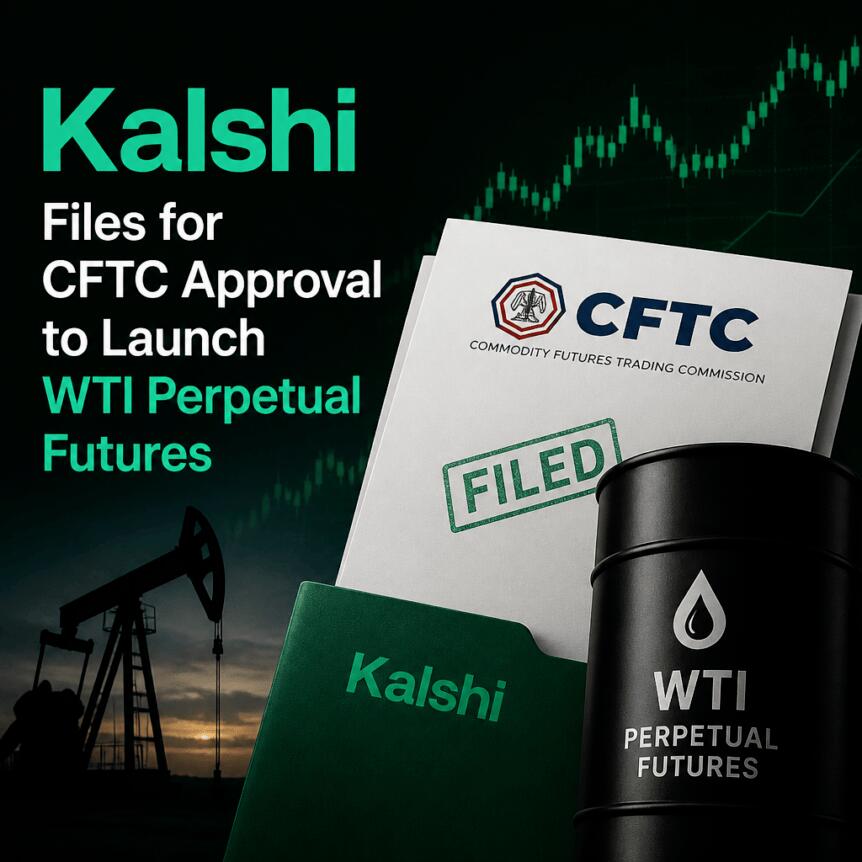
Prediction-market operator Kalshi is reportedly preparing to file with the US Commodity Futures Trading Commission (CFTC) for a new kind of energy derivative: a West Texas Intermediate (WTI) crude oil perpetual futures contract that would never expire. Bloomberg reports the filing could be made as soon as next week, while Reuters adds that the product would be available 24 hours a day, five days a week.
If regulators approve it, the contract would represent the first oil-linked perpetual futures offering to trade on a regulated US venue—an important test case for how the CFTC handles perpetual structures in markets traditionally built around fixed expiration dates.
Key takeaways
- Kalshi is reportedly seeking CFTC approval for a WTI crude oil perpetual futures contract with no expiration date.
- Bloomberg reports the CFTC filing could happen as soon as next week; Reuters says trading would run 24/5.
- The approval would mark the first oil-linked perpetual futures product to trade on a regulated US platform.
- The proposal arrives as the CFTC evaluates 24/7 trading expansion and whether perpetual contracts can be structured around physically delivered or storable energy commodities.
- Kalshi is also facing an ongoing jurisdictional fight over event contracts in state courts, creating additional regulatory friction beyond derivatives design.
A perpetual structure meets an oil market built on expiry dates
Perpetual futures—often called “perps”—differ from standard futures in that they do not have a set settlement or expiration date. In practice, this means traders can hold positions indefinitely without repeatedly rolling exposure into new contracts.
That structure is more familiar in some crypto derivatives markets, but it is still emerging in regulated commodity trading. Kalshi’s reported plan to attach the perpetual format to a benchmark like WTI is therefore notable not just for novelty, but for what it implies about regulatory comfort with perpetual mechanics in traditional commodities.
Bloomberg says Kalshi would file the contract with the CFTC, and Reuters reports it would trade 24 hours a day, five days a week. If approved, this could reshape how participants think about maintaining exposure to crude oil price risk—particularly for traders who prefer continuous participation instead of managing expiries and roll calendars.
CFTC groundwork: 24/7 trading and perpetual energy contracts
Kalshi’s oil perp push is happening against a backdrop of active CFTC consideration of market design. In June, the regulator sought public comments on extending standard futures contracts to 24/7 trading. The notice also touched on allowing perpetual contracts tied to physically delivered or storable energy commodities, including crude oil.
Later, in July, the CFTC halted the self-certified listing of a CME Group contract intended to bring 24/7 crude oil futures trading. The regulator said it was examining whether the product complied with federal commodities law, illustrating that expansions in trading hours and product structure face close scrutiny rather than automatic approval.
Now, with Kalshi reportedly pursuing a perpetual approach for WTI, the same core questions remain: how perpetual products fit within existing futures and commodities frameworks, and what guardrails are required for exchanges to operate these contracts legally.
Regulatory momentum doesn’t eliminate legal headwinds for Kalshi
While Kalshi’s derivatives ambitions focus on federal commodity regulation, the company also remains embroiled in separate legal disputes tied to its prediction-market business. Those disputes affect the operator’s broader business strategy and could influence how aggressively it expands into new asset classes or geographies.
On Tuesday, a Michigan state court issued a preliminary injunction barring Kalshi from offering sports-related event contracts in the state and requiring geofencing that blocks Michigan residents. Earlier this week, New Jersey asked the US Supreme Court to weigh in on a jurisdictional dispute after federal appeals courts reached conflicting decisions in cases involving New Jersey and Nevada. Reuters reported on the request, underscoring that the legal uncertainty is not confined to a single venue or state.
In other words, even if Kalshi secures regulatory traction in commodities derivatives, it is simultaneously managing uncertainty over whether federal commodities law preempts state gambling enforcement against event contracts traded on CFTC-regulated exchanges. That dual-track reality highlights how, for prediction-market operators, the compliance landscape can become broader than any single product filing.
Broader push for perpetual products: energy and beyond
Kalshi’s oil perpetual concept also reflects a wider industry interest in perpetual futures being brought “onshore” and aligned with US regulatory frameworks. In late August, Ondo Finance submitted comment letters to the SEC and CFTC urging regulators to bring perpetual futures tied to individual stocks onto regulated US venues.
Ondo argued that such products could potentially operate under the existing security futures framework without requiring entirely new rules. While Ondo’s proposal concerns stocks rather than crude oil, the underlying theme is consistent: market participants want perpetual-style trading to fit within established regulator-approved categories.
For investors and traders, this matters because product availability changes the mechanics of hedging, speculating, and managing liquidity. Perpetuals, if permitted and structured properly, can reduce the operational friction of rolling exposure, but they also raise regulatory expectations around risk controls, transparency, and the legal classification of these instruments.
For now, much hinges on what the CFTC decides to accept—and how it interprets the contract’s perpetual nature relative to commodities law. Readers should watch for whether Kalshi’s reported filing is submitted on schedule, how the agency responds, and whether any additional approvals or objections signal a broader shift toward perpetual derivatives for physical or storable commodities.

Investor Who Went 30 Years Without a Loss Just Bet $125 Million on Bitcoin

Toosii Says He’s Still In Love With Samaria J. Davis After Split

The Blazer Shape We’re Seeing Everywhere for Fall





-

 Fashion6 days ago
Weekend Open Thread: Maeve – Corporette.com
-

 Crypto World7 days ago
Bitcoin’s 22% rally now needs real demand to outlast Treasury liquidity boost
-

 Business7 days ago
Apple Confirms September 9 Keynote and Reveals Its Full Pre-Order Schedule
-

 Crypto World20 hours ago
CLARITY Act could advance within weeks, Atkins says
-

 Business7 days ago
Salesforce Stock Soars 19% as Blowout Earnings and Agentforce AI Growth Silence Software Skeptics
-

 Business6 days ago
Onto Innovation Stock: AI’s Next Bottleneck Is Yield (NYSE:ONTO)
-

 Crypto World6 days ago
Bitcoin price tests $82K resistance as Brandt stays long
-
 Tech5 days ago
Hugging Face built a $4.5 billion empire on free AI models. Now Nvidia is buying it for $12.9 billion
-

 Business6 days ago
iPhone 18 Pro Pre-Orders Could Shift to Saturday as Apple Reportedly Avoids September 11 Anniversary
-

 Crypto World2 days ago
Elon Musk Says Grok 4.7 Lands in 10 Days and Will Beat Every Model
-
 Crypto World7 days ago
Truflation calls for Fed rate cut after PCE forecast
-
 Entertainment6 days ago
‘Adults’ Creators Break Down Season 2’s Most Shocking Moments and Tease a Potential Season 3
-

 Tech7 days ago
The fix for the AI agent that hijacked a company’s DNS: it can propose the change, but it can’t approve it
-

 News Videos4 days ago
Charlie Munger on Robinhood: No one should believe that Robinhood’s trades are free
-

 Tech6 days ago
PaperCut releases second emergency patch for exploited flaws
-

 Tech5 days ago
Tamagotchi Ring Takes the 30-Year Digital Pet and Places it on Your Finger
-

 Tech5 days ago
As the influencer economy drives retail sales, Seattle startup raises $22M to play matchmaker
-
 Crypto World2 days ago
Bitcoin slips below $77.5K as macro pressure offsets ETF inflows
-

 Crypto World15 hours ago
Kalshi seeks CFTC approval for WTI perpetual
-
 NewsBeat5 days ago
Trump posts AI video of ‘Lake America’ being protected by an army of bequiffed ‘Donald Ducks’
You must be logged in to post a comment Login