
Crypto World
Prediction Markets Will Scale As Far As Resolution Infrastructure Allows

Opinion by: David Azubike, lead analyst at Blocksquare
Prediction markets are no longer an experimental corner of crypto. Data now shows something durable: a financial category with sustained volume, diversified participation and increasing institutional attention. Prediction markets are emerging as a new “arbitrage arena” for crypto traders.
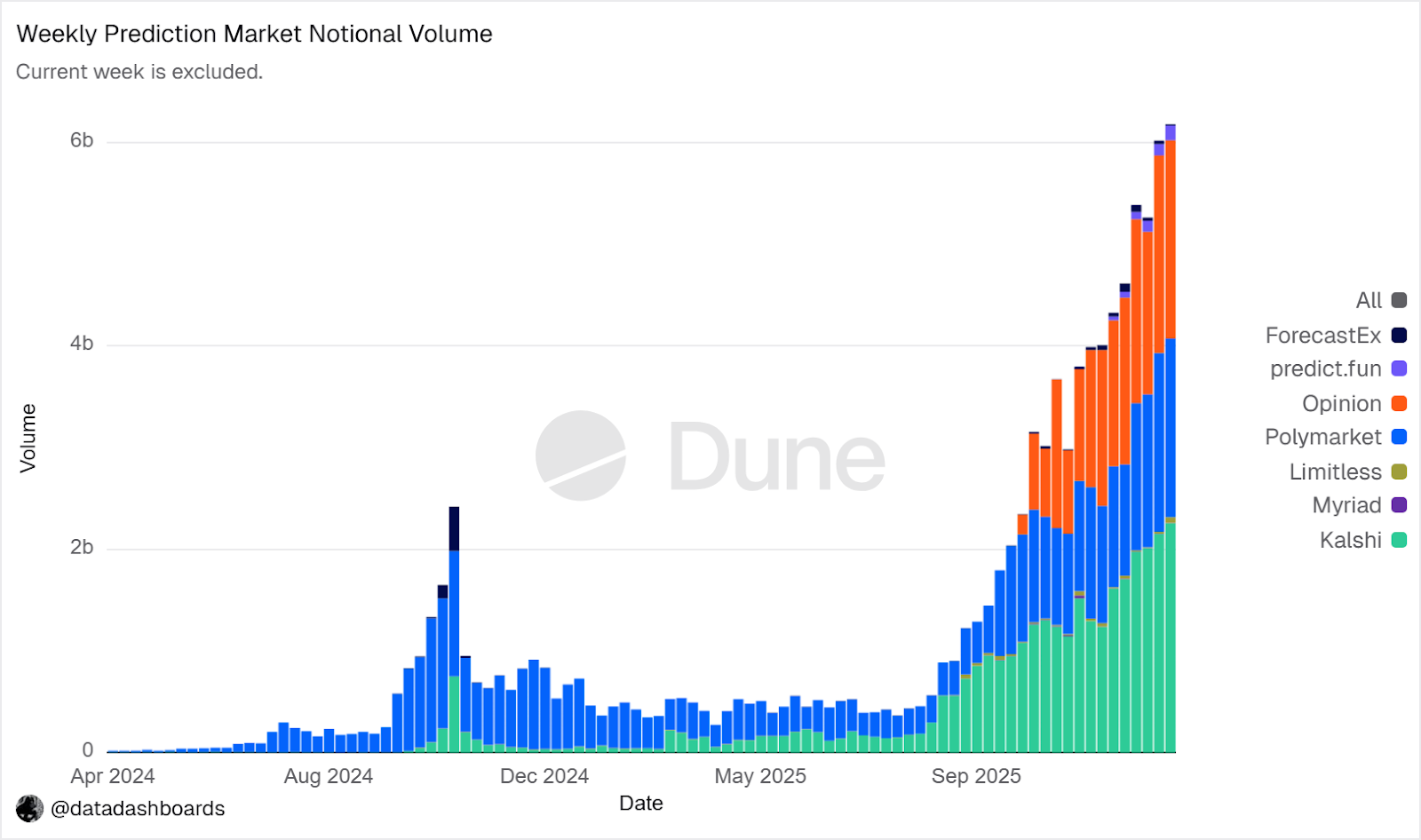
Monthly notional volume in prediction markets scaled to more than $13 billion by late 2025 from less than $100 million in early 2024 as markets diversified across verticals, according to a joint research report from Dune and Keyrock.

Source: Dune
The implication is straightforward: Prediction markets have scaled beyond their breakout moment. Despite recent regulatory action seeking to restrict prediction markets, trading volumes have continued to rise.
As the category matures, the primary risk is shifting. Liquidity and user acquisition are no longer the binding constraints; trust is.
An important layer of trust, separate from regulation and custody, is resolution.
Resolution becomes the bottleneck
Resolution architecture matters because the category is expanding into increasingly contentious domains.
Sports markets routinely involve edge cases around officiating, timing and data sources. Political markets hinge on definitions, certification procedures and legal interpretation. Macro markets depend on methodology changes and release schedules.
As the surface area grows, so does the frequency of contested outcomes.
When resolution is opaque or discretionary, engagement declines quietly. When resolution is adversarial and economically secured, users begin to treat it as financial infrastructure.
This mirrors earlier transitions in crypto. Custody, execution and liquidation were once product features. Over time, they became system properties that institutions expected to be predictable and auditable.
Resolution is undergoing the same transition in prediction markets.
Resolution as infrastructure
Every prediction market makes the same promise. Traders buy conditional claims on a future outcome, and the system must deterministically convert those claims into redeemable value once the event has occurred. If that conversion is slow, ambiguous or discretionary, traders price in resolution risk. When resolution risk becomes material, serious capital concentrates in only a handful of headline markets and avoids the rest of the venue.
This is why resolution architecture is becoming a very important layer in the modern prediction stack.

In most designs, a market is created and linked to a specific oracle question with explicit resolution criteria. Users trade YES or NO outcome tokens that represent conditional claims. These claims are typically implemented using conditional token standards that can only be redeemed after the oracle finalizes an outcome.
Related: Crypto.com launches standalone prediction market app ‘OG’
Once the event has occurred, an answer is proposed to the oracle. Optimistic oracle designs assume correctness by default, but require the proposer to post a bond. This bond creates a financial cost to submitting an incorrect answer.
A fixed challenge window then opens. During this period, anyone can dispute the proposed outcome by posting a larger bond. Each challenge increases the bond size, raising the economic cost of manipulation.
If no dispute occurs, the oracle finalizes the answer and the market settles. If a dispute does occur, the case escalates to arbitration, where decentralized jurors rule on the outcome and the decision is enforced back into the oracle state.
From product feature to trust anchor
As prediction markets mature into information infrastructure, trust shifts away from interfaces and incentives toward resolution as architecture: the set of rules, bonds, challenge windows and arbitrage paths that deterministically convert outcomes into enforceable settlement.
The next wave of growth will not be won by whoever acquires the most first-time traders during a single headline event. It will be won by whoever builds infrastructure where resolution is as reliable as execution.
For builders, this changes the core engineering and governance priorities. Resolution rules must be explicit before markets go live, not retrofitted after disputes emerge. Question design must minimize ambiguity at creation, not rely on discretionary judgment at settlement. Bond sizes and challenge windows must scale with open interest, not remain static as markets grow. Arbitration paths must be predictable and enforceable. And resolution latency must be treated as a core product metric, not an operational afterthought.
When these properties are engineered deliberately, prediction markets stop behaving like speculative products and begin functioning as financial systems people rely on.
Opinion by: David Azubike, lead analyst at Blocksquare
This opinion article presents the author’s expert view, and it may not reflect the views of Cointelegraph.com. This content has undergone editorial review to ensure clarity and relevance. Cointelegraph remains committed to transparent reporting and upholding the highest standards of journalism. Readers are encouraged to conduct their own research before taking any actions related to the company.



Bitcoin traded above $69,000 at press time on Monday after U.S. President Donald Trump pushed back his deadline for Iran from Monday to Tuesday night, while continuing to warn of possible strikes on critical infrastructure.
Summary
- Bitcoin climbed above $69,000 as U.S. President Donald Trump extended Iran’s deadline and warned of potential strikes on energy infrastructure.
- Prolonged closure of the Strait of Hormuz has kept oil prices elevated above $109, raising market volatility and pressuring risk sentiment.
- Over $104.5 million in Bitcoin short positions were liquidated in 24 hours, amplifying the rally through forced buying.
Trump said the U.S. would “blow everything up” if Iran fails to reach a deal by 01:00 GMT on Wednesday. The latest extension represents the fourth adjustment to Washington’s timeline for potential military action, even as the Strait of Hormuz remains shut.
For Iran’s part, the nation has dismissed any reports of ongoing peace negotiations and issued threats toward neighboring oil-producing nations within OPEC. Besides this, officials have also moved to challenge the petrodollar system by allowing select oil shipments to pass in exchange for tolls paid in Bitcoin or euros. The development likely coincides with a pickup in spot demand for Bitcoin seen on Sunday.
The renewed warning comes as the Strait of Hormuz has stayed closed to global shipping for over three weeks, disrupting a route responsible for roughly 20% to 30% of global oil transit and consumption.
Washington has repeatedly issued ultimatums demanding the reopening of the passage, warning of “devastating” strikes on Iran’s energy infrastructure if conditions are not met.
Iranian officials, however, signaled plans to maintain the closure while considering transit tolls to offset war-related damage. They added that the Strait could reopen once compensation mechanisms are in place.
Oil markets have already reacted sharply. Brent crude oil settled above $109 per barrel on Thursday, and traders are bracing for further volatility when markets reopen. Elevated energy prices and prolonged geopolitical stress could weigh on risk assets, potentially limiting Bitcoin’s near-term upside.
Short liquidations fuel Bitcoin’s move higher
Bitcoin (BTC) crossed the $69,000 threshold for the first time today since early April, climbing about 2.75% during Monday’s early session. The asset reached an intraday peak near $69,321 before easing slightly to around $69,100.
Bitcoin’s price uptick has triggered a surge in short liquidations, with data from CoinGlass showing over $104.5 million in short positions liquidated in 24 hours out of a $196 million total crypto market liquidation
Such liquidations often accelerate moves upward, as forced buybacks from short sellers create additional demand and reinforce momentum.
As such, if Bitcoin manages to hold above the reclaimed $69,000 level, the next resistance range for the bellwether asset lies between $70,000 and $72,000.
Disclosure: This article does not represent investment advice. The content and materials featured on this page are for educational purposes only.


U.S. military operations linked to tensions with Iran have been executed at a sustained tempo, with indications that Project Maven, the Pentagon’s flagship artificial intelligence programme, has played a central role in accelerating targeting and strike decisions.
Summary
- Project Maven, the Pentagon’s AI programme, has evolved from a drone footage analysis tool into a system that accelerates targeting and strike decisions in U.S. operations.
- The system integrates satellite, sensor, and intelligence data to compress the “kill chain” from hours to seconds, enabling faster battlefield responses.
- U.S. strikes have reached a pace of 300–500 targets per day, with over 1,000 targets hit in the first 24 hours of Operation Epic Fury, underscoring Maven’s operational impact.
Originally conceived as a tool to help analysts sift through overwhelming volumes of surveillance data, Maven has since evolved into a critical component of modern battlefield operations, reshaping how quickly military forces can detect and engage targets.
Launched in 2017, Project Maven began as a focused initiative to address a growing challenge faced by military analysts who were inundated with drone footage from conflict zones.
At the time, operators were required to scan hours of video manually, often frame by frame, to identify fleeting objects of interest. Maven was designed to “find the needle in the haystack” by applying machine learning to detect patterns and objects across vast streams of imagery.
Over the years, the programme has expanded well beyond its original scope. It now functions as an AI-assisted targeting and battlefield management system that has significantly accelerated the “kill chain”, the sequence from identifying a target to executing a strike.
How Maven turns battlefield data into strike decisions
Maven integrates multiple streams of real-time data into a unified system.
Reports describe it as an “overlay” that combines satellite imagery, drone feeds, sensor inputs, enemy troop intelligence, and information on troop deployment. By fusing these inputs, the system rapidly analyses the operational environment.
In practice, it can scan satellite feeds to detect troop movements or identify targets while also taking what experts call a “snapshot of the operational theatre” to guide decision-making.
During a recent demonstration, a Pentagon official said Maven “magically” converts an observed threat into a targeting workflow, evaluating available assets and presenting commanders with actionable options.
Advances in generative AI have further expanded its usability. Natural language interfaces, enabled through systems such as Anthropic’s Claude, allow operators to interact with the platform more intuitively. However, that partnership has come under strain after disagreements over restrictions on automated strikes and surveillance use.
Inside the fallout that pushed Google out
Google was Maven’s original AI contractor, but the partnership became controversial in 2018 when more than 3,000 employees signed an open letter opposing the company’s involvement in military applications.
Several engineers resigned, and Google chose not to renew the contract. It later introduced AI principles that ruled out participation in weapons systems.
The episode highlighted a divide within Silicon Valley between those who viewed autonomous targeting as an ethical red line and defence officials who considered such capabilities essential.
More recently, Google has softened its stance on defence-related work and is now among the companies being considered, alongside xAI and OpenAI, to replace Claude in the programme.
In 2024, Palantir Technologies moved into a leading position within Project Maven after Google stepped back.
The company, which has longstanding ties to government intelligence work, is now understood to provide core technology supporting the system, forming a key part of its operational backbone.
Chief executive Alex Karp has framed the significance in stark terms, stating, “This is a have, have-not world,” and arguing that compressing the kill chain from hours to seconds can render adversaries obsolete.
What early battlefield use suggests so far
Officials have declined to provide detailed assessments of Maven’s performance in the ongoing conflict involving Iran. However, the tempo of U.S. operations offers some indication of its impact.
According to the Center for Strategic and International Studies, the strike campaign stabilised at a pace of between 300 and 500 targets per day after the initial phase.
In the opening 24 hours of Operation Epic Fury, U.S. forces reportedly hit more than 1,000 targets. Among them was a strike on a school located in a building previously used as a military complex. Iranian authorities said the attack resulted in the deaths of over a hundred children and left many others injured.


North Korean-linked operators have spent years quietly integrating into crypto firms and DeFi teams, raising fresh concerns about insider risk after a string of high-value exploits tied to the country’s cyber apparatus.
Summary
- North Korean-linked developers have worked inside more than 40 DeFi projects over the past seven years, according to a security researcher.
- Investigators and industry participants warn that many infiltration attempts rely on simple but persistent tactics through hiring channels and social engineering.
Security researcher and MetaMask developer Taylor Monahan said these tactics stretch back to the early days of decentralized finance, with individuals tied to the Democratic People’s Republic of Korea contributing to several widely used protocols.
“Lots of DPRK IT workers built the protocols you know and love, all the way back to DeFi summer,” she said on Sunday, adding that more than 40 platforms, including several well-known projects, have at some point relied on such developers.
However, she noted that the “seven years of blockchain dev experience” listed on their resumes is “not a lie.”
Investigators have long tied North Korea’s cyber operations to the Lazarus Group, a state-backed collective believed to have stolen around $7 billion in digital assets since 2017, according to R3ACH analysts.
The group has been associated with some of the industry’s largest breaches, including the $625 million Ronin Bridge exploit in 2022, the $235 million WazirX hack in 2024, and the $1.4 billion Bybit incident in 2025.
Last week’s $280 million exploit of Drift Protocol has drawn renewed scrutiny. The project said it had “medium-high confidence” that a North Korean state-affiliated group was behind the attack, linking the incident to a wider pattern of infiltration and social engineering.
However, the face-to-face meetings that led up to the breach were not with North Korean nationals, but rather “third party intermediaries” using “fully constructed identities including employment histories, public facing credentials, and professional networks.”
These profiles included employment histories, public credentials, and active professional networks, allowing them to build trust through in-person interactions before the exploit unfolded.
Independent blockchain investigator ZachXBT has warned in a recent X post that not all threats tied to North Korea operate at the same level of sophistication.
“The main issue is that everyone groups them all together when the complexity of threats is different,” he said.
He described many infiltration attempts as relatively simple, relying on persistence rather than technical complexity. Outreach through job postings, LinkedIn, email, Zoom calls, and interview processes remains common.
“Basic and in no way sophisticated […] the only thing about it is they’re relentless,” he said, adding that teams continuing to fall for such tactics in 2026 risk being seen as negligent.

QuickSwap has issued an urgent warning after its official Discord server was compromised by an unauthorized party, raising fresh concerns over security risks in crypto communities.
The alert, posted on the platform’s verified X account on April 6, 2026, cautioned users to avoid interacting with any content shared within the server.
QuickSwap Under Attack as “Unauthorized Party” Seizes Discord: What Users Should Know
According to the team, attackers may be using the breach to spread malicious links, impersonate administrators, and promote fake giveaways or airdrops designed to trick users into connecting their wallets or transferring funds.
QuickSwap emphasized that it will never send direct messages first or request funds from users under any circumstances.
The decentralized exchange urged its community members to immediately mute or leave the Discord server and rely solely on official communication channels for updates.
The team also confirmed that it is actively working to regain control of the server, with further information expected as the situation develops.
Importantly, there is currently no indication that the breach has affected QuickSwap’s core protocol or smart contracts. This suggests that user funds remain safe unless individuals engage directly with malicious actors through the compromised server.
Discord hacks have become a recurring issue in the Web3 space, often exploiting human error rather than technical vulnerabilities. As such, users are strongly advised to remain cautious, verify all announcements through official sources, and avoid clicking unfamiliar links during this period of heightened risk.
The post QuickSwap Discord Breach Triggers Urgent Security Warning for Users appeared first on BeInCrypto.
The meme coin sector is showing pockets of strength even as the broader crypto market trades cautiously. Whale flows and technical divergences are building across several tokens simultaneously, suggesting that capital is quietly rotating back into the category. BeInCrypto analysts have identified three key meme coins to watch this week.
While several factors have influenced the coin identification, on-chain accumulation and chart structure converging are the key triggers.
Shiba Inu (SHIB)
Shiba Inu (SHIB) trades at $0.00000602, up 11% over the past 30 days but still down 13% year-to-date. Whale wallets have been gradually increasing their holdings since a sharp accumulation phase began around March 13, when balances surged to above 771 trillion SHIB. Since April 1, whales have added another 2.02 trillion tokens worth approximately $12.16 million, pushing total holdings to 773.79 trillion.
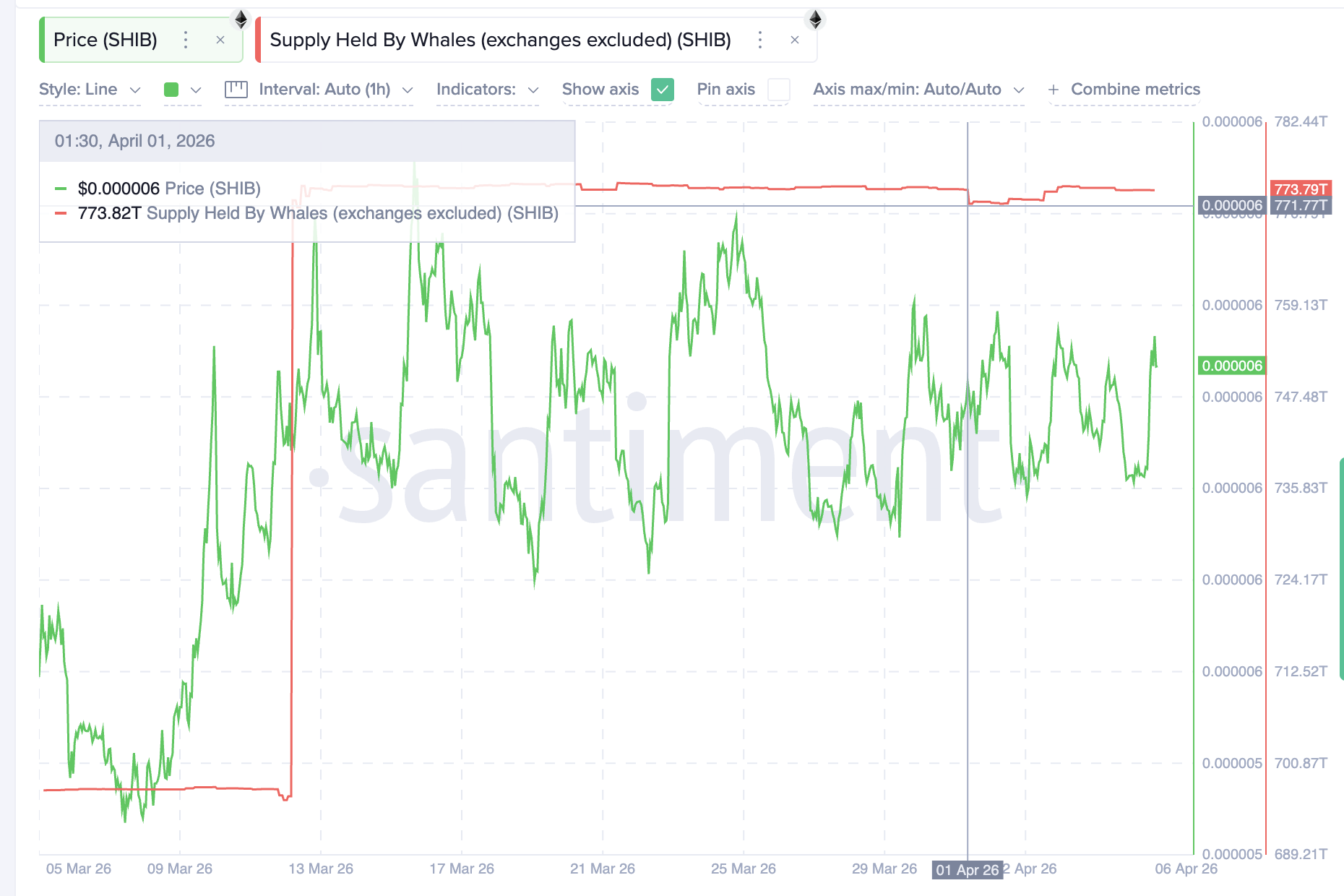
The daily chart supports the case for a potential reversal and validates renewed whale interest. Between January 31 and April 5, price made a lower low while the Relative Strength Index (RSI), a momentum oscillator, made a higher low. That standard bullish divergence flashed on April 2 as well, and SHIB has since bounced before failing at the 0.382 Fibonacci level . The token now trades just above that level, sitting at $0.00000599.
However, meaningful resistance sits at $0.0000064, a level that has capped every recovery attempt since February 18. A clean close above that level would open the path toward $0.0000072 and higher. A fall below $0.0000057 would weaken the divergence setup and expose $0.0000052 as the next floor.
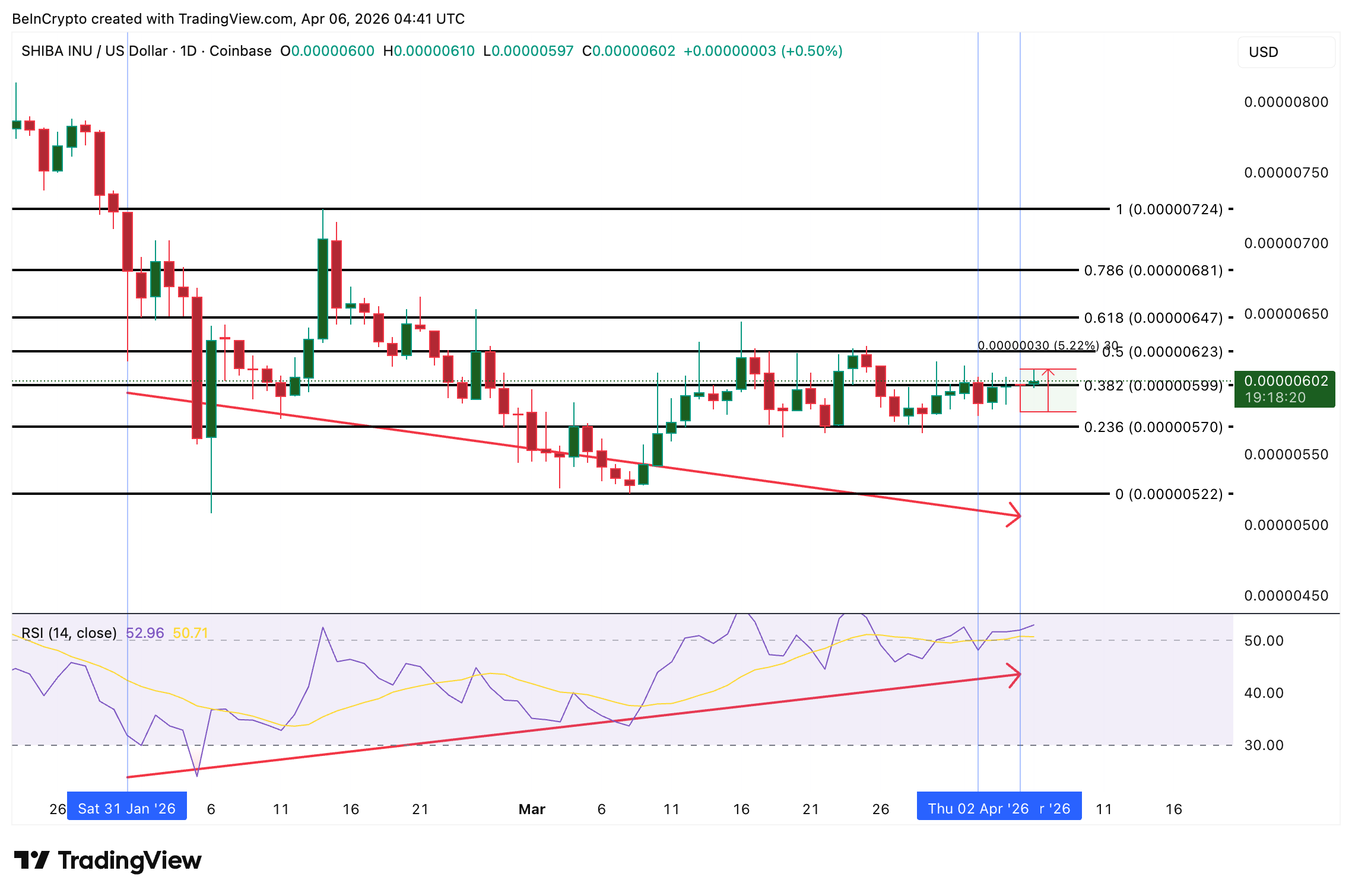
A close above $0.0000064 confirms whale-backed strength, while a break below $0.0000057 invalidates the divergence for now.
SPX6900 (SPX)
SPX6900 (SPX) sits near $0.28, up 6.51% on the day after crypto influencer Murad Mahmudov argued that SPX is stabilizing at the same market cap level where Dogecoin and Pepe consolidated before their explosive rallies.
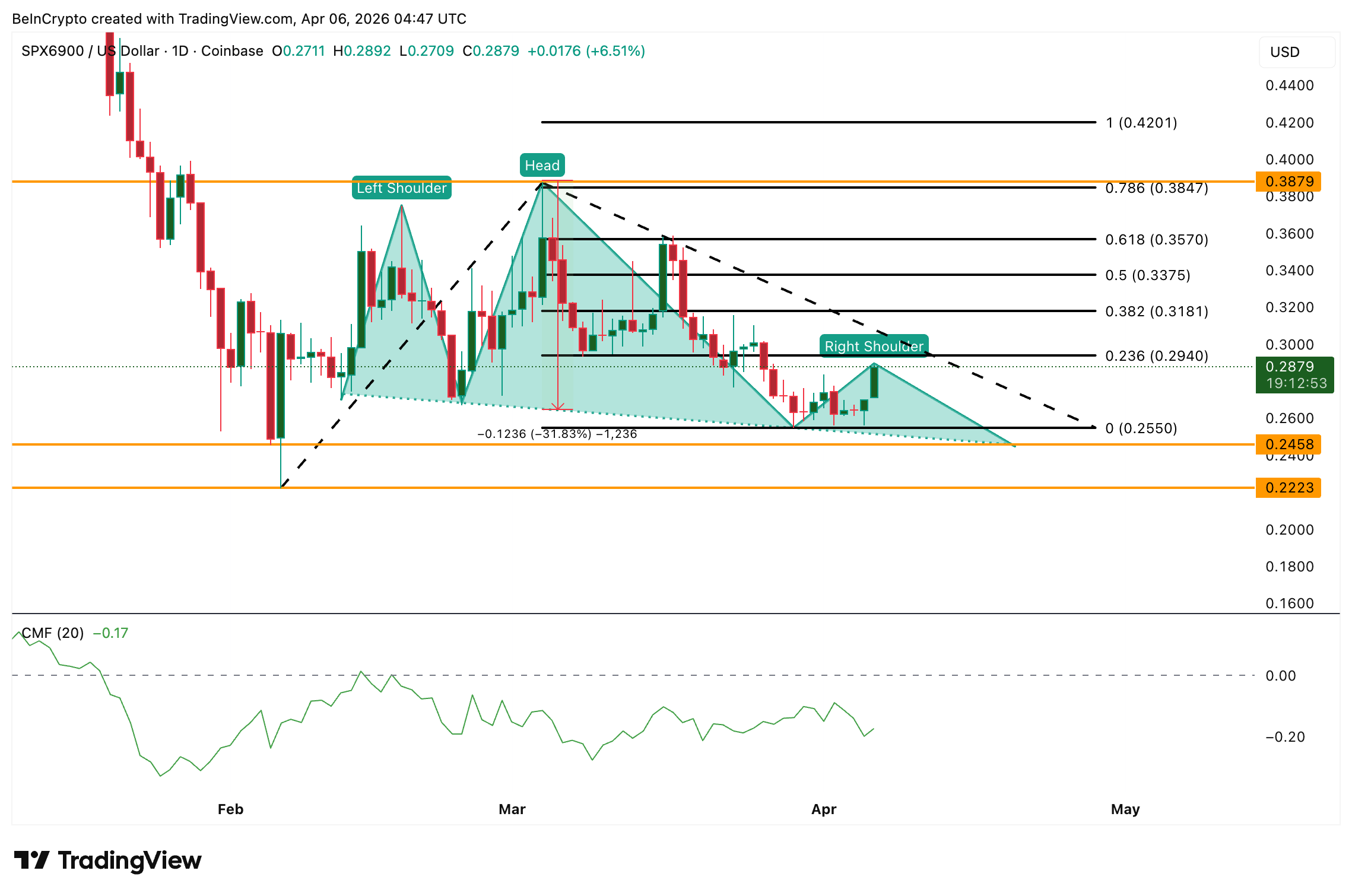
The chart tells a more cautious story about this meme coin to watch. The daily timeframe shows a developing head and shoulders pattern. The neckline sits at $0.24. A confirmed break below that level would activate a 31% measured move target.
Chaikin Money Flow (CMF), a proxy for institutional buying and selling pressure, reads -0.17 and remains well below the zero line. That negative reading means big money has not been flowing in despite the price bounce. Until CMF crosses above zero, every rally risks forming the right shoulder of a bearish reversal pattern rather than the start of a sustained move.
Want more token insights like this? Sign up for Editor Harsh Notariya’s Daily Crypto Newsletter here.
Any price peak toward $0.38 while CMF stays negative would complete the right shoulder and strengthen the bearish case. For the pattern to be invalidated, SPX would need to reclaim $0.35 with CMF turning positive. However, if it fails to hold above $0.29 and breaks the $0.24 neckline, the pattern projects a drop toward $0.22 and lower.
A reclaim of $0.35 with positive CMF weakens the head and shoulders formation and a move above $0.38 invalidates the bearishness altogether. However, a break below $0.24 activates a 31% downside target.
Pepe (PEPE)
Pepe (PEPE) is at $0.000003544, up 4% over the past 30 days and 6% over the past seven days. Among the meme coins to watch this week, PEPE shows the most aligned setup between whale activity and chart structure.
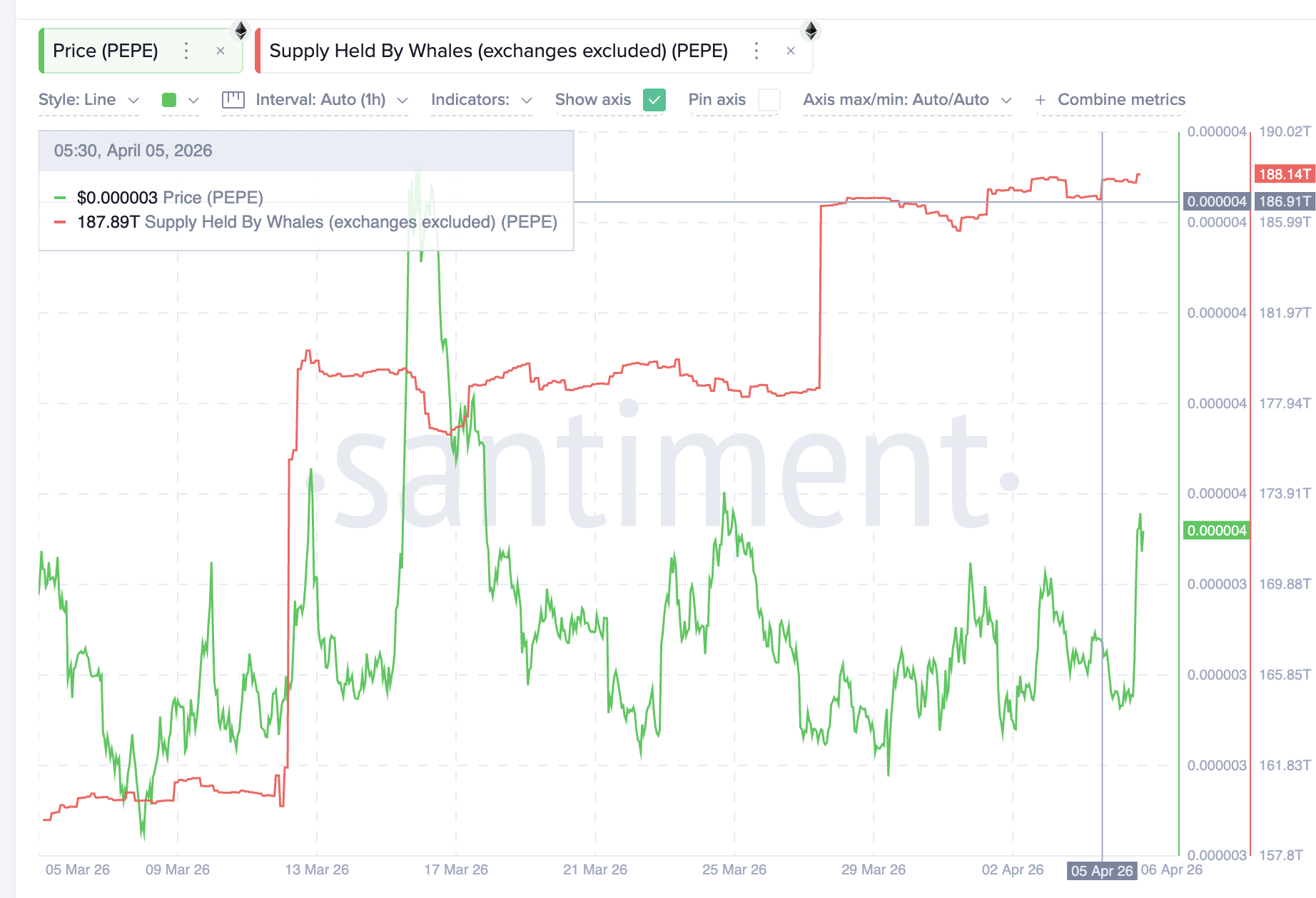
On-chain data from Santiment reveals a sharp spike in whale holdings on April 5, jumping from 186.91 trillion to 188.14 trillion PEPE. That 1.23 trillion token increase worth roughly $4.36 million represents fresh accumulation rather than a redistribution between wallets, as the move coincides with a visible buying wick on the price chart.
The daily chart confirms the momentum shift. Between February 11 and April 2, price printed a lower low while RSI printed a higher low, forming a standard bullish divergence. Since the divergence completed, PEPE has rallied approximately 11% with whales adding incrementally between April 1 and April 5. The token now trades above the $0.0000032 support and is approaching the $0.0000036 resistance.
A close above $0.0000036 would confirm the breakout and target $0.0000043 at the next major technical level. Above that, the uptrend extends toward $0.0000047 and higher. A fall below $0.0000032 would weaken the divergence structure and open the path toward $0.0000031 and lower.
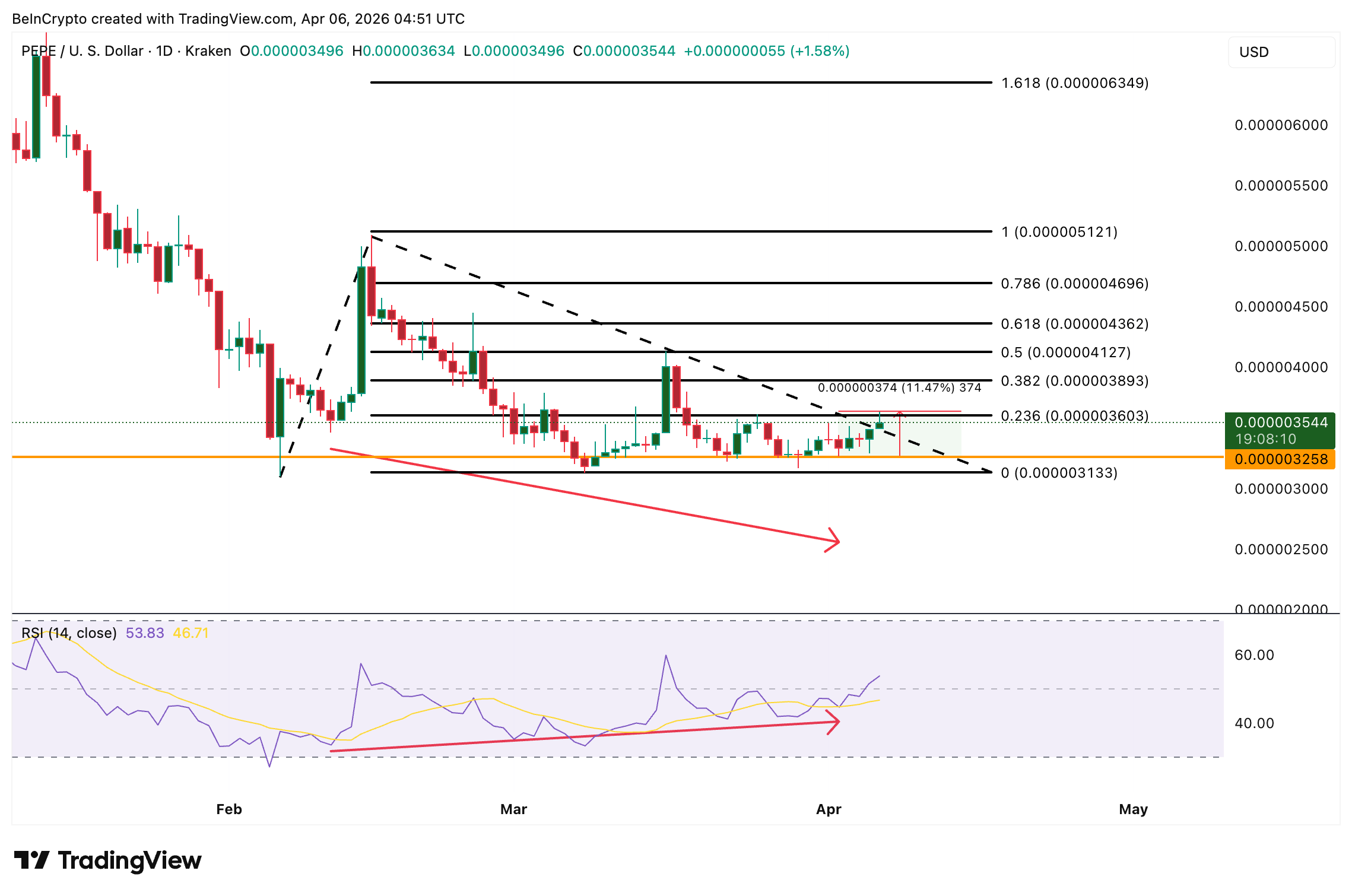
A close above $0.0000036 confirms the whale-backed rally has legs. However, a break below $0.0000032 would undermine the bullish divergence setup.
The post 3 Meme Coins To Watch In The Second Week Of April 2026 appeared first on BeInCrypto.
Inflation returns to the center of attention this week, with a fresh inflow of data likely to shape expectations for U.S. interest rates and risk assets like bitcoin .
Thursday’s U.S. core PCE reading for February and Friday’s March CPI release will test the view that the Federal Reserve can afford to wait before cutting rates. Earlier this year, rate cuts looked almost certain. That has shifted. On Polymarket, odds of no rate cuts in 2026 climbed from about 2.9% in mid-January to 35.9%.
André Dragosch, head of research at Bitwise Europe, said on social media that bitcoin has been “pricing in a (U.S.) recession already” and has acted as a “canary in the coal mine,” falling below signals from financial conditions and forward-looking indicators.
Recent data complicates that view. The ISM Manufacturing Index surprised to the upside in March, suggesting the U.S. economy may be more resilient to higher oil prices than in past cycles.
Following the release, market-based recession odds for this year dropped from around 37% to 28%.
As bitcoin has priced in a storm, Dragosch noted that the risk-reward ratio for bitcoin “is significantly skewed to the upside.” Still, an unexpected escalation in the war in the Middle East could bring about the priced-in storm.
What to Watch
(All times ET)
- Crypto
- April 6, 12 p.m.: DeFi Dev Corp. (DFDV) to host a March 2026 recap and Ask Me Anything (AMA) session on X Spaces.
- April 8: Stellar’s Yardstick protocol stable release to become available.
- April 9: Aerodrome’s Flight School to conclude and merge with the Public Goods Fund to form the Momentum Fund.
- April 9: Binance to migrate all DAI functionality to USDS.
- Macro
- April 6, 09:00 a.m.: U.S. ISM Services PMI for March est. 55 (Prev. 56.1)
- April 7, 07:15 a.m.: U.S. ADP Employment Change Weekly (est. 10K)
- April 7, 7:30 a.m.: U.S. Durable Goods Orders MoM for February est 04% (Prev. 0%)
- April 7, 11:35 a.m.: Chicago Fed President and CEO Austan Goolsbee to participate in a conversation on economic and monetary policy.
- April 8, 4:00 a.m.: Euro Area PPI YoY for February est. -1.9% (Prev. -2.1%); MoM est. 0.5% (Prev. 0.7%)
- April 8, 1:00 p.m.: FOMC minutes from the March 17–18 meeting release.
- April 9, 7:30 a.m.: U.S. Core PCE Price Index MoM for February est. 0.4% (Prev. 0.4%);
- April 9, 7:30 a.m.: U.S. Personal Income MoM for February est. 0.3% (Prev. 0.4%); Personal Spending MoM est. 0.5% (Prev. 0.4%)
- April 9, 7:30 a.m.: U.S. Q4 GDP Growth Rate QoQ (final) est. 0.7% (Prev. 4.4%)
- April 9, 7:30 a.m.: U.S. Initial Jobless Claims for week ending April 4 est. 200K (Prev. 202K)
- April 9, 8:30 p.m.: China CPI YoY for March est. 1.2% (Prev. 1.3%) ;MoM (Prev. 1%)
- April 9, 8:30 p.m.: China PPi YoY for March est. 0.4% (Prev. -0.9%)
- April 10, 7:30 a.m.: Canada Unemployment Rate for March (Prev. 6.7%)
- April 10, 7:30 a.m.: U.S. CPI MoM for March est. 0.9% (Prev. 0.3%); Core CPI MoM est. 0.3% (Prev. 0.2%)
- April 10, 7:30 a.m.: U.S. CPI YoY for March est. 3.4% (Prev. 2.4%); Core CPI YoY est. 2.7% (Prev. 2.5%)
- April 10, 10:00 a.m.: U.S. University of Michigan Consumer Sentiment (Preliminary April) est. 52.5 (Prev. 53.3)
- Earnings (Estimates based on FactSet data)
Token Events
- Governance votes & calls
- April 7: Kamino and xStocks to host an X Spaces session on tokenization.
- Aave DAO is voting to adjust oracle configurations, reduce liquidation thresholds, and modify interest-rate models across its V2 markets to support their continued deprecation. Voting ends April 6.
- Decentraland DAO is voting to require the DAO Council and Regenesis Labs to formally publish a 2030 definition of success and contingency plan. The proposal currently has support from voters. Voting ends April 6.
- Balancer DAO is voting across two linked proposals to restructure operations with a reduced team and budget, and to revamp tokenomics by halting BAL emissions, discontinuing veBAL, routing all fees to the treasury, and offering a token buyback. Voting ends April 7.
- CoW DAO is voting 85 to fix its solver rewards budget at 50% of protocol revenue, splitting it between performance and new consistency rewards. The proposal has overwhelming support and ends April 7.
- ShapeShift DAO is voting to cut DFC compensation, saving ~$24k/year in FOX. It clarifies roles and mandates annual renewals. Voting ends April 8.
- Arbitrum DAO is voting across two proposals to amend its Audit Program with a flexible alignment framework and an AI-security scan pilot, and to transfer 6,000 ETH and idle stablecoins to the Treasury Management Portfolio for yield generation. Voting ends April 9.
- Unlocks
- Token Launches
- April 9: OneFootball (OFC) token generation event to occur.
Conferences

Beyond oil, the Strait of Hormuz blockade is now rippling through another critical artery of the global economy: fertilizers.
Analysts warn this disruption could spiral into a multi-country food crisis well beyond the energy markets.
The Iran War’s Quiet Domino Effect
Around one-third of the world’s seaborne fertilizer trade moves through the Strait of Hormuz. Countries exposed to instability in the Persian Gulf export nearly half of the global urea and 30% of the ammonia, two nutrients essential for crop growth.
Follow us on X to get the latest news as it happens
Since the conflict began on February 28, shipping through the strait has collapsed by more than 95%, according to UNCTAD. The chain reaction is straightforward and severe: no fertilizer → smaller harvests → spiking food prices → basic staples become unaffordable for millions.
This is not a distant risk. It is already unfolding. Granular urea prices in Egypt, a major global benchmark for nitrogen fertilizers, have jumped to roughly $700 per metric ton from a pre-war range of $400 to $490.
“Urea fertilizer is up 50% since the Strait closed five weeks ago. 30% of the world’s fertilizer passes through Hormuz. The Gulf produces nearly half of global urea and 30% of ammonia. European and African farm markets are already paying for it,” The Hormuz Letter posted.
The Food and Agriculture Organization (FAO) projects global fertilizer prices will average 15% to 20% higher in the first half of 2026 if the disruption persists. FAO Chief Economist Máximo Torero called the blockade one of the most severe shocks to global commodity flows in recent years.
UBS economist Arend Kapteyn projects fertilizer prices will rise 48% year over year, pushing global food prices up 12%.
Why Timing Makes This Worse
The timing of the disruption is especially critical. In countries like India, fertilizer shortages directly affect planting decisions during the kharif season. Miss this window, and the consequences are locked in for the rest of the year.
“Procurement for the kharif season typically begins in May, ahead of sowing of crops such as rice and cotton in June and July, leaving a narrow window before fertilizer shortages could start to affect the harvest yield,” The Guardian reported.
The crisis is structural, not just logistical. The Hormuz disruption could have food supply consequences lasting well beyond any ceasefire or resolution.
Shanaka Anslem Perera argues that the 2026 crisis mirrors Sri Lanka’s 2022 collapse, but instead of a policy move, it’s driven by supply disruptions from the Strait of Hormuz.
“The kharif planting season runs April through June. Seeds not planted in April do not produce rice in October. Fertiliser not applied at sowing does not improve yields at harvest,” he said. “Sri Lanka’s 2022 default took eleven months from fertiliser ban to sovereign collapse. The Hormuz closure is five weeks old. The kharif window closes in June. The trajectory is the same. The velocity is faster. And the number of countries on the path is not one. It is twelve.”
Thus, what started as a geopolitical disruption in oil markets is also shifting into a multi-layered global crisis. Fertilizers sit at the foundation of modern food production. Any sustained shock to their supply could have delayed but compounding effects.
Unlike oil, which can be rerouted or substituted over time, fertilizer shortages are far less flexible. Agricultural cycles are fixed, and missed inputs result in direct losses of output.
If the Strait of Hormuz remains constrained, the world may be facing not just an energy crunch but the early stages of a synchronized global food shock.
Subscribe to our YouTube channel to watch leaders and journalists provide expert insights
The post The Strait of Hormuz Isn’t Just an Oil Problem, It’s Now a Food Problem appeared first on BeInCrypto.
Key Highlights
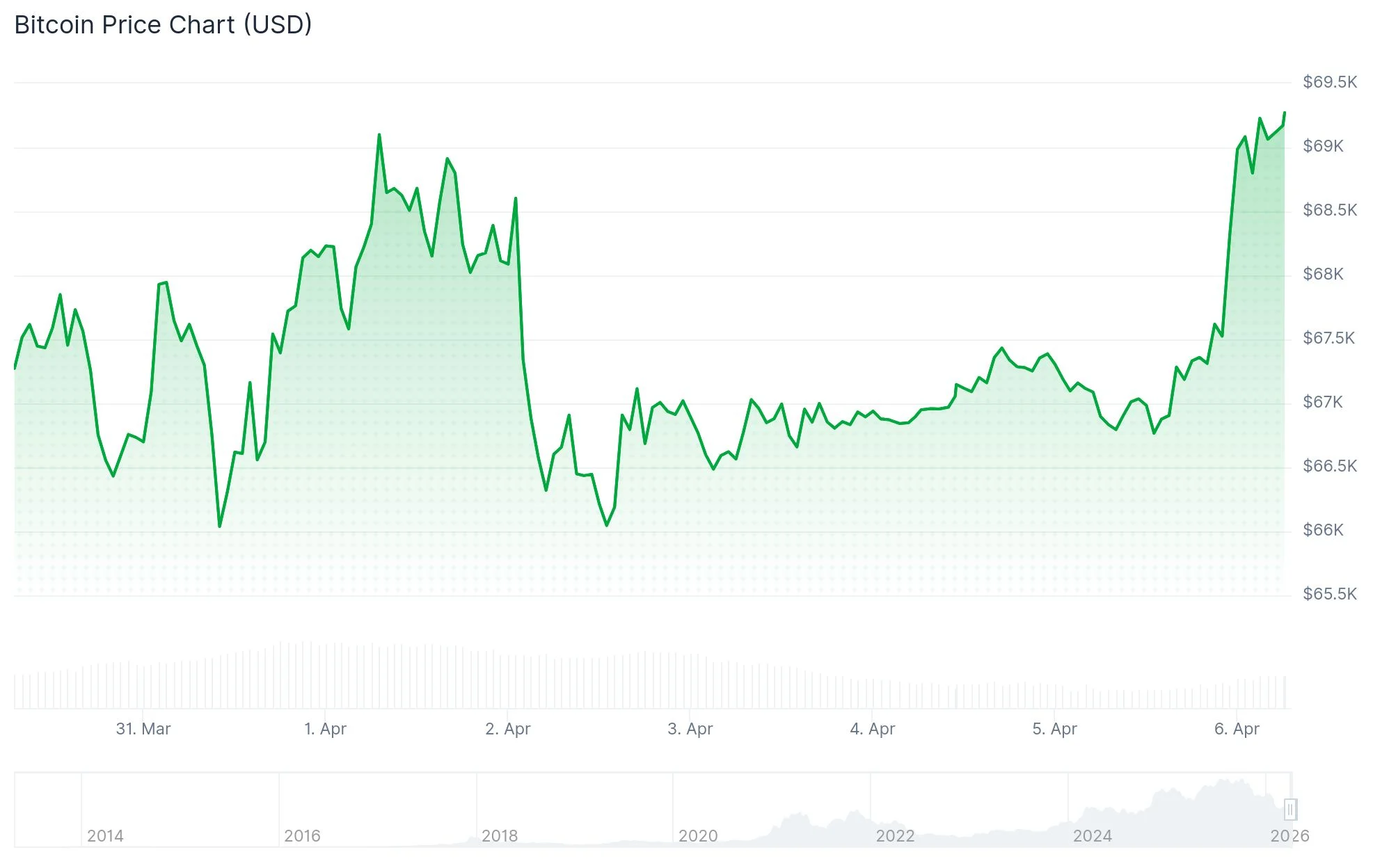
- Bitcoin declined roughly 1.5% over the past week while the S&P 500 plummeted approximately 10% in just two days
- Charles Schwab announces plans to offer direct spot Bitcoin and Ethereum trading by H1 2026
- BitMEX co-founder Arthur Hayes forecasts Bitcoin may drop under $60,000 before climbing to $250,000
- A technical analyst projects potential Bitcoin collapse to $12,000–$13,000 range by mid-2027
- Historical data reveals Bitcoin typically outperforms both gold and S&P 500 within 60 days following major crises
Bitcoin experienced significantly less volatility than traditional equities this past week. As the S&P 500 tumbled approximately 10% over a two-day period, Bitcoin’s decline stayed modest at around 1.5%. This divergence has prompted some market participants to reassess cryptocurrency’s role in their portfolios.
The equity selloff was triggered by President Trump’s tariff policy announcements, which sent shockwaves through international financial markets. Throughout the turbulence, Bitcoin maintained support above the $66,000 level, later climbing back toward $67,300 even as stock indices continued their descent.
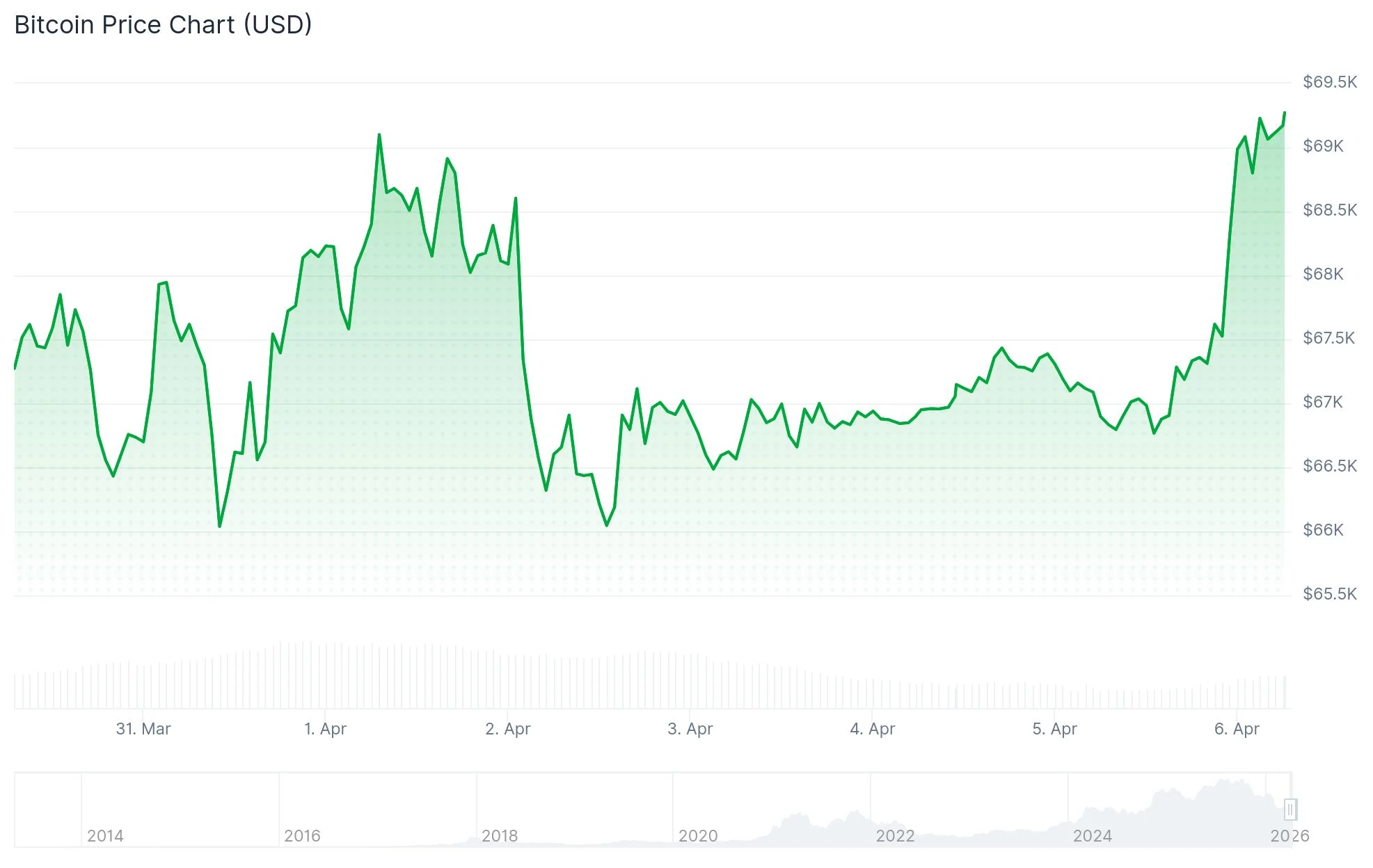
Charles Schwab, overseeing approximately $12 trillion in client assets, revealed plans to introduce direct spot trading for Bitcoin and Ethereum. The forthcoming “Schwab Crypto” account is slated to debut during the first six months of 2026.
This offering differs fundamentally from exchange-traded fund products. Users will gain the ability to manage cryptocurrency holdings alongside their traditional stock and bond portfolios within a single unified account.
Robinhood’s CEO Vlad Tenev also captured attention this week by describing market closing times as “a legacy design choice” and suggesting that tokenization could transform markets to function more similarly to internet infrastructure.
Hayes Advises Caution Until Fed Action
Arthur Hayes, who co-founded BitMEX and serves as Chief Investment Officer at Maelstrom, expressed a cautious stance on current market conditions. During an appearance on the Coin Stories podcast, he stated he wouldn’t allocate his final investment dollar to Bitcoin at present.
His rationale centers on the Federal Reserve’s current liquidity stance. Hayes contends that tariff policies will ultimately generate sufficient voter backlash to force the United States toward implementing capital controls as an alternative approach.
Such capital controls, according to his analysis, would serve as a significant driver for Bitcoin adoption. He maintains ambitious long-term price projections ranging from $250,000 to $750,000 for Bitcoin before this market cycle concludes.
However, he cautioned that an extended military confrontation between the U.S. and Iran might temporarily drive Bitcoin beneath the $60,000 threshold. Hayes additionally identified artificial intelligence-driven workforce displacement as another risk factor that could trigger a deflationary credit contraction.
Historical Performance Analysis
Analysis conducted by Mercado Bitcoin examined the 60-day aftermath of significant global disruptions, encompassing previous tariff wars and the COVID-19 pandemic outbreak. Their findings indicate Bitcoin repeatedly delivered superior returns compared to both gold and the S&P 500 during these recovery windows.
Bitcoin typically experiences initial selling pressure during crisis events as market participants shift toward cash positions. Yet historical patterns demonstrate it has recovered more rapidly and aggressively than conventional asset classes.
Not all market observers anticipate an imminent price floor. A technical analyst operating under the pseudonym King of the Charts anticipates Bitcoin establishing a bottom between $51,000 and $53,000, followed by an 80% to 90% correction down to approximately $12,000 by the middle of 2027.
The Crypto Fear and Greed Index has remained anchored in “Extreme Fear” territory for multiple weeks, with measurements approaching single-digit levels.
In a separate conversation with David Lin, Hayes emphasized that straightforward Bitcoin acquisition represents the optimal strategy for protecting against fiat currency devaluation, particularly given the increasing complexity of equity selection.
The Schwab cryptocurrency platform remains on schedule for its first-half 2026 launch.

Crypto World
China orders Apple to pull Dorsey’s Bitchat, the messaging app used during Iran protests


Tech giant Apple removed Bitchat, a decentralized peer-to-peer messaging app developed by Block CEO Jack Dorsey, from its China App Store at the request of Beijing’s internet regulator, Dorsey disclosed in an X post on Sunday.
The Cyberspace Administration of China argued the app violated regulations governing online services with “public opinion or social mobilization capabilities,” a provision that requires security assessments before launch.
Apple’s app review team told Dorsey that both the App Store listing and the TestFlight beta version would no longer be available in China, though the app remains accessible in other countries.
Bitchat runs entirely over Bluetooth and mesh networks with no internet connection required, a design that makes it functionally impossible for governments to block through conventional internet shutdowns or firewall filtering.
That architecture has made it a tool of choice during recent protests in Madagascar, Uganda, Nepal, Indonesia, and Iran, where authorities attempted to restrict internet access to curb dissent.
The app has been downloaded more than three million times across platforms, with over 92,000 downloads in the past week alone, though regional breakdowns are not available. The Google Play Store shows more than one million registered downloads separately.


Rwanda’s central bank has reiterated that cryptocurrency activity tied to the local currency remains prohibited, responding swiftly after crypto exchange Bybit introduced support for the Rwandan franc on its peer-to-peer marketplace.
Summary
- Rwanda’s central bank reaffirmed that crypto payments and trading using the Rwandan franc remain prohibited following Bybit’s P2P support update.
- Regulators warned of financial risks and barred licensed institutions from facilitating conversions between FRW and crypto assets.
In a statement posted to X on Sunday, the National Bank of Rwanda (NBR) made clear that crypto-assets are not permitted for payments, conversions involving the franc, or P2P trading under the current regulatory framework.
Authorities also cautioned residents against engaging with such services, warning of “serious financial risks and no recourse in case of loss.”
The clarification followed an announcement from Bybit on Friday indicating that users could buy and sell digital assets using the Rwandan franc through its P2P platform. The move appeared to prompt an immediate response from regulators, who emphasized that the franc remains the country’s only recognized legal tender. Financial institutions licensed by the NBR are also barred from facilitating conversions between FRW and crypto-assets.
ByBit has yet to issue an official statement as of press time.
Rwanda has kept a strict stance on crypto since 2018, with policymakers focusing on protecting the financial system and supporting the local currency.
At the same time, the country has been working on a state-backed digital currency, the e-franc rwandais, which is still in the proof-of-concept stage and may move to pilot testing.
Meanwhile, Rwanda’s Capital Market Authority has put forward a draft framework to support “responsible innovation” in the crypto sector.
The proposal sets clear limits, including a ban on using crypto as legal tender, restrictions on mining and mixer services, and controls on tokens linked to the franc.
Data from Chainalysis places Rwanda among lower-ranking countries in crypto usage across 2024 and 2025, with transaction volumes trailing far behind regional peers such as Nigeria and South Africa.
Bybit continues expanding offerings
Despite the regulatory pushback, Bybit has continued expanding its product offerings globally.
As previously reported by crypto.news, the exchange has recently leaned into strategies designed to attract users during uncertain market conditions, including a stronger focus on stablecoin yield products and fixed-income-style instruments. Bybit plans to roll out up to $10 million in stablecoin-backed opportunities.

Cooper Flagg scores 45 points as Dallas Mavericks beat Los Angeles Lakers

Haier is betting big that your next TV purchase will be one of these

London’s 10 best old school Italian restaurants


-

 NewsBeat4 days ago
Steven Gerrard disagrees with Gary Neville over ‘shock’ Chelsea and Arsenal claim | Football
-

 Business3 days ago
No Jackpot Winner and $194 Million Prize Rolls Over
-

 Fashion3 days ago
Weekend Open Thread: Spanx – Corporette.com
-
Entertainment7 days ago
Fans slam 'heartbreaking' Barbie Dream Fest convention debacle with 'cardboard cutout' experience
-

 Crypto World5 days ago
Gold Price Prediction: Worst Month in 17 Years fo Save Haven Rock
-

 Business9 hours ago
Three Gulf funds agree to back Paramount’s $81 billion takeover of Warner, WSJ reports
-
Crypto World6 days ago
Dems press CFTC, ethics board on prediction-market insider trades
-

 Sports1 day ago
India men’s 4x400m and mixed 4x100m relay teams register big progress | Other Sports News
-

 Business4 days ago
Login and Checkout Issues Spark Merchant Frustration
-

 Tech7 days ago
Apple will hide your email address from apps and websites, but not cops
-

 Tech6 days ago
EE TV is using AI to help you find something to watch
-

 Sports6 days ago
Tallest college basketball player ever, standing at 7-foot-9, entering transfer portal
-

 Politics7 days ago
Should Trump Be Scared Strait?
-
Tech6 days ago
Daily Deal: StackSkills Premium Annual Pass
-

 Tech6 days ago
Flipsnack and the shift toward motion-first business content with living visuals
-

 Fashion7 days ago
The Best Spring Trends of 2026
-

 Crypto World6 days ago
U.S. rule change may open trillions in 401(k) funds to crypto
-

 Sports6 days ago
Women’s hockey camp eyes fitness boost, tactics ahead of WC 2026 campaign | Other Sports News
-

 Politics7 days ago
BBC slammed for ignoring author of The Fraud
-

 Tech6 days ago
How to back up your iPhone & iPad to your Mac before something goes wrong
You must be logged in to post a comment Login