
Crypto World
Ripple’s David Schwartz denies gag order claims as XRP debate grows



Ripple CTO Emeritus David Schwartz has pushed back against claims that a non-disclosure agreement or “gag order” controls his public comments about Ripple and XRP.
Summary
- David Schwartz denied gag order claims, saying no NDA forces him to mislead XRP holders publicly.
- He questioned $10,000 XRP forecasts, arguing market behavior does not support those claims today now.
- Ripple secrecy rumors remain disputed as Schwartz says no hidden plan exists to pump XRP.
The dispute followed fresh community criticism over his recent comments on extreme XRP price targets.
Schwartz responded after an XRP community member claimed he may be bound by an NDA that prevents him from speaking truthfully about Ripple or XRP. The claim came as users debated whether his recent comments were too cautious.
He rejected that view and defended his own integrity. Schwartz said, “I would never lie,” while denying that any post-departure agreement forces him to mislead the community.
The remarks add to a wider debate around Ripple, XRP price expectations, and long-running claims about hidden plans. Crypto.news reported that Schwartz remains one of the most active public voices in the XRP ecosystem, even after stepping back from his day-to-day CTO role at the end of 2025.
$10,000 XRP target faces pushback
The latest dispute also connects to claims that XRP could reach $10,000. Schwartz has questioned that view, saying current market behavior does not support such confidence.
He argued that if wealthy and rational investors believed there was even a 1% chance of XRP reaching $10,000 in ten years, they would bid XRP much higher today. He asked, “Why aren’t they? Conspiracy?”
XRP was trading near $1.38 when Schwartz made the recent posts, according to crypto.news. That gap between current price levels and extreme targets has kept the debate active across the XRP community.
Old XRP comments return to focus
Schwartz has also addressed criticism of a 2017 post about XRP price and liquidity. Some users have treated the post as proof that XRP was designed to reach a very high price.
Crypto.news reported that Schwartz said the old post explained market mechanics, not a promised price target. He said the discussion focused on liquidity needs, transaction size, and market depth.
He also said he considered deleting the old post but decided not to. His reason was that removing it could create more confusion and remove useful context from the public record.
Moreover, the gag order debate follows other claims about Ripple’s NDAs and possible hidden government or banking deals tied to XRP. Schwartz has said Ripple uses NDAs for normal business reasons, not as proof of secret XRP adoption plans.

Nobitex, Iran’s biggest crypto exchange, was founded by two brothers from one of the Islamic Republic’s most influential families with ties to the supreme leaders, according to a Reuters investigation.
The exchange, which now accounts for the majority share of Iran’s crypto activity, was launched by Ali and Mohammad Kharrazi. The duo operated under the alternative surname “Aghamir,” which they used across corporate records and professional life, masking links to the Kharrazi dynasty, according to the report.
The Kharrazi family has long occupied positions close to the country’s leadership, with ties spanning generations of power, including links to Ali Khamenei and his successor Mojtaba Khamenei.
Ali and Mohammad’s grandfather reportedly served on the Assembly of Experts, the body responsible for appointing Iran’s supreme leader, and once tutored Mojtaba Khamenei. Their father, Ayatollah Bagher Kharrazi, founded an Iranian political group named Hezbollah and was involved in early staffing of the Islamic Revolutionary Guard Corps following the 1979 revolution, per the report.
Related: Iran is Weighing Crypto Tolls for Ships using Strait of Hormuz: Report
Nobitex remains operational even during war times
Nobitex, which reportedly serves over 11 million customers, has remained operational throughout the ongoing conflict involving the United States and Israel, even during a nationwide internet blackout. Analysts told Reuters that more than $100 million in transactions were processed during the war, with significant outflows moving abroad.
At the same time, investigators cited by Reuters say the platform has processed transactions linked to sanctioned entities. However, estimates vary. Analytics firm Elliptic identified roughly $366 million in suspect flows, while Chainalysis placed the figure closer to $68 million and Crystal Intelligence identified about $22 million in direct transfers from sanctioned wallets.
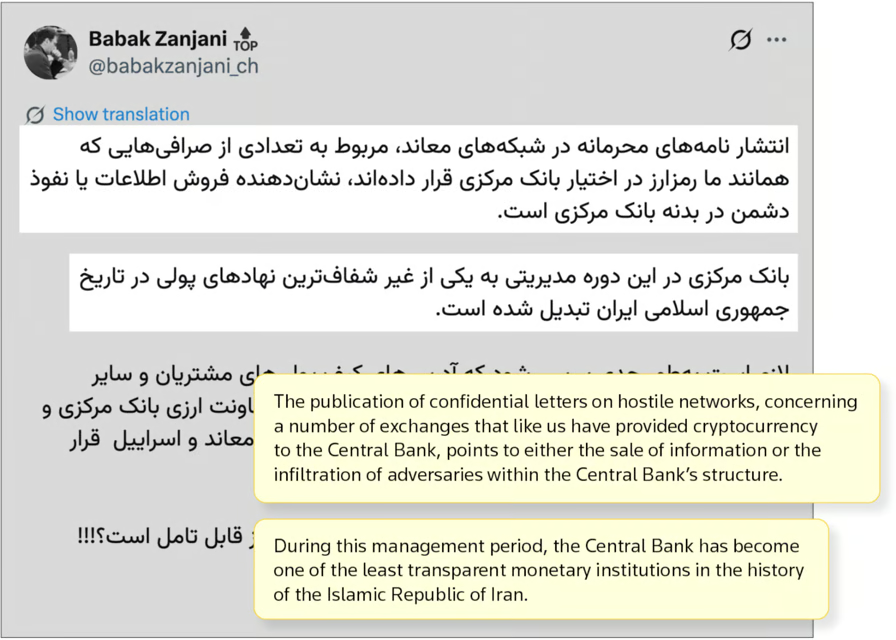
Separate findings indicate wallets associated with Iran’s central bank sent hundreds of millions of dollars’ worth of cryptocurrency to Nobitex in 2025, part of a broader strategy to bypass financial restrictions. A dispute involving businessman Babak Zanjani also exposed wallet addresses that analysts say revealed at least $20 million in routed state funds.

The post by Babak Zanjani, an Iranian billionaire convicted of fraud, criticises the Central Bank of Iran. Source: Reuters
Nobitex has reportedly denied any government affiliation, claiming that illicit transactions represent a small share of overall activity.
Related: Iran views BTC as strategic asset, but USDt still dominates oil tolls: BPI
US seizes $500 million in Iranian crypto
As Cointelegraph reported, the US has seized nearly $500 million in cryptocurrency linked to Iran, significantly expanding its financial crackdown under a campaign known as Operation Economic Fury.
The latest figure marks a sharp increase from previously disclosed totals, including $344 million in frozen digital assets, with stablecoin issuer Tether assisting in freezing funds.


Bitcoin failed to hold its weekend move near $79,000 as traders weighed the latest FOMC decision, U.S.-Iran tension, and mixed altcoin action.
Summary
- Bitcoin rejected near $79,000 as traders stayed cautious after the Fed left rates unchanged again.
- Iran peace talks affected risk appetite, limiting Bitcoin’s follow-through despite support near $78,000 this week.
- XRP held its range while Algorand led altcoin gains with a strong daily advance.
The wider crypto market stayed calm, while XRP held near $1.39 and Algorand led daily gains.
Bitcoin traded near $78,402 after touching an intraday high of $78,963, according to live market data. The asset held above its intraday low of $78,081, showing limited selling after the rejected breakout.
The move kept BTC close to a key resistance area. Market data from crypto.news showed the global crypto market cap at $2.69 trillion, with Bitcoin dominance near 58.5%.
FOMC decision keeps traders cautious
The latest price action followed the Federal Reserve’s April 29 FOMC meeting. The Fed kept interest rates unchanged at 3.5% to 3.75%, while officials remained split on future policy language.
Bitcoin moved sharply around the decision before returning near $78,000. The unchanged rate decision reduced one source of market stress, but uncertainty over future cuts kept traders cautious.
Geopolitical tension also remained a key market driver. Reports said Iran sent a revised peace proposal to the U.S., while Washington continued to review the terms.
Bitcoin had recovered from earlier weakness as peace hopes improved risk appetite. However, Trump’s skeptical tone toward Iran’s proposal limited follow-through and kept traders alert to fresh headlines.
XRP holds range as Ethereum stays firm
XRP traded near $1.39 with about $1.15 billion in 24-hour volume, according to crypto.news data. The token stayed almost flat on the day, leaving traders focused on the $1.35 support and $1.45 resistance area.
A break above $1.45 could open a move toward $1.82, while a fall below $1.35 could expose the $1.00 area, “depending on the bigger trend direction.”
Ethereum traded near $2,312 after holding above the $2,300 level. Its intraday range stayed narrow, with a high near $2,334 and a low near $2,298.
Algorand leads altcoin gainers
Algorand stood out among major altcoins. ALGO traded near $0.117 after rising about 9% on the day, based on live market data.
Most other large-cap tokens moved within tight ranges. That kept Bitcoin in control of the wider market direction as traders waited for a clear break above $79,000 or renewed weakness below nearby support.
Disclosure: This article does not represent investment advice. The content and materials featured on this page are for educational purposes only.

New York’s top prosecutor has secured a settlement with Uphold over the platform’s promotion of a crypto-backed savings product, CredEarn. The agreement centers on allegations that Uphold marketed CredEarn as a safe, reliable vehicle for interest-bearing returns while omitting material details about how those returns were generated and whether appropriate regulatory protections applied. The settlement requires Uphold to compensate affected users and imposes ongoing obligations as part of the state’s broader push to police crypto-related promotions.
The inquiry focused on CredEarn, a product offered by Cred, LLC and its chief executive, Daniel Schatt. Between January 2019 and October 2020, Uphold marketed CredEarn to users on its platform and mobile app as a dependable savings option with attractive annual yields. However, the attorney general’s office contends Uphold did not disclose that CredEarn’s returns were funded by microloans extended to low-income video game players in China—borrowers with little to no credit history and limited access to traditional financial services. In essence, the advertised safety and reliability were portrayed without the full picture of the underlying risk and credit structure.
The investigation concluded that Uphold’s promotion included a claim of “comprehensive insurance” backing CredEarn, a representation the AG’s office found to be false. There was no such insurance coverage protecting retail investors from digital asset losses at the time. In addition, Uphold operated without the required broker-dealer or commodity broker-dealer registrations, raising compliance concerns beyond misrepresentation.
Key takeaways
- Uphold must pay $5 million directly to affected CredEarn customers, a sum that exceeds five times the fees Uphold earned from promoting the product.
- Any funds recovered by Uphold from Cred’s ongoing bankruptcy proceedings (Cred, LLC was owed roughly $545,189 in those proceedings) will be redistributed to harmed investors.
- The case highlights the risk of yield-generating crypto promotions and the importance of clear disclosures and proper regulatory registration for platforms offering investment-like products.
- New York’s actions reflect a broader regulatory mood toward crypto marketing, aligning state-level oversight with federal scrutiny in related areas.
- Investors and platform users should watch how restitution is distributed and what reforms Uphold must implement to prevent similar misrepresentations in the future.
CredEarn, the lending model, and Uphold’s obligation
CredEarn was positioned as a straightforward savings option within Uphold’s ecosystem, but the arrangement depended on a lending model that connected CredEarn to microloans manufactured for Chinese borrowers described as low-income and lacking robust credit histories. The model, according to the attorney general’s findings, generated the advertised yields by channeling funds into these microloans rather than through stable, clearly insured products. This structure raised questions about risk transparency for retail customers who relied on Uphold’s assurances of safety and legitimate insurance coverage.
Cred’s financial trajectory worsened as the lending practices produced losses starting in March 2020. Within eight months, Cred filed for bankruptcy, leaving thousands of Uphold users exposed to losses tied to the CredEarn arrangement. The settlement’s framework directs Uphold to compensate affected customers directly, while any recovery from Cred’s bankruptcy estate will be funneled to harmed investors. Customers affected by the scheme will receive email notice when restitution funds arrive, underscoring the administration’s emphasis on direct remediation for those who trusted the platform’s marketing.
Regulatory context and market implications
The New York action arrives amid a broader pattern of regulatory activity aimed at crypto platforms that offer investment-like incentives or promising yields. In a related development, New York pursued separate litigation against Coinbase and Gemini over the legality of prediction-market-like offerings under state gambling laws. In parallel, the U.S. Commodities Futures Trading Commission has challenged New York’s stance on certain crypto-market activities, arguing that federal law reserves authority over prediction markets. The convergence of these actions signals heightened scrutiny of how crypto products are marketed, registered, and regulated at both state and federal levels.
For investors and crypto users, the Uphold settlement reinforces several practical takeaways. First, even products marketed with the veneer of safety may carry complex credit and liquidity risks that are not always transparently disclosed. Second, the absence of proper broker-dealer registration can complicate accountability and recourse. Third, when a platform assists in marketing a product tied to external lending arrangements, it bears responsibility for ensuring that claims about insurance or other protections are accurate. Lastly, the evolving regulatory landscape means future settlements and enforcement actions could redefine how crypto platforms structure and disclose investment-like offerings.
As Cred’s bankruptcy proceedings continue to unwind and restitution channels take shape, readers should monitor how the distribution of funds unfolds and what new compliance standards Uphold and similar platforms adopt going forward. The case also underscores the ongoing tension between rapid product innovation in crypto and the safeguards that traditional financial markets rely on to protect retail investors.
What remains uncertain is how broadly regulators will apply these precedents to other marketing campaigns across crypto platforms and whether additional settlements or enforcement actions will compel deeper changes in product design, disclosure practices, and registration requirements. Traders, users, and builders should stay attentive to regulatory updates and the evolving frameworks that will shape the availability and credibility of crypto-based yield products in the months ahead.
Source: New York Attorney General’s office. For context, the AG’s announcement and related materials are available via the agency’s press release and social channels, including coverage of the case. Source: NY AG James Twitter post.
Bitcoin gained 12.7% in April and is now pushing toward the $80,000 resistance level for the second time in a week, marking its strongest monthly performance since April 2025. The cryptocurrency news cycle is turning bullish because the market cap climbed 2.2% to $2.68 trillion while tech stocks set all time highs.
Institutional capital keeps flowing in through spot Bitcoin ETFs. Pepeto is drawing conviction of its own after crossing $9.7 million in presale capital ahead of its Binance listing.
CNBC reported that Bitcoin gained 12.7% in April, registering back to back monthly gains for the first time since early 2025. On the same day, CoinDesk confirmed BTC broke above $78,700 as oil prices dropped on renewed Iran talks.
The cryptocurrency news flow shows the $80,000 level as the key barrier that could unlock the next leg higher, and a clean break above it would put many recent buyers back in profit.
Cryptocurrency News: Pepeto, SOL, and ADA Compared
Pepeto
The cryptocurrency news keeps pointing to a market that is about to turn, and the question is which entry still carries the kind of math that a recovery trade in large caps cannot match. Pepeto answers that with a live marketplace that clears trades and flags risky contracts before the listing brings the crowd.
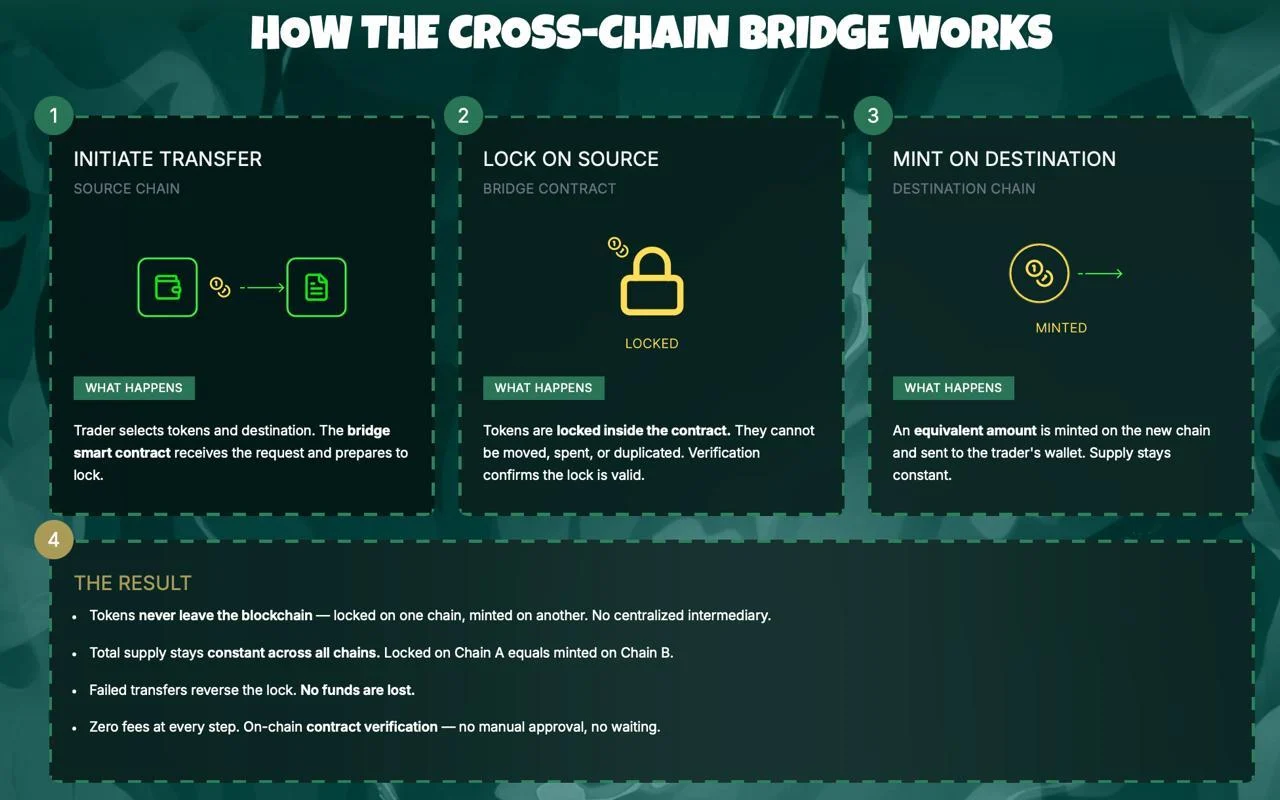
Pepeto channels token flow from different chains into one zero commission trading network where fees never touch any position. PepetoSwap removes all fees from every trade, so every dollar entering a trade is the same dollar leaving it. The risk scorer scans every token contract before a position opens, flagging scam projects before they drain capital. A developer who built systems at Binance keeps the technical layer running at exchange grade.
SolidProof verified every contract behind these products, and the creator behind the first Pepe token locked the supply at the same 420 trillion that reached billions with the structure that hit billions with zero products behind it. This time a working exchange backs every token, and presale holders already use the full set of tools daily.
The presale crossed $9.7 million while the market showed the market stuck in fear, and capital flowing against that kind of sentiment is the clearest confirmation the market can give. The presale price of $0.0000001864 disappears the moment the Binance listing goes live.
Staking at 176% APY locks tokens and reduces what remains available ahead of listing day. Large caps target 2x over months while presale targets 100x from one listing event. That gap between a recovery trade and a presale return is what analysts project Pepeto can deliver.
Solana (SOL)
Solana sits at $84.09 on May 2, trading inside the $83 to $86 range according to CoinMarketCap. Visa is processing $7 billion in stablecoin settlements through the chain, and Changelly targets $109 for May.
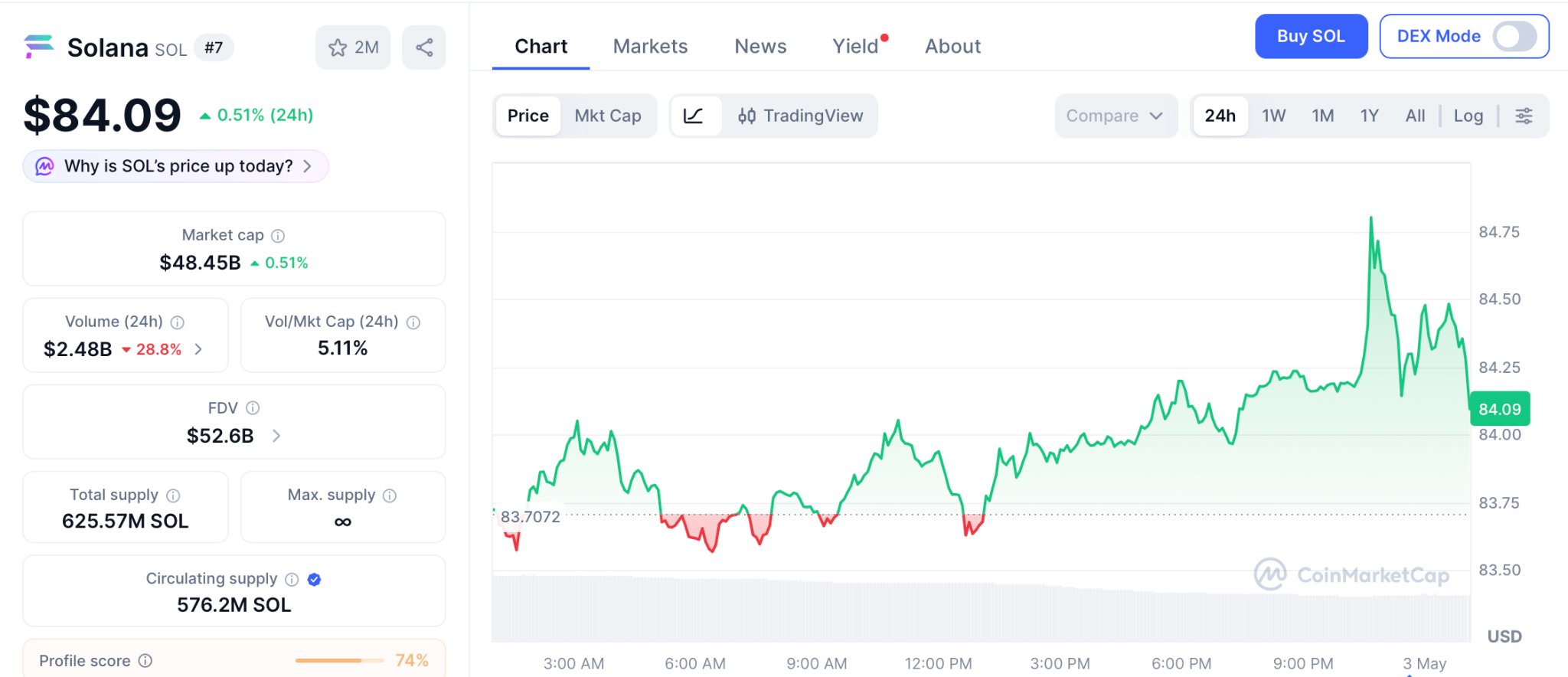
But SOL at $84.09 caps upside at 2x to 3x in a best case, and the market data makes clear that the biggest multiplier sits at presale stage.
Cardano (ADA)
ADA trades near $0.25 as of May 2, down 92% from its all time high of $3.10 according to CoinMarketCap. Whales added 10 million ADA in 72 hours this week, but the price stayed flat.
Coinpedia projects ADA between $0.22 and $0.38 for May. ADA needs a 12x just to return to its peak, and from a $9 billion market cap the returns stay limited compared to presale entries.
Closing Thoughts
The BTC rally and April ETF inflows prove that institutional capital is back with force, and the cryptocurrency news is turning more bullish by the week. But the presale filling faster each stage proves the conviction inside Pepeto is real, and entering now means joining what the capital already confirmed.
Large caps target 2x over months, while the presale targets 100x from one listing event, and the pace of money flowing in during fear is the clearest signal available on the Pepeto official website.
The listing will deliver the returns for the wallets that entered, and watching from outside is the cost of waiting for a recovery that already started.
Click To Visit Pepeto Website To Enter The Presale

FAQ
What is the biggest cryptocurrency news this week?
The biggest cryptocurrency news is BTC gaining 12.7% in April and aiming at $80,000 while the market cap climbed to $2.68 trillion.
Is Pepeto the best presale to enter right now?
The Pepeto official website shows more than $9.7 million raised with live products and a Binance listing, which is why analysts see 100x potential.
Will the cryptocurrency news turn more bullish in 2026?
April ETF inflows hit $2.44 billion and BTC is testing key resistance, which signals institutional demand is growing and recovery is forming.
Disclaimer: This is a Press Release provided by a third party who is responsible for the content. Please conduct your own research before taking any action based on the content.



Warren Buffett used the 2026 Berkshire Hathaway shareholder meeting to warn investors about rising speculation across markets.
Summary
- Buffett said investors are showing a stronger gambling mood across volatile markets and short-term trades.
- He criticized one-day options, calling them gambling rather than investing based on business value.
- Greg Abel led Berkshire’s meeting as Buffett’s warning renewed debate over speculation and crypto.
His remarks targeted short-term trading, risky bets, and the wider appetite for volatile assets, including crypto.
Buffett said market behavior has moved closer to gambling as more retail traders chase fast returns. He described the current mood as unusually aggressive compared with earlier cycles.
He said, “We’ve never had people in a more gambling mood than now.” His comment came as investors continue to trade crypto, meme stocks, and short-term options with high risk.
Buffett also compared markets to a place split between long-term investing and betting. He said, “The market always feels like a church with a casino attached.”
That line reflected his view that investors can choose between disciplined ownership and short-term wagers. He added that the casino side has become more attractive to many people.
One-day options draw sharp criticism
Buffett focused much of his warning on short-term options trading. He said one-day options carry little link to business value or long-term investing.
He stated, “If you’re buying one-day options or selling them, that is not speculating. That is gambling.” He added that buyers cannot clearly explain why they expect a one-day trade to work.
His comments follow years of growth in fast retail trading. Many traders now use mobile apps, online forums, and social media to react quickly to market moves.
Buffett did not say the entire market was broken. However, he warned that heavy speculation can push prices to levels that later appear unreasonable.
Crypto criticism fits Buffett’s old view
Buffett’s comments also matched his long-held criticism of Bitcoin and other digital assets. He has often argued that crypto does not produce cash flow like a business, farm, or rental property.
His latest remarks did not focus only on Bitcoin. Still, the warning applies to markets where traders buy mainly because they expect someone else to pay more later.
Crypto markets have often attracted both long-term holders and short-term speculators. Buffett’s view places digital assets closer to the speculative side of that divide.
For Bitcoin supporters, the argument remains different. They often describe Bitcoin as a scarce asset and a store of value. Buffett has not accepted that case.
Greg Abel leads Berkshire meeting
The 2026 meeting also marked a leadership change at Berkshire Hathaway. Greg Abel led the event as CEO after taking over from Buffett at the start of the year.
Abel discussed Berkshire’s major businesses, including rail and insurance. He also addressed artificial intelligence and said the company would not use AI just to follow a trend.
He said, “We’re not going to do AI for the sake of AI.” The comment showed Berkshire’s careful approach to new technology.
The meeting also included a tribute to Buffett. Abel honored him with a jersey display at the CHI Health Center, while a deepfake version of Buffett appeared during one question segment.
China’s Ministry of Commerce issued an injunction on May 2 voiding US sanctions on five Chinese oil refineries. The move marks Beijing’s first formal use of its 2021 anti-sanctions blocking rules.
The order names Hengli Petrochemical, Shandong Jincheng, Hebei Xinhai, Shouguang Luqing, and Shandong Shengxing. The Ministry of Commerce of the People’s Republic of China (MOFCOM) said the sanctions violated international law and barred Chinese firms from complying.
China’s First Formal Use of Its 2021 Anti-Sanctions Blocking Rules Sends Oil Price Past $120
China’s MOFCOM invoked its 2021 blocking statute for the first time, ordering all firms not to recognize, enforce, or comply with US sanctions under Executive Orders 13902 and 13846.
The measures targeted five “teapot” refineries (including Hengli Petrochemical) for their dealings in Iranian oil, calling them unlawful extraterritorial overreach that violates international law. (38 words)
Crude futures showed a muted reaction because the announcement landed when major markets were closed.
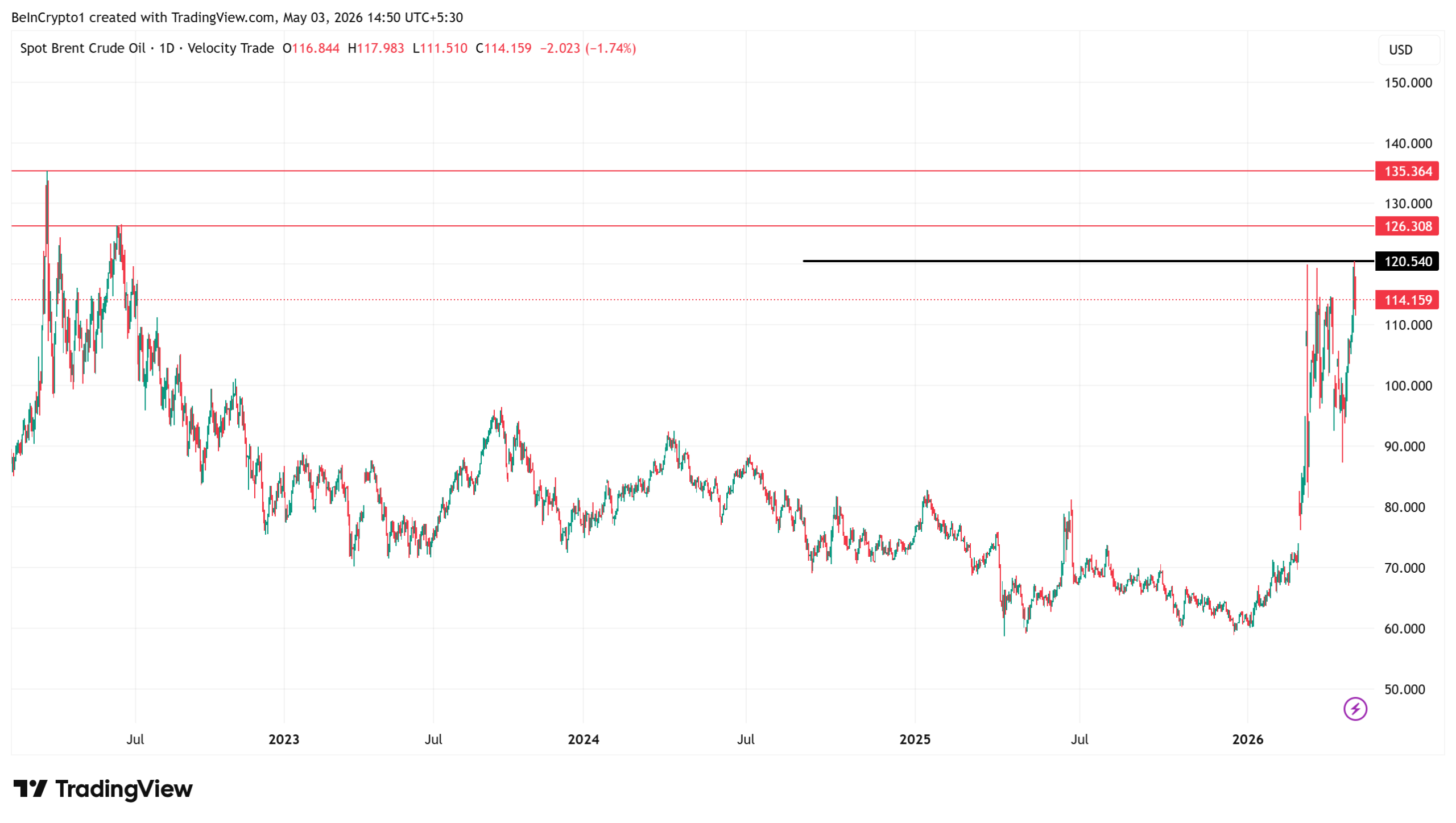
However, spot Brent soared past $120 per barrel before profit-booking pulled the price back down to $114.159 as of this writing.

Traders had already priced in continued Chinese demand for Iranian barrels through opaque shipping channels. Local media reported Hengli alone faces accusations of buying billions of dollars in Iranian crude since 2023.
Shadow fleet vessels and ship-to-ship transfers helped mask the origins of cargo along the route.
However, the injunction shields the refiners only from domestic compliance pressure. They remain exposed to dollar-denominated transaction risks through correspondent banking.
Washington warned global banks last week about handling Hormuz-linked trade flows tied to teapot refiners.
Macro Signal Carries Weight for Crypto and Risk Assets
A floor under oil prices keeps inflation expectations sticky. That tends to delay rate-cut bets and pressure risk assets across the board.
Bitcoin (BTC) has historically tracked oil shock cycles, with Middle East disruptions feeding crypto volatility.
Meanwhile, the order reinforces broader de-dollarization themes circulating through 2026. China has pushed yuan settlement and digital currency rails for cross-border trade.
Iran has separately demanded crypto-denominated transit fees from tankers passing the Strait of Hormuz.
A potential Trump-Xi summit looms on the diplomatic calendar. Markets will watch Monday’s open for any sustained reaction.
Traders also want to see whether the US responds with secondary sanctions on banks handling refinery payments.
The next test is whether other Chinese firms invoke the blocking rules to challenge US measures.
The alternative scenario sees the order standing as an isolated signal before high-stakes diplomacy resumes.
The post Oil Price Hits $120 as China Blocks US Sanctions on Five Refineries appeared first on BeInCrypto.
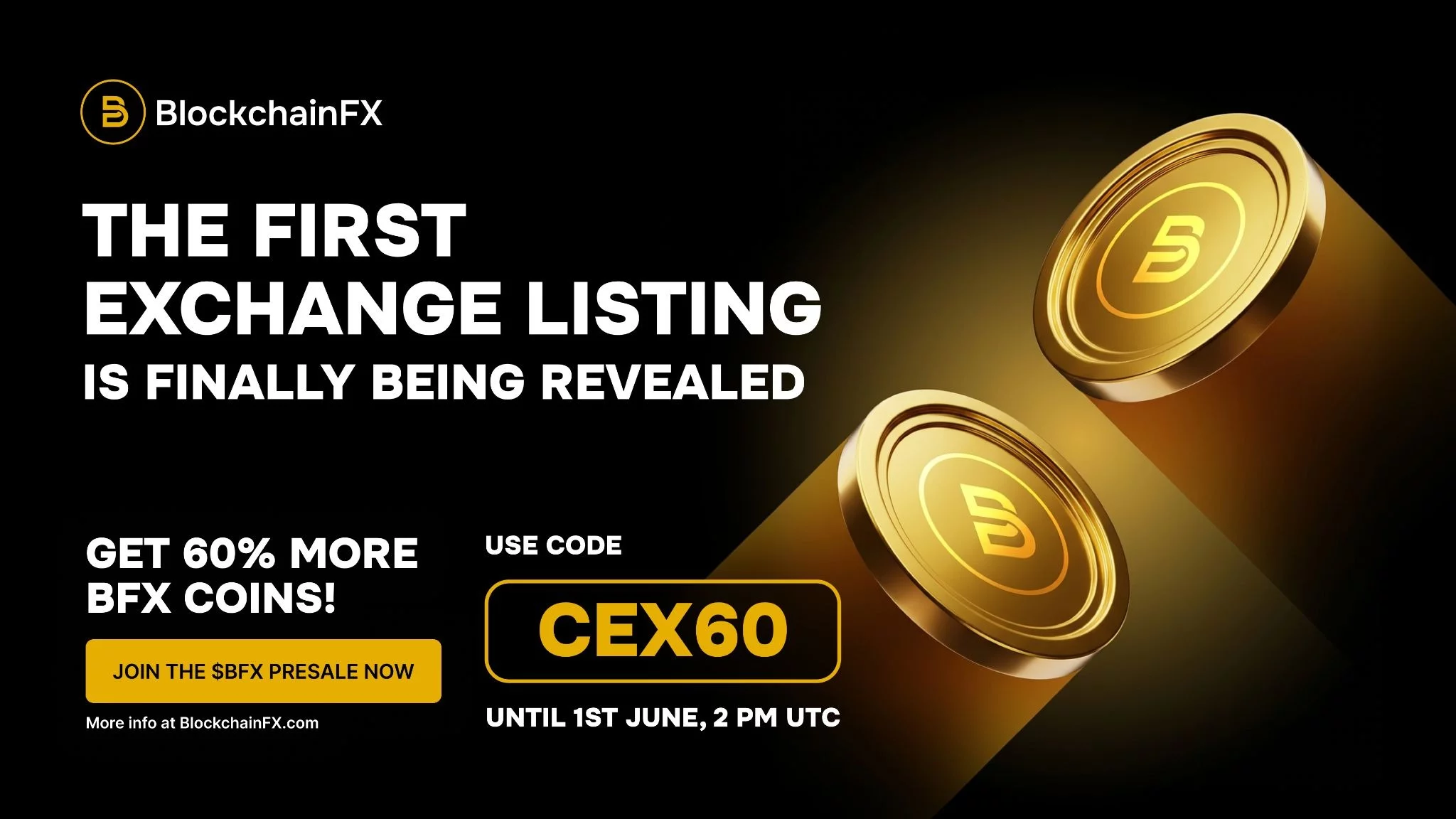
Three presales are sitting on the table, each promising the moon, but only one is actually printing receipts. That’s the situation traders are staring at right now with BlockchainFX (BFX), NOCtura (NOC), and IPO Genie (IPO). Each project has its own pitch, its own crowd, and its own timeline. So which name actually deserves a spot in a serious 2026 portfolio, and which ones are just along for the ride?
Honestly, the answer keeps pointing back to one project. The best crypto presale chatter in May 2026 is dominated by BlockchainFX, the licensed super app that has already raised over $14.43M from 24,200+ participants and is closing fast on its $15M softcap. With a working product, real users, and the bonus code CEX60 unlocking 60% extra tokens, BFX is genuinely in a different lane.
BlockchainFX (BFX): The CEX60 Window Is Closing Fast
The current BFX presale price sits at $0.035, with a confirmed launch price of $0.05. Once that $15M target hits, the presale shuts down and BlockchainFX officially launches on exchanges. With over $14.43M already raised and 24,200+ buyers locked in, the final stretch is here. Why does that matter? Because every dollar in now is buying tokens at a discount that simply will not exist next month.
Here’s where things get interesting. BlockchainFX is the first true crypto super app, the only Web3 platform letting users trade crypto, stocks, forex, ETFs, and commodities in one dashboard. Compare that to Binance or Coinbase, which still box users inside crypto-only walls. On top of that, daily passive rewards in BFX and USDT are already flowing to holders, with staking payouts reaching up to $25,000 USDT. It’s regulated by the Anjouan Offshore Finance Authority, fully audited, and already live in beta.
Plug In CEX60 and Watch the Math Get Silly
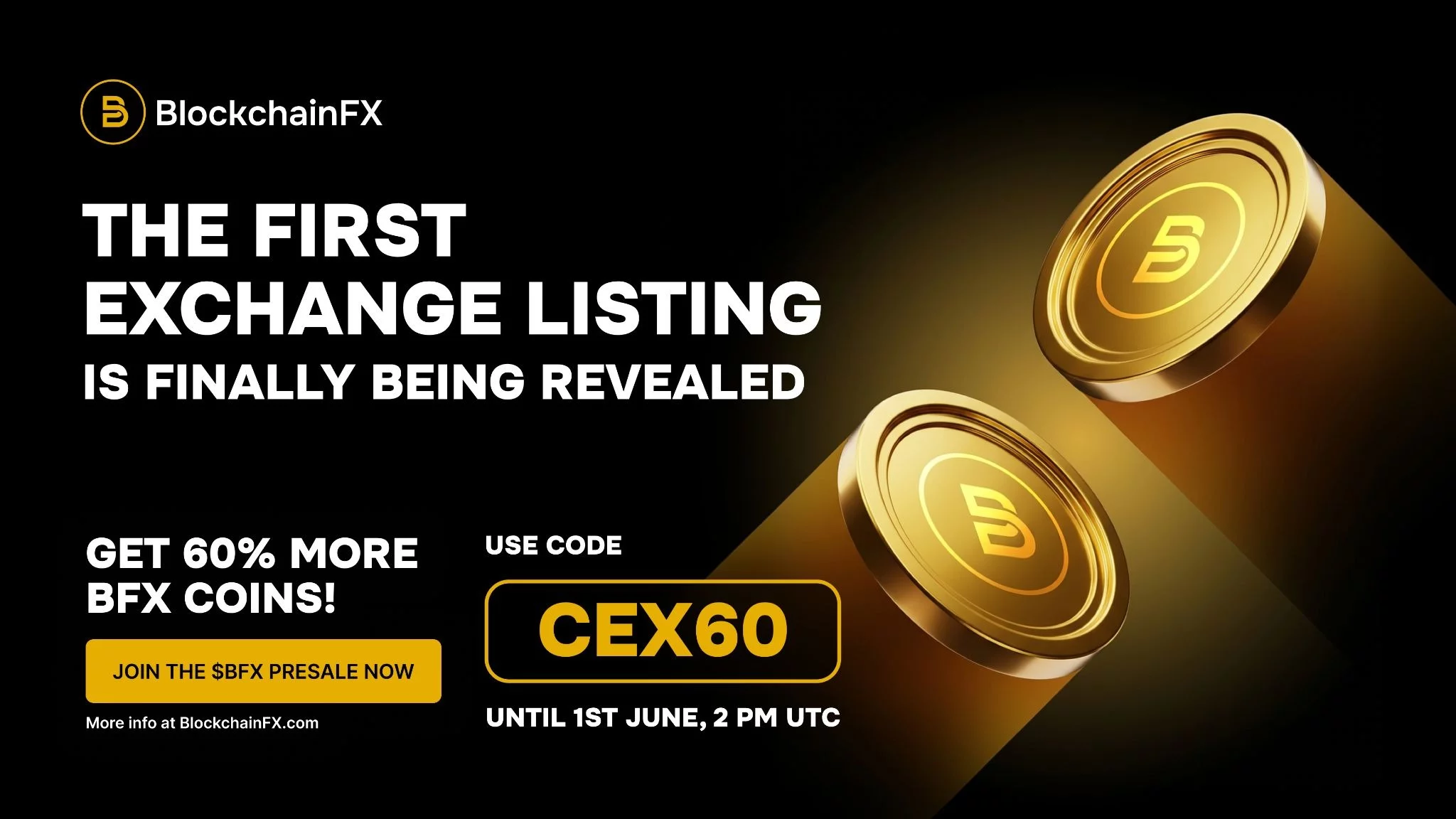
So what does the bonus actually do? The CEX60 code, tied to the first exchange listing reveal, hands buyers 60% extra $BFX tokens, but only until June 1st at 6 PM Dubai time. A $5,000 buy at $0.035 grabs roughly 142,857 tokens, then CEX60 pushes that closer to 228,571. At the $0.05 launch price, that’s already around $11,400. Ride it to the analyst-projected $1 post-launch and the same stack flips into roughly $228,000.
Spend $100+ and qualify for the $500,000 Gleam giveaway too.
NOCtura (NOC): Privacy Layer Still Warming Up
NOCtura is currently in stage 1 of its presale at $0.1501 per token, with $102,311.31 raised against a $1.5M goal. The pitch is a Solana-native, compliance-ready privacy layer with a dual-mode wallet, letting users flip between public and fully shielded transactions using zk-proofs. Interesting tech, sure, but the numbers tell their own story when stacked next to BFX.
For context, NOC is trying to solve the privacy versus regulation tug-of-war, hiding sender, receiver, and amount details while staying compliant. It’s a niche play that could attract a specific crowd. However, with a tiny raise and a very early stage, the runway to meaningful traction is long, and that’s a polite way of putting it.
IPO Genie (IPO): Pre-IPO Access Hits a Million
IPO Genie has crossed $1.4M raised and is sitting around stage 91 or 92 of a very long presale. The project is an AI-powered platform tokenizing pre-IPO and private market deals, dropping the entry barrier to about $10 and offering AI-assisted research on potential unicorns. It’s a clever angle for retail investors locked out of Wall Street’s velvet rope.
That said, being deep into a 90+ stage structure means most of the early upside is already baked in. Buyers entering now are paying late-stage prices for a project still proving product traction. Compared to the urgency around BFX’s final stretch, IPO Genie feels more like a slow simmer than a boil.

Final Word: One Name Stands Above the Rest
Based on the latest research, the best crypto presale right now is BlockchainFX, hands down. NOCtura is too early, IPO Genie is too late, and BFX is in that rare sweet spot with a live product, regulatory clearance, real volume, and a presale about to close.
The window with CEX60 active is the cleanest entry investors will ever get. Once $15M lands, the doors shut. The best crypto presale of 2026 isn’t waiting around, and neither should anyone serious about being early.
Find Out More Information Here:
Website: https://blockchainfx.io/
X: https://x.com/BlockchainFX.com
Telegram Chat: https://t.me/blockchainfx_chat


Solana co-founder Anatoly Yakovenko called artificial intelligence the biggest near-term threat to crypto cryptography. He said AI could break post-quantum cryptography (PQC) signature schemes before the industry hardens them.
Bitcoin developers and analysts are converging on a consensus over future quantum threats without disturbing Satoshi Nakamoto’s holdings.
Yakovenko Pushes Multisig Defense for Post-Quantum Cryptography
The Solana co-founder argued the industry does not yet grasp the math or implementation weaknesses of PQC.
He wants wallets to combine multiple signature schemes through two-of-three multisig. This setup could be supported natively in Solana’s transaction processor through Program Derived Addresses.
“I think the biggest risk is that PCQ signature schemes will get broken by AI, we don’t know all the implementation footguns even, let alone the math footguns,” Yakovenko warned.
Curve Finance founder Michael Egorov asked whether formal verification could close the gap. However, according to Yakovenko, verification helps only when developers know exactly what to verify.
He still favors redundancy across two of three independent schemes.
Bitcoiners Reach Early Consensus on Satoshi’s Coins
Alex Thorn, head of firmwide research at Galaxy Digital, said a growing agreement is forming around Satoshi’s holdings. He cited talks held this week in Las Vegas with skeptics, advocates, and other Bitcoiners.
Satoshi’s estimated 1.1 million Bitcoin (BTC) sits across roughly 22,000 P2PK addresses of 50 BTC each. Thorn argued any long-range attack would have to crack each address separately. Exchanges, by contrast, can migrate to post-quantum addresses before Q-day.
He added that Bitcoin markets routinely absorb more than one million BTC of selling pressure. That suggests the network could withstand a worst-case unwind without compromising core property rights.
Whether wallet redundancy or protocol restraint offers the stronger near-term defense remains the open question as quantum research accelerates.
The post Solana’s Founder Warns AI Could Crack Post-Quantum Cryptography Schemes appeared first on BeInCrypto.


Bitcoin developers and crypto advocates are again debating how the network should handle Satoshi Nakamoto’s early Bitcoin holdings.
Summary
- Bitcoin advocates argue touching Satoshi’s coins could weaken the network’s core ownership promise for holders.
- Quantum risks have revived debate over early Bitcoin wallets and cryptographic security planning across markets.
- Developers support post-quantum research while rejecting forced action against dormant Satoshi-linked coins across Bitcoin network.
The discussion has grown as quantum computing concerns raise questions about old Bitcoin addresses and future security.
Alex Thorn, head of firmwide research at Galaxy Digital, said many Bitcoin developers and advocates agree that Satoshi’s original coins should remain untouched. He said he discussed quantum risks and Bitcoin security with several market participants in Las Vegas.
Thorn said the main concern is not only technical security. It is also about Bitcoin’s rule of ownership. He stated, “Satoshi’s coins should not be touched.” He added that violating those property rights could damage Bitcoin’s main value as a neutral money network.
Quantum risk renews debate over old wallets
The debate focuses on early Pay-to-Public-Key Bitcoin addresses. These addresses used an older structure and may become more exposed if powerful quantum computers can break current cryptography in the future.
Some users fear that Satoshi’s coins could become a large target. Thorn described the risk as lower than many people assume. He noted that Satoshi’s estimated coins sit across about 22,000 addresses, with many holding 50 BTC each. That structure would make a broad attack harder to execute.
Moreover, a major concern is what would happen if Satoshi’s coins moved or were stolen. Such an event would likely create panic, since those coins have remained untouched since Bitcoin’s earliest years.
Thorn argued that the Bitcoin market has already handled very large sell-offs in the past. He suggested that many Bitcoiners may accept even a deep drawdown rather than approve any forced action against Satoshi-linked wallets. He said, “Suffer a 50% drawdown” may be an acceptable trade-off for keeping Bitcoin’s property rights intact.
Developers still watch quantum threat
The support for leaving Satoshi’s coins alone does not mean the community is ignoring quantum computing. Developers continue to study post-quantum tools that may help protect Bitcoin users if the risk becomes more practical.
Active users, companies, exchanges, and custodians can also move funds to newer address types when needed. This makes large live wallets easier to protect than dormant coins whose owners may never return.
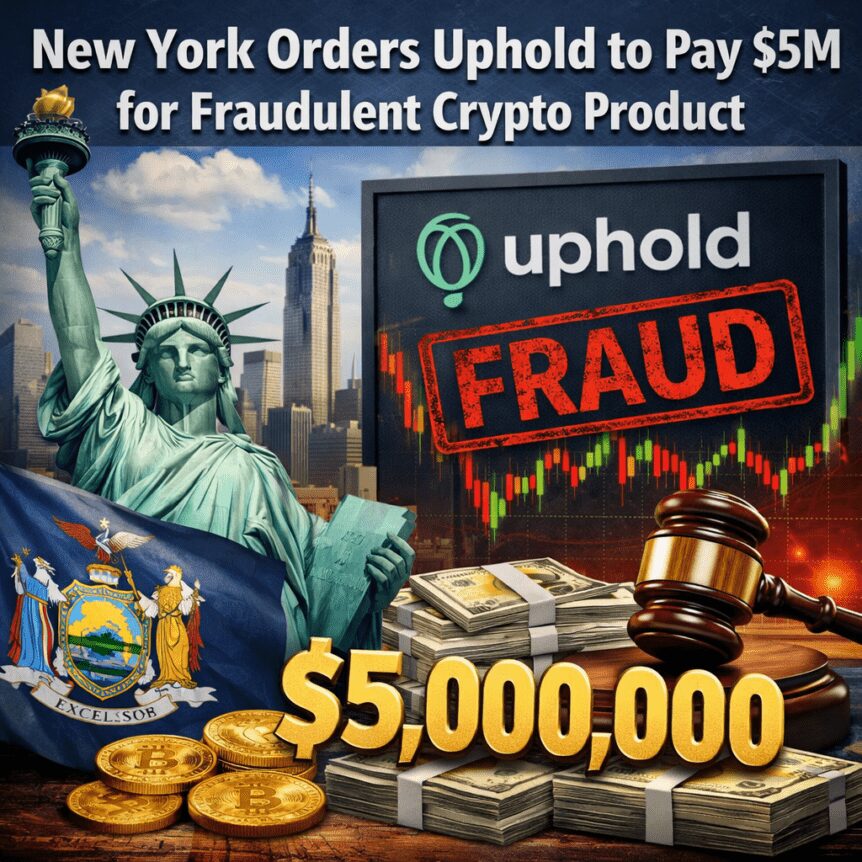
New York Attorney General Letitia James announced a settlement with Uphold, a cryptocurrency trading and wallet platform, over its promotion of CredEarn, a product offered by Cred, LLC and its CEO Daniel Schatt. The agreement secures more than $5 million in restitution to affected Uphold users and imposes ongoing compliance measures on the firm.
According to the Attorney General’s office, Uphold marketed CredEarn on its platform and mobile app between January 2019 and October 2020 as a safe, reliable savings product with attractive annual interest payments. Investigators found that Uphold did not disclose that CredEarn’s returns were generated by microloans to low-income video game players in China—borrowers typically lacking credit histories and access to traditional financial institutions. The office also determined that Uphold’s claim of “comprehensive insurance” protecting retail investors was false and not reflective of industry conditions at the time. In addition, Uphold operated without the required broker or commodity broker-dealer registration.
CredEarn’s marketing and the underlying product came under scrutiny as Cred began incurring losses from its lending practices in March 2020 and subsequently filed for bankruptcy eight months later, leaving thousands of Uphold customers affected, according to the attorney general’s announcement.
Key takeaways
- The New York attorney general secured more than $5 million in restitution for Uphold users connected to the CredEarn promotional program.
- The settlement centers on Uphold’s failure to disclose CredEarn’s risk profile and funding source, as well as a misrepresentation regarding insurance coverage and a lack of required broker-dealer registration.
- CredEarn’s returns were tied to microloans to Chinese gamers with little or no credit history, raising questions about cross-border lending and consumer protection in crypto products.
- Funds recovered from Cred’s bankruptcy estate, where Cred is owed a modest amount, will be redirected to harmed investors in addition to the direct restitution payment.
- The case illustrates ongoing regulatory focus on disclosures, licensing, and consumer protections in crypto platforms, with broader implications for enforcement trajectories in the sector.
Settlement details: Uphold, CredEarn, and the relief framework
Under the settlement, Uphold will issue $5 million directly to affected customers as restitution. The agreement also provides that any funds recovered by Cred’s bankruptcy estate— Cred is owed approximately $545,189 by the estate—will be allocated to harmed investors, where applicable. Affected Uphold users are slated to receive notice by email when the funds are deposited into their accounts.
“Investors should be able to trust the industry advice they receive,” said New York Attorney General Letitia James. “My office will always work to ensure bad actors are held accountable for endangering their customers’ financial security.”
Regulatory implications for crypto platforms and enforcement trends
The Uphold settlement adds to a widening pattern of state-level enforcement targeting misrepresentations and licensing gaps within crypto product offerings. The case reinforces expectations that platforms providing yield-generating products must clearly disclose risk factors, origin of returns, and any insurance or guarantee representations that could influence consumer decisions. It also underscores the necessity for proper registration where broker-dealer or other financial activity is involved, a point frequently cited by regulators in related proceedings.
Within a broader regulatory context, the action sits alongside a recent wave of U.S. regulatory activity. For example, New York has pursued actions against major exchanges over unregistered or allegedly inappropriate activities, and federal authorities have asserted jurisdiction in related areas of crypto markets, sometimes triggering jurisdictional tensions between state regulators and federal agencies such as the CFTC. The evolving framework contrasts with ongoing EU developments under the Markets in Crypto-Assets Regulation (MiCA), which seeks to harmonize licensing and consumer protections across member states, highlighting differing approaches to licensing, compliance, and cross-border supervision.
From a compliance perspective, the Uphold case reinforces ongoing scrutiny of advertising practices, disclosures, and insurance representations across crypto platforms. It also spotlights scrutiny of cross-border lending activities and the need for robust KYC/AML controls when platforms offer high-yield products funded by microloan-type portfolios. For institutions and exchanges, the decision signals heightened attention to registration status, permissible lending activities, and transparent risk communication in product marketing.
Legal and historical context: licensing, insurance claims, and cross-border considerations
The settlement draws a clear line on several fronts. First, Uphold’s lack of broker or commodity broker-dealer registration was a central factor in the enforcement action. Second, the assertion that CredEarn carried comprehensive insurance was deemed inaccurate, reflecting a broader industry reality in which retail investors did not have such protections at the time. Third, the cross-border element of CredEarn’s loan portfolio—financing microloans to borrowers in another country—highlights the regulatory complexities that arise when crypto platforms offer yield products tied to non-domestic lending markets.
In the larger policy context, the case illustrates how state authorities are blending consumer protection with securities-law considerations in crypto-for-investment products. It also underscores the importance for platforms to align their practices with evolving licensing regimes, cross-border compliance requirements, and rigorous disclosures aimed at safeguarding retail investors.
As enforcement posture continues to tighten, market participants should monitor developments in New York’s regulatory framework, parallel actions by other states, and the ongoing interplay between state and federal authorities in the United States, as well as the international regulatory landscape shaped by MiCA and related standards.
Closing perspective: The Uphold settlement demonstrates the growing emphasis on licensing compliance and transparent, substantiated marketing in crypto offerings, a trend likely to influence platform structuring, product design, and investor protection measures in the near term.

NYC population shrank in 2025 as thousands fled to other US regions

Meryl Streep’s Possible Absence Adds To Met Gala Drama

On 6-game win streak, Cards out to keep Dodgers’ bats cold

Manchester United reach agreement with Casemiro over contract clause amid transfer speculation

US brings back mandatory military draft registration

Steven Gerrard disagrees with Gary Neville over ‘shock’ Chelsea and Arsenal claim | Football
![Dim4ou x Shunaka - Need Da Money [OFFICIAL 4K VIDEO] 2024](https://wordupnews.com/wp-content/uploads/2026/05/1777808654_maxresdefault-80x80.jpg)


-

 Tech6 days ago
Register Renaming | Hackaday
-

 Politics6 days ago
Drax board avoid their own AGM, accused of greenwashing & environmental racism
-

 Tech6 days ago
Why Blue Badges Disappeared From Toyota Hybrids
-

 Tech6 days ago
Images of Samsung’s rumored smart glasses have leaked
-
 Sports7 days ago
IPL 2026: Ruturaj Gaikwad registers slowest fifty of the season, enters all-time unwanted list | Cricket News
-
 Tech2 days ago
Trump’s 25% EU auto tariff breaches Turnberry Agreement that also covers semiconductors and digital trade
-

 Fashion5 days ago
Kylie Jenner’s KHY Enters a New Era with ‘Born in LA’
-

 Business5 days ago
Most Commercial Energy Audits Miss the Real Losses
-

 Crypto World5 days ago
CFTC’s AI will review U.S. crypto registration applications, chairman tells CoinDesk
-

 Business6 days ago
(VIDEO) Charlize Theron Climbs Times Square Billboard to Promote New Netflix Thriller ‘Apex’
-

 Business4 days ago
Barclay Brothers Avoid Bankruptcy: HSBC Drops High Court Petitions After IVA Deal
-
 Sports2 days ago
Paul Scholes issues Marcus Rashford reality check as agreement emerges over Man United star
-
 Entertainment6 days ago
Alicia Keys Calls Out Music Industry ‘Boys Club’
-
 Business4 days ago
Tesla Officially Registers Elon Musk’s Stock: What Investors Need to Know
-

 Tech5 days ago
Get Ready for More Brain-Scanning Consumer Gadgets
-

 Tech7 days ago
Dyson Vacuums And The Curse Of Cooked Capacitors
-
 Crypto World5 days ago
Robinhood Phishing Scam Exploits Gmail Dot Feature to Bypass Security
-

 Crypto World7 days ago
Only 3% of traders drive Polymarket’s accuracy, not the crowd, study finds
-

 Entertainment6 days ago
Sister Wives: Janelle Posts New Scary Warning
-

 Crypto World5 days ago
Gmail Dot Trick Underpins Robinhood Phishing, Sending Real-Looking Emails
You must be logged in to post a comment Login