

Crypto World
SEC Seeks Approval for JitoSOL Solana Liquid Staking Token ETF

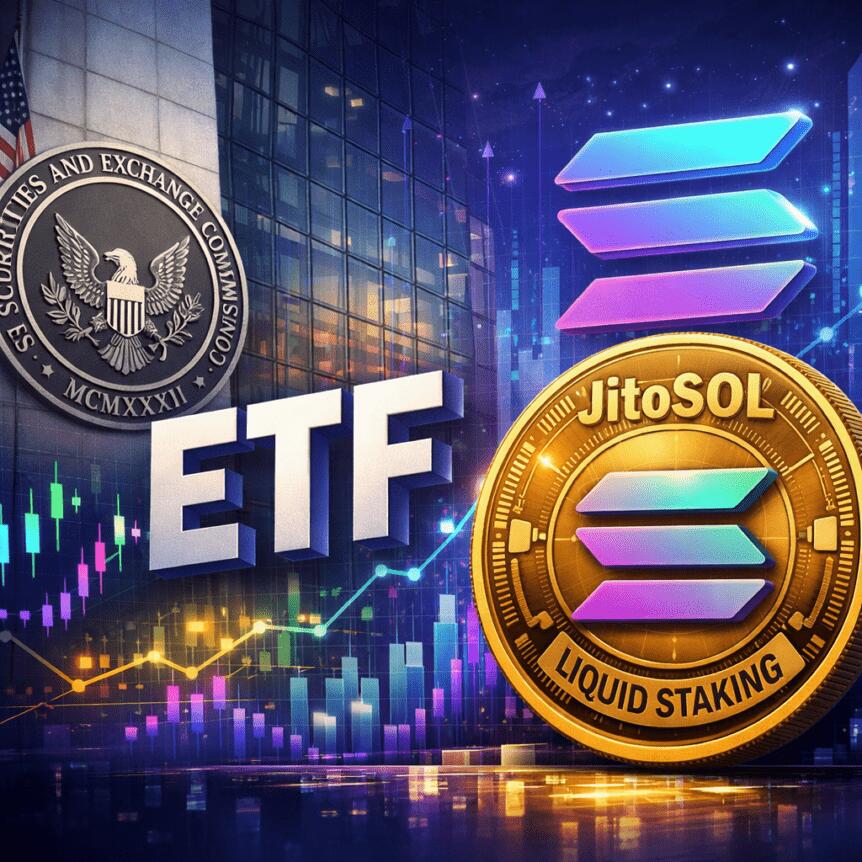
Nasdaq has filed a proposed rule change to list the VanEck JitoSOL ETF, a fund designed to hold the Solana-based liquid staking token JitoSOL (CRYPTO: JTO). The instrument would give investors exposure to on-chain staking economics without the need to operate validator infrastructure, wrapping the underlying asset in publicly traded shares. If approved, the fund would reflect staking rewards in its net asset value rather than distributing separate yield payments, a detail highlighted by the Jito Foundation’s leadership. The token itself compounds rewards automatically, so each share would represent the SOL deposited and the staking yield accrued on the Solana network (CRYPTO: SOL).
The filing, submitted under Nasdaq Rule 5711(d) governing commodity-based trust shares, seeks approval to list and trade shares of a trust that would hold JitoSOL directly rather than track via futures or other derivatives. The move underscores the ongoing regulatory interest in expanding regulated access to on-chain staking economics, a path that has gained momentum as liquidity and investor demand for crypto yield products continue to evolve across jurisdictions.
The asset at the center of the proposal, JitoSOL, is a liquid staking token issued by the Jito Network and backed by SOL deposited into a Solana staking pool. It enables holders to earn staking rewards through a transferable token without the operational burden of running validators. In the broader regulatory dialogue, the filing references earlier SEC actions on spot crypto ETPs, noting the agency’s prior approvals for spot Bitcoin (CRYPTO: BTC) and spot Ether (CRYPTO: ETH) exchange-traded products and arguing that a liquid staking token can be evaluated under the agency’s generic listing standards rather than requiring a dedicated futures framework. The document also cites the MarketVector JitoSol VWAP Close Index as the basis for valuing trust shares, a price construct derived from cross-platform pricing inputs that would undergird the ETF’s NAV. The trust would allow both cash and in-kind creations and redemptions, a mechanism that could help maintain price alignment with the underlying asset over time.
JitoSOL is designed to sit within the Solana ecosystem’s staking framework but to offer a ready-made exposure vehicle. The token is described as economically akin to SOL, with proponents arguing that an appropriately structured liquid staking token can be treated similarly to the underlying asset for aims of listing standards. The filing rests on the premise that regulators have, in recent months, acknowledged the potential for liquid staking and staking-receipt tokens to fit within existing regulatory frameworks, even as formal rulemaking continues to evolve.
The SEC’s review timeline for such listings typically provides a 45-day window from Federal Register publication to issue a decision, with possible extensions bringing the period to 90 days. The current status places the project in the exchange-review phase, a stage where Nasdaq lenders and the SEC assess disclosures, surveillance, and anti-fraud provisions before determining whether a listing may proceed. While the path forward remains contingent on regulatory signaling, the filing signals a growing appetite to broaden structured exposure to staking economics through traditional market infrastructure.
Staking exposure exists, but not liquid staking ETFs
Even as the VanEck JitoSOL ETF advances through regulatory review, the United States has yet to host a liquid staking token ETF of this explicit design. Market participants have, however, explored regulated access to staking economics through other vehicles. One notable example is the Rex-Osprey Solana + Staking ETF (SSK), which began trading in July and pairs spot Solana exposure with on-chain staking rewards distributed to shareholders. In September, Rex-Osprey expanded its lineup with the REX-Osprey ETH + Staking ETF (ESK), presenting Ether alongside staking-derived yields. Grayscale subsequently broadened staking exposure within its U.S. crypto-ETP roster, adding products tied to staking economics such as the Grayscale Ethereum Mini Trust ETF and Grayscale Ethereum Trust ETF (ETHE). Grayscale also introduced staking for the Grayscale Solana Trust (GSOL), which is seeking regulatory uplisting as an exchange-traded product. These products indicate a clear demand for regulated staking exposure, even as the regulatory framework for liquid staking tokens remains a developing area.
Regulatory guidance in the United States has been cautious. In May, the SEC’s Division of Corporation Finance indicated that certain protocol staking activities generally do not involve the offer or sale of securities under federal law, and in August the agency published staff guidance on liquid staking and staking receipt tokens. These statements do not constitute formal rulemaking and do not automatically approve specific products. In Europe, meanwhile, 21Shares launched a Jito-staked Solana exchange-traded product in January, providing listed exposure to SOL with integrated staking features. Jito’s prominence in the liquidity and staking space is reflected in its TVL, which hovered around $1.1 billion after peaking above $3.0 billion in 2025, according to DefiLlama data.
The evolving landscape around liquid staking, staking revenues, and on-chain reward mechanics sits at the intersection of technology, regulation, and market structure. Investors are watching how these products align with existing surveillance, valuation standards, and consumer protection requirements as new variants of staking exposure enter mainstream trading venues. The debate over whether staking-derived yield should be treated as a security, a yield instrument, or a synthetic exposure continues to shape how products get approved and marketed in regulated markets.
Market dynamics outside the United States add texture to the conversation. As mentioned, Europe has already welcomed a Jito-backed exposure through 21Shares, signaling an appetite for product design that blends price exposure with staking rewards. The global appetite for regulated staking products reflects a broader trend toward translating on-chain value accrual into familiar investment constructs that traditional investors can access without direct operational responsibilities on a blockchain network.
Overall, the idea of a liquid staking ETF for JitoSOL sits at a crossroads of innovation and regulation. It highlights how asset ownership, reward compounding, and on-chain security contributions can be packaged into tradable vehicles while attempting to meet the same standards that govern more conventional assets. The regulatory path ahead is nuanced, but the direction—toward structured exposure to staking economics within established market frameworks—appears to be gaining momentum.
Why it matters
For investors, a Nasdaq-listed JitoSOL ETF would provide a regulated, transparent channel to participate in the Solana staking economy without the operational overhead of running validators. The vehicle would anchor staking yields within a familiar product structure, potentially improving accessibility and diversification for crypto yield seekers. For builders and validators, widespread ETF exposure could bolster liquidity and create more robust on-chain-to-off-chain capital links, potentially increasing the velocity of staking-derived rewards across markets. For regulators, the proposal foregrounds the importance of clear surveillance and custody standards when bridging on-chain activity with traditional financial markets, a dynamic that is likely to inform future rulemakings and product approvals.
From a market context perspective, the emergence of liquid staking-linked ETFs aligns with a broader push to offer regulated access to decentralized finance concepts. As liquidity, risk sentiment, and macro conditions shape crypto markets, these products may influence how institutions allocate crypto exposure and how retail participants manage yield-oriented strategies within a compliant framework. The success or failure of the JitoSOL listing could also influence the pace at which other liquid staking tokens pursue similar registrations, potentially widening the spectrum of staking-backed instruments available in U.S. markets.
What to watch next
- Regulatory decision timeline: The SEC has a 45-day window from Federal Register publication to approve or disapprove, with possible extensions up to 90 days.
- Nasdaq listing decision: The exchange’s review and any required disclosures will determine whether the JitoSOL ETF advances to the next stage.
- Market acceptance: How traders price the trust and how NAV tracking via the VWAP index holds against on-chain SOL staking dynamics.
- Comparative launches: Developments in European ETPs and U.S. competing staking-exposure products (SSK, ESK, ETHE, GSOL) may shape investor expectations and pricing.
Sources & verification
- Nasdaq filing SR-NASDQ-2026-010 detailing the proposed listing of a JitoSOL-based ETF and the use of 5711(d) for commodity-based trust shares.
- SEC commentary and staff guidance on spot BTC/ETH approvals and liquid staking considerations, as referenced in the filing and related communications.
- MarketVector JitoSol VWAP Close Index as the basis for valuing trust shares and its methodology for price tracking.
- DefiLlama data on Jito’s total value locked (TVL), cited as around $1.1 billion after a peak above $3.0 billion in 2025.
- European exposure such as 21Shares’ Jito-staked Solana ETP and the Rex-Osprey U.S. staking ETF lineup including SSK and ESK, which illustrate broader market interest in staking-based products.
Nasdaq eyes listed exposure to JitoSOL amid a shifting staking landscape
Nasdaq’s bid to list the VanEck JitoSOL ETF marks a notable step in the maturation of on-chain staking products within traditional market structures. By directly holding JitoSOL (CRYPTO: JTO), the proposed vehicle would provide a regulated path to Solana’s staking economics, anchoring investor claims to a fungible token that represents staked SOL (CRYPTO: SOL) and the accrued rewards. The approach leverages a NAV framework that encapsulates compounded yields, contrasting with older yield-distribution models and aligning with how many conventional funds account for performance alongside custody and surveillance considerations.
The regulatory dialogue remains nuanced. While the SEC has signaled openness to generic listing standards as a vehicle to accommodate certain digital-asset exposures, it also demands rigorous disclosures and robust market safeguards. The absence of a regulated futures market for JitoSOL adds another layer of complexity, but the filing argues that a well-structured liquid staking token can still meet the standards required for listing through alternative means. If the proposal clears the review, it would join a small but growing set of US products attempting to bridge on-chain staking with mainstream investment channels.
Beyond the United States, the market has already shown appetite for staking-integrated exposure. Europe’s 21Shares has offered a Jito-staked Solana ETP since January, demonstrating demand for listed access to SOL-backed staking yields. In the U.S., comparable products such as the Rex-Osprey SSK and ESK funds and Grayscale’s staking-related ETFs indicate that investors are seeking institutional-grade vehicles to access staking economics without navigating on-chain complexities. The convergence of these products suggests that custody, governance, and surveillance standards will define the pace at which new staking-based vehicles arrive in both regulated markets and crypto-native platforms.
Whether Nasdaq’s bid to introduce the JitoSOL ETF becomes a blueprint for future liquid-staking listings may depend on how the SEC interprets the evolving landscape of staking receipts and related on-chain activity. For market participants, the potential listing provides a focal point for assessing risk, yield, and regulatory alignment across a spectrum of products that connect the on-chain economy with traditional finance rails. The outcome could shape subsequent filings, influence how staking rewards are accounted for in NAV calculations, and influence investor expectations about the accessibility of staking-based yields through regulated exchanges.


TLDR
- Vitalik Buterin introduced a roadmap to protect Ethereum from future quantum computing risks.
- He identified validator signatures, data availability, wallet signatures, and zero-knowledge proofs as key risk areas.
- Buterin proposed replacing BLS validator signatures with hash-based signatures to improve quantum resistance.
- He said Ethereum may replace KZG commitments with quantum-safe alternatives through protocol upgrades.
- The planned EIP-8141 upgrade would allow wallets to adopt new signature schemes in the future.
Vitalik Buterin has presented a structured plan to shield Ethereum from future quantum computing risks. He outlined technical upgrades that would protect digital signatures, data systems, and cryptographic proofs. The proposal follows the Ethereum Foundation’s creation of a dedicated post-quantum research team.
He shared the roadmap in a post on X on Thursday and identified four core risk areas. He said quantum computers could eventually break current cryptographic systems. Although such machines do not yet exist, he urged early preparation.
Buterin listed validator signatures, data availability, wallet signatures, and zero-knowledge proofs as exposure points. He explained that Ethereum must update these components before quantum systems mature. He also described both short-term and long-term technical paths.
Vitalik Buterin targets validator signatures and Ethereum consensus
Buterin focused on validator signatures used in Ethereum’s consensus process. He explained that validators currently rely on BLS digital signatures to confirm blocks. He warned that quantum computers could break BLS signatures in the future.
He proposed replacing BLS with hash-based signatures that resist quantum attacks. He stated that hash-based systems offer stronger protection against quantum algorithms. He added that developers must redesign validator workflows to support the transition.
He also addressed Ethereum’s data availability system that stores transaction batches. He said the network relies on KZG commitments to verify large data sets. He explained that engineers could replace KZG with quantum-safe alternatives, although the change would require deep protocol updates.
He noted that such updates would increase engineering complexity. He said developers must handle performance trade-offs carefully. He stressed that the network can execute these changes with coordinated upgrades.
Ethereum wallets, EIP-8141, and zero-knowledge proofs
Buterin linked wallet security to a planned upgrade called EIP-8141. He explained that most wallets now depend on one signature standard for transaction approval. He said EIP-8141 would allow accounts to adopt new signature schemes in the future.
He described EIP-8141 as a flexibility upgrade for Ethereum accounts. He stated that users could migrate to quantum-safe signatures when required. He added that this approach avoids forced network-wide signature changes.
He also discussed risks tied to zero-knowledge proofs used by privacy tools and layer-2 networks. He said current quantum-safe proofs cost more to verify on Ethereum. He acknowledged that higher verification costs create technical challenges.
Buterin proposed a longer-term mechanism called validation frames within EIP-8141. He said validation frames would bundle multiple signatures and proofs into one compressed proof. He explained that Ethereum would verify one combined proof instead of many individual checks.
He stated that this compression method would lower on-chain verification work. He said the system would help manage costs while adopting quantum-safe cryptography. The Ethereum Foundation established its post-quantum research team shortly before it released this roadmap.
TLDR
- Sam Bankman-Fried publicly endorsed the Clarity Act while serving a 25-year prison sentence.
- Republican and Democratic senators rejected his support for the crypto legislation.
- Senator Cynthia Lummis said her bill differs from the proposal Bankman-Fried backed in 2022.
- Senator Elizabeth Warren said his endorsement should raise concerns about the legislation.
- The Senate continues to debate crypto market structure and stablecoin oversight rules.
Former FTX CEO Sam Bankman-Fried publicly backed the Clarity Act while serving a 25-year prison sentence. Lawmakers from both parties rejected his support and questioned his motives. His comments arrive as the Senate continues work on broader cryptocurrency legislation.
Clarity Act Draws Bipartisan Rejection
Bankman-Fried endorsed the Clarity Act in a post on X on Wednesday.
He wrote, “The CLARITY Act will be a huge milestone for crypto and a huge achievement for @realDonaldTrump.” He also claimed he supported similar reforms before his arrest.
He said he sought to remove crypto oversight from former SEC Chair Gary Gensler. He added that Gensler “helped Biden’s DOJ put me behind bars.” His remarks quickly triggered responses from lawmakers involved in drafting legislation.
Sen. Cynthia Lummis rejected his endorsement in a direct reply.
She wrote, “My legislation couldn’t be more different than the bill you tried to buy from Congress.” She added, “We do not need nor want your support.”
Lummis leads Republican efforts to advance digital asset legislation in the Senate. She said her framework would have imposed tougher penalties. She also stated that broader legislation could have extended his prison sentence.
Sen. Elizabeth Warren also criticized Bankman-Fried’s comments. She said his support “should set off alarm bells.” Warren added that any crypto bill must protect investors and taxpayers.
The Senate Banking Committee continues negotiations on market structure rules. Lawmakers aim to define oversight roles for the SEC and the Commodity Futures Trading Commission. However, disagreements remain over stablecoin yield provisions.
Past Legislative Efforts and Political Context
In 2022, Bankman-Fried supported the Digital Commodities Consumer Protection Act, known as DCCPA. He urged lawmakers to pass the bill shortly before authorities arrested him. His arrest later stalled momentum for that proposal.
A federal court convicted Bankman-Fried on multiple fraud and conspiracy charges. Prosecutors said he misused billions in customer funds from FTX. The court sentenced him to 25 years in prison.
Bankman-Fried now appeals his conviction in federal court. At the same time, he posts frequently on X about policy and politics. Many posts express support for President Donald Trump.
A White House official told The Block that Trump has no plans to pardon him. Bankman-Fried’s recent posts appear to address current policy debates. His endorsement of the Clarity Act fits within that pattern.
The House passed its version of the Clarity Act over the summer. Senate lawmakers continue drafting related measures. They also debate how to address conflicts of interest tied to the Trump family’s crypto ventures.
Over $8.72 billion in Bitcoin and Ethereum options expire today, marking February’s largest derivatives event.
The expiring options place the crypto market at a critical inflection point, with volatility elevated and sentiment fragile.
February’s $8.72 Billion Expiry Crossroads: Will Bitcoin and Ethereum Face the Pain Trade?
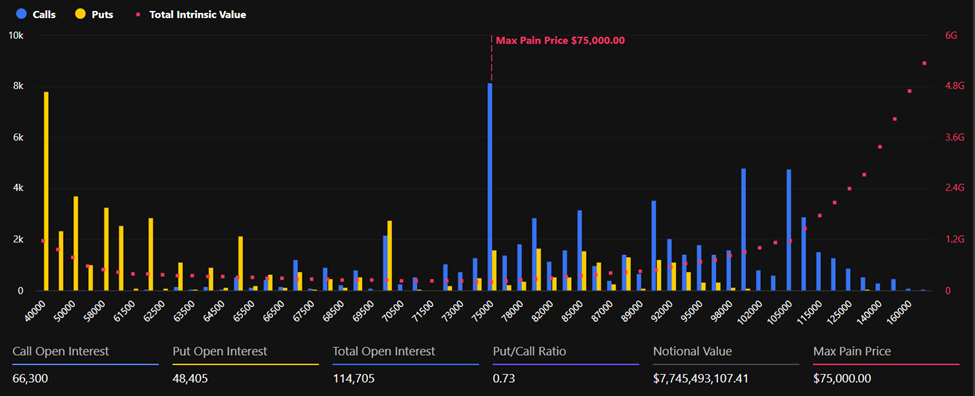
Bitcoin accounts for the lion’s share of the exposure, with 114,705 contracts representing $7.74 billion in notional value heading into settlement.
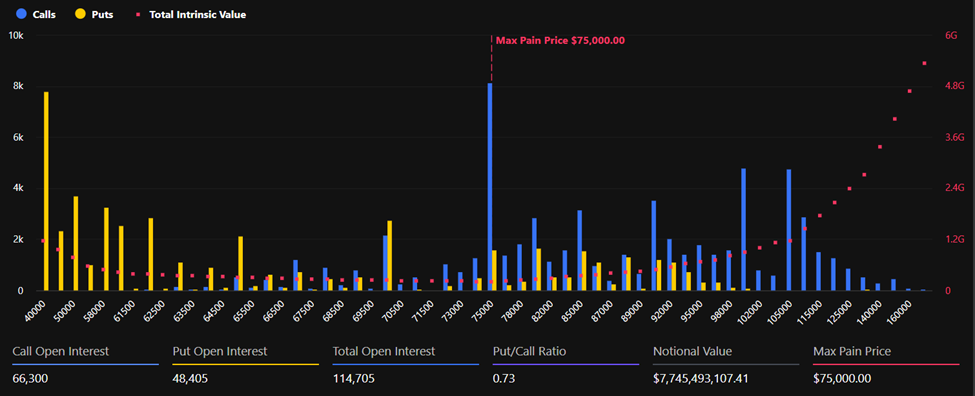
Ethereum follows with 478,992 contracts worth approximately $975 million. Combined, the expiries account for roughly 20% of total open interest, suggesting their potential market impact.
At current prices, both assets sit notably below their respective “max pain” levels or the strike price at which the greatest number of options expire worthless.
Bitcoin was trading for $68,052, compared to a max pain level of $75,000. Ethereum changes hands near $2,035, below its $2,200 max pain threshold.
Call open interest (OI) dominates across both assets. Bitcoin shows 66,300 call contracts versus 48,405 puts, giving a put-to-call ratio of 0.73. Ethereum’s ratio stands at 0.78, with 268,642 calls and 210,350 puts outstanding.
Analysts at Deribit note that call OI leads across both majors, with Bitcoin carrying the significantly larger notional weight into settlement. This factor could amplify spot sensitivity if hedging flows intensify.
Volatility Divergence Signals Unease
Meanwhile, volatility metrics reveal a nuanced picture. According to Deribit data, Bitcoin’s DVOL index sits at 53, with an implied volatility (IV) percentile of 87.7, which is elevated relative to its historical range.
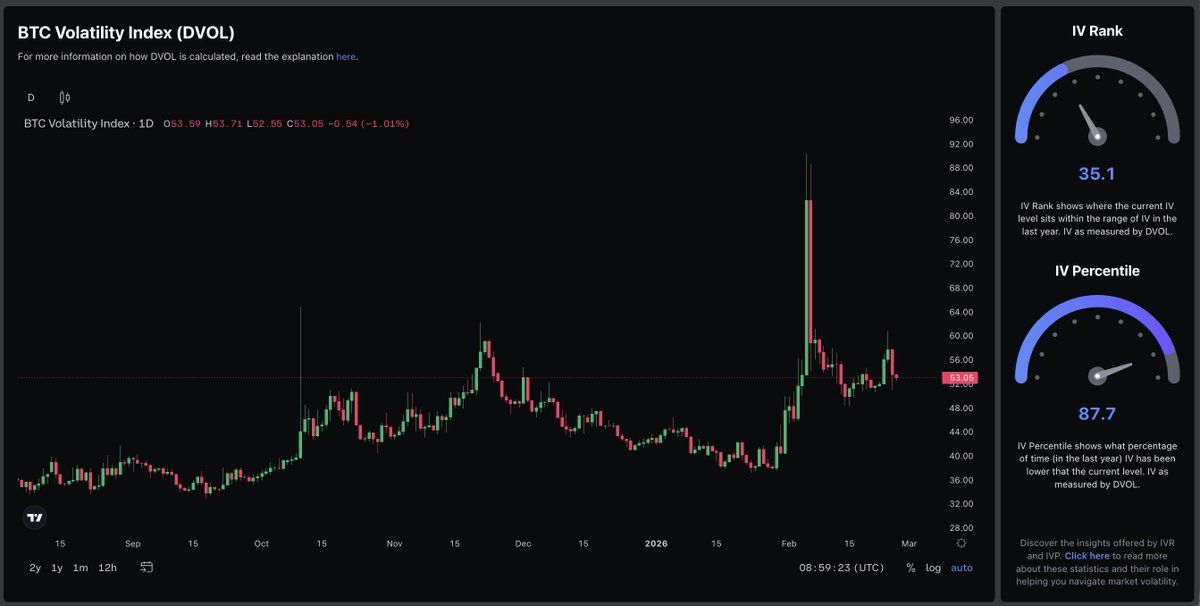
Ethereum’s DVOL is higher in absolute terms at 70, but its IV percentile of 55.7 suggests it is less extreme than its historical behavior.
Still, Ethereum volatility is running approximately 15–20 points above Bitcoin across the curve. It indicates traders are pricing in materially higher uncertainty across ETH maturities.
Term structure remains in contango for both assets, with a front-end volatility premium concentrated around the February expiry.
Fear Unwinds, But Conviction Lags
Earlier this month, 25-delta skew for both Bitcoin and Ethereum plunged toward -30, reflecting intense demand for downside protection as prices slid sharply.
Since then, skew has steadily recovered to around -8 to -9, signaling that panic hedging has eased. However, skew remains negative, indicating the market has not fully shaken off its defensive posture. Against this backdrop, analysts at Greeks.live describe the broader market as sluggish.
In early February, Bitcoin briefly tested the $60,000 psychological threshold and has since oscillated weakly above it.
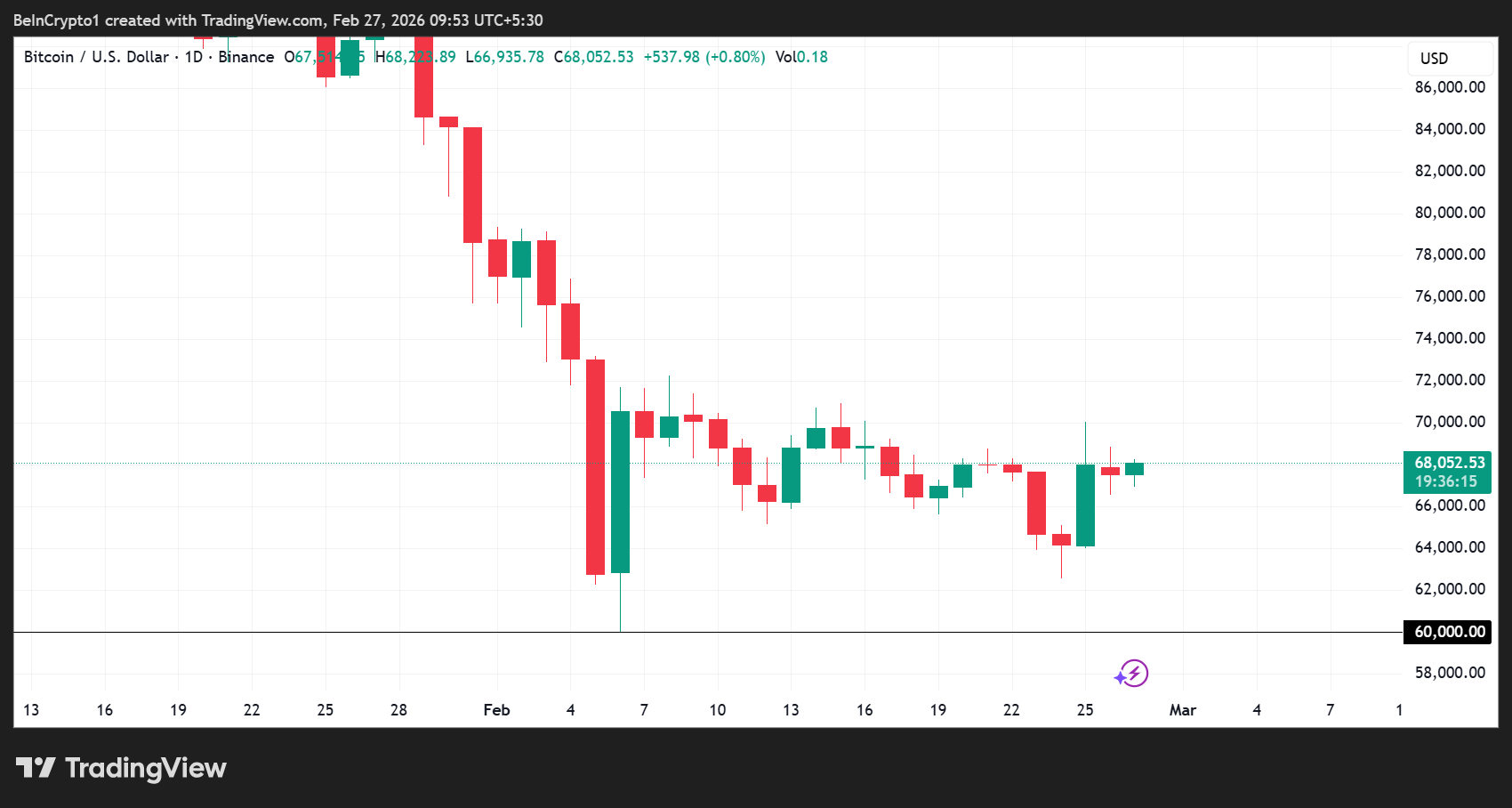
While a recent two-day rebound lifted implied volatility (with BTC main-term IV at 47% and ETH at 65%) confidence remains thin.
“The downward price trend has eased, but market confidence remains insufficient,” Greeks.live noted, adding that large-block call options have dominated recent trading activity, particularly in medium- to long-term maturities.
Skew metrics rebounding indicates emerging bottom-fishing activity, but the firm cautions that the market remains firmly in bear territory.
Crucially, analysts argue that the crypto market lacks fresh capital inflows and clear catalysts, with pessimistic narratives still dominating social channels. Despite signs that extreme fear is unwinding, conviction behind the rebound appears tentative.
With both Bitcoin and Ethereum trading well below their max pain levels, spot prices could gravitate higher heading into today’s options expiry. Such an outcome could intensify a potential “pain trade.”
However, subdued demand could allow volatility to compress after expiry, with derivatives markets pricing less panic, but not yet a return of confidence.
Fintech company Block is shrinking back toward its pre-pandemic size, cutting staff to about 6,000 from a Covid-era peak of over 10,000, compared with just 3,800 in 2019.
CEO Jack Dorsey says AI allows smaller teams to move faster. While that’s certainly true, the reset may reflect a tougher reality: stablecoin rails are likely beginning to compress the card-based fees that fueled the company’s expansion.
Block built its business on a payments system that charges merchants a percentage of every swipe. Stablecoins threaten to turn that percentage into pennies, shrinking the economic pie that acquirers and card-linked fintechs divide. That shift, more than headcount discipline, may define the company’s next chapter.
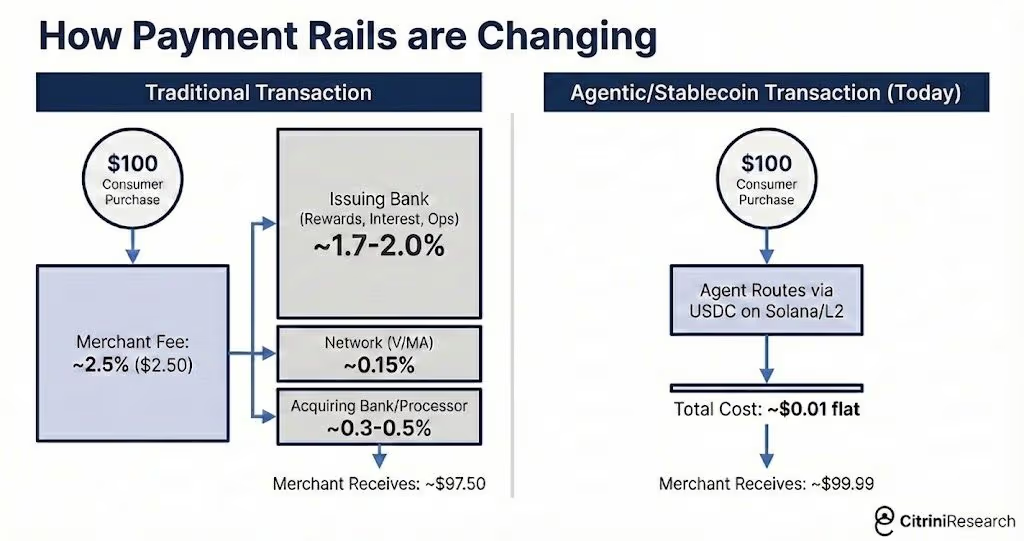
A recent note from Citrini Research titled “When Friction Went to Zero” argues that the rise of agentic shopping — where AI assistants autonomously compare prices, optimize payment routes, and execute transactions on behalf of users — could accelerate the shift away from card networks and toward stablecoin rails.

In that environment, settlement happens in seconds at near-zero cost, and machines prioritize price and speed over brand loyalty or checkout design.
The 2% to 3% merchant fee that sustains the traditional payments stack becomes harder to justify when an AI agent can route the same transaction for pennies, leaving companies like Block exposed to structural margin compression rather than temporary competitive pressure.
This is not Block’s first attempt at resizing. In early 2024, the company began cutting staff under a previously disclosed plan to reduce headcount by as much as 10%, capping its workforce at 12,000 after ballooning to roughly 13,000 in 2023.
At the time, Dorsey acknowledged that “the growth of our company has far outpaced the growth of our business and revenue,” framing the move as a correction to pandemic-era over expansion.
The latest reduction, far deeper at nearly 40%, suggests the recalibration is no longer just about aligning costs with revenue, but about adjusting to a payments landscape where fee compression could be structural.
Investors cheered the move, sending Block shares up more than 23% in after-hours trading as the market rewarded the aggressive cost reset. Even so, the stock remains roughly 80% below its pandemic-era peak, underscoring how far expectations have reset since the hiring boom.
Stablecoins already existed during that expansion, but they were largely viewed as crypto trading instruments rather than a credible payments threat.
Only recently, with regulatory clarity advancing through measures like the GENIUS Act and Circle’s IPO elevating stablecoins into the mainstream financial system, have dollar-backed tokens begun to look like a plausible alternative to the card-based rails that underpin Block’s business.
“Maybe Block laying off a ton of employees is a sign that AI is gonna destroy everything,” financial analyst Ben Carlson, director at Ritholtz Wealth Management, posted on X.
“Or maybe the stock is down 80% from the highs and they overhired and AI is a convenient excuse,” he wrote.
Crypto loves the word “fair.”
Fair distribution. Fair pricing. Fair access.
But let’s be honest—most token launches are anything but.
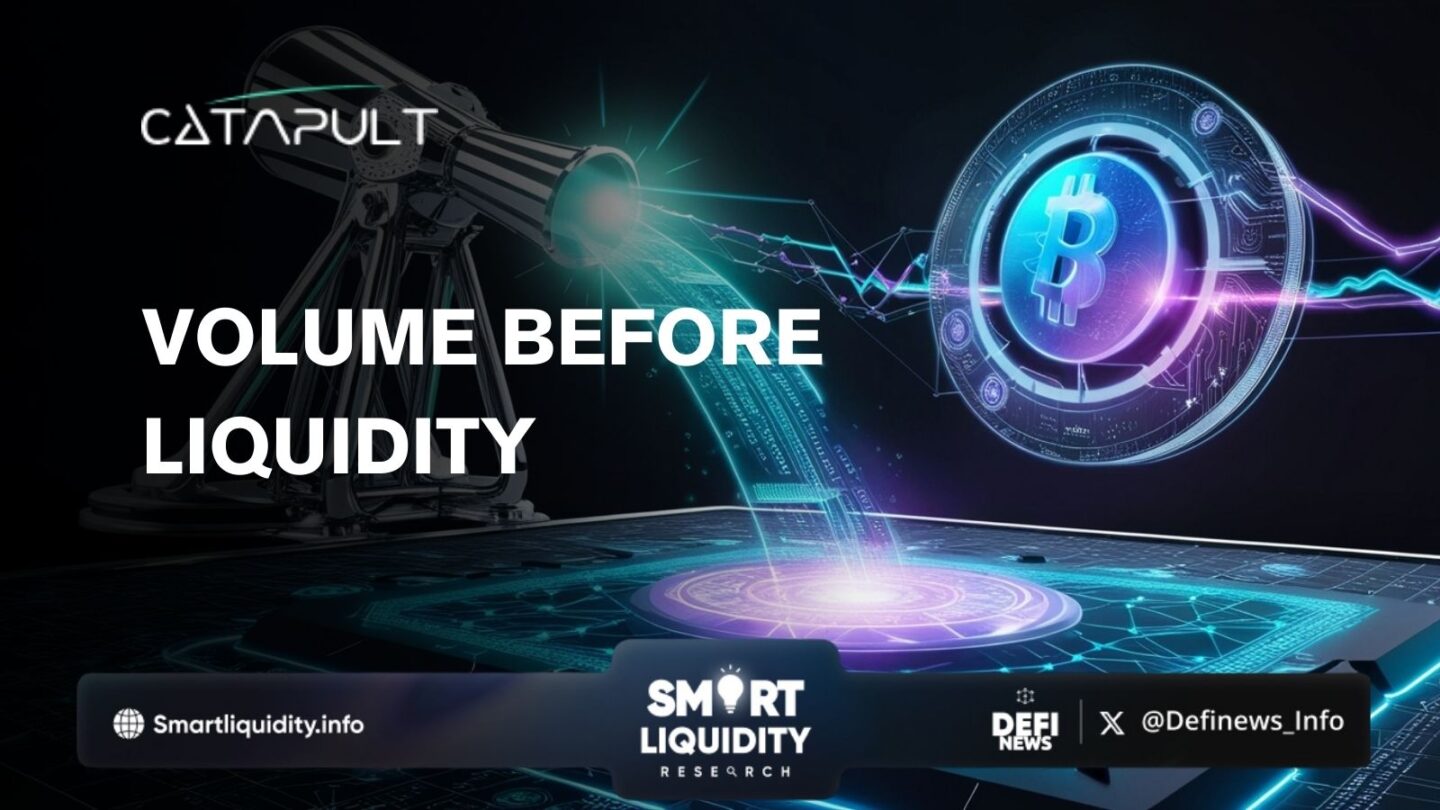
Enter Catapult, a launchpad designed to eliminate early sell pressure, slash launch costs, and automate liquidity in a way that aligns creators, traders, and the protocol itself. It replaces chaotic day-zero market mechanics with something far more deliberate: algorithmic price action, volume-based graduation, and built-in revenue sharing.
This is not another “launch and pray” platform.
It’s a structured proving ground.
The Core Thesis: Volume Before Liquidity
Traditional launches start with liquidity.
That’s the mistake.
Liquidity pools on day zero invite:
-
Snipers
-
MEV extraction
-
Presale dumps
-
Rugpull vectors
-
High overhead costs
Catapult flips the sequence:
Volume first. Liquidity later.
Instead of throwing a token into an on-chain pool and hoping for the best, Catapult begins in a simulated high-fidelity environment called Turbo, where tokens can build mindshare and trading volume without ever touching a liquidity pool.
Only when a token proves demand does it graduate into a real, on-chain market via Hyper.
This single design decision changes everything.
Catapult Turbo: The Sandbox That Solves Day Zero
Catapult Turbo is a gamified trading environment that replaces traditional on-chain mechanics with a deterministic mathematical price engine.
There is:
-
No order book
-
No initial LP
-
No slippage
-
No liquidity to drain
Instead, Turbo streams hyper-volatile, realistic price action generated by a mathematical engine. Traders buy and sell exactly like on a spot exchange—but execution is instant and slippage-free.
Every trade settles directly against the protocol vault.
Why This Matters
Because price movement is decoupled from liquidity:
Creators simply choose a volatility tier, pay a flat fee, and let the session run.
The Turbo Mechanic: Controlled Chaos
Each Turbo session runs inside a fixed time window.
When creating a token, a creator selects a volatility mode that defines:
| Type | Speed Multiplier | Lifetime | Daily Sigma |
|---|---|---|---|
| Slow | 6x | 4 hours | 0.5 |
| Fast | 24x | 1 hour | 1.0 |
| Flash | 96x | 15 min | 1.25 |
| Crack | 480x | 3 min | 1.5 |
| Mayhem | 1440x | 1 min | 1.25 |
All tiers use a daily drift of zero, ensuring a mathematically neutral starting point.
The result?
Pure volatility. No bias.
Turbo is not gambling disguised as trading. It’s a structured, deterministic price evolution with unpredictable outcomes—verified through cryptographic commitment.
Path Generation & Commitment: Provably Untampered Markets
When a creator launches a Turbo session:
-
The engine generates a random seed.
-
It pre-calculates the entire price path.
-
A secret salt is created.
-
The seed, salt, and tick parameters are hashed.
-
The hash is published before trading begins.
This hash becomes an immutable anchor.
As the session unfolds, ticks stream to the UI.
The underlying seed and salt remain hidden.
When the session expires, the engine reveals everything.
Anyone can recompute the hash.
If it matches, the chart wasn’t altered.
The path is deterministic—but unknowable until complete.
Even the development team cannot alter it.
That’s not “trust us.”
That’s mathematical finality.
Public vs Private Tokens: Controlled Attention
Catapult separates tokens into two categories:
Public Tokens
-
Indexed in the discovery feed
-
Generate a 0.5% fee on all trade volume
-
Fee paid directly to the creator
-
Subject to a global cap on concurrent sessions
This cap prevents fragmentation and keeps the trader’s attention dense.
Private Tokens
It’s a clever balance between open competition and personal experimentation.
From Simulation to Reality
Turbo is not the endgame.
It’s the proving ground.
A Turbo token must hit a predefined volume milestone to graduate.
When that threshold is reached, the token transitions into the on-chain ecosystem.
And here’s the key difference:
-
There are no presale allocations.
-
No early insiders waiting to dump.
-
No liquidity seeded by a fragile team wallet.
Instead:
The entire supply is minted directly into the pool.
Liquidity is sourced from the volume generated during Turbo.
The community that built the volume becomes the on-chain market.
Graduation is handled through a time-windowed launch mechanic that prevents sniping and ensures equitable access.
This is what automated fair launches actually look like.
Catapult Hyper: Production-Grade Infrastructure
Once graduated, tokens move into Catapult Hyper, the on-chain infrastructure layer built on:
Hyperliquid provides the L1 trading environment.
LayerZero enables seamless multichain interoperability.
Together, they eliminate liquidity fragmentation.
Multichain Without the Mess
Tokens launched via Hyper are deployed as OFTs (Omnichain Fungible Tokens).
This means:
-
Unified supply across chains
-
No risky third-party bridges
-
No wrapped fragmentation
-
Seamless multichain liquidity
The Hyper terminal becomes a discovery engine—connecting creators, traders, and the broader ecosystem in a compounding value loop.
The Bonding Mechanism: Liquidity That Scales With Conviction
Hyper replaces static fundraising with a dynamic liquidity bootstrap model.
Capital requirements scale with market cap.
As mindshare grows, liquidity requirements grow.
Every launch follows strict 48-hour windows:
Initial Phase
48 hours to hit the primary goal.
Reactivation
If missed, a second round opens with increased contribution requirements.
Retirement
Failure in the second round permanently ends the campaign.
No zombie tokens.
No endless relaunches.
Only velocity survives.
Automated Liquidity & Real Yield
Once bonding completes:
-
Liquidity pools initialise automatically.
-
LP deployment is non-custodial.
-
No manual management required.
Rewards are funded by actual platform activity—trading volume and engagement—rather than inflationary emissions.
Participants earn a real yield derived from protocol usage.
That’s a subtle but important difference.
Emission-based systems inflate.
Activity-based systems compound
Revenue Sharing: Incentives Aligned by Design
Catapult does not rely on extractive fee models.
Instead, it distributes value across four roles:
-
Traders
-
Creators
-
Referrers
-
Mindshare contributors
Rewards are epoch-based:
The Mindshare system tracks social visibility using an exponential decay model:
user_score += twitter_scout_score × k^(n−1)
Where k = 0.8
Recent activity matters more.
Sustained contribution wins.
And only the Top 100 qualify for mindshare rewards.
It’s competitive.
It’s measurable.
It’s performance-driven.
The Bigger Picture
Catapult is transitioning from a Solana-centric origin into a full multichain discovery terminal. A lightweight Hyper terminal is already live, enabling trading of graduated tokens ahead of the full LayerZero-native launchpad.
The architecture reflects a clear philosophy:
-
Simulate before you tokenise.
-
Prove demand before you deploy liquidity.
-
Align incentives before you scale.
Most launchpads optimise for speed.
Catapult optimises for survivability.
And in crypto, survivability is alpha.
In Summary
The industry doesn’t need another place to launch tokens.
It needs infrastructure that filters noise, protects participants, and rewards real engagement.
Catapult’s Turbo-to-Hyper pipeline does exactly that.
Volume becomes proof.
Graduation becomes merit.
Liquidity becomes earned.
That’s not hype.
That’s architecture.
CATAPULT OFFICIALS
Website | X(Twitter) | Telegram
REQUEST AN ARTICLE
TLDR
- Michael Saylor hinted at more Bitcoin purchases as the asset traded near $67000.
- Strategy currently holds 718722 BTC valued at about $48 billion.
- The company bought its Bitcoin at an average price of around $76000.
- Strategy faces an unrealized loss of about 12% on its holdings.
- Saylor said Bitcoin allows $1 billion to move globally with ease.
Bitcoin traded near $67,000 as Michael Saylor signaled continued accumulation through a new social media post. He shared an image showing himself carrying a large orange bag covered with Bitcoin logos. He added the caption, “Maybe I need a bigger one,” and implied further purchases.
Bitcoin Holdings and Accumulation Strategy
Saylor posted the image on X as Bitcoin attempted to stabilize around $67,000. He used the visual to reinforce the strategy’s ongoing acquisition plan. The caption suggested that the company may expand its holdings further.
Strategy currently holds 718,722 BTC worth about $48 billion at current prices. The company acquired its holdings at an average price of $76,000. Therefore, Strategy holds an unrealized loss of roughly 12% on its position.
Despite the paper loss, Strategy reports an mNAV ratio near 1. The company also lists an adjusted enterprise value multiple of 1.256. These figures reflect the firm’s market valuation relative to its Bitcoin reserves.
Saylor has maintained a consistent position on long-term holding periods. He has stated that investors should prepare to hold Bitcoin for seven to ten years. He continues to frame corrections as part of the asset’s normal cycle.
Strategy reports its Bitcoin transactions weekly when activity occurs. Market participants expect the next update in the coming days. The company has not disclosed any new purchases this week.
Strategy World 2026 and Market Performance
Strategy hosted Strategy World 2026 earlier this week. During the event, Saylor repeated his view that Bitcoin represents digital capital. He said, “Bitcoin’s value lies in its ability to move one billion dollars anywhere in the world.”
He contrasted Bitcoin transfers with traditional asset transfers. He said moving large sums in traditional systems involves greater complexity. He emphasized practical capital mobility rather than abstract narratives.
Saylor also addressed Bitcoin’s price volatility during the event. He stated that volatility limits large capital inflows. He argued that fluctuations, not structural flaws, remain the main challenge.
Meanwhile, Strategy’s stock MSTR trades at $132.8. The shares have fallen 12.6% year-to-date in 2026. The stock remains 75.8% below its all-time high of $542.
Goldman Sachs has identified MSTR as the most shorted stock in the market. The company continues to tie its equity performance closely to Bitcoin holdings. Strategy plans to release further updates on Bitcoin activity next week.


Circle is advancing its Arc blockchain project, with plans for a native token, according to CEO Jeremy Allaire.
Circle, one of the largest stablecoin issuers in the industry, is exploring the possibility of a native token for its Arc blockchain, according to the company’s chief executive Jeremy Allaire.
During the company’s Q4 2025 earnings call, Allaire said Circle is exploring a native token for the Arc blockchain and that the company is gaining a strong understanding of how it would work.
“We’re getting a very good understanding of how a token can play a key role in providing stakeholder incentives, governance, security, utility and other things on the Arc network,” Allaire said, though no timeline for a launch was revealed.
The company launched the public testnet for Arc in October 2025, with plans for a full mainnet release expected later this year.
Circle announced Arc in August last year, designing the network specifically for issuing and transacting stablecoins. As The Defiant reported, the network would focus on faster settlement and lower transaction costs compared with existing public blockchains.
Kevin Lehtiniitty, CEO of Borderless.xyz, told The Defiant last year that the competition for the “stablecoin chain” just brings the industry back to fragmented payment systems with new branding. As Lehtiniitty explained, “The answer that does push open finance forward in my mind is connectivity and interoperability; not another chain or another token.”
This article was generated with the assistance of AI workflows.
Ethereum co-founder Vitalik Buterin has identified and proposed a plan to address four areas of the network that he sees as most quantum-vulnerable.
Quantum computing and crypto have been in the headlines recently as concerns mount over Bitcoin and other blockchains’ resistance to quantum-capable supercomputers.
Buterin posted his quantum resistance roadmap for Ethereum on Thursday, stating that the four areas are: validator signatures, data storage, user account signatures, and zero-knowledge proofs.
He said that replacing the current BLS (Boneh-Lynn-Shacham) consensus signatures with “Lean” quantum-safe hash-based signatures would fix that component. The tricky part is picking the right hash function, since this choice will likely stick around for a long time.
“This may be ‘Ethereum’s last hash function’, so it’s important to choose wisely,” he said.
Ethereum Foundation researcher Justin Drake proposed “Lean Ethereum,” a plan to make the network quantum-secure, in August 2025.
Quantum safe data storage and accounts
Regarding data storage, or “blobs”, Ethereum currently uses a system called KZG (Kate-Zaverucha-Goldberg) for storing and verifying data.
The plan is to swap this out for STARKs (Zero-Knowledge Scalable Transparent Argument of Knowledge), which are quantum-resistant. “It’s manageable, but there’s a lot of engineering work to do,” said Buterin.
Related: Buterin outlines 4-year roadmap to speed up and quantum-proof Ethereum
The third challenge is user accounts. Ethereum currently uses ECDSA (Elliptic Curve Digital Signature Algorithm) signatures, which are standard cryptographic keys. The fix is to upgrade the network so that accounts can use any signature scheme, including “lattice-based” quantum-resistant ones.
However, quantum-safe signatures are much heavier computationally and would consume more gas.
“The long-term fix is protocol-layer recursive signature and proof aggregation, which could reduce these gas overheads to near-zero,” he said.
Quantum-resistant proofs are very expensive
Quantum-resistant proofs are extremely expensive to run onchain so “the solution again is protocol-layer recursive signature and proof aggregation,” said Buterin.
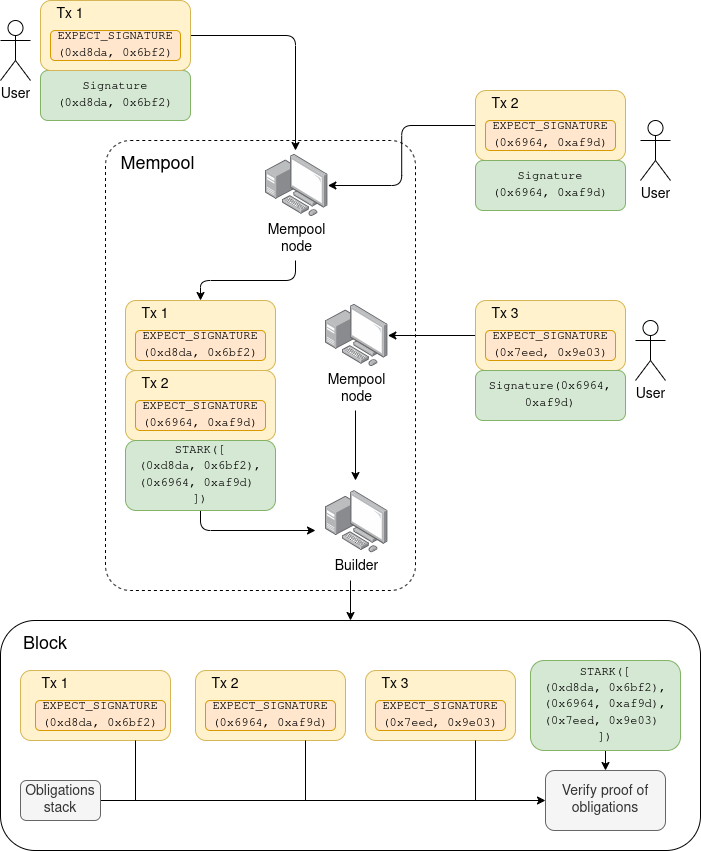
Instead of verifying every signature and proof individually onchain, a single master proof or “validation frame” would verify thousands of them at once, keeping costs near zero.
“This way, a block could ‘contain’ a thousand validation frames, each of which contains either a 3kB signature or even a 256kB proof,” he explained.

Buterin also commented on the Ethereum Foundation’s “Strawmap” on Thursday, stating that he expects to see “progressive decreases of both slot time and finality time.”
Magazine: Bitcoin may take 7 years to upgrade to post-quantum: BIP-360 co-author


Summary
- NIGHT briefly hit ~$1b cap with ~$1b 24h volume, trading near $0.07 as it advances through Kūkolu toward a late-March mainnet for privacy smart contracts on Cardano.
- PIPPIN, an AI-agent meme coin on SOL from Yohei Nakajima, posted ~170–185% monthly gains to a ~$450–$836m cap, with recent moves in the $0.51–$0.70 range.
- Both face high risk: NIGHT from unlock-driven sell pressure and privacy regulation; PIPPIN from insider concentration, elevated leverage, and reliance on speculative social momentum.
Two cryptocurrency projects are positioned to potentially reach $1 billion market capitalizations during the first half of 2026, according to market analysis published by Finbold.
Midnight, a privacy-focused token on the Cardano network, launched in December and has experienced rapid growth, approaching the billion-dollar market-cap threshold. The token briefly achieved that milestone earlier this month before declining amid broader sector volatility, according to market data.
The project’s mainnet launch, designated Kūkolu, is scheduled for late March. The rollout will transition the network from its current Hilo phase to a live environment designed to support privacy-preserving smart contracts, according to project documentation. The launch represents the first major utility test for the network.
Midnight faces a defined token unlock schedule that could introduce selling pressure as locked tokens become available for trading. Price performance in the near term is expected to be influenced by the March mainnet launch and potential partnership announcements, according to market observers.
Pippin, an AI-agent meme coin associated with founder Yohei Nakajima, has recorded recent gains. The project’s trajectory depends on its ability to establish partnerships and develop tools for community use cases, according to project analysis.
The token’s market position reflects risks common to meme coins, including supply concentration among insider wallets and reliance on speculative trading. Market data shows the token trading above key moving averages, with derivatives data indicating rising open interest during recent rallies and elevated leverage levels.
Both tokens carry significant risk factors, including regulatory scrutiny of privacy-focused cryptocurrencies and volatility inherent to speculative digital assets. Market analysts characterize these investments as high-risk opportunities targeting speculative traders rather than conservative investors.

Disclosure: The views and opinions expressed here belong solely to the author and do not represent the views and opinions of crypto.news’ editorial.
Despite the wave of attention RWAs have received over the past couple of years, there’s a sense that everyone is waiting for something to shift. The problem is that many “tokenized” assets are still legal promises dressed up as tokens. Vague token rights, improvised custody and transfer controls, and servicing shortcomings make the whole thing still feel speculative. While the tokenised RWA market sits around $25B (which demonstrates serious growth), it’s still modest in comparison to global markets.
Summary
- Tokens aren’t titles: Many RWAs remain legal promises wrapped in blockchain rails. Without enforceable rights, controlled transfer, and servicing, tokenization stays speculative.
- The UAE is building the legal stack: Through DIFC, ADGM, and the Dubai Land Department, the UAE is treating tokenized real estate as regulated market infrastructure — not a crypto experiment.
- Rights beat throughput: The trillion-dollar RWA opportunity will go to jurisdictions that make token-holder rights unambiguous and enforceable, not to chains with the fastest settlement.
In Dubai, work on this is picking up. The Dubai Land Department has launched Phase II of its Real Estate Tokenization Project, with secondary-market resales scheduled to begin on 20 February 2026. In DIFC, the DFSA’s inaugural tokenization regulatory sandbox drew 96 expressions of interest. In short, the UAE is assembling the regulatory and institutional scaffolding needed to make tokenised real estate scalable – that’s certainly something worth talking about.
The crypto RWA fallacy
The best RWA pitch in crypto happens to be the simplest: take a deed, a fund share, or a receivable, put it on-chain, and let liquidity do the rest. In practice, that often means shipping a minting interface attached to a legal promise that lives somewhere else. The token trades 24/7, but the underlying rights don’t.
When markets tighten, everyone rediscovers the same truth: a token is not a title, nor a court order. Instead, it’s a digital representation recorded on a programmable platform – and it’s notoriously difficult to make it legally and operationally identical to what it claims to represent.
This idea shows up in three places. First, think about enforceability. If token holders can’t clearly understand what they own, what jurisdiction governs it, and how a claim is enforced, the idea of ownership is just branding. As a matter of fact, IOSCO warns that investors may not understand the legal aspects of ownership and transfer rights for tokenised assets, and flags legal uncertainty as a central risk holding back adoption.
Second, consider controlled transfer. Real assets don’t move like meme coins. Eligibility checks, transfer restrictions, and the ability to halt or reverse activity under lawful orders are not optional in institutional markets. OECD research notes that implementing restrictions like forced transfers or trading suspensions can be especially challenging on public, permissionless networks.
Third, there’s servicing. Real estate is an operating system: taxes, insurance, maintenance, tenant issues, distributions, valuations, reporting, audits. Tokenization can streamline records and transactions, but it doesn’t eliminate the admin layer that makes cash flows real and disclosures defensible. Until projects address these issues, RWAs are a bit stuck.
The UAE’s blueprint
If the UAE wins the real estate tokenization boom, it will be because it treated tokenization as a regulated financial product, a market-structure upgrade, and has built rules and institutions around that assumption.
- In DIFC, the DFSA launched a dedicated tokenization Regulatory Sandbox and drew 96 expressions of interest. This is an early indicator that serious firms are looking for a supervised pathway.
- In Abu Dhabi, ADGM has been explicit about positioning itself as a comprehensive regulatory home for digital assets, and it went further by introducing a DLT Foundations regime designed for token issuance and on-chain organisational structures.
- In 2025, the DIFC reported 8,844 active companies, demonstrating rapid year-on-year expansion.
- In Dubai, the Dubai Land Department is running a controlled pilot that explicitly tests governance, investor protection, and operational readiness while enabling secondary-market resale from 20 February 2026.
- The UAE also hosts pools of dry powder that can fund compliant issuance once the infrastructure is credible. Mubadala reported AED 1.2 trillion in assets under management, and Reuters notes Abu Dhabi’s major funds together manage around $1.7 trillion.
The UAE is building something of a regulatory SDK for RWAs — standardized rules, venues, and counterparties that make tokenized real estate deployable.
The winning stack
The projects that scale in the UAE are likely to be regulated market infrastructure that happens to use blockchain. Starting with licensing. In DIFC, the DFSA’s tokenization Regulatory Sandbox provides a supervised route where selected firms can test in a controlled environment and, if successful, transition toward full authorisation.
Next, the packaging has to be familiar. DIFC SPVs (Prescribed Companies) are designed to ring-fence and isolate assets and liabilities (something institutions already understand and can underwrite). Tokenization then simply becomes a distribution and settlement upgrade.
Then comes the hard constraint most crypto-native RWAs avoid – controlled transfer and custody. Institutional markets require governance, safe custody, and clear oversight. ADGM’s FSRA guidance is clear about addressing safe custody, market abuse, and related controls via a thorough regulatory framework.
Finally, the winning stack anchors to the registry. The Dubai Land Department is currently testing tokenization on title deeds within a regulated model, in collaboration with VARA, and moving into a phase that activates secondary resale under a controlled framework focused on governance and investor rights.
Put together, the archetype that wins looks license-first, SPV-based, compliance-native, and obsessed with issuance plus servicing.
The implication for crypto
Here’s the part crypto needs to internalize — the trillion-dollar RWA upside will be won by the players that can make token-holder rights unambiguous, transfers compliant, and cash flows serviceable at scale.
IOSCO makes a good point — investors can end up unsure whether they hold the underlying asset or merely a digital representation, with risks concentrated around legal structure and intermediaries rather than chain throughput.
That’s why the UAE matters to the broader market. The Dubai Land Department is running a controlled tokenization pilot that moves into secondary resale from 20 February 2026, framed around governance, operational readiness, and investor protection. DIFC’s regulator is doing the same at the market-structure level.
For crypto, the chain becomes the settlement, transparency, and automation layer (inside this regulated perimeter). It’s useful precisely because it is programmable, auditable, and interoperable. But pay attention to the jurisdictions and infrastructure providers building enforceable rights – that’s arguably more important right now.


Vitalik Buterin Details Ethereum Quantum Defense Roadmap

Back in Business: Abhishek Sharma shines as India set up virtual quarterfinal vs West Indies | Cricket News

Ex-finance chief admits fraud at Teesdale Mercury in Barnard Castle


-

 Politics5 days ago
Baftas 2026: Awards Nominations, Presenters And Performers
-

 Fashion6 days ago
Weekend Open Thread: Boden – Corporette.com
-

 Sports3 days ago
Women’s college basketball rankings: Iowa reenters top 10, Auriemma makes history
-

 Politics3 days ago
Nick Reiner Enters Plea In Deaths Of Parents Rob And Michele
-

 Business2 days ago
True Citrus debuts functional drink mix collection
-

 Politics5 hours ago
ITV enters Gaza with IDF amid ongoing genocide
-

 Crypto World3 days ago
XRP price enters “dead zone” as Binance leverage hits lows
-

 Business5 days ago
Mattel’s American Girl brand turns 40, dolls enter a new era
-

 Business4 days ago
Law enforcement kills armed man seeking to enter Trump’s Mar-a-Lago resort, officials say
-

 Tech2 days ago
Unsurprisingly, Apple's board gets what it wants in 2026 shareholder meeting
-

 NewsBeat1 day ago
Cuba says its forces have killed four on US-registered speedboat | World News
-
 NewsBeat1 day ago
Manchester Central Mosque issues statement as it imposes new measures ‘with immediate effect’ after armed men enter
-
 NewsBeat4 days ago
‘Hourly’ method from gastroenterologist ‘helps reduce air travel bloating’
-

 Tech4 days ago
Anthropic-Backed Group Enters NY-12 AI PAC Fight
-

 NewsBeat4 days ago
Armed man killed after entering secure perimeter of Mar-a-Lago, Secret Service says
-

 Politics5 days ago
Maine has a long track record of electing moderates. Enter Graham Platner.
-
 NewsBeat2 days ago
Police latest as search for missing woman enters day nine
-

 Crypto World2 days ago
Entering new markets without increasing payment costs
-

 Business1 day ago
Discord Pushes Implementation of Global Age Checks to Second Half of 2026
-

 Business8 hours ago
Only 4% of women globally reside in countries that offer almost complete legal equality