

Crypto World
SEC Strategic Plan Backs Digital Assets, Blockchain Growth

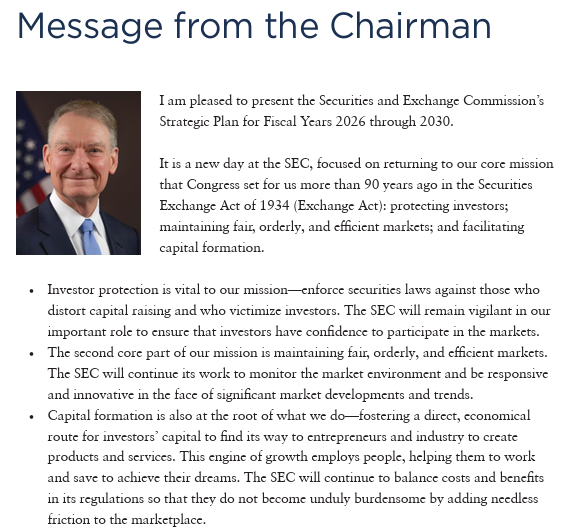
The US Securities and Exchange Commission (SEC) has elevated digital assets to a strategic priority, calling for regulatory clarity around blockchain technology, tokenization and crypto market infrastructure through 2030.
The shift was outlined in the agency’s draft Strategic Plan for fiscal years 2026–2030, published Tuesday. Alongside broader goals focused on capital formation, investor protection and agency modernization, the SEC dedicated an entire objective to digital assets and distributed ledger technology.
The agency said it aims to “provide a firm regulatory foundation for digital assets and distributed ledger technologies through a rational, coherent, and principled approach,” adding:
“Blockchain and crypto asset technologies have the potential to revolutionize America’s financial infrastructure.”
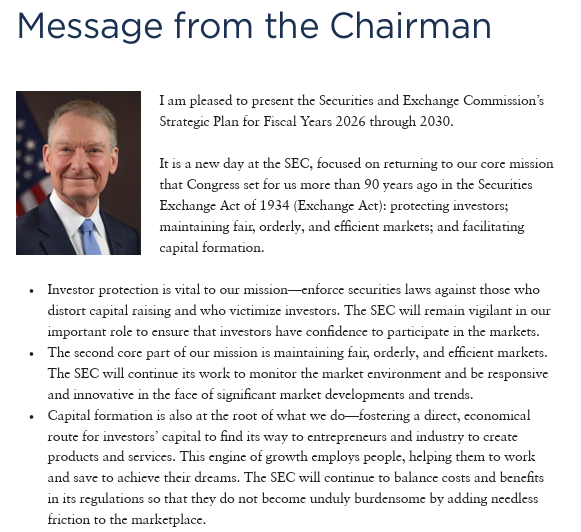
An excerpt from SEC Chair Paul Atkins’ message
in the agency’s draft Strategic Plan. Source: SEC
The strategic plan acknowledges that the growth of digital assets has outpaced existing regulations and calls for greater legal certainty for market participants. It also highlights tokenized offerings and onchain financial infrastructure as areas where the SEC intends to support compliant capital formation.
The document further references custody, trading and staking services, saying they should be able to operate under appropriate oversight without duplicative or conflicting regulatory requirements.
Related: SEC approves Paxos as ‘blockchain-native’ clearing agency
SEC reiterates the need for a clearer division of oversight with CFTC
Another key priority outlined in the draft plan is clarifying the division of responsibilities between the SEC and the Commodity Futures Trading Commission (CFTC), a longstanding issue in US digital asset regulation.
As part of its push for a more coherent regulatory framework, the SEC said establishing clear rules for digital assets “also involves clarifying jurisdictional questions between the SEC and Commodity Futures Trading Commission.”
The agencies have already taken steps toward closer coordination. In March, the SEC and CFTC signed a memorandum of understanding to strengthen cooperation and information sharing as emerging technologies continue to reshape financial markets.

Source: Mike Selig
Jurisdictional boundaries between the SEC and CFTC are also a central issue in congressional deliberations over the Digital Asset Market Clarity Act, a market structure bill that seeks to establish a regulatory framework for digital assets.
As Cointelegraph previously reported, the legislation is expected to expand the CFTC’s authority over large segments of the digital asset market. The bill advanced out of the Senate Banking Committee last month and is expected to proceed to the Senate floor for a full vote.
Related: Clarity Act risks repeat of Europe’s mistakes, crypto lawyer warns

Crypto World
Micron Stock Goes On-Chain 48 Hours Before Earnings as Backpack Securities Lists $MU on Solana


Sunrise and Backpack Securities brought tokenized Micron Technology stock to Solana on Monday, listing $MU on-chain exactly 48 hours before Micron reports its fiscal third-quarter earnings after the closing bell on June 24. Each token is backed 1:1 by a real Micron share held in custody by Backpack… Read the full story at The Defiant

The Alliance to End Human Trafficking, a faith-based nationwide network, delivered a letter signed by 82 Catholic leaders to Senate Majority Leader John Thune and Minority Leader Chuck Schumer on Tuesday, urging both parties to oppose Section 604 of the CLARITY Act, the provision that would exempt non-custodial DeFi developers from criminal prosecution and AML compliance obligations.
The bill cleared the Senate Banking Committee 15–9 on May 14, 2026, but still needs a full Senate floor vote, and Polymarket currently prices Trump signing it into law this year at roughly 42%. A coalition letter targeting the bill’s most industry-critical provision, arriving from an unexpected moral quarter, does not improve those odds.
Section 604 codifies the Blockchain Regulatory Certainty Act (BRCA), language that has circulated in various legislative forms since at least 2018.
Its operative effect: persons who cannot unilaterally execute or prevent a transaction on behalf of another user, developers publishing open-source code, node operators, and unhosted wallet providers are not classified as money transmitters under the Bank Secrecy Act. That carve-out removes them from Bank Secrecy Act registration and reporting requirements.
For DeFi protocol operators and open-source developers, BRCA is the bill’s existential provision; industry groups have stated flatly they will not support the CLARITY Act without it. The Trump DOJ’s imprisonment of multiple crypto software developers over the past year for building privacy-enabling tools is precisely the prosecutorial risk BRCA is designed to eliminate.
The AML Loophole Argument: What AEHT Is Actually Charging
The Alliance to End Human Trafficking’s letter does not object to crypto regulation broadly; it objects to a specific legal mechanism. The coalition argued that BRCA “may make it more difficult to responsibly monitor illicit financial activity tied to trafficking, organized crime, child exploitation, sanctions evasion, and other forms of abuse.”
The structural claim is precise: by removing non-custodial developers from the money-transmitter classification, Section 604 strips away the transaction-monitoring and suspicious-activity-reporting obligations that AML frameworks depend on, leaving a compliance gap that transnational criminal organizations can exploit.

This is not a novel critique. The Bank Policy Institute issued a brief in June 2026 calling the Senate CLARITY bill “illicit finance-friendly” rather than innovation-friendly, warning that DeFi platforms and unhosted wallets would fall outside standard AML and sanctions rules entirely.
Transparency International U.S. made a parallel argument after the Senate Banking Committee markup, flagging the absence of clear obligations for non-custodial services as a structural weakness that would “hamper law enforcement’s ability to trace and interdict illicit finance.” What AEHT adds is not a new legal theory – it is a new political constituency delivering that theory.
The Catholic leaders framed their opposition in the language of Catholic social teaching: “The test of any financial system is not simply whether it generates wealth or innovation, but whether it safeguards human life and dignity,” the letter stated. That framing matters because it is not primarily a technical objection to market structure design – it is a moral claim about legislative complicity, and moral claims have different political mechanics than regulatory-policy objections from the banking lobby or the CFTC.
Senate Math: Why Faith-Based Opposition Is Harder to Neutralize Than Partisan Opposition
The CLARITY Act’s floor-vote problem is arithmetical. Reaching the 60-vote cloture threshold requires picking up five to seven Democratic senators beyond the two who crossed over at the May 14 committee vote.
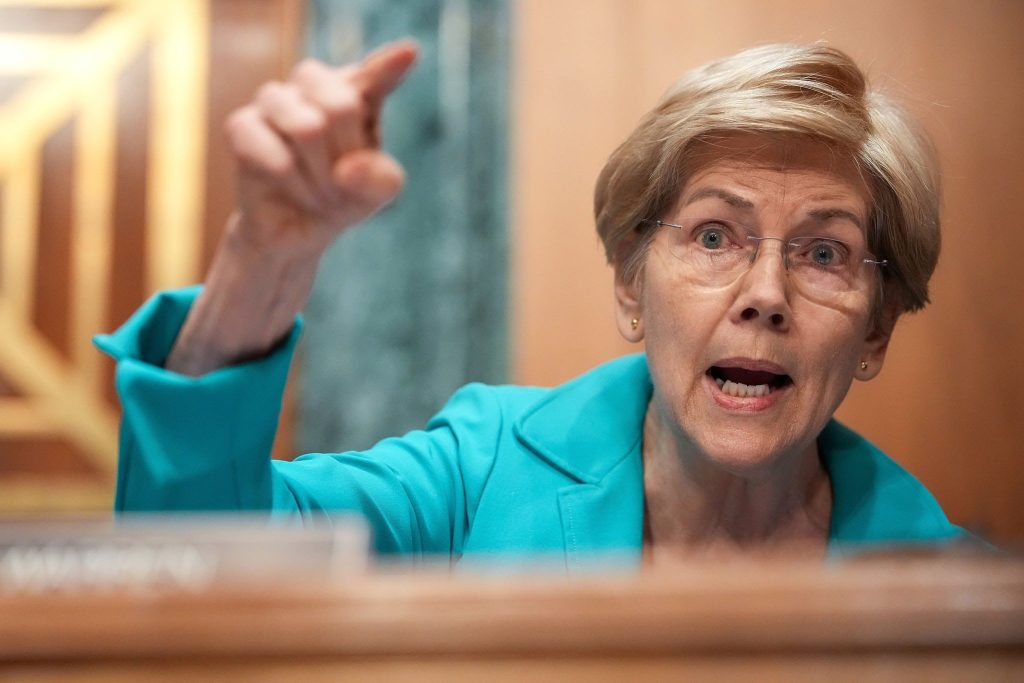
Those crossover votes are most plausible from Democrats in competitive states or those who have staked a position on crypto-friendly economic development, senators who need a defensible justification for breaking with a caucus that includes Sens. Elizabeth Warren and Jack Reed, both of whom filed amendments during the markup aimed at extending AML obligations to DeFi platforms and smart contracts.
The AEHT letter complicates that justification directly. A Democratic senator considering a yes vote can deflect industry-lobby opposition as special-interest pressure.
Deflecting a faith-based anti-trafficking coalition that invokes Catholic social teaching on solidarity and human dignity – in writing, to Senate leadership – is a materially different political task. It hands opponents a ready-made floor-speech frame: a vote for BRCA is a vote against the tools that catch traffickers. That framing does not have to be legally accurate to be politically effective.
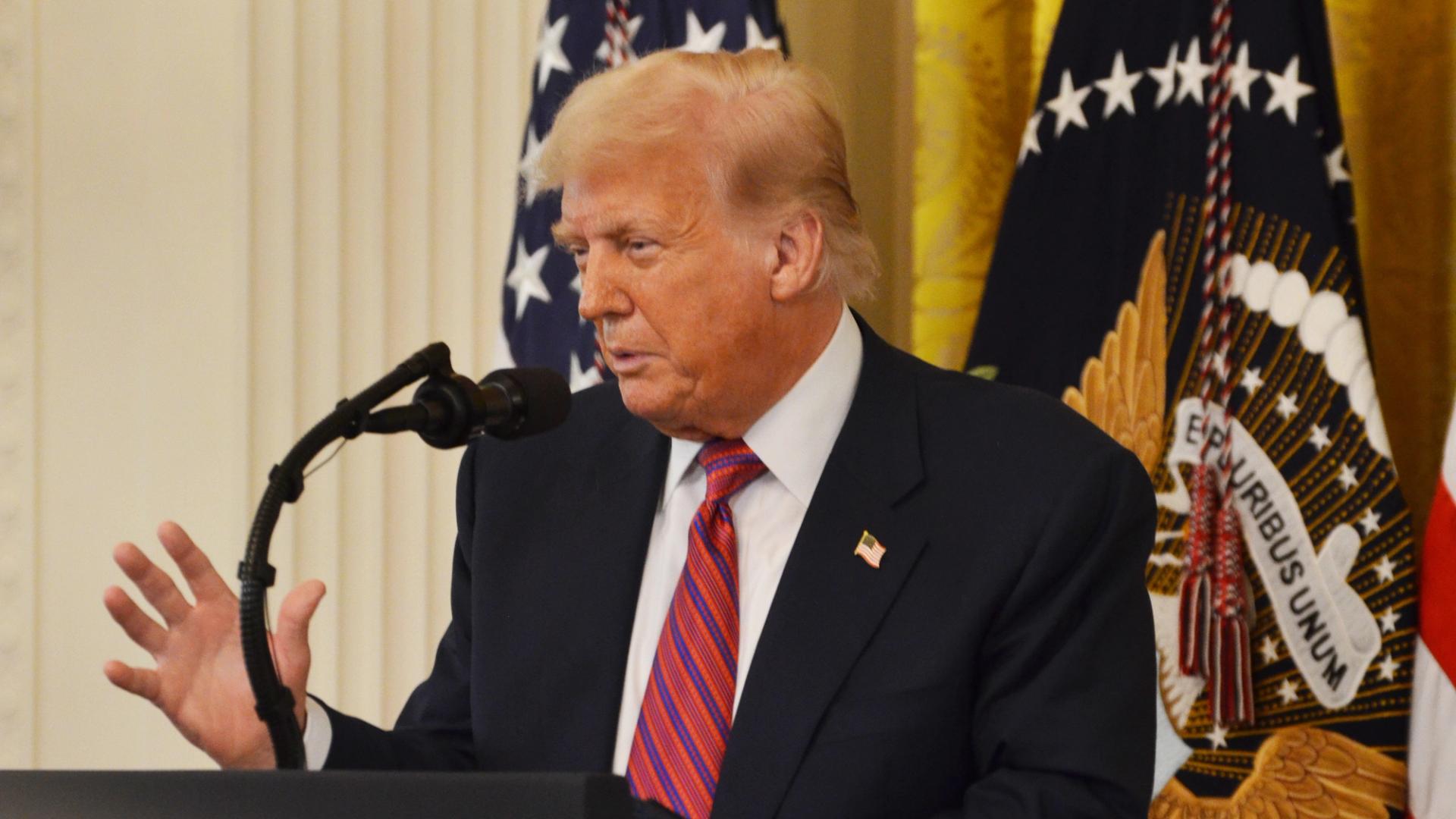
The CLARITY Act is already absorbing opposition from Wall Street over stablecoin yield language, from Native American tribes over prediction market sports-wagering provisions, and from a Democratic faction insisting the bill restrict President Donald Trump’s personal crypto ventures.
Each opposition bloc targets a different provision, which means resolving one does not resolve another. The AEHT letter specifically targets BRCA, which industry groups have designated a red line – meaning any Senate concession on Section 604 to address the trafficking-finance argument would likely require a House-Senate conference, consuming time the bill does not have.
Don’t Miss Out on Our $1,000 USDT Airdrop on ByBit
The post Here’s How the Catholic Church Could Kill CLARITY Act Over Human Trafficking appeared first on Cryptonews.


South Korea’s financial regulator folded token securities infrastructure into a broader overhaul of the country’s capital markets, alongside plans for faster settlement, longer trading hours and greater use of artificial intelligence.
On Tuesday, the Financial Services Commission (FSC) said it had launched a capital market infrastructure review meeting to coordinate reforms across government agencies and market operators. According to the FSC, plans for token securities will be further discussed separately through a public-private council before being linked to the wider initiative.
The initiative includes a roadmap for shortening the securities settlement cycle, expected by October, and a Korea Securities Depository (KSD) system for settling over-the-counter trades in unlisted shares and fractional investment products by the end of 2026.
The move places tokenized securities within the country’s broader effort to modernize traditional financial markets, potentially bringing blockchain-based investment products closer to systems used for mainstream securities settlement and trading.
FSC Vice Chairman Kwon Dae-young said the initiative would build on broader efforts to improve the capital market, guided by four policy priorities: trust, shareholder protection, innovation and market access.
South Korea prepares token securities framework for 2027
South Korea’s token securities initiative predates the latest capital-market review. In January, the National Assembly approved amendments recognizing blockchain-based distributed ledgers as valid securities registries and permitting the issuance and circulation of token securities.
According to the FSC, the framework is scheduled to take effect in February 2027, after regulators complete subordinate rules and supporting infrastructure. At the second meeting of its public-private token securities council in May, the FSC said it was targeting July for the release of proposed subordinate regulations and guidelines.
Related: South Korea reviews Hana Bank’s Dunamu stake under banking rules: Report
Technical infrastructure is also under development. Samsung SDS said in May that it had won a KSD contract to build a token securities management platform that connects the depository’s existing electronic securities account system to blockchain-based data. The company aims to complete the platform by February 2027, when the new framework is scheduled to take effect.
According to the FSC, detailed token securities plans will continue to be discussed by the public-private council before being linked to the broader review, part of South Korea’s preparations for a real-time, continuously accessible and integrated digital market.
Magazine: Japanese pension fund tips 1% in crypto, G7 urges action on NK hackers: Asia Express
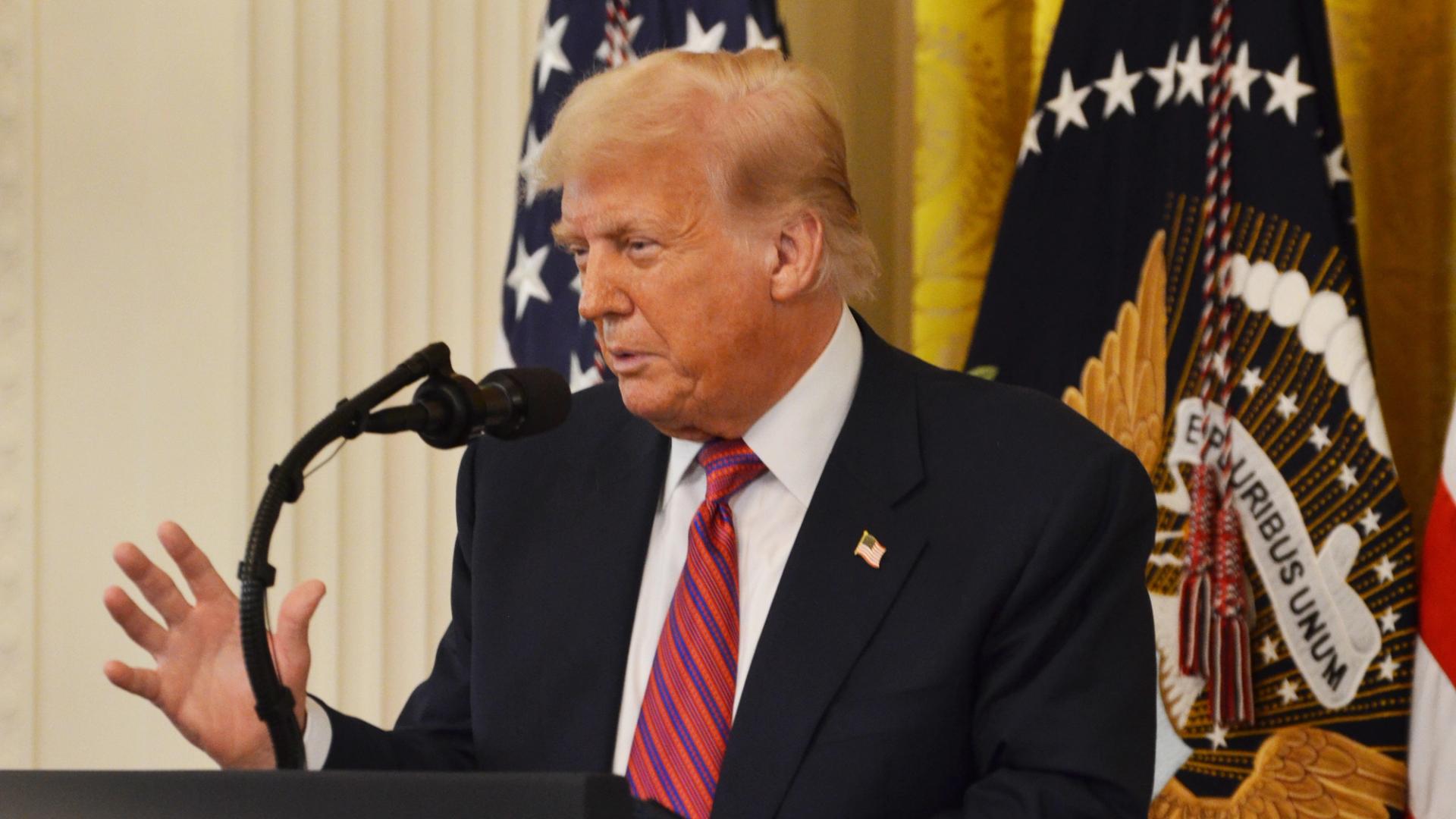
The investment bolsters concerns about foreign influence, originally stemming from a major investment by MGX, a UAE state-backed investment company, that boosted the market capitalization of the Trump family’s stablecoin by almost $2 billion overnight.
Here’s where it gets interesting. Within months of the deal, the Trump Administration took policy decisions that benefited the UAE, according to the letter. In May 2025, it approved a $1.4 billion arms sale to the country, despite congressional concerns about weapons flowing to armed groups in Sudan where more than 150,000 people have died.
In the same month, Treasury created a “Known Investor Pilot” program to streamline investment approvals through CFIUS, a fast-track process that the UAE had lobbied for.
The Department of Commerce also rescinded Biden-era chip export restrictions, allowing the UAE to receive up to triple or quadruple the number of advanced chips it previously could have imported. It authorized G42, a UAE AI company chaired by Sheikh Tahnoon bin Zayed Al Nahyan, to receive 35,000 Nvidia Blackwell chips. The deal was worth over a billion dollars.
But U.S. intelligence officials reportedly caught G42 providing U.S. technology that was used to enhance China’s missile capabilities. Though G42 allegedly committed to divesting its Chinese holdings, reports suggest the firm attempted to obfuscate its ties to Beijing by moving its business holdings in China to a new investment firm.
The primary cryptocurrency, which suffered another price decline yesterday (June 23), attempted to reclaim some lost ground, but the recovery was far from convincing.
While numerous altcoins remain in red territory, the lesser-known Audiera (BEAT) has defied the prevailing bearish environment by posting a 40% daily increase.
BTC Fails to Recover
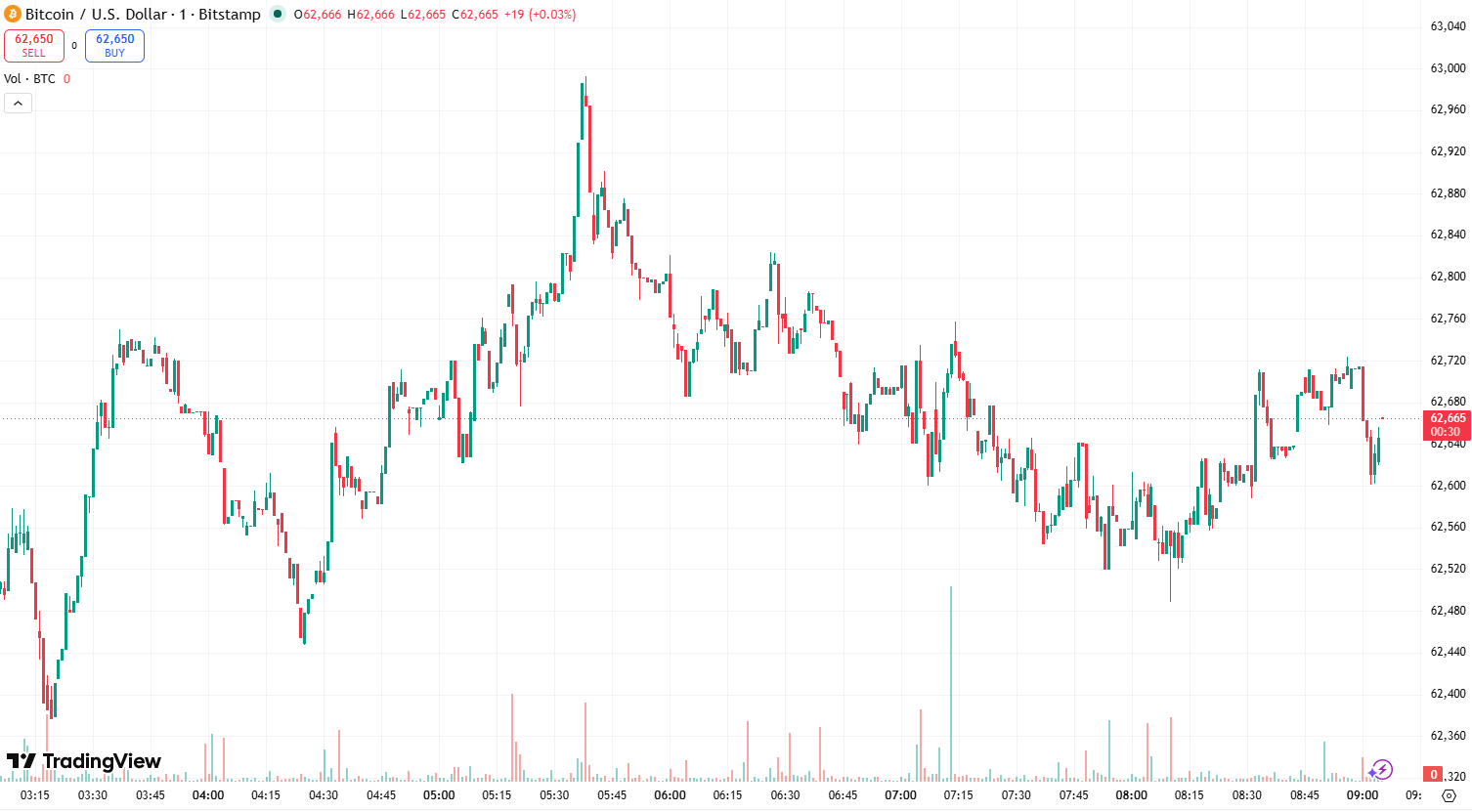
The asset started the business week on the right foot, rising to almost $66,000. However, that pump was short-lived and followed by a pullback to as low as $61,900.
Over the past 24 hours, the bulls tried to step in, briefly lifting the price to nearly $63,000, but the sellers remained active, preventing a more substantial rebound. As of this writing, BTC trades at around $62,600, representing a mere 0.5% increase on a daily scale and a 4.5% plunge for the last week.
It is important to note that the asset’s unsatisfactory performance coincides with the crisis in traditional finance. As CryptoPotato reported, the popular indexes Nasdaq, S&P 500, and South Korean tech stocks headed south after a global sell-off in the Artificial Intelligence (AI) sector.
Meanwhile, the constant outflows from spot BTC exchange-traded funds (ETFs) signal waning interest from institutional investors, which could further weigh on the asset’s short-term performance.
Bitcoin’s market capitalization currently stands at around $1.25 trillion, while its dominance over altcoins remains unchanged at approximately 56.3%.
How are the Alts Doing?
While today’s (June 24) altcoin landscape isn’t the same bloodbath seen 24 hours ago, plenty of tokens are still suffering steep losses. Worldcoin (WLD) has tumbled by 7%, Kaspa (KAS) has plunged by 5%, whereas Litecoin (LTC) is down 3%.
Audiera (BEAT) is on the opposite corner and stands out as the best-performing cryptocurrency (at least from the top 100 list). Its price has exploded by 40% and now trades at around $2.40. Other notable gainers include JUP (+6%), AVAX (+5%), XMR (+4%), and SUI (+3%).
The total crypto market capitalization has risen by 0.5% over the last day and is currently hovering at roughly $2.34 trillion.

The post Bitcoin’s Price Rejected at $63K as This Altcoin Explodes by 40%: Market Watch appeared first on CryptoPotato.


Ripple has received a preliminary Crypto Asset Service Provider license from Luxembourg's financial regulator, a gate-opening step toward offering its payments platform across all 30 European Economic Area countries once final conditions are met. The approval, described as a "Green Light Letter,"… Read the full story at The Defiant
The world’s largest asset manager, BlackRock, has reiterated that bitcoin’s role in investment portfolios is evolving, describing the asset as a viable complementary diversifier for long-term strategies.
The firm outlined that 1% to 2% Bitcoin allocation can be a reasonable range for investors who believe adoption will continue while still accounting for the cryptocurrency’s volatility. The latter, by the way, has been dwindling lately.
The view builds on BlackRock’s broader push into the digital asset industry. As CryptoPotato reported earlier this month, the firm launched the iShares Bitcoin Premium Income ETF, which expanded its BTC-linked product lineup. It’s also a testament to the growing demand for covered-call strategies oriented toward BTC.
At the same time, major institutions are also paying closer attention to blockchain infrastructure. BlackRock’s BUIDL fund is playing a major role in tokenization.
A Small Bitcoin Allocation With Outsized Risk Impact
BlackRock’s portfolio-sizing strategy focuses more on adoption and volatility. In a traditional 60/40 stock-and-bond portfolio, the firm said a 1% to 2% Bitcoin position could contribute a risk share comparable to large technology stocks.
Bitcoin’s role in portfolios is evolving, and it could be considered a complementary diversifier.
We believe a modest allocation (typically ~1–2%) could impact return potential in a portfolio while maintaining appropriate risk tolerance.
Hear more from Michael Gates on how… pic.twitter.com/oOIRfq6F4D
— BlackRock (@BlackRock) June 23, 2026
The key point here is that the allocation remains small by design. According to the asset manager, moving beyond that range could sharply increase Bitcoin’s contribution to overall portfolio risk, especially because the asset remains prone to steep drawdowns and rapid shifts in sentiment.
Institutional Demand Continues to Expand
BlackRock’s latest commentary comes just as Bitcoin exposure through regulated financial products continues to expand. The launch of the iShares Bitcoin Premium Income ETF added yet another layer to the market, targeting investors who are interested in BTC-oriented income strategies, rather than simple spot exposure.
Moreover, the institutional backdrop is also moving beyond Bitcoin. In a recent interview with CryptoPotato, Aptos Labs Chief Business Officer Solomon Tesfaye discussed why firms such as BlackRock are watching blockchain rails tied to tokenized assets, settlement efficiency, and institutional-grade financial activity.
That said, BlackRock’s own language remains cautious. The firm continues highlighting the asset’s volatility, uncertain path of adoption, as well as the need for regular portfolio review.
The post BlackRock Says Bitcoin’s Portfolio Role Is Changing: Why 1-2% Matters appeared first on CryptoPotato.

Key Takeaways
- SanDisk (SNDK) shares reached a 52-week peak of $2,354.39 on June 22 before retreating, maintaining a remarkable 700%+ gain in 2026.
- The decline coincided with a major selloff in South Korea’s Kospi index and mounting uncertainty over AI memory spending sustainability.
- According to Morgan Stanley, SanDisk views AI as “fundamentally changing” NAND dynamics, fueled by inference workloads and expanded LLM context windows.
- Third quarter FY2026 revenue exploded 251% versus prior year to $5.95 billion, crushing Wall Street’s $4.55 billion forecast.
- Fourth quarter outlook projects revenue between $7.75B and $8.25B, with non-GAAP EPS guidance of $30 to $33.
SanDisk (SNDK) shares have delivered one of 2026’s most impressive performances. Following a year-to-date surge exceeding 700%, the stock peaked at $2,354.39 on June 22 before encountering turbulence.
The memory chip maker experienced a steep decline alongside sector peers, pressured by a significant downturn in South Korea’s Kospi benchmark and emerging concerns regarding the durability of AI-fueled memory demand. SNDK has retreated approximately 13.6% in the recent selloff and is down roughly 5.75% across the past five sessions. Trading data shows the stock hovering around $1,963.60.
Despite this correction, shares remain elevated 32.8% over the trailing 30-day period. This perspective is crucial — the current volatility represents the first significant challenge to the AI memory narrative since SanDisk separated from Western Digital in early 2025.
AI’s Transformative Impact on Memory Markets
Morgan Stanley’s Joseph Moore highlighted that SanDisk sees AI as “fundamentally changing” NAND dynamics. The primary catalyst is inference workload requirements. With large language models demanding expanded key-value caches and broader context windows, DRAM capacity alone proves insufficient — positioning NAND to occupy a higher tier in the memory architecture.
Cloud infrastructure is projected to emerge as NAND’s dominant end market before year-end. This transition is already visible in SanDisk’s financials, with data center revenue skyrocketing 233.4% sequentially to reach $1.47 billion during Q3 FY2026.
The third quarter results, announced April 30, exceeded expectations dramatically. Revenue totaled $5.95 billion, representing a 251% year-over-year increase and substantially outpacing the $4.55 billion analyst consensus. Non-GAAP EPS delivered $23.41 compared to the $14.36 estimate. Non-GAAP gross profit surged 1,111.9% annually to $4.7 billion. Additionally, the company achieved debt-free status, closing the quarter with $3.7 billion in cash reserves.
Shares climbed 3.04% on the earnings announcement and continued upward with an 8.25% gain in the subsequent trading session.
Forward Outlook and Valuation
For Q4 FY2026, management projects revenue ranging from $7.75 billion to $8.25 billion, with non-GAAP EPS between $30 and $33. Wall Street analysts forecast Q4 EPS of $31.81, representing a staggering 158,950% year-over-year increase.
QLC Stargate products — which have undergone hyperscaler qualification testing for over twelve months — are anticipated to commence revenue-generating shipments in Q4, supplementing existing TLC product momentum.
Notwithstanding the impressive rally, SanDisk commands a forward adjusted P/E ratio of 34.13 and a price-to-sales multiple of 17.17, both exceeding industry benchmarks. Its trailing P/E of 64.5 surpasses the industry norm of 44.5. Current pricing also sits approximately 12% above the consensus analyst target of $1,863.06.
Among 21 analysts tracking SNDK, 18 assign a “Strong Buy” rating, one recommends “Moderate Buy,” and two rate it “Hold.” Morgan Stanley holds an “Overweight” stance with a $1,750 price objective. The highest Street target stands at $3,250.

Crypto World
INFINIOS and Circle Partner to Expand Digital Finance Infrastructure Across the Middle East

TLDR:
- INFINIOS will integrate USDC, EURC, and Circle’s API-enabled payment rails into its platform.
- The deal targets cross-border payments, treasury management, and embedded finance use cases.
- Both firms align on KYC, AML/CFT, and data protection standards for regional compliance needs.
- Circle’s Middle East expansion accelerates as demand for internet-native financial infrastructure grows.
INFINIOS Circle’s new strategic agreement marks a significant move in the region’s financial technology landscape.
Announced on June 24, 2026, in Manama, Bahrain, the deal links INFINIOS, a Bahraini fintech company, with Circle Internet Financial.
Together, they plan to expand digital payment and treasury infrastructure across the Middle East and beyond, targeting businesses and financial institutions seeking faster, more connected financial solutions.
Stablecoin Integration at the Core of the Agreement
Under the agreement, INFINIOS will integrate Circle’s financial infrastructure into its platform. This includes USDC, EURC, and API-enabled onchain payment capabilities for payouts and treasury operations. The integration gives INFINIOS access to globally recognized stablecoin rails designed for institutional use.
The arrangement covers a broad range of enterprise and institutional use cases. These include cross-border payments, treasury and liquidity management, merchant settlement, and platform payouts. Tokenized financial services and embedded finance solutions are also part of the scope.
Both companies have emphasized a shared commitment to regulatory compliance throughout the collaboration. The agreement aligns with KYC, AML/CFT, and data protection standards relevant to financial operations in the region. This focus on compliance positions the partnership as a trust-based infrastructure initiative.
INFINIOS CEO Sherif Abdelsalam framed the deal as a turning point for regional digital finance. He said the partnership combines INFINIOS’s market expertise with Circle’s technology to unlock real-time, global financial connectivity.
He added that the goal is to build infrastructure that enables seamless, compliant, and scalable financial innovation globally.
INFINIOS Eyes Broader Regional and Global Connectivity
Circle’s Managing Director for the Middle East and Africa, Dr. Saeeda Jaffar, pointed to accelerating demand for modern financial infrastructure across the region.
She noted that businesses and financial institutions are actively seeking faster, more connected ways to move value globally.
The collaboration with INFINIOS, she said, is designed to expand access to Circle’s stablecoin infrastructure across key markets.
Dr. Jaffar also stated that the partnership aims to enable new payment, treasury, and embedded finance use cases across the region.
She described the joint effort as advancing trusted, internet-native financial infrastructure built for greater interoperability, efficiency, and global connectivity. Her remarks reflect Circle’s broader strategy of deepening its footprint in emerging fintech markets.
Circle Internet Group trades on the NYSE under the ticker CRCL and operates as a leading global financial platform company.
Its subsidiary, Circle Internet Financial, brings established stablecoin infrastructure to the partnership. This gives INFINIOS a globally recognized technology backbone for its regional expansion plans.
The collaboration between INFINIOS and Circle reflects a broader trend of traditional and digital finance converging in the Middle East.
As the region’s fintech ecosystem matures, partnerships of this kind are becoming increasingly common. The agreement sets a framework for interoperable, efficient digital finance infrastructure built to scale globally.

Despite a handful of short-lived rebounds, Bitcoin has remained locked in a steep multi-month downtrend, and many analysts believe it hasn’t reached its true cycle bottom.
There is a growing debate over whether BTC (which now trades just south of $63,000) is poised to break under the psychological $50,000 level, with some warning that an even deeper crash might be on the horizon.
Bulls, Get Ready
A few hours ago, Ali Martinez paid close attention to the $60,000-$63,000 range, noting it is the largest volume cluster, with more than 1.3 million BTC transacted.
In his view, “immediate support” at $60,587 must hold to maintain the current trend, but a break below could open the door to a collapse to $46,702, where 150,000 coins moved. Moreover, a subsequent drop beneath that zone could trigger a devastating crash to $37,867, something last observed towards the end of 2023.
X user Chiefy also thinks the worst is ahead, predicting a “final trap” that could take the price to as low as $44,000. “That’s where the crowd finally gives up. Just like they did in 2022,” the analyst added.
Whales Don’t Agree
Despite the prevailing bearish sentiment and a wave of pessimistic forecasts, large investors seem remarkably unshaken. Not long ago, these market participants purchased 30,000 BTC (worth over $1.8 billion) in the span of a single week.
Such accumulation signals that whales are positioning for the next price pump and shows their strong conviction in the asset’s long-term price potential. It is worth noting that smaller players monitor these actions and could get encouraged to hop on the bandwagon, thus distributing fresh capital into the ecosystem.
Meanwhile, the analytics platform Lookonchain revealed that one anonymous whale opened a 40x long position on Bitcoin, worth nearly $70.5 million. This is a highly risky bet, and a plunge to $61,724 would liquidate the trader (should they not provide additional collateral to keep the position open).
Some might see this as a sign of an incoming resurgence. After all, whales are known for being experienced investors who rarely wager substantial sums, relying simply on their sixth sense.
The post Bitcoin Warning: Here’s Why BTC’s Price Could Crash Below $38K (Analyst) appeared first on CryptoPotato.

Micron Stock Goes On-Chain 48 Hours Before Earnings as Backpack Securities Lists $MU on Solana

Ruben Amorim could do Manchester United a £43m transfer favour

Robert Kiyosaki on Financial Literacy, Wealth Building, and the Failure of Education


-

 Fashion5 days ago
Weekend Open Thread: Miami – Corporette.com
-

 Entertainment3 days ago
Renter of Home in Anne Heche Crash Denies Settlement With Son
-

 Tech2 days ago
Microsoft accidentally kills epic Outlook email threads
-

 Business4 days ago
Soccer-U.S. defends Iran World Cup travel restrictions, says discussions ongoing
-
 Sports15 hours ago
Two goals and an assist by sheer aura: Cristiano Ronaldo just entered the World Cup chat
-
Crypto World6 hours ago
Bitcoin (BTC) Dips Below $62K, Ethereum (ETH) Plunges 6% Daily: Market Watch
-

 Politics6 days ago
BBC Reporter Discusses Cross Party Criticism Of Trumps Iran Deal
-

 Crypto World3 hours ago
Securitize Wraps Roubini's SEC-Registered ETF as Dubai VARA Digital Security
-
Business9 hours ago
Entergy settles forward sale agreements, raises $672 million in cash proceeds
-
 Business4 days ago
Wall Street Week Ahead: Investors see Micron earnings as pulse check of AI rally momentum
-

 Politics4 days ago
Andy Burnham and the meaning of Makerfield
-

 Tech6 days ago
AWS enters the context layer race with a graph that learns from agents, not manual curation
-
 Crypto World4 days ago
Can Charles Hoskinson Really Rescue Cardano?
-

 Crypto World4 days ago
HIVE shares jump as $220M AI deal speeds Bitcoin mining pivot
-

 Crypto World4 days ago
Jake Chervinsky accuses CME of protecting derivatives monopoly
-

 NewsBeat5 days ago
Keir Starmer Allies Question His Chances For No 10
-

 Tech2 days ago
Nearly 7,000 fake Amazon domains registered ahead of Prime Day 2026, researchers warn
-
 Tech3 days ago
Signal’s Meredith Whittaker says AI chatbots ‘are not your friends’ and calls Copilot agents a backdoor
-

 Business5 days ago
Brexit cost 6% of UK economy, Bank of England company data suggests
-

 Sports5 days ago
FIFA World Cup 2026: Canada beat 9-men Qatar 6-0 to register first ever win | FIFA World Cup 2026
You must be logged in to post a comment Login