

Crypto World
Self-Healing Protocols: The Next Evolution in DeFi Resilience


Decentralized finance (DeFi) has revolutionized the way users interact with financial services, removing intermediaries and enabling permissionless access to lending, trading, and asset management. Yet, as the ecosystem has grown, so have the risks: market volatility, liquidity crises, and exploits can cause sudden, severe disruptions. Enter Self-Healing Protocols, a class of smart contracts designed to anticipate, react, and adapt to adverse conditions automatically.
What Are Self-Healing Protocols?
A self-healing protocol is a smart contract system engineered to respond dynamically to stress events. Rather than relying solely on governance intervention or manual adjustments, these protocols can automatically:
-
Adjust incentives: For example, increasing yield rewards to encourage liquidity provision when a pool is undercapitalized.
-
Rebalance pools: Automatically shift liquidity between pools or adjust token weights to maintain stability and minimize slippage.
-
Redistribute risk: Move exposure away from highly leveraged positions or risky assets to protect the system during market crashes.
These mechanisms essentially allow a protocol to “heal itself” in response to abnormal conditions, reducing systemic risk and enhancing user confidence.
How They Work
Self-healing protocols leverage a combination of on-chain oracles, algorithmic rules, and dynamic parameters. Key components include:
-
Real-Time Data Monitoring: Oracles feed the protocol with market prices, liquidity metrics, and on-chain activity.
-
Automated Trigger Mechanisms: Smart contracts detect stress conditions—like a sudden liquidity drop or extreme volatility—and trigger corrective actions.
-
Dynamic Incentive Adjustments: Rewards and penalties are algorithmically recalibrated to encourage stabilizing behavior among participants.
-
Risk Redistribution Algorithms: Funds can be automatically reallocated across pools, vaults, or derivatives to minimize the impact of defaults or liquidations.
Some protocols also integrate simulation engines that run stress-test scenarios on-chain to anticipate potential crises before they escalate.
Benefits of Self-Healing Protocols
-
Reduced Governance Lag: Human intervention is often slow and reactionary. Self-healing protocols act instantly.
-
Resilience Against Market Shocks: Liquidity imbalances and sudden withdrawals are mitigated before they snowball.
-
Improved User Trust: Knowing that a protocol can adapt autonomously increases confidence among liquidity providers and traders.
-
Enhanced Composability: Other DeFi products can safely integrate with self-healing protocols without inheriting all the risk.
Challenges and Considerations
Despite their promise, self-healing protocols are not without challenges:
-
Complexity and Audit Risk: More logic means more potential for bugs. Thorough audits are critical.
-
Oracle Dependence: Reliance on external data sources can introduce new points of failure.
-
Economic Exploits: Sophisticated actors may attempt to game dynamic incentive mechanisms.
-
Transparency vs. Flexibility: Too much automatic adjustment can be hard for users to understand, possibly reducing adoption.
Looking Ahead
Self-healing protocols represent a frontier where algorithmic finance meets resilience engineering. Projects exploring this concept could redefine how DeFi handles risk, moving the ecosystem closer to fully autonomous, self-stabilizing financial networks.
As DeFi matures, these protocols may become a standard layer of protection, much like insurance or circuit breakers in traditional finance—but fully automated and embedded in code.
REQUEST AN ARTICLE


Cybersecurity company SlowMist has introduced a five-layer security framework for AI and Web3 agents, pitching it as a way to reduce the growing risks that come with autonomous systems handling onchain actions and digital assets.
In a Wednesday blog post, the company said the framework centers on a user’s AI agents and combines governance controls through its AI Development Security Solution, or ADSS, with execution-layer tools including OpenClaw, MistEye Skill, MistTrack Skill and MistAgent. The company said the system is designed to create a closed-loop process of checks before execution, constraints during execution and review afterward.
SlowMist’s so-called “digital fortress” aims to defend against risks including prompt injection, supply chain poisoning attacks, data leaks and asset loss due to unauthorized operations or AI agent behavior exploits. It also seeks to reduce risks without sacrificing AI efficiency.

Autonomos AI agents introduce new attack surface in business operations
The push comes as more crypto firms experiment with autonomous tools for trading and execution, introducing “new attack surfaces,” such as supply chain poisoning, which has become a new entry point for hackers embedding secret backdoors into devices, according to SlowMist.
The framework’s governance layer, ADSS, aims to establish auditable security standards for organizations to prevent these risks. It includes AI agent permission constraints, real-time threat checks for external interactions and strengthened onchain risk detection.

ADDS’ core value lies in improving “scattered security actions” into a systematic operation that is “executable, auditable, and sustainable,” SlowMist said.
Related: OpenAI eyes trillion-dollar IPO amid global AI arms race: Report
Autonomous crypto trading bots on the rise
Crypto companies are launching more autonomous crypto trading bots. On Jan. 21, crypto intelligence platform Nansen launched autonomous crypto trading tools that enabled users to execute trades through AI agents and natural language prompts, with cross-chain execution on the Base and Solana blockchains.
Other companies that launched no-code AI trading agents include Coinbase, Bitget, Walbi and Gate.io. These solutions seek to lower barriers to entry for retail investors through automated strategies and conversational interfaces.
Magazine: Everybody hates GPT-5, AI shows social media can’t be fixed
Binance filed a defamation lawsuit against Dow Jones, the publisher of The Wall Street Journal, on the same day the newspaper published a report claiming the U.S. Justice Department is investigating whether Iran used the world’s largest crypto exchange to move funds in violation of American sanctions.
In the complaint filed in the U.S. District Court for the Southern District of New York, the company said the newspaper published “false and defamatory statements” about its compliance practices and handling of Iran-linked transactions in an article published on Feb. 23.
In that article, the Journal said Binance fired staff who flagged funds moving through the exchange to sanctioned entities, allegations Binance rejected. The lawsuit says Binance did not fire employees for raising compliance concerns. Staff departures stemmed from alleged breaches of internal data protection policies rather than retaliation, it said.
“Binance categorically did not dismantle any compliance investigation,” a spokesperson for the exchange told CoinDesk. “The WSJ continues to report the same falsities. As a result, we have filed a lawsuit against the Wall Street Journal for defamation.”
In Wednesday’s story, the Journal said DOJ officials contacted individuals with knowledge of the transactions as they gathered evidence tied to cryptocurrencies that moved through the platform. It cited people familiar with the situation. It is unclear whether the department is examining potential wrongdoing by Binance itself or focusing only on customers who used the exchange, it said.
Binance fires back
In a blog post published Wednesday, the exchange addressed the Journal’s February report point by point. It said the $1.7 billion in flagged funds “did not originate at Binance and did not end at Binance,” passing instead through multiple independent intermediaries, with “the vast majority of funds” having “no confirmed Iranian nexus.”
The newspaper had said internal investigators had flagged crypto transfers from Chinese clients into wallets linked to Iranian financing networks. A large share of the funds, more than $1 billion, allegedly flowed through Blessed Trust, a Hong Kong-based payments company that worked with the exchange.
Binance said its investigators were “granted immediate access” to the Blessed Trust account, which “was repeatedly renewed, as confirmed by system logs.”
It says it identified the suspicious activity through information from law enforcement and its own internal investigation, then reported the activity and removed the accounts involved.
Earlier this month, it told a U.S. Senate investigation it found no evidence that accounts on its platform transacted directly with Iranian entities.
“The truth is that Binance’s investigation continued and uncovered a sophisticated, multi-jurisdictional pattern of financial activity spanning Asia, the Middle East, and beyond,” the spokesperson said. “Binance mapped this complex activity, offboarded the relevant user accounts, and reported to law enforcement.”
The company says it “cooperates fully with law enforcement” and employs more than 1,500 staff in compliance and risk roles, equivalent to around 25% of its global headcount.
Legal spotlight
The suit and probe return Binance to the legal spotlight.
In 2020, it sued Forbes for making false allegations against the company. That suit was dropped several months later.
In 2023, the company pleaded guilty to violating U.S. anti-money laundering and sanctions laws and agreed to pay $4.3 billion in penalties. Founder Changpeng “CZ” Zhao also pleaded guilty to a related charge and served four months in prison before receiving a presidential pardon in October 2025.
As part of the settlement, Binance operates under a U.S.-appointed compliance monitor. That monitor has also requested records related to the Iranian-linked transfers.
UPDATE (March 11, 13:00 UTC): Adds Binance statement, court case details and details from Journal report starting in third paragraph.
Crypto World
Strive (ASST) buys 179 BTC, raises SATA dividend, and purchases $50 million of MSTR’s Stretch

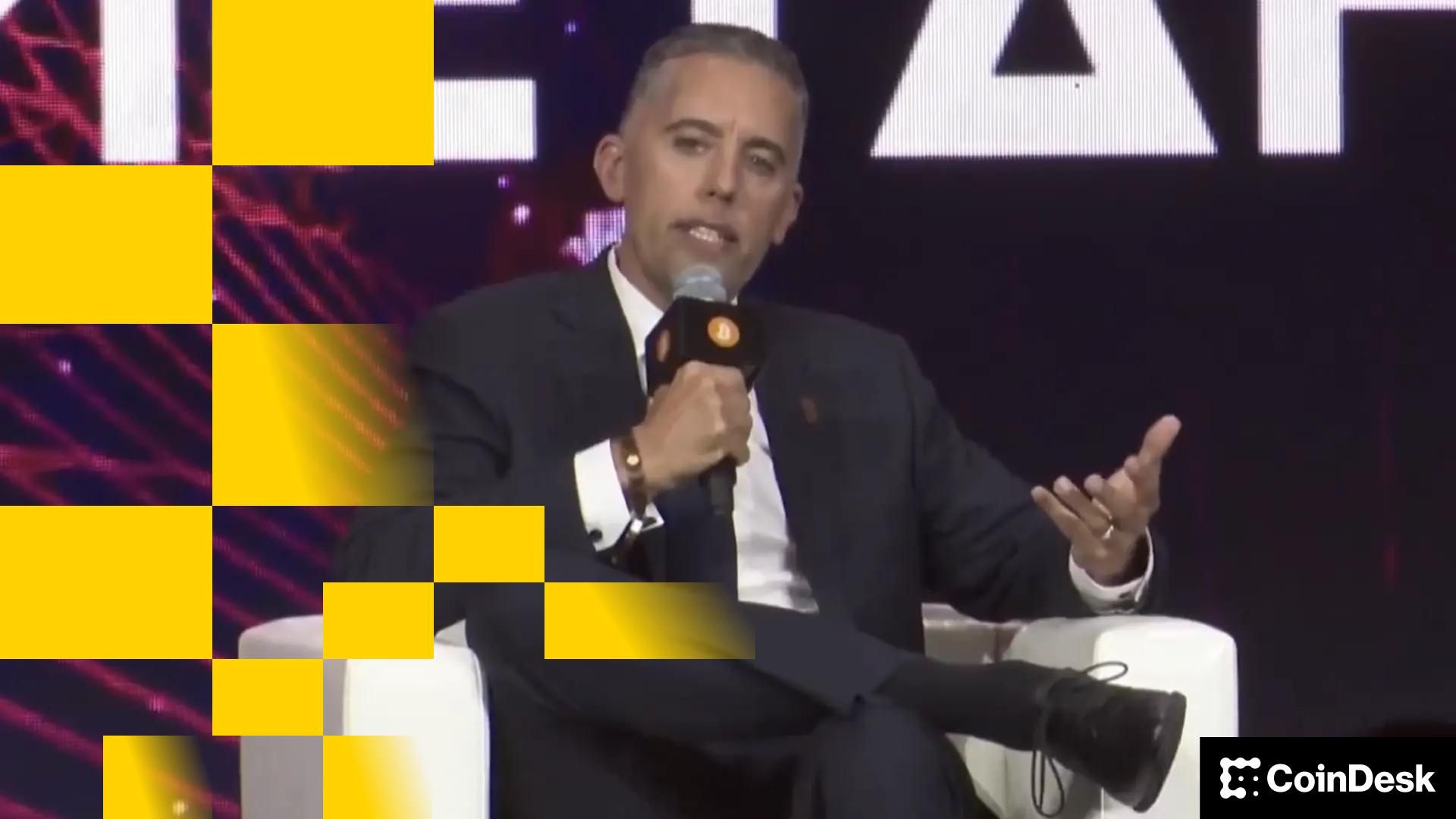
Roughed-up bitcoin treasury company Strive (ASST) announced a number of balance sheet moves on Wednesday.
The company purchased an additional 179 bitcoin, bringing total holdings to 13,311 BTC, worth about $930 million at current prices.
Strive also lifted the dividend on its perpetual preferred security SATA by 25 basis points to 12.75%. SATA was ahead 1.4%, but still trading well below par at $96.22.
The company also announced the purchase $50 million of Strategy’s (MSTR) perpetual preferred stock, STRC, which currently yields 11.5%.
Among a large group of companies quickly formed in 2025 to try and mimic the success of Michael Saylor’s Strategy, Strive has struggled, losing more than 90% of its value since its summer 2025 peak and recently having to undertake a 1:20 reverse stock split to keep its share price above $1.
ASST was higher by 2.2% early Wednesday as bitcoin re-took the $70,000 level.


After retreating back to the $69,000 area during early U.S. morning hours Wednesday, bitcoin has quickly spiked to nearly $71,000.
Other crypto assets, including ether (ETH), solana (SOL) and XRP, saw the same sharp moves higher.
The gains appeared to come as crude oil quickly reversed most of its session’s large gains, dropping $3 per barrel in a matter of minutes. At press time, WTI crude futures for April were at $85, up 2% for the day.
Crude’s drop also benefited stocks, with the Nasdaq moving from a small decline to a gain of 0.5% in early U.S. trade.
Crypto-related shares were mixed, with Strategy (MSTR), Galaxy Digital (GLXY) and Bullish (BLSH) posting modest advances, while Coinbase (COIN) and eToro (ETOR) were slightly lower.
With the ongoing war against Iran, risk markets this week have been mostly ruled by oil’s price action. Stocks and crypto plunged on Sunday evening as oil surged to $120, but then gained as oil quickly retreated.
Fresh inflation data
Wednesday’s February CPI report was in line with economist forecasts, up 0.3% on a month-to-month basis, putting the 12-month inflation rate at 2.4%. Next month, however, could show a much different picture due to the outbreak of the U.S.-Iran war, posing the question of whether the Federal Reserve will respond to the temporary shock or take a more hawkish stance after being caught off guard during the last inflation cycle.
Stephen Coltman, head of macro at 21shares says the Fed’s choice will be critical, noting that investors will be watching next week’s Fed meeting closely for signs on how officials plan to react.
As for bitcoin, the rise in next month’s data is likely “already baked in the cake,” he said.
Arthur Hayes has officially stopped buying Bitcoin ($BTC). The BitMEX co-founder says he will not deploy fresh capital until the Federal Reserve explicitly expands the money supply.
With Bitcoin struggling to break resistance, Hayes is tracking a specific “Net Liquidity” metric that suggests the current rally lacks fundamental fuel.
He is waiting for the centralized banking cartel to restart the money printer before chasing the market any higher.
Discover: The best pre-launch crypto sales
Why Arthur Hayes Is Slamming the Brakes on Bitcoin
Hayes’s hesitation stems from his Net Liquidity framework, a formula that subtracts the Treasury General Account (TGA) and Reverse Repo (RRP) balances from the Fed’s total balance sheet.
While nominal prices are high, real dollar liquidity has not expanded enough to support a sustained breakout above $90,000. Hayes views the current market as a trap for traders expecting a straight line up.
“If I had $1 to invest right now, would I be putting it into Bitcoin? No. I would wait,” Hayes said on a podcast. He argues that while geopolitical tensions usually drive safe-haven assets, the only thing that truly matters for Macro Crypto cycles is fiat debasement.
This thesis is reinforced by market data showing Bitcoin decoupling from traditional bond yields, a divergence that historically signals impending volatility.
Hayes warns that without an immediate pivot back to Quantitative Easing, the “American war machine” alone cannot sustain asset prices. He believes the market is pricing in liquidity that hasn’t arrived yet. If the Fed refuses to loosen its monetary policy, Hayes predicts the current chop could move downwards.
He is positioning for a scenario where the TGA drains slowly, leaving risk assets starved for capital in the short term. Only when the printing press whirs to life will the Net Liquidity conditions turn green for aggressive accumulation.
The Levels to Watch for Bitcoin
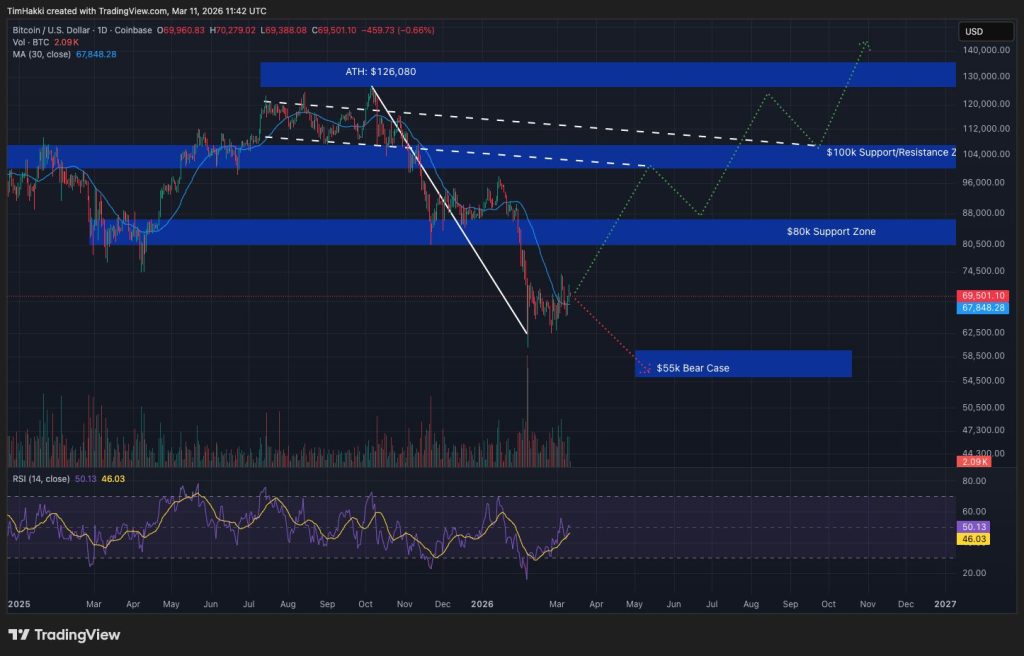
Bitcoin Price Analysis currently shows a market caught between institutional accumulation and macro exhaustion. Bitcoin is trading under the $90,000 psychological ceiling, a level that has rejected bulls multiple times. Hayes suggests that a failure here could trigger a slide toward $60,000, flushing out late longs.
$60,000 is the level that matters most. If price action breaks below this support, Hayes anticipates a “massive sell-off” driven by cascading liquidations. Concurrently, Wall Street is buying Bitcoin strategically but is not yet invested enough to chase breakouts unconditionally.
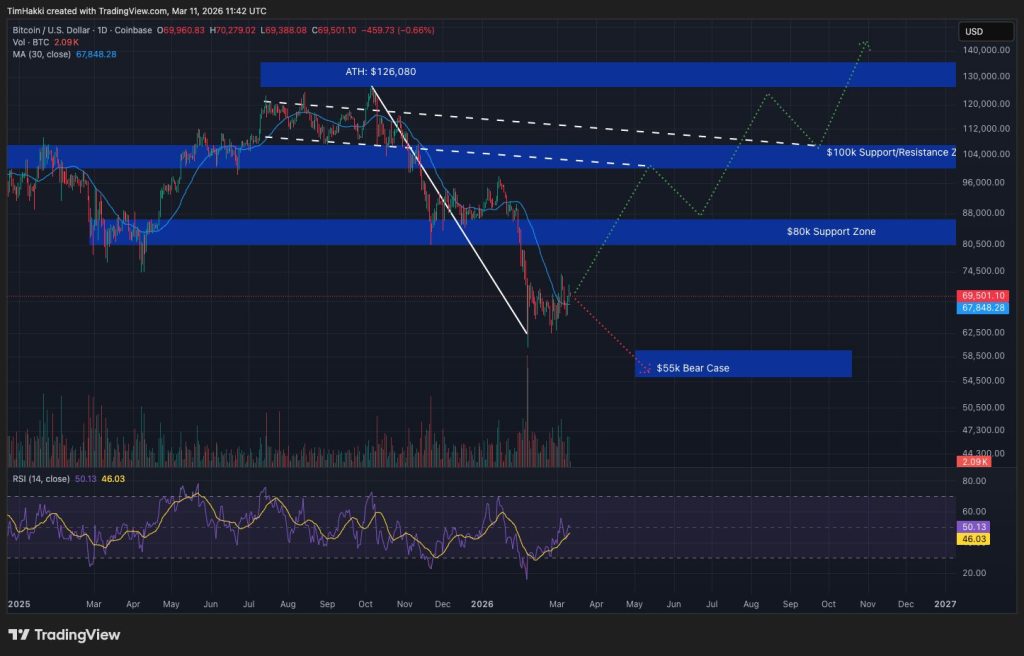
Conversely, the bull case requires a definitive reclaim of $90,000 on high volume. If spot buyers can push through this resistance, the path to $100,000 opens up quickly, invalidating the bearish liquidity thesis.
Traders looking for confirmation might look at simple math that nailed the last BTC bottom to identify safe entry points if Hayes’ predicted dip materializes.
If Net Liquidity remains flat, Bitcoin likely ranges sideways or bleeds slowly. But if the Fed is forced to cut rates due to external shocks, the $90,000 cap will likely shatter overnight.
Discover: The best new cryptocurrencies
The post Arthur Hayes Deploys Net Liquidity Strategy: Not Buying BTC Now Even If He Has Only $1 appeared first on Cryptonews.

Almost $27 million worth of liquidations were triggered on DeFi lending giant Aave yesterday, thanks to a faulty price cap oracle update.
The Correlated Asset Price Oracle (CAPO), run by risk manager Chaos Labs, sets caps for the price ratio between correlated assets, in order to protect against price manipulation attacks on the protocol.
In a post to the Aave governance forum, Chaos Labs explained that, due to a timestamp mismatch, the price ratio between wstETH and stETH was capped below the current market rate, causing a price drop of 2.85%.
This was enough to liquidate those positions close enough to the liquidation threshold.
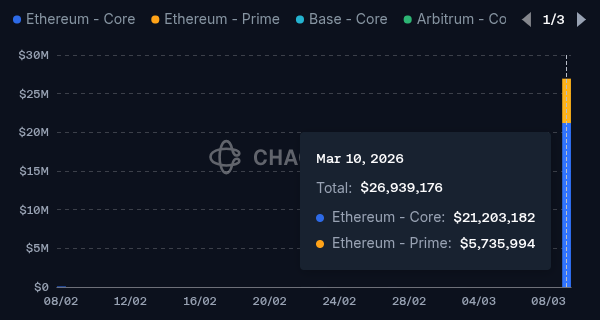
The company’s dashboard (filtered for wstETH) shows $21.2 million of liquidations on Aave’s Ethereum Core instance, and a further $5.7 million on its Prime instance.
Read more: Aave developer BDG Labs to ‘cease contribution’ after DAO drama
Chaos Labs’ founder, Omer Goldberg, promised that “all affected users will be fully reimbursed.” He says that, since launching over a year ago, its oracles “have streamed over 1,200 payloads for ~3k+ parameters, with zero incidents.”
While the protocol didn’t suffer bad debt, liquidators profited approximately 500 ether (ETH) worth $875,000. Around 30% of this (154 ETH) was recovered, and will be used to reimburse users, with the remainder coming from the Aave treasury.
A similar pricing error resulted in $1.8 million of bad debt DeFi protocol Moonwell last month.
In an AI-coauthored update, the ratio between ETH and cbETH was used to price cbETH in dollars, liquidating borrowers whose collateral was suddenly worth $1.12 instead of around $2,200.
The damage for Aave may not have been too severe this time, but one blockchain security professional questioned why the changes aren’t run through a transaction simulation before going live, a simple sanity check which could prevent more serious losses, and even bad debt, in future.
Aave in crisis
The malfunction comes during a period of tumult for decentralized finance’s number one protocol.
Since December last year, the DAO and Aave Labs have been in dispute over who really controls Aave. The spat has seen DAO service providers accuse founder Stani Kulechov’s Aave Labs of playing dirty and pushing through plans for an upcoming v4 of the protocol.
Indeed, two key service providers have recently thrown in the towel.
Developer BGD Labs left last month over Labs’ snubbing of the wildly successful v3, in favor of the Labs-developed v4.
Shortly after, Marc Zeller’s ACI reached “breaking point” following the recent Aave Will Win vote, which swung narrowly in Labs’ favor.
Got a tip? Send us an email securely via Protos Leaks. For more informed news, follow us on X, Bluesky, and Google News, or subscribe to our YouTube channel.
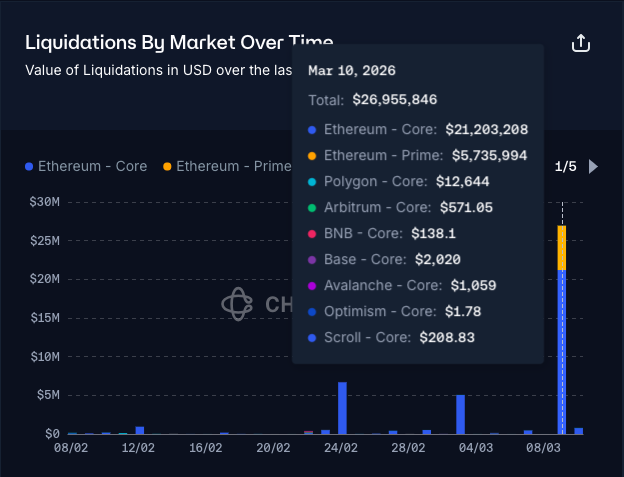
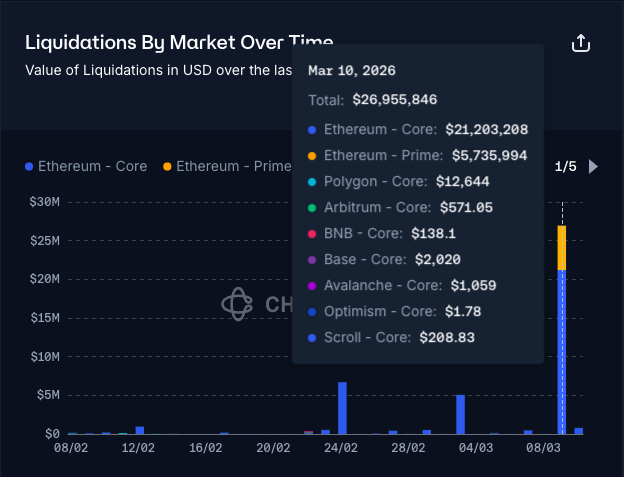
A misconfigured Oracle system in Aave triggered $27 million in forced liquidations on March 10, undervaluing wrapped staked Ether by 2.85% against its actual market rate.
According to the post-mortem by Chaos Labs, the CAPO oracle error caused Aave V3 Ethereum Core and Prime instances to apply an exchange rate of roughly 1.1939 wstETH-per-ETH when the live onchain rate was approximately 1.228, enough of a gap to push 34 high-leverage E-Mode positions below their liquidation thresholds automatically.
It resulted in the liquidation of 10,938 wstETH. The protocol says it incurred no bad debt and is moving to compensate all affected users.
The Damage: 34 Users, $27M in Liquidations, and 499 ETH in Bot Profits
The oracle glitch liquidated 34 users, with the total volume reaching $27 million in wstETH positions.
Liquidation bots moved quickly, capturing 499 ETH in bonuses, approximately $1.2 million, by executing against positions that should not have been eligible for liquidation at that moment.
Aave founder and CEO Stani Kulechov confirmed in a Wednesday post that the protocol generated no bad debt from the incident.
Of the 499 ETH that went to liquidators, Aave recaptured 141 ETH ($285,000) through BuilderNet refunds and an additional 13 ETH in liquidation fees.
Those recovered funds will flow directly to affected users as compensation, with DAO treasury funds covering any remaining shortfall up to the full 345 ETH identified as the excess liquidation windfall.
Lido contributors confirmed the event had no connection to wstETH or the Lido staking protocol itself; the issue originated entirely within Aave’s oracle configuration layer.
With Ethereum price defending the $2,000 support zone around the time of the incident, the liquidation values were amplified by the broader market context for ETH-denominated collateral.
Discover: The best pre-launch crypto sales
Chaos Labs Confirms Aave CAPO Oracle Misconfiguration: Here Is What They Found
Chaos Labs, Aave’s external risk management partner, confirmed the incident stemmed from what it described as an onchain configuration misalignment under differing onchain update constraints, not a design flaw in the CAPO system or in the core oracle infrastructure of Aave.
The team emphasized that Chaos Risk Oracles had processed over 1,200 payloads and more than 3,000 parameters across Aave markets without incident prior to March 10.
Chaos Labs quickly contained the situation: borrow caps on wstETH were reduced immediately, and snapshot parameters were manually realigned to restore oracle accuracy. Kulechov noted in his public statement that the configuration issue had already been remediated by the time the post-mortem was published, and praised the team’s response speed in limiting broader DeFi risk contagion.
The Aave governance post-mortem marks this as the first operational failure in CAPO’s deployment history on Aave V3, despite more than a year of live operation across multiple markets.
What Traders and Aave Users Are Watching Next
The immediate focus is on the full reimbursement timeline. Aave DAO service providers are finalizing compensation for all 34 affected users following the initial 141 ETH refund via BuilderNet, with a formal governance announcement expected shortly.
Beyond compensation, governance teams are conducting a broader review of CAPO parameters across all Aave markets, updating stale snapshots and building out enhanced monitoring to flag rate divergences before they reach liquidation-threshold proximity.
Whether that review produces binding parameter update standards or remains advisory is the governance question to watch.
If the DAO formalizes automated CAPO sync requirements and publishes updated risk oracle documentation, the incident may ultimately strengthen Aave’s operational credibility. If the review stalls at the discussion stage, the reputational cost will compound the financial one.
Discover: The best new cryptocurrencies
The post Aave Oracle Glitch Causes $27M Liquidations: CAPO Misconfiguration Confirmed appeared first on Cryptonews.

India’s Central Bureau of Investigation (CBI) has arrested Ayush Varshney, co-founder and chief technology officer of Darwin Labs Private Limited, in connection with the long-running GainBitcoin cryptocurrency fraud investigation.
According to a Wednesday press release shared via the CBIs official X account, Varshney was detained at Mumbai airport on Monday while attempting to leave India after a Look Out Circular had been issued against him. He was formally arrested and handed over to the CBI on Tuesday.
The CBI said Darwin Labs played a central role in building the technological infrastructure used by the alleged scheme, including the GainBitcoin investor platform and associated tools used to manage payments and wallets.
The arrest is the latest development in India’s investigation into the multi-million-dollar GainBitcoin scheme, one of the country’s largest alleged cryptocurrency investment frauds.

Investigators link developer to infrastructure behind alleged scheme
According to the CBI, the GainBitcoin scheme was promoted through Variabletech Pte. Ltd. and allegedly promised investors monthly returns of about 10% in Bitcoin (BTC) for up to 18 months. “The funds collected from investors were subsequently misappropriated,” the CBI said.
Related: India’s central bank proposes linking BRICS digital currencies for trade: Reuters
The agency said Darwin Labs and its co-founders, including Varshney, Sahil Baghla and Nikunj Jain, were involved in designing and deploying a cryptocurrency token known as MCAP along with its associated ERC-20 smart contract.
CBI added that the company also helped develop key components of the platform’s technical infrastructure, including the GBMiners.com mining pool, a Bitcoin payment gateway, the Coin Bank Bitcoin wallet, and the GainBitcoin investor website used to interact with participants.
Decade-old case involved 8,000 investors and $790 million
GainBitcoin emerged in the mid-2010s as a cloud-mining investment platform that encouraged users to purchase Bitcoin and deposit it with the service in exchange for promised fixed returns.
The CBI alleged that the scheme eventually relied on a multi-level marketing structure in which payouts were tied to recruiting new investors. As new deposits slowed, the platform reportedly shifted payouts from Bitcoin to its in-house MCAP token, which had a significantly lower value.
The operation was allegedly masterminded by Amit Bhardwaj, a prominent early Bitcoin promoter in India who died in 2022 while out on bail.
On Feb. 26, 2025, Indian authorities conducted searches at more than 60 locations as part of the investigation into the GainBitcoin scheme.
Investigators have previously said the case involves 8,000 investors, with estimated losses reported by authorities ranging from about 6,606 crore Indian rupees (roughly $790 million).
Magazine: DAT panic dumps 73,000 ETH, India’s crypto tax stays: Asia Express
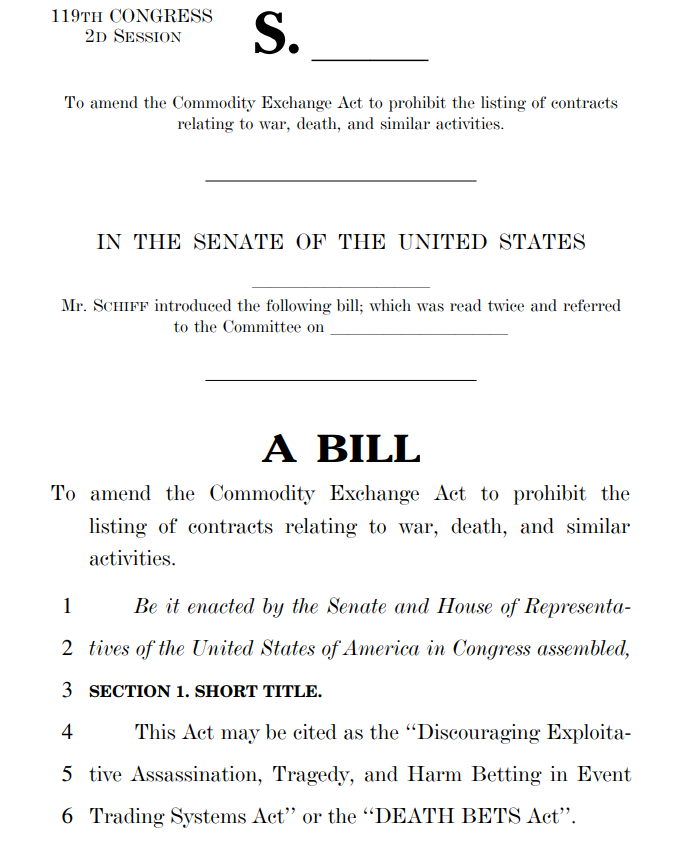
US Democratic Party Senator Adam Schiff introduced legislation Tuesday that would explicitly bar federally regulated prediction-market platforms from listing contracts tied to war, terrorism, assassination and individual deaths.
The bill, called the DEATH BETS Act, would amend the Commodity Exchange Act to make those contracts prohibited for entities overseen by the US Commodity Futures Trading Commission (CFTC).
In a statement announcing the bill, Schiff said markets that let traders profit from violent events create incentives for the misuse of classified information, threaten national security and encourage violence. He said prediction markets had become a “Wild West” and called for Congress and the CFTC to make clear that such “death bets” are not allowed.
The bill seeks to ban prediction market contracts that involve references to “terrorism, assassination, war, or any similar activity,” or that are related to an “individual’s death.” The bill was referred to the Senate Committee on Agriculture, Nutrition, and Forestry for consideration, where Schiff is a member.

US-Israel war with Iran ignites military insider concerns
The legislation comes after renewed scrutiny of event-contract platforms during the recent US and Israeli military confrontation with Iran, when war-related markets drew heavy trading and fresh allegations of insider activity.
Six Polymarket traders netted $1 million by accurately betting on the US strike against Iran.
Related: Suspected insider wallets rack up $1.2M betting on ZachXBT’s Axiom exposé
The six wallets were all created in February and placed all their bets on the contracts predicting the timing of a potential US attack, with several shares purchased only hours before the first reported explosions in Iran’s capital, Tehran.

On Tuesday, a new wallet spent $32,900 to bet on US forces entering Iran by Saturday, despite the odds continuing to decline, according to blockchain data platform Lookonchain.
Related: Kalshi, Polymarket face trading halt in Nevada after court rulings
In February, Israeli authorities arrested and indicted two people suspected of using secret information about Israel striking Iran for insider trading on Polymarket.
Insider concerns grew in January after a Polymarket account profited $400,000 after it placed a bet on a contract predicting that Venezuelan President Nicholas Maduro would be captured, wagering the funds just hours before US forces captured him.
Magazine: Inside a 30,000 phone bot farm stealing crypto airdrops from real users
Crypto World
Binance WSJ Lawsuit: The Crypto Exchange Sues Wall Street Journal Over ‘Defamatory’ Iran Sanctions Report
The Binance crypto exchange has officially filed a defamation lawsuit against the Wall Street Journal, or known as WSJ, in the Southern District of New York. The complaint, filed today (March 11), alleges the newspaper published false claims regarding the exchange’s compliance controls and handling of Iran sanctions data.
At the center of the dispute is a February report claiming Binance knowingly processed over $1Bn for sanctioned entities.
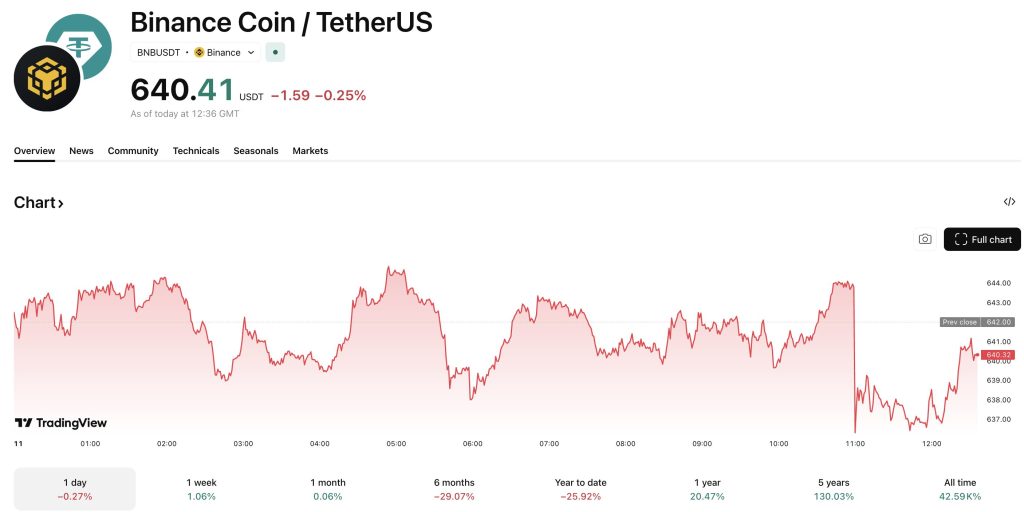
This news has led to the BNB price dropping 1% in the past hours, to $640, as investors are seemingly spooked at yet another potential legal dispute involving Binance.
CEO Richard Teng has condemned the reporting as inaccurate, stating the outlet ignored documented evidence provided before publication.
— Litest (@Litest) March 11, 2026
 BREAKING:
Binance launches defamation lawsuit against the Wall Street Journal over Iran sanctions report. pic.twitter.com/8qdrf9rXcD
What’s the WSJ Report Actually Alleged And Why Binance Says It’s Wrong
The Wall Street Journal article, titled “Binance Fired Staff Who Flagged $1 Billion Moving to Sanctioned Iran Entities,” depicted a chaotic internal struggle at the world’s largest crypto exchange.
It is alleged that compliance staff were fired not for policy breaches, but for doing their jobs identifying illicit flows.
Specifically, the report claimed Binance processed $1.7Bn in transactions linked to Iranian entities, including a Hong Kong-based fiat-to-crypto converter called “Blessed Trust.”
According to the Journal, this activity continued despite internal red flags. The report immediately triggered a regulatory inquiry.
US Senator Richard Blumenthal cited the article as grounds for demanding a formal investigation into the exchange’s operations, which Binance CEO Richard Teng responded to on March 6, denying all claims.
The allegations arrived during a sensitive period for crypto regulation, mirroring the pressure seen as Democrats introduce bills to ban platforms like Polymarket over compliance concerns.
DISCOVER: Next Crypto to Explode in 2026
Binance Fires Back: 19 Ignored Responses and a 96.8% Compliance Claim
Binance’s defense hinges on what it calls willful disregard for the facts. The exchange claims it sent the WSJ 19 detailed responses and answered 27 specific questions before the publication deadline, none of which appeared in the final story.
Richard Teng publicly rejected the narrative, emphasizing that the employees in question were dismissed for data policy violations, not for flagging sanctions evasion.
The exchange cited hard numbers to counter the defamation claims. Binance states it has achieved a -96.8% reduction in sanctions exposure risks through upgraded protocols. Currently, more than 1,500 employees, nearly a quarter of the workforce within Binance, work in compliance.
Regarding the specific “Blessed Trust” account, Binance clarified that the entity was offboarded and reported to law enforcement in 2025, long before the WSJ report suggested the activity was ongoing.
What This Means for Binance and the Broader Crypto-Media Relationship
This lawsuit seeks compensatory and punitive damages, arguing the report caused harm that no simple correction can fix. The legal action follows a significant win for Binance on March 7, when a federal judge dismissed a separate lawsuit alleging the exchange facilitated terrorist financing.
That court found no material support was provided, strengthening Binance’s position that it is not liable for the actions of bad actors who might attempt to access the platform.
Traders are watching this case closely as a test of the “actual malice” standard in crypto reporting. While the exchange settled with the DOJ in 2023 for $4.3Bn over historical failures, this aggressive legal stance signals a refusal to accept what it deems false narratives about its current operations.
The focus now shifts to the WSJ’s response and whether the regulatory inquiry sparked by the article will sustain momentum without the supporting media narrative.
We will continue to update this story as more details emerge over the coming days and weeks.
EXPLORE: Best Crypto Presales to Buy in 2026
The post Binance WSJ Lawsuit: The Crypto Exchange Sues Wall Street Journal Over ‘Defamatory’ Iran Sanctions Report appeared first on Cryptonews.

SlowMist Introduces Security Framework for Autonomous AI Agents in Crypto
How “Jury Duty Presents: Company Retreat” went 'much bigger in scope' for season 2 (exclusive)

I Entered The Manosphere. Nothing Could Prepare Me For What I Found.


-
Business5 days ago
Form 8K Entergy Mississippi LLC For: 6 March
-

 Tech6 days ago
Bitwarden adds support for passkey login on Windows 11
-

 News Videos2 days ago
10th Algebra | Financial Planning | Question Bank Solution | Board Exam 2026
-

 Fashion5 days ago
Weekend Open Thread: Ann Taylor
-

 Crypto World2 days ago
Paradigm, a16z, Winklevoss Capital, Balaji Srinivasan among investors in ZODL
-
 Tech7 hours ago
A 1,300-Pound NASA Spacecraft To Re-Enter Earth’s Atmosphere
-
 Sports6 days ago
499 runs and 34 sixes later, India beat England to enter T20 World Cup final | Cricket News
-

 Politics5 days ago
Top Mamdani aide takes progressive project to the UK
-

 Sports4 days ago
Three share 2-shot lead entering final round in Hong Kong
-

 Sports3 days ago
Braveheart Lakshya downs Lai in epic battle to enter All England Open final | Other Sports News
-

 Business22 hours ago
ExxonMobil seeks to move corporate registration from New Jersey to Texas
-

 NewsBeat6 days ago
Piccadilly Circus just unveiled ‘London’s newest tourist attraction’ and it only costs 80p to enter
-

 Entertainment5 days ago
Hailey Bieber Poses For Sexy Selfies In New Luscious Lip Thirst Traps
-

 Business3 days ago
Search for Nancy Guthrie Enters 37th Day as FBI Probes Wi-Fi Jammer Theory
-

 Business7 hours ago
Search Enters Sixth Week With New Leads in Tucson Abduction Case
-
 NewsBeat2 days ago
Pagazzi Lighting enters administration as 70 jobs lost and 11 stores close across Scotland
-

 Tech2 days ago
Despite challenges, Ireland sixth in EU for board gender diversity
-
Entertainment7 days ago
Harry Styles Has ‘Struggled’ to Discuss Liam Payne’s Death
-

 Crypto World7 days ago
New Crypto Mutuum Finance (MUTM) Reports V1 Protocol Progress as Roadmap Enters Phase 3
-

 Tech6 days ago
ACIP To Discuss COVID ‘Vaccine Injuries’ Next Month, Despite That Not Being In Its Purview