

Crypto World
Senate Approves CBDC Ban in Housing Bill, House May Revise


TLDR
- The U.S. Senate passed the housing bill in an 89 to 10 bipartisan vote.
- The bill blocks the Federal Reserve from issuing CBDCs until at least 2030.
- The measure prohibits the Fed from creating a digital dollar directly or through intermediaries.
- Lawmakers included the CBDC ban in the 21st Century ROAD to Housing Act.
- House members signaled they may seek changes before advancing the bill.
The U.S. Senate approved a housing bill that bars the Federal Reserve from issuing a digital dollar. Lawmakers passed the measure in an 89-10 bipartisan vote and attached the CBDC ban to the broader package. However, House lawmakers signaled they may challenge parts of the bill and delay its path forward.
Senate Blocks CBDCs Through 2030 in Housing Package
The Senate inserted language that blocks the Federal Reserve from issuing CBDCs until at least 2030. Lawmakers placed the provision in the final section of the 302-page 21st Century ROAD to Housing Act. The text states that the Fed may not create a central bank digital currency directly or indirectly.
The bill also bars the Fed from issuing any digital asset that resembles a central bank digital currency. It prohibits issuance through financial institutions or other intermediaries. As a result, the measure restricts both direct and indirect government-backed digital dollar efforts.
Republican lawmakers have long opposed CBDCs and have pushed to prevent their launch. However, the U.S. government has only studied digital dollar models and has not launched a token. Other jurisdictions, including China, continue to pursue central bank digital currencies.
Digital Chamber CEO Cody Carbone welcomed the Senate vote. He said, “Financial privacy is a cornerstone of American freedom.” He added that Congress and the public must decide on any authorization of a central bank digital currency.
Carbone also stated that digital innovation should remain private sector-led. He said the Senate reinforced the need to protect individual liberty. His comments followed the overwhelming bipartisan approval in the chamber.
House Review and Political Conditions Create Uncertainty
House lawmakers have indicated they may seek revisions to the Senate’s housing bill. Some members oppose provisions that limit how many homes large investors can own. The bill requires private equity firms and other large buyers to reduce their housing holdings.
The Senate measure targets institutional investors that control large housing inventories. Lawmakers aim to expand home access by capping ownership levels. However, the House may demand changes before advancing the legislation.
President Donald Trump has supported efforts to increase housing availability. He has also backed limits on large investors purchasing single-family homes. This overlap places him in partial agreement with some Democratic lawmakers.
However, Trump recently stated he will not sign legislation without new voter identification requirements. He said Congress must pass a bill requiring proof of citizenship for voters. This condition applies to legislation tied to this year’s midterm elections.
The demand for voter identification legislation adds complexity to the housing bill’s progress. Lawmakers must reconcile differences between the chambers before sending the bill to the president. Meanwhile, the Senate version includes the CBDC ban through 2030 as written.
Separately, Congress continues work on crypto legislation. Lawmakers are also reviewing the Digital Asset Market Clarity Act. The housing bill’s next steps now depend on House consideration and potential revisions.



Update (March 12 at 8:56 pm UTC): This article has been updated to include comments from CME Group Chief Executive Terry Duffy.
Michael Selig, chair of the US Commodity Futures Trading Commission (CFTC), has proposed a rule that could amend or issue new regulations over event contracts on prediction markets platforms like Kalshi and Polymarket.
In a Thursday notice, the CFTC issued a staff advisory classifying event contracts on prediction markets as a “financial asset class.” The regulator also submitted an Advanced Notice of Proposed Rulemaking to be published in the Federal Register, asking for public comment on how the Commodity Exchange Act (CEA) would apply to prediction markets.
“Prediction markets are one of the most exciting innovations in financial markets,” said Selig in a Thursday X post. “Yet for too long, the CFTC has failed to provide guidance for these markets being used by millions of Americans. This ends today.”

The staff advisory and proposed rule followed Selig publicly reiterating claims that the CFTC had “exclusive jurisdiction” over prediction markets in response to many state-level authorities filing lawsuits against companies like Kalshi and Polymarket for unlicensed sports betting. The CFTC chair said that he would take to court any state-level challenges to the agency’s authority over prediction markets.
Related: Utah set to block prediction markets as state-federal tensions rise
On Monday, an Ohio judge pushed back against Selig’s narrative in her denial of a preliminary injunction by Kalshi against Ohio gaming authorities and the state’s attorney general. She said in the ruling that the company had failed to show the CEA “would necessarily preempt Ohio’s sports gambling laws,” or that sports event contracts were subject to the “exclusive jurisdiction” of the CFTC.
“The courts have gone both ways here, as we’ve seen — some in favor and some opposed to the prediction markets,” said CME Group Chief Executive Terry Duffy, according to a Thursday Reuters report. “The states are all over the map on this. I don’t see how it doesn’t go to the Supreme Court for a definition of what is a prediction market on sports, and if that is the same as gambling.”
Selig is sole CFTC commissioner absent any White House nominations for vacant seats
Selig noted that he “voted in the affirmative” on the matter, while “no commissioner voted in the negative.” The CFTC chair sits alone in the agency’s leadership following the departure of acting chair Caroline Pham in December, on a panel normally filled with a bipartisan group of five commissioners.
Because only a majority of the quorum of CFTC commissioners are needed to sign off on a rule, Selig may have the sole authority to approve the prediction markets proposal after the required public notice and comment periods. As of Thursday, US President Donald Trump had not announced any additional nominations to the agency.
The public will have 45 days to submit comments following publication of the proposed rule in the Federal Register.
Magazine: Fly’s mind ‘uploaded,’ human brain cell wetware plays Doom: AI Eye

The Nasdaq is moving on AI spending again. Nvidia just invested $2 billion into an AI cloud company, and the GTC conference starts Monday. For stock investors, this is familiar territory: buy NVIDIA and hope the AI cycle has another leg.
But one asset class is producing returns that even the best NVIDIA stock price prediction cannot touch. Crypto presales with real revenue infrastructure are delivering pre IPO entries that Wall Street does not offer, and the math is not close.
Nvidia announced a $2 billion strategic investment in Nebius Group, an AI cloud infrastructure company, sending NBIS shares up over 15% according to CNBC. The GTC 2026 conference runs March 16 to 19 in San Jose, with multiple AI partnerships already announced per Motley Fool reporting.
The NVIDIA stock price prediction stays bullish, but $264 is a 42% gain on a $4.5 trillion company. The returns that change financial lives are not on the Nasdaq. They are in the presale market.
Where the Real Returns Live: Pepeto Exchange vs Wall Street’s Best Stocks in 2026
Pepeto: The Pre IPO Entry That Delivers What NVIDIA’s 42% Gain Cannot
The recent freeze of $5 million in Bitcoin at a centralized lending firm reminded the market how fast things can go wrong when you trust the wrong institution. That kind of vulnerability is exactly why smart capital is flowing into projects with audited infrastructure and transparent revenue models. Pepeto is one of those projects, and it is outpacing every presale in the market right now.
The presale is the equivalent of a pre IPO round still open to the public. The exchange is built, the SolidProof audit is complete, and the cofounder already took a previous project to a $7 billion market cap. In stock terms, that is like backing a founder who already built a company worth more than Palantir.
The presale has attracted $7.87 million and fills faster with every round. A former Binance expert on the advisory board is guiding the listing onto the largest crypto exchange in the world. The listing is the IPO moment, the event where the market prices this asset for the first time on the open market.
The 300x target follows the revenue model. The exchange processes trades across three blockchain networks with zero fees, and every trade sends revenue back to every holder through the audited smart contract. NVIDIA delivered a 10x over five years. The 300x math requires only the listing valuation that exchange tokens routinely achieve, in months, not half a decade.
Even if you have never touched crypto, the staking mechanics speak in a language every investor understands. At 209% annual yield, a $10,000 position generates roughly $20,900 in additional tokens over a year, which is about $1,741 per month. The S&P 500 averages 10%. Treasury bonds pay 4.5%. This is 209%, compounding daily, with no lock period on your capital. And the listing is approaching, which means the yield builds your position while the market prepares to price it for the first time. Every day you are not inside the presale is a day where that yield is working for someone else.
NVIDIA Stock Price Prediction: Analysts Target $264 but Return Math Has Changed
NVDA trades at $184, with a 12 month consensus target of $264 from 37 analysts, reflecting a 42% gain per Stock Analysis data. Revenue hit $215 billion in fiscal 2026, up 65% year over year.

Source : TradingView
The GTC conference supports the thesis. But at $4.5 trillion, even hitting $380 gives 104% over a year, which is solid for stocks but modest compared to pre listing entries.
Apple Stock Price Prediction: AAPL Consolidates Near $255
AAPL trades at $255, down 2.1% on the day per Yahoo Finance. The 52 week range spans $169 to $288. Medium term forecasts suggest a climb above $300, representing roughly 18% from current levels.
Apple generates strong cash flow, but at $3.8 trillion, the returns are single digit percentages that stock investors accept as normal.
Conclusion
The investors who bought Tesla at $17 before it listed on the mainstream exchange understood something that most people learn too late: the biggest gains come before the ticker goes public. Pepeto is sitting at that same stage right now, with a SolidProof audited exchange, 209% APY staking, and a Binance listing approaching.
Pepeto gives you 209% APY starting today and exchange token math that trillion dollar stocks cannot touch. Visit the Pepeto official website and enter the presale before the listing arrives and this pre IPO window closes behind every investor who missed it while it was still open.
Click To Visit Pepeto Website To Enter The Presale

FAQ
Is NVIDIA stock or Pepeto a better investment right now?
NVIDIA targets $264 for a 42% return. Pepeto at presale pricing with 209% APY and exchange infrastructure offers returns that trillion dollar stocks cannot produce. Visit the Pepeto official website for full details.
Can a crypto presale outperform the Nasdaq?
The Nasdaq averages 12 to 15% annually. Pepeto with $7.87 million raised, a SolidProof audit, and a Binance listing approaching offers multiples that decades of stock investing cannot match.
What is the NVIDIA stock price prediction for 2026?
Analysts target $264 with a high of $380 for NVIDIA. Pepeto at presale pricing targets the kind of returns that NVIDIA delivered once over five years, except the timeline is months, not years.
Disclaimer: This is a Press Release provided by a third party who is responsible for the content. Please conduct your own research before taking any action based on the content.


BlackRock’s newly launched staked Ethereum exchange-traded fund posted a strong first trading day, drawing roughly $15.5 million in volume as institutional interest in Ether investment products continues to grow.
Summary
- BlackRock’s staked Ethereum ETF (ETHB) recorded $15.5M in day-one trading volume.
- Bloomberg analyst James Seyffart called the debut “very, very solid” for a new ETF.
- Ethereum is trading around $2,110 at press time, hovering near the key $2K level amid market volatility.
BlackRock’s staked Ethereum ETF posts strong debut with $15.5M in trading
Bloomberg Intelligence ETF analyst James Seyffart said the debut performance of BlackRock’s staked Ethereum ETF, trading under the ticker ETHB, was impressive for a new listing.
“Vast majority of the trading is done and we are at $15.5 million in trading volume for the BlackRock staked Ethereum ETF — $ETHB. Very very solid for a day 1 ETF launch,” Seyffart wrote on X.
Earlier in the day, Seyffart noted that the fund launched with just over $100 million in assets and had already recorded approximately $11.1 million in trading volume by mid-afternoon in U.S. markets.
The ETF is managed by BlackRock and provides exposure to Ethereum while also incorporating staking, allowing the fund to generate yield from validator participation on the Ethereum network.
Trading data indicates that ETHB’s debut volume reached about $15.5 million with more than 590,000 shares changing hands during its first session. Analysts said that level of activity is considered a solid start for a newly launched ETF, even though some earlier crypto-linked funds recorded larger opening volumes.
The launch comes as Ethereum continues to hover around the psychologically important $2,000 level. Ether is currently trading at roughly $2,110, up about 4% over the past 24 hours.
Market data also shows the cryptocurrency has fluctuated near the $2,000 range in recent days after failing to sustain a rally above $2,200 earlier in the month, highlighting ongoing volatility in the second-largest digital asset.
BlackRock already operates other major crypto investment products, including spot Bitcoin and Ether ETFs.
BlackRock’s new staked ether (ETH) exchange-traded fund got off to a solid start Friday, pulling in more than $15 million in trading volume on its first day as Wall Street begins experimenting with yield-generating crypto ETFs.
The iShares Staked Ethereum Trust, trading under the ticker ETHB, launched with just over $100 million in assets and had already seen about $11 million in trading by early afternoon, according to Bloomberg ETF analyst James Seyffart. By late session, trading volume had climbed to roughly $15.5 million, suggesting strong initial demand for the product.
Those numbers are considered strong for an ETF launch, market watchers say.
“BlackRock’s Staked Ether ETF launched with just over $100 million in assets and has traded about $11.1 million through early afternoon,” Seyffart said on X, calling it “a pretty good start for any ETF.”
The product marks a significant evolution in crypto exchange-traded funds. Unlike traditional spot crypto ETFs that simply track the underlying asset, ETHB will generate yield by staking ethereum, distributing most of the rewards back to investors. Staking refers to locking coins in a cryptocurrency network in return for rewards. This is losely analogous to investing in fixed income instruments like bonds.
According to the prospectus, the fund will stake between 70% and 95% of its ether holdings at any given time. About 82% of the staking rewards will be paid out to investors through monthly distributions, similar to how dividend-paying ETFs distribute income.
The remaining 18% will be allocated among the trust, custodians and staking service providers.
The fund charges a 0.25% sponsor fee, though BlackRock is offering a temporary discounted rate of 0.12% on the first $2.5 billion in assets as it seeks to attract early investors.
ETHB is the latest addition to BlackRock’s growing digital assets ETF lineup. The firm already runs the iShares Bitcoin Trust (IBIT), which launched in January 2024 and quickly became the dominant bitcoin ETF, as well as the iShares Ethereum Trust (ETHA) introduced in July 2024.
Ethereum’s staking mechanism allows holders to lock up ETH to help secure the network in exchange for rewards, effectively creating a crypto-native yield. By packaging that yield inside an ETF wrapper, firms like BlackRock are attempting to make the structure accessible to traditional investors who cannot easily participate directly on-chain.
If staking ETFs gain traction, they may open the door to similar structures across other proof-of-stake networks — potentially turning crypto ETFs from passive exposure vehicles into income-generating financial instruments.


The crypto market rose 2.4% to $2.51 trillion on Friday primarily due to a shift in global risk sentiment following signals of potential de-escalation in the Middle East.
Summary
- Crypto prices rebounded on Friday after crude oil prices retreated following multi-year highs.
- A wave of short liquidations across leveraged markets and back-to-back inflows into major crypto ETFs also supported the recovery.
Bitcoin (BTC), the leading crypto asset by market cap, rallied nearly 4%, hitting close to the $72,000 mark. Ethereum (ETH) was up 4.3% over the past day, trading at $2,100 when writing. Other major crypto assets, such as BNB (BNB), XRP (XRP), Solana (SOL), and Dogecoin (DOGE), had also posted modest gains on the day.
It should be noted that today’s market rally was a standalone event as it detached from both the U.S. traditional stock indexes and tech stocks. The Dow Jones Industrial Average dropped by 739 points or 1.56% in U.S. trading hours, while tech-heavy stocks such as the S&P 500 and Nasdaq-100 fell by 103 and 431 points, respectively.
The crypto market rallied as Investor risk-on sentiment improved after oil prices dropped sharply across the globe. Notably, Brent crude oil fell over 7% today, easing immediate fears of inflation and providing a more favorable environment for digital assets.
Short liquidations mount
As crypto prices rallied, it caught short sellers off guard, triggering liquidations of these highly leveraged positions. Data from CoinGlass shows that nearly $246 million was liquidated from leveraged markets, with the majority coming from short positions.
The total crypto market open interest also rose 5.2% on Friday, signalling that investors were injecting fresh capital into the market.
ETF inflows and Coinbase premium
Inflows into spot ETF products have also supported the recent gains. According to data from SoSoValue, on Thursday, $53.87 had entered spot Bitcoin ETFs, which marks the fourth straight day of inflows for these funds. A similar trend was visible across their Ethereum counterparts, which have posted three back-to-back days of inflows.
At the same time, Coinbase Premium has also risen sharply over the past 24 hours, indicating that U.S. institutions are paying a premium over global prices to secure Bitcoin. Traders often view this as a strong bullish signal that institutional “smart money” is leading the current market charge.
Crypto market rallied following Trump’s recent comments
Crypto prices also benefited after U.S. President Donald Trump recently hinted that the ongoing war between the two countries may be coming to an end.
This seemed to have calmed investor fears of a prolonged war, which in turn sparked a risk-on sentiment among investors who have begun moving capital from safe havens back into risk assets like crypto.
Disclosure: This article does not represent investment advice. The content and materials featured on this page are for educational purposes only.
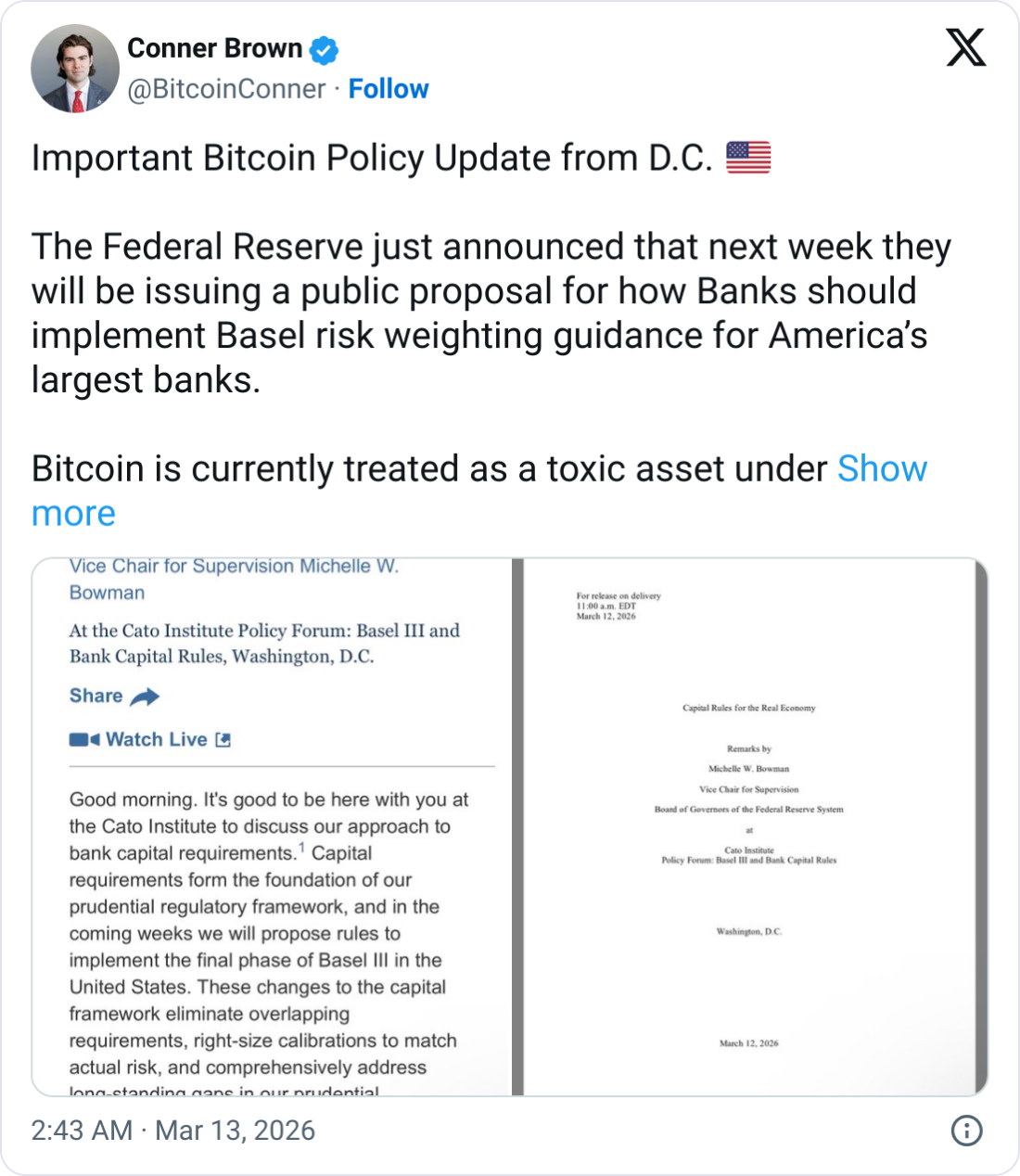
The Bitcoin Policy Institute (BPI) says it will push the US Federal Reserve to change how Bitcoin is treated, as the central bank is set to issue rules on how banks should implement international guidelines for asset risk weighting.
“BPI will be reviewing this proposal closely and submitting a public comment to ensure that US regulators get Bitcoin’s treatment right,” Bitcoin Policy Institute managing director Conner Brown said in an X post on Wednesday.
It comes just a day after the Fed announced it will issue a proposal for public comment on how US banks should implement risk-weighting guidance, which determines how risky different assets are on a bank’s balance sheet, from the Basel Committee on Banking Supervision.
Brown said Bitcoin (BTC) is “treated as a toxic asset under the Basel framework, a global standard for banking regulations.

He added it carries a 1,250% risk weighting, which was “harsher than virtually all other asset classes.”
“More efficient regulation” is the aim: Fed
Federal Reserve vice chair for supervision Michelle Boman said on Thursday that the agency will be proposing rules in the coming weeks to implement the final phase of Basel in the US.
Bowman said that the aim is “more efficient regulation and banks that are better [positioned] to support economic growth, while preserving safety and soundness.”
The 1,250% capital requirement means that banks must back any Bitcoin on their balance sheets at a 1:1 ratio with approved collateral, making holding the cryptocurrency more costly than other asset classes.
Cash, physical gold and government debt carry a 0% risk weight under the Basel framework.
“The most punitive classification”: Bitcoin Policy Institute
Brown said in a blog post last month that the treatment of Bitcoin is the “most punitive classification” in the Basel Committee’s capital framework and a “category error.”
Related: Bitcoin hugs $70K range as March Fed rate cut odds fall below 1%
In 2021, the Basel Committee proposed placing crypto in its high-risk Group 2 set of assets. Group 2 holdings were restricted to under 1% of the value of their Group 1 holdings.
“This risk weighting makes it extremely difficult for banks to provide financial services to Bitcoiners and Bitcoin companies,” Brown said.
Magazine: All 21 million Bitcoin is at risk from quantum computers
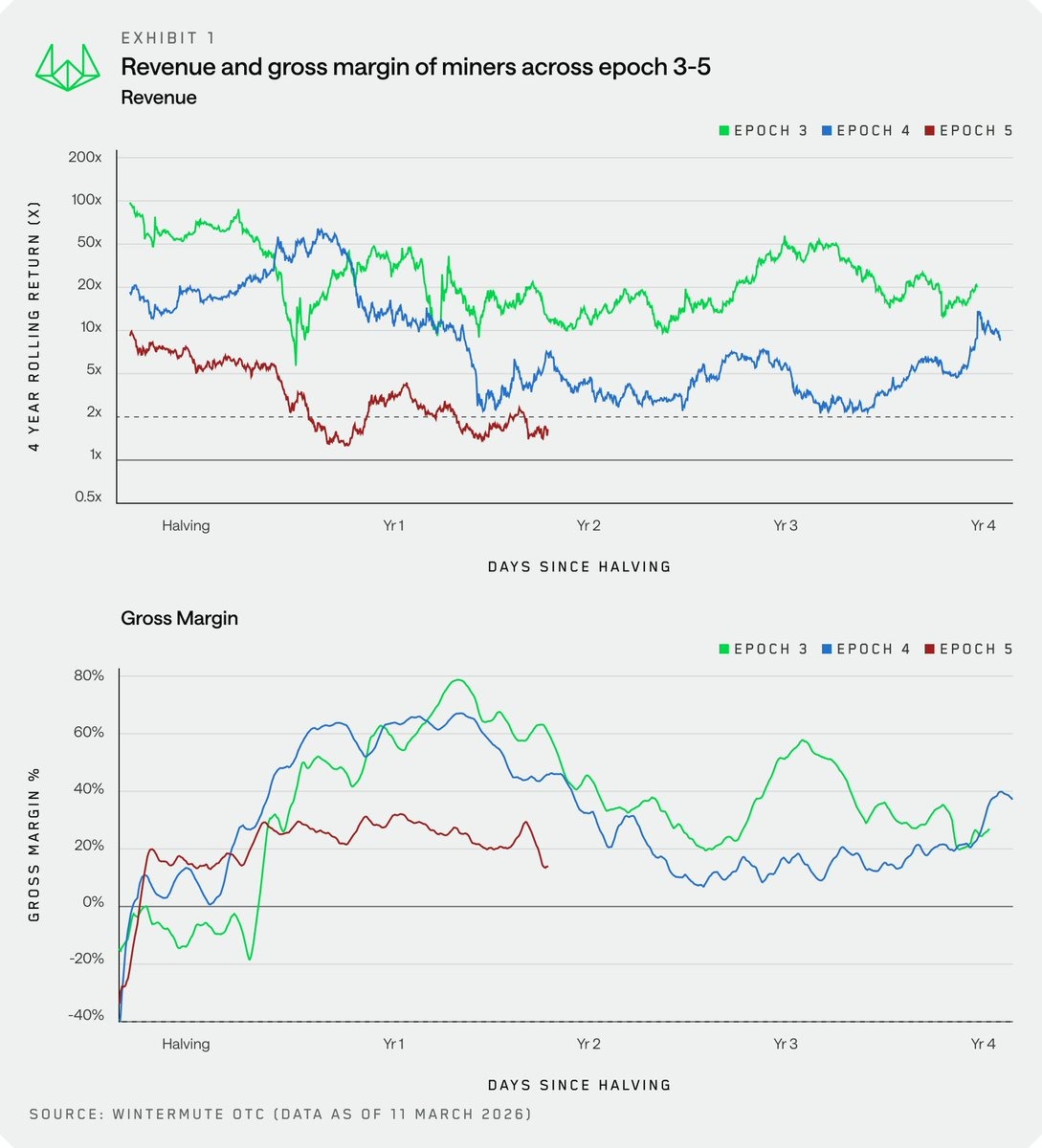
Many Bitcoin miners are struggling to turn a profit this market cycle due to diminishing returns, so they may need to pivot to artificial intelligence hosting or put their holdings to work to generate yields, says market maker Wintermute.
Wintermute said in a blog post on Thursday that Bitcoin (BTC) miners have spent years building large-scale power infrastructure in low-cost energy markets, and they now find themselves “sitting on exactly what the AI industry needs most urgently and cannot easily replicate.”
It said that Bitcoin mining is a “structurally rigid business model,” and while the AI pivot is a compelling one, it is also a “drastic and capital-intensive step.”
The report comes as mining giant MARA Holdings is the latest to eye AI, filing with the SEC on March 3 to signal its intent to sell some of its BTC to pivot to the technology. Meanwhile, publicly listed miners have sold more than 15,000 Bitcoin since October.
Miners hanging onto Bitcoin is “legacy of the HODL era”
Wintermute said that Bitcoin miners are collectively holding close to 1% of the total BTC supply, which it argued was a “legacy of the HODL era,” and that the “full toolkit of treasury management remains largely untapped.”
Crypto yield generation has been traditionally limited to staking and DeFi, but Wintermute said miners could tap yields through active management, such as monetizing market risk through derivatives structures, covered calls, and cash-secured puts.
Passive management options include deploying BTC into lending protocols to earn interest.

“We believe active balance sheet management is the most underutilized lever available to miners and one that deserves far greater strategic attention,” Wintermute said. “The miners who treat their BTC holdings as a working asset rather than a passive reserve will carry a structural edge into the next halving.”
Related: Mining companies move deeper into AI, HPC as MARA may sell Bitcoin
Wintermute said that for the first time in a four-year market cycle, Bitcoin has failed to deliver the two-times price return needed to offset halving-driven revenue cuts, and gross margins have peaked at levels that previously marked bear market floors.
Additionally, the transaction fee market has not filled the gap as it is “episodic” and not structural. At the same time, energy costs continue to squeeze margins.
The company noted that data suggests this squeeze is unlike previous cycles in 2018 and 2022, describing it as a “healthy shakeup” that fits within the design of Bitcoin and will make the mining industry “more efficient as a result.”
Magazine: All 21 million Bitcoin is at risk from quantum computers
This Friday, we examine Ethereum, Ripple, Cardano, Binance Coin, and Hyperliquid in greater detail.
Ethereum (ETH)
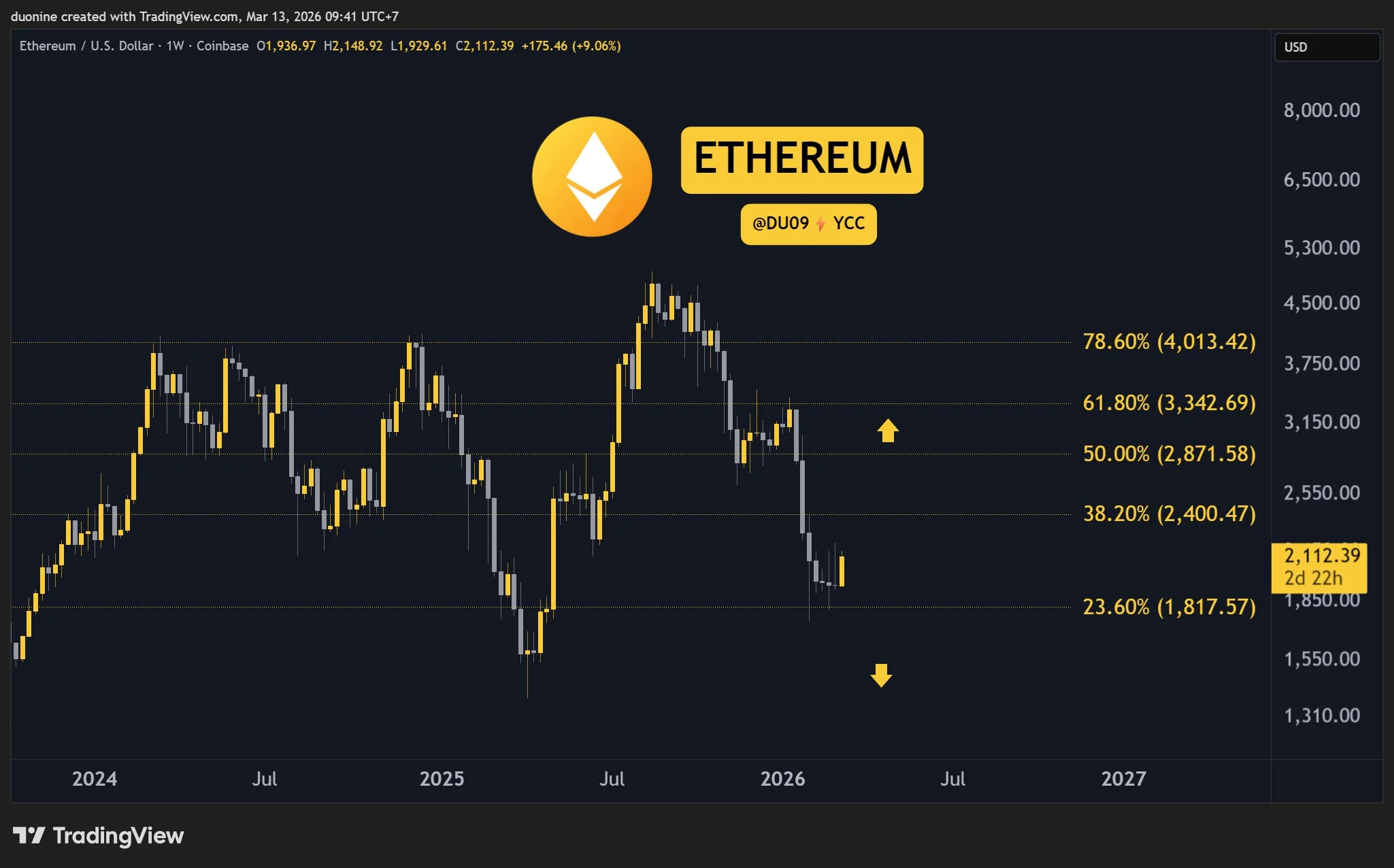
Ethereum continues to hold well above the $2,000 support level and closed the week in the green with a 1% gain. Even if this is small, it shows sellers no longer have control over the price, being unable to push it lower.
The current price action is also giving clear bullish signals, hinting at a major reversal. To confirm it, buyers will need to break through the $2,400 resistance.
Looking ahead, this is the first time in months when Ethereum has a clear shot at moving higher. To sustain a relief rally, the price will have to break $2,400 and then $2,800, which are acting as key resistance levels.
Ripple (XRP)
XRP is flat compared to last week, but it still held well above $1.4. This is somewhat similar to the $2,000 support of Ethereum. As long as $1.4 holds, the bias leans bullish.
The most important resistance on the chart is at $1.6, and if XRP can break above it and turn it into key support, then bulls will have full control over price action, which may allow them to aim for $2 next.
Looking ahead, this cryptocurrency has a good shot at reversing the downtrend here, and that starts with a clean breakout above $1.6. Hopefully, this can take place in the weeks to come.

Cardano (ADA)
Cardano appears ready to turn around, even if the price remains similar to last week. The support at 24 cents held well, and now the resistance at 28 cents is being put under pressure.
Should buyers break above $0.28, ADA has a clear path to $0.40 and beyond. The momentum indicators, such as the MACD, are also turning bullish on the weekly timeframe, encouraging bulls further.
Looking ahead, a sustained relief rally could bring this cryptocurrency back to 50 cents, but for that to happen, the overall market has to turn bullish and remain so for at least a few months.

Binance Coin (BNB)
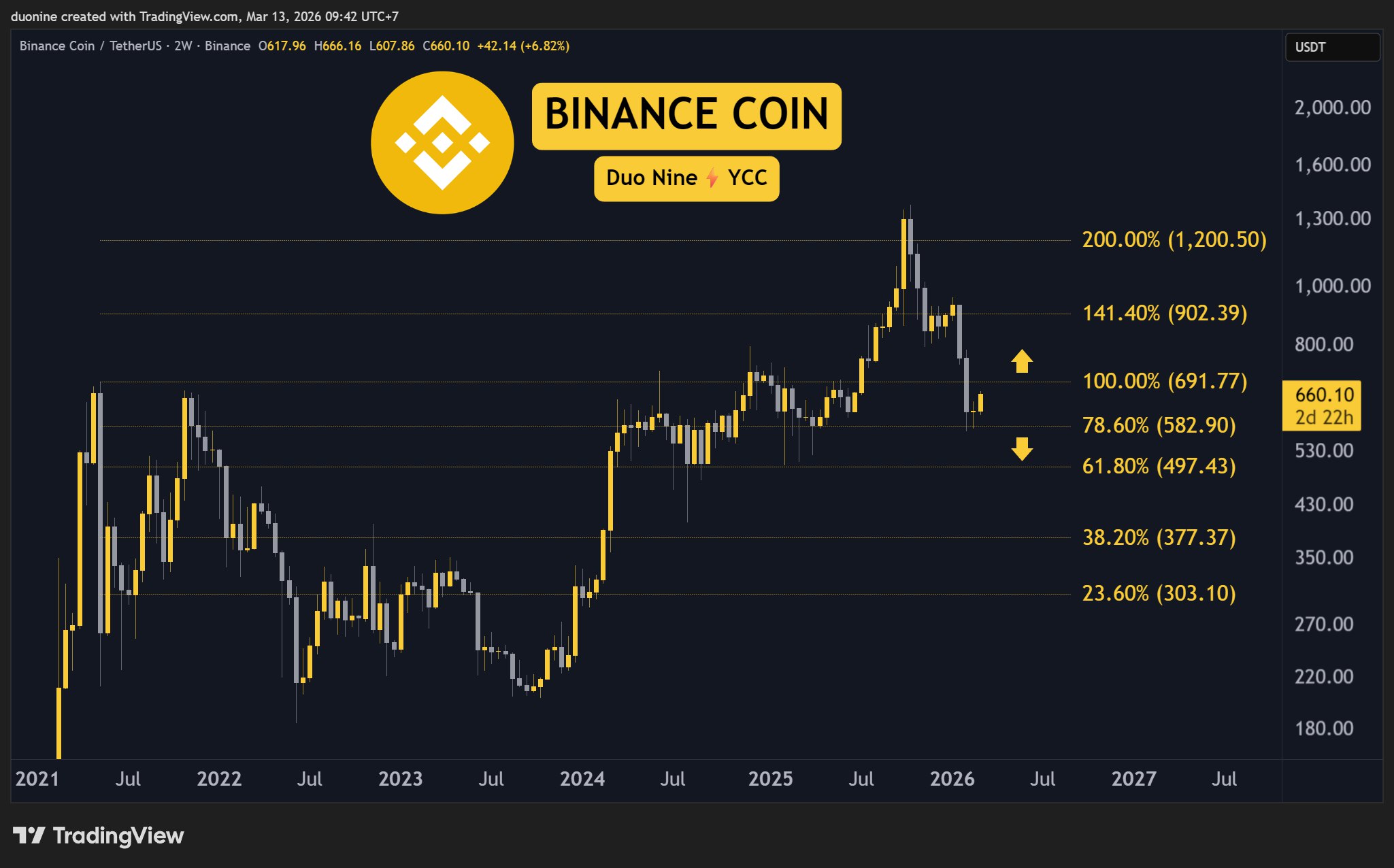
Binance Coin is up 2% this week after finding support at $580. Should this bullish momentum intensify, then a test of the key resistance at $690 appears inevitable in the coming days.
While momentum is positive, the buy volume remains rather low. Any weakness in this rally will likely be easily exposed once the key resistance is tested. Sellers could return there to reverse any recent gains.
Looking ahead, BNB wants to break out of its consolidation above the key support and move higher. To be successful, it will need to break above $690 and defend that level from any sellers.
Hype (HYPE)
HYPE is up by 24% this week, making it the best-performing cryptocurrency on our list and across most of the market. This sustained performance was due to the recent breakout above the $36 resistance.
After the price bottomed around $20 in mid-January, HYPE began a strong rally that is still ongoing with two major impulses up. The first took place in late January and saw the price go above $30, and now the second impulse up in March took the price closer to $40.
Looking ahead, HYPE will face resistance at $40 and $42. If it breaks these levels, its path to $50 will open up. If successful, this would be an impressive achievement in a bear market.

Binance Free $600 (CryptoPotato Exclusive): Use this link to register a new account and receive $600 exclusive welcome offer on Binance (full details).
LIMITED OFFER for CryptoPotato readers at Bybit: Use this link to register and open a $500 FREE position on any coin!
Disclaimer: Information found on CryptoPotato is those of writers quoted. It does not represent the opinions of CryptoPotato on whether to buy, sell, or hold any investments. You are advised to conduct your own research before making any investment decisions. Use provided information at your own risk. See Disclaimer for more information.
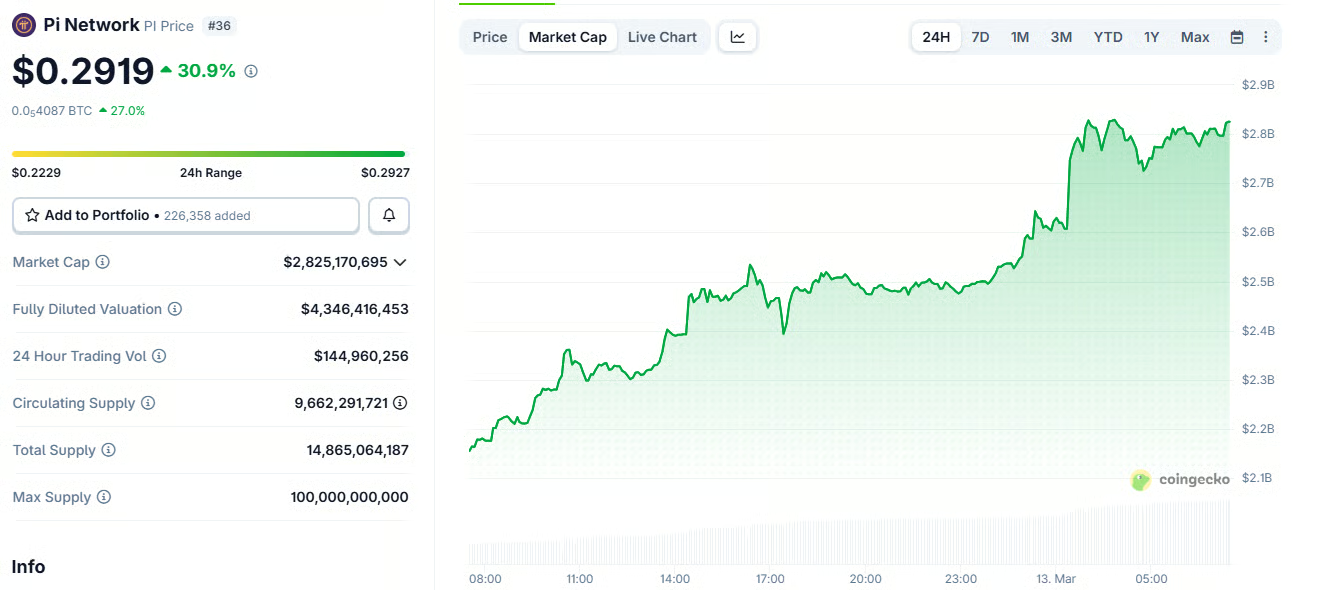
Pi Network’s price explodes 30% daily, adding to a total increase of more than 100% for the past month.
The price of Pi Network’s native cryptocurrency, PI, has exploded by more than 30% over the past 24 hours. This makes it the single best performer among the top 100 coins by total market capitalization, ahead of Render (RENDER) and Bittensor (TAO), which are up 19.4% and 12.9%, respectively.
Pi Network Price Increase: Factors to Consider
As CryptoPotato reported yesterday, one of the leading cryptocurrency exchanges in the United States, Kraken, announced that it will list PI. Per the statement, trading was supposed to start today, on March 13th.
At the time of this writing, trading hasn’t started yet, but anticipation is building. The latest move also comes on the back on a massive 175% increase in 24-hour trading volume, signaling heightened investor interest.
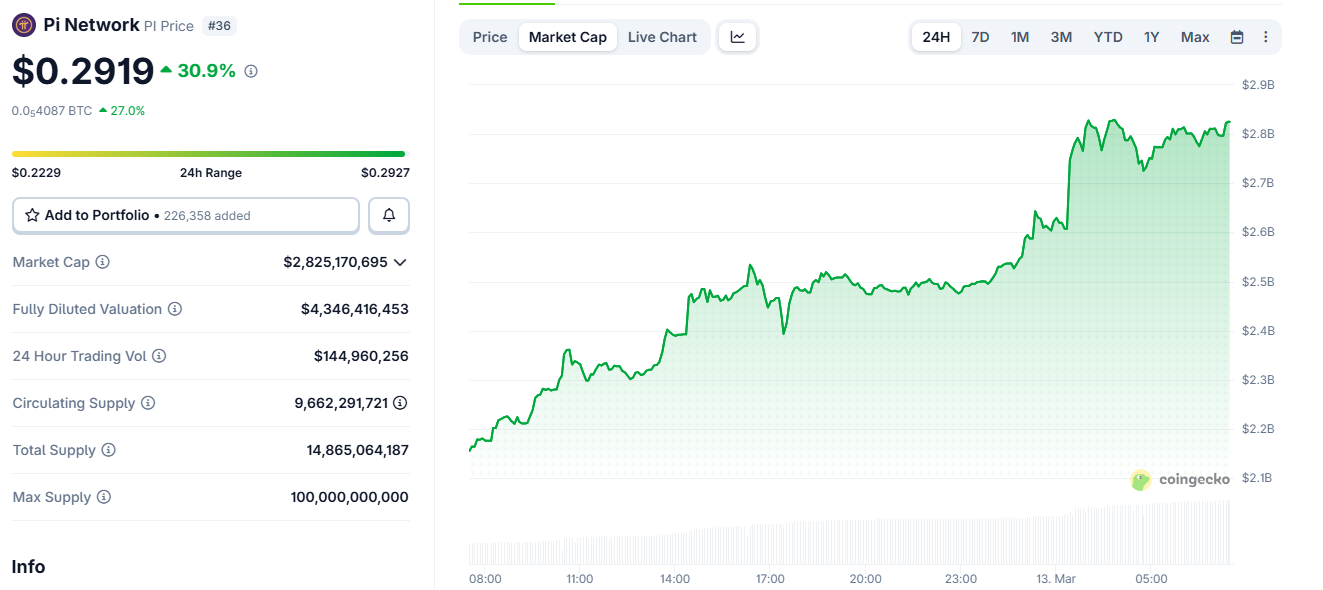
Pi Network’s price increase also puts its total market capitalization at around $2.8 billion, making it the 36th largest project by this metric, although its fully diluted valuation surpasses $4.3 billion.
What’s Next?
It’s interesting to see if the most recent rally can be sustained, given the uncertainty in the crypto and broader markets. However, it’s worth noting that PI’s price has been performing really well in the past month, despite the ongoing turbulence.
The cryptocurrency is up 73.5% in the past 14 days, adding to a combined increase of more than 112% in the past month alone.
This comes ahead of March 14th – a date that’s largely celebrated as Pi Day within the community. Although the celebration is broader and usually associated with the number (not the project), it has become some sort of a tradition.
You may also like:
Binance Free $600 (CryptoPotato Exclusive): Use this link to register a new account and receive $600 exclusive welcome offer on Binance (full details).
LIMITED OFFER for CryptoPotato readers at Bybit: Use this link to register and open a $500 FREE position on any coin!
Disclaimer: Information found on CryptoPotato is those of writers quoted. It does not represent the opinions of CryptoPotato on whether to buy, sell, or hold any investments. You are advised to conduct your own research before making any investment decisions. Use provided information at your own risk. See Disclaimer for more information.

The fresh capital from Kraken’s parent company, Ark Invest, and Bitmine has backed Eightco’s new bets on OpenAI and MrBeast
Shares in Eightco Holdings (ORBS) jumped 12% on Thursday after it raised $125 million to back its bets in blockchain and artificial intelligence.
Eightco said on Wednesday that crypto treasury firm Bitmine led the funding with $75 million, while Ark Invest and Payward, the parent company of crypto exchange Kraken, each chipped in $25 million apiece.
The company added that Bitmine chairman Tom Lee would join Eightco’s board and Ark Invest’s chief futurist Brett Winton also signed on as a board advisor.
Eightco chairman Dan Ives, known for his bullish commentary on the tech sector, also stepped down from his position after being appointed to the role in September.
Eightco said the capital would support its expansion “into investing in technology shaping the next generation of artificial intelligence, blockchain infrastructure, and global digital consumer platforms.”
Eightco bets on MrBeast, OpenAI
Eightco said that it had also closed an initial $50 million strategic investment into OpenAI and another $25 million investment into Beast Industries and its owner and YouTuber James Donaldson, better known as MrBeast.
“These investments position ORBS as a hub at the center of key frontier AI technologies and content creation, expanding its portfolio to include ownership stakes in world-leading innovators,” Eightco said.

Related: Crypto accounting startup Cryptio lands $45M as institutions move onchain
Shares in Eightco ended trading on Thursday up 11.67% to 90 cents in reaction to the announcement. The stock saw a slight fall after hours, dropping by 2.6% to 88 cents.

Shares in Eightco are down over 92.49% in the past six months as stocks tied to crypto have been battered amid a broad market downturn.
Eightco is an e-commerce inventory management platform that made its first crypto play in September, announcing it would buy and hold Worldcoin (WLD), which sent its share price surging by 3,000% in a single day.
Magazine: Human brain cell wetware plays Doom, fly’s mind uploaded: AI Eye

CFTC Chair Opens Prediction Markets Rulemaking to Public Comment

Jayden Wallace Talks After Fatal Prank, Teacher’s Family Reacts

Thaad: The US may move its anti-missile system out of South Korea


![BITCOIN IS ABOUT TO BREAKOUT!!!!! [GET READY]](https://wordupnews.com/wp-content/uploads/2026/03/1773381137_maxresdefault-80x80.jpg)
-
Business7 days ago
Form 8K Entergy Mississippi LLC For: 6 March
-

 News Videos4 days ago
10th Algebra | Financial Planning | Question Bank Solution | Board Exam 2026
-

 Fashion7 days ago
Weekend Open Thread: Ann Taylor
-

 Crypto World4 days ago
Paradigm, a16z, Winklevoss Capital, Balaji Srinivasan among investors in ZODL
-
 Tech2 days ago
A 1,300-Pound NASA Spacecraft To Re-Enter Earth’s Atmosphere
-

 Politics7 days ago
Top Mamdani aide takes progressive project to the UK
-

 Tech3 days ago
ChatGPT will now generate interactive visuals to help you with math and science concepts
-

 Business3 days ago
ExxonMobil seeks to move corporate registration from New Jersey to Texas
-

 Sports5 days ago
Three share 2-shot lead entering final round in Hong Kong
-

 Sports5 days ago
Braveheart Lakshya downs Lai in epic battle to enter All England Open final | Other Sports News
-

 NewsBeat2 days ago
Residents reaction as Shildon murder probe enters second day
-

 Entertainment6 days ago
Hailey Bieber Poses For Sexy Selfies In New Luscious Lip Thirst Traps
-

 Business5 days ago
Search for Nancy Guthrie Enters 37th Day as FBI Probes Wi-Fi Jammer Theory
-

 Business2 days ago
Search Enters Sixth Week With New Leads in Tucson Abduction Case
-
 NewsBeat3 days ago
Pagazzi Lighting enters administration as 70 jobs lost and 11 stores close across Scotland
-

 Tech4 days ago
Despite challenges, Ireland sixth in EU for board gender diversity
-

 Business3 days ago
Search Enters 39th Day with FBI Tip Line Developments and No Major Breakthroughs
-

 NewsBeat2 days ago
I Entered The Manosphere. Nothing Could Prepare Me For What I Found.
-

 Business6 days ago
Iran war enters second week as Trump demands ’unconditional surrender’
-

 Sports4 days ago
Skateboarding World Championships: Britain’s Sky Brown wins park gold