
Crypto World
South Africa moves to pull crypto into strict capital flow rules



South Africa’s 2026 capital flow draft recasts crypto as “capital,” tightening FX controls with declarations, approvals and sanctions as Africa’s biggest market matures.
Summary
- South Africa’s National Treasury has published draft 2026 capital flow regulations that formally bring crypto assets inside the country’s foreign exchange control regime.
- The rules would align South Africa with OECD and FATF standards, tighten oversight of cross‑border crypto transfers, and introduce new declaration, reporting, and sanction powers.
- The proposal lands as South Africa cements its role as Africa’s largest crypto market, with an estimated $35 billion in annual on‑chain volume and a sector value above $11 billion.
South Africa’s National Treasury has released its Draft Capital Flow Management Regulations for 2026, a sweeping overhaul that explicitly classifies crypto assets as “capital” and pulls them into the country’s foreign exchange control framework for the first time. The proposal, published on April 17 and now open for public comment, aims to replace the 1961 Exchange Control Regulations and align South Africa’s regime with recommendations from the OECD and the Financial Action Task Force (FATF) on combating money laundering, terrorist financing, and illicit financial flows.
According to the draft, crypto assets are now treated as a channel through which capital can be imported and exported, placing them alongside foreign currency, gold, and securities rather than outside the regulatory perimeter. National Treasury and the South African Reserve Bank said in a joint statement that the amendments are intended “to address gaps in the current regulations, including in relation to cross‑border crypto asset transactions,” and to remove “any ambiguity regarding the declaration of foreign assets.”
Prior approval, declarations, and tougher sanctions
The new framework introduces authorised crypto asset service providers, transaction thresholds, mandatory declarations, and stiffer administrative sanctions for non‑compliance. In practice, this could mean that certain cross‑border crypto transfers will require prior approval from authorities, while residents and visitors may have to declare digital asset holdings above thresholds set by the finance minister, with the risk of seizure or forced sale if they fail to do so.
Bitcoin.com reported that draft rules “require visitors to declare crypto or face up to 5 years in prison,” and grant border officials powers to search devices for coins such as Bitcoin and other tokens suspected of being moved in violation of capital controls. Business Insider Africa added that the same regulations could “require residents to declare and sell certain crypto, gold and foreign currency holdings to the National Treasury” if they exceed those thresholds.
National Treasury insists the overhaul does not amount to a ban on digital assets but a modernization of control tools. “The policy emphasis shifts away from transaction‑by‑transaction pre‑approval towards reporting, traceability and risk‑based oversight, particularly in relation to illicit financial flows and capital flight,” the South African Institute of Taxation wrote in a commentary, describing the approach as a “pragmatic acknowledgment that value now moves across borders digitally.”
Africa’s largest crypto market under tighter watch
The timing is significant for a country that has emerged as the continent’s biggest crypto hub by volume and venture funding. Chainalysis data cited by Mariblock show that Sub‑Saharan Africa received more than $205 billion in on‑chain value between July 2024 and June 2025, with South Africa accounting for about $35 billion of that total, second only to one other market in the region.
Market research from IMARC Group estimates that South Africa’s cryptocurrency market reached roughly $11.18 billion in 2024, driven by both speculative trading and real‑world use cases such as remittances and hedging against domestic currency volatility. A CV VC report highlighted that the country captured 18% of all African blockchain venture capital, with blockchain deals representing 7.4% of total VC funding on the continent — more than double its approximate 3.2% share globally.
Those figures, combined with South Africa’s exit from the FATF grey list in late 2025 and preparations for the next assessment cycle starting mid‑2026, help explain the urgency behind the draft. Treasury officials argue the rules are a “vital prerequisite” for modernizing the financial architecture and shutting down channels for illicit flows, even as critics warn they could chill innovation and push activity into less regulated jurisdictions if implemented heavy‑handedly.


TLDR:
- Brazil banned derivatives tied to sports, politics, gaming, and entertainment events from May 4
- Foreign prediction market contracts offered in Brazil also fall under the new derivatives restriction
- Only contracts linked to financial benchmarks like rates, prices, and indices remain allowed
- Securities regulators now hold broad authority over future event-based derivatives listings
Brazil moved to block prediction market contracts tied to sports, politics, and entertainment under a new derivatives market rule approved this week.
Moreover, the measure targets contracts linked to real-world and virtual events that regulators say do not reflect economic or financial benchmarks. It also applies to foreign derivatives offered inside Brazil, widening the reach of the restriction.
The new framework takes effect on May 4 and places enforcement duties on the Securities and Exchange Commission.
Brazil Prediction Market Ban Reshapes Derivatives Trading
The National Monetary Council approved Resolution No. 5,298 during its April 23 session. The Central Bank of Brazil published the measure on April 24.
Additionally, the resolution sets new rules for how derivatives markets must operate across the country. It places investor protection and market integrity at the center of the framework.
Under Article 3, firms cannot offer or trade derivative contracts linked to sporting events. This includes contracts tied to real sports competitions covered under Law No. 14,790 of 2023.
The ban also covers virtual online gaming events. That extends the rule to contracts tied to esports and similar digital competitions.
Political, electoral, social, cultural, and entertainment events also fall under the restriction. Regulators said these events do not qualify as proper economic or financial benchmarks.
The Securities and Exchange Commission can also classify other event-based contracts as prohibited. That gives regulators broad control over future listings.
Crypto Derivatives Rules Extend Beyond Domestic Markets
Article 4 expands the ban beyond Brazil-based platforms. It applies to foreign derivatives if they are offered within national territory.
That means offshore prediction market products could also face restrictions when targeting Brazilian users. Crypto-linked event contracts may fall under this scope depending on structure.
The resolution allows only contracts tied to recognized financial benchmarks. These include exchange rates, interest rates, bond indices, securities indices, and commodity prices.
Financial assets and securities traded on organized markets remain allowed. Other benchmarks must rely on consistent and verifiable pricing methods.
The council said the rules aim to prevent regulatory arbitrage and harmful speculation. It also cited product suitability and transparency as minimum standards.
At the same time, the framework includes innovation as one of its guiding principles. Regulators appear focused on limiting speculative event contracts without disrupting broader derivatives markets.
Central Bank President Gabriel Muricca Galípolo signed the resolution. The Securities and Exchange Commission will now issue supplementary rules for implementation.
The new policy arrives as prediction market platforms gain traction globally, including in crypto trading circles. Brazil’s move draws a clearer line between financial derivatives and speculative event betting.

TLDR:
- ALGO joins Japan’s JVCEA Green List, enabling faster exchange listings under strict regulatory oversight standards.
- Price breaks out of a long-term descending channel, marking a shift from bearish structure to early bullish setup.
- Strong demand zone between $0.0794 and $0.10 continues to hold, supporting accumulation and price stability.
- A projected move toward $0.33 reflects over 300% upside if ALGO maintains support and breaks resistance levels.
Algorand has secured a regulatory milestone in Japan, as ALGO joins the JVCEA Green List. At the same time, market data shows ALGO moving out of a prolonged downtrend, with price structure hinting at a potential bullish reversal.
Japan Approval Strengthens ALGO Market Position
The approval places ALGO among digital assets cleared for streamlined exchange listings in Japan. The list is maintained by the Japan Virtual and Crypto Assets Exchange Association and overseen by the Financial Services Agency. This process aligns crypto oversight with traditional financial standards.
The Algorand Foundation shared the update, noting that ALGO now meets compliance thresholds required by Japanese exchanges. This allows faster integration into licensed trading platforms across the country.
The development comes as Japan maintains strict crypto regulations. Therefore, inclusion on the Green List often signals institutional readiness. Unlike informal approvals, this framework involves regulatory scrutiny similar to banking and securities markets.
Meanwhile, a market analyst known as Lucky Luciano BTC shared a chart suggesting ALGO may be entering a bullish phase.
The narrative around quantum-resistant blockchain positioning, which continues to gain attention among traders.
Technical Structure Shows ALGO Trend Reversal Setup
According to analyst Lucky, price action shows ALGO trading inside a descending channel between July and December 2025.
During that period, lower highs and lower lows defined a sustained bearish structure. A sharp rejection in October accelerated selling pressure and pushed the price toward a base.
That base formed between $0.0794 and the $0.09–$0.10 range. From January to March 2026, ALGO repeatedly tested this zone and held firm. This behavior indicated steady buyer interest and accumulation within a defined demand area.
In early April 2026, ALGO broke above the descending channel near the $0.10–$0.11 region. The breakout aligned with previous resistance and trendline confluence. Current price levels show a close at $0.1065, with a high of $0.1079 and a low of $0.1044.
After the breakout, ALGO moved toward the $0.12–$0.13 range before pulling back. It then consolidated between $0.105 and $0.11. This phase suggests that prior resistance is now acting as support, while buyers maintain higher lows.
The chart outlines a projected move toward $0.3360, representing a potential increase of over 300% from the breakout zone. This target aligns with historical resistance and a psychological range between $0.30 and $0.34.
Key levels remain clear. Immediate support sits between $0.10 and $0.105, while the broader demand floor remains at $0.0794. Resistance levels appear at $0.12–$0.14, followed by $0.18–$0.22, and then the projected upper range.
For the bullish structure to remain intact, ALGO needs to hold above $0.10 and break above $0.12. If that occurs, the price may move toward higher resistance zones. However, a drop below $0.10 could weaken the setup and return ALGO toward the lower demand area.
The current structure shows ALGO transitioning from a bearish phase into a potential recovery stage, supported by both technical patterns and regulatory developments in Japan.


One of the biggest stock-market debuts in history is six weeks away, and crypto sits in the same liquidity pool it will draw interest from.
SpaceX filed a confidential S-1 with the SEC earlier this month, targeting a $75 billion capital raise at a $1.75 trillion valuation.
If it prices anywhere near that level in its expected June listing, the offering will be more than 2.5 times larger than Saudi Aramco’s $29 billion 2019 record, making it the biggest stock-market debut in history. Polymarket traders assign a 65% probability of a June listing and a 53% probability that the first-day closing market cap exceeds $2 trillion.
SpaceX isn’t alone. ChatGPT maker OpenAI is targeting a Q4 listing at a valuation near $1 trillion. Anthropic is reportedly planning an October debut that could raise more than $60 billion.
If all three reach the public market on schedule, they would pull in more than $240 billion from June through year-end, a figure PitchBook estimates exceeds every venture-backed US IPO combined since 2000.
“After the SpaceX IPO, I think you start to get very bearish equities. That’s the Solana $300 moment,” Alex Good, founder of crypto AI project Post Fiat, said on a recent CounterParty TV interview.
“Right now we’re in this max bid moment, every investment bank is going to upgrade every AI stock because they’re going to get so much fees off of these IPOs.”
Good’s framing captures the mechanical setup, where the three largest listings could be concentrated in a six-month window, preceded by coordinated sell-side optimism from the banks running the deals and followed by the rotation out.
MSCI, the firm that builds many of the benchmark stock indexes institutional portfolios track, modeled a scenario in February that flagged megacap IPOs in 2026 could trigger index-driven flows measured in billions of dollars, sector-rotation effects across global benchmarks, and a compression of liquidity in everything outside the new names.
Crypto sits inside the same risk-on liquidity pool that funds tech and AI equities.
Bitcoin, ether, and the rest of the majors have traded with tightening correlation to Nasdaq and the S&P 500 over the past two cycles. When speculative capital leaves equities for an IPO allocation, some of what leaves is the same capital that would otherwise bid up higher-beta assets, including crypto.
The historical parallel is a point of concern, however. Coinbase listed on April 14, 2021 at the peak of the last bitcoin cycle. Bitcoin hit its all-time high of roughly $64,800 the same day and began a 50% drawdown within six weeks.
Traders who read Coinbase’s IPO as a signal that crypto was going mainstream spent the next six months watching mainstream capital rotate out. The lesson is that institutional milestones frequently mark tops rather than starting lines, because the capital that chases the milestone is the same capital that was previously holding up the asset.
SpaceX is not a crypto company, but two features of the listing connect directly to crypto flows. First, the 30% retail allocation, roughly $22 billion of the $75 billion offering, is three times the typical retail share on a deal this size.
Such a retail allocation nto SpaceX is money that’s not bidding on memecoins, altcoins, or bitcoin itself.
Second, SpaceX itself holds 8,285 BTC worth roughly $600 million in Coinbase Prime custody, making its IPO the first public-market debut of a company with a material bitcoin position disclosed under the new fair-value accounting rules that took effect in late 2024.
The testable signal going forward is whether crypto holds up through the roadshow window in May and June or begins to drift lower as allocators free up room for the SpaceX subscription.
However, a bitcoin rally that extends through the roadshow suggests the spot-ETF bid has decoupled crypto from broader risk-on flows.
Coinbase’s April 2021 peak was one company and $86 billion of market cap absorbed in a single day. SpaceX at $75 billion is not a scaled-up Coinbase. It is a different kind of event, priced into a market that has had five years to learn from the last one.
Whether crypto treats the lesson as learned or learns it again will be visible in the tape starting roughly six weeks from now.
Crypto World
Project Eleven Awards 1 BTC After Record Quantum ECC Break Raises Crypto Security Alarm
TLDR:
- Project Eleven paid 1 BTC after a researcher broke a 15-bit ECC key using public quantum hardware
- Giancarlo Lelli expanded the previous public quantum ECC record by 512x from the 2025 result
- Around 6.9 million Bitcoin sit in wallets with public keys visible on-chain and exposed
- New research cut estimates for full Bitcoin quantum attacks to as low as 10,000 qubits
Project Eleven has awarded a one Bitcoin bounty after a researcher completed the largest public quantum attack on elliptic curve cryptography to date. The breakthrough involved breaking a 15-bit elliptic curve key using publicly accessible quantum hardware.
The result renewed attention around long-term security risks for Bitcoin, Ethereum, and other blockchain networks using ECC. It also pushed post-quantum security discussions back into focus across the crypto market.
Quantum ECC Break Expands Bitcoin Security Debate
Project Eleven said researcher Giancarlo Lelli won its Q-Day Prize after deriving a private key from a public key across a 32,767 search space. He used a variant of Shor’s algorithm on cloud-accessible quantum hardware.
The method targeted the Elliptic Curve Discrete Logarithm Problem, which supports digital signature systems used by Bitcoin and Ethereum. These systems protect wallets, transactions, and ownership verification across major blockchains.
Project Eleven stated that this was the largest public demonstration of this attack class so far. The previous public record came in September 2025, when Steve Tippeconnic completed a 6-bit demonstration.
Lelli’s result increased that benchmark by a factor of 512. The company noted that no private chip or national laboratory was involved in the test.
Project Eleven CEO Alex Pruden said the falling hardware barrier makes the issue more urgent. He pointed to Google’s public target of becoming quantum-secure by 2029 as a sign that migration timelines are tightening.
The company said roughly 6.9 million Bitcoin remain in wallets with visible public keys on-chain. Those wallets could face exposure if large-scale quantum attacks become practical.
Bitcoin and Ethereum Face Long-Term Post-Quantum Pressure
The gap between a 15-bit test and Bitcoin’s full 256-bit encryption remains large, but recent research has changed the discussion. New estimates suggest the resource demands are falling faster than expected.
Google’s April 2026 whitepaper placed the requirement for a full 256-bit attack at fewer than 500,000 physical qubits. That estimate marked a major reduction from older assumptions.
A later paper from Caltech and Oratomic lowered that figure further to around 10,000 qubits using a neutral-atom architecture. Project Eleven described Lelli’s test as the practical side of those theoretical improvements.
The company said the challenge now looks more like an engineering problem than a physics limitation. That shift matters for Bitcoin, Ethereum, and other ECC-based systems securing more than $2.5 trillion in digital assets.
Project Eleven is now preparing its next challenge around AI models and quantum cryptanalysis. The firm said the next phase will examine how frontier AI tools may accelerate future cryptographic attacks.
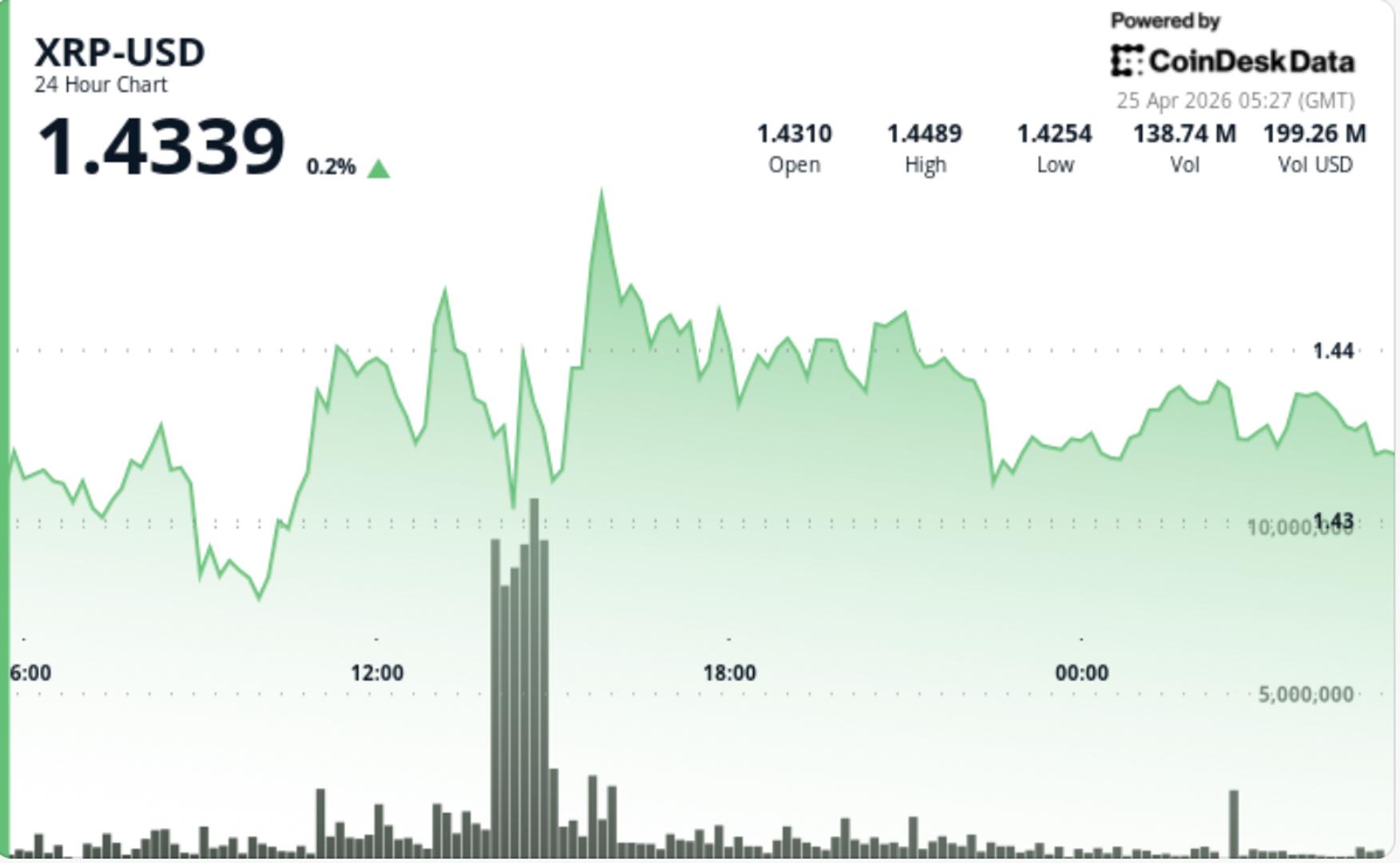
XRP is stuck just below resistance, but the price action is starting to lean one way. Every push higher gets sold, but each pullback is getting shallower. That tells you sellers are still active, but they’re losing control bit by bit. When that balance shifts, the move that follows is usually quick and decisive.
Price is grinding sideways at the top of the range, which is where markets typically resolve after absorbing supply. Add rising participation and steady positioning underneath, and this starts to look less like indecision and more like a setup waiting for a trigger.
News Background
• Spot XRP ETFs saw fresh inflows, extending last week’s strong demand and pushing total institutional positioning above $2.6 billion. This keeps a steady bid under the market even as price stalls.
• Exchange outflows hit one of the largest daily readings this year, with nearly 35 million XRP leaving trading platforms. That typically reduces immediate sell pressure and supports tighter supply conditions.
Price Action Summary
• XRP moved around $1.43-$1.45 after a high-volume push earlier in the session.
• The breakout attempt above $1.44 held briefly but failed to extend, leading to sideways consolidation.
• Price is now compressing into a narrower range, holding support without reclaiming higher levels.
Technical Analysis
• The dominant structure is a multi-week symmetrical triangle, with lower highs and higher lows squeezing price toward a decision point.
• Volume spiked during the initial breakout attempt, but faded into consolidation, suggesting absorption rather than conviction.
• Buyers continue defending higher lows, which keeps downside limited for now.
• The market is effectively coiling, with neither bulls nor bears in full control.
What traders should watch
• $1.50 is the key breakout level. Clearing it would shift momentum more decisively higher.
• $1.39 remains the critical support. Losing it would break the structure and open downside.
• The tighter the range gets, the more likely a sharp move follows. Direction will depend on which side breaks first.
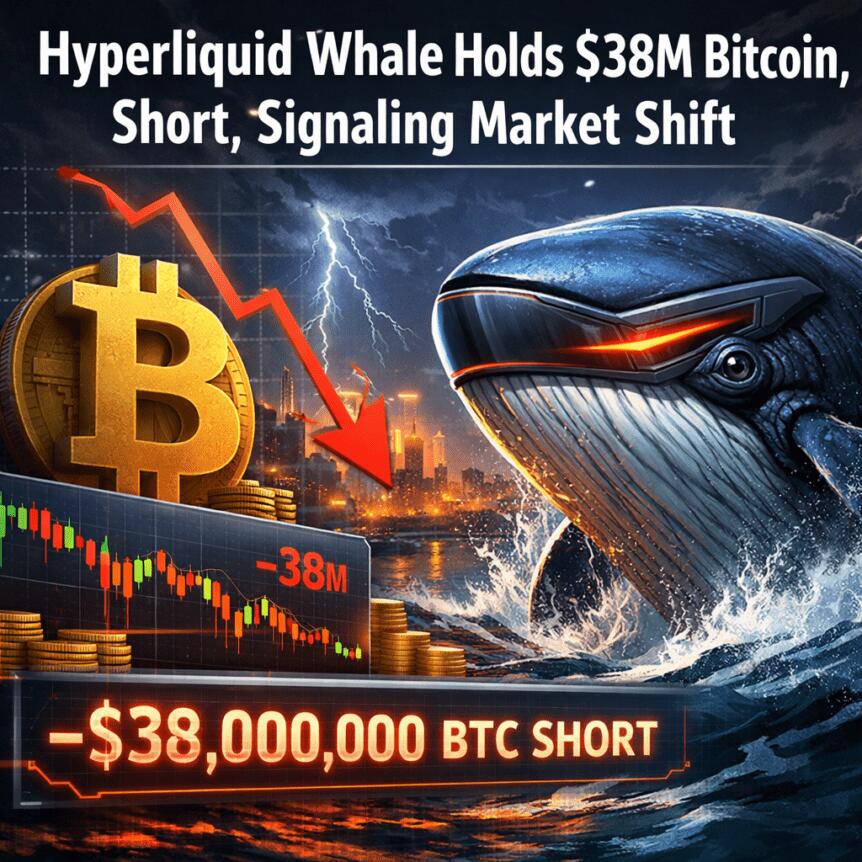
Bitcoin briefly hovered around $78,000 as traders weighed the momentum of a year-to-date rally while a single, high-profile bearish bet drew attention from derivatives desks. Bitcoin has climbed roughly 29% from a Feb. 6 yearly low near $60,100, fueling expectations of a longer-term breakout even as one prominent trader’s short position suggests caution for near-term price action. The activity centers on BobbyBigSize, a wallet associated with the Hyperliquid ecosystem, which currently carries a substantial BTC short alongside leveraged long bets on other assets.
Key takeaways
- Large BTC short position — BobbyBigSize holds about $38 million in a Bitcoin short on Hyperliquid, with the position contributing to a broader short‑tilt in the portfolio.
- Bearish leverage amid a bullish backdrop — Negative funding rates on Binance and Bybit point to persistent demand for leveraged short exposure, even as BTC trades above $78,000 and the market advances.
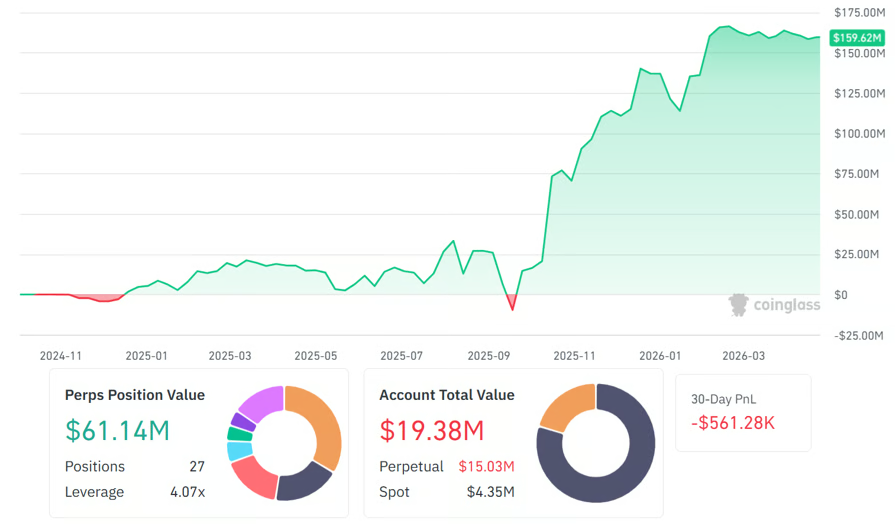
- Mixed performance and risk exposure — Over the past seven months, the same address has generated roughly $159 million in profits but recorded a $561,000 loss in the last 30 days, underscoring the volatility of algorithmic trading strategies.
- Fasanara link and potential implications — Arkham data tie the address to Fasanara Capital, a London-based asset manager with a multi‑manager, market-neutral approach and stated crypto exposure via Fasanara Digital, though specifics on its crypto strategy remain unclear.
- What to watch next — The market will be watching for whether Bitcoin can sustain a move above key resistance and how funding dynamics evolve as traders reassess leverage and hedging needs.
Bullish setup amid cautious signals from the derivatives complex
The prevailing view among many techncial analysts remains that Bitcoin is on course for a longer-term breakout, given the rally off the February lows and improving macro sentiment. Yet, derivatives data paints a more nuanced picture. Despite a price that has recovered meaningfully, several major venues reported negative funding rates for BTC futures — notably Binance and Bybit — indicating elevated demand for bearish leverage. In other words, even as prices push higher, a segment of traders is monetizing or hedging against a potential pullback by maintaining short exposure.
Across the market, funding dynamics have shown divergence. On Hyperliquid, BTC and Ether (ETH) funding rates have been only mildly positive, suggesting a balanced appetite for longs and shorts in that venue. In contrast, the broader ecosystem signals stronger interest in short bets on other major names during the same period, illustrating how market structure can diverge by venue and asset class. Such tensions matter for traders because they reveal where liquidity and speculative risk are concentrated as Bitcoin navigates resistance levels.
Meet the trader behind the bets and the Fasanara connection
The wallet behind the central story, identified as BobbyBigSize, has a track record of using algorithmic trading to place rapid, short-duration bets. Historically, the account has executed long-ish positions on Bitcoin and Solana (SOL) and, in a notable stretch during the market downturn late last year, placed leveraged short bets across multiple assets including Ether, Hyperliquid’s own token HYPE, Avalanche (AVAX), and even meme-ish tokens. The result has been a massive footprint on Hyperliquid, with reported aggregate trading activity running into the billions of dollars across the platform over time.
Direct balance snapshots show BobbyBigSize currently carrying a $38 million short Bitcoin exposure, paired with a contemporaneous $21 million leveraged long ETH position opened in the past week. Taken together, the posture across holdings signals a cautious view on near-term downside risk for BTC and, at the same time, a separate, perhaps more confident stance on ETH in the short run. The mix suggests the trader sees more immediate downside risk for Bitcoin than for Ethereum, aligning with the observed tilt toward bearish leverage in BTC futures on some venues.
Arkham researchers previously linked the BobbyBigSize address to Fasanara Capital, a London-based institution reported to manage several billion dollars across market-neutral strategies and venture investments. Fasanara Digital describes its footprint as spanning about $400 million in traditional market-neutral strategies and a further $150 million across a quantitative multi-manager approach. However, explicit public detail on how these quantitative crypto strategies operate remains limited, leaving readers to watch how the fund’s crypto allocation evolves in coming quarters.
The broader context is important: while the exact positions of a single trader can swing on daily noise, the presence of a recognizable asset manager behind the address underscores how institutional liquidity and targeted hedging could influence short-term price action. Investors should monitor whether this alignment with Fasanara magnifies any near-term price volatility or simply reflects a sophisticated, diversified hedging approach within a wider market uptrend.
What the funding signals imply for risk and positioning
Two key dynamics stand out in the current framework. First, persistent negative funding rates on major exchanges like Binance and Bybit point to a deeper demand for short exposure, suggesting that significant market participants are willing to pay to maintain bearish bets even as price momentum builds. Second, the apparently modestly positive funding on Hyperliquid for BTC and ETH implies a more neutral or balanced stance among some traders within that venue, complicating a straightforward interpretation of market sentiment.
Taken together, the data imply a market that is not uniformly bullish and may be susceptible to a near-term pullback if short-term momentum fades. For traders, this translates into a need for disciplined risk management: a short-term retest of the $75,000 level remains within the realm of possibility if negative funding pressures intensify or if a macro catalyst triggers a flush of risk-off selling. Conversely, a decisive move above the $80,000 mark could shift the calculus toward a renewed bullish narrative, potentially forcing hedge funds and automated traders to recalibrate their positions.
Analysts also highlight that the profitability profile of BobbyBigSize — about $159 million in profits across seven months — demonstrates that algorithmic strategies can be highly effective over extended stretches but remain vulnerable to regime shifts. The recent $561,000 loss in the last 30 days serves as a reminder that no single approach is durable in perpetuity and that market-moving bets can reverse quickly in volatile volatility regimes.
Why this matters for investors, traders, and builders
From an investor perspective, the episode highlights how a handful of high-conviction, algorithm-driven bets can shape day-to-day dynamics in a market that remains broadly bullish on a longer horizon. The involvement of Fasanara Capital, a traditional asset manager diversifying into digital assets through a market-neutral and quantitative framework, also signals growing institutional curiosity about crypto, with potential implications for liquidity, product development, and risk management across exchanges.
For traders, the message is clear: funding rates, open interest, and the balance of long versus short exposure across venues are not abstract numbers but signals that can presage short-term volatility. The divergence between negative funding on some platforms and modestly positive funding on Hyperliquid underscores the importance of understanding venue-specific dynamics when sizing risk or deploying hedges.
For builders and developers, the episode underscores the enduring importance of robust risk controls in algorithmic strategies and the value of cross-exchange visibility for liquidity and funding trends. As more institutions explore crypto strategies, the balance of risk, return, and regulatory clarity will increasingly shape the evolution of crypto derivatives markets and the tools used to navigate them.
Meanwhile, market watchers should stay alert to how these dynamics unfold around critical levels. A sustained move beyond $80,000 would be a strong signal of renewed bullish conviction, while a test of the $75,000 region could expose vulnerabilities in the current short-term positioning. As ever in crypto, context matters: funding rates, position sizes, and institutional involvement together help illuminate the path forward as the market searches for clearer directional clarity.
Readers should keep an eye on funding-rate movements across major venues, the evolution of BobbyBigSize’s positions, and any new disclosures from Fasanara Digital regarding crypto strategy focus. The next few weeks could determine whether this episode marks a temporary hedging blip or a broader shift in how institutions balance risk and opportunity in a still-maturing crypto derivatives landscape.


U.S. President Donald Trump has confirmed plans to attend a private gala for top holders of his TRUMP memecoin at Mar-a-Lago, following earlier uncertainty around his participation.
Summary
- Trump has confirmed he will attend and deliver a keynote at a Mar-a-Lago gala for top TRUMP memecoin holders.
- Entry is limited to the top 297 wallets, with a private reception reserved for the top 29 investors.
According to Reuters, the White House said Trump will deliver a keynote address at the luncheon hosted by the team behind the Official Trump token, settling questions raised earlier this month over whether the event was part of his schedule.
Questions around access and timing resurface
Set for Saturday at Trump’s Florida residence, the gathering will be limited to the top 297 holders of the TRUMP token, while an inner circle of the top 29 investors will gain entry to a private reception with the president.
Earlier remarks from a White House official had left the door open on attendance, noting the event was not locked into Trump’s calendar and fell on the same day as the White House Correspondents’ Association Dinner in Washington, D.C., an event Trump had indicated he would attend.
Event terms have also pointed to uncertainty, stating Trump “may not be able to attend” and that the gathering “may be canceled for any reason.”
Lawmakers have taken issue with the setup, raising concerns over whether access to the president is being tied to financial participation in the token. In a letter sent earlier this month, Democratic Senators Elizabeth Warren, Richard Blumenthal, and Adam Schiff questioned the structure of the event.
“[O]rganizers are promoting a conference by dangling access to President Trump to potential attendees… on a day he may not actually be able to attend,” the letter said.
Token buying intensifies ahead of Mar-a-Lago event
Leading into the luncheon, blockchain data has shown large holders increasing their positions to secure entry. Transfers tracked in recent weeks show multiple wallets accumulating hundreds of thousands of tokens, with some surpassing the 1 million mark.
One investor moved over 105,000 tokens off Binance, bringing total holdings to roughly 1.13 million TRUMP, valued near $3.2 million at the time. Separate withdrawals from Bybit and BitMart added to the concentration, with several whales competing for a spot among the top holders.
Participation in the event has been directly tied to wallet rankings, which have fueled the buying activity despite weaker price action. After reaching $4.35 in March when the event was first announced, the token has since dropped about 33% to around $2.80.
On-chain data has also pointed to a highly concentrated supply. While more than 642,000 wallets hold the token, the top 10 addresses control 91% of the total supply, raising questions about how influence is distributed within the project.
Trump under scrutiny
A similar event held in May 2025 at a Trump golf club followed a comparable pattern. During that period, the token climbed to $15.59 ahead of the gathering before falling back to $8.90 in the weeks that followed.
Criticism around that earlier event centered on whether Trump was leveraging his position for personal financial gain. The upcoming Mar-a-Lago luncheon has drawn renewed attention from lawmakers, some of whom are pushing for tighter rules around political figures and digital assets tied to personal branding.


The U.S. Treasury has sanctioned Cambodian senator Kok An and a network of 28 entities over alleged ties to a large-scale crypto scam and trafficking-linked operation.
The U.S. Department of the Treasury said Thursday that its Office of Foreign Assets Control has targeted Kok An, a senior political figure with extensive business interests in casinos and resorts, accusing him of enabling scam centers run by organized crime groups.
How did the alleged scam network operate?
According to OFAC, several properties linked to Kok An were turned into hubs where trafficked individuals were forced to run online fraud schemes. Victims, often lured by fake job offers, were made to contact people worldwide, posing as romantic partners, before directing them to fraudulent crypto trading platforms.
Money collected through these schemes was routed through casinos and associated businesses tied to the network, allowing illicit proceeds to be laundered, the agency said.
“Treasury will continue to target fraudsters and scam centers that steal billions of dollars from hardworking Americans, no matter where they operate or how well-connected they are,” said Treasury Secretary Scott Bessent.
Sanctions announced in the action cover multiple casinos, financial firms, operators, and other entities linked to the alleged network. The measures freeze any U.S.-based assets and prohibit transactions involving U.S. persons.
Crackdown expands across Southeast Asia
Working alongside the Scam Center Strike Force, U.S. authorities paired the sanctions with criminal charges against two individuals accused of running a similar operation in Burma and attempting to establish another base in Cambodia.
Officials said enforcement efforts are now concentrated on Southeast Asia, particularly Cambodia, Burma, and Laos, regions identified as key centers for crypto-linked fraud operations.
Earlier the same day, Tether disclosed that it froze about $344 million worth of USDT connected to illicit activity, in coordination with OFAC. Authorities have not confirmed whether the freeze is directly tied to the Kok An case.
Cases like this follow earlier enforcement actions in Cambodia. In September 2024, OFAC sanctioned another Cambodian senator, Ly Yong Phat, over allegations that his business network ran cyber-scam centers using trafficked workers.
U.S. agencies have linked many of these operations to organized groups across Southeast Asia, where individuals are recruited through fake job postings and then forced into running scams under threat and abuse. Reports have documented confiscation of passports, physical violence, and coercion to meet fraud quotas.
Losses tied to crypto-related investment scams have climbed sharply, with U.S. authorities citing $3.96 billion in reported losses in 2023 alone.
Key takeaways:
- A whale linked to asset manager Fasanara Capital holds a $38 million crypto short position, but will it impact Bitcoin’s price?
- Negative futures funding rates at Binance and Bybit point to unusual demand for bearish positioning despite BTC’s recent price gains.
Bitcoin (BTC) struggled to trade above $78,000 on Friday, but the overall setup remains bullish. BTC gained 29% since the $60,100 yearly low on Feb. 6, and many analysts believe it is on the verge of a longer-term breakout. At the same time, a bearish Bitcoin whale on Hyperliquid exchange has maintained a large short position. The whale has made $159 million in profits over the past seven months. Does its positioning provide any signal that the market should pay attention to?
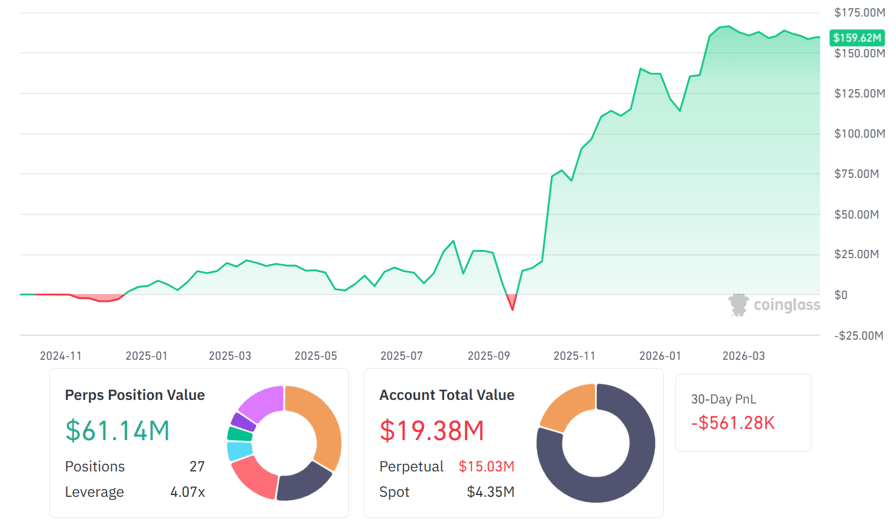
Hyperliquid whale profit and loss data. Source: CoinGlass
The entity behind address 0x7fda…c517d1 (also known as BobbyBigSize) on Hyperliquid exchange excelled during the market crash between October to November 2025 by placing leveraged short bets on Ether (ETH), Hyperliquid (HYPE), Avalanche (AVAX), and Fartcoin, among others. The account has failed to sustain its gains, resulting in a $561,000 loss over the past 30 days.
The whale is bullish on ETH, but bearish on BTC and altcoins
Using algorithmic trading, the whale opened short-duration long positions in Bitcoin and Solana (SOL) in the past, resulting in a staggering $11 billion in trades on Hyperliquid exchange. BobbyBigSize currently holds $19.4 million in assets deposited on the platform. 63% of its trades result in positive outcomes, which is considered highly successful.
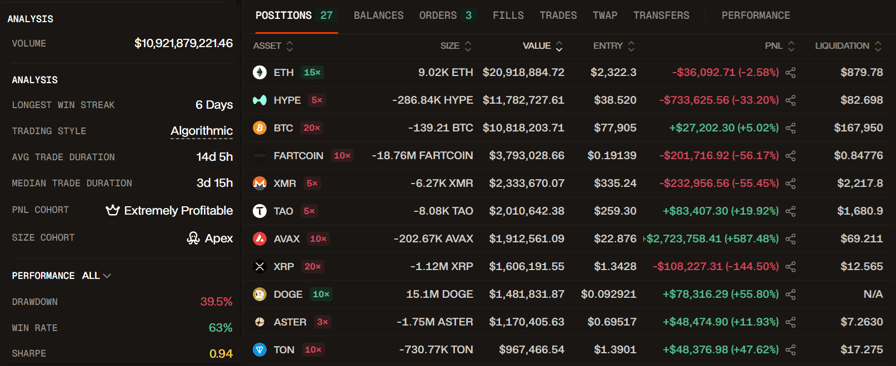
BobbyBigSize’s current positions, USD. Source: Hyperdash
Currently, BobbyBigSize holds a $38 million short position in BTC and multiple altcoins. The trader also opened a $21 million leveraged long ETH position last week, indicating short-term confidence. Generally, the portfolio positioning is bearish, suggesting an expectation of a short-term correction.
Related: Critical Bitcoin trend change in works, but analysts say daily close above $80K required
The average trade duration for BobbyBigSize has been slightly longer than two weeks, while the median position has lasted for less than four days, according to Hyperdash data. Arkham data previously linked this address to Fasanara Capital, a London-based institutional asset manager. The company reportedly manages over $5 billion in assets.
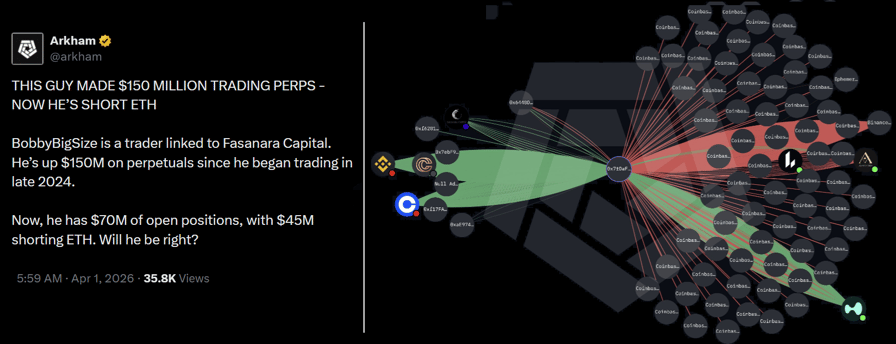
Source: X/Arkham
According to Fasanara Digital’s website, it launched in 2018 and manages $400 million across market-neutral strategies and venture investments. In parallel, a quantitative multi-manager approach in various liquid markets manages $150 million. However, the strategy behind the fund’s approach to cryptocurrency was not clearly specified.
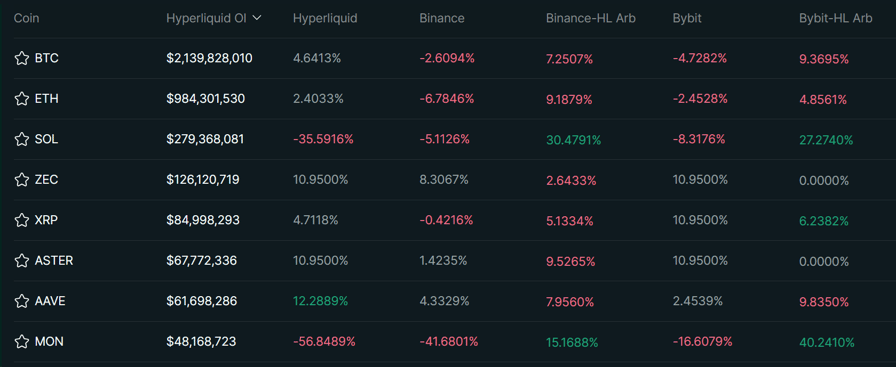
Hyperliquid DEX annualized funding rates. Source: Hyperliquid.xyz
Funding rates for BTC and ETH stood slightly positive on Hyperliquid, indicating moderate demand for leveraged long positions. Under neutral circumstances, longs pay 6% to 12% annualized rates to maintain their positions. Currently, funding rates are negative on Binance and Bybit, signaling unusually high demand for bearish leverage.
Algorithmic traders are erratic and unpredictable, and losses by “BobbyBigSize” over the past couple of months evidence that no single trading strategy lasts indefinitely. However, this whale’s bearish positioning aligns with the increased demand for leveraged short positions; therefore, Bitcoin traders should not discard the possibility of a retest of the $75,000 level.


Mantle has proposed lending up to 30,000 ETH to Aave DAO to help address bad debt linked to the Kelp DAO exploit.
Summary
- Mantle proposed a 30,000 ETH loan to help Aave cover bad debt from Kelp’s exploit.
- The loan would use Mantle Treasury funds and carry yield based on Lido staking APR.
- Aave would secure the facility with revenue and at least $11M worth of AAVE tokens.
The proposal, named MIP-34, was published by the Mantle Core Contributor Team on Thursday. The loan would come from the Mantle Treasury and would only be used to resolve rsETH bad debt on Aave V3. If approved, the facility would give Aave extra liquidity as it works through losses caused by the exploit.
Mantle said the loan would also turn idle treasury funds into a yield-generating asset. The team said the plan could support closer work between Mantle and Aave and help speed up Aave’s deployment on Mantle Network.
Loan terms include yield and collateral
The proposal listed an indicative interest rate based on Lido staking APR plus a 1% premium. The final rate would be subject to negotiation between the parties.
The loan would have a maturity of up to 36 months. Aave would be allowed to repay early without a penalty, according to the proposal.
Mantle said the loan would be secured through a multisig wallet chosen by Mantle. The network would hold a first-priority lien and security interest over the wallet.
Aave would also need to place 5% of its revenue and at least $11 million worth of AAVE tokens into the wallet as collateral. If a default occurs, Mantle said the loan would become due and payable immediately.
Bybit backs Mantle proposal
Bybit CEO Ben Zhou said the exchange would support the proposal. Bybit is a major supporter and strategic partner of Mantle Network.
Zhou wrote, “When we got hacked, the industry got together and helped us.” He added, “It is the only right thing that we do the same to [unite] together and walk out from difficult times.”
The Mantle proposal said the loan “demonstrates active treasury management and a proactive stance on industry resilience, reinforcing token holder confidence in Mantle’s long-term stewardship.”
The plan also said interest proceeds could go to the Mantle treasury for MNT token burns or ecosystem funding. That would allow Mantle to link the loan to its own treasury strategy.
Kelp exploit drives wider DeFi response
The proposal follows the April 18 exploit of Kelp DAO’s LayerZero-powered bridge. The breach led to the unauthorized minting of 116,500 rsETH tokens worth about $292 million.
The attack spread to Aave after the exploiter supplied stolen rsETH as collateral on Aave V3. The exploiter then borrowed 82,650 WETH and 821 wstETH, leaving Aave exposed to bad debt.
Aave’s incident review estimated two possible bad debt outcomes of about $124 million or $230 million. Onchain analysts later said the attacker swapped all $175 million in stolen ETH into BTC through THORChain and other venues.
Several DeFi groups have joined relief efforts. Lido proposed up to 2,500 stETH, while EtherFi Foundation and Aave founder Stani Kulechov each pledged 5,000 ETH. Golem Foundation pledged 1,000 ETH, and Frax Finance said it is preparing its own contribution.

Suyash Sharma Taunts Shubman Gill With ‘Bow Down’ Celebration, Sets Internet On Fire

Firestarter malware survives Cisco firewall updates, security patches

Arsenal vs Lyon: Why Chloe Kelly is not an automatic starter before Champions League semi-final

Manchester United reach agreement with Casemiro over contract clause amid transfer speculation

US brings back mandatory military draft registration

Steven Gerrard disagrees with Gary Neville over ‘shock’ Chelsea and Arsenal claim | Football
![MORAD - NO MONEY [VIDEO OFICIAL]](https://wordupnews.com/wp-content/uploads/2026/02/1771006117_maxresdefault-80x80.jpg)


-

 Business6 days ago
Powerball Result April 18, 2026: No Jackpot Winner in Powerball Draw: $75 Million Rolls Over
-

 Politics6 days ago
Zack Polanski demands ‘council homes not luxury flats for foreign investors’
-
Entertainment5 days ago
NBA Analyst Charles Barkley Chimes in on Ice Spice McDonald’s Fiasco
-

 Tech6 days ago
Auto Enthusiast Scores Running Tesla Model 3 for Two Grand and Turns It Into Bare-Bones Go-Kart
-

 Fashion12 hours ago
Weekend Open Thread – Corporette.com
-

 Politics4 days ago
Gary Stevenson delivers timely reminder to register to vote as deadline TODAY
-

 Politics2 days ago
Making troops accountable for war crimes threatens US alliance, ex-SAS colonel warns
-

 Business3 days ago
Rolls-Royce Voted UK’s Most Iconic Trade Mark as IPO Register Hits 150
-

 Politics2 days ago
Disabled people challenge government SEND proposals over segregation concerns
-

 Politics3 days ago
Zack Polanski responds to home secretary’s taser threat
-
Politics3 days ago
Wings Over Scotland | How To Get Away With Crimes
-

 Politics3 days ago
Starmer handler McSweeney to be dragged from shadows by Foreign Affairs Committee
-
Crypto World6 days ago
Kelp DAO rsETH Bridge Hack Drains $292M as DeFi Losses Top $600M in Two Weeks
-

 Politics2 days ago
‘Iran is still a nuclear threat’
-

 Crypto World3 days ago
New York sues Coinbase, Gemini over prediction market offerings
-

 Business3 days ago
The Job Benefits Most Men Don’t Know to Negotiate
-

 Politics6 days ago
Reform investigating candidate who ‘hates’ the NHS
-

 Crypto World20 hours ago
Michael Saylor says BTC winter is over. Market analyst disagrees, says bitcoin was in a pullback
-
Crypto World6 days ago
Nasdaq Rally Extends to 13 Days as Call Options Volume Nears Record High Levels
-

 Crypto World5 days ago
Bitcoin, ether, solana slide, oil jumps on renewed U.S.-Iran war risks
You must be logged in to post a comment Login