
Crypto World
South Africa Unveils Sweeping Treasury Bill to Control Cryptocurrency Movement


Key Highlights
-
Treasury bill introduces comprehensive framework for digital asset oversight
-
Mandatory declaration requirements for cryptocurrency holders above threshold
-
Border enforcement powers expanded to include digital asset searches
-
Penalties reach one million rand and five-year imprisonment for violations
-
Capital flow framework extended to encompass cryptocurrency transactions
The National Treasury of South Africa has released draft legislation designed to bring cryptocurrency under comprehensive regulatory oversight. The proposed bill establishes mandatory reporting requirements and introduces enhanced enforcement mechanisms for digital assets. This legislative move represents a fundamental transformation in the country’s approach to cryptocurrency governance and financial monitoring.
Treasury Bill Integrates Digital Assets Into Capital Controls
The National Treasury has unveiled draft regulations that position cryptocurrency within South Africa’s existing capital flow management system. Under these proposed rules, individuals holding digital assets exceeding specified limits must formally declare their holdings to authorities. The framework also requires specific transactions to be processed through approved intermediaries or obtain regulatory clearance beforehand.
According to the draft provisions, asset holders will have a 30-day period to comply with declaration obligations once the threshold is met. The legislation further stipulates that digital assets purchased for designated purposes must be liquidated if those objectives are not fulfilled. This mechanism creates a direct connection between cryptocurrency ownership and stated financial objectives.
The legislative initiative seeks to modernize regulations by replacing the Exchange Control Regulations established in 1961. This proposal demonstrates increasing governmental focus on capital mobility and financial transparency. Furthermore, the framework integrates digital currencies into established financial disclosure protocols.
Enhanced Border Security and Compliance Mechanisms
The proposed legislation significantly expands crypto regulation enforcement capabilities at border crossings and throughout the financial infrastructure. Customs officials would receive authorization to conduct searches for undeclared cryptocurrency holdings when individuals cross international boundaries. Travelers may be required to provide access information related to their digital asset portfolios.
The bill criminalizes unauthorized international transfers of cryptocurrency under the broadened regulatory framework. It establishes mandatory disclosure requirements for digital assets when entering or exiting South African territory. These provisions enable authorities to maintain closer surveillance over both incoming and outgoing asset movements.
Non-compliance with the regulatory framework carries substantial consequences, including monetary penalties reaching one million rand and potential incarceration for up to five years. These sanctions specifically address violations and unauthorized asset transfers. Consequently, enforcement mechanisms constitute a fundamental component of this policy transformation.
Regulatory Evolution and Strategic Considerations
South Africa has previously established legal recognition for digital assets within its financial regulations, forming the foundation for current policy developments. The Financial Sector Conduct Authority designated cryptocurrency as a financial product in 2022. The newly proposed legislation expands regulatory reach from service providers to individual asset holders themselves.
This initiative emerges amid increasing cryptocurrency adoption throughout the African continent and growing concerns regarding financial system stability. It also addresses potential risks associated with stablecoins and capital flight scenarios. The Treasury aims to strengthen regulatory frameworks to preserve monetary policy effectiveness.
The public consultation process continues, though submission deadlines appear inconsistent across official documents. Stakeholder input during this comment period will shape the final regulatory structure. Ultimately, the finalized provisions will determine the extent to which authorities incorporate digital assets into national financial supervision frameworks.




The Aave DAO is voting on a proposal to provide funding to restore Kelp DAO’s rsETH product backing after an April 18 bridge incident, as part of a broader DeFi United ecosystem recovery effort.
Aave’s decentralized governance body is being asked to contribute 25,000 ETH from its treasury to a coordinated recovery effort following the April 18 exploit of Kelp DAO’s rsETH bridge, according to a proposal published Thursday by Aave service provider TokenLogic.
The contribution would make Aave the largest single donor to a coalition called “DeFi United,” which also includes EtherFi, Lido, Ethena, Mantle, Ink Foundation, BGD Labs, and several individual contributors. Together, the group is working to restore the full backing of rsETH and protect users across affected Aave V3 markets.
The April 18 attack drained 152,577 rsETH from Kelp’s LayerZero bridge adapter, creating an original shortfall of approximately 163,183 ETH. Subsequent recoveries have reduced that figure: Kelp froze tokens worth roughly 43,168 ETH, the Arbitrum Security Council froze 30,766 ETH held by the attacker, and liquidations of the hacker’s positions on Aave and Compound are expected to recover an additional 14,168 ETH. The residual funding gap currently stands at approximately 75,081 ETH.
To close that gap, the proposal outlines a funding stack combining public donations totaling 14,570 ETH, a 30,000 ETH credit facility from Mantle, and the requested 25,000 ETH from the Aave DAO treasury.
Executing the recovery requires placing the full 120,015 ETH into the LayerZero lockbox upfront. Because several recovery streams are not yet liquid, short-term bridge loans are being arranged separately to cover the timing gap.
The proposal also authorizes Aave Labs to pledge DAO assets and future protocol revenue as collateral to secure funding arrangements. The proposal notes the plan depends on external actions including Kelp reopening withdrawals, LayerZero reopening its bridge, and the Arbitrum Security Council releasing frozen funds.
The proposal is currently in the community feedback stage before proceeding to a Snapshot vote.
Sources: Aave Governance | Aave Twitter | DeFi United
This article was generated automatically by The Defiant’s AI news system from publicly available sources.
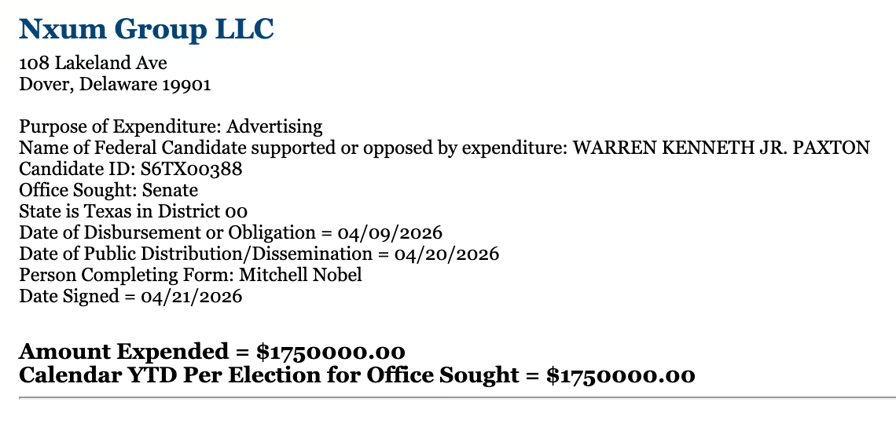
The Fellowship political action committee (PAC), which launched claiming to have more than $100 million from crypto-aligned backers, has reportedly backed out of an advertising deal to support Texas Attorney General Ken Paxton in a crucial US Senate race.
According to a Thursday report from Axios, Republican leaders contacted US Commerce Secretary Howard Lutnick on his connections to Fellowship, which has been partially funded by Cantor Fitzgerald.
Lutnick, as the former president and CEO and whose sons are now in charge of the financial services company, reportedly faced questioning from Republicans about Fellowship’s support of Paxton, whom on Tuesday the PAC reported spending $1.75 million in supportive advertising.
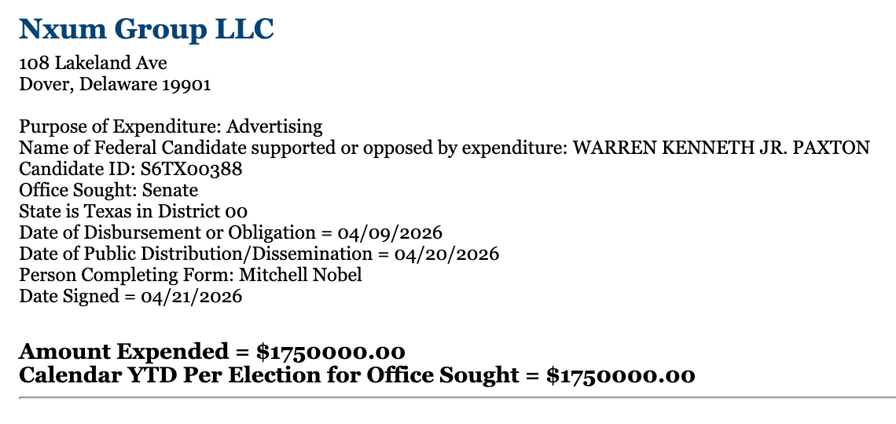
Fellowship PAC expenditure report on Ken Paxton. Source: FEC
The advertising expenditure, which Fellowship disclosed to the Federal Election Commission (FEC) through the marketing company Nxum Group, was reportedly never placed. As of Friday, the FEC filing showing the $1.75 million expenditure was still public. Cointelegraph reached out to Fellowship for comment but did not receive an immediate response.
A crypto-backed PAC like Fellowship backing out of support for a candidate in a US Senate race, possibly in response to pressure from Republican leaders, is somewhat unusual. Political action committees tied to digital assets support candidates on both sides of the aisle who they consider pro-crypto.
Along with Fellowship, PACs like Fairshake and others are expected to spend a combined hundreds of millions of dollars in the US midterm elections after pouring money into ads for 2024 candidates to influence voters.
Related: White House confirms Trump to address memecoin gala on Saturday
Paxton, who failed to win outright in a March primary against Senator John Cornyn, will face the Republican incumbent in a May 26 runoff before the November general election. Whichever Republican wins a majority of the vote will likely face off against Democrat James Talarico in a race for one of Texas’ US Senate seats.
Crypto entities calling for action on market structure bill in Senate
Republicans have held a slim majority in the US Senate since January 2025, leading to the passage of the stablecoin bill, the GENIUS Act, and the consideration of other pieces of crypto legislation. However, if Democrats gain majority control of the chamber in the 2026 midterm elections, it could change how the Senate approaches crypto laws.
Since July 2025, the Senate has been considering a bill on crypto market structure, expected to be one of the most comprehensive pieces of legislation affecting the industry. Delays, in part due to government shutdowns, ethics concerns and questions about stablecoin yield, have persisted for months, with no vote on the bill scheduled in the full chamber.
On Thursday, more than 120 entities affiliated with the cryptocurrency and blockchain industry urged Senate Banking Committee leaders to stop stalling on advancing the market structure bill, the CLARITY Act. The committee will need to hold a markup on the bill before the Senate can potentially schedule a vote.
Magazine: AI-driven hacks could kill DeFi — unless projects act now

Pi Network has activated its first smart contract on Testnet, bringing subscription functionality to the blockchain. The upgrade arrives as PI trades near $0.17, well below the key Fibonacci resistance that bulls want reclaimed.
The rollout introduces recurring-payment logic for e-commerce, streaming, and other services. Community sentiment has turned cautiously optimistic, yet the daily chart still shows a neutral structure after months of decline.
Subscription Smart Contracts Set a New Utility Floor for Pi
On April 17, 2026, Pi Network announced its first smart contract capability on Testnet. The release focuses on subscription support, a model most chains have struggled to deliver cleanly.
Subscribers can approve a defined budget that the contract draws from over a set billing horizon. Funds remain in the wallet until a charge is processed.
The design avoids the full pre-funding required by account abstraction standards like ERC-4337. It also removes repeat signatures used in earlier Ethereum proposals, such as EIP-1337. Pi frames this as a cleaner path for on-chain recurring payments.
Pi Request for Comment 2 (PiRC2) is now open for developer review on GitHub. External auditors are also reviewing the contract before any Mainnet rollout.
Community voices have mapped the release to real use cases. One post listed streaming, AI tools, digital memberships, e-commerce, and local commerce as targets. The list reflects a broader push to anchor Picoin demand to recurring real-world services rather than speculative activity.
The pitch to builders leans on scale. Pi claims more than 18 million KYC verified users, which boosters frame as a ready customer base.
Dr. Vincent McPhillip argued that smart contracts bring Pi functionality closer to Ethereum. He suggested the release could set the stage for a sustained move. The market, he added, is watching.
That optimism is tempered by warnings about staking, DeFi, and dApp risks in any young ecosystem. Education and external audits will shape how safely the rollout proceeds.
This contract remains in Testnet. A Mainnet launch will depend on audit outcomes and PiRC2 feedback, which sets the near-term expectation bar.

PI Price Coils Below $0.18 Fibonacci Resistance
PI trades at $0.1699 on Bitget, just below the 0.236 Fibonacci retracement at $0.1823. The Fib tool is anchored from the September 22, 2025, breakdown high of $0.3527. The lower anchor is the February 6, 2026 low of $0.1297.
The 0.236 level is the first lid PI must clear. A daily close above $0.1823 would open the path to the 0.382 retracement at $0.2149.
Beyond that sits the 0.618 retracement at $0.2675, a heavier supply zone defined by prior reaction highs. Reclaiming that band would mark the first serious break of the multi-month downtrend.
On the downside, horizontal support sits near $0.15. Losing it would expose the February low at $0.1297 and confirm another leg lower.
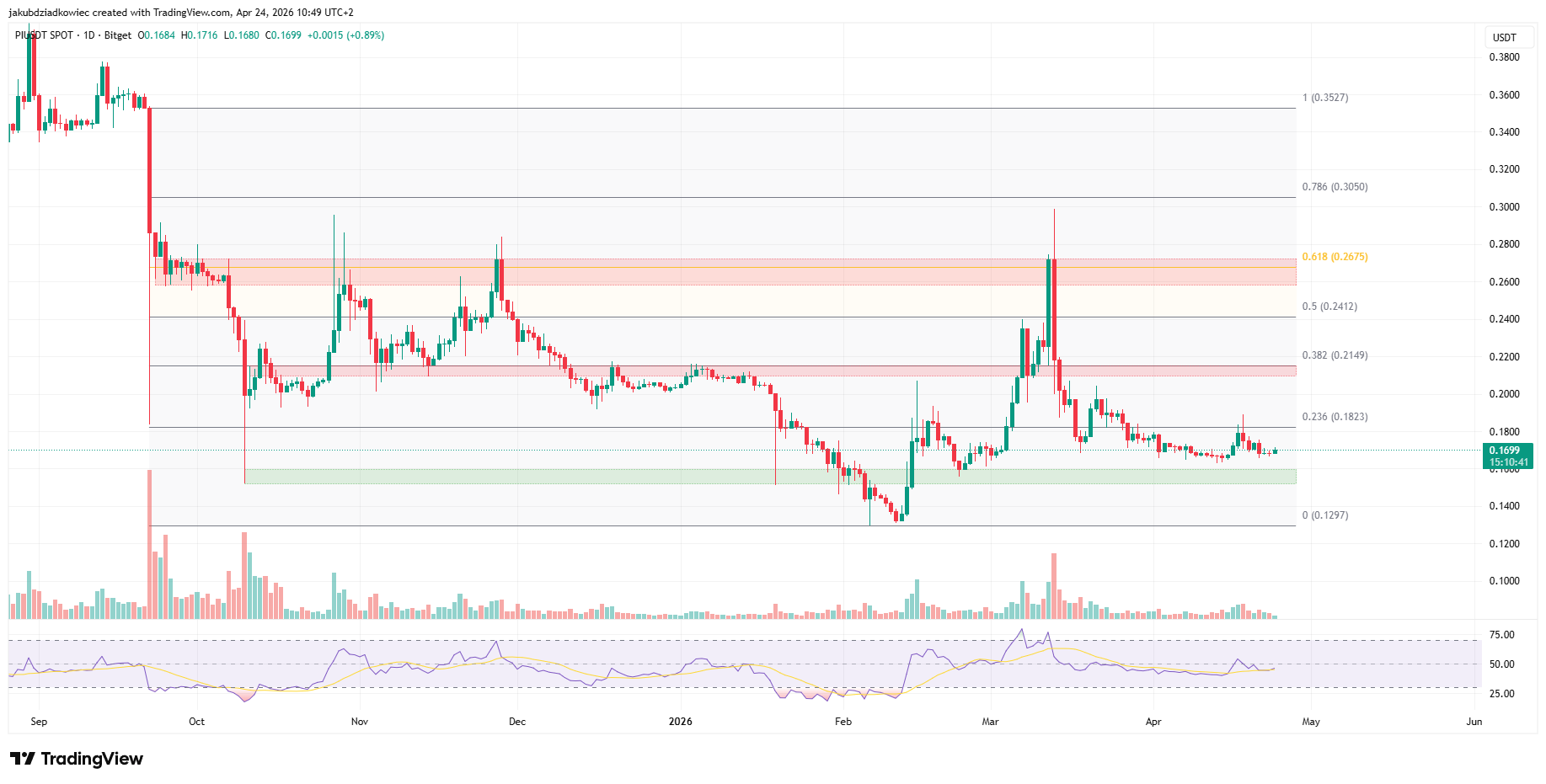
The Relative Strength Index (RSI) sits in the mid-40s. That reading indicates neutral momentum with no clear buying or selling pressure building.
Volume has thinned noticeably across April. Low turnover during a sustained decline often suggests accumulation, though it can also reflect fading interest. A fundamental catalyst, like a confirmed Mainnet date, would be the cleanest trigger for a volume expansion.
The subscription smart contract rollout is the fundamental catalyst that traders are pricing in. Whether it drives flows into PI will depend on Mainnet timing and Pioneer participation in Testnet review.
A break above $0.27 would flip the bias to bullish. It would also invalidate the descending structure that has capped every rally since late 2025. A close below $0.15 would confirm the bears still control the tape.
The post Pi Network Smart Contracts Go Live on Testnet, Can PI Break $0.27 Resistance? appeared first on BeInCrypto.
Bitcoin remained anchored around the $78,000 level on Friday as markets awaited fresh geopolitical and macro cues amid heightened U.S.-Iran tensions. The absence of a decisive catalyst kept risk assets in a cautious, sideways drift, even as oil and equities wobbled in response to the evolving backdrop.
With U.S. equities treading water and oil oscillating near the high $90s to mid-$95 per barrel area, traders said the market’s next move hinges on clarity over the Middle East conflict and its potential spillovers into energy prices and economic growth. The lack of a clear triggers pushed Bitcoin into a consolidative phase, slowing any attempt to reclaim the $80,000 ceiling that has been a looming target for months.
“Market is eagerly awaiting clarity from the conflict in the Middle East. The longer it drags on and oil keeps moving higher, the more pressure will be put on these assets.”
— Daan Crypto Trades, via social commentary on market dynamics
Key takeaways
- Bitcoin trades near $78,000, struggling to push back above $80,000 as U.S. stocks drift and oil prices stay firm.
- Oil’s resilience and geopolitics loom as near-term risk catalysts, with traders watching how energy moves influence risk appetite.
- Earnings season is viewed as a potential driver for the next leg higher in equities, which could spill over into crypto.
- Analysts warn of vulnerability around nearby bid liquidity and the possibility of a deeper retracement if macro cues worsen.
Markets pause as BTC hangs near a pivotal level
TradingView data reflect a quiet price action for BTC as the week closes, with the benchmark hovering around the $78,000 area. The lack of a clear directional impulse kept Bitcoin anchored, even as macro components painted a mixed picture: U.S. equities paused after a period of strength, while crude futures retraced from earlier peaks but stayed elevated relative to late-year lows.
In social-dial commentary, traders highlighted the delicate balance between growth optimism and geopolitical risk. The absence of new cues from the Iran-related developments left risk-on assets in a state of limbo, characterized by tight ranges and cautious positioning.
Meanwhile, the broader commodity complex showed oil trading in a high-range channel, with volatility linked to supply expectations and geopolitical risk. The energy-price backdrop remains a key variable for the trajectory of risk assets, including BTC.
Analysts and traders weigh the next move
As Bitcoin clings to critical support, several traders flagged potential headwinds for a sustained upside move. One market observer noted that the immediate price structure suggests the possibility of a deeper retracement if the current macro environment persists without a clear catalyst.
In the meantime, analysts emphasized the role of earnings season in shaping risk appetite. Mosaic Asset Company argued that positive earnings momentum would be essential to sustain any upside for equities, noting that the S&P 500 had been marching toward record highs as the reporting cycle approached. Their analysis underscores the dynamic between corporate fundamentals, equity risk, and the spillover into crypto markets.
Technically, observers also monitored order-book dynamics and liquidity around key levels. Material Indicators observed that bid liquidity near the $76,500 area had already shown signs of vulnerability, with lower-timeframe order flow trending downward. They added that it was surprising liquidity below the spot price had not been withdrawn, a factor that could precipitate a sharper move if the market loses momentum.
Other data points pointed to a potential news-driven push in the near term. A separate analysis thread highlighted that BTC’s price action in the lower timeframes had run up into a short-term peak, suggesting the rally could falter without fresh fundamental catalysts.
What to watch next
The coming sessions will hinge on geopolitical developments, energy-price movements, and the trajectory of corporate earnings. If the Middle East tension cools and oil resumes a clear downtrend, risk assets could gain room to extend, potentially nudging BTC back toward the $80,000 level. Conversely, renewed volatility or a deterioration in macro indicators could test support near the mid-to-high $70,000s.
Traders should watch liquidity around critical levels, the evolution of the earnings outlook, and any unexpected shifts in oil markets that could alter risk sentiment. The path forward remains uncertain, but the next moves in equities, energy, and macro data will likely dictate Bitcoin’s near-term direction.
US banking groups have escalated their campaign against the CLARITY Act by calling Senate offices directly, with the North Carolina Bankers Association confirmed on April 18 to be urging member banks to phone Senator Thom Tillis’s office personally to demand changes to the stablecoin yield compromise already agreed with the crypto industry.
Summary
- The North Carolina Bankers Association has been urging member banks to call Senator Tillis’s office directly to oppose the stablecoin yield compromise, confirmed by journalist Eleanor Terrett on April 18.
- Banking trade associations have since broadened the campaign, lobbying other Senate Banking Committee members beyond Tillis and co-negotiator Senator Angela Alsobrooks.
- The escalation has pushed the Banking Committee markup from April into May at minimum, threatening the entire CLARITY Act timeline ahead of the Memorial Day recess.
Fox Business journalist Eleanor Terrett reported on April 18 that the North Carolina Bankers Association, a state banking trade group, was sending emails to member banks urging them to call Senator Thom Tillis’s office directly and weigh in against the stablecoin yield compromise language in the CLARITY Act. The move came just weeks after Tillis and Senator Angela Alsobrooks had reached a bipartisan agreement in principle on yield that both sides had described as nearly final.
CLARITY Act Stablecoin Yield Fight Enters Aggressive New Phase
As crypto.news reported, the North Carolina Bankers Association’s campaign targeted Tillis specifically because he represents the state where many of the most exposed community banks are headquartered, and because he was the lead Republican negotiator on the stablecoin yield language. The outreach did not stop at Tillis. According to sources cited by Disruption Banking, banking trade associations have since broadened the campaign to target other members of the Senate Banking Committee beyond the two lead negotiators, a move that crypto industry insiders describe as an attempt to reopen a deal the banks already lost in the closed-door negotiating room. White House Crypto Council executive director Patrick Witt responded by writing on X that the banks are “further lobbying out of greed or ignorance” and warning that the CLARITY Act must not be held hostage by yield concerns the administration’s own data has already refuted.
The Numbers Behind the Banks’ Argument and Why the White House Rejected Them
The banking industry’s core claim is that permitting stablecoin yield could trigger up to $6.6 trillion in deposit flight from the traditional banking system, a figure that has shaped the conversation in Senate Banking Committee meetings since January. The White House Council of Economic Advisers directly challenged that figure with a 21-page analysis finding that banning stablecoin yield would increase bank lending by just $2.1 billion, approximately 0.02% of total US loans, while imposing an $800 million net welfare cost on consumers. As crypto.news tracked, the Tillis-Alsobrooks compromise that banks are now trying to unwind drew a firm line: passive yield on stablecoin balances is banned, while activity-based rewards tied to payments, transfers, and platform use remain permitted. The American Bankers Association has argued that even this restricted version gives stablecoins a structural advantage over bank deposits, a position the White House report explicitly rejected.
What the Bank Campaign Means for the CLARITY Act Timeline
The aggressive lobbying has directly pushed the Senate Banking Committee markup from April into May at minimum, compressing an already narrow legislative window before the Memorial Day recess on May 21. As crypto.news documented, the bill faces five sequential hurdles after any markup: a 60-vote Senate floor threshold, reconciliation between the Agriculture and Banking Committee versions, reconciliation with the House-passed text from July 2025, and a presidential signature. Senator Bernie Moreno has warned that if the bill does not reach the Senate floor by May, it may not advance before the 2026 midterm election cycle closes the window entirely. As crypto.news noted, more than 120 organizations sent an April 23 letter to the Banking Committee demanding an immediate markup, warning that delays are pushing investment, jobs, and technological development offshore.
Senator Tillis has floated hosting an in-person crypto and banking meeting to resolve remaining issues, a step he acknowledged would add time but said is necessary because “there are still issues to negotiate.”

Key Highlights
- Alphabet shares gain ground following confirmation of $40B Anthropic partnership
- Multi-phase investment structure ties funding to performance benchmarks
- Massive computing power commitment positions Google Cloud for AI dominance
- Partnership intensifies competition in enterprise AI and developer tools
- Custom chip strategy challenges Nvidia’s market leadership
Shares of Alphabet (GOOG) climbed following disclosure of a substantial artificial intelligence partnership centered on infrastructure growth. The stock reached $340.97, posting a 0.95% gain during the trading session. Investor sentiment strengthened as the tech giant reinforced its commitment to next-generation computing and AI-powered cloud platforms.
Multi-Billion Dollar Commitment Transforms AI Capabilities
Alphabet has significantly expanded its financial backing of Anthropic through a milestone-based investment framework. An initial $10 billion infusion will be followed by potential additional funding of $30 billion, contingent upon achieving specific operational objectives. This approach ties capital allocation directly to demonstrable progress in artificial intelligence development.
The arrangement solidifies Google Cloud’s position as a critical infrastructure backbone for cutting-edge AI applications. Under the terms, the company pledges to deliver 5 gigawatts of computational capacity spanning five years. This substantial infrastructure promise underscores a strategic bet on cloud-hosted AI workload dominance.
The collaboration also advances Google’s proprietary chip development efforts through expanded tensor processing unit deployment. These specialized processors represent a direct challenge to Nvidia’s dominance in AI hardware. By promoting its custom silicon, Google aims to establish a competitive, scalable computing alternative for machine learning applications.
Investment Wave Reflects Surging Enterprise AI Adoption
Anthropic has emerged as a magnet for major capital inflows as artificial intelligence systems gain traction in corporate environments. Beyond this Google commitment, the AI startup recently obtained $5 billion from Amazon, with provisions for additional funding. This investment pattern demonstrates robust market confidence in the commercial viability of generative AI technologies.
The company currently maintains a $350 billion valuation, consistent with its earlier February financing round. Industry speculation suggests future valuations could approach $800 billion as competitive dynamics intensify. Such dramatic valuation growth underscores the fierce rivalry among premier AI innovators.
Anthropic’s technology portfolio generates substantial infrastructure requirements across development organizations. Its Claude Code platform facilitates large-scale automated software engineering. Meanwhile, the Cowork agent broadens accessibility by enabling non-technical users to leverage AI capabilities, accelerating enterprise adoption.
Complex Dynamics Define Google-Anthropic Relationship
The alliance between Google and Anthropic represents a unique blend of cooperation and rivalry in artificial intelligence advancement. Both organizations compete for enterprise market share through sophisticated models and robust infrastructure offerings. This coexistence of partnership and competition characterizes the contemporary AI marketplace.
Internal concerns persist regarding market position in AI-enhanced development platforms. Anthropic has captured significant developer mindshare, intensifying competitive urgency. In response, Google continues expanding investments to preserve its standing in this critical segment.
The initiative builds upon existing collaborations featuring Broadcom and cloud infrastructure enhancement projects. These alliances integrate networking architecture, computational resources, and software platforms into a cohesive technological ecosystem. Through these efforts, Alphabet fortifies its comprehensive strategy spanning AI hardware and cloud services.
Founded by Dario Amodei in 2021, Anthropic maintains aggressive expansion despite operational complexities. The company preserves strong Google connections while pursuing overlapping market objectives. Nevertheless, regulatory oversight and defense-sector considerations remain persistent elements of its strategic risk landscape.
This investment highlights a fundamental industry transition toward infrastructure-centric AI development. Major technology corporations increasingly merge financial backing with computational resource provision to establish market influence. This emerging framework continues reconfiguring competitive dynamics across cloud computing, semiconductor manufacturing, and artificial intelligence platforms.
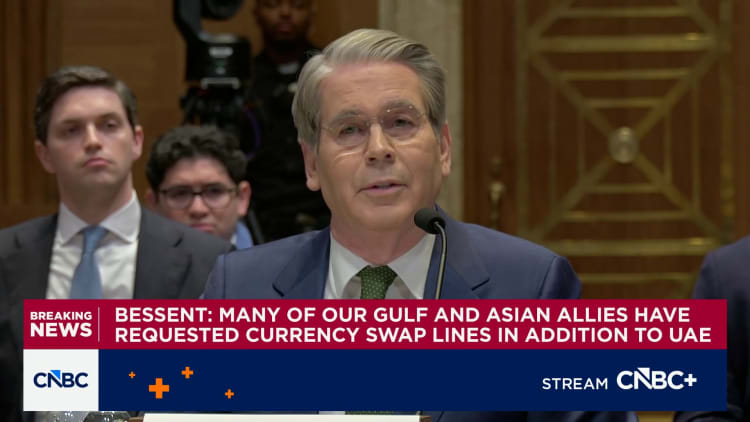
Secretary of Treasury Scott Bessent testifies during a during a Senate Appropriations Subcommittee on Financial Services and General Government hearing on the Treasury Department’s 2027 budget request in Washington, DC on April 22, 2026.
Nathan Posner | Anadolu | Getty Images
Treasury Secretary Scott Bessent on Friday defended the possibility of the U.S. participating in currency swaps with allies in the Persian Gulf and Asia who are seeking financial backstops due to the Iran war.
Discussions with those countries about U.S. dollar swap lines “are part of ongoing, routine conversations that @USTreasury has been having with our partners over a number of years,” Bessent said in an X post.
“They are a testament to the U.S. dollar’s primacy and the strength of America’s economic shield,” he said of the potential swaps.
The assertion of swap lines’ benefits and commonness comes as the Trump administration considers offering the financial lifeline to the United Arab Emirates, CNBC reported Tuesday.
It also comes two days after Bessent said that “many” allies in the Persian Gulf are seeking the same backstop as the ongoing war wreaks havoc on the oil-rich nations’ economies.

Swap lines involve two countries’ central banks agreeing to exchange equivalent amounts of each other’s currency, while agreeing to swap back those quantities at a specified future date. The U.S. maintains “standing U.S. dollar liquidity swap line arrangements” with the central banks of Canada, England, Japan and Switzerland, as well as the European Central Bank, to “enhance the provision of U.S. dollar liquidity,” according to the Federal Reserve.
The tool dates back to the 1960s and has been used to stabilize the Mexican economy in the 1980s, following the Sept. 11 terrorist attacks, during the 2008 financial crisis and at the beginning of the Covid-19 pandemic, according to a report by the Yale School of Management.
The maneuver is aimed at easing strains on global funding markets, giving breathing room to households and businesses of both participating countries.
Treasury can provide its own version of swaps using its Exchange Stabilization Fund, though traditional swaps are most often offered by the Federal Reserve.
The arrangements can pose political risks for President Donald Trump, whose approval ratings on the economy have sunk as war-induced supply shocks rapidly raise prices for gasoline and other products, exacerbating Americans’ existing inflation woes. The CNBC All-America Survey released Thursday found that 60% of respondents disapprove of how Trump is handling the economy.
A potential swap line runs the risk of being seen as an unnecessary bailout of a foreign country — especially if it’s a rich one like the UAE, which has one of the world’s highest per capita incomes.

Trump, asked on CNBC’s “Squawk Box” Tuesday about a possible UAE swap line, appeared to say he is in favor of it.
“If they had a problem … I would be there for them,” Trump said.
Bessent in Friday’s X post gave a full-throated defense of additional swap lines.
They “can benefit our nation by reinforcing dollar usage and liquidity internationally, maintaining smooth functioning in dollar funding markets, promoting trade and investment with the United States, and, in hypothetical stress scenarios, preventing disorderly sales of the U.S. assets as well as disruptions to U.S. markets, businesses, and households,” he argued.
“Many of these countries have pristine sovereign balance sheets and large dollar holdings – larger than many major economies with whom we maintain permanent swap facilities,” he wrote. Bessent didn’t name any countries in the post and he and Trump earlier this week only specified the UAE.
“I applaud our allies’ foresight and watchful risk management by exploring additional financial buffers during periods of market quiescence. Extending permanent swap lines can be a major first step in creating new U.S. dollar funding centers in the Gulf and Asia.”
Dollar dominance and reserve currency status are strengthened by constant long-term initiatives, including countering the growth of problematic, alternative payment systems,” he added. “Under @POTUS, this is American Economic Leadership at work.”
— CNBC’s Eamon Javers contributed to this report.
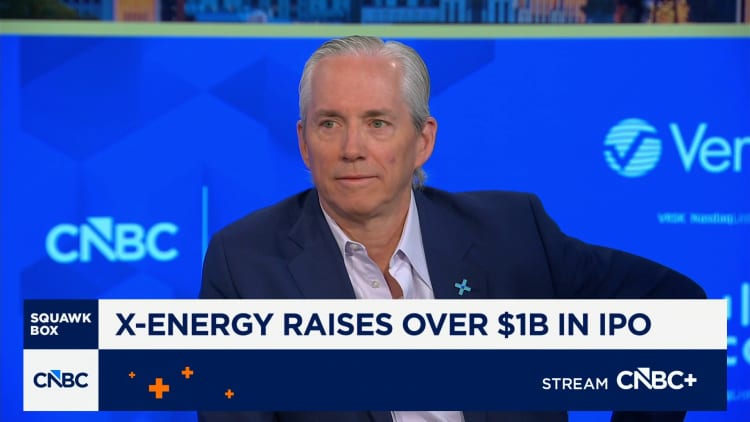

Advanced nuclear reactor company X-energy began trading Friday as the AI boom and electrification broadly spark a flurry of interest in the nuclear industry.
The stock opened at $30.11, after upsizing its initial offering, pricing at $23 per share — ahead of the initial range of $16 – $19 per share. The company raised more than $1 billion, making it the largest nuclear public offering on record. Shares last traded 26% higher.
The company’s xe-100 reactor is 80 megawatts, and can be bundled together with additional reactors to scale up to 960 megawatts. The xe-100’s model is a high-temperature gas-cooled reactor. In addition to generating electricity, its high temperatures mean it can be used in hard-to-decarbonize industrial applications such as chemical production.
All of the nuclear reactors currently in operation in the U.S. are light water reactors.
The company has yet to begin construction on any of its reactor facilities, but it already has an order pipeline of more than 11 gigawatts thanks to partnerships with companies including Amazon, Dow and Centrica.
Prior to going public, the company raised more than $1.4 billion – most recently a $700 million Series D fund in November – with backers including Amazon, Jane Street, ARK Invest, Citadel’s Ken Griffin and Ares Management funds. The company has also received funding from the U.S. Department of Energy.
X-energy is the first sizable advanced reactor company to pursue a traditional IPO route, after competitors Oklo and NuScale went public via SPAC transactions. X-energy previously pursued a listing via a SPAC merger, but ultimately abandoned that plan in 2023.
The company’s business model is also different from some of its competitors, since it does not plan to own and operate nuclear plants. Rather, it will license its technology. X-energy will also sell nuclear fuel that’s produced at its fabrication facility in Oak Ridge, Tennessee, where construction began in 2025.
X-Energy’s TRISO Facility.
Courtesy: X-Energy
In March 2025, X-energy and Dow submitted a construction permit application to the U.S. Nuclear Regulatory Commission for their proposed project in Seadrift, Texas. The review process is expected to take 18 months, and is part of a two-step process, which also includes applying for an operating license.
X-Energy is also working with Amazon to deploy 5 gigawatts across the U.S. by 2039. The first project will be a 320-megawatt facility with Washington utility Energy Northwest, the companies previously announced.



Tom Lee’s Bitmine Immersion Technologies has bought 10,000 ether (ETH) from the Ethereum Foundation (EF) through an over-the-counter (OTC) transaction. The trade settled at an average price of $2,387, the foundation has confirmed.
The deal moves roughly $23.9 million worth of ether from the foundation’s treasury. The buyer is one of Ether’s most vocal institutional accumulators. It has also revived familiar criticism of the foundation’s selling cadence.
Foundation sells again from its safe multisig
The 10,000 ETH was left in a foundation-controlled safe wallet through an OTC block trade, according to the EF’s announcement. Proceeds at the stated average price of $2,387 amount to approximately $23.87 million.
The foundation said the sale funds core operations, including protocol research, ecosystem grants, and community funding programs.
It pointed to a treasury policy published last June that formalized periodic ETH sales as part of ongoing treasury management.
BitMine Accumulates What the Foundation Divests
On the other side of the trade sits a very public ETH believer. Tom Lee is the co-founder of Fundstrat and the chair of BitMine Immersion Technologies (BMNR).
He has steered the firm toward an aggressive ETH treasury strategy since 2025. The firm has become one of the more visible corporate buyers of ether on public markets.
The contrast has drawn fresh pushback. Pseudonymous researcher 0xfoobar argued the foundation is signaling weakness in its own asset by refusing to pay staff in ETH.
“There’s an element of dogfooding you’re strongly missing here. If the EF employees and contractors hate/misunderstand crypto so much that they’re unwilling to take payment in ETH, they shouldn’t be working there. Period,” the user wrote.
The sale tests the foundation’s argument that periodic divestments are routine operational housekeeping. Bitmine is emerging as a repeat institutional buyer of ether.
The contrast between Ethereum’s stewards and its biggest believers is becoming harder for the community to ignore. The foundation has yet to respond to the latest dogfooding critique.
The post Tom Lee and BitMine’s Latest Ethereum Purchase Faces Community Backlash appeared first on BeInCrypto.
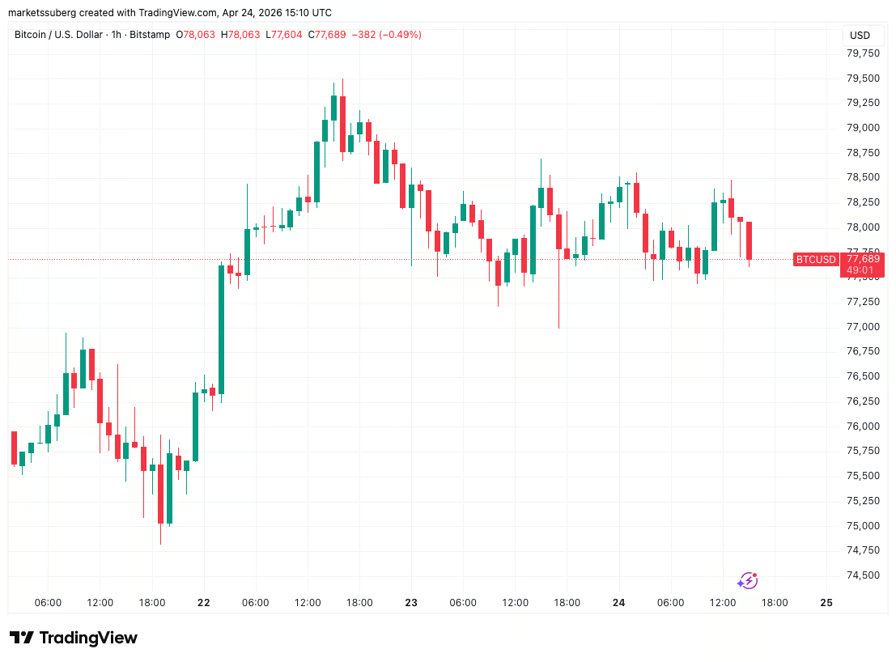
Bitcoin (BTC) stayed glued to $78,000 on Friday with markets “awaiting clarity” from the US-Iran war.
Key points:
- Bitcoin stalls in its bid to recapture $80,000, as US stocks tread water.
- Strong earnings are needed to sustain the equities push, says analysis.
- BTC price support is at risk of giving way next.
Bitcoin joins risk assets “chopping sideways”
Data from TradingView tracked flat BTC price action into the week’s last Wall Street trading session.
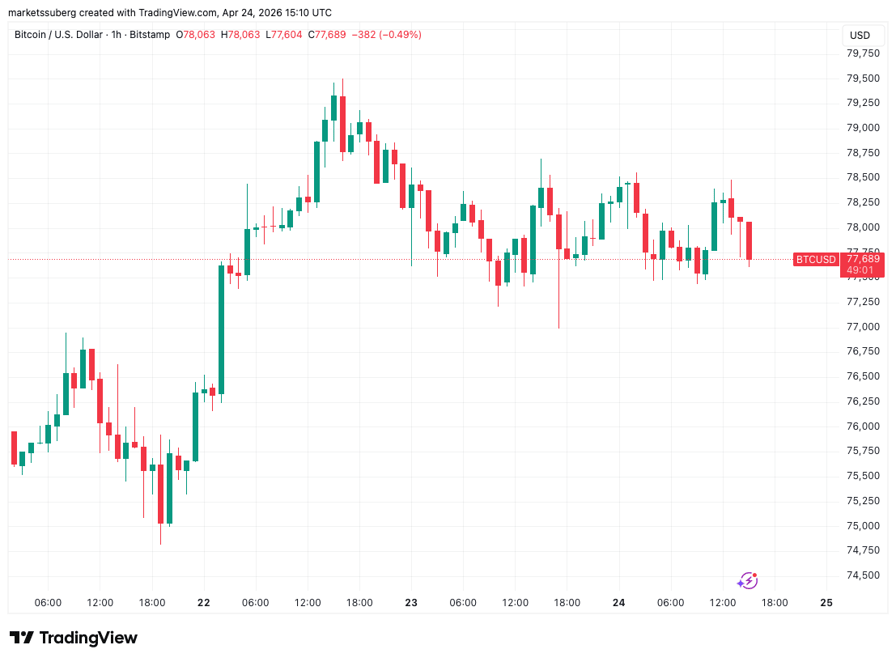
BTC/USD one-hour chart. Source: Cointelegraph/TradingView
Amid a lack of fresh geopolitical cues, risk-asset catalysts presented a mixed picture, leading to sideways movements for US stocks. WTI crude oil, after nearing a rematch with the $100 mark, cooled to $95.
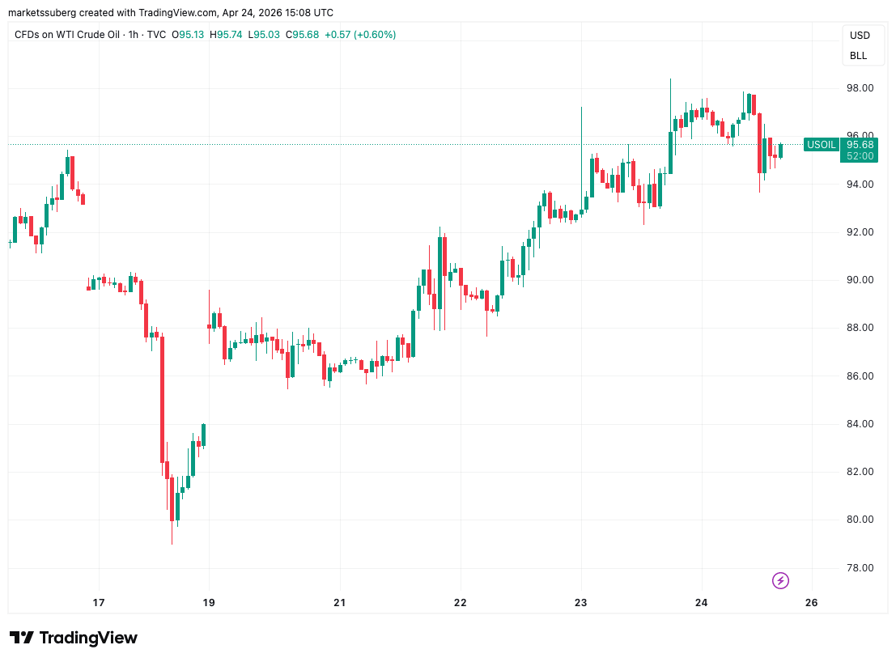
CFDs on WTI crude oil one-hour chart. Source: Cointelegraph/TradingView
“$BTC & Stocks started the week off strong as metals have sold off. But as $OIL has been starting to move again the past few days, risk assets have stalled and are now chopping sideways,” trader Daan Crypto Trades responded in a post on X.
“Market is eagerly awaiting clarity from the conflict in the middle east. The longer it drags on and oil keeps moving higher, the more pressure will be put on these.”
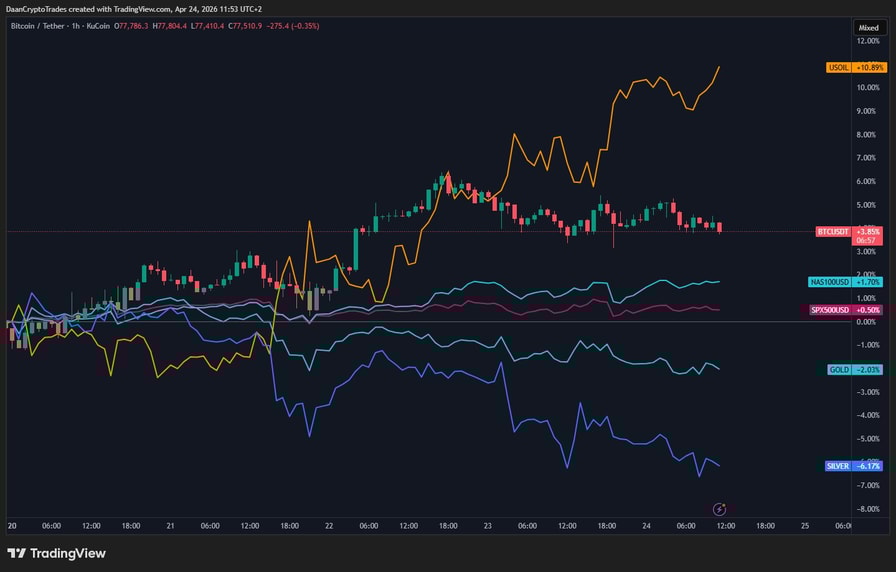
Macro asset price comparison. Source: Daan Crypto Trades/X
The day prior, trading resource Mosaic Asset Company said that positive earnings figures would be essential to sustain continued upside for stocks, with the S&P 500 already hitting new record highs.
“With the first quarter reporting season about to pick up, it will be crucial to monitor forward earnings estimates for any changes in trend since the start of the year,” it wrote in its latest analysis.
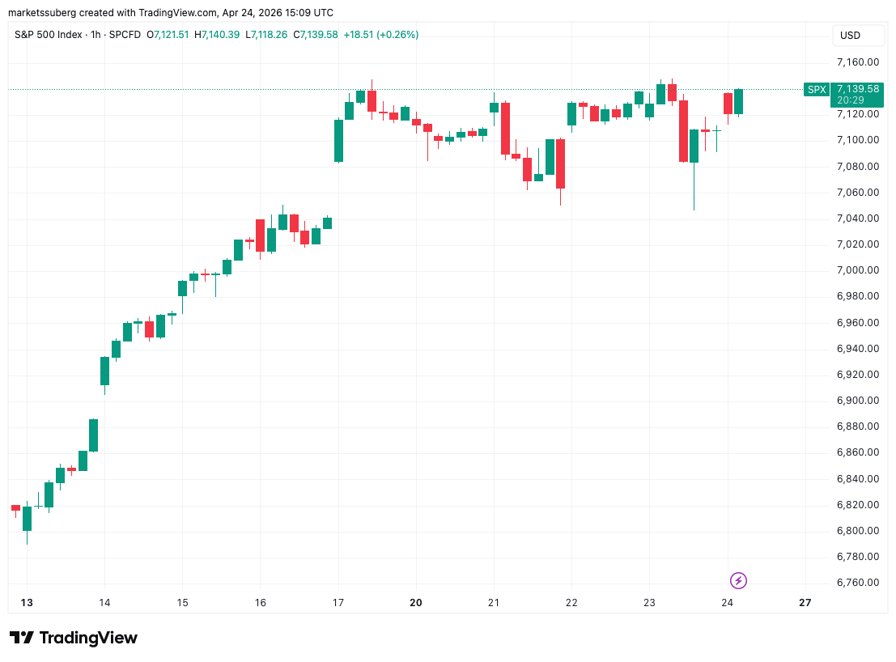
S&P 500 one-hour chart. Source: Cointelegraph/TradingView
Analyst “surprised” that BTC price support holding
Focusing on BTC/USD, trading resource Material Indicators hinted at early signs of a deeper retracement next.
Related: Bitcoin price set for best gains since Q4 2024 with $77.5K monthly close
“Bid liquidity at $76.5k already rugged, as predicted yesterday, and LTF order flow is trending down,” it wrote on X, referring to data from one of its proprietary trading tools.
Material Indicators added that it was “surprised” that bid liquidity below spot price had not been pulled.
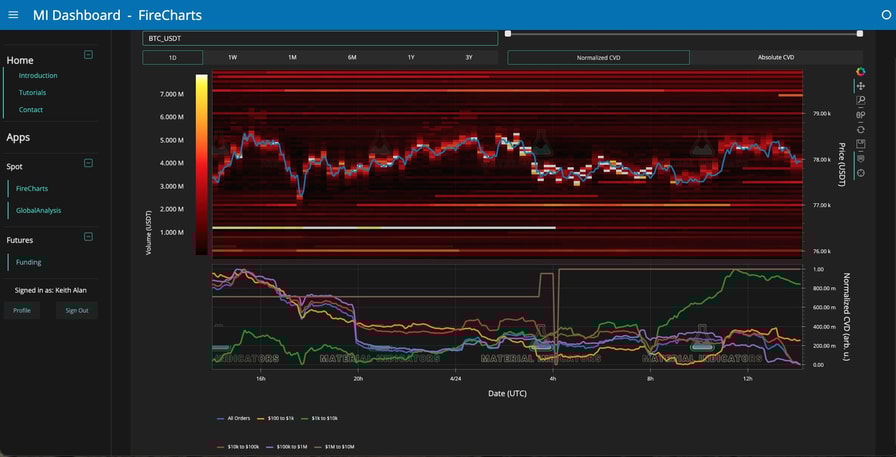
BTC/USDT order-book liquidity data with whale orders. Source: Material Indicators/X
Trading account JDK Analysis referenced a “news-driven pump” as further evidence that the low-time frame rally was overextended.
“The profile shows $BTC at the upper value extreme of the past two days,” an X thread read, analyzing exchange order-book data.
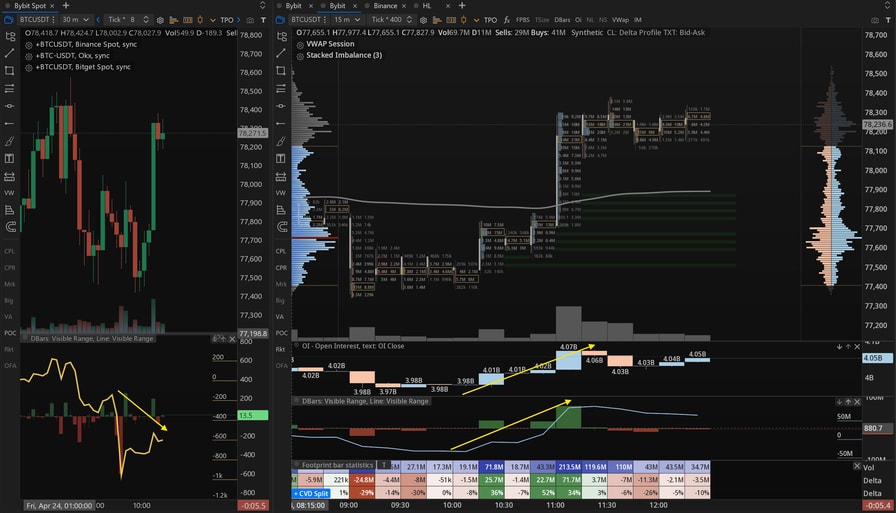
BTC/USDT order-book data (Bybit). Source: JDK Analysis/X

Stunning, Experimental Sci-Fi Thriller Destroys The Airwaves

I Have Taken A GLP-1. I Want To Talk About Skinny Celebrities.

DWP benefit payment date changes next week

Manchester United reach agreement with Casemiro over contract clause amid transfer speculation

US brings back mandatory military draft registration

Steven Gerrard disagrees with Gary Neville over ‘shock’ Chelsea and Arsenal claim | Football


-

 Business5 days ago
Powerball Result April 18, 2026: No Jackpot Winner in Powerball Draw: $75 Million Rolls Over
-

 Politics7 days ago
Palestine barred from entering Canada for FIFA Congress
-
Entertainment5 days ago
NBA Analyst Charles Barkley Chimes in on Ice Spice McDonald’s Fiasco
-

 Tech6 days ago
Auto Enthusiast Scores Running Tesla Model 3 for Two Grand and Turns It Into Bare-Bones Go-Kart
-

 Politics5 days ago
Zack Polanski demands ‘council homes not luxury flats for foreign investors’
-

 Crypto World7 days ago
Russia Pushes Bill to Criminalize Unregistered Crypto Services
-

 Politics4 days ago
Gary Stevenson delivers timely reminder to register to vote as deadline TODAY
-

 Politics2 days ago
Making troops accountable for war crimes threatens US alliance, ex-SAS colonel warns
-

 Business2 days ago
Rolls-Royce Voted UK’s Most Iconic Trade Mark as IPO Register Hits 150
-

 Politics2 days ago
Disabled people challenge government SEND proposals over segregation concerns
-

 Crypto World7 days ago
Russia Introduces Bill To Criminalize Unregistered Crypto Services
-

 Politics2 days ago
Zack Polanski responds to home secretary’s taser threat
-

 Politics2 days ago
Starmer handler McSweeney to be dragged from shadows by Foreign Affairs Committee
-
Politics2 days ago
Wings Over Scotland | How To Get Away With Crimes
-
Crypto World6 days ago
Kelp DAO rsETH Bridge Hack Drains $292M as DeFi Losses Top $600M in Two Weeks
-

 Politics2 days ago
‘Iran is still a nuclear threat’
-

 News Videos7 days ago
AP Politics, Buggana Analyzes Reasons For Financial Instability Due To Amaravati
-

 Crypto World3 days ago
New York sues Coinbase, Gemini over prediction market offerings
-

 Business3 days ago
The Job Benefits Most Men Don’t Know to Negotiate
-

 Crypto World9 hours ago
Michael Saylor says BTC winter is over. Market analyst disagrees, says bitcoin was in a pullback
You must be logged in to post a comment Login