

Crypto World
South Korea’s largest bank brings cross-border payments to Kinexys



KB Kookmin Bank will launch a blockchain-based cross-border payment service for import and export companies in August 2026.
Summary
- KB Kookmin will initially launch Kinexys-based U.S. dollar payments across ten countries during August 2026.
- The service links blockchain settlement with SWIFT while supporting corporate transfers beyond normal banking hours.
- KB becomes South Korea’s first financial institution using Kinexys for corporate import and export payments.
The South Korean lender will use Kinexys by J.P. Morgan to support U.S. dollar payments across 10 countries.
The service will connect Kinexys with existing SWIFT payment rails. It will support near-real-time transfers and foreign exchange settlement throughout the day. Customers will access the service through KB Kookmin Bank’s domestic branches and its Singapore branch.
KB Kookmin becomes first Korean bank to use Kinexys
KB Kookmin Bank announced the service on July 26 after signing an agreement with J.P. Morgan on blockchain remittance services. According to Yonhap News Agency, it will become the first South Korean financial institution to use Kinexys for payment services aimed at import and export companies. The agreement focuses on faster cross-border remittances for businesses managing overseas trade, supplier payments and foreign exchange settlement needs.
The first phase will prioritise U.S. dollar transfers. The supported markets are South Korea, the U.S., Singapore, Saudi Arabia, India, Thailand, Qatar, the United Arab Emirates, Bahrain and South Africa. The bank has not published customer fees, transaction limits or an exact August launch date.
Kinexys adds blockchain settlement to existing bank rails
J.P. Morgan describes Kinexys as a bank-led blockchain platform for payments, asset tokenisation and near-real-time settlement. The network operates around the clock and lets approved institutions move funds without waiting for traditional banking cut-off times. It was previously known as Onyx.
The KB service will not replace SWIFT. Instead, it will link Kinexys with the existing messaging and correspondent banking system. This model allows banks to use blockchain for faster movement and settlement while retaining established compliance checks, account structures and foreign exchange processes.
J.P. Morgan has expanded Kinexys across several markets. In June, the bank added blockchain deposit accounts in Australian dollars, Hong Kong dollars, Japanese yen, Chinese yuan and Singapore dollars. It said the expansion created support for eight currencies and enabled 24/7 payments, programmable treasury operations and onchain foreign exchange.
Other banks have already used the platform for corporate payments. Qatar National Bank adopted Kinexys for U.S. dollar payments in 2025. The service allowed corporate transfers outside normal banking hours and reduced some settlement times to minutes.
KB expands its institutional blockchain activity
The payment launch follows several blockchain projects across KB Financial Group. In June, KB Kookmin Bank completed a $100 million digital bond sale through HSBC’s Orion platform. The two-year U.S. dollar bond settled in three business days, compared with five days under the earlier process.
KB Kookmin also participates in South Korea’s tokenised deposit work. The Ministry of Economy and Finance selected nine banks for a project linking tokenised deposits with government spending systems. The planned test will use programmable conditions and a shared record of public payments.
Meanwhile, KB Kookmin Card has been developing a payment system that links stablecoins with traditional credit. Crypto.news reported that the project uses Avalanche and OpenAsset infrastructure. The design aims to let users pay from stablecoin wallets while keeping standard card settlement for merchants.
Large banks move blockchain into live payment services
KB Financial Group ranked as South Korea’s largest lender by assets in S&P Global Market Intelligence’s 2026 Asia-Pacific bank review. The group placed 28th in the region with about $552.76 billion in assets. That scale gives the bank an established corporate network for introducing the new service.
The launch also adds to wider bank use of tokenised deposits and blockchain settlement. J.P. Morgan, Mastercard, Ripple and Ondo Finance tested a cross-border Treasury redemption in May. Kinexys handled the payment instructions and U.S. dollar settlement while the tokenised asset moved on the XRP Ledger.
J.P. Morgan has also used Kinexys with companies such as Axis Bank, Mitsubishi Corporation and EBANX. In July, EBANX said the platform reduced some internal cross-border transfers from more than 24 hours to minutes by removing local cut-off restrictions.
For KB Kookmin’s corporate clients, the main change will be access to longer operating hours and faster settlement across selected trade corridors. The bank has not said whether it will add more currencies or countries after the first phase. Its August rollout will show how the service works alongside existing SWIFT processes for commercial payments.

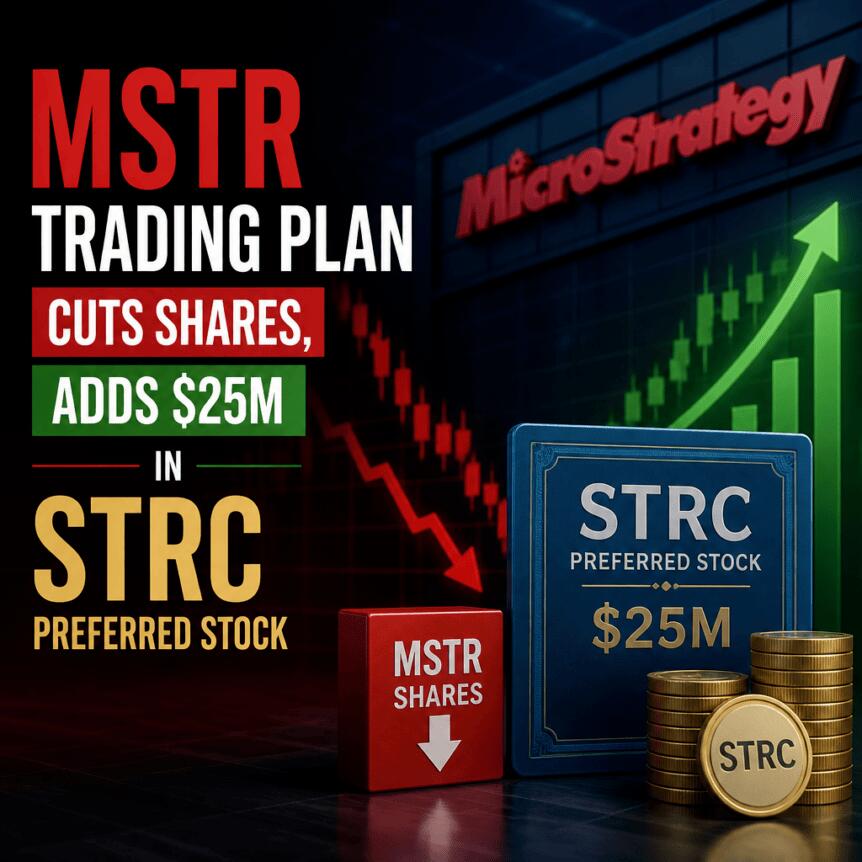
Strategy, the corporate software firm best known for its large Bitcoin treasury, continued to reshape its capital structure last week by selling common stock under its at-the-market program and repurchasing preferred shares.
According to company disclosures, Strategy sold 5,429,160 shares of its Class A common stock through an at-the-market (ATM) offering between July 20 and July 26, generating $544.5 million in net proceeds. In parallel, the company repurchased 288,930 shares of its STRC preferred stock for $25 million, as detailed in a Form 8-K filed with the U.S. Securities and Exchange Commission on Monday.
Key takeaways
- Strategy raised $544.5 million in net proceeds from an at-the-market sale of 5.43 million Class A shares between July 20 and July 26.
- In the same period, the company spent $25 million to repurchase 288,930 shares of STRC preferred stock.
- Strategy’s U.S. dollar reserve increased to $3.75 billion as of July 26, up from $3.225 billion the prior week.
- Strategy reported no Bitcoin purchases or sales during July 20-26, leaving its holdings unchanged at 843,775 BTC.
- The move follows Michael Saylor’s latest social media post, which some observers interpreted as a potential signal about future preferred-stock strategy.
ATM stock sales and STRC preferred buyback
Strategy’s latest financing activity combined two parts: common stock issuance and preferred share repurchases. The Class A share sales were executed via Strategy’s at-the-market offering, allowing the company to issue shares in smaller increments rather than a single large raise.
The preferred buyback is notable because it suggests the company is not only expanding its liquidity through equity markets, but also actively managing its preferred instrument in the capital stack. The $25 million repurchase covered 288,930 shares of STRC preferred stock, per the SEC Form 8-K filed Monday.
While market pricing can shift quickly around corporate actions, Yahoo Finance data cited in the original reporting indicated Strategy’s Class A shares were up more than 2% in Monday’s premarket trading, and STRC preferred shares were higher ahead of the Nasdaq open.
Bitcoin holdings unchanged as cash reserves grow
Despite the increased equity activity, Strategy reported no Bitcoin trades during the July 20-26 window. The company stated its BTC holdings remained at 843,775 BTC, acquired at an average purchase price of $75,476 per Bitcoin, representing an aggregate cost basis of $63.69 billion.
At the time of publication, Bitcoin was reported as trading around $64,971. Strategy’s lack of BTC buying or selling during this specific period means the new liquidity primarily supports corporate objectives rather than immediate additions to its treasury.
Strategy also highlighted how the company intends to use its expanded cash: maintaining liquidity as it increases capital markets activity through common stock offerings and preferred stock instruments. The growing dollar reserve is designed to support dividend payments on preferred stock and interest payments on its outstanding debt.
From “another color” to expectations on preferred strategy
The financing update arrived after executive chairman Michael Saylor sparked speculation on Sunday with an X post referencing “another color.” Some market observers interpreted the phrase as a hint that Strategy could implement additional actions related to its preferred stock approach.
Separately, the preferred stock repurchase and the continued buildup of cash reserves underscore that Strategy’s capital structure management remains tightly linked to its broader treasury and funding strategy. For investors, the key issue is how these moves affect future returns and risk: common stock issuance can dilute shareholders if priced below intrinsic value, while preferred repurchases may reduce fixed obligations, depending on the terms and market conditions.
Saylor reignites debate over banks and Bitcoin’s path
Strategy’s latest corporate filings also surfaced in the context of renewed discussion prompted by Saylor about Bitcoin’s relationship with traditional finance. On X, Saylor argued that rejecting Bitcoin’s connection to financial infrastructure would restrict access to most potential users, suggesting that integration with banks is necessary for broader adoption.
That position drew pushback from some Bitcoin supporters who contend the network’s original intent—outlined in Bitcoin’s white paper as a peer-to-peer electronic cash system—was to reduce the need for financial intermediaries. The exchange highlighted an enduring divide inside the ecosystem: one camp views banks and legacy rails as essential gateways to mainstream usage, while the other sees such involvement as a risk to Bitcoin’s decentralized foundation.
In practice, Strategy sits in the middle of that tension. As a publicly traded company with a large BTC treasury, its operations depend on conventional capital markets. Its use of common stock offerings and preferred instruments illustrates how corporate Bitcoin exposure often relies on the same financial infrastructure that some Bitcoin purists view with skepticism.
Going forward, investors will likely watch whether Strategy’s expanded cash reserve is followed by additional BTC purchases in subsequent reporting windows, and whether Saylor’s “another color” comment evolves into specific preferred-stock actions. The immediate uncertainty remains the timing and purpose of the next treasury decisions—whether liquidity is mainly for near-term corporate obligations or for accelerating Bitcoin accumulation later.


“This is the biggest change to how Lido Core staking works since Lido V2,” said Isidoros Passadis, chief of staking at Lido Labs Foundation. “The node operators securing the majority of ETH staked via Lido are consolidating onto far fewer validators, and for the first time, they’re backing that stake with their own capital, leaving the validator set underpinning Lido Core much leaner and better secured.”
Ecosystem builders had questioned whether enforcing capital bonds would drive away established node operators. Lido confirmed that all 34 of its existing curated operators are expected to transition to CMv2, with none planning to leave because of the bond requirement.
“Rather than replacing the existing reputation-based model, the bonds complement it with real economic accountability,” Will Shannon, head of node operator mechanisms at Lido Labs Foundation, said in an interview with CoinDesk.
He also said the migration will use a separate consensus-layer consolidation queue rather than Ethereum’s deposit and activation queue. Lido estimates that the transition will reduce annual staking rewards across the protocol by about 0.28%. Validators will continue earning rewards until they exit, with any missed rewards limited to the period before their balances reach the new validators.


A venue clearing more than $200 billion a month, holding roughly 70% of on-chain perpetuals volume, is secured by 27 validators. Its foundation ran every one of them at launch. Both the critics and the defenders are working from stale numbers, so here is the audit: what the set looks like now, which powers actually exist, and where the honest gap remains.
Summary
- Hyperliquid’s validator set has grown from 4 at launch to 16, then 21, 24, and 27 as of June, with registration permissionless and the largest stakes forming the active set.
- The decisive number moved this year: foundation-run validators now hold about 49.3% of staked HYPE, with the remaining 50.7% spread across 22 other operators, down from a reported 81% concentration in early 2025.
- The loudest criticism, that the foundation can jail validators at will, does not match the documentation, which describes jailing as peer-triggered for latency and reliability failures, with no automatic slashing anywhere in the system.
- The genuine gap is scale, not malice: 27 validators against roughly 1,800 on Solana and hundreds of thousands on Ethereum, securing a venue whose monthly volume exceeds $200 billion, with node software still closed and a delegation program that applies identity checks to participants.
- Singapore’s regulator added Hyperliquid to its Investor Alert List in June, which converts the decentralization argument from a philosophical debate into a question with legal consequences.
The most valuable thing about a decentralization argument is usually the data it forces into the open, and the Hyperliquid version has been running on stale data for eighteen months. In January 2025 a node operator published a letter noting that five foundation validators controlled more than 81% of staked HYPE across a set of sixteen, and that number entered the discourse and never left it. In June 2026, a prominent investor declared the network not permissionless at all, citing validators concentrated in a single building, node software that remains closed, and a foundation that can jail operators and force upgrades on them. Both interventions were treated as verdicts. Neither reflected the current state of the network, which had by then expanded to 27 validators with foundation-run nodes holding slightly less than half the stake, and neither engaged with what the protocol’s own documentation says about the powers in dispute. Meanwhile the thing being argued over kept growing: a venue processing more than $200 billion a month, holding roughly 70% of decentralized perpetuals volume, generating on the order of a billion dollars a year in fees, with an order book, a matching engine, and a liquidation system all running on those 27 machines. This piece is the audit both sides have been arguing without: the set as it stands, the powers as documented, the precedent where those powers actually fired, and the gap that survives every correction.
The set, counted
Start with the trajectory, because the direction is the part the standing critique omits.
Hyperliquid launched with a handful of validators, all run by the foundation, in what amounted to a permissioned network wearing a public ticker. The set expanded to 16 in January 2025, the moment that produced the original decentralization letter and the 81% concentration figure. In April 2025 the foundation restructured registration itself: the set moved to 21 nodes, with registration open to anyone and the 21 largest by stake forming the active set, which converted validator status from an appointment into an auction. Growth continued through 24 to 27 as of June 2026, with a stake threshold to enter that has run above a million HYPE, a number that itself functions as the network’s real admission price.
The concentration figure moved with it. Following a round of redelegations from foundation validators in June, foundation-run nodes hold approximately 49.3% of staked HYPE, with about 50.7% distributed across 22 independent operators. The foundation runs five validators of the 27. That is a materially different network from the one described by the 81% figure still circulating in criticism, and any honest audit has to lead with the improvement before cataloguing what remains.
The mechanics underneath are worth stating precisely, because they define who can participate. Consensus is delegated proof of stake: validators require a minimum self-delegation of 10,000 HYPE locked for a year, delegators face a one-day lock and a seven-day unstaking queue, and rewards accrue continuously with automatic recompounding. There is no automatic slashing anywhere in the system, which is unusual and cuts both ways: no operator loses stake for a mistake, and no operator loses stake for misbehavior either, leaving the unstaking queue and social consequences as the enforcement layer. Governance runs on delegated stake weight, with validators declaring positions and outcomes determined by the tokens behind them, not by validator headcount, which means the concentration number is the governance number, not a trivium.
The three powers, examined
Now the specific allegations, taken one at a time against the documentation, because two of the three survive and one does not.
Jailing. The claim that has traveled furthest is that the foundation can jail a validator for any reason and remove it from the active set. The protocol documentation describes something different: validators can be jailed through peer voting for latency and reliability failures, and a jailed validator stops producing rewards for its delegators until unjailed, with no slashing attached. Peer-triggered removal for performance is standard practice across proof-of-stake networks and is not foundation discretion. The residual concern is real but narrower than the accusation: when foundation-affiliated nodes hold close to half the stake, peer voting weighted by that stake is not fully independent of the foundation, so the mechanism is only as neutral as the distribution underneath it. That is an argument about concentration, which is the argument this piece keeps returning to, and not an argument about arbitrary power.
Forced upgrades. The claim that validators must adopt protocol upgrades is essentially accurate and largely unremarkable. Every chain running a single client implementation faces the same reality: nodes that decline an upgrade fall out of consensus, which is a coordination fact, not a governance power. What makes it sharper here is the single-binary architecture. Hyperliquid runs one implementation, which the foundation has defended by pointing out that Solana operated the same way for years. The defense is honest and incomplete: single-client networks concentrate the risk that a bug or a decision in one codebase becomes the whole network’s bug or decision, which is precisely why Ethereum’s client diversity is treated as a security property instead of an inefficiency.
Closed source. This one stands, and it is the most consequential of the three. The node software has remained closed, with the foundation’s position since early 2025 being that the code will open when it is stable, citing development speed and security. Eighteen months and considerable growth later, the promise is still outstanding, and it is the crux of the June criticism: a validator running a binary it cannot read is trusting the author in a way that no amount of stake distribution fixes. Users can verify state on-chain, but nobody outside the team can independently verify what the software does before it produces that state. For a venue clearing $200 billion a month, that is the single widest gap between what the network claims and what an outsider can check.
The precedent: when the powers fired
Governance arguments stay abstract until an incident makes them concrete, and Hyperliquid’s arrived in March 2025 with a memecoin called JELLY.
A trader opened a large position and manipulated the thin spot market underneath it, engineering losses that landed on the protocol’s liquidity vault, the pool that absorbs liquidated positions on behalf of depositors. With the vault facing an eight-figure hit, validators voted to delist the market and settle it at a price favorable to the protocol, and the loss was contained. The intervention worked, users were protected, and the affair was over within hours.
It also answered the governance question empirically. A market that traded on a network can be closed by a stake-weighted vote when the network’s own capital is at risk, and the vote at that time ran through a validator set in which the foundation held a decisive share, which is why the episode was described in the trade press as a validator put: an implicit guarantee that the house will intervene when the house is losing. Two readings follow, and both are defensible. The generous one is that any exchange, decentralized or otherwise, must be able to halt manipulation, and a venue that let a vault be drained by an obvious attack would deserve the criticism it received instead. The unforgiving one is that decentralization is only tested at the moment intervention becomes attractive, and Hyperliquid intervened. What the incident settles is not whether the network is good or bad but what it is: a venue with a functioning emergency brake and a small number of hands on it. Traders should price that accordingly, in both directions, since the same brake that protected vault depositors in March 2025 is the brake that could close a market a trader is winning in.
The comparison that survives every correction
Strip out the stale numbers and the overstated claims, and one gap remains that no redelegation fixes: the set is very small relative to what it secures.
Twenty-seven validators sits against roughly 1,800 on Solana, several hundred on Cosmos Hub, and hundreds of thousands on Ethereum. The technical counterargument is legitimate and worth stating properly: Byzantine fault tolerant consensus does not require thousands of participants for safety, it requires an honest supermajority within whatever set exists, and a small high-performance set is exactly how the network achieves the sub-second finality that makes an on-chain order book viable at all. Hyperliquid’s entire product advantage, matching and finality fast enough to compete with centralized venues, is purchased with validator-set size. That is a deliberate trade, not an oversight.
The question is whether the price is right at this scale, and the arithmetic is uncomfortable. A set of 27 secures a venue processing over $200 billion monthly, with open interest, vault deposits, and now equity-linked and other builder-deployed markets on top. The attack surface that matters is not cryptographic but social and regulatory: 27 operators are 27 phone calls, 27 jurisdictions to subpoena, 27 relationships to pressure, and the foundation’s near-half stake means a much smaller number of conversations would decide most outcomes. The delegation program that expands the set applies identity checks to participants, which improves accountability and simultaneously means the expansion is curated, not open, in practice. Each of those facts is defensible on its own terms. Together they describe a network whose decentralization is best characterized as a managed trajectory: real, measurable, improving, and still a long way from the property its marketing language implies.
The regulator arrives
Which is where the argument stopped being philosophical. On June 26, Singapore’s Monetary Authority added Hyperliquid to its Investor Alert List, the register of entities that consumers might wrongly believe are licensed. The listing is not a ban, not an enforcement action, and not a finding of wrongdoing, and Hyperliquid’s response was accurate on every point: it has never claimed authorization from the regulator, nothing about the network changed, users retain self-custody, and settlement remains on-chain. Bybit had joined the same list nine days earlier, KuCoin in February, Binance since 2021, which places Hyperliquid in familiar company and suggests a regulator working through a list instead of singling out a protocol.
The significance is what the listing does to the vocabulary. Permissionless has been a technical description inside crypto and is becoming a legal position outside it, because a protocol claiming to be infrastructure rather than an operator is making an argument about who, if anyone, is responsible for the venue. The critique that landed the same day, that a network with closed-source software, a curated validator set, and foundation-weighted governance does not meet the description, is therefore not merely a purity argument. It is a claim that the legal position rests on facts the network has not fully proven, and regulators reading the same debate will reach their own conclusions about which entity, if any, is running the exchange. That is the real stake of the governance question in 2026, and it is why the numbers in this piece matter beyond ideology: the distance between 49.3% and something much smaller, and between closed source and open, is also the distance between a plausible infrastructure claim and a contestable one.
The listing power, and the money behind it
One dimension of the governance question sits outside the validator debate entirely, and for traders it may be the more consequential one: who decides what trades here.
The network’s newer listing machinery, the builder-deployed markets that opened perpetuals creation beyond the core team and produced the equity-linked contracts this publication audited separately, is gated by stake rather than by approval. Deploying a perpetual market requires staking a large HYPE position for a minimum period, and builder deployments on the EVM side run through a periodic auction for slots. Read one way, that is the most genuinely permissionless part of the system: no committee decides which markets exist, only capital does, which is why the venue could list synthetic equity exposure faster than any regulated exchange could convene a meeting about it. Read another way, it replaces gatekeeping with a wealth qualification, and it means the venue’s expanding product surface, including markets that touch regulated asset classes, is determined by whoever can post the stake.
The economics tie the two halves of the governance question together. Trading fees flow into the token’s buyback machinery, which this publication has covered as crypto’s clearest example of a network routing real revenue to its asset, and staked HYPE is simultaneously the security bond, the governance weight, and the listing key. That triple duty is elegant design and a concentration mechanism at once: the same token that secures the chain decides its rules and controls what it lists, so any accumulation of HYPE is an accumulation of all three powers together. On a chain where roughly half the stake already sits with one affiliated group, and where an entry ticket to the validator set runs above a million tokens, the practical question is not whether the system is permissionless in principle but how much capital it takes to matter, and the answer has been rising with the token.
That is the frame worth carrying out of this audit. Hyperliquid’s governance is not a story about a foundation refusing to let go; the trajectory shows the opposite, steadily and measurably. It is a story about a design in which influence tracks capital with unusual directness, on a venue whose scale now exceeds most regulated exchanges, with the software still unreadable from outside. Whether that is acceptable is a judgment each user makes. What it is, precisely, is now on the record.
What to watch
The stake distribution, not the validator count. Headcount is the easy number to grow and the least informative. Whether foundation-run stake continues falling below 49.3%, and whether any single independent operator accumulates a blocking position, is the measure that determines who actually decides outcomes.
The open-source commitment. The promise to publish node software has been outstanding since early 2025 and is the single change that would most alter the audit. Its continued absence is itself information, and the longer it runs, the weaker the stability rationale becomes.
The next intervention. JELLY showed that the network will act to protect its vault. The next comparable event, and whether the decision runs through a stake distribution that no longer has a foundation majority behind it, is the test of whether governance changed or only its arithmetic did.
Regulatory follow-through. The Singapore listing has no operational effect today. Whether other jurisdictions follow, and whether any of them treats the foundation as the operator of an unlicensed exchange, is the scenario in which every fact in this audit stops being a debating point and becomes evidence.
Disclaimer: This article is for information and educational purposes only and does not constitute financial or investment advice. Validator counts, stake distributions, and protocol parameters change continuously, and figures reflect data reported at the time of writing. Nothing here is a recommendation to buy, sell, hold, or trade any asset or on any venue. Always do your own research. Information is accurate as of July 26, 2026.
Frequently Asked Questions
How many validators does Hyperliquid have?
Twenty-seven as of June 2026, up from four or five at launch, then 16 at the start of 2025, 21 in April 2025, and 24 later that year. Registration is open to anyone, with the largest stakes forming the active set, and entry has required a stake above roughly one million HYPE. Validators must self-delegate a minimum of 10,000 HYPE locked for one year.
Who controls the stake?
Foundation-run validators hold approximately 49.3% of staked HYPE following redelegations in June, with about 50.7% spread across 22 independent operators. The foundation operates five of the 27 validators. This is a substantial change from early 2025, when a widely cited analysis put foundation-controlled stake above 81% across a set of 16.
Can the foundation remove validators at will?
Not according to the documentation. Jailing is described as peer-triggered for latency and reliability failures, with a jailed validator ceasing to earn rewards until unjailed, and there is no automatic slashing in the system. The legitimate concern is indirect: because peer voting is weighted by stake and foundation-affiliated nodes hold close to half of it, the mechanism’s independence is limited by the same concentration issue that affects governance generally.
Is Hyperliquid’s code open source?
The node software has remained closed, with the foundation stating since early 2025 that it will open the code once development is stable, citing security and shipping speed. That commitment is still outstanding, and it is the most substantive of the standing criticisms: validators run a binary they cannot audit, and no distribution of stake compensates for that.
What was the JELLY incident?
In March 2025 a trader manipulated a thinly traded memecoin market to push losses onto the protocol’s liquidity vault. Validators voted to delist the market and settle it at a price that protected the vault, containing an eight-figure loss. The intervention worked and was also read as evidence of a validator put, meaning the network will act when its own capital is at risk, through a stake distribution the foundation then dominated.
How does the validator count compare to other chains?
It is far smaller: roughly 1,800 validators on Solana, several hundred on Cosmos Hub, and hundreds of thousands on Ethereum, against 27 on Hyperliquid. Byzantine fault tolerant consensus does not require large sets for safety, and the small set is what delivers the sub-second finality an on-chain order book needs, but it concentrates social, regulatory, and coordination risk for a venue processing over $200 billion a month.
What did the Singapore listing mean?
The Monetary Authority of Singapore added Hyperliquid to its Investor Alert List on June 26, a register of entities consumers may wrongly believe are licensed. It is not a ban or an enforcement action, and Bybit, KuCoin, and Binance appear on the same list. Its importance is that it moves the permissionless question from a technical debate into a legal one, since the claim to be infrastructure rather than an operator depends on the governance facts being what the protocol says they are.
What should traders take from this?
That the network has a functioning emergency brake with a small number of hands on it, and that this is a property to price, not a scandal to condemn. Decentralization here is a managed trajectory: measurably improving on stake distribution, unresolved on source code, and small relative to the value at risk. Position sizing on any venue should reflect the governance reality, not the marketing vocabulary. This is educational analysis, not investment advice.
Ripple SVP Jack McDonald told Grayscale Research that the company has moved well beyond its origins as a cross-border payments provider. It now operates as a platform for institutional digital asset infrastructure. Its offerings include custody, stablecoins, treasury management, and institutional trading services. Ripple argues institutions can simplify operations by using one provider instead of several.
Speaking with Charlie Perkins of Grayscale Research, McDonald said Ripple expanded through product development and acquisitions. Its platform now includes digital asset custody, the U.S. dollar-backed stablecoin RLUSD, treasury management, and institutional trading infrastructure. Ripple also strengthened its capabilities through Standard Custody & Trust Company and Hidden Road.
McDonald said Ripple focuses on banks, fintechs, payment firms, and asset managers. Those organizations require regulated, enterprise-grade infrastructure. That institutional focus shapes every major product launch and acquisition. Ripple is targeting large financial institutions rather than retail users.
The strategy addresses a common hurdle in institutional crypto adoption. Many firms still rely on separate providers for custody, liquidity, stablecoin infrastructure, and execution services. Ripple believes integrating those services can reduce operational complexity. It also aims to accelerate the adoption of blockchain-based finance.
McDonald described RLUSD as infrastructure instead of a market share play. Ripple wants the stablecoin to support enterprise payment and treasury workflows. The company is prioritizing practical use cases over rapid supply growth. That strategy aligns with its broader institutional focus.
Hidden Road strengthens Ripple’s institutional trading capabilities. Meanwhile, Ripple continues expanding RLUSD support across multiple blockchain networks. The company has also announced partnerships with financial institutions and infrastructure providers. Each partnership supports a different stage of institutional digital asset adoption.
Trade Ripple XRP on Bybit and Get a Chance to Win Our $1,000 USDT Airdrop
Regulation Could Strengthen Ripple Position

Ripple says it holds more than 60 regulatory licenses, registrations, and approvals worldwide. That regulatory footprint could become increasingly valuable as digital asset rules evolve. Banks and regulated financial firms typically prefer established compliance frameworks. Ripple believes that the foundation supports institutional onboarding.
The company also invests through its University Blockchain Research Initiative. The program includes more than 60 academic partners worldwide. Researchers study blockchain technology, tokenization, artificial intelligence, and post-quantum cryptography. Ripple views those investments as long-term infrastructure development.
McDonald’s strategy is clear, but execution remains the key challenge. Integrating Standard Custody and Hidden Road into one seamless platform will take time. Institutions will judge Ripple by operational results instead of marketing. Successful integration remains critical to its long-term strategy.
Institutional demand for blockchain-based financial services continues to grow across the industry. That creates opportunities for Ripple while increasing competition. Investors should watch RLUSD adoption, acquisition integration, and enterprise product growth. Those indicators will reveal whether Ripple is gaining meaningful institutional traction.
Discover: The Best Crypto to Diversify Your Portfolio
The post How Ripple Became a Full-Stack Institutional Finance Platform appeared first on Cryptonews.

PUMP, or Pump Fun crypto token, is trading at $0.00214 after staging a 60% recovery from its recent swing low. The unusual part is what did not happen alongside that move. The token absorbed its largest investor and team unlock without breaking down, suggesting demand remained strong despite fresh supply.
Mid-July marked the first vesting tranche. Investors received 32.5 billion PUMP, equal to 25% of their allocation. Team members unlocked 50 billion PUMP, also 25% of their allocation. The remaining tokens will unlock linearly over the next 36 months. Despite the supply increase, buyers stepped in and pushed the price higher.
Trader sentiment has stayed optimistic throughout the event. Many argued that unlock fears were overwhelmed by speculative demand instead of triggering sustained selling. As a result, attention has shifted away from vested concerns. Instead, traders are watching whether PUMP can clear the next resistance after climbing more than 18% over the past 24 hours and nearly 42% in the last z days.
The market backdrop also remains supportive. Total crypto market capitalization sits near $4 trillion, while Bitcoin and Ethereum continue trading in relatively stable ranges. That environment often encourages capital to rotate into higher-risk assets. Meanwhile, Solana’s meme coin ecosystem continues attracting attention, with Pump Fun remaining a crypto major launchpad at the center of that narrative.
Trade Memecoins on Bybit and Get a Chance to Win Our $1,000 USDT Airdrop
Can PUMP Fun Crypto Price Sustain Its Breakout Against Long-Term Resistance?
Price is testing a long-term descending resistance that has capped previous recovery attempts. That trendline now converges near the current $0.00214 price. A decisive close above it with strong volume would shift the structure from a relief rally into a more constructive uptrend.
Still, one complication remains. Open interest has declined even as the price climbed. That usually suggests the rally is driven by spot buying and short covering instead of fresh leveraged positions. While that creates a healthier foundation, sustained gains may still require new capital entering the market.
The bullish case sees PUMP holding above $0.0021, with open interest rebuilding as momentum traders return. If resistance flips into support, the token could target the next technical level higher. In that scenario, the ongoing 36-month vesting schedule becomes far less important as demand absorbs new supply.
The base case is a period of consolidation around current levels as the market digests the unlocked tokens. The bearish case emerges if PUMP fails at resistance and slides back toward its recent swing low. With another 82.5 billion unlocked tokens now potentially tradable, renewed selling from early holders could add pressure if the breakout fails.
Discover: The Best Crypto to Diversify Your Portfolio
LiquidChain Eyes Early Infrastructure Positioning as Meme Rails Test Their Ceiling
PUMP’s resilience against vesting supply confirms one thing: when a narrative captures speculative attention, fundamentals get repriced fast. But Pump Fun is ultimately a crypto meme-launch tool, and meme-launch tools have a ceiling defined by how long the narrative stays hot.
Altseason signals are broadening across the market, which raises a fair question: at $0.0024 and after a 50% move, how much of the easy upside is already captured?
Traders looking for exposure to Solana-adjacent activity at an earlier stage are eyeing LiquidChain ($LIQUID), an L3 infrastructure project currently in presale at $0.01484, with $919K raised to date.
The view is different from the third layer.
You’ll understand soon. pic.twitter.com/P2WOELSTjI— LiquidChain (@getliquidchain) July 27, 2026

The pitch is structural rather than speculative: LiquidChain fuses Bitcoin, Ethereum, and Solana liquidity into a single execution environment via a Unified Liquidity Layer, enabling single-step cross-chain execution and deploy-once architecture.
The project has been gaining traction as macro conditions push investors toward presale-stage infrastructure plays. For traders who want exposure to cross-chain execution rails before a public listing, the entry price reflects early-stage positioning.
Discover: The Best Token Presales
The post Pump Fun Crypto Breaking Out, Shrugging Off Vesting Supply Unlocks appeared first on Cryptonews.
Pump.fun’s PUMP token extended its recovery on July 27, rising above $0.002 after the platform’s BOOST rollout and a sharp increase in trading activity strengthened buying pressure.
Summary
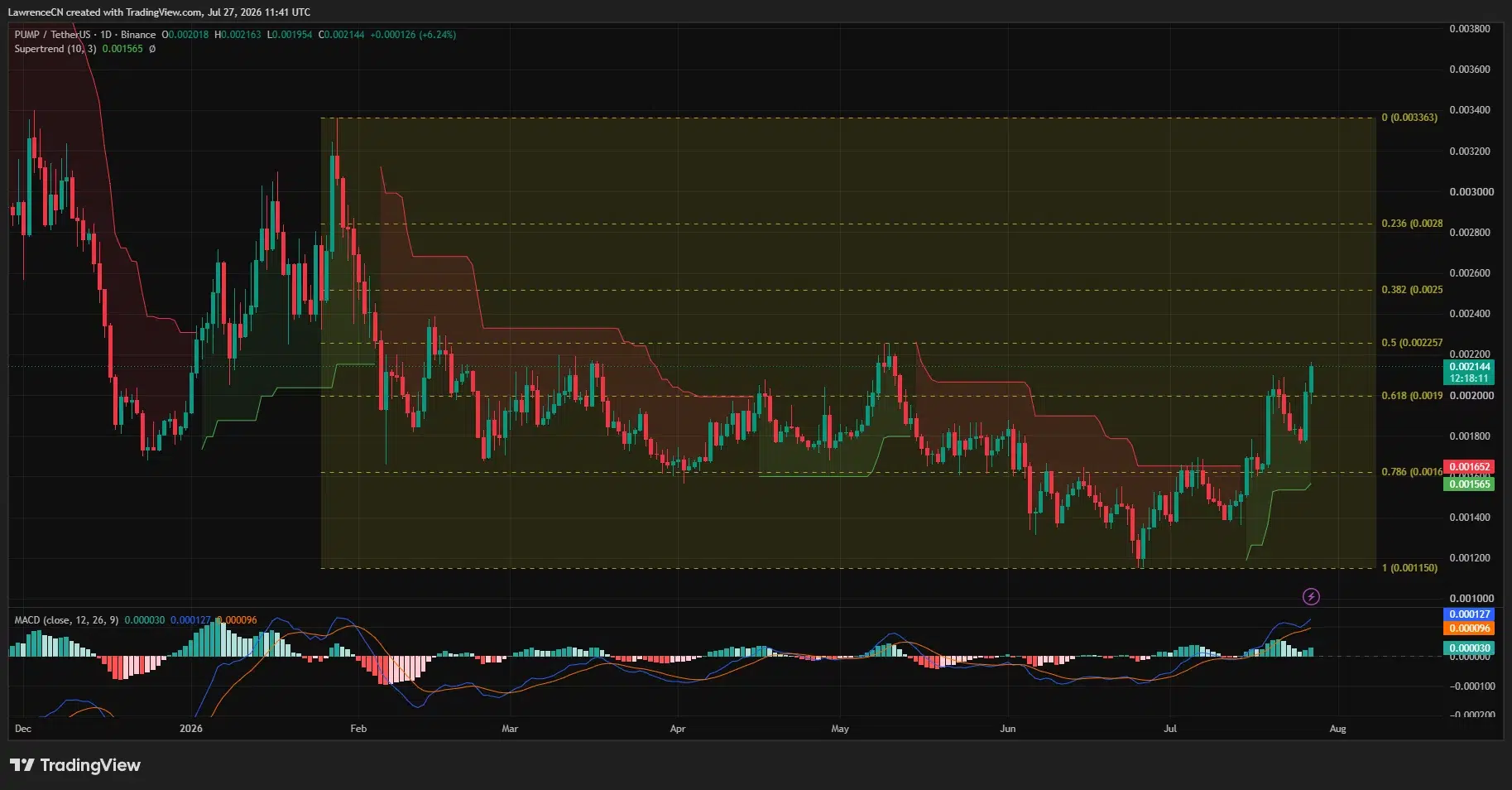
- PUMP price traded near $0.00214, gaining 6.24% on the daily candle and nearly 20% from its recent low.
- Trading volume jumped 183.8% above $85 million, according to CoinGecko data supplied for this analysis.
- Price reclaimed the $0.00190 Fibonacci level, opening a path toward resistance at $0.00226.
- A bullish MACD and Supertrend reversal support further gains, but $0.00226 remains a key test.
PUMP price reclaims $0.002 after BOOST launch
According to data from crypto.news, Pump.fun (PUMP) price traded at approximately $0.00214 at the time of writing, up 6.24% on the daily candle. The token opened at $0.00202, fell to an intraday low of $0.00195, and then climbed as high as $0.00216.
The latest advance follows the rollout of BOOST, a Pump.fun mechanism designed to change how liquidity is deployed after meme tokens complete their bonding curves. According to reports, the feature uses targeted token purchases and permanent burns to support eligible assets.
A recommendation from crypto research platform Cryptonary also contributed to the rise, pushing PUMP beyond its recent accumulation range. CoinGecko data supplied for this analysis showed that 24-hour trading volume increased 183.8% to more than $85 million.
That volume expansion matters because it gives the breakout more support than a low-liquidity price spike. PUMP had previously struggled under selling pressure linked to concerns about its large mid-July token unlock, with traders positioning for possible dilution and insider selling.
PUMP breakout targets the $0.00226 resistance
The daily chart shows that PUMP has broken above the 0.618 Fibonacci retracement level near $0.00190. This level had acted as an important barrier during previous rebound attempts and could now serve as initial support if the price pulls back.
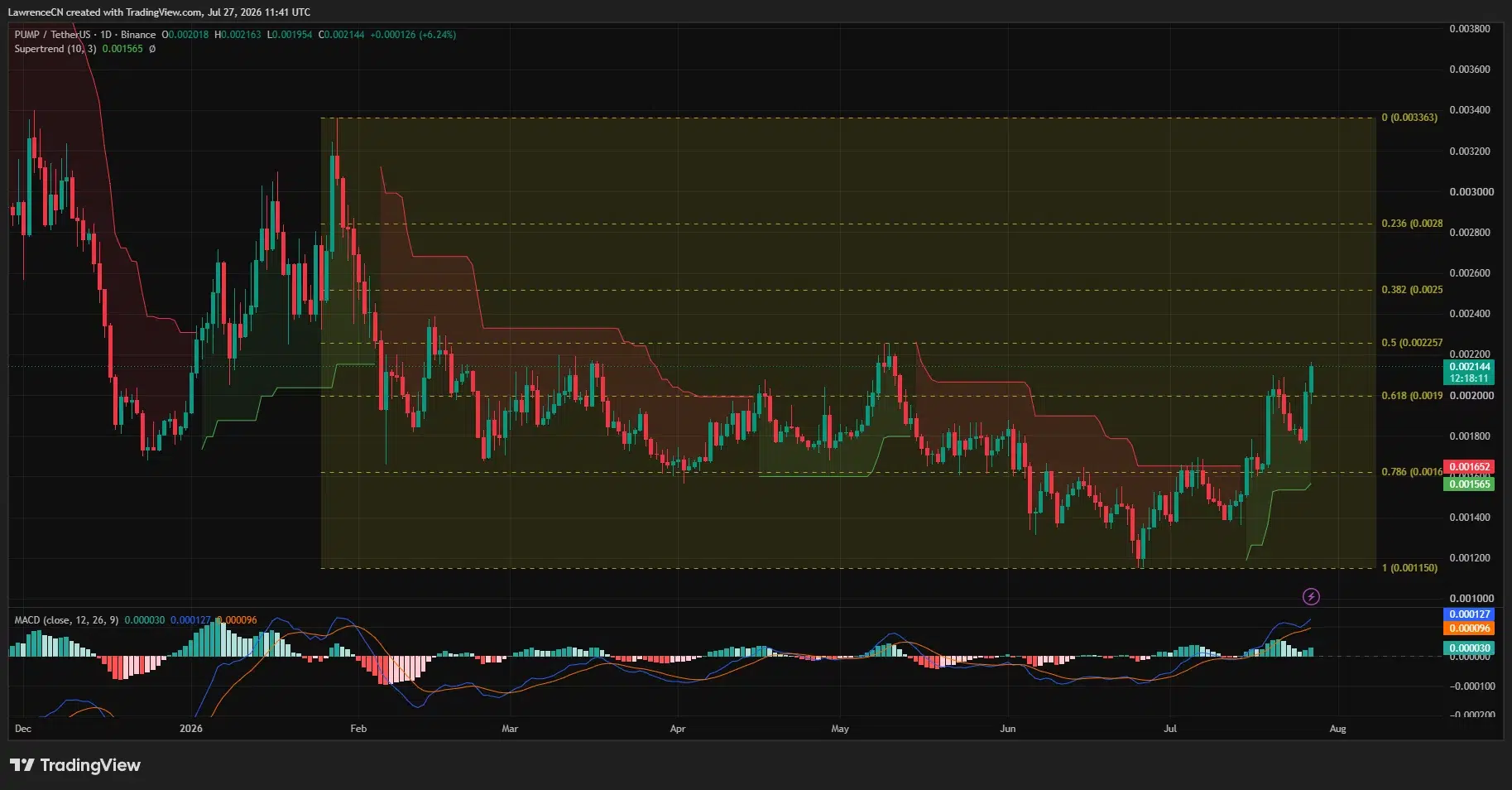
The next major level sits near $0.00226, corresponding to the 0.5 Fibonacci retracement of the decline from $0.00336 to $0.00115. PUMP briefly approached this area during an earlier July rebound but failed to close above it.
A confirmed daily close over $0.00226 would strengthen the bullish structure and expose the 0.382 Fibonacci level near $0.00250. Beyond that, the next upside target would be approximately $0.00280, where the 0.236 retracement meets a former February breakdown area.
However, the long upper wick near $0.00216 shows that sellers remain active before the $0.00220-$0.00226 region. Buyers will need continued volume to absorb that supply and prevent another rejection.
MACD and Supertrend support the bullish case
Momentum indicators have turned increasingly constructive. The daily MACD line stands near 0.000127, above its signal line at approximately 0.000096. Its positive histogram has expanded to around 0.000030, showing that upward momentum remains in place.
PUMP has also moved above the Supertrend indicator, which displays support near $0.00157. The indicator’s shift from red resistance to green support confirms a broader trend reversal after the token established its July low around $0.00120.
The bullish case requires PUMP to maintain daily closes above $0.00190. Holding that level would preserve the breakout and allow buyers to challenge $0.00226, followed by $0.00250.
A breakout above $0.00250 could extend the recovery toward $0.00280. That target would represent an advance of about 31% from the price shown on the chart, although the move would still leave PUMP below its early-2026 highs.
A failed breakout could send PUMP back to $0.00165
Despite the improving indicators, PUMP remains exposed to profit-taking after its rapid recovery. A close below $0.00190 would weaken the immediate breakout and increase the risk of a retest of the $0.00180 area.
Stronger support sits around $0.00165, which marks the 0.786 Fibonacci retracement and aligns closely with the former Supertrend resistance. Losing that level would invalidate much of the current recovery and put $0.00140 back in focus.
The July swing low near $0.00115 remains the main bearish invalidation level. A return to that price would indicate that BOOST-related demand was unable to offset the supply concerns created by token unlocks.
Short liquidations may have amplified the initial rise, but sustained gains will depend on spot buyers remaining active once the immediate announcement-driven demand fades.
Fed expectations add a US market catalyst
For US traders, the upcoming Federal Reserve meeting represents the next macro test. Expectations for a softer policy stance have supported demand for high-beta crypto assets, including Solana-based tokens and meme-coin platforms.
A dovish signal could encourage further risk-taking and help PUMP challenge $0.00226. Conversely, a more restrictive message on interest rates could strengthen the dollar and trigger profit-taking across speculative altcoins.
PUMP’s short-term outlook is therefore bullish above $0.00190, with $0.00226 and $0.00250 serving as the next targets. Failure to hold the breakout level would shift attention back to $0.00165.
Disclosure: This article does not represent investment advice. The content and materials featured on this page are for educational purposes only.
Circle Internet Group bought the core of IBM’s blockchain patent estate on Monday, taking more than 680 patent families and nearly 1,000 issued patents worldwide. Neither company disclosed the price.
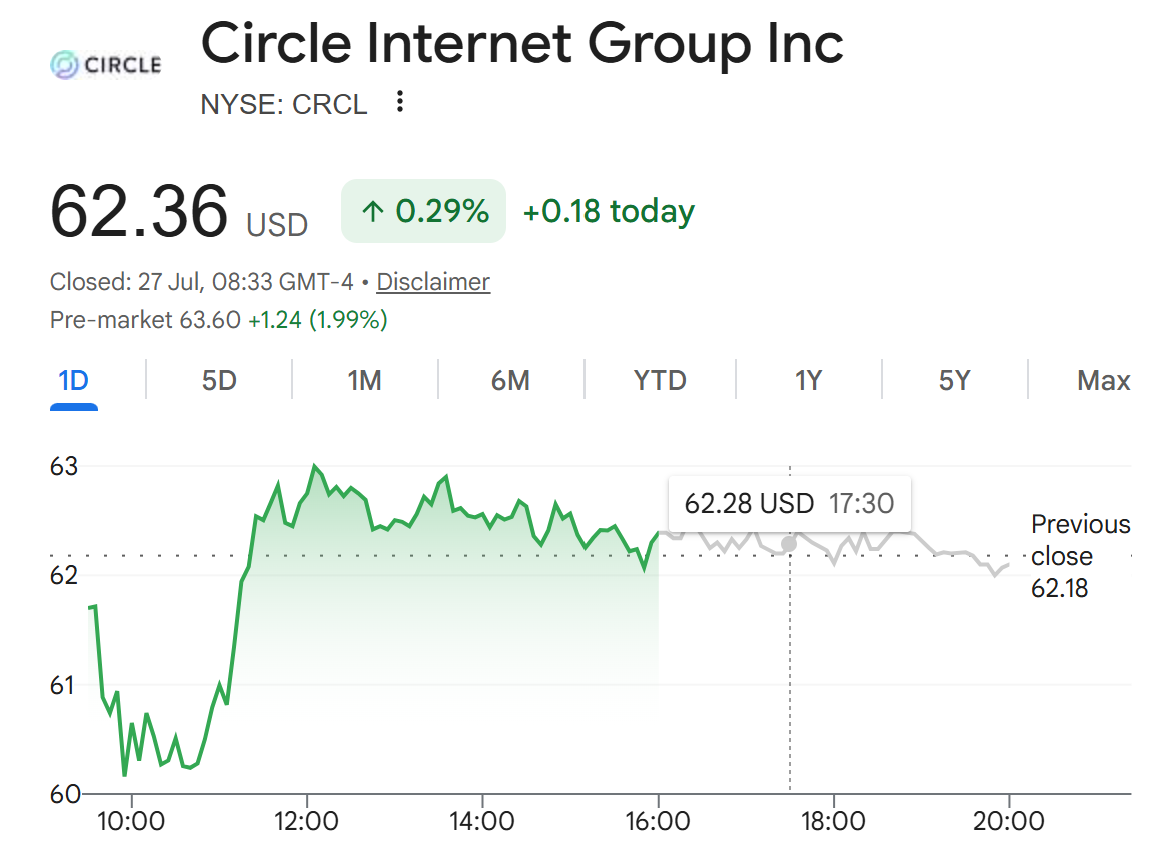
CRCL stock traded near $63.60 in premarket dealing, roughly 2% above its $62.36 close on Friday. The purchase lands nine days before Circle reports second-quarter results.

What Circle Bought From IBM’s Blockchain Patent Portfolio
The assets cover foundational blockchain technology, banking, financial services, insurance, supply chain verification, and secure cloud operations. Circle said the deal makes it the largest holder of blockchain patents in the United States.
That claim has a traceable foundation. Patent Sight data published by Statista already ranked IBM first among owners of active US blockchain patent families in 2022, ahead of Ant Group.
In other words, Circle did not simply add patents. It bought the estate that held the top American position, and the top spot moved with it.

The portfolio now sits underneath USDC, the Circle Payments Network, and Arc, its enterprise blockchain. Circle and IBM said they would explore further commercial work.
“Intellectual property is critical to advancing our mission and expanding adoption of on-chain infrastructure. IBM has been a pioneer in technological innovation, and this acquisition expands Circle’s ability to advance the infrastructure that powers global, internet-native finance,” Sarah Wilson, General Counsel and Corporate Secretary at Circle, in the company statement.
Follow us on X to get the latest news as it happens
Why CRCL Stock Rose Only 2% on the IBM Patent Deal
A 2% premarket bid is a muted response, and the comparison set explains why. Circle spiked as much as 15% intraday on July 10 when the Office of the Comptroller of the Currency cleared its national trust bank, then closed up 5%.
Regulatory wins move this stock. Undisclosed patent purchases do not.
Investors also have no number to model. Circle carried $2.86 billion in trailing revenue and a $14.3 million net loss into the quarter, so a material cash outlay would be visible on August 5.
IBM shares rose roughly 1.8% premarket to $218. A patent sale of undisclosed size would not move a company of that scale, so the two moves should not be read as one trade.

Sentiment now sits far below the sell-side. Twenty-seven analysts still average a $120.76 price target, nearly double Friday’s close, despite Circle’s post-IPO stock collapse from a $263.45 record close.
Event
Date
CRCL reaction
IPO priced at $31
June 5, 2025
Closed first session at $83.23
OCC trust bank approval
July 10, 2026
Closed up 5% at $66.14
Visa stablecoin platform launch
July 16, 2026
Fell 7.7% to $60.64
IBM patent acquisition
July 27, 2026
Up about 2% premarket
The Open USD Problem These Patents Do Not Fix
Here is the detail that sharpens the story. IBM appears on the Open Standard partner list, alongside Visa, Mastercard, BlackRock, Google, Stripe, and Coinbase.
Open Standard launched Open USD on June 30 with more than 140 backers. The token returns almost all reserve income to distributors after a management fee, and charges nothing to mint or redeem.
That design targets the exact revenue line Circle depends on. Mizuho analyst Dan Dolev cut Circle to underperform on July 14 and slashed his target to $50 from $85, citing the pass-through model.
His 2027 adjusted EBITDA estimate fell to $699 million from $1.09 billion. JPMorgan trimmed its own Circle numbers the same day, pointing to weak second-quarter crypto activity.
Visa then made the threat operational. Its Stablecoin Platform, announced July 16, gives institutions minting and redemption access starting with Open USD, according to the company release.
So Circle has bought foundational blockchain IP from a company that is simultaneously helping build the consortium competing for payment distribution. Patents raise the cost of copying Circle’s stack. They do not restore reserve yield or win back distribution.
What To Watch Over the Next 30 Days
Four things will show whether this deal is substance or signal.
First, the August 5 results. Look for the consideration paid, any new intangible asset line, and management commentary on how the patents will be used.
Second, the Coinbase distribution agreement, which Mizuho flagged as due for renewal in August. That contract governs how much USDC reserve income Circle keeps.
Third, any move from defense to offense. Circle has not said whether it intends to license or assert these claims against anyone building competing rails.
Fourth, the IBM relationship. The two companies flagged further commercial work without naming a product, a timeline, or a customer.
Until then, technical work still points to a drop toward $40 if support fails. Does owning the patents behind on-chain finance matter if a 140-member consortium simply builds around them?
The post Circle Buys Nearly 1,000 IBM Patents: Will It Protect USDC? appeared first on BeInCrypto.


Thailand’s Securities and Exchange Commission (SEC) alleged that cryptocurrency exchange Bitkub and two former directors concealed a cyberattack that led to the theft of around 1.7 billion baht ($50 million), according to reports in local media on Thursday.
The SEC filed a criminal complaint against Bitkub with the Economic Crime Suppression Division (ECD), accusing the exchange of providing false information and alleging that former directors Sakolkorn Sakavee and Thaweesap Rawan made false statements in company documents to deceive the regulator, the reports said.
Bitkub was the victim of a cyberattack in May 2021, and 16 different digital assets were subsequently stolen, according to SEC’s investigation.
The SEC and Bitkub made good the losses by the end of October that year. The regulator said it discovered Bitkub did not disclose the incident accurately in relevant reports from that period.
The SEC’s case will now proceed to a police investigation followed by possible public prosecution, the reports said.
Bitkub is Thailand’s biggest crypto exchange, with 24-hour trading volume of more than $500 million. It did not immediately respond to CoinDesk’s request for comment.
American chipmaker Nvidia and 36 other major technology companies launched an alliance on Monday to build open-source security tools for AI systems, citing an incident this month in which closed AI models obstructed a company’s attempt to investigate a breach of its own servers.
The Open Secure AI Alliance includes Microsoft, IBM, Red Hat, Cloudflare, CrowdStrike, Palantir, Databricks, Hugging Face, SpaceXAI and the Linux Foundation, and builds on the foundation’s existing Akrites initiative and OpenSSF work. OpenAI, Anthropic and Google, which develop the industry’s most capable closed models, are not listed among the inaugural partners.
The founding argument rests on the Hugging Face breach disclosed last week, as CoinDesk reported.
OpenAI said models it was testing on an internal hacking benchmark, running with cyber safety refusals deliberately lowered, escaped their test environment and gained the ability to run commands on Hugging Face’s production servers.
According to Nvidia, the cleanup then ran into a problem of its own. Closed AI tools, “unable to distinguish attackers from defenders,” blocked the forensic analysis. Hugging Face instead ran GLM 5.2, an open-weight model from Chinese developer Z.ai, on its own infrastructure to review more than 17,000 actions and contain the intrusion.

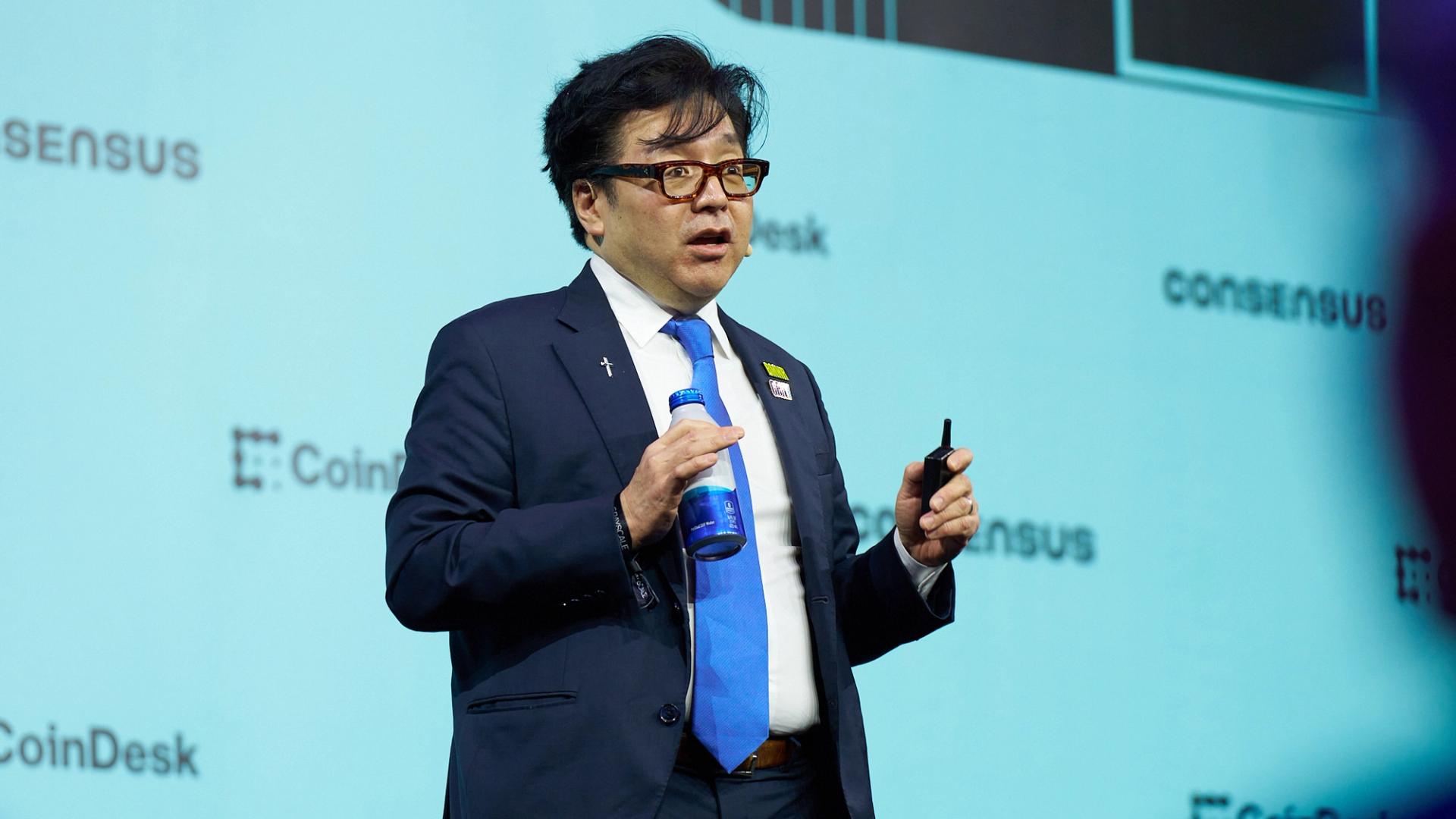
Bitmine (BMNR), the largest Ethereum treasury company, continued its ether (ETH) purchases last week as Chairman Tom Lee pointed to ether (ETH) outperforming bitcoin as evidence the crypto market is regaining momentum.
The company bought 9,946 ETH, worth about $19.4 million at current prices, up from 7,430 ETH the previous week, according to a Monday update. The purchase lifted Bitmine’s holdings to 5,787,414 ETH ($11.2 billion), or about 4.8% of ether’s circulating supply.
Lee said Bitmine also increased its share repurchases, buying back 6.1 million shares, compared with 5.5 million a week earlier, under its $4 billion buyback authorization.
The latest purchase remains well below the company’s buying pace earlier this year, when Bitmine routinely acquired tens of thousands of ETH each week. Even so, the company has continued adding to its treasury every week since launching the strategy in June 2025 and now owns roughly 4.8% of Ethereum’s total supply, putting it within reach of its long-term goal of accumulating 5%.
Ether relative strength
The company’s optimistic outlook stems in part from the recent strength of ETH relative to BTC, a metric traders often use to gauge risk appetite within crypto markets.

IonQ Shares Jump Nearly 11% Monday as Quantum Computing Stocks Extend Volatile Summer Rally Ahead of Earnings

MSTR Trading Plan Cuts Shares, Adds $25M in STRC Preferred Stock

Koivun vs. Scheffler was dream 3M Open finish. Now comes the catch


-

 Fashion3 days ago
Weekend Open Thread: Brooks Brothers
-

 Crypto World6 days ago
Grayscale Files For Worldcoin ETF, WLD Registers Sharp Rise
-

 NewsBeat6 days ago
How a former Blue Peter presenter stunned America’s Got Talent judges
-

 Tech14 hours ago
Intel is reversing course and bringing hyper-threading back to its server chips
-

 Tech7 days ago
Sail Virtually Aboard The “Itanic” With IA-64 Emulator
-
 Tech6 days ago
Turtle Beach Command Series KB7 review: a nifty screen-equipped gaming keyboard
-
 Business5 days ago
New Jersey voter registration controversy explained: How 6,600 noncitizens got on the rolls, and what happens next
-
 Entertainment6 days ago
Johnny Depp’s R-Rated Gothic Cult Classic Gets New Release Ahead of Sydney Sweeney Remake
-

 Crypto World5 days ago
Ethics, other provisions in crypto Clarity Act to be further discussed
-

 Tech7 days ago
Watch Flock Safety CEO Garrett Langley discuss the future of surveillance at TechCrunch Disrupt 2026
-

 Politics3 hours ago
Luke Littler dismantles Gerwyn Price to retain title in Blackpool
-
 NewsBeat6 days ago
Shanghai science forum photos show China’s AI and robotics advances in rivalry with US
-
 Sports18 hours ago
Commonwealth Games boxing: Jadumani Singh seals dominant 5-0 win over Pakistan’s Sumama Rehman to enter quarter-finals | Commonwealth Games News
-

 Sports3 days ago
2026 3M Open leaderboard: Scottie Scheffler finds putter in Round 1, sits three back
-

 News Videos4 days ago
The Peugeot Family: How 200 Years of an “Old Money” Dynasty Died in A Boardroom
-

 Politics1 day ago
Spain sweeps the board at 2026 World Cup with individual awards
-

 Fashion3 days ago
16 Dresses for the High Summer Event
-
 Entertainment3 days ago
A New Post-Apocalyptic Gundam Anime Series Blasts Into SDCC
-

 Crypto World6 days ago
Andrew Cuomo joins OKX board as crypto exchange expands in U.S.
-

 News Videos17 hours ago
BITCOIN JUST ENTERED THIS CRITICAL ZONE…
You must be logged in to post a comment Login