

Crypto World
S&P Global Finds Bitcoin’s Evolving Role in Markets


Editor’s note: S&P Global today releases Bitcoin volatility and market dynamics findings, highlighting Bitcoin’s shift from a niche asset to a market-connected instrument. The full report, Bitcoin Volatility Trends: A Deep Dive into Market Dynamics and Risk, examines price patterns, volatility, and the interplay with traditional markets, while noting that tokenized assets and new products introduce additional risks beyond the asset itself. As Cristina Polizu, Managing Director of S&P Global Ratings, emphasizes, volatility has trended down in the long term, yet remains linked to broader market conditions and carries custodial, smart contract, and operational risks.
Key points
- Volatility Trends: Bitcoin’s price swings are on a long-term downward trend as institutional adoption grows, with increased liquidity from futures and ETFs.
- Bitcoin Hedge Insights: Bitcoin functions more effectively as a hedge against long-term currency debasement than as a hedge against short-term inflation.
- Structural Market Risks: Bitcoin’s trading structure, featuring leveraged perpetual futures markets and automated liquidations, amplifies price volatility compared to other financial assets.
- New Product Risks: Innovations like tokenized bitcoin, ETFs, and Digital Asset Treasury companies introduce extra risks beyond the asset, including counterparty, custodial, smart contract, and operational risks.
Why this matters
This research suggests Bitcoin’s volatility is trending lower over time while its market connections deepen, linking its performance to broader financial conditions. The addition of new products and tokenized offerings can add complexity and risk, influencing how investors assess exposure to digital assets and their role in diversified portfolios.
What to watch next
- Monitor institutional adoption and liquidity trends as futures and ETFs expand.
- Watch developments in tokenized bitcoin and other new-product offerings for risk implications.
- Observe Bitcoin’s price behavior and its relationship to traditional markets as the asset evolves.
Disclosure: The content below is a press release provided by the company/PR representative. It is published for informational purposes.
S&P Global Finds Bitcoin’s Evolving Role in Markets
— Bitcoin now accounts for more than half of cryptocurrency markets’ nearly $2.33 trillion capitalization*
— Bitcoin’s price has dropped by nearly half since October 2025
— Price volatility for bitcoin is on a long-term downward trend – though it remains higher than that of traditional assets
NEW YORK (March 5, 2026) – S&P Global today published new research (see report link) examining how bitcoin has evolved from a niche asset to one with meaningful linkages to traditional financial markets.
‘Bitcoin Volatility Trends: A Deep Dive into Market Dynamics and Risk,’ provides a detailed analysis of bitcoin’s market behavior, price patterns, and market trends.
Key findings from the research reveal:
-
- Volatility Trends: Bitcoin’s price swings are on a long-term downward trend as institutional adoption grows, though they remain larger than those of traditional assets. A growing market for bitcoin futures and exchange-traded funds (ETFs) increased bitcoin adoption, which in turn increased liquidity.
- Bitcoin Hedge Insights: The analysis indicates bitcoin functions more effectively as a hedge against long-term currency debasement than as a hedge against short-term inflation.
- Structural Market Risks: Bitcoin’s trading structure, featuring leveraged perpetual futures markets and automated liquidations, amplifies price volatility compared to other financial assets.
- New Product Risks: Innovations like tokenized bitcoin, ETFs, and Digital Asset Treasury companies introduce extra risks beyond the asset, including counterparty, custodial, smart contract, and operational risks.
Cristina Polizu, Managing Director, S&P Global Ratings, said: “Our research indicates that bitcoin’s volatility has trended down over the long term, and that its behavior is increasingly linked to broader market conditions. At the same time, the added complexity of new bitcoin-related products can introduce risks beyond the asset itself, including custodial, smart contract, and operational risks.”
Bitcoin Volatility Trends: A Deep Dive into Market Dynamics and Risk,’ is part of the Look Forward research series, special reports that offer a deep dive into the most important themes, trends, and topics that are transforming the global economy.
S&P Global: Building on Growth in Digital Assets
S&P Global has continued driving growth in Digital Assets markets, underpinned by its leading analyst-driven research and opinions:
Media Contacts
Isabel Allanwood
S&P Global
Russell Gerry
S&P Global Ratings
About S&P Global
S&P Global (NYSE: SPGI) enables businesses, governments, and individuals with trusted data, expertise and technology to make decisions with conviction. We are Advancing Essential Intelligence through world-leading benchmarks, data, and insights that customers need in order to plan confidently, act decisively, and thrive economically in a rapidly changing global landscape.
From helping our customers assess new investments across the capital and commodities markets to guiding them through the energy expansion, acceleration of artificial intelligence, and evolution of public and private markets, we enable the world’s leading organizations to unlock opportunities, solve challenges, and plan for tomorrow – today. Learn more at www.spglobal.com.

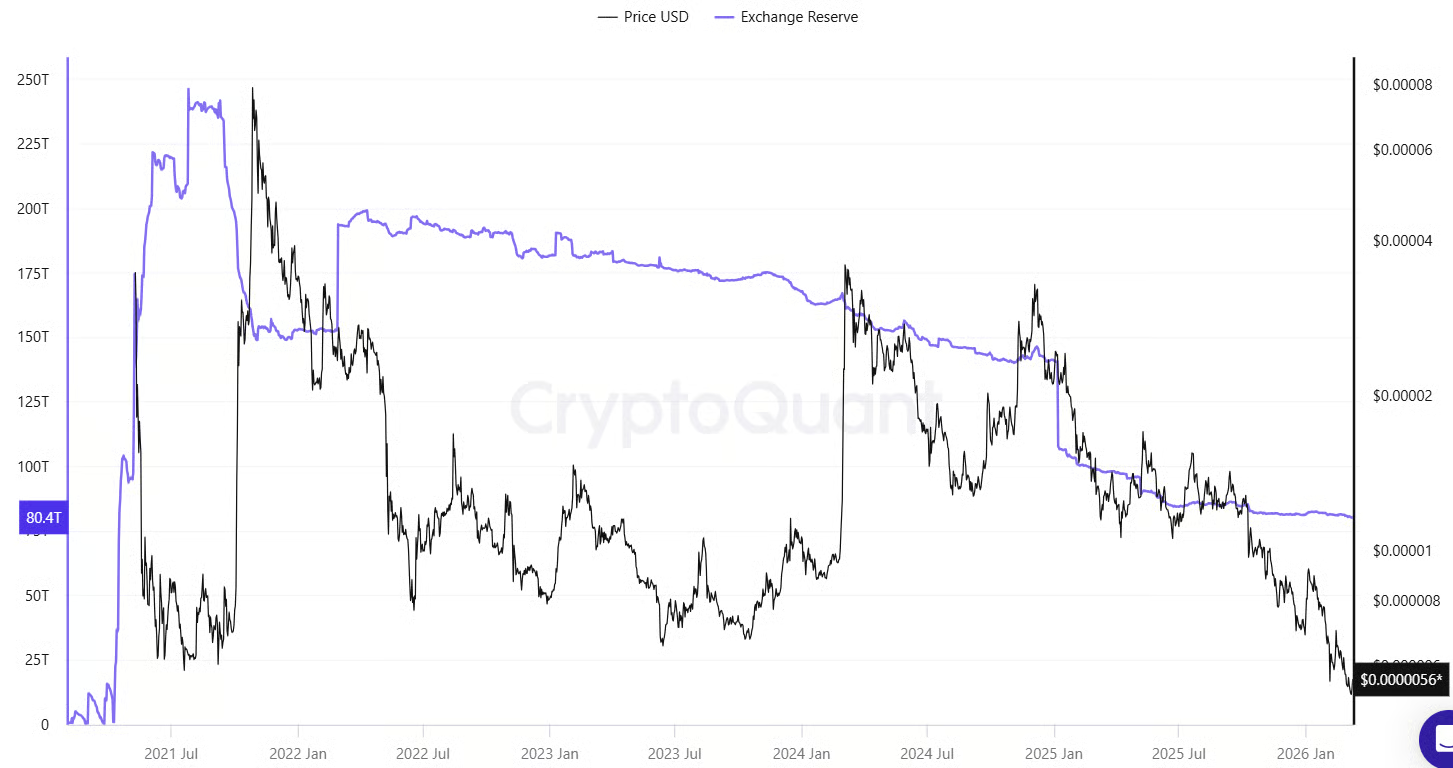
A five-year low in SHIB’s exchange supply strengthens the bullish argument.
While the second-largest meme coin has been stuck in a prolonged downtrend over the past several months, some market observers believe the price may stage an impressive comeback soon.
Certain on-chain factors reinforce the bullish scenario, whereas stalled activity on Shibarium suggests the bears might not give up easily.
SHIB to Skyrocket?
As of press time, the meme coin trades at around $0.000005653, representing a 52% decline on a yearly scale. Its market capitalization has fallen to roughly $3.3 billion, positioning it as the 31st-biggest cryptocurrency.
According to X user JAVON MARKS, SHIB appears to be nearing the breaking point of another Falling Wedge-like structure and may be gearing up for a substantial jump. The analyst noted that the last move out of such a formation was followed by a whopping 455% price increase, prompting the question of whether history is about to repeat itself.
Another market observer who recently touched upon the token is CRYPTO LEGEND. They believe SHIB could emerge as one of the strongest performers in a future altseason, with gains potentially reaching 10x.
A possible hint of an upcoming rally is the persistent decrease in tokens sitting on crypto exchanges. CryptoQuant’s data shows that the figure recently plunged to a five-year low of around 80.1 trillion. The trend indicates that investors have been steadily shifting from centralized platforms to self-custody, thus reducing immediate selling pressure.

Shiba Inu’s Relative Strength Index (RSI) should also be mentioned. The technical analysis tool has tumbled to around 30 on a weekly scale, suggesting that the asset has neared oversold territory and could be due for a resurgence. Conversely, ratios above 70 are interpreted as precursors of a pullback.
You may also like:

Further Pain for the Bulls?
In contrast to the optimistic forecasts, SHIB’s burning mechanism and Shibarium’s stagnation point to the possibility of further weakness. The burn rate is down nearly 30% on a daily scale, resulting in less than 5 million tokens (whose USD valuation is negligible) sent to a null address.

The program was adopted in 2022, and since then, the team and the community have scorched roughly 410.75 trillion coins, leaving approximately 585.47 trillion in circulation. Its ultimate goal is to reduce SHIB’s overall supply, thereby potentially driving up prices due to scarcity (should demand remain constant or rise).
Shibarium’s stalled progress is another bearish factor. Launched in the summer of 2023, Shiba Inu’s layer-2 scaling solution was designed to boost the ecosystem by lowering fees, boosting speed, and improving scalability.
However, the protocol suffered an exploit last year, which severely damaged investor confidence. Daily transactions, once in the millions, plunged to mere hundreds after the incident.
Binance Free $600 (CryptoPotato Exclusive): Use this link to register a new account and receive $600 exclusive welcome offer on Binance (full details).
LIMITED OFFER for CryptoPotato readers at Bybit: Use this link to register and open a $500 FREE position on any coin!
Crypto World
Why Investors Are Bullish on DeepSnitch AI: 100x-300x Predictions Stack Up Before Launch Driven by AI Utility, DOGE and ADA Remain Muted

Jensen Huang just made the bullish case for AI infrastructure by predicting that trillions of dollars are still to be built, millions of skilled jobs still to be created, and every company on earth will eventually run on it.
While the AI infrastructure buildout plays out over decades, the crypto market has its own AI story developing at a much faster pace, and it has gotten everyone asking why investors are bullish on DeepSnitch AI.
The answer is clear: DeepSnitch AI is a crypto application layer that provides a clear use case for traders, and the $2M raised and community going ballistic with 100x-300x anticipation ahead of March 31 TGE is the clear proof of potential.

AI as a five-layer cake
Jensen Huang, Nvidia CEO, pushed back on AI job fears this week, arguing in a blog post that the technology requires an enormously skilled workforce to build and maintain the infrastructure underneath it.
He argues that electricians, steelworkers, network technicians, and operators are all in short supply.
Describing AI as a five-layer cake, Huang proposes that the AI consists of energy, chips, infrastructure, models, and applications. Moreover, most of the buildout isn’t yet happening, and Huang expects that trillions of dollars of infrastructure remain to be built.
The comments come as companies like Block, Pinterest, and Dow cited AI efficiency gains while cutting thousands of jobs. NVIDIA CEO says that it’s important to separate infrastructure jobs from roles becoming automated.
Meanwhile, retail traders are out “looking” for money, but many are disappointed by the recent prospects for affordable established coins. And since DeepSnitch AI is both an AI project that technically presents Huang’s “application” layer, DeepSnitch AI investor interest is high, as it doubles as a legitimate tool and potentially a breakout coin.
Altcoins to watch in March 2026
1. DeepSnitch AI: DeepSnitch AI bullish sentiment peaking in anticipation of March 31 launch
While the broader AI buildout is measured in decades, DeepSnitch AI is already live with five AI agents running through a central intelligence layer, delivering real-time sentiment tracking, rug pull detection, instant DYOR via contract address, and a hidden gem scanner.

Best of all, these tools are all located within a single dashboard – no learning curve, no back-and-forth.
In short, the project’s utility and early development have attracted $2M in capital. While the hype certainly plays a role, there is genuine DeepSnitch AI market demand as traders are actively looking for a singular set of AI trading tools.
As such, there’s a strong possibility that DeepSnitch AI will end up in many traders’ portfolios post-launch, delivering steady growth for investors following a massive 100x-300x, community-projected run.
Still priced at $0.04399, FOMO is hitting after the launch was set for 31, and it was confirmed that DSNT will be available for open trading on Uniswap (although CEX and additional DEX listings are expected).
AI is the biggest infrastructure story of the century. DeepSnitch AI is the application layer for traders who want to benefit from it, not in ten years, but now – and that’s the TLDR on why investors are bullish on DeepSnitch AI.
2. Dogecoin: Is there hope for DOGE?
According to CoinMarketCap, DOGE recovered to $0.091 on March 11.
DOGE has struggled recently, but bulls are seemingly back and have started targeting the $0.10 level.
Yet, a breakout can be confirmed only if buyers test the $0.12 breakdown level as DOGE will establish its cycle button.
If the current recovery stalls, DOGE could once again see its $0.08 February low, meaning that the structure remains fragile.
3. Cardano: What’s next for ADA?
According to CoinMarketCap, ADA’s small recovery screeched to a halt, and the coin settled at $0.25.
While many are asking why investors are bullish on DeepSnitch AI, ADA buyers are still not giving up as they target the 20-day EMA at $0.27. If the price rejects the rally, ADA will remain in its descending channel until the next floor materializes.
On the other hand, if the selling pressure starts building up, Cardano could slide further, erasing all the recent gains.
Final thoughts: Why investors are bullish on DeepSnitch AI – and why you should be too
With DeepSnitch AI’s TGE a little over two weeks away, you still have time to get on board the most exciting crypto AI project in recent times.
DeepSnitch AI is a perfect demonstration of AI in real life, only this time it’s tailored specifically for traders. The approach is obviously working, as $2M raised and 100x-300x community projections prove that the high-conviction wave is hitting hard as the launch approaches.
Moreover, the DSNTVIP300 unlocks 300% extra tokens on $30K+ allocations and is available until March 31. These bonuses are organized in tiers and actively incentivize traders who lock in on the DeepSnitch AI bullish sentiment early.
The time to get into DeepSnitch AI presale is now. And while you wait for the TGE, feel free to go through X or Telegram for top-tier community chit-chat.

FAQs:
1. Why are investors bullish on DeepSnitch AI ahead of its March 31 TGE?
Three reasons stack up cleanly: $2M raised during a bear market signals genuine conviction, not speculative hype. The central intelligence layer is already live with five AI agents delivering operational, and the March 31 TGE brings DSNT to Uniswap with DEX and CEX listings expected to follow.
2. How does Jensen Huang’s AI infrastructure thesis connect to DeepSnitch AI’s bullish prospects?
Huang describes AI as a five-layer cake: energy, chips, infrastructure, models, and applications. Most institutional AI plays target the lower layers: chips, data centers, and infrastructure. DeepSnitch AI sits at the application layer, where AI directly meets the end user. For crypto traders, that means real-time sentiment tracking, rug detection, and instant DYOR.
3. What are the short-term price setups for Dogecoin and Cardano right now?
DOGE recovered to $0.091 but needs a close above $0.10 and a test of the $0.12 breakdown level to confirm a cycle bottom, while failure to hold current levels risks a revisit of the $0.08 February low. ADA is holding at $0.25 with bulls targeting the $0.27 20-day EMA. A rejection could keep ADA rangebound in its descending channel, while increased selling pressure could erase recent gains entirely.
Disclaimer: This is a Press Release provided by a third party who is responsible for the content. Please conduct your own research before taking any action based on the content.

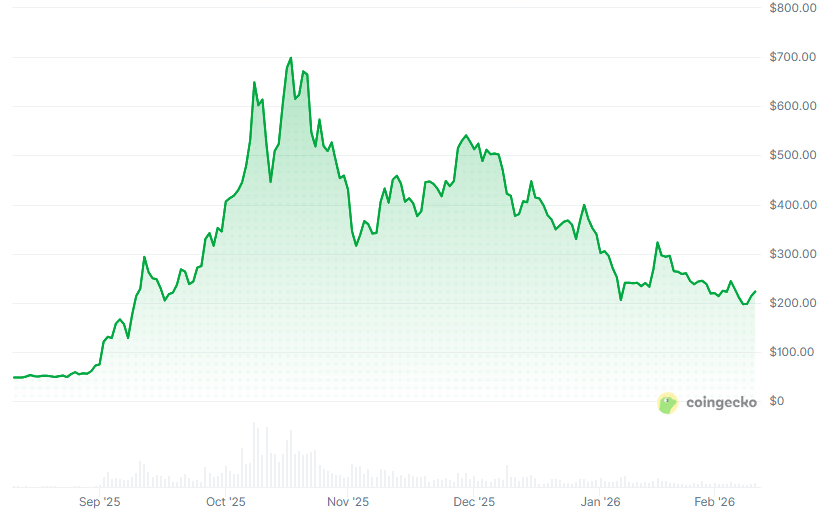
The world’s top Bitcoin mining pool operator expands into privacy coins as ZEC surges 600% year-over-year.
Foundry Digital, the Digital Currency Group (DCG) subsidiary behind the world’s largest Bitcoin mining pool by hashrate, announced today that it will launch an institution-focused Zcash mining pool in April.
The move marks Foundry’s first expansion beyond Bitcoin and targets what the company describes as a gap in the Zcash ecosystem: the absence of compliant, institutional-grade pool infrastructure capable of meeting the needs of public companies and large-scale miners.
Foundry CEO Mike Colyer framed the expansion as a natural extension of the company’s mission, noting that while Zcash has grown into a serious institutional asset, its mining infrastructure has lagged behind. The new pool will be U.S.-based and built on the same compliance framework underpinning Foundry USA Pool, which holds both SOC 1 Type 2 and SOC 2 Type 2 certifications.
The announcement was welcomed by Zcash founder Zooko Wilcox, now Chief Product Officer at Shielded Labs, who said the new pool should help distribute Zcash mining hashpower away from its current concentration in a single pool and attract new miners.
ZEC is trading around $212, down roughly 4% in the past 24 hours and about 10% on the week.

Zcash Open Development Lab (ZODL), formed by the core developers of Zcash (ZEC) after they exited Electric Coin Capital, recently secured $25 million in seed funding to support the privacy-focused ecosystem.
Zcash, launched in 2016, uses zero-knowledge proof technology to enable private transactions on a public blockchain, allowing verification without exposing wallet addresses or amounts.
This article was written with the assistance of AI workflows. All our stories are curated, edited and fact-checked by a human.

Ripple is planning to repurchase shares from its employees and previous investors.
The past 24 hours have been quite eventful for Ripple.
According to Bloomberg, the company is launching a share buyback program that values it at roughly $50 billion.
The company’s plan is to repurchase up to $750 million in shares from employees and investors. The tender offer is expected to run through the month of April.
Recall that Ripple previously raised $500 million at a $40 billion valuation. This happened back in November last year. Investors in that round included Fortress Investment Group, Citadel Securities, and more.
As mentioned above, the last 24 hours saw Ripple get enlisted in Mastercard’s new Crypto Partner Program. The goal of that is to connect blockchain-based technology with the firm’s broad payments infrastructure.
Moreover, they also announced plans to secure an Australian Financial Services License. To do so, Ripple will be acquiring a local company called BC Payments Australia Pty Ltd, subject to finalizing the standard completion process.
That said, XRP’s price has remained flat on this most recent news. At the time of this writing, the cryptocurrency is trading at $1.39, up 0.7% in the past 24 hours.
You may also like:

Binance Free $600 (CryptoPotato Exclusive): Use this link to register a new account and receive $600 exclusive welcome offer on Binance (full details).
LIMITED OFFER for CryptoPotato readers at Bybit: Use this link to register and open a $500 FREE position on any coin!


A bitcoin (BTC) treasury company just bought another BTC treasury company’s dividend-paying shares after selling its own dividend-paying shares. If that sounds circular, that’s not accidental.
The CEO of Nasdaq-listed buyer Strive, co-founded by Vivek Ramaswamy and an ex-president of beer company Anheuser-Busch, announced its $50 million cash purchase of Strategy’s STRC today.
Michael Saylor thanked him for the purchase, retweeting Strategy’s post in gratitude.
In the company’s own press release about buying another company’s dividend-paying shares, Ramaswamy admitted, “Instead of holding idle cash earning low yields in money market funds, we believe it makes sense to allocate a portion of those reserves to instruments like STRC.”
In January, Strive raised roughly $118 million through selling 1,320,000 shares of its own dividend-paying SATA.
SATA currently pays 12.75% annualized dividends, a far higher yield than even junk bonds.
Strive was able to raise money by selling SATA not only because of its generous dividend rate, but also because it sold shares at $90 apiece, $10 below its $100 par value.
This month, Strive then bought $50 million worth of STRC at full par value, which pays 11.5% annualized dividends.
Moreover, Strive hiked SATA dividends another 25 basis points today from 12.5% yesterday to encourage investors to bid up for shares that have fallen as low as $81 last month or 19% below par.
Even assuming the STRC that Strive purchased maintains its $100 quasi-peg — which is a huge assumption that hasn’t always held true — Strive is now earning a 125 basis point negative carry.
Bitcoin treasury companies paying dividends to each other
Both companies framed the deal as a triumph for so-called “digital credit,” a euphemism for elaborately complex fiat payout schemes by companies that own BTC.
Strategy CEO Phong Le said the purchase proves “institutions continue integrating STRC into their treasury strategies.” Cole called STRC and SATA “core building blocks for institutional capital.”
Read more: Strategy is paying credit card rates to keep STRC at $100
Strive now counts its STRC holdings as part of its SATA “dividend reserve” which could last for 18 months provided everything works out and the price of BTC doesn’t decline too much.
The company’s STRC shares that it purchased from Strategy for $100 apiece, just for historical reference, were trading at $93.10 as recently as February and $90.52 as recently as November.
Its annual SATA dividend obligation exceeds $54 million.
STRC itself has required seven consecutive dividend hikes just to trade near par. Strive counts on the stability of an instrument whose issuer keeps paying more to prevent it from breaking too far below its $100 par.
ASST, the common stock of Strive, is down 37% year-to-date. Strategy’s common stock MSTR is down 8%.
One BTC treasury company’s double-digit dividends helped to fund another BTC treasury company’s double-digit dividends. With both CEOs boasting about the deal, the circularity is a feature, not a bug.
Got a tip? Send us an email securely via Protos Leaks. For more informed news, follow us on X, Bluesky, and Google News, or subscribe to our YouTube channel.
Crypto World
Former legal executives from crypto exchange OKX unveil DeFi connectivity, risk-rating service

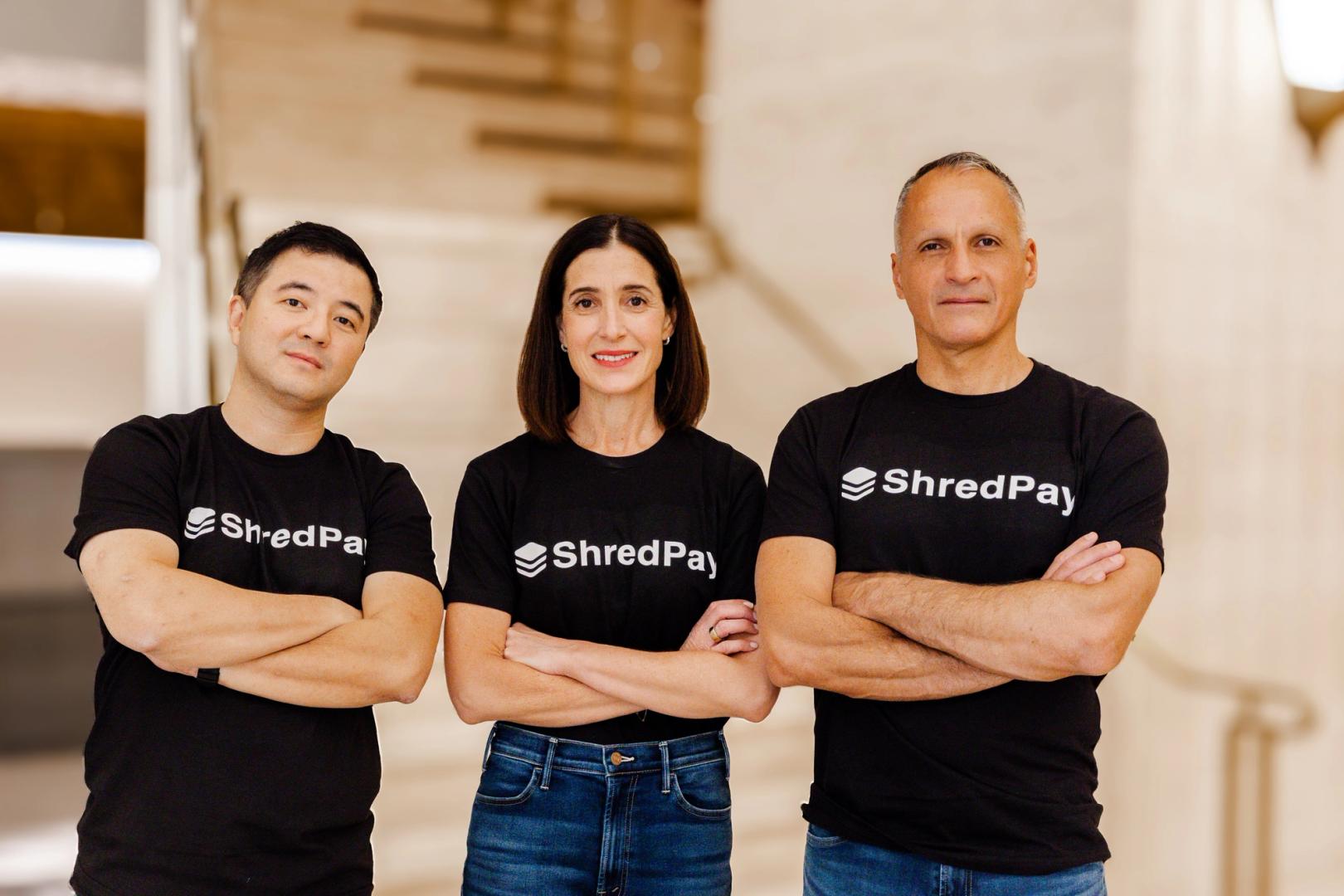
Three former executives who held high-profile legal, policy and product roles at crypto exchange OKX have unveiled an easy access decentralized finance connectivity platform called Shredpay, which is aimed at both retail customers and institutions in the U.S.
The Shredpay founding team is made up of CEO Mauricio Beugelmans, the former chief legal officer at OKX; president Melissa Muehlfeld, former OKX global general counsel; and CTO Peter Chang, the ex-VP of product at OKX.
Decentralized finance (DeFi) remains a tricky proposition for the uninitiated. The current market offerings are segmented and include no transparent risk information, making mainstream adoption difficult, according to a press release issued by Shredpay.
Beugelmans and co’s solution is to provide an uncomplicated, easily accessible onchain finance platform with clear risk ratings for DeFi protocols that help new users, the firm said.
The so-called ShredPay DeFi Ratings Index, evaluates protocols across smart contract security, liquidity depth, operational transparency, compliance, governance structure, and historical performance, providing users with standardized risk assessment comparable to traditional credit ratings.
“DeFi seems opaque, but it’s not about the technology – it’s about information asymmetry,” said Beugelmans. “Users often can’t easily distinguish between battle-tested protocols and exit scams.”
Shredpay CTO Chang said crypto natives may already know how to assess protocol risk; they read audits, track TVL, monitor governance. “We’re packaging that institutional-grade due diligence into a format that works for mainstream users. It expands the addressable market for every protocol we rate,” he said.
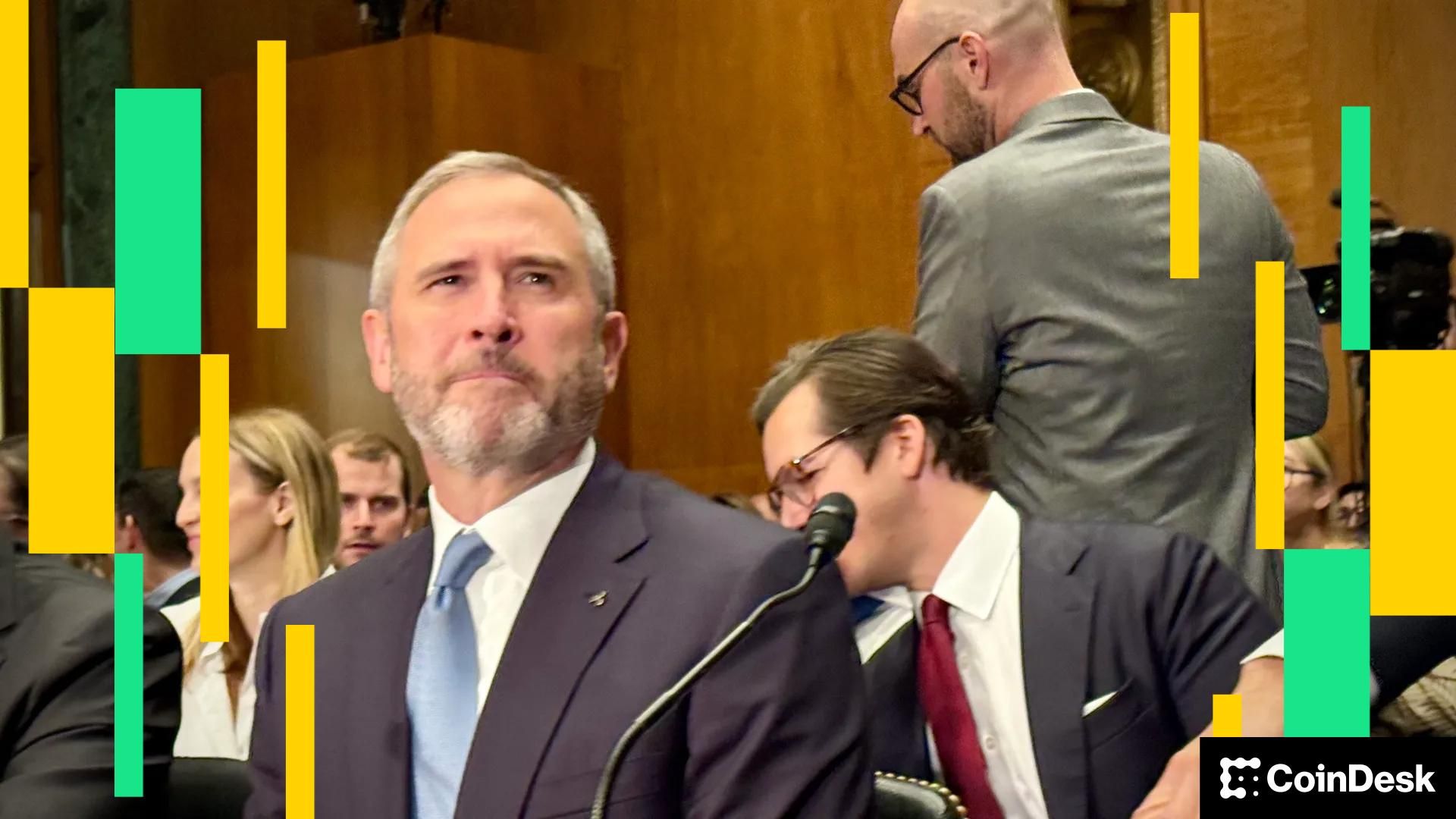
Ripple, the blockchain company closely associated with the XRP Ledger (XRP) network, has begun a share buyback that could value the company at about $50 billion, Bloomberg reported Wednesday.
The blockchain payments firm plans to repurchase up to $750 million in shares from investors and employees through a tender offer expected to run through April, the report said, citing people familiar with the matter.
Ripple is a major contributor to the XRP Ledger network, a blockchain designed for banks and payment firms to move money across borders and settle transfers in seconds. The firm said it has processed over 100 billion in transactions across its payments ecosystem.
The company has been quickly expanding through acquisitions, building services around trading and digital asset infrastructure. That push included the $1.25 billion purchase of prime brokerage Hidden Road and buying corporate treasury business GTreasury for $1 billion. The firm also issues a U.S. dollar stablecoin, the $1.5 billion , via its custody arm.
The move comes after a major funding round just months ago. In November, Ripple raised $500 million at a $40 billion valuation from a group of investors that included funds managed by affiliates of Fortress Investment Group, affiliates of Citadel Securities, Pantera Capital, Galaxy Digital, Brevan Howard and Marshall Wace.
That indicates a 25% higher valuation since the fundraising, despite a crypto market downturn that saw bitcoin and XRP tumble 30%-40% over the same period.

An analysis from WuBlockchain shows basis trade capital at record lows as hedging crowds out leveraged longs, pushing derivatives markets toward an unusual equilibrium.
The crypto derivatives market is sending an unusual signal: directional longs and directional shorts are nearly equal, a condition analysts say is historically unsustainable and could foreshadow a major shift ahead.
According to an analysis published by WuBlockchain yesterday, data from synthetic dollar protocol Ethena’s transparency dashboard reveals that deployed capital, a proxy for excess long demand in futures markets, has fallen to just $791 million, down more than 85% from its all-time high.

Since Bitcoin’s crash to $60,000 on February 8, Ethena’s basis position has shrunk by over 60%, dropping from more than $2 billion to under $800 million, even as the broader market has remained relatively flat.
Ethena operates by taking the short side of perpetual futures contracts against leveraged long traders, effectively running the classic crypto carry trade at scale. When demand for leveraged longs outstrips natural short interest, Ethena steps in to absorb the difference. Its shrinking book, therefore, implies that directional shorts and hedgers are increasingly filling the role that basis traders once dominated.
The author of the analysis, SoskaKyle, attributes the shift largely to a growing wave of hedging activity from crypto VCs and smaller projects seeking to protect their treasuries and lock in gains. With hundreds of small-cap tokens, each backed by dozens of investors and teams needing to manage their runways, the result has been a crowded trade: actively managed structured products that short baskets of correlated assets.
While this near-parity between longs and shorts could theoretically persist, history across asset classes suggests it rarely does for long, leaving the market a potential inflection point.
This article was written with the assistance of AI workflows. All our stories are curated, edited and fact-checked by a human.
Crypto World
Pepeto Price Prediction: Pepeto $7M Raise Looks Fully Priced In While DeepSnitch AI Could Catapult $10,000 Into $1M After March 31 DEX Launch

Ohio hit the prediction markets platform Kalshi with a hefty legal setback, with a federal court denying its injunction against Ohio gambling regulators. The challenges to the CFTC’s claim of exclusive jurisdiction over prediction market contracts. Kalshi will start the appeals process, but the regulatory landscape for prediction markets has become more unclear.
At the same time, the Pepeto price prediction is in focus as presales grow in popularity. However, since meme coins are falling, smart traders are actually opting for substance and are thus choosing DeepSnitch AI.
With a 31 March TGE locked down, $2M being raised, and the utility centered on analytics sourced by five AI agents, the 100x-300x are gaining solid ground, according to DeepSnitch AI’s growing community.

Prediction markets hit a roadblock
US District Court Chief Judge Sarah Morrison denied Kalshi’s request to block Ohio gambling regulators from treating its contracts as unlicensed betting products. The reasoning behind the ruling is that Kalshi didn’t establish that the Commodity Exchange Act preempts Ohio’s sports gambling laws.

The decision splits from a Tennessee federal court ruling issued just weeks earlier. Despite Kalshi’s planned appeal, both rulings directly contradict CFTC Chair Michael Selig’s February claim that the federal regulator holds exclusive jurisdiction over prediction markets.
This is another piece of evidence that regulatory clarity in the US remains fragmented.
At the same time, retail traders are more interested in price action, and with the bear market in full swing, are rotating toward presales. Even though the Pepeto price prediction lends itself well for a quick flip, many are parking their assets in DeepSnitch AI and Bitcoin Hyper as their utility-focused approach could result in larger long-term gains.
Top ICOs to put on your radar
1. DeepSnitch AI: DSNT ticks down to anticipated 100x-300x TGE
DeepSnitch AI raised over $2M at $0.04399 during a bear market, confirmed a March 31 TGE, and shipped a live central intelligence layer ahead of schedule.
That’s three things most presales never manage to do.
Case in point: The Pepeto price prediction may lend itself well for flipping a profit, but the project is a simple meme coin with a cross-chain bridge that may or may not happen after the TGE.
When you compare that to DeepSnitch AI, which practically completed a complex analytics suite running on five AI agents a month ahead of schedule, it’s clear who the hard-hitter is.

The utility itself could land DeepSnitch AI on the list of tools that active traders rely on daily. No surprise, as the solution can do rug detection, track sentiment in real time, conduct instant smart contract audits, or even help you dig out some hidden gems.
The DSNT token will be available via Uniswap post-TGE, but since 100x-300x are quickly stacking up and exclusive DeepSnitch AI bonus codes that unlock extra tokens on purchases are still available, the best time to reserve your spot is now.
2. Pepeto price prediction: Is PEPETO worth it?
Based on the Pepe legacy, Pepeto not only brings the lore, but the team plans to deliver a cross-chain bridge post-launch.
The biggest issue is apparent after a short Pepeto market analysis, though: the coin will likely deflate a few days after the initial hype dies down and large investors take the profits.
This is to be expected as the Pepeto crypto outlook fits the lifecycle of most memes. There’s simply no reason to return to the project as it only offers meme value.
So, is Pepeto a hard pass?
Well, the Pepeto price forecast does maintain that a quick flip is valid, but you have to be realistic about long-term expectations. The token is priced at $0.000000186, and the community-sourced Pepeto price prediction sees the coin going to $0.00007128.
3. Bitcoin Hyper price prediction: Worth the wait?
One of the biggest presale fundraises of the current cycle, Bitcoin Hyper is building a Bitcoin L2 rollup that attempts to solve fee limitations and transaction speeds by implementing the Solana Virtual Machine.
Priced at $0.01367, the community expects the coin to target $0.3482, which is a solid 25x upside.
While Bitcoin Hyper is a much better play than what the Pepeto price prediction describes, it’s not without its flaws. This is primarily limited due to slower development and the lack of confirmed dates despite the whitepaper promising a Q1 mainnet launch.
Final thoughts: Don’t settle for scraps
The Pepeto price prediction may be heaven for traders making scalps, but the DeepSnitch AI presale is nothing short of a project with massive breakout potential.
With the presale closing on March 31, the window to secure your gains is getting smaller. Since you don’t want to miss out on the projected 100x-300x gains and DSNTVIP300 bonus that unlocks a 300% bonus on allocations above $30K, the best time to get on board is right now.
Don’t settle for scraps and secure your spot in the DeepSnitch AI presale ASAP. Keep an eye on the posts on X or Telegram to stay on top of the latest developments.

FAQs
1. How does the Pepeto price prediction stack up against DeepSnitch AI’s March 31 TGE potential?
Pepeto’s community targets of $0.00007128 from $0.000000186 make it a valid flip play, but structurally it’s a one-cycle bet. No recurring utility means no daily retention once the launch hype fades. DeepSnitch AI raised $2M, shipped a live intelligence layer ahead of schedule, and has a confirmed March 31 Uniswap TGE with 100x-300x community projections backed by a platform traders will return to daily. The comparison isn’t close on fundamentals.
2. What does the Ohio court ruling mean for prediction markets and crypto regulation broadly?
Chief Judge Morrison denied Kalshi’s injunction, ruling that the Commodity Exchange Act doesn’t preempt Ohio’s sports gambling laws, which directly contradicts CFTC Chair Selig’s exclusive jurisdiction claim. With a Tennessee court ruling the opposite way just weeks earlier, the regulatory landscape for prediction markets is now actively fragmented.
3. Is Bitcoin Hyper a better long-term play than the Pepeto price prediction suggests for meme coins?
Bitcoin Hyper’s $31.6M raise and 25x community price target of $0.3482 from $0.01367 make it a substantially stronger fundamental play than Pepeto. The Bitcoin L2 thesis is legitimate, and the Solana Virtual Machine integration is technically ambitious. The main risk is the lack of a confirmed TGE date despite the Q1 2026 whitepaper targets.
Disclaimer: This is a Press Release provided by a third party who is responsible for the content. Please conduct your own research before taking any action based on the content.
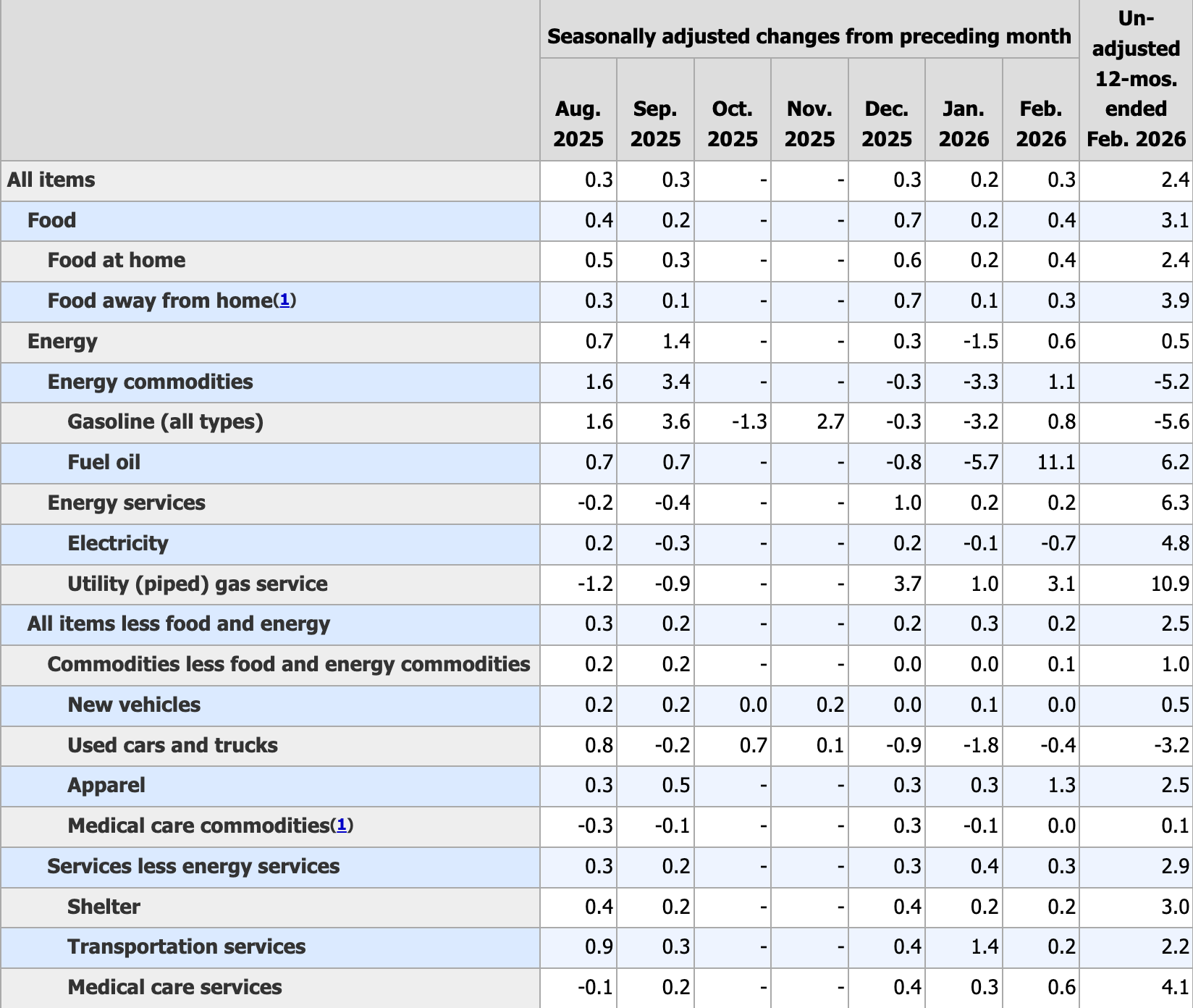
The latest rise in the consumer price index (CPI) was “in line with estimates,” and rising inflation has already been priced into the macroeconomic data for the March CPI print, according to market analysts at exchange-traded product (ETP) issuer 21Shares.
Shelter rose 0.2% in February, while the food sector of the CPI rose 0.4%, energy increased by 0.6%, and the index for all items, excluding food and energy, rose by 0.2%, according to the US Bureau of Labor Statistics (BLS) February CPI report.

Stephen Coltman, head of macro at 21shares, said the upcoming CPI prints place even more pressure on the Federal Open Market Committee (FOMC), the body that decides interest rate policy. He said:
“What matters now is the Fed’s reaction function to the coming higher CPI prints. Do they ‘look through’ this temporary shock despite having been burned in the previous inflation cycle? Or do they tilt hawkish as a precautionary measure?”
Crypto markets remain resilient following the February CPI report, with the Total 3 market indicator, which tracks the entire crypto market capitalization excluding Bitcoin (BTC) and Ether (ETH), only declining by about 1% from the intraday high of about $722 billion.
Related: Finance job openings fall to 13-year low as US economy loses 92K jobs
What does this mean for BTC’s price?
“In the immediate term, Bitcoin is likely to remain rangebound between $68,000 and $74,000. However, a breakout past the $75,000 resistance zone appears imminent,” according to Matt Mena, crypto research strategist at 21Shares.

If BTC manages to break above the $75,000 level, it could enter a consolidation phase between $75,000 and $80,000 in the medium-term, Mena said.
Historic price data shows that BTC typically rebounds by 15% or more after geopolitical market shocks, which would put its price in the $77,000 to $80,000 range, he said.
A market recovery to these levels could also be “accelerated” if the FOMC resumes easing interest rates in 2026, according to Mena.
Only 0.6% of traders expect an interest rate cut from the current 3.50%-3.75% range at the March 18 FOMC meeting, according to the CME FedWatch tool.
Magazine: The debate over Bitcoin’s four-year cycle is over: Benjamin Cowen

Black female footballers are praised for their strength, white players for their intelligence: what our study shows

Legal & General share price falls as profits miss expectations
Shiba Inu (SHIB) Nears a Breaking Point That Might Trigger a 455% Increase

Smart energy pays enters the US market, targeting scalable financial infrastructure

Why Israel is blocking foreign journalists from entering

Bitcoin: We’re Entering The Most Dangerous Phase

EXTREME WARNING: FINAL XRP DEADLINE REVEALED BY RIPPLE CEO | CLARITY BY APRIL | XRP HAS 100 SWITCHES

Give me 10 Minutes and I’ll Give you Life-Changing Crypto Advice

XRP: TRUMP JUST DROPPED A BOMBSHELL! | WHAT JUST HAPPENED!?
-
Business5 days ago
Form 8K Entergy Mississippi LLC For: 6 March
-

 Tech7 days ago
Bitwarden adds support for passkey login on Windows 11
-

 News Videos2 days ago
10th Algebra | Financial Planning | Question Bank Solution | Board Exam 2026
-

 Fashion5 days ago
Weekend Open Thread: Ann Taylor
-

 Crypto World2 days ago
Paradigm, a16z, Winklevoss Capital, Balaji Srinivasan among investors in ZODL
-
 Tech13 hours ago
A 1,300-Pound NASA Spacecraft To Re-Enter Earth’s Atmosphere
-
 Sports6 days ago
499 runs and 34 sixes later, India beat England to enter T20 World Cup final | Cricket News
-

 Politics5 days ago
Top Mamdani aide takes progressive project to the UK
-

 Business1 day ago
ExxonMobil seeks to move corporate registration from New Jersey to Texas
-

 Sports4 days ago
Three share 2-shot lead entering final round in Hong Kong
-

 Sports4 days ago
Braveheart Lakshya downs Lai in epic battle to enter All England Open final | Other Sports News
-

 NewsBeat2 hours ago
Residents reaction as Shildon murder probe enters second day
-

 Entertainment5 days ago
Hailey Bieber Poses For Sexy Selfies In New Luscious Lip Thirst Traps
-

 NewsBeat6 days ago
Piccadilly Circus just unveiled ‘London’s newest tourist attraction’ and it only costs 80p to enter
-

 Business3 days ago
Search for Nancy Guthrie Enters 37th Day as FBI Probes Wi-Fi Jammer Theory
-

 Business13 hours ago
Search Enters Sixth Week With New Leads in Tucson Abduction Case
-
 NewsBeat2 days ago
Pagazzi Lighting enters administration as 70 jobs lost and 11 stores close across Scotland
-

 Tech2 days ago
Despite challenges, Ireland sixth in EU for board gender diversity
-
Entertainment7 days ago
Harry Styles Has ‘Struggled’ to Discuss Liam Payne’s Death
-

 Crypto World7 days ago
New Crypto Mutuum Finance (MUTM) Reports V1 Protocol Progress as Roadmap Enters Phase 3