

Crypto World
S&P Unveils Digital Asset Index Tracking Blockchain Fundamentals

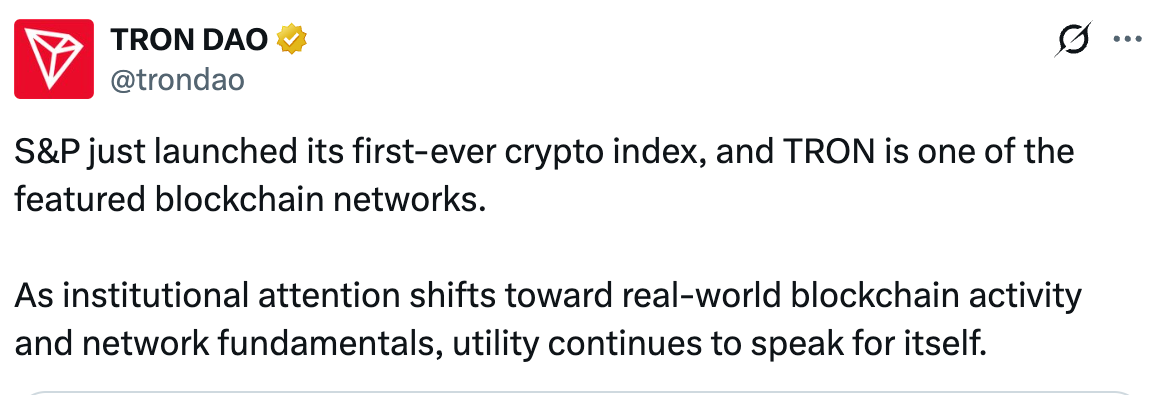
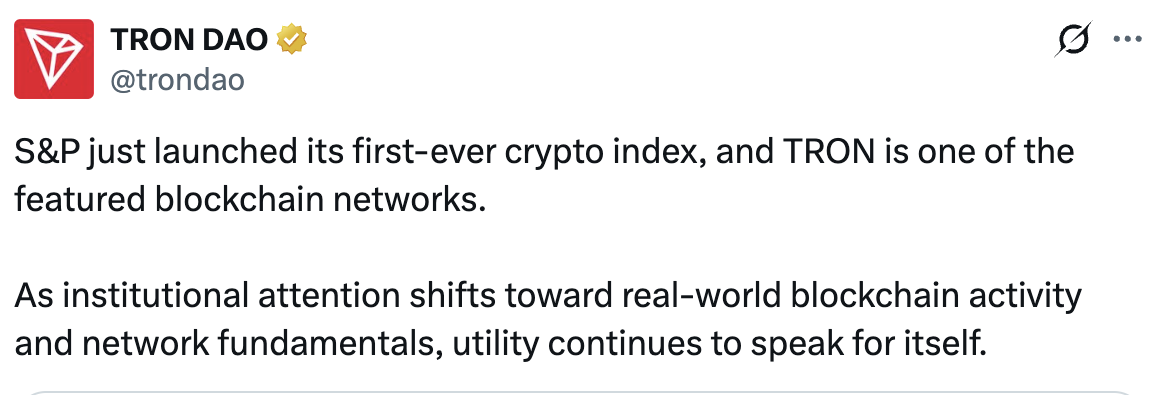
S&P Dow Jones Indices and Pantera Capital launched a digital asset index that tracks blockchain networks and protocols based on protocol revenue, marking a departure from crypto benchmarks built around market capitalization or token prices.
The index draws from the S&P Cryptocurrency Broad Digital Asset Index but only includes assets that meet minimum thresholds for protocol revenue, market capitalization and liquidity. Eligible networks are then ranked by aggregate protocol revenue over the previous two quarters and weighted by adjusted market capitalization, with the largest holding capped at 35% and the remaining constituents generally capped at 20%. The index is rebalanced quarterly.
According to an announcement from the companies, the benchmark is intended for institutional allocation and may serve as the basis for investment products or as a reference for actively managed digital asset portfolios. S&P said the rules-based framework is designed to distinguish established blockchain activity from speculative exposure.
The index launched with 18 constituents, with Ether (ETH), BNB (BNB), Solana (SOL), TRON (TRX) and Hyperliquid (HYPE) as its five largest holdings, according to an S&P Dow Jones Indices Indexology blog post. The blog identified Bitcoin (BTC) and XRP (XRP) as the largest non-constituents compared with the S&P Cryptocurrency Broad Digital Asset Index, reflecting the benchmark’s protocol revenue-based selection methodology.
Related: Pyth unveils continuous pricing indexes for US stocks and commodities
The launch also builds on S&P Dow Jones Indices’ broader expansion into digital asset benchmarks. Last October, the index provider introduced the S&P Digital Markets 50 Index, which combines 15 cryptocurrencies with 35 publicly traded companies tied to the crypto ecosystem.
Source: Tron DAO
Asset managers expand crypto index offerings
The debut follows a broader industry push to develop institutional-grade benchmarks for digital assets as traditional finance firms expand crypto offerings and tokenized assets gain traction.
Hashdex launched the Nasdaq Crypto Index US ETF on Feb. 14, 2025, the first multi-asset spot crypto exchange-traded fund in the United States. Franklin Templeton followed six days later with the Franklin Crypto Index ETF, a market capitalization-weighted fund tracking Bitcoin and Ether through the US CF Institutional Digital Asset Index.
The trend continued in April when MarketVector Indexes and Coinbase Asset Management launched the Coinbase Store of Value Index, a benchmark combining Bitcoin and tokenized gold using an inverse-volatility weighting model to provide diversified exposure to the assets.
In December, Bitwise chief investment officer Matt Hougan said “crypto index funds are going to be a big deal in 2026” as the market becomes more complex and investors seek broader exposure to digital assets. He argued that predicting which blockchain networks would emerge as long-term winners was increasingly difficult, making diversified index products a practical way to gain market exposure.
Magazine: The digital euro: Surveillance money, or a better alternative to cash?

Senate Republicans have published the full text of the proposed Digital Asset Market Clarity (CLARITY) Act, a 616-page bill that pairs market-structure provisions with a sweeping ethics package aimed at conflicts involving public officials and the digital-asset ecosystem.
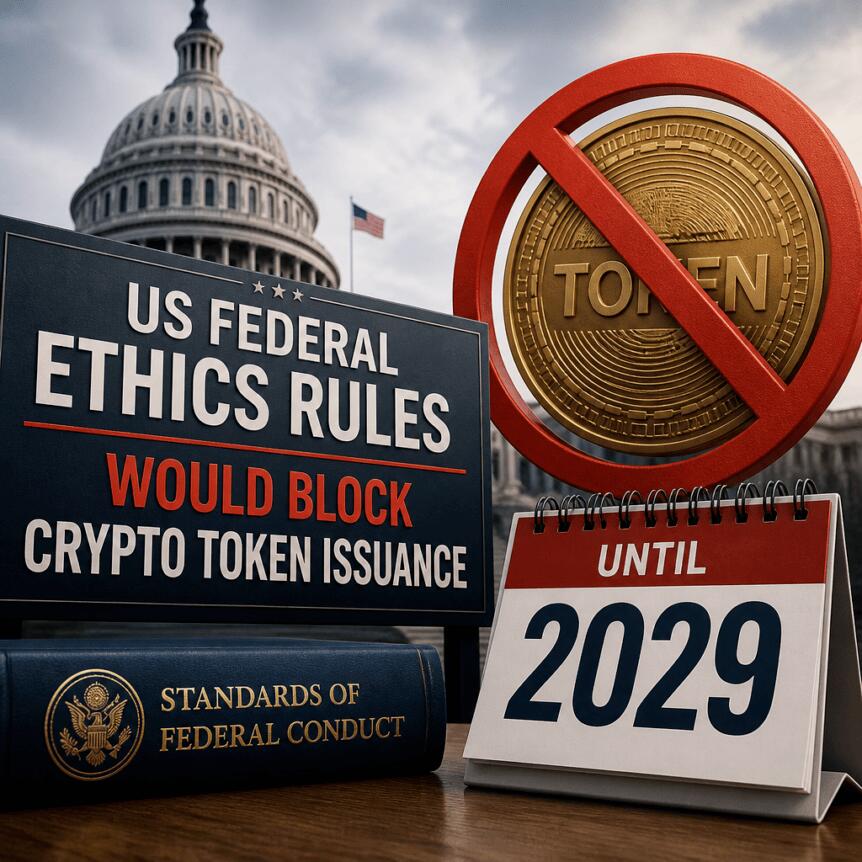
In the draft released Wednesday, the ethics language would bar U.S. federal officials—and their spouses—from issuing or sponsoring digital assets and would also prevent crypto platforms from listing assets that are issued or sponsored by those officials. The restriction is framed as temporary, set to expire on Jan. 20, 2029.
Key takeaways
- The CLARITY Act draft includes an ethics ban covering federal officials (and their spouses) who would be prohibited from issuing or sponsoring digital assets.
- The draft also extends the restriction to crypto platforms, blocking listings of assets issued or sponsored by covered federal officials.
- Senator Cynthia Lummis says the ethics provisions are intended to apply to President Donald Trump and would be enforced largely by the U.S. Department of Justice.
- Democratic support remains uncertain: multiple Democrats have indicated they will not vote for the bill without strong ethics language tied to alleged “crypto corruption.”
- The bill still needs to clear a 60-vote threshold in the Senate, and it is not yet clear the chamber has enough votes before it recesses.
What the CLARITY ethics provisions would do
The ethics section in the CLARITY Act draft is described by the White House as “the most comprehensive and wide-ranging ethics provision in history.” According to the bill text released by Senate Republicans, the ban would apply to all public officials and employees, as well as their spouses. Covered individuals would be prohibited from “issuing or sponsoring” digital assets.
The draft goes further by attempting to control downstream market behavior: crypto platforms would be blocked from listing assets that are “issued or sponsored” by federal officials within the scope of the restriction.
Senator Cynthia Lummis, a leading advocate for the measure, said the provisions are meant to apply to President Trump as well. In explaining the intent behind the language, Lummis pointed to enforcement and penalties and referenced the president’s financial situation as lawmakers continue to scrutinize his crypto involvement.
Lummis also tied the ethics package to a timeline: the ban on public officials would be temporary and would end on Jan. 20, 2029.
Enforcement hinges on the Justice Department
Rather than relying primarily on state authorities, the draft assigns significant enforcement responsibility to the U.S. Attorney General and the Department of Justice.
As of the day the text was published, Todd Blanche—Trump’s former personal attorney and acting Attorney General—was reportedly awaiting Senate confirmation to lead the Justice Department permanently. That matters because, under the CLARITY draft, DOJ would play a central role in making the ethics restrictions operational.
The enforcement design is also part of the political debate over whether Democrats will support the bill. Senator Angela Alsobrooks, in remarks reported by Politico, indicated she would want agreement on the bill’s enforcement architecture. She told Politico that she “wouldn’t support the bill” if DOJ enforcement language were as proposed, but said negotiations could still bring a version that “holds us all accountable.”
Democratic math: ethics language may determine the vote
Even if Senate Republicans move quickly, passage is not guaranteed. The CLARITY Act requires at least 60 votes in the Senate to advance, meaning it likely needs backing from some Democrats to meet the threshold. The bill would then return to the House of Representatives and, if approved, would go to President Trump for signature.
Democrats have already telegraphed conditional support. Multiple Democrats have said they will not vote for any version of a crypto bill unless it includes strong ethics language aimed at the conflict-of-interest concerns raised around the president.
There is also a potential flashpoint in how the draft defines the scope of the restrictions. The ethics ban, as described in coverage of the bill text, did not appear to include children of public officials in its temporary ban. That omission becomes salient given public reporting that members of Trump’s family are involved in crypto-related businesses, including World Liberty Financial and a Bitcoin mining company.
Lummis defended the approach as applying “one ethics standard to everyone,” saying the bill “backs it up with real enforcement, real penalties, and a Department of Justice mandate to act.”
Beyond ethics: disclosure, illicit finance provisions, and market structure
The CLARITY Act is not solely an ethics measure. One analyst reaction quoted in coverage emphasized that the Senate draft adds multiple components beyond conflict-of-interest rules, including a disclosure regime, an illicit finance section, and improved regulation for spot markets.
Kirstin Smith, president of the Solana Policy Institute, said the Senate has a “real chance” to pass durable, bipartisan market-structure legislation—framing CLARITY as a broader attempt at statutory clarity rather than a single-issue bill.
That distinction may be important for investors and builders watching the policy process: market structure rules can affect how digital assets are categorized, how exchanges and intermediaries comply with U.S. requirements, and how enforcement priorities are expected to shift under a new framework.
What happens next
With Senate Majority Leader John Thune reportedly planning to bring CLARITY to the floor next week, the central question for lawmakers—and for the industry—is whether the ethics provisions can attract enough Democratic support to reach the 60-vote threshold. The bill’s success may ultimately come down to whether negotiations around DOJ enforcement and the ethics scope leave enough lawmakers satisfied to back the measure before the Senate’s window to vote narrows.


The US Securities and Exchange Commission agreed to pay $150,000 in legal fees to settle a Coinbase lawsuit seeking internal records from the agency at the height of the Biden-era SEC crackdown on crypto.
The agreement, filed on Wednesday, ends a two-year lawsuit between the SEC and Coinbase, in which the crypto exchange sought internal documents from the regulator to uncover evidence of “crypto by enforcement.” An internal report in 2025 revealed the SEC had deleted nearly a year of former SEC Chair Gary Gensler’s texts due to “avoidable” errors.
“The agency tasked with policing corporate record-keeping somehow lost reams of its own text messages between Mr. Gensler and other officials during the most intense period of the anti-crypto campaign,” said Coinbase chief legal officer Paul Grewal in an op-ed published by the Wall Street Journal on Wednesday, adding that the SEC will pay a $150,000 “award” and has fixed its record retention policies.
The settlement marks another legal victory for Coinbase under the Trump administration. The SEC, under the leadership of Paul Atkins, has taken a more crypto-friendly approach and dropped several high-profile enforcement actions against crypto companies, including Coinbase, in 2025.
Related: Coinbase chief legal officer to transition to advisory role on July 31
In February, Coinbase reached a settlement with the Federal Deposit Insurance Corporation, with the FDIC agreeing to pay $188,440 in legal fees and revising aspects of its transparency practices after a federal court found it had violated the Freedom of Information Act.
“The years of litigation were worth it. We successfully uncovered dozens of crypto ‘pause letters’—indisputable proof of OCP2.0 and the coordinated effort to sideline the industry,” Grewal said in an X post in February.
Grewal to transition from chief legal officer
Paul Grewal, who has served as Coinbase’s chief legal officer since 2020, is set to transition to an advisory role at the exchange starting on July 31, with Coinbase legal vice presidents Molly Abraham and Ryan VanGrack set to become general counsel and vice chair, respectively.
Magazine: Will the crypto lobby’s $189M campaign get CLARITY over the line?


Strike, the bitcoin financial services firm run by CEO Jack Mallers, launched a bitcoin-backed loan product on July 7 that removes price-triggered liquidations for the life of the loan, according to Strike's own FAQ. The product, called "volatility-proof loans," strips out the 65% LTV warning, 70%… Read the full story at The Defiant


A crypto-backed political action committee has spent nearly $1 million in Michigan’s 13th Congressional District Democratic primary as the industry continues directing money toward candidates it views as supportive of digital asset policy.
Summary
- Protect Progress spent nearly $1 million backing Thanedar while funding opposition advertising against Donavan McKinney.
- Thanedar backed major crypto bills, making him a repeat target for support from industry-funded groups.
- Fairshake affiliates continue spending across U.S. primaries as crypto policy becomes a growing election issue.
Protect Progress, an affiliate of the Fairshake network, reported more than $986,000 in spending tied to Democratic Rep. Shri Thanedar and his challenger, Michigan state Rep. Donavan McKinney, according to Federal Election Commission filings published this week. The primary is scheduled for Aug. 4.
The spending includes advertising supporting Thanedar and opposing McKinney. Protect Progress took a similar approach during the 2024 election, when it spent more than $1 million supporting Thanedar before he won the Democratic primary with 54.9% of the vote. He later won the general election with 68.6%.
Thanedar has supported several crypto-related measures in Congress, including the CLARITY Act and the GENIUS Act. He also backed legislation aimed at promoting blockchain development. His voting record has placed him among lawmakers receiving support from crypto-aligned political groups.
McKinney has responded by making the outside spending part of his campaign message. He has not built a public record centered on digital asset policy, but he criticized the industry’s financial support for his opponent.
McKinney also accused Thanedar of supporting legislation backed by President Donald Trump and the crypto industry. The comments came as Fairshake-linked groups continued spending in Democratic and Republican congressional contests across the country.
Crypto PAC spending grows across 2026 elections
The Michigan spending forms part of a wider campaign by crypto-backed PACs during the 2026 election cycle. As crypto.news previously reported, Public Citizen estimated in June that the crypto industry had contributed about $189 million to the election cycle, exceeding its spending during the 2024 campaign.
Fairshake and its affiliated groups, Protect Progress and Defend American Jobs, have targeted candidates from both major parties based largely on their approach to digital asset policy. Recent reports put the network’s available funds at roughly $191 million, giving the groups resources to enter additional races before the November midterms.
Fairshake-linked PACs spent more than $8 million across congressional primary contests in Maryland, New York and Utah in June. Protect Progress directed $5.5 million toward Maryland Democrat Adrian Boafo and more than $1.4 million toward New York Rep. Ritchie Torres.
Boafo later won his Democratic primary. Crypto.news reported that his victory added to a series of wins by candidates supported by crypto-funded political groups during the 2026 primary season.
Michigan race draws wider political attention
The Michigan contest has also attracted attention beyond crypto policy. Thanedar faces one of the toughest primary challenges of his congressional career, while McKinney has received support from progressive figures including Sen. Bernie Sanders and Rep. Rashida Tlaib.
Thanedar, meanwhile, recently received endorsements from House Democratic leaders. Axios reported on July 22 that lawmakers in the party were paying close attention to the race, although some did not view a possible Thanedar defeat with the same concern seen in other contests involving progressive challengers.
Crypto-linked spending has added another issue to the campaign. Thanedar’s campaign also reportedly invested about $3.7 million in crypto-related companies and recorded losses exceeding $600,000 during the second quarter of 2026. The reported investments have received more scrutiny as Protect Progress increases its support for his reelection effort.
Fairshake affiliates target more congressional races
Protect Progress has also expanded its activity beyond Michigan. Reports citing FEC filings show the PAC spent more than $100,000 supporting Democratic Rep. Greg Stanton in Arizona’s 4th District. Stanton, who supported the CLARITY and GENIUS bills, won his July 21 Democratic primary against progressive challenger Kai Newkirk.
Meanwhile, Defend American Jobs has spent more than $65,000 supporting Republican Amanda McKinney in Washington’s 4th Congressional District, where voters will also hold their primary on Aug. 4. The seat is open after Rep. Dan Newhouse announced he would not seek reelection.
The latest spending comes as opposition to crypto-funded political activity also grows. Sanders recently pledged to challenge the political influence of the crypto industry while campaigning in Minnesota. His comments focused on campaign spending rather than digital assets themselves.


AFX suffered a $24.15 million USDC loss after an attacker targeted a cross-chain bridge linked to the trading protocol on July 22.
Summary
- AFX’s cross-chain bridge lost $24.15 million USDC while Arbitrum’s native bridge remained unaffected during attack.
- The exploiter moved stolen USDC to Ethereum and converted the proceeds into 12,467.5 ETH afterward.
- Security firms are tracing the stolen funds as AFX and Arbitrum teams investigate the breach.
The incident triggered an investigation by Blockaid and the Arbitrum team, while on-chain trackers followed the stolen funds to Ethereum.
The attack did not affect Arbitrum’s native bridge. AFX operates its own sovereign Layer 1 for perpetual trading but accepts USDC deposits through Arbitrum. The affected infrastructure was a third-party bridge operated by AFX rather than Arbitrum’s core bridge.
AFX bridge loses $24.15 million USDC
Blockaid said it detected the exploit at 9:30 p.m. UTC on July 22. The firm said the attack targeted a bridge operated by AFX and drained about 24.15 million USDC. An Arbiscan record shows a successful transfer of 24,150,000 USDC from the bridge contract to the recipient address at 9:30:25 p.m. UTC.
The security firm said it was working with the Arbitrum team to respond, contact the affected protocol and help contain the stolen funds. Based on the public updates reviewed at publication time, no recovery had been confirmed.
AFX had also not published a verified technical postmortem explaining how the attacker gained authorization to withdraw the funds. The protocol had not announced a recovery plan.
Offchain Labs co-founder Steven Goldfeder confirmed that the suspicious transaction came from a third-party protocol. He also separated the AFX incident from Arbitrum’s own bridge infrastructure.
“We’re aware of a report of a bridge hack on Arbitrum and are investigating. We can confirm that the transaction in question originated from a third-party protocol, and the Arbitrum native bridge has not been hacked or exploited in any way,” Goldfeder said.
He added that the team would coordinate with the third-party protocol and share more details when available.
AFX uses Arbitrum as a route for USDC deposits while running its trading system on a dedicated Layer 1. AFX describes itself as a decentralized derivatives platform built around a sovereign execution environment. A recent protocol post also said users could deposit USDC from Arbitrum before accessing its perpetual markets.
Exploiter converts stolen USDC into ETH
PeckShield said the attacker moved the stolen USDC from Arbitrum to Ethereum and converted the proceeds into 12,467.5 ETH. Lookonchain separately reported that the exploiter bought about 12,467 ETH at an average price near $1,937 per ETH after moving the funds.
The conversion moved the stolen value from a U.S. dollar-pegged stablecoin into Ether, exposing the holdings to ETH price movements. Security teams continued tracing the funds after the swap. At publication time, the reviewed sources did not confirm that Circle had frozen the USDC before conversion or that any of the ETH had been recovered.
The attack adds to several bridge-related security incidents this year. As crypto.news previously reported, Stake DAO closed its vsdCRV bridge after an unauthorized mint on Arbitrum in May. The project said it secured the token’s mainnet backing and contained the incident to the affected bridge.
Earlier in April, a larger exploit hit Kelp DAO’s LayerZero-powered bridge. Attackers drained roughly 116,500 rsETH worth about $292 million. Arbitrum later froze more than 30,000 ETH linked to that attacker after the funds moved onto Arbitrum One.
Investigation focuses on AFX-operated infrastructure
The investigation now centers on the AFX-operated bridge and the authorization process behind the 24.15 million USDC withdrawal. The confirmed transaction shows that the bridge contract finalized the transfer, but public statements do not yet establish the verified root cause. A full postmortem may determine whether the incident involved compromised validator credentials, faulty access controls or another weakness.
The main confirmed point is that the exploit affected infrastructure operated by AFX rather than Arbitrum’s native bridge. Blockaid and Offchain Labs both made that separation clear in their initial responses. The Arbitrum network continued operating, and reviewed reports showed no loss from its native bridge.
The incident also places attention on AFX’s deposit infrastructure. The protocol has promoted USDC deposits from Arbitrum as an entry route into its trading platform. Any changes to deposits, withdrawals or bridge operations will depend on the protocol’s response and the ongoing investigation.
The case remains developing. The confirmed loss stands at about $24.15 million in USDC, while on-chain trackers have traced the stolen value into roughly 12,467 ETH on Ethereum. Further updates are expected from AFX, Blockaid and the Arbitrum team as they review the breach and track the attacker’s funds.
AFX Trade, a derivatives exchange that settles trades in USDC, was exploited for approximately $24.15 million on July 22 after an attacker targeted a bridge the protocol operates on Arbitrum, according to security firm Blockaid. Blockaid said it detected the exploit at 21:30 UTC and published the… Read the full story at The Defiant

BitGo and OTC Markets Group have announced a proposed partnership aimed at bringing digital asset trading and custody capabilities into the broker-dealer workflow used in US over-the-counter markets. The plan is designed to let broker-dealers leverage the same electronic infrastructure for quoting, trading, and settling “digital asset securities” that they already use for conventional OTC and US equity activity.
According to the companies, the alliance would initially serve more than 150 broker-dealers connected to OTC Link ATS, an SEC-regulated alternative trading system. If the framework is implemented, participating firms would be able to route tokenized securities through familiar market channels—while BitGo would handle custody and settlement functions within the proposed operating model.
Key takeaways
- BitGo and OTC Markets Group plan to integrate digital asset securities into OTC Link ATS, allowing broker-dealers to use established trading and settlement infrastructure.
- BitGo Bank & Trust is intended to act as the qualified custodian, with settlement facilitated through BitGo’s Go Network.
- The initial scope is digital asset securities, with room for expansion toward tokenized assets and commodities as relevant regulatory guidance evolves.
- The announcement arrives amid accelerating industry focus on tokenized real-world assets and growing regulatory efforts to clarify rules for digital assets in the US.
- OTC Markets Group shares rose about 2.7% to roughly $53.50 by midday Wednesday, reflecting market attention on the proposal.
A bridge between crypto infrastructure and broker-dealer rails
The core idea behind the BitGo–OTC Markets Group proposal is operational fit. Broker-dealers already operate under mature securities market rules and processes; according to the companies, the partnership would connect digital asset securities to the electronic trading ecosystem broker-dealers use today.
OTC Markets Group operates OTC Link ATS, an alternative trading system regulated by the US Securities and Exchange Commission. Under the plan, broker-dealers using that venue would be able to quote and execute trades in digital asset securities using the same general infrastructure environment already in place for OTC and US equity trading and settlement.
For investors and market participants, that approach matters because it targets one of the most common friction points in institutional crypto adoption: integration complexity. Instead of requiring broker-dealers to move entirely to “crypto-native” systems, the framework aims to plug tokenized securities functionality into established brokerage workflows—potentially lowering onboarding costs and reducing the scope of operational change.
How the custody and settlement model would work
The companies outlined a two-part operational structure. Under the proposal, BitGo Bank & Trust would serve as the qualified custodian. Settlement, meanwhile, would be handled through BitGo’s Go Network.
The partnership’s initial intent is focused on digital asset securities, but the companies also indicated the framework could be expanded to support tokenized assets and commodities as regulatory frameworks develop. That conditional language is important: while tokenization is a rapidly progressing theme, the specific asset classes and the precise regulatory pathway can vary materially depending on how regulators treat different instruments.
BitGo’s role as a qualified custodian is reinforced by its recent US banking milestone. In December, BitGo received final approval from the US Office of the Comptroller of the Currency to operate as a federally chartered national trust bank. That approval positions the firm to provide qualified custody services under federal banking oversight—an element that may be attractive to broker-dealers and other institutional participants seeking clearer custody governance.
Why broker-dealers are central to tokenization’s next phase
Broker-dealers could become a major conduit for tokenized securities because they sit at the intersection of regulation, market access, and capital formation. The BitGo–OTC Markets Group plan effectively tries to transform tokenization from a largely experimental pipeline into something more compatible with existing market plumbing.
The rationale aligns with broader market forecasts. Bernstein analysts have projected that the value of tokenized real-world assets could reach up to $4 trillion by 2030, citing expansion across equities, commodities, and other financial assets. Earlier coverage from Cointelegraph also highlighted how tokenization efforts are increasingly tied to exchange and broker distribution networks.
That context matters because tokenization is not just about issuing tokens—it’s also about where they can be traded and settled. The BitGo–OTC Markets Group proposal suggests a pathway to move tokenized instruments into venues where broker-dealers already operate, rather than relying solely on separate systems.
It also follows similar initiatives aimed at bringing tokenization closer to mainstream capital markets. Cointelegraph previously reported on efforts by companies such as Securitize and Cantor Fitzgerald to pursue tokenized IPOs and follow-on equity offerings, pointing to an industry push to adapt tokenization to established issuance and trading channels.
What to watch: implementation details and regulatory compatibility
While the announcement outlines an operating framework, the most significant uncertainties for market participants are whether and how quickly the partnership can move from proposal to execution, and what the operational scope will be at each stage. The companies’ statement that the approach is “initially intended” to support digital asset securities implies a phased rollout tied to asset-class readiness and regulatory clarity.
Investors and broker-dealers watching this story should focus on three practical questions: how OTC Link ATS would be configured for tokenized securities, what operational requirements are placed on participating broker-dealers, and how BitGo’s custody and settlement services are integrated for actual trade flows. The answers will determine whether tokenized securities become meaningfully accessible through existing institutional pathways—or remain a limited pilot concept.
For now, the proposal reinforces a broader shift in the industry: tokenization is moving from isolated experimentation toward integration with regulated market infrastructure, where broker-dealer connectivity could be a decisive factor in scaling adoption.


Offchain Labs said the incident involved a third-party protocol and did not affect Arbitrum’s native bridge infrastructure.
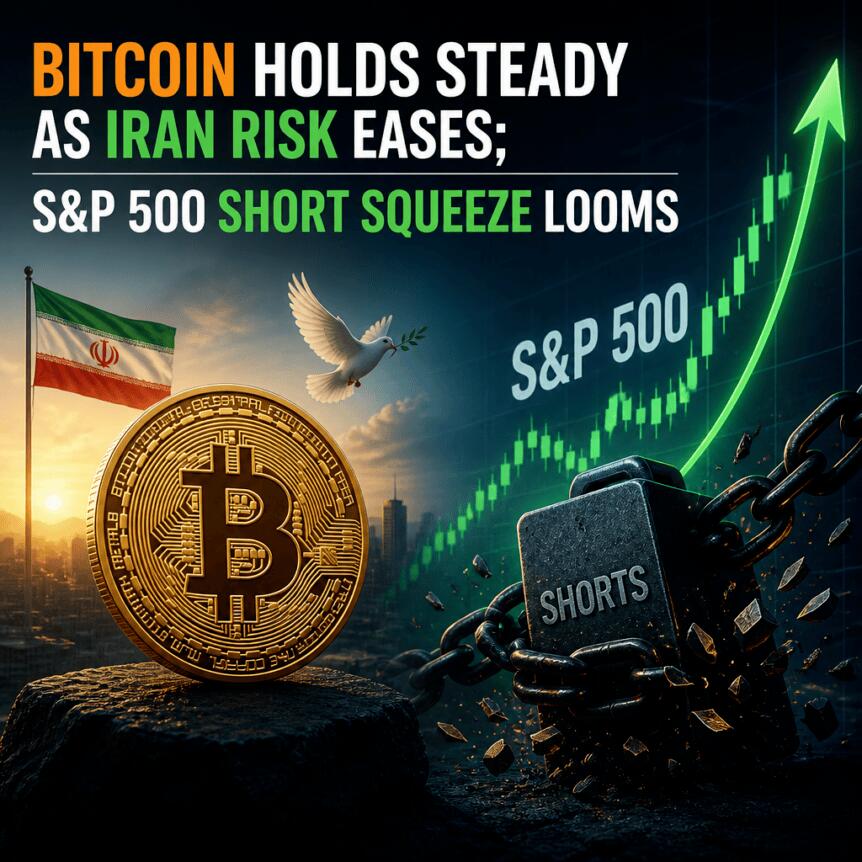
Bitcoin stayed bid on Wednesday as both crypto markets and broader risk assets appeared to brush off renewed US-Iran tensions. BTC/USD held close to recent five-week highs, even as fresh threats from the US raised the stakes for Middle East escalation.
TradingView data showed BTC/USD down about 1% on the day, after earlier testing the $67,000 area. At the time of publication, it was around $65,975, while 24-hour volume topped $30.3 billion, according to CoinMarketCap.
Key takeaways
- BTC’s pullback remained limited despite renewed Middle East risk, suggesting markets are not yet pricing the conflict aggressively.
- US equity momentum appeared to absorb geopolitical headlines, with commentary warning crowded short positioning could amplify moves if conditions shift.
- Traders are watching $67,000 as a technical inflection point; a break could signal a bullish continuation pattern on daily timeframes.
- Some market participants frame Bitcoin as outperforming US stocks, using relative-strength divergence arguments.
Geopolitical headlines fail to move the broader tape
Crypto and US stocks followed Tuesday’s direction, when both asset classes largely ignored escalation in the Middle East—including direct strikes involving both Iran and the United States. On Wednesday, the latest flare-up similarly did not derail risk sentiment.
US president Donald Trump said on Truth Social that the US would target Iranian bridges and energy infrastructure if Iran fired on ships in the Strait of Hormuz. The post stated that the US would “bomb and destroy ONE BRIDGE OR POWER PLANT,” including those near or in Tehran.
While equity and crypto price action stayed comparatively steady, oil reacted more directly. WTI and Brent crude reached roughly $88.60 and $95.50, respectively—levels described as the highest since June 11.
Equities’ strength raises a “short squeeze” question
Beyond geopolitics, a separate dynamic in US markets drew attention: the level of short interest. Trading resource The Kobeissi Letter pointed to data indicating shorts are positioned near elevated levels, increasing the potential for sharper moves if sentiment turns.
According to The Kobeissi Letter, which cited Bloomberg data, short interest in the S&P 500 rose to about 3.7% of free float—near the top of the range in data going back to 2010. Short interest in the Russell 3000 was said to be around 6.1%, also near an all-time high. The account added that both measures have been steadily rising since the start of 2025.
“Both metrics have steadily increased since the start of 2025.”
Kobeissi’s broader message was that a “short squeeze” could punish late short positions if bullish momentum persists or accelerates.
Bitcoin’s $67,000 line in the sand
For Bitcoin, attention has centered on the $67,000 region after the asset pushed to five-week highs earlier in the session. As of publication, BTC was trading near $65,975, meaning the market was still deciding whether it could reclaim and hold above that psychological and technical level.
Trader Daan Crypto Trades said that breaking above $67,000 would create a daily bullish market structure break and establish a higher high. In his assessment, it would mark the first daily higher high since the move up in May.
“This is the first daily higher high since the push up in May.”
That framing matters for how traders interpret momentum: when resistance is treated as a structural level rather than a one-off spike, a decisive close above it can change the odds of continuation—and influence risk management around tight ranges.
Relative strength claims: BTC vs the S&P 500
Not all commentary focused on BTC’s absolute price action. Some market participants were comparing Bitcoin’s behavior against US stocks for signs of relative mispricing.
On X, an account using the name Osemka wrote that the weekly BTC-vs-S&P 500 relationship shows “strong weekly bullish divergence,” with Bitcoin “at the brink” of an RSI trend breakout. The post referenced the relative strength index (RSI) and claimed that the divergence lows are about five months apart, similar to patterns seen in 2022.
“Divergent lows are 5 months apart, similar to literal 2022 lows. $BTC should outperform the US stock market nicely for the foreseeable future from the most mis-priced territory in history, as the lows should already be in.”
The argument here is comparative rather than directional: it suggests Bitcoin may benefit even if US equities remain strong, based on how the two charts have been behaving relative to each other.
Meanwhile, Cointelegraph previously reported that the broader consensus among many observers still points to Bitcoin’s next bear-market low arriving later this year or in early 2027—an outlook that would make this phase more about positioning and risk management than chasing an immediate reversal.
What to watch next
Going forward, traders are likely to keep $67,000 in focus for confirmation on higher timeframes. At the same time, investors should watch whether geopolitical headlines continue to lift oil volatility while crypto and equities remain insulated—or whether markets eventually reprice risk if the conflict escalates further.

South Korea’s largest, won-based crypto exchanges have seen a steep drop in trading activity over the past year, coinciding with a sharp rebound in the country’s stock market, according to an analysis cited by Cointelegraph. The shift suggests some retail speculative attention may be moving toward equities instead of crypto.
Cointelegraph reviewed CoinGecko historical 24-hour volume data for Upbit, Bithumb, Coinone, Korbit, and Gopax, comparing seven-day periods in July 2025 and July 2026. Using the average daily volume for each exchange and then taking a simple unweighted average of the five year-over-year declines, it arrived at an estimated average drop of about 77% across platforms. On a combined basis, average daily volume fell by roughly 89%, from $2.82 billion to $305 million over the comparable July windows.
Key takeaways
- Across five major won-based exchanges, Cointelegraph’s analysis using CoinGecko data shows an average year-over-year daily volume decline of about 77% in July 2026 versus July 2025.
- On a combined basis, average daily volume dropped about 89%, falling from $2.82 billion to $305 million.
- KOSPI reportedly rose more than 114% over the 12 months to July 22, pointing to a stronger alternative investment environment for domestic retail.
- Separate Korean reporting from ZDNet Korea cited an 88% year-on-year fall in combined daily volume and noted that weaker fee income has led some exchanges to sell crypto holdings.
- A Tiger Research report highlighted investor fatigue from failed narratives and projects, while arguing that institutions may be taking up some of the slack.
Crypto volumes fall as equities surge
The timing matters: South Korea’s benchmark stock index, the KOSPI, rose 114.44% over the 12 months to July 22, according to Yahoo Finance data, even after easing back from a June peak. Cointelegraph frames the contrast—shrinking trading activity on won-based crypto platforms alongside a rising equity market—as evidence that retail investors may be reallocating attention toward stocks.
ZDNet Korea reported separately that daily volume across the five exchanges was down 88% year-on-year on Monday. It also connected the volume contraction to weaker fee income, saying some platforms have responded by selling portions of their crypto holdings. ZDNet Korea specifically mentioned Korbit, which reportedly raised about 1.6 billion won (around $1 million) by selling 15 Bitcoin (BTC) and 60 Ether (ETH).
For market participants, this matters less as a short-term trading story and more as a liquidity and business-model question. In retail-heavy markets like South Korea, exchanges often depend heavily on trading fees; sustained volume declines can tighten revenue for platforms across the board, making it more difficult for smaller operators to compete or invest through quieter periods.
How the numbers were calculated
Cointelegraph’s approach was intentionally straightforward. After collecting CoinGecko’s historical 24-hour volume readings for each exchange, it compared seven-day periods in July 2025 and July 2026. It then calculated average daily volume and the year-over-year percentage change for each platform. Finally, it used a simple unweighted average of the five declines—meaning each exchange contributed equally to the “average drop” figure, regardless of its baseline trading volume.
That distinction helps readers interpret the results. The “about 77%” figure represents the arithmetic average of declines across exchanges, while the “about 89%” combined figure reflects the total contraction when aggregating average daily volume across platforms. Both point in the same direction—less activity—but they do so through different weighting methods.
Retail fatigue and competition for capital
A separate report from Tiger Research, published on CoinGecko and updated April 17, argued that the decline in South Korea’s crypto activity likely reflects more than just market price movements. The report pointed to “recycled narratives” and projects that failed to deliver as contributors to investor fatigue, which can reduce willingness to engage even when opportunities exist.
At the same time, Tiger Research said the KOSPI rally expanded the set of return options available to retail traders. While the widening gap between equity turnover and crypto volume does not necessarily mean Koreans have lost interest in crypto entirely, the report suggests the opportunity cost of staying in crypto has risen—investors have more alternatives competing for their attention and capital.
In practical terms, that can shift behavior across cycles. When stocks perform strongly, retail participation may become more selective in crypto—favoring only particular themes or entry points—rather than sustaining broad, continuous trading volume. That kind of selectivity can reduce average liquidity on exchanges, even if overall crypto sentiment remains intact.
Institutions step in, but the transition is uneven
Beyond retail, Tiger Research characterized the market as being in a “structural transition,” with retail activity stepping back while institutions move in. The report said banks and financial groups have been positioning around won-denominated stablecoins, tokenized real-world assets (RWAs), and exchange investments even before final legislation was finalized.
Still, Tiger Research cautioned that institutional participation is not a clean replacement. The report described institutions as “finding their footing,” implying a gradual and uneven shift rather than an immediate volume equalization. For exchanges and investors, the key uncertainty is whether institutional flows can scale fast enough to offset the liquidity gap created by reduced retail trading.
Watch how volume evolves beyond headline percentages and whether fee-dependent business models stabilize. If the equity/crypto attention gap persists, South Korea’s exchange landscape could see further consolidation pressure, while tokenized asset rails and stablecoin-linked products may gain relative importance as builders and financial players look for activity beyond spot retail trading.

Syrah Q2 2026 slides: Balama curtailed, Vidalia nears commercial sales

US Federal Ethics Rules Would Block Crypto Token Issuance Until 2029

Argentina player could face ban for abusing match officials at end of England game


-
 NewsBeat6 days ago
London Mayor Sadiq Khan handed a peerage by Keir Starmer alongside 15 other Labour figures… just days before the PM leaves No10
-

 Fashion5 days ago
Weekend Open Thread – Corporette.com
-

 Politics5 days ago
The House | The City of London can help the new chancellor deliver growth in every postcode
-

 Crypto World5 days ago
Ripple Payments Joins MiCA With 14 Firms, Does It Mean Anything For XRP?
-
 Crypto World6 days ago
Two July Windows Left: The CLARITY Act’s Senate Fight and What Failure Means
-

 Politics4 days ago
Democrats look to World Cup watch parties to register thousands of voters
-

 Crypto World5 days ago
Ripple wins EU-wide access as ESMA adds it to MiCA register
-

 Crypto World2 days ago
Grayscale Files For Worldcoin ETF, WLD Registers Sharp Rise
-

 NewsBeat3 days ago
Unregistered fitter used Gas Safe logo on business flyers
-

 Tech2 days ago
Sail Virtually Aboard The “Itanic” With IA-64 Emulator
-

 Crypto World6 days ago
Injective Submits SEC Transfer-Agent Registration to Onchain Ownership Records
-

 Business7 days ago
Palantir Shares Rise After Expanded Nvidia Partnership and Fresh Analyst Upgrades Ahead of Earnings Day
-
 Tech2 days ago
Turtle Beach Command Series KB7 review: a nifty screen-equipped gaming keyboard
-

 NewsBeat6 days ago
Registration is now open for March for Men with Kev 2026
-
 Business23 hours ago
New Jersey voter registration controversy explained: How 6,600 noncitizens got on the rolls, and what happens next
-

 Crypto World6 days ago
Claude Fable 5 Slips to Second in AI Coding Leaderboard
-

 News Videos6 days ago
Money | Class 12 Economics | CBSE Board Exam 2026-27
-

 Business6 days ago
Banco Bilbao Vizcaya Argentaria, S.A. (BBVA) Discusses Global Macro Environment and Economic Outlook for Core Markets Transcript
-

 Crypto World5 days ago
Kaspersky exposes OkoBot’s 20-module crypto wallet attack
-

 News Videos3 days ago
Big Money Is Entering XRP
You must be logged in to post a comment Login