
Crypto World
SpaceX Filings Show Top Shareholders: Nvidia, Google, Elon Musk


The top holders of SpaceX stock are a who’s who of tech giants and big name investors. A series of filings show that Alphabet, Nvidia and Peter Thiel own huge stakes in SpaceX — as does, of course, CEO Elon Musk. Musk is the largest shareholder of SpaceX, controlling roughly 6.42 billion shares or 48.8% of the company, according to…
Copyright ©2026 Investor’s Business Daily, LLC. All rights reserved. 87990cbe856818d5eddac44c7b1cdeb8

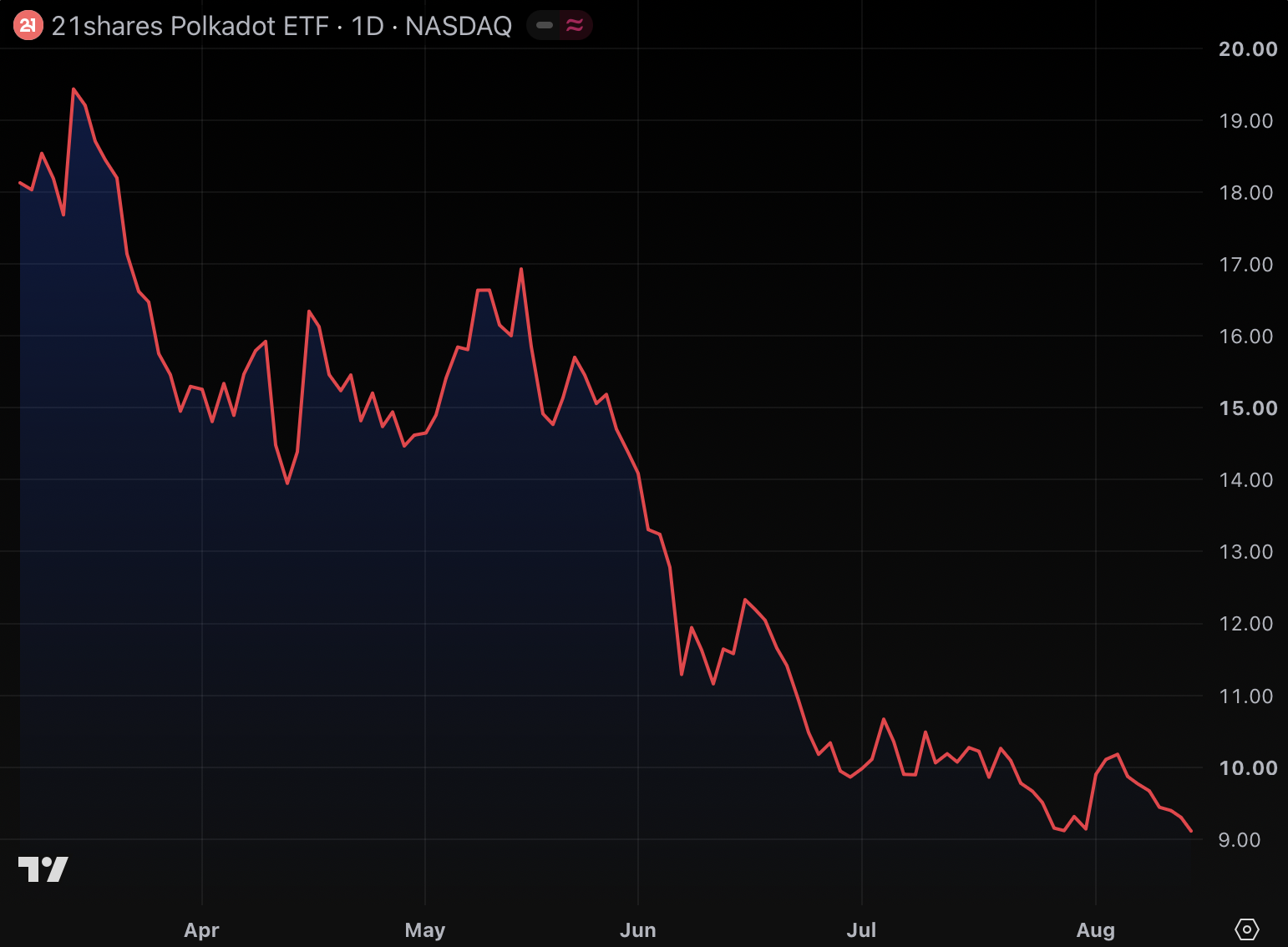
On Friday, the 21Shares Polkadot ETF (TDOT) reported that it realized $4.52 of loss per share by selling Polkadot (DOT) tokens to make each $1 per share of staking payouts last quarter.
The fund sold 98,505 DOT last quarter to generate $107,510 of cash payments to shareholders. Those sales finalized losses of $485,553 due to the dramatic decline of DOT.
Specifically, the price of DOT declined 34% during Q2 2026. For the 12 months ending June 30, 2026, DOT declined 76%.
TDOT shareholders do not actually receive staking rewards denominated in DOT. Instead, the fund must sell DOT to mimick and provide the corresponding staking rewards in USD for its shareholders.
All things considered, the payout is embarrassing. Holding TDOT from April through June this year entitled shareholders $0.146980 per share of payouts, which certainly did not compensate for the fund’s 34% share price decline from $14.95 to $9.86.
This is, of course, not any particular fault of 21Shares but rather the fault of DOT itself, which continues to fall out of favor with investors.
DOT was supposed to power parallelized execution capable of roughly 1 million transactions per second across up to 100 parachains, an ‘internet of blockchains’ with shared security, and seamless cross-chain interoperability.
In practice, total value locked across all parachains sits at less than $100 million, and DOT trades near 97% below its all-time high as investors find more utility elsewhere.
Paying out staking rewards crystallizes DOT losses
TDOT records cash payouts as a distribution of staking income. Nothing in the filing hides the mechanism by which it realized losses, and shareholders cannot interpret the cause of this $485,553 loss as unrelated to generating staking payouts.
Indeed, the trust unambiguously states, “Aggregate distributions of $107,510 or $0.146980 per share reduced the Trust’s DOT holdings through the sale of DOT to generate cash.”
That crystallized more than four dollars of permanent loss for every $1 it distributed.
By comparison, four peer crypto staking funds disclosed a realized loss in Q2, yet none lost more than $0.89 per $1 distributed. Respectively, Invesco’s Galaxy Solana fund realized $0.89 of loss, the same sponsor’s Solana fund disclosed $0.74 of loss, its Sui fund finalized $0.31, and BlackRock’s staked ether fund reported $0.25.
Read more: Where are the Ethereum founders 11 years after the genesis block?
Realizing losses as Polkadot continues to crash
Shareholders, not these sponsors, bear those losses. The entities behind these funds make money running their products, regardless of the price of crypto.
Specifically, TDOT names 21Shares US LLC as the fund’s sponsor, wholly owned by 21co Holdings Limited. Crypto prime broker FalconX finished buying that parent in November 2025. CEO Russell Barlow and President Duncan Moir signed the quarterly report on August 14.
The trust’s original backer was the Web 3.0 Technologies Foundation, the Swiss entity behind Polkadot. It seeded the fund in January 2025 with DOT worth about $53 million, or roughly $88 per share. Shares closed Q2 at $9.86 per share.
Sadly, selling DOT to generate cash for staking reward payouts was not even the quarter’s most expensive liquidation. Instead, outright redemptions from investors who wanted out of the fund forced the trust to realize another $1.76 million of loss during the quarter.
Moreover, selling DOT to pay its own ‘sponsor fee’ cost $253,417. Total realized losses for the quarter totaled $2.5 million.
The first distribution, $0.090846 per share, carried a May 14 record date and paid the next day. The second, $0.056134 per share, followed with a June 29 record date, a shrinking payout on a shrinking asset.
Both landed inside a quarter in which DOT fell 34%. The coin slid from $1.25 on March 31 to $0.82 on June 30.
Competition is thinning rather than growing. Grayscale withdrew its own Polkadot ETF registration on August 7, and crypto ETF net asset values are down across the board since early 2025.
Got a tip? Send us an email securely via Protos Leaks. For more informed news and investigations, follow us on X, Bluesky, and Google News, or subscribe to our YouTube channel.
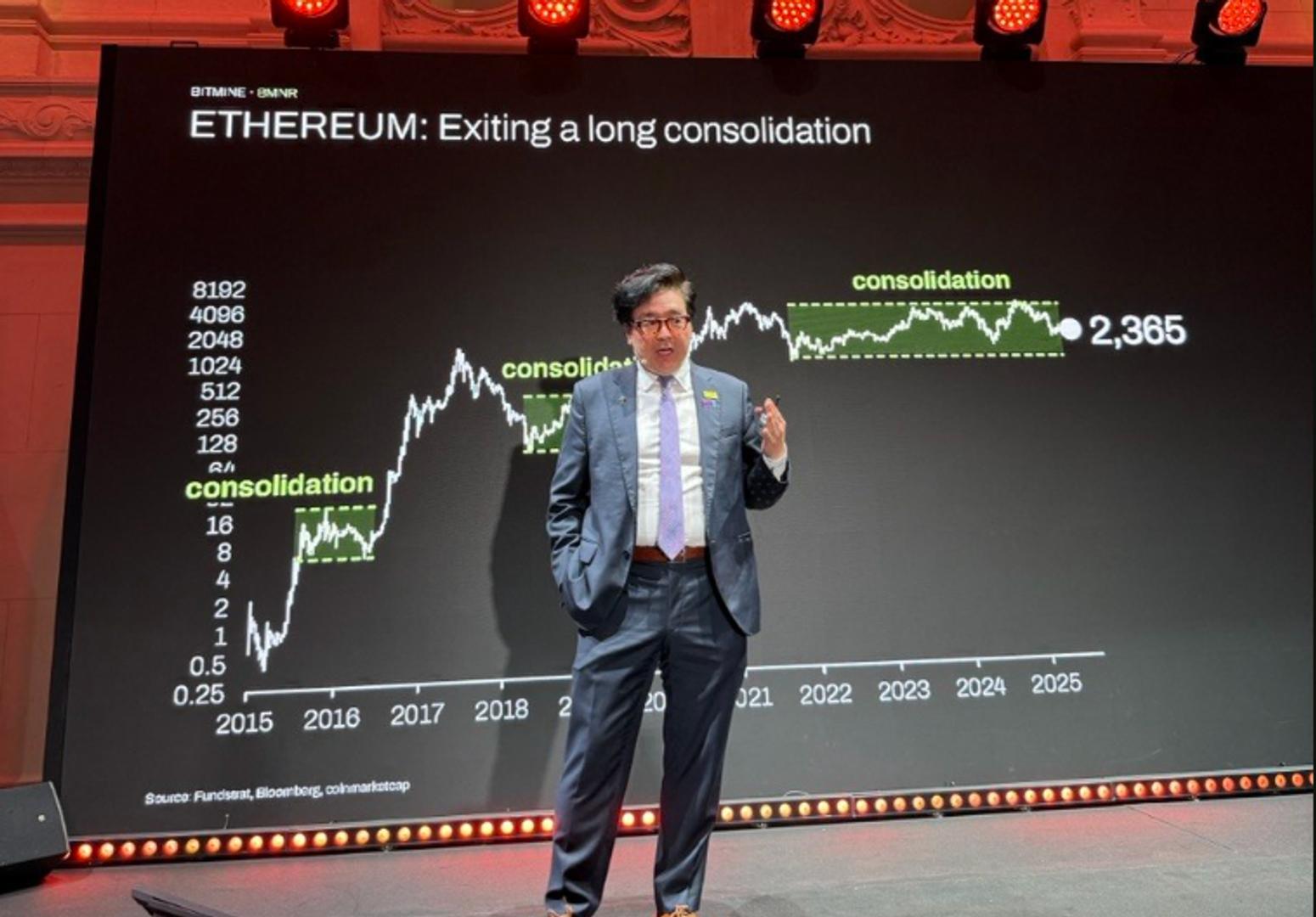
Ethereum treasury company Bitmine Immersion added more of the token to its balance sheet, bringing its total holdings up to 5.815 million tokens.
In an announcement Monday, the company led by Chairman Tom Lee said it bought another 9,926 ETH last week, continuing its streak of weekly buys that began in June 2025 when the company launched.
Bitmine, which trades under the ticker BMNR, now holds 4.8% of ETH’s total supply with its tokens worth about $11 billion at the current price of $1,904.
Lee said the ETH/BTC ratio has broken above a years-long downward trend, which he sees as a sign that investors are starting to price in growing demand for Ethereum from tokenization and AI-agent applications.
On the macro front, he expects “easing financial conditions to be a tailwind for crypto,” he said in a statement.
ETH is up about 1.6% over the past 24 hours while BMNR is trading more than 2% higher today.
The company also bought an additional 1.7 million shares of its own stock last week, now owning 20.8 million shares under a previously authorized $4 billion buyback program.


The SEC has begun preparing a regulatory route that could let qualified platforms trade tokenized U.S. stocks 24 hours a day, seven days a week.
Summary
- The SEC is developing a limited innovation exemption for tokenized securities trading.
- Blockchain-based markets could let eligible stock tokens trade overnight, on weekends, and during holidays.
- Existing federal securities laws continue to apply because the proposed exemption has not taken effect.
- Custody, shareholder rights, surveillance, and links to clearing systems remain key regulatory issues.
The U.S. Securities and Exchange Commission is working on an “innovation exemption” that could give selected firms temporary relief to test tokenized securities under defined conditions while the agency develops permanent rules.
SEC Chair Paul Atkins has supported using exemptive authority to bring more financial activity onto blockchain networks without removing tokenized stocks from federal securities oversight. Under the proposal, approved platforms could offer digital versions of U.S.-listed shares and process transactions outside the operating hours used by traditional exchanges.
Commissioner Hester Peirce said in March that SEC staff was developing an exemption to facilitate “limited trading of certain tokenized securities.” Peirce described the possible measure as narrower than the blanket exemption discussed by the SEC’s Investor Advisory Committee.
No final framework, eligibility criteria, or implementation date has been announced. Investors therefore cannot assume that tokenized versions of every U.S. stock will soon become available for continuous trading.
SEC exemption could open 24/7 tokenized stock trading
Regular U.S. stock market hours run from 9:30 a.m. to 4 p.m. Eastern time on business days, although registered venues and brokers can provide extended sessions. A blockchain-based venue can process transfers continuously, allowing eligible securities to change hands during nights, weekends, and public holidays.
According to reporting on the SEC’s preparations, the exemption could give regulated platforms a defined route to test round-the-clock markets for tokenized shares. Such relief would still require the commission to decide which firms qualify, what activities they may conduct, and which existing rules remain mandatory.
For American investors, continuous trading could provide access outside the normal market day. The SEC would still need to determine how brokers handle best execution, disclosures, and order routing when the underlying stock market is closed, and price discovery is spread across blockchain and conventional venues.
Investor protections also depend on the type of token offered. An issuer-backed token can represent the same security recorded through a new ownership system, while a product created by an unrelated third party may only track the price of a stock or provide a contractual claim against the platform.
In July, two transfer-agent groups asked the SEC to separate issuer-backed shares from unaffiliated tokens. As crypto.news previously reported, the groups warned that some third-party structures may not give buyers direct ownership, voting rights, or the same legal claim to dividends as registered shareholders.
The SEC’s Investor Advisory Committee raised similar concerns in a March recommendation. Committee members opposed a blanket exemption and called for clear ownership disclosures, regulatory oversight of intermediaries, and protections designed to give investors fair execution terms.
Tokenized stocks would remain U.S. securities
Putting a stock on a blockchain does not change its status under U.S. law. Atkins said in a November 2025 speech that economic reality, rather than the token label, determines how federal securities rules apply to an asset.
A token representing a share of a public company would therefore remain a security. Depending on the structure, platforms involved in issuing, trading, custody, or settlement could face requirements covering broker-dealer registration, exchange or alternative trading system rules, transfer-agent records, and clearing.
Custody presents another issue because a blockchain token and the underlying share must remain properly linked. If a third party holds conventional stock and issues a separate token against it, regulators must determine how buyers can verify the backing and recover assets if the issuer or custodian fails.
Market surveillance will require its own controls. The SEC must decide how participating venues detect manipulation, share trading information, and manage transactions that occur when the main U.S. exchanges are closed. Regulators may also need to address whether blockchain settlement can operate alongside the Depository Trust Company’s existing custody and post-trade systems.
The proposed exemption has not changed current requirements. On Aug. 14, the SEC canceled an open meeting that was scheduled to consider a tailored offering regime for certain investment contracts involving crypto assets, citing an unforeseen scheduling issue.
The canceled meeting did not amount to a vote on blanket approval for 24/7 tokenized stock trading. The SEC’s public notice said the meeting concerned registration and offering rules for certain crypto-related investment contracts, while the tokenized-securities exemption remains a separate policy project under development.
DTCC and Nasdaq have started regulated tokenization tests
Parts of the U.S. market have already received limited permission to test tokenized securities. In December 2025, SEC staff issued a no-action letter allowing the Depository Trust Company to operate a defined tokenization service for three years under specified conditions.
The eligible asset universe includes Russell 1000 stocks, major index exchange-traded funds, and U.S. Treasury securities. A no-action letter indicates that SEC staff would not recommend enforcement based on the facts presented, but it does not create a permanent industry rule or authorize every company to offer similar services.
DTCC has assembled more than 100 members and partners for its tokenization work, according to an August project update. Participating firms include traditional financial institutions and blockchain companies testing tokenized equities, Treasuries, collateral, securities lending, and margin processes.
Earlier production tests examined whether regulated assets could move between blockchain networks while remaining connected to established custody and ownership records. DTC, DTCC’s depository subsidiary, provides custody and asset servicing for more than $114 trillion in securities, although that figure represents its total business and not the value scheduled for tokenization.
Nasdaq has also moved into regulated blockchain-based trading. The SEC approved its pilot in March 2026, allowing selected participants to trade certain tokenized equities alongside conventional shares.
Under Nasdaq’s structure, tokenized and traditional versions carry the same rights and pricing. The pilot covers eligible Russell 1000 securities and major index-linked ETFs, keeping the products inside the existing national market system rather than creating unrelated stock-tracking tokens.
NYSE has filed rule changes for tokenized securities as well. SEC records show that the exchange submitted amendments in April to enable securities to trade in tokenized form, adding another regulated-market model for the commission to assess.
Regulation NMS changes could affect on-chain venues
At the same time, the SEC is considering amendments to Regulation NMS, the collection of rules that controls how U.S. equity orders move between trading venues. Proposed changes include rescinding Rule 611 and Rule 610(e), which govern order protection and access fees in the national market system.
Ondo Finance supported the proposed rescission in an Aug. 11 letter to SEC Secretary Vanessa Countryman. The company argued that the existing rules favor continuous order books and can restrict alternative execution systems that use different trading models.
Rule 611 generally requires trading centers to prevent executions at prices inferior to protected quotations displayed elsewhere. Ondo told the commission that removing the provision could give auction-based, blockchain-based, and other execution systems more room to operate alongside conventional order books.
The company also asked the SEC to correct parts of its economic analysis before adopting the amendments. Ondo’s submission was filed under Release No. 34-105655 and File No. S7-2026-20 as part of the commission’s public comment process.

In May 2026, Panettiere published her memoir, This Is Me: A Reckoning. Speaking with CBS about the book, Panettiere said that “once people figured out that I could cry on cue the way that I did, it was in everything.”
At first, she said, she would imagine her pet passing away. “But then as I got older, the imagery became darker,” she said.
Panettiere continued that she “didn’t know where my character started and where I ended” and described feeling a “deep sadness” during those scenes.
The actress also reflected on landing the lead in Heroes at 16. “Back in the 2000s, there were no boundaries at all. It was rough and tough,” said Panettiere about the pressure of the paparazzi. “The way they spoke to you, the way they drove, hunted literally like prey.”
Panettiere also spoke out about her experience with postpartum depression following the birth of her daughter, Kaya, in December 2014. “Here I am with this beautiful, healthy, beautiful baby girl in this very fortunate life, and I could not, for the whole life of me, be happy. I was so depressed, and I just couldn’t find my way out,” she said while promoting her memoir in May.

Binance has reportedly shared Russian law enforcement with detailed transaction records and personal identity information tied to a man accused of funding terrorism through cryptocurrency donations linked to Ukrainian fundraising efforts. The disclosure, according to law enforcement documents reviewed by Reuters, became part of the evidence used in Russia’s case against an IT specialist awaiting trial.
Reuters reports that investigators requested the data from Binance and received information connecting the suspect to crypto transfers, along with sensitive personal details such as date of birth, address, phone number, and passport number—along with copies of his documents. Binance, in response to coverage, said it cooperates with lawful information requests subject to applicable legal, privacy, and regulatory requirements, while declining to comment on the specific matter.
Key takeaways
- Reuters reviewed documents indicating Russian authorities asked Binance for a customer’s transaction history and received personal identity details.
- The Russian Investigative Committee alleges the suspect sent more than $700 in crypto between January 2023 and March 2024 to Ukrainian military-related efforts and a banned group.
- Binance’s reported response included links to specific transfers as well as copies of a Russian passport and a Bulgarian residency permit.
- Binance says it generally cooperates with lawful information requests, but it declined to comment on the particular case.
What Russian investigators say the data was used for
Russia’s Investigative Committee alleges that IT specialist Yuri Belenkiy made cryptocurrency transfers totaling more than $700 between January 2023 and March 2024. The allegation is that the funds were directed to the Ukrainian military and to an organization identified by Reuters as the group known at different times as the Azov Brigade and the Azov Regiment.
According to Reuters’ review of law enforcement documents, investigators relied on information attributed to Binance in building the case. Belenkiy was detained in September 2025 and is currently awaiting trial in Russia.
Binance reportedly provided transaction trails and identity documents
The evidentiary link described by Reuters centers on a formal request from Russian authorities to Binance for Belenkiy’s transaction history. Reuters says the company’s response connected him to the alleged transfers.
Beyond blockchain-related activity, the response reportedly included personal identifying information commonly required for law enforcement verification: Belenkiy’s date of birth, address, phone number, and passport number. Reuters also reports that the material provided included copies of a Russian passport and a Bulgarian residency permit, suggesting the request extended beyond tracing crypto flows into confirming the suspect’s identity.
For investors and users, the case underlines a recurring reality of crypto compliance: even when transactions are pseudonymous on-chain, centralized exchange records and customer due diligence can materially shape investigations.
Why Binance’s Russia exit does not remove the data link
Binance announced a full exit from Russia in September 2023, selling its local business to CommEX, according to a Cointelegraph report. That corporate shift did not erase the underlying compliance trail described in the Reuters account—namely, that transaction history and customer information tied to a specific user can remain relevant to later investigations.
This distinction matters. “Exiting” a market typically addresses future operations and licensing, but it does not necessarily eliminate retention or earlier records associated with accounts created and used while a platform operated there. The Reuters reporting implies that the relevant data existed in a form Russian authorities could request, even years after the public announcement of Binance’s exit.
Binance’s response and the broader compliance tension
Reuters says a Binance spokesperson declined to comment on specific confidential law enforcement requests or on the details of individual cases. In a broader explanation given to Cointelegraph, Binance stated that it does not make or enforce laws, determine charges, or decide how any government uses information in legal proceedings. The company added that, like other global financial institutions, it cooperates with lawful information requests from law enforcement worldwide, subject to applicable legal, privacy, and regulatory requirements.
That formulation reflects a familiar compliance tension for crypto exchanges operating at the intersection of financial privacy, customer protection, and state requests. While platforms often frame cooperation as bounded by law and privacy rules, public reporting like this highlights how those safeguards function in practice—particularly when requests target individuals connected to politically sensitive conflicts.
It also raises practical questions for customers and the wider ecosystem: what categories of data exchanges retain; how long they retain it; and how cross-border identity and documentation checks can be combined with transaction history in court filings. The Reuters account does not detail those internal policies, but it shows the end result—law enforcement having both a behavioral trail (transfers) and a personal dossier (identity documents).
What to watch next
As Belenkiy’s case moves forward, attention will likely center on what precisely the court accepts as admissible evidence and whether the exchange-supplied materials are used narrowly for transaction tracing or more broadly for identity verification. More broadly, the episode is a reminder that even after major exchange restructuring or market exits, compliance data can still surface years later when investigators pursue crypto-related allegations.
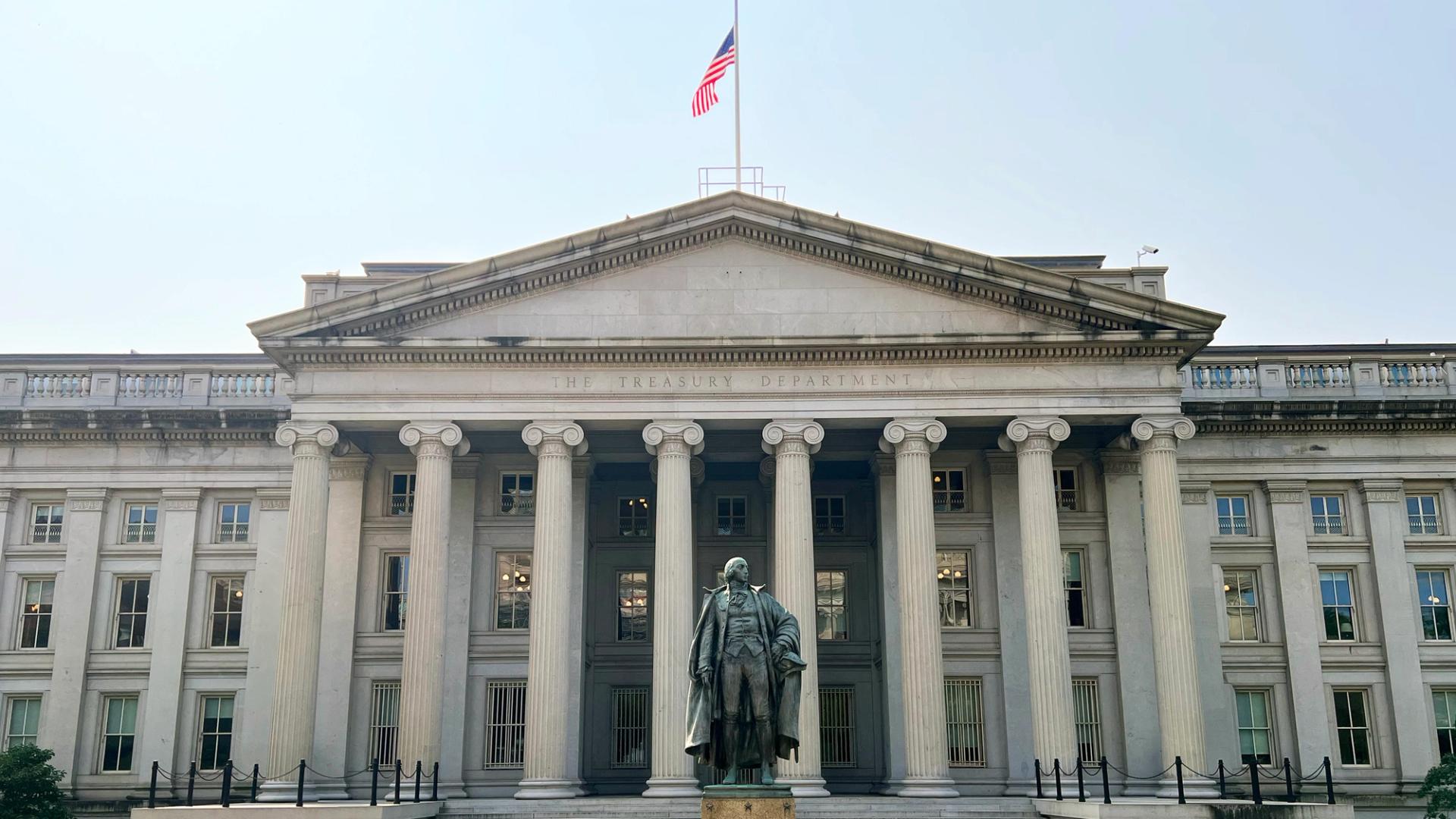
However, the proposal notes, “Treasury believes that the Act evinces a clear intent for payment stablecoins to serve as an effective means of payment and settlement, including across borders, and application of traditional investment rules to payment stablecoins may frustrate that goal.”
Monday’s action is a follow-up to the Treasury advance notice of the rule, which it issued in September of last year on what was meant to be a tight timeline. The public and the growing industry of stablecoin issuers now have 60 days to weigh in with comments, and the department will be expected to take further months to review them before issuing a final rule.
The proposed rule poses dozens of questions about the best approach to interpreting the law, each of which must be answered before the final sign-off. The industry will pay special attention to how it approaches foreign issuers, such as industry leader Tether. It set a deadline for responses in mid-October.
The law’s one-year target to have its rules implemented passed last month, without the administration meeting the requirement. The next mark is the effective date of the law, which is supposed to come by January 18. It’s unlikely that all the rules will be finalized by then, and new regulations usually come with runways allowing an industry to transition into them.

Austria’s financial regulator has issued its first final penalty under the EU’s Markets in Crypto-Assets Regulation (MiCA), fining crypto platform Bitpanda 70,000 euros (about $82,000) for breaching MiCA’s publication and marketing disclosure rules. The Austrian Financial Market Authority (FMA) said the case was handled under an expedited procedure and that the decision is final.
According to the FMA, the issue centered on Bitpanda’s timing and compliance with mandatory pre-publication and disclosure requirements for a crypto-asset white paper.
Key takeaways
- The FMA fined Bitpanda 70,000 euros for failing to submit the required crypto-asset white paper at least 20 working days before publication.
- Regulators also said Bitpanda issued marketing communications before the white paper was filed.
- Another alleged breach involved marketing material that omitted MiCA-mandated disclaimers, including that it had not been reviewed or approved by a competent authority and that Bitpanda is responsible for the content.
- The penalty was issued as the first published final enforcement under MiCA, signaling the EU framework is moving from licensing and guidance into outcomes.
- Bitpanda stated the problems were limited to formal timing and documentation requirements, and said customer funds and platform security were not affected.
FMA details: white paper submission and marketing timing
In a notice published Friday, the FMA said Bitpanda did not submit a crypto-asset white paper to the regulator at least 20 working days prior to its publication, as MiCA requires. The regulator also reported that Bitpanda distributed a marketing communication before publishing the required white paper.
The regulator’s explanation is significant because MiCA’s approach to investor protection depends heavily on structured disclosures. The white paper is intended to provide standardized information before the public is exposed to an offering or related marketing materials.
Disclosure gaps in marketing materials
The FMA further alleged that another marketing communication failed to include mandatory disclosures. Specifically, the regulator said the content did not state that the material had not been reviewed or approved by a competent authority, and that the crypto-asset provider alone was responsible for the content. The regulator also said the marketing communication lacked required contact details, including a telephone number and email address.
These points matter for compliance teams because they show that regulators are not only checking whether documents exist, but whether the surrounding communications include the specific legal language and contact information required under MiCA.
Expedited proceedings and final decision
The FMA said the case was concluded under an expedited procedure and that the penalty decision is final. While the fine amount is comparatively small relative to some large-scale financial enforcement actions, the regulatory significance is larger: this is presented as the watchdog’s first published final penalty under MiCA.
For market participants, the outcome suggests that formal compliance lapses—such as filing timelines and required statement formatting—are actionable under MiCA, even when the core product or platform functionality is not necessarily implicated.
Bitpanda’s response: timing and formal requirements only
Bitpanda told Cointelegraph that the concerns raised by the FMA related exclusively to the timing and formal requirements surrounding the publication of the white paper and an accompanying information document. The company said customer funds and platform security were not affected and that customers suffered no financial harm.
Bitpanda added that it corrected the issues after receiving notice from the FMA, and it opted for a swift, consensual conclusion of the proceedings.
That framing may influence how investors and users interpret the case. The regulator’s enforcement narrative emphasizes process compliance, while Bitpanda points to the absence of customer impact. Still, the penalty itself indicates that regulators are prepared to treat disclosure mechanics and marketing rules as enforceable obligations under the new regime.
Why this is a broader MiCA signal
MiCA created a harmonized regulatory framework for crypto assets across the European Union, including disclosure standards, marketing requirements, and authorization conditions for crypto companies. The FMA’s action reinforces that MiCA compliance is not limited to licensing status or long-form disclosures alone; marketing materials and document submission timelines are also subject to scrutiny.
Earlier coverage of the implementation of MiCA licensing timelines and transitional measures (including references to the end of certain grace periods) highlighted that firms would eventually face stricter enforcement as operational readiness deadlines were crossed. This penalty fits that pattern: once formal requirements are in effect, regulators can convert guidance into penalties.
For the wider industry, the main uncertainty going forward is how frequently regulators will pursue similar “paperwork” cases and whether enforcement will focus on specific categories of issuers or on any instance of noncompliance with pre-publication timing and mandated marketing language. Market participants should watch for more final decisions across member states as regulators test the boundaries of MiCA’s disclosure and communications requirements.
Readers should pay attention to the next enforcement steps from Austria and other EU jurisdictions—particularly whether additional cases involve similar white-paper submission delays and missing mandatory marketing disclaimers, or whether regulators begin targeting other parts of MiCA compliance such as authorization obligations and ongoing disclosure practices.


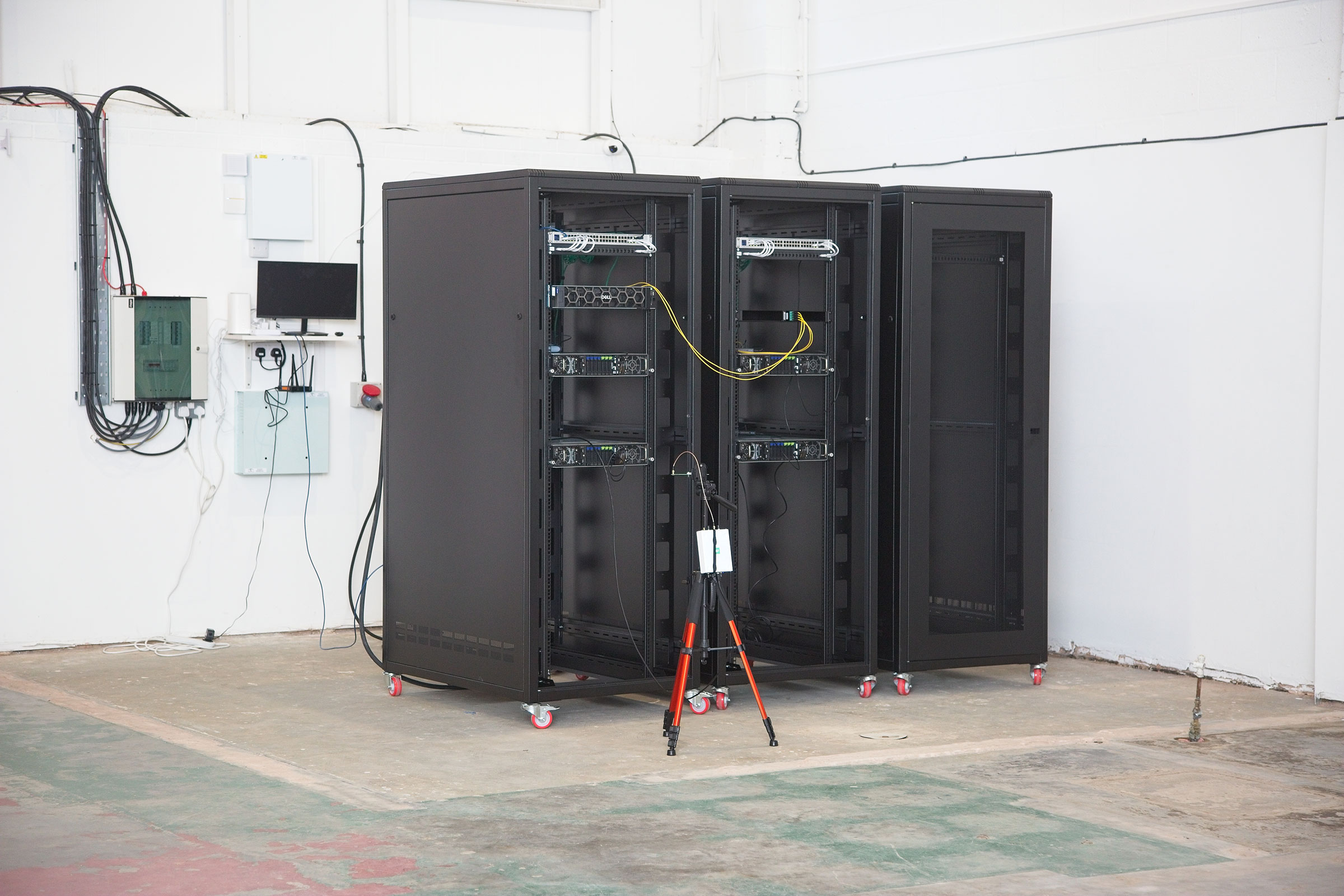
In the corner of a nondescript office in Sheffield, a city in the north of England, a compact server full of Nvidia chips is whirring away.
It’s a microcosm of the huge data centers springing up all over the globe: town-sized, energy-guzzling computers that are the worldly manifestations of frontier AI models.
Here in Sheffield, on these eight chips, engineers from the consultancy Amodo Design are piloting a monitoring system that they hope, one day, might find its way into every data center, allaying the fears of AI researchers who are concerned that the technology they are building may destroy the world.
In late July, more than 1,300 employees of frontier AI companies signed an open letter warning that their AI is quickly becoming so powerful that humans may soon no longer be able to control it. Slowing the pace of AI development, they warned, may become vital in order to allow more time for safety research, and thus avert catastrophe. But slowing down, they wrote, is essentially impossible, due to intense competition between companies and countries. The AI race is stuck in an arms-race dynamic, these top scientists say, in which one team slowing down would only hand victory to rivals that don’t.
The letter’s main request—one so important to 1,300 of the world’s top AI researchers that they called publicly for it—was for the U.S. government to support an international effort to build tools that would enable all sides to slow down the AI race.
So far, only a small group of people are working on this effort. There are fewer than 50 engineers in the world working full-time on building so-called “AI verification” tools, Amodo CEO Tom Milton estimates—nine of them at Amodo—plus a few dozen more policy researchers scattered among a handful of companies and research institutes. Meanwhile, trillions of dollars, and the combined might of the world’s biggest tech companies, are now dedicated to making AI systems more powerful as quickly as possible. Efforts to build slowdown tools are funded mostly by academia and philanthropy. (Amodo’s work in this area is funded by the Survival and Flourishing Fund and Longview Philanthropy, two grantmakers that have donated heavily toward reducing AI-related risks.)
“It is surprising that very few people are doing it,” says Milton, a 28-year-old who fell into the field almost by accident several years ago, when Amodo was commissioned to do some work in the area.
In Sheffield, three workers are huddled around their compute cluster, under an air conditioning unit that is running on full-blast. Their small-scale prototype may be running hot, but it isn’t ready yet. Many technical obstacles remain in its way, plus a bigger political one: it won’t be useful unless the U.S. and China come to the table and agree on an AI slowdown treaty, Milton says.
For now at least, such an agreement looks unlikely. But Amodo’s engineers are keenly aware that political choices are downstream from what is possible. Treaties that curtailed the Cold War arms race were only possible because new technologies, like satellites and seismometers, allowed each side to verify the other’s compliance. Milton expects a similar moment to arrive for AI. When that moment comes, he wants to be ready.

How AI verification might work
Nobody knows how an AI slowdown treaty might look, but Amodo’s engineers believe it will probably require monitoring data centers, given that these are the places where AI physically lives.
The current prototype that Amodo is building could make it possible to gain two assurances about a data center that might be helpful in the years to come, Milton says.
First, that a data center is only being used for inference. That means the running of existing AI models, rather than the training of new, more powerful ones.
Second, that a data center is running a particular, agreed-upon model—for example, one that has passed certain safety tests, perhaps ones that have been set down in law.
To demonstrate how this might work, an Amodo engineer logs into the whirring server rack, where he spins up two separate systems, each containing an open-source AI model made by OpenAI.
Think of the first system, he says, as an AI model that a company would normally run in a data center. The second system is the “verifier,” he explains. Its job is to sample snippets of data from this data center and rerun them on its own version of the model, thus confirming that the model is the one the data center operator claims it to be.
When he demonstrates it, the system works—at least on its own terms. The verifier performs some calculations on the outputs of the original AI model, and spits out a high certainty score that this model is GPT-OSS-120B, which is exactly correct.
The limitations
There are several significant problems that point to Amodo’s solution not yet being ready for prime time.
For now, it only works with unencrypted data, which makes it unfeasible for the most sensitive workloads, which are routinely encrypted. (Milton says the next version of Amodo’s prototype will utilize “zero-knowledge” cryptography, which would significantly reduce the amount of unencrypted data needed.)
A second limitation is that a system like this would require data centers to be retrofitted, including a process ominously named “network tapping,” which involves copying data from working chips onto other verification systems within the same building. Given that these are some of the highest-security buildings on earth, housing trillion-dollar intellectual property and masses of private data, that’s access that no leading AI company is likely to be willing to grant, at least today.
But it doesn’t have to be as scary as it sounds, Milton says. There are precedents in the history of arms control—including nuclear and chemical weapons—for international bodies to carry out inspections of sensitive facilities. These inspections can guarantee that a facility is compliant with international law, without revealing the secrets of how it works to adversaries. Amodo hopes to build on these principles, aiming to build a system that would only send low-information signals like “passed” or “failed” outside of the data center’s secure walls.
(Amodo says it plans to open-source all of its work on AI verification, so that all sides can interrogate it, understand exactly how it works, and be confident it lacks security vulnerabilities.)
Another limitation is that the verifier system requires computing power in order to run. That could substantially reduce the total capacity, and thus profitability, of any data center that hosts it. The system witnessed by TIME required computing power equal to between one-third and one-fifth of the AI model it was monitoring. Amodo’s engineers say they expect to find substantial further efficiency gains, in particular because the system could theoretically be set to monitor only random samples of a data center’s computation, rather than every single calculation, in order to achieve its intended result.
Milton acknowledges that for now at least, Amodo’s tech isn’t perfect. The idea, he says, is for it to improve significantly over time, ultimately reaching a point where it becomes minimally invasive and maximally privacy-preserving. “We tend to be of the mind that verification mechanisms will ladder up, and they won’t be perfectly trustable and perfectly secure on day one,” he says. “Over time, we can get to systems that can be verified in much more detail.”
There are many individual AI researchers, Milton says, who are paid more than the single-digit-million dollar budget for his entire project. A full-scale effort, of the kind that AI workers asked for in the open letter, might quickly result in more sophisticated tools.
“It is insane for us to think that we are even a noteworthy participant in this,” Milton says. “Let alone one of the largest projects.”

Is it politically possible?
While AI verification tech remains nascent, the acceleration of AI capabilities in recent months has led to a surge of interest in the field.
The Institute for Progress, a think-tank, recommended in August that the U.S. government collaborate with frontier AI labs, chipmakers, and hyperscale data center builders, plus other governments, to accelerate the development of AI verification tools. “If the nuclear arms control precedent is any indication, the ability to verify that agreements are being upheld is often necessary for parties to enter into them in the first place,” it wrote. “Better verification technology would unlock a broader space of possible agreements.”
It is a view shared by the authors of AI 2040, a follow-up to the widely-read essay AI 2027. Their so-called “Plan A” for humanity to navigate the arrival of superintelligent AI safely makes heavy use of data center monitoring technologies.
And Anthropic recently announced it would devote resources to “help build the systems that a credible slowdown or pause would require.” Those systems, it said in a June blog post, “would enable frontier AI developers to verify that others globally have actually stopped or slowed, and that a bad actor could not use the auspices of a coordinated slowdown to jump ahead in secret.”
Milton says Amodo has held some preliminary discussions with governments about its work, although he declines to say which governments, or to share specifics.
For now, at least, it seems clear the U.S. government does not share the enthusiasm.
“We totally reject global governance of AI,” the director of the White House office of science and technology policy, Michael Kratsios, said in February. “We believe AI adoption cannot lead to a brighter future if it is subject to bureaucracies and centralized control.”
It’s true that since that speech in February, the White House has slightly moderated its approach to AI regulation, having been spooked by the cyber-warfare capabilities of recent models into testing some frontier models before their release. But White House officials remain highly skeptical of heavy-handed interventions in the AI industry, especially ones that might be perceived as allowing for ground to be lost to China. “We refuse to stifle [AI] innovation with overly burdensome regulation,” President Trump wrote in the introduction to a June executive order.
China, meanwhile, appears to still be pursuing its strategy of releasing open-weight models in an attempt to catch up to the U.S. frontier.
In other words: neither great power is exactly clamoring to agree on an AI treaty. Officials from the U.S. and China are planning to meet in September to discuss the growing risks of AI, Reuters reported, though that meeting is more likely to focus on immediate security issues.
Milton is unfazed by what appears, for the moment, to be the political unfeasibility of putting this technology to use. He expects that more powerful AI models will soon arrive, with scarier capabilities. At that point, he expects, both the U.S. and Chinese governments will be “sufficiently scared”—and might come to the table. That possibility, he says, is likely enough “that money should be spent on building the optionality for it.”


Harmony said selectively restoring transactions could create inconsistent chain state, as Ravencoin faces a separate rollback dispute after an exploit.

The trouble with military hegemony
The dominant role of Pakistan’s military further constrains political space. Pakistan is governed by a hybrid regime in which civilian governments function within boundaries imposed by the military, which continues to exert tutelary control over national security, foreign policy, and even political competition. Pakistan-administered Kashmir reflects a concentrated version of this wider political order.
The geopolitical stakes of the Kashmir dispute are high, leaving the room for independent political action quite narrow. The Pakistan Army’s 12th Infantry Division, commanded by a major general and headquartered in the hill town of Murree, exercises operational control over the region, giving the military a direct hand in maintaining security.
Human rights observers have long documented the influence and the abuses of Pakistan’s military and intelligence services in the territory. The JAAC and rights activists argue that organized political activity and free expression are readily treated as security threats, narrowing the room for dissent. Elected institutions, they say, are reduced to a facade while the security apparatus determines whether political discontent can be expressed and mobilized.

Embrace Mediterranean plants like olive trees and never water in the afternoon: Experts reveal how to keep your garden flourishing in a drought

Ardent Mills: Consumers seek guidance on better-for-you foods

Polkadot ETF realized $4.52 of loss per $1 in staking rewards


-

 Fashion3 days ago
Weekend Open Thread: Ann Taylor
-
 NewsBeat6 days ago
Communication cards help banking customers access services or report scams
-
 Business7 days ago
Oil Price Today (August 11): Crude oil rises to $88 after Trump’s compensation demand dents Hormuz opening. Here’s why
-

 Crypto World7 days ago
Revolut wins French banking licence, creates second EU banking hub
-
 Sports4 days ago
This U.S. Amateur is a glimpse into golf’s future in more ways than you think
-
 Crypto World7 days ago
Why Did Nvidia Stock Fall on Monday Despite a $500 Billion Wall Street AI Deal?
-

 Sports3 days ago
Birmingham 2026: Day 6 Timetable for Irish Athletes
-
 NewsBeat2 days ago
Myanmar says over 300,000 Rohingya refugees verified for repatriation as exodus enters ninth year
-
 Entertainment5 days ago
Keke Palmer Subtly Hints At Sean Evans Drama With Cryptic Post
-

 Politics2 days ago
SEQ Code: The Three Letter Boarding Pass Code That Could Give You The Worst Seat
-

 Fashion7 days ago
Can You Wear Double Cloth Gauze Clothing To Your Office?
-
 Entertainment7 days ago
57 Years Later, the Best Sitcom Ever Made Still Deserves a Reboot
-

 Fashion6 days ago
Coffee Break: The Fonteyn Jane Flat
-
 Crypto World7 days ago
Hormuz Nerves Cost Bitcoin $65,000 Mark Despite Solid Institutional Flows
-

 Tech6 days ago
Zoom Screen-Sharing Bug Let People Fully Take Over Other Devices On A Call
-
 Crypto World7 days ago
Bitcoin's BIP Editors Remove Luke Dashjr Two Days After BIP-110 Fork Stalled
-

 Fashion6 days ago
Claire Life: Kicking Off MVAAFF With the C Suite Luncheon Featuring Phylicia Rashad, Letoya Luckett, and More!
-

 Fashion6 days ago
Should you refinance your debt? Pros, cons, and real numbers
-
 Crypto World5 days ago
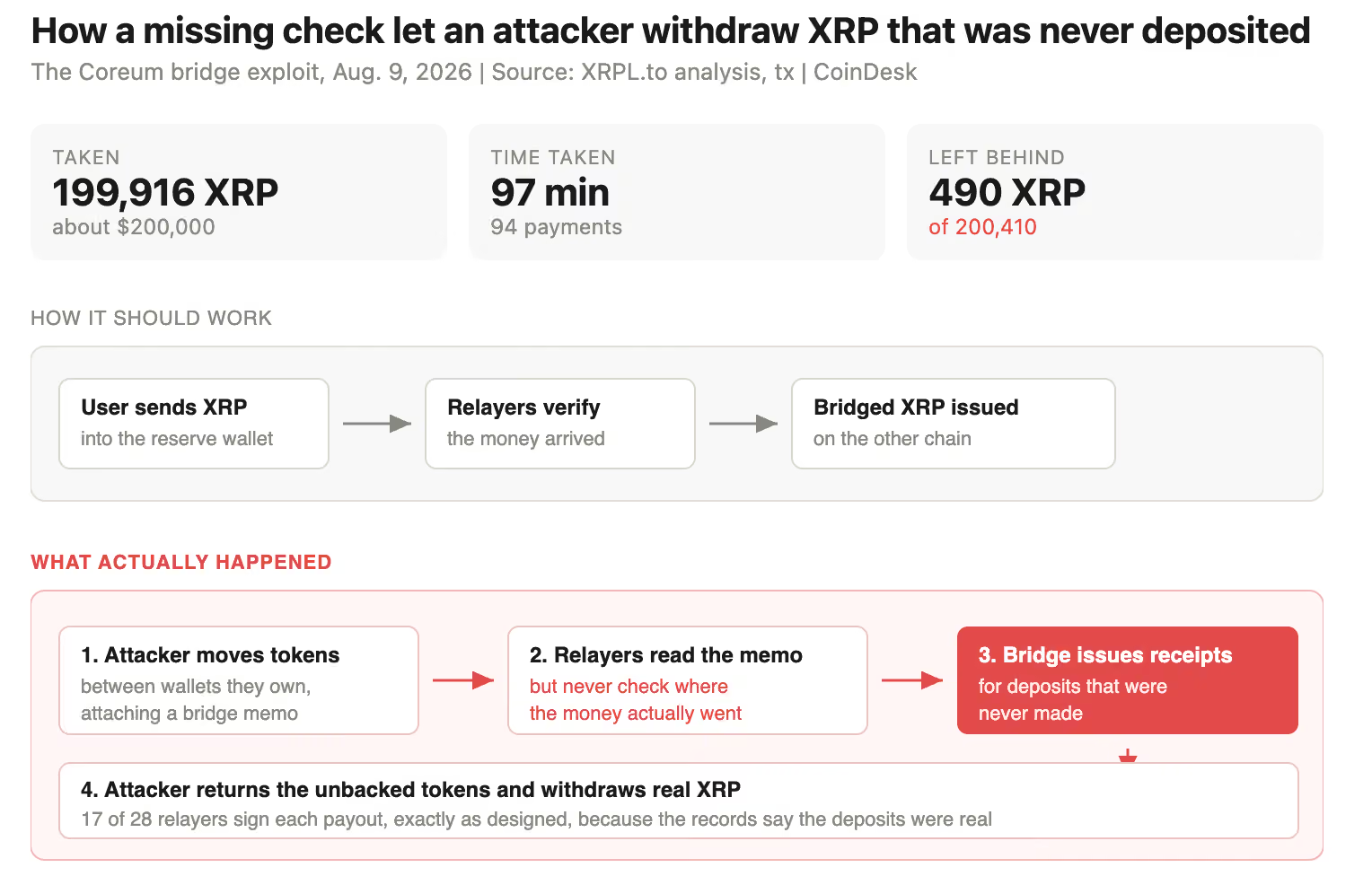
XRP bridge drained after software mistook fake deposits for real ones
-

 Sports5 days ago
DeQuan Jones in ‘high spirits’ after successful leg surgery
You must be logged in to post a comment Login