
Crypto World
Stablecoins account for most illicit crypto activity, FATF says



The Financial Action Task Force (FATF) said that “stablecoins are the most popular virtual asset used in illicit transactions,” including Iran and North Korea, and therefore calling for stricter oversight of stablecoin issuers in a 42-page report published Tuesday.
In January 2026, the global watchdog said it found stablecoins accounted for most illicit onchain activity. It estimated there was approximately $51 billion in illicit stablecoin activity relating to fraud and scams in 2024.
In its March 2026 report, the task force again warned dollar-pegged tokens have become a key vehicle for illicit finance. It cited a Chainalysis report that said stablecoins accounted for 84% of the $154 billion in illicit virtual asset transaction volume in 2025. The report highlighted cases involving North Korean and Iranian actors using stablecoins such as USDT for proliferation financing and cross-border payments tied to sanctioned activity.
TRM Labs released a report mid-February saying that in 2025, illicit entities received $141 billion in stablecoins, the highest level observed in five years. The report noted that overall stablecoin activity exceeded $1 trillion per month on several occasions last year. Sanctions-related activity accounted for 86% of illicit crypto flows, the report said, with bad actors mostly relying on stablecoin platforms.
The FATF said peer-to-peer transfers via unhosted wallets present a “key vulnerability” because these types of transactions can occur without anti-money laundering controls.
While stopping short of calling for blanket blacklisting, the FATF urged countries to impose anti-money laundering (AML) obligations on stablecoin issuers and consider requiring tools such as wallet freezing and banning or restricting functions embedded in smart contracts.
With stablecoins now exceeding $300 billion in market value, FATF warned regulators must act quickly to close compliance gaps as adoption accelerates.



The new unit will coordinate policy development and work alongside the SEC’s Crypto Task Force.
The U.S. Commodity Futures Trading Commission (CFTC) on Tuesday announced the formation of an Innovation Task Force aimed at developing clearer regulatory frameworks for crypto assets, artificial intelligence, and prediction markets within U.S. derivatives markets.
“By establishing a clear regulatory framework for innovators building on the new frontier of finance, we can foster responsible innovation at home and ensure American market participants are not left on the sidelines,” Chairman Michael Selig said in a statement.
The unit will operate alongside the CFTC’s Innovation Advisory Committee, which was formed in February and includes more than 30 executives, including Kalshi CEO Tarek Mansour and Nasdaq CEO Adena Friedman.
According to the agency, the task force will concentrate on crypto assets and blockchain technology, artificial intelligence and autonomous systems, and prediction markets and event contracts.
The task force will also coordinate with other federal bodies, most notably the SEC and its Crypto Task Force, as both agencies continue to align their regulatory postures.
Interagency Alignment
The announcement extends a run of coordinated action between the two regulators. Earlier this month, the SEC and CFTC signed a memorandum of understanding formalizing their commitment to jointly oversee the digital asset sector.
That MOU followed the SEC’s March 17 interpretive release — arguably its most consequential crypto guidance to date — which classified 16 major tokens, including BTC, ETH, and SOL, as digital commodities that fall outside the SEC’s jurisdiction and are under the purview of the CFTC. The CFTC said it would administer the Commodity Exchange Act consistently with that framework.
Selig had telegraphed much of this agenda at the Milken Institute on March 3, where he said the CFTC was “modernizing” its rules to accommodate DeFi protocols and on-chain market infrastructure.
Prediction Markets in Focus
The inclusion of prediction markets as a core pillar of the task force underscores the CFTC’s intensifying push to assert federal jurisdiction over the rapidly growing sector. The agency launched a sweeping review of prediction markets on March 12 via an advance notice of proposed rulemaking.
Selig has also taken a combative stance against state gaming regulators that have challenged prediction market platforms, filing a friend-of-the-court brief in February in support of Crypto.com against the Nevada Gaming Control Board and warning that the CFTC “will no longer sit idly by” while states undermine its exclusive jurisdiction.
The momentum has coincided with major commercial developments in the space. Last week, Major League Baseball named Polymarket its exclusive prediction market partner and signed its own information-sharing MOU with the CFTC — a first for a professional sports league and the derivatives regulator.
The task force also arrives days after the CFTC granted no-action relief to Phantom, allowing the self-custodial Solana wallet to connect users to derivatives trading through registered market participants without having to register as a broker.
This article was written with the assistance of AI workflows. All our stories are curated, edited and fact-checked by a human.

Spanish authorities have taken a significant step in a high-profile, crypto-linked abduction case by detaining a suspect in Benalmádena, Málaga province, under a European arrest warrant issued by France. The man is accused of involvement in the kidnapping and torture of Ledger co-founder David Balland, with attackers demanding a 10 million euro ransom.
Balland was abducted from his home in central France on January 21, 2025, and held in captivity until a police operation freed him on the night of January 22. The case has since evolved into a cross-border pursuit, drawing in French and Spanish investigators as they unravel a network tied to the crime. French authorities had previously identified and arrested other members of the group, with the remaining suspect believed to have fled to Spain to evade capture, according to Spain’s Civil Guard.
The Civil Guard’s statement underscored the scale and risk of the operation, noting the suspect’s dangerousness and the potential for the criminal organization to attempt a violent rescue. The suspect was located in Benalmádena after authorities traced movements across several Spanish provinces, a thread that points to a coordinated, pan-European effort to dismantle the group behind Balland’s capture.
The arrest marks a notable juncture in a case that has drawn attention for its intersection with the broader crypto-security landscape in Europe. It also reflects an ongoing pattern of cross-border policing cooperation aimed at disrupting communities that leverage crypto networks for illicit activities. Balland’s kidnapping, and the ransom demand, amplifies concerns around the safety of prominent figures in the crypto space and the vigilance required by startups and investors alike. Cointelegraph previously reported on Balland’s abduction and release in January 2025.
Key takeaways
- The suspect was detained in Benalmádena, Spain, under a European arrest warrant issued by France, linked to the Balland kidnapping case.
- David Balland, Ledger co-founder, was abducted from central France on January 21, 2025, and released by police on January 22, with a ransom demand of 10 million euros.
- Investigators traced the suspect’s movements across Valencia, Seville, and Cádiz before the arrest, including use of rental apartments and a third-party bank card to avoid detection.
- The arrest comes amid a broader wave of crypto-linked crime in France during 2025, including a June arrest campaign involving 25 suspects in crypto-related kidnappings and other related incidents.
- The case illustrates the growing security risks facing crypto figures and the value of cross-border cooperation in pursuing organized criminal networks tied to the crypto ecosystem.
Cross-border pursuit: from France to Spain
Authorities described a long-running, transnational chase that culminated in the suspect’s detention in the Andalusian town of Benalmádena. The operation required substantial resources due to the suspect’s perceived danger and the risk of intervention by associates who might attempt to free him. The investigation traced the individual through the Valencia region, where he lived with a partner and a friend, and noted that the group had minimized their footprint by renting apartments via online platforms and using a third party’s bank card to obscure financial links.
French investigators had already identified several other members of Balland’s attackers and pursued leads across borders. The French side has emphasized that the remaining suspect initially fled to Spain in an attempt to dodge capture, highlighting the challenges inherent in coordinating legal processes across jurisdictions in time-sensitive, violent-crime scenarios.
Crypto-linked crime in France: a mounting challenge
The Balland case sits within a broader pattern of crypto-linked criminal activity that tightened its grip on Europe’s crypto scene in 2025. In June, French authorities charged 25 suspects in a spree of kidnappings and attempted abductions targeting crypto executives and investors, according to reporting on the period. In another incident, a crypto user was abducted and held for hours in France, with attackers seeking cash and access to a hardware wallet containing a sum of funds. Earlier in the year, the daughter and grandson of Pierre Noizat, former CEO of Paymium, were targeted in an attempted abduction; the victims resisted and escaped. These events collectively elevated concerns about personal safety for crypto figures and the security of crypto-linked assets in real-world spaces.
As authorities pursue these investigations, industry observers are watching for how such criminal activity might influence security practices, governance standards at crypto companies, and the broader risk management landscape faced by the sector. For investors and builders alike, the trend underscores the necessity of robust physical and cyber risk controls, as well as ongoing collaboration with law enforcement to protect personnel and assets involved in the crypto economy. Cointelegraph has covered these developments as part of a wider conversation about security threats in the crypto space.
Implications for the ecosystem and what to watch next
The Benalmádena arrest reinforces the reality that crypto-linked crime extends beyond digital schemes into violent, real-world actions, and it tests the interoperability of European legal frameworks in urgent, cross-border contexts. Stakeholders should monitor how this case informs anti-kidnapping and asset-seizure protocols, as well as the sharing of intelligence between French and Spanish authorities and their counterparts across the EU. The ongoing investigation could yield new details about the operational methods of the criminal network, including how they leveraged crypto-related assets and platforms to finance or conceal their activities.
For the crypto industry, the episode is a reminder of the non-technical risks that surround high-profile figures and firms. As jurisdictions tighten oversight and enforcement actions expand, companies may increasingly emphasize contingency planning, staff security training, and clear incident response playbooks. Observers will also be watching for any further cross-border action tied to Balland’s case and related crypto-crime activity, and for how authorities weigh sanctions, asset tracing, and criminal network disruption in future prosecutions. Earlier coverage by Cointelegraph noted Balland’s abduction and subsequent release, and industry coverage continues to analyze how these developments intersect with regulatory and security dynamics across Europe.
Readers should stay attentive to updates from French and Spanish authorities as the investigation unfolds, and to how prosecutors frame charges or reveal new connections within the broader network involved in crypto-linked violence.


CESR, the Composite Ether Staking Rate, is emerging as Ethereum’s reference rate, underpinning swaps, futures and risk models as institutions chase transparent on‑chain yield.
Summary
- CESR, the Composite Ether Staking Rate, has emerged as a key benchmark for Ethereum staking yields, tracking the mean annualized return earned by active validators.
- The rate captures consensus rewards and priority transaction fees, and is now referenced by institutional derivatives products such as Rho Labs’ ETH staking rate swaps and futures.
- Market participants say CESR is laying the groundwork for a full forward rate curve in crypto, mirroring how LIBOR and SOFR underpin trillions of dollars in traditional finance.
The Composite Ether Staking Rate, or CESR, is rapidly becoming Ethereum’s reference rate, giving institutions a transparent benchmark for staking yields that can underpin loans, swaps and structured products across the crypto market. CoinDesk Indices and CoinFund describe CESR as “a global floating rate benchmark derived from the daily transaction fees and staking rewards emitted from the Ethereum Proof of Stake blockchain,” designed to serve as a neutral yardstick for on-chain income.
CESR sets a staking yield benchmark for Ethereum
The index captures all relevant block rewards paid to validators, including new ETH issuance, transaction fees and maximal extractable value, while also accounting for withdrawals and slashing, and is calculated and published daily, seven days a week.
Chris Perkins, president of CoinFund, called CESR “a defining institutional reference rate for the crypto asset class,” arguing that it can “spur investment product growth and new opportunities for risk management across global finance.” Alan Campbell, president of CoinDesk Indices, said the benchmark is “a foundational piece of infrastructure to crypto-asset markets,” noting that it builds on the firm’s experience running some of the longest-standing digital asset indices. Both executives frame CESR as crypto’s answer to classic interest-rate benchmarks, capable of becoming a new discount rate and allowing assets “across the digital domain to be priced as a relative investment to CESR.”
The benchmark is already being put to work. FalconX said it completed “the first fixed-floating interest rate swap on Ethereum staking yields using CESR,” using the index to hedge and trade the path of staking returns. Rho Labs has launched a liquid staking-rates market that references CESR, with the protocol’s first futures contracts allowing institutional counterparties to lock in fixed returns or speculate on future ETH staking yields. Rho founder Alex Ryvkin said CESR lets traders “manage risk from Ethereum staking yields and transaction costs more efficiently, and lock-in fixed rates of return,” adding that staking yields are “table stakes for serious ETH-based products and services.”
Treehouse Finance notes that CESR effectively captures the mean, annualized staking yield of Ethereum’s validator set, providing a standardized rate that can be slotted into risk models and pricing frameworks alongside traditional benchmarks. Lukka, a provider of institutional crypto data, has also partnered with CoinDesk Indices to distribute CESR to asset managers and analysts, emphasizing that the index incorporates deposits, withdrawals and penalties to deliver “a complete and reliable benchmark” for institutional use. As Perkins put it, “staking rates are to crypto what interest rates are to traditional financial markets,” and CESR is intended to unlock the “$500 trillion traditional rates markets across the crypto industry” by giving yield-focused investors a single, trusted reference point.
Lombard, a company building Bitcoin-based lending infrastructure, will team with Bitwise Asset Management to enable institutions to earn yield and borrow against Bitcoin (BTC) without moving assets out of custody, aiming to unlock hundreds of billions of dollars in Bitcoin held in institutional custody.
The partnership was announced Tuesday at the Digital Asset Summit in New York.
Jacob Phillips, CEO and co-founder of Lombard, told Cointelegraph:
The breakthrough is Bitcoin Smart Accounts—connecting two previously isolated worlds: institutional custody and onchain finance.
According to an announcement shared with Cointelegraph, Bitwise will develop yield strategies combining DeFi lending with tokenized real-world assets, while Morpho, a decentralized lending protocol, will provide the lending infrastructure for borrowing against Bitcoin.
The platform uses Bitcoin-native tools such as partially signed transactions and timelocks to verify collateral, allowing positions to be represented onchain without transferring or rehypothecating the underlying assets.
Rather than relying on bridges or wrapped assets, Phillips said “Bitcoin Smart Accounts eliminate all three risk vectors simultaneously,” addressing custody, bridge and counterparty risks that have historically limited institutional Bitcoin lending.
The offering targets high-net-worth individuals, asset managers and corporate treasuries seeking to put long-held Bitcoin positions to work without changing custody arrangements.
The rollout is expected in the second quarter of 2026, with Lombard planning to add more custodians and protocols to expand access across institutional Bitcoin holdings.
Phillips said the model could change how institutions approach Bitcoin allocations:
We’re moving Bitcoin from a pure store of value to productive institutional capital. That’s the shift.
That’s because Bitcoin in institutional portfolios has historically functioned as a passive store of value, he said, with limited options to generate yield or access liquidity without exiting custody, taking on counterparty risk or triggering taxable events.
Lombard estimates that $500 billion worth of the biggest crypto is held in institutional custody, much of which remains outside onchain financial markets.
Related: Sygnum Bank bets on Bitcoin lending with multisignature custody model
Bitcoin DeFi gains traction as vaults and lending expand
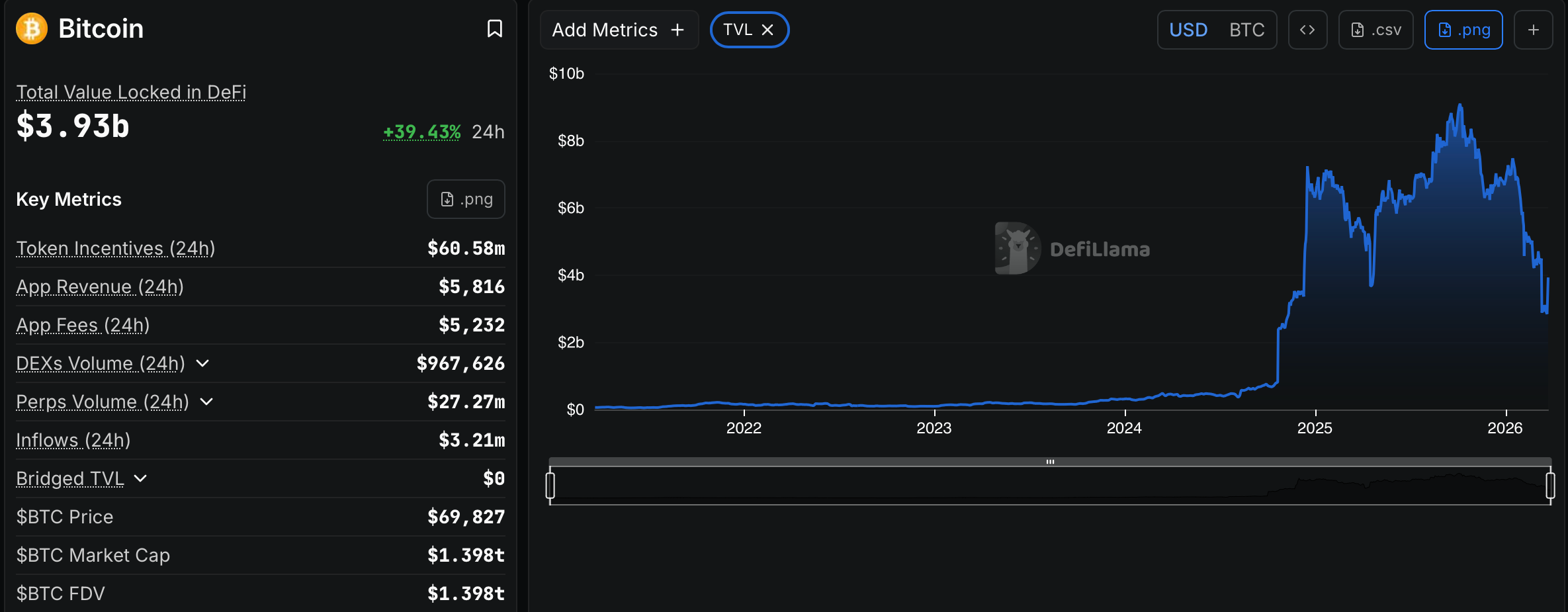
Data from DefiLlama shows Bitcoin’s total value locked in DeFi at roughly $2.93 billion, a small fraction of its approximately $1.4 trillion market capitalization. However, momentum is beginning to build as efforts to turn Bitcoin into a yield-generating asset gain traction.

One key driver is the rise of onchain vaults, which function like automated investment funds that deploy user capital across DeFi strategies. In January, Bitwise announced a tie-up with DeFi lending protocol Morpho to launch non-custodial vaults designed to generate yield through overcollateralized lending.
The trend has accelerated in recent months. In February, Telegram added yield-generating vaults to its built-in crypto wallet, allowing users to earn returns on Bitcoin, Ether and USDT within the app.
In March, Bitcoin staking protocol Babylon integrated with hardware wallet maker Ledger, enabling users to deploy BTC in financial applications while maintaining self-custody through hardware-based transaction signing.
At the time of writing, Babylon Protocol leads Bitcoin-based DeFi with about $2.8 billion in total value locked, while Lombard ranks second with around $744 million.
Magazine: Banks want to run Vietnam’s crypto exchanges, Boyaa’s $70M BTC plan: Asia Express
Crypto World
The $75,000 line in the sand: What it’ll take for BTC price to go “full bull”: Crypto Daybook Americas
By Omkar Godbole (All times ET unless indicated otherwise)
Bitcoin and the wider crypto market are pushing higher despite the geopolitical whiplash. While the resilience is impressive, a bullish trend change needs a firm move above $75,000.
On Monday, President Donald Trump disclosed a five-day delay in strikes on Iran, claiming talks are underway. That calmed markets and lifted bitcoin to over $71,000. The optimism did not last long. Iran quickly denied talks, and Israel continued its attacks on the country, which responded by targeting Tel Aviv overnight.
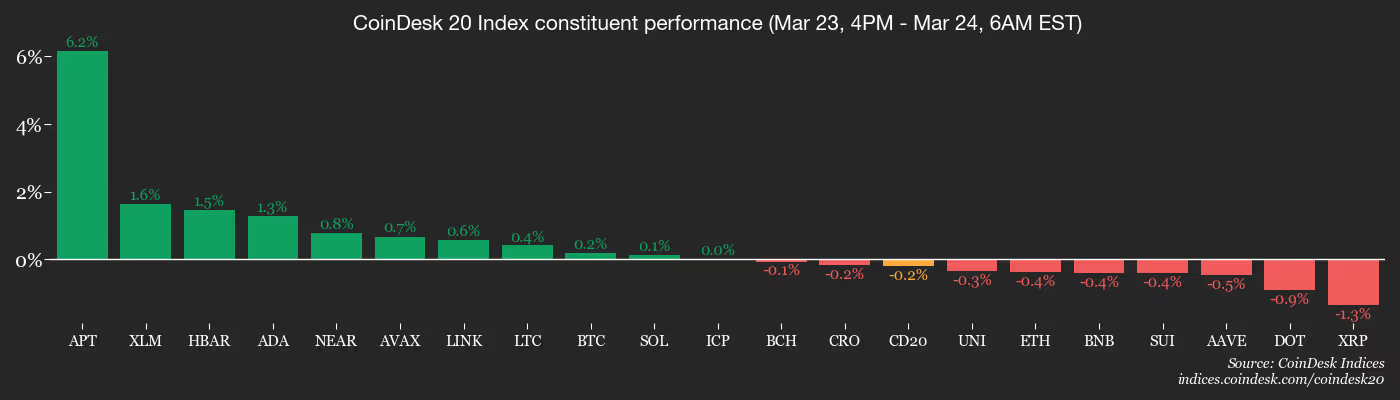
Still, bitcoin held steady and is looking to extend yesterday’s 4.47% surge, the biggest since March 4. Ether (ETH), XRP (XRP) and solana (SOL) are following BTC’s lead, as usual, alongside a 24-hour jump of 4% in the CoinDesk 20 Index.
Though the move higher is encouraging for bulls, the real test will be around $75,000, which has been a major turning point at least twice in the past 12 months. The March-April 2025 slide ran out of steam at around $75,000, while the early 2024 rally faced resistance there. Furthermore, $75,000 corresponds to key Fibonacci retracement levels.
“Although the leading cryptocurrency did not immediately capitalize on the upward momentum and extend its gains, simply remaining at these high levels now suggests confidence among the bulls. They are gradually developing a more optimistic outlook,” Alex Kuptsikevich, chief market analyst at the FxPro, said in an email.
“However, it would be premature to declare the end of the downtrend until prices settle above $75K, where the March pivot points and the 61.8% Fibonacci retracement level from the January-February decline are concentrated.”
In other words, a convincing move above $75,000 would confirm a bull revival. Solana’s SOL token, which is trading near $90, could emerge as a star performer in that case.
“Sol is the brighter spot. Near 91$, it is showing that risk appetite is not dead. The institutional privacy framework angle matters longer term because it is about making Sol tradable for bigger pools of capital, not just faster for retail,” Marex’s research team, led by crypto trading analyst Louis De Backer, said.
In the meantime, demand from crypto investors for traditional assets is pushing exchanges to expand their offerings, with a race underway to launch 24/7 stock perpetual futures. Today, OKX announced the launch of more than 20 equity perpetual swaps, giving traders round-the-clock exposure to some of the world’s most popular stocks.
In traditional markets, the focus remains on volatility in U.S. Treasury yields, which could cap upside in risk assets in the near term. Over time, sustained volatility may prompt intervention from the Federal Reserve, potentially setting the stage for a stronger risk-on environment. Stay alert!
Read more: For analysis of today’s activity in altcoins and derivatives, see Crypto Markets Today
What to Watch
For a more comprehensive list of events this week, see CoinDesk’s “Crypto Week Ahead“.
- Crypto
- Macro
- March 24, 8:15 a.m.: U.S. ADP Employment Change Weekly (Prev. 9K)
- March 24, 9:45 a.m.: U.S. S&P Global Composite PMI Flash for March (Prev. 51.9); Manufacturing PMI (Prev. 51.6); Services PMI (Prev. 51.7)
- March 24, 6:30 p.m.: Fed Gov. Michael Barr Speech on “Economic Outlook and Community Development” at National Community Investment Conference, Phoenix
- Earnings (Estimates based on FactSet data)
- March 24: GameStop (GME), post-market, $0.31
Token Events
For a more comprehensive list of events this week, see CoinDesk’s “Crypto Week Ahead“.
- Governance votes & calls
- Unlocks
- Token Launches
Conferences
For a more comprehensive list of events this week, see CoinDesk’s “Crypto Week Ahead“.
Market Movements
- BTC is up 0.57% from 4 p.m. ET Wednesday at $71,224.20 (24hrs: +4.30%)
- ETH is unchanged at $2,159.68 (24hrs: +5.85%)
- CoinDesk 20 is up 0.34% at 2,046.50 (24hrs: +4.15%)
- Ether CESR Composite Staking Rate is down 2 bps at 2.81%
- BTC funding rate is at 0.0063% (6.8602% annualized) on Binance

- DXY is up 0.34% at 99.29
- Gold futures are up 0.28% at $4,416.60
- Silver futures are up 1.44% at $70.04
- Nikkei 225 closed up 1.43% at 52,252.28
- Hang Seng closed up 2.79% at 25,063.71
- FTSE 100 is down 0.20% at 9,874.59
- Euro Stoxx 50 is down 0.47% at 5,548.16
- DJIA closed on Monday up 1.38% at 46,208.47
- S&P 500 closed up 1.15% at 6,581.00
- Nasdaq Composite closed up 1.38% at 21,946.76
- S&P/TSX Composite closed up 1.81% at 31,883.81
- S&P 40 Latin America closed up 2.07% at 3,222.70
- U.S. 10-Year Treasury rate is down 6 bps at 4.33%
- E-mini S&P 500 futures are down 0.18% at 6,623.00
- E-mini Nasdaq-100 futures are down 0.10% at 24,383.75
- E-mini Dow Jones Industrial Average futures are down 0.23% at 46,415.00
Bitcoin Stats
- BTC Dominance: 59.12% (0.07%)
- Ether-bitcoin ratio: 0.03033 (-0.06%)
- Hashrate (seven-day moving average): 983 EH/s
- Hashprice (spot): $33.61
- Total fees: 2.45 BTC / $171,175
- CME Futures Open Interest: 116,490 BTC
- BTC priced in gold: 16.1 oz.
- BTC vs gold market cap: 4.75%
Technical Analysis

- The chart shows ether’s daily price swings in candlestick format since May 2025.
- The ETH price appears stuck in a choppy back-and-forth trading range, within a broader bearish trend.
- A potential move past $2,440 would confirm a dual breakout, signaling a bullish shift.
Crypto Equities
- Coinbase Global, Inc. (COIN): closed on Monday at $200.62 (+1.58%), +0.78% at $202.18 in pre-market
- Galaxy Digital (GLXY): closed at $21.70 (+4.73%), +0.28% at $21.76
- MARA Holdings, Inc. (MARA): closed at $8.91 (+5.32%), +0.56% at $8.96
- Riot Platforms, Inc. (RIOT): closed at $14.37 (+7.40%), +0.42% at $14.43
- Core Scientific, Inc. (CORZ): closed at $16.58 (+4.87%), –0.18% at $16.55
- CleanSpark, Inc. (CLSK): closed at $9.98 (+6.17%), +0.50% at $10.03
- Exodus Movement, Inc. (EXOD): closed at $8.12 (+10.03%), unchanged in pre-market
- CoinShares Bitcoin Mining ETF (WGMI): closed at $39.40 (+4.56%), +0.15% at $39.46
- Circle Internet Group (CRCL): closed at $126.64 (+0.48%), –0.39% at $126.15
- Bullish (BLSH): closed at $39.55 (+4.16%), –0.96% at $39.17
Crypto Treasury Companies
- Strategy (MSTR): closed at $138.20 (+1.87%), +0.61% at $139.04
- Strive Asset Management, LLC (ASST): closed at $10.44 (+4.19%), –0.48% at $10.39
- Sharplink, Inc. (SBET): closed at $7.51 (+1.49%), unchanged in pre-market
- Upexi, Inc. (UPXI): closed at $1.17 (+10.38%), +0.85% at $1.18
- Lite Strategy, Inc. (LITS): closed at $1.18 (+0.85%)
ETF Flows
Spot BTC ETFs
- Daily net flows: $167.2 million
- Cumulative net flows: $56.38 billion
- Total BTC holdings ~1.29 million
Spot ETH ETFs
- Daily net flows: -$16.2 million
- Cumulative net flows: $11.74 billion
- Total ETH holdings ~5.8 million
Source: Farside Investors
While You Were Sleeping


BMO will let clients convert dollars into tokenized cash and deposits on CME and Google Cloud’s Universal Ledger, enabling 24/7 margin, collateral and B2B payments.
Summary
- Bank of Montreal announced on March 24 that it will introduce 24/7 tokenized cash capabilities built on CME Group’s network and Google Cloud Universal Ledger, making it the first bank to deploy CME’s tokenized cash solution on the platform.
- The initiative allows institutional clients to convert U.S. dollars into a tokenized instrument for use in derivatives, margin products, and round-the-clock settlement — with the full service targeted for H2 2026, pending regulatory approval.
- The announcement follows CME Group CEO Terry Duffy’s February disclosure that the exchange is evaluating its own digital token for collateral and settlement, reflecting a broader push to modernize the infrastructure underpinning the world’s largest derivatives marketplace.
Bank of Montreal (BMO), one of the largest banks in North America by assets, announced on March 24 that it will launch tokenized cash capabilities in collaboration with CME Group and Google Cloud, becoming the first bank to offer CME’s institutional tokenized cash solution on the Google Cloud Universal Ledger — a private, permissioned distributed ledger designed specifically for traditional financial institutions.
The platform allows BMO’s institutional clients to convert U.S. dollars into a tokenized instrument for use with margined products at CME Group, supporting high-value real-time settlement needs including margin calls, collateral movement, and derivatives trading — all on a 24/7 basis, free from the cutoff constraints of conventional banking infrastructure.
Two Products, Two Client Sets
BMO’s announcement introduces two distinct capabilities. The first — tokenized cash — is designed for mutual clients of CME Group and BMO operating in capital markets and commercial banking. The bank plans to offer this institutional settlement instrument to regulated financial services firms in the second half of 2026, subject to regulatory approval.
The second capability — tokenized deposits — is broader in scope. It will allow BMO to offer traditional commercial bank funds in digital form to a wider set of BMO clients, enabling general-purpose B2B payments, treasury movements, and programmable cash applications. Together, the two products represent a full-spectrum approach to digitizing dollar-denominated liquidity across institutional and commercial use cases.
The Infrastructure Behind It
The platform runs on Google Cloud Universal Ledger (GCUL), a programmable distributed ledger that CME Group and Google Cloud began piloting in March 2025 for secure wholesale payments and capital markets settlement. Following initial integration and testing, CME and Google Cloud had targeted 2026 for new service launches — BMO’s participation represents the first live institutional deployment of that infrastructure.
The timing is significant. CME CEO Terry Duffy had already signaled in February 2026, during the company’s Q4 earnings call, that CME was evaluating tokenized collateral frameworks and even exploring its own digital token for margin settlement. “So if you were to give me a token from a systemically important financial institution, I would probably be more comfortable than maybe a third or fourth-tier bank trying to issue a token for margin,” Duffy said, framing BMO’s participation as precisely the kind of bank-anchored model CME has been seeking.
Regulatory Momentum
The BMO announcement arrives as regulators have begun constructing frameworks to accommodate tokenized assets in derivatives markets. In December 2025, the CFTC launched a supervised pilot for tokenized derivatives collateral, allowing registered futures commission merchants to accept Bitcoin, Ethereum, USDC, and tokenized real-world assets as margin collateral under direct federal oversight. Industry leaders including Coinbase, Circle, and Ripple welcomed the move as a step toward faster, safer settlement.
BMO’s tokenized cash platform slots directly into that emerging regulatory architecture — a bank-grade, permissioned instrument designed to operate within the same capital markets rules that govern traditional futures and derivatives, while unlocking the round-the-clock settlement capabilities that crypto-native markets have long taken for granted.


NEW YORK — BNY Mellon CEO Robin Vince said the next phase of crypto adoption will depend on large financial institutions, arguing that banks are positioned to connect digital assets with the broader financial system.
“We can act as a very effective bridge between the traditional finance and the digital finance ecosystems,” Vince said during a conversation at the Digital Asset Summit in New York on Tuesday.
His comments come as long-established banks expand their role in digital assets after years of caution. BNY Mellon was among the first major custodians to offer digital asset custody, and Vince framed that move as part of a longer pattern of adopting new technologies. “We are a firm that’s grown up with a whole bunch of different technologies,” he said.
Rather than viewing decentralized finance as a replacement for banks, Vince pushed back on the idea that crypto will bypass incumbents. “A technology that’s in search of adopters can sometimes struggle, but we are an adoption vehicle,” he said, pointing to the bank’s existing client base and infrastructure.
That positioning allows the firm to support both sides of the market. “They look to us and say… you can actually be a bridge to us, the digital asset providers, through all the traditional things that you do,” Vince said.
He highlighted tokenization as a key area of focus, including work to create digital versions of traditional products. “We’ve created digital tokens, new share classes for money market funds,” he said, describing how existing funds can be issued in tokenized form to encourage adoption.
In the near term, he expects adoption to focus on areas where current systems fall short. “Loans are clunky. Real estate’s clunky,” he said, suggesting those markets may benefit first from tokenization.
‘Need clarity’
Still, Vince stressed that trust and regulation will shape how quickly the sector grows. “We need clarity and rules of the road,” he said. “That hesitancy slows adoption.”
His comments come as lawmakers are working to establish a regulatory framework for institutional investors to safely invest in the digital assets sector.
In the U.S., while the stablecoin-focused GENIUS Act has passed, a revised version of the Digital Asset Market Clarity Act is still in flux after lawmakers shared updated language with industry participants in a closed-door session on Capitol Hill this week, as they try to clear a path toward a Senate Banking Committee hearing.
Early feedback from crypto insiders suggests the draft’s approach to stablecoin yield remains a sticking point, with language described as narrow and unclear. The latest compromise, shaped in part by pressure from banks, would allow rewards tied to user activity but not interest on stablecoin balances, reflecting ongoing tension between the crypto industry and traditional lenders over how such products should be treated.
Vince added that safety and oversight remain critical for institutional participation. “If it’s the Wild West… the 90% of the financial services community… don’t want to have anything to do with it,” Vince said.
Even so, Vince cautioned that change will take time. “This will be a 5, 10, 15 year journey,” he said, adding that progress will depend on advances in technology, regulation and market participation.
“It’s all of the above,” Vince said. “That shouldn’t stop us from getting excited about getting going.”

Lombard, a project building Bitcoin-based lending rails, is joining forces with Bitwise Asset Management to give institutions a way to earn yield and borrow against Bitcoin without moving assets out of custody. The announcement, unveiled at the Digital Asset Summit in New York, introduces what Lombard calls Bitcoin Smart Accounts—a framework designed to bridge custody with on-chain finance and unlock capital tied up in sizable Bitcoin holdings.
Under the partnership, Bitwise will assemble yield strategies that blend DeFi lending with tokenized real-world assets, while Morpho, a decentralized lending protocol, will provide the on-chain lending infrastructure for borrowing against Bitcoin. The system relies on Bitcoin-native tools—such as partially signed transactions and timelocks—to verify collateral, allowing positions to be represented on-chain without transferring or rehypothecating the underlying assets. In Lombard’s view, this architecture addresses three major risk vectors that have historically constrained institutional Bitcoin lending: custody, bridges, and counterparty exposures.
“The breakthrough is Bitcoin Smart Accounts—connecting two previously isolated worlds: institutional custody and onchain finance,” said Jacob Phillips, CEO and co-founder of Lombard, during the announcement. The approach is designed to let high-net-worth individuals, asset managers, and corporate treasuries keep BTC in their trusted custody arrangements while still accessing yield and liquidity opportunities.
Phillips added that the model avoids triggering taxable events and eliminates the need to move Bitcoin across custody boundaries or expose assets to third-party risk. By representing positions on-chain without transferring the underlying coins, the system aims to preserve the security and control that institutions demand while enabling on-chain efficiency and programmability.
The rollout is slated for the second quarter of 2026, with Lombard planning to expand the ecosystem by incorporating additional custodians and DeFi protocols to broaden access to institutional Bitcoin holdings. “We’re moving Bitcoin from a pure store of value to productive institutional capital. That’s the shift,” Phillips said, framing the change as a tectonic rethinking of how Bitcoin is managed within large balance sheets.
From a market perspective, the development arrives amid a broader conversation about Bitcoin’s role beyond passive hodling. Lombard has estimated that roughly $500 billion worth of Bitcoin sits in institutional custody, much of which remains outside the reach of on-chain markets. If the model scales as envisioned, it could effectively reintroduce a large tranche of this capital into the on-chain financial ecosystem without forcing a custody break for the asset owners.
In terms of context, the Bitcoin DeFi space remains a relatively small sliver of the broader crypto market. Data tracked by DefiLlama places Bitcoin’s total value locked (TVL) in DeFi at about $2.93 billion, a tiny fraction of Bitcoin’s roughly $1.4 trillion market capitalization. Yet the momentum behind on-chain yield strategies has begun to pick up, with several high-profile initiatives in recent months illustrating a broader push to monetize BTC holdings through decentralized finance while preserving custody.
Notably, the push toward on-chain BTC yield and lending has been aided by a wave of vault-style products and automated investment strategies. In January, Bitwise announced a tie-up with Morpho to launch non-custodial vaults designed to generate yield through overcollateralized lending. The trend gathered further steam in February when Telegram added yield-generating vaults to its in-app wallet, enabling users to earn returns on Bitcoin, Ether, and USDT within the app. In March, Babylon Protocol integrated with Ledger to enable users to deploy BTC in DeFi applications while maintaining self-custody through hardware-based transaction signing.
Within this evolving landscape, Babylon Protocol appears to lead in Bitcoin-based DeFi TVL, with around $2.8 billion, according to Cointelegraph’s coverage, while Lombard sits in second place with approximately $744 million. The field is still nascent relative to the scale of Bitcoin’s custody footprint, but the trajectory suggests growing appetite from institutions and large holders to deploy BTC in yield-generating strategies without relinquishing custody.
For readers tracking the broader regulatory and product-quality implications, the Lombard announcement sits alongside a spectrum of custody-resilient lending experiments in the sector. Other institutions have explored multisignature custody and on-chain lending models as a way to reduce risk while expanding access to on-chain liquidity. Notably, Sygnum Bank has publicly pursued a Bitcoin lending approach built on multisignature custody, signaling that traditional financial players are increasingly comfortable with on-chain, trustless collateral frameworks. Sygnum’s initiative illustrates the broader convergence between institutional custody concepts and DeFi-style lending rails.
Key takeaways
- Bitcoin Smart Accounts unify custody and on-chain finance. The approach enables yield generation and borrowing against BTC without moving coins out of custody, using Bitcoin-native tools to verify collateral on-chain.
- Bitwise and Morpho anchor the initiative. Bitwise will develop yield strategies that blend DeFi lending with tokenized real-world assets, while Morpho provides the lending infrastructure.
- Rollout targets a 2026 timeline with expansion plans. The second quarter of 2026 marks the initial rollout, with plans to add more custodians and protocols to broaden access for institutions.
- Institutional BTC could migrate from store-of-value to productive capital. If scalable, the model could change how treasuries and asset managers view BTC allocations, potentially increasing liquidity and yield without custody changes.
- On-chain BTC DeFi remains nascent but shows expanding activity. DefiLlama tracks roughly $2.93 billion in BTC DeFi TVL, with leaders including Babylon Protocol (~$2.8B) and Lombard (~$744M), underscoring growth as vaults and lending options proliferate.
Bitcoin Smart Accounts: bridging custody and on-chain finance
The core concept relies on Bitcoin-native verification schemes rather than bridging or wrapping BTC across networks. Partially signed transactions and timelocks help ensure that collateral can be secured and represented on-chain without transferring the underlying coins. In Lombard’s framing, this reduces or eliminates custody risk, bridge risk, and counterparty exposure that have traditionally plagued on-chain Bitcoin lending.
The rhetoric around this approach centers on turning a largely passive asset into a dynamic treasury tool. If institutions can earn yield and access liquidity without disrupting their custody posture, Bitcoin could become a more versatile component of corporate treasuries, family offices, and asset managers’ portfolios.
DeFi vaults and Bitcoin yield expand across the ecosystem
The broader DeFi landscape on Bitcoin has evolved through vault-like products that automate capital deployment across on-chain strategies. In addition to Bitwise’s vault initiative with Morpho, other high-profile deployments have demonstrated how non-custodial strategies can produce yields while preserving self-custody or controlled custody arrangements. The growth of vaults and the emergence of yield-generating mechanisms on Bitcoin signal a shift in how the asset is perceived by sophisticated investors.
Looking ahead, the collaboration between Lombard, Bitwise, and Morpho could accelerate this trend by providing institutional-grade rails that combine custodial security with on-chain efficiency. The goal is not simply higher yields but a more integrated framework where Bitcoin can be deployed into DeFi protocols and tokenized assets without sacrificing trust, control, or regulatory comfort.
For readers watching the regulatory horizon, the success of such initiatives will depend on clear compliance pathways, tax treatment for on-chain positions, and the ability of custodians to adapt their risk and reporting frameworks to these novel mechanisms. Nevertheless, the momentum toward Bitcoin as a productive asset within institutional portfolios appears to be gathering pace, with the potential to reshape treasury management and liquidity strategies in the coming years.
As the industry tests Bitcoin Smart Accounts and similar constructs, observers will be watching not only for the technical viability but also for how custodians, regulators, and fund managers respond to the prospect of billions of dollars in on-chain Bitcoin activity that remains linked to traditional custody arrangements. The second-quarter 2026 rollout will serve as a critical inflection point to gauge adoption, performance, and the practical realities of integrating on-chain finance into institutional Bitcoin holdings.
Readers should keep an eye on how custodians respond to the new framework, how yield trajectories compare with existing custody-based products, and what the regulatory environment will allow in terms of on-chain representations of custody-backed positions. If the model proves scalable, it could redefine Bitcoin’s role in institutional finance and set a precedent for other asset classes seeking similar on-chain, custody-resilient yield opportunities.
Crypto World
Why DeepSnitch AI Is Getting Early Attention in AI Circles for a Potential 100x While Ionix Lags and Ozak Faces Competition in Its Niche

The AI crypto trend 2026 has seen the rise of several AI presales. However, DeepSnitch AI is the project investors won’t stop talking about because it’s already delivering real utility, while competitors remain theoretical.
Ionix is still building its AI blockchain infrastructure, while Ozak AI faces accuracy challenges with its predictive tools. On the other hand, DeepSnitch AI ($DSNT) provides a live intelligence platform that traders can use right now.
Over $2.4 million has already been raised at stage 7 presale at $0.04577 per token. DeepSnitch AI is creating early buzz within AI circles, as many recognize the project’s early potential and position themselves for 100x upside.
Deloitte and Stablecorp partner for Canadian stablecoin infrastructure
Deloitte Canada and Toronto-based fintech Stablecorp are collaborating to build institutional infrastructure for QCAD. This is a stablecoin pegged 1:1 to the Canadian dollar.
This partnership aims to integrate digital assets into payment and settlement workflows for banks and financial firms. The initiative focuses on enabling 24/7 transactions, transparency through blockchain recordkeeping, and improving settlement efficiency compared to traditional systems.
This move aligns with the Canadian government’s progress on Bill C-15, a federal framework designed to regulate fiat-backed digital assets. While no specific bank partners or timelines were disclosed, the project signals a shift in national policy.
DeepSnitch AI is turning heads in AI circles amid 100x predictions
Insiders are flocking to DeepSnitch AI within AI circles. It comes down to one simple difference: most AI presale projects are still promising future tools. Meanwhile, DeepSnitch AI already has a working intelligence platform that users can access today. It’s not building on hype. Instead, it’s deploying tools that traders can actually use in real time.
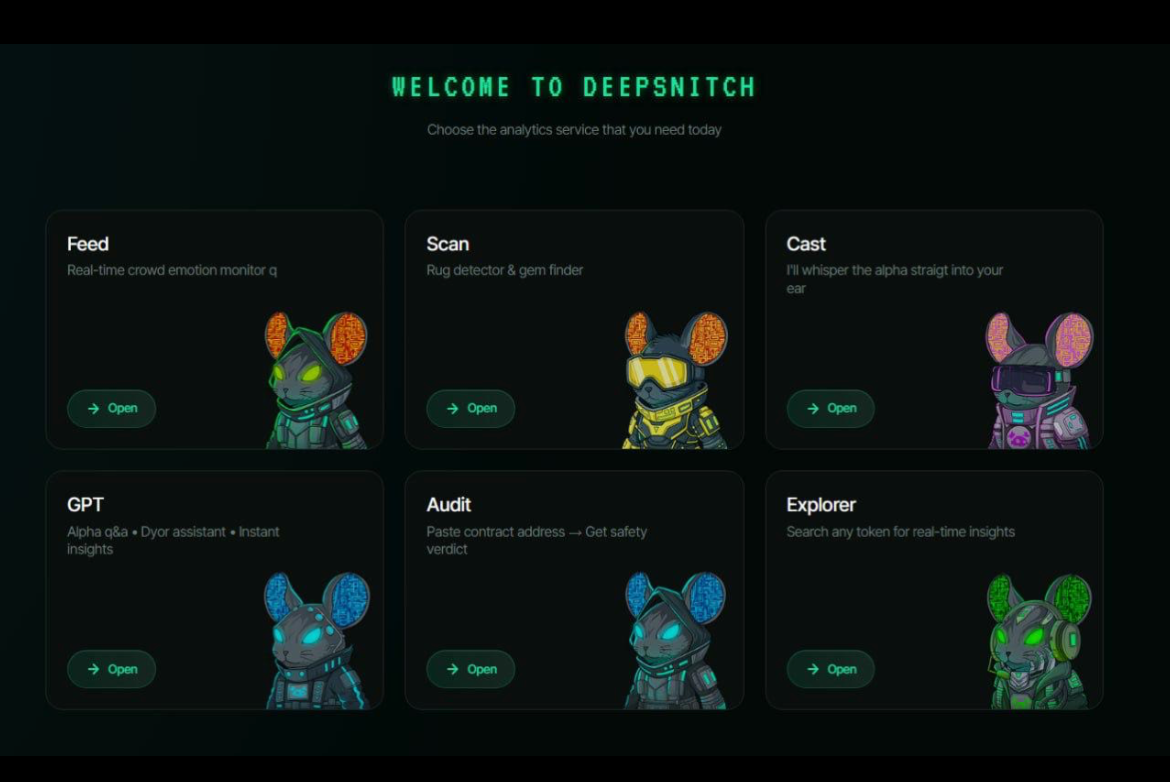
The DeepSnitch AI crypto narrative is impressive. The platform operates as a verification and intelligence layer for the crypto market. Using five specialized AI agents, it tracks critical market movements and reports them in real time. This kind of automation is becoming increasingly important as the market grows more complex.
Its dashboard is designed to be simple enough that even someone new to crypto can understand what’s happening without having to dig through complicated data.
With the presale now in stage 7 at $0.04577, the project is approaching its March 31 presale deadline. After a seven-day claim period, $DSNT is scheduled to launch on Uniswap, which is another reason DeepSnitch AI is the talk of AI and crypto circles.
Many are anticipating a 100x rally considering its unique positioning in the crypto market. If $DSNT delivers, early entry will be what separates the millionaires from those who watched from the sidelines.
Ionix builds AI blockchain infrastructure, but adoption may take time
Ionix is one of the rising AI crypto blockchain projects. It’s focused on building an AI-powered Layer-1 blockchain designed to improve scalability and smart contract performance.
The idea sounds novel and could be truly valuable. However, infrastructure projects often face long development cycles.
That process can take years, not months. This means that investors are banking on a future that’s not yet certain. However, DeepSnitch AI is already operational, providing users with real-time intelligence. This is why DeepSnitch AI is the AI play everyone’s watching.
Ozak AI focuses on predictions, but prediction tools face accuracy pressure
Ozak AI is building a predictive analytics ecosystem powered by machine learning. Predictive AI is a popular AI crypto narrative. However, prediction tools are only as valuable as their accuracy.
Traders also often use multiple data sources rather than relying on a single platform. This makes the space highly competitive and performance-dependent over time.

However, DeepSnitch AI takes a different approach by focusing on verification. This gives it a more practical, daily-use case for traders who need reliable data before making decisions.
Conclusion
DeepSnitch AI’s early growth and live platform explain why DeepSnitch AI is the hidden gem AI insiders are talking about. While Ionix and Ozak AI are still building, DeepSnitch AI is already delivering actionable intelligence to traders today.
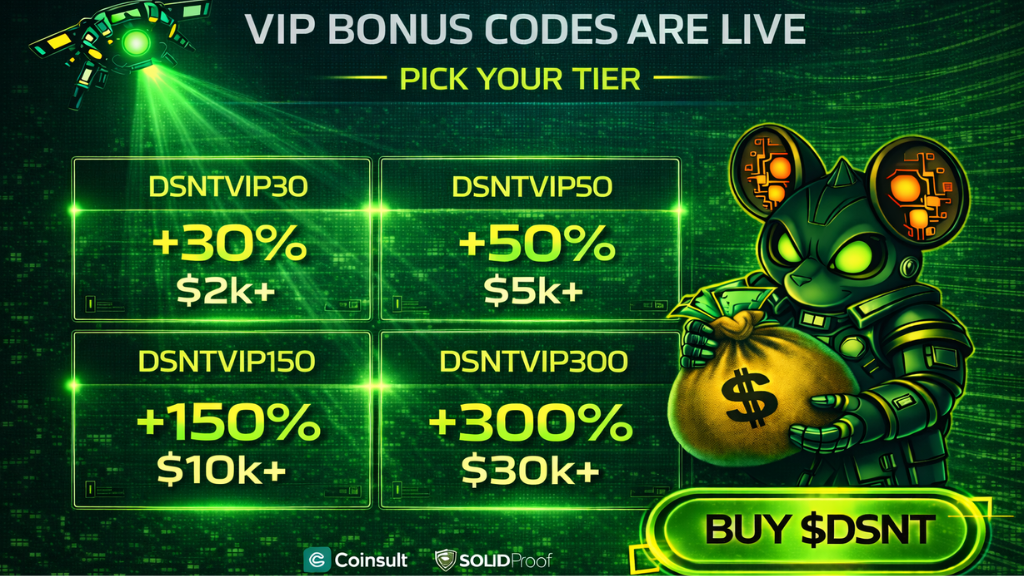
With the presale ending March 31 ahead of the Uniswap launch, strategic buyers can leverage bonus tiers to increase their positions. A $5,000 allocation currently secures 109,241 $DSNT tokens. It rises to 163,861 tokens with the 50% bonus.
With adoption growing, DeepSnitch AI offers one of the clearest paths to potentially 100x returns for early participants.
Visit the official website today and join the community on X and Telegram to stay on track.
Why is DeepSnitch AI getting noticed in AI circles?
DeepSnitch AI is winning over crypto AI circles as a live intelligence platform, even though it’s still in presale. However, other AI crypto presales are still in development, making it a practical investment for early participants.
How does DeepSnitch AI differ from other AI blockchain projects?
Unlike many AI blockchain projects, DeepSnitch AI emphasizes verification, risk detection, and wallet intelligence. Its live platform gives traders reliable data daily, rather than relying on theoretical tools or slow adoption cycles.
What AI crypto stands out amidst the current AI crypto trend in 2026?
Amidst the AI crypto trend 2026, DeepSnitch AI stands out as a project that is already live and delivering results. While other projects are promising tools for the future, $DSNT offers working intelligence agents, giving it a clear edge for traders and investors.
Disclaimer: This is a Press Release provided by a third party who is responsible for the content. Please conduct your own research before taking any action based on the content.



Private credit giant Apollo Global Management capped withdrawals on Monday. As a group, retail investors were able to take out just 45% of the money they’d originally asked to withdraw.
Escalating a well-publicized crisis in private equity and credit, Apollo is the sixth major asset manager this year to tell investors they need to slow down their withdrawal requests.
Apollo Debt Solutions, a non-publicly traded credit company with a net asset value of about $15 billion, received redemption requests exceeding 11% of its outstanding shares in the first quarter.
The fund enforced a 5% quarterly cap and returned roughly $730 million of the more than $1.5 billion in requests it received. Redeeming investors received less than half of the full disbursements they requested.
Private credit peers Blackstone and Blue Owl have also been restructuring their withdrawal policies under pressure. Apollo held its 5% withdrawal limit.
Apollo joins Blackstone, BlackRock, Blue Owl Capital, Morgan Stanley, and Cliffwater in gating investor withdrawals this quarter.
The industry sold these funds to individuals as a path to “democratization” of institutional-grade yields.
In fact, private equity (PE) and private credit companies merely democratized purchases by regular people who often didn’t understand that PE managers can choose the valuations of their assets with far less oversight and regulatory obligations than public fund managers.
Because the valuations of these assets occur privately, there’s no real-time price-seeking mechanism to determine the proper valuation of these assets.
As such, PE managers typically mark-up their assets consistently, quarter after quarter, until they suddenly plunge in value during a crisis or liquidity crunch, such as the current Iran war or AI-induced layoffs.
Because it’s impossible to sell out of these credit and equity instruments on secondary exchanges, investors may only request redemptions quarterly.
However, funds typically cap total withdrawals at 5% of their net asset value per quarter. If more people want out than the cap allows, everyone gets a haircut on their redemption request.
The problem, therefore, is structural. The underlying loans are illiquid and artificially marked-up. The quarterly redemption window created an illusion of liquidity for a small number of withdrawal requests that doesn’t match the immense size of the assets.
This is seen particularly during any type of bank run-type scenario where withdrawal requests arrive en masse.
About 80% of traditional private credit investors are institutions, according to JP Morgan, yet many retail investors have joined them in recent years.
Main Street investors, who piled in chasing yields of 8% to 10%, have far less patience.
PE giant Blue Owl, for example, drew roughly 40% of its over $300 billion in assets from individuals, according to Fortune.
Blackstone’s Private Credit Fund recorded a record 7.9% redemption request totaling nearly $4 billion. Blackstone actually raised its quarterly cap to 7% and injected $400 million of its own capital to help calm some of that panic.
Equally alarming, BlackRock’s $26 billion HPS Corporate Lending Fund received $1.2 billion in withdrawal requests, or 9.3% of assets, and paid out $620 million.
Morgan Stanley’s North Haven Private Income Fund received requests for over 10% of shares and capped payouts at 5%.
Cliffwater’s $33 billion flagship fund saw the worst of it. Investors demanded 14% of shares back. The firm slashed that in half to a 7% limit.
Blue Owl nearly went off the deep end. In February, the firm permanently halted quarterly redemptions from its retail-focused Blue Owl Capital Corp II.
Read more: Tether: Ten years, 100,000,000,000 USDT, and still no audit
The wave of redemptions has many causes, not least of which is a sudden realization that PE managers have broad discretion to mark-to-market values of assets with little to no secondary market transactions forcing them to properly or conservatively value those holdings.
Moreover, there are fears that AI will trigger sudden job losses this year, creating a bank run-type scenario by fixed income investors.
The escalating war in Iran is also not helping.
Private credit funds loaded up on loans to mid-sized software firms during the boom years, as well, which are now at risk due to AI. Justifiably, investors now question how good those loans are.
The private credit default rate reached 5.8% through January 2026, according to Fitch. That’s the highest since the index launched.
UBS has warned that severe AI disruption could push defaults to 13%.
Wall Street spent years pitching private credit as a better way to optimize yield. Now investors are feeling the pinch of illiquidity and mark-to-market valuations.
You can always check in, but you can’t always check out.
Got a tip? Send us an email securely via Protos Leaks. For more informed news, follow us on X, Bluesky, and Google News, or subscribe to our YouTube channel.

Which Country Does The USA Owe Nore Money To? #shorts #money #usa #world #debt

Damian Hunter jailed for assaulting Scarborough sister

FLSmidth & Co. A/S (FLIDY) Shareholder/Analyst Call Transcript


-
 Crypto World4 days ago
NIO (NIO) Stock Plunges 6.5% as Shelf Registration Sparks Dilution Worries
-

 Fashion4 days ago
Weekend Open Thread: Adidas – Corporette.com
-

 Politics4 days ago
Jenni Murray, Long-Serving Woman’s Hour Presenter, Dies Aged 75
-

 Crypto World3 days ago
Best Crypto to Buy Now: Strategy Just Spent $1.57 Billion on Bitcoin During Fear While Early Investors Quietly Enter Pepeto for 150x Potential
-

 News Videos6 days ago
RBA board divided on rate cut, unusually buoyant share market | Finance Report | ABC NEWS
-

 Crypto World3 days ago
Bitcoin Price News: Bhutan Sells $72 Million in BTC Under Fiscal Pressure, but the Smart Money Entering Pepeto Sees What the Market Does Not
-

 Politics6 days ago
The House | The new register to protect children from their abusers shows Parliament at its best
-

 Tech5 days ago
inKONBINI Lets You Spend Summer Days Behind the Register
-

 Crypto World6 days ago
Canada’s FINTRAC revokes registrations of 23 crypto MSBs in AML crackdown
-

 Sports1 day ago
Remo Stars and Kano Pillars Strengthen Survival Hopes in NPFL
-
 NewsBeat6 days ago
Residents in North Lanarkshire reminded to register to vote in Scottish Parliament Election
-

 News Videos6 days ago
PARLIAMENT OF MALAWI – PAC MEETING WITH REGISTRAR OF FINANCIAL ON AMARYLLIS HOTEL – INQUIRY LIVE
-

 Politics5 days ago
Gender equality discussions at UN face pushbacks and US resistance
-

 Business2 days ago
No Winner in March 21 Drawing as Prize Rolls to $133 Million for Next
-

 Business6 days ago
Who Was Alex Pretti? 5 Key Facts About the ICU Nurse Killed by Federal Agents in Minneapolis
-

 Sports1 day ago
Gary Kirsten Accuses Pakistan Cricket Board Of ‘Interference’, Mohsin Naqvi Responds
-

 Tech2 days ago
Give Your Phone a Huge (and Free) Upgrade by Switching to Another Keyboard
-

 Sports4 days ago
2026 Kentucky Derby horses, odds, futures, preview, date: Expert who nailed 12 Derby-Oaks Doubles enters picks
-
Sports5 days ago
Vikings Free Agency Enters Phase 2 with Key Questions
-

 Tech7 days ago
Subnautica 2 might finally be entering early access in May
You must be logged in to post a comment Login