
Crypto World
Stablecoins Surpass Nations as Major U.S. Treasury Holders After GENIUS Act


TLDR:
- Tether holds $141B in U.S. Treasury exposure, ranking it 17th among all global government debt holders.
- The GENIUS Act legally requires stablecoin issuers to back every token with T-bills or dollar equivalents.
- China cut $86B in Treasury holdings as Japan signals drawdown, opening demand gaps stablecoins now fill.
- Apollo projects the stablecoin market could hit $2 trillion by 2028, potentially surpassing Japan’s Treasury position.
Stablecoins have quietly become a structural component of U.S. monetary policy. Tether and Circle now hold over $160 billion in U.S. Treasury securities combined.
That total places both companies above sovereign nations, including South Korea, Germany, and Saudi Arabia. A decade ago, neither existed in any meaningful financial capacity. Today, they rank among the most consistent buyers of American government debt on the planet.
The GENIUS Act Turned Stablecoin Reserves Into a Treasury Buying Mandate
The GENIUS Act, signed into law last year, reshaped how stablecoin issuers manage their reserves. The legislation requires each stablecoin token to be backed 1:1 with verified reserves.
Those reserves must be held in U.S. dollars, Treasury bills, or short-duration equivalent instruments. Congress did not only regulate stablecoins as it also created a legal mandate to buy Treasuries at scale.
Tether currently holds $141 billion in total U.S. Treasury exposure under this structure. Of that amount, $122 billion is held directly in T-bills.
The remaining portion is parked in overnight reverse repurchase agreements. That positions Tether as the 17th largest holder of U.S. government debt worldwide.
Circle’s USDC adds another $24.5 billion in Treasury reserves to the broader picture. About 93% of Circle’s total reserves sit in overnight repos and short-term government securities.
As TFTC noted on X, “Congress didn’t just regulate stablecoins. It created a legal mandate to buy Treasuries at scale.” Together, both issuers have become a growing class of captive Treasury buyers.
Tether also reported $10 billion in profit through the first three quarters of 2025. That result surpassed Bank of America’s earnings for the same period.
It also nearly matched figures posted by both Goldman Sachs and Morgan Stanley. Tether reached that level with a workforce of approximately 300 employees.
Stablecoins Fill the Demand Gap as Traditional Foreign Buyers Pull Back
China reduced its Treasury holdings by $86 billion over the past year. Its current position has fallen to the lowest level recorded since 2008.
Japan, the largest foreign holder at $1.2 trillion, is also signaling a slow drawdown. The traditional foreign buyer base for U.S. government debt is gradually narrowing.
Stablecoins are absorbing a share of that demand in real time. Every dollar minted as USDT or USDC creates automatic buying pressure for U.S. government securities.
The dollar also gets distributed globally through crypto payment rails. This mechanism extends dollar dominance without relying on traditional diplomatic or military tools.
Apollo estimates the stablecoin sector could reach $2 trillion by 2028. At that scale, stablecoin issuers would hold more Treasuries than Japan currently does.
TFTC stated that “the U.S. government now has a structural incentive to grow the stablecoin market.” That incentive is now embedded directly into federal legislation.
The growth of stablecoins serves both crypto markets and the broader U.S. fiscal structure. Each new token minted adds to Treasury demand in a measurable and automatic way.
This dynamic was not present in any meaningful form just five years ago. Stablecoins now function as one of the most reliable buyers of American sovereign debt.


Brazil’s Finance Minister, Dario Durigan, is putting crypto tax policy on the back burner until after the country’s presidential elections in October 2026 to avoid pushing for “divisive” tax changes during an election year.
Regulators and government officials originally slated a public consultation on crypto tax policy for later this year, which may be delayed until 2027, but still “remains on the radar,” sources familiar with the matter told Reuters.
Brazil ended its no tax policy on gains from smaller cryptocurrency sales or transfers in June 2025, shifting to a 17.5% flat tax on crypto capital gains, including those made from offshore and self-custodial holdings.
Under the previous rules, residents who sold up to 35,000 Brazilian real, equivalent to about $6,587, per month were exempt from capital gains taxes on any profits, and investors who surpassed this threshold were subject to progressive tax rates between 15% and 22.5%.
In November 2025, Banco Central do Brasil, the country’s central bank, published rules that treat stablecoin transfers as foreign currency exchange, subject to the same tax laws.
The Brazilian government is also eyeing proposals to tax cryptocurrencies used for international payments and is aligning its reporting rules to be consistent with regulations under the Crypto-Asset Reporting Framework (CARF), an international monitoring standard for crypto transactions.
The decision to place the crypto tax consultation on hiatus comes during a time when the South American country is rapidly adopting crypto, and the industry is growing in Brazil.
Related: Brazil’s Pix instant payment system expands to Argentina
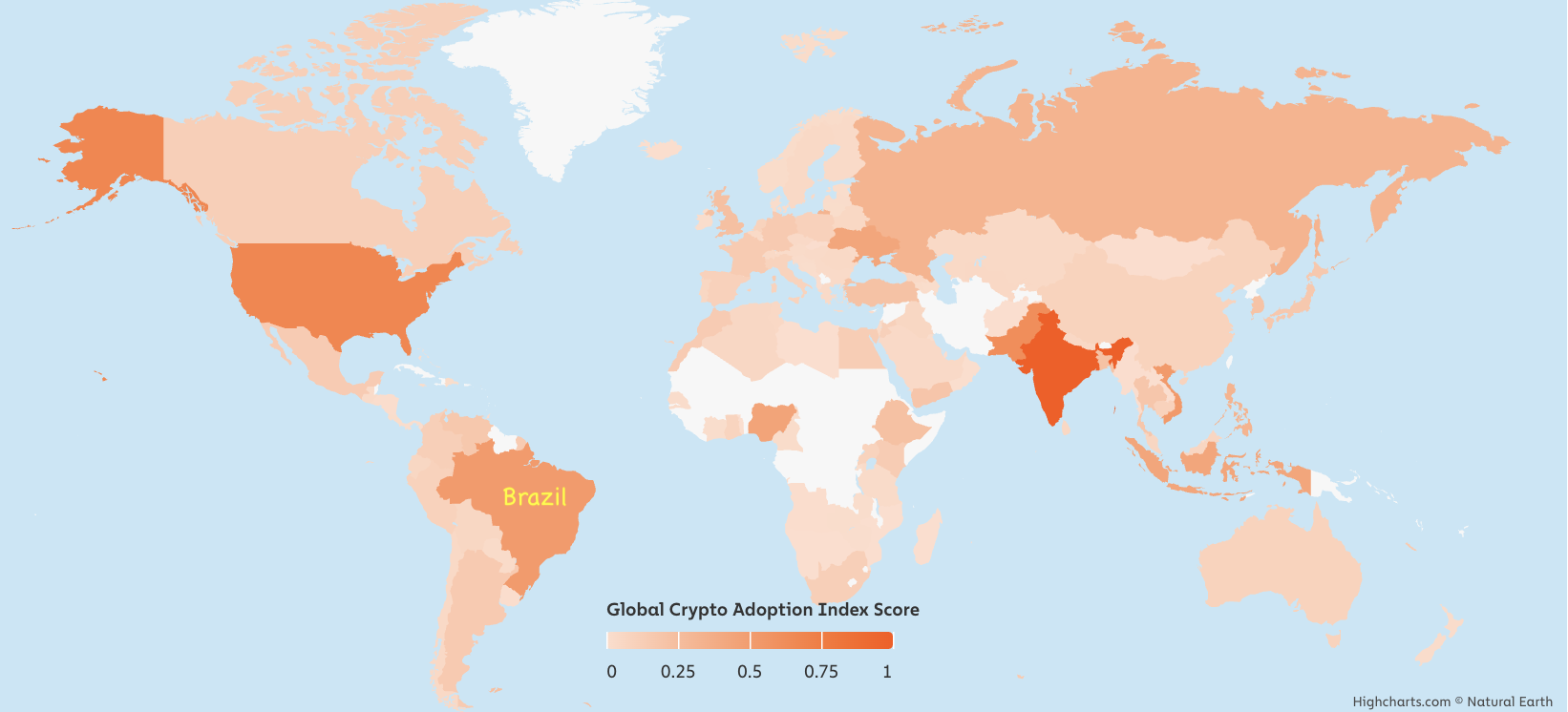
Brazil is one of the top countries in the world for crypto adoption
Brazil ranks number five on Chainalysis’s crypto Global Adoption Index and ranks number one in terms of adoption in the Latin America region.

The country has a population of over 213 million people, with a median age of 33.5 years, and over 91% of the population lives in urban areas, according to data from Worldometer.
In 2025, “Latin America’s crypto adoption grew by 63%, reflecting rising adoption across both retail and institutional segments,” according to Chainalysis.
Magazine: ‘Painful to think about’: NFT Creator Nate Alex on selling 70 CryptoPunks too early
Crypto World
Bitcoin Price News: Bhutan Sells $72 Million in BTC Under Fiscal Pressure, but the Smart Money Entering Pepeto Sees What the Market Does Not

The bitcoin price news this week shows what happens when a sovereign nation becomes a forced seller. Bhutan’s state investment arm transferred 973 BTC worth $72.3 million in a single day, dropping its holdings from 13,295 BTC at peak to just 4,400 BTC according to The Crypto Basic.
What was once worth $1.5 billion is now $330 million. Bhutan did not have the choice to wait. Sovereign holders face fiscal demands that make them structural sellers at the worst possible times. The BTC price news looks rough on the surface.
Below it, the wallets that always profit during fear are entering a presale that the broader market has not priced in yet.
Bhutan’s state investment arm Druk Holding transferred 973 BTC worth $72.3 million in a single day on March 17, continuing a drawdown that has cut the kingdom’s holdings from 13,295 BTC at peak to roughly 4,400 BTC according to The Crypto Basic.
The selling appears driven by fiscal need, not strategy, with funds directed toward infrastructure projects including Gelephu Mindfulness City. Bhutan has now sold over $110 million in BTC this year alone according to FinanceFeeds.
Sovereign sellers are structurally different from retail or institutions because they sell regardless of price. The bitcoin price news is bearish short term, but capital that moves during fear captures the biggest returns when the cycle turns.
Bitcoin Price News 2026 and the Presale Where the Real Returns Live
Pepeto: The Entry That Could Change Lives
The BTC price news just showed retail investors what happens when the entire market raises cash at once. Most traders will use this moment to panic. The traders entering Pepeto will use it to secure positions while everyone else watches from the sidelines.
Most traders who missed early stages of major rallies did not have the right entry at the right time. Pepeto exists to close that gap. The exchange under construction includes a risk detection engine designed to surface dangerous contracts before your money goes near them, and a blockchain bridge connecting networks so your capital moves without a single token lost to fees. Investors see this innovation taking shape and recognize the gains potential once the listing opens it to millions of traders.
While the BTC price news shows a pullback, the capital entering Pepeto tells a different story. The builder behind the original Pepe coin, which reached $11 billion on an identical 420 trillion token count with zero products, is now constructing an exchange the original never had. SolidProof confirmed every contract before the presale opened. An experienced Binance figure drives the listing timeline forward.
Cleared $8 million in presale capital during this correction proves conviction enters during fear. Staking at 195% APY gives early holders growing positions from day one. A presale entry at $0.000000186 carries the kind of return potential the bitcoin price news will never generate. The Binance listing on the horizon is the catalyst, and the wallets committing now are building positions everyone else will reference when this cycle’s biggest winners are counted.
Bitcoin Price News: Targets, Levels, and the Macro Picture
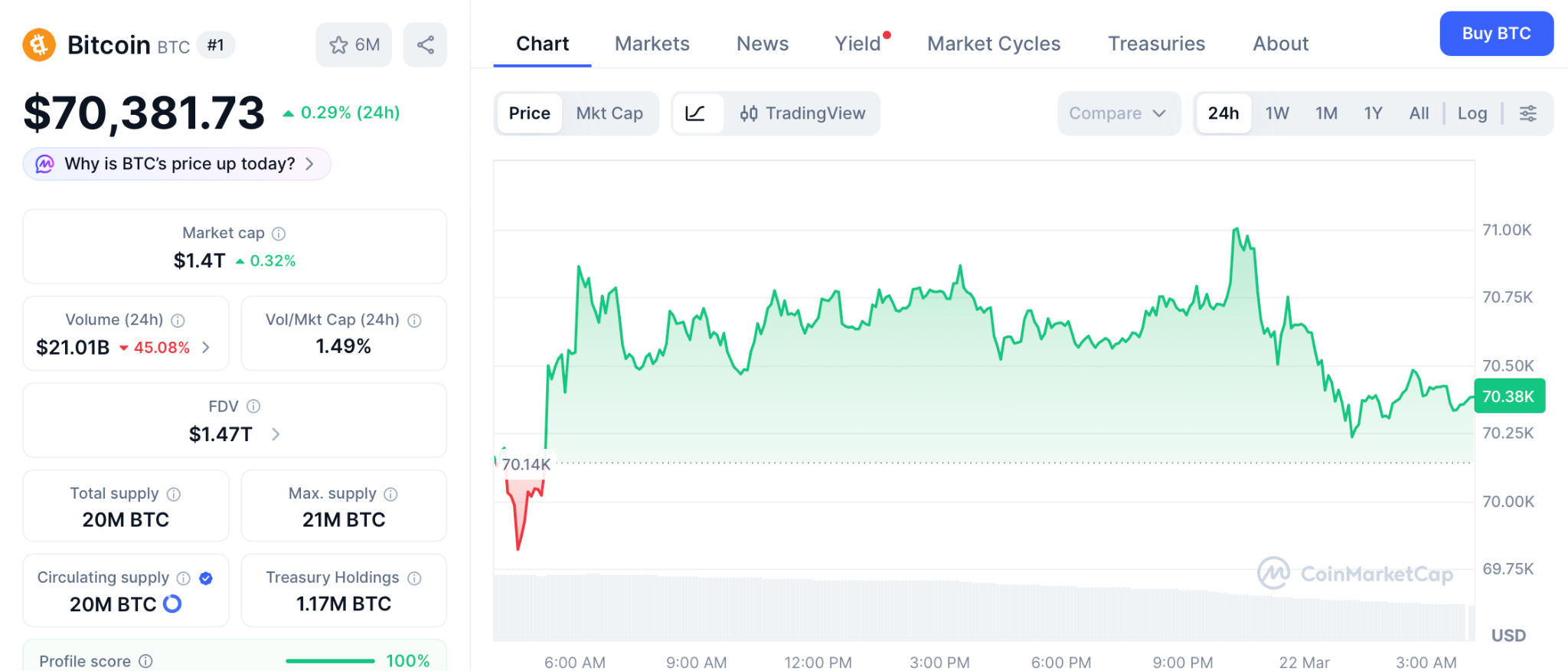
Bitcoin is trading at $70,381, down 44% from its October 2025 all time high of $126,173 according to CoinMarketCap.
Analyst consensus for 2026 clusters between $120,000 and $175,000. CoinShares expects $120,000 to $170,000. Bit Mining projects $225,000 in the bull case. Corporate treasuries now hold over 1.09 million BTC worth roughly $110 billion according to FXEmpire. Reclaiming $72,749 eases the bearish pressure.
Losing $67,000 opens deeper losses. Even in the best case at $150,000, BTC delivers roughly 2x from here. Those returns are decent for a portfolio anchor but will never match the multiples the presale to listing window creates.
Bitcoin Price News Is Bearish, but the Presale That Whales Entered During Fear Is Where the Returns Are Built
The whales buying Pepeto are sending the strongest signal in this presale because they see what the listing delivers. The exchange infrastructure fixes the one thing every meme coin lacked: a reason for demand to keep growing after launch instead of fading.
But the main wealth driver is viral energy. Shiba Inu delivered over 25,000% to early buyers on virality alone with zero products. Pepeto carries stronger virality into a market with higher volume, and the Binance listing drawing closer is the catalyst that pushes the price to its peak.
The presale entry right now is the same window that created every crypto millionaire story people still reference today. The Pepeto official website is where that window remains open, but not for long.
Click To Visit Pepeto Website To Enter The Presale

FAQs
What does the $13.5 billion Deribit derivatives expiry mean for the bitcoin price news?
The March 27 expiry could trigger volatility as traders close or roll positions. The bitcoin price news is bearish short term, but conviction capital is entering Pepeto’s presale during the fear.
What is the bitcoin price prediction for 2026?
Analysts target $120,000 to $225,000 for BTC. Even at $150,000 that is 2x from $70,381. Pepeto at presale pricing targets 150x to the level Pepe reached with zero products.
Why are investors choosing Pepeto over Bitcoin right now?
BTC offers 2x to $150,000. Pepeto targets 150x from presale to listing with the same Pepe cofounder and a listing on Binance confirmed. Visit the Pepeto official website before the presale closes.
Disclaimer: This is a Press Release provided by a third party who is responsible for the content. Please conduct your own research before taking any action based on the content.
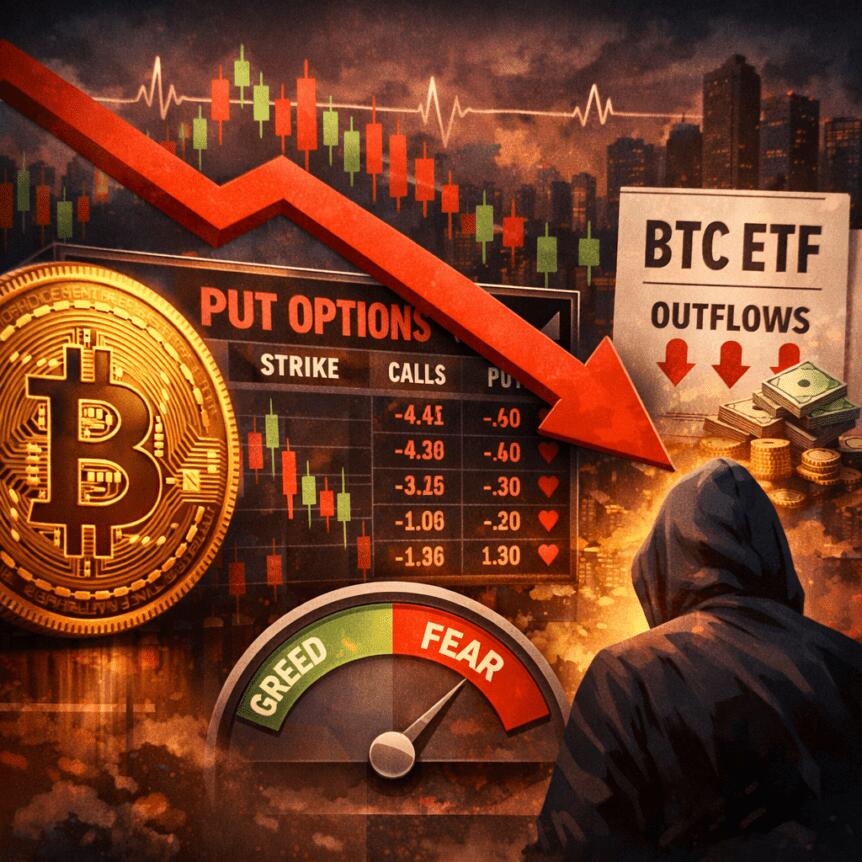
Bitcoin traded in a narrow range near $70,000 on Friday after a stumble to reclaim the $75,000 level earlier in the week. The back-to-back sessions of net outflows from U.S.-listed spot Bitcoin ETFs cooled a recent run of inflows, prompting traders to reassess whether institutions are turning more cautious in the face of a firmer inflation backdrop and renewed risk-off mood across markets.
Two days of net outflows, totaling about $254 million, were recorded in the ETF space, a magnitude not yet decisive enough to signal a wholesale shift in sentiment. Yet the move comes as macro headlines remain unhelpful to a rapid policy pivot from the Federal Reserve. Oil has remained stubbornly elevated, complicating inflation dynamics and, in turn, the Fed’s likely path for rate cuts. The broader risk-off tone was reinforced by a slide in equity markets and a softening of traditional hedges.
Key takeaways
- Bitcoin persists near $70,000 amid two days of spot ETF outflows totaling $254 million, not yet confirming a bearish regime flip.
- Options markets show elevated hedging: put options on Bitcoin are trading at roughly 2.5 times the premium of calls, with a 30-day delta skew around 16%—a sign of caution among professional traders.
- Macro pressures loom large as oil remains above $94 per barrel, complicating growth expectations and potentially delaying further rate cuts, according to Oxford Economics.
- The S&P 500 slid to its lowest level in six months, while gold fell about 10% over a multi-day stretch, underscoring a broad risk-off environment that weighs on Bitcoin beyond its own fundamentals.
Oil shock and the inflation problem
The price of West Texas Intermediate (WTI) crude has held above $94 a barrel since March 12, marking a roughly 50% move higher from a month prior. Analysts argue that supply disruptions in the Middle East—alongside ongoing energy-market volatility—boost inflationary pressures and constrain the Federal Reserve’s ability to slash rates, at least in the near term. An Oxford Economics analysis highlighted how higher energy costs could dampen consumer spending and ripple through import-dependent manufacturing, potentially fueling tangible price pressures across the economy.
Market participants are watching for how energy dynamics intersect with Fed policy and equity risk appetite. The combination of higher fuel costs and geopolitical risk tends to steer investors toward hedging strategies and safer assets, even as Bitcoin’s own fundamentals may present a different risk profile for traders long on crypto exposure.
Bitcoin derivatives signal risk-off posture among professionals
Deribit data, as tracked by Laevitas, shows a notable tilt toward protective positioning among Bitcoin options traders. The put-to-call premium on Friday was nearly 2.5 times the premium for equivalent call options, signaling a pronounced demand for downside protection. This echoes previous episodes when macro shocks or geopolitical developments prompted a similar shift in the derivatives world.
To interpret whether this hedging translates into actual downside risk coverage, traders look at the delta skew—a measure of the relative pricing of puts versus calls. The 30-day delta skew stood at about 16% on Friday, implying professional participants were skeptical that the $69,000 to $70,000 area would prove sturdy in the near term. While not at the panic levels seen in past episodes, the figure reflects a market bracing for further volatility amid a 21% slide in Bitcoin’s price over the past three months, even as gold and U.S. equities displayed more resilience.
The price action also frames a broader question: can Bitcoin hold the line above $70,000 as macro uncertainty persists? A strong rally to $75,000 earlier in the week failed to translate into a sustained shift in the options market, suggesting a continued appetite among traders for risk mitigation rather than outright exposure.
Market observers note that a sustained, meaningful divergence between spot price performance and derivatives signals could offer clues about potential future moves. In this environment, the balance between macro risk and crypto-specific catalysts will likely determine whether hedging remains dominant or if risk appetite returns to Bitcoin’s price action.
For additional context on institutional sentiment during this period, readers can consider earlier coverage noting that larger players have not necessarily abandoned risk assets—even as they pursue strategies that hedge downside risk. Earlier coverage noted that institutions aren’t waiting for the bottom, indicating a nuanced approach rather than a wholesale retreat.
What the data imply for investors and builders
First, the two-day $254 million ETF outflow does not by itself signal a decisive shift in institutional stance. Yet it sits within a broader process where macro risk and energy volatility shape risk tolerance. Investors should watch whether outflows persist or subside in coming weeks, and how that interacts with the price regime Bitcoin can sustain above key levels such as $70,000.
Second, the elevated put-to-call premium and a positive delta skew imply sophisticated market participants are prioritizing downside protection. For traders, this could translate into more pronounced hedging around macro-sensitive milestones, such as inflation readings, central-bank guidance, or geopolitical headlines. For builders and developers, the data emphasize the importance of risk modeling that accounts for regime shifts in macro conditions and derivatives positioning, beyond simply tracking spot price snapshots.
Finally, the energy and geopolitical backdrop remains a potential source of ongoing volatility. With oil hovering at elevated levels and the risk of supply disruptions persisting, policy responses and financial conditions will continue to influence crypto markets. Readers should monitor oil-price trajectories, central-bank communications, and the evolving relationship between traditional markets and digital-asset liquidity flows as the year unfolds.
Meanwhile, Bitcoin’s performance remains juxtaposed against a broader macro landscape where stocks and precious metals are reacting to the same risk-off impulses that pressure crypto markets. The coming weeks will reveal whether Bitcoin can establish a firmer floor around the $70,000 mark or if further downside protection becomes increasingly essential for market participants.
As always, readers should stay tuned to macro developments, on-chain signals, and the evolving dynamics of investor appetite. The next move—whether risk assets regain footing or volatility remains elevated—will likely hinge on how inflation, energy prices, and geopolitical tensions unfold in the near term.
Crypto World
BNB Price Prediction Eyes $1,000 as Grayscale Expands Crypto ETFs, but Pepeto’s Presale Is the Entry That Binance Whales Are Choosing First

The bnb price prediction for 2026 just received a fresh tailwind. Grayscale filed with the SEC to launch an ETF tied to Hyperliquid’s token HYPE, expanding the crypto ETF universe beyond Bitcoin and Ethereum according to crypto.news.
BNB Chain holds $3.2 billion in distributed real world asset value, positioning it second only to Ethereum according to CoinGecko.
As institutional capital keeps flowing into the Binance ecosystem, the bnb price outlook looks increasingly bullish. But traders who understand return math know that BNB at $641 has a very different ceiling than a presale approaching the same Binance listing. This article covers the BNB price targets and the presale pulling smart money away from large caps.
Grayscale’s proposed HYPE ETF would give investors exposure to Hyperliquid’s token without holding it directly according to crypto.news.
The filing adds to a growing list of firms building investment products tied to newer digital assets. BNB Chain registered major ecosystem growth with $3.2 billion in RWA value and the Ondo integration bringing tokenized stocks onto the network according to CoinGecko.
BNB Chain also launched the ERC 8183 AI agent standard, creating new utility. The bnb price prediction benefits from this institutional buildout, but for traders hunting the biggest returns, the presale window is where the real math lives.
BNB Price Prediction 2026 and the Presale Where the Real Returns Are Being Built
Pepeto: The Exchange Presale Where Innovation Draws Capital Before the Listing
Pepeto is constructing the kind of exchange that gives traders a real edge once it launches. With institutional frameworks expanding and ETF products multiplying, the wallets entering this presale see what this exchange becomes after the listing opens it to millions.
A zero cost trading system designed to keep every dollar of trading capital intact. A smart contract auditor built to flag dangerous tokens before your money goes near them. Investors recognize this innovation and the gains potential it carries.
The presale cleared over $8 million in committed capital, and the entry price at $0.000000186 signals that early investors see the potential in infrastructure driven plays. The person behind the original Pepe coin, which reached $11 billion on the full 420 trillion supply that mirrors Pepeto with zero products, is now constructing a complete exchange on Ethereum. Pepeto is fully verified by SolidProof, and a key Binance executive on the development team is guiding the platform toward a confirmed listing. Staking at 195% APY gives early holders an expanding position from the day they enter.
Every serious bnb price prediction factors in institutional capital flowing into the Binance ecosystem. When that ecosystem lists Pepeto, the presale price disappears permanently and wallets that entered at this level carry returns the BNB price takes years to deliver from $641.
BNB Price Prediction: Targets, Levels, and What the Data Shows
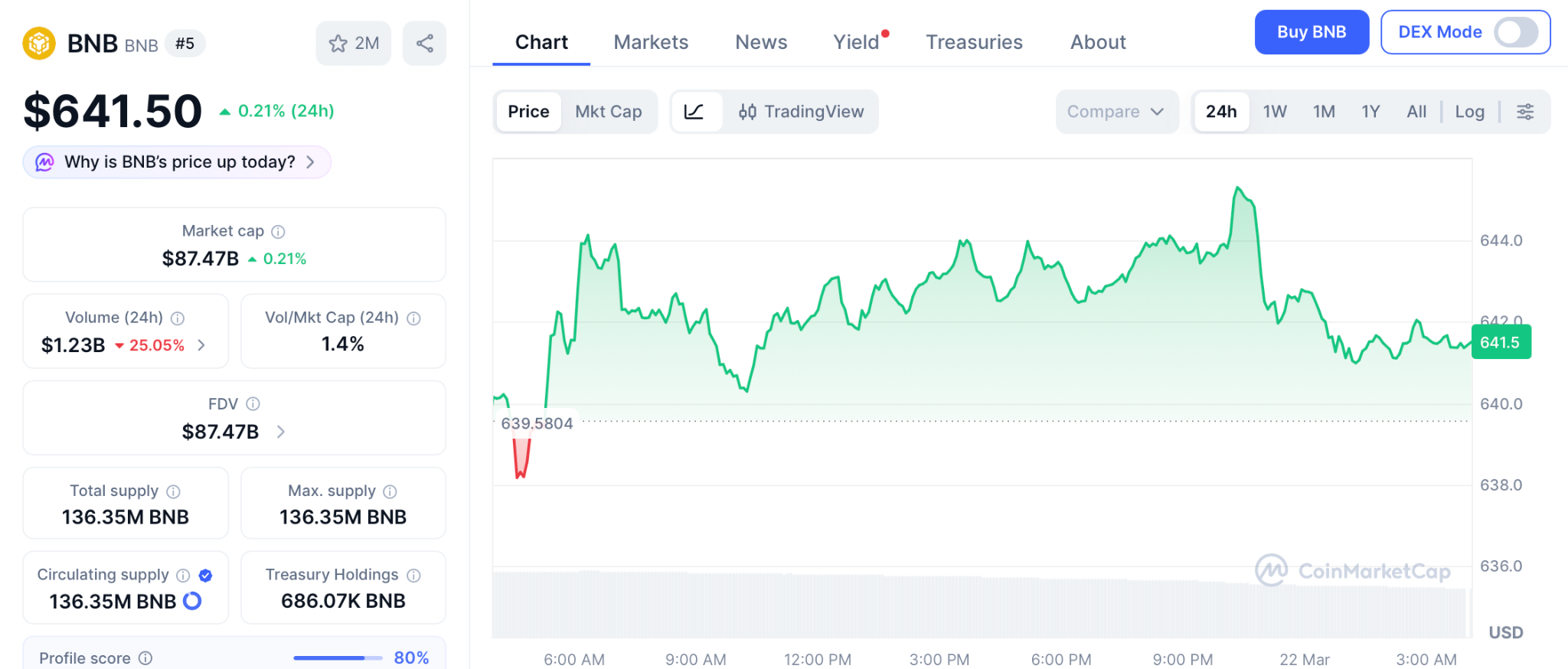
BNB is trading at $641, down roughly 53% from its all time high of $1,370 in late 2025 according to CoinMarketCap.
Changelly forecasts a 2026 range of $739 to $1,003, with an average around $871 according to Changelly. Binance user consensus targets $803 for this year. If the CLARITY Act passes and institutional adoption from Asian markets including Hong Kong’s $82 billion insurance sector flows into crypto, analysts see BNB reaching $1,200 to $1,500.
Even the bullish case at $1,000 is roughly 55% from current levels. For a token that powers the world’s largest exchange, the growth is real but the return math does not compare to a presale entry where the Binance listing event alone compresses years of large cap appreciation into a single moment.
BNB Price Prediction Shows Growth, but the Presale Approaching the Same Binance Listing Offers 150x
A strong portfolio should include an early stage entry because those are the ones that deliver the biggest multiples any large cap cannot match. Pepeto is making that choice easier, and the comparison with the original Pepe coin makes the future clearer than any BNB price prediction. This opportunity sits at presale pricing right now with a senior Binance executive on the team, past the $8 million mark in capital raised, and a confirmed listing drawing closer every day.
The investors who entered Pepe early and held made millions, and every one of them wishes they had committed more. Pepeto is that second chance with better infrastructure, the same cofounder, and a presale filling faster every week. The Pepeto official website is where investors who understand how rare this is are securing positions right now.
Enter the presale before the Binance listing closes this window permanently
Click To Visit Pepeto Website To Enter The Presale

FAQs
How does the Grayscale HYPE ETF filing affect the bnb price prediction?
Grayscale expanding crypto ETFs beyond BTC and ETH shows growing institutional appetite for the Binance ecosystem. This supports the bnb price outlook, but Pepeto’s presale to listing math offers multiples BNB cannot deliver from $641.
What is the bnb price prediction for 2026?
Analysts forecast $739 to $1,003 for BNB, with a bull case at $1,500 if Asian institutional adoption ramps up. Pepeto at presale pricing targets 150x to the level Pepe reached with zero products.
Is Pepeto a better investment than BNB right now?
BNB targets 55% gain to $1,000. Pepeto targets 150x from presale to listing with the same Pepe cofounder and the Binance listing on the horizon. Visit the Pepeto official website before the presale entry disappears.
Disclaimer: This is a Press Release provided by a third party who is responsible for the content. Please conduct your own research before taking any action based on the content.
TLDR:
- Bitcoin shows its longest decoupling from equities since 2020 amid ongoing macro uncertainty.
- A major liquidation event erased months of open interest in a single trading session.
- While equities held firm, Bitcoin continued to decline due to market-specific pressures.
- Correlation shifts reveal changing dynamics between crypto and traditional financial markets.
Bitcoin has entered its longest period of divergence from the S&P 500 since 2020, following a sharp market disruption.
While equities maintained strength during this period, Bitcoin continued its decline, reflecting a shift in correlation patterns between crypto and traditional markets.
The separation became more visible after October, when both markets began moving in different directions. Bitcoin lost momentum, while equities remained near their highs.
This divergence has now persisted for several months, marking a rare phase in recent market cycles.
Liquidation Event Reshapes Market Structure
Market data shows that Bitcoin’s recent decline began after a large liquidation event on October 10. Nearly 70,000 BTC in open interest was wiped out within a single session. This reset brought derivatives exposure back to levels last seen in April 2025.
The sudden unwind erased more than six months of accumulated positions. As a result, market structure weakened, leading to sustained selling pressure. Bitcoin failed to recover alongside equities, marking a clear break from earlier synchronized movements.
A tweet from Darkfost noted that Bitcoin entered a bear phase during this period. At the same time, the S&P 500 continued to perform, creating a visible gap between the two markets. This separation has now extended longer than any similar period seen since 2020.
In addition, the removal of leveraged positions reduced short-term upward momentum. Traders became more cautious, while liquidity conditions tightened. As a result, Bitcoin struggled to regain strength even during brief market rebounds.
Correlation Breakdown Signals Market Shift
Historically, Bitcoin and equities have shown periods of strong alignment, especially during liquidity-driven cycles. However, the current phase reflects a breakdown in that relationship. Correlation levels have dropped toward neutral or negative territory in recent months.
Bitcoin’s continued decline has been linked to broader geopolitical tensions affecting global markets. Even so, equities remained resilient for most of this period. This contrast reinforced the ongoing divergence between the two asset classes.
The divergence suggests that crypto markets reacted earlier to tightening conditions. While equities showed delayed weakness, Bitcoin had already adjusted through price corrections. This pattern aligns with previous cycles where crypto moved ahead of traditional assets.
At the same time, Bitcoin’s higher volatility has made it more sensitive to sudden shocks. The recent liquidation event amplified this effect, accelerating downside movement. Meanwhile, equities absorbed similar pressures more gradually and with less volatility.
As the correlation weakens, market participants continue to monitor whether alignment will return or divergence will persist. Current conditions suggest that both assets are responding differently to evolving macroeconomic pressures.
Crypto World
US Senators and White House Reach Tentative Deal to End Bank-Crypto Stablecoin Yield Clash
TLDR:
- Senators Tillis and Alsobrooks reached a White House-backed agreement in principle on stablecoin yield language.
- The deal proposes barring yield payments on passive balances to address bank concerns over deposit flight.
- White House adviser Patrick Witt called the agreement a major milestone toward passing the CLARITY Act.
- The agreement still requires vetting from banking and crypto industry groups before any final deal is confirmed.
Stablecoin regulation in the United States may be edging closer to a major breakthrough. Key senators and White House officials have reached a tentative agreement on crypto legislative language.
The deal addresses a long-standing clash between banks and digital asset firms over yield payments. Sen. Thom Tillis (R-N.C.) and Sen. Angela Alsobrooks (D-Md.) spearheaded the agreement. Their deal could unlock a path forward for landmark crypto legislation stalled since January.
Senators Bridge Partisan Divide Over Stablecoin Yield
The central dispute in this legislation has been about yield payments to stablecoin holders. Banks and Wall Street groups raised concerns about widespread deposit flight from traditional accounts.
They argued that stablecoin yield rewards could pull customers away from conventional banking products. The clash had been keeping the crypto bill stalled in the Senate Banking Committee since January.
Both Tillis and Alsobrooks acknowledged those banking concerns throughout the negotiation process. Alsobrooks confirmed the two senators have reached a deal, stating, “Sen. Tillis and I do have an agreement in principle.”
She added that the deal seeks to “protect innovation” while also giving lawmakers the opportunity to “prevent widespread deposit flight.” Her comments came during a Friday interview following talks with White House officials.
The new language is expected to target yield payments made on a passive balance. Alsobrooks confirmed the proposal will seek to bar yield payments “on a passive balance,” though full details remain undisclosed.
The specifics are still being worked through as lawmakers prepare to share the language with industry stakeholders.
Tillis echoed a cautiously optimistic tone when speaking about the progress made. “In working with the White House, I think we have an agreement,” he said in a separate interview.
He noted that the next step is to vet the language with industry, describing them as “a party to an ultimate deal.” He added that he feels “like we’re in a good place” with where negotiations currently stand.
White House Endorses Deal as Industry Review Awaits
The White House played an active role in brokering the tentative stablecoin agreement. Patrick Witt, a top White House crypto policy adviser, publicly addressed the development on X.
He credited both Tillis and Alsobrooks “for bridging the partisan divide to tackle a difficult issue.” His public comments came shortly after the story of the agreement was first published.
Witt also acknowledged in his post that more work remains before the bill is finalized. He wrote that there is “more work to be done to close out this and other outstanding issues.”
Despite that, he described the development as “a major milestone toward passing the CLARITY Act.” That bill has been held up in part due to the ongoing bank-crypto yield dispute.
Still, the agreement does not guarantee automatic support from the banking and crypto industries. Both sectors will need to review the final language before giving any formal endorsement.
Industry groups on both sides have strong interests in the outcome of this legislation. Any final version of the bill will need broad backing from both sectors to pass.
The coming weeks will be critical in determining whether the CLARITY Act can advance. Senators and White House officials will continue working to address any remaining sticking points. A finalized agreement could clear the way for a vote in the Senate Banking Committee.
TLDR:
- Whale unrealized profit ratios remain between 1 and 1.5, showing balanced market positioning without excess pressure
- Historical data links low whale profit zones with accumulation phases and the start of upward price trends
- No spike above 3 suggests Ethereum has not reached overheated conditions seen in past cycle peaks
- Current structure supports gradual price growth rather than sharp rallies or immediate market reversals
Ethereum’s long-term market structure shows a steady recovery, with whale profitability pointing to a developing uptrend rather than a peak phase.
Data tracking price movements and unrealized profit ratios suggest that the market remains balanced, with no strong signs of distribution pressure.
The chart, covering 2016 through early 2026, aligns Ethereum’s price with the profitability of whale wallets. Large holders across multiple tiers appear to have returned to profit, a condition historically linked to early-cycle growth.
Whale Profitability Returns as Market Stabilizes
Ethereum’s price cycles have consistently moved alongside whale profit ratios. During previous bull runs, profit levels surged above 3, followed by sharp corrections. In contrast, bear market phases pushed ratios closer to zero, marking accumulation zones.
The current range sits between 1 and 1.5, which reflects moderate profitability. This level has previously appeared during transition periods between accumulation and expansion phases. As a result, the market structure appears stable rather than overheated.
A recent tweet by analyst CW noted that wallets holding over 100,000 ETH have moved back into profit. The tweet stated that past transitions from loss to profit often marked the beginning of upward trends. That pattern now appears to be forming again.
At the same time, earlier cycles show similar behavior. In 2019 and 2020, whale profitability remained low before gradually rising. Those phases later led to sustained price growth. The current setup mirrors those earlier conditions without showing excess momentum.
Mid-Cycle Structure Supports Gradual Price Movement
Ethereum’s present structure reflects a mid-cycle phase rather than a late-stage rally. Profit ratios have not reached extreme levels, which reduces the likelihood of immediate large-scale selling by major holders.
During the 2021 peak, profit ratios climbed above 3.5 as prices approached all-time highs. That environment encouraged distribution as whales secured gains. The absence of such levels today suggests a different market stage.
Price action between $2,000 and $3,000 aligns with this moderate profitability range. The market appears to be building strength gradually, instead of accelerating into a sharp rally. This behavior often precedes more extended upward movement.
The lack of rapid spikes in whale profit indicates steady accumulation or holding patterns. When combined with historical data, this condition has often led to continued price expansion over time.
If profit ratios begin rising toward 2.5 or higher, the market could enter a stronger growth phase. However, a sudden move above 3 would require close monitoring, as past cycles show such levels near turning points.
As of this writing, the structure remains balanced. Whale profitability supports a developing trend without signaling overheating. As a result, Ethereum appears positioned within an early growth phase rather than nearing a cycle peak.
TLDR:
- Every Pi Network DApp must lock Pi Coin as collateral before minting its own custom token.
- More DApps launching on Pi Network means more Pi Coin gets locked, reducing circulating supply over time.
- Pi Coin is being positioned as base money for the ecosystem, similar to how the USD functions globally.
- Pi traded at $0.1981 with a 3.45% price gain in 24 hours, reflecting growing market interest.
Pi Network is drawing attention as decentralized applications continue building on its blockchain. Each DApp introduces its own token economy, yet all remain anchored to Pi Coin as base collateral.
DApp Tokens on Pi Network Serve Distinct Economic Roles
Pi Network hosts a growing number of decentralized applications across gaming, e-commerce, and finance sectors. Each application operates its own token to manage incentives within its specific user base.
Gaming apps distribute reward tokens to active players on the platform. Shopping platforms issue loyalty points and digital vouchers to their customers.
Running all DApp activity exclusively on Pi Coin would create tokenomics management challenges. Custom tokens give each application the freedom to structure its own economy independently.
This separation allows developers to innovate without disrupting the broader Pi Network supply. The design supports diverse use cases while keeping Pi Coin’s central role intact.
According to a post by @fireside_pi on X, the Pi Core Team follows a clear strategic direction. “Each DApp runs its own mini-economy, needs its own token for flexibility,” the post stated.
This structure mirrors how layers in traditional financial systems operate. Base assets provide collateral while upper layers handle specialized transactions.
The token model benefits developers and users across the ecosystem simultaneously. Developers gain flexibility in designing reward systems suited to their platforms.
Users receive access to airdrops, staking opportunities, and platform-specific incentives. Pi Coin remains the foundational asset supporting every transaction layer above it.
Pi Coin Scarcity Increases as DApp Collateral Requirements Grow
Every DApp launching on Pi Network must lock an equivalent amount of Pi Coin as collateral. This mechanism directly reduces the circulating supply of Pi Coin over time.
As more applications succeed and expand, more Pi Coin gets permanently locked away. A shrinking supply combined with steady demand supports upward price pressure.
The @fireside_pi post described this as Pi Network’s path toward becoming base money for billions. “More DApps launching and succeeding means more Pi gets locked forever,” the post noted.
The comparison drawn is to how the US dollar serves as a global reserve currency. Pi Coin is positioned to fill that same foundational role within its own ecosystem.
At the time of writing, Pi Network’s price stood at $0.1981 per coin. The 24-hour trading volume reached $37,665,490, reflecting active market participation.
Pi recorded a 3.45% price increase over the past 24 hours. However, the seven-day performance showed a marginal decline of 0.03%.
The collateral-based token model places Pi Coin at the center of all ecosystem value. Every new DApp that scales adds locking pressure on the available Pi supply.
This creates a direct structural relationship between ecosystem growth and Pi Coin’s scarcity. Holders of Pi Coin stand to benefit as the network continues to expand.
Crypto World
Jerome Powell Honored With Paul Volcker Public Integrity Award at ASPA Annual Conference
TLDR:
- Jerome Powell received the Paul Volcker Public Integrity Award at the ASPA Annual Conference via video.
- Powell called Volcker the greatest public servant in economics, citing his non-partisan service under four presidents.
- Volcker held firm against political pressure in the 1980s, ultimately defeating double-digit inflation through high interest rates.
- Powell closed with a defining line: integrity is the foundation of every public servant’s lasting legacy and credibility.
Jerome Powell, Federal Reserve Chair, received the Paul Volcker Public Integrity Award at the ASPA Annual Conference.
Powell accepted the honor via a pre-recorded video, expressing deep gratitude for the recognition. He drew on Volcker’s legacy to reflect on core principles of public service.
His remarks centered on independence, integrity, and the courage to resist short-term pressures. The ceremony honored Powell’s commitment to non-partisan central banking leadership.
Powell Draws on Volcker’s Record of Non-Partisan Service
Jerome Powell described Paul Volcker as a towering figure in economics and central banking. He called Volcker “perhaps our greatest public servant in the economic arena.”
Volcker served at the Treasury under Presidents Kennedy, Johnson, and Nixon before leading the Federal Reserve. He chaired the Fed from 1979 to 1987, nominated by Carter and reappointed by Reagan.
Powell noted that non-political, non-partisan service forms the bedrock of the Federal Reserve. No one embodies that virtue more fully than Paul Volcker, he added.
Such service allows public institutions to earn lasting trust from leaders across both parties. Moreover, it gives those institutions the credibility needed to act in the broader public interest.
Volcker’s record of serving multiple presidents without compromising his principles stood out throughout Powell’s remarks.
That kind of commitment, Powell argued, defines what true public integrity means. It also shows how non-partisan dedication can produce results that outlast any single administration. Trust built steadily over time creates the space needed for bold and necessary decisions.
Powell further stated that “independence and integrity are inseparable.” He explained that public servants need independence to do what is right.
Integrity, in turn, ensures that independence is used wisely and not for personal gain. Together, these qualities define the standard Volcker set across his entire career.
Volcker’s Inflation Battle as a Lesson in Long-Term Leadership
Volcker’s defining test came during the double-digit inflation crisis of the early 1980s. Unemployment climbed above 9 percent, and critics loudly called for a change of course.
Yet Volcker held firm, committed to bringing inflation down through sustained high interest rates. His decision was painful in the short term but ultimately restored price stability.
Powell referenced a speech Volcker delivered at the Economic Club of Chicago on May 19, 1982. Speaking with unemployment above 9 percent, Volcker acknowledged “the pain of wringing out inflation through high interest rates.”
He also outlined the prospect of “a return to price stability, and with it a much brighter future.” That vision, Powell noted, ultimately proved correct.
Volcker’s resolve helped launch what economists now call the Great Moderation. This was a prolonged period of low inflation and steady, consistent economic growth.
Powell gave Volcker considerable credit for that outcome. Resisting short-term pressure, he argued, can yield lasting benefits for the broader economy.
Powell closed by quoting directly from his own acceptance remarks: “In the end, our integrity is all we have.” He framed Volcker’s career as the clearest living example of that principle.
Each public servant, he said, should look back and know they did the right thing. That standard, Powell argued, remains the truest measure of a life in public service.
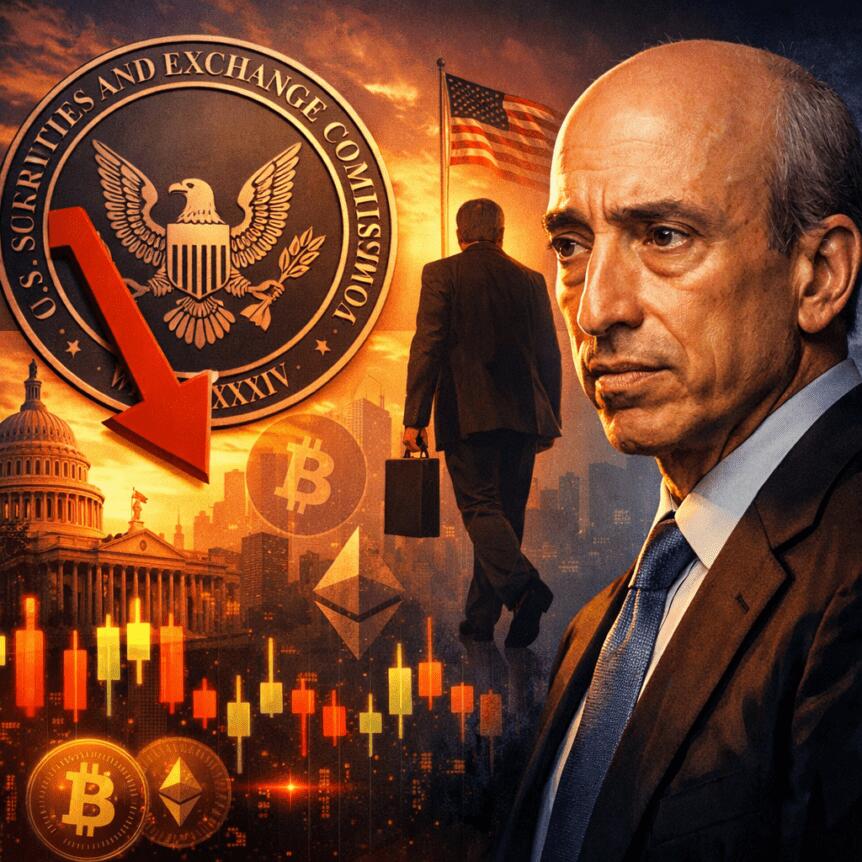
The U.S. securities and commodities watchdogs have jointly published guidance that for the first time attempts a formal taxonomy for digital assets. Market observers welcomed the move as a material shift away from the prior Gensler-era posture, with Galaxy Digital’s Alex Thorn framing it as a step toward pragmatic regulation even as it stops short of giving permanent, court-binding rules.
The SEC guidance, issued this week, lays out a five-category framework for digital assets: digital commodities, digital collectibles like NFTs, digital tools, stablecoins, and tokenized securities. The document describes how these assets may fit under existing laws and where each category might draw regulatory lines. The fact sheet accompanying the guidance highlights the five buckets and how they align with the agency’s broader remit, while the linked materials emphasize that the interpretation is aimed at clarifying how the law applies rather than rewriting it.
The distinction matters enormously under the Administrative Procedure Act. A legislative rule or substantive rule goes through notice-and-comment rule-making, has the force and effect of law, and binds both the agency and regulated parties. The interpretive rule, by contrast, is exempt from those procedures and does not carry the same binding force for courts or firms.
In practical terms, the interpretive rule signals that the agencies are prioritizing clarity over breadth in the near term. It is not a binding mandate that courts must enforce; rather, it sets out how regulators currently interpret existing statutes and how they might apply them to different digital-asset structures. For the crypto industry, that creates a more predictable operating environment over the next several quarters, even as the longer-term regulatory architecture remains to be finalized.
Galaxy’s Thorn emphasized that while the interpretive stance provides meaningful guidance for the next 30 months, the broader path to stable, enduring regulation hinges on Congress codifying the CLARITY Act into law. The CLARITY framework is designed to codify market structure principles for crypto assets, but has stalled in recent months amid disagreements over stablecoin yield, open-source software protections, and other DeFi-related provisions. Thorn noted that while the new interpretive rule reduces immediate regulatory risk, a formal law would lock in a durable framework for decades to come.
The CLARITY Act stalls, but whispers of a possible deal surface
The push to pass a comprehensive crypto-market-structure bill faces political headwinds. In January 2025, industry insiders and lawmakers raised concerns that the CLARITY Act would hamper DeFi development through broad reporting and KYC requirements, and could restrict stablecoin operations. The industry’s pushback centered on provisions seen as disproportionate or technically onerous for decentralized finance and open-source tooling, even as they sought clearer guardrails against fraud and market manipulation. A recent Politico live update reported that a tentative agreement between the White House and lawmakers is being pursued to move the bill forward, though many specifics remain under wraps.
Public reporting on the deal suggests discussions include a potential ban on stablecoin yield from passive balances, a point highlighted by Senator Angela Alsoboorks as part of the ongoing negotiations. The broader question remains: can legislators craft a framework that satisfies consumer protections and financial stability concerns without stifling innovation in DeFi and open-source crypto tooling? Coverage from Cointelegraph notes that any final agreement will need careful balancing of these competing priorities, with industry observers watching for hidden provisions that could alter DeFi, custody, and settlement rights for participants across the ecosystem.
Industry observers view the potential deal as a litmus test for how aggressively regulators and lawmakers intend to police the sector while still enabling mainstream crypto adoption. The unfolding talks underscore a broader tension: the desire for a predictable, codified regime versus the organic, global nature of decentralized technologies. As policymakers debate stablecoin yield limits, disclosure standards, and on-chain compliance tools, market participants are parsing what a new law would mean for issuance, trading venues, and developer incentives alike.
What comes next for regulation and market structure
Today’s guidance represents a significant milestone in regulatory clarity, but it is not the final destination. Investors and builders now have a clearer benchmark for evaluating where a given asset sits within the SEC-CFTC taxonomy, and how existing securities and commodities laws might apply. Yet crucial questions remain about how the CLARITY Act will shape the long-term architecture of the crypto market, particularly in the DeFi space, where permissionless innovation has been a defining feature of the sector’s growth.
In practical terms, the new interpretive rule affords the industry a clearer window for planning and compliance over the next couple of years, while lawmakers push for a more permanent framework. This separation—clarity in the near term, codified law in the longer term—could help reduce the kind of regulatory guesswork that has previously unsettled projects, exchanges, and users. Still, until the CLARITY Act is enacted, firms must operate with the underlying statutes in mind and be prepared for future amendments that could reshape how tokens are treated, how disclosures are required, and how on-chain activity is monitored.
As the regulatory conversation evolves, observers will watch for signs of how the White House and Congress resolve key points of contention, including stablecoins, developer protections, and the balance between consumer safeguards and innovation-friendly policy. The next few months should yield a clearer picture of whether a bipartisan framework can emerge that satisfies financial-stability concerns while preserving the open, collaborative ethos that underpins much of the crypto ecosystem.
Readers should keep an eye on official updates to the CLARITY Act and related regulatory proposals, as well as the ongoing enforcement posture from the SEC and CFTC. The coming months will likely reveal whether the interpretive guidance suffices as a transitional tool or if a broader legislative settlement becomes indispensable for sustainable growth in the digital-asset economy.

10 Thriller Movies That Are Amazing From Start to Finish

BITCOIN HOLDERS THIS IS CRAZY!!

Hawaii suffers worst flooding in 20 years as residents told to ‘LEAVE NOW’ | US News


-

 Tech6 days ago
Your Legally Registered ‘Motorcycle’ Might Not Count Under Proposed US Law
-

 Fashion1 day ago
Weekend Open Thread: Adidas – Corporette.com
-

 Politics1 day ago
Jenni Murray, Long-Serving Woman’s Hour Presenter, Dies Aged 75
-
 Tech4 days ago
Are Split Spacebars the Next Big Gaming Keyboard Trend?
-

 News Videos3 days ago
RBA board divided on rate cut, unusually buoyant share market | Finance Report | ABC NEWS
-

 Business6 days ago
Search for Savannah Guthrie’s Mother Enters Seventh Week with No Arrests
-
 Crypto World23 hours ago
NIO (NIO) Stock Plunges 6.5% as Shelf Registration Sparks Dilution Worries
-

 Business6 days ago
Australian shares drop as Iran war enters third week
-

 Crypto World6 days ago
Crypto Lender BlockFills Enters Chapter 11 with Up to $500M in Liabilities
-

 Politics4 days ago
The House | The new register to protect children from their abusers shows Parliament at its best
-

 Fashion5 days ago
25 Celebrities with Curly Hair That Are Naturally Beautiful
-

 Tech2 days ago
inKONBINI Lets You Spend Summer Days Behind the Register
-

 Crypto World3 days ago
Canada’s FINTRAC revokes registrations of 23 crypto MSBs in AML crackdown
-
 Politics4 days ago
Real-time pollution monitoring calls after boy nearly dies
-
 NewsBeat3 days ago
Residents in North Lanarkshire reminded to register to vote in Scottish Parliament Election
-

 News Videos3 days ago
PARLIAMENT OF MALAWI – PAC MEETING WITH REGISTRAR OF FINANCIAL ON AMARYLLIS HOTEL – INQUIRY LIVE
-

 Business5 days ago
Meta planning major layoffs as AI spending and automation reshape workforce
-

 Politics7 days ago
9 Stylish Leather Jackets Perfect For Spring 2026
-
Crypto World6 days ago
U.S. Oil Companies Post Record Profits as Oil Prices Break $100
-
Entertainment6 days ago
Oscars reunite Rob Reiner supergroup of 17 stars for emotional tribute: Here's who appeared on stage
You must be logged in to post a comment Login