

Crypto World
StablecoinX to Launch in Ethena Ecosystem, Nasdaq Debut Friday

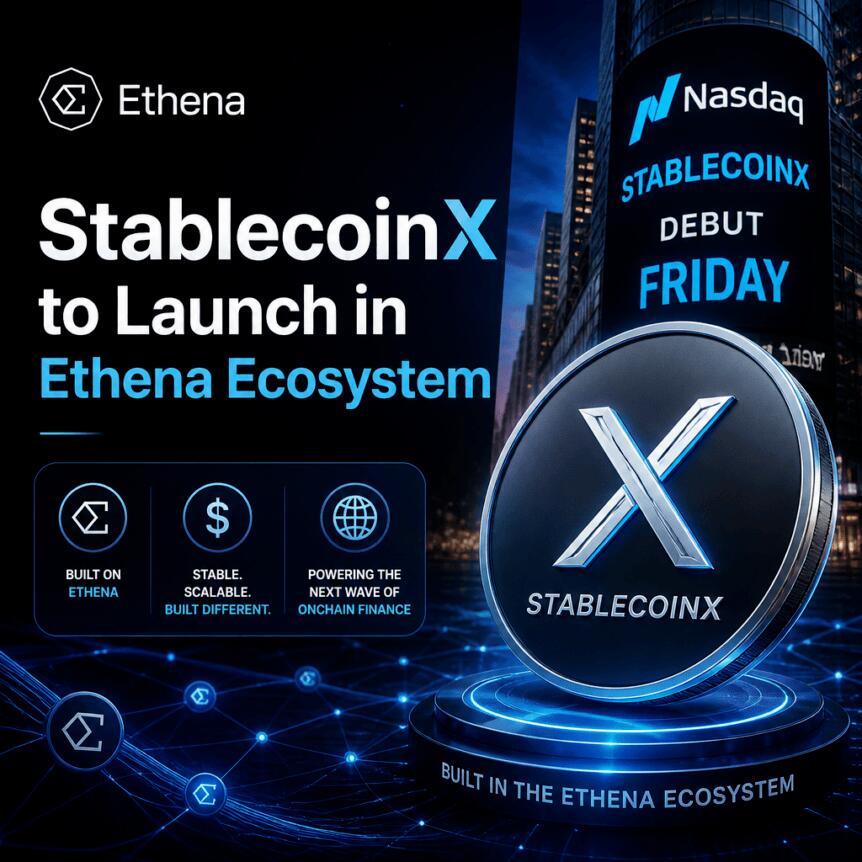
StablecoinX has completed its merger with TLGY Acquisition Corp, a publicly traded SPAC, positioning the stablecoin infrastructure firm to begin trading on Nasdaq on Friday. The company will list under the ticker symbol USDE, according to a statement released Thursday.
The debut marks a major milestone for a business focused on building stablecoin infrastructure for the Ethena ecosystem, including decentralized verifier nodes and supporting software layers. The move comes as the broader crypto market struggles, despite ongoing interest in “digital dollars” as settlement rails for mainstream finance.
Key takeaways
- StablecoinX is set to start Nasdaq trading under the ticker USDE following its merger with TLGY Acquisition Corp.
- The company is branded as an infrastructure provider for Ethena, rather than a direct issuer competitor to dollar-backed stablecoin majors.
- USDe’s $1 peg relies on a derivatives-based, delta-neutral strategy—an approach that can face stress when futures funding rates turn negative.
- USDe supply and market value have declined sharply from its October peak, underscoring a tougher environment for yield-linked stablecoins.
- StablecoinX holds a large ENA treasury position, and the ENA price has fallen dramatically from its April 2024 high—factors investors may want to monitor closely.
Nasdaq listing tied to Ethena infrastructure
StablecoinX describes itself as the first publicly listed stablecoin infrastructure company aimed at supporting the Ethena ecosystem. Its core offerings include decentralized verifier nodes (DVNs)—a function designed to serve as a cross-chain message verifier for Ethena—and a software and distribution set of products.
According to the Thursday statement, the firm will begin trading Friday after completing the business combination. CEO and Chairman Edward Chen framed the rationale around Ethena’s growing role in “the next generation of digital dollars,” signaling that StablecoinX’s market thesis is tied to Ethena’s continued development rather than to broad stablecoin market share alone.
Why USDe’s design matters: synthetic peg and derivatives risk
At the center of StablecoinX’s story is Ethena’s USDe, a yield-bearing, synthetic dollar-pegged stablecoin. Unlike USDt (USDT) or USDC (USDC), which are backed by actual dollars, USDe is intended to maintain its $1 peg through a derivatives strategy.
The system uses crypto collateral in Bitcoin and Ether, paired with short futures positions on the same assets. In normal market conditions, long and short exposure can offset price swings, helping stabilize USDe’s value at approximately $1.
However, the strategy is not “set and forget.” The model is described as delta-neutral in regular trading environments, but it can be vulnerable during periods when futures funding rates go negative. That nuance is important for investors who may view synthetic and yield-linked stablecoins as fundamentally different from fully fiat-backed designs.
USDe shrinking from its peak while stablecoin demand continues
Even with stablecoins generally expanding over recent years, the input data points to a different trend for USDe itself. The article reports that USDe market capitalization has declined by 70% since its October peak, reaching roughly $4.5 billion and placing it sixth among stablecoins. The text also notes that Ethena’s USDe represents only about 1.4% market share—well behind competitors such as Tether and Circle.
The supply trend highlights a key tension in the current stablecoin landscape: demand for dollar-like tokens may be resilient, but the market appetite for specific yield mechanics can fluctuate with broader crypto conditions and market structure (including derivatives funding).
StablecoinX’s treasury exposure and recent capital plans
StablecoinX’s financial positioning is closely tied to Ethena’s native token ENA. The company’s treasury reportedly holds about 3 billion ENA, or roughly 20% of total supply, valued at approximately $275 million based on the information provided.
StablecoinX also announced a $360 million capital raise to purchase ENA on Sunday, as referenced in the article.
But the same source notes that ENA is currently trading at $0.08, down 94% from its April 2024 all-time high. With such a sharp decline, investors may want to consider whether the planned ENA purchases will strengthen treasury alignment with Ethena—or whether valuation compression and market risk remain material.
Infrastructure thesis in a tough crypto market
The Nasdaq move lands during a difficult stretch for crypto and crypto-related capital raising. The article states that crypto SPACs and crypto treasuries have had a challenging year as the broader market has fallen, with $2.3 trillion leaving the space since October and crypto dropping out of favor among investors.
Before the merger, TLGY reportedly fell 6.93% on Thursday in OTC trading, ending at $9.40, according to Google Finance data cited in the article. That backdrop adds context to the risk-reward calculation for investors evaluating StablecoinX as a newly public stablecoin infrastructure platform.
Looking ahead, the main questions for readers are whether USDe’s derivatives-based peg can remain resilient when market conditions shift—especially around futures funding dynamics—and how StablecoinX’s ENA treasury strategy performs as both crypto prices and stablecoin usage evolve.


Bitcoin is heading into the final stretch of July under the pressure of shifting US macro expectations, with traders focused on two near-term catalysts: the Federal Reserve’s latest policy decision and new inflation data that could influence rate expectations. At the same time, market participants are watching whether the usual ties between crypto and traditional risk assets are returning or fading—an issue that has become more relevant as equities show signs of wobbling.
With US bond yields elevated and oil reacting to geopolitical developments, the next few days could determine whether Bitcoin’s relatively tight trading behavior turns into a decisive breakout—or a renewed pullback. On-chain signals add another layer: CryptoQuant reports that BTC whale inflows to Binance have cooled materially since mid-June.
Key takeaways
- FedWatch data from CME Group assigns a roughly one-in-three chance of a July hike, while pointing to higher odds for September.
- Markets will get a fresh read on inflation Thursday via the June PCE report, which IMEN expects to moderate to 3.7% year over year.
- Bitcoin’s correlation with major equity indices appears weak on higher timeframes, but geopolitical and macro shocks could re-link the markets.
- CryptoQuant data shows BTC inflows from whales to Binance have fallen as much as 44% since June 12, with retail inflows declining less sharply.
- Technically, Bitcoin is testing a widely watched 50-month trend level, where sell-side activity could determine whether the range holds.
Fed and inflation headline risk returns to the front of crypto
The immediate driver for risk assets remains the US interest-rate outlook. Attention is centered on the Federal Open Market Committee’s decision set for Wednesday, July 29, chaired by Kevin Warsh. Expectations around further tightening have remained volatile, with geopolitical tensions and persistent inflation concerns keeping the possibility of additional rate hikes on the table.
According to CME Group’s FedWatch Tool, the probability of a hike at the upcoming meeting is about 31%, while odds for a September increase are higher—around 50%.
Those expectations were not static. Earlier Monday, oil prices fell about 8% after developments involving the US and Iran paused strikes, according to the article’s reporting. That shift was reflected in Fed pricing as rate-hike odds moved from 37.4% to 33.7%.
Beyond the headline odds, traders are also tracking bond-market signals. Mosaic Asset Company noted in its “The Market Mosaic” newsletter that the 30-year Treasury yield is testing a breakout level. The firm referenced how, in May, the 30-year yield saw a false move above the 5% resistance area that had held since late 2023. A stronger long-end move can still matter for broader financial conditions—even if the long end plays a smaller direct role in funding the government than it once did.
PCE may offer clues on whether inflation is cooling fast enough
Inflation data is the other pillar for the week. On Thursday, markets will focus on the June Personal Consumption Expenditures (PCE) index, with the prior month’s reading described as a three-year high at 4.1% year over year. The report’s importance for crypto lies in how quickly traders can reprice the probability of Fed actions once the inflation trajectory becomes clearer.
The Bureau of Economic Analysis is expected to publish the June PCE numbers (as referenced in the article). IMEN, in an X post cited by the report, predicted that June PCE inflation would come in moderately below May, forecasting 3.7% year over year.
That kind of move could help explain the market’s recent sensitivity. The article notes that June’s PCE release coincided with Bitcoin dipping to macro lows around $58,000, underscoring how inflation surprises can quickly ripple through risk sentiment.
Bitcoin’s equity link looks muted—but not immune
One of the more notable themes from the reporting is that Bitcoin’s correlation with major equity benchmarks has appeared unusually weak on longer timeframes. TradingView data referenced in the article suggests the daily correlation between BTC/USD and the S&P 500—using a 20-week loopback window—is “practically absent,” at levels not seen since March. Against the Nasdaq Composite, the correlation coefficient is reported around 0.11, last observed in mid-February.
That matters because it implies Bitcoin may be trading more on its own set of drivers than pure equity beta. However, the report cautions that bearish macro or geopolitical developments can still force correlations back into view, especially when markets are repricing discount rates.
Equities themselves are not providing a clean tailwind. US corporate earnings have reportedly continued to exceed expectations, but the article points to historically elevated valuations as a reason rallies may struggle to absorb further shocks. It also highlights that several major tech names saw notable drawdowns in the prior week, with “Magnificent 7” losses totaling about 5.3% through Friday, after earlier sell-offs tied to $GOOGL and $TSLA.
Even so, the Kobeissi Letter cited in the article argued that margins and earnings beats remain strong across the S&P 500 so far, and that AI is supporting earnings growth. Investors should recognize the tension here: solid earnings can reduce the immediate pressure, but higher rates can still cap multiples and undermine market breadth.
From exchange flows to BTC price levels: what to watch next
Alongside macro risk, crypto-specific positioning is also under scrutiny. CryptoQuant’s analysis—quoted in the article—focuses on BTC transfer flows to Binance. The firm reports that whale inflows to Binance have dropped by as much as 44% since June 12, while retail inflows have fallen 22%.
In the same blog post referenced by the article, contributor Amr Taha wrote that retail inflows are roughly twice whale inflows, leaving a gap of $3.9 billion. The interpretation offered is that the composition of transfers has shifted: retail participants are currently more active than whales in sending BTC to exchanges.
That distinction matters because exchange inflows can influence sell-side readiness, though it does not automatically translate into immediate selling. Still, Taha frames the FOMC meeting as a “major macro catalyst” that could test whether this divergence between retail and whale behavior persists or starts to converge.
The report also points to signs of active redistribution at Binance, noting single-day withdrawals of over 9,000 BTC last week, as previously covered by Cointelegraph.
On the market chart, Bitcoin’s near-term behavior remains range-bound. After the Sunday weekly close, the article says BTC reached a local high of $65,680 on Bitstamp, but it remains engaged in a familiar contest with the 50-month exponential moving average trend line. Trader and analyst Rekt Capital is cited warning that sell-side pressure appears to be building at this resistance area.
Rekt Capital’s view, as quoted, is that if seller volume dominates while Bitcoin is held at resistance, rejection becomes more likely. The analysis also references the 200-week simple moving average, describing price as “sandwiched” between the 200-week SMA and the 50-month EMA—setting up a scenario where continued compression could eventually force a volatility expansion.
For traders and long-term observers alike, the next key questions revolve around whether macro data and the Fed decision reinforce current risk pricing or trigger a sharper repricing. If PCE and post-FOMC guidance confirm a higher-for-longer path, Bitcoin’s exchange-flow shifts and its resistance-area compression may matter more than usual; if inflation cools meaningfully, the market could regain room to break out of its current “boring” range.
Crypto World
CME launches single stock futures enabling investors to trade SpaceX, Micron and others 23 hours a day

Sopa Images | Lightrocket | Getty Images
Investors looking to wager on stocks such as SpaceX and Micron Technology now have a new tool: single-stock futures that trade for nearly 24 hours a day.
CME Group on Monday launched cash-settled single-stock futures on 55 U.S. equities, along with micro-sized contracts on 22 names, marking the exchange’s push into a market designed to let investors take leveraged long or short positions around the clock.
The contracts trade on CME’s Globex platform from Sunday evening through Friday afternoon, with a one-hour daily maintenance break, enabling investors to respond to earnings and other market-moving events outside regular U.S. stock market hours.
The lineup includes futures tied to SpaceX, one of Wall Street’s most closely watched recent IPOs, as well as Micron Technology, Nvidia, Tesla and Apple. Standard contracts represent 100 shares of the underlying stock, while micro contracts represent 10 shares.
“Retail brokers have characterized the launch as the year’s largest retail growth catalyst, with more than 35 retail partners targeting day one/week one readiness,” Morgan Stanley analyst Michael Cyprys said in a note.
CME said the products are designed to offer a simpler way to express bullish or bearish views than options. Unlike options, single-stock futures do not involve time decay or changing implied volatility, while requiring only a fraction of the capital needed because they are traded on margin. The contracts are cash settled, with final settlement based on the stock’s official closing price at expiration. They do not represent ownership in the companies.
The exchange said it may expand the lineup beyond the initial 55 stocks based on customer demand and its listing standards.
Exchange stocks like CME have come under pressure this year as perpetual futures emerging on overseas exchanges are seen as a rising threat to the traditional trading businesses even though most are currently not legal in the U.S.

CME, YTD
Kalshi and Coinbase were given the greenlight this year by the CFTC to offer cryptocurreny related ‘perps’, which are futures contracts without an expiration date. The regulatory move was seen as foreshadowing a wider approval for these types of products on equities. The overseas equity perps were in the spotlight ahead of the SpaceX IPO with international platforms like Hyperliquid offering perpetual futures in the Elon Musk space company ahead of its official debut.
Bitcoin has stabilized following its sharp decline from the mid-$80K region, with the price gradually making higher lows on the lower timeframes. Although short-term momentum has improved, the broader trend remains challenged as BTC continues to trade beneath key moving averages and several overhead resistance zones.
Bitcoin Price Analysis: The Daily Chart
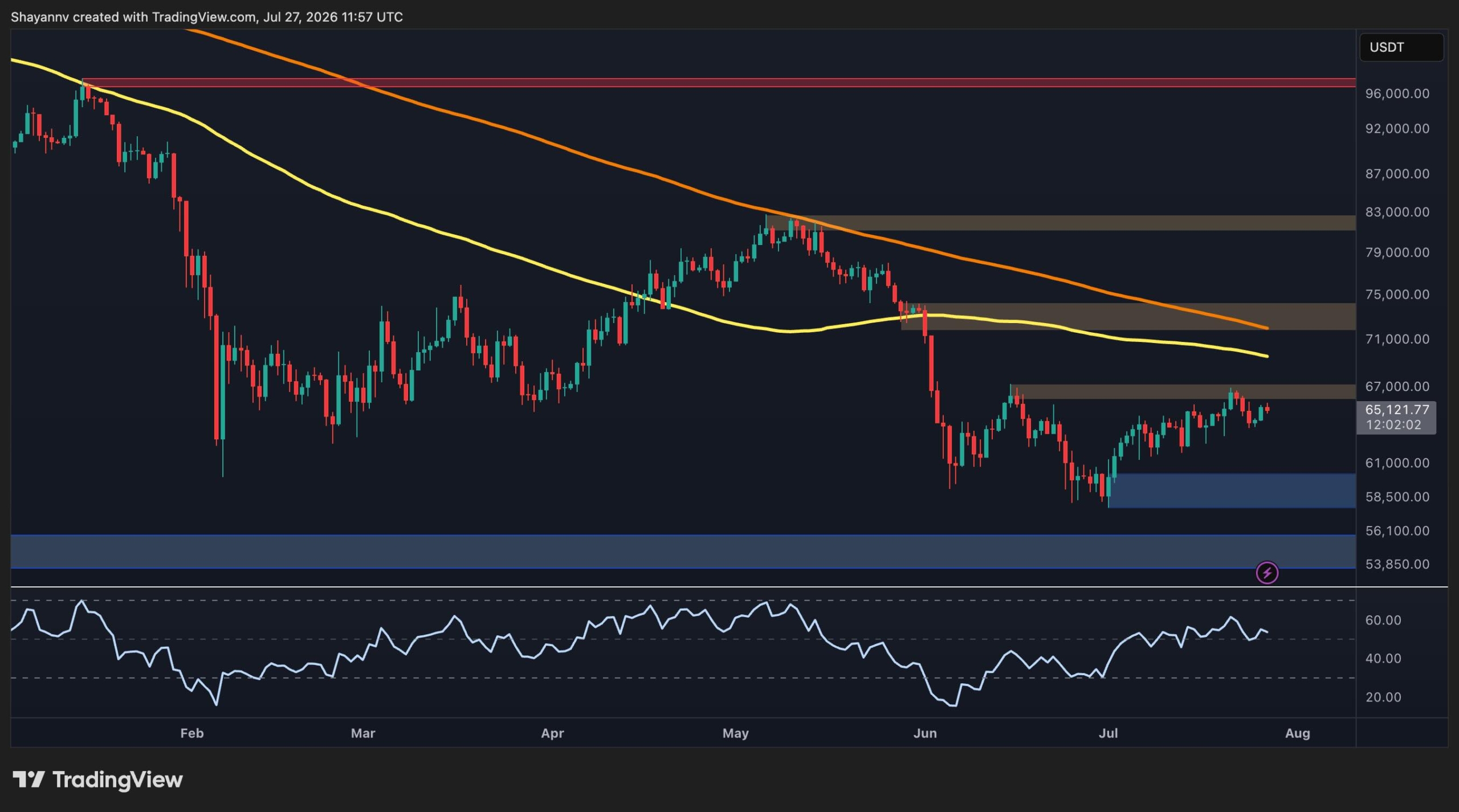
On the daily timeframe, BTC is trading around $65K after bouncing from the $60K demand area. The recovery has been constructive, but the market remains below both the 100-day moving average near $69K and the 200-day moving average around $72K, leaving the broader structure tilted to the downside.
The first major resistance sits at $67K, where price is currently testing a previously established supply zone. A successful breakout above this region could expose the next resistance cluster around $72K to $74K, which closely aligns with the declining moving averages. Beyond that, the $82K supply zone represents the primary bullish hurdle before any discussion of a larger trend reversal.
On the downside, the $60K support area remains the key level to monitor. Below that, the broader demand region around $54K to $56K would likely become the next destination if sellers regain control.
Momentum has also improved modestly, with the RSI climbing back toward the midline after recovering from oversold territory. However, the indicator has yet to enter strong bullish territory, suggesting buyers still need additional confirmation before establishing sustained upside momentum.
BTC/USDT 4-Hour Chart
The 4-hour chart presents a more worrying picture at the moment. Following the June selloff, Bitcoin formed a sequence of higher lows inside an ascending structure. However, the asset has broken below the lower trendline of the pattern and is currently retesting it. This breakout has shifted near-term momentum in favor of sellers.
The market is now consolidating inside the $65K to $66K resistance zone, just below the pattern, where sellers have seemingly stepped in. A decisive close above this area could trigger another leg higher toward the $67K region initially, while opening the path toward the higher daily resistance levels afterward.
On the other hand, failure to overcome this supply zone would likely trigger another pullback toward the $63.5K short-term support area. As long as this region holds, the short-term bullish structure remains intact. Losing it, however, would increase the probability of a deeper retracement toward the $60K demand zone.

Sentiment Analysis
The Adjusted Spent Output Profit Ratio (aSOPR) provides insight into whether coins moved on-chain are being sold at a profit or a loss. Readings above 1 indicate that holders are, on average, realizing profits, while values below 1 suggest coins are being spent at a loss.
The 30-day EMA of the aSOPR has remained below the neutral 1.0 level for several months, reflecting an extended period of subdued profitability and reduced selling pressure. More recently, however, the indicator has started to recover and is gradually moving back toward the equilibrium line.
This improvement suggests that profit-taking pressure is easing as the market stabilizes. If the aSOPR manages to reclaim and sustain levels above 1, it would indicate that realized profitability has returned without triggering aggressive distribution, a development that has historically supported healthier recovery phases.
Conversely, another decline below the neutral threshold would imply that market participants remain hesitant, increasing the risk that Bitcoin’s current rebound evolves into another relief rally rather than the beginning of a broader bullish trend.

The post Bitcoin Price Analysis: Only a Break Above This Level Will Confirm BTC’s Recovery appeared first on CryptoPotato.
Zcash locks its biggest private pool on Tuesday when the Ironwood upgrade goes live at block 3,428,143. Your coins stay safe, but you will only be able to move money out of that pool, not inside it.
The pool holds 3.76 million ZEC, worth about $1.89 billion, or roughly 22% of all ZEC in circulation. Developers say most holders do not need to do anything today.
What Changes for ZEC Holders on Tuesday
Do not rush. Your balance stays safe inside the locked pool. Your old address keeps working, because the new pool reuses it.
Wallets are still building the tool that moves your funds. Until yours is ready, that balance may look stuck.
Node operators have a real deadline. They must install the Zcash Foundation’s Zebra 6.0.0 release before Tuesday. It sets the switch-over point.
Some exchanges may pause deposits or withdrawals. Developers say that means the exchange is behind, not that Zcash is broken.
The new pool also adds a quantum safeguard from ZIP 2005. If quantum computers ever break today’s crypto math, funds in the new pool could be rescued. Coins left in the old pools could not. This is not full quantum protection yet.
The One Mistake That Can Expose Your Balance
Moving money out of the old pool is public. Anyone can see the amount. Nobody can see who sent it or who received it.
That sounds safe enough. There is a catch. Your wallet talks to a server, and that server sees your IP address.
Put the two together and someone can tie your balance to you.
“So for every user, the number one most important issue is having network-level privacy (i.e. Tor or Nym) before migrating,” Zooko Wilcox founded Zcash and wrote the project’s user guidance.
His advice is short. Turn on Tor or Nym first. Then wait until your wallet maker says it is safe to move.
He also warned about scammers. Some are already pretending to be Ironwood migration support.
Why Zcash Is Locking the Old Pool
A researcher found a bug in May. Taylor Hornby works for Shielded Labs. He spotted a flaw in the math that proves Orchard payments are real.
The bug could have let someone print fake ZEC. Nobody would have noticed.
ZODL, the Zcash Open Development Lab, patched it within days. ZEC still dropped more than 30%. It fell as low as $385.80 once the counterfeiting bug went public.
Then came the harder problem. Orchard hides every amount. So nobody could prove that no fake coins were ever made.
Ironwood fixes that. Money can now leave the old pool only through the turnstile. The turnstile is a counter. It never lets more ZEC out than went in.
Fake coins, if any exist, are stuck inside forever.
“However, rather than merely asking users to migrate away from a deprecated pool, we are effectively forcing wallets to conduct Orchard transactions in the new pool,” Sean Bowe and Dev Ojha wrote that in a joint statement from Project Tachyon and Valar Group.
Outside auditors and formal verification work back the fix.
Zcash Had This Exact Problem in 2018
This is the second time. In March 2018, cryptographer Ariel Gabizon found a fake-coin bug in Sprout, Zcash’s first private pool.
The company kept it quiet for 11 months. It slipped the fix into the Sapling upgrade that October. It only published the full story in February 2019.
That fix stopped new fake coins. It could not prove old ones were never made. Sprout was simply closed and left behind.
Eight years later, 22,747 ZEC still sit there. Nobody has ever broken the turnstile. That silence is now the best proof nothing was faked.
| Sprout, 2018 | Orchard, 2026 | |
|---|---|---|
| Bug found | March 2018 | May 2026 |
| Made public | 11 months later | Within days |
| How it was fixed | Quietly, inside Sapling | Patch, then Ironwood |
| Old pool | Left open, moving optional | Locked, moving required |
| ZEC involved | 22,747 still stuck | 3,765,594 to move |
Ironwood learns from that. It does not ask people to leave the old pool. It gives them no reason to stay.
What to Watch Over the Next 30 Days
You can now watch the move happen. ZODL’s dashboard shows funds leaving Orchard block by block.
If people move slowly, a big chunk of private ZEC sits unusable. If everyone moves at once, the supply check gets stronger but privacy gets thinner.
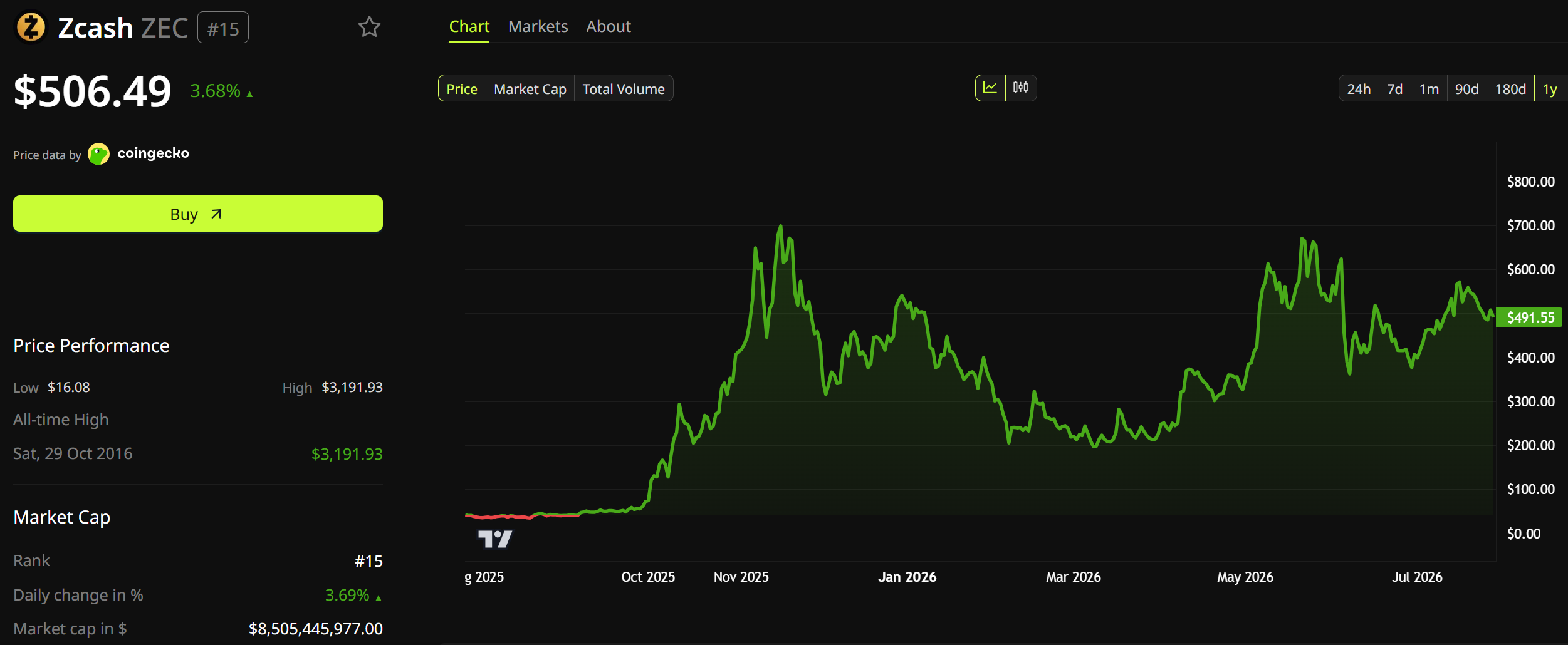
ZEC traded near $506 on Monday. It is up about 4% in a day and 22% in a month, according to current Zcash price data. Over the past year it has gained more than 1,100%, a run that put it in Forbes’ 2026 top 10.

The code looks ready. The real test is whether the exchanges are.
The post Zcash Ironwood Upgrade Goes Live Tomorrow: What Changes for ZEC Holders appeared first on BeInCrypto.


Strategy’s (MSTR) cash reserve now stands at $3.75 billion after the company raised $544.5 million last week.
That $3.75 billion is enough for 2.1 years of preferred stock dividend coverage, according to Executive Chairman Michael Saylor.
The money was raised through sales of more than 5.4 shares of common stock, per an SEC filing Monday morning.
A small portion of the raised money last week — $25 million — was used to buy back 288,930 shares of its high-yielding preferred stock STRC.
The company made no changes to its bitcoin holdings, which remain at 843,775 coins.
MSTR and its high-yielding preferred stock STRC are each higher by about 2.5% pre-market as bitcoin rose to $65,000 over the weekend.
Many of the leading cryptocurrencies, including Bitcoin (BTC), Ripple (XRP), and Solana (SOL), have posted minor gains over the past 24 hours. However, PUMP (the native token of Pump.fun) has outperformed them and all top 100 digital assets after surging by almost 20% to reach an 11-week high of roughly $0.00215.
Crypto X members noticed certain ecosystem advancements that have perhaps positively impacted the valuation, while some believe the rally might be just starting.
Pump.fun Beats Hyperliquid
Several hours ago, an X account associated with Pump.fun revealed that the meme coin launchpad has generated a 7-day revenue of almost $7.5 million, surpassing the popular decentralized exchange Hyperliquid, which recorded $7.31 million in the same period.
The development has drawn reactions from both critics and proponents of PUMP. X user LB argued that flipping Hyperliquid in the middle of a bear market is “the funniest” thing, questioning what would happen in the next bull run.
“Pump revenue figures are going to get stupid. I predict we will see a period where PUMP does $250M a month in revenue. $4.1M in buybacks a day. ATH matter of when not if. The only thing you need to worry about as a pump holder is not selling too early,” they added.
Pentosh1 also chipped in, stating “the math is mathing” for the token. They believe the potential growth of on-chain activity should be a huge beneficiary for the price, claiming PUMP is “here to stay.”
“And I say this as someone who has been a PUMP hater,” the analyst clarified.
After the latest price increase, many think the token is poised for much more substantial gains. X user Aman claimed that PUMP is testing a major descending resistance that has rejected the price twice before. They believe that a daily close above $0.00205 could open the door for “a strong breakout move.”
“Bulls are one breakout away from changing the entire structure,” the X user suggested.
For their part, Nehal opined that PUMP is pulling back into a key demand zone after reclaiming structure. In their view, the price may soar by over 80% from here on if bulls defend this area.
Knock Down or Knock Out for the Bears?
It is worth noting that the cryptocurrency market remains stuck in a persistent bear market, and any sudden price increases like PUMP’s could turn out to be short-lived and followed by a pullback.
In fact, something similar happened at the start of last week when the token’s valuation posted a 20% daily jump only to head south in the coming days.
PUMP’s Relative Strength Index (RSI) should serve as another warning. The ratio of the technical analysis tool has risen above 80, signaling that the token has entered overbought territory, which is typically a precursor to a correction. In contrast, anything below 30 is considered a buying opportunity.

- PUMP RSI, Source: TradingView
The post PUMP Hits an 11-Week High: Momentum Building or Pullback Ahead? appeared first on CryptoPotato.


American sports company Fanatics is making a major move into prediction markets, a corner of finance that has exploded in popularity over the past year as traders wager on everything from elections to inflation and sports.
On Monday, the sports merchandiser announced that it has agreed to acquire Water Street Labs and CX Clearinghouse from BGC Group, giving Fanatics ownership of a federally regulated exchange and clearinghouse which allows it to launch and settle its own prediction market contracts. Financial terms were not disclosed.
Through the acquisition, Fanatics will be able to list and clear contracts itself, giving it more control over the products it offers and how quickly it can bring new markets online. Fanatics and BGC also plan to develop new market data products that combine prediction market activity with traditional financial data, the companies said.
Prediction markets have become one of the fastest-growing areas of finance with much of that growth being fueled by CFTC-regulated exchange Kalshi and powerhouse Polymarket, which runs its operations on a blockchain.
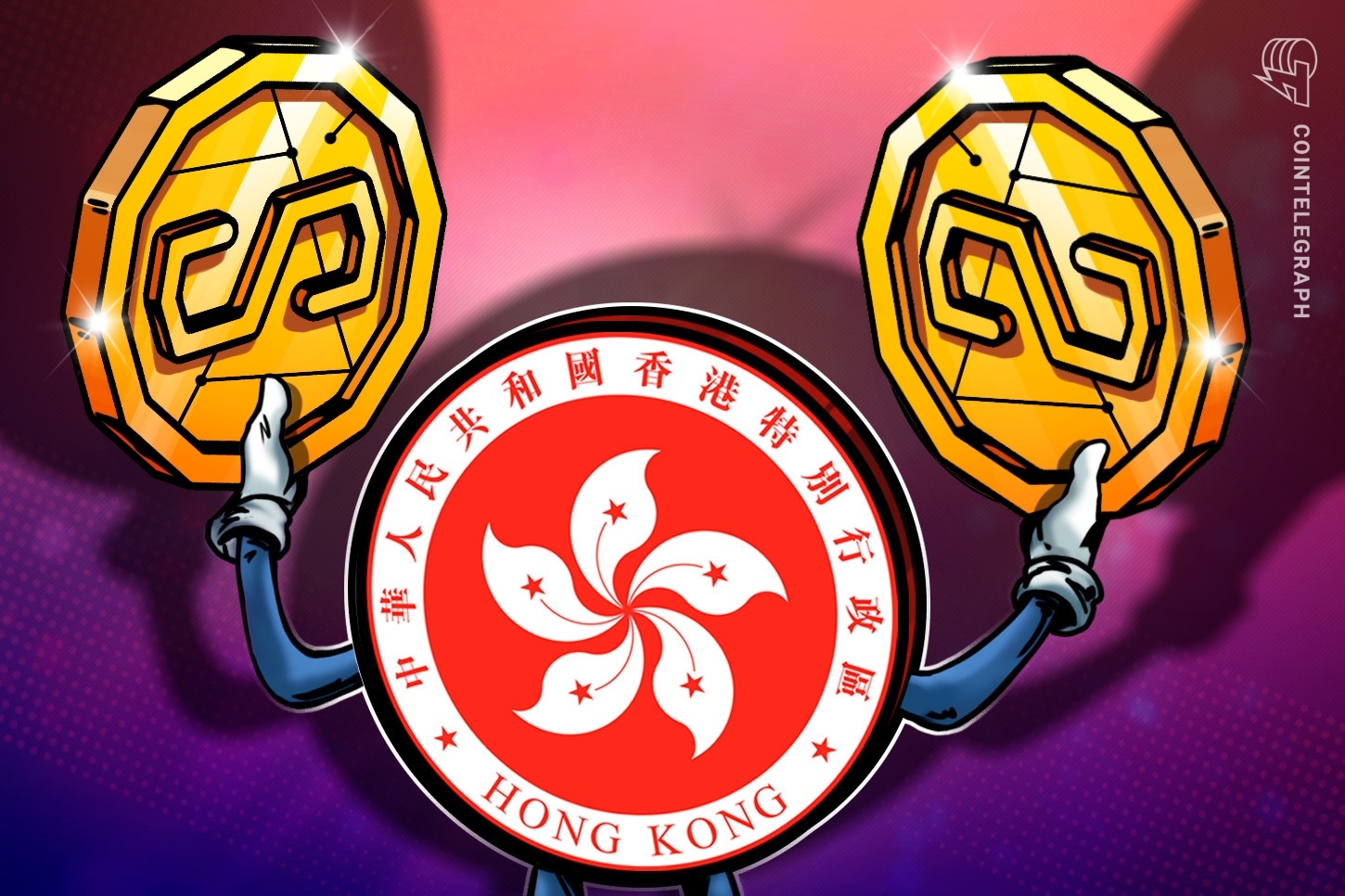
Hong Kong’s HashKey will unify its crypto exchange branches, with users from its Hong Kong, Global, Singapore and Middle East regions using the same platform.
Hong Kong digital asset services business HashKey Holdings has merged its HashKey Exchange and HashKey Global exchanges into a single platform and application.
Core jurisdictional hubs including Hong Kong, Singapore, the Middle East (Dubai) and Bermuda have been merged under a single platform, according to a Monday announcement. The move represents a departure from the early stages of the virtual asset industry when licensed exchanges typically operated under regional siloed models to simplify compliance. HashKey said.
The transition follows a principle of “unified entry, localized compliance” where all users download the same application while the platform manages compliance across their specific legislative domain — across the Hong Kong, Global, Singapore, or Middle East regions.
This results in a single front-end that simplifies access to systems that are promised to remain compliant with local regulatory frameworks thanks to localized management.
Other platforms, including OKX, present their website and mobile apps as one platform, while its terms assign customers to different providers according to residence. On the legal backend, that same platform is based on separate entities for Singapore, Dubai, Australia, the EEA, Brazil and the United States.
Kraken similarly consolidated Dutch broker BCM into its platform after acquiring it in September 2024. In August, Kraken began serving its European Economic Area through its Irish MiCA entity under a similar unified regulatory framework.
BitMine Immersion Technologies expanded its Ethereum treasury and accelerated its share buybacks last week, while BMNR stock jumped nearly 11% on Monday as ETH reclaimed $1,900.
Summary
- BitMine acquired 9,946 ETH, raising its total holdings to 5.79 million ETH.
- The company now controls 4.8% of Ethereum’s total supply, nearing its 5% threshold.
- BitMine repurchased 6.1 million BMNR shares, bringing total buybacks to 11.6 million.
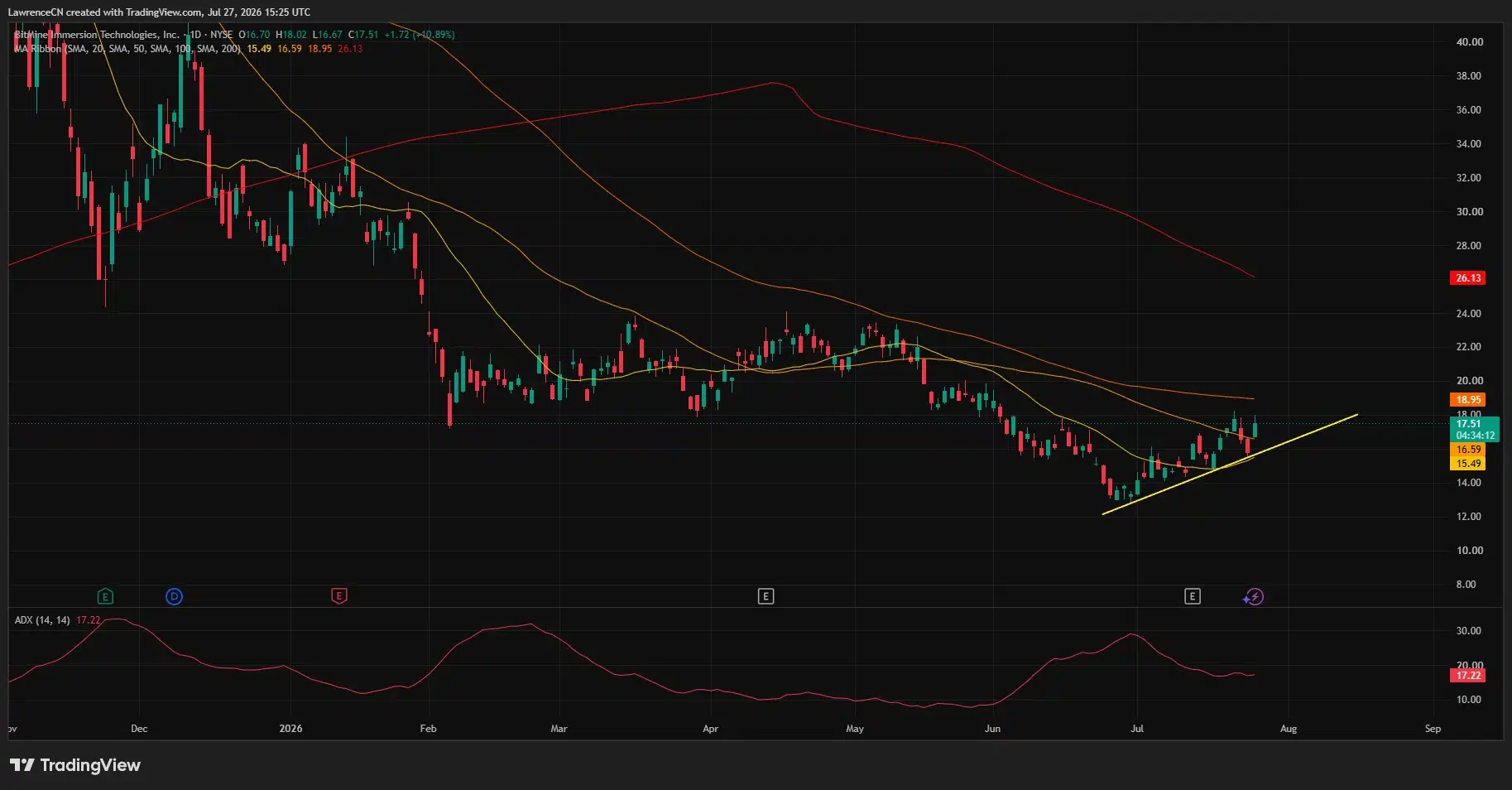
- BMNR gained 10.89% to $17.51, but still faces resistance near its 100-day average.
BitMine adds 9,946 ETH to its treasury
BitMine disclosed Monday that it purchased 9,946 ETH during the previous week, extending a weekly buying streak that began at the start of 2026.
The latest acquisition increased the company’s holdings to 5,787,414 ETH, equivalent to approximately 4.8% of Ethereum’s total supply. That puts BitMine close to its stated goal of owning 5% of all ETH in circulation.
The purchase also marked an increase from the prior week, when the company acquired 7,430 ETH. BitMine’s latest addition came as Ethereum recovered above $1,900 and reached its highest price in ten weeks.
Most of the company’s ETH is generating staking rewards. BitMine has staked 4,917,189 ETH, worth around $9.6 billion and representing about 85% of its total Ethereum holdings.
Staking allows BitMine to earn network rewards on its treasury assets, although the strategy also leaves its valuation heavily exposed to changes in the ETH price.
Share repurchases rise as ETH/BTC ratio strengthens
BitMine also bought back 6.1 million of its own shares last week, up from the 5.5 million shares repurchased during the previous week.
The latest transaction brought cumulative purchases under its $4 billion repurchase program to 11.6 million shares. Chairman Tom Lee linked the larger buyback to the recent improvement in the ETH-to-Bitcoin ratio, which measures Ethereum’s relative performance against BTC.
“In fact, this ratio is now at a 3-month high at 0.3000, which we believe bodes well for future strengthening of ETH prices.”
Lee added that Ethereum’s next notable price levels could be $2,000 and $2,500, citing targets identified by technical strategists. He also referenced BitMine adviser Tom DeMark, who sees those levels as possible near-term targets if Ethereum continues to follow its comparison with the S&P 500 after October 1987.
Those projections remain dependent on Ethereum maintaining its recovery. A renewed crypto market decline would affect both the value of BitMine’s treasury and investor demand for BMNR.
BMNR stock tests resistance after 10.89% gain
BMNR closed at $17.51 on July 27, gaining 10.89% during the session after trading between $16.67 and $18.02, according to the TradingView daily chart.
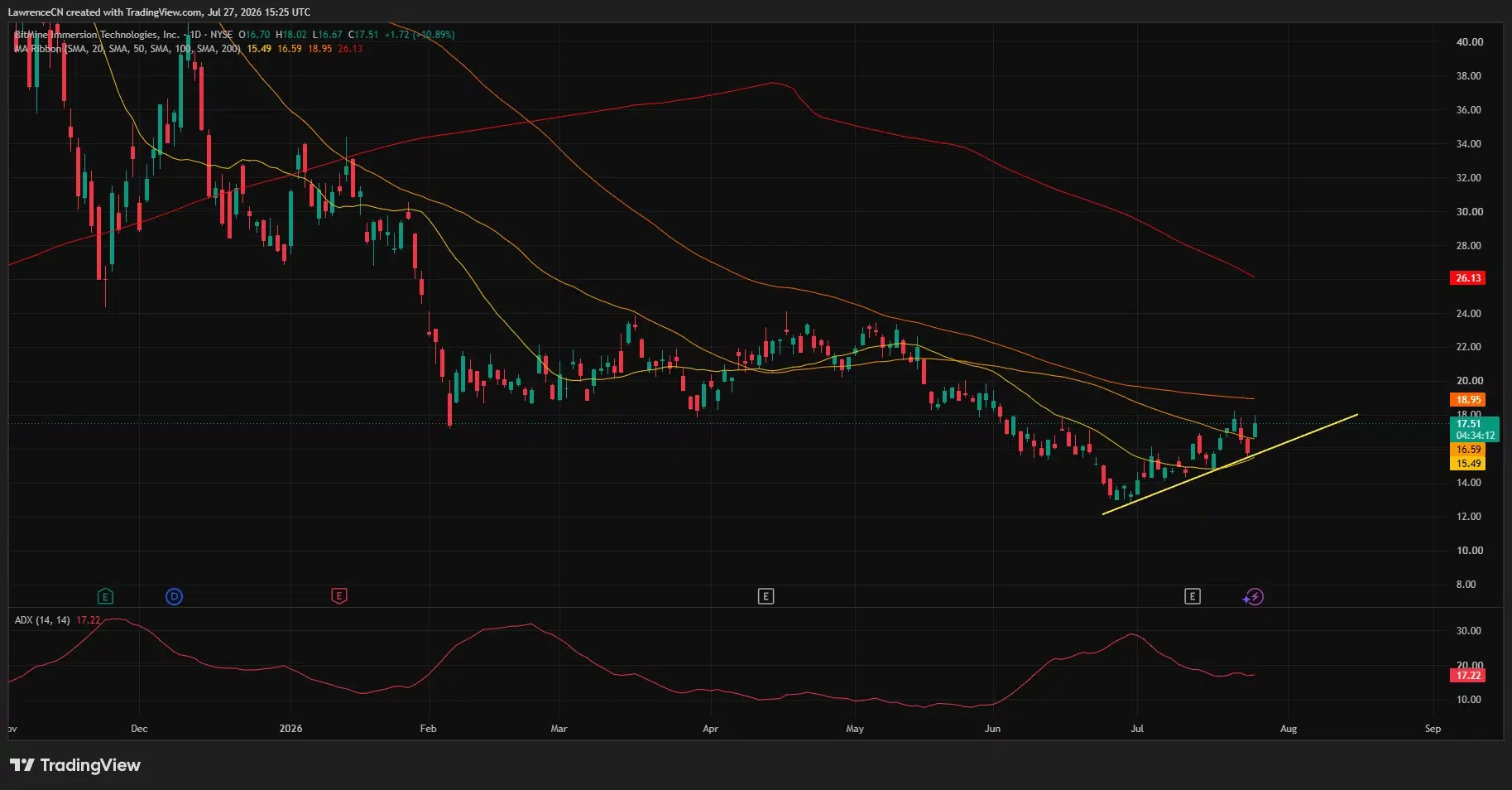
The stock has remained above a rising support trendline drawn from its late-June low. It also closed above the 20-day simple moving average at $15.49 and the 50-day average at $16.59, showing an improving short-term structure.
However, BMNR remains below its 100-day average at $18.95. A sustained move above that level could strengthen the recovery and expose the $20 area, while the 200-day average remains much higher at $26.13.
The average directional index stands at 17.22. An ADX reading below 20 suggests the rebound has not yet developed into a strong directional trend, leaving the stock vulnerable to further consolidation.
What the move means for US investors
BitMine gives US equity investors indirect exposure to Ethereum through a publicly traded stock, but BMNR also carries company-specific risks that direct ETH holders do not face. Its performance depends on Ethereum prices, staking income, treasury management, and the effect of share repurchases on its capital structure.
Institutional interest has also increased. As crypto.news reported last week, Cathie Wood’s ARK Invest purchased 5,264 BMNR shares through its flagship ARK Innovation ETF. ARK allocated about $251,500 across BitMine shares and the 3iQ Solana Staking ETF through three funds.
BitMine’s next key milestones are reaching the 5% ETH supply threshold and clearing the $18.95 technical resistance level. Progress on either front could shape whether BMNR extends its rebound or returns to its recent trading range.
Crypto World
NOWPayments and BlockSec Release Crypto Payment Security and Technical Compliance Checklist

[PRESS RELEASE – Amsterdam, Netherlands, July 27th, 2026]
NOWPayments and BlockSec have published a free checklist with 25 controls spread across nine security and technical compliance categories.
Crypto payments are easy to turn on. What’s hard is keeping the whole payment flow safe from key compromise, suspicious transactions, account takeover, or a stablecoin freeze.
NOWPayments is a global crypto payment gateway that supports over 350 cryptocurrencies and more than 30 stablecoins. Wide asset support, automatic conversion, and flexible settlement options help merchants, online platforms, and larger companies handle crypto at scale. Together with BlockSec, a blockchain security and compliance firm, NOWPayments created the Crypto Payment System Security and Technical Compliance Checklist.
The guide turns broad security principles into checks that security, operations, compliance, and product teams can work through together. It can be used before a business starts accepting crypto payments, during a vendor or architecture review, or as part of a regular control assessment.
A baseline built for daily use
The checklist covers 25 controls across nine areas:
- Private key and wallet security
- Smart contract security
- Transaction verification and signing
- Identity, accounts, and operations
- DNS and domain security
- On-chain monitoring and incident response
- AML/CFT technical compliance
- Stablecoin freeze risk management
- Continuous improvement
Each item is a control to verify rather than a general recommendation. Teams can mark it as confirmed, add supporting evidence, assign an owner, and record what needs to happen next.
This turns a broad security discussion into a working session with clear responsibilities. It can also reveal gaps between departments before they become operational or financial problems.
The checklist helps businesses answer questions such as:
- Can one person move production funds alone?
- Are operating wallets separated from reserve wallets?
- Are transaction-approval systems isolated from public infrastructure?
- Can suspicious transfers or privilege changes be detected in real time?
- Is there a tested plan for a stablecoin freeze event?
“The most common mistake is to treat a crypto payment like a normal online payment. On-chain transfers are final, so weak key management, unreviewed transaction approvals, or thin compliance checks can turn one mistake into a permanent loss,” said Andy Zhou, co-founder of BlockSec and professor at the Chinese University of Hong Kong.
From security principles to daily operations
Crypto payment risk rarely belongs to one department. Engineering may manage the infrastructure that approves transactions, compliance may screen transactions, and operations may lead the response when an alert is triggered.
The checklist gives these teams one shared record of existing controls, evidence, ownership, and next steps. For merchants, marketplaces, gaming and iGaming operators, SaaS companies, and Web3 platforms, this makes security reviews a repeatable process rather than a one-off exercise.
“Real-time visibility is what makes a fast incident response possible. It can be the difference between containing a loss and losing funds to swaps, bridges, or cash-out points,” Zhou added.
If stolen funds are traced to an exchange or crypto service, the window to act may be short.
“Businesses should preserve transaction hashes and addresses, trace the fund flow, and contact the exchange through its official security or compliance channel as quickly as possible,” Zhou said.
The checklist is an educational resource, not a certification or a replacement for legal advice. Its principles are designed to remain useful as payment infrastructure and security threats change.
Security without extra friction
Strong controls should help businesses grow their crypto operations without making daily work unnecessarily complex.
NOWPayments also offers zero-fee payouts, allowing businesses to send mass payouts to ChangeNOW Pro wallets at no cost.
In a public test, payouts were completed within seconds. Recipients confirmed each transfer by email before the funds moved.
For affiliate programs, marketplaces, creator platforms, remote teams, gaming projects, and Web3 communities, the two products address different parts of the same process: the checklist helps strengthen controls, while the payout flow reduces fees, manual wallet-address collection, and repetitive work.
Get the free NOWPayments and BlockSec checklist
The guide is designed for businesses that already accept crypto, are about to launch it, or want a fresh look at an existing payment and payout setup. Teams can use it to identify control gaps, assign ownership, and create a practical list of next steps before those gaps turn into incidents.
About NOWPayments
NOWPayments is one of the best crypto payment gateways, supporting 350+ cryptocurrencies and 30+ stablecoins. Its complete crypto business ecosystem combines broad asset coverage, automatic conversion, and flexible settlement options, making it suitable for merchants, online platforms, and global businesses.
About BlockSec
BlockSec is a full-stack blockchain security and crypto compliance provider combining research with products and services for smart contract auditing, real-time security monitoring, attack prevention, compliance, and on-chain investigation.
The post NOWPayments and BlockSec Release Crypto Payment Security and Technical Compliance Checklist appeared first on CryptoPotato.
Ideal daily meal times that may reduce your risk of dementia, according to scientists

Rob Gronkowski talks about his sports card collecting passion amid current trend

Why the Rate Path Still Splits Investor Bets

Renter of Home in Anne Heche Crash Denies Settlement With Son

No Jackpot Winner as $257 Million Prize Rolls Over to $269 Million Monday Draw

Weekend Open Thread: Staud – Corporette.com

“XRP IS READY” For HUGE Price Surge, Popular Analyst Declares -Report

Mrbeast Use Fake Money l #shorts #trending #youtubeshorts

The Crypto Bull Flip is Coming: AI Money to Flow Into Crypto + Fed Money Printing (Get Bullish Now!)
-

 Fashion3 days ago
Weekend Open Thread: Brooks Brothers
-

 Crypto World6 days ago
Grayscale Files For Worldcoin ETF, WLD Registers Sharp Rise
-

 NewsBeat6 days ago
How a former Blue Peter presenter stunned America’s Got Talent judges
-

 Tech16 hours ago
Intel is reversing course and bringing hyper-threading back to its server chips
-

 Tech7 days ago
Sail Virtually Aboard The “Itanic” With IA-64 Emulator
-
 Tech7 days ago
Turtle Beach Command Series KB7 review: a nifty screen-equipped gaming keyboard
-
 Business6 days ago
New Jersey voter registration controversy explained: How 6,600 noncitizens got on the rolls, and what happens next
-
 Entertainment6 days ago
Johnny Depp’s R-Rated Gothic Cult Classic Gets New Release Ahead of Sydney Sweeney Remake
-

 Crypto World5 days ago
Ethics, other provisions in crypto Clarity Act to be further discussed
-

 Politics6 hours ago
Luke Littler dismantles Gerwyn Price to retain title in Blackpool
-
 NewsBeat7 days ago
Shanghai science forum photos show China’s AI and robotics advances in rivalry with US
-
 Sports20 hours ago
Commonwealth Games boxing: Jadumani Singh seals dominant 5-0 win over Pakistan’s Sumama Rehman to enter quarter-finals | Commonwealth Games News
-

 Sports4 days ago
2026 3M Open leaderboard: Scottie Scheffler finds putter in Round 1, sits three back
-

 News Videos4 days ago
The Peugeot Family: How 200 Years of an “Old Money” Dynasty Died in A Boardroom
-

 Fashion4 days ago
16 Dresses for the High Summer Event
-

 Politics1 day ago
Spain sweeps the board at 2026 World Cup with individual awards
-

 Crypto World7 days ago
Andrew Cuomo joins OKX board as crypto exchange expands in U.S.
-
 Entertainment3 days ago
A New Post-Apocalyptic Gundam Anime Series Blasts Into SDCC
-

 News Videos20 hours ago
BITCOIN JUST ENTERED THIS CRITICAL ZONE…
-

 Crypto World1 day ago
XRP Ledger adds $2.6B as RWA inflows rank second
You must be logged in to post a comment Login