

Crypto World
Standard Chartered backs Bitcoin despite Strategy selloff fears



Bitcoin has climbed back above $64,000 after Standard Chartered reaffirmed its $100,000 year-end 2026 price target and argued that recent selling linked to Strategy has not weakened Bitcoin’s long-term outlook.
Summary
- Standard Chartered says Strategy-related concerns, not Bitcoin fundamentals, caused the recent market pullback.
- The bank has reaffirmed its $100,000 Bitcoin price target for the end of 2026 despite recent volatility.
- Wells Fargo increased its Strategy stake while trimming IBIT holdings and expanding its crypto options positions.
Standard Chartered said the recent decline in Bitcoin was driven more by uncertainty over Strategy’s changing treasury approach than by any deterioration in the cryptocurrency’s fundamentals.
In a research note, the bank maintained that the latest pullback should not be viewed as a sign that the longer-term bull case has changed.
Strategy’s treasury changes remain at the center of investor attention
According to Standard Chartered’s Global Head of Digital Assets Research, Geoff Kendrick, investors have largely misunderstood Strategy’s evolving use of its Bitcoin holdings. Rather than continuing to rely mainly on debt and equity issuance to accumulate Bitcoin, the company is increasingly using its treasury to support credit-focused products, including its perpetual preferred stock, STRC.
Standard Chartered said this development has altered how some investors interpret Strategy’s role in the Bitcoin market. The bank added that clearer communication around the company’s treasury plans could help reduce concerns over future Bitcoin sales.
In its report, Standard Chartered compared the importance of credible corporate commitments with the way central banks use consistent policy signals to build market confidence.
Earlier this year, Strategy’s Bitcoin sale triggered a sharp market reaction after investors questioned whether the company might continue reducing its holdings. According to the report, the announcement contributed to Bitcoin falling from around $80,000 to nearly $60,000, while Strategy shares and STRC also declined as investor confidence weakened.
Even during that period, however, Standard Chartered kept its forecast that Bitcoin could reach $100,000 by the end of 2026, arguing that the market had overreacted to uncertainty surrounding Strategy rather than changes in Bitcoin itself.
Institutional positioning continues to evolve
As Bitcoin recovered to trade near $64,500, institutional investors also adjusted their exposure to Strategy and crypto investment products.
As previously reported by crypto.news, Wells Fargo disclosed in its latest filing with the U.S. Securities and Exchange Commission that it increased its holding in Strategy by 125%, lifting its position to nearly 726,000 shares after adding about $41.5 million in exposure.
The same filing also showed that Wells Fargo reduced its position in BlackRock’s iShares Bitcoin Trust by 75,102 shares compared with the previous quarter.
At the same time, the bank opened a new IBIT call position and expanded its put exposure during a period of elevated market uncertainty tied to the U.S.-Iran conflict, indicating a more balanced options strategy instead of relying solely on spot ETF holdings.
Beyond Bitcoin-related investments, the SEC filing showed that Wells Fargo also increased its exposure to Ethereum- and Solana-linked products, suggesting continued institutional participation across multiple digital asset markets despite recent volatility.
Standard Chartered argued that if Strategy succeeds in explaining how its treasury model is changing, concerns about additional Bitcoin sales could ease further. With Bitcoin trading back above the $64,000 level while the bank maintains its long-term forecast, the report said investor confidence could continue improving as uncertainty around Strategy’s financing strategy fades.


The U.S. government has transferred nearly $300 million worth of seized Bitcoin and Ether to Coinbase Prime, according to on-chain tracking data from Arkham. The move—sent from government-linked wallets to Coinbase’s institutional custody and services venue—has reignited questions about whether the assets will eventually be sold.
Arkham data indicates that on Monday, 3,940 BTC (valued at about $243.95 million) and 30,014 ETH (about $53.09 million) were deposited to Coinbase Prime. The transactions appear tied to multiple high-profile U.S. crypto seizures, making the transfer notable not only for its size, but for what it could signal about broader U.S. policy and asset management.
Key takeaways
- Arkham reports Monday’s deposits of 3,940 BTC and 30,014 ETH from U.S. government-linked wallets to Coinbase Prime.
- The transfers are associated with prior seizures, including assets linked to the “xanaxman” case and a crypto scheme involving Brian Krewson.
- While a sale is possible, the deposits alone do not confirm trading—Coinbase Prime also provides custody and related services that can be consistent with consolidation.
- The timing has drawn attention to an executive order stating seized Bitcoin should contribute to a “Strategic Bitcoin Reserve,” potentially limiting direct sales.
- Government-linked wallets still hold substantial crypto assets, which means investors may continue to watch wallet activity for clues on long-term disposition.
Large government deposits to Coinbase Prime raise questions
According to Arkham, the U.S. government moved 3,940 Bitcoin and 30,014 Ether to Coinbase Prime on Monday. These transfers are among the largest government-linked movements to Coinbase Prime this year, reintroducing a familiar market narrative: when seized assets reach an exchange-adjacent custody provider, the next step could be liquidation—or it could be operational management.
Galaxy Research’s Alex Thorn characterized the Bitcoin portion by tracing the source of the coins to assets seized from ryan farace, known online as “xanaxman,” as well as from the defunct btc-e exchange. That framing matters because it connects wallet flows to known enforcement histories, helping analysts interpret what category of seized funds is being handled.
On the Ether side, the Arkham-linked association points to assets tied to Brian Krewson, an Oracle employee alleged to be implicated in a $54 million crypto storage and money laundering scheme. In practice, such linkages help observers determine which legal cases may be behind the assets and therefore what disposal pathways might exist.
Does this conflict with the “Strategic Bitcoin Reserve” directive?
The timing of the deposits has prompted renewed scrutiny of U.S. policy. The transfers have been compared to a March 2025 executive order under President Donald Trump that instructs seized Bitcoin should be part of a “Strategic Bitcoin Reserve” and “should not be sold.” That language is now in the spotlight because moving seized coins into an institutional venue like Coinbase Prime is often interpreted as a step toward potential disposition.
However, there is an important distinction between custody movements and confirmed sales. Coinbase Prime is not only a venue for trading; it also supplies institutional custody, trading capabilities, financing, and staking services. As a result, the act of depositing assets does not, by itself, prove that the government intends to liquidate them.
That nuance is likely to be central for market participants. If the U.S. is consolidating assets in a custody framework for administrative or technical reasons, holders may see continued inflows to Prime without immediate sell pressure. If, instead, subsequent steps show transfers to trading desks or to counterparties in a manner consistent with execution, the executive-order debate could evolve from interpretation to measurable outcomes.
Why Coinbase Prime deposits have become a recurring pattern
This is not the first time government-linked wallets have used Coinbase Prime. The new transfer stands out mainly by scale—yet earlier examples underline that such custody routing has already been part of the government’s operational playbook.
In June, a U.S. government-linked wallet moved 98,589 Chainlink (LINK) tokens to Coinbase Prime, with tracing reportedly connecting those assets to seizures involving FTX and Alameda Research. Earlier still, in April, approximately 8.2 Bitcoin tied to the 2016 Bitfinex hack was sent to Coinbase Prime.
These precedents suggest that using Coinbase Prime may serve multiple functions, from custody consolidation to enabling potential future actions depending on legal and administrative decisions. The key unknown for investors is whether Monday’s transaction is simply another custody step in an ongoing process—or whether it marks a shift toward liquidation planning.
What analysts estimate remains in government wallets
Even without assuming a sale, the broader picture remains significant. Estimates cited in the reporting indicate U.S. government-linked wallets still hold cryptocurrency valued at roughly $20.6 billion in total, including around 325,000 BTC, 28,000 ETH, 146 million USDT, and 750 Wrappd Bitcoin (WBTC).
Those holdings underscore why wallet monitoring has become a staple for market observers: large balances concentrated in identifiable government wallets can influence expectations about future supply and regulatory risk, especially during periods when traders are already sensitive to changes in liquidity and headline policy.
At the same time, the size of remaining holdings also makes the “how” more important than the “whether.” Investors may need to watch not only deposits to custody providers, but subsequent on-chain behavior that would suggest conversions, withdrawals to trading counterparties, or other actions that are more consistent with sales rather than custody management.
For now, the key watchpoints are whether additional government-linked transfers continue to concentrate assets at Coinbase Prime and whether follow-on transactions indicate execution rather than consolidation. Until clearer on-chain signals appear, Monday’s move looks more like a high-value custody step than proof of immediate selling.
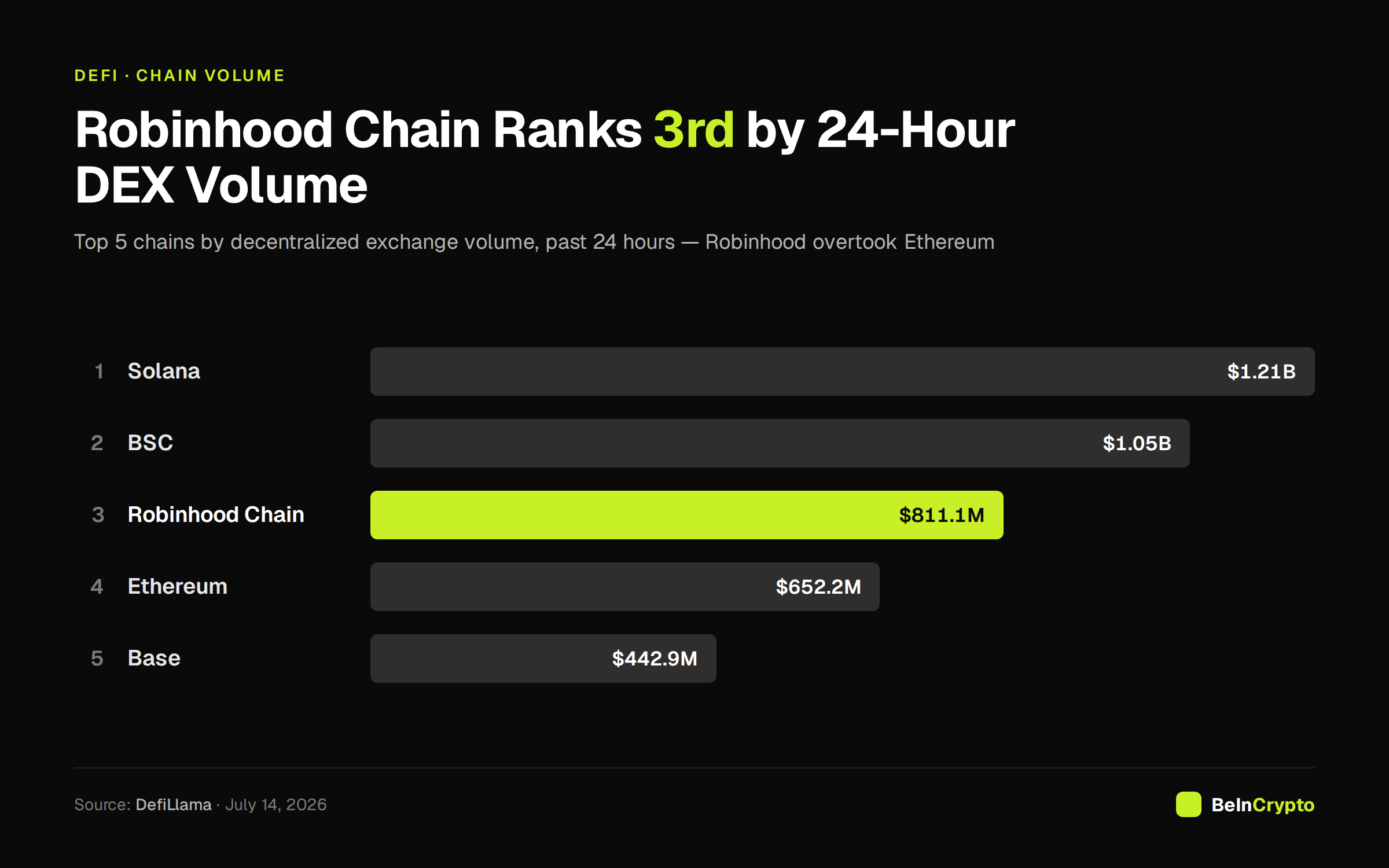
Robinhood Chain ranked third among all networks by 24-hour decentralized exchange (DEX) volume, trailing only Solana (SOL) and BNB Smart Chain (BSC), while passing Ethereum (ETH), according to DefiLlama data.
The layer-2 network has been live since July 1, with daily DEX volume of about $811 million. Solana led with $1.21 billion, followed by BSC at $1.05 billion.

Robinhood Chain’s Fast Start
Bernstein flagged the network’s early strength in a Monday research note. Analysts led by Gautam Chhugani said the chain drew about $3.1 billion in DEX volume across its first seven days.
That total placed it among the top five chains. More than 65,000 users now hold roughly $13 million in tokenized stocks and $300 million in stablecoins on the network.
Bernstein said the network’s first week leaned heavily on speculation. Meme coins drove most of the early activity, and deeper liquidity followed once crypto-native traders moved in.
Meme Coins Lead, but Robinhood Eyes More
Dune data validates that read. Cash Cat (CASHCAT), a meme coin named after Robinhood’s early branding, leads all tokens. It logged $299 million in volume across 304,907 trades.
Bernstein expects the focus to shift over time. The broker said Robinhood aims to steer trading toward tokenized stocks, commodities, and perpetual futures.
The analysts framed the launch as evidence of converging trends.
“Strong early adoption highlights the growing convergence of tokenized real-world assets with the broader DeFi ecosystem, as industry participants continue to innovate across multiple business models for regulated asset tokenization,” the note read.
Other lines are gaining traction, too. Robinhood is expanding its agentic AI trading tool from stocks into crypto. At the same time, event contracts on its platform jumped from 300 million in Q1 2025 to 8.8 billion in Q1 2026, per Artemis.
Follow us on X to get the latest news as it happens
The coming weeks will show whether that speculative flow converts into lasting demand for tokenized assets.
Subscribe to our YouTube channel to watch leaders and journalists provide expert insights
The post Robinhood Chain Passes Ethereum in DEX Volume 2 Weeks After Launch appeared first on BeInCrypto.

Long-time crypto trader Ogle warned on July 13 that small meme coins with limited liquidity can collapse within minutes when a few large holders decide to sell.
Pointing to recent losses around the latest sensation in the space, CASHCAT, the market watcher reiterated the risks in chasing fast-moving tokens, where paper gains can disappear really fast when leverage, thin markets, and concentrated ownership collide.
Why a Few Wallets Can Move the Whole Market
In a post on X, Ogle made a basic observation about this market: that a lot of people are sitting on hundreds of thousands, sometimes millions of dollars in gains that they have not actually cashed out. According to him, if even two or three of these traders were to sell, it would trigger a major price drop, especially for smaller meme coins.
“When a ton of people have made hundreds of $k or $m in a token, unrealized, in this type of market, it only takes 2-3 of them to sell (if the token is small, especially a meme with little liquidity) for everything to collapse quickly,” he wrote.
The analyst explained that the problem became even worse if the token was listed on perpetual futures exchanges, where traders often borrowed funds to place large bets.
He gave an example of CASHCAT, the meme coin built on the Robinhood Chain, that jumped more than 3,200% over the past week and briefly pushed its market cap to around $226 million about a day ago when its price hit an all-time high (ATH) of $0.2288 per CoinGecko data.
According to Lookonchain, that rally saw a few winners, including one trader who bought 15 million CASHCAT tokens for about $838 and turned that into a profit of over $1 million. However, had they waited a few more days, they would have walked away with nearly $2.9 million. Another trader spent $69 and sold for $711, which, while a tidy 10x on their investment, would have been worth $2.7 million had they also waited.
However, things may have also gone south for those traders since, as Ogle noted, the asset experienced some pretty big liquidations, which came right after the launch of a perpetual contract on Hyperliquid.
Data from CoinGecko shows CASHCAT’s value crashed by approximately 60% with about 90% of long positions liquidated, intensifying selling pressure and volatility. At the time of writing, the meme coin had made some recovery and was trading just below $0.16, although that price still represented an over 18% dip in 24 hours, pushing the coin more than 30% below its ATH.
Utility Tokens vs. Short-Term Meme Bets
In his X post, Ogle, who’s an advisor for the Trump family-backed World Liberty Financial, said that while meme coins can produce quick returns, his trading experience had seen him make the biggest gains from utility-focused assets such as Solana, BNB, Ethereum, Litecoin, and Bitcoin.
According to him, those investments are slower plays that require patience, and many traders often lose interest before the assets can deliver larger returns.
The post Crypto Veteran Warns: A Handful of Sellers Can Wipe Out Meme Coins in Minutes appeared first on CryptoPotato.


The US government moved nearly $300 million in seized Bitcoin and Ether to Coinbase Prime on Monday, renewing speculation that the assets could be sold.
Data from Arkham shows 3,940 Bitcoin (BTC) (worth $243.95 million) and 30,014 Ether (ETH) (worth $53.09 million) were sent to Coinbase Prime on Monday. The funds were linked to several high-profile US government crypto seizures.
“These coin movements were comprised of coins seized from ryan farace (“xanaxman”) and defunct crypto exchange btc-e,” said Galaxy Research head Alex Thorn, referring to the Bitcoin movements. The Ether is linked to Brian Krewson, an Oracle employee implicated in a $54 million crypto storage and money laundering scheme.
The transfers have drawn attention because a sale would appear to conflict with US President Donald Trump’s March 2025 executive order, which said Bitcoin seized by the US government should form part of the Strategic Bitcoin Reserve and should not be sold.
However, the deposits do not confirm a sale, as Coinbase Prime provides institutions with custody, trading, financing and staking services, meaning the transfers may simply reflect asset consolidation.
Related: US Bitcoin reserve hits snag as federal agencies debate for control: Bloomberg
Although the US government has previously transferred cryptocurrency to Coinbase Prime, Monday’s transfer was one of the largest from government-linked wallets this year.
In June, a US government-linked wallet moved 98,589 Chainlink (LINK) tokens to the platform, with the funds traced to assets seized from FTX and Alameda Research. In April, around 8.2 Bitcoin tied to the 2016 Bitfinex hack was sent to Coinbase Prime.
US government-linked wallets are estimated to still hold $20.6 billion in crypto, including around 325,000 BTC, 28,000 ETH, 146 million USDT and 750 Wrappd Bitcoin (WBTC).
Magazine: Bitcoin nearing late stages of bear market: Jamie Coutts, Real Vision

The Digital Asset Market Clarity Act, commonly known as the CLARITY Act, is gaining momentum in the US as a second major law enforcement organization publicly endorses the bill ahead of a critical Senate deadline. The Federal Law Enforcement Officers Association (FLEOA) said it submitted a letter to the Senate Banking Committee supporting the legislation, while urging targeted revisions—particularly around how decentralized finance (DeFi) protections are structured and how accountability is defined.
FLEOA’s July 10 endorsement arrives after earlier backing from the National Organization of Black Law Enforcement Executives (NOBLE) and comes as lawmakers weigh whether the bill can clear Congress before the Senate’s August recess. Industry observers have framed the recess period as a potential make-or-break window for final action this year.
Key takeaways
- FLEOA has endorsed the CLARITY Act in a letter to the Senate Banking Committee, calling it progress toward balancing innovation and public safety.
- The association supports the bill’s consumer-protection goals but wants changes to narrow DeFi-related protections and clarify who is accountable in decentralized systems.
- Law enforcement groups have previously raised concerns that portions of the bill—especially around developer liability—could create overly broad exemptions that hinder investigations.
- The timing is tight, with the Senate’s Aug. 8 recess cited as a key milestone for whether the legislation can pass this year.
Second endorsement—support with conditions
In its statement, FLEOA characterized the current CLARITY Act draft as “meaningful progress” toward establishing a regulatory framework for digital assets while preserving authorities needed to combat crime. The organization said the legislation should maintain existing capabilities related to criminal enforcement, anti-money laundering, counterterrorism financing, sanctions enforcement, and investigative work.
At the same time, FLEOA emphasized that lawmakers should refine specific DeFi provisions. According to FLEOA’s recommendations, the bill’s DeFi protections should be narrowed, clearer accountability should be established for participants within decentralized finance systems, and the legislation should prevent entities from avoiding regulation simply by portraying themselves as decentralized.
FLEOA also asked Congress to adjust the “specific intent” language to make liability easier to establish, and to explicitly confirm that the CLARITY Act does not limit existing federal investigative authority. The request reflects a core tension that has followed the bill through prior negotiations: how to protect legitimate innovation without inadvertently creating gaps that prosecutors and investigators could struggle to navigate.
Crypto Council CEO Ji Kim linked FLEOA’s support to a broader argument that the bill strengthens consumer protection and preserves law enforcement effectiveness, noting the endorsement in a public statement Monday.
Why law enforcement scrutiny has mattered
The fresh FLEOA letter lands on the heels of earlier objections from law enforcement organizations that challenged parts of the CLARITY Act—particularly around developer liability for misuse by users on decentralized platforms.
Earlier reporting highlighted that in June, four law enforcement organizations contacted the White House with concerns centered on Section 604, which aims to protect developers from liability tied to illicit activity conducted by users on decentralized networks. The organizations argued that the language, as written, might function as a broad exemption, potentially complicating investigations into crypto-related crime.
Those concerns prompted attention within the administration. The White House invited law enforcement groups objecting to the bill’s language to a late-June meeting—an indication that the disputes were not merely academic. In July, the Major County Sheriffs of America shifted from opposition to neutrality, reflecting that negotiations and proposed changes were actively shaping positions across law enforcement.
FLEOA’s new letter suggests that—while support for the CLARITY Act is increasing—there remains a category of legal uncertainty that enforcement advocates want addressed before the bill locks in. For investors, traders, and builders, the practical effect is straightforward: the scope of developer protection and the definition of responsibility in DeFi can influence how compliance strategies, product design, and risk management decisions are made.
What the Senate deadline means for prospects
FLEOA’s endorsement also underscores the political urgency surrounding the CLARITY Act. The letter was released less than four weeks before Aug. 8, when the Senate is expected to recess. According to Senator Cynthia Lummis, the window to pass a digital assets bill could be limited this year, warning that failure to enact meaningful legislation could leave rulemaking to other jurisdictions and prolong uncertainty for US market participants.
For the crypto sector, the legislative calendar matters not just for timelines, but for predictability. When a bill is approaching a recess, negotiations often compress: controversial language becomes more difficult to rewrite in depth, and stakeholders may shift their focus toward narrower edits rather than sweeping redesigns.
That dynamic helps explain why the FLEOA letter emphasizes targeted adjustments rather than a fundamental withdrawal of support. The group is signaling that it can back the overall approach—while still pushing for clarifications that could reduce enforcement friction later.
DeFi protections and accountability: the remaining fault line
At the heart of FLEOA’s requests is the question of how the CLARITY Act treats decentralized systems in practice. Supporters of the bill have argued that rules should recognize technological realities and avoid punishing developers for actions they do not control. Enforcement advocates, however, have warned that overly protective language could unintentionally insulate individuals or firms whose conduct resembles regulated activity—even if marketing or structural claims point toward decentralization.
FLEOA’s call to narrow DeFi protections and clarify accountability is therefore not just legal fine-tuning. It goes directly to whether investigators can build cases effectively, and whether compliance obligations remain aligned with operational control and influence.
Equally important is FLEOA’s emphasis on “specific intent” language and an explicit preservation of existing investigative authority. In legislative drafting, intent requirements can determine what must be proven in court. Changes here can shift burdens of proof and affect litigation risk for market participants.
What remains unclear—until lawmakers see the evolving text—is the balance Congress will strike between encouraging responsible development and ensuring that decentralization claims cannot be used as a shield against enforcement. Readers should watch whether forthcoming amendments address the specific points raised by FLEOA and other law enforcement organizations, or whether compromises keep the legislation’s enforcement implications ambiguous.
With the Senate’s August recess approaching, the next steps will likely hinge on how quickly the committee can incorporate these requested revisions into a final bill text—and whether additional groups move toward alignment or raise new objections as the calendar tightens.
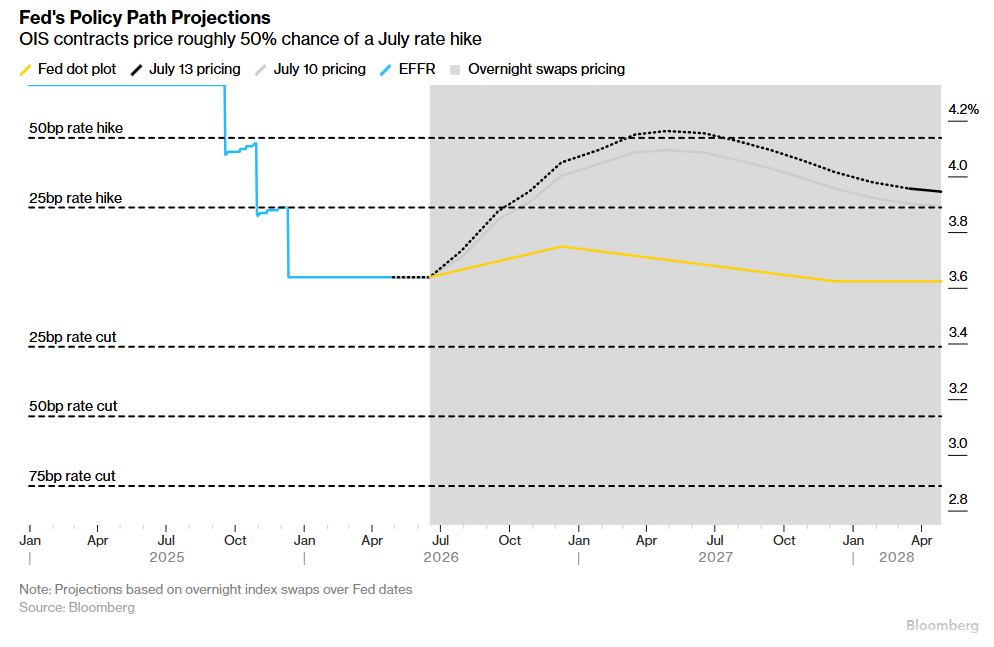
Federal Reserve Chairman Kevin Warsh testifies before Congress Today, July 14, and tomorrow. Bond traders increasingly bet the week will confirm what markets already suspect. A rate hike is coming in July.
The testimony lands alongside fresh inflation data and a wave of bank earnings. That makes this one of the most consequential weeks for anyone with a mortgage, a savings account, or a credit card balance.
Why Rate-Hike Odds Have Jumped
Traders have pushed the market-implied chance of a quarter-point hike this month to about 50%. Just weeks ago, that number sat under 10%. Two-year Treasury yields, which track Fed policy expectations closely, have stayed above 4.25%.

Fed Governor Christopher Waller triggered the shift. Markets had viewed him as one of the central bank’s most dovish officials. Waller said policymakers should consider a hike soon if upcoming data show another “hot reading” on core prices.
June’s Consumer Price Index, also releasing Tuesday, should show headline inflation easing to around 3.8% from May’s 4.2%. Falling gas prices are driving that drop.
Core inflation, which strips out food and energy, should tick down only slightly, to around 2.8% from 2.9%. That keeps it well above the Fed’s 2% target. This stickiness is exactly why rate-sensitive chip stocks still face CPI risk.
Don’t Expect Warsh to Tip His Hand
Warsh took office in May and he has already built a reputation for avoiding forward guidance. He made that clear this month at a central-bank symposium in Portugal.
“I want us to have a good family fight. When we get into that room and shut the door, we’re going to have a good debate, but I don’t have much more for you than that.”
So the testimony itself likely won’t confirm a hike. Instead, expect lawmakers to press Warsh on Fed independence from the Trump White House.
They’ll also ask whether AI-driven demand is adding to inflation, and how tariffs and Middle East oil disruptions keep filtering into consumer prices.
The real decision arrives at the Fed’s July 29 meeting, not this week’s hearings.
What a Hike Would Mean for Regular Households
A hike would raise rates on credit cards, home equity lines, and adjustable mortgages. That’s unwelcome news for borrowers already stretched by elevated inflation. Savers benefit more directly. Banks typically raise yields on savings accounts and CDs when the Fed hikes.
The post Warsh Testifies to Congress Today: Will He Bring a Rate Hike in July? appeared first on BeInCrypto.
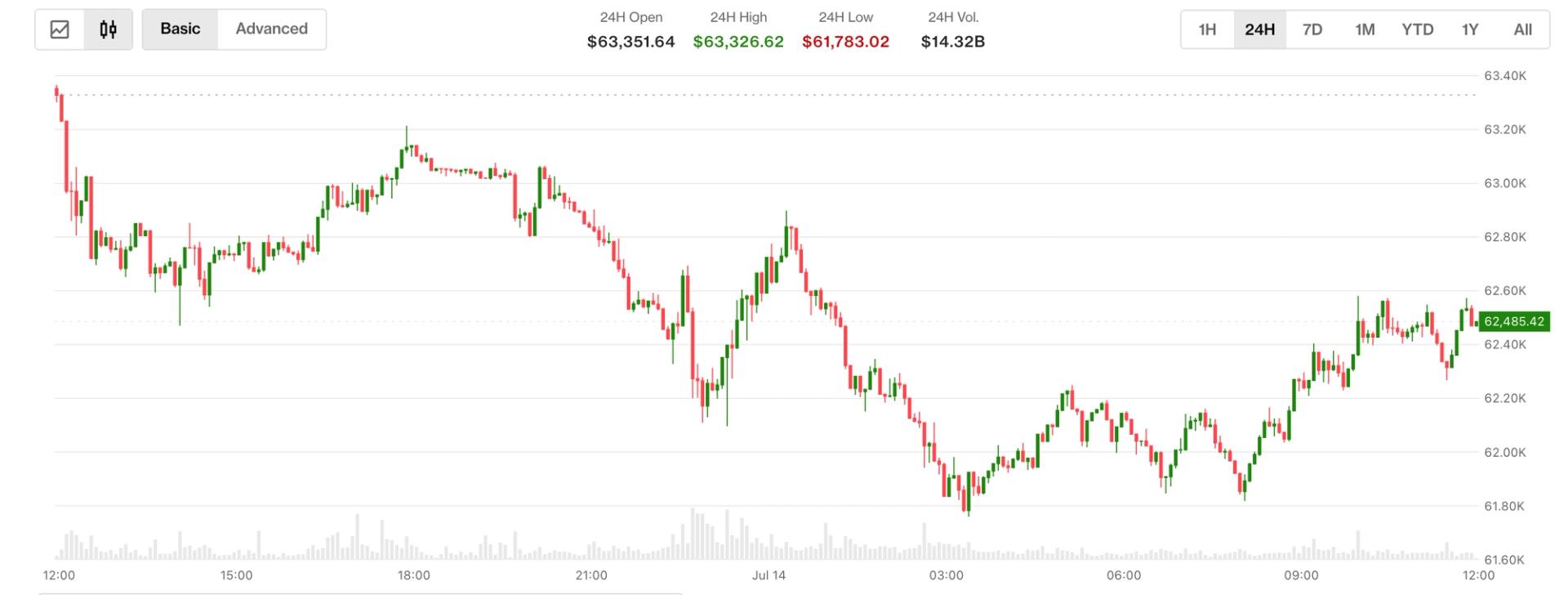
West Texas Intermediate crude futures have surged to nearly $80 a barrel from $67 at the start of the month, stoking fresh concerns about inflation.
Focus on CPI and Warsh testimony
Investors will receive a fresh read on price pressures Tuesday when the Labor Department releases the June consumer-price index at 8:30 a.m. ET.
Economists surveyed by Bloomberg forecast that headline CPI will fall below a 4% annual rate. The report is expected to show the first declines in both headline and core inflation since January, following May’s readings of 4.2% and 2.9%, respectively.
Even if the figures meet expectations, they risk being viewed as backward-looking in light of the recent oil price surge. Should inflation instead prove more persistent, the data could amplify concerns about the Fed’s path forward.
Attention will then turn to Mr. Warsh’s testimony on Capitol Hill. Given the Fed chair’s preference for limited forward guidance, investors will be watching closely for any signals on rates and inflation.
According to analysts at ING, he could “if he chooses, emphasize the tameness of inflation expectations.”
They added that Mr. Warsh “has enough ammunition here to ride the rate hike risk and instead hold pat. Even if he comes under pressure to hike, the richness attached to the 5yr part of the curve tells us that any hike (if delivered) is likely to be subsequently reversed, with the prospect still for bigger cuts than hikes.”
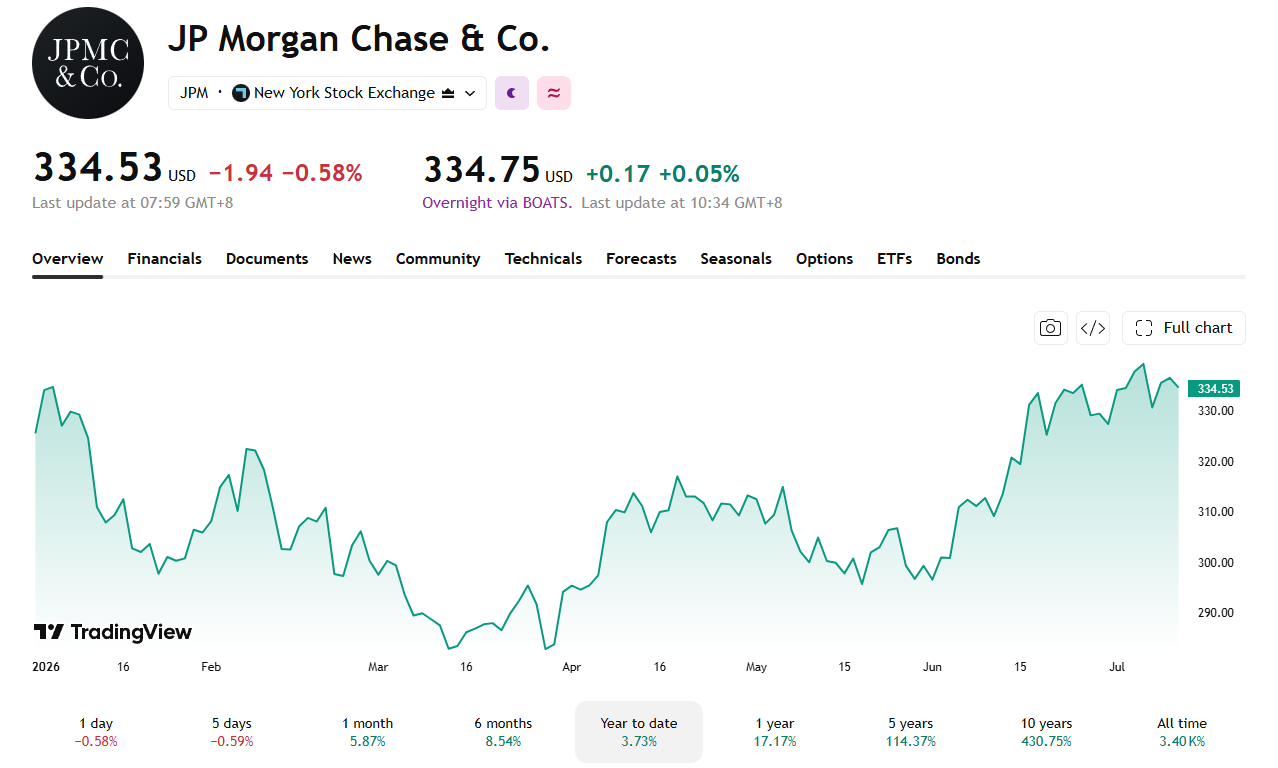
JPMorgan Chase, Bank of America, Wells Fargo, and Goldman Sachs report second quarter earnings Today, July 14. Analysts expect all four banks to post higher year over year revenue and profit, even as war in Iran and stubborn inflation weigh on markets.
The reports arrive as investors search for signs the US economy can absorb geopolitical shocks and elevated interest rates. Executives’ comments on lending, trading, and deal activity will shape sentiment for the rest of earnings season.
Why This Earnings Batch Matters
The four lenders report against a volatile backdrop; Renewed fighting in Iran has pushed oil prices higher, and inflation remains stickier than expected. However, the Federal Reserve has yet to cut interest rates this year, keeping borrowing costs elevated for consumers and businesses.
Fed Chair Kevin Warsh also testifies before Congress this week. That adds another variable for markets already digesting the bank results.
Jay Woods, chief market strategist at Freedom Capital Markets, said in an optimistic tone from bank executives could reshape how investors view the broader economy.
“If the banks paint an optimistic picture while credit quality remains strong, it could reinforce the narrative that the economy is proving far more resilient than many expected.”
What Analysts Expect From Each Bank
Analysts project Analysts expect JPMorgan to post the strongest growth of the four, with revenue up nearly 14% to $51.1 billion. Its wealth management business is driving most of that gain.

Goldman Sachs should see revenue climb 11% and profit jump 26%. Bank of America’s revenue should grow over 16%, while Wells Fargo, the weakest performer of the group this year, is expected to grow just 5%.
Strong bank earnings this week would send a reassuring signal to the wider market. Banks sit at the center of the economy, so healthy profits suggest consumers are still spending, businesses are still borrowing, and credit quality hasn’t cracked despite war in Iran and stubborn inflation.
For everyday investors, that could mean more confidence in stocks generally, since bank results often set the tone for the rest of earnings season.
But the picture isn’t all upside. Rising deposit costs and pressure on lending margins suggest banks may need to work harder for the same profits ahead, a dynamic that could eventually show up in loan rates or account fees for regular customers.
The Risk Beneath the Optimism
Morgan Stanley strategist Michael Wilson noted that banks are funding loan growth with costlier deposits. That dynamic could pressure profits further into 2027, prompting modest earnings estimate reductions across the sector.
Still, the industry’s balance sheet looks unusually strong. Tom Michaud, CEO of KBW, projects a tangible common equity ratio of 9.7% by the end of 2027 and that level would sit over 50% above where the industry stood entering the 2008 financial crisis. Banks could use that cushion to raise dividends, buy back stock, or pursue acquisitions.
Tuesday’s results will set the tone for a busy earnings week that also features major tech and consumer names. Whether banks can sustain growth while inflation and geopolitical risk persist remains the open question for markets.
The post Big Bank Earnings Today: Will Results Calm Economic Fears? appeared first on BeInCrypto.
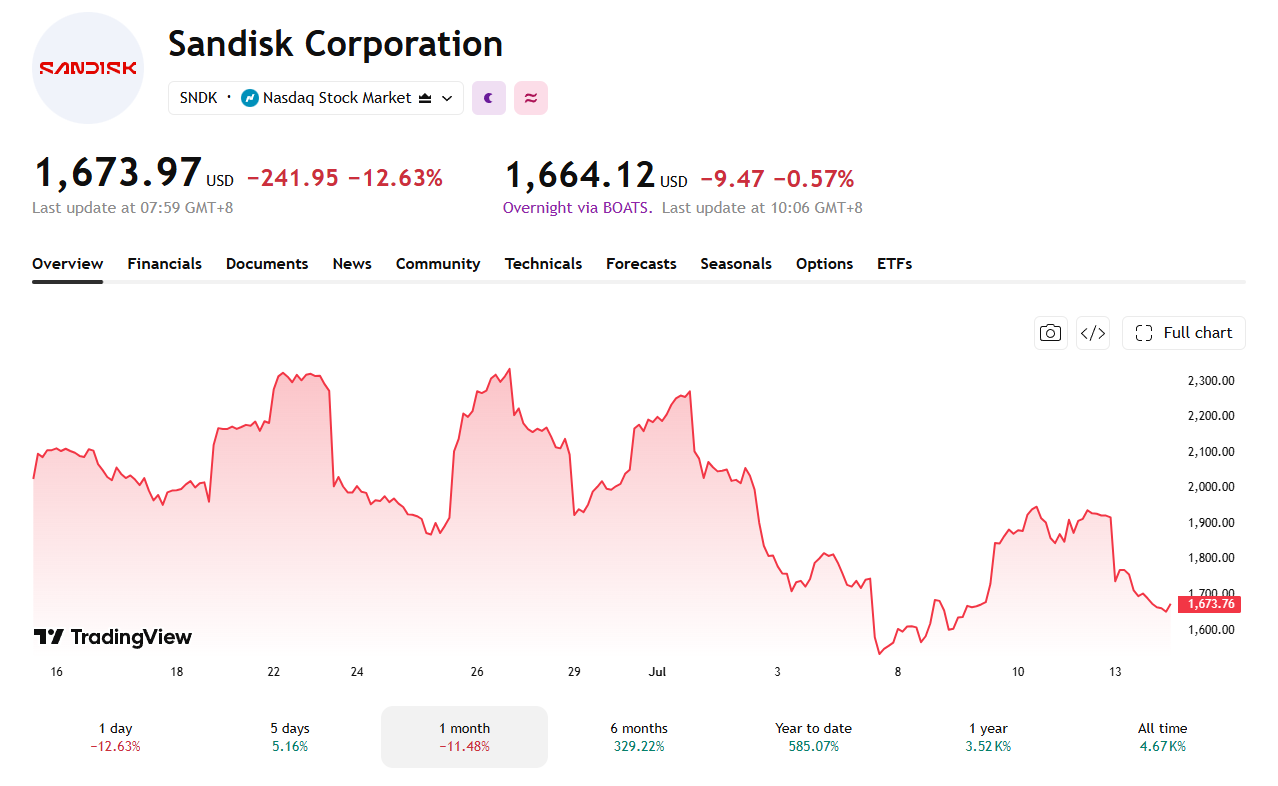
SanDisk (SNDK) stock fell 12.63% Monday, July 13, and slid further after hours, as a broad selloff hit memory and chip stocks. Several Wall Street analysts still raised or reaffirmed their price targets on the company despite the drop.
The moves show analysts trust SanDisk’s earnings outlook, even as memory sector volatility has rattled the wider group in recent weeks.
Analysts Defend Bullish Case Despite the Slide
Citigroup reiterated its $2,500 price target on SanDisk with senior analyst, Asiya Merchant, issuing a bullish note and maintaining a buy rating on SNDK. The price target implies roughly 30% upside from the most recent close.

Evercore ISI analyst Amit Daryanani went further, he raised his target to $3,100 from $1,400 and kept an “Outperform” rating. The new target implies nearly 62% upside from the last close. Daryanani argues investors underestimate the durability of SanDisk’s earnings and pricing power through 2027.
Bernstein analyst Mark Newman lifted his target to $3,000 from $1,700. He points to structural changes in how memory suppliers now write long-term supply agreements.
Wedbush analyst Matthew Bryson told MarketWatch the memory market remains “in a very good place.” He said Micron (MU) and SanDisk both benefit from AI-driven demand that chipmakers cannot quickly match, since new fabs take years to build.
Retail Sentiment Stays Extremely Bullish
Stocktwits data showed “extremely bullish” retail sentiment on SNDK, with high message volume. A related poll of nearly 1,800 respondents put Micron ahead for best returns, at 57%. SanDisk drew 19%, still reflecting continued capital flowing into memory stocks despite the pullback.
Data puts 18 of 22 analysts covering SanDisk at “Buy” or “Strong Buy,” with an average target of $2,112.32. Shares remain up nearly 600% year to date, a run that has also stirred renewed AI bubble concerns across the sector.
The next earnings cycle will show whether SanDisk can grow into targets north of $3,000.
The post SanDisk Stock Keeps Sinking, So Why is Wall Street More Bullish? appeared first on BeInCrypto.


The US government sent $297 million in Bitcoin (BTC) and Ether (ETH) to Coinbase Prime in two transfers on Monday. Blockchain intelligence firm Arkham tracked an initial $8.8 million deposit, then a second $288.33 million deposit three hours later.
The larger transfer combines forfeitures from three separate criminal cases. It includes assets tied to Brian Krewson, the defunct BTC-e exchange, and dark web drug dealer Ryan Farace.
A Pattern Tracked Before
This is not the first false alarm from a Coinbase Prime deposit. Forfeited funds moved the same way in January, sparking Samourai Bitcoin sale rumors. The government has repeated the move with other seized assets since then.
It sent seized FTX Chainlink tokens to Coinbase Prime in June and seized Alameda altcoins in May. Neither transfer turned into a confirmed sale.
Monday’s transfers follow the same script, but at a larger scale. Three unrelated forfeiture cases moved to Coinbase Prime within hours of each other, but the question stays open until Treasury or the Marshals Service comments directly on a sale.
Executive Order, Still Not Law
Trump’s March 2025 executive order created the Strategic Bitcoin Reserve partly aimed at baring the government from selling its Bitcoin holdings. But the rule exists only by executive decision, not statute.
Congress introduced the codify Bitcoin reserve bill in May to lock in a 20-year holding period. It has not advanced past committee with many seeing it as a strong indicator of this administrations belief in Bitcoin. However, as BTC continues to be sent to exchange wallets, people are speculating as to the intention behind these moves.
The US’s Dark Bitcoin
Much of the US government’s Bitcoin holdings trace back to criminal forfeitures. Monday’s deposit combines three of the highest-profile cases.
Krewson helped store and launder $54 million in crypto for two convicted drug traffickers, the Department of Justice said. BTC-e ran as an unlicensed exchange from 2011 to 2017. It processed more than $9 billion before its shutdown, according to DOJ court filings.
Farace generated over 9,138 Bitcoin from dark web drug sales. He received a 54-month sentence in 2023.
The post US Government Sends $297 Million in Seized Crypto to Coinbase in One Day appeared first on BeInCrypto.

Opening date confirmed for new women’s clothing store in Cambridge shopping centre

Treasurer freezes rights of China-linked shareholders

US Transfers $297M Seized Bitcoin and Ether to Coinbase Prime


-

 News Videos7 days ago
Whats Hidden Inside This Cash Register? #treasure #reselling #money
-

 Fashion5 days ago
Loro Piana Fall 2026 Enters Houston’s Art Scene
-

 Fashion3 days ago
Weekend Open Thread: Nutriplenish Leave-In Conditioner
-
 Tech7 days ago
Anthropic’s new “J-lens” reveals a silent workspace inside Claude that mirrors a leading theory of consciousness
-
 Sports4 days ago
2026 Genesis Scottish Open Thursday TV coverage: Round 1
-

 Sports6 days ago
Joshua Pacio ‘more complete’ ahead of ONE rematch vs Malachiev
-

 Tech6 days ago
Anthropic brings Claude Cowork to mobile and web as usage data shows most users aren’t coding
-

 Sports4 days ago
Super Eagles star Moses Simon opens up on Liverpool transfer regret
-
Sports7 days ago
We have punished the disrespect
-

 Tech5 days ago
Character.AI enters the microdrama arena with its own productions, but there’s a twist
-
 Crypto World7 days ago
Claude AI Created Something Anthropic Never Designed
-

 News Videos7 days ago
“What’s going on?!” Carl Froch discusses Floyd Mayweather Jr financial issues
-

 Crypto World6 days ago
Nasdaq arthritis company holding Moshe Hogeg crypto hits all-time low
-

 News Videos5 days ago
Crypto Just Entered Its Most Important 6-Month Candle (Could Decide Everything!)
-

 Tech6 days ago
Keychron is stepping outside keyboards with a $349 Thunderbolt 5 dock aimed at power users
-
 Business6 days ago
ASX 200 Slides Over 0.6% as Rare Earths and Lithium Stocks Tumble Amid Global Semiconductor Sell-Off Today
-
 Business6 days ago
Will Trent shares rebound after Q1 update triggers 13% crash? Here’s what technical charts indicate
-
 NewsBeat5 days ago
Major update after Huntingdon train attack as man enters plea
-
 Tech6 days ago
OpenAI teams with Work Louder to launch Codex-native keyboard, weeks after CEO of Apps told staff ‘not to be distracted by side quests’
-

 Business6 days ago
SpaceX Shares Slide Nearly 6% Amid Post-IPO Volatility and Starship Test Focus
You must be logged in to post a comment Login