

Crypto World
Stanford Research Probes Manipulation Risks in Polymarket BTC Contracts

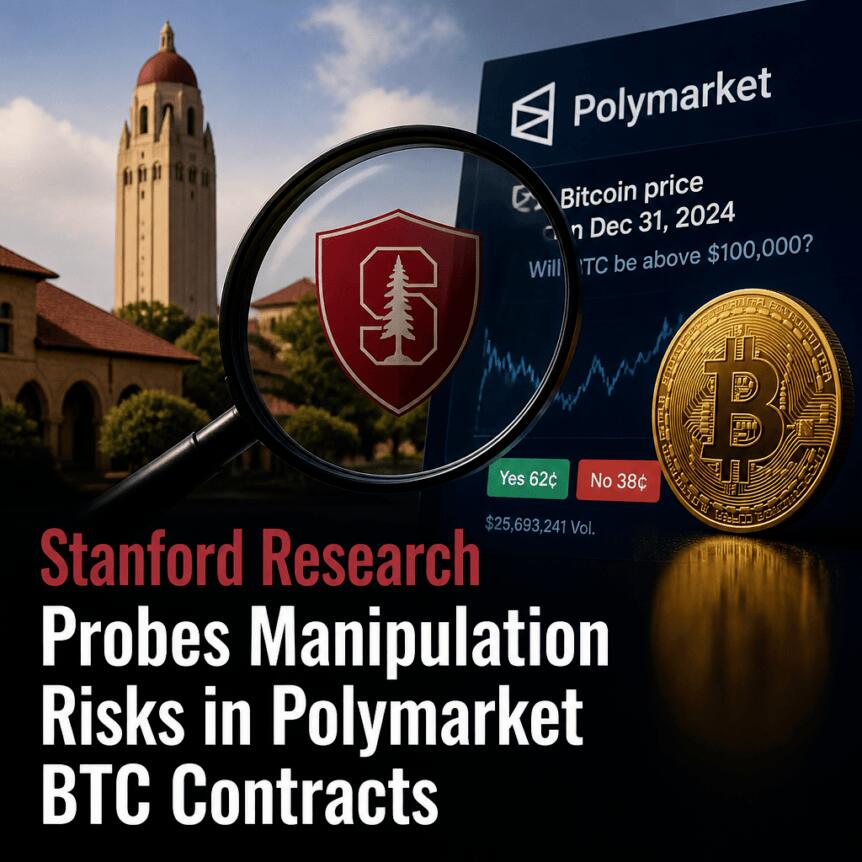
Fast-settling prediction markets can change how traders behave in the underlying market. A new research paper by scholars at Stanford University and Singapore Management University argues that Polymarket’s five-minute Bitcoin prediction contracts created incentives for some participants to manipulate spot prices shortly before settlement—transferring value from less sophisticated traders to those able to exploit the timing.
The study examines short-horizon contracts that settle based on Bitcoin’s price relative to a fixed threshold at the end of each five-minute trading window. Because settlement relies on Chainlink price feeds tied to the end-of-window spot price, the paper concludes that traders have a window of opportunity to influence the reference price immediately before contracts expire.
Key takeaways
- The paper links Polymarket’s five-minute Bitcoin contracts to unusual spot-market order-flow spikes immediately before settlement.
- Researchers observed rapid spot-price reversals consistent with manipulation around the settlement reference point.
- The study estimates roughly $1.28 million shifted from ordinary traders to manipulators over the sample period.
- Extending the contract duration from five minutes to 15 minutes “largely eliminated” the effect, suggesting design choices matter.
- Settlement mechanics—not prediction markets themselves—appear to be the key risk factor, with solutions including longer settlement windows and alternative pricing methods.
Short settlement windows can reward “price chasing”
Polymarket’s five-minute Bitcoin prediction markets allow traders to bet whether BTC will finish above or below a predetermined level after five minutes. The contracts settle using Chainlink price feeds that reference Bitcoin’s price at the end of each trading window.
According to the paper, this settlement approach can distort incentives: when the reference price is determined at a specific moment, sophisticated traders may find it profitable to push the spot market in the minutes—and sometimes seconds—leading up to that timestamp. In other words, the act of trading the prediction contract can become coupled to short-term spot-market execution just before settlement.
What the researchers found in order flow and price behavior
To test the claim, the researchers analyzed trading activity around the period when Polymarket introduced these contracts in July 2024. Their focus was on how spot-market dynamics changed before and after the contracts launched.
The study reports sharp increases in Bitcoin spot-market order flow shortly before settlement, followed by rapid price reversals after the five-minute windows closed. The authors interpret the combination of pre-settlement buying/selling pressure and post-settlement reversal patterns as consistent with settlement-price manipulation rather than normal price discovery.
While manipulation cannot be directly proven from order flow alone, the paper’s reasoning is grounded in the timing: when contracts settle to a price snapshot at the end of a short window, traders can potentially profit by targeting that snapshot rather than forecasting longer-term movement.
How much value may have been transferred—and what reduces the risk
The paper estimates that, during the sample period, the behavior transferred about $1.28 million from “ordinary traders” to “manipulators.” The precise mechanism appears tied to who can influence market prices effectively at the moment of settlement, leaving others exposed to outcomes they did not cause.
Importantly, the authors also report that extending contract durations from five minutes to 15 minutes largely eliminated the effect. That result points to a practical mitigation: the shorter the time between trading and settlement—especially when settlement depends on a single end-of-window price—the more likely it is that incentives align around momentary spot-market tactics.
The study emphasizes that its findings do not mean prediction markets are inherently vulnerable to manipulation. Instead, the risk seems to stem from settlement design. The researchers highlight potential fixes such as longer settlement windows and alternative pricing methods—for example, time-weighted average prices (TWAP)—which reduce how profitable it is to “hit” a single reference timestamp.
Why this matters beyond crypto regulation
The implications are not limited to decentralized or crypto-native venues. The paper notes that traditional exchanges, including Nasdaq and Cboe, have proposed event contracts tied to asset prices. As prediction markets expand into more regulated financial settings, contract engineering could become a central question for regulators and market designers.
From an investor or trader standpoint, the study suggests that the safest products are not simply those with better liquidity or reputations, but those with settlement logic that limits the link between contract settlement and immediate underlying-market price moves. Readers should therefore watch for how venues specify reference prices—whether they use end-of-window snapshots, TWAP-style measures, or other anti-gaming mechanisms—especially for short-dated contracts.
Meanwhile, legal scrutiny around prediction markets continues to intensify in the US. Earlier this year, multiple states challenged platforms including Kalshi and Polymarket. Separately, the Commodity Futures Trading Commission has argued that federally regulated event contracts fall under its “exclusive jurisdiction” rather than state gambling laws. The dispute is now moving through the federal courts, and observers have said conflicting appellate rulings could ultimately require the US Supreme Court to determine whether states or the CFTC have primary authority.
World Cup momentum lifts prediction market volumes
While the new research focuses on settlement mechanics, the wider sector continues to grow in terms of activity. Prediction markets posted record trading volumes in June as the 2026 FIFA World Cup drove interest across platforms.
According to DefiLlama data cited in the article, Kalshi processed about $9.4 billion in trading volume during June, while Polymarket International handled roughly $4.3 billion. The World Cup winner markets generated more than $5.4 billion in combined trading volume, with Polymarket accounting for about $4.25 billion and Kalshi about $1.2 billion, based on platform-reported figures at the time of writing.
This surge underscores why contract design issues are likely to remain prominent: when volumes rise and markets move from niche speculation to mainstream attention, the economic incentives to exploit structural weaknesses can grow alongside participation.
Going forward, the key question for traders, builders, and regulators is whether venues can scale prediction markets without creating exploitable settlement dynamics—especially for very short-dated contracts. The Stanford and Singapore Management University findings suggest that changing the settlement window length and using price-averaging methods could meaningfully reduce manipulation risk, but market participants will want to see how widely these design changes are adopted and how quickly they translate into cleaner spot-market behavior.



Summer.fi will wind down operations after a $6.04 million exploit hit its Lazy Summer Protocol on July 6, wiping out the capital the team needed to rebuild.
The five-year-old Decentralized Finance (DeFi) platform said the app will remain live until August 31.
Summer.fi Closes Doors as July 6 Exploit Wipes Out Rebuild Runway
In a blog post, the team tied DeFi’s wider slump to the Stream Finance fallout of October 2025. It described the July exploit as a “devastating moment” for users and the surrounding ecosystem.
BeInCrypto reported losses of roughly $6 million. The attacker manipulated the share price across two of the protocol’s USDC vaults on Ethereum (ETH).
Follow us on X to get the latest news as it happens
The damage landed unevenly between the two pools. LazyVault_LowerRisk_USDC (0x98C49e13…EcF17) took a net loss of nearly 5.64 million USDC. LazyVault_HigherRisk_USDC (0xE9cDA459…cB06) lost about 0.40 million USDC.
The team said a meaningful portion of its own capital was held in the affected vaults. That loss removed the runway required to recover.
“After exploring every alternative, we have concluded that ceasing operations is the only viable path forward, even though it gives us great sadness,” the team said.
Despite the shutdown, Summer.fi noted that the Lazy Summer DAO is working to restore withdrawals and redemptions across all vaults, including the two affected by the exploit. Once those processes are complete, full vault functionality will be reinstated through the Summer.fi interface.
Summer.fi joins a growing list of protocols that could not survive a breach. Radiant Capital wound down in June after a $50 million exploit. Step Finance closed in February following a treasury hack. In each case, the exploit proved terminal rather than survivable.
Subscribe to our YouTube channel to watch leaders and journalists provide expert insights
The post $6 Million Vault Exploit Forces DeFi Platform Summer.fi to Wind Down appeared first on BeInCrypto.

Revolut has received in-principle approval from Dubai’s Virtual Assets Regulatory Authority (VARA) to expand its crypto-related offerings in the United Arab Emirates. The UK-based financial firm said the regulator’s green light would allow it to provide a range of virtual-asset services to users in the UAE through its app and its Revolut X exchange.
The development comes after the UAE Central Bank approved Revolut’s payment activities. In its Wednesday notice, Revolut stated that VARA granted the company in-principle clearance to operate broker-dealer, management and investment, and exchange services in the UAE, framing the move as a step toward deploying “trusted virtual asset services within a regulated environment.”
Key takeaways
- VARA approval in principle positions Revolut to offer broker-dealer, management and investment, and exchange services for digital assets in the UAE.
- The go-ahead follows UAE Central Bank approval for Revolut’s payment activities, signaling coordination across regulators.
- Revolut expects UAE users to be able to buy, sell, and hold digital assets via the Revolut app and Revolut X.
- The UAE move follows Revolut’s March UK banking license and is part of broader, ongoing expansion plans.
- Separately, Revolut previously said it plans to delist USDT for EEA and Switzerland starting in August under MiCA-linked risk and licensing review.
VARA’s in-principle approval gives Revolut a regulated UAE runway
In a statement shared this week, Revolut said VARA’s in-principle authorization would enable it to introduce virtual asset services through its existing user interface while operating under Dubai’s virtual asset licensing framework. The firm did not describe the precise next licensing steps required to fully implement these activities, but it characterized the approval as laying “the foundation” for its rollout within a regulated environment.
For investors and market participants, the significance lies in how rapidly established financial platforms are aligning with UAE’s emerging regulatory architecture. VARA’s approach—granting “in-principle” approvals alongside full licenses—creates a structured path for operators to expand while still meeting regulatory conditions.
VARA maintains a public register of licensed entities. As of the time of publication, the regulator listed 51 companies licensed to offer crypto-related services in the UAE, with 22 entities granted in-principle approval.
Payments first: the Central Bank condition and what it implies
Revolut noted that the VARA decision followed “a green light” from the Central Bank of the UAE for payment-related activities. That sequencing suggests that, at least for Revolut’s roadmap, crypto services are being bundled with—rather than treated as separate from—broader payment and financial compliance processes.
The practical outcome for users is that Revolut’s app-based experience for digital asset transactions can be rolled out with fewer friction points, since the company is addressing payments oversight alongside virtual-asset regulation. It also provides a useful signal for other fintechs: in the UAE, crypto expansion may depend on satisfying cross-regulatory requirements, not only virtual-asset licensing.
Expansion momentum: from UK banking license to pending US and Peru filings
Revolut’s UAE announcement builds on its recent progress in traditional finance licensing. The firm had received a UK banking license in March, according to earlier reporting. Revolut’s stated expansion plans also include similar applications pending for a US banking charter and for licensing in Peru.
From a sector perspective, Revolut’s pattern is telling: it continues to use regulatory milestones in core banking to support downstream products, including digital assets. While crypto access is still heavily shaped by licensing frameworks, the ability to operate within regulated payment and banking environments can matter for settlement flows, custody/handling models, and compliance controls.
UAE approval lands amid shifting crypto product decisions in Europe
Even as Revolut moves forward in the UAE, the company has also signaled adjustments to its crypto offerings elsewhere. Last week, a Revolut spokesperson told Cointelegraph that the firm planned to delist Tether USDt (USDT) starting in August for the European Economic Area and Switzerland.
Revolut linked that decision to a review of its crypto services and risk considerations under the European Union’s Markets in Crypto-Assets (MiCA) framework. MiCA requires crypto-asset service providers to be licensed by July 1, and Revolut’s approach indicates how firms may rework their stablecoin lineup rather than carry all products through the licensing transition.
That contrast—gaining in-principle approval in the UAE while trimming exposure in Europe—highlights a broader reality for crypto platforms: regulatory compliance can drive both expansion and contraction depending on jurisdictional requirements, product classifications, and risk assessment outcomes.
What to watch next
Revolut’s UAE in-principle approval is a meaningful step, but users and market observers should watch for the subsequent regulatory milestones needed for full implementation, as well as how the firm’s approach to stablecoins and licensing evolves under MiCA in Europe.
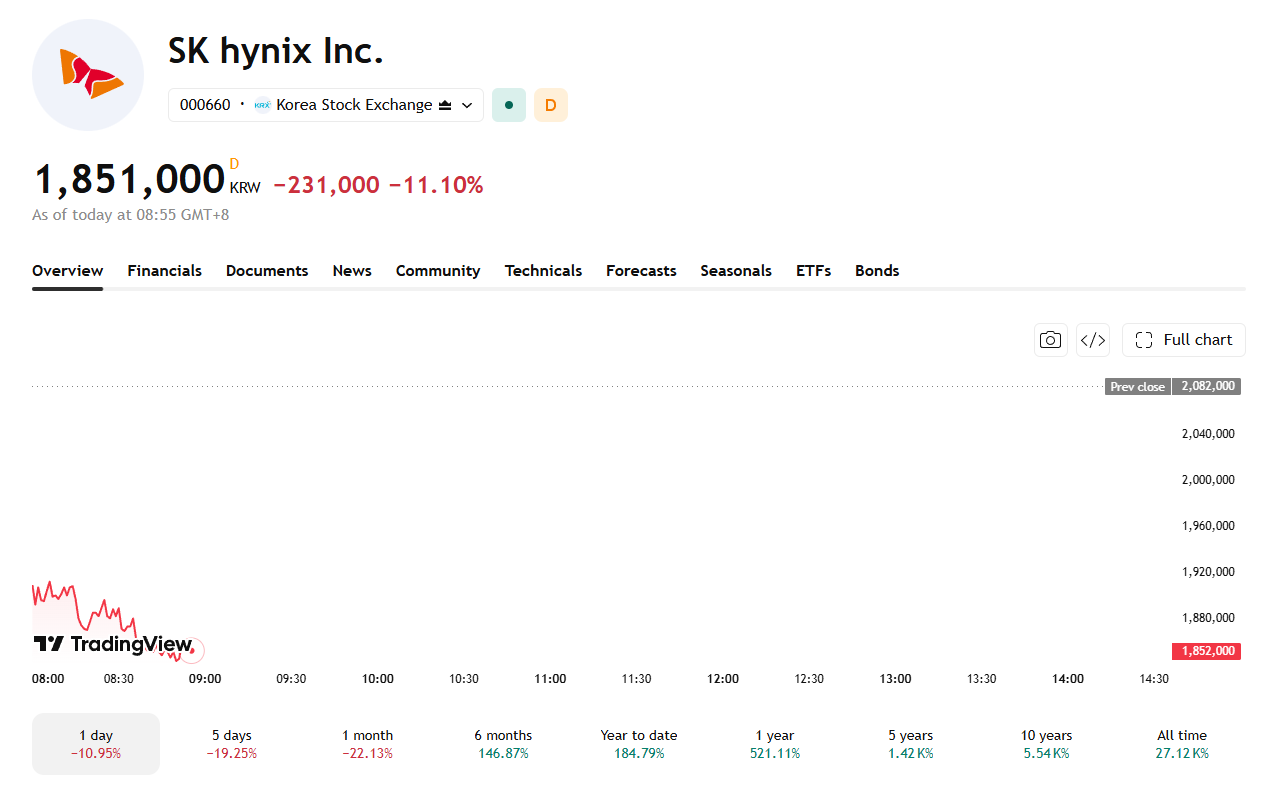
SK Hynix shares dropped 10.95% in Seoul on July 16, reversing the previous session’s rally. A broader Asian chip selloff also dragged the KOSPI into its 37th sidecar of 2026.
Samsung Electronics fell 7.33% in the same session. The KOSPI opened at 6,960.50, down 4.45%, and losses deepened to an early morning low of 6,753.
SK Hynix Leads the Asian Chip Selloff
SK Hynix fell to a low of 1.823 million won, wiping out most of an 8% rally from the prior session. The stock had already logged its steepest one-day drop on Monday, as investors booked profits on AI-spending concerns.
Other Korean chip names slid alongside it. Seoul Semiconductor lost more than 5%, Samsung SDI fell over 2%, and LG Innotek dropped about 1%.

The weakness spread across Japan too. Advantest fell more than 6%, SoftBank Group slid nearly 7%, Tokyo Electron lost over 5%, and Renesas Electronics dropped 4%.
The region tracked an overnight slump on Wall Street. Micron Technology fell 7.94%, Marvell Technology dropped 7.27%, and Intel declined 4.43%. AMD and Lam Research each fell about 3%.
KOSPI’s 37th Sidecar Fires Again
The Korea Exchange triggered a sell-side sidecar at 9:10 a.m., the year’s 19th. KOSPI 200 futures had already fallen 5.22% to 1,104.40 points.
A sell-side sidecar suspends program sell orders for five minutes. It triggers whenever futures drop 5% or more for at least a minute.
By 9:21 a.m., the cash KOSPI had dropped to 6,886.48, a decline of 5.46%. Sidecars, both buy and sell combined, have now fired 37 times this year, including another KOSPI trading halt at the beginning of July.
The reversal came fast. Buy-side sidecars had fired on both the KOSPI and KOSDAQ just one day earlier. Foreign investors net-bought 2.33 trillion won of KOSPI shares, briefly pushing the index back above 7,000.
Analysts Flag a Crowded Trade
The selloff came despite strong earnings from ASML. The Dutch chip-equipment maker raised its full-year sales guidance for a second time this year. It projected revenue of 43 billion euros to 45 billion euros.
Louis Kondratev, a trader at XFUNDs, told CNBC the pullback reflects how crowded the AI-driven semiconductor trade has become.
“Semiconductors alone now make up roughly 20% of the S&P 500, which is incredibly difficult to sustain.”
— Louis Kondratev, trader at XFUNDs, CNBC
He added that valuations may struggle to hold at current levels even if earnings stay strong.
“Earnings momentum has been very strong, but it’s mostly concentrated in semiconductors, and that momentum may begin to slow as valuations find their place.”
— Louis Kondratev, trader at XFUNDs, CNBC
Regulators are also watching the volatility. South Korean officials met Thursday to discuss leveraged ETF products tied to single stocks, reviewing their growing market impact.
Whether this marks a one-day reversal or a deeper correction may depend on the earnings ahead.
The post SK Hynix Drops Near 11% as KOSPI Hits 37th Sidecar of 2026 appeared first on BeInCrypto.
The Bank of Korea raised its benchmark rate to 2.75% on Thursday, marking its first increase since January 2023 as consumer inflation climbed to a three-year high.
The decision lands as South Korea’s stock market swings violently, with chipmakers SK Hynix and Samsung Electronics leading steep losses on Thursday.
Inflation Forces the BOK’s Hand
Governor Shin Hyun Song, who took office in April, has previously signaled higher rates. On Thursday, the nation’s central bank raised its benchmark rate 25 basis points. The decision matched the forecast in a Reuters poll of economists.
Rising inflation and a weak won drove the move. Headline inflation in Korea reached 3.2% in June, the highest since 2023. The central bank flagged that large IT-sector performance bonuses could feed broader wage gains. That would add pressure on prices.
Meanwhile, the won has weakened 2.93% against the dollar this year. It slid to 1,561.5 on June 5, its weakest level in 17 years.
Despite currency pressure, the economy has benefited from demand for AI infrastructure. Gross domestic product grew 1.8% in the first quarter.
That marked the fastest quarterly pace in more than five years. The strong data prompted the government to lift its 2026 forecast to a five-year high of 3.0%
Meanwhile, the hike is not an outlier. The European Central Bank lifted rates to 2.25% in June. The Bank of Japan raised its rate to 1.00%, its highest since 1995. A Middle East oil shock is reviving inflation across major economies.
Follow us on X to get the latest news as it happens
How the Bank of Korea’s Rate Hike Could Impact Stocks and Crypto
The decision also carries weight for crypto and stocks. South Korea ranks among the most active digital-asset markets, with heavy retail participation via exchanges such as Upbit. Rising domestic borrowing costs tend to compress the capital available for speculative assets.
Stocks may also face additional pressure. South Korea’s equity market has already seen sharp swings this year, driven by volatile sentiment around AI and semiconductor stocks.
Higher interest rates could further weigh on the market by tightening financial conditions and prompting investors to rotate away from high-growth technology shares.
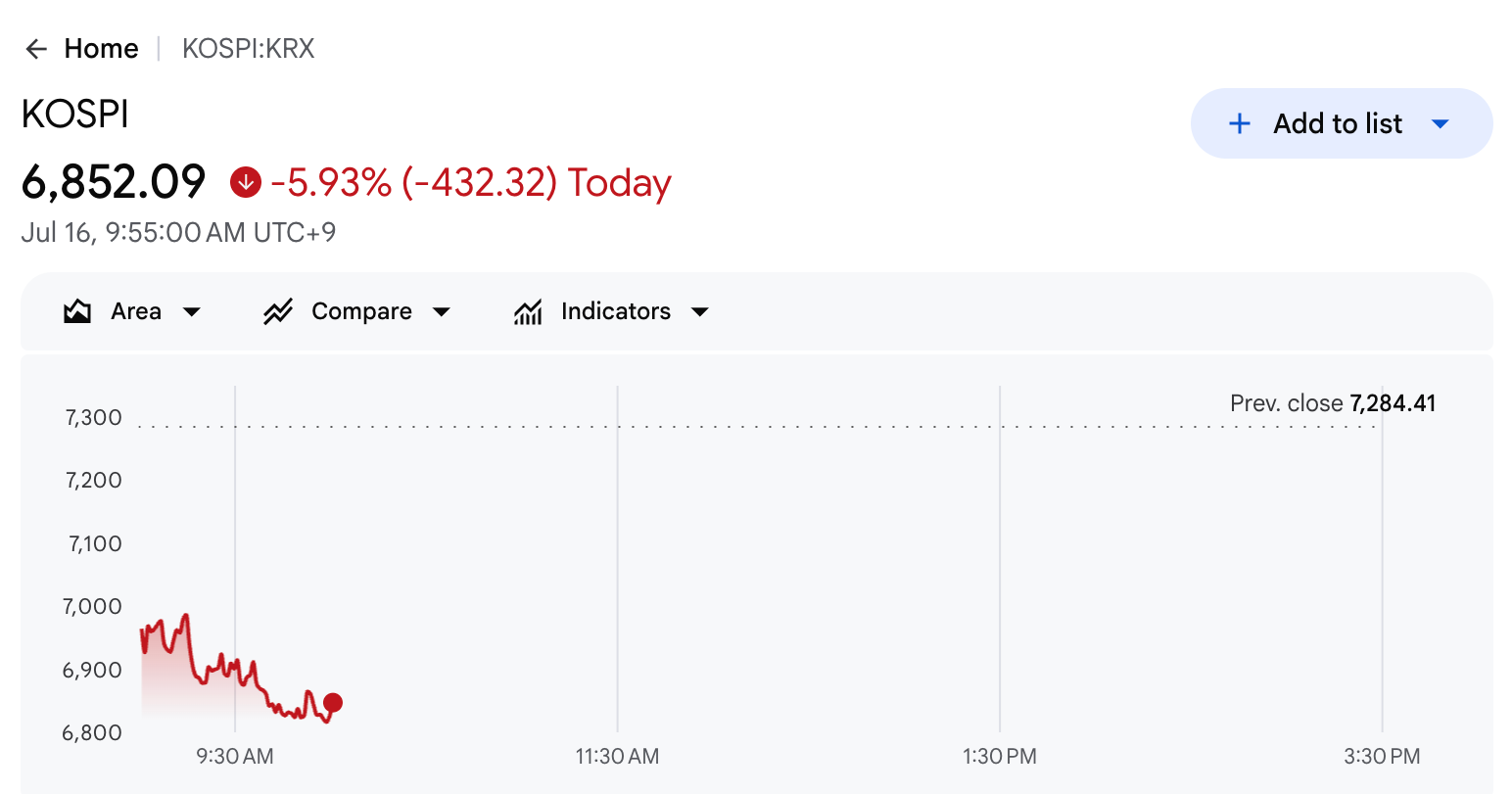
The KOSPI fell nearly 6.0% to 6,852 on Thursday, extending its monthly losses. AI chipmaker SK Hynix plunged 11.05% to 1,852,000 won after a 15% decline earlier in the week, while Samsung Electronics fell more than 3%.

The path ahead also matters beyond Thursday’s move. Most economists expect one more hike to 3.00% by year-end. Whether higher rates keep retail investors on the sidelines or redirect capital between stocks and cryptocurrencies remains an open question.
Subscribe to our YouTube channel to watch leaders and journalists provide expert insights
The post Inflation at 3.2% Pushes Bank of Korea Into First Hike Since 2023 appeared first on BeInCrypto.

Base creator Jesse Pollak says he is stepping back from running the Base App after acknowledging what he called a “wrong bet” on the role social products would play in the network’s growth. In a Wednesday post on X, Pollak argued that Base’s push toward creator and content tooling failed to deliver the traction needed in areas that markets now reward more strongly—particularly trading activity.
Pollak said Base has since been behind “scaled competitors” in key financial categories, even as it continued to promote prediction markets and perpetuals. He also indicated he will return leadership of the Base App to Coinbase under Jordan Fish (known on X as “Cobie”) while focusing on Base’s underlying blockchain.
Key takeaways
- Jesse Pollak is stepping back from leadership of the Base App, citing a “wrong bet” on social-led adoption.
- Pollak says Base fell behind in prediction markets and perpetuals versus larger competitors, despite having native options.
- Dune Analytics data cited by Pollak shows Base-native prediction market Limitless represented just 0.5% of total monthly prediction-market notional volume in July.
- DefiLlama rankings cited in the post place Base perpetual DEX Avantis at 18th by reported 30-day notional trading volume.
- Coinbase CEO Brian Armstrong previously acknowledged that “content coins” “didn’t work,” aligning with Base’s earlier shift away from social incentives.
Pollak’s admission: social momentum didn’t translate into market leadership
Pollak’s message frames the Base App leadership change as a course correction. He said he had expected creator, content, and messaging applications to drive adoption, but instead the market “disintegrated completely.” While the exact scope of that “disintegration” wasn’t detailed, Pollak specifically pointed to performance gaps in trading-heavy segments.
He highlighted that Base has perps (citing Avantis) and prediction markets (citing Limitless), yet both were “well behind” competitors that have scaled further. This is a notable change in tone from an earlier strategy that positioned Base around social primitives and engagement—an angle Pollak says ultimately didn’t produce the kind of durable demand Base needed.
What the on-chain data suggests about Base’s prediction and perps
To support his argument, Pollak pointed to analytics and ranking sources. According to Dune Analytics data he shared, Limitless accounted for 0.5% of total monthly notional volume across prediction markets in July. The implication is that while Limitless exists as a Base-native option, it has not yet achieved comparable share versus alternative venues that dominate prediction-market activity.
On perpetual trading, Pollak referenced DefiLlama data to claim that Avantis ranked 18th by reported 30-day notional trading volume. Put differently, Base’s derivatives presence appears smaller in relative terms than top competitors, reinforcing Pollak’s point that Base’s financial products were not matched by the scale the broader market expects.
For investors and builders tracking L2 competition, this matters because activity in prediction markets and perpetuals is often a proxy for “real” economic usage: liquidity depth, trading frequency, and the composability of DeFi interfaces. Base’s social push may have generated engagement in some form, but Pollak’s own framing suggests the network is now prioritizing where it can win measurable market share.
Base’s earlier pivot away from social incentives
Pollak’s post arrives in the context of changes Base and Coinbase discussed earlier in the year. The article notes that Coinbase CEO Brian Armstrong acknowledged content coins “didn’t work,” and said, “We messed up, time to turn the page,” on Monday. While Armstrong’s comments were broader than just Base App operations, they echo the same underlying theme: strategies built around content-driven incentives did not produce sustained results.
In February, Base sunset its Creator Rewards program and the Farcaster-powered social feed as part of a broader strategic shift toward tradable assets. Pollak previously described the Base App as an “imperfect Farcaster client,” and the Creator Rewards initiative—launched in July 2025—was designed to turn social activity and engagement into earnings.
With Pollak now stepping back from the Base App leadership role, the latest move reads less like a surprise and more like the next step in a process: a social-first direction was tried, incentive mechanics were adjusted or removed, and Base increasingly framed its growth around finance and trading primitives.
Focus on global finance, stablecoins, and AI-agent tooling
In his Wednesday post, Pollak said he intends to continue focusing on the Base blockchain while handing Base App leadership back to Coinbase under Jordan Fish. That division of responsibilities signals a longer-term bet on the chain’s core infrastructure rather than on a single consumer interface.
Recent Base product work referenced in the source supports that direction. Last week, Base activated its B20 token standard on mainnet, described as introducing a native framework for stablecoins, tokenized real-world assets (RWAs), and other fungible tokens. In May, Base launched Base MCP (Model Context Protocol), which allows users to manage crypto directly from an AI model’s chat interface and interact with protocols including Morpho, Moonwell, Uniswap, Aerodrome, Avantis, Bankr, and Virtuals. Earlier in April, Base also pointed to system upgrades aimed at preparing for an AI agent economy, tied to a 2026 roadmap emphasizing stablecoins, prediction markets, and RWA tokenization.
Pollak summarized the intent behind these efforts by saying Base aims to become the blockchain for global finance and the place where the world’s money settles over the next century. Whether that ambition translates into competitive leadership will likely hinge on the same metrics Pollak cited: whether Base’s financial venues can pull liquidity and trading volume at scale, not just whether new standards and agent tooling ship.
Readers should watch how Base responds to the quantified gaps Pollak highlighted—particularly whether Limitless and Avantis can improve their share of prediction and perp volume—and whether Base App leadership changes under Coinbase translate into a clearer, more measurable product strategy.


Arthur Hayes bought 1,293 ETH ($2.48 million) on Wednesday, July 15, after receiving 646 ETH ($1.24 million) from Galaxy Digital soon before, on-chain data shows. The moves mark a reversal weeks after he sold 6,000 ETH at a loss.
The reversal also adds to a string of controversial trades this year. Hayes has built a reputation for making bold, high-profile calls on tokens like SYN, HYPE, ZEC, NEAR, and WLD, only to exit or reverse several of them shortly after, drawing scrutiny over his pattern of buying loud and selling quiet.
Two ETH Buys in One Day
Hayes first sent $1.25 million USDC to prime broker FalconX first. Minutes later, Galaxy Digital sent 646.33 ETH ($1.24M) to his wallet, a pattern Onchain Lens flagged as a likely over-the-counter trade.
Not long later, Hayes was seen purchasing 1,293 ETH ($2.48M) which brings his single-day buy total above 1,900 ETH.
Ether trades near $1,920 at publication, up 2.79% over the past day, according to BeInCrypto’s Ethereum price tracker. Ethereum’s market capitalization stands near $231 billion, still ranking second among all cryptocurrencies.
A Track Record of Reversals
The buying spree marks a sharp reversal. Hayes sold 6,000 ETH at an estimated $606,000 loss in late June, just weeks after building that position. Around the same time, he exited Worldcoin, Zcash, NEAR, and Hyperliquid, citing energy prices, AI-linked IPOs, and political uncertainty as risks to crypto markets.
Hayes also bought $2.2 million worth of Synapse’s SYN token in late June. SYN has since fallen more than 55%, leaving Hayes roughly 28% underwater on a $610,000 unrealized loss.
He has fared better on Bitcoin. His $40,000 bottom prediction from June found an echo weeks later, when a major Chinese mining firm projected a similar floor citing him.
Whether this ETH buy fares better than his SYN trade, or matches Ethereum’s broader July setup, will show in the coming weeks.
The post Arthur Hayes Buys Back Into Ethereum Weeks After Selling 6,000 ETH at a Loss appeared first on BeInCrypto.
The White House shared a nine-second video promoting a new Trump Coin on July 16, but it wasn’t the cryptocurrency. Treasury Secretary Scott Bessent unveiled a $1 gold-finish coin honoring President Trump for America’s 250th anniversary.
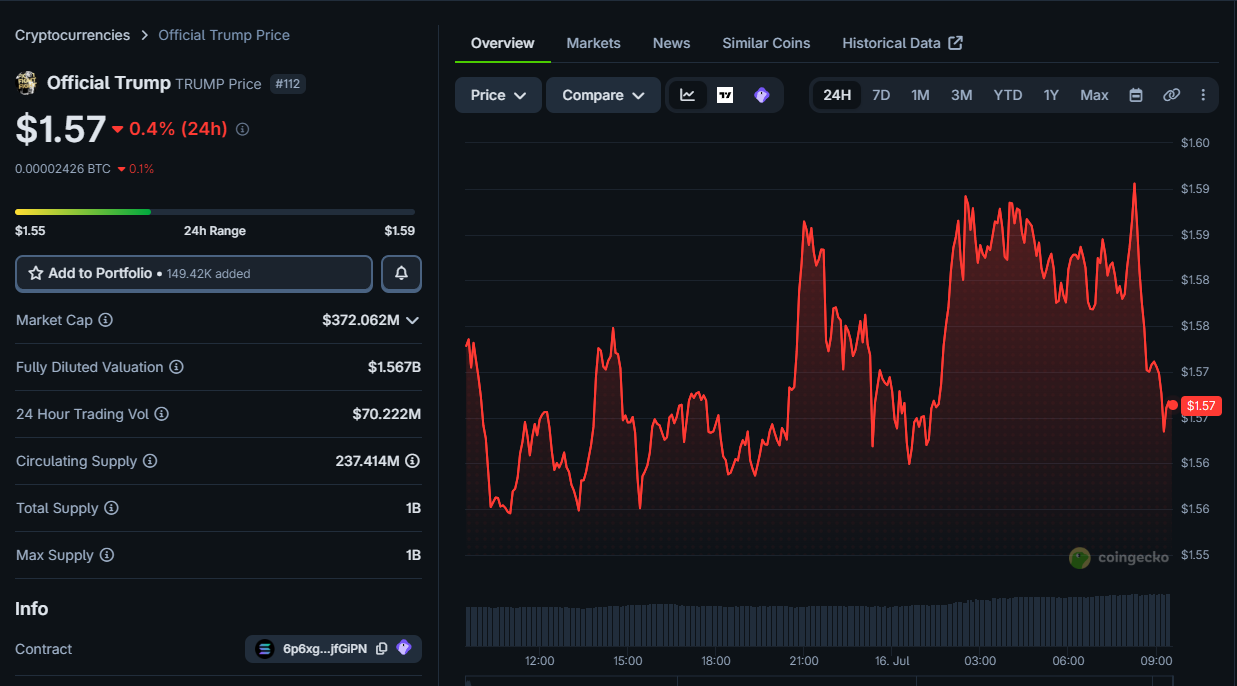
The announcement caused brief confusion online, since the physical coin shares its name with the TRUMP memecoin. That token traded near $1.56 shortly after the video circulated on X.
Coin Marks America’s 250th Anniversary
The US Mint’s new coin has a gold-like finish, though non-precious metals make up its composition, the Treasury Department said. Workers are minting it in Philadelphia and plan to release it this fall.
“As America commemorates 250 years of independence, the @usmint will begin striking this new $1 gold coin to honor the enduring legacy of liberty and a lasting symbol of patriotism.”
— Bessent
Federal law generally bars living presidents from appearing on US currency. However, a 2020 law permitting anniversary-themed designs allowed this release. The Commission of Fine Arts, whose members Trump appointed, approved the design in March.
It follows other Trump-branded currency efforts, including a proposed $250 bill and passports bearing his likeness.
TRUMP Token Slips Near $1.56
The confusion coincided with a dip in the TRUMP memecoin, which dipped toaround $1.56 from $1.59, according to CoinGecko. The token remains more than 97% below its January 2025 all-time high near $73.

Some replies beneath the White House X post asked whether the coin carried the same scam concerns as the crypto token.
$TRUMP has struggled for months. Scheduled token unlocks and a wave of retail losses have weighed it down, according to blockchain analytics firm Nansen.
Whether the physical coin briefly rattled crypto traders or the dip simply reflects the token’s broader decline remains unclear. Either way, the two Trump-branded assets now share more than just a name.
The post White House Posts ‘TRUMP COIN,’ But Not the Crypto. $TRUMP Dips appeared first on BeInCrypto.

U.S. inflation slowed more than expected in June, giving risk assets fresh support after months of pressure from rising energy costs.
Summary
- US inflation cooled to 3.5% in June, beating forecasts as falling energy prices drove relief.
- Bitcoin rebounded toward $65,000 after softer CPI reduced immediate pressure for tighter Federal Reserve policy.
- Core inflation eased to 2.6%, while renewed Middle East tensions keep future energy risks elevated.
The annual Consumer Price Index fell to 3.5% from 4.2% in May, marking its first decline in five months and coming below the 3.8% market forecast.
The U.S. Bureau of Labor Statistics reported that consumer prices fell 0.4% from May, the largest monthly decline since April 2020. Core inflation, which removes food and energy costs, eased to 2.6% annually from 2.9% and remained unchanged during June.
Falling energy prices drive inflation lower
Energy prices remained 15.7% higher than a year earlier, but that was well below the 23.5% increase recorded in May. Gasoline inflation slowed to 26.7% annually, while the broader energy index fell sharply during June as oil markets received temporary relief from easing U.S.-Iran tensions.
Gasoline prices fell 9.7% during the month, helping offset increases in food and shelter costs. Food prices rose 0.2% from May and 3% from a year earlier. Shelter costs increased 0.1% monthly and remained one of the main areas where prices continued moving higher.
The headline decline also came in much stronger than economists expected. Markets had forecast a 0.1% monthly fall, compared with the reported 0.4% drop. Core CPI also beat expectations for a 0.2% monthly increase and a 2.8% annual gain.
Bitcoin rebounds as inflation fears ease
Bitcoin moved higher following the softer inflation report. As reported, BTC climbed nearly 5% to an intraday high of about $64,830 before trading near $64,560. The move followed a decline below $62,000 as renewed tensions between the U.S. and Iran weighed on markets.
The softer CPI data reduced immediate concerns that persistent inflation could force the Federal Reserve into tighter monetary policy. U.S. stock futures also moved higher, Treasury yields declined and the dollar weakened following the release. Bitcoin joined the broader recovery in risk assets.
Before the report, crypto.news reported that Bitcoin was trading near $62,500 as investors weighed higher oil prices and the possibility of another inflation surprise. The June CPI reading removed part of that immediate concern, although energy markets remain a source of uncertainty.
Core CPI gives markets another positive signal
Core inflation falling to 2.6% gave investors another measure of easing price pressure. The reading remains above the Federal Reserve’s long-term 2% inflation goal, but its decline from 2.9% showed that the June slowdown was not limited entirely to energy.
The next U.S. CPI report, covering July, is scheduled for Aug. 12. Markets will watch whether lower inflation continues or whether renewed increases in oil and gasoline prices reverse part of June’s decline.
Energy risks remain despite softer June CPI
The inflation report reflects economic conditions during June, when a temporary easing in U.S.-Iran tensions helped lower energy prices. Since then, renewed hostilities have again raised concerns about oil supplies and future transportation costs.
That leaves Bitcoin and other risk assets exposed to both inflation data and geopolitical developments. June’s softer CPI has eased near-term inflation pressure and supported Bitcoin’s recovery, but the next direction will depend on whether energy prices stay contained and whether the broader decline in core inflation continues.
Stripe and private equity firm Advent International have reportedly submitted a joint offer to acquire PayPal for more than $53 billion.
Summary
- Stripe and Advent reportedly offered $60.50 per PayPal share, valuing the payments company above $53 billion.
- The proposed acquisition has $50 billion in bank financing, but PayPal has not responded publicly.
- A deal would combine PayPal’s PYUSD ecosystem with Stripe’s rapidly expanding global stablecoin payment infrastructure network.
The proposed deal would combine two major payments businesses as stablecoins and digital settlement become a larger part of the global financial sector.
Reuters reported that Stripe and Advent offered $60.50 for each PayPal share. The price represents a roughly 28% premium to PayPal’s Tuesday closing price. About $50 billion in bank financing has been committed to support the proposed transaction, according to people familiar with the discussions.
Stripe and Advent seek equal ownership of PayPal
Under the proposal, Stripe and Advent would each hold an equal stake in PayPal rather than dividing the company into separate businesses. The offer was reportedly submitted earlier in July after an initial approach in April.
PayPal, Stripe and Advent declined to comment on the reported talks. Reuters said PayPal had not responded to the latest proposal when the report was published. The sources also warned that there is “no certainty” that discussions will result in a completed transaction.
The reported $53 billion valuation comes after a sharp decline in PayPal’s market value from its 2021 peak. The company has faced stronger competition across checkout, digital wallets and alternative payment methods. New CEO Enrique Lores began restructuring the business after taking over in March.
PayPal is reorganizing around payments and crypto
PayPal reorganized its operations in April into three main units covering checkout, Venmo consumer financial services, and payments and crypto. The company reported first-quarter revenue of $8.35 billion, up 7%, while payment volume increased 8% on a currency-neutral basis to about $464 billion.
Its crypto business includes PayPal USD, or PYUSD, a dollar-backed stablecoin issued by Paxos. PayPal says the token is backed by dollar deposits, U.S. Treasuries and similar cash equivalents and can be exchanged for dollars through its platform.
As previously reported, PYUSD recently expanded natively to Polygon through the network’s Open Money Stack. The integration gives businesses access to stablecoin payments, settlements, fiat conversion and compliance infrastructure through one system.
Stripe has built its own stablecoin infrastructure
A takeover would also bring PayPal’s crypto payment products into a company that has invested heavily in stablecoin infrastructure. Stripe acquired Bridge, a stablecoin platform, in a deal valued at about $1.1 billion, expanding its ability to support digital dollar issuance and payments.
As reported by crypto.news, the Bridge transaction marked one of Stripe’s largest moves into crypto infrastructure. Stripe has since supported stablecoin payment projects across several major technology platforms and blockchain networks.
Stripe was valued at $159 billion in a February employee and shareholder tender offer. That valuation gives the privately held company a larger reported market value than PayPal under the current takeover proposal.
Potential deal arrives as payments companies seek scale
The reported bid comes during wider consolidation across global payments. Companies are seeking greater scale while expanding into cross-border transfers, business payments, artificial intelligence and blockchain settlement.
Stablecoins have become part of that shift. As previously reported, Stripe, PayPal, Visa, Mastercard and other payment companies have expanded their use of blockchain-based dollars for settlement and money transfers.
A completed takeover could place PayPal’s consumer payments network, Venmo and PYUSD alongside Stripe’s merchant infrastructure and stablecoin technology. However, the proposal remains preliminary. PayPal has not publicly accepted the offer, and the parties have not announced a formal acquisition agreement.
The reported bidders are seeking to move discussions forward before the end of July, according to the original report. Any agreement would still face detailed negotiations and likely regulatory review before completion.

Base network creator Jesse Pollak says he is stepping back from leading the Base App, after concluding that an earlier push toward social applications was a “wrong bet” for the Ethereum layer-2’s growth. In a post on X on Wednesday, Pollak argued that Base moved too slowly in areas that are now central to DeFi competition, including prediction markets and perpetual futures.
Pollak also said he will return leadership of the Base App to Coinbase, with Jordan Fish—better known on X as “Cobie”—taking over that role, while Pollak focuses on the Base blockchain itself.
Key takeaways
- Jesse Pollak said Base’s social-app strategy failed to deliver traction, and admitted the team made a “wrong bet.”
- Pollak cited Base’s lag behind competitors in scaled prediction markets and perpetual futures despite having offerings in both categories.
- Base App leadership is expected to shift back to Coinbase, with Cobie (Jordan Fish) resuming oversight of the product.
- The network’s current emphasis remains on finance-focused use cases such as trading, payments, tokenization, and AI agent tooling.
- Coinbase CEO Brian Armstrong recently acknowledged that “content coins” “didn’t work,” reinforcing the broader pivot away from social-first narratives.
From social to finance: Pollak’s rationale
Pollak’s comments provide a clearer explanation for the changes Base has been making earlier this year. Base initially positioned itself around social products, aiming to bring crypto to a wider audience through apps and creators. Pollak named examples of those early social thrusts, including Farcaster, Zora, and miniapps, reflecting a belief that engagement and content distribution could drive mainstream adoption.
However, Pollak said the market “disintegrated completely,” and that Base ended up behind in “key areas” that have become more important for users looking for financial utility. In his post, he pointed to Base’s decentralized derivatives presence—mentioning perps, with a nod to Avantis—and prediction markets, noting that both were “well behind scaled competitors.”
For investors and traders, the timing of this self-assessment matters: it signals a second attempt to align the chain’s product priorities with the demand that tends to concentrate liquidity, volume, and user retention in DeFi. Rather than doubling down on social distribution, Pollak frames the next phase around assets and trading-related infrastructure.
Leadership transition for the Base App
Beyond strategy, Pollak also addressed internal ownership. He said he will return leadership of the Base App to Coinbase, specifically under Jordan Fish (“Cobie”). At the same time, he said he will focus on the Base blockchain itself rather than the consumer-facing application layer.
That split highlights a common tension in L2 ecosystems: whether growth is best driven by consumer app ecosystems or by strengthening on-chain markets and standards that attract liquidity. By stepping back from the Base App, Pollak appears to be aligning resources more heavily toward the underlying chain and the financial primitives that developers can build on top of.
Coinbase’s earlier acknowledgment of “content coins”
Pollak’s post landed just days after Coinbase CEO Brian Armstrong said content coins “didn’t work.” Armstrong described it as a mistake that needed to be corrected, urging a shift in direction.
That acknowledgement aligns with Base’s earlier operational pivot. In February, Base sunset its Creator Rewards program and Farcaster-powered social feed as part of a move toward more tradable assets. Pollak had also previously characterized the Base App as an “imperfect Farcaster client,” underscoring that even when social-oriented features existed, they were not yet meeting the scale demanded by the market.
The Creator Rewards effort, launched in July 2025, was intended to turn engagement into rewards—making the network’s social activity economically meaningful. Pollak’s latest comments suggest that the rewards model did not overcome the broader competitive advantages held by chains and apps with more established financial depth.
What Base is building now: stablecoins, AI agents, and token standards
While Pollak criticized the earlier social emphasis, Base’s recent technical direction remains focused on tokenization and AI tooling—areas that can support both DeFi and new forms of user interaction.
Last week, Base activated its B20 token standard on mainnet, according to coverage earlier this month. The B20 framework introduces a native approach designed to support stablecoins, tokenized real-world assets (RWAs), and other fungible tokens.
In May, Base launched Base MCP (Model Context Protocol). The tool is intended to let users manage crypto directly from an AI model’s chat interface, and to interact with crypto protocols through the same interface, including Morpho, Moonwell, Uniswap, Aerodrome, Avantis, Bankr, and Virtuals. The practical implication is that AI agents may become a more natural interface layer over existing DeFi functionality, lowering the friction between user intent and on-chain execution.
Base has also said it is upgrading core systems ahead of an “AI agent economy” as part of a 2026 roadmap. In that context, Base highlighted RWA tokenization, stablecoins, and prediction markets as key growth areas—precisely the categories Pollak now says Base must compete in more effectively.
In his Wednesday post, Pollak said the goal is to position Base as a blockchain for global finance, aiming to be the place where the world’s money settles over the next century. While that statement is aspirational, it clarifies the narrative shift: the network is attempting to anchor itself in financial infrastructure rather than primarily in creator-led engagement.
In parallel with the emphasis on trading and markets, the article noted that Limitless Exchange’s monthly notional volume is only a fraction of larger competitors, citing Dune Analytics. That kind of gap helps explain why Pollak pointed to derivatives and prediction markets as areas requiring faster scaling: if volume and notional activity remain comparatively small, users and liquidity providers have less incentive to route activity through the L2.
Why the pivot could matter next
Base’s latest moves may be best understood as a reallocation of attention toward where DeFi demand is already proven—liquidity, tradability, and execution. What remains uncertain is how quickly Base can close the scale gap in prediction markets and perpetual futures, and whether the B20 token standard and AI agent tooling will translate into measurable user activity rather than just product launches. Readers should watch for evidence of rising volume, broader adoption of stablecoin and RWA tooling, and whether Base App product changes under Cobie translate into renewed momentum.

Panel approves $11.3m Kewdale logistics hub

$6 Million Vault Exploit Forces DeFi Platform Summer.fi to Wind Down

‘Jurassic Park’ Star Sam Neill’s Cause of Death Revealed


-

 Fashion7 days ago
Loro Piana Fall 2026 Enters Houston’s Art Scene
-

 Fashion5 days ago
Weekend Open Thread: Nutriplenish Leave-In Conditioner
-
 Sports6 days ago
2026 Genesis Scottish Open Thursday TV coverage: Round 1
-

 Sports6 days ago
Super Eagles star Moses Simon opens up on Liverpool transfer regret
-

 Tech7 days ago
Character.AI enters the microdrama arena with its own productions, but there’s a twist
-

 Politics16 hours ago
Young campaigners urge incoming PM to act on outdoor junk food ads
-

 News Videos1 day ago
XRP BOMBSHELL… XRP OMBOARDED FOR TRANSACTIONS!!!
-

 Tech2 days ago
Get Your ESP32 Sunny Side Up With This Solar Dev Board
-

 Tech1 day ago
Dark Secrets Emerge When Jailbreaking LLMs
-
 Sports7 hours ago
New Cornerback Enters Vikings Trade Rumor Mill
-
 Entertainment11 hours ago
Disney’s Most Ambitious Failed Star Wars Attraction Is Coming to SDCC
-

 Tech7 days ago
Level Infinite Launches Gangstar Mirage City in India with Pre-Registrations
-
 NewsBeat7 days ago
Major update after Huntingdon train attack as man enters plea
-

 News Videos3 days ago
how to make coin bank box with cardboard #scienceproject #money #diy #shorts
-
 Tech2 days ago
Cloudflare Precursor Watches Your Mouse and Keyboard To Decide If You Are Human
-
 Entertainment9 hours ago
Vicki Gunvalson Defends Discussing Heather Dubrow’s Money
-

 NewsBeat6 hours ago
Watch: Is Donald Trump facing a popular backlash on immigration?
-
Crypto World2 days ago
Ripple, Coinbase, Circle Join Linux x402 Foundation to Help Shape AI Payments
-

 Sports4 hours ago
Michigan officials not expected to discuss AD Warde Manuel at Thursday meeting
-
 NewsBeat6 hours ago
Firefighters issue update on Dovestone moorland blaze as fire enters fourth day
You must be logged in to post a comment Login