

Crypto World
StarkWare Launches ‘Private KYC’ to Reduce Personal Data Breach Risk

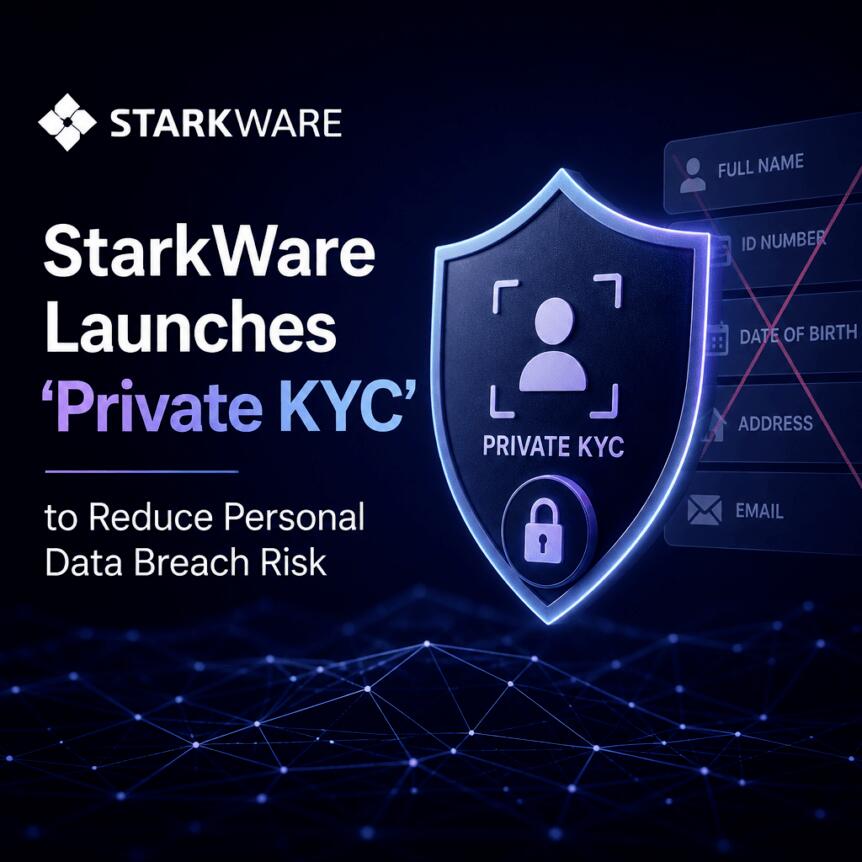
StarkWare has unveiled a demo of “Private KYC” for Starknet, aiming to let users satisfy know-your-customer requirements without handing over complete identity documents. The privacy-focused system is built around selective disclosures using zero-knowledge proofs, designed to confirm specific facts—such as age or credential validity—while keeping the underlying personal data hidden.
In the announcement, StarkWare said the approach uses STRK20 privacy features alongside zero-knowledge STARK proofs. The goal is to reduce the amount of personal information organizations need to collect and store, addressing a core vulnerability of today’s compliance workflows: once large identity databases exist, they become high-value targets.
Key takeaways
- Starknet Private KYC is designed to verify specific attributes (e.g., “over 18” or “credential is valid”) rather than reveal full passport details.
- The demo relies on zero-knowledge STARK proofs so verifiers can confirm eligibility without viewing the underlying identity data.
- User-side steps include scanning a passport and proving eligibility via encrypted data registered on-chain.
- StarkWare frames the release as proof that compliance and privacy do not have to conflict—particularly by limiting how much identity data institutions store.
- The model is positioned as a contrast to biometric verification approaches that drew criticism for centralized custody concerns.
Selective identity checks on Starknet
Traditional KYC typically requires users to provide full documents, after which institutions must store and safeguard sensitive information. StarkWare argues that this “all-or-nothing” data exchange is unnecessary when regulations often require confirmation of only one or a small set of facts.
Under the proposed flow, users begin by scanning their passport using a smartphone camera and the device’s NFC chip to read and confirm the document is genuine and signed by the issuing authority. After that, users encrypt identity data to their Starknet wallet, register relevant attributes in a public on-chain registry, and submit zero-knowledge proofs for targeted checks.
Crucially, verifiers are able to validate eligibility by consulting the public registry and checking the proofs—without accessing the actual identity data itself. StarkWare described the principle this way: verification should “only confirm the precise fact,” such as meeting an eligibility rule, rather than expose the complete document.
StarkWare also warned that institutions collecting full identity information can create long-lived risk. In its framing, “every identity database becomes a liability the moment it exists,” underscoring why limiting what’s stored matters for both security and compliance.
How the demo’s privacy design works
StarkWare presented Private KYC as a demo rather than a fully deployed feature set, but the workflow outlines a practical mechanism for privacy-preserving verification on a public blockchain environment.
First, passport data is used locally during the scan and authenticity confirmation step. Next, identity data is encrypted and tied to a user’s Starknet wallet, reducing the likelihood that raw documents or complete personal records need to be transmitted to every counterparty.
Then, instead of sharing full documents for each verification request, users register attributes in a public on-chain registry and produce zero-knowledge STARK proofs for the specific statements that need to be checked. Starknet’s team said current identity checks often “ask for your whole document when they only need one fact,” and the architecture is intended to align the system’s disclosure level with the actual compliance requirement.
StarkWare’s core argument is that verification can be structured so institutions confirm what they need without building their own copy of someone’s identity. The company said this approach avoids creating another dataset that organizations would then have to defend.
Why KYC privacy is gaining momentum
The push for privacy-preserving verification comes as cyber risk continues to rise. The article accompanying the announcement cited StationX data suggesting the US reached a record 3,322 data compromises in 2025, representing a 79% increase over five years. It also referenced a global average data breach cost of $4.4 million, as reported by StationX in that same context.
On top of broad data-breach statistics, the wider compliance landscape is increasingly shaped by the reality that sensitive records—especially identity and credential data—attract attackers. StarkWare’s positioning is therefore less about cryptography as an abstract concept and more about changing the practical incentives for collecting and storing identity information.
The company’s approach also reflects an important asymmetry in today’s KYC systems: users often have little control over how many parties repeat collection, how long records are retained, or what security standards are used. Private KYC, as presented, aims to reduce those risks by limiting disclosure to what is necessary for eligibility decisions.
In the crypto ecosystem, there is also an example of the consequences of custody and centralization in privacy-adjacent identity systems. StarkWare compared its direction to Sam Altman’s World ID, which uses zk-proofs to verify humanness via iris scans on hardware orbs. However, World ID drew backlash over centralized biometric custody. StarkWare’s “self-custody” framing is intended to address similar concerns by avoiding the same custody pattern for biometric-style data.
What to watch next for Starknet’s Private KYC
Private KYC on Starknet is positioned as a step toward compliance-ready verification that protects sensitive personal details, but the demo nature of the announcement means implementation details and rollout timing remain unclear. Investors and builders should watch for when and how the proofs, on-chain attribute registries, and verifier tooling are integrated into real-world applications—especially those that need auditable eligibility without repeated exposure of full documents.


Grayscale Head of Research Zach Pandl has publicly warned that Michael Saylor’s Strategy faces a structural $1.5 billion annual cash-flow problem driven by its swelling preferred-stock dividend obligations, not by Bitcoin’s price.
The trigger for that warning: Strategy sold 32 BTC for approximately $2.5 million between May 26–31, 2026, its first Bitcoin sale since 2022, with SEC filings confirming the proceeds went directly to fund preferred stock distributions.
Pandl’s framing is precise and deliberately divorced from the usual BTC price narrative. “Strategy’s leveraged business model is facing challenges, which have contributed to increased volatility in the overall BTC market,” he said in a Grayscale research note.

This is a cash-flow problem with a fixed-dollar denominator, and Bitcoin, which yields nothing, sits on the wrong side of that equation.
Discover: The Best Crypto to Diversify Your Portfolio
Bitcoin News: The $1.5 Billion Gap Strategy Can’t Paper Over
The arithmetic is uncomfortable. Strategy’s 2025 software revenue came in at roughly $477 million، less than one-third of the ~$1.5 billion in annual dividends now owed across its five preferred-stock series.
The preferred stack itself has ballooned from approximately $730 million in early 2025 to roughly $15.5 billion by mid-2026, driven by successive issuances including STRK (fixed ~8% coupon) and STRC, the “Stretch” preferred issued in 2025 at a variable rate of approximately 11.5%.
STRC was designed to trade near its $100 par value. It has been quoted around $95–96. That below-par print is not cosmetic، Pandl warns it signals that investors are already demanding higher effective yields, which could force Strategy to sweeten dividend terms on future issuances. “If Strategy is forced to increase the dividend to return STRC to $100, the company will run out of cash much sooner, pulling forward Bitcoin sales to fund payments,” he said.
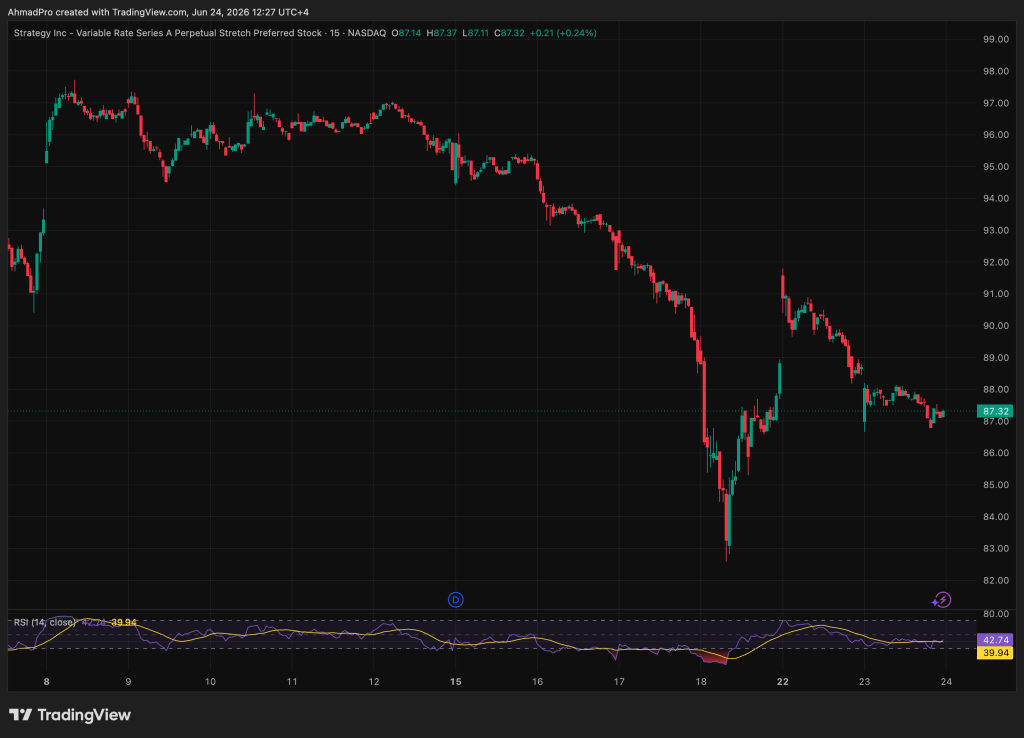
Strategy’s reported cash position of roughly $1 billion covers less than one year of preferred dividends at current obligation levels. That runway forces a binary choice on repeat: refinance at increasingly punishing terms, issue dilutive equity, or sell Bitcoin.
The May 2026 sale، 32 BTC at an average of $77,135, reducing the treasury to approximately 843,706 BTC، confirmed which lever the firm pulled first. Small in absolute terms; structurally significant as a precedent.
Arca’s Jeff Dorman has independently flagged the same mechanism, warning that the roughly $15 billion preferred stack and $1.5 billion annual dividend load mean “someone is going to lose badly” if Bitcoin prices or MSTR equity don’t cooperate within the next few months.
Two separate institutional research desks arriving at the same number from different angles is not a coincidence، it is the arithmetic speaking.
Discover: The Best Token Presales
Can Strategy Still Call Itself a Bitcoin Accumulator?
Strategy’s entire valuation premium rests on a single thesis: Michael Saylor is a permanent, aggressive net buyer of Bitcoin, and MSTR equity offers leveraged exposure to that accumulation engine.
Pandl’s note punctures that thesis from two directions simultaneously. First, the May Bitcoin sale established that BTC is now a liquid reserve tapped for operational cash needs, not an untouchable treasury asset.
Second, Pandl argues directly that Strategy “will struggle to acquire more tokens at the share prices both STR and MSTR trade at” – meaning the equity-issuance flywheel that funded accumulation in 2020–2024 is no longer economical at current MSTR prices near $125.
That distinction matters. Selling from strategic rebalancing is one thing; selling because preferred cash flow obligations leave no other option is structurally different. Saylor acknowledged as much on Strategy’s May 2026 earnings call, stating the company might sell Bitcoin to pay dividends and would signal such sales in advance.
That admission converted “never sell Bitcoin” from a policy to a preference، and preferences bend under financial pressure.
Grayscale’s note also flags the market-structure implication: if Strategy is no longer a persistent accumulator, Bitcoin now requires incremental demand from other buyers to maintain price support.
The “MSTR put”، the assumption that Saylor would step in as a buyer during weakness، is materially impaired. That removes a structural bid from the market precisely when the firm’s stressed balance sheet could make it a seller.
Don’t Miss Out on Our $1,000 USDT Airdrop on ByBit
The post Is Saylor’s Strategy Sat on $1.5Bb Cashflow Problem? Grayscale Think So appeared first on Cryptonews.

South Korea’s Financial Services Commission (FSC) has moved tokenized securities deeper into a broader national program to modernize capital-market infrastructure. The regulator said it is coordinating reforms across ministries and market operators, positioning token securities not as a standalone initiative, but as part of a wider effort to improve settlement efficiency and market connectivity.
On Tuesday, the FSC launched a capital market infrastructure review meeting to align policy work with operational plans. The regulator indicated that token securities will continue to be developed through a separate public-private council, with those outcomes subsequently integrated into the broader infrastructure roadmap.
Key takeaways
- The FSC is coordinating token securities work alongside a broader capital-market overhaul, including faster settlement and longer trading hours.
- Legislation already approved by South Korea’s National Assembly recognizes blockchain-based distributed ledgers as securities registries, enabling issuance and transfer of token securities.
- The FSC expects key token securities subordinate regulations and guidelines to be released around July, with the framework scheduled to take effect in February 2027.
- Operational infrastructure is planned for completion by end-2026, including a Korea Securities Depository (KSD) system for settling certain over-the-counter transactions in unlisted shares and fractional investment products.
- Firms should monitor how the token securities framework will be implemented alongside existing investor-protection and market-integrity obligations.
Capital-market infrastructure review folds in token securities
The FSC’s decision to incorporate token securities into a wider infrastructure reform effort reflects a policy approach aimed at aligning digital assets with established market plumbing. In practical terms, this matters for compliance and operational readiness because tokenized issuance and transfer typically require integration with securities registries, settlement processes, custody models, and audit trails.
According to the FSC, the initiative includes a roadmap to shorten the securities settlement cycle, targeted for completion by October. It also includes development of a KSD system intended to handle settlement of over-the-counter trades involving unlisted shares and fractional investment products. The FSC’s timetable places that system by end-2026, preceding the start date for the token securities regime.
FSC Vice Chairman Kwon Dae-young framed the effort as part of four policy priorities: trust, shareholder protection, innovation, and market access. That set of objectives suggests regulators will seek guardrails that preserve investor protections while enabling adoption of technology, rather than treating tokenization as purely a technology experiment.
Legislative groundwork and the planned 2027 rollout
South Korea’s token securities program predates the new capital-market infrastructure review. In January, the National Assembly approved amendments that recognize blockchain-based distributed ledgers as valid securities registries. The amendments also permit the issuance and circulation of token securities, establishing the legal basis required for regulators to build implementation rules and supporting infrastructure.
Per the FSC, the token securities framework is scheduled to take effect in February 2027, contingent on completion of subordinate rules and supporting infrastructure. The FSC said it is targeting July for the release of proposed subordinate regulations and guidelines following work at the public-private token securities council.
Cointelegraph previously reported on the broader legislative direction behind South Korea’s tokenized securities laws, including their expected regulatory treatment and timeline. The FSC’s latest updates emphasize that implementation details remain under active development and will be formalized through additional consultation and rulemaking rather than immediately after the statute’s passage.
For regulated firms, the gap between legislative authorization and effective implementation rules is significant. During this period, businesses typically need clarity on operational requirements such as how token securities will be registered, validated, and reconciled with traditional securities records; what disclosure or investor-protection measures will apply; and how compliance controls will be expected to function in a distributed-ledger environment.
KSD integration and platform development for blockchain-based custody
Infrastructure planning is a core component of the FSC’s approach. The regulator has identified settlement capability through the KSD as a milestone ahead of the February 2027 effective date. The KSD system described by the FSC is intended to support settlement for over-the-counter trades in unlisted shares and fractional investment products.
Separately, Samsung SDS said in May that it won a contract to build a token securities management platform. According to reporting cited by the FSC’s broader communications, the platform is designed to connect the KSD’s existing electronic securities account system with blockchain-based data. Samsung SDS said it aims to complete the platform by February 2027, aligning its delivery with the planned launch of the token securities framework.
The FSC also noted that detailed token securities plans will continue to be discussed within the public-private council before being linked to the broader infrastructure review. This sequencing suggests regulators are attempting to coordinate “digital asset” rulemaking with the more general modernization agenda, potentially reducing the risk of parallel standards that could complicate implementation.
From a governance perspective, integrating blockchain-based data with established depository and accounts infrastructure may also shape how auditability, data integrity controls, and reconciliation processes are implemented—elements that are central to compliance monitoring and investor assurance.
Regulatory implications: investor protection, compliance controls, and cross-border considerations
While the FSC is advancing token securities through a structured timetable, several implementation questions remain relevant for compliance and institutional readiness. The amendments enabling blockchain registries and token issuance establish the legal pathway, but firms will still need to understand how regulators intend to operationalize investor protections and “trust” requirements in distributed systems.
Institutional stakeholders should also consider how token securities will interact with existing market rules governing custody, settlement finality, transfer restrictions, disclosure, and governance. Tokenization can introduce new operational risks—such as data integrity and access control—that require controls comparable to those in traditional securities infrastructure.
Cross-border activity may further complicate matters. South Korea’s approach—embedding token securities within domestic market infrastructure—does not automatically resolve differences with other jurisdictions that have distinct regulatory frameworks for tokenized instruments. For firms operating internationally, that means compliance programs may need to map how token securities obligations align (or diverge) across regulatory regimes.
In the European context, for example, MiCA provides a framework for certain crypto-asset activities, but its scope and alignment with tokenized securities rules depends on how a given product is classified. Similarly, in the United States, the regulatory landscape for tokenized securities has historically depended on securities-law analysis and enforcement posture. Even though the FSC’s initiative is a Korean domestic reform, global institutions will likely evaluate it through the lens of their existing compliance and legal risk management practices.
Closing perspective
South Korea’s FSC appears to be moving toward an integrated model in which tokenized securities are introduced alongside settlement modernization and broader market-access reforms. The next critical milestones are the public-private council’s subordinate regulations and guidelines targeting July, followed by the February 2027 effective date. Observers will likely focus on how regulators translate the legal recognition of blockchain-based registries into enforceable operational standards for custody, settlement, investor protection, and auditability.


SecondFi, a Cardano (ADA) project, suffered a significant security breach tied to a flaw in its own wallet generation software. Damage estimates range from 16 million ADA to more than 129 million ADA and additional tokens across compromised wallets.
ADA trades at $0.150237 as of June 24, down 3.00% over the past 24 hours. At that price, SlowMist’s upper estimate of 129 million ADA translates to roughly $19.4 million. SlowMist founder Yu Xian, known by the handle Cos, placed total losses above $20 million. Non-ADA tokens held in the compromised wallets pushed that figure beyond SecondFi’s own estimate.
How the SecondFi Exploit Unfolded
SecondFi’s team traced the breach to a vulnerability in its proprietary wallet generation software. That flaw gave attackers access to funds across multiple user wallets. Critically, Cardano’s base protocol was not the entry point. The project completed an on-chain analysis to map the scope of affected addresses.
SecondFi is now working with an independent blockchain security firm on a technical review.
The project’s internal estimate puts losses at around 16 million ADA. However, SlowMist’s analysis of hacker fund flows and wallet activity points to a larger impact. Yu Xian said more than 129 million ADA and other tokens may have moved through addresses linked to the attacker.
That discrepancy suggests the final figure will depend heavily on the outcome of the independent review.
The incident fits a pattern of infrastructure-layer attacks that gained momentum in 2026. Earlier this month, Humanity Protocol’s private key breach wiped 88% off its token’s value in 24 hours.
An attacker gained control through compromised key material. Similarly, the Syscoin bridge exploit showed how software-layer flaws often evade standard security audits. In both cases, the vulnerability came from tooling built above the base chain, not from the underlying protocol.
ADA Under Pressure After the SecondFi Exploit
ADA already trades near five-year lows. Charles Hoskinson recently proposed a Cardano rescue plan, though ADA holders remained broadly skeptical. The breach adds another headwind to an ecosystem already under strain.
Hoskinson responded to the SecondFi incident, noting that while the losses may appear small relative to other crypto exploits, they offer no comfort to those affected. He stressed that some users may have lost their entire ADA holdings, describing it as an unfortunate reality of the industry.
The exploit surfaced just one day after Cardano launched the Leios Musashi Dojo testnet. Early Cardano network activity data showed few signs of a meaningful on-chain uptick. Therefore, the breach may complicate efforts to attract new developers and liquidity to the network.
SecondFi has not disclosed a reimbursement timeline or recovery plan. The ongoing technical review will determine whether any funds remain recoverable. It will also establish what changes the project must make to its wallet infrastructure before safely resuming operations.
The post Cardano Project SecondFi Hit by Major Exploit, Losses Could Top $20 Million appeared first on BeInCrypto.
Crypto World
Micron Stock Goes On-Chain 48 Hours Before Earnings as Backpack Securities Lists $MU on Solana


Sunrise and Backpack Securities brought tokenized Micron Technology stock to Solana on Monday, listing $MU on-chain exactly 48 hours before Micron reports its fiscal third-quarter earnings after the closing bell on June 24. Each token is backed 1:1 by a real Micron share held in custody by Backpack… Read the full story at The Defiant

The Alliance to End Human Trafficking, a faith-based nationwide network, delivered a letter signed by 82 Catholic leaders to Senate Majority Leader John Thune and Minority Leader Chuck Schumer on Tuesday, urging both parties to oppose Section 604 of the CLARITY Act, the provision that would exempt non-custodial DeFi developers from criminal prosecution and AML compliance obligations.
The bill cleared the Senate Banking Committee 15–9 on May 14, 2026, but still needs a full Senate floor vote, and Polymarket currently prices Trump signing it into law this year at roughly 42%. A coalition letter targeting the bill’s most industry-critical provision, arriving from an unexpected moral quarter, does not improve those odds.
Section 604 codifies the Blockchain Regulatory Certainty Act (BRCA), language that has circulated in various legislative forms since at least 2018.
Its operative effect: persons who cannot unilaterally execute or prevent a transaction on behalf of another user, developers publishing open-source code, node operators, and unhosted wallet providers are not classified as money transmitters under the Bank Secrecy Act. That carve-out removes them from Bank Secrecy Act registration and reporting requirements.
For DeFi protocol operators and open-source developers, BRCA is the bill’s existential provision; industry groups have stated flatly they will not support the CLARITY Act without it. The Trump DOJ’s imprisonment of multiple crypto software developers over the past year for building privacy-enabling tools is precisely the prosecutorial risk BRCA is designed to eliminate.
The AML Loophole Argument: What AEHT Is Actually Charging
The Alliance to End Human Trafficking’s letter does not object to crypto regulation broadly; it objects to a specific legal mechanism. The coalition argued that BRCA “may make it more difficult to responsibly monitor illicit financial activity tied to trafficking, organized crime, child exploitation, sanctions evasion, and other forms of abuse.”
The structural claim is precise: by removing non-custodial developers from the money-transmitter classification, Section 604 strips away the transaction-monitoring and suspicious-activity-reporting obligations that AML frameworks depend on, leaving a compliance gap that transnational criminal organizations can exploit.

This is not a novel critique. The Bank Policy Institute issued a brief in June 2026 calling the Senate CLARITY bill “illicit finance-friendly” rather than innovation-friendly, warning that DeFi platforms and unhosted wallets would fall outside standard AML and sanctions rules entirely.
Transparency International U.S. made a parallel argument after the Senate Banking Committee markup, flagging the absence of clear obligations for non-custodial services as a structural weakness that would “hamper law enforcement’s ability to trace and interdict illicit finance.” What AEHT adds is not a new legal theory – it is a new political constituency delivering that theory.
The Catholic leaders framed their opposition in the language of Catholic social teaching: “The test of any financial system is not simply whether it generates wealth or innovation, but whether it safeguards human life and dignity,” the letter stated. That framing matters because it is not primarily a technical objection to market structure design – it is a moral claim about legislative complicity, and moral claims have different political mechanics than regulatory-policy objections from the banking lobby or the CFTC.
Senate Math: Why Faith-Based Opposition Is Harder to Neutralize Than Partisan Opposition
The CLARITY Act’s floor-vote problem is arithmetical. Reaching the 60-vote cloture threshold requires picking up five to seven Democratic senators beyond the two who crossed over at the May 14 committee vote.
Those crossover votes are most plausible from Democrats in competitive states or those who have staked a position on crypto-friendly economic development, senators who need a defensible justification for breaking with a caucus that includes Sens. Elizabeth Warren and Jack Reed, both of whom filed amendments during the markup aimed at extending AML obligations to DeFi platforms and smart contracts.
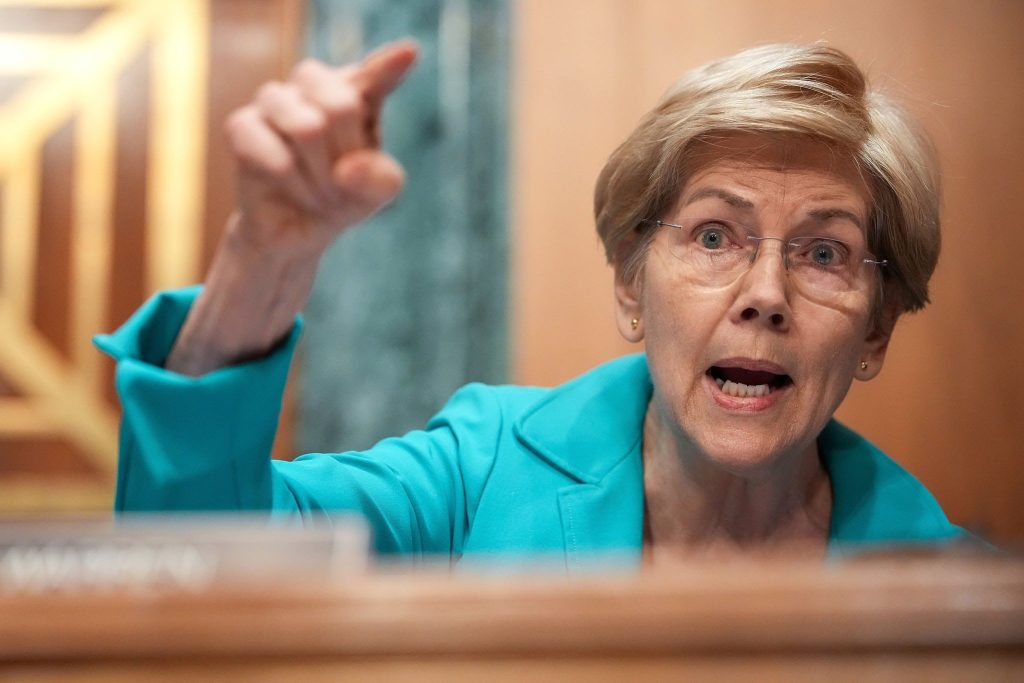
The AEHT letter complicates that justification directly. A Democratic senator considering a yes vote can deflect industry-lobby opposition as special-interest pressure.
Deflecting a faith-based anti-trafficking coalition that invokes Catholic social teaching on solidarity and human dignity – in writing, to Senate leadership – is a materially different political task. It hands opponents a ready-made floor-speech frame: a vote for BRCA is a vote against the tools that catch traffickers. That framing does not have to be legally accurate to be politically effective.
The CLARITY Act is already absorbing opposition from Wall Street over stablecoin yield language, from Native American tribes over prediction market sports-wagering provisions, and from a Democratic faction insisting the bill restrict President Donald Trump’s personal crypto ventures.
Each opposition bloc targets a different provision, which means resolving one does not resolve another. The AEHT letter specifically targets BRCA, which industry groups have designated a red line – meaning any Senate concession on Section 604 to address the trafficking-finance argument would likely require a House-Senate conference, consuming time the bill does not have.
Don’t Miss Out on Our $1,000 USDT Airdrop on ByBit
The post Here’s How the Catholic Church Could Kill CLARITY Act Over Human Trafficking appeared first on Cryptonews.


South Korea’s financial regulator folded token securities infrastructure into a broader overhaul of the country’s capital markets, alongside plans for faster settlement, longer trading hours and greater use of artificial intelligence.
On Tuesday, the Financial Services Commission (FSC) said it had launched a capital market infrastructure review meeting to coordinate reforms across government agencies and market operators. According to the FSC, plans for token securities will be further discussed separately through a public-private council before being linked to the wider initiative.
The initiative includes a roadmap for shortening the securities settlement cycle, expected by October, and a Korea Securities Depository (KSD) system for settling over-the-counter trades in unlisted shares and fractional investment products by the end of 2026.
The move places tokenized securities within the country’s broader effort to modernize traditional financial markets, potentially bringing blockchain-based investment products closer to systems used for mainstream securities settlement and trading.
FSC Vice Chairman Kwon Dae-young said the initiative would build on broader efforts to improve the capital market, guided by four policy priorities: trust, shareholder protection, innovation and market access.
South Korea prepares token securities framework for 2027
South Korea’s token securities initiative predates the latest capital-market review. In January, the National Assembly approved amendments recognizing blockchain-based distributed ledgers as valid securities registries and permitting the issuance and circulation of token securities.
According to the FSC, the framework is scheduled to take effect in February 2027, after regulators complete subordinate rules and supporting infrastructure. At the second meeting of its public-private token securities council in May, the FSC said it was targeting July for the release of proposed subordinate regulations and guidelines.
Related: South Korea reviews Hana Bank’s Dunamu stake under banking rules: Report
Technical infrastructure is also under development. Samsung SDS said in May that it had won a KSD contract to build a token securities management platform that connects the depository’s existing electronic securities account system to blockchain-based data. The company aims to complete the platform by February 2027, when the new framework is scheduled to take effect.
According to the FSC, detailed token securities plans will continue to be discussed by the public-private council before being linked to the broader review, part of South Korea’s preparations for a real-time, continuously accessible and integrated digital market.
Magazine: Japanese pension fund tips 1% in crypto, G7 urges action on NK hackers: Asia Express


The investment bolsters concerns about foreign influence, originally stemming from a major investment by MGX, a UAE state-backed investment company, that boosted the market capitalization of the Trump family’s stablecoin by almost $2 billion overnight.
Here’s where it gets interesting. Within months of the deal, the Trump Administration took policy decisions that benefited the UAE, according to the letter. In May 2025, it approved a $1.4 billion arms sale to the country, despite congressional concerns about weapons flowing to armed groups in Sudan where more than 150,000 people have died.
In the same month, Treasury created a “Known Investor Pilot” program to streamline investment approvals through CFIUS, a fast-track process that the UAE had lobbied for.
The Department of Commerce also rescinded Biden-era chip export restrictions, allowing the UAE to receive up to triple or quadruple the number of advanced chips it previously could have imported. It authorized G42, a UAE AI company chaired by Sheikh Tahnoon bin Zayed Al Nahyan, to receive 35,000 Nvidia Blackwell chips. The deal was worth over a billion dollars.
But U.S. intelligence officials reportedly caught G42 providing U.S. technology that was used to enhance China’s missile capabilities. Though G42 allegedly committed to divesting its Chinese holdings, reports suggest the firm attempted to obfuscate its ties to Beijing by moving its business holdings in China to a new investment firm.
The primary cryptocurrency, which suffered another price decline yesterday (June 23), attempted to reclaim some lost ground, but the recovery was far from convincing.
While numerous altcoins remain in red territory, the lesser-known Audiera (BEAT) has defied the prevailing bearish environment by posting a 40% daily increase.
BTC Fails to Recover
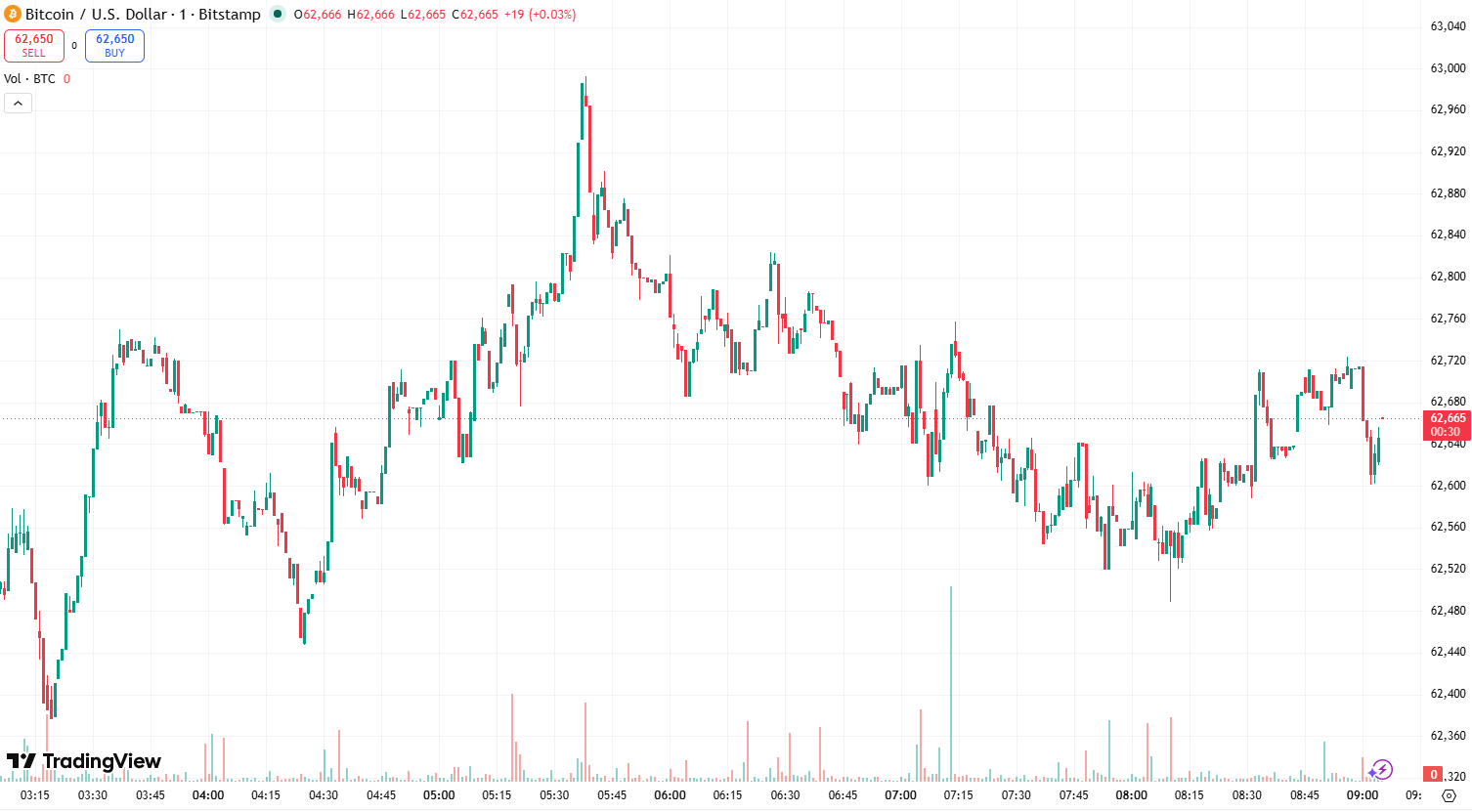
The asset started the business week on the right foot, rising to almost $66,000. However, that pump was short-lived and followed by a pullback to as low as $61,900.
Over the past 24 hours, the bulls tried to step in, briefly lifting the price to nearly $63,000, but the sellers remained active, preventing a more substantial rebound. As of this writing, BTC trades at around $62,600, representing a mere 0.5% increase on a daily scale and a 4.5% plunge for the last week.
It is important to note that the asset’s unsatisfactory performance coincides with the crisis in traditional finance. As CryptoPotato reported, the popular indexes Nasdaq, S&P 500, and South Korean tech stocks headed south after a global sell-off in the Artificial Intelligence (AI) sector.
Meanwhile, the constant outflows from spot BTC exchange-traded funds (ETFs) signal waning interest from institutional investors, which could further weigh on the asset’s short-term performance.
Bitcoin’s market capitalization currently stands at around $1.25 trillion, while its dominance over altcoins remains unchanged at approximately 56.3%.
How are the Alts Doing?
While today’s (June 24) altcoin landscape isn’t the same bloodbath seen 24 hours ago, plenty of tokens are still suffering steep losses. Worldcoin (WLD) has tumbled by 7%, Kaspa (KAS) has plunged by 5%, whereas Litecoin (LTC) is down 3%.
Audiera (BEAT) is on the opposite corner and stands out as the best-performing cryptocurrency (at least from the top 100 list). Its price has exploded by 40% and now trades at around $2.40. Other notable gainers include JUP (+6%), AVAX (+5%), XMR (+4%), and SUI (+3%).
The total crypto market capitalization has risen by 0.5% over the last day and is currently hovering at roughly $2.34 trillion.

The post Bitcoin’s Price Rejected at $63K as This Altcoin Explodes by 40%: Market Watch appeared first on CryptoPotato.


Ripple has received a preliminary Crypto Asset Service Provider license from Luxembourg's financial regulator, a gate-opening step toward offering its payments platform across all 30 European Economic Area countries once final conditions are met. The approval, described as a "Green Light Letter,"… Read the full story at The Defiant
The world’s largest asset manager, BlackRock, has reiterated that bitcoin’s role in investment portfolios is evolving, describing the asset as a viable complementary diversifier for long-term strategies.
The firm outlined that 1% to 2% Bitcoin allocation can be a reasonable range for investors who believe adoption will continue while still accounting for the cryptocurrency’s volatility. The latter, by the way, has been dwindling lately.
The view builds on BlackRock’s broader push into the digital asset industry. As CryptoPotato reported earlier this month, the firm launched the iShares Bitcoin Premium Income ETF, which expanded its BTC-linked product lineup. It’s also a testament to the growing demand for covered-call strategies oriented toward BTC.
At the same time, major institutions are also paying closer attention to blockchain infrastructure. BlackRock’s BUIDL fund is playing a major role in tokenization.
A Small Bitcoin Allocation With Outsized Risk Impact
BlackRock’s portfolio-sizing strategy focuses more on adoption and volatility. In a traditional 60/40 stock-and-bond portfolio, the firm said a 1% to 2% Bitcoin position could contribute a risk share comparable to large technology stocks.
Bitcoin’s role in portfolios is evolving, and it could be considered a complementary diversifier.
We believe a modest allocation (typically ~1–2%) could impact return potential in a portfolio while maintaining appropriate risk tolerance.
Hear more from Michael Gates on how… pic.twitter.com/oOIRfq6F4D
— BlackRock (@BlackRock) June 23, 2026
The key point here is that the allocation remains small by design. According to the asset manager, moving beyond that range could sharply increase Bitcoin’s contribution to overall portfolio risk, especially because the asset remains prone to steep drawdowns and rapid shifts in sentiment.
Institutional Demand Continues to Expand
BlackRock’s latest commentary comes just as Bitcoin exposure through regulated financial products continues to expand. The launch of the iShares Bitcoin Premium Income ETF added yet another layer to the market, targeting investors who are interested in BTC-oriented income strategies, rather than simple spot exposure.
Moreover, the institutional backdrop is also moving beyond Bitcoin. In a recent interview with CryptoPotato, Aptos Labs Chief Business Officer Solomon Tesfaye discussed why firms such as BlackRock are watching blockchain rails tied to tokenized assets, settlement efficiency, and institutional-grade financial activity.
That said, BlackRock’s own language remains cautious. The firm continues highlighting the asset’s volatility, uncertain path of adoption, as well as the need for regular portfolio review.
The post BlackRock Says Bitcoin’s Portfolio Role Is Changing: Why 1-2% Matters appeared first on CryptoPotato.
1 Vikings QB Idea is Officially Kaput

Co-hosting & guest list visibility finally arrives for Apple Invites

Bitcoin Crashes as Global Markets Meltdown…


-

 Fashion5 days ago
Weekend Open Thread: Miami – Corporette.com
-

 Entertainment4 days ago
Renter of Home in Anne Heche Crash Denies Settlement With Son
-

 Tech2 days ago
Microsoft accidentally kills epic Outlook email threads
-

 Business4 days ago
Soccer-U.S. defends Iran World Cup travel restrictions, says discussions ongoing
-
 Sports15 hours ago
Two goals and an assist by sheer aura: Cristiano Ronaldo just entered the World Cup chat
-
Crypto World7 hours ago
Bitcoin (BTC) Dips Below $62K, Ethereum (ETH) Plunges 6% Daily: Market Watch
-

 Politics6 days ago
BBC Reporter Discusses Cross Party Criticism Of Trumps Iran Deal
-

 Crypto World4 hours ago
Securitize Wraps Roubini's SEC-Registered ETF as Dubai VARA Digital Security
-
Business9 hours ago
Entergy settles forward sale agreements, raises $672 million in cash proceeds
-
 Business4 days ago
Wall Street Week Ahead: Investors see Micron earnings as pulse check of AI rally momentum
-

 Politics4 days ago
Andy Burnham and the meaning of Makerfield
-

 Tech6 days ago
AWS enters the context layer race with a graph that learns from agents, not manual curation
-
 Crypto World4 days ago
Can Charles Hoskinson Really Rescue Cardano?
-

 Crypto World4 days ago
HIVE shares jump as $220M AI deal speeds Bitcoin mining pivot
-

 Crypto World4 days ago
Jake Chervinsky accuses CME of protecting derivatives monopoly
-

 NewsBeat5 days ago
Keir Starmer Allies Question His Chances For No 10
-

 Tech2 days ago
Nearly 7,000 fake Amazon domains registered ahead of Prime Day 2026, researchers warn
-
 Tech3 days ago
Signal’s Meredith Whittaker says AI chatbots ‘are not your friends’ and calls Copilot agents a backdoor
-

 Business5 days ago
Brexit cost 6% of UK economy, Bank of England company data suggests
-

 Sports5 days ago
FIFA World Cup 2026: Canada beat 9-men Qatar 6-0 to register first ever win | FIFA World Cup 2026
You must be logged in to post a comment Login