
Crypto World
Strategic Investment Plays Amid Rising US-Iran Tensions


Key Takeaways
- Escalating US-Iran tensions following the reported death of Supreme Leader Khamenei in coordinated strikes trigger significant market repositioning.
- Oil markets respond with prices reaching seven-month peaks, with forecasts suggesting potential increases exceeding $10 per barrel.
- Traditional energy players like BP and Chord Energy provide direct commodity exposure while maintaining attractive dividend yields.
- Major defense contractors including Lockheed Martin and Northrop Grumman benefit from accelerating demand for advanced missile systems and stealth technology.
- Eos Energy represents a speculative opportunity tied to energy independence initiatives and infrastructure hardening driven by geopolitical uncertainty.
Following reports of Iranian Supreme Leader Ayatollah Ali Khamenei’s death in coordinated US-Israeli military operations, global financial markets have entered a period of tactical reallocation. Portfolio managers are rapidly shifting capital toward historically resilient wartime sectors.
Crude oil benchmarks have climbed to levels not seen in seven months. Defense spending projections continue climbing, while energy independence has reemerged as a central government priority.
We examine five equities currently drawing significant analyst attention amid this evolving landscape.
Energy Sector: Capitalizing on Crude Price Momentum
BP (BP)
BP operates as an integrated energy major headquartered in the United Kingdom, maintaining diversified operations across upstream production, downstream refining, and renewable energy development. Its global footprint provides natural hedging during commodity price volatility.
With Brent benchmarks approaching seven-month peaks, BP’s trading operations and refining spreads stand to benefit substantially. The equity currently offers a dividend yield exceeding 5% while trading at a forward price-to-earnings multiple below 9x.
The company executed $2.5 billion in share repurchases during the fourth quarter and maintains a progressive dividend framework targeting 4% annual increases. Fidelity analysts emphasize its income characteristics during periods of elevated risk premiums.
Chord Energy (CHRD)
Chord Energy maintains concentrated operations within North Dakota’s Williston Basin, targeting the prolific Middle Bakken and Three Forks shale formations. Current production averages approximately 232,737 barrels of oil equivalent daily.
Chord Energy Corporation, CHRD
The producer markets crude oil, natural gas liquids, and gas through pipeline networks and rail infrastructure, providing direct sensitivity to West Texas Intermediate price movements. Shareholder distributions totaled $1.2 billion throughout 2025, with shares trading at roughly 6x forward earnings.
Chord’s dividend yield approximates 4.9% to 5% with annual payout growth exceeding 20%. Koyfin and Simply Wall St. analysts maintain strong buy recommendations, citing exceptional cyclical leverage.
Eos Energy Enterprises (EOSE)
Eos Energy manufactures utility-scale battery storage systems domestically. Despite delivering 700% year-over-year revenue expansion and record quarterly performance, shares declined following fourth-quarter disclosures.
The manufacturer concluded 2025 with approximately 2 GWh of annualized manufacturing capacity alongside $240 million in contracted orders. Balance sheet liquidity exceeds $600 million.
Eos does not qualify as a traditional defensive holding. Instead, it represents a volatile, longer-horizon wager on accelerated energy security legislation should policymakers prioritize infrastructure resilience amid ongoing conflicts.
Defense Industry: Advanced Weapons Systems and Growing Backlogs
Lockheed Martin (LMT)
Lockheed Martin maintains its position as the globe’s largest dedicated defense manufacturer. The company recently finalized a $9.8 billion agreement delivering 1,970 Patriot PAC-3 Missile Segment Enhancement interceptors, marking the largest single contract in its Missiles and Fire Control division’s history.
Iran’s expanding ballistic missile capabilities have intensified demand for integrated air defense platforms including Patriot and THAAD systems, directly benefiting Lockheed’s order pipeline. J.P. Morgan sustains an overweight stance with price objectives spanning $200 to $500.
The equity provides approximately 1.5% dividend yield. Its $194 billion backlog encompasses F-35 lifecycle support and Patriot production now experiencing heightened demand.
Northrop Grumman (NOC)
Northrop Grumman serves as prime contractor for the B-21 Raider next-generation stealth bomber and the Sentinel ground-based strategic deterrent program. Both initiatives align with evolving Pentagon priorities as Iran-related threats intensify.
Morgan Stanley maintains an overweight rating with a $408 target, while shares recently changed hands near $347. The stock has appreciated over 33% during the trailing twelve months while distributing a 1.5% yield.
Significant contract awards anticipated throughout 2026 span B-21 production, F/A-XX development, and Golden Dome systems. Northrop has substantially outpaced S&P 500 returns over the past year.


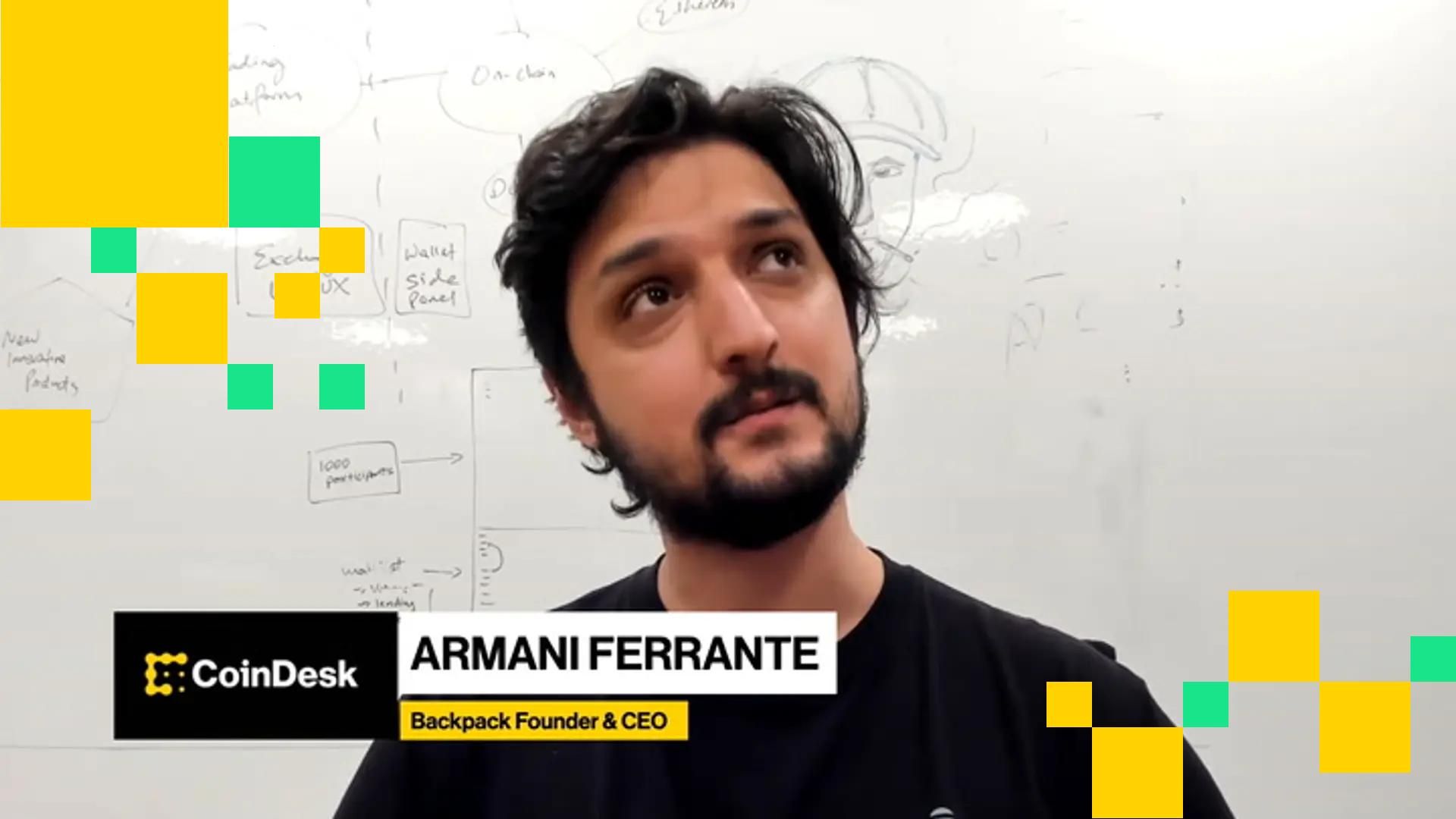
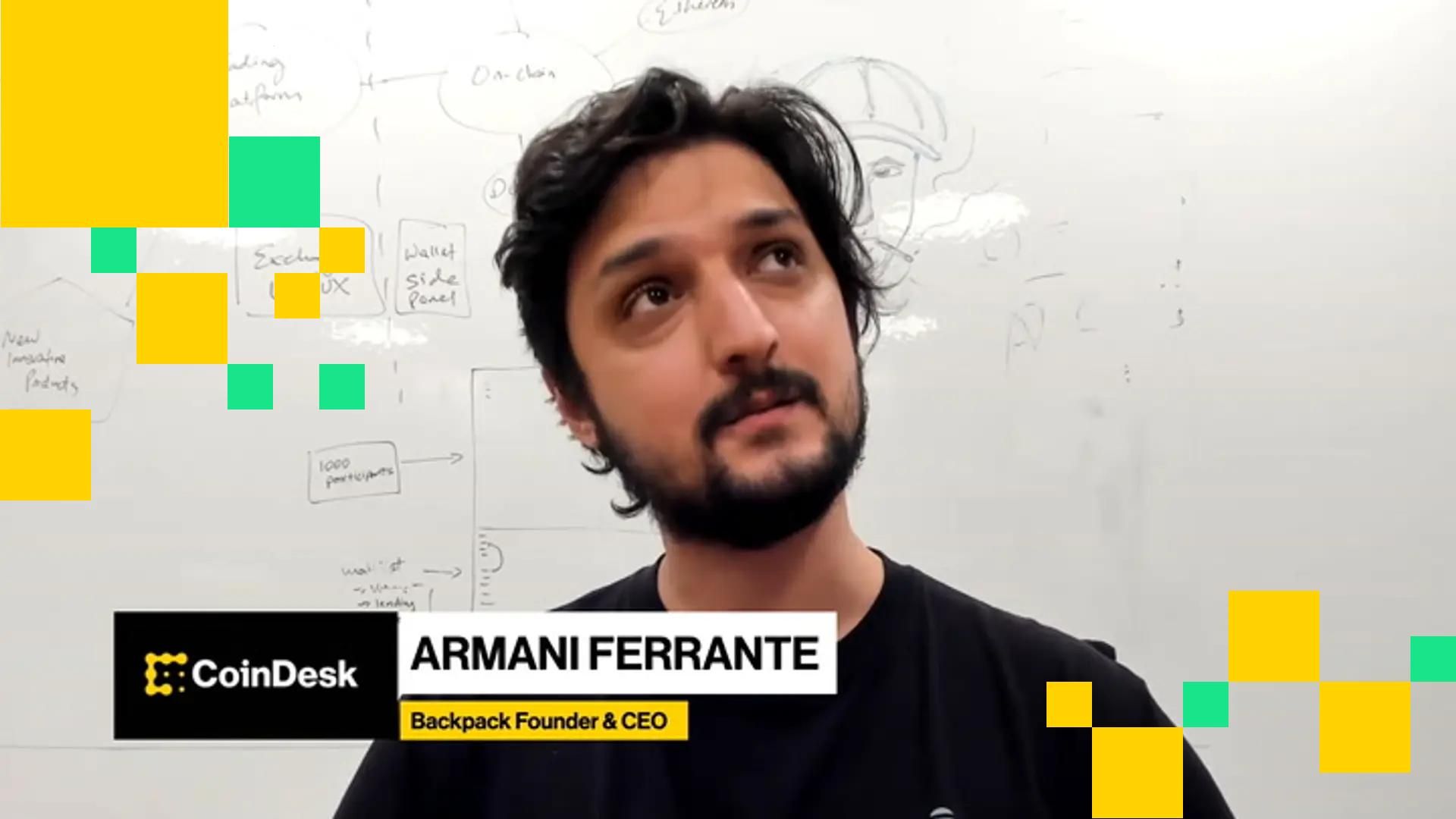
Backpack Exchange, a Solana-based cryptocurrency trading platform, launched on Monday its native token, BP, detailing a token generation event (TGE) that includes a mix of user distribution, lockups and a mechanism tied to company equity.
At launch, 25% of the token’s 1 billion total supply—around 250 million BP—will be distributed, primarily through an airdrop to existing users. Most of that allocation is set aside for participants in Backpack’s points program, with a smaller portion reserved for holders of its “Mad Lads NFT collection.”
The company said no tokens have been allocated to founders, team members or investors at inception, a departure from many exchange token rollouts. The structure places a larger share of the initial distribution with users rather than insiders.
The remaining supply will be released through a multi-phase unlock schedule tied to company growth and potential public listing plans. About 37.5% of tokens are set to unlock over time based on operational milestones, such as market expansion or product launches, while another 37.5% will remain locked in a corporate treasury until after a potential IPO.
Backpack also said long-term stakers may be able to convert BP into company equity, representing a share of the firm’s ownership. The mechanism links the token to the company’s broader capital markets plans, rather than limiting its role to trading incentives or governance.
“Backpack was founded by former FTX and Alameda Research employees and faced early scrutiny following the collapse of FTX in 2022. The company later acquired the defunct exchange’s European arm, relaunching it as Backpack EU as part of its push into regulated markets.
Read more: Backpack Opens Regulated Perpetuals Exchange in Europe After FTX EU Acquisition

Key Highlights
- PepsiCo transitions from pilot programs to comprehensive AI implementation across China
- Artificial intelligence applications span precision farming, production facilities, and logistics networks
- Approximately 95% of Asia Pacific raw materials sourced locally; AI optimizes supply chain resilience
- PEP shares advance 1.8% in premarket sessions, reaching $152.70
- China initiative aligns with global AI partnership involving Siemens and NVIDIA
PepsiCo has launched a comprehensive artificial intelligence integration throughout its Chinese business operations. The beverage and snack giant has transitioned beyond experimental phases, implementing AI technology across its entire value chain in China — encompassing agricultural operations, production facilities, and consumer engagement strategies.
This initiative represents a fundamental operational transformation rather than merely a cost-reduction exercise.
Within agricultural operations, PepsiCo deploys AI technology to enhance harvest productivity and ingredient quality for domestically sourced materials. Given that roughly 95% of Asia Pacific ingredients originate locally, optimizing this segment carries significant strategic importance.
At the manufacturing level, artificial intelligence drives enhanced operational efficiency and production capacity expansion — all while maintaining current staffing levels. However, the company continues recruitment efforts as new production facilities come online throughout China.
Enhanced Consumer Intelligence Through AI
PepsiCo leverages AI-powered analytics platforms to decode Chinese consumer preferences and behaviors. These insights inform product development and targeted marketing initiatives designed for local market sensibilities.
The corporation indicates these consumer insights drive portfolio evolution toward premium offerings with reduced sugar and sodium content that complement Chinese cooking traditions. Given the intense competitive landscape in China’s consumer goods sector, this localization strategy proves essential.
PEP shares reached $152.70 during premarket activity, representing a 1.8% advance. This positions the stock within its 52-week trading band of $127.60 to $171.48. Current shareholders receive a 3.8% dividend yield.
Strategic Partnerships with Siemens and NVIDIA
The Chinese AI deployment connects to an expansive global technology initiative. PepsiCo maintains a multi-year strategic partnership with Siemens and NVIDIA to implement AI systems and digital twin technology for facility optimization and supply chain redesign worldwide.
Initial testing phases from this collaboration have already demonstrated improved operational throughput alongside reduced capital investment requirements, per company reports.
The Chinese AI implementation follows this established framework — leveraging technology to maximize existing asset utilization while simultaneously pursuing strategic physical expansion opportunities.
PepsiCo characterizes the China AI initiative as fundamental to its regional expansion strategy rather than an ancillary project. The company emphasizes that artificial intelligence now permeates every segment of its Chinese value chain.
The stock’s 1.8% premarket advance to $152.70 demonstrates investor enthusiasm regarding the announcement, though final closing prices will reflect broader market dynamics.

- Ethereum price rose to above $2,170 after Trump delayed US strikes on Iran.
- An Ethereum OG whale sold 15,002 ETH for about $30.97 million via Coinbase.
- Ethereum price hovers in the $2,000-$2,200 range.
Ethereum price pumped more than 4% in a sharp U-turn as downside pressure quickly gave way to upside movement amid market reaction to a fresh announcement by President Donald Trump.
However, the altcoin’s price remained near the critical $2,000 level amid notable whale offloading in the hours prior to Trump’s post on Monday.
Ethereum bounces sharply amid Trump announcement
Ethereum traded higher in early US trading hours, moving sharply from around $2,060 to above $2,170 as bulls attempted to recover from intraday lows.
The altcoin hovered near $2,150, boasting a 24-hour trading volume of over $19 billion.
A look at the markets shows Ethereum’s move to highs of $2,170 coincided with Bitcoin’s sudden uptick to the $70,000 area.
BTC had dipped below $68,000 as the broader risk‑on mood suffered the sentiment around events in Iran and the Middle East.
However, President Trump’s announcement of a five-day pause in US strikes on Iran on Monday appeared to bolster buyers.
“The United States and Iran have had productive discussions over the past two days toward fully resolving hostilities in the Middle East. As talks continue this week, I’ve ordered a five-day pause on any military strikes against Iranian energy infrastructure, contingent on progress,” Trump posted on Truth Social.
Stocks also saw an uptick, economist Mohamed El-Erian pointed out via X.
Market prices performed a massive U-turn just minutes after the post below as President Trump announced that the U.S. has held “very productive and constructive conversations” with Iran, resulting in a five-day postponement of “any and all military strikes against Iranian power… https://t.co/oSZ6Lvx7Gy
— Mohamed A. El-Erian (@elerianm) March 23, 2026
ETH prices had dropped as OG whale sold $31M ETH
On Monday, an Ethereum OG wallet labeled “0xa2F…F85A” moved 15,002 ETH to US-based crypto exchange Coinbase.
The total value of the coins stood at about $30.97 million at the time, on‑chain analytics platform Lookonchain noted.
An #EthereumOG (0xa2F6) just sold 15,002 $ETH($30.97M)!
This OG previously received 172,700 $ETH 10 years ago (worth $2.2M at the time, now $356M) at a price of $12.83.https://t.co/RoESAs76xF pic.twitter.com/wZ4PdUGWwt
— Lookonchain (@lookonchain) March 23, 2026
The wallet originally accumulated around 172,700 ETH about a decade ago, when each token traded near $12.83, implying an initial outlay of roughly $2.2 million.
At current prices near the low‑$2,000s, that full stash would be valued at roughly $353 million, indicating substantial paper gains realized over the years.
Despite the huge cash out, the address still holds over 14,800 Ether and is one of the network’s long‑term holders.
In a separate transaction, another whale sold 5,000 ETH worth about $10.3 million. The transfer happened at roughly $2,063 per token, slightly lower than the current price of ETH.
This whale still holds around 126,000 ETH, worth about $257 million, with this indicating overall long-term bullish sentiment.
Ethereum price key levels
From a technical standpoint, ETH is hovering within the short‑term support and resistance in the $2,000–$2,200 band.
As highlighted here, the $2,150 is a key level and upside momentum hinges on bulls keeping support intact.
The downside, key bearish targets lie around $1,800, while bulls fancy $3,000 and the August 2025 all‑time high of $4,953.
Opinion by: Nanak Nihal Khalsa, co-founder of Holonym Foundation
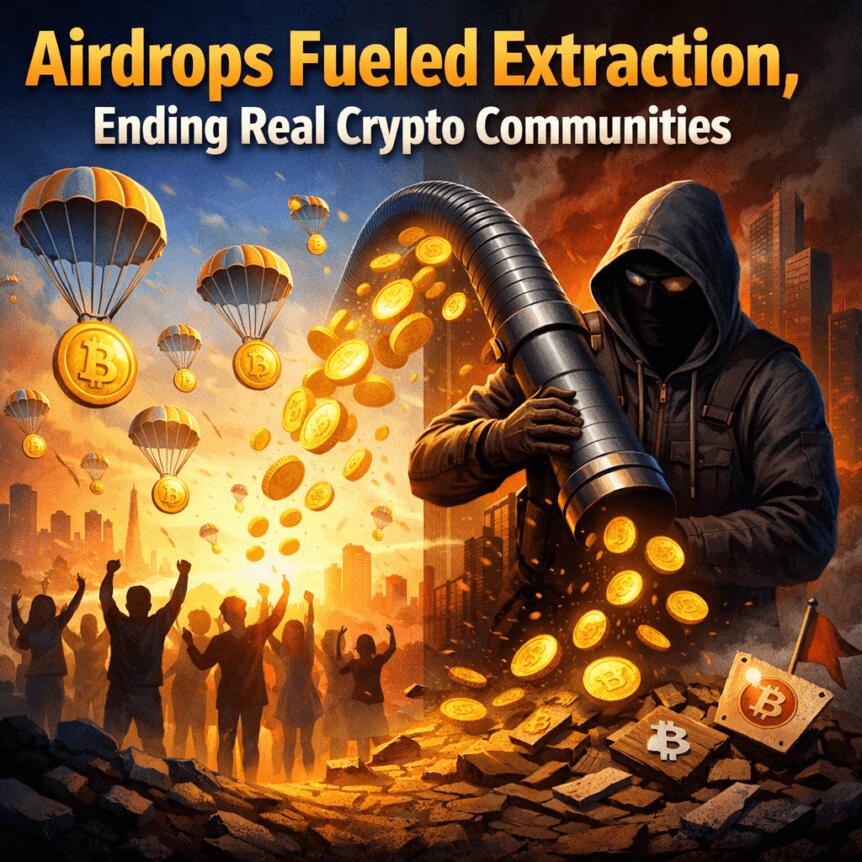
During the last crypto market cycle, airdrops were touted as a way to build community. In practice, they evolved into large-scale value-extraction schemes that rewarded automation and short-term surges over lasting commitment. The result was a structural misalignment: incentives that discouraged genuine belief and rewarded opportunistic behavior, leaving many participants feeling they were part of a competition rather than a community.
Between 2021 and 2024, token launches tended to favor low float and high fully diluted valuations, with point-based programs that rewarded activity more than intention or eligibility. The predictable outcome? Wallets multiplied, engagement was simulated, and shares of future supply were earmarked for rapid exit. Trust eroded as participation became transactional, loyalty proved transient, and governance started to feel like theater. When rewards hinge on volume rather than conviction, rare is the project that yields lasting, substantive communities.
Key takeaways
- Airdrops often functioned as extraction playbooks: low float, high fully diluted valuations, and point programs that rewarded surface-level activity over meaningful commitment.
- Points programs accelerated a race to automate and farm; real users with limited bandwidth were crowded out, undermining the integrity of early distribution.
- Token sales are re-emerging as an alternative distribution model, but with selective access, identity considerations, and allocation caps to curb dominance by automated actors.
- Privacy-preserving identity is being treated as infrastructure—needed to verify unique participation without revealing personal data, balancing openness with protection.
- Wallet design and identity are converging into a single system aimed at resisting manipulation and building longer-term relationships between users and protocols.
From open launches to curated access
The industry is increasingly approaching token launches with a fundamental shift in distribution logic. ICO-style events, once open to anyone with a wallet, exposed the ecosystem to whale dominance, regulatory blind spots, and accountability gaps. Today’s experiments introduce filters and signals designed to identify participants who are likely to stay engaged beyond a single speculative cycle. Identity signals, on-chain behavior analysis, and jurisdiction-aware participation are becoming more common, along with allocation limits intended to prevent runaway concentration.
These changes are not simply about nostalgia for the old days of broad access; they reflect a practical recognition that permissionless distribution without guardrails invites capital leaks to automation and rapid dumping. The aim is to ensure that new tokens reach users who will contribute to long-term health, governance, and stability, rather than a transient crowd animated by hype alone.
In this context, some token launches are edging toward a model where eligibility criteria and access controls are part of the fabric of the protocol, not constraints imposed after the fact. As a result, questions about what constitutes fair access, how to enforce limits, and which signals are trustworthy are moving from footnotes to central design considerations.
Identity, privacy, and the evolution of distribution
One of the most pressing tensions in crypto governance today is how to balance openness with accountability. The industry has spent years promoting permissionless participation, yet the most valuable moments increasingly depend on some form of admission control. Without it, automation can overwhelm the system; with it, there is a risk of recreating surveillance-heavy paradigms many projects sought to escape.
Privacy-preserving identity is emerging as essential infrastructure rather than a philosophical stance. If teams want to limit one person to one allocation, prevent bot-driven governance, and show basic compliance without collecting exhaustive personal dossiers, they need systems that prove properties about participants without revealing who they are. The alternative—full openness or heavy-handed KYC—either invites distortion or erodes trust. The goal is to build a framework where users can prove uniqueness across a suite of applications, maintain consistent accounts, and avoid managing fragile secrets with every new launch.
Related discussions have highlighted real-world frictions, such as Sybil attacks during presales. For example, Cointelegraph noted incidents where presales were hijacked by coordinated wallet clusters, underscoring the need for more robust identity and anti-abuse measures (reference coverage).
Beyond identity, the wallet layer itself remains a critical choke point. Fragmented accounts, recovery fragilities, and browser-based signing vulnerabilities amplify the risk of hacks, loss of access, and post-launch attrition. When distribution hinges on tools that are brittle or spoofable, the resulting ecosystem inherits those weaknesses. A more holistic design—where identity, wallets, and distribution are treated as an interconnected system—appears increasingly necessary for durable participation rather than one-off events.
Several projects are pursuing this integrated approach: a user could demonstrate uniqueness without doxing, transact across apps with a single, coherent account, and control sensitive data without exposing themselves to unnecessary risks. If these pieces lock into a coherent architecture, distribution may evolve from a single launch moment into an ongoing relationship, with participants who care enough to stay, contribute, and govern.
Ultimately, the shift is less about who gets in and more about shaping sustainable alignment. Projects that emphasize human-centric design—fewer, more engaged participants who remain for the long run—tend to show stronger retention, healthier governance participation, and more resilient markets. This is not a matter of ideology; it is observable in how users engage once incentives are aligned with genuine belief rather than short-term gain.
Looking ahead, the winners will be those that treat distribution as infrastructure rather than marketing. They will bake in defense against automation, design for provable integrity, and view identity as a tool to protect both users and ecosystems. Some friction, thoughtfully applied, can be a feature that sustains engagement rather than a barrier to entry.
Airdrops did not fail because users are inherently greedy. They failed because the system rewarded greed while penalizing commitment. If crypto wants broader, healthier adoption, it must shift incentives toward belonging and long-term value creation, not ephemeral wins. Token launches, as a visible facet of this evolution, will reveal who can translate that philosophy into durable practice.
Related context: For a contemporary look at how these dynamics play out in live launches, recent coverage highlights ongoing debates around identity, access, and control in new token distributions.
Author note: Nanak Nihal Khalsa is the co-founder of Holonym Foundation, focused on privacy-respecting, user-centric infrastructure for decentralized ecosystems.
BNB price is at the $640 level as of now, recording a slight daily gain of 1.9% amidst the Bitcoin 2.5% pump and a bullish overall prediction. The asset has shed more than 5% over the last week, retreating from highs as traders secure profits.
With volume currently sitting at $1.33 billion, participation is thinning significantly. Technical indicators suggest the fourth-largest cryptocurrency is stuck in a consolidation phase, forcing active traders to weigh the opportunity cost of holding through the chop versus rotating capital into emerging narratives.

BNB Price Prediction: Can Binance Coin Reclaim $730 as Volume Dips?
The technical setup for BNB presents a conflict between long-term strength and short-term weakness. While the 200-day moving average remains bullish, actively sloping upward since mid-March, practically every short-term signal flashes caution.
The Relative Strength Index (RSI) sits at a neutral 50 level, providing no clear directional bias, while the ADX at 27.74 confirms a trend is present but lacks the momentum to force a breakout.

Price action is currently confined within Bollinger Bands ranging from $594 (support) to $682(resistance). A failure to hold the $620 level could see a retest of the lower band. Conversely, forecasts from Binance analysts suggest a potential quarterly climb to $925.86 if macro conditions stabilize. However, the immediate volume profile is concerning; without a surge in buying pressure, the projected 15.9% monthly move to $730 appears optimistic (even unlikely) in the current low-liquidity environment.
Discover: The Best New Crypto
Maxi Doge Targets 1000x Leverage Culture as Major Caps Stall
While BNB consolidates with an $88 billion market cap, traders seeking volatility are increasingly looking down-market. Large caps often act as stable collateral, but in a sideways market, they rarely offer the aggressive multiples sought by retail capital. This rotation is evidenced by the thinning liquidity in majors, as speculative funds flow toward high-beta meme tokens that capitalize on specific subcultures.
One project absorbing this liquidity is Maxi Doge ($MAXI), a new entrant branding itself around the “Leverage King” mentality. Distinct from the soft aesthetics of typical dog coins, Maxi Doge features a 240-lb canine juggernaut explicitly targeting the “gym bro” and high-leverage trading demographic. (Think protein shakes and 100x longs).
The presale data shows significant early traction, with more than $4.6 million raised so far. At the current stage price of $0.000281, the project is positioning itself as a high-octane alternative to stagnant legacy coins. Features include holder-only trading competitions and a “Maxi Fund” treasury designed to sustain liquidity. And not to forget the high 66% APY rewards for stakers.
While meme tokens carry inherent volatility risks, the “never skip a pump” branding has resonated with the degens of the current cycle.
The post BNB Price Prediction: Pump To $730 or Drop To Under $600 appeared first on Cryptonews.


Opinion by: Nanak Nihal Khalsa, co-founder of Holonym Foundation
For most of the last cycle, crypto teams convinced themselves that airdrops were community building. In practice, they became something else entirely: a large-scale training program that taught people how to extract value as efficiently as possible and leave.
That outcome was not an accident. It was a predictable result of how token launches were designed between 2021 and 2024. Low float, high fully diluted valuations and points programs that rewarded activity over intent and eligibility rules that could be reverse-engineered by anyone with enough time and scripts. We built systems where the rational behavior was to spin up wallets, simulate engagement and sell at the first opportunity.
The industry likes to talk about trust as an abstract concept. In reality, trust eroded because token launches stopped aligning incentives with belief. Participation became transactional.
Loyalty became temporary. Governance became theater. When users are rewarded for volume rather than conviction, you do not get communities — you get mercenaries.
Airdrops built extraction playbooks
Points programs accelerated this dynamic. They were often framed as a fairer way to distribute tokens, but in practice, they turned participation into a job. The more time, capital and automation you had, the more points you could farm. Real users with limited bandwidth were crowded out by people who treated points dashboards like yield farms.
Everyone knew this was happening while it was happening. Teams watched wallet clusters grow. Analysts published postmortems showing how a small number of entities captured outsized shares of supply. Still, the model persisted, largely because it looked good in growth charts and bought short-term attention.
The result is that airdrops lost credibility because the mechanism became predictable and gameable. By the time a token reached the market, a meaningful portion of supply was already earmarked for immediate exit. Price action after a launch started to feel less like discovery and more like cleanup.
Token sales are back because airdrops lost credibility
This is the context in which token sales and ICO-style launches are returning. Not as a nostalgia play, and not as a rejection of decentralization, but as a response to a structural failure. Teams are looking for ways to reintroduce selection into distribution. Who gets access, under what conditions and with what constraints has become just as important as how much capital is raised.
What is different this time is not the idea of selling tokens, but the way participation is being shaped. Early initial coin offerings (ICOs) were open to anyone with a wallet and fast fingers. That openness came with obvious downsides, including whale dominance, regulatory blind spots and zero accountability.
The new generation of token launches experiments with filters that did not exist before. Identity and reputation signals, onchain behavior analysis, jurisdiction-aware participation and enforced allocation limits are increasingly part of the design. The goal is not exclusion for its own sake; it is to ensure that distribution reaches humans who are likely to stick around.
This shift exposes a deeper fault line in the industry. Crypto has spent years positioning itself as permissionless, yet many of its most valuable moments now depend on some form of admission control. Without it, capital leaks to automation. With it, teams risk recreating the same surveillance-heavy systems they claim to be replacing. The tension between openness and protection is no longer theoretical; it shows up in every serious launch discussion.
Who gets in now matters more than how much is raised
The uncomfortable truth is that we cannot solve this problem by pretending identity does not matter. We already live in a world where identity exists everywhere. The question is whether it is implemented in ways that respect user agency or in ways that extract data and concentrate power. Most of the first wave of crypto infrastructure avoided identity entirely, not because it was a principled stance, but because the tools to do it safely did not exist. As every launch scales and scrutiny increases, that avoidance is no longer tenable.
Related: Solana WET presale hijacked by Sybil wallets as HumidiFi resets launch
This is where privacy-preserving identity becomes infrastructure rather than ideology. If teams want to limit one human to one allocation or prevent automated clusters from dominating governance or demonstrate basic compliance without collecting dossiers on their users, they need systems that can prove properties about participants without exposing who they are. The alternative is a binary choice between naive openness and heavy-handed Know Your Customer. Neither scales well.
In parallel, the industry is also confronting the limits of its wallet layer. Many of the issues that plague token launches are downstream of how wallets are designed and embedded. Fragmented accounts, weak recovery, blind signing and browser-based attack surfaces all make it harder to build durable relationships between users and protocols. When participation is mediated through tools that are easy to spoof and hard to trust, distribution mechanisms inherit those weaknesses. It is not a coincidence that the same launches suffering from Sybil attacks are also dealing with user confusion, lost access and post-launch attrition.
Some teams are starting to connect these dots. Instead of treating identity, wallets and token launches as separate concerns, they are approaching them as a single system — a system where a user can prove uniqueness without doxing, interact across applications with a consistent account and retain control without being asked to manage fragile secrets. When these pieces fit together, distribution stops being a one-time event and starts to look more like an ongoing relationship.
This is not about making launches smaller or more exclusive; it is about making them more intentional. Fewer participants who care is often better than many participants who do not.
Projects that optimize for human alignment tend to see stronger retention, healthier governance participation and more resilient markets. That is not ideology; it is observable behavior.
The teams that succeed will be the ones that stop treating distribution as marketing and start treating it as infrastructure. They will assume adversarial conditions by default. They will design for automation resistance from day one. They will view identity not as a checkbox, but as a tool to protect both users and ecosystems. They will accept that some friction, when applied thoughtfully, is a feature rather than a bug.
Airdrops did not fail because users are greedy. Airdrops failed because the system rewarded greed and punished commitment. If crypto wants to grow beyond its current audience, it needs to stop training people to extract and start giving them reasons to belong.
Token launches are where that shift becomes visible. Whether the industry is willing to follow through remains an open question.
Opinion by: Nanak Nihal Khalsa, co-founder of Holonym Foundation.
This opinion article presents the author’s expert view, and it may not reflect the views of Cointelegraph.com. This content has undergone editorial review to ensure clarity and relevance. Cointelegraph remains committed to transparent reporting and upholding the highest standards of journalism. Readers are encouraged to conduct their own research before taking any actions related to the company.


Bitcoin climbed to $71,500 on March 23 after President Trump said the U.S. would postpone planned strikes on Iranian infrastructure for five days pending ongoing diplomatic talks.
Bitcoin surged above $71,000 on March 23 after President Donald Trump announced a five-day postponement of planned U.S. strikes on Iranian power plants and energy infrastructure. In a Truth Social post, Trump stated he had instructed the Department of War to delay strikes based on “productive conversations” and “constructive” diplomatic engagement with Iran. The price climb to $71,500 triggered liquidations of nearly $270 million in short positions.
The rally came as the White House signaled progress toward diplomatic engagement, with administration officials citing backdoor channels and potential breakthroughs. However, Iranian state media contradicted the U.S. narrative, claiming there was no direct or indirect contact with Trump and alleging he backed down after threats to strike energy facilities across West Asia, creating a credibility standoff between both sides.
Sources: Decrypt | CryptoSlate | Milk Road
This article was generated automatically by The Defiant’s AI news system from publicly available sources.
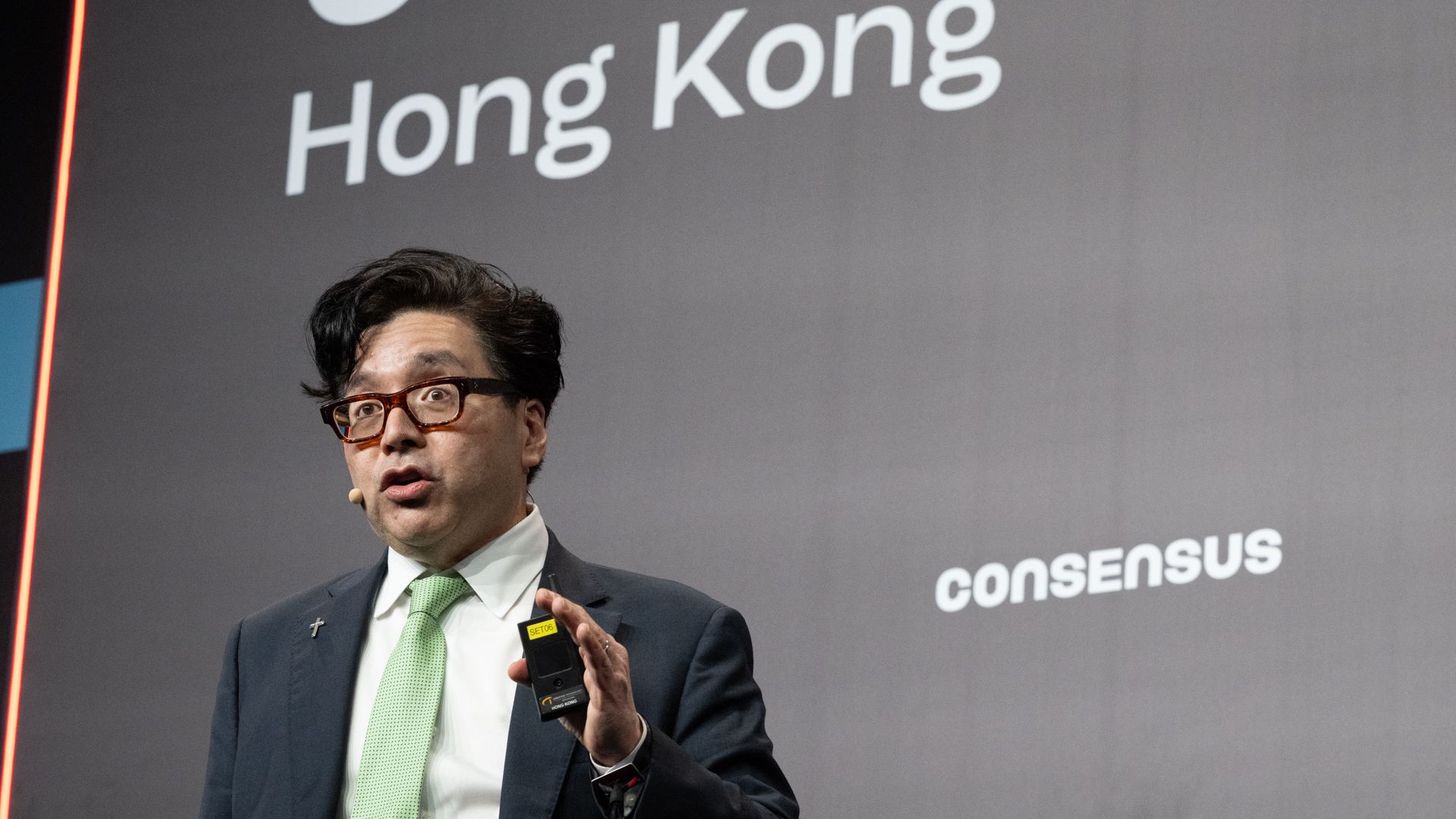
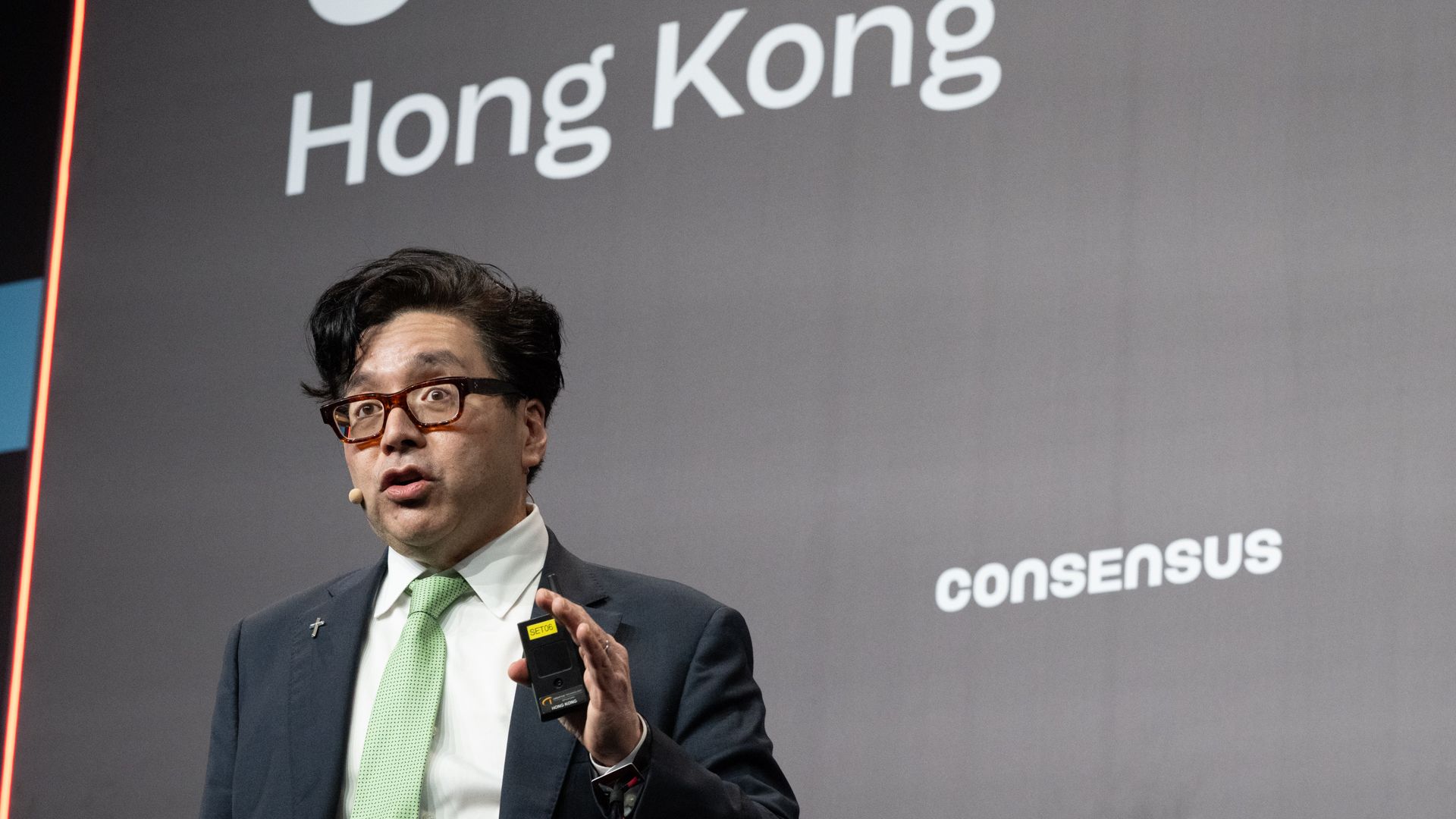
Bitmine Immersion Technologies (BMNR) said Monday it bought 65,341 ether (ETH) last week, extending a recent surge in purchases as the firm continues to lean into the market downturn.
The latest acquisition, worth roughly $138 million at current ETH prices, lifted the firm’s total holdings above 4.66 million tokens, cornering 3.86% of ETH’s circulating supply, according to a Monday update.
Bitmine has now increased its pace of buying for three consecutive weeks, stepping up from a prior average of around 50,000 tokens per week. Meanwhile, the firm also increased its cash holdings to $1.1 billion.
Chairman Thomas “Tom” Lee said the increase in buying pace reflects the firm’s view that crypto markets are nearing the end of a prolonged slump.
“Our base case is ETH is in the final stages of the ‘mini-crypto winter,’ he said in a statement.
The firm is still sitting on an estimated $7 billion unrealized loss on its ether purchases, DropsTab data shows, as crypto prices tumbled over the past months.


Coinbase users are complaining about receiving multiple push notifications per day urging them to “predict” sports gameplay during “March Madness” college basketball.
Indeed, so many complaints were reported via X that it became a trending topic yesterday.
Many customers, echoing allegations by state attorneys general in Michigan and Arizona, described the annoying promotions as de facto advertisements to gamble on sports.
Coinbase, is one of the longest continually-operated bitcoin (BTC) exchanges which safeguards billions of dollars’ worth of assets for customers.
However, rather than focus on long-term investments like BTC, Coinbase regularly floods its app with short-term promotions, all-or-nothing predictions, memecoins, leveraged derivatives, and other high-risk wagers.
Full-screen promotions tempt many users into risky trades while many customers don’t see a single mention of BTC during their entire Coinbase app experience.
Indeed, the homepage of the app as of Protos’ last check, featured a “March Madness” advertisement at the top of the homescreen with no mention of BTC above the fold.
One customer and Coinbase stockholder posted screenshots of the basketball notifications, which arrived several times daily. “This is essentially encouraging me to gamble,” he wrote.
‘Very bad for our industry’
CEO Brian Armstrong responded the same afternoon, calling it “a fair point” and promising customization options. However, the concession only drew sharper criticism.
Alexander Leishman, founder of BTC exchange River, replied to Armstrong: “It’s long term very bad for our industry to be pushing sports betting. The blowback will impact all of us.”
Days earlier, a Messari researcher had posted a nearly identical complaint. “Why am I getting notifications from Coinbase about betting odds for college basketball games?” he wrote.
“This is just reinforcing the notion that crypto is just another gambling product, and not an actual investment to be taken seriously.”
Crypto attorney Ariel Givner compared the moment to Juul’s rise and fall.
Other users were more blunt. “Every time I open your d*** app, I’m getting bombarded with gambling notifications,” one wrote, tagging Coinbase directly.
Read more: NHS exec warns that crypto trading could fuel problem gambling
Coinbase sports ‘event contracts’
Coinbase launched prediction markets in all 50 states in January 2026 through a partnership with Kalshi.
Users can place “prediction” trades on sports, politics, and culture outcomes, funding trades with cash or USDC. Under federal law, these are legally “event contracts,” not sports bets.
Coinbase has sued regulators in Connecticut, Michigan, and Illinois who disagree.
The legal distinction hasn’t convinced everyone.
Nevada, Illinois, and Connecticut have all argued these contracts are functionally gambling while a class action lawsuit in New York alleged that Kalshi “dupes consumers… when they are actually gambling against the house.”
Illinois regulators stated plainly that athletic competitions aren’t economic instruments. Chris Christie told CNBC, “If it looks like a duck and quacks like a duck, it’s a duck. It’s a sports bet.”
Coinbase disagrees entirely and is suing various regulators who have likened its prediction markets to gambling.
Got a tip? Send us an email securely via Protos Leaks. For more informed news, follow us on X, Bluesky, and Google News, or subscribe to our YouTube channel.
Stablecoins could benefit from the rise of AI-driven payments over time, even as early adoption remains limited and contested, according to a new report from Bernstein.
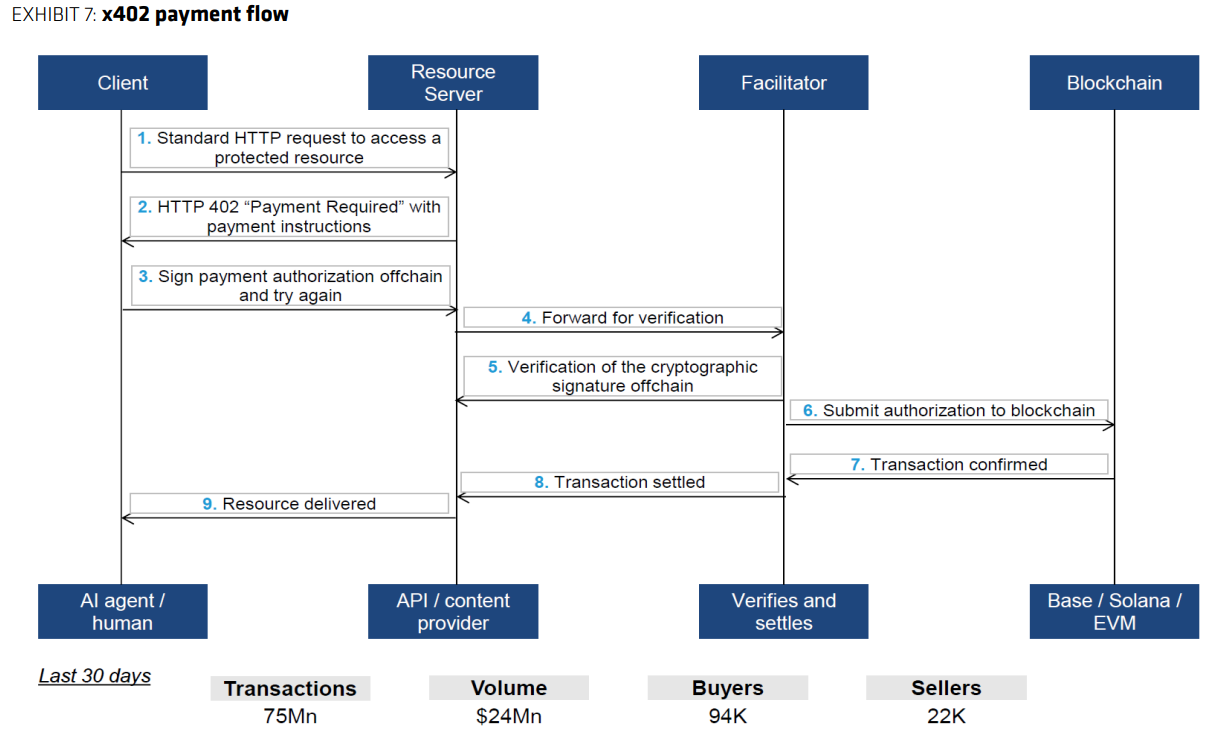
In a Monday note shared with Cointelegraph, the broker said stablecoins could help unlock machine-to-machine payments by making microtransactions viable and enabling programmable, conditional payments between software agents without a human in the loop.
But Bernstein said traction so far has been limited. The note said Stripe and Tempo’s machine payments protocol recorded about $5,000 in stablecoin volume in its first week, while Coinbase’s x402 protocol handled no more than $25 million over the last 30 days.
Bernstein’s chart put x402 volume at about $24 million over that period. x402 is a payment standard developed by Coinbase that lets AI agents automatically make payments over the internet.
The bigger point for Bernstein was that stablecoins do not need machine payments to succeed in order to keep growing. The note said stablecoin demand is already being driven by cross-border business payments, remittances, card-linked products and neobanking, making AI payments an upside case rather than the core thesis.
The report follows growing interest in autonomous payment solutions. On Thursday, Visa’s crypto division launched a tool allowing AI agents to make same-day payments, while Stripe-backed Tempo launched its blockchain and payment protocol.

Bernstein said broader payment use cases are still the real growth engine for stablecoins. Its note estimated total stablecoin payment volume rose to $375 billion in 2025 from $213 billion in 2024, led by consumer-to-consumer flows, while business-to-consumer, business-to-business and consumer-to-business activity also increased.
Related: Stablecoin issuers and fintechs race to own payment rails
Coinbase, Circle remain best “proxies” for stablecoin adoption
Cryptocurrency exchange Coinbase and stablecoin issuer Circle remain the “best proxies for stablecoin upside” due to their USDC (USDC) partnership, according to Bernstein.
It also argued that USDC is likely to capture a dominant share of machine-payment activity because it is the most liquid and regulated stablecoin among likely candidates.
So far in 2026, USDC recorded $2.4 trillion in adjusted transaction volume while Tether’s USDt (USDT) recorded $1.4 trillion.

Wash trading concerns cloud early metrics
Some of the headline machine-payment numbers have already drawn skepticism.
AI Agent payment volume on x402 only amounted to $1.6 million after applying the wash trading filter developed by Artemis Analytics, which is significantly lower than the initial $24 million reported by news outlet Bloomberg, according to a16z partner Noah Levine.

“$1.6 million is not a big number. But the infrastructure being built around it is,” wrote Levine in a March 11 X post, adding that x402 was already integrated by the likes of Stripe, Cloudflare, Vercel and Google’s agent payments protocol.
Magazine: Crypto wanted to overthrow banks, now it’s becoming them in stablecoin fight

Backpack Exchange launches BP token with 25% airdrop, no insider allocation

Alan Ritchson Viral Fight Clip Sparks Wild Fans’ Reactions

AAPI adults broadly opposed to Trump immigration approach: new poll


-

 Fashion3 days ago
Weekend Open Thread: Adidas – Corporette.com
-
 Crypto World3 days ago
NIO (NIO) Stock Plunges 6.5% as Shelf Registration Sparks Dilution Worries
-

 Politics3 days ago
Jenni Murray, Long-Serving Woman’s Hour Presenter, Dies Aged 75
-
 Tech6 days ago
Are Split Spacebars the Next Big Gaming Keyboard Trend?
-

 Crypto World2 days ago
Best Crypto to Buy Now: Strategy Just Spent $1.57 Billion on Bitcoin During Fear While Early Investors Quietly Enter Pepeto for 150x Potential
-

 Business7 days ago
How the UK and China Trade Agreement Could Shape UK Businesses in 2026
-

 News Videos5 days ago
RBA board divided on rate cut, unusually buoyant share market | Finance Report | ABC NEWS
-

 Crypto World2 days ago
Bitcoin Price News: Bhutan Sells $72 Million in BTC Under Fiscal Pressure, but the Smart Money Entering Pepeto Sees What the Market Does Not
-

 Politics5 days ago
The House | The new register to protect children from their abusers shows Parliament at its best
-

 Tech3 days ago
inKONBINI Lets You Spend Summer Days Behind the Register
-
 Politics6 days ago
Real-time pollution monitoring calls after boy nearly dies
-

 Crypto World5 days ago
Canada’s FINTRAC revokes registrations of 23 crypto MSBs in AML crackdown
-
 NewsBeat5 days ago
Residents in North Lanarkshire reminded to register to vote in Scottish Parliament Election
-

 News Videos5 days ago
PARLIAMENT OF MALAWI – PAC MEETING WITH REGISTRAR OF FINANCIAL ON AMARYLLIS HOTEL – INQUIRY LIVE
-

 Sports2 hours ago
Remo Stars and Kano Pillars Strengthen Survival Hopes in NPFL
-

 Politics4 days ago
Gender equality discussions at UN face pushbacks and US resistance
-

 Business22 hours ago
No Winner in March 21 Drawing as Prize Rolls to $133 Million for Next
-

 Business5 days ago
Who Was Alex Pretti? 5 Key Facts About the ICU Nurse Killed by Federal Agents in Minneapolis
-

 Tech17 hours ago
Give Your Phone a Huge (and Free) Upgrade by Switching to Another Keyboard
-
Sports4 days ago
Vikings Free Agency Enters Phase 2 with Key Questions
You must be logged in to post a comment Login