

Crypto World
Strategy Surpasses 761K BTC as Michael Saylor Hints at More Buying Momentum


TLDR:
- Strategy now holds 761,068 BTC valued at $52.36B amid ongoing purchases.
- Average acquisition cost for holdings stands at $75,696 per bitcoin.
- Moderate leverage and $38B derivatives exposure support the accumulation strategy.
- Bitcoin consolidates near 68.7K after the recent 75–76K peak, showing a short-term pullback.
Michael Saylor’s Bitcoin accumulation continues as Strategy scales its treasury beyond 761,000 BTC. The approach combines moderate leverage, active market participation, and long-term capital allocation in bitcoin despite ongoing price volatility.
Strategy’s Growing Bitcoin Holdings and Market Engagement
Michael Saylor continues to expand Strategy’s corporate bitcoin holdings, posting on X on March 22, 2026, with his signature orange dot chart illustrating ongoing accumulation.
The chart visually tracks the company’s treasury growth despite market swings. A recent purchase of 22,337 BTC increased total holdings to 761,068 BTC, with a current valuation of $52.36 billion and an average acquisition cost of $75,696 per coin.
This reinforces the scale of corporate bitcoin adoption and the long-term focus of Strategy’s capital allocation.
Equity metrics show MSTR trading at $135.66, with a market capitalization of $46.814 billion and an enterprise value of $62.766 billion.
Trading volume reached $3.82 billion, and the 30-day average stood at $2.846 billion. These figures demonstrate active market participation alongside the accumulation strategy.
Leverage, Volatility, and Bitcoin Market Trends
Strategy uses moderate leverage, holding $8.254 billion in total debt alongside $2.25 billion in cash. Net leverage is 11%, indicating a controlled approach while supporting continued bitcoin purchases.
Open interest in derivatives totals $38.137 billion, and implied volatility is 55%, with historical volatility at 74%, reflecting significant market swings.
The bitcoin market currently shows a short-term pullback. Price peaked near 75–76K before consolidating around the 68.7K support region. Momentum indicators such as the MACD are negative, and the RSI hovers in the high-30s, approaching oversold levels.
This suggests sellers dominate the short-term market, while volume patterns indicate limited panic selling.
Key support levels include 68K, with further support near 66–64K, and resistance levels at 70–71K. Tweets from Strategy’s official account continue to emphasize the “Orange March,” signaling that accumulation is ongoing, and institutional confidence remains elevated.



Traders work on the floor of the New York Stock Exchange during morning trading on May 4, 2026 in New York City.
Michael M. Santiago | Getty Images
The S&P 500 brushed off Thursday headlines about the U.S. and Iran trading blows in the Strait of Hormuz and continued marching higher in Friday trading, crossing 7,400 for the first time. Prediction market traders think there’s more fuel left in the tank.
While the benchmark is already up more than 16% from its March 30 lows, traders on Kalshi think the broad index has a 59% chance of breaching 8,000 this year. That’s an 8% gain from current trading levels, and the index only crossed 7,000 for the first time in January.
It’s not just traders on prediction markets getting more bullish. RBC hiked its 12-month-forward price target for the index to 7,900 in a Friday note. Head of U.S. equity strategy Lori Calvasina wrote that the average and median of the five models used by the bank to calculate its estimate is 8,100 — implying there may be even upside to her forecast.
Stocks have shrugged off what appears to be a prolonged closure of the Strait of Hormuz — a critical passageway for the global supply of crude oil — and a potential re-escalation of the U.S.-Iran war.
Investors instead have embraced an artificial intelligence buildout that appears to be firing on all cylinders. It’s boosting stocks of the companies involved, driving much of the earnings growth the market has been celebrating and pushing GDP higher through increased private investment.
“The AI tech trade has just become so powerful that it’s superseded anything else,” said Peter Boockvar, chief investment officer at OnePoint BFG Wealth Partners. He added that no one wants to miss out on a potential rally if the U.S. and Iran do finalize a peace agreement — even though stocks have rallied so much since the ceasefire announcement. “Momentum has a life of its own.”
Truist Wealth chief investment officer Keith Lerner said that the market’s sharp move higher needs to be put in the context of what happened before the war, when major U.S. indexes traded in a narrow range from late October until March. Current levels in comparison to levels the S&P first hit in October are closer to around 7% higher.

S&P 500 since Oct. 1, 2025.
Boockvar added that Iran remains a risk, despite the indexes not showing it. He said weakness in some consumer-facing names display that there is some isolated pain in the economy that could be a risk to the broader market.
Lerner agreed that Iran isn’t gone as a worry for the market, but the bar is high now for it to ruin the rally, and likely would have to mean oil prices breaching their highs from back in late March.
“It has to come back in a way that’s meaningful, otherwise people are just going to buy the market pretty quickly,” he said.
Disclosure: CNBC and Kalshi have a commercial relationship that includes customer acquisition and a minority investment.
Markets shift and headlines fade, but the core principles of building long-term wealth remain constant. Join us for our third CNBC Pro LIVE, where investors of all backgrounds – from financial professionals to everyday individuals – come together to cut through the noise and gain actionable strategies for smarter, more disciplined investing. No matter where you’re starting from, you’ll leave with clearer thinking, stronger strategies. Enter your email here to get a discount code


The US banking regulator has already approved similar charter applications for Coinbase, Ripple Labs, BitGo, Circle, Fidelity Digital Assets and Paxos.
Payward, the parent company of cryptocurrency exchange Kraken, announced that it had filed an application with the US Office of the Comptroller of the Currency (OCC) for a national trust company charter, following other digital asset companies.
In a Friday notice, Payward said that the OCC application, if approved, would result in the establishment of Payward National Trust Company, allowing it to “provide fiduciary custody and other services primarily for digital assets.” The application would make the Kraken parent one of a handful of crypto companies moving closer toward banking, following OCC approvals for Coinbase and others.
“A national trust company provides the certainty institutions require and establishes the infrastructure to build the next generation of custody,” said Kraken co-CEO Arjun Sethi. “This is not about being first; it is about getting the framework right so markets can scale with clarity, interoperability, and long-term vision for what clients will demand as these systems mature.”
The OCC, headed by US President Donald Trump’s nominee Jonathan Gould, approved similar charter applications for Ripple Labs, BitGo, Circle, Fidelity Digital Assets and Paxos in December. The agency has come under scrutiny for such approvals as it considers an application from World Liberty Financial, the crypto company co-founded by Trump and his sons.
Related: Kraken parent Payward closes Bitnomial deal to expand US crypto derivatives
According to Payward, the OCC application would build on its Special Purpose Depository Institution established in Wyoming through Kraken Financial. The company also holds a Federal Reserve master account, giving it access to the US payment services system.
Kraken still eyeing public offering after confidential filing
While the crypto exchange’s parent company has closed acquisition deals with Bitnominal and announced an agreement to buy Reap, Kraken could still be planning an initial public offering (IPO) in the US. Sethi said in May that the company was “about 80% ready” to go public by 2027 as the exchange announced a partnership with MoneyGram.
Magazine: XRP ‘probably going to $12,’ Bitcoin ETFs add $1B: Market Moves
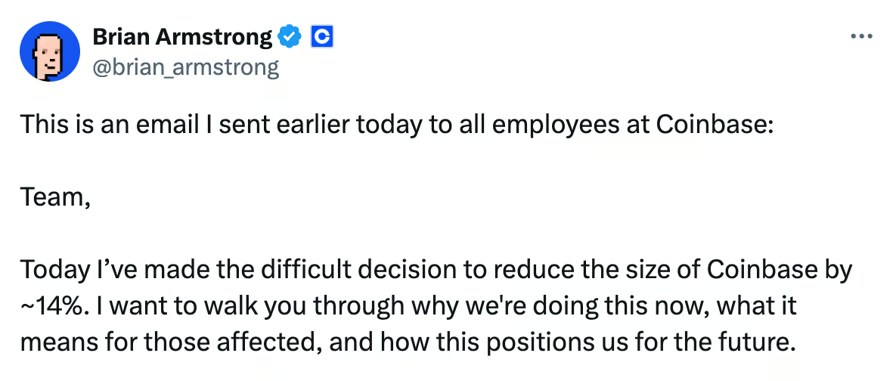
Crypto wallet provider Exodus has launched XO Cash, a Solana-based stablecoin and software toolkit designed to let AI agents make payments and access services without directly controlling private keys.
According to Friday’s announcement, the system, developed with MoonPay, allows developers to create agent-linked wallets, assign spending limits and issue virtual debit cards tied to Visa payment rails.
XO Cash integrates with Exodus Pay and includes a software development kit that allows users to fund AI agent wallets using their Exodus Pay balances while maintaining custody of their private keys. Users can set transaction caps, merchant restrictions and daily spending limits for each agent wallet.
Exodus said AI agents using XO Cash can transact with Visa merchants through infrastructure provided by Monavate and MoonPay, with payments automatically converted into stablecoins such as USD Coin (USDC) and Tether (USDT) at checkout.
The company added that XO Cash transactions are fee-free and designed for high-frequency automated payments. The stablecoin and developer documentation went live through XOCash.com on Thursday.
Related: How AI became crypto’s favorite reason to cut staff
Crypto and payment companies prepare for AI-driven commerce
Infrastructure for autonomous AI agents to transact with stablecoins has become one of crypto’s biggest narratives in recent months.
In March, Anchorage Bank launched an “agentic banking” service designed to give AI agents access to traditional financial and crypto payment rails under preset spending and compliance controls.
Visa’s crypto division also introduced Visa CLI, a command-line tool designed to let AI agents make same-day payments without exposing API keys, while Stripe-backed Tempo launched a blockchain-based payments protocol for automated onchain transactions.
On Thursday, Amazon Web Services integrated Coinbase’s x402 payments protocol into Amazon Bedrock AgentCore, enabling AI agents to settle USDC payments on Base and Solana without directly handling private keys.
The shift toward AI-driven operations has coincided with layoffs and restructuring across parts of the crypto and payments sectors.
Coinbase announced it would cut about 14% of its workforce this week as it reorganizes around smaller AI-focused teams and increased automation, while payments company Block said in February it would reduce staff by roughly 40% as the company expanded its use of AI tools.

Source: Brian Armstrong
Magazine: AI-driven hacks could kill DeFi — unless projects act now
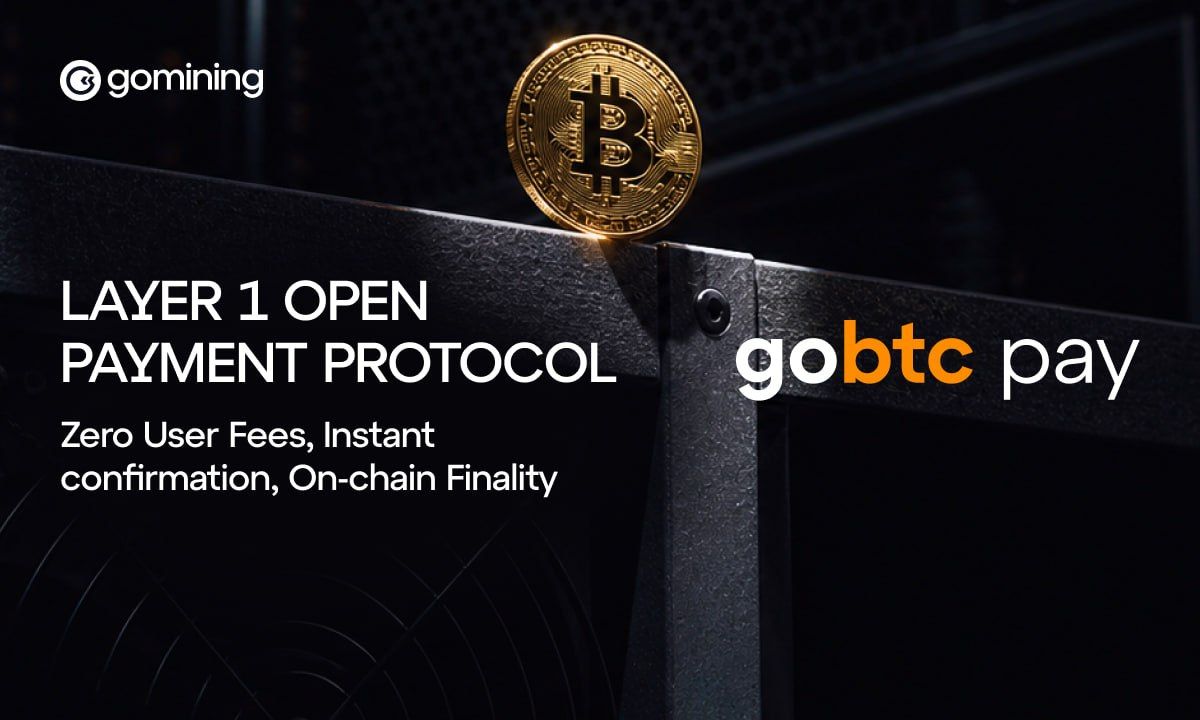

- GoBTC Pay is a protocol that lets consumers make native and instant payments on Bitcoin’s base layer.
- GoMining launches its own mining pool to prioritize GoBTC Pay transaction confirmation, targeting a 12-hour final on-chain settlement by the end of 2026.
- The launch marks a strategic expansion for GoMining, a platform with 5 million users. GoBTC Pay extends this ecosystem into everyday payments.
GoMining launches GoBTC Pay a Bitcoin payment protocol that delivers on what the 2008 whitepaper promised: peer-to-peer electronic payments. GoBTC Pay enables free and instant Bitcoin payments on the core Bitcoin layer. This makes it practical to use Bitcoin at the point of sale for everyday purchases. Payments are free for end-users and merchants pay a small acquiring fee that undercuts traditional card processing.
GoBTC Pay is designed as an open infrastructure. GoMining operates the reference implementation, but any wallet provider — from Ledger to Trust Wallet to MetaMask — can integrate the protocol to offer instant Bitcoin payments to their users.
Why this matters
Bitcoin is the dominant cryptocurrency with a market cap above $1.5 trillion. Over 150 public companies hold BTC on their balance sheets. Spot Bitcoin ETFs, which didn’t exist two years ago, now manage roughly $100 billion in assets across a dozen funds. The U.S. government holds approximately 328,000 BTC. But Bitcoin still can’t process a retail transaction quickly and reliably.
The Lightning Network, introduced in 2018 to solve this problem, took seven years to reach $1 billion in monthly volume and its average transaction of $223 mostly reflects exchange-to-exchange flows, not someone paying for groceries. In the US, about 22% of adults own Bitcoin, yet there are only 2,300 U.S. businesses that accept Bitcoin directly, and the gap between how many people own Bitcoin and how many places accept it is widening.
“The first line of the Bitcoin whitepaper describes a peer-to-peer electronic cash system. Bitcoin was designed to be money, not just an asset. That promise is still unfulfilled, and we intend to deliver on it,” said Mark Zalan, CEO of GoMining. “We already serve millions of users, and run data centers on three continents. All of this provides us a unique position to enable native Bitcoin payments with GoBTC Pay.”
Mining-powered confirmation
GoBTC Pay enables free and instant payments in Bitcoin, using GoMining’s own mining infrastructure to confirm the transactions. It uses a 2-of-3 multi-signature architecture shared between the user, GoMining, and a regulated third-party custodian.
GoMining serves 5 million users globally. The company has created a dedicated mining pool for processing GoBTC Pay transactions, aiming for a 12-hour on-chain settlement by the end of 2026. Where most payment companies depend on third-party pools for confirmation, GoMining mines the blocks itself.
The pool also serves GoMining’s “digital miners” — users who own tokenized hashrate through GoMining’s app. A portion of GoBTC Pay transaction fees flows back to these miners as additional BTC yield: consumers pay with BTC, merchants earn BTC, miners earn a share of payment fees, and GoMining’s pool processes the transactions.
Any wallet provider, whether hardware, software, or custodial, can connect to the GoBTC Pay network and enable instant Bitcoin payments for their users.
Bitcoin payments for Merchants
For merchants, GoBTC Pay is a Bitcoin-native acquiring network that undercuts every major card processor on cost. Its acquiring fee of 0.2% is substantially lower than traditional card processing, which range from 1.5% to 3.5% in the US. On a $100 sale, the merchant keeps $99.80.
GoMining distributes the entire fee back into the ecosystem: half goes to the miners who confirm transactions, and half goes to the wallet provider that initiated the payment. GoMining retains nothing on third-party transactions to incentivize wallet integrations and accelerate adoption.
Merchants can receive BTC directly to their own wallet, or use GoMining’s custodial merchant solution, which offers yield on their BTC balance — including during the settlement window — and an off-ramp to fiat. GoBTC Pay will ship with a dedicated PoS terminal, a web merchant dashboard, a developer SDK, and plugins for Shopify and WooCommerce in the coming months.
The launch coincides with GoMining’s major expansion in the United States. The company is building combined data centers for Bitcoin mining and AI workloads, with a target of securing 1 GW of compute capacity in 2026.
GoMining presented a live demo of GoBTC Pay at Consensus Miami 2026 (May 5–7, Miami Beach Convention Center).
About GoMining
GoMining is an all-in-one Bitcoin ecosystem that makes it simple and secure to mine, earn, and use Bitcoin every day. GoMining serves 5 million users and ranks among the top-10 Bitcoin miners by hashrate globally, with data centers in the U.S. and internationally. The company makes Bitcoin accessible through tokenized hashrate, daily BTC rewards, and an expanding suite of payment and earning products. For more information, please visit https://gomining.com/
The post GoMining Launches GoBTC Pay to Bring Native Instant Payments to Bitcoin appeared first on BeInCrypto.
NATO allies are openly questioning whether the US should still lead the alliance following Trump’s decision to launch strikes on Iran without consulting them.
Summary
- European leaders are seriously considering a future in which the US no longer leads NATO, following disputes over the Iran war.
- Trump left NATO in the dark before launching strikes on Iran and then demanded alliance support to reopen the Strait of Hormuz.
- Analysts say Germany, France, the UK, and Poland are the most likely bloc to assume collective NATO leadership if the US retreats.
NATO allies are questioning US leadership after Trump launched strikes on Iran without consulting the alliance, with fresh disputes over the Middle East conflict pushing European leaders to consider a future in which the US no longer runs the alliance.
Former US ambassador to NATO Ivo Daalder told NPR that “something fundamental has broken,” arguing that Trump does not believe America’s security depends on European security, a break from decades of foreign policy logic dating back to NATO’s founding.
The tensions have been simmering since Trump began threatening to seize control of NATO-linked Greenland and annex Canada, but the Iran war has sharpened the dispute into a concrete institutional question.
Trump launched strikes on Iran in late February without notifying alliance members, and subsequently demanded NATO support in reopening the Strait of Hormuz. Allies including Spain, France, and the UK all refused in various forms, drawing a sharp rebuke from Washington.
What European leaders are doing
German Chancellor Friedrich Merz said publicly that the US appeared to lack a clear exit strategy in Iran and that Tehran had “humiliated” Washington in peace talks.
Trump responded with a list of NATO allies he wanted to punish for their lack of cooperation, including floated proposals to suspend Spain and return the Falkland Islands to Argentina.
As crypto.news tracked, each round of Iran war escalation has weighed on global markets, with the Hormuz dispute pushing oil toward $100 and compressing Federal Reserve flexibility on rate cuts.
NATO Secretary-General Mark Rutte acknowledged Trump’s frustrations but pushed back on the broader criticism, noting that a “large majority of European nations” had provided logistical support, basing rights, and overflights that enabled US operations. “What the US did with Iran, they could do because so many European countries lived up to those commitments,” Rutte said.
What comes next for the alliance
Analysts who spoke to NPR said they do not expect Trump to actually withdraw from NATO, partly because a 2023 law bars a unilateral exit. Former NATO Supreme Allied Commander James Townsend said the alliance will survive but predicted: “It’s going to be a European NATO, if you will. It won’t be NATO guided by the United States.”
Germany, France, the UK, and Poland are seen as the most likely bloc to assume collective leadership. NATO officials are also considering scaling back major alliance meetings for the remainder of Trump’s second term to avoid creating new crises.
Tron, Cardano and Solana led weekly gains among the Top 10, while Bitcoin and Ether lagged as US spot ETF demand cooled on Thursday.
Crypto World
Telegram’s TON Could Become the World’s Biggest Retail Blockchain After Explosive 100% Surge
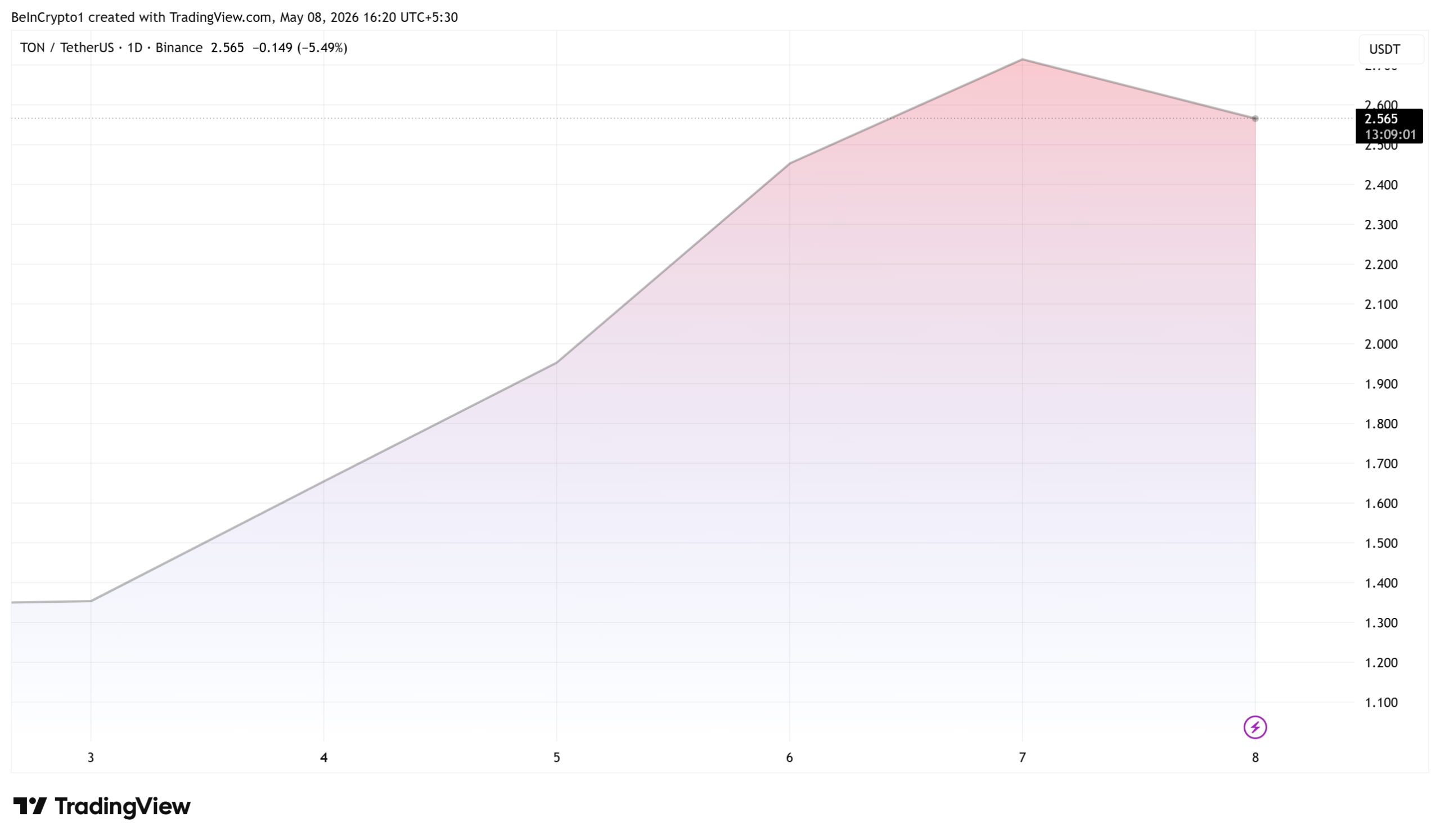
Telegram has formally replaced the TON Foundation as the main force behind The Open Network (TON), with founder Pavel Durov confirming the messenger will become the chain’s largest validator. Toncoin (TON) responded by rallying more than 100%.
The takeover, the third stage of Durov’s “Make TON Great Again” program, places Telegram at the center of TON’s infrastructure. Investors read it as the strongest signal that the messenger plans to anchor a billion-user crypto economy on the chain.
Why TON Is Rising
TON’s gains track Telegram’s renewed control over the network’s roadmap and validation. Alexander Tobol, chief technology officer at Wallet in Telegram, spoke with BeInCrypto. He said the chain was originally built by Telegram’s team before spinning out as an open-source project.
Tobol said the validator move signals deeper commitment from Telegram. It lifts interest in TON as a core part of the messenger’s stack.

The messenger’s reach makes any default crypto layer immediately consequential. Telegram counts more than one billion users, giving the chain a distribution edge few rivals can match.
Beyond architecture, Durov’s team staked about 2.2 million TON to claim the largest validator slot. The move deepens Telegram’s stake in network security.
Transfers, payments and mini-app services could all settle on TON. In that scenario, Tobol expects the network to lead all chains by active retail wallets.
“In such a scenario, TON could potentially become the leading blockchain by number of active wallets thanks to retail usage inside Telegram,” Tobol told BeInCrypto.
Network Speed and Cost Reset
Meanwhile, recent infrastructure work strengthens the case. Storm Trade founder Denis Vasin pointed to the Catchain 2.0 upgrade.
It cut block times from about 2.5 seconds to 400 milliseconds. Finality fell from roughly ten seconds to one.
The same upgrade lowered fees about sixfold, to around $0.0005. The network can also process more than 100,000 transactions per second.
Vasin said the exclusivity of the Telegram-TON pairing now matches the architecture investors expected in 2018.
He described TON as one of the highest-throughput Layer-1 chains. Fast finality and low cost position it for frequent small-value transactions.
If this integration is implemented consistently, TON gains what most Layer-1 blockchains lack — native distribution and real user use cases,” Vasin said in remarks shared with BeInCrypto.
Pricing the Telegram TON Takeover
Tobol expects the next leg of growth to depend on bots and mini-apps. Users would transact directly inside Telegram. Staking yields, currently around 15% annually, support liquidity retention.
However, Vasin urged caution. Markets have already repriced TON sharply. Any pullback would test whether Telegram can convert distribution into recurring on-chain revenue. The rally leaves limited margin for execution missteps.
Last year’s large Telegram-led sales of Toncoin reminded holders the messenger has acted as both buyer and seller.
Investors will watch for evidence the validator role binds Telegram more tightly to TON’s long-term value.
Whether TON returns to the top 10 of CoinMarketCap depends on transaction activity rather than announcements.

The next several weeks should reveal if the chain is gaining real economic gravity.
The post Telegram’s TON Could Become the World’s Biggest Retail Blockchain After Explosive 100% Surge appeared first on BeInCrypto.
Future repurchases will follow a preset schedule and be routed through on-chain markets.
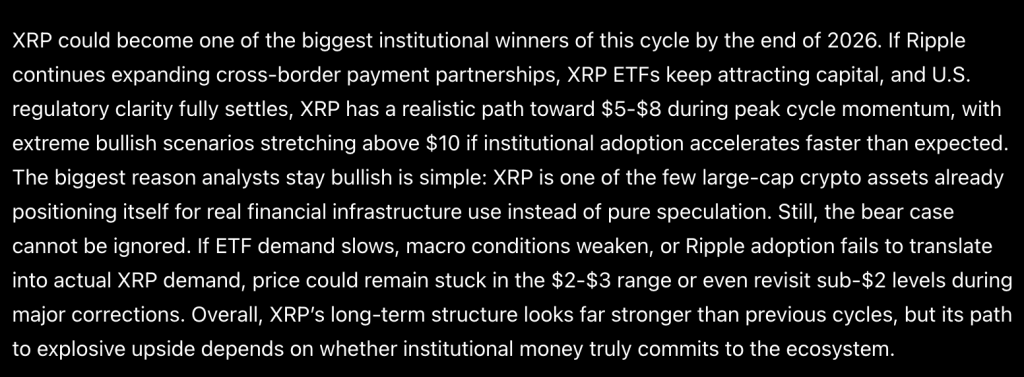
ChatGPT AI draws on large-scale datasets and market patterns to generate forward-looking crypto analysis, and when prompted with a well-defined framework, the AI predicts head-turning 2026 price outlooks for XRP.
The core thesis is simple but powerful. XRP could benefit from something most crypto assets still lack.
Actual integration into real payment and settlement systems. Ripple keeps expanding cross-border partnerships. ETF speculation around XRP is growing. And regulatory clarity in the US is no longer the same brick wall it was a few years ago, AKA the Clarity Act.
If those pieces keep aligning, ChatGPT argues XRP pushes into the $5 to $8 range during peak cycle momentum. Extreme upside above $10 if institutional adoption accelerates aggressively.
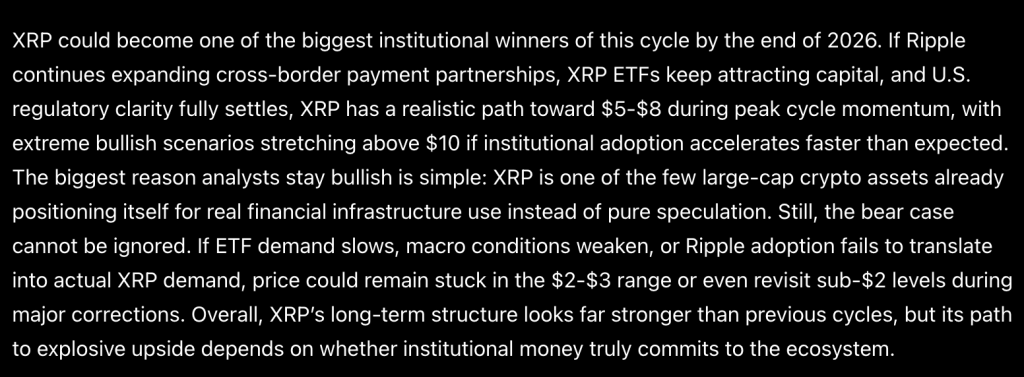
That sounds ambitious until you consider the logic is tied less to retail hype and more to whether XRP gets treated as a legitimate financial layer rather than just another speculative token.
The model is honest about the biggest weakness, though. Adoption does not automatically translate into price appreciation.
XRP has spent years building partnerships while the market consistently questions how much of that activity actually drives token demand.

XRP Price Prediction: Is a Move Toward $5–$8 Actually Possible as ChatGPT AI Predicts?
XRP is sitting at $1.379 on the daily chart, still trading well below ChatGPT’s target range. The institutional narrative exists. The price has not been priced in yet.
The big picture is ugly, but potentially at a turning point. Price has been in a downtrend since the August peak near $3.80, grinding lower for nearly 10 months through a series of lower highs and lower lows.
The February bottom around $1.10 is the last real floor on this chart.
The base building since February is the most constructive thing happening right now. Three months of higher lows off that $1.10 bottom without making new lows is the first sign the downtrend may be exhausting itself.
The projected recovery path targets a move all the way back toward $3.60 if momentum gains traction.
But the path is not clean. $1.50 is the first ceiling that needs to flip. Then $2.00 and $2.40 are both significant resistance levels from prior consolidation zones that need to be worked through before anything near the upper targets comes into view.
For the $5 to $8 scenario to become realistic, XRP needs to prove it can sustain momentum through all of those levels rather than just producing short-term spikes that fade. When momentum compounds on this asset it moves aggressively. But the forecast only works if adoption, liquidity, and sentiment all reinforce each other simultaneously.
The immediate risk is simple. Base fails, XRP breaks below $1.10, fresh lows reset the entire recovery narrative.
Discover: The best crypto to diversify your portfolio with
ChatGPT Projects That Bitcoin Hyper Could Outperform XRP Next
Early-stage infrastructure plays sit at a different part of the risk curve, which is exactly why some traders rotate into them once large-cap upside starts looking capped.
Bitcoin Hyper is targeting that window directly. The project is building a Bitcoin Layer 2 with Solana Virtual Machine integration, bringing faster smart contracts and lower-cost execution into the Bitcoin ecosystem. The pitch is simple: Bitcoin’s security combined with Solana-style speed and programmability.
The presale is sitting at $0.013679 with over $32 million raised, alongside staking incentives for early participants. The market gap it is targeting is real. Bitcoin still lacks a native high-speed smart contract environment compared to Ethereum or Solana.
But this is still early-stage infrastructure. Execution, liquidity, and adoption are all unknowns. The appeal is earlier positioning and higher upside potential, paired with significantly higher risk than established majors.
The post Sam Altman ChatGPT AI Predicts the Price of XRP By the End of 2026 appeared first on Cryptonews.
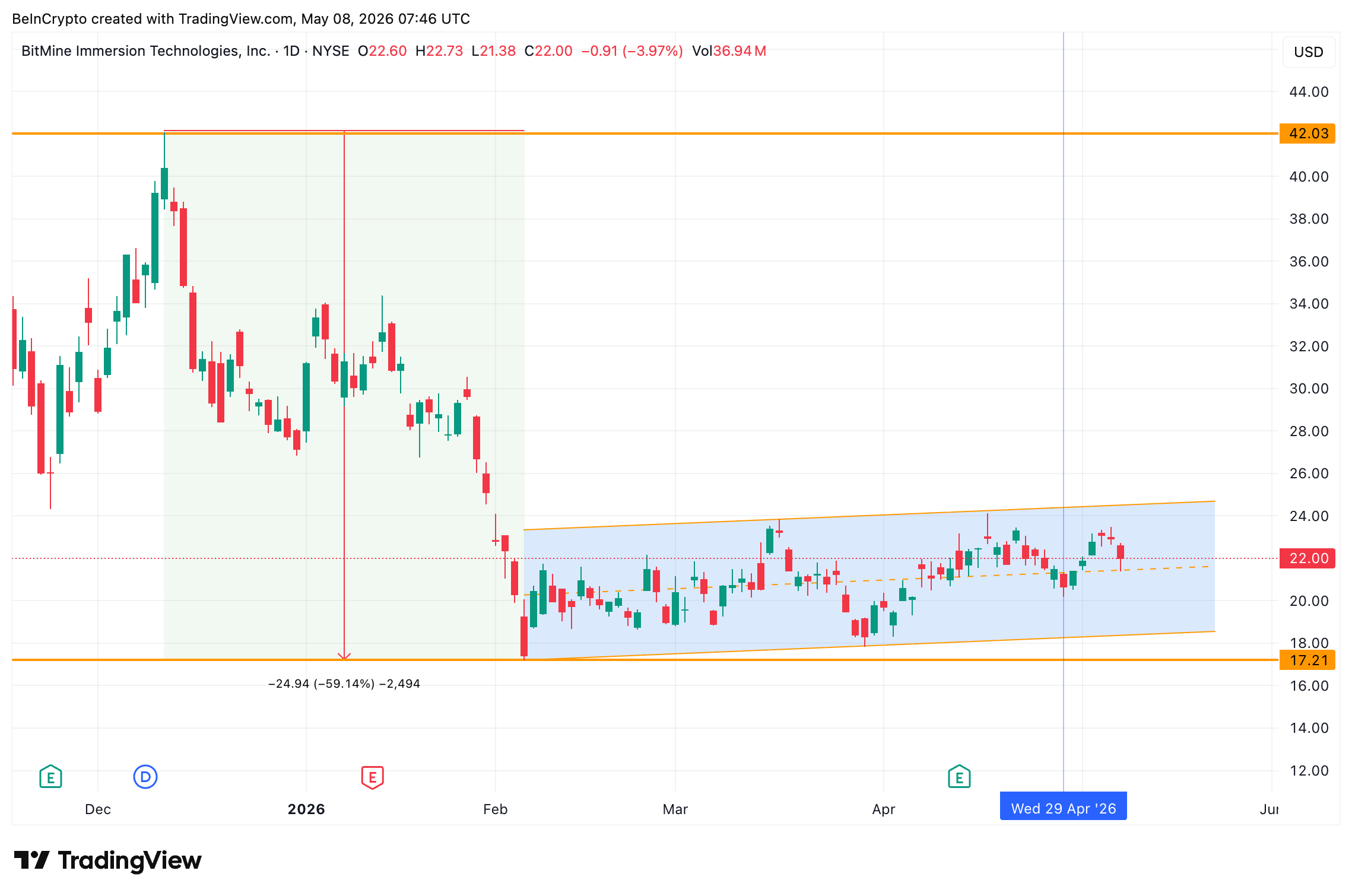
BMNR stock price trades at $22.00 after a 4% drop on May 7, sliding alongside the broader crypto-treasury complex as chairman Tom Lee signaled BitMine may slow its Ethereum accumulation pace.
The stock sits within an ascending channel that appears bullish on the surface, but multiple flow and positioning signals suggest a deeper test is ahead.
BMNR Stock Price Holds an Ascending Channel After a 59% Drop
BitMine Immersion Technologies (BMNR) traded at $22.00 on May 7, down 3.97%. Chairman Tom Lee said at Consensus Miami that the company may slow its Ethereum (ETH) purchases as it nears its 5% supply target. BitMine currently holds 5.18 million ETH, roughly 4.29% of the circulating supply.
The slowdown signal hit a stock that was already structurally weak. BMNR is down 46% over the past six months. The share price sits 86% below its 52-week high of $161 set in mid-2025.
Want more insights like this? Sign up for Editor Harsh Notariya’s Daily Newsletter here.
The daily chart shows an ascending channel forming since early February. The pattern emerged after a 59.14% drop from the December 10 high of $42.03. Channels that form after sharp declines often act as continuation patterns rather than reversal structures. They tend to resolve in the direction of the prior trend, which in this case is down.

Tom Lee also pointed to BitMine’s $4 billion share repurchase program as an alternative use of capital. Capital may rotate away from ETH and toward buybacks, weakening the ETH treasury narrative that has supported BMNR’s premium.
That structural backdrop sets the stage for the technical signals.
EMAs Are the Last Line of Defense
Inside the ascending channel, BMNR is grappling with two exponential moving averages (EMAs). EMAs are trend indicators that give weight to recent price action, with shorter EMAs tracking near-term momentum.
The 20-day EMA sits at $21.92 and the 50-day at $22.17. With BMNR at $22.00, the stock is wedged directly between them, a tight zone where the next move is binary.

History suggests the 20-day matters most. Each prior break of the 20-day EMA in 2026 has produced a sharp correction. On April 27, BMNR dropped 6.48% in one session after losing the 20-day. On March 25, the same break delivered a 15.62% slide.
If the 20-day EMA at $21.92 breaks again, the same cascade pattern is likely. The 100-day EMA at $24.80 and the 200-day EMA at $27.06 sit well above the current price. Both cap any rally attempt and reinforce the longer-term bearish lean.
CMF Divergence and Put-Call Ratio Flag Smart Money Caution
While retail traders may read the ascending channel as bullish, the flow data tells a different story. The Chaikin Money Flow (CMF) is showing weakness despite the higher prices. CMF measures money flow volume to gauge buying or selling pressure over a set period.
CMF currently reads 0.03, technically still above zero. The indicator has, however, broken its own ascending trendline that connected the lows since late March.
Also, between April 29 and May 6, BMNR’s price trended higher while CMF trended lower. That bearish divergence suggests institutional buying pressure is fading even as price holds.

Options positioning adds another layer. The put-call ratio, a sentiment gauge that compares put contracts to call contracts, has shifted in a contradictory way. The volume put-call ratio dropped from 0.38 on April 29 to 0.29 on May 7. The shift indicates more long positions are being placed.

Open interest tells a quieter story. The OI put-call ratio drifted lower from 0.44 to 0.42 in the same window. Retail is adding fresh long bets while existing positions are being closed. That mix often precedes a long squeeze if the stock breaks lower, adding another layer of risk.
BMNR Stock Price Levels Set Up a 9% Move Either Way
With structure, EMAs, CMF, and options positioning all pointing in one direction, the price ladder reveals what each scenario unlocks.
The bullish path requires BMNR to first reclaim $22.47. That level sits just above the 50-day EMA. A clean reclaim signals the stock is comfortably above its moving averages. The next test is $24.09, the 0 Fibonacci anchor at the upper trendline.
A break above the $24 zone represents 9.57% upside from the current price and would weaken the continuation thesis.

The bearish path is more layered. Below the EMA support at $21.92, BMNR opens at $21.47 and $20.65 as immediate floors. The most critical downside level is $19.84, the 0.618 Fibonacci level. A daily close below $19.84 marks a 9.75% drop from the current price and confirms the bearish structure.
Below $19.84, the path opens to $18.69 and $17.22. The longer-range extension at $12.96 (1.618 Fibonacci) becomes a deep continuation target if the entire ascending channel breaks down.
The post BitMine Stock Faces Risk as Tom Lee Cools on Ethereum Buying appeared first on BeInCrypto.

Honeymoon Debt: Dream Vacation or Financial Nightmare? #shorts

Permutations in full: How Barcelona can clinch La Liga title in El Clasico

Liberty Broadband Corporation (LBRDK) Q1 2026 Earnings Call Transcript

Manchester United reach agreement with Casemiro over contract clause amid transfer speculation

US brings back mandatory military draft registration

Steven Gerrard disagrees with Gary Neville over ‘shock’ Chelsea and Arsenal claim | Football
Honeymoon Debt: Dream Vacation or Financial Nightmare? #shorts

Invest Smarter Unlock Wealth with 401k & HSA #finance#shorts #401k #HSA#SaveMoney#Invest#Wealth

Crypto Gold Live Trading 7 May | Market Trader | #goldtrading #cryptotrading #bitcoin
-

 NewsBeat5 days ago
Channel 5 – All Creatures Great and Small series 7 new post
-
 Crypto World12 hours ago
HarrisX Poll Found 52% of Registered Voters Support the CLARITY Act
-

 Crypto World2 days ago
Upbit adds B3 Korean won pair as Base token gains Korea access
-

 Tech4 days ago
Image AI models now drive app growth, beating chatbot upgrades
-
 NewsBeat2 days ago
NCP car park operator enters administration putting 340 UK sites at risk of closure
-

 Entertainment7 days ago
Kylie Jenner Hit With Second Lawsuit From Ex-Housekeeper
-

 Sports7 days ago
Cavaliers vs. Raptors Game 6 live score, updates, highlights from 2026 NBA playoffs first-round series
-
Entertainment6 days ago
New Netflix Movies in May 2026 — My Top 3 Picks to Stream
-

 Entertainment7 days ago
Young and the Restless Next Week: Cane Arrested & Matt’s Deadly New Scheme!
-

 Entertainment6 days ago
Melissa Joan Hart and More Stars Attend 2026 Kentucky Derby
-
 Sports7 days ago
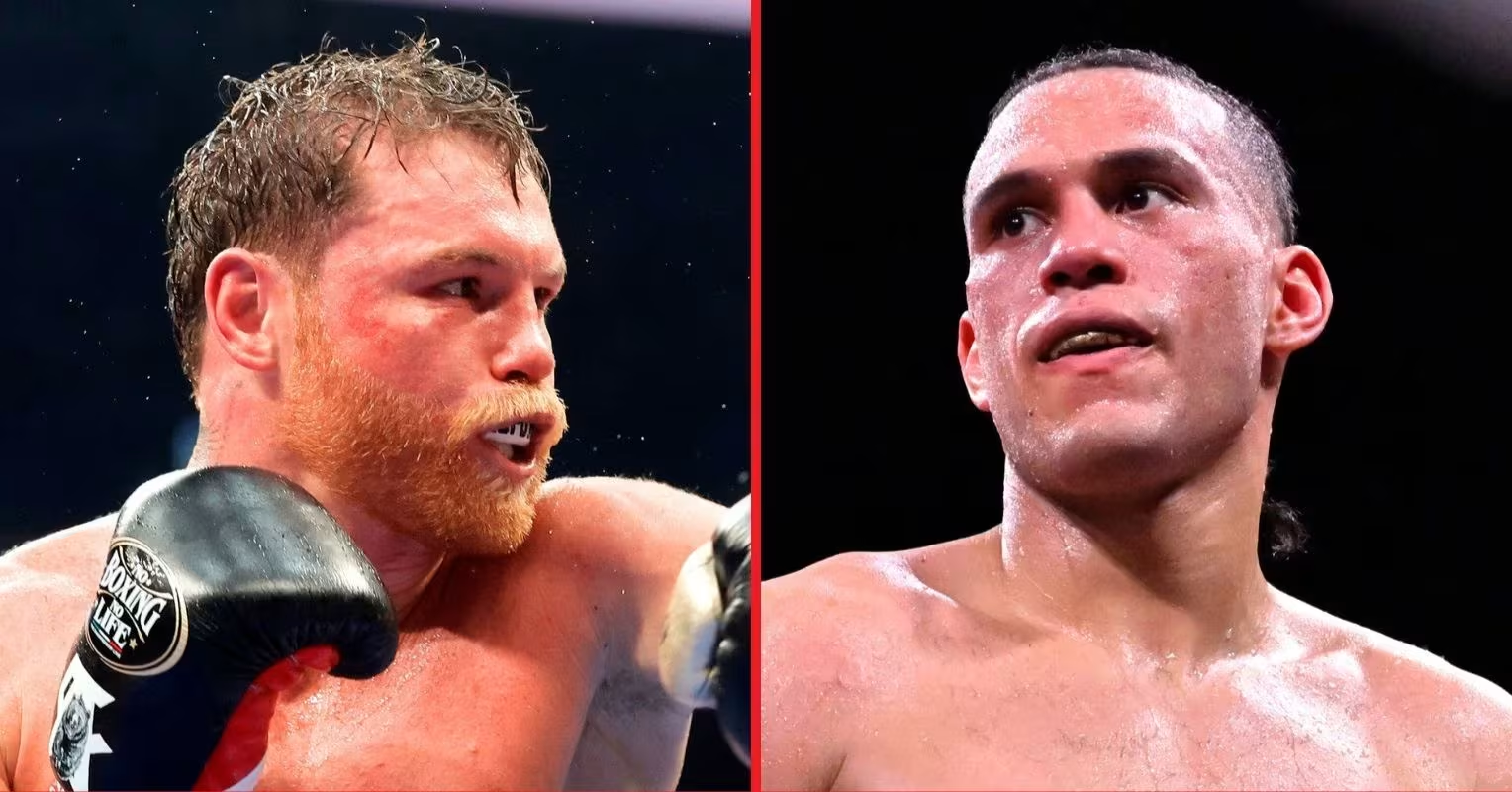
David Benavidez responds to team Canelo saying the fight will never happen
-
 Sports7 days ago
IPL 2026: ‘Love you darling’- Hardik Pandya’s reaction to MS Dhoni steals the show |Watch | Cricket News
-
Entertainment6 days ago
Anna Nicole Smith’s Daughter Attends 2026 Kentucky Derby
-
Crypto World6 days ago
Pi Network Mandates Protocol 23 Upgrade for All Mainnet Nodes Before May 15 Deadline
-

 Crypto World6 days ago
Bitcoin mining equities rise in 2026 as BTC lags behind
-

 Business6 days ago
Luka Doncic Injury Update: Doncic’s Hamstring Recovery Slows Lakers’ Hopes Against Thunder: Can He Run Yet?
-

 Business7 days ago
Can Victor Wembanyama Bring the NBA Ring to Spurs in 2026? Historic Playoff Run Fuels Title Dreams
-

 Sports7 days ago
Plane crash in Wimberley, Texas kills 5 pickleball players at tournament
-
Entertainment6 days ago
Venus Williams’ Best Met Gala Looks Over the Years
-

 Entertainment7 days ago
Jennifer Lawrence’s Infamously Raunchy, Extremely R-Rated Comedy Is Suddenly Topping Streaming Charts
You must be logged in to post a comment Login