

Crypto World
Strategy’s Michael Saylor Pounds Away at “Bad Idea” BIP-110


Strategy executive chairman Michael Saylor took to social media on Sunday to detail his “110 reasons” why a proposed temporary fork to limit non-monetary transactions on the Bitcoin network, or BIP-110, is a bad idea.
Bitcoin Improvement Proposal-110 was introduced in December 2025 to stop nonfungible token-like Ordinals inscriptions and other arbitrary data from spamming the network and to preserve BTC’s main use as a peer-to-peer cash system.
In a roughly 3,700 word post on X.com, the man in control of the largest Bitcoin (BTC) corporate treasury made a case for what he said are “neutral rules, hard consensus, open markets, and permissionless innovation.”

Source: Michael Saylor on X.com
“Many Bitcoiners I respect support BIP 110. They want to keep validation accessible, protect node operators from unwanted costs and content, preserve affordable payments, and keep Bitcoin focused on sound money rather than general-purpose data storage. Those are serious concerns. I share the objectives. I disagree about the remedy,” Saylor said. He added:
“This article critiques the proposal, not the people behind it. I assume good faith. Bitcoin is strongest when we can disagree vigorously without mistaking allies for enemies.”
As of 12 p.m. ET, on Sunday, the post had been viewed 879,000 times, with 692 replies and 852 retweets.
BIP-110 is one of the more notable protocol-level disputes in the Bitcoin development community since the Blocksize Wars between 2015 and 2017, when ecosystem participants debated whether it was worth risking a chain split to raise the block size limit for scalability.
The proposal was introduced by pseudonymous Bitcoin developer “Dathon Ohm” with the support of Ocean protocol founder Luke Dashjr. Opponents include Blockstream CEO Adam Back.
Related: Bitcoin nodes running BIP-110 crosses 2% as spam wars heat up
Little certainty on BHP-110 approval
To be sure, BIP-110 won’t be activated unless 55% of Bitcoin nodes validating blocks are in support of the proposal across a Bitcoin block “period.”
In the last period, period number 475 between block 955,584 and 957,599, only 1% of blocks were in support.
The dispute comes at a time when Ordinals activity is at near all-time lows, with fewer than 10,000 Ordinals inscribed into the Bitcoin blockchain on a daily basis over the last month, down from the more than 400,000 seen during its peak in August 2023.
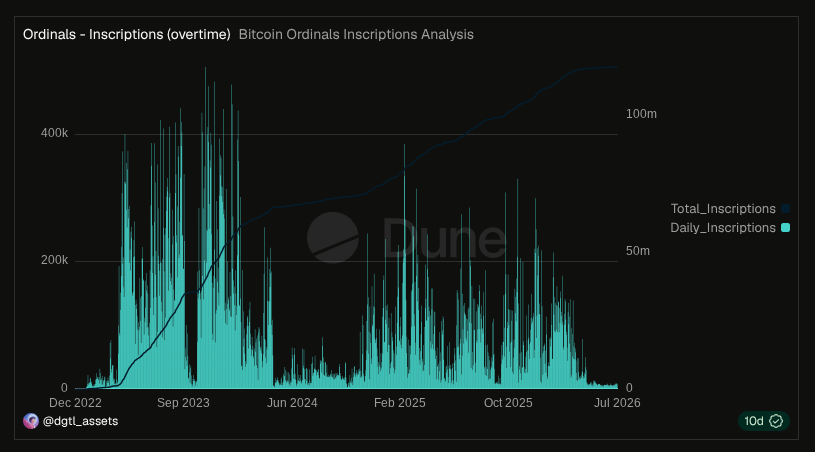
Change in daily Ordinals inscriptions since December 2022.
Source: Dune Analytics
Bock has previously criticized BIP-110, describing it as a “quest to police other people.”
He said Bitcoin’s decentralization should mean “you can’t impose your views on others,” calling it incompatible with BTC’s cypherpunk ethos of permissionless, censorship-resistant money.
Dashjr and other BIP-110 supporters have called Ordinals-driven bloat a “serious threat” to the network, prompting the need for an imminent fix.
They have also argued BIP-110 wouldn’t cause a chain split, as many fear, while adding that the BIP-110 fork imposes a temporary one-year limit and thus wouldn’t invalidate fee-paying transactions over the long term.
Features: From Bitcoin critics to blockchain believers: The 5 biggest crypto backflips



CoinShares has entered Europe’s €26.3 trillion UCITS fund market with the launch of a regulated Bitcoin mining ETF, opening its digital asset strategies to institutional investors whose mandates previously restricted access to its products.
Summary
- CoinShares has launched a UCITS platform with a Bitcoin mining ETF listed on Deutsche Börse Xetra.
- The new structure opens access to pension funds, insurers, and private banks restricted by existing investment mandates.
- CoinShares said it plans to use the UCITS platform to launch more regulated digital asset investment funds.
Digital asset investment firm CoinShares announced on Tuesday that it has launched a UCITS platform alongside the debut of the CoinShares Bitcoin Mining UCITS ETF, a move that allows the company to offer regulated investment funds under one of Europe’s most widely used fund structures.
The first product under the platform, the CoinShares Bitcoin Mining UCITS ETF, began trading on Deutsche Börse Xetra on Tuesday. The company said the launch is intended to make its investment strategies available to institutional investors across Europe, including pension funds, insurance companies, and private banks that generally invest through UCITS-compliant vehicles.
For CoinShares, the change is less about introducing a new investment strategy than removing a structural barrier that limited access to existing ones. The company said many institutional mandates prohibit investments in debt securities, including exchange-traded products backed by physical digital assets, preventing a large pool of investors from allocating capital despite growing interest in the sector.
By using the UCITS framework, CoinShares said those investors can now access regulated digital asset investment products through a structure already accepted under their internal investment rules.
“This is not simply the launch of another investment product. It marks our entry into the UCITS market with a platform that allows us to develop and launch regulated investment funds under one of the world’s most widely recognised fund frameworks,” said CoinShares co-founder, president and CEO Jean-Marie Mognetti.
The company added that the platform operates on a largely fixed cost base and is designed to generate operating leverage as additional funds are introduced. It also said the UCITS structure will support future launches covering both digital asset products and thematic investment strategies.
Platform targets regulated institutional capital
UCITS, short for Undertakings for the Collective Investment in Transferable Securities, is the European regulatory framework governing investment funds that can be marketed across member states. Because many institutional investors already allocate capital through UCITS funds, the structure has become one of the region’s standard formats for cross-border investment products.
CoinShares said adopting the framework allows it to reach investors that previously could not participate because of mandate restrictions rather than a lack of interest in digital assets.
The company’s latest annual report also points to a period of financial expansion. CoinShares generated more than $165.7 million in revenue during 2025, its first full year after listing in the United States earlier this year. Shares of the Nasdaq-listed company closed 2.1% lower at $4.11 on Monday before the announcement.
Against that backdrop, the UCITS platform gives CoinShares a regulated framework that aligns with existing investment mandates instead of requiring institutions to modify internal policies before gaining exposure to digital asset strategies.
The company said it intends to build on that foundation by introducing additional regulated funds over time as institutional demand for digital asset investment products continues to develop.
The launch also follows several initiatives by CoinShares to deepen its presence in institutional markets beyond exchange-traded crypto products.
Earlier this year, the company published research showing that many traditional wealth managers still struggle to incorporate clients’ digital asset exposure into portfolio management because of internal compliance rules.
A June survey conducted by CoinShares among 261 wealth management professionals across Europe found that 52% of UK financial advisers said most of their clients’ cryptocurrency holdings remained outside their visibility. Across France, Germany, Italy and Switzerland, the figure fell to 25%.
The same survey found that 61% of respondents worked at firms that either restricted digital assets or had no formal policy governing them.
At the time, Mognetti argued that internal firm policies, rather than adviser knowledge or client demand, had become the primary obstacle. According to him, many advisers cannot account for crypto holdings when managing portfolios because company rules prevent them from discussing or supervising those assets, leaving them without a complete view of client wealth.
CoinShares said such restrictions create operational challenges because advisers are expected to manage portfolios while lacking visibility into part of their clients’ investments.
Institutional adoption continues to evolve
Institutional participation in digital assets has remained uneven over the past several months as investment flows responded to changing market conditions.
In a June research report based on U.S. Securities and Exchange Commission 13F filings, CoinShares said hedge funds reduced their exposure to U.S. spot Bitcoin exchange-traded funds by 39% during the first quarter. The report showed professional investors lowered combined holdings from approximately 313,000 BTC to 261,000 BTC after Bitcoin declined sharply during the period.
According to CoinShares digital asset analyst Matt Kimmell, the reduction resembled previous Bitcoin downturns, when leveraged and tactical investors typically trimmed positions as prices weakened.
The same report also showed different behavior across institutional groups. While hedge funds and brokerages reduced exposure significantly, banks increased their Bitcoin ETF holdings during the quarter, suggesting not all professional investors responded to market volatility in the same way.
Alongside market developments, European regulation has continued to shape how investment firms package crypto-related products for institutional clients.


Ostium, an Arbitrum-based perpetuals exchange for trading real-world assets that raised about $27.8 million from backers including General Catalyst and Jump Crypto, halted all trading Wednesday after an attacker manipulated its oracle system to drain as much as $18 million in USDC from its… Read the full story at The Defiant


Cointelegraph is committed to providing independent, high-quality journalism across the crypto, blockchain, AI, and fintech industries.
All news, reviews, and analyses are produced with full journalistic independence and integrity. For more details on our standards and processes, please read our Editorial Policy.

Ripple CTO Emeritus David Schwartz just reminded the market why conviction is the hardest edge to hold. XRP price is trading around $1.12, up about 1% over the past 24 hours after reclaiming the $1.10 level. That move has shifted momentum back toward the bulls, making the timing of Schwartz’s admission hit a little closer to home.
In yesterday’s post on X, Schwartz confirmed he sold XRP at $0.10 and unloaded 40,000 ETH at roughly $1.05 each. Those decisions came from a risk reduction agreement with his wife, not from losing faith in either asset. As every trader eventually learns, your portfolio rarely argues with your spouse and wins.
“Obviously, I wish I hadn’t done those things,” Schwartz wrote. He added that he genuinely dislikes financial risk and followed a rule to sell whenever an asset reached a new all-time high. Later, he admitted that assigning even a 1% chance to Ethereum reaching $2,368 would have kept him from selling at $1.05. The same lesson applies to XRP, which has long left that $0.10 exit behind.
The irony has not gone unnoticed. XRP is climbing after reclaiming a key technical level just as Schwartz reflects on selling too early. It is a familiar reminder that timing the market sounds easy until the market starts proving you wrong. Sometimes the hardest trade is simply doing nothing.
Discover: The Best Token Presales
Can XRP Price Push Toward $1.50 After Breaking $1.10 Resistance?
The current $1.12 level is now the line in the sand. Buyers pushed XRP from around $1.08 to roughly $1.12, locking in a modest daily gain. The next job is keeping that level as support, which is never automatic after weeks of heavy selling. Momentum has improved, but the market still wants proof.
Meanwhile, the daily RSI remains near oversold territory, while a TD Sequential buy signal on the three-day chart hints that bearish momentum may be fading. That points to possible trend exhaustion instead of a confirmed breakout. Sometimes the first bounce grabs attention, but the second one earns respect.
Institutional demand also remains part of the story. XRP ETPs recently attracted nearly $40 million in fresh inflows, lifting assets under management to about $2.6 billion. At the same time, spot trading volume jumped sharply during the move above $1.10, suggesting larger players were not sitting on the sidelines.

Three scenarios remain in play. The bullish case sees $1.12 holding as support before XRP clears price resistance around $1.18. If buyers keep pressing, a sustained move above $1.20 could expose the $1.30 to $1.35 region next. One green candle is nice. A few more are what pay the bills.
The base case is a period of consolidation between $1.10 and $1.18 while the market confirms that selling pressure has eased. However, a daily close below $1.10 would shift attention back to the $1.04 to $1.08 support zone. The late session volume surge showed buyers arrived with conviction, but one good session alone does not make a lasting trend.
Trade XRP on Bybit and Get a Chance to Win Our $1,000 USDT Airdrop
Bitcoin Hyper Targets Early-Stage Entry as XRP Tests Critical Levels
XRP at $1.13 is a better position than Schwartz’s $0.10 exit, but at a $70 billion+ market cap, the asymmetry available at genuine early stages simply isn’t there anymore. That’s the structural trade-off every trader running rotational strategies weighs when an asset reclaims resistance rather than breaks into discovery.
The question isn’t whether XRP can go higher; it’s whether the risk-reward at current prices matches what early participants captured.
Bitcoin Hyper is positioning itself in a different part of the risk spectrum entirely. The project is building the first Bitcoin Layer 2 with full SVM integration, meaning Solana Virtual Machine-grade smart contract execution anchored to Bitcoin’s security model, targeting performance that competes with Solana’s throughput while preserving BTC’s trust layer.
The presale has raised $32.9 million at a current token price of $0.0136834, with a staking program live for participants. That combination of infrastructure utility and early pricing is the setup Schwartz described missing, except it’s available now, not in retrospect.
Research Bitcoin Hyper before committing capital.
Discover: The Best Crypto to Diversify Your Portfolio
The post David Schwartz Regrets Selling XRP at 10 Cents as Price Broke $1.10 Resistance appeared first on Cryptonews.
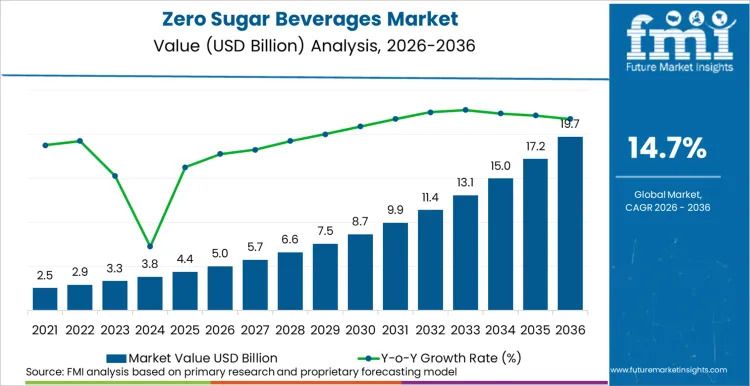
Coca-Cola shares edged higher on July 20 after the beverage giant unveiled a new global brand identity built around artificial intelligence design tools. The stock (NYSE: KO) closed at $82.12, up 0.69% on the day.
Investors read the refresh as a bet on Coca-Cola’s higher-margin, zero-sugar lineup heading into next week’s earnings report.
Make Coca-Cola More Coca-Cola
The company’s new identity leans on assets consumers already recognize. Rather than replace them, the company increased the visual weight of its red and white palette, the Spencerian script, the Dynamic Ribbon, and the Arden Square symbol across packaging, retail displays, and digital platforms in more than 200 markets.
Executives described the goal as making “Coca-Cola more Coca-Cola.” The rollout has already reached parts of Europe, the Middle East, and India. Latin America and Asia will follow through 2027. The company is betting that consistency, not a full redesign, will keep the brand recognizable to shoppers.
AI Design Tools and the Zero Sugar Refresh
Behind the redesign sits a new brand center paired with AI-powered design tools. The tools serve the company’s internal teams and outside agencies alike.
The system is meant to standardize creative output across markets and speed internal approvals. Coca-Cola Zero Sugar gets its own visual cues, too. The refresh adds larger “Zero Sugar” text, a black Dynamic Ribbon on cans, and a black bottle cap on PET bottles.

Analysts view the packaging shift as a deliberate push toward the company’s higher-margin zero-sugar lineup. Demand has shifted away from full-sugar sodas, and that category remains a company priority.

Wall Street’s Earnings Season Test
Coca-Cola’s report lands in the middle of a packed earnings season. Apple stock is drawing attention over whether upcoming results can push shares past a $5 trillion valuation. Sentiment elsewhere is split.
Jim Cramer moved to dump tech stocks ahead of Intel, Tesla, and Alphabet results. JPMorgan’s Jamie Dimon has flagged reservations about broad market exposure. Not every reaction has been kind.
Kioxia shares tumbled despite bullish analyst coverage. SpaceX stock slid after a launch delay, proof that operational news can move prices as much as financial results. Against that backdrop, investors have a rare qualitative signal to parse before Coca-Cola’s July 28 numbers land.
Coca-Cola’s rebrand alone won’t move sales. It signals a bet that consistent branding and AI-assisted design oversight can support premium pricing on its zero-sugar lineup. Wall Street will find out on July 28 whether that bet shows up in the numbers.
The post Coca-Cola Used AI to Make Itself More Coca-Cola appeared first on BeInCrypto.
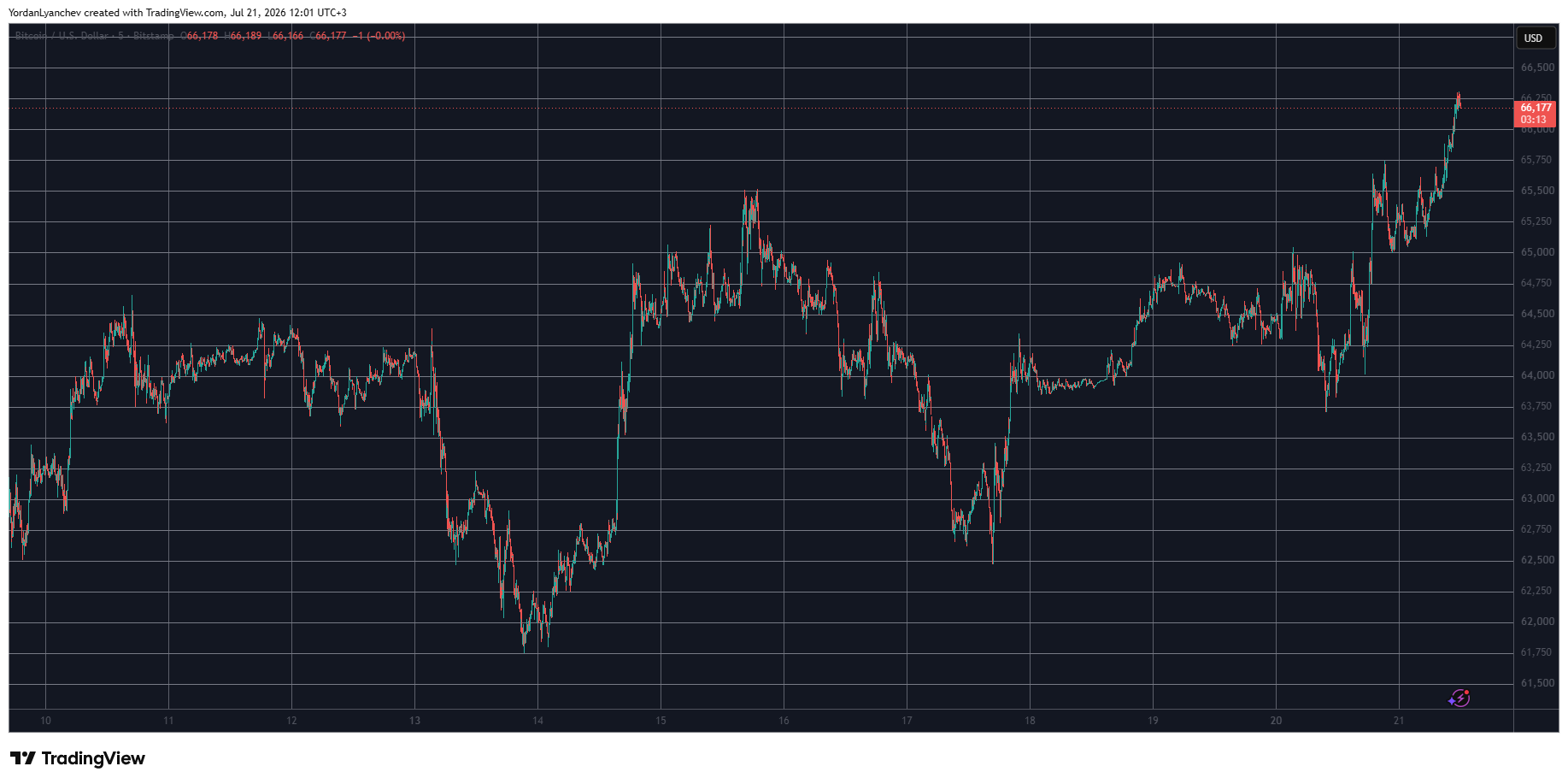
Bitcoin’s price rebounded swiftly after the Monday morning dip below $64,000 and has gained over two grand since then, climbing to a monthly peak of over $66,000.
The altcoin space has turned green as well. ETH is inching closer to $1,950, XRP is testing the $1.13 resistance, while ADA has stolen the show from the larger caps.
BTC Sees Monthly Peak
The previous business week began on a familiar note, as BTC priced in the weekend attacks in the Middle East and dropped below $62,000 from over $64,000. The bulls stepped up after the favorable CPI data for June, pushing the asset to $65,500 for the first time in three weeks.
However, its progress stalled there, and bitcoin dipped to $62,500 by Friday. Nevertheless, the bulls were more persistent once again and initiated an immediate recovery right before and during the weekend, in which the cryptocurrency climbed back to $64,000.
It tried to take down $65,000 on Sunday, but it was stopped and dropped once again on Monday morning. This time, it was a lot less painful, and it quickly rebounded from the daily low of $63,750.
It jumped past $65,500 earlier today before another leg up drove it to its highest price tag since June 17 at $66,300. It remains above $66,000 as of press time, and its market cap has jumped to $1.330 trillion on CG. Its dominance over the alts is also on the rise, currently at 57.2%.
Alts Turn Green
As mentioned above, green dominates almost all altcoin charts. Ethereum is challenging the $1,950 level before a potential run to $2,000. BNB has neared $580, while XRP and HYPE are up by approximately 4% daily. DOGE, ZEC, and XLM have marked similar gains, while Cardano’s native token has exploded by over 8% and now trades at a local peak of $0.175.
Impressive daily increases are evident from BCH, UNI, AAVE, DOT, and WLD. ONDO has rocketed by over 14% and sits close to $0.40.
The cumulative market capitalization of all crypto assets is up by $70 billion in a day. The metric has climbed to $2.320 trillion for the first time in a month.

The post Crypto Markets Add $70B Daily as Bitcoin’s Price Hits Monthly High: Market Watch appeared first on CryptoPotato.
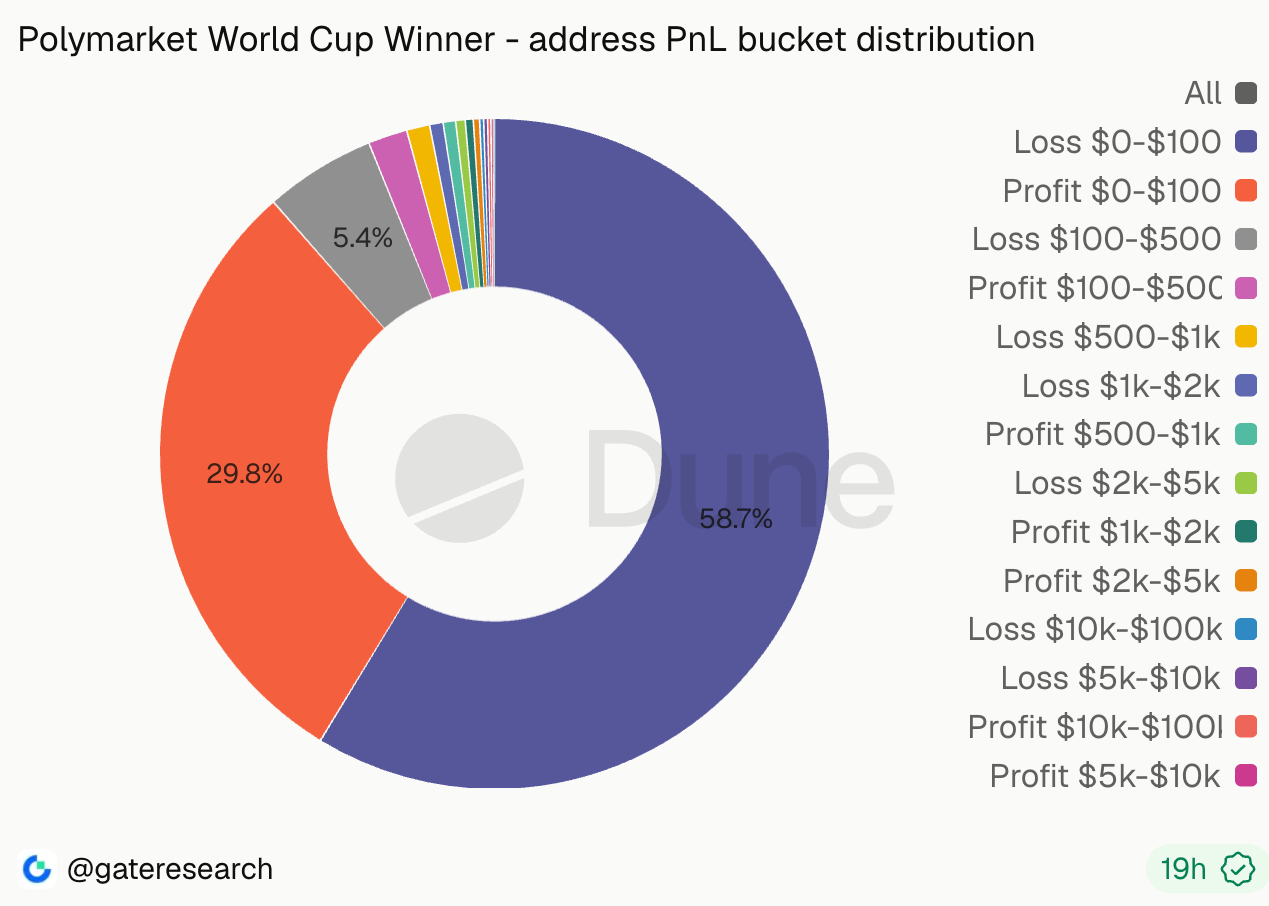
Polymarket’s World Cup winner market attracted more than 194,000 unique addresses, but roughly two-thirds finished underwater.
The World Cup closed with Spain beating Argentina 1-0 in the July 19 final. Data compiled by an analyst shows the payouts concentrated among a handful of large winners. Meanwhile, most participants recorded only marginal gains or losses.
Where the World Cup Profits Went on Polymarket
Nearly 130,000 addresses finished the market in the red, about 66.7% of all participants. Nonetheless, most of the damage stayed small.
A total of 114,126 addresses each lost under $100, with an average loss of less than $10. At the other extreme, 43 addresses lost more than $100,000, shedding a combined $15 million.

The profit side mirrored that shape. Some 57,991 addresses gained under $100 each, averaging less than $5. Larger wins stayed rare across the market.
Only 54 addresses cleared more than $100,000, together banking $22.3 million. The analyst identified five wallets that each topped $1 million, including asparagus2012, Allezpapa, yamal19, thesingularityisnear, and wco26.
According to Arkham, asparagus2012 operated 7 separate accounts. The trader generated more than $7.4 million across World Cup markets and funneled the winnings into a single address.
Follow us on X to get the latest news as it happens
Prediction Market Activity Cools Before Another Football Season
The tournament drew traders and heavy volume to prediction markets, but activity has since cooled. Open interest across Kalshi and Polymarket has dropped as major sporting events fade from the calendar, according to Artemis data.
Bernstein analyst Ian Moore expects a quiet stretch through August before the National Football League (NFL) season starts in September.
“August is always a pretty light month for the sports books and the traditional ones. And now the prediction markets as well… You kind of have to wait until NFL season kicks off in September to get that bounce in handle,” he said.
The analyst pointed to a Week 1 slate as an early draw for the platforms. The coming weeks will test whether prediction markets can hold the audience the World Cup delivered.
Subscribe to our YouTube channel to watch leaders and journalists provide expert insights
The post 194,000 Addresses Traded Polymarket’s World Cup Market and Most Lost appeared first on BeInCrypto.

The crypto market is on the move on Tuesday morning, with bitcoin climbing to a multi-week peak of over $66,000. Many altcoins have followed suit, including the popular cross-border token.
Analysts who have often weighed in on its performance were quick to highlight the returning hope, some of which emerged with rather incredible price predictions.
XRP Is Breaking Out?
CW was among the first to give some hope to the bulls, indicating that XRP is “breaking through the sell walls.” According to their chart, such obstacles remain at $1.13-$1.14, which is currently being tested, followed by another one at around $1.16, before the last major one at $1.20.
Ali Martinez also outlined the significance of the $1.13 resistance. It has capped the token’s breakout attempts in the past month or so, and the analyst predicted that a decisive surge above it “could confirm the bullish breakout and open the door for further upside.” His chart highlighted potential targets of up to $1.30 in the short-term.
As usual, EGRAG CRYPTO was the most optimistic of the bunch, and continues to focus on the asset’s long-term potential. According to his triple-bottom roadmap, his targets were quite mind-blowing at $9, $15, and $31. Naturally, all of these sound quite far-fetched at the moment despite the minor uptick from under $1.10 to $1.13.
Nevertheless, EGRAG noted that this chart “presents a three-bottom sequence of rising cyclical lows, supported by XRP’s long-term exponential moving averages.” The current bottom is being formed, with “strong confluence around $0.90-$1.00,” he added.
Long-Term Correction Still Not Over
ChartNerd, on the other hand, warned that XRP is yet to break out of its downtrend that began just over a year ago when it charted its all-time high of $3.65.
“We remain inside the wedge structure and below the current descending resistance.”
Ripple’s token would need to break past $1.20 to show some strength and potential to turn the tables, according to ChartNerd’s analysis.
Bird, though, believes XRP has already made the first major step to get out of the year-long compression. The analyst said “it’s time” for an “explosive candle” that could arrive at any moment and propel the asset toward new local peaks.
The post XRP Is Breaking Out With a 5% Surge as Analysts Say Ripple’s Time Has Come: Details appeared first on CryptoPotato.
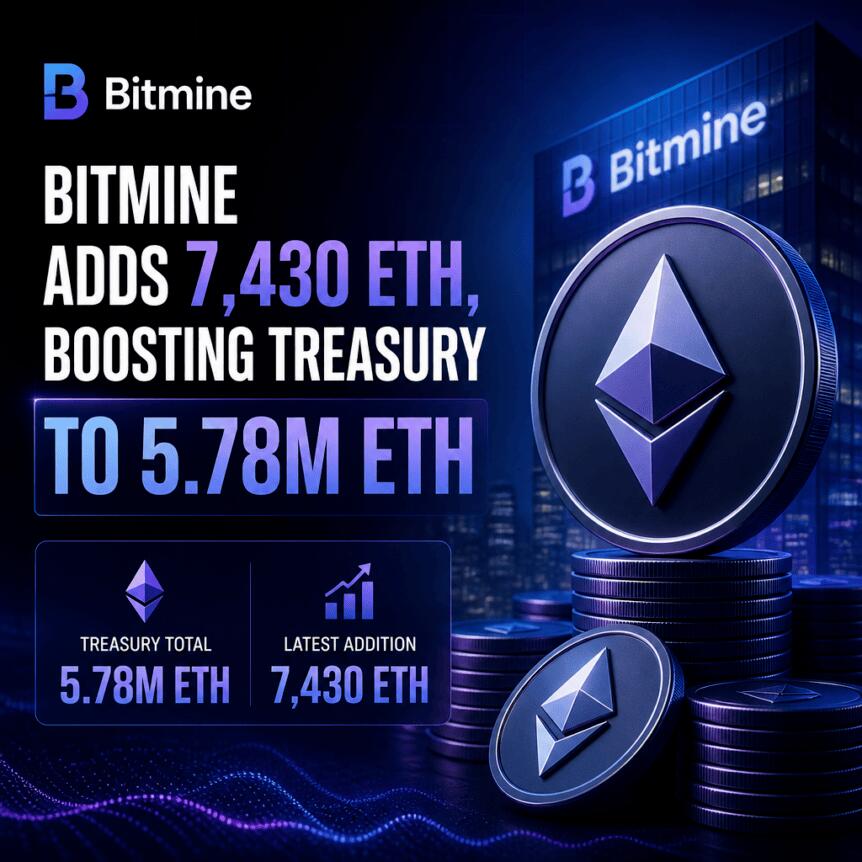
Bitmine, a company focused on managing Ether (ETH) treasury exposure and institutional staking, said Monday that its ETH holdings have reached 5.78 million tokens—about 4.8% of Ethereum’s circulating supply. The company is moving toward its stated objective of accumulating 5% of all ETH.
In its update, Bitmine said it added 7,430 ETH over the previous week. It also reported that roughly 4.9 million ETH—about 85% of its treasury—is currently staked through its validator infrastructure and partners.
Key takeaways
- Bitmine reports 5.78 million ETH in treasury, representing about 4.8% of Ethereum’s circulating supply.
- The company added 7,430 ETH in the past week and is approaching its goal of owning 5% of total ETH.
- About 85% of Bitmine’s ETH holdings are staked, with validators run via its network and partners.
- Bitmine valued its overall crypto and financial assets at $11.5 billion and reported $45.7 million in staking/validation revenue from MAVAN earlier this month.
- Shares rose after the update, while broader market attention also points to Ethereum’s relative performance versus Bitcoin.
Bitmine’s Ether accumulation and staking strategy
Bitmine’s latest disclosure frames its ETH buildup as a long-running corporate treasury strategy tied to staking yield. The company said it ended the week with 5.78 million ETH, an amount equal to approximately 4.8% of Ethereum’s circulating supply.
Crucially for investors assessing how capital is being deployed, Bitmine indicated that staking is already a major component of its operations. About 4.9 million ETH—roughly 85% of the treasury—is staked through its validator network and ecosystem partners. Staking exposure can influence liquidity and risk management, since tokens used for validation are typically subject to protocol and operational constraints compared with fully liquid holdings.
The update also signals how quickly Bitmine is moving toward its own target. With 7,430 ETH added over the past week, the company continues to close the gap to a 5% ownership goal, though the remaining distance depends on how “circulating supply” is defined and how it changes over time.
Balance sheet figures and share buyback activity
Bitmine said it valued its crypto holdings, cash, and marketable securities at $11.5 billion. The company’s reported portfolio includes 207 Bitcoin (BTC), and it listed $385 million in cash and securities.
Alongside its treasury accumulation, Bitmine continued capital returns to shareholders. It repurchased 5.5 million shares during the week under a previously authorized $4 billion buyback program. Such repurchases can affect per-share metrics and may signal management’s view on valuation, but the impact depends on how the market values the business relative to its disclosed asset base and operating revenue.
In trading following Monday’s announcement, Bitmine shares were up more than 6% in afternoon activity, lifting the stock’s one-month performance to around 3.3%.
MAVAN revenue underscores the staking-business angle
Bitmine’s ETH treasury story also intersects with its institutional staking platform, MAVAN. Earlier this month, the company said MAVAN generated $45.7 million in staking and validation revenue during the three-month period ended May 31, according to Bitmine’s prior announcement referenced by Cointelegraph.
That revenue accounted for 98% of Bitmine’s total revenue during the period, underscoring that staking and validation are not simply a treasury feature, but a core driver of the business.
For readers tracking how corporate crypto firms convert holdings into operating income, the MAVAN update provides a benchmark for how much of the company’s performance is tied to staking activities rather than only asset appreciation.
Ethereum outperformance, corporate capital rotation, and the institutional ETH debate
Bitmine’s update landed in a broader market backdrop where Ethereum has been attracting relative momentum. According to CoinGecko data cited at the time of writing, ETH gained about 6.7% over the past seven days and 10% over the past month, compared with roughly 5.8% and 2.6% for Bitcoin over the same windows.
The report also referenced corporate capital developments in Bitcoin markets. Cointelegraph noted that Strategy, described as the largest corporate holder of Bitcoin, paused purchases for a second straight week and instead raised capital through stock sales while increasing its cash reserve to more than $3.2 billion. While that is a separate story from Bitmine’s Ether holdings, it highlights how corporate treasury managers are balancing buying activity with liquidity and capital-market access.
On the Ethereum ecosystem side, attention has also been drawn to efforts aimed at expanding institutional use cases—particularly through scaling and tokenization narratives. Earlier this month, Robinhood launched Robinhood Chain, an Ethereum layer-2 network built on Arbitrum for tokenized stocks. In the first two weeks, the chain reportedly attracted more than $141 million in bridged Ether, reigniting discussion about whether institutional adoption of Ethereum’s scaling networks ultimately increases demand for ETH.
As Cointelegraph reported, Max Shannon, a senior research analyst at Bitwise, characterized Robinhood Chain as reflecting “growth of the Ethereum ecosystem,” especially among traditional finance participants. Other analysts highlighted a more nuanced investment debate. ARK Invest’s Lorenzo Valente argued that Robinhood Chain can support a bullish view of ETH as the ecosystem’s monetary asset, while also weakening the thesis that Ethereum’s value proposition primarily comes from layer-2 fee revenue.
Separately, Bernstein analysts raised their price target for Robinhood to $160 from $130 per share, citing a growth outlook driven by tokenized equities and prediction markets rather than traditional crypto trading. In their framing, Robinhood Chain is part of the brokerage’s infrastructure for tokenized real-world assets, enabling on-chain product development without relying on third-party blockchains.
ETH’s price performance was also noted in the cited coverage: ETH climbed about 20% from roughly $1,582 on July 1 (around the time of the chain’s launch) to about $1,900 at the time of writing. While price movements do not prove causality, they reflect how quickly market attention can shift toward narratives involving tokenization and institutional infrastructure.
What to watch next for Bitmine and Ethereum
For Bitmine, the immediate variables are how steady ETH accumulation remains and how much of its treasury continues to be deployed via staking operations. For Ethereum more broadly, the market will likely continue watching whether tokenized-stock and institutional scaling experiments translate into sustained ETH demand—an outcome that still depends on evolving usage patterns across layer-2 networks.
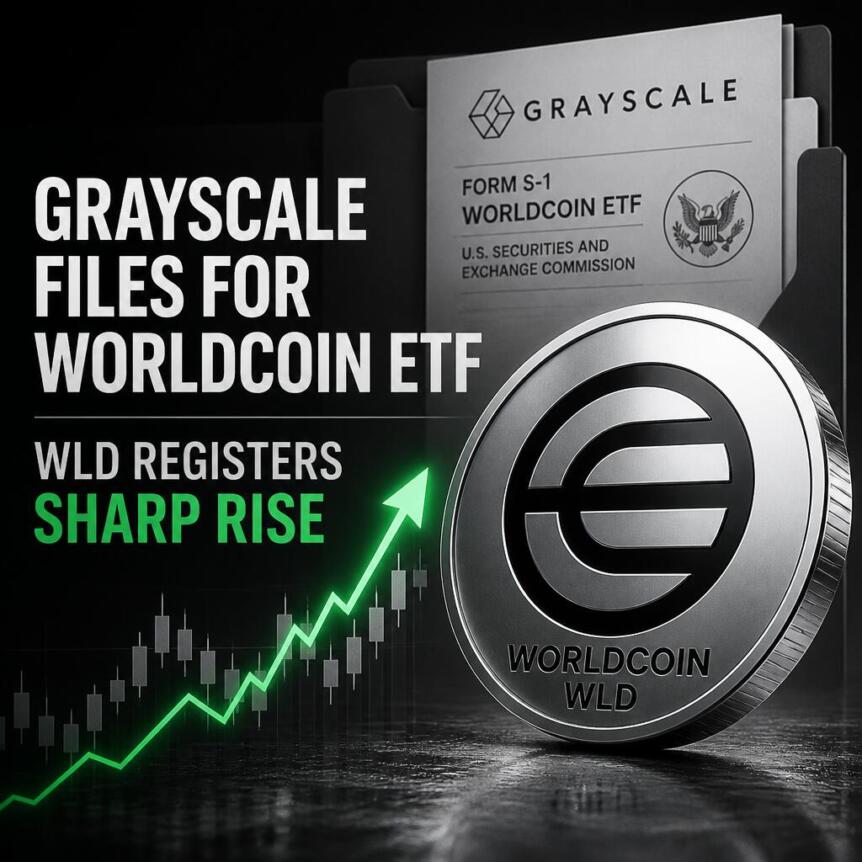
Crypto asset manager Grayscale has filed with the United States Securities and Exchange Commission (SEC) to launch a Worldcoin exchange-traded fund (ETF). The ETF will list on Nasdaq under the ticker GWLD.
The WLD token registered a substantial increase following the filing, rising 4.5% to break above a descending channel on the four-hour chart.
Details Of The Filing
Grayscale filed an S-1 registration statement for the Worldcoin ETF on Monday, offering investors exposure to the WLD token. BitGo Bank & Trust will be responsible for custodying the WLD token, while BNY Mellon will act as the administrator and transfer agent, and the CSC Delaware Trust Company will be a trustee. However, the filing does not disclose liquidity providers, management fees, seed investment, or authorized participants. If approved, GWLD will hold the WLD token as its principal asset. The filing states that the trust will only hold the WLD token and process share creations and redemptions.
ETF Structure
GWLD will allow the creation or redemption of shares in blocks of 10,000. The transactions can be completed by delivering WLD tokens or cash orders using liquidity providers. According to Grayscale, the fund allows holders to gain exposure to WLD through traditional brokerage accounts, helping investors skip complexities like crypto wallets, private keys, and trading on an exchange.
However, it is unclear if the SEC will approve Grayscale’s filing or whether Nasdaq will list its shares, and Grayscale may be required to submit more amendments to secure regulatory approval.
Regulatory Pushback Against Worldcoin
Grayscale’s filing acknowledges regulatory pushback against Worldcoin, which has faced scrutiny in several jurisdictions including Spain, Portugal, Germany, Hong Kong, Brazil, Kenya, and Indonesia. WLD is the native token of the World Network, a company founded by Sam Altman and Alex Blania. The network includes several projects, including World ID, World App, World Chain, and Orb.
The crypto asset manager noted that World Network’s biometric data collection could be a product risk. It also highlighted other risks, including WLD volatility, World Chain’s centralized sequencer, and possible securities-law treatment.
Disclaimer: This article is provided for informational purposes only. It is not offered or intended to be used as legal, tax, investment, financial, or other advice.

Driverless taxis, sports fanatics and an Alcatraz seagull: Three weeks in the USA covering the World Cup

Safety guardrails blocked Hugging Face’s defenders, not the attacker, when an AI agent breached its systems

The Four Major Fundamental Part of Financial Education in Hindi


-
 NewsBeat5 days ago
London Mayor Sadiq Khan handed a peerage by Keir Starmer alongside 15 other Labour figures… just days before the PM leaves No10
-

 Fashion4 days ago
Weekend Open Thread – Corporette.com
-

 Politics3 days ago
The House | The City of London can help the new chancellor deliver growth in every postcode
-

 Politics6 days ago
Young campaigners urge incoming PM to act on outdoor junk food ads
-

 Crypto World5 days ago
CFTC blocks Kalshi from unwinding Michigan trades after court order
-
 Crypto World4 days ago
Two July Windows Left: The CLARITY Act’s Senate Fight and What Failure Means
-

 Crypto World3 days ago
Ripple Payments Joins MiCA With 14 Firms, Does It Mean Anything For XRP?
-

 Business5 days ago
Nvidia Stock Slips After Big Tuesday Rally as Huang Confirms Vera Rubin Chip Is Now in Production Today
-

 Politics2 days ago
Democrats look to World Cup watch parties to register thousands of voters
-
 Entertainment6 days ago
Disney’s Most Ambitious Failed Star Wars Attraction Is Coming to SDCC
-

 Crypto World3 days ago
Ripple wins EU-wide access as ESMA adds it to MiCA register
-

 Crypto World5 days ago
Injective Submits SEC Transfer-Agent Registration to Onchain Ownership Records
-

 Business5 days ago
Palantir Shares Rise After Expanded Nvidia Partnership and Fresh Analyst Upgrades Ahead of Earnings Day
-

 Tech9 hours ago
Sail Virtually Aboard The “Itanic” With IA-64 Emulator
-
 Tech7 hours ago
Turtle Beach Command Series KB7 review: a nifty screen-equipped gaming keyboard
-

 Tech7 days ago
Dark Secrets Emerge When Jailbreaking LLMs
-

 News Videos7 days ago
XRP BOMBSHELL… XRP OMBOARDED FOR TRANSACTIONS!!!
-

 NewsBeat4 days ago
Registration is now open for March for Men with Kev 2026
-

 NewsBeat23 hours ago
Unregistered fitter used Gas Safe logo on business flyers
-
 Sports6 days ago
New Cornerback Enters Vikings Trade Rumor Mill
You must be logged in to post a comment Login