
Crypto World
Stratton wins Illinois Senate primary, defeating crypto-backed Krishnamoorthi



Illinois Lieutenant Governor Juliana Stratton is poised to become the next Senator from the state after winning the Democratic primary Tuesday night, defeating Representative Raja Krishnamoorthi.
Krishnamoorthi had received north of $8 million in backing from crypto super-political action committee (PAC) Fairshake, among other entities, while Stratton was backed by Illinois Governor JB Pritzker. Illinois’ senate seat is rated a “Solid Democratic” seat by Cook Political Report, meaning the winner of Tuesday’s primary will most likely win the general election this November and represent the Prairie State in the Senate in 2027.
Fairshake’s ads largely attacked Stratton, rather than supporting Krishnamoorthi directly, a strategy it also employed in the 2024 election. The PAC typically supports candidates in primaries for races they’re likely to win, letting it boast that the vast majority of its backed candidates won elections in 2024.
Stand With Crypto, a Coinbase-backed group that assigns rates to lawmakers based on how crypto-friendly they are, gave Stratton an “F” ranking based on a single statement she made about her primary opponent receiving backing from “MAGA-backed crypto bros.” The rating notes that she has not voted on any crypto bills or otherwise made statements about crypto generally.
Krishnamoorthi received an “A” rating based on his voting record and his responses to a questionnaire sent out by the group.
Another candidate Fairshake opposed, La Shawn Ford, won his primary race as well, according to the Associated Press. Fairshake spent nearly $2 million opposing Ford’s race for the House of Representatives. Ford’s team sent the PAC a cease-and-desist alleging Fairshake’s ads were “defamatory,” according to the Forest Park Review.
A spokesperson for Fairshake did not immediately return a request for comment on either race, or on Ford’s allegations.

After gaining more than 100% since its all-time low, PI has now dumped by almost 50% from its local peak.
Although it was completed several days ago, the Core Team behind the controversial project announced the migration earlier today, solidifying the successful upgrade to version 20.2.
They reasserted that the new protocol version should be groundbreaking for the project as it provides the foundations to eventually enable smart contract capabilities. However, even this big news couldn’t halt PI’s free-fall.
V20.2 Arrived
The past month has been quite eventful for Pioneers as the Core Team made several key protocol upgrades even before the aforementioned one. At first, they announced the successful migration to v19.6 on February 20, followed by v19.9 on March 4.
All eyes turned to March 12, which was the new deadline for the implementation of v20.2. It was the most important one from this year. In a post on X from hours ago, the team said: “All major Pi nodes have now been upgraded to version 20.2 and are supporting protocol 20.”
It’s worth noting that the team actually completed the migration within the original timeframe, as hinted in their Pi Day celebratory post from the weekend. However, the post now provides more information on what Pioneers can expect, especially since Pi Network has upgraded its Mainnet blockchain to protocol 20. The latest version is a major step toward the network’s goal to have smart contract capabilities, as explained in the post:
“Protocol 20 provides the foundation to enable smart contract capabilities, and the rollout of smart contracts will occur gradually, prioritizing categories that align with utility-based product innovation and operations. The specific types of smart contracts featured will depend heavily on the needs arising from the utility creation process.”
PI Drops Yet Again
Perhaps driven by the initial updates, PI’s price went on a roll in late February/early March. This rally received a major boost when the major US crypto exchange Kraken announced that it would list it for trading on March 13. The effects were immediate as PI skyrocketed by double digits from around $0.20 to almost $0.30.
After hitting a five-month peak, though, the reality set in as it turned out to be another classic sell-the-news event. PI nosedived on the next day toward the $0.20 support, which gave in yesterday. The situation has only worsened in the past 12 hours, as the token has dumped to under $0.175, thus dropping by almost 50% in just a few days.
You may also like:
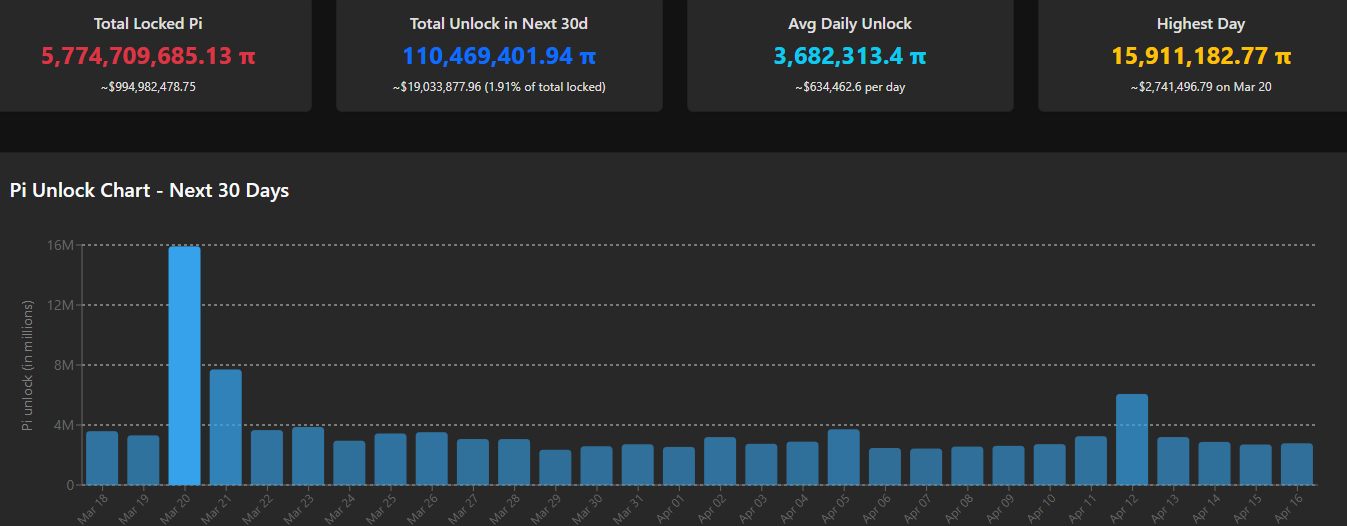
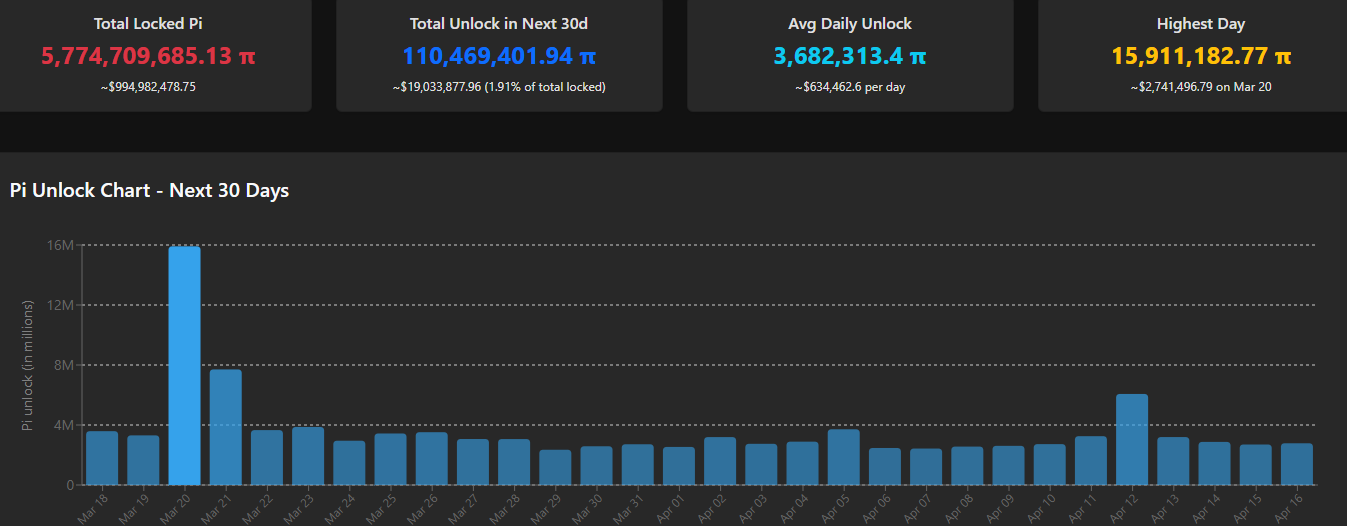
PiScan data shows that the number of tokens to be released in the next month would be rather negligible compared to what it was in February and early March. Aside from March 20, when almost 16 million coins will be unlocked, the rest of the month will see numbers below 4 million.
Binance Free $600 (CryptoPotato Exclusive): Use this link to register a new account and receive $600 exclusive welcome offer on Binance (full details).
LIMITED OFFER for CryptoPotato readers at Bybit: Use this link to register and open a $500 FREE position on any coin!
Disclaimer: Information found on CryptoPotato is those of writers quoted. It does not represent the opinions of CryptoPotato on whether to buy, sell, or hold any investments. You are advised to conduct your own research before making any investment decisions. Use provided information at your own risk. See Disclaimer for more information.


This week banks and crypto lobbyists may reach a compromise on stablecoin yield payments, according to U.S. Senator Tim Scott. Currently, the Senate’s crypto market structure bill progress remains stalled.
Summary
- Senator Tim Scott says a proposal to resolve the stablecoin yield dispute could arrive this week, raising hopes for movement on the stalled Senate crypto market structure bill.
- Talks have slowed over a provision targeting stablecoin yield payments, with banks warning of deposit outflows while crypto firms argue the restriction would limit competition
Speaking at a crypto lobby event in Washington, Scott, who chairs the Senate Banking Committee, said he expects to “have the first proposal in my hands to take a look at.”
“If that actually happens before the end of this week, and I think that it will […] I think we’re going to be in much better shape,” he said.
Regulation has been stalled
The bill in question is the Senate’s crypto market structure legislation, formally known as the Digital Asset Market Clarity Act (or the CLARITY Act), which was introduced to outline how regulators will oversee digital assets and define the roles of different agencies.
However, progress around the legislation came to a standstill after disagreements emerged over a provision that would ban third parties from offering stablecoin yield payments.
Bankers argue that such yield offerings create a loophole that could drive deposits away from traditional banks, while crypto proponents say the restriction is anti-competitive and limits user incentives.
The bill concerns both the Securities and Exchange Commission and the Commodity Futures Trading Commission.
Senate Banking, which oversees the SEC, indefinitely postponed a markup of the bill in January. Subsequently, the Senate Agriculture Committee, which oversees the CFTC, advanced its version to the Senate floor.
Over the past weeks, bankers and crypto lobbyists have met for multiple closed-door meetings to negotiate a middle ground, but the Senate Banking Committee has not yet scheduled any formal updates to the legislative calendar.
In recent comments, House Financial Services Committee chair French Hill said the CLARITY Act can help address some of the unresolved issues tied to stablecoin regulation and broader market structure concerns.
Other issues being addressed
According to Scott, the negotiations extend beyond just stablecoin yield, and other provisions around ethics, decentralized finance, and “who is carved in and who is carved out” are also being worked through.
“We have made a lot of progress over the last probably 30 days or so,” he said, adding that regulators and lawmakers are continuing to narrow differences as momentum builds behind the bill.
The US dollar is trading mixed against its major counterparts following a sustained rally last week. The market is now entering a phase of moderate correction, as investors adopt a wait-and-see approach ahead of key macroeconomic releases and central bank decisions that could determine the next direction in the FX market.
Market participants are focused on the upcoming Federal Reserve decision, updated FOMC economic projections, and the Bank of Canada meeting. Additional influence is coming from US inflation and producer price data, as well as statistics on industrial orders and commodity markets.
Geopolitical tensions remain another source of uncertainty, continuing to impact commodity markets and demand for safe-haven assets. Reports of renewed escalation in the Middle East and risks to energy supply routes are increasing volatility in the oil market, which in turn directly affects the Canadian dollar.
USD/JPY
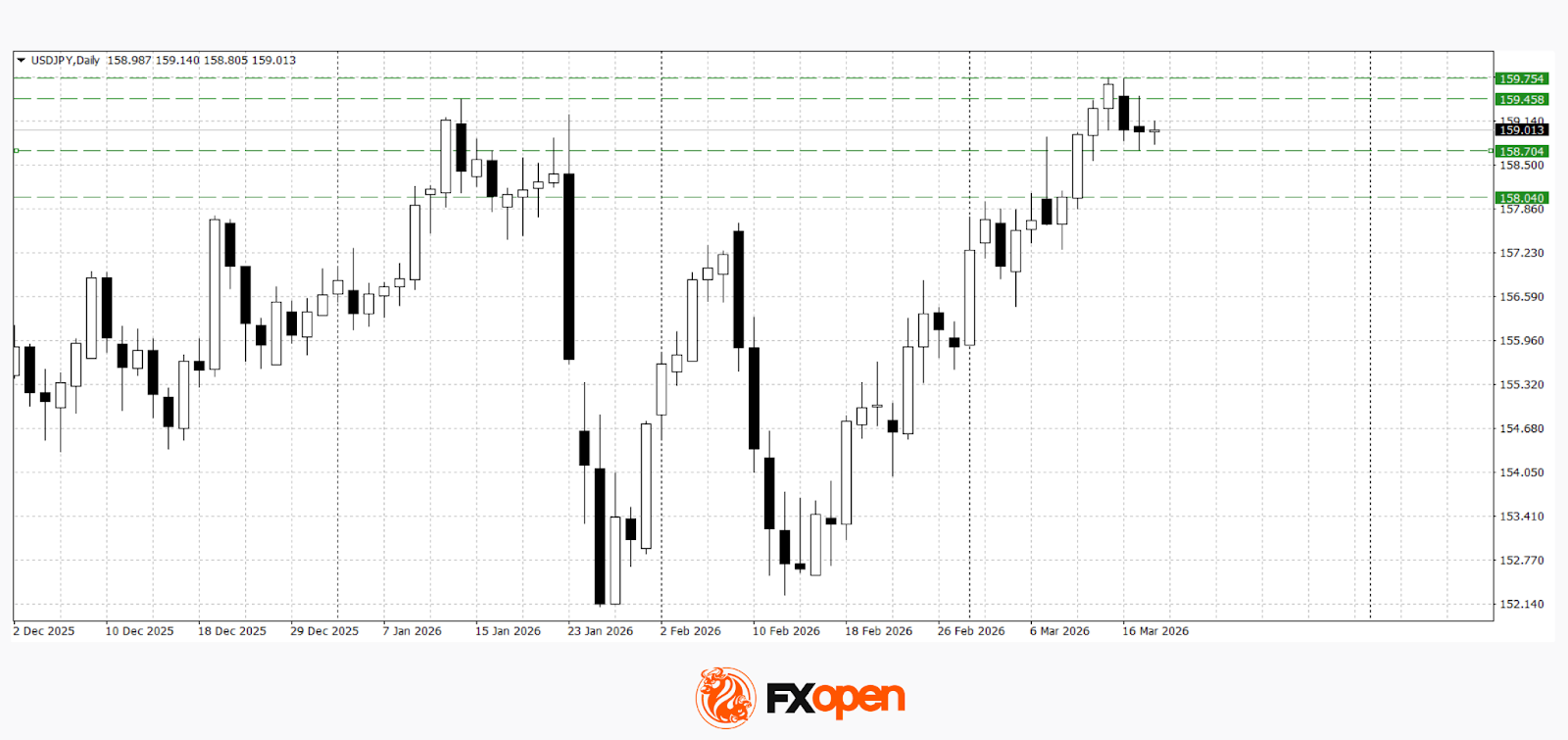
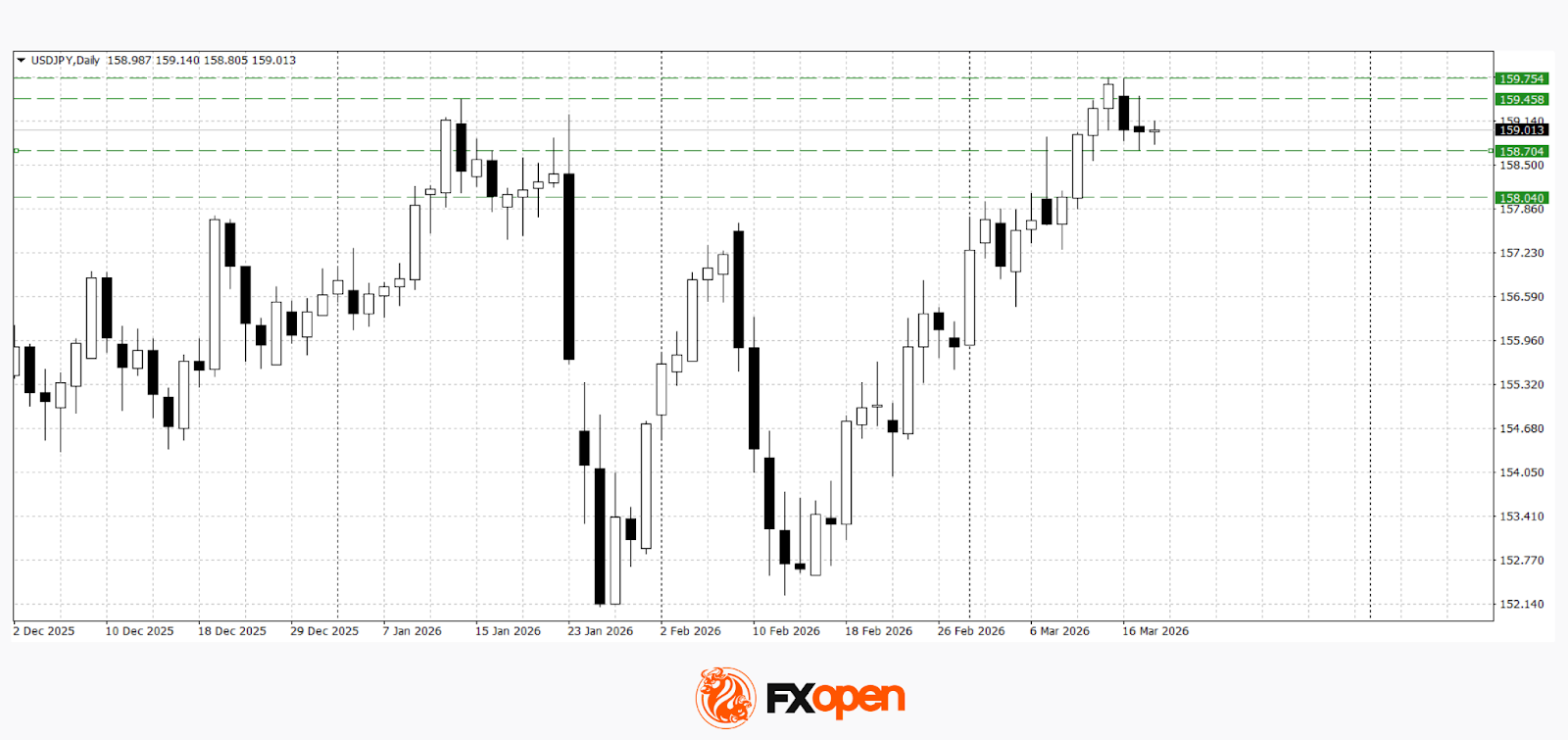
The USD/JPY pair, after an extended rally, has approached key resistance levels and shifted into a corrective decline. The downside move remains limited so far and is largely driven by profit-taking ahead of major fundamental events.
Technical analysis suggests the potential for a deeper pullback if the price firmly settles below 158.70. However, a break above the recent high at 159.70 would signal a possible continuation of the primary upward trend.
Key events for USD/JPY:
- Today at 14:30 (GMT+2): US Producer Price Index (PPI);
- Today at 20:00 (GMT+2): Federal Reserve interest rate decision;
- Today at 20:30 (GMT+2): FOMC press conference.
USD/CAD
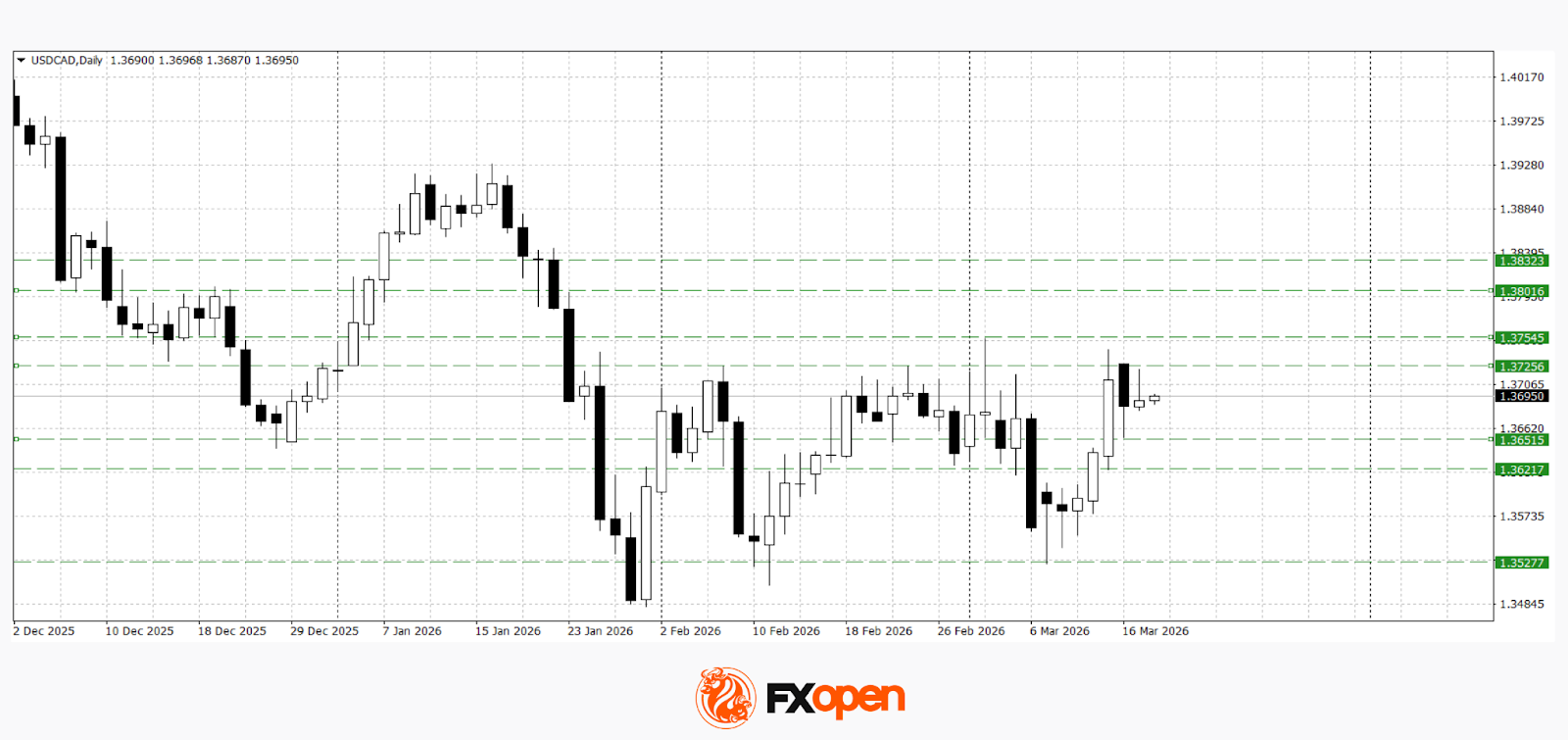
The USD/CAD pair has reached the upper boundary of the medium-term range at 1.3530–1.3750. Buyers have so far failed to hold above this level and extend the upward move, resulting in a pullback below 1.3700.
If US dollar-positive news emerges, a break above 1.3730 could open the way for further gains towards 1.3800–1.3820. Conversely, a rejection from current levels may lead to a retest of key support in the 1.3620–1.3650 zone.
Key events for USD/CAD:
- Today at 15:45 (GMT+2): Bank of Canada interest rate decision;
- Today at 16:30 (GMT+2): US crude oil inventories;
- Today at 16:30 (GMT+2): Bank of Canada press conference.
Trade over 50 forex markets 24 hours a day with FXOpen. Take advantage of low commissions, deep liquidity, and spreads from 0.0 pips (additional fees may apply). Open your FXOpen account now or learn more about trading forex with FXOpen.
This article represents the opinion of the Companies operating under the FXOpen brand only. It is not to be construed as an offer, solicitation, or recommendation with respect to products and services provided by the Companies operating under the FXOpen brand, nor is it to be considered financial advice.
Crypto World
Can the crypto market rebound as SEC clarifies that most cryptocurrencies are non securities?


The crypto market remained unfazed on Wednesday shortly after the U.S. Securities and Exchange Commission clarified that most of the cryptocurrencies in the market would not be considered a security under federal law.
Summary
- The crypto market remained largely muted after the SEC clarified its framework for determining whether tokens qualify as securities.
- Bitcoin held near the $74,000 level while major altcoins showed limited movement, keeping total market capitalization around $2.61 trillion.
- Investor focus shifted to macro catalysts, with traders positioning cautiously ahead of the Federal Reserve’s rate decision and expectations for delayed rate cuts.
Bitcoin (BTC), the world’s largest crypto asset, traded at $73,909 with no net movement over the daily period after it gave up most of its gains from the past day when it surged past the $75,000 resistance.
Ethereum (ETH), Solana (SOL), Dogecoin (DOGE), and Chainlink (LINK) were some of the major crypto assets that also showed relative calmness with minor gains on Wednesday. Together, these assets provided little volatility for the broader market, with the total crypto market cap stalling at $2.61 trillion.
On Tuesday night, the U.S. SEC issued a notice that clarifies how the securities watchdog would determine if a token would be deemed securities or not and how a non-security asset can be part of an investment contract under the Howey Test.
While the SEC did not broadly classify most cryptocurrencies as non-securities, the updated framework suggests that many tokens may fall outside securities laws depending on their structure, distribution, and use case.
Previously, the agency’s stance on which cryptocurrencies could be deemed securities remained unclear, creating significant uncertainty for market participants navigating the regulatory landscape.
The new crypto asset taxonomy provides much-needed clarity, but the SEC also classified 16 major crypto assets as digital commodities, outside the jurisdiction of securities law. These include prominent tokens like Litecoin and Cardano.
Other key developments supporting market sentiment include SEC Chair Paul Atkins’ recent proposal for a crypto safe harbor framework.
While such a development is a major win for the crypto industry, which has faced years of legal uncertainty, the market’s relatively muted reaction comes from a cautious atmosphere as investors await the outcome of Fed rate cut decisions later today at 2:30 P.M. ET.
Markets expect that the Fed will keep rates steady in the current range of 3.50% to 3.75%. The CME FedWatch Tool currently shows a 96% to 99% odds that the Fed will hold interest rates, with only a marginal 1% to 4% chance of a cut.
Traders also seemed to have pushed back their expectations for the next rate cut, with many now anticipating the first reduction of 2026 to occur no earlier than September or October.
Typically, when investors expect a delay in Fed rate cuts, risk assets such as cryptocurrencies tend to lose momentum as investors step back, often awaiting clearer macroeconomic catalysts before reengaging with the market.
Total crypto market open interest dipped slightly over the past day, signaling traders are closing positions ahead of potential volatility.
Disclosure: This article does not represent investment advice. The content and materials featured on this page are for educational purposes only.
Crypto World
Bitrefill blames North Korea-linked Lazarus hacker group for compromising 18,500 purchase records


Cryptocurrency payments and gift card platform Bitrefill has blamed the North Korea-linked hacking group Lazarus for a cyberattack on March 1, 2026, that compromised parts of its infrastructure and cryptocurrency wallets.
The attackers gained access to production keys, transferred funds from hot wallets, and exposed 18,500 purchase records containing emails, payment addresses, and IP addresses.
Approximately 1,000 records included encrypted usernames. Affected users were notified. Operations have resumed, with the company announcing to cover losses from operational capital. The incident underscores the importance of vigilance regarding crypto and on-chain security.
The modus operandi included malware, on-chain tracing and reused IP and email addresses and was similar to previous attacks attributed to North Korea’s Lazarus Group, also known as Bluenoroff, the company said in a detailed report on X.
The Lazarus Group has previously targeted crypto projects including Ronin Network, Harmony’s Horizon Bridge, WazirX, and Atomic Wallet.
How the attack unfolded
It all began with with a compromised employee laptop, which exposed legacy credentials and allowed attackers to access Bitrefill’s broader infrastructure, including parts of its database and cryptocurrency wallets.
The breach quickly became apparent when the company noticed unusual purchasing patterns among certain suppliers, signaling that attackers were exploiting its gift card inventory and supply chains. The firm also noted that attackers were draining some hot wallets and moving funds to their own addresses, following which, the system was taken offline to contain the damage.
“Bitrefill operates a global e-commerce business with dozens of suppliers, thousands of products, and multiple payment methods across many countries. Safely switching all these things off and bringing them back online is not trivial,” the company said in a statement.
Since the incident, Bitrefill has been working with security researchers, incident response teams, on-chain analysts, and law enforcement to investigate the breach.
Customer data impact
Hackers accessed a small set of purchase records, approximately 18,500, containing
Bitrefill said there is no evidence that customer data was a primary target. Its logs indicate that attackers ran a limited number of queries aimed at cryptocurrency holdings and gift card inventory rather than extracting the entire database.
The platform stores minimal personal data and does not require mandatory KYC. A small subset of purchase records, approximately 18,500, was accessed, containing information such as email addresses, crypto payment addresses, and metadata including IP addresses. About 1,000 records contained encrypted names for specific products; the company is treating this data as potentially compromised and has notified affected customers directly by email.
At present, Bitrefill does not believe customers need to take any additional action, though it advises caution regarding unexpected communications related to Bitrefill or cryptocurrency.
Steps to strengthen security
In response to the breach, Bitrefill said it has already strengthened its cybersecurity practices and is working to draw lessons from the incident.
The company outlined several measures, including conducting comprehensive penetration tests with external experts, tightening internal access controls, enhancing logging and monitoring for faster threat detection, and refining incident response procedures and automated shutdown protocols.
Looking forward
Bitrefill acknowledged that this was its first major attack in more than a decade of operation but stressed that it remains well-funded and profitable, capable of absorbing operational losses. Most systems, including payments, stock, and accounts, are back online, with sales volumes returning to normal.
“Getting hit by a sophisticated attack sucks (a lot),” the company said. “But we survived. We will continue to do our best to continue deserving our customers’ trust.”


The notorious Lazarus Group may have been behind a cyberattack on crypto e-commerce store Bitrefill, the firm estimates.
Summary
- Bitrefill linked a March 1 cyberattack to tactics associated with the Lazarus and BlueNoroff groups, after attackers compromised an employee laptop and drained funds from hot wallets.
- Around 18,500 purchase records were accessed, though the company said only limited customer information was exposed and there was no evidence of a full database breach.
Detailing the March 1 incident in a Tuesday X post, the firm said the attackers used malware, on-chain tracing, and reused IP and email infrastructure to drain funds from its hot wallets after compromising an employee’s laptop. Attackers also allegedly accessed around 18,500 purchase records, although this involved only “limited customer information.”
“We find many similarities between this attack and past cyberattacks by the DPRK Lazarus / Bluenoroff group against other companies in the crypto industries,” the firm wrote.
Bitrefill is a crypto e-commerce platform that allows customers to spend digital assets on real-world products and gift cards. It added that the attackers were primarily financially motivated, as there was “no evidence that they extracted our entire database.”
“The attackers ran a limited number of queries consistent with probing to understand what there was to steal, including cryptocurrency and Bitrefill gift card inventory,” it added.
Bitrefill did not disclose how much crypto was stolen but said it would absorb the losses from its operational capital.
“We have already significantly improved our cybersecurity practices, but vow to continue to draw learnings from this experience to make sure user and company balances and data remain maximally safe,” Bitrefill said, adding that all operations were back to normal.
The company has since strengthened its security posture and has contacted law enforcement while working with security firms to investigate and respond to the incident.
Lazarus group remains a major threat
Over the years, the Lazarus Group has been credited with some of the crypto industry’s largest hacks.
One of the biggest attacks involved crypto exchange Bybit, which lost around $1.4 billion last year. The group was also a suspected actor behind the hack of South Korean crypto exchange Upbit and UK-registered trading platform Lykke.


- XRP shows rare bottom signals and strong rebound potential.
- The key support at $1.44–$1.48 will guide near-term price action.
- A break above $1.60 with volume needed to sustain the rally.
XRP has grabbed the spotlight after overtaking BNB in market cap ranking following its recent price rebound.
Analysts point to technical signals that suggest XRP may have recently formed a long-term bottom.
These signals include an oversold RSI on the weekly chart and a stretch of negative funding rates that historically appear before significant rebounds.
XRP rebounded after hitting a rare bottom
After a period of sideways trading, XRP surged to a weekly high near $1.60.
This move followed a modest beta-driven pullback alongside Bitcoin, reflecting that broader market trends still influence XRP.
Despite the rally, the cryptocurrency faced technical resistance, with momentum indicators suggesting it had been overbought.
Trading volumes have cooled after the rally, which is typical when an asset approaches a key resistance area.
The current support zone around $1.44–$1.48 has become crucial.
Holding above this area could allow XRP to test $1.60 again and potentially reach new resistance levels beyond that.
Conversely, a breach below this support may see a decline toward $1.34, highlighting the importance of technical positioning.
What is fueling XRP’s rally?
XRP’s recent gains were fueled by multiple factors. First, its short-term correlation with Bitcoin helped it catch a wave as the broader market dipped slightly.
Second, technical patterns are now aligning in a way that traders rarely see, suggesting the bottom may hold.
Third, market inflows from institutional investors remain a key driver, especially in the form of spot XRP ETF activity.
Outflows from these ETFs in recent weeks have restrained buying pressure, but a reversal could reignite momentum.
But despite these positives, risks remain.
Volume remains lower than during the peak of the rally, signaling that conviction is not yet at its highest. Moreover, the current resistance at $1.60 is a significant hurdle.
A breakout above it, supported by rising trading activity, would confirm that the uptrend can continue.
However, caution is warranted, as the cryptocurrency is still navigating critical resistance and depends on continued support from market flows.
Traders should closely watch to see if XRP can hold its gains and build on this rare bottom.
If the support around $1.44-$1.48 remains firm and institutional demand resumes, the path toward higher levels may be within reach.
At the same time, failing to hold this support could quickly undo the recent gains.
For now, XRP sits at a critical juncture, with potential for both continuation and retracement depending on the next wave of market activity.


- Citigroup forecasts Bitcoin at $112,000 despite slow US crypto legislation.
- Bitcoin price ranges show cautious momentum with potential volatility ahead.
- Institutional demand remains key amid regulatory uncertainty.
Bitcoin has been steadily climbing over the past week, with its price now sitting around $74,000.
This marks a 6.5% increase over the last seven days, showing renewed momentum after several months of sideways movement.
Citigroup, in its latest update, adjusted its 12-month price forecast for Bitcoin to $112,000, from its previous target of around $143,000.
Citi’s move reflects a cautious optimism shaped by both market dynamics and regulatory developments.
Regulatory headwinds weigh heavily
One of the main reasons for Citigroup’s revised forecast is the slow progress on US cryptocurrency legislation. Lawmakers have yet to finalize clear rules on key issues like stablecoins and decentralized finance.
This lack of clarity is affecting institutional adoption.
Investment firms and hedge funds are hesitant to increase exposure without clear regulatory guidance. The window for passing meaningful crypto laws in the Senate is narrowing.
Internal political divisions are slowing the process further.
Without these legislative catalysts, the market may continue to trade in ranges despite overall optimism.
Citigroup notes that this legislative uncertainty could act as a ceiling for Bitcoin in the near term. Even with strong demand from retail and institutional investors, clear rules are needed to support sustained growth.
What traders should watch out for
Ethereum, Bitcoin’s closest competitor, is also experiencing slower growth due to similar challenges.
Citigroup lowered Ethereum’s 12-month target to $3,175, down from over $4,000. Both cryptocurrencies are influenced by network activity and investor demand, which have shown signs of weakening.
Currently, Bitcoin is trading within a 24-hour range of $73,500 to $74,800, showing relatively stable momentum.
Over the past week, it has moved between $69,000 and $75,600, indicating that volatility is still present.
Citigroup outlines several potential scenarios for Bitcoin’s trajectory. In a bear case, a broader economic downturn or continued regulatory delays could push the price toward $58,000.
On the other hand, strong investor interest and institutional flows could drive it up to $165,000.
These scenarios suggest a wide range of outcomes, highlighting the risks and opportunities for traders.
Even in the base case, Bitcoin is expected to trade around $112,000 within 12 months if adoption trends continue and market confidence improves.
This makes it an attractive, though still volatile, asset for those looking to participate in the cryptocurrency market.
The road ahead is clearly influenced by policy decisions, investor sentiment, and market activity, and traders will need to watch for both regulatory developments and demand signals to navigate this landscape successfully.

Tally announced its shutdown amid the shifting regulatory climate regarding cryptocurrencies in the US.
The regulatory climate in the US is shifting, and although many consider it for the better, the changes are already taking effect.
Tally, a governance tooling platform that’s used by more than 500 decentralized autonomous organizations (DAOs), including Uniswap, Ethereum Name Service (ENS), and Arbitrum, announced that it will be shutting down after more than five years of operations.
In a video posted on X, the CEO of Tally, Dennison Bertram, outlined some reasons for the decision to wind down operations.
https://t.co/WD6Z4uVTeR pic.twitter.com/JJt3XIIJbl
— Tally (@tallyxyz) March 17, 2026
The move comes just as the SEC and the CFTC issued joint guidance clarifying that most cryptocurrencies are not securities, a major de-risking event for the entire industry.
While the previous administration pushed many projects toward a decentralized structure in the form of a DAO to reduce legal risk, the current, more relaxed environment has reduced demand for DAO governance, as Wu Blockchain noted in its commentary on the news.
Tally will not be conducting an ICO. Bertram said that continuation plans are already in the works with all of the firm’s enterprise clients, while the interface will remain operational for them as needed.
Binance Free $600 (CryptoPotato Exclusive): Use this link to register a new account and receive $600 exclusive welcome offer on Binance (full details).
LIMITED OFFER for CryptoPotato readers at Bybit: Use this link to register and open a $500 FREE position on any coin!
More Australians reported using cryptocurrency to pay for goods and services in 2026 compared to the year before, but banking friction has continued to weigh on crypto users, according to a newly published report by crypto exchange Independent Reserve.
The annual survey of 2,000 “everyday Australians” was conducted between Jan. 12 and Jan. 30.
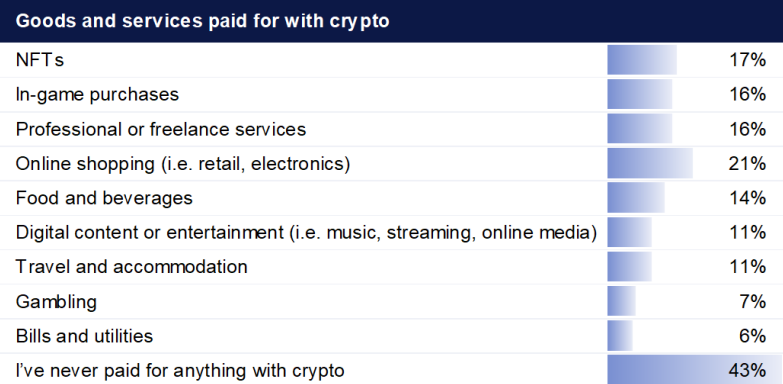
It found that the share of Australians using crypto to buy goods or pay for services doubled from 6% to 12%, with the report suggesting “more Aussies are viewing crypto as a practical payment method rather than just a speculative bet.”
Among the respondents who used crypto for goods and services, 21% reported using crypto for online shopping, making it the leading real-world use case.
Another 16% said they used crypto to pay for services such as freelancing and video game purchases.
Despite growing adoption, barriers remain, with some citing a lack of education and training, and the technology being too complex to use.

Banking issues on the rise
Beyond complexity, banking blocks were highlighted as a significant obstacle. A Binance survey last year found that users faced banking barriers when engaging with exchanges and crypto businesses — a problem the Independent Reserve’s survey respondents also flagged.
Around 30% of investors said they have experienced delays or rejections when trying to buy cryptocurrency or transfer funds to a crypto exchange at least once, compared with 19.3% in 2025.
Banking restrictions on crypto transactions in Australia tightened around 2023, when major banks, including Commonwealth Bank and National Australia Bank, introduced measures such as payment delays, caps on transfers to crypto exchanges and additional identity checks.
Younger investors reported more trouble with transaction delays than their older counterparts, and those making smaller transactions reported greater interference.

“For many Australians, the lack of regulation hits home when a payment to a crypto exchange is delayed or blocked, an issue that has continued to rise for another year,” the report authors said.
“These interruptions affect both consumers and businesses, showing how cautious banks are with crypto when the rules aren’t clear.”
Clear licensing and regulation are the solution
The report said the findings suggest that banks have not relaxed their posture toward crypto and may be refining their approach by focusing on user behavior and transaction patterns instead of transaction size, underscoring the growing need for regulatory clarity.
Related: Crypto lobby slams Australian broadcaster’s ‘sensational’ Bitcoin article
“Clear licensing and regulation can help fix this. By setting high standards for crypto operators, banks would have more confidence that transactions are legitimate,” they added.
“For Australia’s blockchain industry, which has faced banking hurdles for over a decade, effective regulation could finally bridge the gap between exchanges and banks, giving investors and businesses more certainty and reliability.”
Crypto executives told Cointelegraph last month that Australia’s crypto market is making progress in user growth and regulatory reforms, but there are still a range of issues to iron out.
Magazine: Clarity Act risks repeat of Europe’s mistakes, crypto lawyer warns

Pi Network Completes Groundbreaking Upgrade but PI Price Plunges Again

Zendaya Resurrects 2015 Oscars Dress At Premiere Of The Drama

Pep Guardiola handed clear boost as Man City difference maker emerges


-
 Crypto World4 days ago
HYPE Token Enters Net Deflation as HyperCore Buybacks Outpace Staking Rewards
-

 Fashion5 days ago
Weekend Open Thread: Addict Lip Glow
-

 Tech2 days ago
Your Legally Registered ‘Motorcycle’ Might Not Count Under Proposed US Law
-
Sports4 days ago
Why Duke and Michigan Are Dead Even Entering Selection Sunday
-

 NewsBeat7 days ago
Residents reaction as Shildon murder probe enters second day
-

 Sports7 days ago
PWHL, Senators discussing plan to keep Charge in Ottawa
-

 Business3 days ago
Search for Savannah Guthrie’s Mother Enters Seventh Week with No Arrests
-

 Business4 days ago
US Airports Launch Donation Drives for Unpaid TSA Workers as Partial Government Shutdown Enters Fifth Week
-
 Tech15 hours ago
Are Split Spacebars the Next Big Gaming Keyboard Trend?
-
Crypto World4 days ago
Coinbase and Bybit in Investment Talks: Could Bybit Finally Enter the US Crypto Market?
-

 NewsBeat7 days ago
I Entered The Manosphere. Nothing Could Prepare Me For What I Found.
-

 Business4 days ago
Country star Brantley Gilbert enters growing non-alcoholic beer market
-

 Business2 days ago
Australian shares drop as Iran war enters third week
-

 Crypto World2 days ago
Crypto Lender BlockFills Enters Chapter 11 with Up to $500M in Liabilities
-

 Sports5 days ago
College Basketball Best Bets: Conference Tournament Semifinal Picks
-
 Crypto World6 days ago
Three Binance Charts May Be Hinting at Bitcoin’s Next Move
-
 Business5 days ago
Trump demands Powell cut rates as Iran conflict raises energy prices
-

 Fashion2 days ago
25 Celebrities with Curly Hair That Are Naturally Beautiful
-

 Crypto World5 days ago
Senate Votes to Include CBDC Ban in Bipartisan Housing Bill
-

 NewsBeat7 days ago
What to know about Erika Kirk after her Air Force board appointment | News US


You must be logged in to post a comment Login