

Crypto World
Tether Invests $200 Million in Whop to Expand Stablecoin Payments



The investment will bring Tether’s wallet tools to millions of users.
Stablecoin issuer Tether has made a $200 million strategic investment in Whop, an online marketplace, as it looks to expand stablecoin payments into more real-world use cases.
Tether’s USDT stablecoin currently has a market cap of about $183 billion, according to DeFiLlama data, making it the largest circulating stablecoin worldwide.
Whop co-founder Steven Schwartz said in a post on X that Tether’s investment pushed the company’s valuation to $1.6 billion. As part of the deal, Whop will integrate Tether’s Wallet Development Kit (WDK), allowing users to send and receive payments in stablecoins like USDT.
“In partnership with Tether, we will be scaling infrastructure in real-time for new business models as they emerge across the globe,” Schwartz said on X. “The job is just getting started.”
The deal is part of Tether’s broader push to expand beyond crypto trading and into everyday finance. Specifically, Tether will gain exposure to a platform with over 18 million users and about $3 billion in yearly payouts. Moreover, Whop’s transaction volume has been growing around 25% month over month, according to an official announcement.
“Stablecoins and wallets become most powerful when they are embedded directly into people’s lives, supporting their businesses, activities, families, and individual stories,” Tether CEO Paolo Ardoino said, per the announcement. “Our investment in Whop proudly reflects Tether’s focus on supporting real economic activity by providing efficient digital dollar and wallet infrastructure that can scale to billions of people, across every continent.”
The new funding will help Whop expand into Latin America, Europe, and the Asia-Pacific region, while also developing new financial tools and AI features for its users. The investment also builds on Tether’s recent expansion efforts, including the launch of its regulated U.S. stablecoin USAT last month.

Running carefully structured prompts through Grok AI produces ambitious 2026 price outlooks for XRP, Cardano and Ethereum, despite the near-term uncertainty rocking markets.
Below, we examine how realistic Grok’s projections are in the current cycle.
XRP (XRP): Grok AI Bets XRP to Hit $8 by 2026
In a recent update, Ripple reiterated that XRP ($XRP) remains the cornerstone of its plan to establish the XRP Ledger as a global, enterprise grade payments network.
With near instant settlement and extremely low fees, the Ripple is strategically manoeuvring to capture an early led in two rapidly expanding segments: stablecoins and tokenized real-world assets.
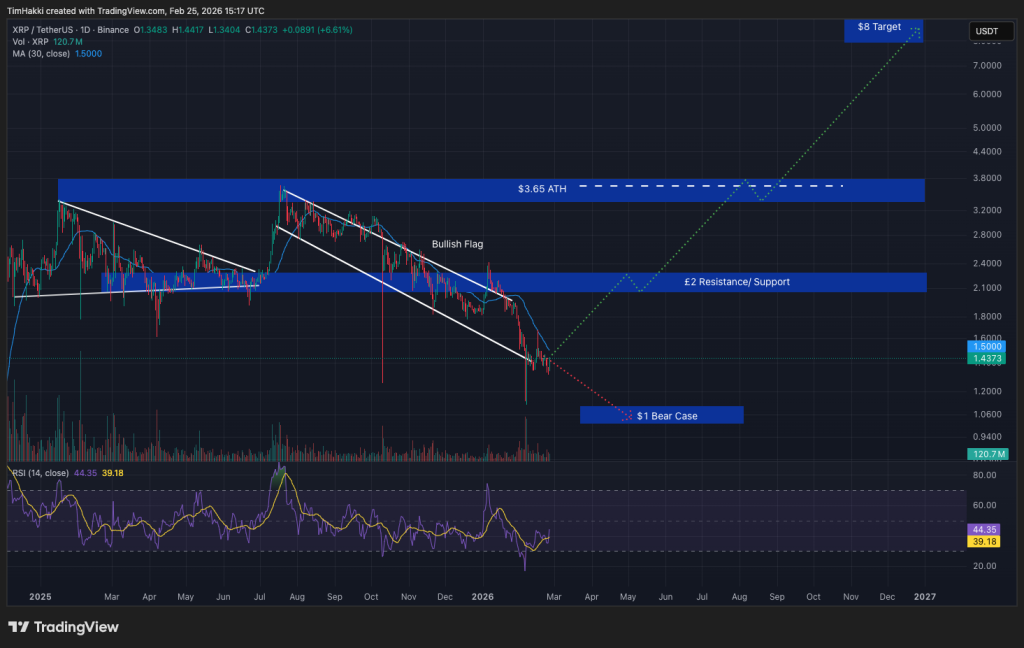
XRP currently trades around $1.42. According to Grok’s AI-driven, the token could rise to $8 by the end of 2026, implying gains of almost 6x from current levels.
Technical indicators support the constructive outlook. XRP’s Relative Strength Index (RSI) is rapidly climbing up from 44, while price remains below the 30-day moving average, a combination often associated with players buying the dip.
Potential price catalysts to anticipate include institutional demand following the rollout of U.S. XRP ETFs, Ripple’s growing list of international partnerships, and improved regulatory clarity if the proposed U.S. CLARITY bill advances this year.
Cardano (ADA): Grok Assigns Hoskinson’s Ethereum Rival a 1,250% Upside Scenario
Created by Ethereum co-founder Charles Hoskinson, Cardano ($ADA) focuses on academically peer-reviewed development, strong security guarantees, scalability, and long-term network resilience.
Despite broader market weakness, Cardano’s ecosystem continues to expand. The network holds a market capitalization of $10.3 billion and more than $124 million in total value locked (TVL).
Grok’s projections suggest ADA could surge by just over 1,250%, climbing from approximately $0.28 today to nearly $3.80 by the end of 2026. Such a move would push Cardano well beyond its previous 2021 high of $3.09.
That said, ADA is currently trading at its lowest levels since October 2024.
Given the volatility seen throughout this year, a prolonged bear scenario, could see prices potentially sliding down to $0.15.
Ethereum (ETH): Grok AI Sees a Run to $10k on the Cards
Ethereum ($ETH) remains the dominant smart contract blockchain and the backbone of most DeFi and Web3 applications.
With a market capitalization near $238 billion and over $54 billion locked across DeFi protocols, Ethereum is the primary settlement layer for on-chain commercial activity.
Its track record for security, leadership in stablecoin infrastructure, and early progress in tokenizing real-world assets place Ethereum in a strong position to attract substantial institutional interest.
However, meaningful capital inflows hinge on U.S. lawmakers passing the CLARITY bill, which would provide the regulatory certainty institutions need to deploy funds via stablecoins or tokenized assets on Ethereum.
ETH currently trades around $2,000, with significant resistance expected near $5,000 after setting an all-time high of $4,946.05 last August.
If Grok’s bullish scenario plays out, a breakout above $5,000 could unlock a series of new highs in 2026, with Grok calling $10,000 a bull target.
Maxi Doge: Early-Stage Meme Coin Aims for Outsized Growth
While Grok indicates that these top altcoins could deliver strong returns over time, their large market capitalizations may cap explosive upside compared to newer, smaller-cap projects.
Maxi Doge ($MAXI) is still in its early stages. The project has already raised $4.6 million during its ongoing presale among investors looking to recapture the magic of meme coins.
The character behind Maxi Doge is a loud, gym-obsessed, self-styled alpha doge, a distant rival and cousin to Dogecoin. His comic branding taps into the high-energy, irreverent tone that fueled the meme coin boom of 2021.
MAXI is an ERC-20 token on Ethereum’s proof-of-stake network, giving it a lower environmental footprint compared to Dogecoin’s proof-of-work model.
Early presale buyers can currently stake MAXI for yields of up to 67% APY, though returns decrease as more tokens enter the staking pool.
The token is $0.0002805 during the current presale phase, with automatic price increases at each funding milestone. Purchases are supported through wallets such as MetaMask and Best Wallet.
Stay updated through Maxi Doge’s official X and Telegram pages.
Visit the Official Website Here.
The post Elon’s Grok AI Predicts the Price of XRP, Cardano, and Ethereum By the End of 2026 appeared first on Cryptonews.

TLDR:
- Michael Saylor named Solana as the primary blockchain for deploying programmable digital credit at scale.
- Strategy’s STRF converts Bitcoin’s economic energy into structured cash flows with principal protection for investors.
- Saylor introduced BTC rating, BTC risk, and credit spread as core metrics for measuring digital credit risk.
- A reflexive flywheel effect ties credit creation to Bitcoin demand, driving equity value across the broader ecosystem.
Michael Saylor has made a bold claim about the future of programmable digital credit. The Strategy executive chairman recently stated that Solana will serve as the primary blockchain for deploying this next generation of digital credit instruments.
His remarks came alongside a detailed breakdown of Strategy’s STRF product and a broader framework for Bitcoin-backed credit.
The statement drew attention from across the crypto industry given Saylor’s long-standing association with Bitcoin maximalism.
Saylor Points to Solana as the Infrastructure for Digital Credit Deployment
Saylor’s choice of Solana as the deployment platform surprised many observers in the crypto space. He cited the blockchain’s speed, accessibility, and scalability as key reasons for the selection.
According to Saylor, programmable digital credit requires infrastructure that can handle tokenized instruments operating at scale. Solana, in his view, meets those technical requirements more effectively than other available options.
His vision extends beyond a single product. Saylor outlined how digital credit can be embedded into ETFs, tokens, bank accounts, and layer 3 blockchain solutions.
Each of these serves as a building block for creating digital yield and accessible digital money. Together, they form an interconnected system designed to move value across digital rails efficiently.
The programmable nature of this credit is central to Saylor’s argument. By encoding credit terms directly into blockchain infrastructure, issuers can automate dividend payments, collateral checks, and risk adjustments.
This removes the friction associated with traditional credit instruments and opens access to a much wider investor base. Solana’s architecture makes this level of programmability practical at a global scale.
Saylor also described a reflexive flywheel effect that programmable digital credit can trigger. Credit creation drives Bitcoin demand, which raises Bitcoin’s price and increases equity value.
That, in turn, strengthens the entire ecosystem and encourages further credit issuance. Deploying this mechanism on Solana, he argued, amplifies its reach and speed considerably.
Strategy’s STRF Lays the Foundation for Bitcoin-Backed Credit on Chain
STRF sits at the core of Saylor’s digital credit framework. Strategy converts Bitcoin’s economic energy into structured cash flows by stripping away risk, dampening volatility, and extracting yield.
The result is a variable preferred security that offers both principal protection and higher returns than traditional credit. Investors also benefit from return-of-capital tax treatment, which reduces their overall tax liability directly.
Saylor introduced three metrics for evaluating digital credit risk: BTC rating, BTC risk, and credit spread. These tools give investors a clear and measurable way to assess collateral coverage and under-collateralization probability.
Excess Bitcoin volatility is transferred to MSTR common equity holders rather than to credit investors. This structure protects STRF holders during market downturns.
STRF’s track record supports Saylor’s framework. The product maintained its value and continued paying dividends through significant Bitcoin price drawdowns.
That stability makes it competitive with traditional credit instruments that are often tax-inefficient and difficult to access. STRF, by contrast, is designed to be widely accessible and straightforward to hold.
Corporate treasuries represent a major target market for this product. Saylor argued that companies allocating a portion of holdings to STRF could potentially double their cash flow.
With Solana as the deployment layer, that access becomes even broader and more seamless for institutional and retail participants alike.


Ethereum slid ~5% toward $1.9k as whale selling and ETF outflows hit sentiment, despite bullish RSI divergence hinting at a potential reversal.
Summary
- ETH trades around $1.9k with key support at $1.8k–$1.85k; a daily close below opens $1.7k–$1.6k downside.
- Spot ETH ETFs logged multi‑week net outflows in recent sessions, with single‑day withdrawals near $40m–$50m weighing on demand.
- BitMine now holds about 4.42m ETH (3.66% of supply), mostly staked, while other whales and even Vitalik reduced exposure, adding mixed on‑chain signals.
Ethereum (ETH) traded near a critical support level as large holders sold significant amounts of the cryptocurrency, creating downward pressure despite technical indicators suggesting a potential reversal, according to market data and on-chain analytics.
The cryptocurrency displayed bullish divergence on 12-hour charts, with the Relative Strength Index making a higher low while the price established a lower low over the prior month. This technical pattern typically precedes price reversals in traditional technical analysis.
However, substantial selling activity by large holders has complicated the technical outlook. A major wallet address sold a substantial amount of Ethereum in a concentrated period, according to blockchain data. Another dormant whale address transferred coins to an exchange after remaining inactive for years, a movement typically associated with selling intentions. Ethereum co-founder Vitalik Buterin also sold a notable amount over recent days, data showed.
BitMine Immersion Technologies moved counter to the broader trend, substantially increasing its Ethereum holdings to represent a notable share of circulating supply, according to company disclosures. The firm maintains a large staked position generating annualized yield and completed a major purchase last week. The company has publicly stated an acquisition target that would capture a meaningful share of total supply.
Traditional financial institutions showed opposite behavior. Ethereum exchange-traded funds posted consecutive weeks of net outflows, indicating capital exiting these regulated investment products, according to fund flow data.
On-chain metrics presented mixed signals. New wallets received materially higher-than-normal inflows, whale inflows spiked well above average levels, and top profit-and-loss wallets added sizable amounts, blockchain analytics firms reported. The combination of ETF outflows and major whale selling has kept downward pressure on the price in the near term.
The cryptocurrency’s price trajectory depends on whether current support levels hold, analysts noted. A daily close below the key support level would invalidate the bullish divergence pattern and expose lower support zones. Technical analysts identified a downside scenario involving continued large holder selling, ongoing ETF outflows, and absent buying interest until a lower level triggers capitulation selling.
The alternative scenario requires the support level to hold, followed by a reclaim of recent consolidation highs, which would signal a reversal pattern and open movement toward the next technical resistance level, according to chart analysis.
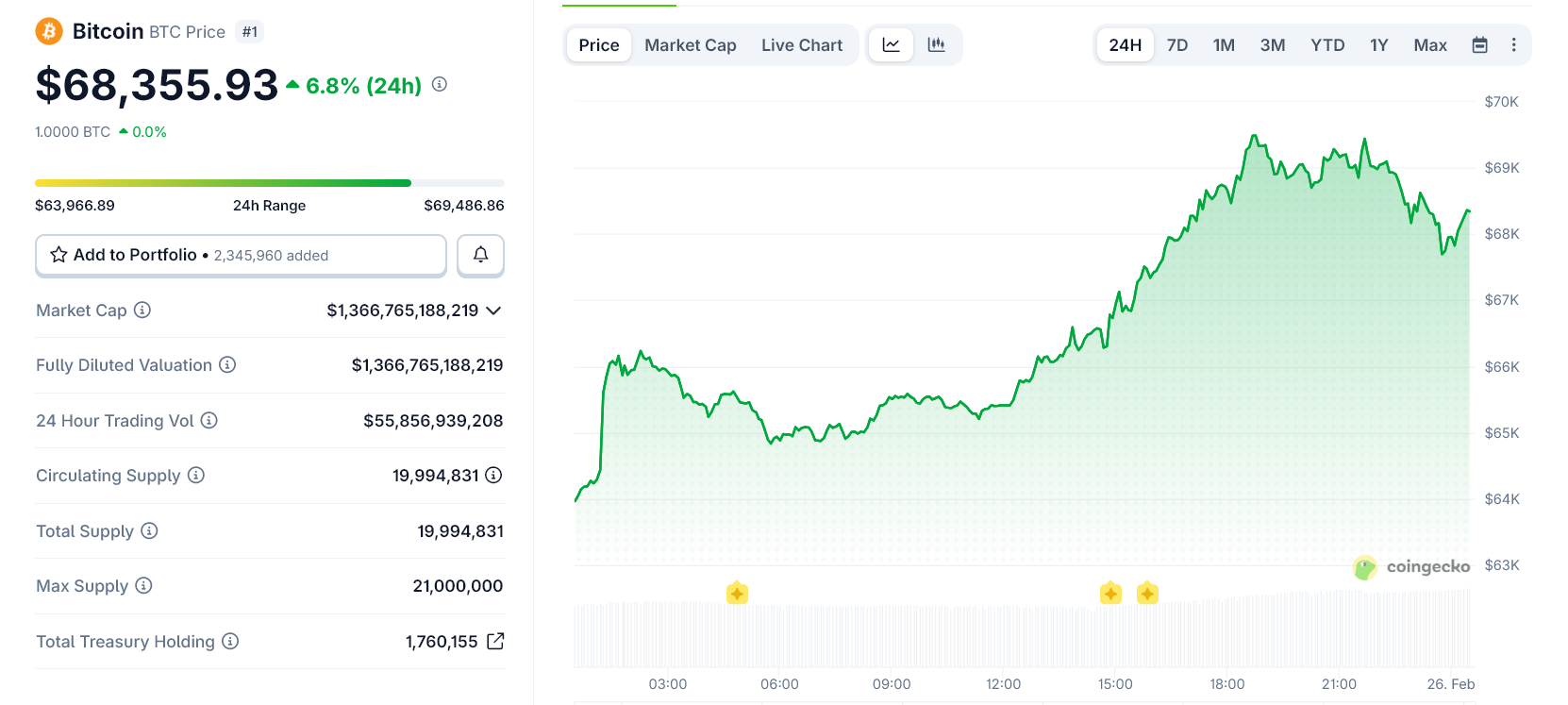
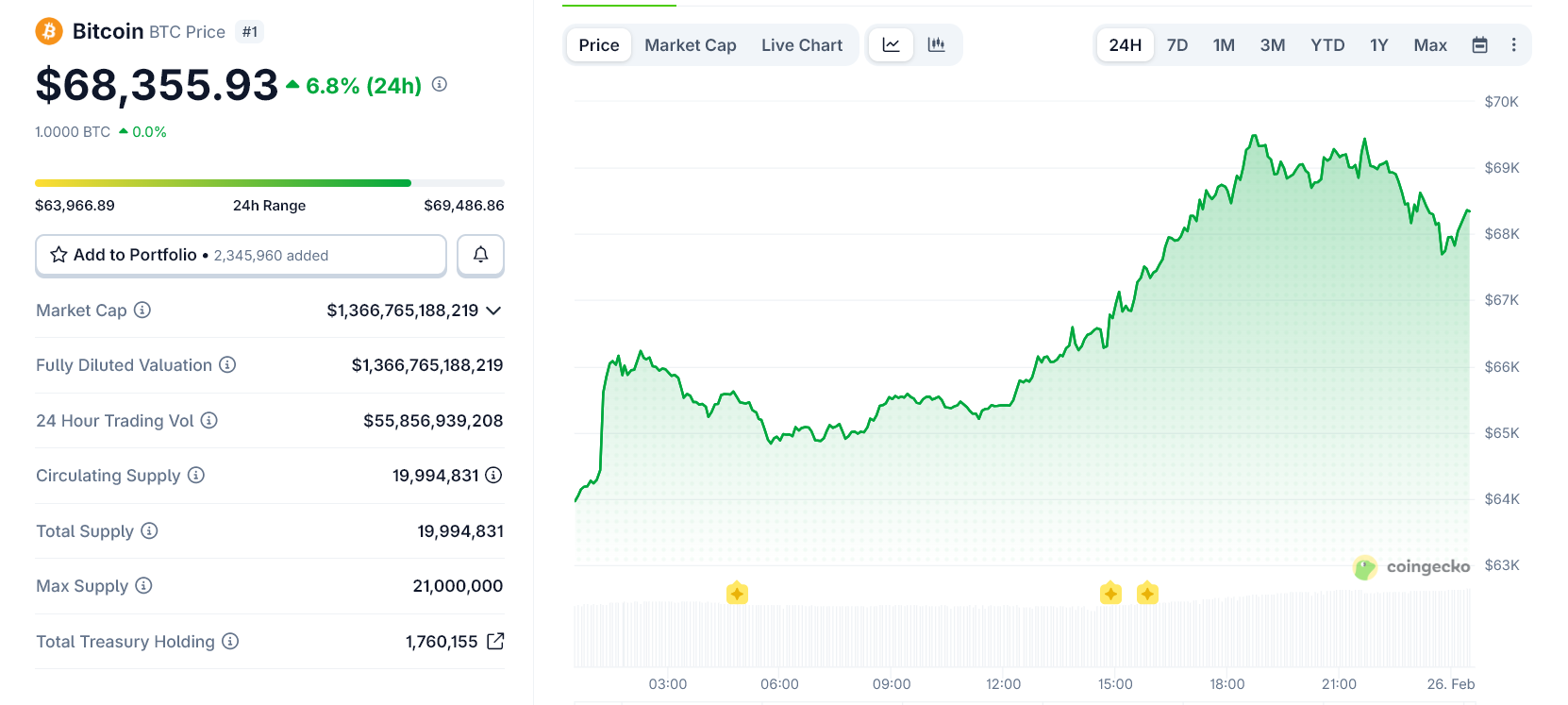
Bitcoin surged sharply this week, briefly nearing $70,000 before pulling back. The move sparked debate across the market: has Bitcoin finally bottomed, or is this just another relief rally inside a broader bear phase?
Multiple on-chain, derivatives, and institutional indicators show early signs of stabilization. However, key signals still point to a fragile recovery rather than a confirmed bullish reversal.
Options Market Shows Fragile Conditions, Not Strong Support
Bitcoin’s options positioning recently shifted into what traders call a negative gamma regime, according to Glassnode’s GEX heatmap.
In simple terms, gamma measures how options market makers hedge risk. When Bitcoin sits in a negative gamma zone, dealer hedging tends to amplify price moves.
That means rallies can accelerate quickly—but so can selloffs.
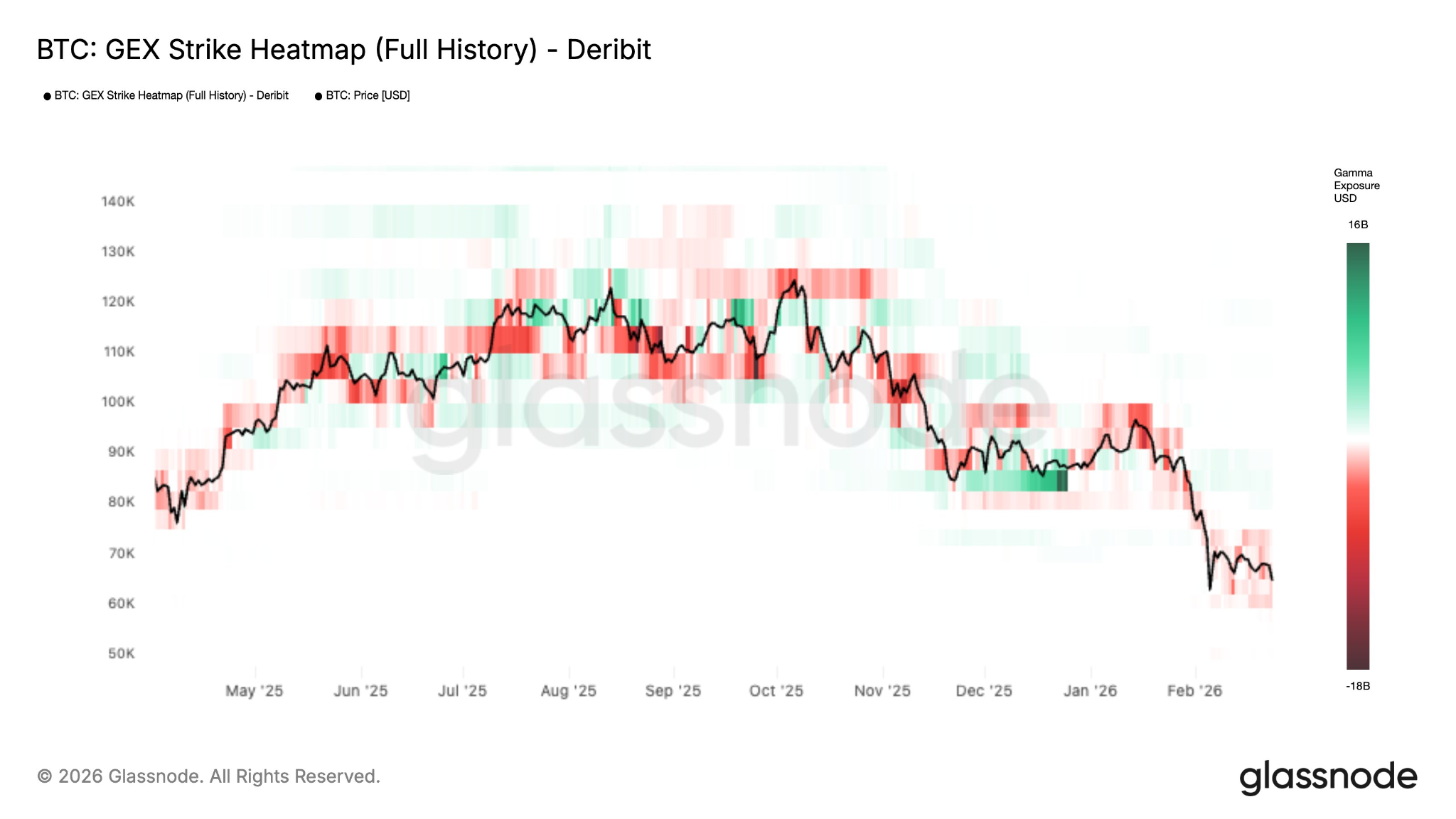
The heatmap also shows fewer strong resistance “gamma walls” above current prices. This creates less friction for upward moves, which helps explain Bitcoin’s sudden surge.
However, it also means the market lacks structural stability.
Without strong hedging support, price moves remain fragile and prone to reversal.
Bitcoin Spot Demand Is Improving for the First Time in Months
CryptoQuant data shows Bitcoin’s apparent demand, which measures net accumulation versus new supply, has turned positive for the first time since November.
This is an important early signal. When demand exceeds supply, it suggests buyers are stepping in and absorbing coins from sellers.
However, one positive shift does not confirm a full reversal. During past bear markets, temporary demand increases often occurred before further consolidation.
A sustained trend of rising demand over several weeks would provide stronger confirmation.
Short-Term Holders Are Still Selling at Losses
Another key indicator comes from CryptoQuant’s short-term holder profit and loss data, which tracks whether newer investors are selling at gains or losses.
The data shows short-term holders have been selling at losses consistently since late January. Several major loss spikes occurred in early February and again recently.
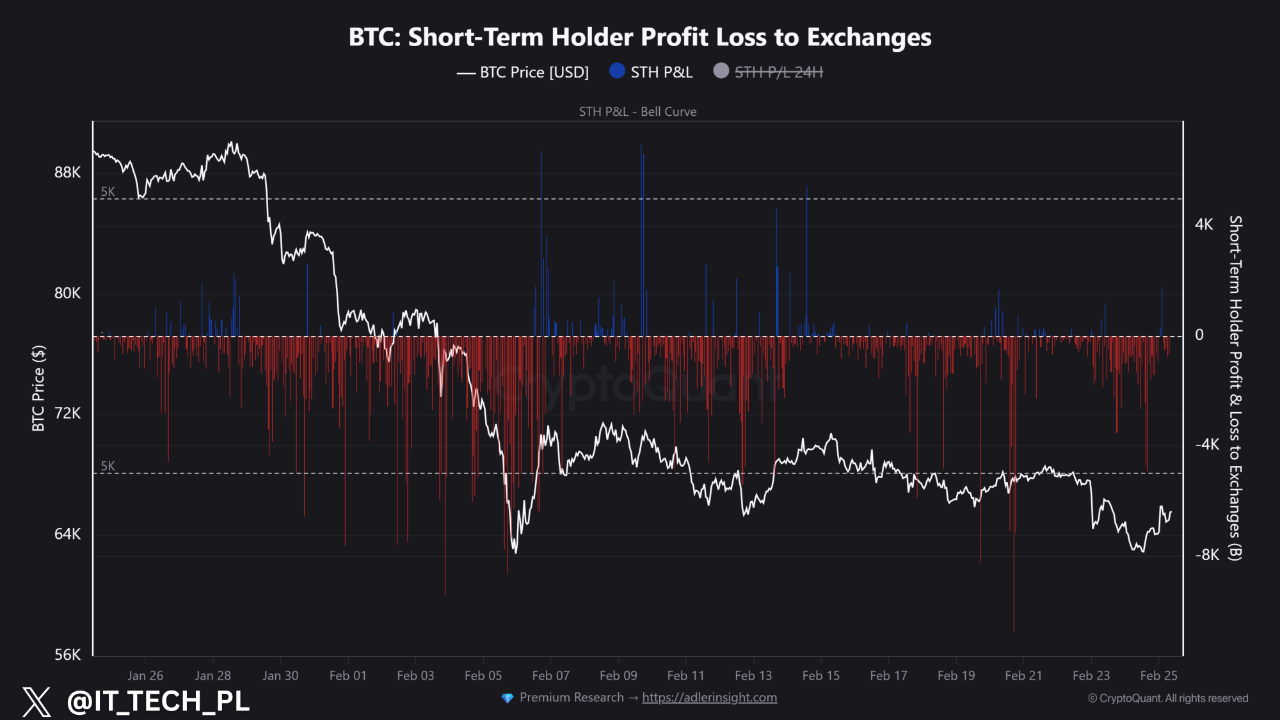
This pattern is known as capitulation, where weaker investors exit the market. Capitulation is common near market bottoms, because stronger buyers absorb those losses.
However, the signal has not fully reversed.
Until short-term holders begin selling at profits again, analysts warn that rallies can become “exit liquidity,” where trapped investors sell into strength rather than holding.
Technical and Historical Data Suggest Selling Pressure Is Easing
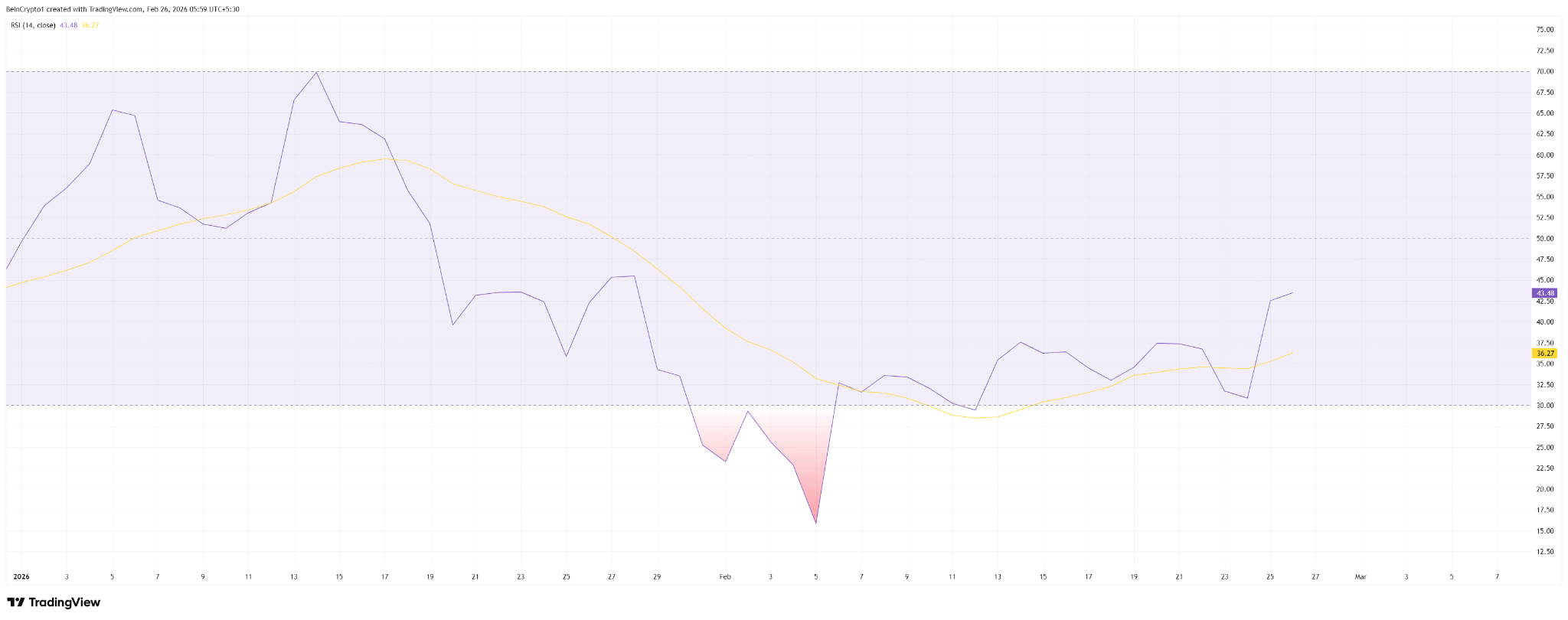
Bitcoin’s relative strength index (RSI), a momentum indicator, recently recovered after reaching extremely oversold levels in early February. This suggests selling pressure has weakened.
Historically, such RSI recoveries often lead to short-term rebounds.
Quarterly performance data also shows Bitcoin rarely experiences multiple consecutive quarters of heavy losses.
While this pattern does not guarantee a bottom, it supports the view that the market may be entering a stabilization phase.
Institutional Flows Still Show Weakness
Institutional positioning remains a key concern. Earlier data showed Bitcoin ETFs experienced sustained outflows, and SEC filings revealed large investment advisors and hedge funds reduced exposure significantly in late 2025.
This suggests institutional demand has not fully returned. Strong bull markets typically require consistent inflows from large investors.
Early Bottoming Signs, But Bull Market Not Confirmed
Bitcoin is showing several early bottoming signals. Spot demand is improving, capitulation appears to be getting absorbed, and technical indicators suggest selling pressure is fading.
However, key confirmation signals are still missing.
Short-term holders remain in loss territory, institutional flows remain weak, and options market structure shows fragile conditions.
For now, Bitcoin’s rally appears more consistent with a relief bounce than a confirmed bull reversal.
A sustained recovery will likely require stronger demand, renewed institutional inflows, and price stability above key resistance levels.
TLDR
- Kraken has launched Flexline, a fixed-rate crypto-backed loan product for Kraken Pro users.
- The loans offer terms ranging from two days to two years with annual rates between 10% and 25%.
- Users can borrow against supported cryptocurrencies without selling their digital assets.
- Kraken holds collateral in segregated wallets and includes it in its Proof of Reserves attestations.
- The platform may liquidate collateral if users breach maintenance requirements or fail to repay on time.
Kraken has launched Flexline, a fixed-rate crypto-backed loan service for Kraken Pro users. The product allows clients to borrow against digital assets without selling them. Kraken said it designed the service for advanced and institutional traders seeking liquidity.
Kraken rolls out Flexline with fixed terms and instant funding
Kraken offers loan terms from two days to two years with fixed annual rates. The platform lists annual percentage rates between 10% and 25%. However, Kraken has not disclosed specific loan-to-value ratios.
Users can post supported cryptocurrencies as collateral and receive funds almost instantly. They can receive proceeds in crypto or stablecoins based on regional eligibility. They can trade or withdraw the funds on the platform where permitted.
Kraken holds collateral in segregated wallets and includes it in Proof of Reserves attestations. The exchange said these attestations verify client assets on a 1:1 basis. Collateral faces liquidation if users breach maintenance requirements or miss repayment at maturity.
Borrowers can repay loans early using their account balances on Kraken Pro. However, Kraken charges an early repayment fee for such actions. The product remains unavailable in several jurisdictions, including the United States and the United Kingdom.
Kraken excludes Australia, Brazil, Canada, India, New Zealand, Switzerland, and the United Arab Emirates. The exchange restricts access based on local regulations and internal compliance standards.
Exchanges and DeFi platforms expand crypto-backed lending services
Coinbase has expanded its own crypto-backed loan product for eligible United States users. It allows borrowing up to $100,000 in USDC against assets such as XRP, Dogecoin, Cardano, and Litecoin.
The company lets users access liquidity without selling their tokens. It supports multiple digital assets as collateral under the updated program.
Outside exchanges, mortgage lender Rate has introduced a program called RateFi. The initiative allows qualified borrowers to use verified cryptocurrency holdings during underwriting.
Rate permits digital assets to count as reserves and sometimes as income. Borrowers can therefore avoid liquidating their holdings to meet requirements.
Decentralized finance lending protocols also continue to grow in total value locked. Data from DefiLlama shows about $51.9 billion locked across DeFi lending markets.
Active borrowing across these protocols stands near $30.8 billion, according to the same data. Aave holds nearly $26.9 billion in total value locked.
Morpho follows with around $5.8 billion in total value locked. On Feb. 15, Apollo Global Management partnered with Morpho to support blockchain-based lending infrastructure.
Apollo said it could acquire up to 90 million MORPHO tokens under the agreement. The asset manager oversees about $940 billion in assets.


Bitcoin experienced a volatile overnight trading session, rising by as much as 3.7% before giving back some of those gains.
The largest cryptocurrency remains in the black since midnight UTC, up by 2.4% to trade around $65,600. That’s still within a price range that has persisted over the past three weeks.
The altcoin market is also showing signs of life, with layer-1 tokens solana (SOL) and each putting in a 4.5% rally while tokens including VIRTUAL, MORPHO and ETHFI climbed more than 10%.
U.S. equity index futures rose alongside the crypto market. Silver’s 4% rise since midnight suggests the broader risk-asset rally is speculative rather than news-driven.
The average crypto relative strength index (RSI) indicator has moved out of oversold territory back into a neutral zone, suggesting a period of consolidation might be on the cards on Wednesday.
Derivatives positioning
- Cumulative crypto futures open interest (OI) has risen by over 1.5% to $93.5 billion, although much of that notional growth comes from spot price appreciation rather than capital inflows.
- OI in bitcoin and ether (ETH) futures has largely held steady over 24 hours, with futures tied to tether gold (XAUT) seeing a 12% decline in open positions. Capital seems to be rotating out of gold-linked assets.
- TRX, AVAX, SOL, LINK and HBAR stand out as coins with the highest 24-hour cumulative volume delta. Positive CVD readings indicate that buying demand is outpacing selling demand.
- Bitcoin’s annualized 30-day implied volatility index, BVIV, dropped to 56%, reversing the early week pop to 65% to suggest market calm. This is supportive of continued recovery in BTC’s price. Ether’s volatility displays a similar pattern.
- On Deribit-listed bitcoin options, the $60,000 put has become the most popular play, reflecting downside concerns. Puts, or bearish bets, for both BTC and ETH continue to trade pricier than calls, or bullish ones.
Token talk
- The “altcoin season” indicator hit its highest level since early January on Wednesday, buoyed by rallies across the board.
- AI agent token VIRTUAL led the pack, rising 15.5% since midnight and more than 20% in the past 24 hours to make it the best-performing asset in the CoinDesk 80 (CD80) index, which added 1.7%.
- Restaking token ETHFI also rose more than 10% in the past 24 hours after CEO Mike Silagadze hinted at potentially rolling out a stablecoin.
- Lending platform Morpho’s native token rounded off Wednesday’s altcoin rally. It has now risen by 45.9% over the past 30 days after a 15% gain over the past 24 hours.
- On the flip side, toncoin (TON) and pippin (PIPPIN) are both in the red over the past 24 hours after increasing in value earlier this week, indicating asset rotation among traders and investors.
TLDR
- Russia will begin real-world testing of the digital ruble in coordination with the central bank and finance ministry.
- Prime Minister Mikhail Mishustin announced the testing plan during a speech before the State Duma.
- Authorities scheduled a phased rollout of the digital ruble starting in September 2026.
- Major banks and large merchants must enable digital ruble payments from the first stage of implementation.
- Smaller banks and companies will have until September 2028 to comply with the new requirements.
Russia has confirmed it will begin real-world testing of the digital ruble soon, according to Prime Minister Mikhail Mishustin. He announced the move before the State Duma while lawmakers reviewed the government’s annual report. At the same time, authorities prepared new legislation to legalize cryptocurrencies under strict state control.
Russia Moves Toward Digital Ruble Rollout
Prime Minister Mikhail Mishustin said the government will start active testing of the digital ruble shortly. He spoke before the State Duma and outlined coordination with financial authorities.
He said, “Regarding the digital ruble, my colleagues from the Bank of Russia and the Ministry of Finance and I will now begin actively testing it.”
He added that officials must build infrastructure and assess transactions before defining volumes and usage methods.
The Central Bank of Russia created the digital ruble as a central bank digital currency. It represents the third form of national fiat after cash and electronic bank money. The bank launched a limited pilot in August 2023 and involved selected participants. Authorities had planned a public launch for mid-2025, then postponed it to fall 2026 after President Vladimir Putin urged wider adoption.
Officials scheduled a phased introduction beginning September 1, 2026. Major banks and large merchants must offer digital ruble services from that date. Universal banks and firms with annual revenue above 30 million rubles will have one extra year to comply. Smaller institutions and companies must enable transactions by September 1, 2028, while very small retailers remain exempt.
Crypto Legalization Advances Under Strict Controls
Russian authorities have also prepared legislation to regulate decentralized digital assets. The Finance Ministry and the central bank drafted a bill that defines the structure of the domestic crypto market. According to reports, the draft will legalize activities such as investment and trading. The plan follows a central bank proposal published in December to classify cryptocurrencies and stablecoins as monetary assets.
Lawmakers aim to adopt the framework by July 1 under the current timetable. The bill sets a $4,000 cap on crypto purchases for non-qualified investors. It also establishes capital requirements for domestic platforms and strict compliance standards. Global exchanges must register local subsidiaries and store user data inside Russia or face blocking measures.
The regulatory push also affects digital ruble accounts. A February report stated that the Bank of Russia updated rules for opening such accounts. These rules introduce tighter procedures for users and service providers. Authorities continue to align both the CBDC rollout and crypto regulation under a unified legal framework.
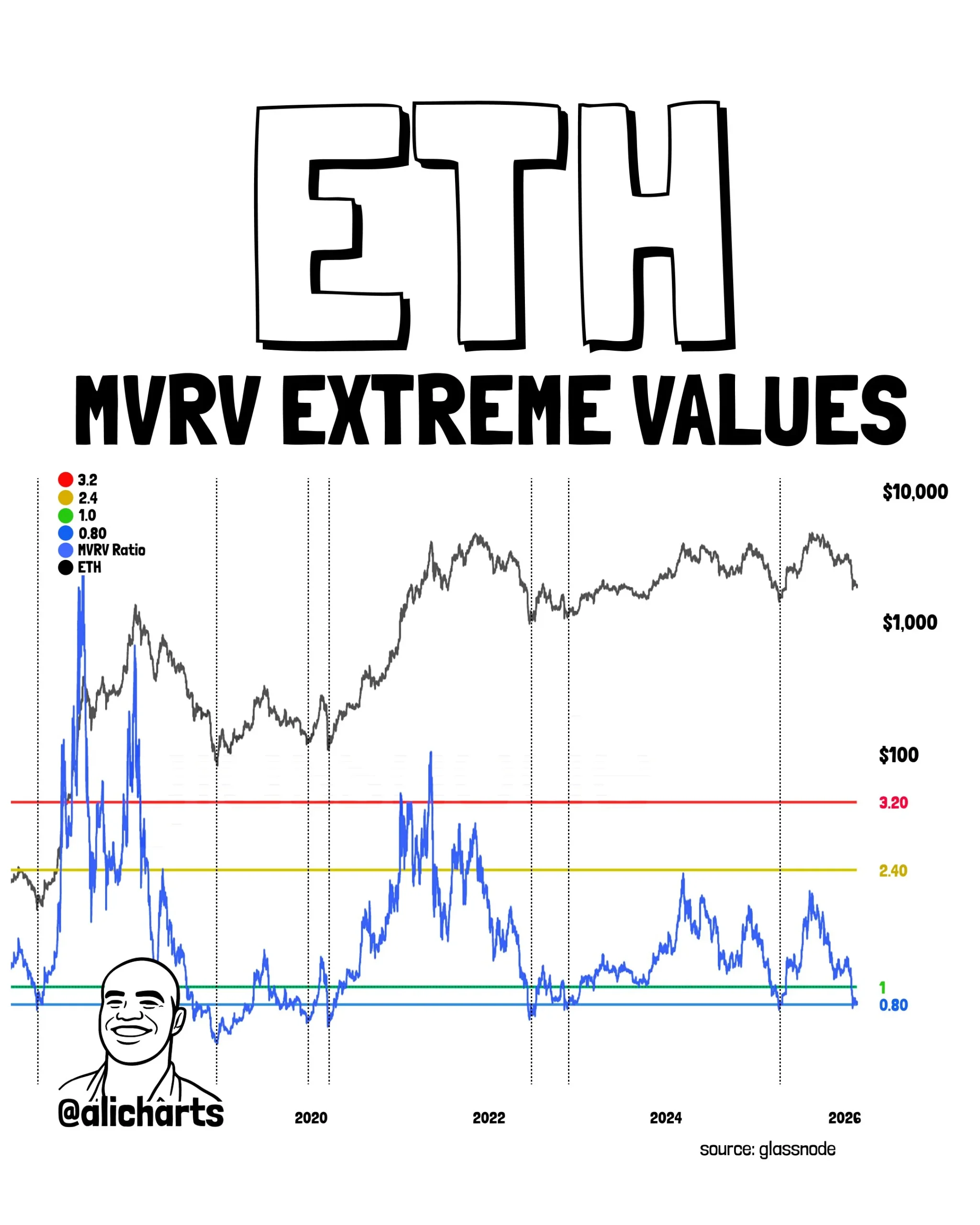
If history rhymes, here are the best ETH entry levels for the long-term.
After barely setting a new price record last summer at nearly $5,000, ETH joined the rest of the market in the post-October slump and dumped by almost 50% in months. It tried to resume its run in mid-January when it jumped to $3,400, but it was rejected again, and the subsequent correction pushed it south to $1,800 on a couple of occasions.
Although it has managed to defend that level for now, it still trades 45% lower than its mid-January peak. Substantial sell-offs have continued, while one popular analyst laid out what could be valid entry points for long-term exposure.
Sell-Offs Continue
If we compare ETH’s price with net flows into spot Ethereum ETFs, we will see a strong resemblance in investor behavior and price moves. For instance, the cumulative net flows peaked at over $15 billion in early October before the massive October 10 crash. Since then, outflows have consistently dominated, with investors pulling out well over $3 billion by February 24.
In addition, Ethereum’s co-founder has also joined the selling spree. CryptoPotato has reported on several occasions on Vitalik Buterin’s substantial disposal of ETH tokens for the past several weeks. Most recent on-chain data shows that he has dumped roughly 17,000 ETH in less than a month, valued at around $34 million.
In a post titled “Vitalik Buterin Is Selling Ethereum Near the Bottom,” renowned analyst Ali Martinez explained why the co-founder might regret his timing as the bottom could be closer than expected.
ETH Entry Points
Martinez said one of the most reliable “bottom-detection metrics” for the largest altcoin – the MVRV Ratio – is currently at 0.78, while the asset has neared or reached a macro bottom at levels below 0.80.
However, his disclaimer indicated that just because Ethereum is currently undervalued according to on-chain metrics, this doesn’t mean that its price cannot go any lower – “especially during heavy distribution phases.”
You may also like:
If another correction is to occur, the analyst outlined the most critical levels that could hold its downfall – $1,800 (which was tested yesterday), followed by $1,584 (first major support below), $1,238 (secondary macro support), and $1,089 (deeper capitulation zone). Martinez believes these precise levels could be proper entry zones.
“If history rhymes, accumulation below $1,800 – particularly near $1,584, $1,238, and $1,089 – could offer strong long-term positioning. But, volatility is likely to persist before a confirmed bottom forms.”
Binance Free $600 (CryptoPotato Exclusive): Use this link to register a new account and receive $600 exclusive welcome offer on Binance (full details).
LIMITED OFFER for CryptoPotato readers at Bybit: Use this link to register and open a $500 FREE position on any coin!
By Omkar Godbole (All times ET unless indicated otherwise)
Traders chasing alpha might want to take a look at U.S.-listed bitcoin mining stocks. Some of these companies are surging, boldly decoupling from the cryptocurrency’s choppy price action.
Shares in Terawulf (WULF) have gained 31% this month, even as bitcoin’s spot price has dropped nearly 17%. Cipher Digital (CIFR) and HUT 8 (HUT) have gained 8% and 6%, respectively, while Core Scientific (CORZ) is largely steady.
According to Markus Thielen, founder of 10x Research, these are among the most heavily shorted stocks by hedge funds and could gain due to positive economics.
“With long-term energy contracts secured at attractive rates, these firms possess a strategic advantage that extends well beyond pure Bitcoin mining,” Thielen said in a note to clients.
He added that capital is increasingly flowing toward structural winners, while legacy operators risk being left behind.
Bitcoin has bounced to over $65,000, likely tracking gains in futures tied to the Nasdaq 100 index. The advance occurred even though President Donald Trump didn’t mention crypto in his State of the Union address.
Spot bitcoin ETFs recorded $257.7 million in net inflows on Tuesday, the most since early February, according to data from SoSoValue. Analysts said inflows need to hold up over the coming days to spark a real market rebound from this slump.
In terms of price, bitcoin is trading close to well-watched pivots, Vikram Subburaj, CEO of Mumbai-based Giottus.com, said.
“A sustained break below $60,000 is widely framed as a downside trigger, with ~$57,500 cited as the next notable level. Conversely, reclaiming $72,000-$75,000 would be a cleaner signal that risk appetite is returning,” Subburaj said in an email.
In traditional markets, the Dollar Index reversed early losses, pressuring dollar‑denominated assets such as gold and bitcoin. Oil prices slipped as U.S. stockpiles surged, though downside remained muted amid the risk of a potential military conflict between the U.S. and Iran. Stay alert.
Read more: For analysis of today’s activity in altcoins and derivatives, see Crypto Markets Today
What to Watch
For a more comprehensive list of events this week, see CoinDesk’s “Crypto Week Ahead“.
- Crypto
- Macro
- Feb. 25, 4:30 p.m.: U.S. Fed balance sheet for week ending Feb. 25 (Prev. $6.61T)
- Earnings (Estimates based on FactSet data)
- Feb. 25: Circle (CRCL), pre-market, $0.16
- Feb. 25: Core Scientific (CORZ), post-market, -$0.18
- Feb. 25: MARA Holdings (MARA), post-market, -$0.11
- Feb. 25: Hut 8 (HUT), pre-market, -$0.13
- Feb. 25: NVIDIA (NVDA), post-market, $1.50
Token Events
For a more comprehensive list of events this week, see CoinDesk’s “Crypto Week Ahead“.
- Governance votes & calls
- Feb. 25: EigenCloud to host a livestream with Puffer Finance on “Preconfirmations & the Future of Rollups”
- The Sandbox DAO is voting to pause operations and transfer control to the project team to realign with “The Sandbox 3.0”. The proposal currently has the support of 80% of voters. Voting ends Feb. 25.
- Decentraland DAO is voting to create a customizable “Windfall Lotto Scene” template for land owners. Voting ends Feb. 25.
- Unlocks
- Feb. 25: Humanity (H) to unlock 4.37% of its circulating supply worth $17.71 million.
- Token Launches
Conferences
For a more comprehensive list of events this week, see CoinDesk’s “Crypto Week Ahead“.
Market Movements
- BTC is up 2.37% from 4 p.m. ET Tuesday at $65,564.62 (24hrs: +3.55%)
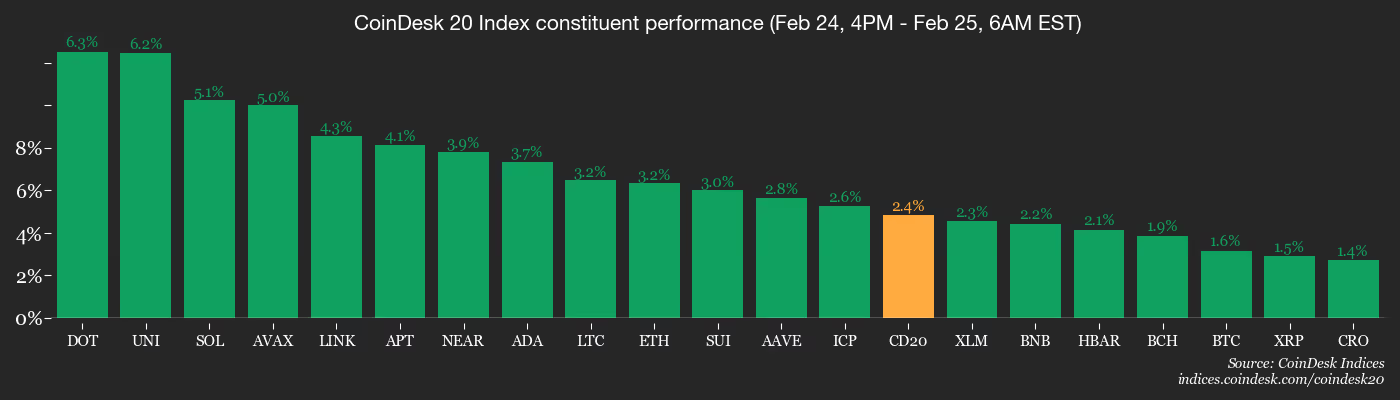
- ETH is up 3.31% at $1,915.35 (24hrs: +4.89%)
- CoinDesk 20 is up 2.97% at 1,901.09 (24hrs: +4.17%)
- Ether CESR Composite Staking Rate is up 2 bps at 2.83%
- BTC funding rate is at -0.0007% (-0.7643% annualized) on Binance

- DXY is unchanged at 97.82
- Gold futures are up 0.58% at $5,206.50
- Silver futures are up 3.82% at $91.50
- Nikkei 225 closed up 2.20% at 58,583.12
- Hang Seng closed up 0.66% at 26,765.72
- FTSE is up 0.79% at 10,764.79
- Euro Stoxx 50 is up 0.5% at 6,147.32
- DJIA closed on Tuesday up 0.76% at 49,174.50
- S&P 500 closed up 0.77% at 6,890.07
- Nasdaq Composite closed up 1.04% at 22,863.68
- S&P/TSX Composite closed up 0.57% at 33,970.38
- S&P 40 Latin America closed up 1.53% at 3,800.72
- U.S. 10-Year Treasury rate is up 2.1 bps at 4.054%
- E-mini S&P 500 futures are up 0.11% at 6,911.25
- E-mini Nasdaq-100 futures are up 0.15% at 25,066.25
- E-mini Dow Jones Industrial Average Index futures are unchanged at 49,277.00
Bitcoin Stats
- BTC Dominance: 58.52% (+0.13%)
- Ether-bitcoin ratio: 0.02917 (0.9%)
- Hashrate (seven-day moving average): 1,034 EH/s
- Hashprice (spot): $28.69
- Total fees: 2.7 BTC / $171,903
- CME Futures Open Interest: 114,890 BTC
- BTC priced in gold: 12.6 oz.
- BTC vs gold market cap: 4.38%
Technical Analysis

- The chart shows daily price swings in solana (SOL) in candlestick format.
- The drop from September highs could be described as a stair-step decline, where prices fall, then move sideways in consolidation, and then resume selling.
- Lately, the price has been consolidating between roughly $75 and $91. A move below the lower end of the range would imply resumption of the broader downtrend, potentially yielding a deeper slide.
Crypto Equities
- Coinbase Global (COIN): closed on Tuesday at $162.03 (+1.12%), +2.14% at $165.49 in pre-market
- Circle Internet (CRCL): closed at $61.37 (+0.33%), +16% at $71.00
- Galaxy Digital (GLXY): closed at $21.54 (+5.90%)
- Bullish (BLSH): closed at $30.76 (+0.42%), -1.63% at $30.26
- MARA Holdings (MARA): closed at $8.05 (+2.16%), +1.61% at $8.18
- Riot Platforms (RIOT): closed at $16.50 (+5.43%), +1.94% at $16.82
- Core Scientific (CORZ): closed at $17.87 (+5.80%), +0.78% at $18.01
- CleanSpark (CLSK): closed at $10.35 (+5.40%), +1.93% at $10.55
- CoinShares Valkyrie Bitcoin Miners ETF (WGMI): closed at $42.71 (+7.42%)
- Exodus Movement (EXOD): closed at $9.76 (+2.20%)
Crypto Treasury Companies
- Strategy (MSTR): closed at $124.61 (+0.73%), +2.51% at $127.74
- Strive (ASST): closed at $7.16 (-2.65%), +0.35% at $7.19
- SharpLink Gaming (SBET): closed at $6.55 (+0.92%), +2.90% at $6.74
- Upexi (UPXI): closed at $0.61 (+7.61%)
- Lite Strategy (LITS): closed at $1.11 (+3.74%)
ETF Flows
Spot BTC ETFs
- Daily net flows: $257.7 million
- Cumulative net flows: $54.05 billion
- Total BTC holdings ~1.26 million
Spot ETH ETFs
- Daily net flows: $9.2 million
- Cumulative net flows: $11.51 billion
- Total ETH holdings ~5.64 million
Source: Farside Investors
While You Were Sleeping
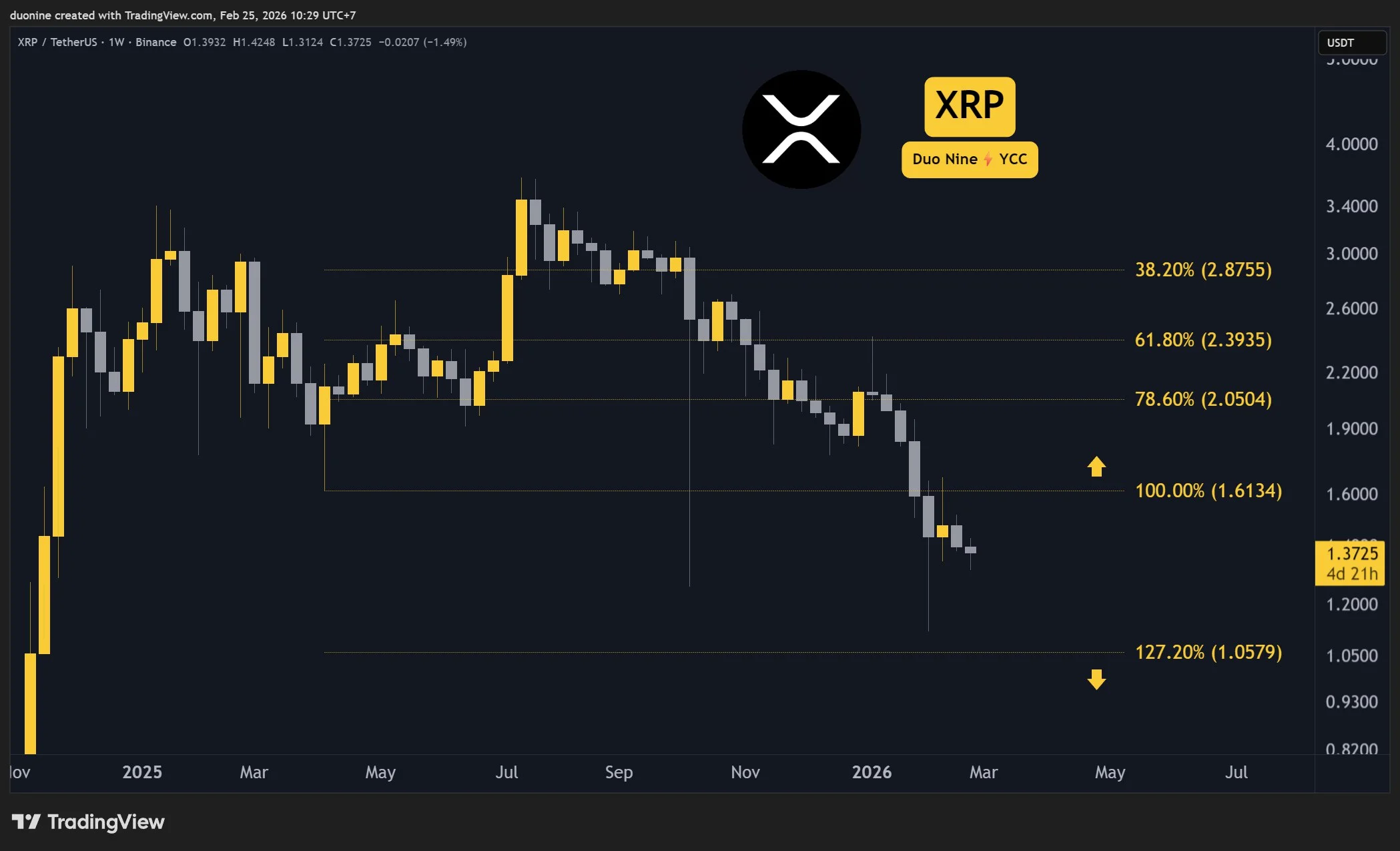
XRP falls again under $1.4. When will the downtrend end?
Ripple (XRP) Price Predictions: Analysis
Key support levels: $1
Key resistance levels: $1.4
XRP’s Downtrend Continues
XRP made a brief attempt to hold the support at $1.4, but sellers returned and pushed the price lower, which turned this level into a key resistance. Hopefully, buyers will show up soon to reverse this trend before it is too late.
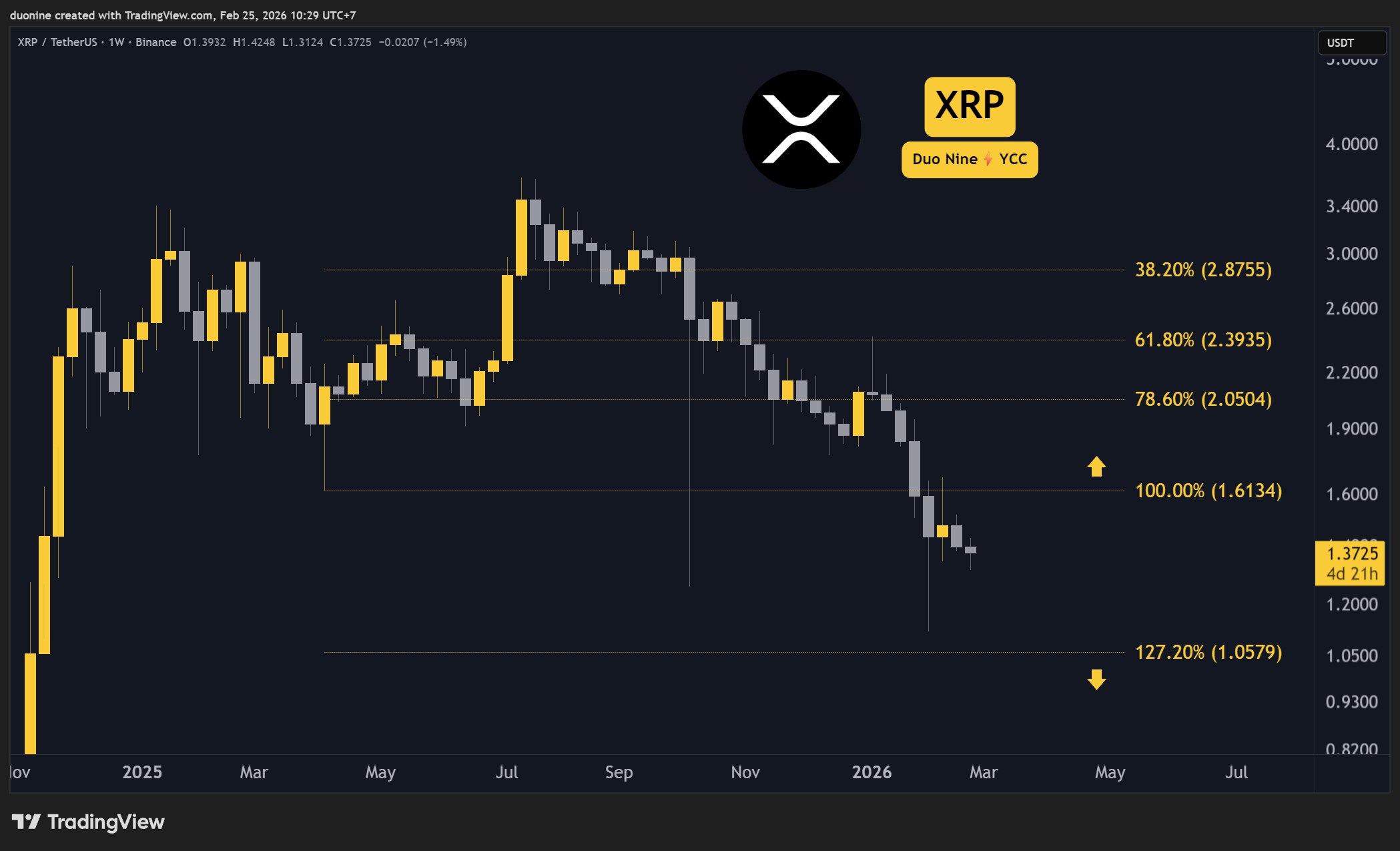
Sellers Dominate
Since the start of the year, XRP has closed 6 of 7 weekly candles in the red. That is extremely bearish and left no space for a relief rally. Considering how aggressive this selloff is, a future bounce will likely be just as significant and sharp.

Daily MACD is Bullish
Even if the price action remains bearish, the MACD momentum indicator on the daily timeframe is bullish with a positive histogram. As long as this holds, XRP may be forming a complex reversal pattern that could see it attempt to move higher soon.
Watch closely the level at $1.4. If reclaimed again, bulls may be returning.
You may also like:

Binance Free $600 (CryptoPotato Exclusive): Use this link to register a new account and receive $600 exclusive welcome offer on Binance (full details).
LIMITED OFFER for CryptoPotato readers at Bybit: Use this link to register and open a $500 FREE position on any coin!

Concrete ‘hanging’ from Market Street building removed

Export uncertainty may dull domestic momentum for solar companies

Elon’s Grok AI Predicts the Price of XRP, Cardano, and Ethereum By the End of 2026


-

 Video6 days ago
XRP News: XRP Just Entered a New Phase (Almost Nobody Noticed)
-

 Politics4 days ago
Baftas 2026: Awards Nominations, Presenters And Performers
-

 Fashion5 days ago
Weekend Open Thread: Boden – Corporette.com
-

 Sports2 days ago
Women’s college basketball rankings: Iowa reenters top 10, Auriemma makes history
-

 Politics2 days ago
Nick Reiner Enters Plea In Deaths Of Parents Rob And Michele
-
 Sports7 days ago
Clearing the boundary, crossing into history: J&K end 67-year wait, enter maiden Ranji Trophy final | Cricket News
-

 Crypto World2 days ago
XRP price enters “dead zone” as Binance leverage hits lows
-

 Business4 days ago
Mattel’s American Girl brand turns 40, dolls enter a new era
-

 Business3 days ago
Law enforcement kills armed man seeking to enter Trump’s Mar-a-Lago resort, officials say
-

 Tech1 day ago
Unsurprisingly, Apple's board gets what it wants in 2026 shareholder meeting
-
 NewsBeat3 hours ago
Manchester Central Mosque issues statement as it imposes new measures ‘with immediate effect’ after armed men enter
-
 NewsBeat3 days ago
‘Hourly’ method from gastroenterologist ‘helps reduce air travel bloating’
-

 Tech3 days ago
Anthropic-Backed Group Enters NY-12 AI PAC Fight
-

 NewsBeat3 days ago
Armed man killed after entering secure perimeter of Mar-a-Lago, Secret Service says
-

 Politics3 days ago
Maine has a long track record of electing moderates. Enter Graham Platner.
-

 Business1 day ago
True Citrus debuts functional drink mix collection
-
 NewsBeat1 day ago
Police latest as search for missing woman enters day nine
-

 Crypto World1 day ago
Entering new markets without increasing payment costs
-
 Sports3 days ago
2026 NFL mock draft: WRs fly off the board in first round entering combine week
-

 Crypto World6 days ago
83% of Altcoins Enter Bear Trend as Liquidity Crunch Tightens Grip on Crypto Market