
Crypto World
The History of Concrete Is a Charming Tour Into Unknown Worlds


If you know anything about filmmaker John Wilson, you’ll intuit that his new documentary The History of Concrete is barely about concrete at all. Earlier this decade, Wilson’s HBO show, How To With John Wilson, provided a sometimes compelling, sometimes aggravating glimpse into the lives of ordinary New Yorkers, as well as into Wilson’s own woolly, discursive mode of thinking. In one episode, Wilson walked around a New York neighborhood until he saw an Italian flag, figuring that the person who’d hung it would know enough about Italian food to help him learn to cook risotto, which he wanted to make as a treat for his elderly, babushka’ed landlady. In another installment, he sought ways to protect his furniture from his beloved yet destructive cat, and in so doing, stumbled upon an anti-circumcision activist, who in turn led him to a musician and inventor who’d developed a foreskin restoration device. (It was called the TLC Tugger.) In Wilson’s world, the phrase “One thing leads to another” takes on heightened meaning. He shifts gears according to who and what he encounters during the filmmaking process, which is how a simple quest to cover a chair can morph into an anxiety-riddled meditation on the possibility that maybe life is better uncut.

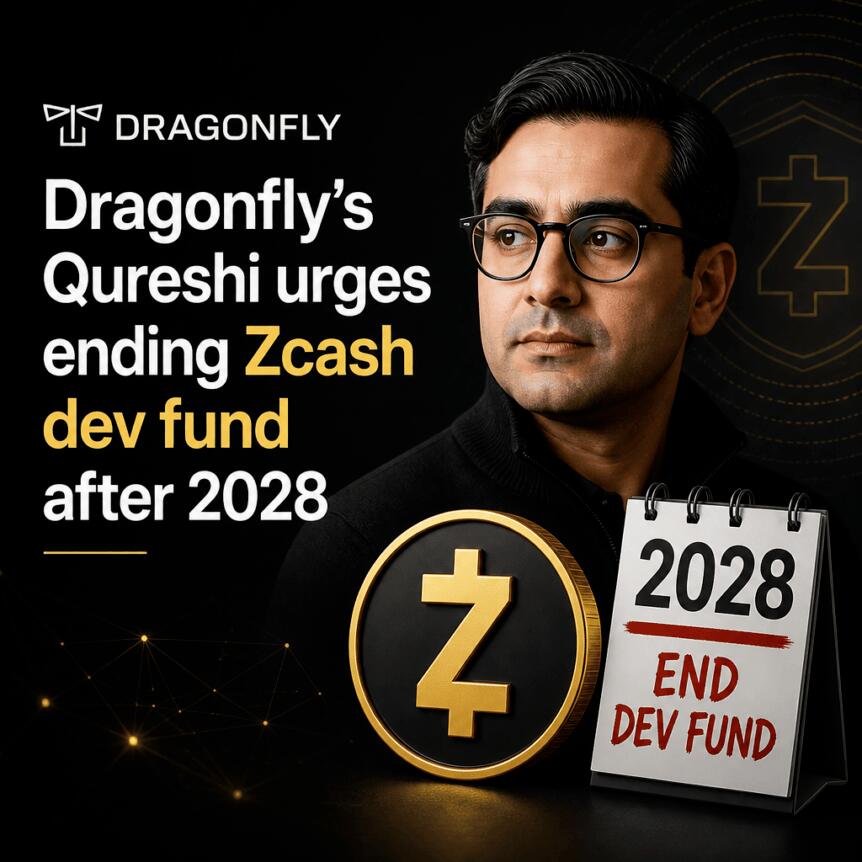
Dragonfly managing partner Haseeb Qureshi has urged the Zcash community to wind down the protocol’s ZEC development fund after it expires under current rules in 2028, arguing the fund has grown large enough to cover remaining work while also becoming increasingly vulnerable to “politicization” as its size nears $100 million.
The proposal lands amid a broader internal debate over how (and whether) the development fund should be controlled—an issue that has intensified as the ZEC token’s rally boosted the fund’s value. At press time, ZecStats reported the fund held 63,962 Zcash (ZEC) tokens, worth roughly $95 million.
Key takeaways
- Haseeb Qureshi argues the Zcash development fund should be treated as a final “dev fund,” ending when it expires in 2028.
- Based on ZecStats data, the fund’s balance is about $95 million and sits outside circulation until governance disburses it.
- Supporters say the fund is crucial for sustained development amid fast-evolving threats, including AI and quantum risks.
- The community is split not only on whether the fund should continue, but also on whether control should move toward token-holder voting.
- Critics including Maxime Desalle argue that ending the fund could eliminate governance disputes and potential security or dependency risks.
Why Qureshi wants the dev fund to end in 2028
Qureshi’s position, laid out in a Friday post on X, is focused on timing, size, and governance risk. He said the current development fund should be the last one, since it is already large enough to fund remaining Zcash work before the fund expires under existing rules in 2028.
In his view, however, the more the fund grows, the more it risks being drawn into political dynamics rather than purely technical decision-making. That concern is particularly salient as the fund approaches a value threshold of about $100 million, according to the ZecStats-reported balance.
For investors and builders, the core question is whether a large, semi-autonomous treasury mechanism improves continuity for development—or whether it creates governance friction that can slow priorities or erode long-term consensus.
How the Zcash development fund works
The ZEC development fund is designed as a protocol development allocation that accrues 0.1875 ZEC per block. Under the NU6 upgrade, that amount is described as representing 12% of the block subsidy. The fund’s holdings are kept outside normal token circulation, only becoming available when governance processes authorize disbursement.
Because it is built into the protocol’s block subsidy economics, the fund’s size is not simply a matter of community fundraising—it naturally expands with ongoing block production until its rules expire. That structural feature is part of why the current debate has intensified: a rising ZEC price increases the dollar value of locked assets without changing the number of tokens held.
A split on governance: token voting versus hybrid councils
Beyond the timing of any wind-down, Qureshi also challenged how the fund should be governed. He argued that control should not shift to “pure token holder voting,” while still supporting a partial approach in which token holders elect temporary councils.
Paradigm founder Matt Huang supported the broader idea of avoiding purely token-holder-driven control, arguing in a Wednesday post on X that pure token governance may introduce “unpredictability” and reduce long-term trust in Zcash as a monetary asset. Huang’s proposed alternative is a hybrid governance model that combines multiple forms of oversight rather than relying exclusively on token-weighted voting.
These arguments reflect a common tension in protocol treasuries: token-weighted systems can align governance with market incentives, but they may also be vulnerable to volatility-driven shifts in voting behavior. Hybrid systems, by contrast, aim to stabilize decision-making while still preserving a pathway for community influence.
Calls to eliminate the fund altogether
Not everyone agrees the fund should be preserved—even temporarily. Maxime Desalle, an investment analyst at Winklevoss Capital, suggested in a Thursday X post that the Zcash community should “completely get rid” of the development fund. He framed the elimination of the mechanism as a way to resolve governance disputes outright.
Desalle previously argued that the fund could hurt Zcash’s security and recreate the kinds of dependencies and bureaucracies that, in his view, many welfare-state systems face. While his critique focuses on governance structure, it also implies a more fundamental concern: that continuously accumulating value into a locked treasury can create incentives to capture decision-making rather than improve protocol resilience.
On the other side, Zcash founder Zooko Wilcox emphasized the historical role of development governance. In an earlier post on Sept. 1, he pointed to the Zcash Community Grants Committee as a major reason Zcash “has survived and grown to where it is today.” Later, on Sept. 14, Wilcox clarified that the committee accounts for only 40% of the development fund—an important detail for readers trying to map how much of the treasury is actually tied to grants versus other protocol-linked allocations.
What Zcash holders should watch next
The immediate uncertainty is whether Qureshi’s “final dev fund” framing will gain traction, and—separately—what governance model the community ultimately favors for any remaining disbursements before 2028. With the fund’s dollar value near $100 million based on ZecStats, governance decisions are likely to become more contentious, making the next proposals and voting outcomes crucial for anyone tracking Zcash’s long-term development runway.
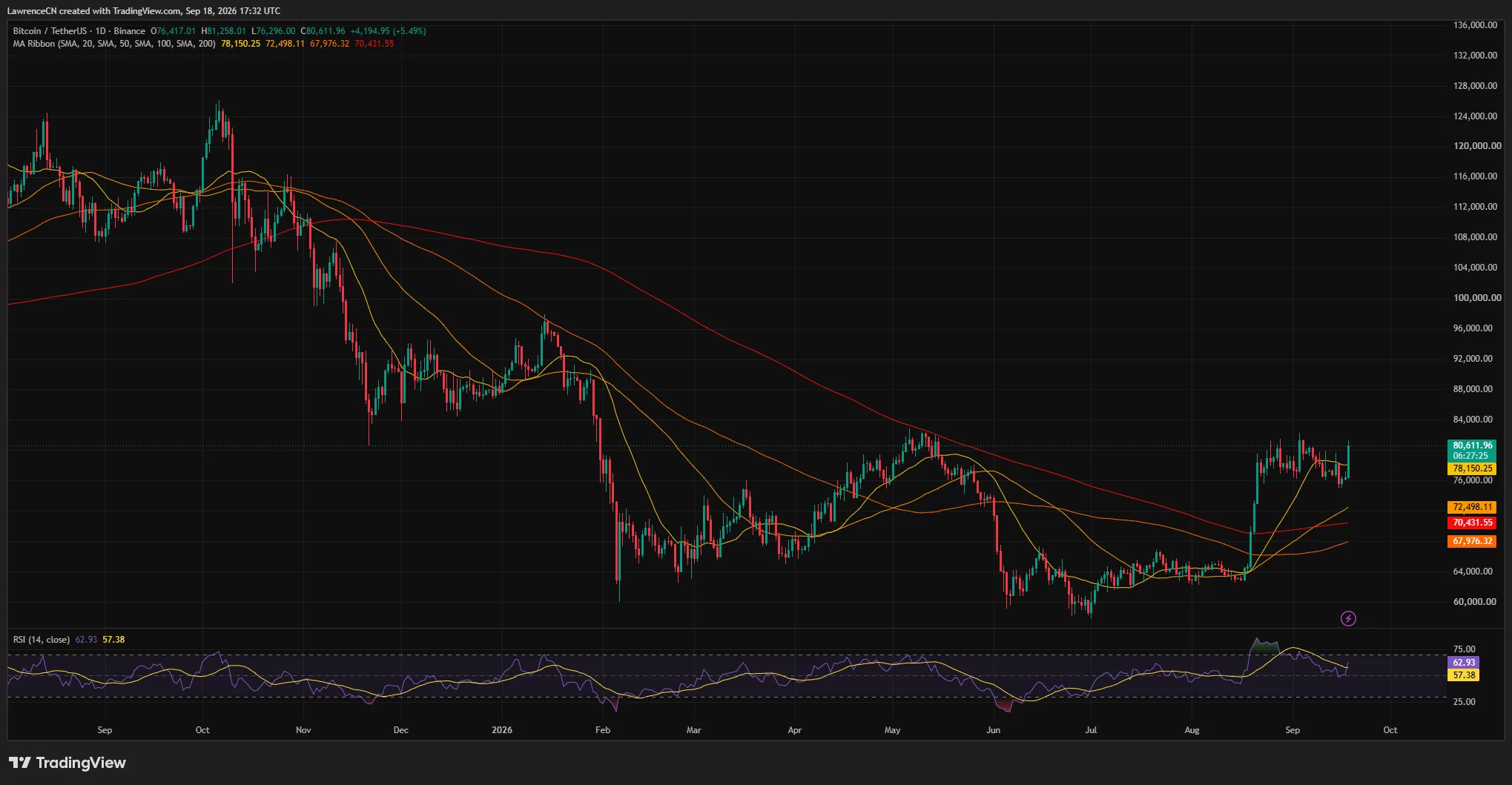
Bitcoin price surged more than 5% on Sep. 18, breaking above $80,000 as a 4-hour trend reversal and concentrated short liquidations accelerated the recovery from $75,560.
Summary
- Bitcoin price gained 5.49% and reached an intraday high of $81,258.
- Price now trades above the 20-, 50-, 100-, and 200-day moving averages.
- 4-hour Aroon Up reached 100%, while the Supertrend flipped bullish.
- Liquidation clusters near $81,500–$82,000 could shape Bitcoin’s next move.
Bitcoin price rebounds from $75,560
According to data from crypto.news, Bitcoin (BTC) price was trading near $80,600 at the time of writing after opening the daily session at $76,417. The 5.49% advance reversed most of the losses recorded during the earlier decline from the $80,000 area.
The move followed a drop to about $75,560, Bitcoin’s lowest level this month. Buyers first stabilized the price around $76,000 before pushing it through the $78,000 and $80,000 levels in two rapid advances.
Bitcoin briefly touched $81,258 during the rally but pulled back below $81,000, showing that sellers remain active near the upper end of its recent range. Even so, the daily candle remains strongly positive, with its real body covering more than $4,000.
The recovery also returned Bitcoin to the range it held before the Sep. 15 sell-off. Price must now remain above $80,000 to turn the former resistance level into support and reduce the risk of another retreat into the high-$70,000 area.
The rally came after bearish positioning increased during Bitcoin’s fall below $76,000. The supplied market data showed that forced buying from short liquidations helped speed up the rebound once the price began clearing nearby resistance.
Daily indicators support the Bitcoin breakout
Bitcoin has moved above all four moving averages displayed on the daily chart. The 20-day simple moving average sits at $78,150, making it the closest dynamic support following the breakout.
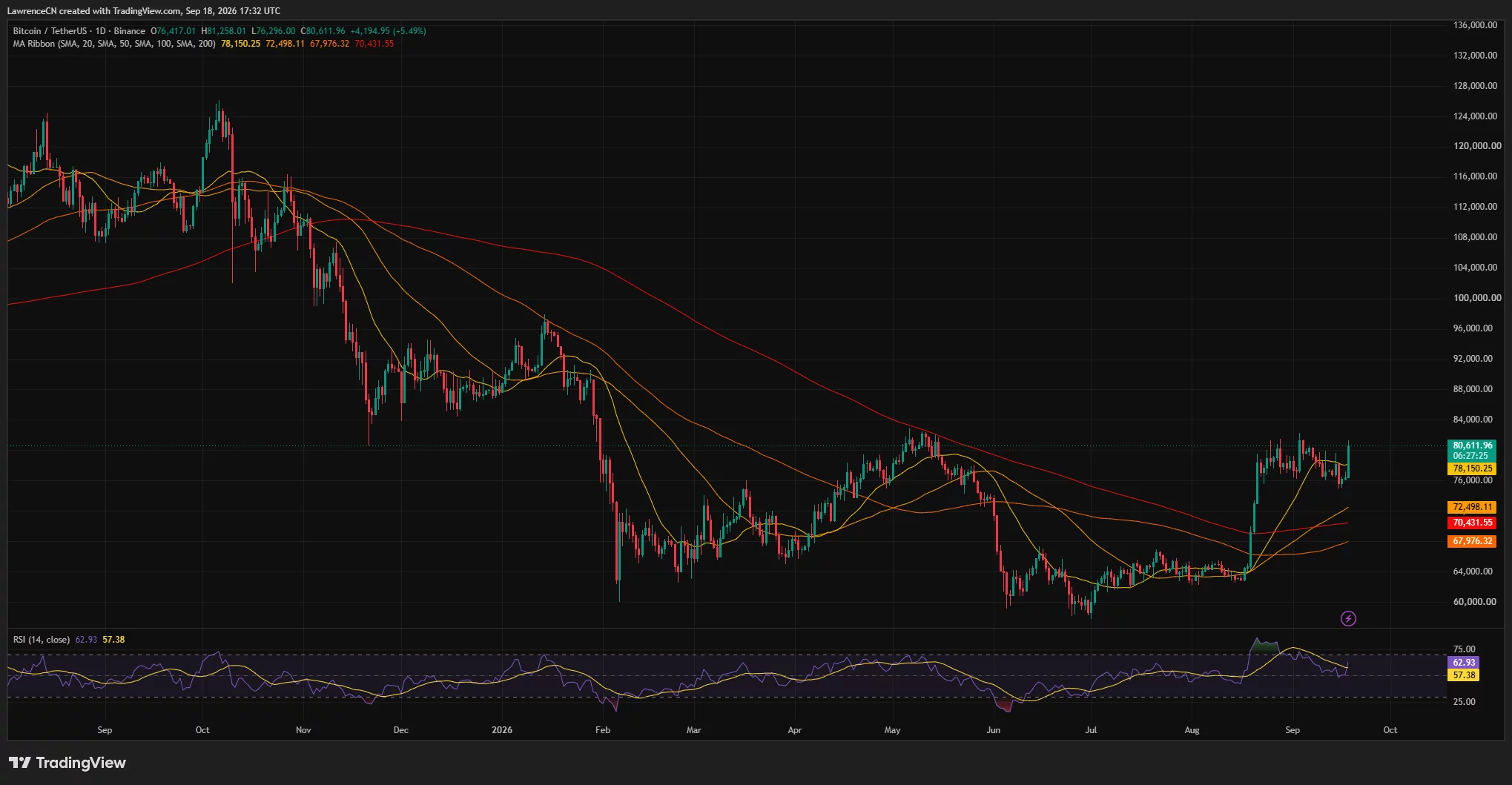
The 50-day SMA stands at $72,498, while the 200-day and 100-day averages are near $70,432 and $67,976, respectively. Bitcoin’s position above those longer-term averages keeps the wider recovery structure intact despite the volatility recorded during September.
The daily relative strength index rose to 62.93, above its moving average of 57.38. An RSI above 50 shows that upward momentum has strengthened, while the current reading remains below the commonly watched overbought level of 70.
Bitcoin is therefore gaining momentum without showing an extreme daily RSI reading. A move above 70 would signal stronger buying pressure, but it could also increase the risk of a short-term pullback if price reaches resistance near $82,000.
The daily structure still leaves Bitcoin below the local May high and the upper boundary of its recent trading range. Bulls need a daily close above approximately $82,000 to establish a higher high and provide stronger evidence that the September correction has ended.
4-hour Bitcoin chart flips bullish
Bitcoin’s 4-hour chart recorded a bullish Supertrend shift during the latest advance. The indicator now places trend support near $77,828, while price has also cleared the previous bearish Supertrend line around $78,597.
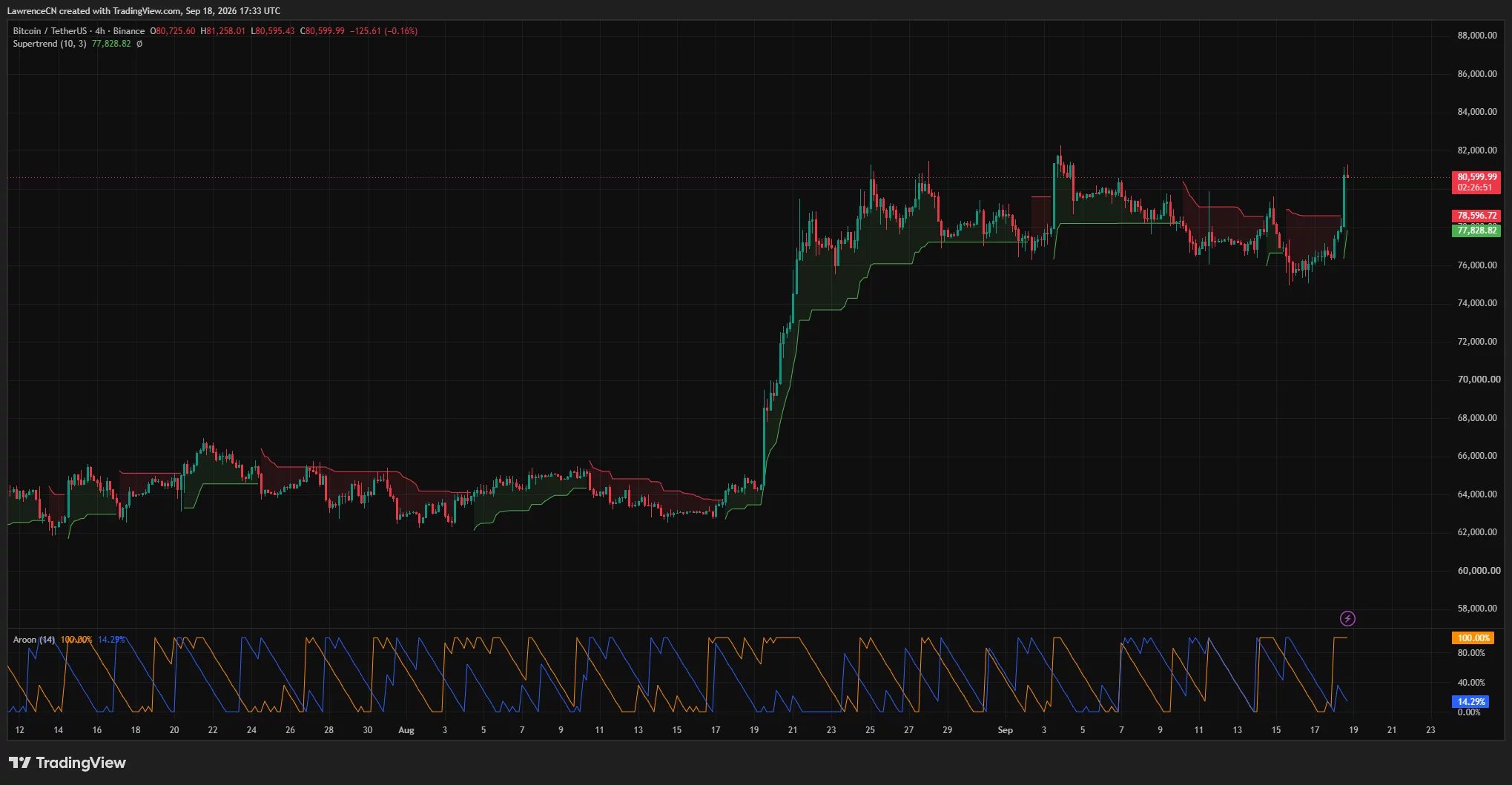
A 4-hour close above that former resistance strengthens the breakout because it shows that buyers held control beyond the initial price spike. The $78,600 area could now act as support during any retest.
The Aroon indicator also shows a sharp change in short-term momentum. Aroon Up reached 100%, while Aroon Down fell to 14.29%, indicating that the period’s most recent high occurred much later than its latest low.
Bitcoin remains exposed to a cooling period after its near-vertical 4-hour advance. A pullback that holds between $78,600 and $80,000 would preserve the new bullish structure, while a drop below the Supertrend support at $77,828 would weaken it.
A close below $77,800 could send Bitcoin back toward $76,000 and the monthly low near $75,560. Losing that low would invalidate the immediate recovery setup and reopen the path toward the daily moving-average cluster between $72,500 and $70,400.
Liquidation map puts $82,000 in focus
CoinGlass’ 24-hour Bitcoin liquidation heatmap shows several leveraged-position clusters above the current price. The nearest large concentrations appear around $81,500 and $82,000, with additional liquidity extending toward $84,000.
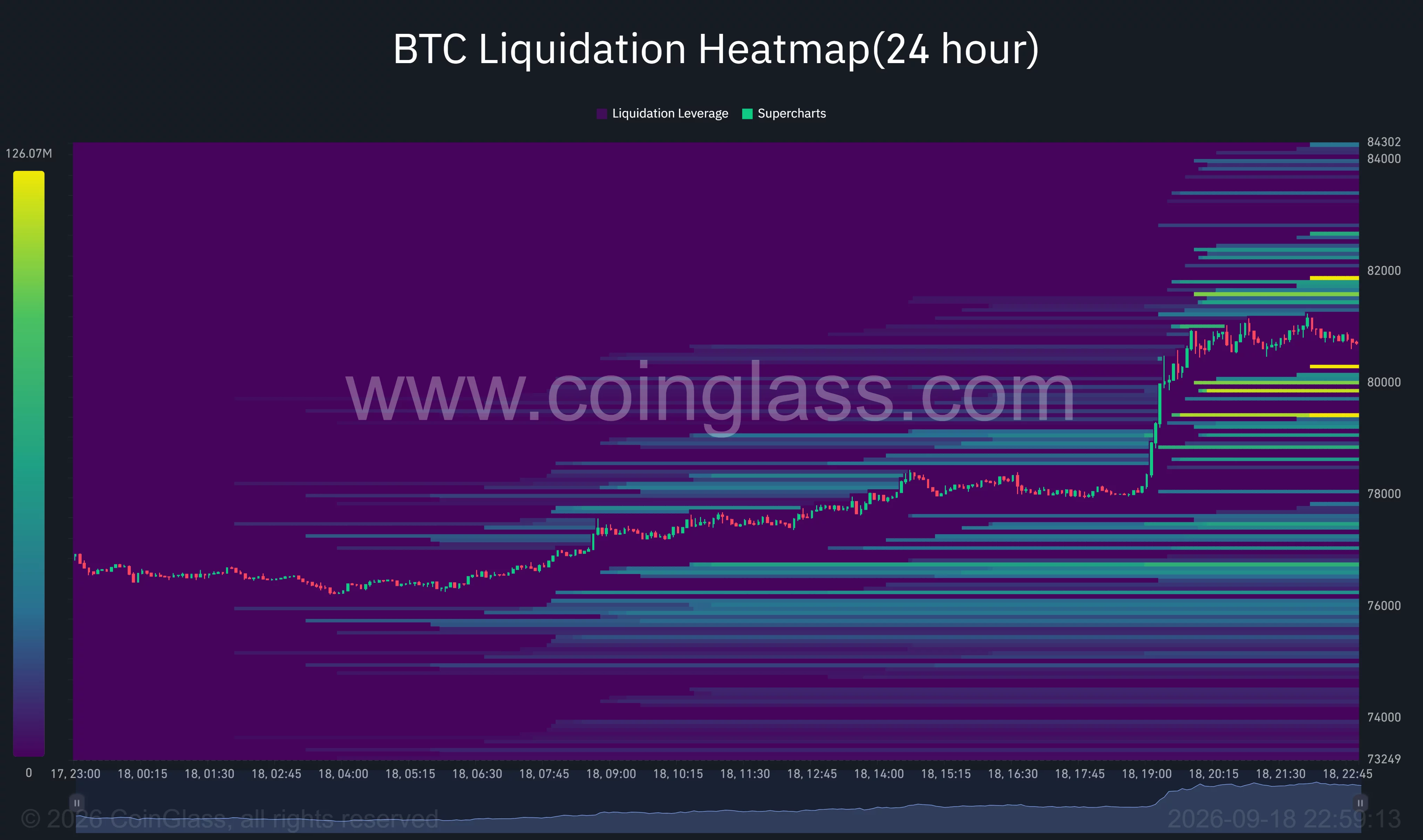
Leveraged short positions can face forced closure when Bitcoin rises into those zones. Such liquidations create market buy orders, which may add momentum if price breaks above $81,500 with sufficient volume.
The heatmap also shows liquidity below the market around $80,000 and $79,300. Larger bands are visible between roughly $76,000 and $77,500, making that region a possible target if Bitcoin fails to hold its breakout.
Liquidity concentrations do not guarantee that price will reach a given level. They identify areas where leveraged positions may be vulnerable, making volatility more likely when Bitcoin approaches them.
The immediate bullish path requires a break above the intraday high at $81,258, followed by a sustained move through the $81,500–$82,000 liquidity zone. A successful breakout would leave approximately $84,000 as the next visible area of concentrated liquidations.
Analyst sees descending-channel breakout
Crypto analyst Batman said Bitcoin had broken out of a descending-channel formation similar to an earlier setup that preceded a 24% gain. His chart compared the latest September structure with a channel that formed before Bitcoin’s August advance.
“$BTC just broke the same descending channel setup that led to a 24% move last time,” the analyst wrote.
Batman said the latest breakout had further continuation potential, although the earlier 24% move does not guarantee that Bitcoin will repeat the same performance. Confirmation still depends on whether the price can hold above the channel and clear the nearby $82,000 resistance.
For U.S. traders, the next test will also depend on how the rally holds through the next session, when deeper spot and derivatives liquidity can either confirm the breakout or expose it as a short-covering move. Until Bitcoin records a daily close above $82,000, the charts support a short-term bullish reversal rather than a confirmed breakout from the wider range.
Disclosure: This article does not represent investment advice. The content and materials featured on this page are for educational purposes only.
Crypto World
Visa, Mastercard $167.5 million settlement could mean money for ATM users. Who qualifies.
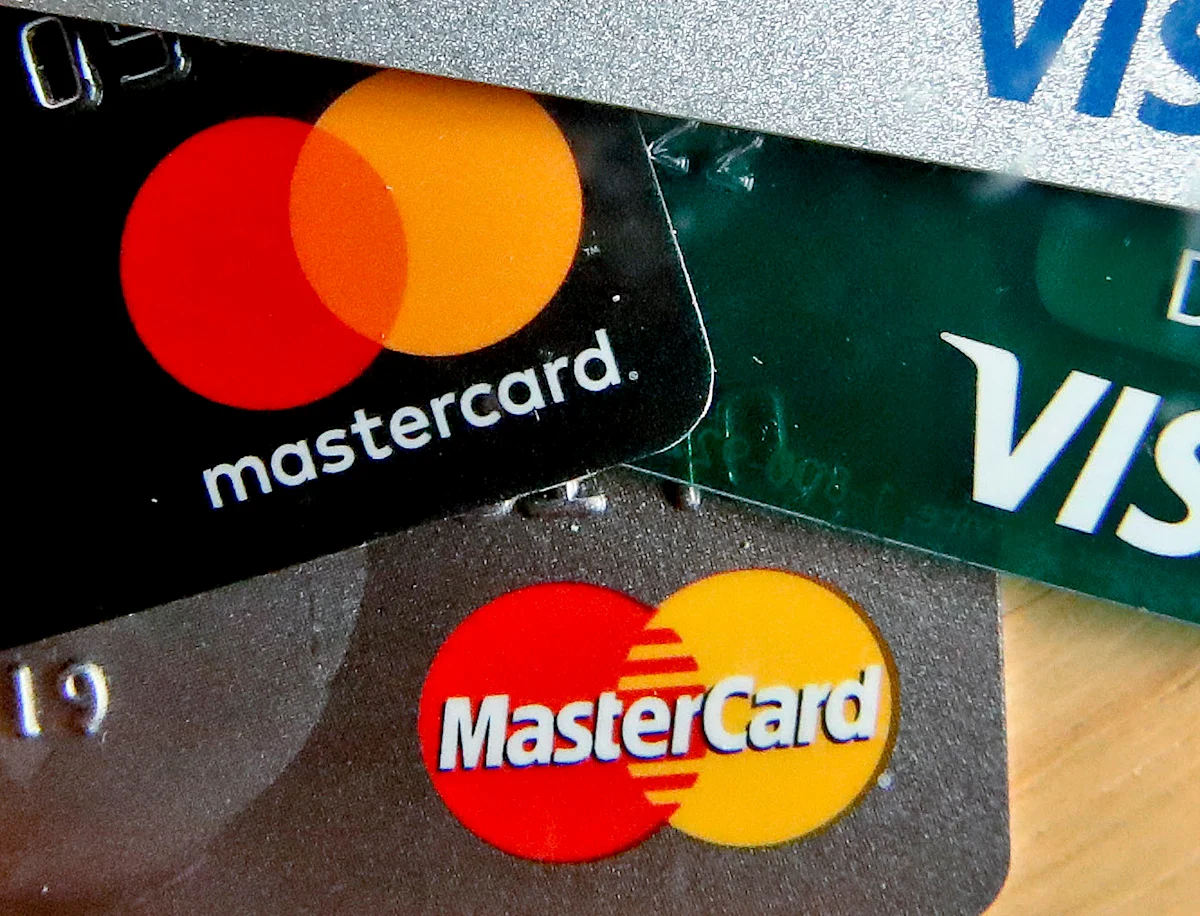
Visa and Mastercard ATM cash withdrawals spanning roughly 19 years are part of a class-action lawsuit settlement totaling $167.5 million.
The case, known as Burke v. Visa Inc., involves independent ATMs often found in convenience stores, gas stations, grocery stores, hotels, and bars — non-bank locations that often levy surcharges on cash withdrawals.
Here’s who is eligible for a cash payment as part of the settlement.
Read more: Just received a settlement? 5 smart ways to use the money.
What is the class-action lawsuit about?
The legal complaint claimed that cardholders nationwide paid excessive ATM fees that were not fully reimbursed, violating federal and state antitrust laws. The lawsuit covers ATM cash withdrawals over nearly two decades, from Oct. 24, 2007, to Aug. 14, 2026.
Court documents allege that independent ATM operators were not allowed to charge cardholders a lower fee by using card networks other than Visa and Mastercard.
“If permitted to do so, ATM operators would have an economic incentive to pass on to customers the benefit of using the lower-cost, higher net revenue ‘rival networks’ in the form of lower, or discounted, access fees,” the claim stated.
Visa (V) and Mastercard (MA) opted to settle the case without admitting liability.
The settlement also covers separate, state-specific classes of claimants in California, Illinois, Massachusetts, and Michigan.
Who is eligible to receive the settlement?
Eligibility includes claimants who used a Visa or Mastercard to withdraw cash from a deposit account using an independent ATM (not owned by a financial institution) in the U.S. and were charged a surcharge or access fee that the cardholder’s bank did not fully reimburse.
Transactions must have been made between Oct. 24, 2007, and Aug. 14, 2026.
How much will the settlement pay?
The $167.5 million settlement fund will pay attorneys’ fees and expenses, administrative costs, taxes, and payouts to eligible class members. The amount of cash payments to eligible cardholders will depend on the number of valid claims filed.
Deadline to file a claim
Claim forms may be submitted at www.nonbankatmsurchargesettlement.com. The submission deadline is Feb. 10, 2027. You may also exclude yourself or object to the settlement at the same web address.
Payments will be issued following a final court hearing in early 2027.


Warning: This post contains spoilers for Resident Evil.
For a movie based on a video game series that’s made a name for itself as a testament to human resilience and survival against impossible odds, Zach Cregger’s Resident Evil sure serves up a brutal kick in the teeth of an ending. For fans of the video games’ traditionally triumphant resolutions, it’s a narrative decision that’s likely to be divisive. But if you’re willing to lean in to the Weapons filmmaker’s penchant for expectations-upending final acts, it’s one that offers some good old fashioned horror nihilism.
Cregger’s adaptation tells an original story in the Resident Evil universe rather than faithfully adapting any of the games, building on previous films, or pulling in legacy characters. Still, the movie manages to successfully capture the atmosphere and experience of playing through a new installment in gaming’s most storied survival horror franchise, first launched in 1996 by Japanese developer Capcom. Like a fair share of Resident Evil leads who came before him, our protagonist, medical courier Bryan Hodukavich (Austin Abrams), finds himself thrown into a nightmarish fight for survival against uber-aggressive biological monstrosities. Ammo is scarce, obstacles are everywhere, and perhaps most relatably, Bryan has no real idea how to operate the progression of increasingly high-caliber guns he picks up along the way.

The film opens with Bryan—whose newly pregnant girlfriend Michele is waiting at home to discuss their future—accepting a last-minute double-pay delivery job transporting a high-priority Schedule A organ carrier case up through the snowy mountains to Raccoon City General Hospital.
Unfortunately, Bryan’s situation quickly turns from dangerous to unbelievable to dire after he accidentally hits a woman with his car who turns out to have been infected by a mutating zombie virus that the shadowy Umbrella Corporation accidentally unleashed on the city a few hours prior.
By the time Bryan learns he is actually carrying the final ingredient needed to synthesize a cure to the virus, he has already fought off several infected individuals, who, to his horror, didn’t exactly die after being shot in the head. Instead, their remains fused together to transform into a grotesque, Cronenberg-esque amalgamation of limbs and tentacles intent on hunting Bryan down. Not to mention Bryan was also been bitten by one of the aforementioned infected, making his race for an antidote all the more pressing.
How does Resident Evil end?

Despite having to face off with a horde of dive-bombing zombies, an acid-vomiting monster, and a heavily infected maternity ward, among other horrors, Bryan does eventually make it to the secure lab on the 28th floor of Raccoon City General Hospital. However, by the time he hands the key to the cure over to a team led by Umbrella Corporation scientist Carl (Zach Cherry), he has already started to transform.
Just as the team completes the antidote, which they plan to hand over to a unit of National Guard soldiers set to land on the roof at any minute, Bryan’s grotesquely mutated limbs start lashing out and savagely killing the scientists before dragging their corpses in to meld with Bryan’s body. Bryan begs for one of the scientists to simply stick him with the syringe of cure and end it, but they’re all either quickly incapacitated or too frightened. Eventually, monster Bryan crashes through a window with the last-surviving scientist in his grip and there’s a final chance for the technician to inject him with the antidote. It seems like he’s about to succeed, but in a bleak twist, Bryan knocks the syringe from his hand and it goes crashing down dozens of stories into the darkness below. Bryan roars as the National Guard helicopters circle, and it seems like all hope of preventing a total zombie apocalypse are gone.
There is no moment of triumph or last-minute turn of the tide. Instead, the screen cuts to black and the movie is over, leaving you contemplating just how futile all of Bryan’s efforts were. To fans who were hoping for a more conventional Resident Evil final boss battle, it’s an ending that may come off as a bit mean-spirited. But according to Cregger, he felt just as assured about this choice of kicker as he did about the much-discussed climax of Weapons.
“I remember when I thought of that moment and that was an ‘aha’ moment. I was excited. I was like, ‘That is perfect,’” he told Men’s Health. “There’s a similar thing at the end of Resident Evil and I remember, when I had the idea of how this movie should end, I was like, ‘That is it.’ And it feels good when you know you can stop searching. I’m always looking for the next, ‘How can I improve every idea?’ and sometimes when you get an idea where you’re like, ‘Nope, that’s what it is,’ that’s a good feeling. It’s like, ‘That is a solid table with four legs. Leave it alone.’ It’s nice when that’s the end of the movie too. If you know that you can stick the landing, then you’re in good shape.”
However, Bryan dying an agonizing and untimely death apparently doesn’t necessarily mean Cregger is done with Resident Evil as a whole. “I can’t help thinking about other places this story could go. I’ve got ideas,” he told the Playlist. “Let’s see what happens.”


LSEG has outlined plans for 24/5 trading, a digital securities depository, tokenized equities, and new infrastructure involving Kraken and HSBC.
Summary
- LSEG expects its LSEG24 trading cycle to begin in the first half of 2027.
- The group is building a digital securities depository and tokenized equity products.
- LSEG is working with Kraken on listings and HSBC on an interoperable connection.
- U.S. exchanges and regulators are also examining longer trading hours and tokenized securities.
LSEG plans to connect trading and tokenized settlement
The European Blockchain Convention’s Day 2 media briefing attributed the plans to Darko Hajdukovic of London Stock Exchange Group, who discussed the projects during a panel on institutional digital-market infrastructure.
“In the first half of next year we move to a 24/5 trading cycle, LSEG24. We’re building a digital securities depository, partnering with Kraken to list on it, and building tokenised equity tokens. We’ve also signed an MOU with HSBC on an interoperable link,” Hajdukovic said.
The comments indicate that LSEG is working across several parts of the trading process rather than developing a single tokenization product. Trading, depository services, listings and connections with other financial institutions each address a separate part of the market.
Hajdukovic referred to the first half of next year while speaking at the 2026 conference, placing the planned LSEG24 move in the first half of 2027. The media copy did not provide a specific launch date or identify which securities would initially trade through the system.
LSEG’s digital securities depository would support the recording and settlement of eligible assets, while its work with Kraken could bring a crypto-native platform into the listing process. The agreement with HSBC concerns an interoperable link, according to the supplied remarks.
Tokenized equities are moving into regulated markets
LSEG’s plans arrive as exchanges and brokers test different ways to connect conventional shares with blockchain networks. Some products represent beneficial interests in securities held by a custodian, while others provide only contractual exposure to the price of an underlying stock.
As crypto.news previously reported, Coinbase CEO Brian Armstrong has said tokenized stocks should hold real securities rather than operate as synthetic price-tracking instruments. Coinbase introduced Base-native tokens linked to Apple, Nvidia, Meta and Alphabet for eligible non-U.S. customers in August.
Ownership structure remains important because a blockchain token does not automatically provide voting rights, dividends or a direct legal claim against the issuing company. Product terms, custody arrangements and the official shareholder register determine what an investor owns.
Kraken has already moved beyond simple stock-token trading. In September, the exchange introduced xStocks yield vaults for products linked to the SPDR S&P 500 ETF Trust, Invesco QQQ Trust and Nvidia.
The vaults allow customers to deposit selected xStocks and earn returns generated through automated strategies. Kraken charges a 25% performance fee, which it deducts before displaying the estimated annual percentage yield, according to the exchange’s documentation.
LSEG did not say whether its planned tokenized equities would use the same legal model as xStocks or Coinbase’s products. Hajdukovic also did not identify which blockchain would support the tokens during the quoted portion of the panel.
Always-on markets create a settlement challenge
Nadine Teychenne of Citi told the same conference panel that blockchain infrastructure can give institutions a real-time record of transactions and programmable assets.
“What’s most interesting is the real-time, always-on nature of the blockchain single source of truth, but also the programmability of assets, which we’re starting to see with tokenised money market funds,” Teychenne said.
Citi has worked on blockchain systems since 2015, she added, including wallet infrastructure and internal tokenized deposits that can move client funds globally at any time.
Extended trading does not by itself provide round-the-clock access to bank money. Securities may trade during the night or on weekends while the banking rails used to fund and settle transactions remain closed or operate under limited hours.
A September analysis of weekend dollar funding gaps found that always-open tokenized markets can face liquidity pressure when traditional dollar settlement systems are unavailable. The problem becomes more relevant when a platform promises continuous trading but relies on banking partners to process cash movements.
LSEG launched its Digital Settlement House earlier in 2026 to support transactions involving commercial bank money, securities, and digital assets. According to LSEG, the service permits 24/7 transfers and uses synchronized settlement to reduce the period during which either party faces completion risk.
U.S. markets are considering similar changes
For American investors, LSEG’s roadmap sits alongside efforts in the United States to extend equity-trading hours and establish rules for tokenized securities.
U.S. platforms have traditionally relied on overnight trading venues outside standard exchange hours, but exchange operators have pursued longer sessions in response to international demand. Any extended schedule still requires market surveillance, resilient clearing systems, and adequate liquidity during hours when participation may be lower.
Tokenized shares raise a separate regulatory question in the United States. A product backed by a security can remain subject to federal securities law even when its ownership record or transfer process uses a blockchain.
SEC treatment can depend on whether a token represents the actual security, a beneficial interest held through an intermediary, or a derivative that tracks its price. Transfer-agent records, custody terms and shareholder rights therefore matter alongside the technology used to move the token.
At the Barcelona panel, Coco Chen of the Association for Financial Markets in Europe asked participants how institutional market infrastructure had developed in recent years. Teychenne said Citi was already moving client money through live internal tokenized deposits, while Hajdukovic listed LSEG24, the depository project, tokenized equity products and the HSBC connection as LSEG’s next projects.


A BaFin official has warned that centralized EU crypto supervision could place extra burdens on firms while reducing flexibility in applying MiCA rules.
Summary
- BaFin’s Stephan Mögelin raised concerns about transferring authorization to a centralized EU supervisor.
- National regulators would still hold knowledge of local markets and business models.
- Mögelin said EU countries lack a consistent private-law framework for some crypto assets.
- E-money tokens could provide the cash side of tokenized financial-market transactions.
Centralized MiCA supervision could reduce flexibility
The European Blockchain Convention’s Day 2 briefing attributed the warning to Stephan Mögelin of Germany’s Federal Financial Supervisory Authority, or BaFin, during a panel on proposed changes to the Markets in Crypto-Assets framework.
Mögelin said centralized supervisors could still depend on knowledge held by national authorities, particularly when dealing with the characteristics of individual markets.
“What we’ve seen, for example, in the application of EMIR, is that with a centralised supervisor, one might assume the application and understanding of specific provisions also becomes somewhat centralised,” he said.
According to Mögelin, centralization could leave crypto-asset service providers with less flexibility when regulators apply individual provisions. Moving responsibility after companies have already completed national authorization procedures could also create additional work.
“Market participants and clients should decide what they consider beneficial, because these firms currently go through an authorisation process, and shifting responsibility to a centralised entity might add burdens regardless of the outcome.”
Under MiCA, a crypto-asset service provider can obtain authorization from a national regulator and use the resulting passport to operate across the European Economic Area. A centralized model would transfer some supervisory responsibility from national authorities to an EU-level body.
MiCA licensing has divided access to the EU market
MiCA has created a common licensing structure for exchanges, custodians and other crypto service providers, although national regulators continue to process applications and supervise licensed firms.
In July, Ripple secured its MiCA authorization from Luxembourg’s Commission de Surveillance du Secteur Financier. The approval permits the company to offer regulated crypto payment services across 30 European Economic Area countries.
As crypto.news previously reported, Ripple paired the crypto-asset service provider license with an electronic money institution license. The combination supports payment services involving crypto assets and stablecoins under the company’s European structure.
MiCA’s passport system can reduce the need for separate approvals in every participating country, but Mögelin’s remarks point to the trade-off between consistent supervision and national discretion. Firms may receive access across the region through one authorization while remaining dependent on how the regulator in their home jurisdiction applies the rules.
The EBC media briefing said the MiCA consultation had been extended to Sep. 30. During the panel, moderator Tommaso Astazi of Blockchain for Europe asked which areas of the framework required changes and whether supervision should move toward a centralized structure.
Private law remains incomplete for crypto assets
Mögelin identified the legal treatment of crypto assets outside financial-services regulation as another unresolved issue.
“From a supervisory and risk-management perspective, what we’ve seen so far is that MiCA and other European frameworks provide only a regulatory framework for financial services.”
“What’s still missing in most member states is a private law framework for specific crypto assets.”
Private law governs questions such as ownership, transfers, contractual claims and the treatment of assets when an intermediary fails. A financial-services license can regulate the conduct of an exchange or custodian without resolving every question about who legally owns a token or how creditors should treat it during insolvency.
Mögelin said the consultation was considering whether a European-level private-law framework could prevent another layer of fragmentation. Without common treatment, the same token could fall under different ownership or insolvency rules depending on the member state handling the dispute.
Similar ownership questions have emerged around tokenized securities. A token can record a transaction on a blockchain, but the legal register, custody agreement and applicable securities law determine whether the holder owns a share, a beneficial interest or only a contractual claim.
The United Kingdom is addressing related questions outside MiCA. In September, the House of Lords backed a digital asset strategy amendment by 194 votes to 138.
The proposed strategy would cover crypto assets, stablecoins, tokenized securities and digital settlement systems. The Treasury would have 12 months after Royal Assent to publish the strategy, although the bill must still pass through the House of Commons before the requirement becomes law.
E-money tokens could support tokenized settlement
During the BaFin panel, Mögelin also discussed the role of e-money tokens, a MiCA category covering crypto assets designed to maintain their value by referencing one official currency.
He said the convergence of crypto service providers and conventional financial institutions had increased interest in using e-money tokens inside traditional market infrastructure. One possible use involves supplying the cash side of transactions in tokenized securities.
Tokenized trades require both the asset and payment legs to settle. If one side moves through blockchain infrastructure while the other remains dependent on conventional bank transfers, the parties can face delays or completion risk.
Mögelin said regulators were discussing whether services involving e-money tokens could extend to credit or lending. In his account, such services could increase efficiency for companies operating across both crypto assets and tokenized financial instruments.
U.S. regulators face a related division between securities oversight and payment regulation. A tokenized stock generally falls within securities rules, while the stablecoin used to settle the trade can raise separate questions involving reserves, redemption rights, banking relationships and federal or state supervision.
Mögelin’s comments did not call for removing national authorities from the MiCA system. He said even a centralized supervisor could benefit from member-state expertise, while firms and their clients should assess whether transferring authorization responsibilities would provide enough value to offset the operational burden.
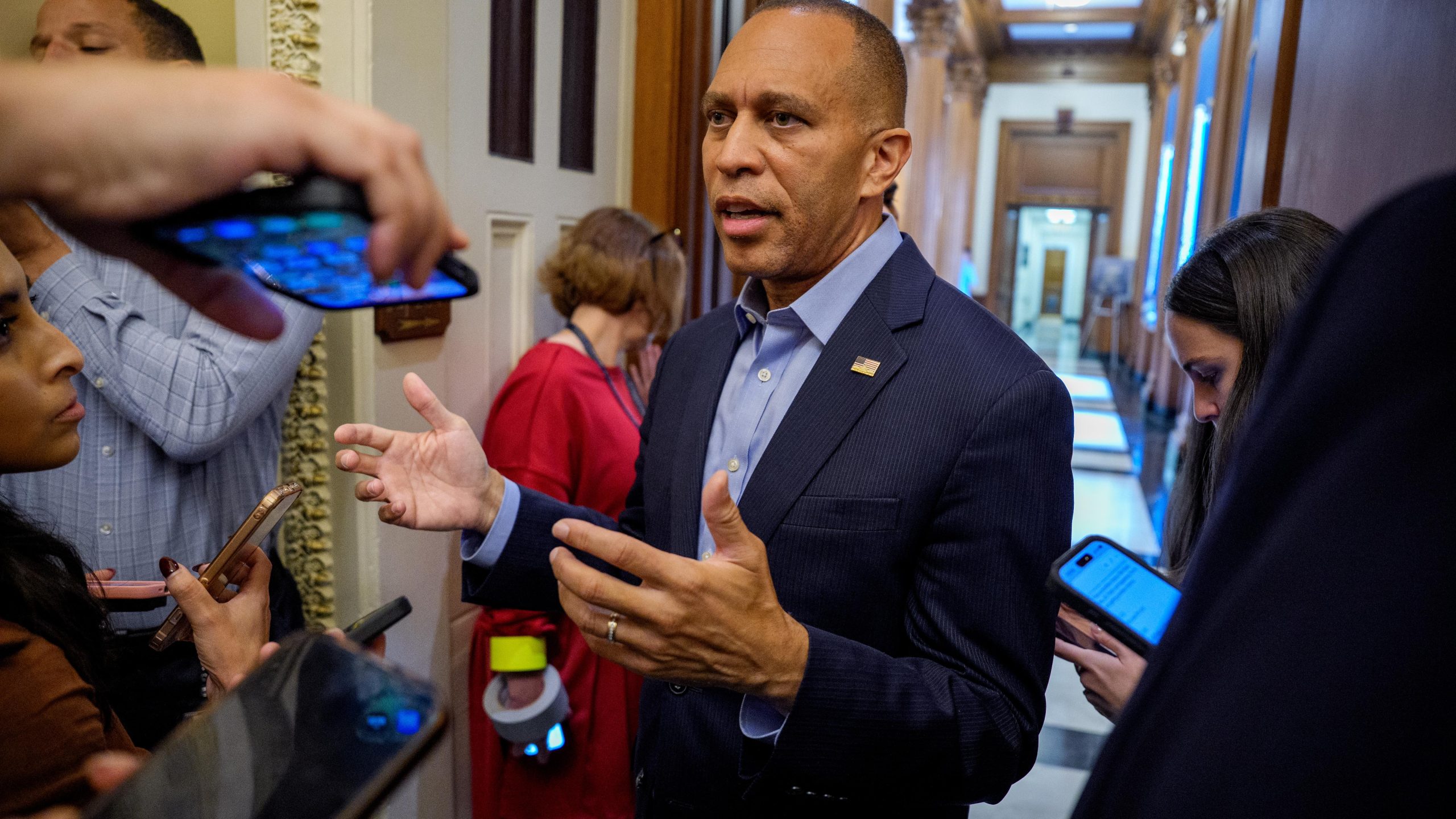
The new law allows Trump to impose tariffs of up to 100% on countries that make “new purchases of crude oil or natural gas” originating from Russia, or any country among the top five importers of Russian oil or gas over the last 12 months.
According to the Center for Research on Energy and Clean Air (CREA), the top three purchasers of Russian oil and gas in August were China, India, and Turkey.
Deborah Elms, head of trade policy at the Hinrich Foundation, says Trump’s previous ambition to introduce tariffs using any available avenue has ignited the concern among Democrats.
“The reason why people are so nervous about this is that the authority is extremely wide, and has been handed to an Administration that has already shown great latitude to follow the spirit of the law,” Elms tells TIME. “Tariffs could be set at 100%. It’s really at the discretion of the Executive Branch.”
Democratic leaders sound the alarm on “terribly flawed” bill
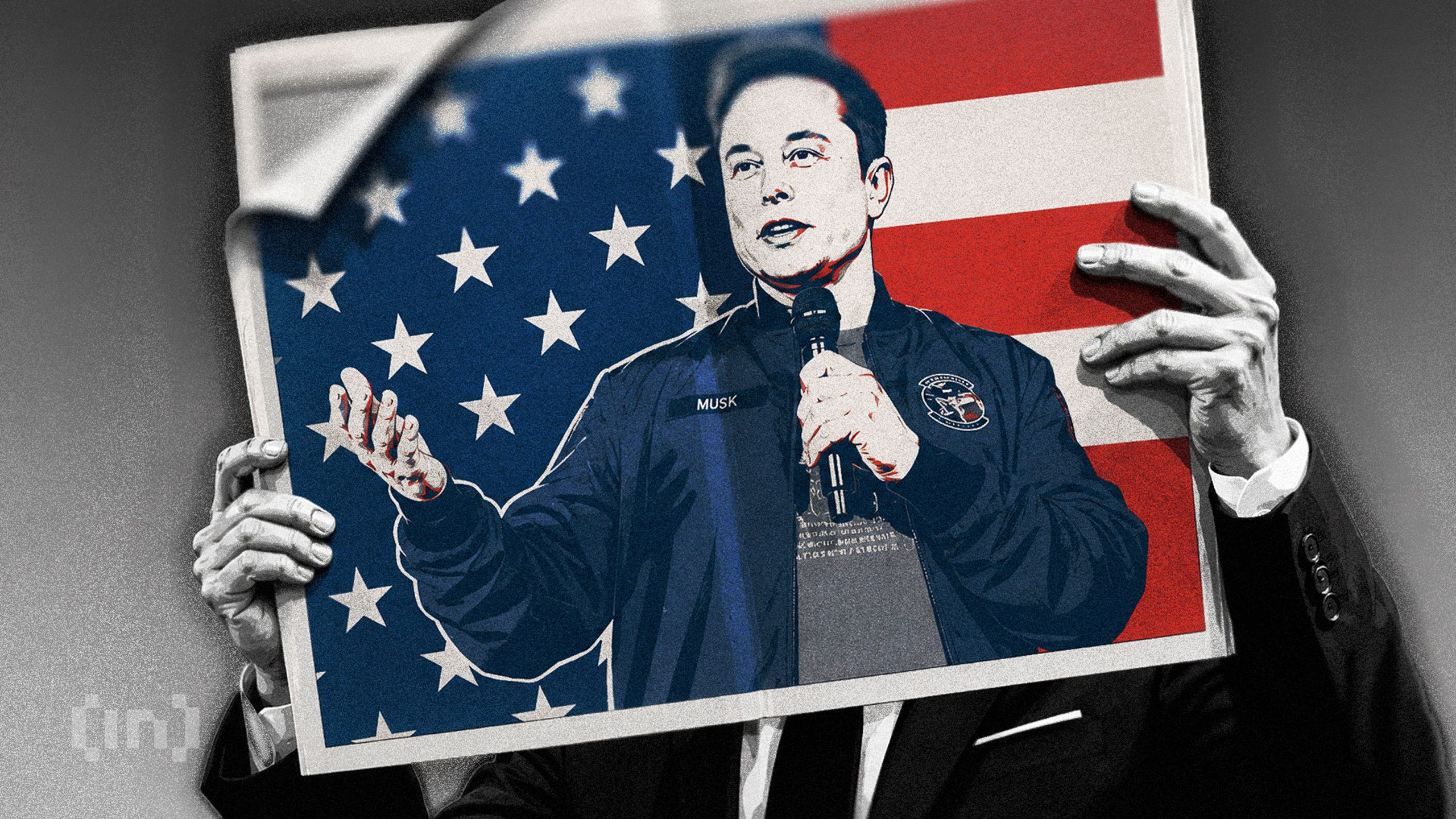

Elon Musk said artificial intelligence (AI) will roughly double US economic growth next year, taking it from about 2% to about 4%.
The number sits far above the official outlook. Federal Reserve policymakers put 2027 growth at 2.4% in projections released on September 16.
Follow us on X to get the latest news as it happens.
Musk’s 4% Call Sits Far Above the Fed and Recent Growth Data
The starting point he named is close to the record. Real GDP grew at a 1.5% annual rate in the second quarter, the Bureau of Economic Analysis reported. The first quarter came in at 2.1%.
Fed officials see 2.3% growth this year and 2.4% next year. They put the economy’s long run potential at 2.0%. A 4% year would be the fastest expansion since the technology boom of the late 1990s.
So far, AI’s clearest mark on the economy is spending rather than output. Chips, data centers and power plants have absorbed enormous corporate budgets. That buildout has shaped which AI stocks investors favor this year.
Newsom Orders AI Audits as Hinton Warns Congress on Timing
Musk’s forecast comes as officials in two capitals move to slow the same technology down. California Governor Gavin Newsom signed an executive order on Thursday advancing an AI kill switch, a mechanism that would let a model be shut down.
The order tells leading AI firms to host independent auditors inside their labs. An expert group has two months to propose stronger safety laws.
In Washington, Nobel laureate Geoffrey Hinton told lawmakers on Wednesday that time is short.
“Maybe a year, but not much more than a year,” NBC News reported, citing Hinton.
Hinton spoke after a closed briefing on Capitol Hill. BeInCrypto reported last week that Congress had already left AI safety to company executives.
Neither the Fed nor the Bureau of Economic Analysis has moved its outlook toward Musk’s number. The third quarter GDP estimate is the next official reading against which the forecast can be measured.
The post Elon Musk Says AI Will Double US Growth to 4%: Can It? appeared first on BeInCrypto.

But theirs are old stories, already told and retold in every conceivable media, and often, effectively, by women. Wuornos was, of course, most famously portrayed by Charlize Theron, in writer-director Patty Jenkins’ career-making, Oscar-winning 2003 film also titled Monster. Isabelle Huppert stars as Báthory in The Blood Countess, a new feature by German experimental cinema legend Ulrike Ottinger, which is earning praise on the festival circuit for its strangeness and sense of humor. Meanwhile, on TV, creator Liz Meriwether just gave us Furious—another story of female rage, female repression, and yes, even a (fictional) female serial killer. While Krieps is mesmerizing in Monster and frequent Murphy production designer Matthew Flood Ferguson has outdone himself with lavishly suffocating Gilded Age interiors, Furious is the superior show because it takes “being a woman is hard” as the given it is rather than as the endpoint of many repetitive episodes. It has dark, lived-in comedy and real stakes, posing the question of what can realistically be done about systemic misogyny and the anger over it that stains women’s lives.
Coinbase (COIN) stock crashed through its 50-day moving average on Wednesday after the Senate failed to advance the Digital Asset Market Clarity Act. If Coinbase’s downside momentum continues, bearish option trades could perform well. Let’s look at one trade known as a bear put spread. This is a bearish trade that benefits from further downside in the stock price. It’s similar…
Copyright ©2026 Investor’s Business Daily, LLC. All rights reserved. 87990cbe856818d5eddac44c7b1cdeb8
Police Scotland message to anyone buying tickets for UK concerts

Ex-FBI Agent Claims ‘A Lot of Proof’ Suggests Nancy Guthrie Is Dead, But Officials Still Won’t Confirm

Dragonfly’s Qureshi Urges Ending Zcash Dev Fund After 2028




-

 Tech5 days ago
The Latest Weird Thing to Play Doom Is the Mapped-Out Brain of a Fruit Fly
-

 Crypto World4 days ago
Kraken Lets xStocks Holders Earn Yield Through DeFi
-

 Crypto World2 days ago
US Charges Robinhood Engineers Over Crypto Listing Trades
-

 Crypto World6 days ago
Can AI Build a Startup in 72 Hours? Elon Musk's Team Will Livestream the Test
-

 Crypto World3 days ago
What Is the Status of the U.S.-Iran Peace Talks? Here's What Both Sides Are Saying
-

 Crypto World4 days ago
Elon Musk Drops a Bombshell: Grok 5 Could Be the AGI Breakthrough
-

 Business6 days ago
Rivals Sam Altman and Elon Musk Rally Behind Dario Amodei’s Call for a Slowdown in AI Development
-
 Crypto World5 days ago
New Tesla Roadster Uses SpaceX Tech. Will It Impact the Stock Price?
-
 NewsBeat4 days ago
‘Sick conspiracy’: Trump says only guardrails AI needs is ‘a strong and smart (High IQ!) president’ in all-caps rant
-

 Crypto World7 days ago
Robinhood Chain Never Stopped But its Blobs Did Stop Reaching Ethereum For 14 Minutes
-

 Crypto World4 days ago
NVIDIA Analysis: Attempted Rising Wedge Breakout Amid Pressure on the AI Sector
-

 Business7 days ago
Marvell: Most Potent Setup Of The AI Factory Decade
-

 Crypto World4 days ago
Revolut Attackers Warn of Ongoing Daily Customer Data Leaks
-
 Crypto World5 days ago
3 Token Unlocks to Watch in the Third Week of September 2026
-
Crypto World4 days ago
Can Circle’s Arc Repeat Robinhood Chain’s Meme Coin Boom?
-

 Crypto World4 days ago
DOJ Seeks to Seize $61M in Iran Oil Funds From Binance Accounts It Vouched For
-

 Crypto World7 days ago
Bitcoin ETFs lose $462.7M as Ethereum funds gain $196.9M
-
Business4 days ago
SK Hynix ADRs Fall More Than 6% as Memory Rally Breaks on Fears of Slower AI Spending
-
 Crypto World5 days ago
AI Safety Burden Falls on Chief Executives as Trump Prioritizes China Race
-
 NewsBeat6 days ago
Last Night of the Proms pays moving tribute to Dolly Parton as Sheridan Smith wears a gold sequin jumpsuit in memory of the Queen of Country
You must be logged in to post a comment Login