
Crypto World
The Ideal Moment to Buy Ethereum (ETH) Is Now: Here’s Why

It was the start of June when the second-largest cryptocurrency last traded above the $2,000 psychological level and is currently down 60% on a yearly scale.
Despite the downfall, many analysts see upside potential, while some believe the ongoing conditions represent a great buying opportunity.
The Right Strategy?
As of press time, ETH is worth around $1,880, as some market participants are perhaps waiting for the ultimate confirmation that the cycle’s bottom has arrived so they can jump on the bandwagon. According to Michael van de Poppe, that moment never comes, claiming the ideal time to position yourself in ETH is literally right now.
“It’s always awkward to be positioning yourself into a position, as that’s the purpose of the markets. Previous breakouts of the market have resulted in generally big returns, as ETH is known for volatile movements. In that sense, last time a 60% breakout in less than a week took place. In 2023, the same happened,” he added.
Van de Poppe said he wouldn’t be surprised to see such an upswing in the following months, with a rally to $3,000 in a matter of days/weeks. Shortly after, the analyst argued that “a volatile move” is on the horizon, suggesting that ETH’s range is getting smaller day after day and that a pump might be coming next.
“Remaining positive for the coming period,” he concluded.
Other commentators who have also recently touched upon Ethereum include Ali Martinez and Gerla. The former opined that the drop to $1,580 in June was the launchpad for a potential upcoming rally, setting $3,000 as the target. Martinez noted that this level has historically acted as a precursor to major revivals on multiple occasions.
X user Gerla was even more bullish, spotting an RSI signal that has previously been followed by a price explosion. That said, the analyst thinks the next move could send ETH to a new all-time high above $10,000.
The Factors to Consider
Multiple elements hint that ETH may indeed be poised for a substantial ascent. Not long ago, CryptoQuant revealed that large investors (those holding between 10,000 and 100,000 coins) and “mega-whales” have accumulated aggressively since mid-2025. At the same time, smaller players have been selling, which is typically considered a bullish combination.
The next factor on the list is the amount of ETH stored on exchanges, which continues to hover near a 10-year low. This suggests that many investors have transferred their holdings from centralized platforms to self-custody, effectively reducing immediate selling pressure.
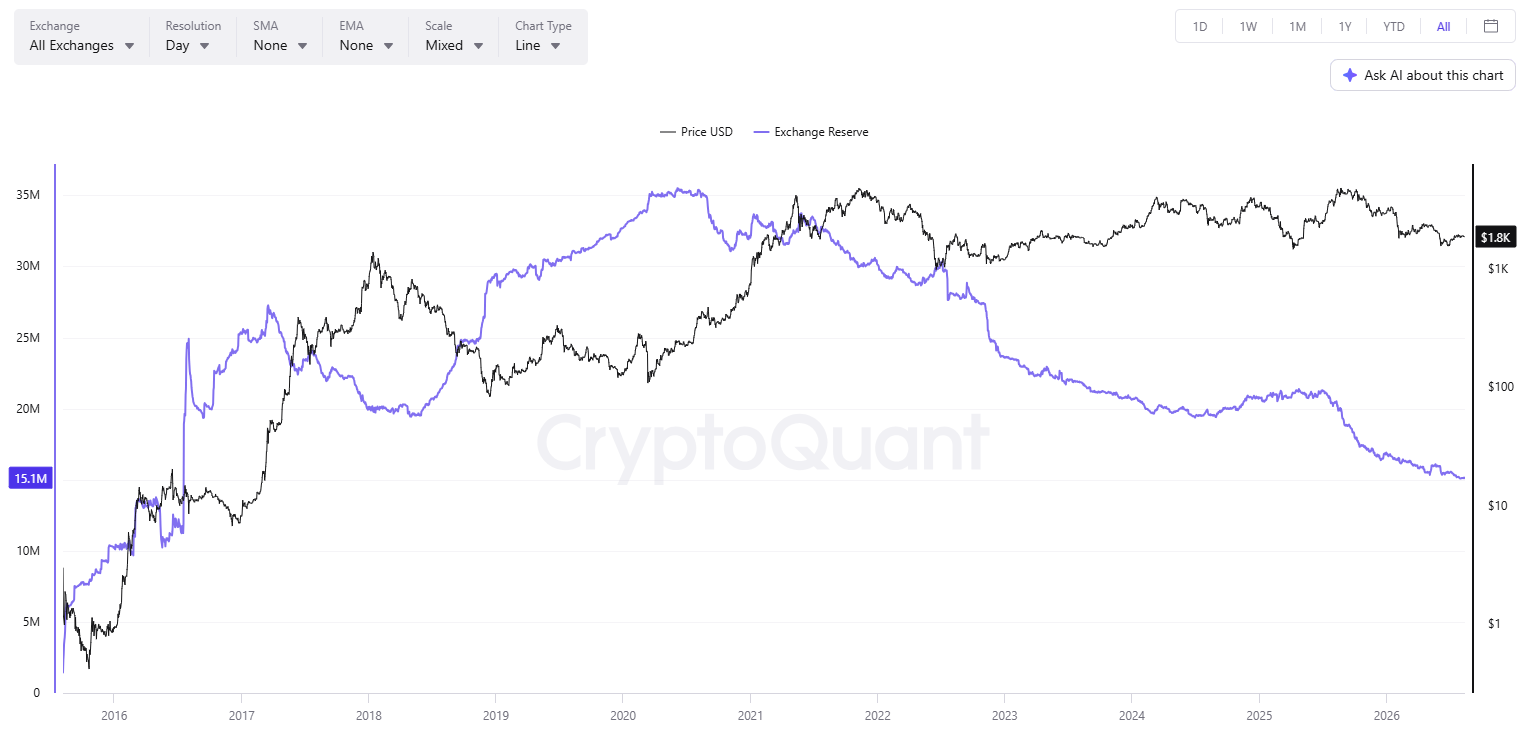
- ETH Exchange Reserves, Source: CryptoQuant
Last but not least, we shall pay attention to the institutional interest in ETH. Since the start of July, spot Ethereum ETFs have seen a strong wave of inflows, possibly paving the way for a potential price move north.
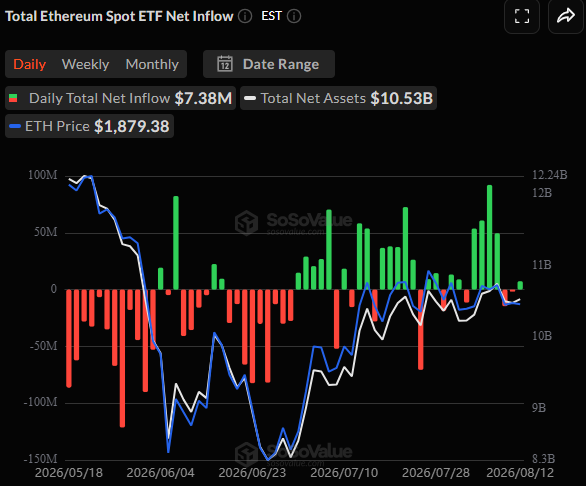
- Spot ETH ETFs, Source: SoSoValue
The post The Ideal Moment to Buy Ethereum (ETH) Is Now: Here’s Why appeared first on CryptoPotato.

Gen Z traders on Binance are allocating a growing share of their equity activity to exchange-traded funds (ETFs), with the products accounting for 25% of the cohort’s trading volume in early August, according to Binance Research.
ETFs accounted for 21.9% of Gen Z net equity inflows in July, up from 18.5% in June, while the share going to individual stocks fell to 74.2% from 77%.
The analysis examined activity across direct equities, tokenized stocks and traditional finance perpetuals, comparing Gen Z accounts with Millennials, Gen X and Baby Boomers on measures including trading frequency, net flows and leverage use.
The younger cohort traded less frequently than other working-age generations across all three products. Gen Z averaged 13 monthly trades in TradFi perpetuals, compared with 17 for Millennials and 16.5 for Gen X.
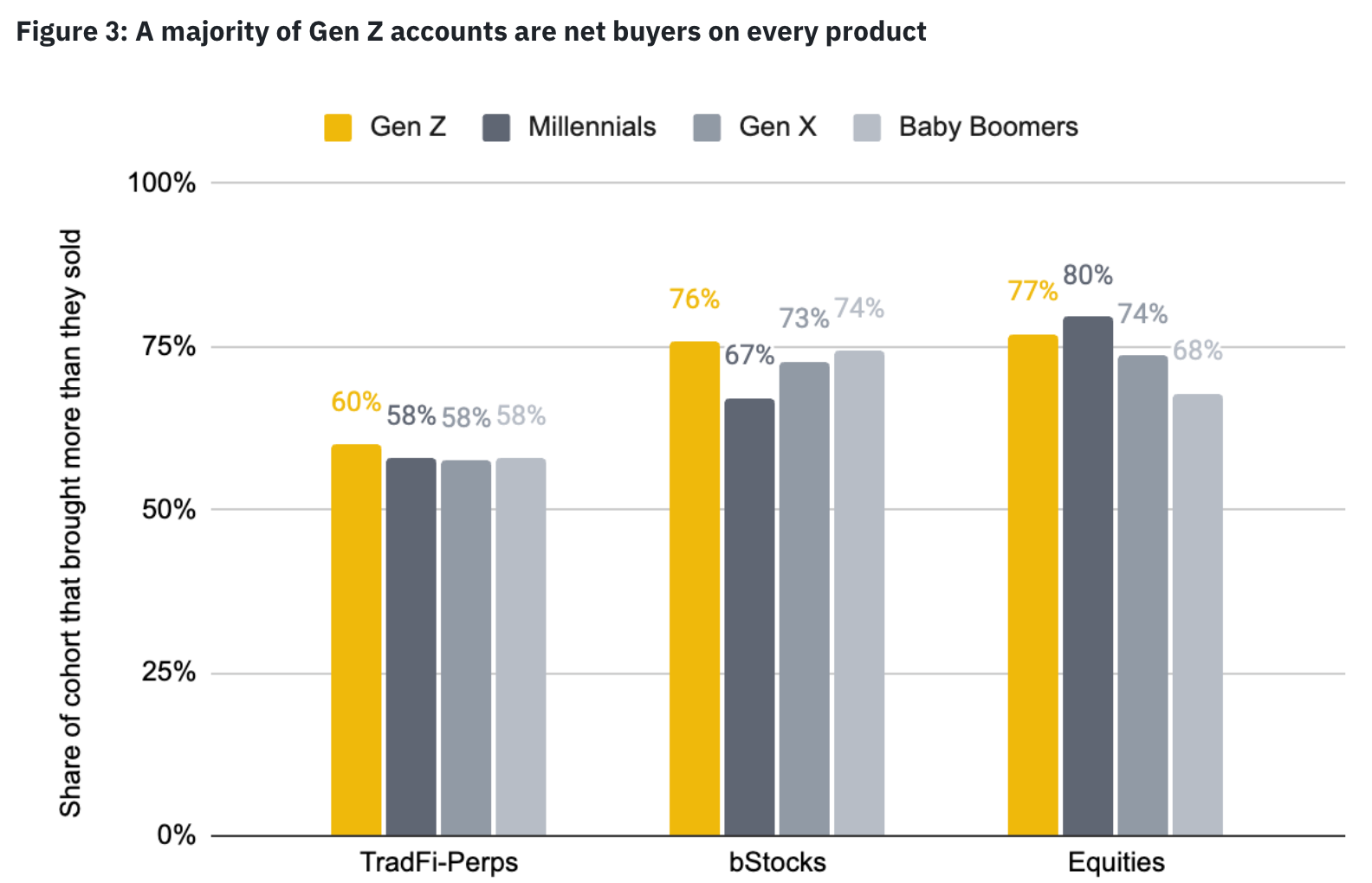
Among Gen Z direct-equity accounts, 22% had never placed a sell order, compared with 19% of Gen X accounts and 9% of Baby Boomer accounts. Millennials had the highest share of buy-only accounts at 30%. Among those Gen Z buy-only accounts, top assets by cumulative purchases included Broadcom, Tesla and the Schwab US Dividend Equity ETF, according to Binance.
Net buyers by generation and product. Source: Binance
Gen Z also showed relatively little appetite for leveraged and inverse ETFs; 88.2% of Gen Z TradFi perpetual accounts recorded no activity in those products, compared with 84.5% of Millennials and 85.9% of Gen X.
Binance cautioned that its direct-equities product only reached meaningful scale in June, leaving a relatively short data window for establishing longer-term trends.
Related: Binance to restrict transactions involving HTX, 10 other crypto platforms
Binance bStocks briefly overtakes xStocks
Binance’s bStocks briefly overtook Kraken’s xStocks as the second-largest tokenized stock issuer this week, less than two months after launching. As of Tuesday, bStocks held $610.6 million in tokenized stock value, compared with $601.2 million for xStocks, according to Token Terminal data.
The positions had reversed by Friday, with Token Terminal showing xStocks at $610.7 million and bStocks at $579.6 million, representing 22.3% and 21.2% of the roughly $2.7 billion market, respectively. Ondo Finance remained the largest issuer at $971.8 million.
The broader tokenized stock market has continued to expand, with RWA.xyz tracking $2.43 billion in distributed value as of Friday, up about 5% over the past 30 days.
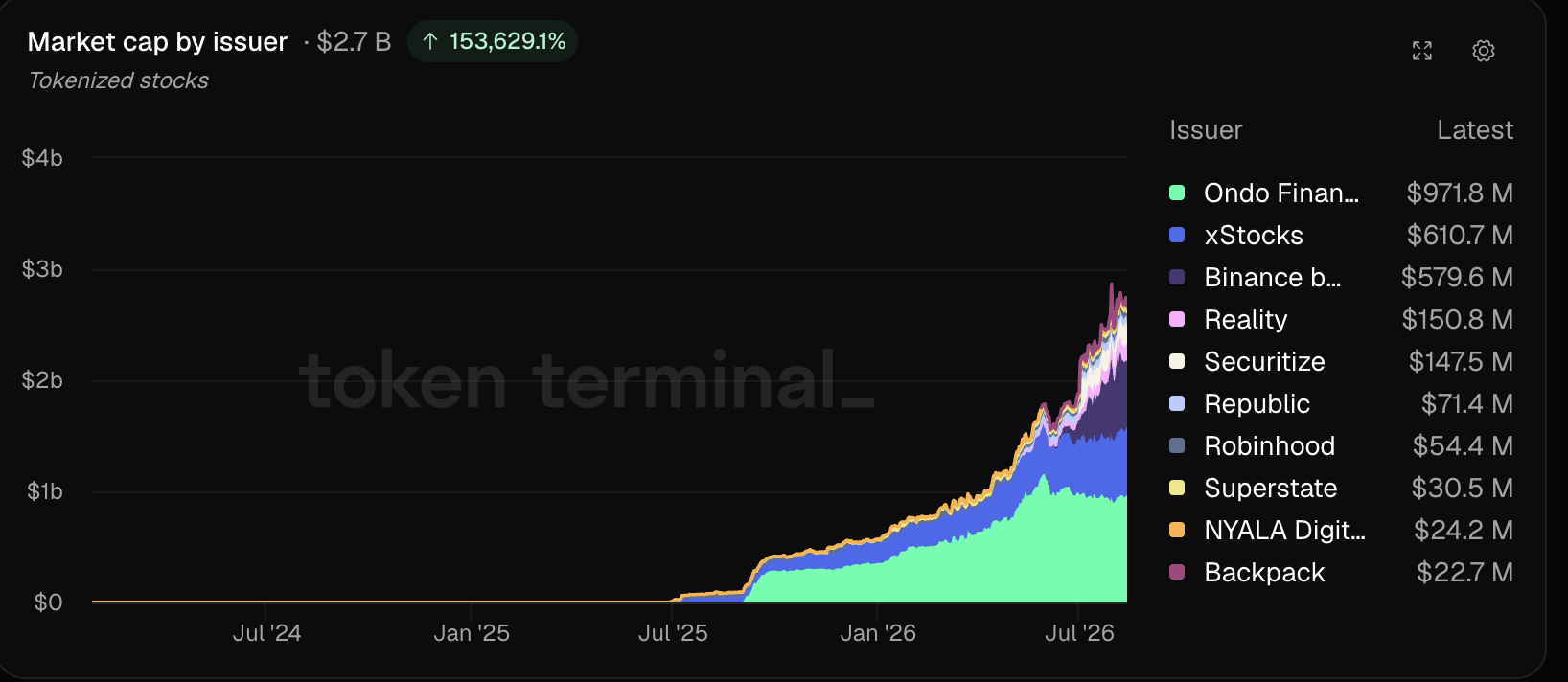
Tokenized stock market cap by issuer. Source: Token Terminal
Magazine: Solana’s fee overhaul increases burn and makes resource hogs pay
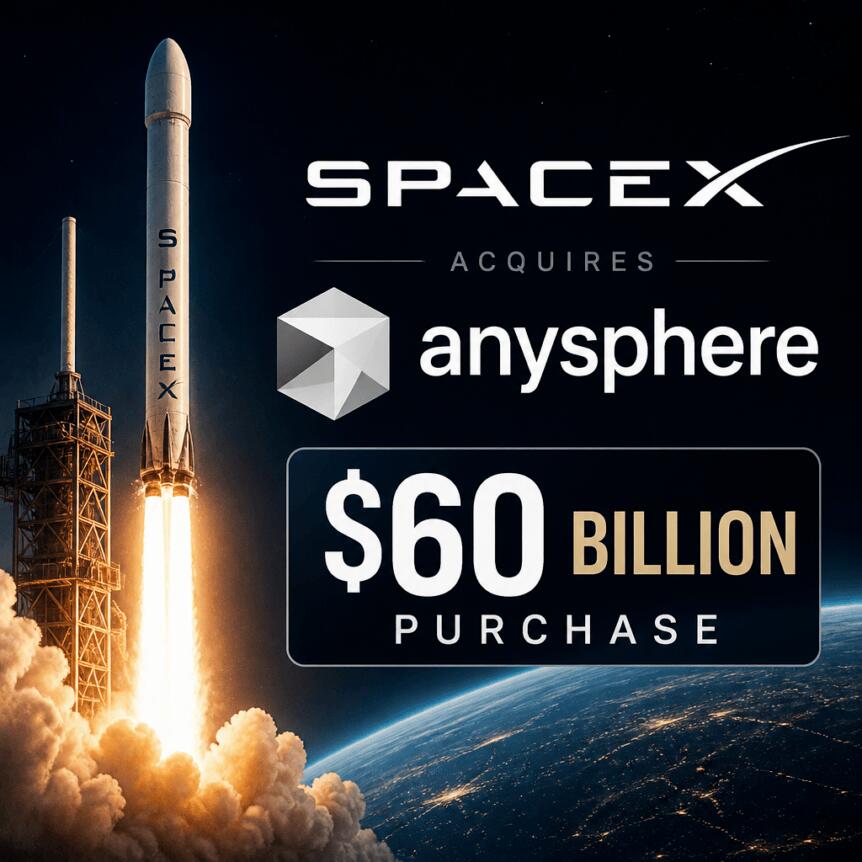
SpaceX has closed its $60 billion all-stock acquisition of Anysphere, the company behind the coding tool Cursor. The company confirmed the merger in a securities filing dated August 14. Cursor now operates as a wholly owned subsidiary under the SpaceX corporate structure.
Merger Terms Take Effect
SpaceX’s subsidiary, X67 Inc., merged directly with Anysphere to complete the transaction. This structure allowed Cursor to convert into a fully owned unit without a lengthy transition period. The filing outlines exact share conversion figures tied to the deal.
Cursor’s common and preferred stock converted into roughly 389.3 million shares of SpaceX stock. That figure reflects the $60 billion valuation set when the deal was first announced in June. SpaceX based the conversion on its average closing price over seven trading days before the merger closed.
Additional equity awards moved through the same process without exception. Vested restricted stock units converted into about 1.75 million shares of Class A common stock. Unvested awards converted into 29.1 million restricted units and 44.4 million stock options for future exercise.
Cursor Moves Under SpaceXAI
Cursor announced the completed deal directly on social media platform X. The company stated it will join the SpaceXAI division going forward. Its stated goal is to strengthen several existing products across the platform.
Those products include Grok Build, Grok Bot, the Grok application programming interface, and Cursor itself. SpaceX intends to fold these tools into a broader development ecosystem. The move follows closely behind the recent release of Grok 4.6.
Analysts see the timing as deliberate rather than coincidental. Grok 4.6 launched just before the merger reached completion. Company leadership positioned that release as an early signal of what a combined engineering team can produce.
Stock Slips Despite Recent Gains
SpaceX shares fell more than 2% at Thursday’s market open. The stock traded near $137 shortly after the opening bell. That dip followed a five-day run in which shares climbed over 23%.
Market watchers linked the earlier rally to anticipation of the merger’s completion. Grok 4.6’s release also contributed to the upward momentum during that stretch. The pullback on merger day reflects a common pattern after major corporate news breaks.
Morgan Stanley issued a bullish note on SpaceX earlier in the week. Analyst Adam Jones set a bull-case price target of $600 per share. He pointed to Cursor as a major driver behind that projected upside.
Jones also highlighted the coding tool’s position in a shifting software market. Code generation continues moving toward automated and commoditised workflows. Cursor, he noted, already holds a dominant position within that specific segment.
The completed deal marks one of the largest technology acquisitions of the year. SpaceX now controls a coding platform used widely across the software industry. How the integration performs will shape the next phase of the company’s expansion into artificial intelligence.


SpaceX has completed its $60 billion stock-based acquisition of Anysphere, bringing the Cursor coding platform into its SpaceXAI business as SPCX shares fell during Friday trading.
Summary
- Cursor has become a wholly owned SpaceX subsidiary after the merger took effect on Aug. 14.
- Cursor investors will receive 389.3 million SpaceX Class A shares under the transaction.
- SpaceX shares traded as low as $135.53 before recovering to about $140.
- Morgan Stanley has retained a $300 target and a $600 bull case for SPCX.
An SEC filing dated Aug. 14 showed that SpaceX completed the acquisition through X67 Inc., a subsidiary formed to carry out the transaction. X67 merged into Anysphere, leaving the Cursor developer as the surviving company and a wholly owned SpaceX subsidiary.
The closing came less than two months after SpaceX signed the merger agreement on June 16. Under its terms, the company valued Anysphere at an implied equity value of $60 billion and agreed to compensate its investors with SpaceX Class A common stock.
SpaceX has issued 389 million shares for Cursor
Cursor’s common and preferred shares outstanding immediately before the merger were automatically converted into rights to receive 389,289,254 SpaceX Class A shares, according to the filing.
SpaceX based the exchange on the volume-weighted average closing price of its Class A shares over the seven consecutive trading days before the acquisition closed. Rather than setting one fixed share price when the agreement was signed, the structure tied the final share count to SPCX’s recent market value.
Vested Cursor restricted stock units were separately converted into rights to receive 1,752,426 SpaceX Class A shares before applicable tax deductions. Holders will receive cash instead of fractional shares where the exchange calculation does not produce a whole share.
Unvested awards will remain tied to future service and vesting requirements. According to the filing, SpaceX assumed the outstanding awards and converted them into about 29,128,326 restricted stock units linked to its Class A shares.
Cursor employees and other holders also received approximately 44,365,047 options to purchase SpaceX Class A stock in place of their previous Anysphere options. Combined with the shares issued to existing investors, the converted awards leave Cursor’s workforce and shareholders exposed to the performance of the publicly traded company.
The SEC disclosure provides a direct U.S. angle for investors because the acquisition consideration consists of Nasdaq-listed SPCX shares. Existing shareholders will absorb the new Class A shares and converted equity awards, while former Cursor investors will gain exposure to SpaceX through the transaction.
The filing said SpaceX issued the merger consideration under Section 4(a)(2) of the Securities Act of 1933, an exemption for transactions that do not involve a public offering. Registration rights attached to the shares are governed by the merger agreement and related documents.
Cursor has joined the SpaceXAI product team
Confirming the closing in an X post, Cursor said its employees would join SpaceXAI and work on several products that already connect the two companies’ AI operations.
“Today, we have officially closed our acquisition. We will join the SpaceXAI team to help make Grok the world’s most useful AI and improve Grok Build, Grok Bot, Grok API, Cursor, and more,” the company said.
The statement points to continued use of the Cursor name, even though Anysphere now sits under SpaceX. Cursor did not announce immediate changes to customer accounts, subscriptions or access to its coding software in the post supplied with the announcement.
Work between the companies began before the merger agreement. SpaceX disclosed in earlier SEC documents that it entered into a compute and option agreement with Anysphere in April, giving the space company the right to buy the startup while the two sides worked together on AI models and related products.
SpaceX said in a quarterly filing that the compute arrangement gave Cursor access to GPU cluster capacity and supported joint work on Grok. The company also said the amount attributable to that collaboration during the three months ended June 30 was not material.
The acquisition plan became public on June 16, when the planned Cursor merger helped push SpaceX shares up more than 17% and briefly lifted the company’s market value to nearly $2.93 trillion, crypto.news reported at the time. SPCX reached an intraday record of $225.64 during the rally.
An earlier report on the company’s IPO filing language noted that SpaceX had warned investors about possible future equity issuance. The Cursor purchase has now shown how the company can use its listed shares to finance a large acquisition without paying the full $60 billion consideration in cash.
SPCX stock has slipped after the merger closed
SPCX opened Friday at $143 and moved between an intraday low of $135.53 and a high of $144.19, according to market data available after the merger announcement. Shares were last trading near $140, down about 0.9% from the previous close, after recovering from the session low.
The retreat left the stock slightly above its $135 initial public offering price but well below its June record. SpaceX sold shares to the public in June before joining the Nasdaq-100, giving American index funds and exchange-traded funds exposure to the company.
Its Nasdaq-100 index entry was expected to generate about $4.3 billion of automatic purchases by passive funds, according to a JPMorgan estimate cited in previous coverage. SPCX also trades through tokenized products and equity-linked perpetual contracts on crypto platforms, although such instruments do not always provide the same ownership or shareholder rights as the underlying stock.
For U.S. investors, the deal adds Cursor’s software business to a company already valued through its launch, satellite internet, defense, AI, and computing operations. The SEC filing does not provide a separate revenue figure, profit contribution, or post-merger valuation for Cursor beyond the $60 billion implied equity value used to calculate the transaction.
Morgan Stanley has tied its bull case to AI growth
Morgan Stanley analyst Adam Jonas has maintained an Overweight rating on SpaceX with a $300 base-case price target and a $600 bull-case target. Reaching the higher figure would value the company at about $8 trillion, according to the firm’s scenario.
In its latest assessment, Morgan Stanley projected that Cursor’s annual recurring revenue could rise from about $4 billion in June to $8 billion by the end of 2026 and approximately $33 billion by 2030. The estimates remain forecasts rather than figures reported by SpaceX in the acquisition filing.
Earlier Wall Street coverage showed that Morgan Stanley’s valuation also depended on Starship, Starlink, and space-based AI infrastructure. Goldman Sachs assigned a $205 price target at the time, while Citigroup set a $200 target.
Jonas said Cursor could account for part of SpaceX’s potential upside as investors receive more information about the company’s AI operations. His bull case also assumes lower costs for placing computing infrastructure in orbit and long-term growth in Starlink connections, conditions that SpaceX has not yet achieved at the scale used in Morgan Stanley’s model.
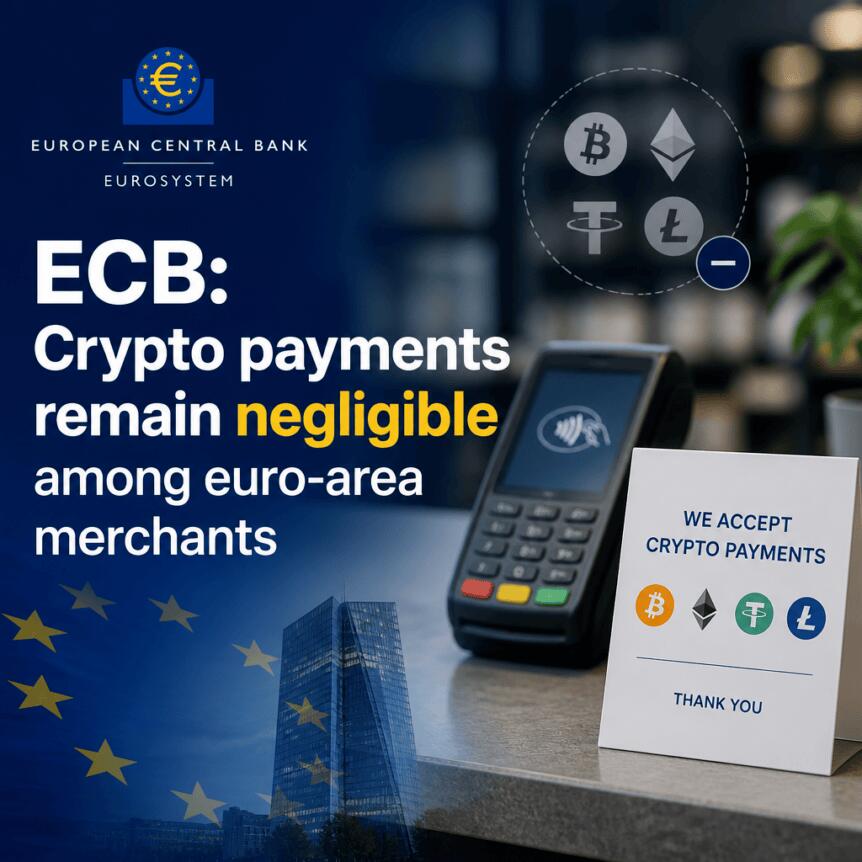
Crypto assets are still effectively absent from everyday commerce across the euro area, according to a new European Central Bank (ECB) survey of how businesses accept different payment methods. Even as digital payments expand, the ECB finds that only a small fraction of merchants take crypto—whether directly or via payment arrangements they describe as accepting crypto assets or stablecoins.
The ECB reports that just 0.2% of companies selling goods and services online accept crypto assets. For in-person payments, cash remains dominant: 92% of companies with physical points of sale accept it, while crypto and stablecoins together remain under 1% acceptance in both 2024 and 2026.
Key takeaways
- Crypto acceptance is minimal: the ECB survey shows 0.2% of euro area businesses accept crypto for online sales.
- Stablecoins are not catching on at physical checkout: crypto assets and stablecoins remain below 1% acceptance at physical points of sale in 2024 and 2026.
- Mobile payments are the main growth area: acceptance of mobile payment methods at physical locations rises to 68% in 2026 from 36% in 2024.
- Merchants prioritize customer demand and security: consumer preference is the top decision factor, while merchants that reject cash most often cite weak demand and cash handling frictions.
- Survey design leaves room for interpretation: the ECB does not clarify whether payments settled in traditional currency via crypto payment services should count as “crypto acceptance.”
Digital payments advance, but crypto stays sidelined
While crypto remains a marginal payment option, the ECB’s broader findings show a clear shift toward cashless methods at physical locations. Mobile payments recorded the biggest change: acceptance jumped to 68% in 2026 from 36% in 2024.
Among the mobile methods most commonly accepted are instant payments and digital wallets, including services such as Apple Pay and Google Pay. This matters because it suggests the euro area’s payment digitization is progressing through mainstream rails that consumers and merchants already understand—rather than through direct crypto settlement.
Cash’s position also changes only slightly over time. The ECB reports cash acceptance at physical points of sale edging up to 92% in 2026 from 90% in 2024. Physical card acceptance rises to 88% from 87% over the same period, reinforcing the idea that the “cashless” transition is largely coming from cards and mobile wallets rather than from crypto.
Online sales show crypto acceptance at near-zero levels
The ECB’s survey highlights an even starker picture for online payments. Across the euro area, only 0.2% of companies selling goods and services online accept crypto assets, indicating that merchants are not treating crypto as a mainstream ecommerce payment choice.
These results come from a survey of 8,205 businesses across the 21 euro area countries. The telephone interviews were carried out by Ipsos from Feb. 23 to April 10, covering merchants in categories including retail, restaurants and cafes, hotels, and arts, entertainment and recreation.
At the same time, the ECB’s findings include evidence that other payment instruments are not uniformly gaining ground. For example, bank check acceptance fell to 27% in 2026 from 36% in 2024—underscoring that “digital progress” does not simply lift every alternative method, but rather changes acceptance patterns unevenly.
Why merchants choose—or refuse—specific payment methods
The survey also sheds light on the decision criteria merchants use when selecting which payment instruments to accept. Consumer preference is cited as the most important factor, named by 26% of respondents. Security comes next at 22%, while ease of handling is third at 15%.
For businesses that do not accept cash, demand and logistics are central concerns. Weak customer demand is cited by 36%, difficulties depositing or withdrawing cash by 35%, and security risks by 29%.
Importantly, the data points to sharp country-level differences in attitudes about cash. The ECB reports that 51% of cash-accepting small and medium-sized enterprises (SMEs) in Cyprus say they may stop accepting cash, compared with 23% in Greece and 18% in Bulgaria. That divergence suggests that merchants’ expectations about payment preferences vary widely across the region, even when broad trends—like rising mobile usage—move in a similar direction.
What “accepting crypto” means—and what remains unclear
The ECB survey asked companies whether they accept crypto assets or stablecoins, using examples including Bitcoin (BTC), Ether (ETH), and Tether’s USDt (USDT). However, the report’s description leaves a key practical question open for interpretation.
Some crypto payment services allow merchants to receive settlement in traditional currency even when customers pay with crypto. The survey, as presented in the article, does not specify whether merchants should count such transactions as “crypto acceptance.” That matters because it affects how comparable merchant responses are: a business might technically participate in crypto payments while experiencing those payments as fiat settlement rather than as direct crypto receipt.
According to the conversation captured in the source coverage, Cointelegraph asked the ECB whether converted crypto payments could go unreported by merchants and whether regulatory uncertainty could influence how businesses answer. The ECB responded that it “prefer[s] not to speculate.”
On the regulatory question—whether euro area merchants are permitted to accept crypto under EU rules—the ECB did not take on the role of rule-maker. The ECB instead pointed to the European Commission and national lawmakers, noting that it does not set payment regulation.
Digital euro work continues as ECB studies payment behavior
The release arrives while the ECB is also advancing work on a digital euro, a central bank digital currency intended to complement cash and preserve the euro’s role. In that context, the new findings offer a useful baseline for policymakers: even as digital payments accelerate, merchants are not pivoting toward crypto or stablecoin acceptance at the checkout.
For investors and builders watching the payment sector, the main signal is not just that crypto adoption is low today—it’s that the merchant channel for payments appears to be consolidating around mainstream digital instruments (cards and mobile wallets) rather than crypto settlement. What changes next will likely depend on how payment providers improve merchant onboarding, how regulators clarify rules, and whether consumer demand grows for crypto payments in ways merchants can reliably monetize.

Since my fateful two-block jog, I’ve also been wondering about psychology and human behavior. Most immediately, I wondered, why was I so stupid? I write about these things. I yelled at my dad for not wearing a mask amid the Los Angeles fires. In short, I know better. More generally, what does that say about our broader reluctance to take climate change seriously even though we know better?
Research on how individuals respond to wildfire risk shows perhaps an unsurprising result: people at higher education levels tend to take protective action more seriously than their less educated counterparts. For example, a study published earlier this year in the Proceedings of the National Academy of Sciences used cell phone data from the 2018 fire season in California to show just that. And yet, even the educated underestimate at what point the level of air pollution becomes dangerous.
But I was also intrigued by a smaller study looking at the response to fires published in the Journal of Community Health last year. Researchers found in general that study participants responded to fire-induced smoke pollution with smart interventions, like halting outdoor exercise and closing windows. But, at the same time, participants were constantly evaluating tradeoffs. Will it be too hot, for example, if I close the window?


A federal bank regulator has granted World Liberty Trust Co. a conditional bank charter, it announced Friday.
The Office of the Comptroller of the Currency, the U.S. banking agency that grants federal charters, said in a letter posted to its website that World Liberty could operate fiduciary and other trust company-related activities as a national trust bank.
“This preliminary conditional approval is granted based on a thorough evaluation of all information available to the OCC, including the representations and commitments made in the application and by the Bank’s representatives,” the letter said.
Final approval won’t be granted until the company meets additional “preopening requirements,” the letter said.
According to the letter, World Liberty Trust Company will focus on services tied to World Liberty Financial’s USD1 stablecoin.
“The bank plans to issue USD1, a fiat currency-backed stablecoin, to institutional clients on a nationwide basis, assuming this role from BitGo Bank & Trust, National Association (BitGo), the current exclusive issuer and custodian for USD1,” the letter said. “The bank plans to provide its digital asset custody services as a fiduciary, primarily to USD1 customers and other institutional clients.”
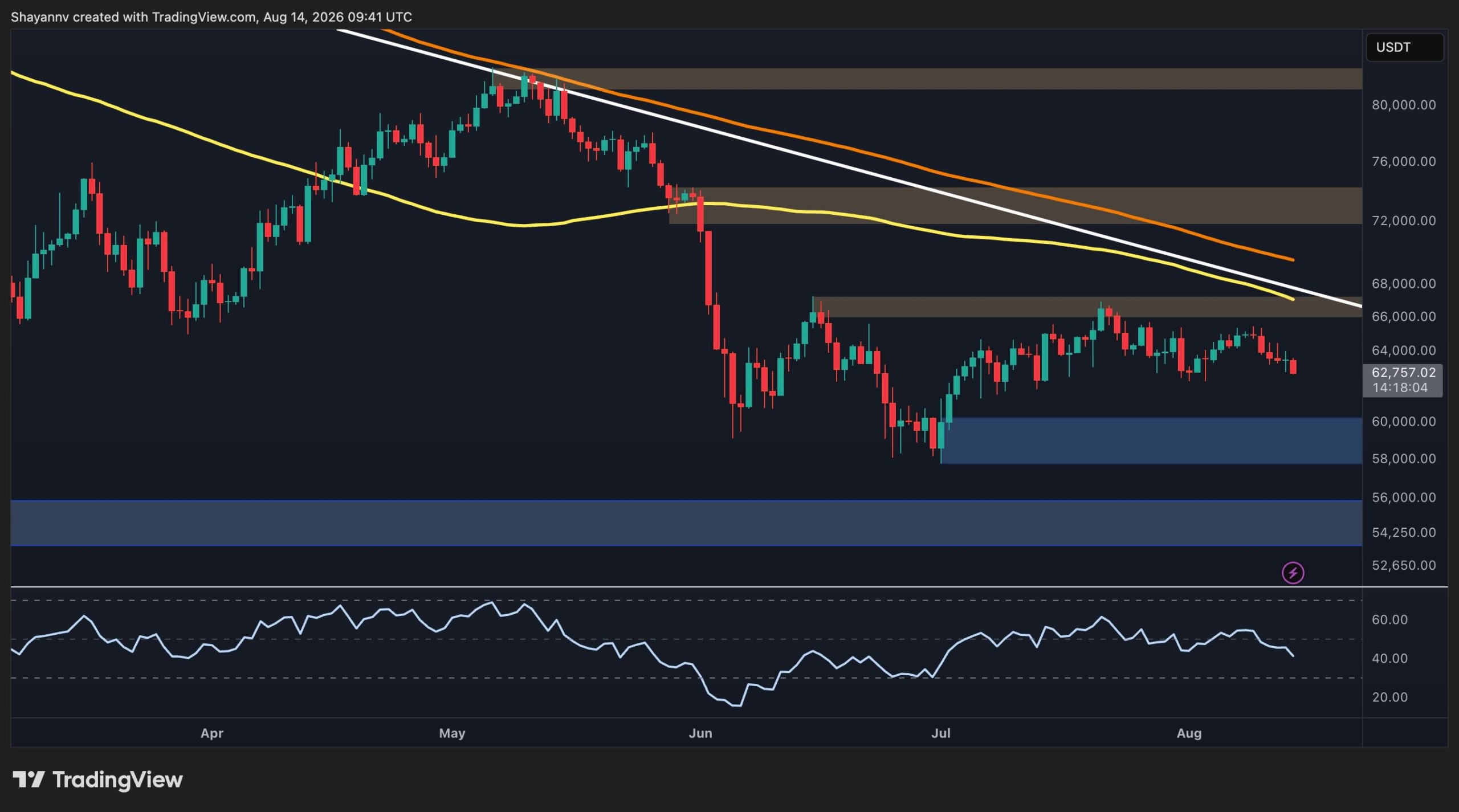
Bitcoin is testing a critical support area after failing to break above the descending resistance structure that has capped the price for months. With BTC trading around $62.7K, the market is approaching a key decision point, while the elevated Exchange Whale Ratio adds a potentially bearish on-chain signal to the technical picture.
Bitcoin Price Analysis: The Daily Chart
The daily chart shows that Bitcoin remains within a broader corrective structure. After recovering from the June low near $58K, BTC established a series of higher lows and climbed toward the $66K resistance zone. However, the recovery has so far failed to produce a decisive breakout, and price has recently turned lower.
The most important resistance is currently around $66K-$67K, where the descending trendline, the horizontal supply zone, and the broader moving-average structure converge. A daily close above this area would represent a meaningful improvement in market structure and could open the way toward the $72K-$74K zone. Beyond that, the $80K-$82K region remains a major higher-timeframe resistance area.
On the downside, BTC is approaching the $60K support zone once again. This area will most likely attract buyers and is therefore important for maintaining the recent recovery structure. A decisive daily breakdown of this zone would increase the probability of a move below the $58K low and toward the next major support visible on the chart around $55K.
Momentum is also not particularly encouraging at the moment. The daily RSI is around the mid-40s and has turned lower, indicating that bullish momentum has weakened without yet reaching deeply oversold conditions. Meanwhile, BTC remains below the major moving averages, which continue to slope downward. As a result, the broader daily structure remains cautious to bearish until the $66K-$67K area is reclaimed.
BTC/USDT 4-Hour Chart
The 4-hour chart provides a more immediate picture of the current setup. BTC has been trading inside a contracting structure, with a descending upper trendline and a gradually rising lower boundary. The price is now pressing toward the lower end of this formation near $62K.
The immediate support zone is around $61.5K-$62K. The price is aggressively moving toward this area today, while the 4-hour RSI has also fallen to the low 30s, showing that short-term momentum has become weak and is approaching oversold territory. This leaves room for a relief bounce if buyers defend the support zone, although the RSI alone is not enough to confirm a reversal.
A rebound from the current area could initially target $65K high ,where the upper boundary of the triangle pattern is also located. This area is followed by the critical $66K-$67K resistance zone. Therefore, the market would first need to break the pattern to the upside before any short-term rally could materialize.
Conversely, a clean 4-hour breakdown below $61.5K-$62K area would invalidate the immediate bullish structure and likely expose the $58K-$60K demand zone. Therefore, the current region is particularly important, as a successful defense could preserve the consolidation or even lead to a rally, while a breakdown would signal another leg lower, which could be disastrous for Bitcoin holders and the crypto market as a whole.

On-Chain Analysis
The Exchange Whale Ratio measures the share of exchange inflows represented by the largest whale transactions. In the chart, the 30-day moving average of this metric has climbed sharply and is currently just below 0.32, close to the highest levels visible over the displayed period.
The elevated reading is notable because it comes while Bitcoin is trading near $62K and struggling to regain its major technical resistance levels. A high whale ratio means that whales account for a relatively large portion of coins entering exchanges, which can indicate increased potential selling pressure if those coins are subsequently sold.
The divergence between the elevated whale activity and weak BTC price action therefore represents a cautionary signal. It does not guarantee an immediate sell-off, but it suggests that the current support test should be treated carefully. If the Exchange Whale Ratio remains elevated while BTC loses the $62K zone, the on-chain and technical signals would increasingly point toward further downside, as it would indicate that the decline is driven by whale supply.

The post Bitcoin Price Analysis: Is $60K Back in Play After BTC’s Latest Rejection? appeared first on CryptoPotato.


Justin Sun says the Binance restrictions on HTX reach only users in the UK and the European Union. Binance’s own notice sets no such limit.
The HTX founder made the claim as the August 23 cutoff approaches. He also said HTX is already in settlement talks with British and EU authorities.
What Sun Said
The comments came in a late Friday post, only hours after Binance’s blacklisting announcement.
“I’ve communicated with Binance, and it only involves Binance UK and EU users. Huobi itself does not conduct business in the UK or EU. Our settlement negotiations with the UK and EU regulatory authorities are already underway,” he wrote.
Sun added that affected users can contact HTX customer service, and that the exchange will help resolve individual cases.
Where the Claim Meets the Record
Binance addressed its notice to all users and named no country. It said transactions involving the listed platforms may be held for compliance review after the effective dates. Binance restricted 11 platforms in that announcement.
Sun’s second claim is harder to square. The Financial Conduct Authority (FCA) alleges HTX drew 4.6 million UK visits in 2023. That ranked it sixth among virtual asset firms accessed from Britain. HTX limited new UK sign-ups only after the regulator sued.
The settlement claim holds up on the British side. A High Court stay in that case runs to August 25, and HTX is negotiating with the FCA over illegal advertising. Sun did not name the EU authority he is negotiating with.
The timing is tight. Binance cuts off HTX on August 23, two days before the London stay expires.
The post Justin Sun Addresses Binance HTX Blacklist: Are Your Funds Actually Affected? appeared first on BeInCrypto.
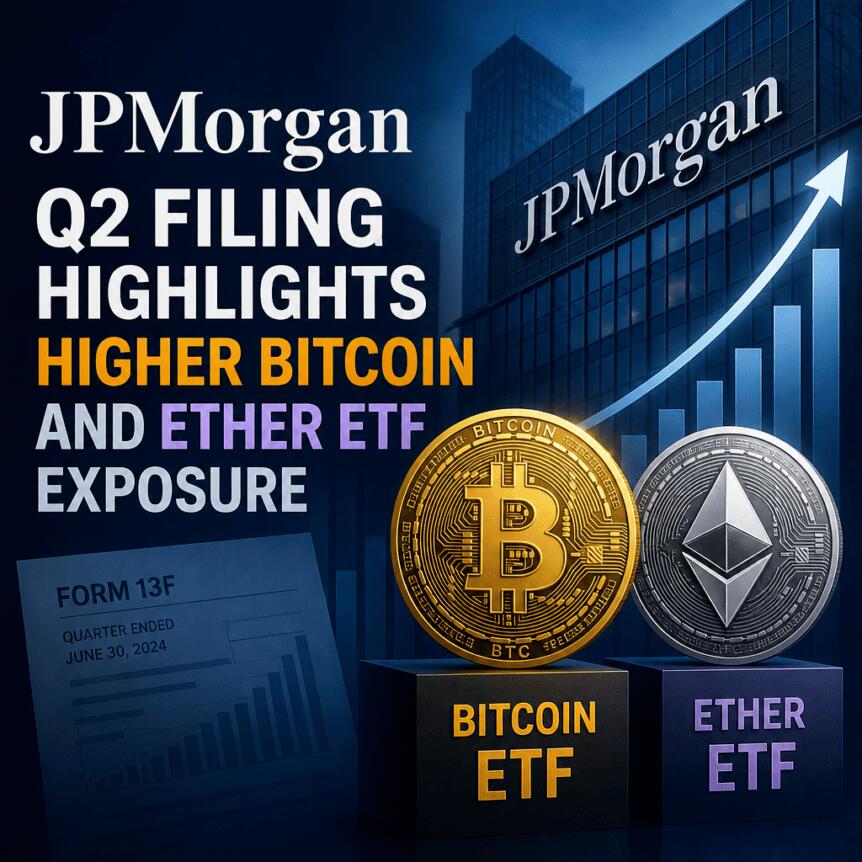
JPMorgan’s latest US securities disclosure shows a notable build-up in its reported positions tied to major US crypto exchange-traded funds. In a Form 13F filing covering holdings as of June 30, the bank reported that its exposure to BlackRock’s Bitcoin ETF rose by roughly a quarter during the second quarter, while its reported holdings in an Ether ETF more than quadrupled.
The filing, submitted to the US Securities and Exchange Commission on Wednesday, aggregates positions across JPMorgan entities and also lists 17 other investment managers covered by the same disclosure. That structure makes it hard for outside observers to separate long-term investment convictions from other uses of ETF holdings such as client-related activity or internal inventory management.
Key takeaways
- JPMorgan reported an increase in its BlackRock Bitcoin ETF exposure, rising from about 8.3 million shares in Q1 to about 10.4 million shares in Q2.
- Its reported position in BlackRock’s Ether ETF (iShares Ethereum Trust) climbed from roughly 267,000 shares to about 1.17 million shares—more than a fourfold jump.
- Smaller reported holdings in XRP-related products reappeared after JPMorgan showed no XRP positions in the prior quarter.
- Analysts caution that 13F data may reflect multiple operational drivers and cannot show short positions, so it does not necessarily equal JPMorgan’s net market view.
Bitcoin ETF holdings rise in JPMorgan’s disclosure
According to the Form 13F, JPMorgan reported about 10.4 million shares of BlackRock’s iShares Bitcoin Trust ETF (IBIT) in Q2. In Q1, the same disclosure listed about 8.3 million shares. The filing corresponded to a reported value of roughly $356 million in Q2.
While the increase is significant in percentage terms, a 13F filing is not designed to communicate directional trading strategies. As PrimeXBT senior market analyst Jonatan Randin explained to Cointelegraph, these reports can combine holdings from different parts of an institution, including positions linked to client flows and other internal uses. That limits how confidently readers can interpret the update as a clear bet on future price movement.
Randin also noted a structural limitation of 13Fs: they exclude short positions. As a result, the reported long holdings do not reveal net exposure after offsets, meaning the filing is best viewed as a snapshot of disclosed long positions rather than a full picture of risk.
Ether ETF position expands more dramatically
JPMorgan’s Ether-related exposure rose even faster. In the same filing, its holdings in the iShares Ethereum Trust ETF (ETHA) increased to about 1.17 million shares in Q2 from roughly 267,000 shares in Q1. This represents more than a fourfold increase.
The reported change suggests that, at least in terms of disclosed holdings, JPMorgan’s balance-sheet linkage to Ether-linked investment products expanded more quickly than its Bitcoin-related exposure during the same quarter.
As with the Bitcoin ETF position, the interpretation remains constrained by the nature of Form 13F reporting. Investors should view the figures as evidence of increased disclosed holdings rather than direct proof of a strategic shift toward a particular crypto asset’s price direction—especially because 13F submissions do not convey the full context of derivatives, hedges, or other trading that might be used to manage risk.
XRP-linked holdings appear after a blank prior quarter
Beyond Bitcoin and Ether, Randin pointed to small but notable positions tied to XRP investment products. In Q2, JPMorgan reported 181 shares of Grayscale’s XRP product valued at about $3,763 and 113 shares of Bitwise’s XRP ETF valued at about $1,356.
In Q1, JPMorgan showed no reported positions in either of those XRP-related vehicles. Randin connected the timing to the broader regulatory environment for XRP and to the emergence of spot XRP investment products in the United States.
“From my point of view this adds credibility to the regulatory improvements surrounding XRP,” Randin said, highlighting how the appearance of XRP-linked fund holdings can be interpreted as a sign of improving market accessibility. Still, the quantities reported are relatively small, so readers should avoid assuming the position signals a major reallocation toward XRP without additional supporting data.
Why 13F snapshots matter—and what they can’t tell
JPMorgan’s filing illustrates both the usefulness and the limitations of 13F disclosures for crypto-focused investors. On one hand, the report provides a recurring, regulator-filed window into how large institutions allocate capital or align exposure with crypto-linked exchange-traded products. On the other hand, it does not capture the full trading picture.
In particular, Randin’s explanation underscores three key points investors typically need to keep in mind when reading 13Fs:
- Multiple internal sources: An institution’s holdings can reflect a mix of business units, including client activity and inventory management.
- No netting of shorts: 13F reports do not show short positions, so the disclosure is not a complete net exposure measure.
- Quarterly timing: Changes reflect holdings as of a specific reporting date, not necessarily when a purchase or sale occurred.
This means the reported increases in Bitcoin and Ether ETF shares should be interpreted as movement in disclosed long holdings rather than a definitive statement about future market direction.
Reductions in miner positions also signal shifting proxies
Randin also highlighted that JPMorgan trimmed positions in several Bitcoin miners. He argued that miner equities can be a less reliable proxy for Bitcoin exposure as some miners expand into artificial intelligence and high-performance computing, potentially diversifying away from straightforward Bitcoin linkage.
“If that was the reason for holding them, trimming that part of the portfolio makes a lot of sense regardless of your view of the future direction of price,” Randin said.
For crypto investors, this is a useful reminder that institutional disclosures may reflect not only bullish or bearish expectations, but also a re-evaluation of what different crypto-adjacent asset categories are actually expressing—whether that’s direct token exposure through ETFs or more complex business exposure through mining-related equity.
Going forward, traders and long-term investors may want to watch whether JPMorgan’s ETF-related positions continue to trend upward or stabilize in subsequent filings, and whether additional disclosures show further expansion—or rebalancing—across Bitcoin, Ether, and smaller altcoin-linked products as regulatory conditions evolve.

This 63-year-old went viral at U.S. Amateur. Then went back to work

EV prices rose for the first time in 2026, and the discounts are why

They are Going ALL IN to PASS XRP CLARITY ACT with URGENCY


-

 News Videos6 days ago
Can Astrology Help Find Gold and Silver Trends? A Financial Astrology Guide
-

 Business5 days ago
Datadog: Best Of Breed For Multiple Reasons
-

 Business6 days ago
How to Start a Cleaning Business: A Step-by-Step Guide
-

 Fashion4 hours ago
Weekend Open Thread: Ann Taylor
-

 Business6 days ago
BDC Weekly Review: Private BDC Q2 Numbers Are Strong
-
 NewsBeat3 days ago
Communication cards help banking customers access services or report scams
-
 Business4 days ago
Oil Price Today (August 11): Crude oil rises to $88 after Trump’s compensation demand dents Hormuz opening. Here’s why
-
 Entertainment7 days ago
10 R-Rated Drama Movies That Can Be Called Masterpieces
-

 Fashion5 days ago
Amazon Sundays: Closet Care Before Fall
-

 Business7 days ago
SharkNinja Keeps Eating
-

 Politics6 days ago
Be quiet, Miriam! – spiked
-

 Business5 days ago
5 Things You Must Know About Jorge Messi, the Father and Longtime Agent Who Shaped Lionel Messi’s Career
-

 Business6 days ago
Mutual Fund Manager Scoops Up Beaten-Down Stocks
-

 Politics5 days ago
Ben-Gvir’s crocodile project halted but abuses at Ketziot Prison continue
-

 Tech7 days ago
Metabase SQLi zero-day exploited in customer data-theft attacks
-

 Politics5 days ago
The Church of England’s ruinous reparations racket
-
 Crypto World4 days ago
Why Did Nvidia Stock Fall on Monday Despite a $500 Billion Wall Street AI Deal?
-

 Politics6 days ago
Calls to permanently pedestrianise central Belfast following festival success
-

 Crypto World6 days ago
A Deep Dive Into One Of The Most Significant Hacks In Recent Memory
-

 Crypto World6 days ago
Bitcoin ETFs draw $853.5M in five-day inflow streak
You must be logged in to post a comment Login