Crypto World
The U.S. Is Having One of Its Most Active Wildfire Seasons. Here’s How the Costs Are Adding Up


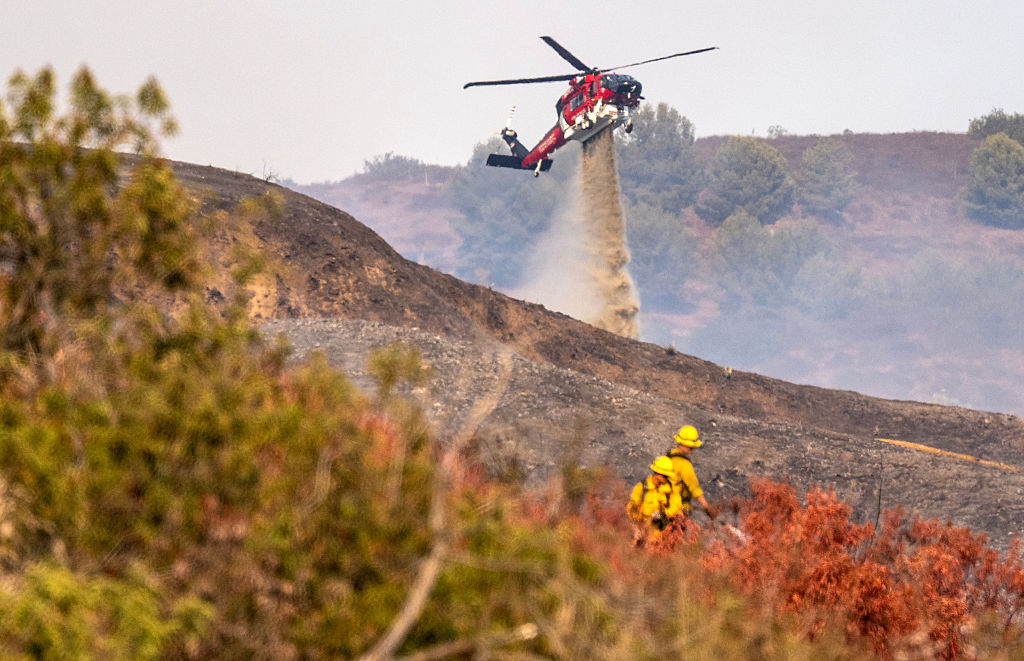
The United States is on pace to see one of its most active wildfire seasons on record. According to a new AccuWeather report, large fires were active in at least 13 states as of Sept. 9, while more than 8.4 million acres had burned nationwide this year—about 1.3 million acres above the full-year annual average over the previous decade.
The extraordinarily active season is testing a recently overhauled federal wildfire-response system while placing mounting financial pressure on governments, taxpayers, insurers, and individual households.
How the U.S. changed its wildfire response after the Los Angeles fires
The Los Angeles fires in January 2025 were high-profile incidents that drew widespread attention to the nation’s risk. They were notable as sudden, highly concentrated, urban conflagration events—and they stand in contrast to the 2026 wildfire season, which has garnered less attention with the incidents geographically dispersed across the U.S.
However, almost twice as much land has burned so far in 2026 as had burned at the same point in 2025, according to AccuWeather.
The Palisades and Eaton fires in L.A. showcased just how costly massive wildfires are in terms of infrastructure damage, loss of life, and economic impact. Collectively, the fires burned about 37,500 acres and destroyed nearly 17,000 structures, killing at least 31 people. Munich Re estimated total damage at $53 billion, including $40 billion in insured losses—“by far the largest insured loss on record from a wildfire event,” according to the United Nations.
Read More: What Happens When the World Is on Fire
In response, President Donald Trump signed an executive order on June 12, 2025, calling for the consolidation of wildfire response resources within the Interior and Agriculture departments within 90 days. The U.S. Wildland Fire Service was formed as a result.
The order also directed agencies to review rules that might impede wildfire response, develop performance metrics, release relevant historical satellite data, and evaluate the sale of excess military aircraft for wildfire response. Those provisions carried deadlines ranging from 120 to 210 days.
Since then, the Administration has overhauled how the federal government fights fires. One of the largest shifts involves focusing on wildfire suppression. Since April, Interior Secretary Doug Burgum has directed crews to presume a full-suppression strategy for every wildfire under the management of the Interior Department. While managers are instructed to select tactics according to on-the-ground conditions, the presumptive approach is suppression.
The move has drawn criticism as states compete for limited firefighting resources, and as federal forecasters expect above-normal significant-fire potential in parts of the West through September.
The financial toll of wildfires has dramatically escalated in recent years as fire seasons grow longer and fires become more severe.
Why wildfire costs are rising for federal and state governments
The National Multi-Agency Coordination Group (NMAC), composed of representatives from the federal and state agencies, establishes national preparedness levels ranging from 1 to 5. The country remained at Level 5 from July 18 through Sept. 4, meaning national resources were heavily committed and some regions had to take emergency measures to sustain operations. The level was lowered to 3 on Sept. 9.
During the Level 5 period, the National Multi-Agency Coordinating Group warned of “high competition” for firefighting resources nationally. It said the system lacked sufficient incident-management resources to meet every request, prompting concerns among lawmakers about whether resources could be exhausted before the season ended.
On Friday, five Democratic Senators—Alex Padilla and Adam Schiff of California, Michael Bennet and John Hickenlooper of Colorado, and Ron Wyden of Oregon—released a letter to Burgum and Agriculture Secretary Brooke Rollins, expressing “serious concerns” about the departments’ preparedness and ability to adequately respond to the ongoing wildfire season.
The letter says the U.S. Forest Service and U.S. Wildland Fire Service had more than $6 billion in fire-suppression budget authority for fiscal year 2026 and had spent more than 70% by Aug. 31.
“Any wildfire that represents a threat to life, property, infrastructure or the environment should be extinguished as quickly as possible,” federal officials with the Wildland Fire Service said in a statement to the Associated Press in July when the policy was instituted. “Our experienced fire managers retain the authority to select the safest and most effective tactics based on conditions on the ground.”
Some experts argue, however, that full suppression is part of the issue that makes wildfires so large and expensive in the first place.
“These Western ecosystems are adapted to fire; they need fire, and they’ve burned for thousands of years. Roughly 150 years ago, we started suppressing fires, and in large swaths of the Western forests, that led to an accumulation of fuels,” Winslow Hansen, ecologist with the Cary Institute of Ecosystem Studies, tells TIME. Fuel can refer to any vegetation, twigs, branches, or organic soils that may be prone to catching fire—especially in the hot, dry conditions that are more prevalent nationwide due to climate change, he explains.
The combination leads to more fuel and drier fuel for fires, Hansen says, and “that leads to more intense fires, larger fires, and even faster fires.”
Federal suppression spending captures only one portion of wildfires’ broader economic toll. A Department of the Interior review estimated that wildfires impose between $87 billion and $424 billion in annual costs, measured in 2022 dollars, including property and health damages and other economic losses. The department cautioned, however, that significant gaps in the available data make the total difficult to calculate.
Separately, a 2018 Headwaters Economics review of existing research and five wildfire case studies estimated that suppression represented approximately 9% of the fires’ full community costs.
State governments are shouldering part of that broader economic burden. While no comprehensive national tally tracks their wildfire spending in real time, data within affected states illuminates the strain.
In Oregon, wildfires had burned 2.5 million acres and cost the state $236.2 million as of late August. Last week, the state approved nearly $123 million in additional funding and authorized $150 million in short-term Treasury borrowing to cover expenses while awaiting federal reimbursements. Officials project that the season’s total cost could reach $350 million, surpassing the state record of $318 million set in 2024.
In Utah, where more than 559,000 acres had burned as of Sept. 3, state wildfire costs had reached approximately $44.9 million and could approach $50 million. Federal costs associated with fires in Utah were estimated at approximately $216 million. Jamie Barnes, commissioner of the Utah Department of Natural Resources, said it could be a “record breaking” season by cost.
How rising wildfire costs affect Americans
While local, state, and federal governments are responsible for wildfire preparedness and suppression, these activities are funded primarily by taxpayers. For example, the four largest fires that plagued Colorado this year could cost taxpayers $266 million, according to a Colorado Drought Task Force meeting in July.
And the government does not bear the full burden of the fires; Americans shoulder it through property damage, skyrocketing insurance costs, supply chain disruptions, and lost business revenue.
A study released in August analyzed data covering approximately 100,000 people and 50,000 homes inside wildfire burn areas. It found that occupants of destroyed homes experienced reduced earnings for three years after a fire, with cumulative losses equal to 26% of their pre-fire annual income. Within fire zones, lower-income households were more likely to lose their homes.
Wildfires also impose costs that are harder to quantify. A July study from the University of Southern California found that Los Angeles County residents who lived in evacuation zones during the 2025 fires reported elevated anxiety and depression nearly a year later, with the greatest effects among people already facing social and economic hardship.
These costs do not affect only people in communities directly touched by wildfires. In California, average homeowners-insurance premiums rose 84% between the end of 2020 and March 2026, according to Stanford researchers, who attributed the increase to a combination of wildfire risk, inflation and the state’s regulatory framework.
According to the 2026 Wildfire Risk Report by Cotality, a major real estate data and analytics company, more than 2.5 million properties across the 10 of the most exposed states face a moderate or greater risk of wildfire damage, with a combined reconstruction cost value approaching $1.4 trillion. The risk is concentrated in California, Colorado, and Texas. The report estimates that there are some 1.28 million at-risk properties in California alone.
No single figure can capture what the 2026 wildfire season will ultimately cost. The bills will emerge in different forms—from government spending and rebuilding expenses to higher insurance premiums and lost household income. The financial consequences typically persist long after the fires are contained.
You must be logged in to post a comment Login