
Crypto World
This XRP Chart Signal Hasn't Happened in 13 Years

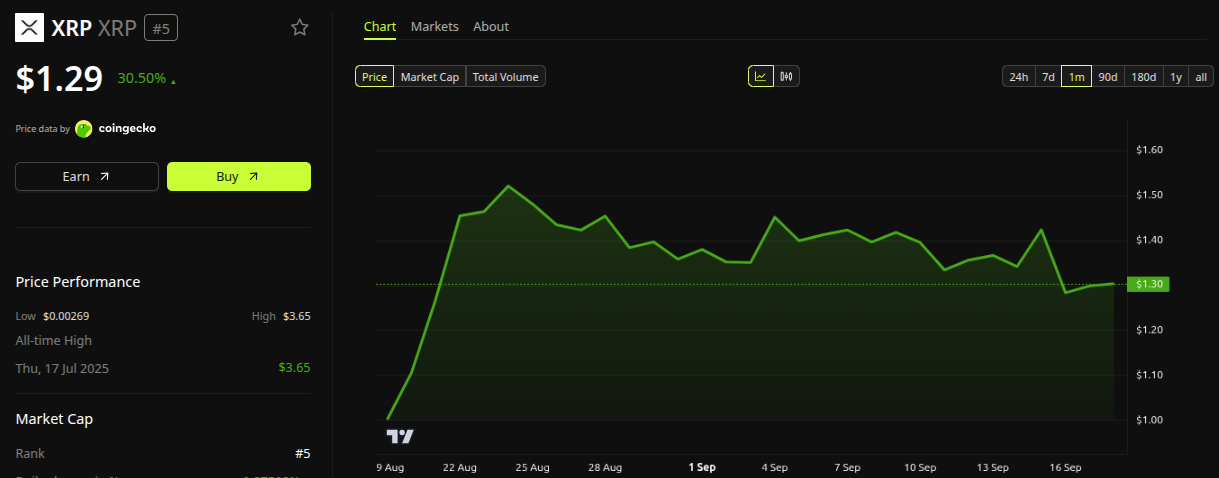
XRP trades near $1.29 after a sharp correction pushed its two-week Relative Strength Index to the lowest level in the token’s 13-year trading history.
That extreme reading has sparked fresh debate over whether XRP has finally found its cycle bottom.

What This Record-Low RSI Reading Actually Means
Analyst Cryptollica highlighted the milestone in a widely shared post, noting the current two-week RSI near 33.5 has now dropped below the lows seen during the 2018 bear market, the 2020 COVID crash, and the 2022 crypto winter.
The accompanying chart shows XRP still sitting inside a long-term rising channel that has guided the asset through multiple cycles. Price currently rests near that structure’s lower boundary, an area that has historically provided strong support.
Follow us on X to get the latest news as it happens.

The analyst argued the market may be misreading the moment entirely. Sentiment has collapsed, and short-term price action looks broken, yet the higher-timeframe trendline has not failed. The analyst wrote that almost nobody wants XRP when its chart looks this damaged, even though such extremes have often preceded major rallies.
EGRAG Crypto added supporting evidence, noting that XRP’s two-month RSI has re-entered a historical zone associated with prior bottoming processes, arguing that cycle behavior matters more than the exact number.
Is Every Analyst Convinced XRP Has Bottomed?
Not everyone agrees a bottom is confirmed. Technical analyst ChartNerd noted XRP remains compressed between the 20-week EMA near $1.29 and the 50-week EMA resistance around $1.52.
A sustained weekly close below $1.29, ChartNerd warned, could open a path toward the $1.00 psychological level. Lower highs and lower lows still appear on intermediate timeframes, suggesting continued consolidation rather than a confirmed reversal.
“Similar to failed closes above the 50 week EMA since the rise to $1.70, If $XRP witnesses daily/weekly closes below $1.29, the next support is back at $1.00. That’s how important the 20 week EMA retest that we just printed is. It has to hold or we dive,” ChartNerd said on X.
CrediBULL Crypto offered a more constructive view, pointing to a related bottom-zone setup in which relative strength has already begun to improve from recent lows.
XRP now sits at a genuine technical inflection point. The record-low RSI, an intact multi-year structure, and heavy negative sentiment together create one of the more debated risk-reward setups in the current market.
Subscribe to our YouTube channel to watch leaders and journalists provide expert insights.
Whether this reading marks a true cycle low or just another stage in a longer bottoming process depends on price action ahead. Holding the long-term structure would strengthen the bottom case, while a decisive break below $1.29 would shift focus to deeper support.
The post This XRP Chart Signal Hasn't Happened in 13 Years appeared first on BeInCrypto.

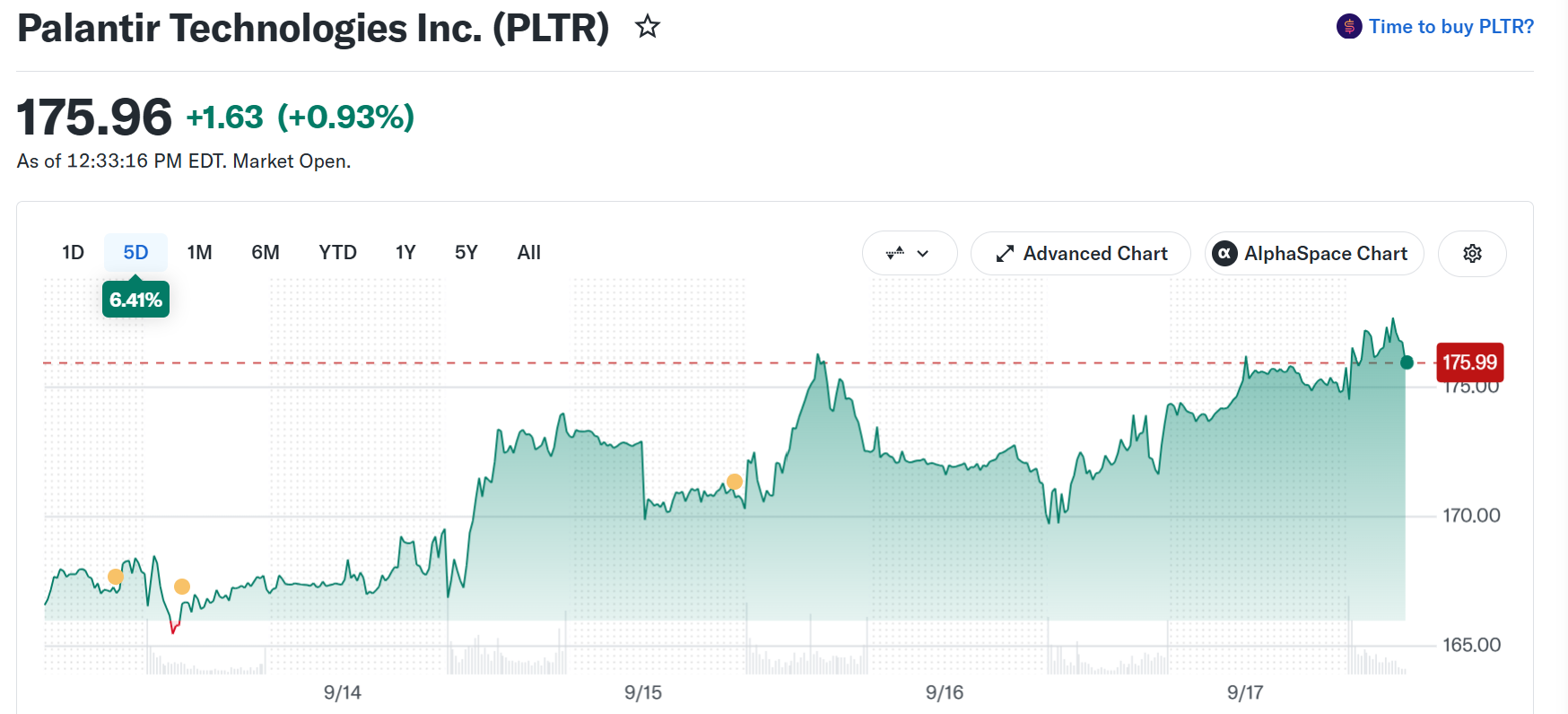
Famous CNBC Mad Money host Jim Cramer reaffirmed his $250 price target on Palantir stock (PLTR) on Thursday. Cramer’s price calls are often a complete hit or miss. “Inverse Cramer” is a popular meme, where investors believe the opposite of his prediction is likely to happen.
Palantir stock currently trades near $175, roughly 43% below the predicted target. So, the big question is, does Wall Street back Cramer’s forecast?

What Are Other Analysts Predicting About Palantir Stock?
- UBS analyst Karl Keirstead lifted his target from $220 to $250 on September 15.
- D.A. Davidson’s Gil Luria made the same move from $200 four days earlier.
Both pointed to demand for sovereign AI. That means AI systems that governments run on their own infrastructure rather than an outside vendor’s cloud.
Both analysts increased their price targets after AIPCon11, the company’s customer showcase. Palantir has also struck a fresh tie-up with Nvidia on supply chain software.
The raises followed Q2 results in which Palantir beat Wall Street estimates. Revenue reached $1.94 billion, up 93% from a year earlier.
Most of Wall Street is Still Less Bullish
The consensus is more cautious. Across 23 analysts tracked by TipRanks, the average 12-month target stands at $202.11.

Seventeen rate the stock a buy, four a hold, and two a sell. The lowest target on the board is $80, under half the current price.
Palantir trades at roughly 149 times trailing earnings. That valuation has drawn repeated criticism, including from short seller Michael Burry.
Karp appeared on CNBC the same morning, calling for enforceable guidelines on artificial intelligence. Cramer posted his target shortly afterward.
Shares have added 6.4% over five days, yet they still sit below the 52-week high of $207.52. Closing the $74 gap to Cramer’s target now rests on commercial bookings holding their pace.
The post Mad Money Jim Cramer Sees 40% Upside for Palantir Stock. Does Wall Street Agree? appeared first on BeInCrypto.
Vitalik Buterin does not believe that the growing concern that AI-powered hacking could make cybersecurity increasingly difficult is warranted. In a recent post, the Ethereum co-founder said he disagrees with the idea that AI hacking means “cybersecurity is doomed.”
He instead said that security could naturally favor protection once people build the right systems and use stronger verification tools.
On AI Hackers and the Future of Cybersecurity
Buterin gave a simple example involving advanced artificial intelligence and mathematics. He said,
“If AI can prove Navier-Stokes and FLT, then AI can prove the statement ‘this program is secure’ as a mathematical theorem. Even if the program is very complicated.”
However, Buterin emphasized that defining what “secure” actually means is much harder than it sounds. A system can have many different security concerns that need to be considered. Security definitions can become extremely detailed. They can cover how an attacker might interfere with a system, how information could leak, and what could happen if different parts of the software or hardware fail or are compromised.
Because of this, Buterin said making definitions more human-readable is extremely important. He described this as perhaps the only “high-level language” that matters right now. Buterin still believes that, for security-critical components, the definition can be a much smaller attack surface than the implementation itself.
Verifying whether the definition is adequate can also be more manageable than scanning the code directly. He said better tools could make this process even more practical.
He even sees an advantage in working with definitions. They are additive. If two groups have two different definitions, developers can prove that a program satisfies both. If the two definitions cannot be satisfied at the same time, the conflict is isolated and becomes an important issue for the project to address.
Verifying Whole Program
Code does not work this way, according to the Ethereum co-founder. If a program is made up of different parts, a bug in any one of those parts can compromise the whole thing. Buterin acknowledged that this approach does not work equally well for every type of software. In some cases, such as user-interface components, the definition may be almost as large as the implementation.
But for many critical components, he said the difference is real. He specifically pointed to message-passing protocols, sandboxes, and cryptographic systems such as SNARKs and fully homomorphic encryption. Previously, developers often verified only the parts of their code that they believed were security-critical. The rest was left unchecked. While this was understandable when verification was difficult and scarce, he believes that modern AI changes the situation.
For Buterin, the answer is therefore not simply to hope that “good guys” find vulnerabilities before the “bad guys.” The more important strategy is to make code much more resilient in the first place. According to him, there is no future for blockchains, especially those focused on scalability and privacy, without this kind of work.
The post Vitalik Buterin Has a Different Take on AI Hackers and the Future of Cybersecurity appeared first on CryptoPotato.

Bitcoin price trades at $76,600, surprisingly gain 1.1% on the day, a bounce that masks a brutal prediction based on regulatory optimism. The bigger question isn’t the daily candle. It’s whether BTC can hold this range as Washington and the Fed both deliver bad news in the same 48 hours.
The Digital Asset Market CLARITY Act failed a critical cloture vote in the Senate on September 15, coming in at 50-49, a few votes short of the 60 needed to advance. Reuters flagged a more than 5% intraday drop in Bitcoin as the vote outcome became clear, the sharpest single-day move since June.
A day later, the Federal Reserve hiked rates 25 basis points to 3.75%-4.00%, its first increase in three years. But, instead of dropping Bitcoin run.
Two headwinds, one week. Rate hikes historically punish non-yielding assets like Bitcoin, and a stalled regulatory framework removes a catalyst that traders had been quietly pricing in since the summer.
Earn $50 and Enter $300K Prize Draw on EdgeX
Bitcoin Price Prediction: Can BTC Hit $80,000 This Week?
BTC is changing hands near $76,600, with 24-hour volume running around $30.5 billion across major venues. That’s healthy turnover for a market absorbing two macro shocks in 48 hours, suggesting sellers haven’t fully capitulated.
The low-$70,000s remain the level to watch. That’s where the CLARITY Act sell-off found buyers, and a break below would confirm the bearish thesis. Resistance sits in the upper-$70,000s to $80,000, a zone where prior rallies have stalled repeatedly this cycle.

Bull case: a revived CLARITY Act push or dovish Fed commentary triggers a reclaim of $80,000. Base case: continued chop between $72,000 and $78,000 as the market waits for clarity on both fronts. Bear case: a break below $72,000 opens room toward the mid-$60,000s. Fed commentary in coming weeks will likely decide which path plays out.
Trade Bitcoin on Bybit and Get a Chance to Win Our $1,000 USDT Airdrop
Bitcoin Hyper Targets Early Mover Upside as Bitcoin Tests Key Levels
A choppy BTC range with regulatory delay hanging overhead isn’t exactly a green light for chasing spot at these levels. Anyone who bought the July rally is underwater on sentiment, even if the chart hasn’t fully broken. That’s pushing capital toward earlier-stage plays where the entry price hasn’t already priced in a decade of institutional adoption.
Bitcoin Hyper ($HYPER) is positioning itself as the first Bitcoin Layer 2 with full SVM integration, smart contract execution built for speed that reportedly outpaces Solana itself while settling back to Bitcoin’s base layer.
Bitcoin Hyper is improving network visibility. — Bitcoin Hyper (@BTC_Hyper2) September 15, 2026


Better observability helps the team track performance, understand transaction flows, identify issues earlier, and refine the ecosystem as it grows.
Read the full article  https://t.co/PHfiR1IOFq pic.twitter.com/J6vKOUg1VP
The presale has raised $33 million at a current token price of $0.0136863, with staking rewards live at launch. Core features include a decentralized canonical bridge for BTC transfers and low-latency transaction processing aimed at solving Bitcoin’s long-standing programmability gap.
Traders looking for asymmetric upside outside the BTC chop can research Bitcoin Hyper directly.
Discover: The Best Token Presales
The post Bitcoin Price Prediction: What’s Next After CLARITY Act Delay and Rate Hike? appeared first on Cryptonews.

Carlos Domingo, chief executive officer of Securitize Inc., speaks during the Messari Mainnet summit in New York, US, on Thursday, Sept. 21, 2023. Photographer: Michael Nagle/Bloomberg via Getty Images
Bloomberg | Bloomberg | Getty Images
Securitize surged Thursday after federal regulators greenlit the issuing of tokenized stocks on some trading platforms in the U.S.
The tokenization name was last up 14%. At its peak, it was up 24%.
The Securities and Exchange Commission earlier in the day announced a temporary path for the limited trading of tokenized publicly traded U.S. stocks. The order, though not a formal regulation change, will remain in force for five years.

SECZ 5-day chart
“The Innovation Exemption is designed to resolve challenges that have prevented responsible innovation from taking root in the United States while providing investor protections and market integrity standards,” SEC Chair Paul Atkins said in a statement.
Tokenization refers to the process of registering ownership rights for real-world assets like bonds and stocks on a digital decentralized ledger. The technology makes it possible to trade financial assets around the close, giving tokenized securities an edge over their traditional counterparts.
Securitize became the first major tokenization firm to go public in the U.S. in early July. It holds roughly 9% of the tokenized market by assets under management, priming it to reap the rewards of a boom in real-world asset tokenization, according to Needham Securities.
The combined market value of tokenized assets has soared to $38.51 billion as of Thursday afternoon, up more than 70% over the past year, according to data provider RWA.xyz.
“We believe the long-term leaders will be those platforms that can secure the broadest base of inst. customers. SECZ has done this having launched two funds with BlackRock, Apollo, KKR, and others and has infra. partnerships with Computershare and NYSE,” Needham analyst John Todaro wrote last week.
He initiated coverage of the stock with a buy rating.

Bitcoin’s share of addresses sitting at a loss has dropped sharply, and on-chain analyst Crypto Dan says moves of that size have historically ended bear markets rather than just producing a short bounce.
The call went out following two macro jolts that hit crypto: a Fed rate hike and a stalled Senate vote on the CLARITY Act.
Why the On-Chain Picture Looks Different
Crypto Dan’s argument centers on UTXOs, the individual chunks of BTC in wallets, and how many currently sit below what their holders paid for them.
That share has fallen by a wide margin, and the analyst pointed to past cycles where drops of a similar size didn’t just produce a brief bounce; they closed out the bear phase entirely.
“Looking at previous market cycles, declines of this scale have represented more than just short-term rebounds,” he wrote. “They have shown enough momentum to bring bearish phases to an end and transition the market into a bullish cycle.”
He flagged the rate hike and the CLARITY Act’s failure as near-term risks, but argued that neither had been enough to undo the shift already underway.
Darkfost’s read on the chain data lines up with that. Bitcoin is holding above $71,300, a cost basis that only counts units actively moving through the market, and Darkfost noted this level got tested twice near the end of the 2023 bear market before the next cycle took off.
On the other side sits $79,800, the break-even point for invested capital, where BTC keeps getting rejected, a pattern the market watcher also traced back to that same 2023 stretch. That leaves Bitcoin stuck between the two levels.
At the time of writing, BTC was trading above $76,000, up about 1% on the day but down nearly 3% for the week. If you zoom out, the picture flips, with the OG cryptocurrency up 19% in the past month even after sliding almost 35% over the last year, to put it about 39% below its all-time high from last October.
Volume has cooled too, and was down close to 24% in a day to about $29.5 billion.
The Week’s Two Macro Jolts Barely Moved the Market
The two events Crypto Dan flagged already happened. The Senate failed to advance the CLARITY Act on September 15, falling short of the 60 votes needed. Bitcoin dropped on the news, then the Fed raised rates by 25 basis points the next day, its first hike in three years, and the asset climbed above $76,000.
Bitwise CIO Matt Hougan said the rally has little to do with regulation, noting that BTC rose about 38% between July and mid-September even as betting markets cut CLARITY Act odds from 39% to 18%.
Meanwhile, trader Matthew Hyland mocked predictions that the failed vote and rate hike would send Bitcoin to $50,000, when it held near $76,000, with longtime BTC advocate David Bailey calling the muted reaction the strongest sign yet that the bear market is over, saying traders are in a “bad news doesn’t matter phase.”
The post From Bear to Bull: Analyst Says Bitcoin UTXO Data Points to a Cycle Shift appeared first on CryptoPotato.
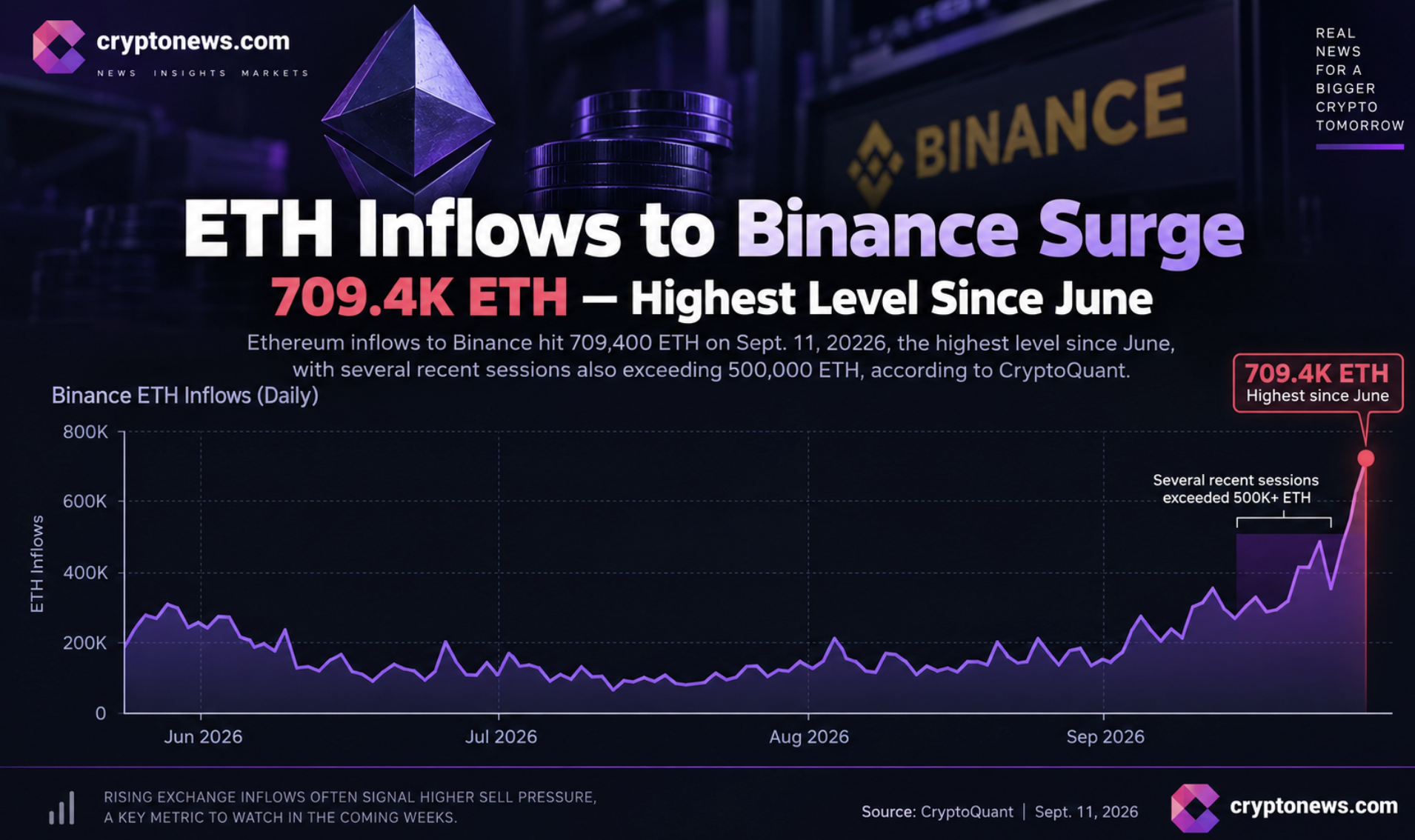
Ethereum price is trading at $2,435, up 1.5% on the day, as a fresh wave of exchange deposits raises questions and a bearish prediction about whether holders are gearing up to sell. The number underneath that move is the real story, and it’s one that traders watching the order books have been flagging all week.
Inflows of ETH to Binance have climbed to their highest level since last June, according to on-chain data cited by Cryptoquant. That kind of spike typically precedes either profit-taking into strength or a liquidity build ahead of derivatives positioning.

The timing, with ETH fresh off a bounce from sub-$2,300 lows, makes the read genuinely ambiguous. Analysts tracking the move have pointed to it as an early signal worth watching rather than a confirmed bearish signal.
The backdrop matters. ETH has spent weeks consolidating in a rising structure many technicians call a continuation pattern, not a completed top, and the broader market is still digesting how Fed policy and macro data bleed into risk assets like crypto more generally.
Earn $50 and Enter $300K Prize Draw on EdgeX
Ethereum Price Prediction: Will ETH Hit $2,800 This Week?
ETH’s current print of $2,435 sits almost exactly on the 0.618 Fibonacci retracement level at $2,438.85. A level Binance’s own analysis flagged as the pivotal support zone for the current structure. Hold above it, and the path toward $2,550 resistance stays open. Lose it convincingly, and $2,360 becomes the next test, with $2,173 the deeper downside target if that Fibonacci floor cracks.

- Bull case: A clean break above $2,550–$2,600 resistance opens the door to $2,800, and possibly $3,000+ in an extended flag breakout scenario.
- Base case: continued range-bound chop between $2,360 and $2,550 while the market awaits macro clarity.
- Bear case: a decisive Binance-inflow-driven sell-off pushes ETH through $2,360 support, exposing the $2,212–$2,161 zone near the 200-day EMA.
Volume around the current resistance band will likely determine which scenario plays out first.
Trade Ethereum on Bybit and Get a Chance to Win Our $1,000 USDT Airdrop
LiquidChain Targets Early Mover Upside as Ethereum Tests Key Levels
ETH holders sitting on gains since the summer lows have a legitimate case for staying put; the higher-high structure is real. But at a $290B+ market cap, doubling from here requires an enormous amount of fresh capital. That math is exactly why some traders are rotating a slice of profits into earlier-stage infrastructure plays before the next cycle narrative sets in.
Enter LiquidChain ($LIQUID), an L3 project fusing Bitcoin, Ethereum, and Solana liquidity into a single execution environment. The presale has raised $960K at a current token price of $0.014956.
The quill knows what comes after L2. — LiquidChain (@getliquidchain) September 17, 2026
 https://t.co/vqvBcdSQYC pic.twitter.com/BSumZRCBFg
Its core pitch: a Unified Liquidity Layer and Deploy-Once Architecture that lets developers build once and tap into all three ecosystems’ liquidity simultaneously, with Single-Step Execution and Verifiable Settlement rounding out the stack.
Research LiquidChain directly before the round progresses further.
Discover: The Best Token Presales
The post Ethereum Price Prediction: Binance Inflows Hit June Record High appeared first on Cryptonews.
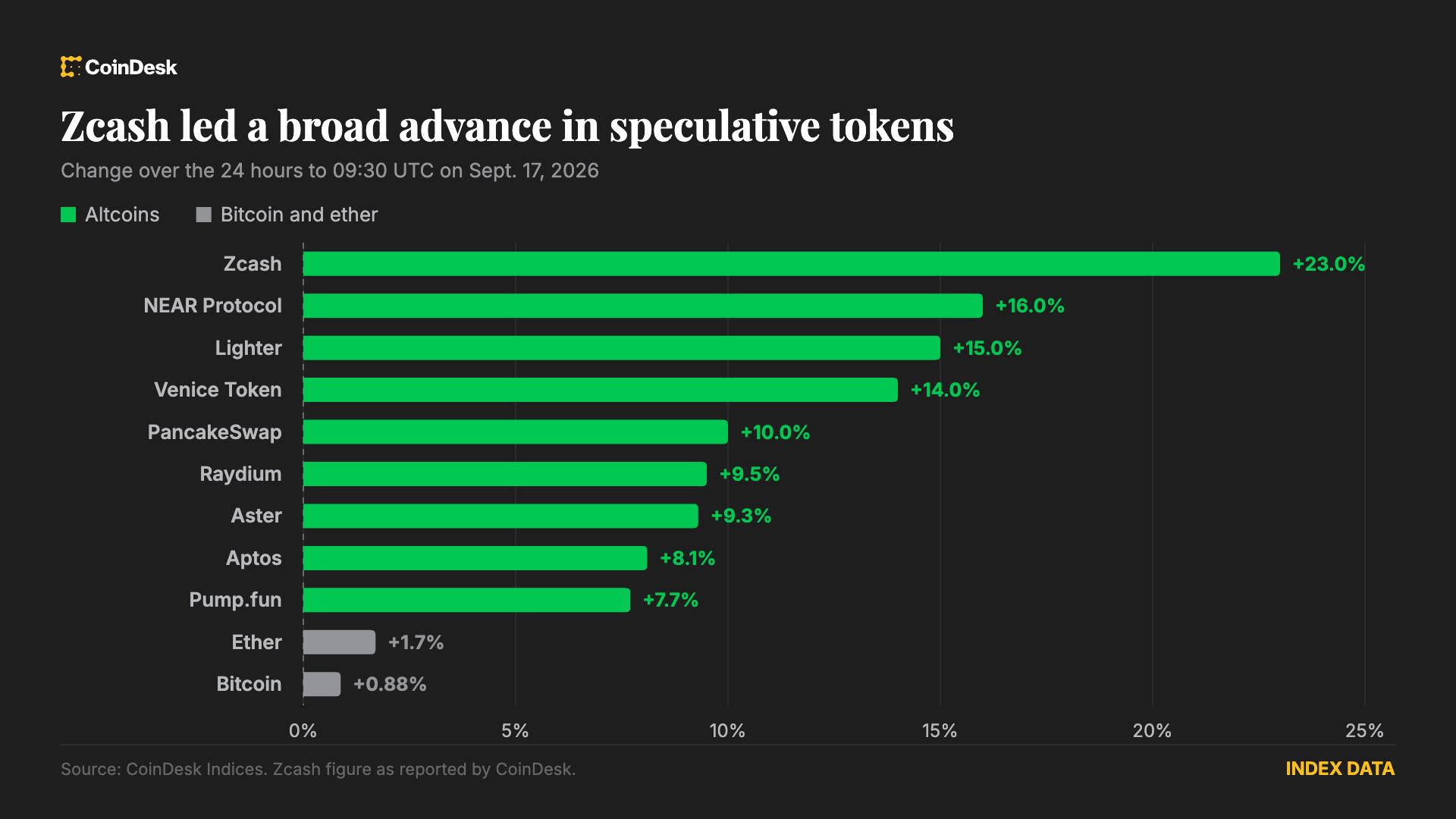
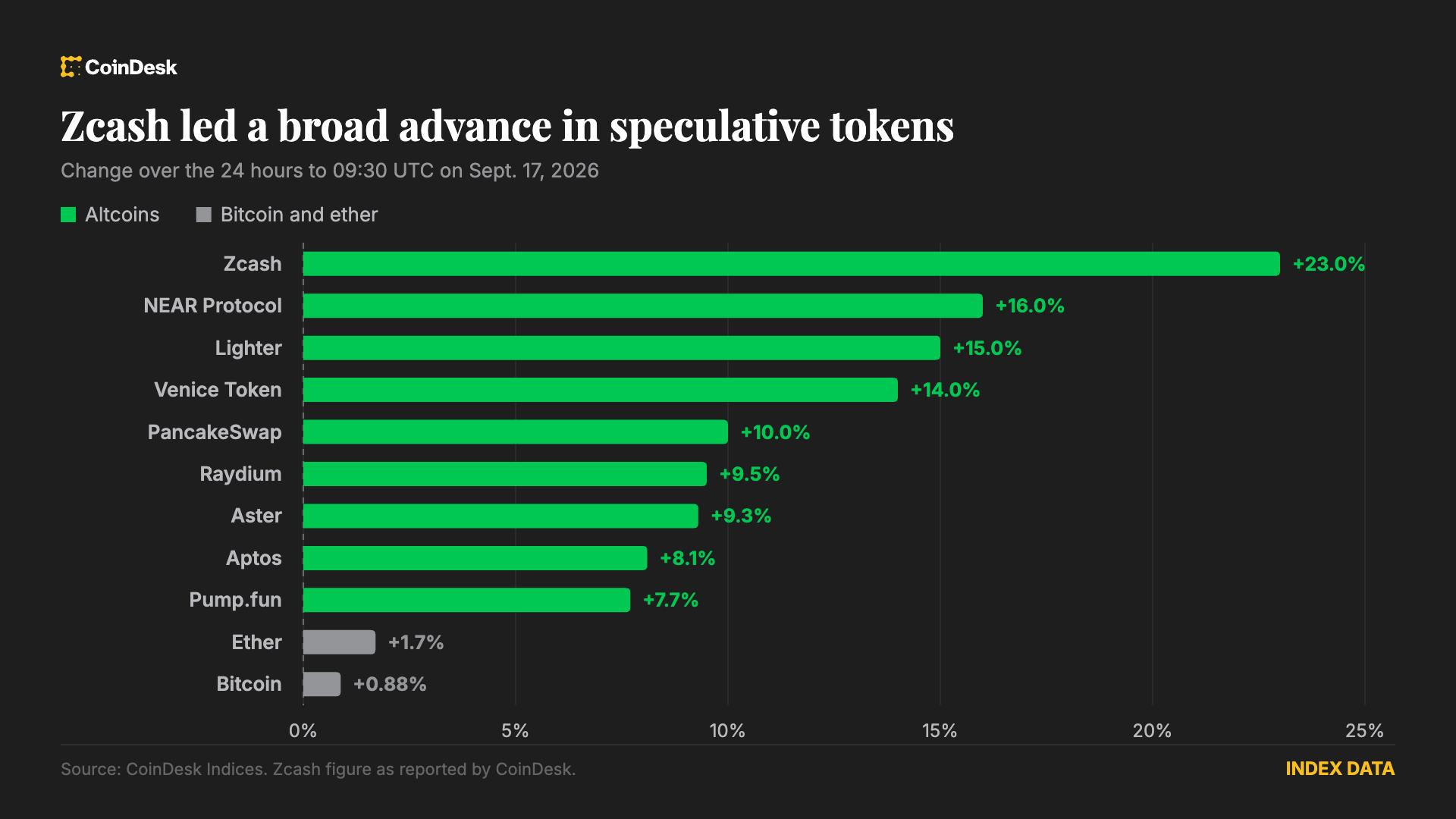
Bitcoin pushed up to $76,621 on Thursday, a gain of 0.60% since midnight UTC and 0.88% over 24 hours, as risk assets focused on the Federal Reserve’s interest-rate projections rather than the first increase in more than three years. Ether added 1.1% to $2,444.36 and solana (SOL) rose 2% to $100.57.
The Federal Open Market Committee voted to lift the target rate by 25 basis points to 3.75%-4%. Chair Kevin Warsh told reporters that inflation had been “too high … for too long” and that recent months’ readings did not suggest underlying trends had meaningfully improved.
What reassured traders was the committee’s “dot plot” forecast, with a median policy rate of 4.1% at the end of both 2026 and 2027, implying just one further 25 basis-point move and no sustained tightening cycle.
Risk assets rallied, with the Dollar Index losing 0.17% while Nasdaq 100 index futures gained 1.04%, S&P 500 futures 0.81%, gold 1.02% and silver 1.52%. The two-year Treasury yield slipped 2 basis points to 4.71% after touching the highest level since 2024 in the previous session.


New York, USA, September 17th, 2026, Chainwire. Edel announced an expanded institutional push for its tokenized equity and commodity markets on Canton, led by board member Brad Klaas, a securities lending and prime brokerage veteran whose career spans BlackRock’s predecessor firms and Franklin Templeton. The push comes as Wall Street’s largest institutions move assets onchain and confront a harder question: what those assets can do once they arrive, and whether the answer gives institutions a compelling reason to change.
As part of that effort, Edel has joined the DTC Digital Assets Solutions Industry Working Group, convened to provide feedback on the creation of the DTCC Tokenization Service.
Edel will help shape this work alongside more than 100 other members, including institutions at the core of US capital markets such as NYSE, BlackRock, Goldman Sachs, JPMorgan and Citadel Securities. The DTCC Tokenization Service is expected to launch in Q4 2026.
For most of the past decade, the question hanging over blockchain and capital markets was whether the two belonged in the same sentence. That question has largely been settled. BlackRock has tokenized funds. JPMorgan has built blockchain settlement rails.
Franklin Templeton has moved investment products onchain. The Depository Trust & Clearing Corporation, the post-trade utility beneath much of the US securities market, is developing tokenization infrastructure of its own.
Yet as the novelty of issuance fades, a less comfortable reality is setting in. Putting an asset on a blockchain does not automatically make it useful inside the machinery of global finance. The markets around it still have to work.
For Klaas, those requirements are familiar. The questions now confronting onchain finance increasingly resemble the ones he has spent decades working through.
Beyond the Token
The first era of real-world asset tokenization was dominated by questions of issuance. How does a fund issue shares using blockchain infrastructure? That question still matters, but the value of a financial asset has never come solely from the ledger it sits on. It comes from everything that can happen around it.
In traditional markets, assets are rarely static. Stocks are lent. Treasuries are pledged as collateral. Positions are financed, margined, cleared and moved between institutions. Dealers borrow securities to make markets, hedge funds borrow them to express short positions, and large asset owners lend portfolios that would otherwise sit idle. This plumbing rarely makes headlines. It is also where much of modern finance actually lives.
That creates a genuine risk for the tokenization movement. If a tokenized security trades in an isolated liquidity pool, cannot be used efficiently as collateral and cannot interact with the systems institutions already rely on, tokenization can simply create another silo. The bigger prize is making the asset programmable without making the market around it worse.
That means addressing liquidity, privacy, settlement and credit. It also means understanding why the existing arrangements work as they do.
What Wall Street Already Learned
Early in his career, Klaas ran global securities-lending operations at Wells Fargo Investment Advisors, the business that became Barclays Global Investors and was later acquired by BlackRock. He says he scaled those operations from just over $1 billion to nearly $40 billion before leaving in 1998, during a period when the firm’s assets under management grew from roughly $400 billion to $1.2 trillion.
He went on to build businesses in prime brokerage and electronic trading, and later spent more than four years at Franklin Templeton working on institutional tokenized collateral products and partnerships. His experience spans both the machinery that puts institutional portfolios to work and the effort to bring those functions onchain.
That career arc matters because the two markets are starting to collide. Securities lending turns a passive portfolio into productive capital, but the infrastructure underneath it is demanding. Counterparty exposure has to be managed. Collateral moves, margin changes and securities need to be recalled. Corporate actions have to be accounted for, and settlement needs to happen reliably.
Decades of financial infrastructure exist to make that process look boring. Blockchain changes some of the mechanics, but it does not eliminate those obligations.
Klaas sees an opportunity in how those functions connect. Discussing traditional securities finance with Andrés Soltermann, CEO and co-founder of Edel, he describes “very old systems all lined up in a particular way.” Changing what an asset can do often means working through arrangements that were not designed to adapt together. By contrast, his interest in blockchain rests on composability: the ability to build financial functions that can work with one another and accommodate new uses.
That flexibility helps explain Klaas’s interest in Edel. Asked what competitive advantage a token could give the business, he points to the possibility of using it across several activities rather than confining it to one application. As the infrastructure develops, those uses could open up different sources of income and activity – what he describes as “creating that flywheel around income.” For someone who has spent decades building businesses around the productive use of assets, the attraction is a token whose economic role could expand alongside the markets being built around it.
As a board member, Klaas’s remit spans institutional strategy, senior industry relationships and shaping how Edel’s markets for tokenized equities and commodities on Canton serve institutional participants. He brings the team into conversations with decision-makers across traditional finance, while helping translate their commercial and operating requirements into the markets Edel is building.
Canton gives that discussion a practical dimension: qualifying applications can earn Canton Coin rewards for the economic activity they bring to the network. Edel reported in August that it was generating “tens of thousands in revenue every day,” which the company attributes to those rewards. That offers a concrete example of the broader opportunity Klaas describes: earning from participation in the infrastructure, alongside the business built on top of it.
What matters is the overlap between what he spent decades building and the problem now emerging onchain. His experience connects the technology to the business decisions that determine whether institutions will use it.
The Profit Formula
Klaas is clear-eyed about institutional change. Large firms have established revenues, internal obligations and investors whose agreement may be needed before they can adopt a different approach. Their willingness to move, he argues, is affected by “their own profit formula.”
That observation cuts both ways. An institution has little reason to replace a working system merely because a newer technology exists. It has a more compelling reason to consider one that could lower funding costs, improve collateral availability or allow it to do more business with the assets it already holds.
This is where collateral mobility becomes interesting. If assets take hours or days to move between systems, institutions may need additional liquidity to meet obligations while they wait. If an eligible security can be deployed more efficiently as collateral, some of that funding burden could fall. An existing portfolio could support financial activity that would otherwise require a separate pool of cash.
Those improvements have to justify the cost of integration and satisfy the institution’s risk requirements. But they speak directly to the economics Klaas describes. The same concern for profitability that makes a firm reluctant to change can give it a reason to adopt a system that demonstrably improves how it uses capital.
Tokenized Assets Need Something to Do
Edel is exploring one application of that idea: whether securities tokenized by DTC could be recognized directly as margin within Edel Markets.
Its immediate focus is perpetual futures on Canton. The broader ambition is to build capital-markets infrastructure that makes tokenized assets more productive, improving how they move, support positions, and serve the institutions holding them.
If the necessary arrangements can be established, an institution might be able to post an eligible security rather than sell it or raise separate cash to fund margin. The potential benefit would come from reducing the friction between holding an asset and putting it to work.
Recognition as margin, however, requires more than a token that can move. The receiving market has to accept the asset, value it appropriately, and establish what happens if the position deteriorates or the counterparty defaults. Custody, permissions and enforceable rights remain part of the transaction.
These are the kinds of questions that connect the proposed application to Klaas’s experience. A crypto developer can explain what the technology permits. An institution needs to understand how the arrangement fits its financing, risk, and operating requirements. His contribution lies in helping those conversations meet.
The post Edel Expands Institutional Push as Wall Street Tokenization Matures appeared first on BeInCrypto.
Water, water everywhere and not a drop to drink may be the sentiment of the crypto industry, lobbyists and lawmakers who’ve spent the last year trying to get the CLARITY Act over the line.
No shortage of negotiations, amendments or political wrangling; yet not enough to get the bill moving through the Senate.
The CLARITY Act may have rammed into a Senate-shaped hurdle this week, but it isn’t dead on arrival yet — let’s go with walking wounded.
There’s still a chance for the digital asset market structure bill to scramble together the 60 votes it needs to clear the Senate.
When Republican Senator Thom Tillis switched his vote from yes to no at the last minute, he did so on procedural grounds. It may have looked like a swing against CLARITY, but it was really a parliamentary maneuver, allowing him to file a motion to reconsider and preserve a route back to the Senate floor.
The Crypto Council for Innovation (CCI)’s director of US federal affairs, Ryan Eagan, tells Magazine:
“Senator Tillis’s motion to reconsider would provide an opportunity to revisit CLARITY’s cloture vote at any point this session. Specific timing regarding next steps is not clear, but that desire to preserve that opportunity is in part due to the progress made over the past week.”
But the Senate is running out of time; both Democrats and Republicans remain divided over ethics provisions involving President Donald Trump, and even supporters of the bill say a more bipartisan negotiating process may now be necessary.
So can CLARITY still be resuscitated, and if it can, how much of the bill will need serious CPR to get there?
CLARITY isn’t dead, but the clock is running down
The failed cloture vote, a procedural vote to end debate on a bill and move it toward a final vote, doesn’t end CLARITY’s journey through Congress just yet. It requires 60 votes in the Senate, and CLARITY fell 49-50 on Tuesday.
Tillis’ motion to reconsider means the vote can be revisited during the current session, but that route is running into a much more practical problem: a ticking clock.
Related: Coinbase faces greater fallout from CLARITY Act setback: Saxo
The Senate is scheduled to leave for recess on October 2 before returning after the midterm elections, and the House of Representatives has already recessed for the election period, complicating any attempt to move legislation through both chambers before the end of the year.
Congressman Shri Thanedar, a Democrat who supported CLARITY when it passed through the House in July 2025, tells Magazine that timeline presents a “major barrier” to reaching an agreement:
“There are only 20 legislative days left in this Congress, all of them after the midterms, making odds of a 2026 compromise, unfortunately, very low.”
Very low doesn’t mean impossible, and the crypto industry has a precedent in the Guiding and Establishing National Innovation in US Stablecoins (GENIUS) bill, which failed cloture 48-49 in May 2025 before clearing a second cloture vote 66-32 just 11 days later. It passed the Senate the following month. However, Kyle Chassé, founder of crypto investment firm MV Global, tells Magazine:
“GENIUS came back from a failed cloture in 11 days. But GENIUS had a deal. This one has a calendar and no votes. Miss Jan. 3, and it restarts from zero in 2027 with a House that is probably Democratic.”
While a lame-duck session after the November elections could give CLARITY another shot, that’s not the same as having a ready-made deal waiting to go.
The 60-vote problem is a negotiating problem
Of the 49 votes for CLARITY, not a single one came from the Democratic camp. Chassé says:
“Every one of the 49 was a Republican. Zero Democrats voted to even open debate.”
While that’s clearly less than ideal, it doesn’t necessarily mean the Democrats have abandoned the bill entirely.
On Wednesday, seven Democratic senators — all of whom had voted a day earlier against advancing the bill — said they “remain committed” to enacting the legislation. Among them was Sen. Angela Alsobrooks, who backed moving the bill out of the Banking Committee in May before voting no on cloture. She said it’s “clear that now is the time to regulate digital assets” and that she’s willing to negotiate over the ethics provisions, adding:
“We were ready to strike a deal today and in discussions right up until the vote. Republican leadership shut it down at the very last minute after it became clear that we were on a path to a successful vote.”
Tillis said Wednesday he now wants to “convince the Democrats to get on board,” and “put pressure on them to own it,” and his procedural vote switch was designed to keep that possibility alive. “I feel very strongly that this is an unregulated marketplace and that we need some guardrails on,” he added.
Related: Bernstein expects ‘aggressive’ rulemaking from SEC, CFTC, following CLARITY Act failure
The divide isn’t over whether Congress should establish rules for crypto anymore, but whether the current package goes far enough to secure bipartisan support.
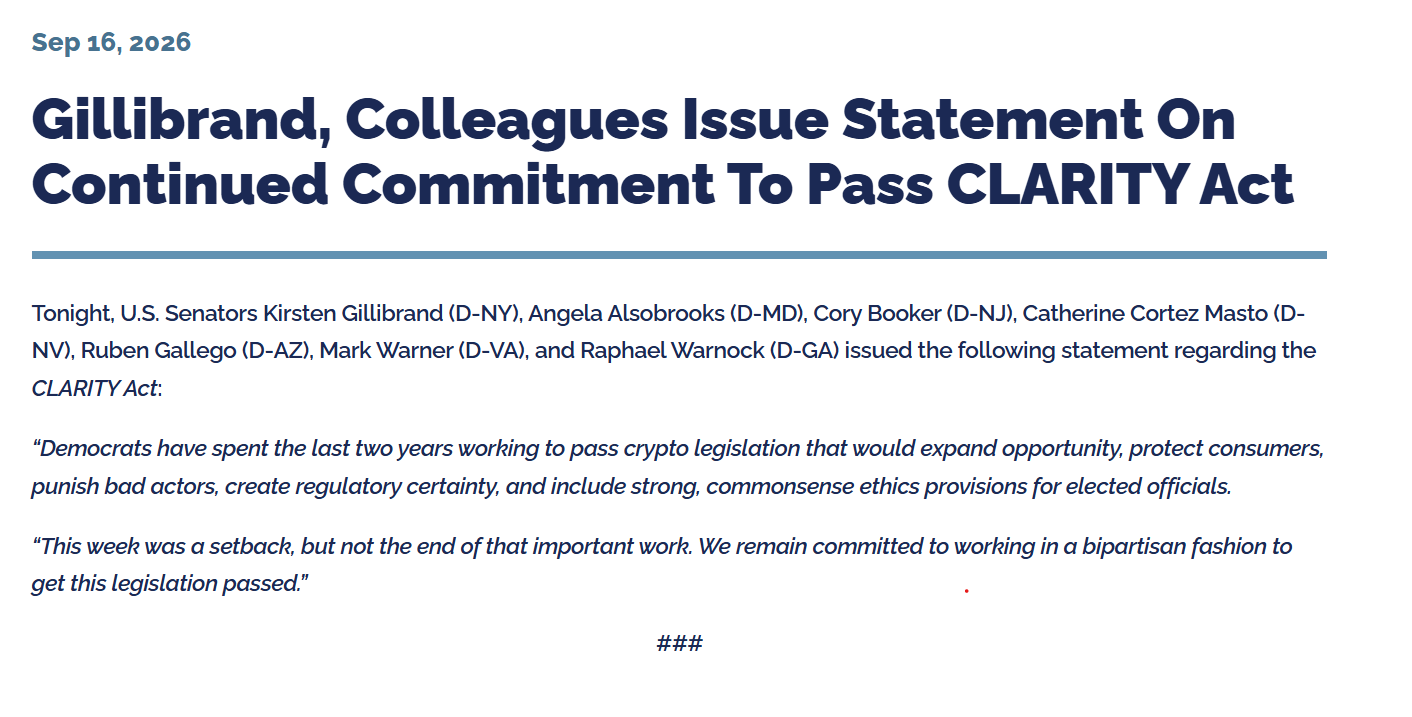
Seven Democratic senators “remain committed” to enacting the legislation. Source: Kirsten Gillibrand, Senate
While Congressman Thanedar says he supports the bill in its current form, he acknowledges that Tuesday’s result shows the need for both parties to work together further on the draft:
“I do believe that the failed CLARITY vote on Tuesday demonstrates that a more bipartisan drafting process would lead to a higher likelihood of creating the bipartisan, supermajority coalition that passing this legislation into law would require.”
If saving CLARITY means rewriting it, what survives?
Chassé says the problem has moved beyond the technical drafting of crypto policy and is now centered on President Trump’s crypto interests and the ethics provisions around them:
“This stopped being a drafting problem. It’s a referendum on the President’s crypto holdings six weeks before an election, and the text as written can’t survive that.”
Republicans had already made 126 substantive changes requested by Democrats ahead of Tuesday’s vote, including tighter restrictions on public officials profiting from crypto ventures, and giving state attorneys general a role in enforcing some of the ethics provisions.
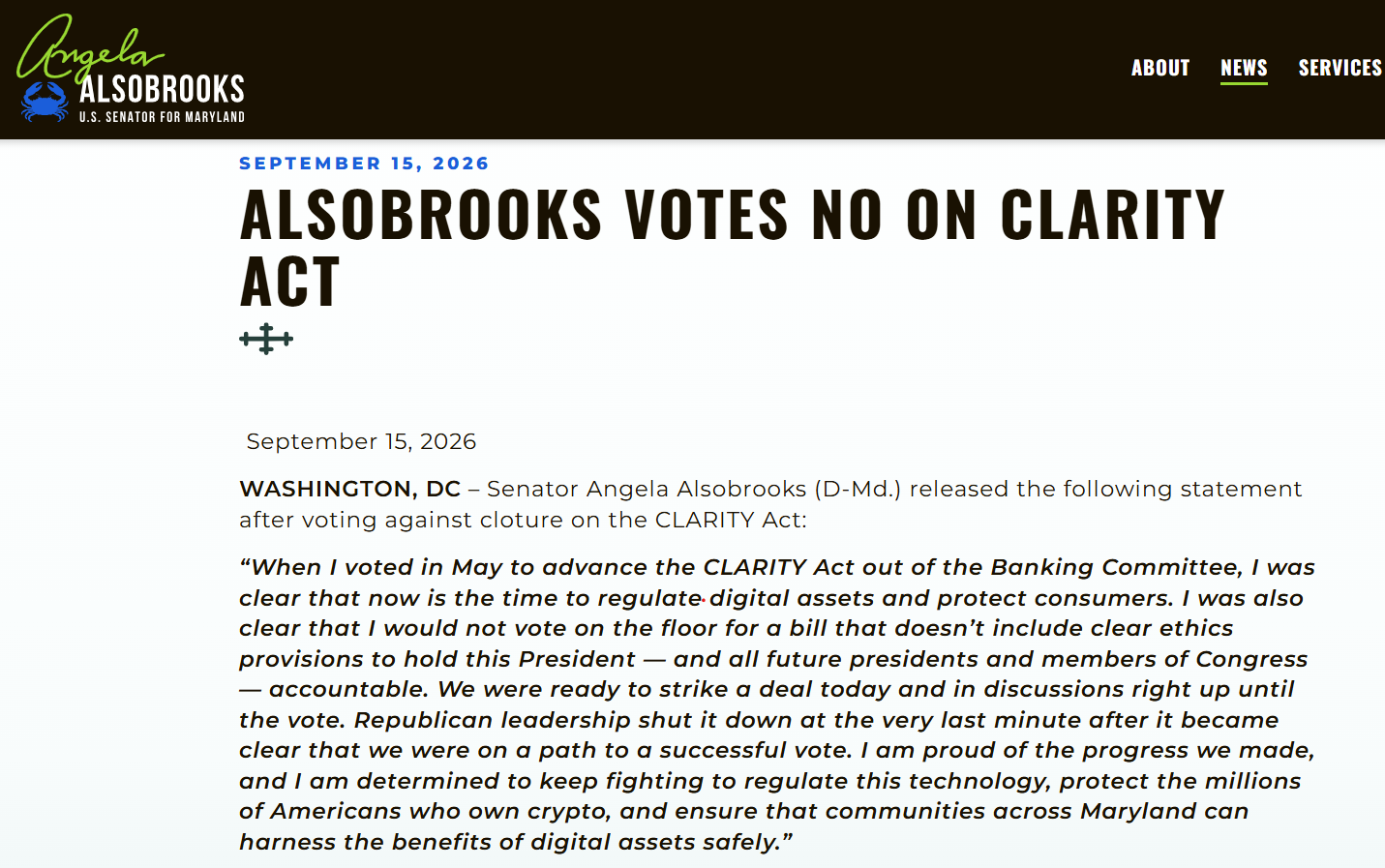
Alsobrooks votes no on CLARITY. Source: Angela Alsobrooks, Senate.
Despite the concessions, Thanedar says the Democrats want more restrictions “on the President’s ability to use his office for personal gain.” He says the at least $1.4 billion in crypto earnings Trump reported for 2025 in his annual financial disclosure shows that “guardrails are necessary to both hold the President accountable and protect the long-term health of the digital asset market.”
Ethics is not the only potential fault line, though, and Chassé says the industry “should stop dying on that hill.” He points instead to stablecoin rewards, saying “some kind of cap or circuit breaker on yield” would likely be “the price of the bank-side senators and a chunk of Democrats,” along with “tighter illicit finance and state enforcement language.”
He says self-custody and developer protections are areas the crypto industry should be reluctant to trade away. Those protections have been bitterly defended throughout the negotiations, with lawmakers and industry groups debating how far the bill should go in shielding non-custodial developers from financial and anti-money-laundering (AML) requirements.
Congress may stall, crypto regulation doesn’t have to
Even if CLARITY remains stuck in Congress, US crypto regulation is not standing still. Eagan says the Securities and Exchange Commission (SEC) and the Commodity Futures Trading Commission (CFTC) have “demonstrated commitment to reduce uncertainty” through guidance, rulemaking, no-action relief and exemptions.
“CCI expects that agencies’ crypto agenda will proceed in robust fashion regardless of the CLARITY Act,” he says, adding that the GENIUS Act implementation continues at Treasury and the banking regulators.
Strategy executive chairman Michael Saylor also pointed out that the SEC, CFTC and Treasury could continue to advance rules under existing laws:
“Progress need not wait for Congress.”
That may be true, but agency action is not the same as getting CLARITY over the finish line. Regulatory guidance can be swept out with administrations, but legislation is harder to unwind.
CLARITY may still have a way to limp back to the Senate, but whether lawmakers can find 60 votes without changing the bill beyond recognition is another matter.
Magazine: Revolut ID thefts highlight KYC’s dangers: Here’s how to fix it
Cointelegraph publishes long-form journalism, analysis and narrative reporting produced by Cointelegraph’s in-house editorial team with subject-matter expertise. All articles are edited and reviewed by Cointelegraph editors in line with our editorial standards. Some articles contain affiliate links, from which Cointelegraph may earn a commission. These relationships do not influence which products we review or our editorial conclusions. Content published in here does not constitute financial, legal or investment advice. Readers should conduct their own research and consult qualified professionals where appropriate. Cointelegraph maintains full editorial independence.

The Philadelphia semiconductor index, known as SOX, rose for the third straight session Thursday, helped by reassuring forecasts on AI data center spending. AMD stock was among the big gainers. In midday trades on the stock market today, the SOX advanced 3%. The SOX includes the 30 largest chip stocks traded in the U.S. However, the SOX is still trading…
Copyright ©2026 Investor’s Business Daily, LLC. All rights reserved. 87990cbe856818d5eddac44c7b1cdeb8

Mad Money Jim Cramer Sees 40% Upside for Palantir Stock. Does Wall Street Agree?

‘Doctor Who’ Officially Begins a New Era With New Sci-Fi Reboot

WATCH LIVE: Senate expected to vote on cryptocurrency regulation

Weekend Open Thread – Corporette.com

Memory prices are slowing because buyers ran out of money

Micron Stock Climbs Above $1,031 as AI Memory Crunch and a $50 Billion Outlook Fuel the Rally
WATCH LIVE: Senate expected to vote on cryptocurrency regulation

All financial advisors HATE this man! @CRED_club #LLAShorts 561

The Money Song for Kids | Penny, Nickel, Dime, Quarter | MISTER B | Nursery Rhymes + Kids songs
-
 Fashion6 days ago
Weekend Open Thread – Corporette.com
-

 Tech4 days ago
The Latest Weird Thing to Play Doom Is the Mapped-Out Brain of a Fruit Fly
-

 Business6 days ago
10 Most-Streamed Songs On Spotify In 2026 So Far, Led By Ella Langley’s Dominant Run On The Charts This Year
-

 Crypto World6 days ago
XAG/USD: Silver’s Short-Term Rally Meets Its Moment of Truth
-

 Tech7 days ago
Battery life is the only iPhone 18 Pro and iPhone Duo upgrade I care about. Apple didn’t disappoint
-

 Crypto World7 days ago
OKX launches 10x OpenAI, Anthropic X-Perps in Europe
-

 Crypto World6 days ago
Diesel Tops $6 a Gallon for the First Time as 28 States Set Records
-

 Crypto World3 days ago
Kraken Lets xStocks Holders Earn Yield Through DeFi
-

 News Videos6 days ago
Facing Financial Fears
-

 Crypto World3 days ago
Elon Musk Drops a Bombshell: Grok 5 Could Be the AGI Breakthrough
-

 Crypto World19 hours ago
US Charges Robinhood Engineers Over Crypto Listing Trades
-

 Business5 days ago
Rivals Sam Altman and Elon Musk Rally Behind Dario Amodei’s Call for a Slowdown in AI Development
-
Crypto World7 days ago
Ethereum Price Analysis: Consolidation at $2.5K Tests Momentum as On-Chain Activity Surges
-

 Crypto World5 days ago
Can AI Build a Startup in 72 Hours? Elon Musk's Team Will Livestream the Test
-

 Entertainment6 days ago
News Specials, Movies, Shows, More
-
 NewsBeat3 days ago
‘Sick conspiracy’: Trump says only guardrails AI needs is ‘a strong and smart (High IQ!) president’ in all-caps rant
-

 Crypto World7 days ago
Bitcoin ETFs Pull $167M as 2026’s Best Inflow Run Slows
-

 Crypto World7 days ago
US CPI forecast at 3.4% as tariff risks build
-

 Crypto World6 days ago
Robinhood Chain Never Stopped But its Blobs Did Stop Reaching Ethereum For 14 Minutes
-
 Crypto World4 days ago
New Tesla Roadster Uses SpaceX Tech. Will It Impact the Stock Price?
You must be logged in to post a comment Login