
Crypto World
Tim Scott signals progress on stablecoin yield dispute holding up crypto bill



This week banks and crypto lobbyists may reach a compromise on stablecoin yield payments, according to U.S. Senator Tim Scott. Currently, the Senate’s crypto market structure bill progress remains stalled.
Summary
- Senator Tim Scott says a proposal to resolve the stablecoin yield dispute could arrive this week, raising hopes for movement on the stalled Senate crypto market structure bill.
- Talks have slowed over a provision targeting stablecoin yield payments, with banks warning of deposit outflows while crypto firms argue the restriction would limit competition
Speaking at a crypto lobby event in Washington, Scott, who chairs the Senate Banking Committee, said he expects to “have the first proposal in my hands to take a look at.”
“If that actually happens before the end of this week, and I think that it will […] I think we’re going to be in much better shape,” he said.
Regulation has been stalled
The bill in question is the Senate’s crypto market structure legislation, formally known as the Digital Asset Market Clarity Act (or the CLARITY Act), which was introduced to outline how regulators will oversee digital assets and define the roles of different agencies.
However, progress around the legislation came to a standstill after disagreements emerged over a provision that would ban third parties from offering stablecoin yield payments.
Bankers argue that such yield offerings create a loophole that could drive deposits away from traditional banks, while crypto proponents say the restriction is anti-competitive and limits user incentives.
The bill concerns both the Securities and Exchange Commission and the Commodity Futures Trading Commission.
Senate Banking, which oversees the SEC, indefinitely postponed a markup of the bill in January. Subsequently, the Senate Agriculture Committee, which oversees the CFTC, advanced its version to the Senate floor.
Over the past weeks, bankers and crypto lobbyists have met for multiple closed-door meetings to negotiate a middle ground, but the Senate Banking Committee has not yet scheduled any formal updates to the legislative calendar.
In recent comments, House Financial Services Committee chair French Hill said the CLARITY Act can help address some of the unresolved issues tied to stablecoin regulation and broader market structure concerns.
Other issues being addressed
According to Scott, the negotiations extend beyond just stablecoin yield, and other provisions around ethics, decentralized finance, and “who is carved in and who is carved out” are also being worked through.
“We have made a lot of progress over the last probably 30 days or so,” he said, adding that regulators and lawmakers are continuing to narrow differences as momentum builds behind the bill.

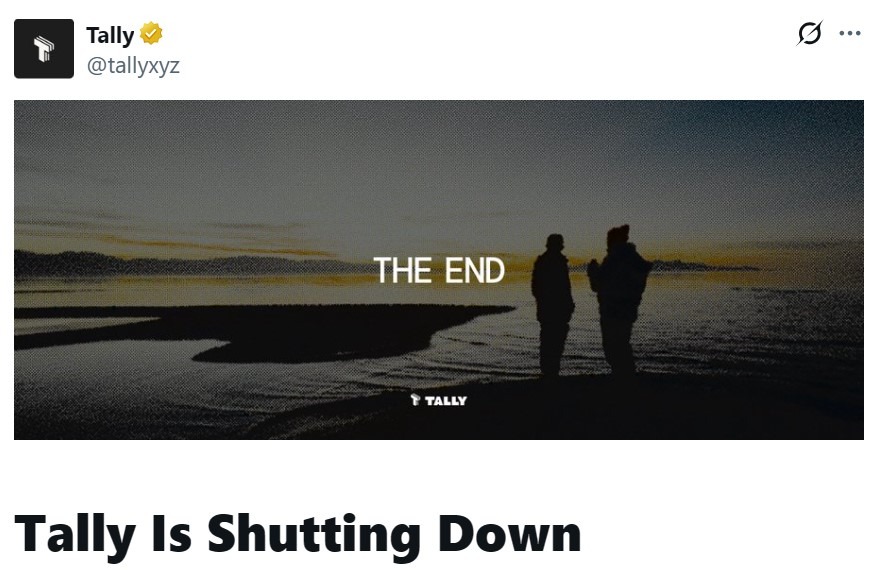
Decentralized autonomous organization (DAO) governance platform Tally is shutting down after five years of operations, citing a lack of sustainable business models for governance tooling in the crypto market.
Tally co-founder and CEO Dennison Bertram said the company will begin winding down at the end of March. He added that the company is not moving forward with a planned initial coin offering (ICO), concluding that it could not confidently deliver on the expectations that would come with selling tokens to investors.
Tally’s closure comes despite years of activity on its platform, which supported governance for hundreds of organizations and processed more than $1 billion in payments, according to Bertram. At its peak, the company said it helped secure up to $80 billion in value and served more than 1 million users.
Tally launched in 2021 as a software platform for on-chain organizations. According to startup intelligence platform Tracxn, the company raised a total of $15.5 million across three funding rounds.
Related: Vitalik Buterin proposes using AI to strengthen DAO governance
The shutdown reflects the challenges facing DAO-focused platforms after years of development and adoption. It highlights the pace of change in the industry, where even substantial achievements may prove insufficient to support a venture-backed business in DAO governance tooling.

Industry reflects on DAO challenges amid Tally shutdown
Following the announcement, builders and operators across the ecosystem pointed to a broader reassessment of DAO governance, with some describing Tally’s closure as part of a wider shift in how coordination tools are being developed and monetized.
Oku Trade CEO Getty Hill said DAO development has not met the expectations set during earlier growth phases.
Related: DAOs may need to ditch decentralization to court institutions
“While stablecoins have achieved the greatest product-market fit in crypto, I still believe DAOs will ultimately get there, though maybe not for another 3-10 years,” he wrote.
Meanwhile, Oasis Onchain founder Stefen Deleveaux described the shutdown as “the end of an era,” reflecting on a wave of early DAO tooling projects that emerged during the 2020–2021 cycle but struggled to sustain themselves over time.
Realms DAO chief technology officer Adrian Brzeziński pointed to the stats highlighted by Bertram, saying that the “hardest truth” in crypto infrastructure is that usage does not equate to revenue. “The next wave of governance won’t look like voting portals. It’ll look like capital coordination,” Brzeziński wrote.
DAOs are “difficult” to operate
On March 11, Aave founder Stani Kulechov said DAOs, in their current form, are “extraordinarily difficult” to operate. He pointed to internal conflicts and proposals that can take weeks of forum posts, temperature checks and multiple votes to pass.
Magazine: What’s a ‘Network State’ and are there real-life examples? Big Questions
Bitcoin Depot, a publicly traded cryptocurrency ATM provider, is facing mounting regulatory pressure in the US amid a steep stock decline and a weak revenue outlook.
The Connecticut Banking Commissioner, through the Consumer Credit Division, issued a temporary cease-and-desist order against Bitcoin Depot on March 9, summarily suspending its money transmission license in the state.
The order cites multiple alleged violations of the Connecticut Money Transmission Act, including failure to maintain minimum net worth, excessive fees and incomplete refunds to consumers who fell victim to scams.
The company lowered its 2026 revenue outlook in its fourth-quarter 2025 and full-year financial results released on Monday. It reported a 56% year-to-date stock decline and staff layoffs. Bitcoin Depot is one of the largest kiosk operators in the US. Its earnings release says it had more than 8,400 kiosk locations as of year-end 2025.
Revenue outlook darkens for 2026
The company reported full-year 2025 revenue of $615 million, up 7% from 2024, though net income fell to $5.1 million from $7.8 million.
Q4 revenue dropped to $116 million from $136.8 million a year earlier, driven by newly enacted state regulations and enhanced compliance measures, the company said.
Bitcoin Depot also warned of a weaker revenue outlook for 2026, citing ongoing regulatory changes and compliance requirements that could reduce transaction volumes:
“The Company expects revenue for the core business in 2026 to be down in the range of 30% to 40%. This estimate reflects the uncertainty presented by the dynamic regulatory environment and enhanced compliance standards.”
In a separate March 11 filing, Bitcoin Depot disclosed that chief operating officer Elizabeth Simer had resigned. The company did not give a reason.
Bitcoin Depot faces actions in multiple states
Connecticut’s cease‑and‑desist order comes as Bitcoin Depot already faces enforcement actions in other states, including a Massachusetts Attorney General lawsuit in February, which alleged facilitation of crypto scams.
Bitcoin Depot was also sued in Iowa in February 2025, when Attorney General Brenna Bird accused the company and CoinFlip of failing to protect consumers from crypto ATM scams.
Related: Minnesota to weigh ban on crypto kiosks after scam reports
In January, Bitcoin Depot entered a $1.9 million consent agreement with the Bureau of Consumer Credit Protection in Maine to compensate consumers scammed via its Bitcoin kiosks and comply with state licensing rules.

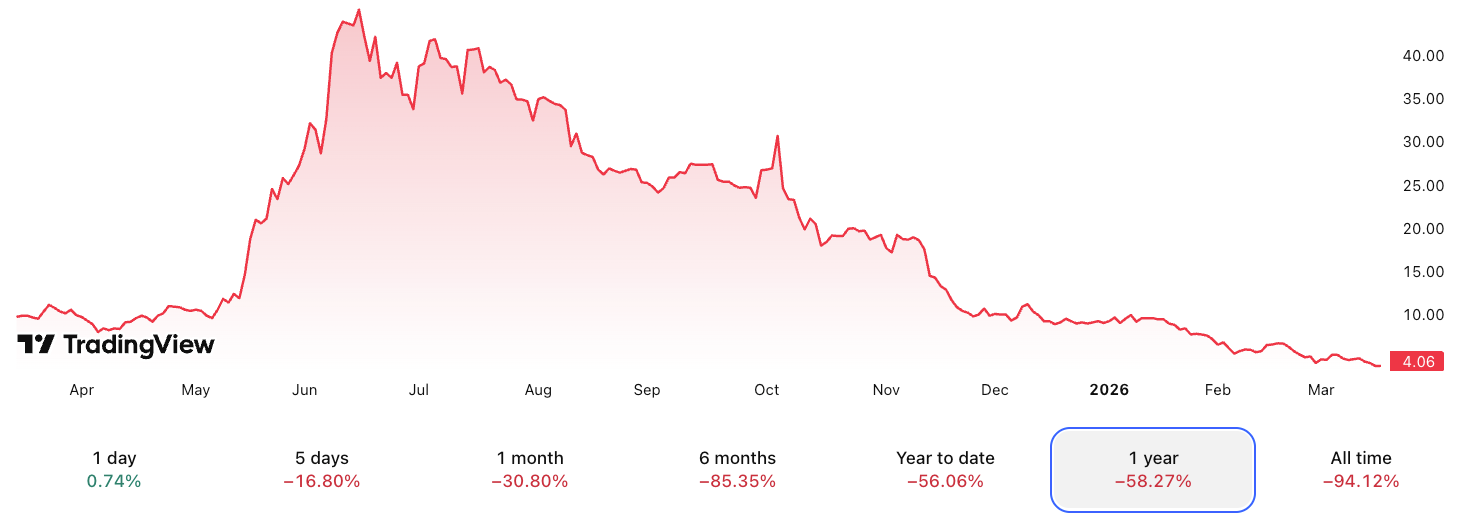
Bitcoin Depot’s shares (BTM) have declined since mid-2025, losing 91% of their value since hitting $45.4 in June. The stock has tumbled 56% year-to-date, closing at $4.06 on Tuesday, according to TradingView.
Cointelegraph contacted Bitcoin Depot for comment regarding the regulatory actions, but had not received a response by publication.
Magazine: How crypto laws changed in 2025 — and how they’ll change in 2026
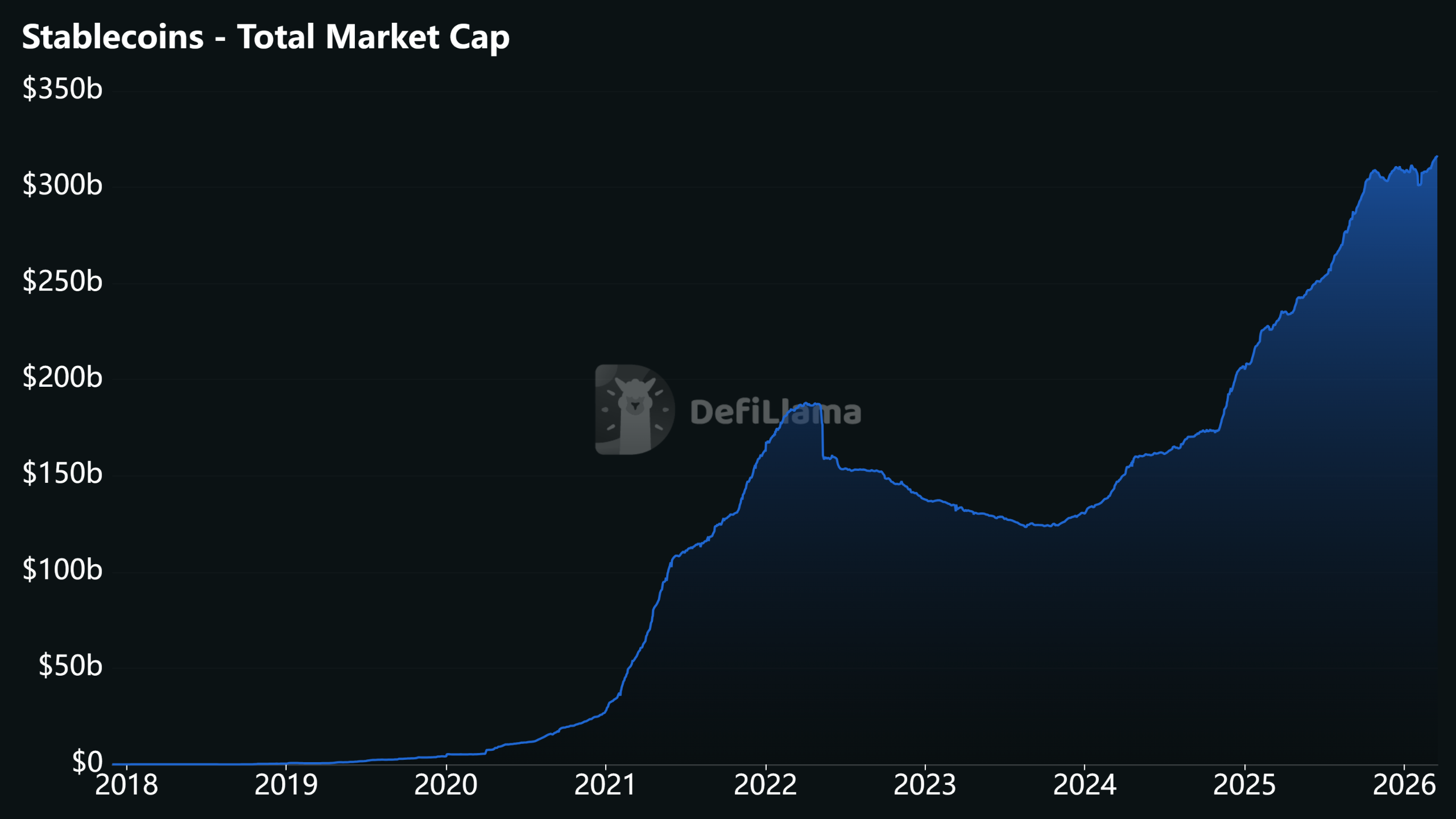
Hong Kong-based stablecoin payments company RedotPay said it has “consolidated” teams to improve efficiency as it scales, after a report claimed executive turnover and sensitivities tied to its mainland China connections.
On Wednesday, a Bloomberg report claimed RedotPay is facing leadership churn and sensitivities tied to China as it explores raising up to $150 million. Citing people familiar with the matter, the report said that at least five senior hires left the stablecoin company within a year, including two compliance chiefs, and described a demanding work culture with extended hours.
In February, Bloomberg reported that RedotPay is considering a US IPO that could raise over $1 billion and value the company at more than $4 billion. The Hong Kong-based firm was reported to be working with JPMorgan, Goldman Sachs and Jefferies on a potential New York listing that could take place as early as this year.
“As we transition from an early-stage startup to a unicorn, we are evolving our organizational structure and talent pool to support our ongoing growth trajectory,” RedotPay said in a statement to Cointelegraph without addressing Bloomberg’s claims. The company said that all co-founders, including CEO Michael Gao, the chief operating officer and the chief technology officer, continue to lead key functions.
RedotPay says no urgent need for fundraising
The company confirmed that it has not yet appointed a chief financial officer, noting that one of its co-founders currently oversees finance, alongside its investor relations and corporate development leadership. “We may appoint a CFO at a later stage as the need arises,” the company said, adding that it now employs more than 250 people globally, most of them based in Hong Kong.
Related: Theo closes $100M facility backing gold-linked yield stablecoin
RedotPay also said there is “no urgency” to secure new funding, citing strong operating cash flow and liquidity. The company added that it remains open to investors.
The stance comes after a year of heavy fundraising, with the company raising a total of $194 million across three rounds in 2025. It began with a $40 million Series A in March led by Lightspeed, followed by a $47 million strategic round in September that brought in Coinbase Ventures and helped push the company to unicorn status.

The momentum continued in December with a $107 million Series B led by Goodwater Capital, alongside investors including Pantera Capital, Blockchain Capital and Circle Ventures.
Founded in 2023, RedotPay offers an app paired with a Visa card that allows users to spend stablecoins in everyday transactions, alongside yield and remittance services.
Related: Standard Chartered sticks to $2T stablecoin call but trims T-bill impact
Big Questions: Is China hoarding gold so yuan becomes global reserve instead of USD?

TLDR
- Shares of Trade Desk (TTD) declined approximately 7.5% on Tuesday, with additional losses in Wednesday’s pre-market session
- Publicis Groupe, a major French advertising firm, advised clients against using the platform following an unsuccessful third-party audit
- The audit raised concerns about unauthorized fee implementations and lack of transparency in media cost pass-throughs
- Trade Desk refuted the audit claims, stating that confidentiality agreements prevented disclosure of requested information
- Year-to-date, the stock has declined more than 33%, trading 72% beneath its 52-week peak
Trade Desk (TTD) faces mounting pressure this week. Shares tumbled 7.5% during Tuesday’s session, settling at $25.05, before extending losses in Wednesday’s pre-market activity following news that Publicis Groupe, a prominent French advertising conglomerate, instructed its clients to avoid using the platform.
The catalyst behind this advisory was an unsuccessful third-party audit. According to the audit findings, TTD allegedly implemented fees on services that clients were automatically enrolled in without explicit consent. Additionally, the audit questioned whether the company could demonstrate that media expenses were transferred to clients without undisclosed markups.
Trade Desk disputed these conclusions. The company explained that the auditor requested confidential data that couldn’t be shared due to legal agreements with partners — emphasizing this was a contractual limitation, not an attempt to conceal information.
Publicis’s influence in this situation is substantial. As one of the world’s premier advertising agency networks, its client portfolio represents a significant portion of TTD’s revenue stream. When an industry player of this magnitude issues such guidance, it reverberates throughout the market.
The stock was already facing headwinds. TTD has fallen 33.3% year-to-date and currently trades 72% below its 52-week peak of $89.76, reached in August 2025. Investors who allocated $1,000 five years ago are now sitting on approximately $326 in value.
Analyst Reactions Are Mixed
Wall Street analysts aren’t uniformly bearish following this development.
Stifel analyst Mark Kelley downgraded the stock from Buy to Hold while reducing his price target from $48 to $26, citing an absence of near-term positive catalysts to reverse current sentiment.
RBC Capital offered a contrasting perspective, suggesting that Publicis’s action might represent a negotiating strategy rather than a permanent severing of ties. The firm maintained its Outperform rating, anticipating a potential resolution.
Justin Patterson from KeyBanc retained his Buy rating with a $35 price target, maintaining an optimistic outlook on the stock.
The consensus rating among Wall Street analysts remains Moderate Buy — with 16 Buy ratings, 15 Hold ratings, and two Sell ratings — alongside an average price target of $33.41, suggesting approximately 33% upside potential from current price levels.
The Bigger Picture for TTD
Volatility has defined the stock’s recent performance. TTD has experienced 27 price movements exceeding 5% during the past year alone. While this week’s decline stings, it aligns with the stock’s historical volatility pattern.
Merely 12 days ago, shares surged 17.3%. CEO Jeff Green revealed a substantial insider purchase of 6 million TTD shares between March 2 and March 4, totaling approximately $148 million. The market interpreted this insider buying as a vote of confidence in the company’s prospects.
That rally received additional momentum from reports suggesting TTD was engaged in preliminary discussions with OpenAI regarding advertising management services for OpenAI’s platforms.
However, both catalysts have quickly faded from focus. The Publicis controversy has fundamentally altered market sentiment, redirecting attention toward questions of client relationships and fee structure transparency.
TTD is presently trading at $25.13, reflecting a 33.3% year-to-date decline.
The post Trade Desk (TTD) Stock Plunges After Publicis Issues Platform Avoidance Warning appeared first on Blockonomi.
Crypto World
Powell’s comments on oil, inflation may provide BTC price guidance: Crypto Daybook Americas
By Omkar Godbole (All times ET unless indicated otherwise)
Bitcoin and the wider crypto market are taking a breather in advance of today’s Federal Reserve rate decision, which could confirm that the interest-rate backdrop is becoming less of a tailwind.
The central bank is widely expected to keep the benchmark borrowing cost unchanged in the 3.5%-3.75% range, putting the focus on growth and inflation projections as well as Chairman Jerome Powell’s comments at the post-meeting press conference.
“For investors, the key question is whether the dot plot shifts toward fewer cuts and whether Powell emphasizes the danger of easing financial conditions too quickly,” said Fabian Dori, chief investment officer at Sygnum Bank, referring to the chart of where decision makers expect interest rates to be at year-end. “Either development would reinforce a ‘higher for longer’ bias and tighten financial conditions at the margin.”
According to Dori, the bitcoin price is at a critical juncture, where repeated failures to stay above $75,000 signals caution and mean-reversion behavior. Should the Fed raise alarm over the inflationary impact of the Iran war-related oil-price shock and reinforce expectations of slower or delayed rate cuts, then BTC is likely to remain below $75,000.
“A more hawkish stance could keep bitcoin capped below 75k and extend the current consolidation phase,” he noted.
Singapore-based QCP Capital said markets have pared easing expectations as the higher oil price complicates the case for interest-rate cuts, even as growth and labour data soften. This leaves the rates backdrop less supportive for crypto.
Bitcoin’s stalled upswing stalled comes despite renewed institutional appetite for spot ETFs and regulatory clarity from the SEC and CFTC.
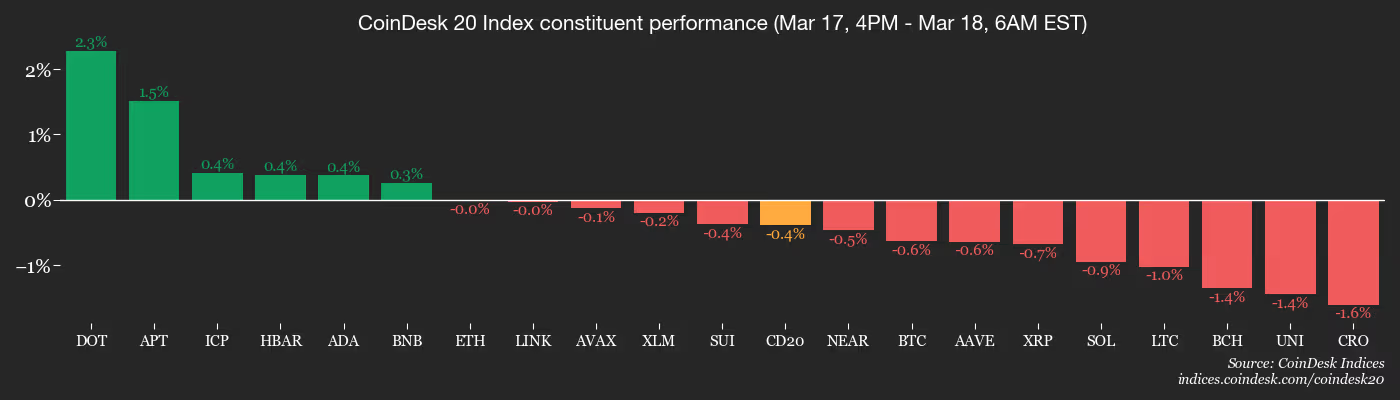
The broader market continues to mirror the largest cryptocurrency. The CoinDesk 20 Index has been largely steady for the past 24 hours, alongside similar action in ether (ETH), XRP (XRP), solana (SOL), and other majors. Smaller coins such as SIREN, M, and KAS, however, have gained about 10% each.
In traditional markets, futures tied to the S&P 500 index have risen by 0.5%, signaling an extension of a two-day rally. Meanwhile, the Dollar Index pulled back to 99.50 from Friday’s high above 100, and the 10-year Treasury yield receded to 4.17% from 4.30%. Taken together, these moves point to continued risk-on sentiment. Stay alert!
Read more: For analysis of today’s activity in altcoins and derivatives, see Crypto Markets Today
What to Watch
For a more comprehensive list of events this week, see CoinDesk’s “Crypto Week Ahead“.
- Crypto
- Macro
- March 18, 8:30 a.m. ET: U.S. PPI MoM for February est. 0.3% (Prev. 0.5%); Core PPI MoM est. (Prev. 0.8%)
- March 18, 8:30 a.m.: U.S. PPI YoY for February est. 3.7% (Prev. 3.6%); Core PPI YoY est. 3.2% (Prev. 3.6%)
- March 18, 9:45 a.m.: Bank of Canada interest-rate decision est. 2.25% (Prev. 2.25%)
- March 18, 10:00 a.m.: U.S. Factory Orders MoM for January (Prev. -0.7%)
- March 18, 2:00 p.m.: Federal Reserve interest-rate decision est. 3.50%-3.75% (Prev. 3.50%-3.75%); FOMC economic projections
- March 18, 2:30 p.m.: Fed Chair press conference
- Earnings (Estimates based on FactSet data)
- March 18: Bitfarms (BITF), pre-market, -$0.03
Token Events
For a more comprehensive list of events this week, see CoinDesk’s “Crypto Week Ahead“.
- Governance votes & calls
- March 18: Jupiter (JUP) to hold its weekly Planetary Call community session with team updates.
- March 18: head of marketing and PR to discuss ecosystem updates.
- WalletConnect Network is voting on allocating 50 million WCT tokens as a dedicated rewards budget for WalletConnect Pay in 2026. Voting ends March 18.
- ENS is voting on a one-time transfer of 900,000 USDC from the ENS Endowment to wallet.ensdao.eth to cover a shortfall in stream payments owed to ENS Labs. Voting ends March 18.
- Unlocks
- Token Launches
- March 18: Katana (KAT) to be listed on Binance, MEXC, KuCoin, and others.
Conferences
For a more comprehensive list of events this week, see CoinDesk’s “Crypto Week Ahead“.
Market Movements
- BTC is down 0.73% from 4 p.m. ET Tuesday at $73,825.38 (24hrs: +0.11%)
- ETH is down 0.44% at $2,307.45 (24hrs: -0.33%)
- CoinDesk 20 is down 0.78% at 2,148.73 (24hrs: -0.27%)
- Ether CESR Composite Staking Rate is down 6 bps at 2.75%
- BTC funding rate is at -0.0069% (-7.5643% annualized) on Binance

- DXY is unchanged at 99.56
- Gold futures are down 0.10% at $4,996.20
- Silver futures are up 0.65% at $80.05
- Nikkei 225 closed up 2.87% at 55,239.40
- Hang Seng closed up 0.61% at 26,025.42
- FTSE 100 is up 0.29% at 10,433.60
- Euro Stoxx 50 is up 1.02% at 5,828.33
- DJIA closed on Tuesday up 0.10% at 46,993.26
- S&P 500 closed up 0.25% at 6,716.09
- Nasdaq Composite closed up 0.47% at 22,479.53
- S&P/TSX Composite closed up 0.16% at 32,929.09
- S&P 40 Latin America closed down 3.50% at 3,459.11
- U.S. 10-Year Treasury rate is down 2 bps at 4.20%
- E-mini S&P 500 futures are up 1.30% at 6,809.00
- E-mini Nasdaq-100 futures are up 1.57% at 25,184.00
- E-mini Dow Jones Industrial Average futures are up 1.18% at 47,595.00
Bitcoin Stats
- BTC Dominance: 59.11 (0.15%)
- Ether-bitcoin ratio: 0.03139 (0.1%)
- Hashrate (seven-day moving average): 919 EH/s
- Hashprice (spot): $32.37
- Total fees: 3.08 BTC / $228,857
- CME Futures Open Interest: 115,080 BTC
- BTC priced in gold: 14.9 oz.
- BTC vs gold market cap: 4.93%
Technical Analysis

- The chart shows the number of BTC/USD longs, or bullish bets, on Bitfinex.
- The growth has stalled, with the tally now at 78,470 versus 79,115 early this month.
- As counterintuitive as it may sound, past data shows that declines in long positions on Bitfinex tend to be bullish for BTC, and vice versa.
Crypto Equities
- Coinbase Global (COIN): closed on Tuesday at $210.23 (+3.40%), +1.77% at $213.95 in pre-market
- Galaxy Digital (GLXY): closed at $23.50 (+1.73%), +0.89% at $23.71
- MARA Holdings (MARA): closed at $9.24 (+0.11%), +0.97% at $9.33
- Riot Platforms (RIOT): closed at $14.68 (+1.94%), +1.02% at $14.83
- Core Scientific (CORZ): closed at $16.42 (–3.24%), +1.46% at $16.66
- CleanSpark (CLSK): closed at $10.11 (+0.90%), +0.99% at $10.21
- Exodus Movement (EXOD): closed at $9.24 (–0.86%)
- CoinShares Bitcoin Mining ETF (WGMI): closed at $40.13 (–0.79%)
- Circle Internet Group (CRCL): closed at $132.31 (+5.15%), +1.50% at $134.30
- Bullish (BLSH): closed at $39.94 (+0.81%), +1.10% at $40.38
Crypto Treasury Companies
- Strategy Inc. (MSTR): closed at $150.28 (+1.87%), +0.32% at $150.76
- Strive Asset Management (ASST): closed at $11.10 (+2.21%), unchanged in pre-market
- SharpLink (SBET): closed at $8.31 (+1.34%), +0.48% at $8.35
- Upexi (UPXI): closed at $1.15 (+6.48%), –0.87% at $1.14
- Lite Strategy (LITS): closed at $1.21 (–3.20%)
ETF Flows
Spot BTC ETFs
- Daily net flows: $199.4 million
- Cumulative net flows: $56.51 billion
- Total BTC holdings ~1.29 million
Spot ETH ETFs
- Daily net flows: $138.2 million
- Cumulative net flows: $11.99 billion
- Total ETH holdings ~5.76 million
Source: Farside Investors
While You Were Sleeping


ETH is up 22% year-on-year while Bitcoin has shed nearly 11% over the same stretch, a divergence that is starting to show up in the charts.
Bitcoin’s market share is stuck between 58% and 60%, which is a six-month trading range that one expert says will decide whether Ethereum and smaller altcoins enter a bullish season or suffer more losses.
As such, the market observer urged keeping an eye on the level at which dominance could break, ushering in the next big move in the crypto market.
The Narrow Corridor Controlling Crypto’s Fate
Bitcoin dominance (BTC.D), which measures how much of the total cryptocurrency market cap BTC makes up, was stuck between 58% and 60% for the last 6 months. But according to analyst Ash Crypto, this consolidation has created a technical setup where a break above 60% could send dominance up to 63% or 64%.
And if that happened, it would mean that institutions are only buying Bitcoin, causing altcoins to bleed further and pushing the value of the ETH/BTC pair to new lows.
On the other hand, a break below 58% would mean that capital is leaving Bitcoin and going into Ethereum and other altcoins. The analysts said that this would confirm an ETH/BTC breakout above the 0.0320 level, which would mark the start of a genuine altcoin season.
The ETH/BTC pair itself is printing what Ash Crypto described as a bear trap, something it has done twice before.
“Break above 0.0320 and ETH starts outperforming Bitcoin,” the expert wrote. “Break below 0.0280 and new lows follow.”
At the time of writing, ETH/BTC was trading close to 0.0314, just below the critical threshold Ash Crypto had identified.
You may also like:
Ethereum’s Technical Picture Gets Interesting
BTC itself has been mostly flat over the past 24 hours, staying just above $74,000 after hitting a six-week high of about $76,000 on Coinbase on Tuesday. However, there’s much more action over longer periods, with the asset up more than 6% in the last seven days and about 8% across 30 days.
Ethereum has had a pretty good performance in the last few weeks, going up about 14% in the last seven days and about 18% in both the last 14 and 30 days. At the time of writing, it was trading above the $2,300 level, up 22% from the same time last year, compared to BTC’s nearly 11% drop in the same period.
At the same time, ETH’s SuperTrend indicator changed from “Sell” to “Buy” for the first time since September 2025. Recall, the last two times that signal showed up, the cryptocurrency rose by 52% and 174%, respectively, prompting analyst Ali Martinez to identify $2,400 and $2,600 as the next levels to watch.
Binance Free $600 (CryptoPotato Exclusive): Use this link to register a new account and receive $600 exclusive welcome offer on Binance (full details).
LIMITED OFFER for CryptoPotato readers at Bybit: Use this link to register and open a $500 FREE position on any coin!

3 Reasons This Drone Stock Soared 520% and Is Up Another 32% Today
Crypto World
BTC price treads water near $74,000 as derivatives signal caution: Crypto Markets Today
Bitcoin consolidated following Tuesday’s jump to $76,000 alongside a 33% drop in daily trading volume to $36.9 billion.
The largest cryptocurrency has added just 0.4% since midnight UTC after bouncing off $73,500 as it looks to establish a new level of support ahead of a potential bullish breakout.
While analysts predicted a fast move to $80,000 after $72,000 was taken out, price action has actually been much more measured. Traders with long positions took profits and those who were forced out of short positions are waiting on the sidelines to reenter.
Volatility has also retreated in commodities gold, silver and crude oil, with the war in Iran continuing to put complete risk-on mode on hold.
U.S. stocks are beginning to experience a period of prolonged upside; Nasdaq 100 futures are up 0.66% since midnight UTC, followed by the S&P 500, which has gained 0.5%.
Investors will be keeping a close eye on Wednesday’s Federal Reserve meeting because although a rate pause is all but certain, increased inflation numbers due to the surge in oil prices and weaker job numbers in the U.S. could influence sentiment at the post-decision press conference.
Derivatives positioning
- Growth in bitcoin futures open interest (OI) on major exchanges has stalled alongside slightly negative fund rates. That’s a sign that traders are not adding new bullish positions and bears are getting a slight edge.
- OI in ETH, XRP and SOL fell from early Tuesday highs as spot prices lost bull momentum. This suggests traders are unwinding positions, pointing to a cooling of speculative activity.
- OI in privacy-focused ZEC, which has gained nearly 4% in 24 hours and 31% in a week, has risen to 1.75 million ZEC, the most since Jan. 25. The increase in OI validates the recent price rise.
- Funding rates for XRP, BNB and SOL have flipped negative, indicating a bias for bearish short positions. Traders may be hedging for potential downside volatility after the Fed meeting.
- Bitcoin’s one-day implied volatility, or the expected price swing over 24 hours, remains steady at around an annualised 50%. That equates to a 24-hour move of about 2.6%. In other words, the market doesn’t see the impending Fed meeting as a major price mover for the largest cryptocurrency.
- The same can be said for ether, solana and XRP.
- On Deribit, options market positioning looks defensive in both bitcoin and ether, with skews showing a bias for put, or bearish, options.
- Block flows featured demand for limited profit potential strategies such as bitcoin call diagonal spreads and volatility bets like straddles. In ETH’s case, traders preferred risk reversals and straddles.
Token talk
- The altcoin market continues to show strength with the “Altcoin Season” index hitting its highest in six months. The reading of 54/100 is a far cry from early February, when it languished at 22/100.
- Privacy coin zcash (ZEC) was one of the best-performing altcoins on Wednesday, adding 3.4% since midnight despite the rest of the market trading relatively unchanged. It has now increased by 32% in the past week.
- Decentralized finance (DeFi) lending token MORPHO also continued its rich vein of form after rising by 2.3% since midnight to add to a monthly gain of 33%.
- The best-performing benchmark over the past 24 hours has been the
CoinDesk Smart Contract Platform Select Capped Index (SCPXC), with the index heavily weighted towards layer-1 tokens posting a 0.8% gain, while the CoinDesk Memecoin Index (CDMEME) lost ground, tumbling by 2.7%.

Ripple has expanded its financial infrastructure in Brazil, targeting deeper institutional adoption and regulatory approval. The company introduced payments, custody, and treasury tools for local institutions. Meanwhile, it plans to secure a Virtual Asset Service Provider license under Brazil’s evolving digital asset framework.
Ripple Expands Enterprise Services in Brazil
Ripple has launched a full enterprise platform tailored for Brazil’s financial institutions. The rollout includes cross-border payments, custody solutions, and treasury management tools. Moreover, the company added prime brokerage features to extend services beyond basic payment rails.
The expansion aligns with Brazil’s structured regulatory push for digital assets and financial innovation. Ripple continues to focus on compliance while scaling operations in regulated markets. Therefore, the planned VASP license application supports its long-term presence in the country.
Brazil offers a mature financial ecosystem, which attracts global fintech firms seeking growth opportunities. Ripple has maintained a regional focus due to increasing demand for efficient settlement systems. Consequently, the company positions its infrastructure as a solution for modern financial operations.
Institutional Adoption and RLUSD Growth
Ripple Payments now operates across more than 60 markets and has processed over $100 billion globally. The platform enables faster settlement using both fiat currencies and stablecoins. Additionally, several Brazilian institutions actively use the network for payments and liquidity management.
Banco Genial uses Ripple’s system for same-day U.S. dollar disbursements and plans to integrate RLUSD into payment flows. Braza Bank supports U.S. dollar transfers and issued its BBRL stablecoin on the XRP Ledger. Meanwhile, Nomad manages treasury flows between Brazil and the United States using Ripple infrastructure.
Other firms continue to adopt Ripple’s tools for various financial operations across the region. Azify supports currency exchange into major global currencies using the Ripple system. Similarly, Attrus and Frente Corretora use the platform for cross-border payments and foreign exchange settlements.
RLUSD adoption continues to rise across Latin America, supported by institutional demand for liquidity solutions. The stablecoin has surpassed a $1.5 billion market capitalization. Furthermore, regulators in the United States oversee RLUSD through established financial authorities.
Ripple Custody has also expanded into Brazil, offering secure digital asset storage for institutions. The platform integrates compliance tools and supports staking across multiple proof-of-stake networks. As a result, firms such as CRX and Justoken now use custody services for tokenized asset operations.
CRX has settled nearly $100 million on-chain using Ripple Custody and XRPL infrastructure. Meanwhile, Justoken has tokenized over $1.7 billion in assets and plans regional expansion. This growth reflects increasing institutional reliance on blockchain-based financial systems.
RLUSD now trades on platforms such as Mercado Bitcoin, Foxbit, and Ripio across Brazil. Additionally, several financial institutions support the stablecoin for treasury and settlement use cases. This integration strengthens Ripple’s broader payments ecosystem across Latin America.
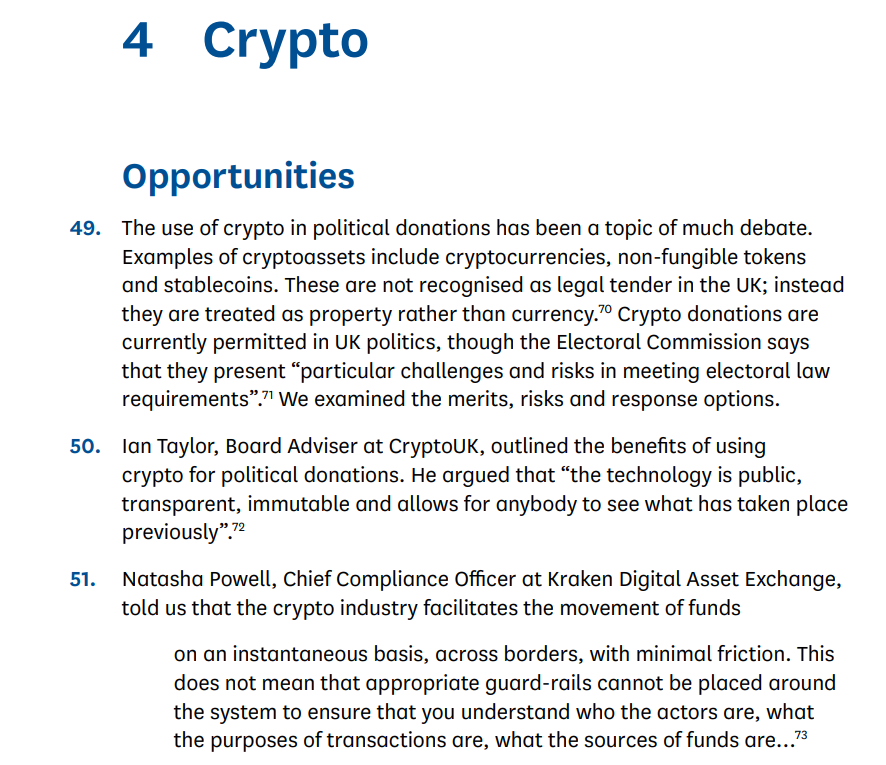
A cross-party parliamentary committee in the United Kingdom has urged the government to impose an immediate moratorium on cryptocurrency donations to political parties until stronger safeguards are in place.
In a report published on Wednesday, the Joint Committee on the National Security Strategy said the government should amend the Representation of the People Bill to impose an “immediate moratorium on crypto donations” until the Electoral Commission produces statutory guidance ahead of the next general election, due by August 2029.
The committee also called for the creation of a Political Finance Enforcement Unit to oversee these activities and reduce the minimum threshold for declaring gifts tied to political donations from 11,180 British pounds ($14,900) to 500 pounds ($668), and proposed increasing the maximum custodial sentences to three years for wrongdoing involving foreign financing.
The committee cited growing foreign state threats and efforts to influence the UK’s positions on critical issues, including its relations with the US, the European Union and Ukraine.
The recommendation comes amid rising scrutiny of crypto-linked money in British politics. Nigel Farage’s Reform UK became the first party to start accepting crypto donations in 2025. Reform UK recently disclosed a $4 million donation from crypto investor Christopher Harborne in the fourth quarter of 2025, after a record $12 million gift in the previous quarter.

Crypto donations pose “unnecessary” risk for UK politics
Crypto donations pose an “unnecessary and unacceptably high risk” to the integrity of the political finance system and public trust, barring robust regulator guardrails, the report states.
“We see no democratic imperative to permit the use of crypto in political finance until adequate safeguards are in place.”
The committee also cited jurisdictions, such as Ireland, that have banned party members from accepting political cryptocurrency donations due to foreign interference concerns.
The report comes shortly after Matt Western, chair of the committee, urged the government to put a temporary halt on crypto donations to political parties, citing foreign interference risks, Cointelegraph reported on Feb. 26.
Related: UK Lords launch stablecoin inquiry as Bank of England moves to finalize rules
Crypto donations raise concern in the UK
Political cryptocurrency donations are legal in the UK, subject to permissible rules under the Electoral Commission guidance. UK lawmakers reportedly started considering a ban on political cryptocurrency donations in December 2025.
Weeks later, seven senior UK Labour Party MPs have urged Prime Minister Keir Starmer to ban crypto for political donations, Cointelegraph reported on Jan. 12.
“Crypto can obscure the true source of funds, enable thousands of micro donations below disclosure thresholds, and expose UK politics to foreign interference,” wrote business and trade committee chair Liam Byrne, one of the seven signatories of the letter.
Magazine: How crypto laws changed in 2025 — and how they’ll change in 2026
30 Years Later, This Michael Bay Action Epic Still Holds Up As His Best Film

Wednesday’s Workwear Report: Pintuck Flare Midi Dress

Stirling Scouts set up hill-top coffee shop as part of Jamboree fundraiser


-
 Crypto World4 days ago
HYPE Token Enters Net Deflation as HyperCore Buybacks Outpace Staking Rewards
-

 Fashion5 days ago
Weekend Open Thread: Addict Lip Glow
-

 Tech3 days ago
Your Legally Registered ‘Motorcycle’ Might Not Count Under Proposed US Law
-
Sports4 days ago
Why Duke and Michigan Are Dead Even Entering Selection Sunday
-

 Sports7 days ago
PWHL, Senators discussing plan to keep Charge in Ottawa
-

 NewsBeat7 days ago
Residents reaction as Shildon murder probe enters second day
-

 Business3 days ago
Search for Savannah Guthrie’s Mother Enters Seventh Week with No Arrests
-

 Business4 days ago
US Airports Launch Donation Drives for Unpaid TSA Workers as Partial Government Shutdown Enters Fifth Week
-
 Tech19 hours ago
Are Split Spacebars the Next Big Gaming Keyboard Trend?
-
Crypto World4 days ago
Coinbase and Bybit in Investment Talks: Could Bybit Finally Enter the US Crypto Market?
-

 NewsBeat7 days ago
I Entered The Manosphere. Nothing Could Prepare Me For What I Found.
-

 Business4 days ago
Country star Brantley Gilbert enters growing non-alcoholic beer market
-

 Business2 days ago
Australian shares drop as Iran war enters third week
-

 Crypto World2 days ago
Crypto Lender BlockFills Enters Chapter 11 with Up to $500M in Liabilities
-

 Sports5 days ago
College Basketball Best Bets: Conference Tournament Semifinal Picks
-
 Crypto World6 days ago
Three Binance Charts May Be Hinting at Bitcoin’s Next Move
-

 Politics2 hours ago
The House | The new register to protect children from their abusers shows Parliament at its best
-
 Business6 days ago
Trump demands Powell cut rates as Iran conflict raises energy prices
-

 Crypto World6 days ago
Senate Votes to Include CBDC Ban in Bipartisan Housing Bill
-

 Fashion2 days ago
25 Celebrities with Curly Hair That Are Naturally Beautiful


You must be logged in to post a comment Login