
Crypto World
Top AI Crypto Wallet Development Companies in 2026 for Serious Businesses


Investors with enterprise ambitions need more than marketing slides and checklists. They need clarity about which Web3 crypto wallet providers can deliver secure, compliant, and future-proof infrastructure that supports scalable revenue models. In 2026, the winning wallet partners combine hardened cryptography, account abstraction for superior UX, and production-grade AI that meaningfully reduces operational risk and customer friction. This article is written for well-informed investors evaluating strategic bets in web3 infrastructure. It focuses on technical differentiators, observable production capabilities, and the commercial trade-offs that matter when moving from proof of concept to live financial rails. Read on for a concise technical framework, the top vendor shortlist, a head-to-head feature comparison, and a rigorous 10-question crypto wallet development company evaluation.
Why 2026 Is a Defining Year for AI-Smart Crypto Wallets?
The market dynamics making 2026 pivotal are technical, regulatory, and behavioral. On the technical side, account abstraction and smart account primitives have matured into usable production tooling, enabling programmable wallets that solve long-standing UX and recovery problems. This shift changes how cryptocurrency wallet solutions are built and consumed because it decouples signature management from the user experience and enables sponsored gas, batched operations, and policy-driven approvals. At the same time, multi-party computation and threshold signature schemes are moving from academic proofs into operational custody solutions, offering enterprises key-management alternatives that reduce single-point risk and regulatory exposure.
AI is no longer an experimental add-on. Leading teams embed machine learning for real-time anomaly detection, risk scoring, and personalized usage assistance, which materially lowers fraud losses and onboarding friction. Finally, enterprise demand is rising as financial institutions and high-net-worth services adopt tokenized assets and require wallets that can integrate with existing KYC, treasury, and audit systems. The intersection of account abstraction, MPC-class key management, and production AI is why investors should re-evaluate wallet vendors in 2026 with technical scrutiny.
Top 7 AI Cryptocurrency Wallet Development Companies of 2026
1. Antier Solutions
Antier has evolved into a platform-first provider for enterprise crypto wallets that fuse production AI, multi-model custody, and broad chain interoperability. Their white-label AI smart crypto wallet product emphasizes intelligent transaction processing, behavioral recovery flows, and predictive risk analytics designed for high-compliance environments. Antier presents architecture and runbook artifacts aimed at enterprise buyers, showing an operational approach to MPC and hybrid custody and clear support for multi-chain EVM ecosystems. For investors, Antier’s strength is not only in delivery speed but also in a repeatable architecture that embeds AI into the signing and policy layers so that fraud detection, onboarding automation, and recovery are measurable features rather than add-ons. This makes Antier the most compelling partner for institutional-grade wallet infrastructure.
2. Oodles Blockchain
Oodles brings a decade of blockchain engineering to mobile crypto wallet development projects with a service model built for custom enterprise implementations. Their wallet practice focuses on cross-platform wallets, DeFi integrations, and NFT support, and they have published explorations of AI in wallet monitoring and personalized insights. Oodles is strongest where deep integration with enterprise systems is required, including payment rails and legacy back ends. For investors, this firm is a reliable engineering house capable of producing robust non-custodial and custodial wallets quickly; their AI positioning is currently oriented toward transaction monitoring and fee optimization rather than embedded MPC. Use Oodles when you need platform engineering and rapid, audit-ready delivery for multi-chain wallets.
- Real-time transaction monitoring with rule-based AI alerting.
- Fee optimization suggestions driven by transaction pattern analysis.
- Personalized in-wallet recommendations using market and user signals.
- Integration patterns for embedding AI outputs into enterprise reporting.
Choose Wallet Infrastructure That Scales With Demand
3. PixelPlex
PixelPlex positions itself at the intersection of blockchain and intelligent assistants, offering wallets that act as “co-pilots” for users. Their public material highlights proactive scam detection, predictive insights for asset management, and an emphasis on UX that reduces human error in transactions. This renowned crypto wallet provider has experience scaling projects and building wallet layers that integrate with exchanges, DeFi rails, and custodial services. From an investor standpoint, PixelPlex is attractive where productized AI features, such as proactive scam alerts and contextual recommendations, are required alongside professional-grade engineering and proven delivery for consumer and institutional clients. Expect a strong UX and AI pairing, but validate custody model specifics for enterprise risk tolerance.
- Client-side assistive AI that reduces user error and improves retention.
- Proactive scam detection leveraging behavioral and network signals.
- Predictive portfolio insights that feed in-wallet recommendations.
- Plug-and-play AI modules for rapid feature integration.
4. BlocktechBrew
BlocktechBrew is a pragmatic wallet developer focused on white-label blockchain wallet apps with a strong emphasis on security and time to market. Their offering is oriented toward entrepreneurs and enterprises seeking complete wallet stacks, browser extensions, and mobile clients. BlocktechBrew’s AI footprint is currently focused on analytics and automated security checks that are integrated into the development lifecycle. For investors, the company represents a cost-effective engineering partner able to deliver MVPs and iterate rapidly; their strength is execution velocity rather than platformized AI governance. For portfolio companies that need fast, secure shipping of wallet products with AI-powered monitoring, BlocktechBrew is a sensible operational choice.
- Automated security and integrity checks during development and CI.
- Transaction analytics modules for post-deployment monitoring.
- White-label AI hooks for swapping in enterprise models.
- Lightweight fraud detection pipelines for early production stages.
5. BlockchainX
BlockchainX markets end-to-end Web3 cryptocurrency wallet solutions and white-label products aimed at businesses that need rapid deployment and rebranding. Their products emphasize multi-asset support and customization for local regulatory environments. BlockchainX is best for enterprises that want a full productized wallet stack with roadmap acceleration rather than heavy R&D in cryptographic custody. Their AI claims are more conservative and typically implemented as analytics and reporting layers to aid compliance and support teams. Investors should view BlockchainX as a commercial, modular provider suitable for scaling standard wallet features quickly across geographies.
- Compliance and reporting dashboards powered by analytics.
- Customer support augmentation via AI-summarized event logs.
- Automated KYC/AML signal enrichment feeding the wallet audit trail.
- Configurable AI alerts for operational monitoring.
6. Rapid Innovation
Rapid Innovation focuses on secure blockchain wallet development with an emphasis on UX, authentication, and integrations for web and mobile. Their public material highlights features such as multi-factor authentication, QR flows, and session controls. Rapid Innovation complements AI with applied analytics and automation that strengthen onboarding and reduce support costs. For investors, Rapid Innovation is a reliable engineering partner when robust authentication and solid engineering practices are primary goals and when you prefer to integrate third-party or bespoke AI services. Verify their custody posture and ask for AI performance metrics during diligence.
- AI-assisted onboarding flows to reduce drop-offs.
- Analytics-driven session and fraud detection.
- Modular AI connectors for third-party risk engines.
- Emphasis on secure authentication with AI-backed anomaly detection.
How Does Antier Stand Out From Other Vendors?
In 2026, market leaders will be defined by products users actually adopt, not those that are merely deployed. We build with that outcome in mind.
You must have heard Investors asking often, what does a company they hire bring them that others do not? Well, Antier has all the answers to it. Below is the curated list of capabilities that Antier holds rather than marketing claims.
| Feature area | Antier | Typical other vendors |
|---|---|---|
| AI-powered transaction analytics | Productionized predictive analysis & UX personalization. Public docs reference AI-native wallet modules. | Most vendors offer fraud detection or analytics, but many present these as integrations or roadmaps. |
| Key management options | Multi-model: seedless experiences, MPC and hybrid custody options, enterprise recovery flows. | Predominantly, seed phrase, multisig, HSM options. Few demonstrate integrated MPC in public collateral. |
| Multi-chain support | Claims broad EVM coverage and chain integrations; designed for cross-chain wallet UX. | Many vendors support multiple chains but often with narrower out-of-the-box integrations. |
| Account abstraction readiness | Focus on smart-wallet flows and sponsored transactions | Many provide ERC-4337 support as part of engineering engagements, but adoption varies. |
| Enterprise compliance & audit support | Emphasizes enterprise controls, audit readiness and recoverability | Most firms offer integration support; investors should request SOC2 and third-party audit evidence |
| Turnkey vs custom | Balance of white-label products and custom integrations | Several vendors focus primarily on white-label or custom, based on business needs |
It is always suggested that you partner with an experienced team of blockchain experts who are adept at crafting impactful and successful customized cryptocurrency wallet solutions.
How to Evaluate a Wallet Development Company in 10 Questions?
For investors doing diligence, these 10 technical and operational questions reveal whether a crypto wallet service provider is enterprise-grade or merely marketing-first.
- What is your key management model in production, and can you provide architecture diagrams and a failure mode analysis?
- Do you offer MPC or TSS-based signing? If so, provide a public audit or third-party review.
- How do you support account abstraction and ERC-4337 user operations? Provide sample UserOperation flows and bundler integration details.
- How is AI used in the stack, and what are measurable production outcomes for fraud reduction or onboarding improvements?
- Which chains and L2s are supported natively, and what is the process to integrate new chains?
- Provide SOC2 type II, ISO, or third-party audit evidence and recent penetration test results.
- What are your SLAs for transaction throughput, incident response, and key compromise scenarios?
- How is regulatory compliance built in, specifically AML tooling, on-chain metadata retention, and explainability for AI decisions?
- What is the upgrade and migration path for wallet contracts and key-management components?
- Provide client references where you implemented a production wallet with live volumes, and share anonymized KPIs.
Use these answers to rank vendors against the architecture and risk appetite of the target business.
Final Verdict: Choosing Antier for Serious Business Impact
For institutional investors and enterprise product owners, architecture and operational proof trump feature lists. Prioritize crypto wallet development companies that can demonstrate production MPC or hardened custody, an ERC-4337 smart account strategy, and measurable AI outcomes for fraud and UX.
Antier, as positioned in public product material, claims mature AI wallet modules, multi-chain coverage, and enterprise controls; these are the traits investors should seek and verify.
Our experience building and advising regulated web3 projects shows the following pattern. Projects succeed when businesses choose partners who deliver three things: a security-first signing model, programmable accounts for frictionless UX, and an AI stack that is auditable and measurable. Legal and compliance expertise is critical during architecture and vendor selection because custody, AML, and data residency requirements directly influence design choices. We help institutional teams navigate these trade-offs by validating cryptographic proofs, confirming audit evidence, and shaping deployment plans that map to local regulatory regimes. If you are evaluating strategic investments into blockchain wallet development infrastructure, focus your diligence on architecture diagrams, third-party audits, and production AI performance. Those artifacts distinguish long-term infrastructure from short-term launches.
Let’s move from intent to execution. Talk to our experts to understand where and how to begin.
Frequently Asked Questions
01. Why is 2026 considered a pivotal year for AI-smart crypto wallets?
2026 is pivotal due to advancements in account abstraction, smart account primitives, and the integration of AI for real-time anomaly detection and risk scoring, which enhance user experience and reduce operational risks in cryptocurrency wallet solutions.
02. What are the key technical differentiators investors should consider when evaluating crypto wallet providers?
Investors should focus on hardened cryptography, account abstraction for improved user experience, production-grade AI capabilities, and the ability to integrate with existing KYC, treasury, and audit systems.
03. What does the article provide for investors looking to evaluate crypto wallet development companies?
The article offers a concise technical framework, a shortlist of top vendors, a head-to-head feature comparison, and a rigorous 10-question evaluation guide for assessing crypto wallet development companies.

KEY HIGHLIGHTS
- Ethereum stalls between MVRV levels, hinting at a major breakout soon
- ETH range tightens as bulls and bears battle for market direction
- Key MVRV zone puts Ethereum at a decisive technical crossroads
- Ethereum consolidation signals a potential sharp move ahead
- ETH volatility drops while pressure builds for a breakout move
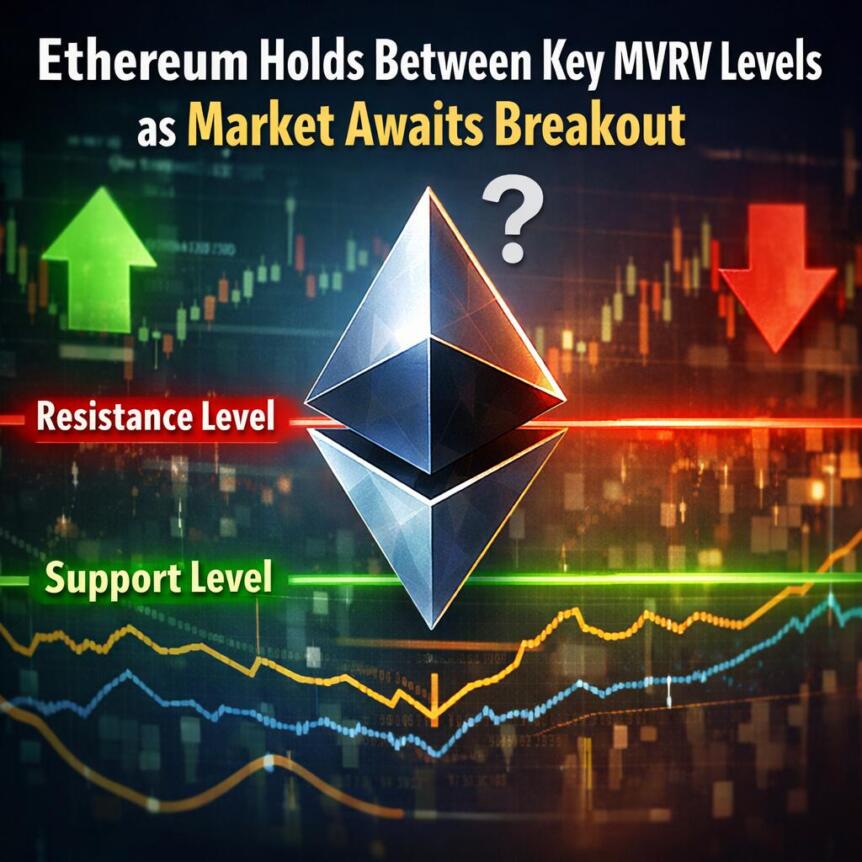
Ethereum trades near $2,450 within a narrow MVRV-defined range, signaling an imminent directional move. The asset shows limited volatility, yet price compression suggests rising pressure. Market structure reflects balance, but conditions point toward a likely breakout or breakdown.
Short-term price action remains contained, and momentum signals stay mixed across indicators. Traders assess key levels while waiting for confirmation signals. This phase reflects a transitional period rather than a stable trend.
On-chain data highlights a midpoint position between historical valuation bands. This positioning often precedes sharp moves. Therefore, market participants anticipate a shift in direction soon.
Ethereum Range Reflects Market Indecision and Accumulation
Ethereum continues to trade between MVRV support and resistance zones, showing no clear trend. The lower band attracts buying interest, while the upper band limits price expansion. This balance creates a tight consolidation range.
Price behavior indicates that both bullish and bearish forces remain active. Buyers attempt to defend support zones, yet sellers apply pressure near resistance levels. As a result, the market maintains equilibrium without clear dominance.
This range typically signals preparation for a stronger move. Historical patterns show that such compression phases do not last long. Therefore, the current setup suggests a pending breakout scenario.
Ethereum Faces Critical Breakout or Breakdown Setup
A move above the upper MVRV band could trigger renewed bullish momentum. Such a breakout would likely attract fresh demand and strengthen price structure. Momentum indicators would need to confirm this shift.
Conversely, a drop below the lower band may lead to extended downside pressure. This scenario could trigger liquidations and weaken overall sentiment. Market structure would then shift toward a bearish continuation.
On-chain metrics show balanced positioning across participants. This balance increases the importance of confirmation signals. Volume expansion will likely validate the next directional move.
Ethereum Market Sentiment Remains Calm but Tense
Market activity appears subdued, yet underlying tension continues to build. Reduced volatility reflects hesitation rather than stability. Participants wait for a decisive signal before taking positions.
Technical and on-chain indicators offer mixed signals at current levels. This lack of alignment contributes to uncertainty in short-term direction. However, it also increases the probability of a strong move once clarity emerges.
The current environment reflects a calm phase before potential volatility expansion. Such conditions often precede rapid price movements. Therefore, the market may shift quickly once a trigger occurs.
Ethereum Highlights Shift Toward Data-Driven Analysis
Ethereum’s current setup reflects the growing role of on-chain metrics in market analysis. MVRV now serves as a key valuation tool alongside traditional indicators. This shift improves transparency in market behavior.
Institutional participation continues to influence data-driven strategies. Market participants increasingly rely on blockchain insights for decision-making. This trend reshapes how assets like Ethereum are evaluated.
Technical analysis now integrates with on-chain data to form hybrid strategies. This approach provides a broader view of price action and positioning. As a result, market interpretation becomes more precise and structured.
Ethereum just broke $2,300 🚀 pic.twitter.com/CD1oLQAbcV
— Ash Crypto (@AshCrypto) March 16, 2026
Ethereum Risks Persist Despite Clear Technical Setup
Despite defined levels, risks remain within the current structure. False breakouts may occur in low-liquidity conditions. Such moves can mislead short-term positioning.
Bitcoin’s influence continues to affect Ethereum’s direction. Broader market sentiment may shift due to macroeconomic developments. These external factors add uncertainty to the setup.
Momentum failure could also lead to sharp reversals. Therefore, confirmation remains critical before any directional bias. The market requires strong volume support for sustained movement.
Ethereum Prepares for a Decisive Market Move
Ethereum remains positioned at a critical inflection point between key MVRV levels. This phase reflects preparation rather than trend continuation. Market structure suggests that a resolution is approaching.
Traders now focus on breakout confirmation and volume signals. Changes in on-chain activity will provide further direction. These indicators will likely define the next phase of price action.
This consolidation phase may appear quiet, yet it carries significant implications. The next move could shape Ethereum’s medium-term trajectory. It may also influence broader cryptocurrency market trends.


Summary
- Bitcoin treasury firm Empery Digital sold 63 BTC for about $4.6 million to help fund share repurchases.
- The company simultaneously announced a $25 million registered direct equity offering at $5.39 per share plus warrants, largely to repay a $50 million repo facility.
- Empery now holds 3,439 BTC in treasury and is explicitly prioritizing stock buybacks over additional Bitcoin accumulation in the near term.
Bitcoin (BTC) treasury company Empery Digital Inc. has sold 63 BTC for an average price of $72,791 per coin, generating roughly $4.6 million in gross proceeds to fund an aggressive stock repurchase program. The sale, executed during the week ending March 20, 2026 and disclosed from its U.S. operations, is part of a broader effort to finance buybacks and reduce balance‑sheet leverage. Following the transaction, Empery said it still holds 3,439 BTC in its treasury, keeping it among the larger listed corporate Bitcoin holders.
The sale was announced alongside a $25 million registered direct equity offering, where Empery agreed to issue approximately 4.64 million shares of common stock at $5.39 per share, together with an equal number of warrants. Net proceeds, plus cash on hand, are earmarked to retire about $40 million of debt by fully repaying a $50 million repo facility and drawing an additional $10 million from an existing $100 million credit line with lender Two Prime. “We intend to use the proceeds from this offering, together with cash on hand, to meaningfully reduce our secured debt while continuing to return capital to shareholders via repurchases,” the company said.
Empery describes itself as being “built on principles, powered by Bitcoin,” with a strategy focused on maximizing bitcoin per share rather than simply stacking coins on its balance sheet. In a series of recent updates, the company has repeatedly sold small BTC clips — 60 BTC at an average of $66,583 in late February for roughly $4 million, and another 60 BTC at around $70,534 in mid‑March for about $4.2 million — and used the proceeds to buy back stock. As of February 27, Empery had repurchased 18,685,725 shares under its $200 million authorization; by mid‑March that tally had climbed to 21.3 million shares, with management signaling that “existing cash balances and reductions in bitcoin holdings” would continue to fund repurchases as needed.
The trade‑off is explicit: fewer BTC, but a smaller equity base and a less leveraged balance sheet, which could Empery more exposed if Bitcoin enters a deep drawdown, with the company itself cautioning that its stock price “may be highly correlated to the price of the digital assets that it holds” and pointing to the “highly volatile nature of the price of bitcoin and other cryptocurrencies” among key risk factors. Supporters counter that if BTC resumes its long‑term uptrend, shrinking the share count while keeping thousands of coins on the balance sheet could deliver outsized net asset value per share gains over time.
One macro takeaway is clear: after a decade where “Bitcoin treasury strategy” mostly meant one‑way accumulation, firms like Empery are now actively trading around their stacks — monetizing strength to pay down debt, repurchase stock, and manage risk rather than simply buying and holding at all costs.

Key Highlights
- Bitmine acquired 65,341 ETH during the past week, valued at approximately $138 million based on current market rates
- Company’s aggregate ETH position now reaches 4.66 million tokens — representing 3.86% of total circulating supply
- Acquisition velocity has accelerated over three straight weeks, surpassing the previous weekly average of approximately 50,000 ETH
- BMNR shares advanced more than 3% while ETH traded near $2,144
- Executive Chairman Tom Lee projects ETH is approaching the conclusion of a “mini-crypto winter”; the company maintains roughly $7 billion in unrealized losses
Bitmine Immersion Technologies (BMNR) continues its aggressive Ethereum accumulation strategy. The treasury firm acquired 65,341 ETH during the previous week — marking the third straight week of escalating purchases — as it reinforces a position that has accumulated substantial paper losses while maintaining aggressive expansion.
Bitmine Immersion Technologies, Inc., BMNR
This recent acquisition, valued at approximately $138 million based on prevailing market rates, pushes Bitmine’s aggregate holdings to 4,660,903 ETH. With tokens priced near $2,072 each, the treasury position exceeds $9 billion in value.
The company now owns roughly 3.86% of ETH’s 120.7 million token circulating supply. This percentage continues expanding as Bitmine increases its weekly acquisition rate, which historically averaged between 45,000 and 50,000 ETH.
Cash holdings expanded in tandem with crypto acquisitions, hitting $1.1 billion. The firm also maintains 196 Bitcoin, $200 million allocated to Beast Industries, and $95 million in Eightco Holdings. Combined crypto, cash, and speculative investment holdings totaled $11.0 billion as of March 22.
Investors reacted positively. BMNR shares climbed over 3% following the announcement as Ethereum price approached $2,144.
Staking Infrastructure Growth
Beyond accumulation, Bitmine is pursuing an aggressive staking strategy. As of March 23, the company had staked 3,142,643 ETH — approximately 67% of total holdings. This staked position currently produces $184 million in annualized staking revenue.
Tom Lee stated Bitmine has staked more Ethereum than any competing entity worldwide. When operations reach full capacity, projected annual rewards could reach $272 million, calculated using a 2.83% seven-day yield. The prevailing Composite Ethereum Staking Rate stands at 2.75%.
The firm is developing its Made in America Validator Network (MAVAN), collaborating with three staking service providers in preparation for an anticipated early 2026 launch.
Significant Paper Losses Persist
The strategy carries substantial downside risk. Notwithstanding the acquisition momentum, Bitmine currently holds approximately $7 billion in unrealized losses as ETH valuations have declined in recent months, per DropsTab analytics.
Lee maintains confidence in his investment thesis. “Our base case is ETH is in the final stages of the ‘mini-crypto winter,’” he stated in Monday’s announcement.
Bitmine holds the distinction of operating the world’s largest Ethereum treasury and ranks second among all global crypto treasuries, trailing only Michael Saylor’s Strategy, which controls 762,099 Bitcoin purchased for roughly $57.69 billion.
As of March 23, Ethereum was trading in the $2,072 to $2,144 range.

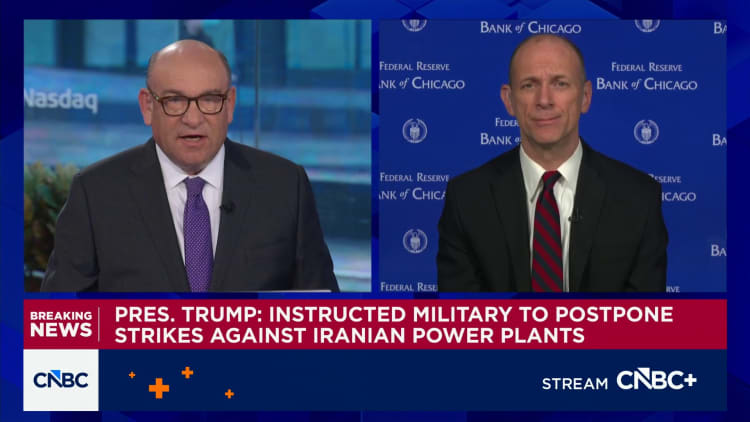

Chicago Federal Reserve President Austan Goolsbee said Monday that he’s more worried about inflation now than he is unemployment, even with apparent progress made on the war with Iran.
In a CNBC interview, the central banker said policymaking is difficult in the current environment. He spoke shortly after President Donald Trump announced that progress had been made in negotiations with Iran and that further attacks on energy infrastructure would be halted for five days as talks continue.
“The most important thing is to figure out the through line of what is happening,” Goolsbee said in a “Squawk Box” interview. “What makes this a fraught but intense moment is nobody can tell us what is going to happen on the ground in the conflict in the Middle East, and how long that lasts.”
Goolsbee had dissented on a rate cut in December and said he agreed with the majority to hold short-term rates steady at the January and March meetings of the Federal Open Market Committee. He is not an FOMC voter this year but will vote again next year.
Following Monday’s war news, traders, in volatile market action, upped bets of a rate hike by the end of the year but still expect a cut in 2027. Stocks spiked higher and oil prices plunged.
FOMC officials last week indicated a majority still expect a cut this year and another the next. However, Goolsbee said that his inclination will depend on the progress of inflation, and he cautioned against “a repeat of the team-transitory mistake” where the Fed underestimated the severity of inflation in 2021.
“I remain fairly optimistic that by the end of ’26 rates could go down, but I wanted to see proof that we’re back on an inflation headed to 2%. This [war] definitely throws a wrench into the plans. We do need to see progress,” he said.


Michael Saylor’s Strategy (MSTR) continued to add to bitcoin holdings last week, but at a vastly reduced pace from recent previous acquisitions.
The leading bitcoin treasury company last week added 1,031 bitcoin for a total cost of $76.6 million, or $74,326 per coin.
Strategy’s total holdings now stand at 762,099 BTC, acquired for approximately $57.69 billion, or an average price of $75,694 each.
The new buys were entirely funded via the sales of common stock, according to a Monday filing.
This latest acquisition was at a vastly reduced scale compared to the previous two weeks, when the company purchased more than $1 billion of bitcoin, taking advantage of the issuance of its STRC preferred shares.
Bitcoin is currently trading around $70,000. MSTR shares are higher by 1.7% in premarket trading.


H100 Group (H100), a Stockholm-based publicly listed bitcoin treasury company focused on providing institutional exposure to bitcoin, said it signed a letter of intent to acquire Norwegian peers Moonshot AS and Never Say Die AS to increase its holdings of the largest cryptocurrency.
If completed, the deal would roughly triple H100’s bitcoin stash to around 3,500 BTC, positioning it among Europe’s largest listed bitcoin treasury firms. Beyond that, H100 said it aims to strengthen its institutional profile, improve liquidity and expand its relevance in capital markets.
The announcement follows the company’s January announcement that it plans to combine with Future Holdings AG, a Zurich-based bitcoin treasury company. Both are backed by Adam Back, a British cryptographer and co-founder of Blockstream.
The transaction is structured as a bitcoin-for-bitcoin exchange, meaning ownership in the combined entity will be determined solely by the amount of bitcoin contributed. This approach preserves bitcoin exposure per share for existing investors, avoiding dilution while significantly scaling the company’s balance sheet.
The acquisition will be executed as an all-share transaction with no cash consideration.
The target companies collectively hold about 2,450 BTC.
Definitive agreements are expected by April 22, with completion anticipated shortly after the company’s annual general meeting in May, subject to final approvals.
The announcement sent H100 shares up 2% on the day.
Crypto World
BlackRock is betting billions that tokenized funds will do for Wall Street what the internet did to mail


BlackRock Chairman and CEO Larry Fink used his annual letter to shareholders to argue that digital assets and tokenization could help update the financial system, even as he warned that the U.S. economic model is leaving too many people behind.
In the letter, Fink said the current system has delivered most of its gains to people who already own assets, while many workers have been shut out of market growth. He tied that imbalance to a wider problem in the U.S., where rising inequality, high government debt and weak participation in capital markets are putting pressure on the old model of finance.
“Capitalism is working—just not for enough people,” Fink wrote.
His proposed fix centered on tokenization and digital distribution as tools to expand access to investing and make markets run better.
Tokenization, Fink said, could “update the plumbing of the financial system” by making investments easier to issue, trade and access.
The idea is simple: If ownership of assets is recorded on digital ledgers, moving a fund share, bond or other security could become faster and cheaper. In practice, that would allow a regulated digital wallet to hold not just payments, but also tokenized bonds, ETFs and fractional interests in assets such as infrastructure or private credit.
“Half the world’s population carries a digital wallet on their phone,” Fink wrote. “Imagine if that same digital wallet could also let you invest in a broad mix of companies for the long term—as easily as sending a payment.”
Fink compared tokenization today to the internet in 1996, arguing that it will not replace traditional finance overnight, but could gradually connect old and new systems. He said policymakers should focus on building that bridge “as quickly and safely as possible” and called for clear buyer protections, counterparty-risk standards and digital identity checks to reduce illicit finance risks.
The comments add to BlackRock’s broader push into digital assets. In the same letter, Fink said the firm had built “early leadership” in the space, citing nearly $150 billion in assets connected to digital markets.
BlackRock’s USD Institutional Digital Liquidity Fund (BUIDL) is the largest tokenized fund in the world, and the firm also manages $65 billion in stablecoin reserves and nearly $80 billion in digital asset exchange-traded products.
Still, much of the letter focused on deeper stresses in the U.S. financial system. Fink warned that banks, corporations and governments can no longer fund large economic shifts on their own, especially as the country tries to rebuild manufacturing capacity, expand energy supply and compete in artificial intelligence.
He also argued that Social Security remains a critical safety net but may need structural reform, including some exposure to long-term market returns, to remain sustainable.
For Fink, tokenization sits inside that bigger picture. It is not a bet on hype, but a bet that better rails could help more people become investors rather than bystanders.
His broader message was that finance needs an upgrade, and that digital assets may become part of that overhaul.


Polymarket is tightening insider‑trading and manipulation bans across its DeFi app and CFTC‑regulated U.S. exchange, adding surveillance, NFA oversight and formal whistleblower channels.
Summary
- Polymarket rolls out enhanced market integrity rules for both its DeFi platform and CFTC-regulated U.S. exchange.
- New policies sharpen bans on insider trading, manipulation, and abusive tactics, backed by multi-layered surveillance and public reporting channels.
- Move comes as regulated prediction markets scale rapidly under U.S. CFTC oversight and institutional interest in crypto-linked event trading surges.
Polymarket has published upgraded market integrity rules spanning its DeFi platform and its CFTC‑regulated U.S. exchange, tightening prohibitions on insider trading, fraud, and market manipulation while formalizing reporting channels for suspicious activity. “Markets thrive on clarity,” said Neal Kumar, Chief Legal Officer of Polymarket.
“These rule enhancements make our expectations abundantly clear for every participant across both platforms and highlight the compliance infrastructure we have already built.”
The updated framework centers on three explicit categories of banned insider conduct: trading on stolen confidential information, trading on illegal tips, and trading by people who can influence the underlying event’s outcome. Participants are barred from using confidential information obtained in breach of a duty of trust, from acting on tips they know or should know are tainted, and from taking positions when they hold “a position of authority or influence sufficient to affect the outcome of the underlying event.” Beyond insider rules, Polymarket now highlights a blanket ban on spoofing, wash trading, fictitious transactions, front‑running, self‑dealing, information misuse, attempted manipulation, and other disruptive practices that undermine orderly markets.
On the U.S. exchange, enforcement rests on a multi‑layered surveillance stack: partnerships with “world‑class trade surveillance and technology specialists,” a control desk running real‑time monitoring, and a Regulatory Services Agreement with the National Futures Association to investigate and sanction rulebreakers. Sanctions for violators can include suspension, termination, monetary penalties, or referral to regulators and law enforcement. On the DeFi side, users can report suspected abuse via Polymarket’s Discord or by emailing [email protected], while U.S. exchange participants can file confidential complaints to [email protected].
The integrity revamp lands amid a broader regulatory turn in the U.S., where the CFTC has asserted exclusive jurisdiction over prediction‑market derivatives and is actively defining how event contracts fit under the Commodity Exchange Act. Polymarket already secured an amended CFTC order in late 2025, allowing intermediated access via futures commission merchants and binding the platform to full Designated Contract Market‑style surveillance, reporting, and self‑regulatory obligations. As one recent analysis put it, regulated platforms like Polymarket now “bet on transparency and on‑chain credibility” while competing against DeFi‑only venues that emphasize cost and self‑custody.
That regulatory clarity is arriving just as prediction markets post record activity. In February 2026, combined monthly volume on major platforms Kalshi and Polymarket hit roughly $18.6 billion, a new all‑time high, with more than $8 billion traded in just the first half of March. Industry observers argue that as event markets turn into an institutional‑grade information source for media, sports leagues, and financial firms, exchanges that can demonstrate credible surveillance and clear integrity rules will capture the most sensitive flow. “Our goal has always been to give fans new ways to engage with the sports they love while ensuring those markets can grow responsibly on a global scale,” Polymarket founder Shayne Coplan said in an earlier statement on the company’s broader integrity push.

A massive $1.5 trillion in market capitalization has vanished from the bullion market as the spot gold price collapses below critical support levels. Trading at $4,435 USD, the precious metal is down 1.3% in the last 24 hours, extending a brutal monthly decline of over 13%.
This sell-off signals a sharp reversal in safe-haven demand, or perhaps forced liquidation, catching commodities traders off guard as volatility spikes across asset classes.
The sudden correction effectively wiped out months of gains in roughly three hours, erasing approximately $1.5 trillion in value. While the macro environment remains fraught with geopolitical tension, the liquidity drain from gold suggests a structural reallocation of assets is underway.
If stabilization at these lower levels fails, the market risks a deeper flush, potentially dragging correlated risk assets down with it.
MASSIVE CRASH IN METALS.
Gold has crashed -25% from its record high and dropped below $4200, hitting a 100-day low of $4,163.
Silver has crashed nearly -50% from its all-time high and hit a 3-month low of $61.
Together they have wiped out $13.5 trillion in the past 53 days,… pic.twitter.com/JBclFuGVLW— Bull Theory (@BullTheoryio) March 23, 2026
Can Gold Hold $4,375 Price Support Amid Liquidity Drain?
The technical damage is severe right now. After peaking at $5,600 in January 2026, gold has entered a steep correction channel, currently hovering dangerously close to the $4,350 breakdown zone.
Prediction markets on Robinhood suggest traders remain deeply divided, with contracts pricing a 49¢ probability of settlement above $4,400 by tomorrow, signaling that this psychological level has flipped from support to formidable resistance.
This downside momentum is not isolated, with correlated digital assets flashing warning signs; tokenized gold assets like PAX Gold (-1.35%) and Tether Gold (-1.3%) are mirroring the slide, while Bitcoin just pumps to above $70,000.

The daily chart reveals a “falling knife” scenario where the RSI is oversold, but momentum remains fiercely bearish. If buyers fail to reclaim the $4,500 zone immediately, the path of least resistance points toward $4,300.
Conversely, a bounce here requires a massive volume influx to invalidate the bearish structure, a scenario currently unsupported by the thin order books. See further technical analysis on gold price levels here.
Infrastructure Focus: Bitcoin Hyper Targets $32M Raise
While commodities bleeding capital triggers fear for traditional investors, it creates a unique opportunity for rotation into high-growth digital infrastructure. The massive outflow of funds—driven by profit-taking and overheating—needs a new home. Smart money appears to be bypassing the stagnation of traditional safe havens for early-stage utility plays that solve fundamental blockchain scalability issues. This capital shift helps explain why Bitcoin Hyper ($HYPER) has defied the broader market slump.
As the first-ever Bitcoin Layer 2 to integrate the Solana Virtual Machine (SVM), the project is directly addressing Bitcoin’s core limitations: high fees and slow transaction speeds.
The presale data confirms this demand, having raised more than $32 million from early backers. Currently priced at $0.013, $HYPER offers a high-speed execution layer with 26% APY bonus for early stakers.
While gold investors worry about negative funding rates and sideways movement, infrastructure investors are locking in positions before the protocol launches its Decentralized Canonical Bridge. However, presale assets carry their own volatility risks; potential buyers should weigh the technology’s promise against early-market dynamics.
Research the Bitcoin Hyper Presale Here
The post Gold Price Free-Falling: The Golden Standard is Being Tested appeared first on Cryptonews.
KEY HIGHLIGHTS
- Bitcoin jumps above $70K as U.S.-Iran talks signal easing tensions
- BTC rallies after Trump pauses strikes, but Iran denies any talks
- Crypto spikes as ceasefire hopes rise amid mixed global signals
- Bitcoin crosses $71K before pullback on conflicting Iran reports
- Markets swing as peace prospects clash with geopolitical uncertainty
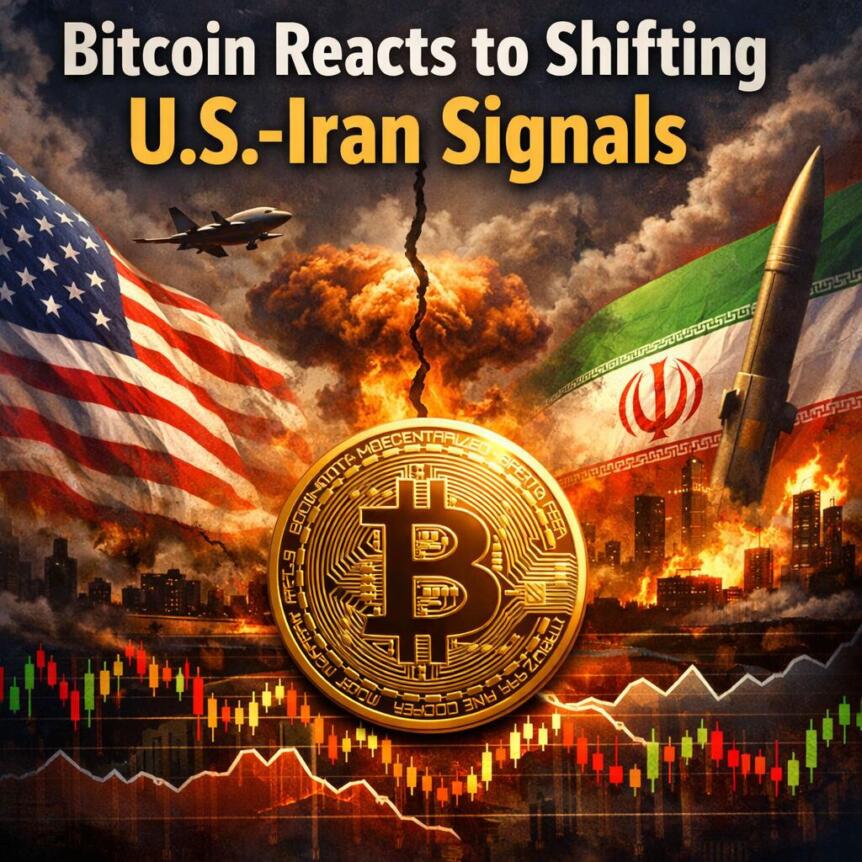
Bitcoin Reacts to Shifting U.S.-Iran Signals
Bitcoin surged above $70,000 after reports suggested progress in U.S.-Iran talks. The price climbed past $71,000 before easing slightly amid conflicting updates. The move reflects how geopolitical developments continue to shape crypto market direction.
🚨BREAKING🚨
TRUMP ORDERS 5-DAY PAUSE ON STRIKES TARGETING IRAN’S ENERGY INFRASTRUCTURE
BITCOIN IS PUMPING LIKE CRAZY!!!🔥 pic.twitter.com/2cVh7P33hB
— Max Crypto (@MaxCrypto) March 23, 2026
The asset gained over four percent from an intraday low near $67,000. This rebound followed statements indicating reduced military pressure in the Middle East. Momentum built quickly as traders responded to signs of possible de-escalation.
However, price action turned volatile as fresh reports questioned the talks. Iranian officials rejected claims of negotiations with the United States. This contradiction introduced uncertainty and triggered a modest pullback in Bitcoin’s price.
Bitcoin Gains Strength on Policy Pause
Bitcoin traded around $70,659 during the surge, reflecting renewed market confidence. The price jump followed a decision to delay military action for five days. This pause reduced immediate geopolitical risk and supported risk assets.
The U.S. administration signaled progress toward resolving ongoing hostilities. Officials indicated continued engagement could lead to a broader agreement. This outlook helped drive demand across digital assets and lifted overall sentiment.
At the same time, the market reacted to expectations of a near-term resolution. Prediction platforms showed rising probability of a ceasefire within weeks. This outlook added momentum, although uncertainty remained due to conflicting narratives.
Ethereum Tracks Bitcoin’s Upward Momentum
Ethereum climbed alongside Bitcoin and traded near $2,142 during the rally. The asset posted gains close to three percent as market sentiment improved. Its movement reflected broader strength across major cryptocurrencies.
The price increase followed Bitcoin’s breakout above key resistance levels. As a result, Ethereum benefited from increased trading activity and capital inflows. The correlation between both assets remained strong during the surge.
However, Ethereum also faced pressure after Iran denied any discussions. This development triggered caution across the crypto market. Consequently, Ethereum retraced slightly but maintained most of its earlier gains.
Conflicting Reports Drive Market Volatility
Market volatility increased as opposing narratives emerged from both sides. U.S. officials described ongoing talks as productive and constructive. In contrast, Iranian sources dismissed any form of engagement.
Regional players reportedly supported indirect communication channels. Countries such as Turkey, Egypt, and Pakistan played intermediary roles. These efforts aimed to reduce tensions and open pathways for dialogue.
Despite these efforts, uncertainty persists across financial markets. Traders reacted quickly to each new update, causing sharp price swings. This dynamic highlights the sensitivity of crypto assets to geopolitical developments.
Background and Broader Market Context
The current situation follows several weeks of heightened tensions in the Middle East. Earlier threats targeting energy infrastructure triggered market declines. Bitcoin fell sharply before recovering on renewed diplomatic signals.
The Strait of Hormuz dispute also played a key role in recent volatility. Strategic concerns over energy supply influenced global markets. Crypto assets responded in tandem with traditional risk indicators.
Recent activity suggests that geopolitical developments will remain a key driver. Market participants continue to adjust positions based on evolving headlines. As a result, Bitcoin and Ethereum may experience continued price fluctuations in the near term.

States where gas prices are rising as Iran conflict boosts oil

Ethereum Holds Between Key MVRV Levels as Breakout Nears

Virgin River Cast Changes: Most Shocking Show Exits


-
 Crypto World3 days ago
NIO (NIO) Stock Plunges 6.5% as Shelf Registration Sparks Dilution Worries
-

 Fashion3 days ago
Weekend Open Thread: Adidas – Corporette.com
-

 Politics3 days ago
Jenni Murray, Long-Serving Woman’s Hour Presenter, Dies Aged 75
-
 Tech6 days ago
Are Split Spacebars the Next Big Gaming Keyboard Trend?
-

 Business7 days ago
How the UK and China Trade Agreement Could Shape UK Businesses in 2026
-

 Crypto World2 days ago
Best Crypto to Buy Now: Strategy Just Spent $1.57 Billion on Bitcoin During Fear While Early Investors Quietly Enter Pepeto for 150x Potential
-

 News Videos5 days ago
RBA board divided on rate cut, unusually buoyant share market | Finance Report | ABC NEWS
-

 Crypto World2 days ago
Bitcoin Price News: Bhutan Sells $72 Million in BTC Under Fiscal Pressure, but the Smart Money Entering Pepeto Sees What the Market Does Not
-

 Politics5 days ago
The House | The new register to protect children from their abusers shows Parliament at its best
-

 Tech3 days ago
inKONBINI Lets You Spend Summer Days Behind the Register
-
 Politics6 days ago
Real-time pollution monitoring calls after boy nearly dies
-

 Crypto World5 days ago
Canada’s FINTRAC revokes registrations of 23 crypto MSBs in AML crackdown
-

 Sports5 hours ago
Remo Stars and Kano Pillars Strengthen Survival Hopes in NPFL
-
 NewsBeat5 days ago
Residents in North Lanarkshire reminded to register to vote in Scottish Parliament Election
-

 News Videos5 days ago
PARLIAMENT OF MALAWI – PAC MEETING WITH REGISTRAR OF FINANCIAL ON AMARYLLIS HOTEL – INQUIRY LIVE
-

 Politics4 days ago
Gender equality discussions at UN face pushbacks and US resistance
-

 Business1 day ago
No Winner in March 21 Drawing as Prize Rolls to $133 Million for Next
-

 Business5 days ago
Who Was Alex Pretti? 5 Key Facts About the ICU Nurse Killed by Federal Agents in Minneapolis
-

 Tech21 hours ago
Give Your Phone a Huge (and Free) Upgrade by Switching to Another Keyboard
-

 Sports4 hours ago
Gary Kirsten Accuses Pakistan Cricket Board Of ‘Interference’, Mohsin Naqvi Responds
You must be logged in to post a comment Login