
Crypto World
Trump crypto adviser rebuts Jamie Dimon’s call to treat yield stablecoins like banks



The White House’s crypto adviser pushed back on JPMorgan CEO Jamie Dimon’s assertion that stablecoin issuers who pay interest should be regulated like banks.
Stablecoins need not be treated like deposits because the Genius Act explicitly bars issuers from lending the reserves that back their tokens, Patrick Witt, the executive director of the President’s Council of Advisors for Digital Assets, wrote in an X post.
Dimon said banks want stablecoin issuers that pay interest on customer balances to face the same rules as traditional lenders, sharpening the debate over U.S. crypto regulation.
He also addressed reported tensions with Coinbase CEO Brian Armstrong, who withdrew support for the proposed Clarity Act a day before the Senate Banking Committee was scheduled to vote on the legislation. Dimon argued there needs to be a line between rewards paid on transactions and interest paid on stored balances.
“Rewards are the same as interest,” Dimon said. “If you are going to be holding balances and paying interest, that’s the bank. You should be regulated by a bank.”
Banks would accept a compromise in which crypto platforms offer rewards tied to transactions, he said. But firms that function like deposit-taking institutions should meet the same standards as banks, including capital and liquidity rules, anti-money laundering controls and federal deposit insurance requirements.
“The deceit here is that it is not the paying of yield on a balance per se that necessitates bank-like regulations, but rather the lending out or rehypothecation of the dollars that make up the underlying balance,” Witt said. Rehypothecation occurs when banks use clients’ collateral to support their own borrowing.
He also pointed to the Genius Act, which he said “explicitly forbids stablecoin issuers from doing the latter. Stablecoins ≠ Deposits.”

The BNB price prediction got a boost after BNB Chain destroyed 1.57 million tokens worth $1.02 billion in its 35th quarterly burn, dropping total supply to 134.79 million as the network pushes toward its 100 million target. That is real deflationary pressure hitting a token that already leads all Layer 1 networks with 4.5 million daily active users in Q1 2026.
But BNB gives you one way to earn: hope the price goes up. If it trades sideways for three months, your capital sat still. This breaks down where BNB heads next, why the burn matters, and how one presale pays two ways instead of one.
BNB Chain completed its 35th quarterly auto burn on April 15, removing 1,569,307 BNB from supply according to the BNB Chain Blog. The transaction is publicly verified on BSC. Blockchain.news confirmed remaining supply at 134.79 million, meaning 34.79 million more tokens still need to burn before hitting the 100 million target.
The burn follows the Fermi hard fork that cut block time to 0.45 seconds, and the network targets 20,000 TPS with sub second finality by end of 2026. Real usage drives the burns, not just price. And the presale that earns from two directions while BNB earns from one sits where utility meets the kind of entry that listings reprice overnight.
Why Holding BNB Alone Is Not Enough in 2026
BNB Gives You One Shot and Pepeto Gives You Two
You hold BNB after it dropped from $1,370 to $621, and the only way you make money is if the price climbs back, so if it trades sideways for three months your wallet shows zero gains because a single bet on direction delivers no yield and earns nothing during the wait.
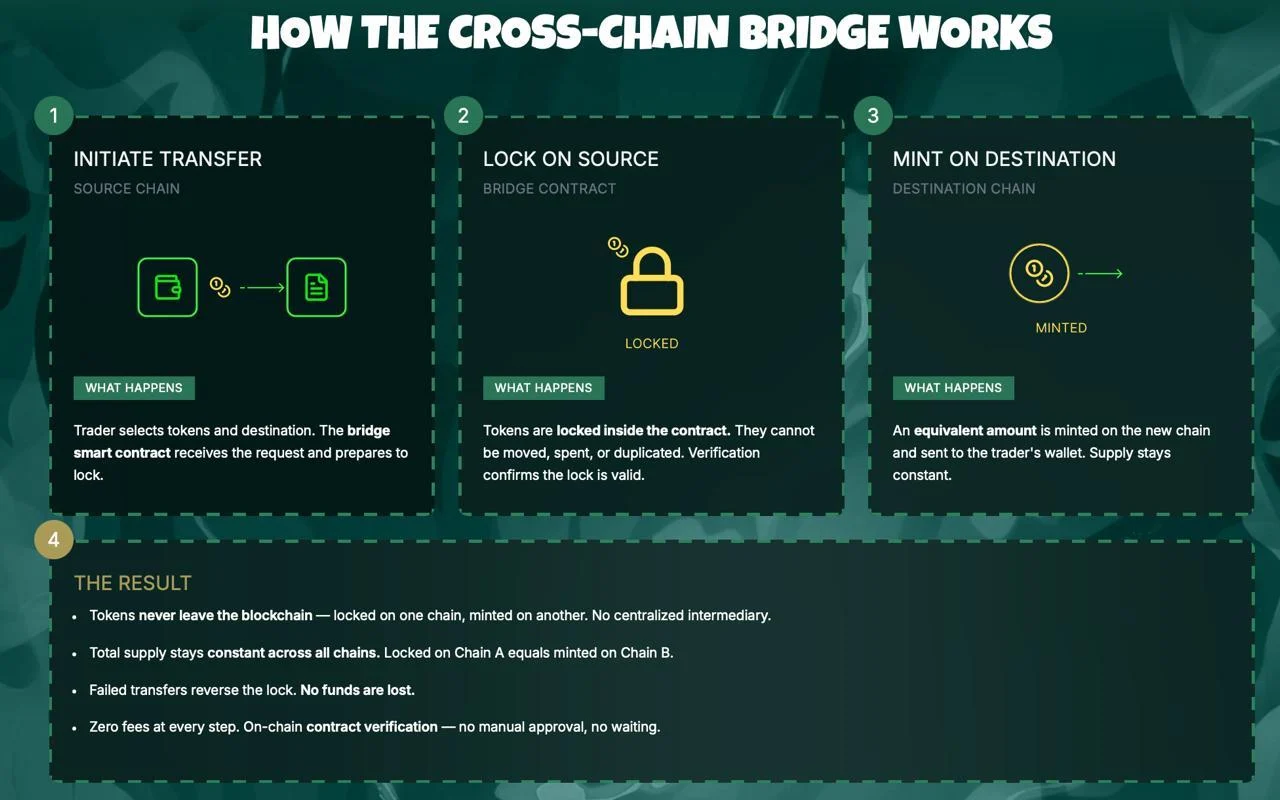
Pepeto works differently by staking at 181% APY that adds tokens to your wallet daily regardless of market direction, so your holdings expand even during flat weeks as the first layer of returns, while the Binance listing eventually opens the gates and reprices the token to reflect what a working exchange handling real volume across three chains is actually worth, giving you two separate engines paying you instead of one hope and a prayer.
The cofounder who built Pepe to $7 billion designed it this way because one way to earn is not enough when half the market sits below all time highs, and PepetoSwap connects every blockchain with zero fee trading while the cross chain bridge handles Ethereum, BNB Chain, and Solana without gas and an AI scanner filters risky tokens before they appear, with SolidProof auditing every contract before the presale opened and $9.21 million entering during the same drawdown that took BNB from $1,370 to $621.
BNB (Binance Coin) Price at $621 as Quarterly Burn Shrinks Supply
BNB trades at $621 according to CoinMarketCap after rising 2% on the burn news. The token sits inside a $580 to $680 range, with the middle band acting as resistance. BNB Chain leads all Layer 1s with 4.5 million daily active users in Q1 and 322 million total holders, more than Ethereum’s 305 million.
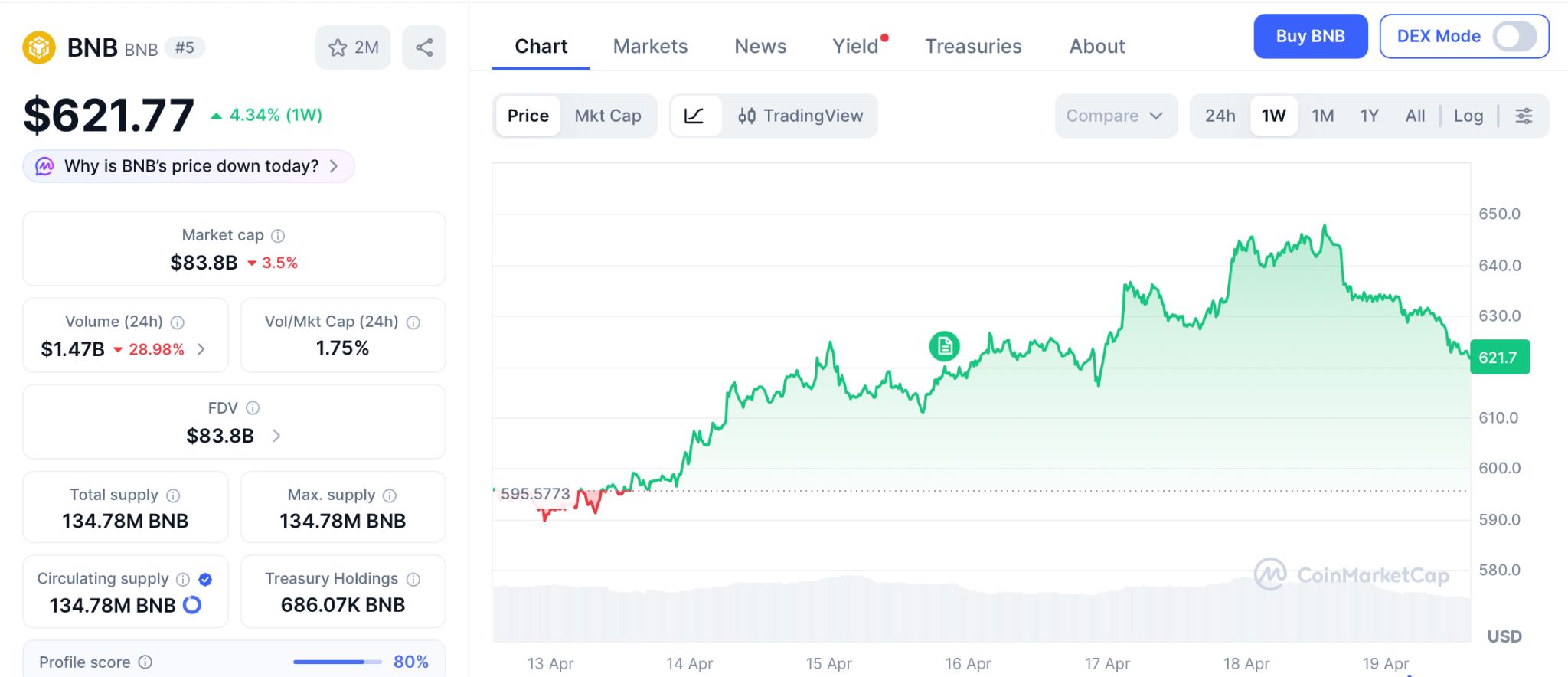
Coinpedia targets $1,000 by Q3 if $600 holds, and Changelly projects a max of $1,121 for 2026. Even the bullish case from an $85 billion market cap cannot deliver the multiples a presale at six decimal zeros creates.
Final Takeaway
Every cycle teaches the same lesson, which is that the people who earned while they waited came out ahead no matter which way the price eventually moved, and the early BNB holders who bought at $0.15 and rode it to $700 did not just sit on price action, they earned exchange rewards along the way, and that same model is exactly what Pepeto offers right now at presale while BNB just burned a billion dollars in tokens and the chart barely flinched because burns alone do not create returns.
Pepeto pays from two directions starting today, with 181% APY compounding in every wallet that already moved and the Binance listing resetting the token permanently the moment the market gets access, and $9.21 million collected during extreme fear proves the conviction is backed by real capital from wallets that ran the math, so once this window closes the entry you see right now will only exist in the portfolios of the people who acted while the rest of the market was still deciding whether to believe it.
Click To Visit Pepeto Website To Enter The Presale

FAQs
What is the BNB price prediction after the $1 billion token burn?
BNB targets $680 to $1,000 in 2026 as quarterly burns shrink supply toward 100 million. Pepeto at presale pricing with 181% APY and a confirmed Binance listing offers higher return potential from a lower base.
What is Pepeto and why is it the best meme coin presale of 2026?
Pepeto is a meme coin presale combining viral energy with real utility through PepetoSwap zero fee exchange, a cross chain bridge, and an AI contract scanner. It has raised $9.21 million with 181% APY and a confirmed Binance listing led by the Pepe cofounder.
Disclaimer: This is a Press Release provided by a third party who is responsible for the content. Please conduct your own research before taking any action based on the content.

Crypto World
Poland’s Crypto Regulation Bill Blocked Again as Presidential Veto Stands for the Second Time

TLDR:
- Poland remains the only EU member state yet to comply with the bloc’s 2024 crypto-asset directive.
- Parliament secured 243 votes to override the veto but fell 20 votes short of the required 263 threshold.
- Finance Minister Domański warned the regulatory gap turns Poland’s crypto market into a fraud haven.
- PM Tusk alleged Zondacrypto was founded with Russian mafia funds, citing Polish intelligence agencies.
Poland’s crypto regulation bill has suffered another setback after a second failed parliamentary vote. On Friday, 243 MPs voted to override President Karol Nawrocki’s veto, short of the 263 required.
This marked the second unsuccessful attempt by Prime Minister Tusk’s government to advance the bill. The legislation seeks to align Poland with EU crypto-asset rules active since 2024. Poland remains the only EU member state yet to comply with the directive.
Parliament Falls Short of Override Threshold Again
Friday’s vote was the second parliamentary attempt to override Nawrocki’s veto on the crypto regulation bill. The first veto was issued in December last year.
In the latest count, 191 MPs supported the veto while 243 voted against it. Neither figure reached the 263-vote threshold needed to reverse the president’s decision.
Tusk’s coalition argues the bill is vital for protecting consumers and investors in Poland. The government says it would shield the crypto market from foreign exploitation and sabotage.
It would also strengthen Poland’s standing in the EU’s broader regulatory framework. The coalition views compliance with EU crypto standards as an urgent national priority.
President Nawrocki, backed by the opposition Law and Justice party, has vetoed the bill twice. His office cited overregulation, lack of transparency, and burdens on small businesses.
In December, the president’s office stated the bill “threatens the freedom of Poles, their property and the stability of the state.” Nawrocki has since returned it to parliament for amendments on both occasions.
Finance Minister Andrzej Domański was direct in his response after Friday’s vote. He warned that without regulation, Poland’s crypto market becomes an “El Dorado for fraudsters.”
Domański added that investors risk losing savings without proper legal safeguards. He also noted the veto leaves consumers and entrepreneurs exposed to unfair market practices.
Zondacrypto Allegations Deepen the Political Dispute
The debate has also centered on Zondacrypto, Poland’s largest cryptocurrency exchange. The platform lobbied against Tusk’s regulatory bill.
Citing the ABW domestic security agency, Tusk accused CEO Przemysław Kral of funding foundations linked to opposition figures. Among them is former Justice Minister Zbigniew Ziobro, who faces multiple charges in Poland.
On Friday, Tusk escalated his claims, alleging Zondacrypto was founded with Russian mafia money. He also alleged ties between the platform and Russian intelligence services.
“The problem is that this company, with such sources, has become a company that sponsors political and social events in Poland and promotes very specific political forces,” Tusk said. Polish intelligence agencies were cited as the basis for those claims.
Kral denied the allegations and rejected reports of operational issues at Zondacrypto. Those reports cited withdrawal difficulties and unpaid sponsorship partners.
He added that he does not hold the key to a $330 million crypto wallet. Former CEO Sylwester Suszek, who vanished in 2022, reportedly never transferred it to him before disappearing.
Interior Minister Marcin Kierwiński confirmed the government will press on with crypto regulation. He stated the effort will continue “until we succeed, until the awareness of the threats and these strange interests connecting certain right-wing politicians with this exchange finally reaches the president.”
Poland’s path to EU crypto compliance remains politically contested. The government remains committed to achieving full regulatory alignment with the EU.


Bitcoin developer and Hashcash creator Adam Back has responded to concerns raised by Nic Carter regarding a possible quantum computing milestone in 2029.
Summary
- Adam Back rejects claims that 2029 quantum computing threatens Bitcoin’s cryptographic security.
- Google quantum timeline seen as research milestone, not practical tool for breaking Bitcoin encryption.
- Bitcoin developers work on post-quantum upgrades including new secure address and signature systems.
Carter had suggested that advances in quantum systems could challenge Bitcoin’s cryptographic security.
Back dismissed the concerns during recent comments, stating that software protection continues to improve alongside hardware developments. He also responded to claims that Bitcoin could become exposed to quantum attacks, noting that current fears are based on future assumptions rather than present capability.
Back said ”2029 is a milestone in cloud quantum systems, not a tool for breaking cryptography” when referring to Google’s research direction, according to the discussion referenced in reports.
The discussion centers on whether quantum computing could generate enough processing power to break Bitcoin private keys. Experts cited in the debate note that this would require millions of stable logical qubits with full error correction.
Current quantum systems remain in early development stages and operate under controlled laboratory conditions. These systems are not yet capable of performing cryptographic attacks at scale.
Back stated that most projections place such capability beyond the current decade, based on limitations in hardware stability and error correction progress.
Moreover, work on post-quantum cryptography within the Bitcoin ecosystem is already ongoing. Developers are testing upgrade paths that could introduce quantum-resistant address types.
These proposals include research linked to upgrade paths such as BIP-361 and similar signature schemes. The aim is to allow users to move funds to new address formats if needed through network upgrades.
Back noted that “”software protection evolves faster than hardware threats”” when describing the pace of development in Bitcoin security measures compared to quantum computing progress.
Network upgrade path and long-term planning
Bitcoin’s structure allows for protocol changes through coordinated upgrades known as soft forks. Developers have indicated that quantum-resistant features could be introduced if required without immediate disruption to the network.
Quantum computers remain in experimental stages and are not widely deployed for commercial use. Current systems do not yet present direct risk to blockchain cryptography based on existing technical standards.
The debate continues within the crypto and academic community as research into quantum computing advances and Bitcoin developers maintain focus on long-term security planning.
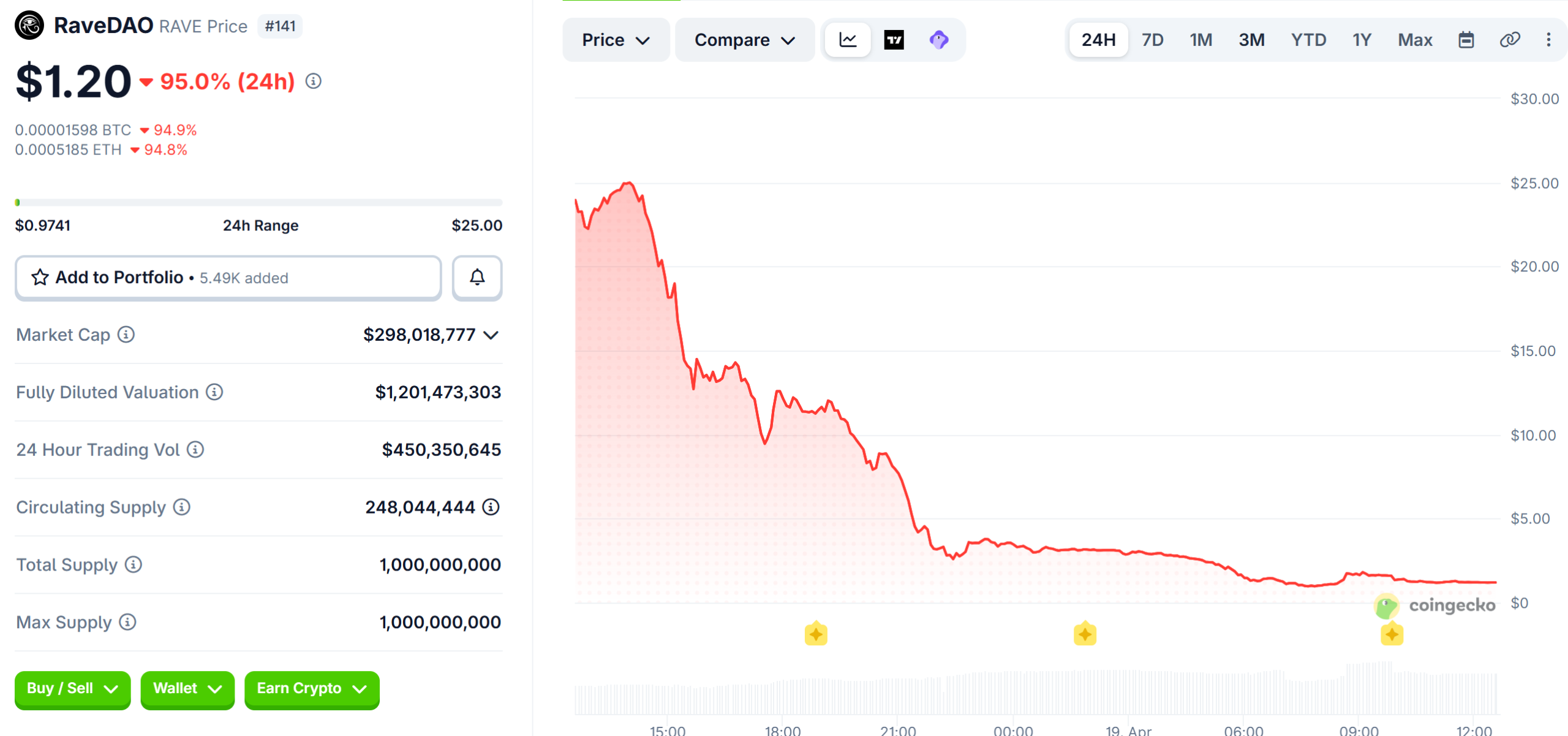
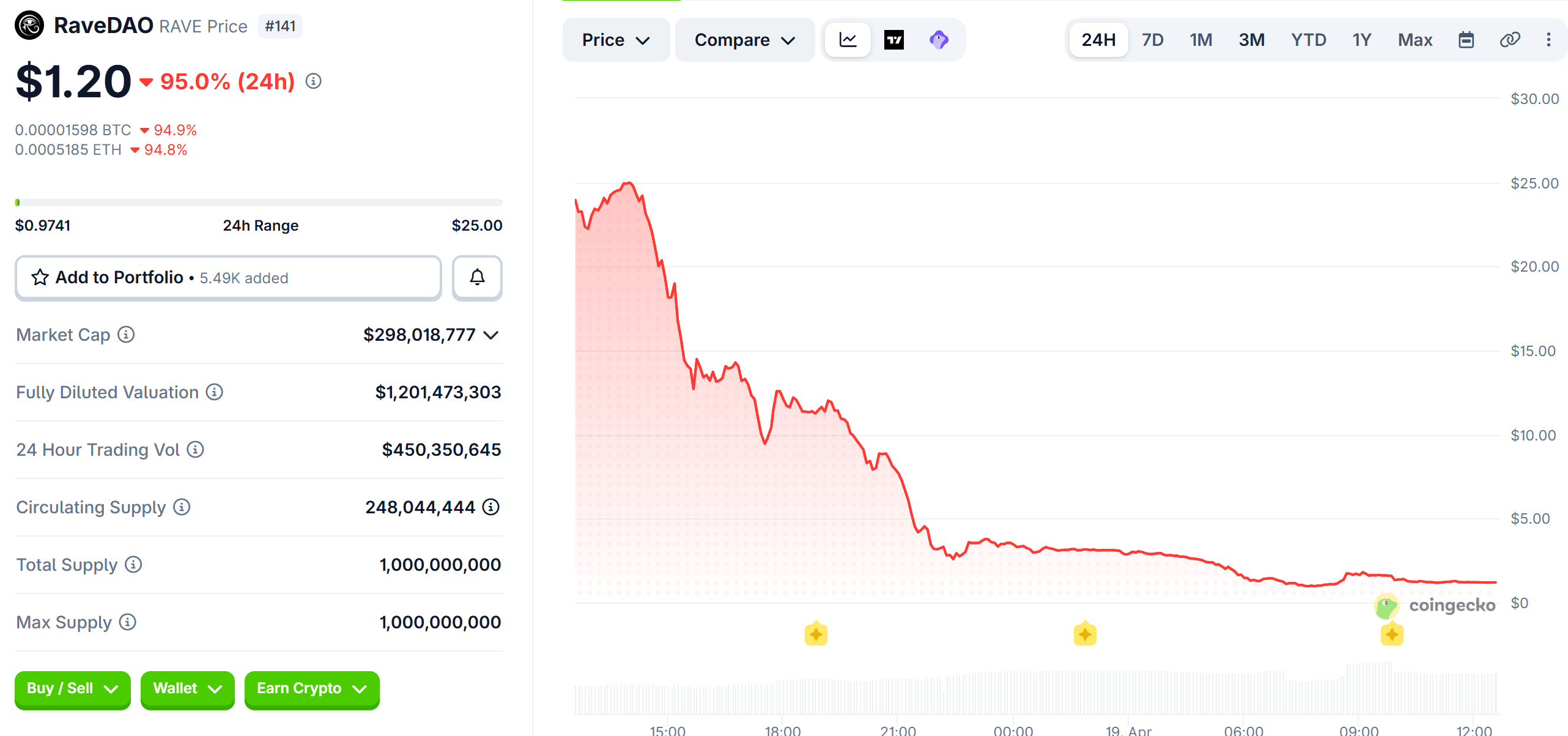
RaveDAO (RAVE) lost over 95% of its value in a single day, erasing $6.3 billion from its market cap after allegations of insider manipulation sent the token into freefall.
The collapse followed a parabolic rally that saw RAVE gain over 10,000% in two weeks, briefly pushing it into the top 20 cryptocurrencies by market capitalization.
Bitget CEO Gracy Chen Compares RAVE Crash to 2021 GameStop Frenzy
As of this writing, RaveDAO’s powering token, RAVE, is down 95% over the last 24 hours, almost reaching its floor price after topping out at $28.89 on Saturday.
Bitget CEO Gracy Chen compared the RAVE collapse to the 2021 GameStop (GME) short squeeze. She noted that GME, a struggling retailer with a fair value of $10 to $20, reached $483 on collective action alone.
Chen identified FOMO, tribal identity, and self-fulfilling prophecy as the psychological forces behind both events. She argued RAVE followed the same playbook, with X (Twitter) replacing Reddit and a meme coin replacing a physical stock.
On-chain analyst ZachXBT had previously flagged suspicious wallet movements, alleging that insiders held roughly 90% of RAVE’s circulating supply across three wallets.
Two wallets reportedly moved millions of tokens into Bitget during the token’s peak.
RaveDAO Responds to Allegations
RaveDAO denied responsibility for the price action. The team said it was exploring performance-triggered token locks and pledged to donate 20% of event profits to philanthropic causes.
Meanwhile, analyst Kyle Doops noted RAVE moved from euphoria to wipeout in days. Some traders also reported being unable to close positions on exchanges, raising further concerns about how platforms handled the volatility.
Still, some users have called out Bitget for its handling of the RAVE incident, describing the exchange’s response as immature and unprofessional.
Critics argued that liquidating user positions on both sides of the trade set a dangerous precedent. Several compared Bitget to FTX, warning that trust, not capital, is the foundation of any exchange, and once lost, it may be impossible to recover.
Both Bitget and Binance have confirmed internal reviews of trading activity surrounding RAVE.
The post Bitget CEO Draws GameStop Parallel As RaveDAO (RAVE) Falls Nearly 100% appeared first on BeInCrypto.


The North Carolina Bankers Association urged member banks to call Sen. Thom Tillis’s office this week. The trade group wants a total ban on stablecoin yield payments in the CLARITY Act.
Leadership circulated an internal email with a pre-written script for bank employees. It described the current compromise language as insufficient to prevent deposit flight into stablecoins.
Banking Lobby Escalates Pressure on Stablecoin Yield
An employee at a small Wilmington-based bank reportedly shared the email, with leadership distributing it on behalf of NCBankers.
The script demands what it calls “an airtight prohibition” on yield tied to holding payment stablecoins. It also targets carve-outs for loyalty programs and nominal activity.
Employees were told they did not need to answer questions or defend their positions. The email stated they should simply deliver the message and end the call.
CLARITY Act Markup Approaches With Unresolved Yield Dispute
The lobbying effort comes as the Senate Banking Committee prepares a markup of the CLARITY Act.
Senators Tillis and Angela Alsobrooks brokered a compromise in March that bans passive yield but permits activity-based rewards tied to transactions.
Banks argue that those carve-outs still enable a de facto yield on stablecoin holdings. However, a White House Council of Economic Advisers report challenged that argument.
Full yield allowance would displace only $2.1 billion in lending, just 0.02% of total loans.
The CLARITY Act passed the House 294-134 in July 2025. A Senate Banking Committee markup was targeted for late April, though the schedule remains fluid.
The post NC Bankers Push For Stablecoin Yield Ban on the CLARITY Act appeared first on BeInCrypto.


Alcoa is in advanced discussions to sell its Massena East smelter site in upstate New York to New York Digital Investment Group (NYDIG).
Summary
- Alcoa is in advanced talks to sell Massena East smelter site to NYDIG.
- NYDIG aims to expand Bitcoin mining operations using hydropower-linked industrial infrastructure in New York.
- Massena East site has been idle since 2014 and spans about 1,300 acres.
The update was shared by Alcoa chief executive Bill Oplinger in comments reported on Friday. Oplinger stated that the transaction “should be done in the middle part of this year” if the process continues as planned. The site is part of a wider effort by Alcoa to offload around 10 idle US smelter properties.
The Massena East facility sits along the St. Lawrence River and covers about 1,300 acres. It has been inactive since 2014 after high energy costs and global competition reduced domestic production viability.
NYDIG, a Bitcoin financial services company, would become the owner of the site if the deal is completed. The firm has already been active at the location through its partnership with Coinmint.
NYDIG took a strategic stake in Coinmint in October 2024. Coinmint operates Bitcoin mining hardware at the Massena campus under a long-term lease agreement signed with Alcoa in 2018.
The facility has access to hydropower from the New York Power Authority, which supports large-scale mining operations. The site has also been used as a hosting location for mining infrastructure over recent years.
Additionally, Coinmint has hosted mining equipment for several firms, including CleanSpark, Gryphon, and Bit Digital. Some of these clients exited as NYDIG increased its operational role at the site.
Mintvest Capital, a minority shareholder in Coinmint, filed a lawsuit earlier in the year. The claim stated that NYDIG had “effectively acquired Coinmint for roughly $200 million,” according to court filings referenced in reports.
The dispute remains part of ongoing legal proceedings related to ownership structure and valuation of the mining operation.
Shift in Industrial Sites Toward Digital Infrastructure
The sale of Massena East follows a broader trend of industrial sites being repurposed for digital infrastructure. Former smelters and heavy industrial facilities are increasingly being evaluated for data center or mining use.
Other companies have followed similar paths. Century Aluminum sold its Hawesville, Kentucky smelter to TeraWulf for $200 million, with plans for high-performance computing and artificial intelligence workloads rather than mining alone.
NYDIG has also expanded its mining capacity through acquisitions. The firm purchased assets from Consensus Technology Group and later agreed to acquire Crusoe Energy’s Bitcoin mining business. These moves added more than 390 MW of combined capacity across multiple US locations.
The Massena East deal would further extend NYDIG’s position in large-scale mining infrastructure tied to industrial power access and long-term energy contracts.
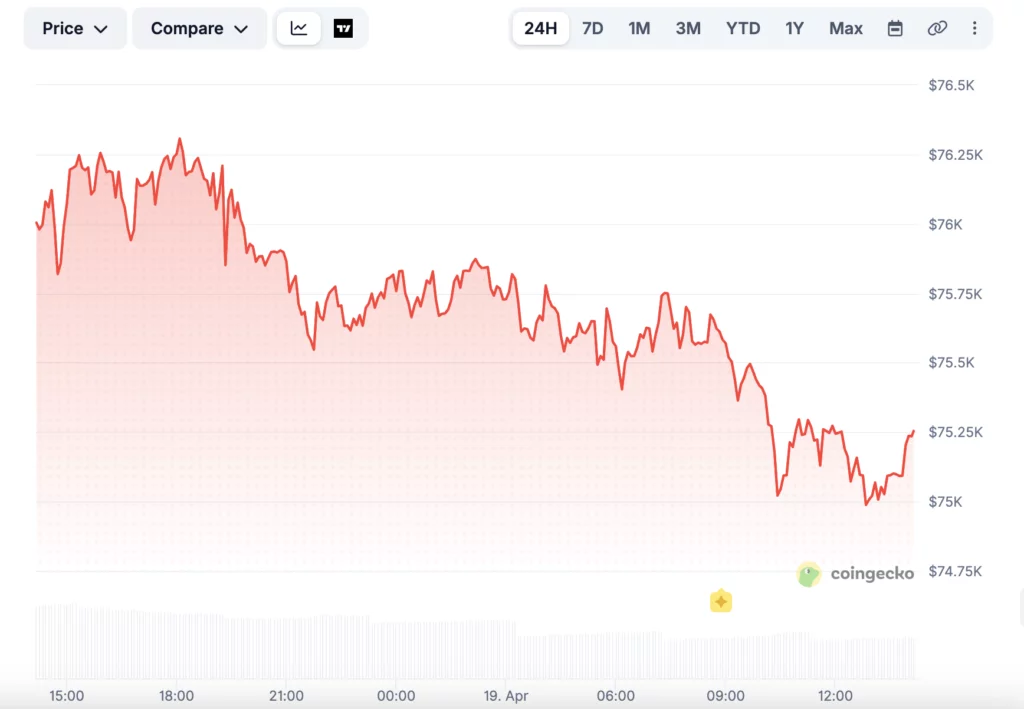
Bitcoin (BTC) has moved lower after failing to hold above its recent peak of $78,400. The asset slipped toward $75,000 following increased market pressure linked to geopolitical tensions in the Middle East.
Summary
- Bitcoin rejected near $78,400 and fell toward $75,000 after geopolitical tension reports.
- Altcoins including Ethereum, XRP, and BNB followed Bitcoin with broad market declines.
- PI token, AAVE, and WLD recorded notable losses during overall crypto market correction.
Price action shows Bitcoin had earlier climbed from below $70,500 to a 10-week high. The move followed brief optimism around reported diplomatic progress between the United States and Iran. Market sentiment shifted after conflicting reports on the Strait of Hormuz situation, leading to a rejection near the top range.
Bitcoin now trades more than $3,000 below its recent peak. Its market capitalization has eased toward $1.5 trillion, while dominance over altcoins has risen to 57.5%.
Crypto markets reacted to developments involving Iran and the United States, where statements on negotiations created mixed signals. Reports of reopening and later disruption of the Strait of Hormuz contributed to volatility in price movement.
The correction followed a strong rally earlier in the week. Bitcoin moved within a tight range between $73,200 and $75,500 before breaking higher, then reversing direction. Analysts expect continued price movement as traditional financial markets open and react to global events.
Altcoins Follow Downward Trend
Most altcoins recorded losses as Bitcoin declined. Ethereum dropped toward $2,300 after a daily decline of 3.5%. XRP moved below the $1.43 level, while BNB fell back toward $620.
Other tokens including SOL, ADA, DOGE, LINK, AVAX, and ZEC also showed declines. Market-wide selling reduced total crypto capitalization by around $100 billion since Friday, bringing the total to approximately $2.62 trillion.
Several mid-cap tokens posted larger losses. AAVE dropped more than 20% to around $92 following reports linked to a KelpDAO hack. The token M declined by about 18% to $3.50.
Pi Network’s PI token also recorded losses after rejection near $0.185. It moved lower to around $0.175, reflecting a decline of more than 8% in the latest session. PUMP and WLD also remained under pressure during the same period.
Disclosure: This article does not represent investment advice. The content and materials featured on this page are for educational purposes only.

U.S. Senator Elizabeth Warren, the leading Democrat on the Senate Banking Committee, is escalating a dispute over the U.S. Securities and Exchange Commission’s enforcement posture. In a letter dated April 15, Warren accuses SEC Chair Paul Atkins of possibly misleading Congress about the agency’s enforcement numbers after the agency released its enforcement data for fiscal year 2025.
The data, released on April 7, show a marked drop in enforcement actions, prompting Warren to publicly challenge Atkins about his February 12 testimony at a congressional hearing. In her letter, she notes that she had asked him to comment on data showing a decline in enforcement activity; she says Atkins “demurred,” replying that he was “not sure what data” she was referring to. Warren contends that the latest figures vindicate her point that SEC enforcement actions have fallen significantly under Atkins’s watch.
Key takeaways
- The Senate Banking Committee’s top Democrat questions SEC Chair Paul Atkins over whether he may have misled lawmakers about enforcement activity, citing FY2025 data released in April.
- Enforcement actions by the SEC reportedly declined to the lowest level seen in more than a decade, according to the agency’s own FY2025 data.
- Warren’s letter frames the data as evidence of a broader retreat in enforcement, raising concerns about the agency’s willingness to pursue cases, including crypto-related actions.
- As part of the controversy, Warren references a period in which the SEC reportedly rolled back enforcement against crypto firms, while other actions from the Biden administration were settled or dismissed, drawing bipartisan criticism.
- The SEC did not immediately respond to requests for comment on the letter or the underlying data.
Warren’s pivot: data as accountability and potential misdirection
The exchange between Warren and Atkins centers on a stark question: what is the true state of enforcement under the current leadership? In her letter, Warren emphasizes that the data released by the SEC last week show a run of more restrained activity, which she says contradicts Atkins’s earlier testimony that he could not comment on the data she referenced. She writes that the hearing occurred after the end of the 2025 fiscal year, and that Atkins’s later defenses appear “deeply misleading, potentially designed to cast doubt on the now obvious fact that enforcement activity has declined significantly.”
Warren’s letter to Atkins includes a request for detailed explanations about the agency’s enforcement trajectory and a confirmation of what Atkins knew about the data at the time of his testimony. Specifically, she asks for clarity on whether he was aware of the SEC’s enforcement efforts when he testified and seeks an explanation for the apparent decline. The committee gave Atkins a deadline of April 28 to respond.
At stake is not just a numeric trend but the agency’s posture toward enforcement in a landscape that includes crypto policy and investor protection. The April 7 data release has added fuel to a broader debate over whether the SEC is adequately policing markets that include digital assets, as lawmakers from across the spectrum weigh the agency’s tools and priorities.
Enforcement posture and crypto: a broader political debate
The discussion about enforcement numbers sits within a larger context of how the SEC has treated crypto-related actions across administrations. The article notes a shift in enforcement approach, with a period of retrenchment in crypto cases after the prior administration, contrasted with a higher number of crypto-related actions during the Biden era. Critics have argued that this shift represents a mismatch between the agency’s mission and the pace of market developments in digital assets.
Warren’s critique also flags a potentially wider concern: if enforcement slows while markets evolve, the regulatory framework may struggle to deter misconduct, protect investors, or establish regulatory clarity for innovators. The letter underscores the need to hold the agency accountable for its enforcement decisions, particularly in a sector that continues to draw the attention of policymakers, market participants, and builders seeking a stable, rules-based environment for digital assets.
In the background of these tensions, Atkins has faced questions about crypto-specific “safe harbor” considerations and the appropriateness of various enforcement strategies as the SEC negotiates its stance on digital assets. Earlier reporting highlighted debates over whether exemptions or more precise boundaries could help clarify where crypto activity falls within existing securities laws, a topic that continues to surface as officials examine the agency’s enforcement toolkit.
What comes next for oversight and crypto policy
The April 28 deadline for Atkins’s response to Warren’s questions sets the stage for a potential hinge point in congressional oversight of the SEC. While the agency did not provide an immediate comment on the letter, the exchange signals lawmakers’ intent to scrutinize how enforcement data is collected, interpreted, and communicated to the public—for better transparency and accountability.
For investors, traders, and builders in the crypto space, the evolving oversight narrative matters because it can influence regulatory certainty, risk assessment, and the appetite for enforcement risk in crypto ventures. If lawmakers perceive continued declines in aggressive action as a signal of lax oversight, that could shape debates on rulemaking, disclosure requirements, and potential new guardrails that affect how digital assets are treated in the U.S. market.
As the SEC weighs its enforcement posture, market participants will be watching not only for the numbers themselves but for how the regulator articulates its priorities and the conditions under which it pursues or retreats from enforcement actions—especially in areas where technology and markets are advancing rapidly.
For now, the key questions remain: Will Atkins clarify the data to reassure lawmakers about the agency’s intent and diligence? How will the SEC balance its enforcement priorities in crypto with ongoing demands for clearer regulatory guidance? And what signals will forthcoming actions, or the absence thereof, send to the broader crypto ecosystem?
The unfolding debate underscores a broader theme in crypto regulation: data, transparency, and accountability are increasingly central to investor confidence and the sector’s long-term trajectory. Keep an eye on any official responses, additional disclosures from the SEC, and subsequent remarks from lawmakers as the oversight process continues.


The Ethereum Foundation-funded Ketman Project has identified approximately 100 suspected North Korean IT workers operating across 53 crypto projects, according to an ETH Rangers Program recap published on April 16.
The six-month initiative, backed through stipends from the Ethereum Foundation’s ETH Rangers Program, focused specifically on detecting and expelling DPRK operatives who had infiltrated Web3 organizations under fabricated identities.
How North Koreans Use Forged Identities and Fake KYC Documents
A recent Ketman investigation detailed how DPRK-linked actors posed as Japanese developers on the Web3 freelance platform OnlyDust.
The operatives used AI-generated profile photos, fabricated names such as “Hiroto Iwaki” and “Motoki Masuo,” and submitted forged Japanese identity documents during verification.
Investigators confirmed the deception during a video call when one suspect, asked to introduce himself in Japanese, removed his headset and left the call.
The team traced at least three actor clusters across 11 repositories, where 62 pull requests were merged before detection.
Open-Source Tools and Industry Framework
Beyond individual investigations, Ketman developed gh-fake-analyzer, an open-source GitHub profile analysis tool now available on PyPI.
The project also co-authored the DPRK IT Workers Framework with the Security Alliance (SEAL), which has become a standard industry reference.
The ETH Rangers Program, launched in late 2024 alongside Secureum, The Red Guild, and SEAL, funded 17 stipend recipients in total.
Consolidated outcomes included over $5.8 million in recovered funds, 785 reported vulnerabilities, and 36 incident responses handled.
North Korean operatives have stolen billions in crypto assets in recent years. Security researchers warn that IT worker infiltration often serves as a stepping stone for larger supply chain attacks coordinated by DPRK hacking teams.
The post Ethereum-Funded Project Exposes 100 North Korean IT Workers in Crypto appeared first on BeInCrypto.
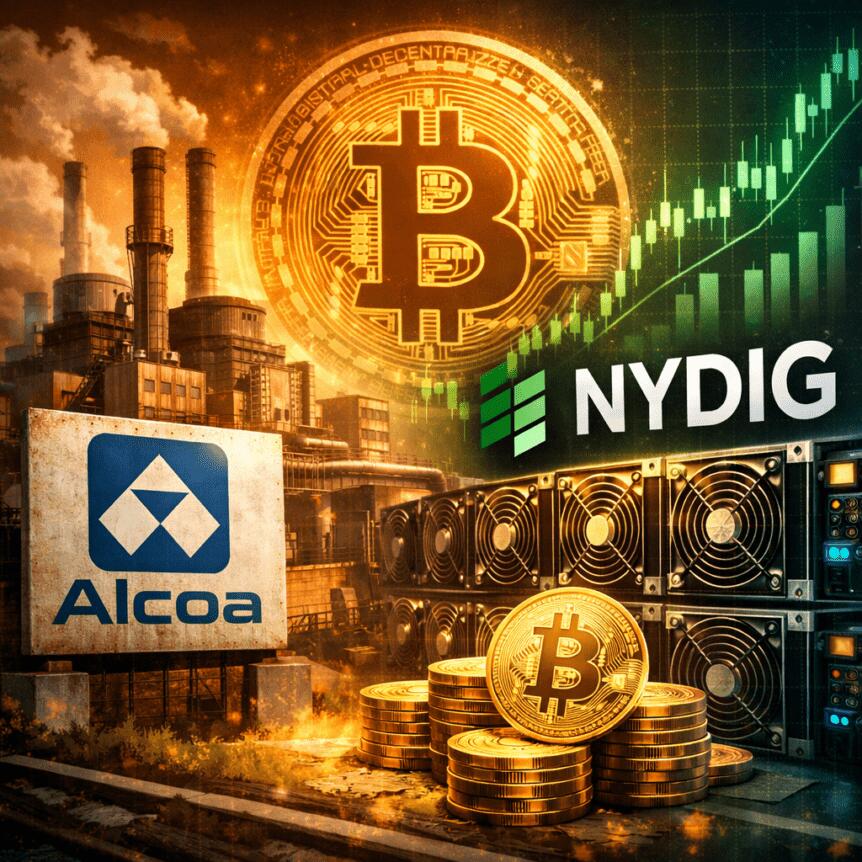
Alcoa is reportedly closing in on a deal to sell its Massena East smelter site in upstate New York to New York Digital Investment Group (NYDIG), a strategy move that would repurpose idle industrial capacity for Bitcoin mining and other digital infrastructure. Bloomberg reported on Friday that the two parties are in advanced discussions, with an expected close in the middle of this year. Massena East, along the St. Lawrence River, has been dormant since 2014 after Alcoa shut it down amid rising energy costs and competitive pressures.
The site’s built-in heavy-industry footprint—substations, transmission lines and high-capacity grid connections—positions it as a prime target for Bitcoin miners and data-center operators who often spend years securing such infrastructure from scratch. In addition, the Massena East location benefits from hydropower supplied by the New York Power Authority (NYPA), a factor that has drawn energy-intensive compute operations seeking scale with relatively low-cost, lower-carbon power.
The broader narrative around US industrial sites being repurposed for digital infrastructure is gaining traction. Earlier this year, Century Aluminum sold its Hawesville smelter in Kentucky to TeraWulf for $200 million, with plans to transform the facility into a high-performance computing and AI facility rather than a traditional smelting operation. The shift underscores a market interest in converting legacy industrial assets into computing capacity rather than conventional manufacturing.
New York-based NYDIG has been expanding its footprint in Bitcoin mining infrastructure. The firm, owned by Stone Ridge, already holds a stake in Coinmint, which operates mining hardware at the same campus under a long-term lease. The consolidation reflects NYDIG’s broader ambitions in both mining and related AI-oriented data-center deployments. The narrative around NYDIG’s activity in the space has intensified after Crusoe Energy agreed to sell its Bitcoin mining business to NYDIG last year, signaling a growing convergence between mining and AI infrastructure initiatives.
Key takeaways
- Alcoa is in advanced discussions to sell the Massena East site to NYDIG, with a closing expected in the middle of 2026, according to CEO Bill Oplinger as cited by Bloomberg.
- The Massena East campus benefits from existing heavy-industrial infrastructure and hydropower from NYPA, which reduces the friction and cost typically associated with siting new digital infrastructure projects.
- NYDIG’s expansion in mining infrastructure includes stakes in Coinmint and a history of acquiring mining assets, including Crusoe Energy’s mining business, highlighting a strategy that blends crypto mining with broader data-center ambitions.
- The deal sits within a broader U.S. trend of converting retired industrial facilities into AI, HPC and data-center campuses, a pattern already visible in the Hawesville example and other recent moves by miners and energy partners.
Industrial assets, power deals and a changing crypto playbook
Massena East’s potential sale is notable for what it reveals about how the crypto and AI infrastructure ecosystems are leveraging pre-existing energy and grid assets. The site’s proximity to hydropower from NYPA provides a cost and emissions angle that matters to operators facing energy-price volatility and the push toward lower-carbon compute. Built to run around the clock, aluminum smelters are, by design, already configured for continuous power delivery—a characteristic that makes them appealing hubs for mining rigs and AI data centers that demand consistent energy supply and scale.
NYDIG’s involvement signals a broader strategic alignment between mining and AI-focused infrastructure. The company has been extending its reach in Bitcoin mining by leveraging established facilities and leases—an approach that can accelerate project timelines and reduce regulatory hurdles compared with greenfield development. The Coinmint stake and the Crusoe Energy sale to NYDIG reinforce a pattern where crypto-dedicated capital is funding facilities that can pivot between mining and AI workloads depending on market conditions.
These developments also dovetail with the evolving competitive landscape among crypto miners worldwide. While some players double down on expansion in traditional mining, others are actively repositioning assets for AI and cloud computing services. MARA Holdings’ recent stake in Exaion illustrates the AI services dimension, while peers like Hive, Hut 8, TeraWulf and Iren are repurposing existing sites into data-center ecosystems. CoreWeave, for its part, has migrated toward AI-focused infrastructure, signaling a broader shift in how capital and operators view the value of large-scale computing capacity beyond pure mining.
Implications for investors and the crypto infrastructure market
The Massena East development is a microcosm of a larger market dynamic: the convergence of retired industrial assets, power accords, and the demand for scalable compute. For investors, the potential sale underscores several practical considerations. The presence of prebuilt infrastructure and hydropower can shorten project timelines and reduce capex risk, while strong local energy partnerships may support more predictable operating costs. Yet investors should also monitor regulatory developments, energy pricing trends, and community reception to large-scale crypto or AI facilities in energy-rich regions like upstate New York.
Market observers are watching whether such repurposing efforts will catalyze a more stable, diversified revenue mix for miners—balancing traditional BTC mining with AI-related compute services and data-center operations. The Hawesville example, where Century Aluminum sold the site for AI-focused development, illustrates how industrial assets can transition toward higher-value, location-specific digital infrastructure without relying solely on commodity mining cycles. If Massena East proceeds, it could become another data point supporting this broader retooling trend.
Meanwhile, NYDIG’s ongoing expansion and its portfolio moves—along with other industry players who are gradually tilting toward AI-enabled infrastructure—may influence how capital flows into the sector. The emphasis on durable infrastructure, long-term leases, and energy partnerships could offer a more resilient framework for funding and operating large-scale computing assets in a competitive energy market.
As with any major asset repositioning, the path forward will hinge on regulatory clarity, local permitting, and the economics of power supply. Until the deal closes, readers should watch for updates from Alcoa and NYDIG, and note how the Massena site’s conversion could inform future repurposing plays across the industry.
Readers should keep an eye on how this shift interacts with the broader crypto landscape, where miners are increasingly balancing BTC exposure with AI, data-center demand and cloud computing opportunities. The coming months will reveal whether the Massena East project becomes a notable blueprint for how industrial relics can fuel next-generation digital infrastructure—and what that implies for energy markets, regional economies, and the strategic playbooks of miners and AI operators alike.
What’s next remains uncertain, but the trend toward repurposing legacy industrial capacity for high-performance computing and AI workloads is likely to accelerate as energy deals, regulatory clarity and demand for scalable compute continue to evolve.

How to watch Everton vs Liverpool: TV channel and live stream for Premier League today

Record Sales Surge as Petrol Prices Soar

Chain Burns $1 Billion in Tokens as Pepeto Pays Holders Two Ways While BNB Pays One


-
 NewsBeat7 days ago
Pep Guardiola and Gary Neville agree over Arsenal title problem that benefits Man City
-

 Crypto World6 days ago
The SEC Conditionalises DeFi Platforms to Be Avoided for Broker Registration
-

 Fashion2 days ago
Weekend Open Thread: Theodora Dress
-

 Politics7 days ago
World Cup exit makes Italy enter crisis mode
-

 Crypto World6 days ago
SEC Signals Exemption for Crypto Interfaces From Broker Registration
-

 News Videos4 days ago
Secure crypto trading starts with an FIU-registered
-

 Sports2 days ago
NWFL Suspends Two Players Over Post-Match Clash in Ado-Ekiti
-

 Crypto World5 days ago
SEC Proposes Certain Crypto Interfaces Don’t Need to Register as Brokers
-

 NewsBeat5 days ago
Trump and Pope Leo: Behind their disagreement over Iran war
-

 Politics2 days ago
Palestine barred from entering Canada for FIFA Congress
-

 Crypto World2 days ago
Russia Pushes Bill to Criminalize Unregistered Crypto Services
-

 Sports6 days ago
NWFL opens Pathway for new Clubs ahead of 2026 Season
-

 Crypto World6 days ago
Trump whales load up ahead of Mar-a-Lago luncheon.
-
 Business3 days ago
Creo Medical agree sale of its manufacturing operation
-
Business6 days ago
Kering slides after Morgan Stanley downgrade, Gucci woes loom
-
 Entertainment5 days ago
Brand New Day’ Footage Reveals the Devastating Impact of ‘Now Way Home’
-
Crypto World7 days ago
Sei Network Enters Quiet Reset Phase as On-Chain Metrics Signal a Slowdown in 2026
-

 Tech6 days ago
Google adds E2E encryption to Gmail for iOS and Android enterprise users
-

 Politics3 hours ago
Zack Polanski demands ‘council homes not luxury flats for foreign investors’
-

 Tech6 days ago
Apple glasses won’t go brand shopping like Meta did with Ray-Ban and Oakley
You must be logged in to post a comment Login