
Crypto World
Trust Wallet Brings the Perp DEX War to Mobile With Hyperliquid Integration

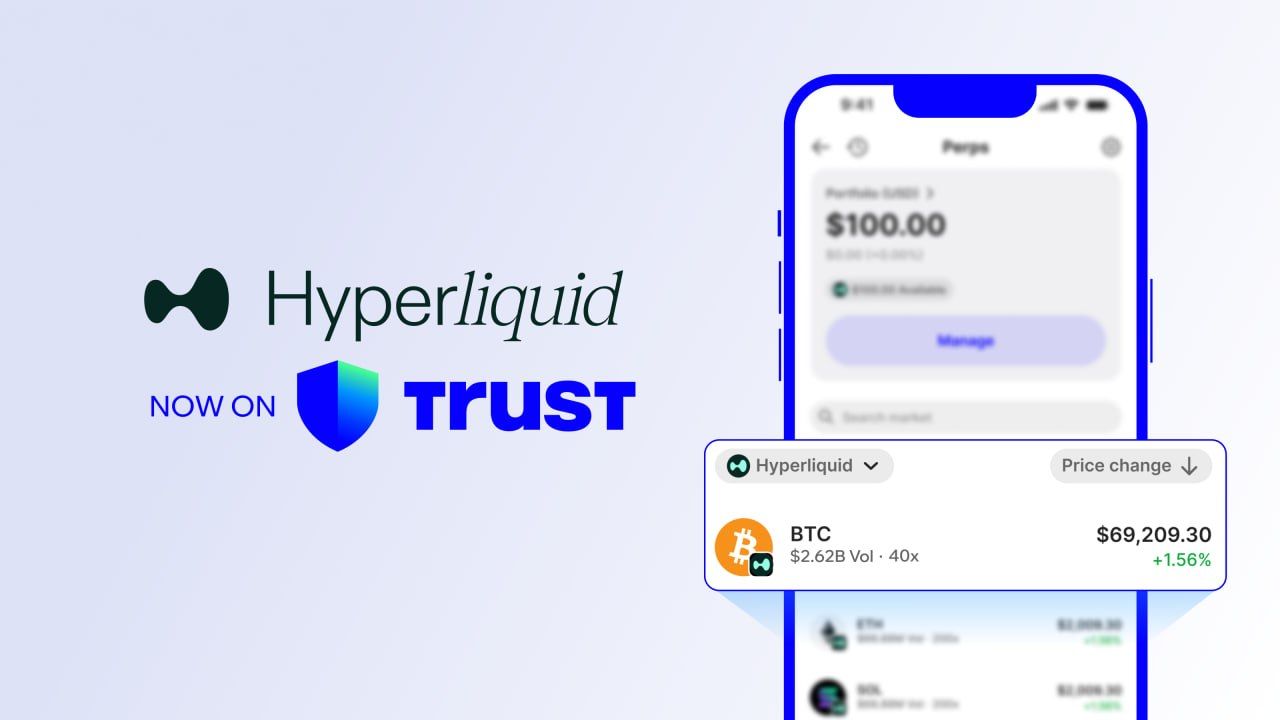
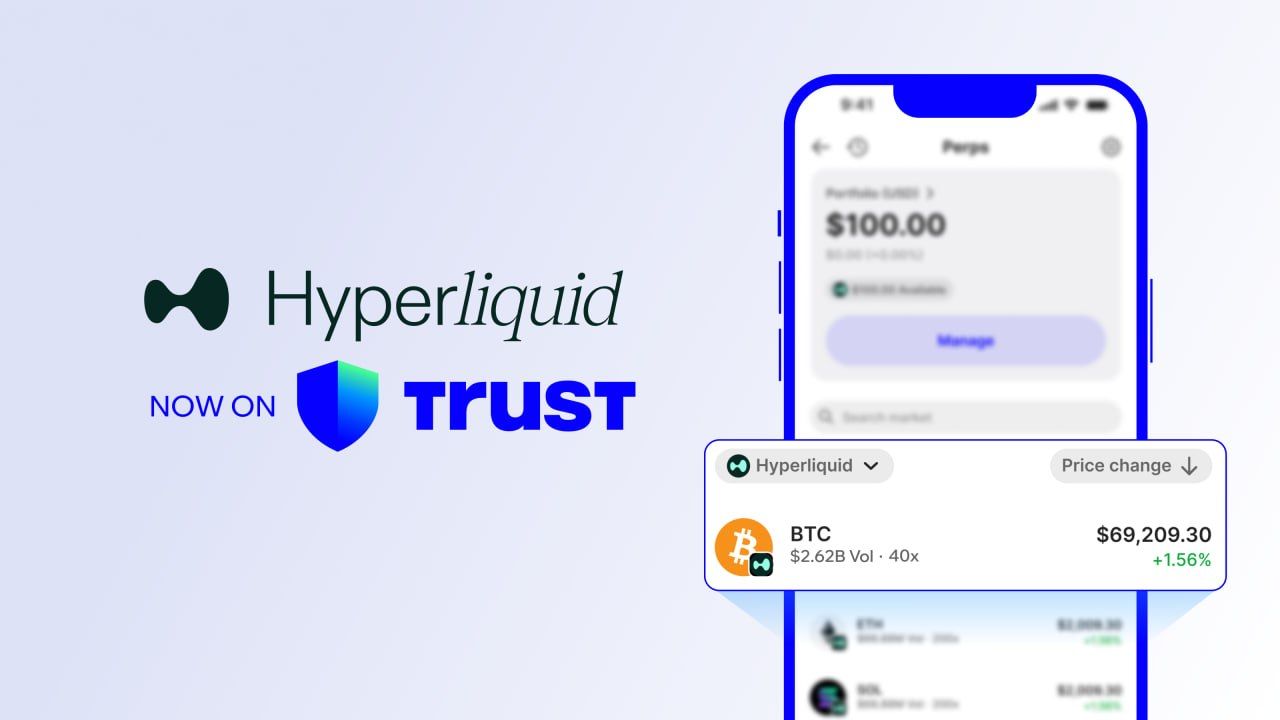
Trust Wallet, one of the world’s leading self-custody crypto wallets with over 220 million downloads, has integrated Hyperliquid, a high-performance decentralized blockchain that has executed over $4 trillion in trading volume, giving active traders deeper liquidity, more markets, and faster execution, all without leaving the app.
Crypto traders are increasingly demanding tighter spreads, deeper liquidity, and a wider range of markets. Additionally, perp trading has long been dominated by desktop-first platforms. With Hyperliquid now available alongside Trust Wallet’s existing perp providers, serious traders have everything they need in one place, i.e. spot, perps, and asset breadth, including real-world assets (RWAs), without switching platforms.
The integration also opens a new category of markets for Trust Wallet users. Hyperliquid offers perpetual contracts – agreements to speculate on an asset’s price movement using leverage, without holding the asset itself – on real-world assets, including oil, precious metals, and equities (including the S&P 500). RWAs recently passed more than $2B in open interest on Hyperliquid, reflecting surging demand from traders who want on-chain exposure to traditional asset classes without touching a brokerage account.
“Perp traders have been telling us what they need; deeper liquidity, tighter spreads, more markets,” said Felix Fan, CEO of Trust Wallet. “This integration with Hyperliquid is about becoming the wallet serious traders want to stay in. Everything you need to trade, hold, and control your assets – in one place.”
Trust Wallet Perps with Hyperliquid is available now. Users can access the full range of Hyperliquid markets, including RWA perpetuals for oil and precious metals, directly through the Trust Wallet app. Perpetual trading involves leverage and carries significant risk; users should review all relevant disclosures before trading.
*Trust Wallet Perps with Hyperliquid is not available to users in the following countries.
“GB”, “US”, “HK”, “AU”, “AT”, “BE”, “BG”, “CA”, “CY”, “CZ”, “DK”, “EE”, “FI”, “FR”, “DE”, “GR”, “HU”, “HR”, “IS”, “IE”, “IT”, “LV”, “LI”, “LT”, “LU”, “MT”, “NL”, “NO”, “PL”, “PT”, “RO”, “SK”, “SI”, “ES”, “SE”
This press release does not constitute a financial promotion directed at UK consumers.
About Trust Wallet
Trust Wallet is the secure, self-custody Web3 wallet and gateway for people who want to fully own, control, and leverage the power of their digital assets. From beginners to experienced users, Trust Wallet makes it easier, safer, and convenient for millions of people around the world to experience Web3, access dApps securely, store and manage their crypto and NFTs, as well as buy, sell, and stake crypto to earn rewards — all in one place and without limits.
About Hyperliquid
Hyperliquid is a decentralized layer one blockchain best known for perpetual futures and spot trading. It is the largest and most liquid decentralized exchange, with support for crypto and real-world assets, such as oil and precious metals. In addition, the ecosystem supports borrowing, lending, and a full-fledged EVM.
The post Trust Wallet Brings the Perp DEX War to Mobile With Hyperliquid Integration appeared first on BeInCrypto.

NYSE Arca submitted a proposed amendment to Rule 8.201-E to the SEC on April 27, naming XRP alongside Bitcoin, Ethereum, and Solana as eligible assets for commodity-based trust shares, in a legally reviewed filing that requires trusts to hold at least 85% of net asset value in qualifying digital assets.
Summary
- The filing does not formally classify XRP as a commodity under federal law, but names it as an example of an eligible asset under the exchange’s updated generic listing standards for commodity-based trust products.
- Qualifying assets are those that underlie futures contracts traded on designated markets for at least six months and are associated with existing exchange-traded products, a bar Bitcoin, Ethereum, Solana, and XRP all meet.
- The SEC has opened the proposal for public comment and can approve, reject, or open further proceedings, with the comment window expected to run 21 to 45 days from the April 27 notice.
NYSE XRP news landed on April 27 when NYSE Arca submitted a proposed amendment to Rule 8.201-E, the exchange’s generic listing framework for commodity-based trust shares, naming XRP as one of four digital assets eligible for commodity trust products under a new 85% portfolio concentration threshold. The SEC has since opened the proposal for public comment. The filing does not make a formal legal determination classifying XRP as a commodity. It identifies XRP as an example of an asset that could qualify because XRP-based futures contracts have traded on designated markets for more than six months and XRP is already associated with exchange-traded products providing significant market exposure.
NYSE XRP Rule Amendment Sets an 85% Eligibility Threshold for Commodity Trust Listings
As Yahoo Finance reported, the 85% threshold means a trust must hold at least 85% of its net asset value in assets that already satisfy NYSE Arca’s existing eligibility criteria, with up to 15% permitted in non-qualifying holdings. The filing gives a concrete example: a trust holding 95% across Bitcoin, Ethereum, Solana, and XRP would pass, while a trust holding Bitcoin alongside OTC call options on a Bitcoin ETF where the qualifying exposure falls to 71% would fail. Sponsors would be required to monitor the 85% threshold daily and notify NYSE Arca immediately upon falling out of compliance. The filing also explicitly excludes non-fungible assets and collectibles from the commodity definition, closing the generic listing route for those products. The SEC published the filing and invited public comment before issuing any final decision, with the outcome subject to the standard Securities Exchange Act review procedures. As crypto.news reported, XRP was already named as one of 16 digital commodities in the joint SEC and CFTC taxonomy issued on March 17, 2026, making the NYSE Arca filing consistent with and building on that prior regulatory classification rather than establishing a new one.
What the Filing Means for XRP’s Regulatory Standing
The significance of the filing is practical rather than definitional. NYSE Arca naming XRP explicitly in a generic listing standard submitted to the SEC is a legally reviewed institutional action, not analyst commentary. As crypto.news documented, the March 2026 joint SEC-CFTC classification of XRP as a digital commodity already placed it on the same regulatory footing as Bitcoin and Ethereum for purposes of exchange-traded product approvals and derivatives oversight, with Coinbase subsequently filing to launch Trade at Settlement for XRP futures on May 1 in direct response to that commodity status. The NYSE Arca amendment extends that framework by embedding XRP into the exchange’s generic listing standards for commodity trust products, which compresses the timeline for future XRP-linked trust product approvals to the same streamlined track that Bitcoin and Ethereum commodity trust products now use.
How This Fits Into the Broader XRP Institutional Infrastructure Build
As crypto.news tracked, T. Rowe Price amended its Active Crypto ETF filing on April 29, naming XRP alongside Bitcoin, Ethereum, and Solana as potential holdings in a fund targeting an SEC-listed launch very soon, with Bloomberg ETF analyst Eric Balchunas describing the filing as having reached its third amendment with a launch “likely very soon.” The combination of the March 17 joint commodity taxonomy, the NYSE Arca Rule 8.201-E amendment, the Coinbase TAS futures launch, and the T. Rowe Price filing represents four separate institutional layers all treating XRP as a commodity-grade asset within a three-week window, each building on the prior action without any single event constituting a definitive Congressional classification under the CLARITY Act, which would convert the current regulatory treatment into permanent federal law.
The NYSE Arca proposal is under review by the SEC with public comment open. The filing’s formal effect on XRP’s commodity classification depends on whether the CLARITY Act passes in May, which would convert the current regulatory treatment into binding federal statute.


Issuer-Sponsored Tokens enable direct equity ownership in token form, rather than synthetic wrappers sitting on top of underlying shares.
Tokenization platform Securitize and Computershare, one of the world’s largest transfer agents, announced an agreement on Wednesday to enable U.S.-listed issuers to bring their equity onchain through a new construct called Issuer-Sponsored Tokens (ISTs).
Under the deal, participating issuers can include ISTs as part of their issued capital alongside existing shares, including those held in the Direct Registration System (DRS). Computershare will serve as transfer agent for the tokenized holdings, processing corporate actions for ISTs in parallel with directly registered positions, according to a press release.
Crucially, ISTs are not derivative wrappers. “ISTs do not rely on derivative tokens that sit on top of underlying shares, nor do they alter any underlying equity,” said Securitize co-founder and CEO Carlos Domingo, framing the structure as a way to create direct equity ownership in token form.
That distinction matters in a market where most existing tokenized equity products, from Backed’s xStocks to Dinari’s dShares, rely on synthetic representations backed 1:1 by deposited certificates rather than native onchain issuance. Nasdaq’s own tokenized equities filing flagged the gap between wrapper-style products and tokens that confer the same shareholder rights as traditional stock.
Computershare, listed in Australia under the ticker CPU, services more than 25,000 private and public companies globally and operates in every major financial market. Ann Bowering, CEO of Issuer Services for Computershare North America, said the structure was designed “to operate within the existing regulatory environment, maintaining the independence and oversight that issuers and regulators expect from a transfer agent.”
The agreement extends a string of recent infrastructure wins for Securitize, which has tokenized over $4 billion in real-world assets, including BlackRock’s BUIDL fund. Last month, Securitize was named the first digital transfer agent eligible to mint blockchain-based securities on the New York Stock Exchange’s upcoming Digital Trading Platform, and earlier in April, it partnered with Nasdaq-listed Currenc Group to tokenize the company’s ordinary shares on Ethereum and Solana.
RWA Boom
The Computershare deal lands as the tokenized RWA market projects sharply higher growth. A joint Keyrock-Securitize report published earlier this month forecast that the distributed RWA market will expand from roughly $29 billion today to $400 billion by 2030 as a base case, with equities highlighted as one of five asset classes positioned to scale once liquidity, regulation, and infrastructure converge.
Securitize itself is on track to become a public company through a previously announced business combination with Cantor Equity Partners II, with the combined entity expected to list under ticker SECZ in the first half of this year.
This article was written with the assistance of AI workflows. All our stories are curated, edited and fact-checked by a human.
Crypto World
Robinhood (HOOD), Coinbase (COIN) plunge in crypto stock rout, outpacing bitcoin (BTC) decline


Crypto-related stocks are tumbling across the board on Wednesday with exchanges taking the biggest hit after Robinhood’s earnings miss and escalating tensions between Iran and the U.S.
Robinhood (HOOD), a crypto-friendly digital broker, plunged nearly 14% after it reported late Tuesday an almost 47% decline in crypto-related revenue in the first quarter.
The weakness spilled across the sector as investors took it as a signal for lackluster crypto trading demand. U.S. crypto exchange Coinbase (COIN) and institutional-focused exchange Bullish (BLSH), CoinDesk’s parent company, both fell 8%. Gemini (GEMI), the embattled exchange business of billionaire investors Cameron and Tyler Winklevoss, dropped 6%.
Bitcoin miners Riot Platforms (RIOT) and MARA (MARA) also slid 6%-7%. Strategy (MSTR), the largest corporate bitcoin owner, was down 4%.
The declines were more pronounced than for crypto prices themselves, as bitcoin edged below $76,000, down 0.5% over the past 24 hours.
Adding to the pressure was President Donald Trump reportedly rejecting an Iranian proposal to end the naval blockade and open the Strait of Hormuz, a critical global oil shipping route.
The Iranian regime’s proposal involved reopening the strait while delaying nuclear negotiations, but the Trump opted to maintain its naval blockade until a broader nuclear deal is reached, Axios reported.
The news sent oil prices surging 6%, with the West Texas Intermediate topping $100 a barrel on concerns that energy supply chains in the Middle East could remain under pressure.
U.S. stocks, meanwhile, are posting just modest losses, with the Nasdaq down 0.35%.
The afternoon session promises more catalysts, the first being the Federal Reserve meeting results. No change in rates is what will be Jerome Powell’s final meeting as chairman. Market participants, however, will be looking to the accompanying policy statement and Powell’s post-meeting press conference for clues about the future direction.
After the U.S. market closes, a slew of big tech firms — including Alphabet (GOOG), Amazon (AMZN), Meta (META) and Microsoft (MSFT)— will report earnings. Traders will eye the firms’ artificial intelligence-related spending as a gauge for the AI trade and infrastructure buildout.
Crypto World
XRP News Today: Ripple’s European Boss Just Said the U.S. Is Falling Behind: Is Europe Now XRP’s Real Home?
Ripple’s own UK leadership is publicly questioning whether America still belongs in the conversation. The gap between European operational maturity and U.S. regulatory paralysis is widening fast.
What that divergence means for XRP’s next price move is the question every holder should be asking right now.
Ripple’s Managing Director for the UK and Europe, Cassie Craddock, made headlines this week after publicly declaring that European XRP adoption has graduated from pilot projects to “real and scalable operational production.”
Speaking within the framework of an ecosystem conference in Las Vegas, Craddock pointed to Ripple Custody deployments at top-tier institutions, BBVA and DZ Bank among them, as proof that Europe now owns the custody infrastructure layer that makes enterprise digital asset strategy viable.
“Digital asset adoption has moved from pilot to production. In my view, nowhere is that clearer than in Europe,” she posted on X. Meanwhile, U.S. legislative progress continues to stall, with political friction blocking even basic crypto framework bills on Capitol Hill.
The institutional divergence is real. The price chart, however, tells a more complicated story.
Discover: The best pre-launch token sales
Can XRP Price Break $1.50 Resistance Or Is a Pullback Loading?
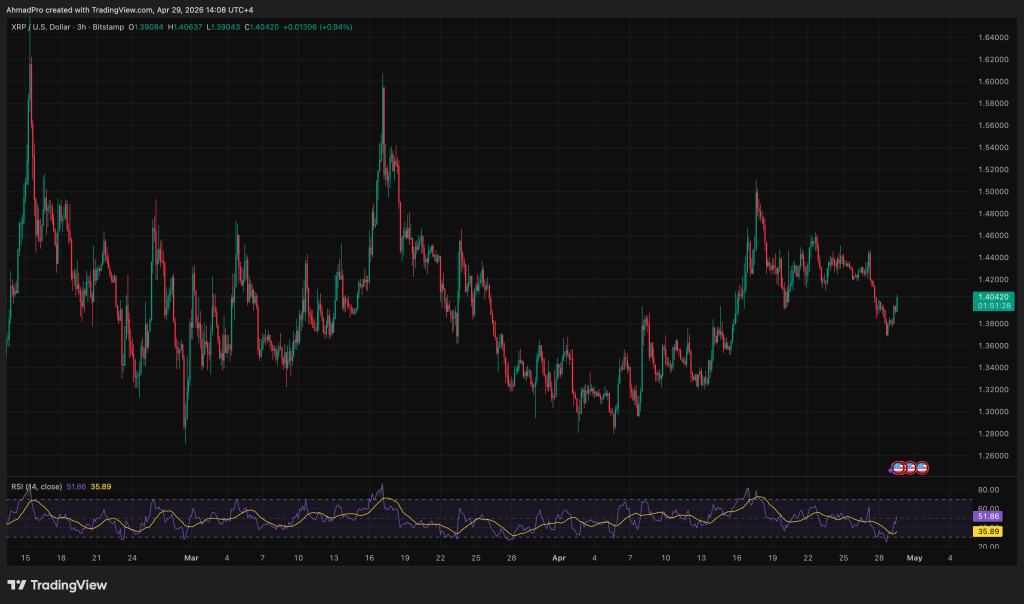
XRP is right under $1.50 again, and that level keeps acting like a ceiling, even with strong volume behind it, so this is still setup, not breakout.
The structure underneath is decent, though. $1.40 is holding as support, and the RSI points more toward accumulation than distribution, suggesting bigger players are positioning, not exiting.
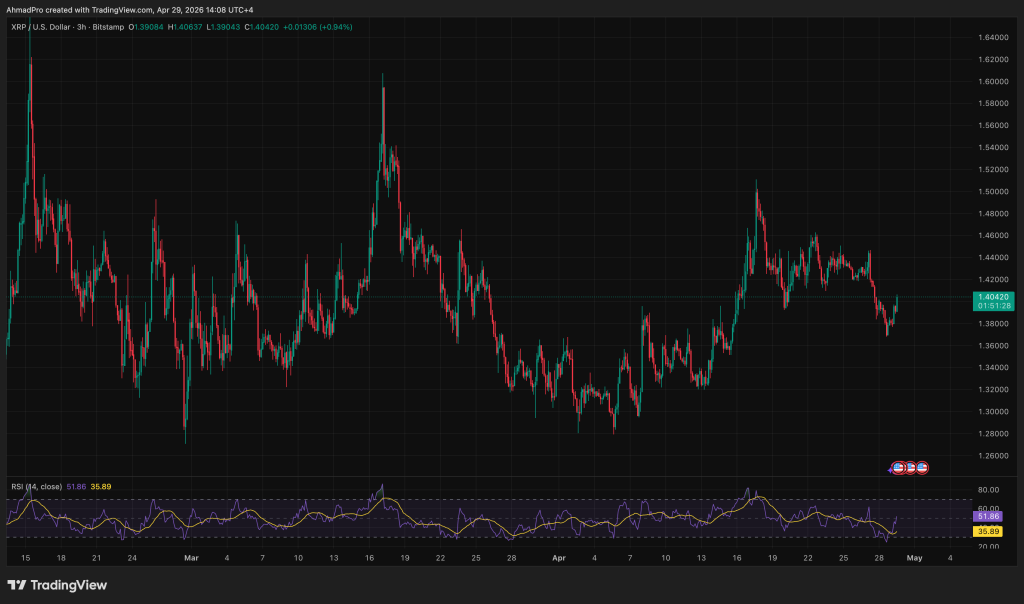
$1.50 is the trigger. If XRP breaks and holds above it on a weekly close, that is where momentum builds and opens a move toward $1.90–$2.00.
$1.40 is the support keeping the structure intact in the short term. $1.25 is the invalidation. If that breaks, the whole bullish setup fades.
Most likely for now, it keeps ranging between $1.35 and $1.50 while the market waits for a catalyst.
Discover: The best crypto to diversify your portfolio with
If Bull Market is Coming, Memecoins Like Maxi Doge Usually Runs First
XRP’s structure looks solid, but at this size, the upside is naturally capped. Even strong momentum is unlikely to deliver the kind of outsized returns traders look for when they want real asymmetry.
That is why some attention shifts earlier in the cycle, where the move has not happened yet.
Maxi Doge is positioning right in that space, leaning fully into the high-leverage trading culture and meme narrative. The presale is around $0.0002815 with roughly $4.76M raised, showing steady demand and approaching levels where visibility and momentum tend to increase.
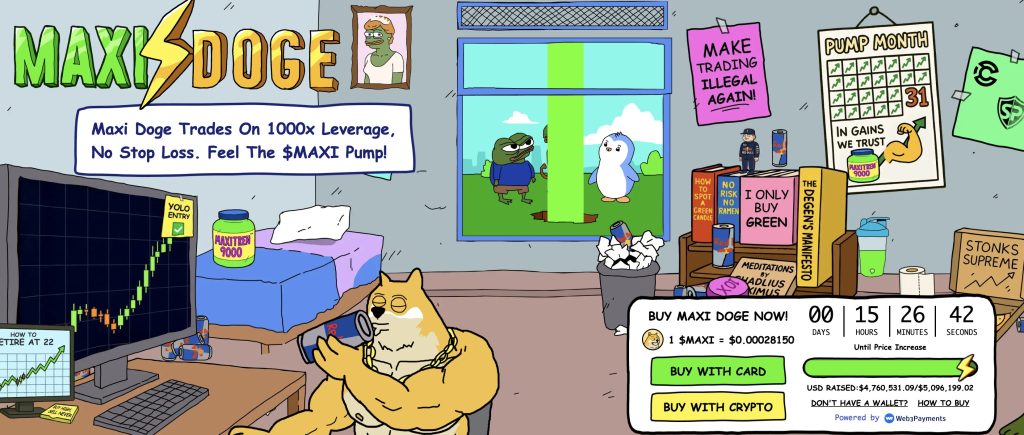
The setup is built for engagement, with staking, trading competitions, and a treasury aimed at supporting liquidity and growth, all wrapped in aggressive, viral branding that fits the current cycle.
But it is still a presale, and that comes with real trade-offs. Liquidity is not guaranteed, execution matters, and sentiment can shift quickly after launch.
So the idea is simple, XRP offers stability with more measured upside, while something like Maxi Doge offers earlier positioning with higher potential, but also higher risk.
The post XRP News Today: Ripple’s European Boss Just Said the U.S. Is Falling Behind: Is Europe Now XRP’s Real Home? appeared first on Cryptonews.
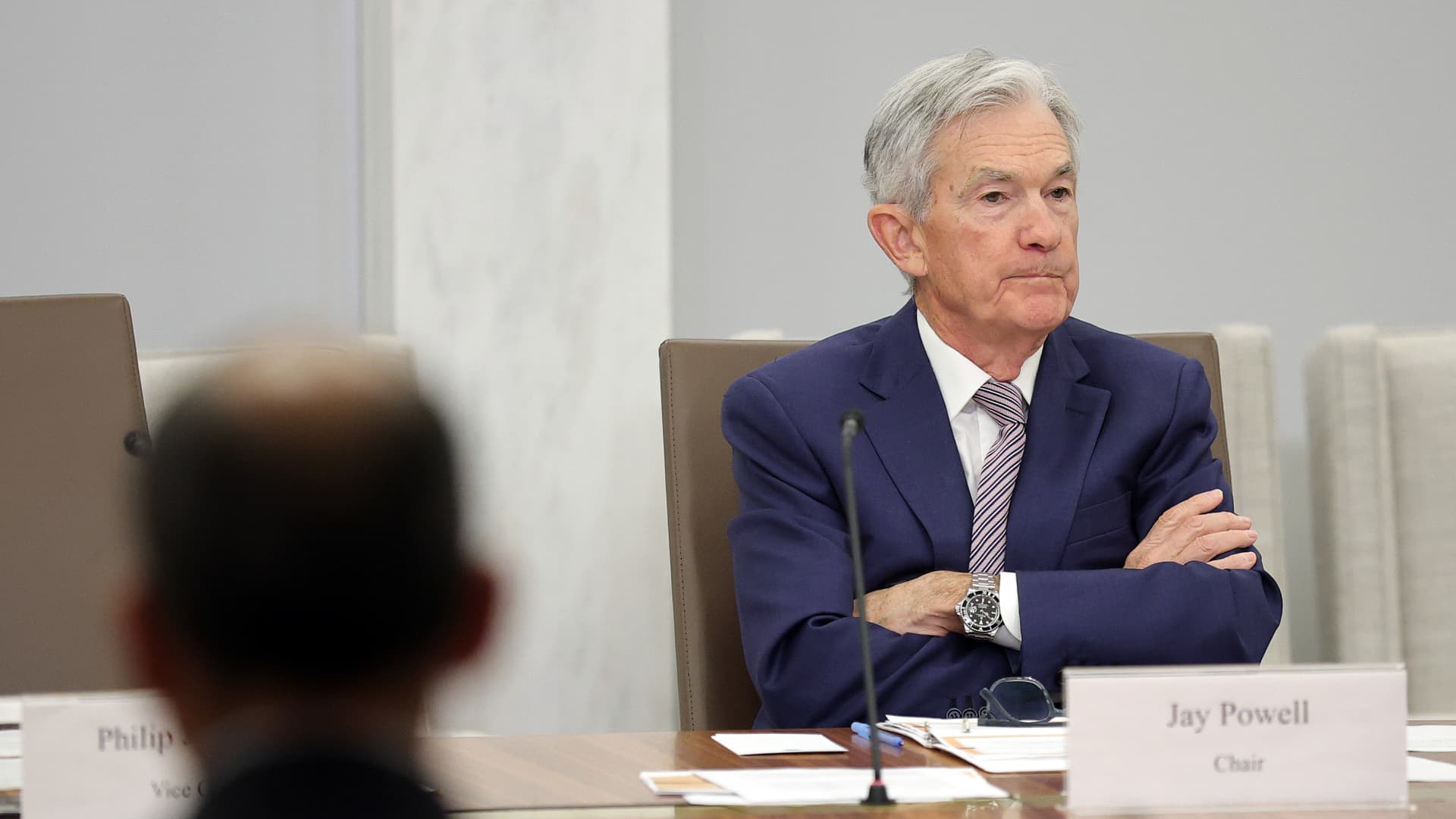
Federal Reserve Chair Jerome Powell participates in a board meeting at the Federal Reserve on March 19, 2026 in Washington, DC.
Kevin Dietsch | Getty Images
Federal Reserve Chairman Jerome Powell is likely to stay on for a short time after his term as head of the central bank is over, bettors on prediction markets platform Kalshi estimate.
Bettors place a 30% chance Powell resigns as a member of the Fed Board of Governors by June. However, bettors are more confident that he does that by August or the end of the year, with 66% and 81% odds, respectively.
Powell said after the March Federal Open Market Committee meeting he would not step down as a governor until the criminal inquiry into him by the Department of Justice was resolved. On Friday, the justice department dropped its probe into Powell.
When that happened, odds that Powell would resign by June surged to nearly 54.5%, but they have fallen in the days since.
However, Polymarket bettors see Powell stepping aside imminently. They give it an 87% chance he steps down between May 15 and May 22.
Powell is set to address reporters after the Fed meeting on Wednesday, likely his last as Fed chief — so long as President Donald Trump’s nominee, Kevin Warsh, receives senate approval by the next meeting in the middle of June. Powell is expected to field questions about his plans at the news conference, which is slated for 2:30 p.m. ET.
Warsh’s nomination advanced through the Senate Banking Committee on Tuesday morning.
Trump and Powell have clashed since the president’s second term began last year. The White House has been frustrated that the Fed hasn’t cut interest rates as quickly or as sharply as the Trump administration would like. Some observers worry Trump selected Warsh to push his perspective on rates, though Warsh has pushed back on those concerns, saying he believes in the independence of the Fed.
If Powell doesn’t resign until August, he would stay on for two more meetings, the one in June and another in late July. Powell’s term as a Governor lasts until 2028.
Disclosure: CNBC and Kalshi have a commercial relationship that includes a CNBC minority investment.
Markets shift and headlines fade, but the core principles of building long-term wealth remain constant. Join us for our third CNBC Pro LIVE, where investors of all backgrounds – from financial professionals to everyday individuals – come together to cut through the noise and gain actionable strategies for smarter, more disciplined investing. No matter where you’re starting from, you’ll leave with clearer thinking, stronger strategies. Enter your email here to get a discount code

Polymarket, the prediction markets platform, has pushed back against a flare of reports alleging a data breach after a dark web post claimed to expose private user details. A hacker using the handle “xorcat” and cybersecurity accounts circulating on X claimed to have stolen more than 300,000 records, including 10,000 full profiles with names, profile images, proxy wallets, and base addresses. Polymarket characterized the allegations as “complete and utter nonsense,” arguing that the information cited is already publicly available.
The controversy emerged as the crypto security community and on-chain markets monitor a wave of hacks and data exposure last month. Hackers and misconfigurations have contributed to a broad set of incidents, with Hacken reporting that Web3 projects lost roughly $482 million in hacks and scams across 44 events in the first quarter of 2026. That backdrop has heightened scrutiny of how much data is exposed by on-chain and API-accessible systems and what constitutes a breach versus an auditable public data surface.
Polymarket’s stance was reinforced by a direct rebuttal on X, where the team said the breach claims were “complete and utter nonsense” and noted that the allegedly stolen data is information already accessible online. In another post, Polymarket emphasized the on-chain and publicly auditable nature of its data: “Part of the beauty of being on chain is all our data is publicly auditable, this is a feature, not a bug. No data was leaked, it’s accessible via our public endpoints and on-chain data. Instead of paying for the data, you can access it for free via our APIs.”
The hacker’s claim centered on breaches through allegedly compromised API endpoints and on-chain data, with assertions that undocumented API endpoints, pagination bypass, and CORS misconfigurations on Polymarket’s Gamma and CLOB APIs were exploited. The attacker also suggested plans to release more data from other prediction markets in the coming days.
Several security researchers expressed skepticism about the breach story. Vladimir S., a threat researcher and chief security officer at Legalblock, cautioned that the evidence suggested data was parsed rather than leaked in a true breach, describing the scenario as unlikely to reflect a real DB compromise.
Key takeaways
- The incident centers on a claim of data theft from Polymarket, which the operator rejects as untrue, asserting that the reported data is publicly accessible and already published.
- Polymarket maintains that its data remains on-chain and publicly auditable, emphasizing that developers and users can access information for free via public APIs.
- The platform counters a narrative that there was no bug bounty program, noting a live program that began on April 16 and has since received hundreds of reports—raising questions about the timing and scope of the alleged data exposure.
- Industry context matters: Hackers and misconfigurations contributed to a broad wave of crypto security incidents in Q1 2026, underscoring the sector’s ongoing vulnerability to data leakage and access-control flaws.
- Skeptics argue the claim could reflect data parsing or misinterpretation rather than a true breach, highlighting the tension between on-chain transparency and sensitive, user-level data exposure.
Polymarket’s response and the data-access debate
At the center of the dispute is Polymarket’s assertion that there was no data breach and that the information cited by the hacker is already public. In posts observed on X, the platform argued that publicly accessible API endpoints and the availability of on-chain data mean that users and developers can retrieve the same data without an intrusion. The company’s position aligns with a broader debate in crypto: when on-chain activity is inherently public and auditable, at what point does exposure become a breach rather than a design characteristic of the architecture?
The exchange also pointed to its API strategy, suggesting that the data being claimed as stolen is accessible to anyone via its APIs rather than representing a security compromise. This framing has drawn mixed reactions from the security community, with some experts acknowledging the public nature of certain data while others caution that exposing sensitive user metadata—especially combined with wallet addresses and profile identifiers—could raise privacy concerns even if technically public.
Beyond the specifics of Polymarket, the episode touches on a longer-running issue in crypto infrastructure: how to balance openness and auditability with the protection of user privacy. On-chain data and API-based access can enable rapid verification and transparency, but they may also broaden the surface area for data collection and potential misuse if not properly controlled or anonymized. The ongoing discussion underscores why platforms must clearly delineate what data is publicly visible versus what is considered sensitive or restricted.
Bug bounty program and security posture
A central counterpoint to the “no bug bounty” narrative is Polymarket’s stated bug bounty program. The platform indicates a live initiative that started on April 16 and has since collected hundreds of reports—446, as of the most recent update. This cadence suggests an active effort to identify and remediate vulnerabilities, even as the current episode unfolds in the public eye. The existence of a formal bug bounty program can be a signal of ongoing security maturity, but it also invites scrutiny about the scope of bug reporting and the responsiveness of fixes in a rapidly evolving threat environment.
Industry observers will be watching whether new vulnerabilities or misconfigurations continue to surface in Polymarket’s API layers or if the current episode remains limited to a misinterpretation of publicly available data. The interaction between bug bounty activity, disclosure timelines, and incident response will offer a read on how quickly the platform can recover trust if any genuine issues emerge.
Industry backdrop: security incidents and on-chain transparency
The broader crypto security landscape adds context to the Polymarket episode. Hackers and misconfigurations have pushed Web3 security to the forefront, with Q1 2026 reporting notable losses across numerous incidents. While the total losses and incident counts vary by source, the trend illustrates that even established markets and prediction platforms remain attractive targets for attackers seeking a data or financial edge.
Analysts note that the public nature of on-chain data can be a double-edged sword: it enables rapid verification and accountability but can also complicate privacy considerations if user-identifying information becomes intertwined with transparent transaction data. In this environment, platforms that champion openness must also ensure robust access controls, careful data minimization, and clear user-facing privacy policies to navigate evolving regulatory and market expectations.
As the narrative around Polymarket evolves, observers will want to see how the platform responds to ongoing scrutiny, whether it publishes more technical details about its API configurations and security controls, and how it communicates any future findings from bug-bounty disclosures. Reports from security researchers, exchange operators, and independent researchers will continue to shape market perceptions about the reliability of data on popular prediction platforms.
In reporting this week, Cointelegraph drew on Hacken’s assessment of the period’s security landscape, underscoring that the first quarter of 2026 saw a significant volume of exploits across the Web3 space. The confluence of public data accessibility and high-profile hack narratives makes clear why investors and builders are paying closer attention to how platforms handle data exposure, API security, and incident response in real time.
Source: Polymarket posts on X, cybersecurity researchers’ commentary, and industry data cited by Hacken and Cointelegraph.
Polymarket is committed to independent, transparent journalism. This news article adheres to Cointelegraph’s Editorial Policy and aims to provide accurate and timely information. Readers are encouraged to verify information independently.
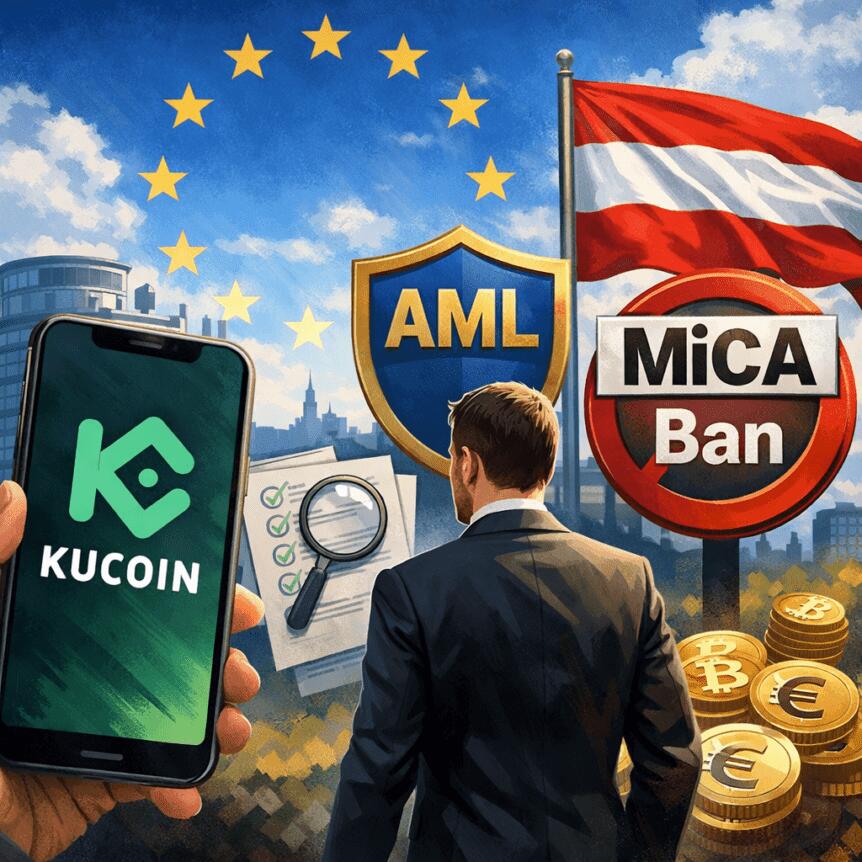
KuCoin EU, the MiCA-licensed arm of the exchange operating within Austria, has appointed Carmen Kleinhans as Anti-Money Laundering (AML) officer and expanded its Vienna-based compliance team with two deputy AML officers drawn from former Austrian regulators and bank compliance leadership. The staffing overhaul comes weeks after Austria’s Financial Market Authority (FMA) barred KuCoin EU from onboarding new clients and signing new contracts, citing deficiencies in key AML/CTF and sanctions controls. The move underscores a broader regulatory push in the European Union toward stronger governance, risk management, and regulatory engagement as MiCA supervision tightens.
According to Cointelegraph, the FMA’s decision reflected concerns that KuCoin EU did not have adequately staffed control functions, a finding that triggered the onboarding ban while regulators assessed the exchange’s readiness to operate under the MiCA framework. The hiring spree in Vienna is meant to align KuCoin EU with conventional financial-services compliance expectations and to bolster institutional credibility with regulators and banking partners alike.
Key takeaways
- KuCoin EU appoints Carmen Kleinhans as AML officer and adds two deputy AML officers sourced from Austrian regulatory and banking compliance backgrounds, expanding the exchange’s governance and risk-capability footprint in Vienna.
- The personnel move follows the FMA’s February action prohibiting KuCoin EU from onboarding new clients or signing new contracts, citing gaps in AML/CTF and sanctions staffing.
- The broader crypto enforcement environment is sharpening its focus on governance and controls, with regulators increasingly willing to suspend or constrain operations over organizational deficiencies rather than solely pursuing technical rule breaches.
- Cross-border actions against KuCoin and its parent entity illustrate the growing enforcement risk profile for crypto firms, spanning the United States, the Middle East, and other jurisdictions.
- The effectiveness of KuCoin EU’s restored control framework will depend on the FMA’s assessment of whether the new governance and risk-management functions are fully operational and compliant under Austrian authorization and MiCA supervision.
Regulatory backdrop: MiCA enforcement and the FMA action
The European Union’s MiCA framework places substantial emphasis on governance, risk management, AML/CTF controls, sanctions screening, and licensing readiness for crypto-asset service providers. In this context, national supervisors retain substantial oversight authority to ensure that licensees meet organizational and internal-control standards necessary for ongoing operations. Austria’s FMA acted in February to prevent KuCoin EU from onboarding new clients or entering into new contracts, a move that regulators described as necessary to address identified staffing gaps in critical compliance roles. The decision signals that, under MiCA, regulators are prepared to take tangible steps to curb operations until governance functions are demonstrably sound—even when the technical aspects of a platform remain intact.
For market participants and institutional observers, the FMA action illustrates a shift toward governance-centered enforcement. Rather than focusing solely on whether a platform offers a particular token or security, authorities are prioritizing whether firms maintain robust, verifiable control environments capable of preventing money movement that could finance illicit activity. This aligns with a broader, multijurisdictional trend toward tightening AML/CTF regimes in crypto, with regulators scrutinizing corporate structure, compliance staffing, risk-management processes, and formal regulatory engagement capabilities as prerequisites for continued operation.
KuCoin EU governance expansion: leadership and scope
The newly announced leadership changes place a seat at the helm of KuCoin EU’s AML program with Carmen Kleinhans, who will lead the entity’s AML, CTF, and sanctions controls. She will be supported by two deputy AML officers—professionals with backgrounds in Austrian regulatory authorities and banking compliance leadership—who will contribute to enterprise-wide risk management and ongoing regulatory engagement. The collective mandate encompasses not only the traditional AML/CTF and sanctions screening functions but also governance oversight across the organization and comprehensive risk reporting to Austrian authorities and, by extension, MiCA supervisory structures.
These hires are intended to rectify the staffing gaps cited by the FMA and to bring KuCoin EU into closer alignment with established financial-services compliance standards. By strengthening governance and control frameworks, KuCoin aims to reduce regulatory uncertainty and improve collaboration with supervisors, auditors, and prospective banking partners. The emphasis on enterprise-wide risk management signals a holistic approach to regulatory compliance that goes beyond ticking technical compliance boxes to address organizational design, reporting lines, and oversight mechanisms that influence day-to-day operations and strategic decision-making.
Enforcement landscape: trends shaping risk for global crypto firms
Enforcement in the crypto sector has increasingly prioritized governance and controls. A regulatory-compliance narrative supported by independent audits and enforcement data shows that firms are being penalized for weaknesses in anti-financial-crime controls as much as for securities or licensing missteps. A CertiK report published on a recent Tuesday highlighted that KuCoin and OKX were among exchanges facing some of the largest AML-related penalties in 2025, underscoring a shift in focus toward financial-crime prevention and control deficiencies rather than solely toward securities-law concerns.
Beyond the EU-specific actions, KuCoin has faced broader regulatory actions across other jurisdictions that amplify the systemic risk profile for cross-border crypto operators. In January 2025, KuCoin agreed to pay nearly $300 million and exit the U.S. market for two years in a criminal resolution related to unlicensed money transmission and AML failures, according to The Wall Street Journal. Later in March 2025, KuCoin’s parent company agreed to pay a $500,000 civil penalty to settle a CFTC action alleging it operated an unregistered offshore commodities exchange. In the same month, Dubai’s Virtual Assets Regulatory Authority issued a warning over allegedly unlicensed activity in the emirate. Taken together, these actions illustrate a broad, multi-jurisdictional enforcement posture that heightens regulatory risk for crypto firms pursuing global operations.
Whether KuCoin EU’s expanded compliance cadre will reconcile the Austrian authorization with MiCA expectations remains contingent on the FMA’s assessment of whether the new control functions have been fully and suitably restored. The timing of such an assessment will influence KuCoin’s ability to re-open or expand its European footprint under the MiCA regime, and could affect licensing timelines, bank onboarding, and ongoing regulatory reporting obligations. Cointelegraph reached out to KuCoin EU for comment, but did not receive a response by publication, underscoring the sensitivity and ongoing nature of regulatory reconciliations in this case.
These developments have practical implications for financial institutions, exchanges, and investors operating across Europe and beyond. For crypto firms, the case reinforces the imperative to institutionalize governance, formalize risk-management frameworks, and maintain ongoing regulatory dialogue as prerequisites for licensure and operational continuity. For regulators, the KuCoin EU episode exemplifies how MiCA and national supervisory regimes are converging toward governance-focused enforcement that scrutinizes organizational design, staff competence, and cross-border compliance programs as core risk-mitigating levers.
Closing perspective
Looking ahead, the key question is whether KuCoin EU’s strengthened compliance structure will satisfy the FMA and enable a durable path to reauthorization under MiCA. In a regulatory environment where governance and controls are increasingly seen as central to operational legitimacy, the Vienna-based initiative represents a critical test case for how crypto firms translate high-level regulatory expectations into enforceable, day-to-day governance practices across multi-jurisdictional operations.

Key Takeaways
- Eli Lilly delivers Q1 2026 financial results Thursday morning before trading begins
- Wall Street projects 36.8% year-over-year revenue expansion
- Previous quarter saw Lilly generate $19.29 billion in sales, marking a 42.6% annual increase
- Revenue projections have received upward adjustments during the past month
- LLY shares have declined 1.5% monthly while pharmaceutical competitors gained 10.8% average
Eli Lilly delivers its first-quarter 2026 financial performance Thursday morning before the market opens. Investors will scrutinize whether the pharmaceutical giant can sustain its remarkable expansion trajectory.
During the previous reporting period, the company generated $19.29 billion in total sales, representing a robust 42.6% annual increase. Those figures exceeded Wall Street’s projections and included forward guidance that similarly surpassed analyst expectations.
For the upcoming quarter, financial analysts anticipate revenue expansion of 36.8% compared to the prior year. While this represents a moderation from the 45.2% growth achieved during the comparable period last year, it still indicates substantial momentum.
It’s important to recognize that Lilly has fallen short of Wall Street’s revenue projections on multiple occasions during the previous 24 months. Consequently, despite rising forecasts, exceeding expectations remains uncertain.
Analyst perspectives have trended more optimistic recently. Revenue projections have predominantly received upward modifications throughout the past 30 days, indicating strengthening confidence approaching the release.
Lilly represents the initial major pharmaceutical company reporting during this earnings cycle. Therefore, there aren’t yet any comparable peer results to provide context.
Pharmaceutical Sector Momentum Strong — LLY Lagging
The wider pharmaceutical industry has experienced favorable performance recently. Competitor stocks have advanced 10.8% on average throughout the past month.
Lilly hasn’t participated in this sector rally. LLY shares have retreated 1.5% during the identical timeframe, positioning Thursday’s announcement as a potentially significant catalyst in either direction.
Investor confidence throughout the pharmaceutical space has remained generally constructive, establishing a supportive environment for Lilly entering the report.
Critical Metrics to Monitor
Revenue growth reaching 36.8% represents the benchmark Wall Street has established. Results surpassing that threshold should generate positive reception.
Full-year outlook guidance will carry equal importance to quarterly headline figures. The previous quarter’s enhanced projections proved instrumental in the stock’s favorable response.
Profitability indicators will also attract significant attention. Lilly’s substantial investments in production facilities and capacity expansion mean margin performance remains a focal point for shareholders.
The pharmaceutical manufacturer has been expanding production capabilities for its GLP-1 medications, which have driven its revenue acceleration throughout recent quarters.
Management commentary regarding supply-demand balance for these treatments will receive careful scrutiny.
Regarding potential headwinds, tariff-related concerns have introduced additional uncertainty throughout the pharmaceutical industry. Whether Lilly provides perspective on this topic during Thursday’s conference call merits attention.
Shares currently show a 1.5% monthly decline while the broader pharmaceutical segment has demonstrated superior performance. This relative underperformance could shift rapidly based on quarterly outcomes.
Financial results arrive Thursday before market open. Consensus revenue expectations point toward 36.8% year-over-year growth, with analyst projections having moved higher heading into the announcement.


Key Takeaways
- Eli Lilly delivers Q1 2026 financial results Thursday prior to market opening
- Wall Street projects 36.8% revenue expansion compared to the prior year
- Previous quarter delivered $19.29 billion in sales, representing 42.6% annual growth
- Upward estimate revisions have dominated the past month
- LLY shares have declined 1.5% in the last 30 days while pharmaceutical competitors gained 10.8% on average
Eli Lilly unveils its first-quarter 2026 financial performance this Thursday morning before trading begins. Market participants are eager to see if the pharmaceutical giant can maintain its remarkable revenue trajectory.
During the previous quarterly report, the company delivered sales totaling $19.29 billion, representing a substantial 42.6% increase from the year-ago period. Those figures exceeded Wall Street projections and included forward guidance that surpassed consensus expectations.
For the upcoming release, the Street is anticipating revenue expansion of 36.8% on a year-over-year basis. While this represents a deceleration from the 45.2% growth registered in the comparable period last year, it still reflects robust performance.
It’s important to recognize that Lilly has fallen short of Street revenue projections on multiple occasions during the previous 24 months. Consequently, despite rising estimates, exceeding expectations remains uncertain.
Analyst outlook has trended more optimistic recently. Revenue forecasts have experienced predominantly upward adjustments throughout the last month, indicating strengthening conviction ahead of the announcement.
Lilly stands as the initial major pharmaceutical company reporting results this earnings cycle. This timing means investors cannot yet gauge industry trends from competitor announcements.
Pharmaceutical Sector Momentum Strong — Except for LLY
The wider pharmaceutical industry has experienced solid performance recently. Competitor stocks have advanced 10.8% on average during the past 30 days.
Lilly has failed to participate in this advance. LLY shares have dropped 1.5% across the identical timeframe, positioning Thursday’s announcement as a potentially significant market-moving event.
Investor attitudes throughout the sector have tilted constructive, establishing a favorable environment for Lilly entering the earnings release.
Critical Metrics for Thursday’s Report
The 36.8% revenue growth benchmark represents the threshold analysts have established. Results surpassing this level should generate positive market reaction.
Full-year projections will carry equal weight to the quarterly revenue figure. The previous quarter’s elevated outlook proved instrumental in driving favorable stock performance.
Profitability measurements will draw significant scrutiny. Lilly’s substantial commitments to manufacturing infrastructure and production capacity mean margin performance remains a central investor concern.
The pharmaceutical company has been expanding manufacturing capabilities for its GLP-1 product portfolio, which has fueled much of its revenue acceleration across recent quarters.
Management commentary regarding supply-demand balance for these medications will attract considerable attention.
On the risk side, tariff-related headwinds have introduced additional uncertainty throughout the pharmaceutical space. Whether company executives address this topic during Thursday’s conference call merits observation.
The shares currently sit 1.5% lower over the trailing month while the broader pharmaceutical cohort has demonstrated superior returns. This relative underperformance could shift rapidly based on Thursday’s results.
Financial results arrive before the opening bell Thursday morning. Revenue consensus projects growth of 36.8% year over year, with analyst forecasts experiencing upward momentum in recent weeks.
Prediction markets are becoming one of the most active onchain applications, with retail users driving most activity even as participation across much of the broader digital asset market remains subdued.
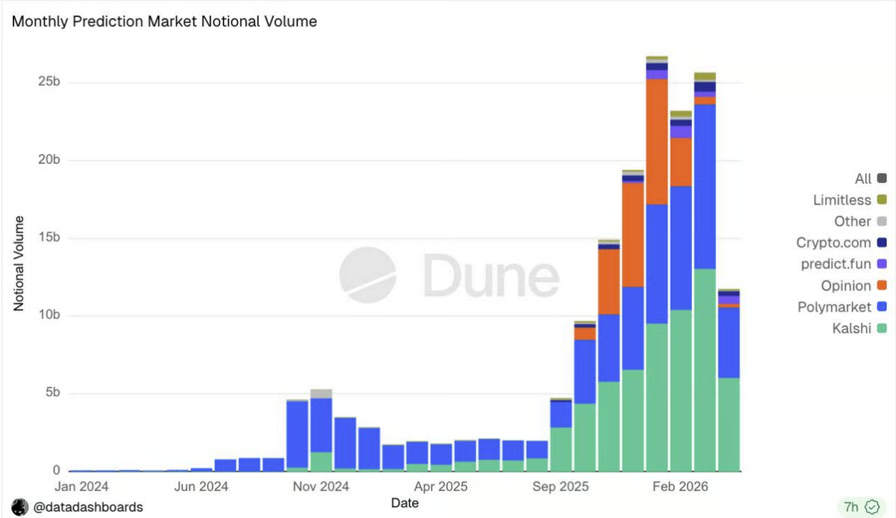
According to a new report by Bitget Wallet and Polymarket, monthly trading volume reached $25.7 billion in March, with more than 80% of users classified as retail, defined as those trading less than $10,000.
The figures are broadly consistent with data from Dune Analytics, which recorded $23.7 billion in March trading volume, up from $1.9 billion a year earlier.
The report points to a broader behavioral shift in how prediction markets are used. Rather than focusing on one-off, high-profile events, users are returning more frequently and engaging across multiple categories. Average active days per user almost quadrupled from 2.5 to 9.9 over the first quarter, indicating deeper and more consistent participation.
Sports emerged as the largest segment, generating $10.1 billion in trading volume during the quarter, driven by a steady availability of global sporting events. Political markets also saw significant activity, totaling $5 billion over the same period.
The findings suggest prediction markets are evolving beyond episodic betting into a more continuous system for tracking real-world developments, with crypto wallets increasingly serving as key access points for users.
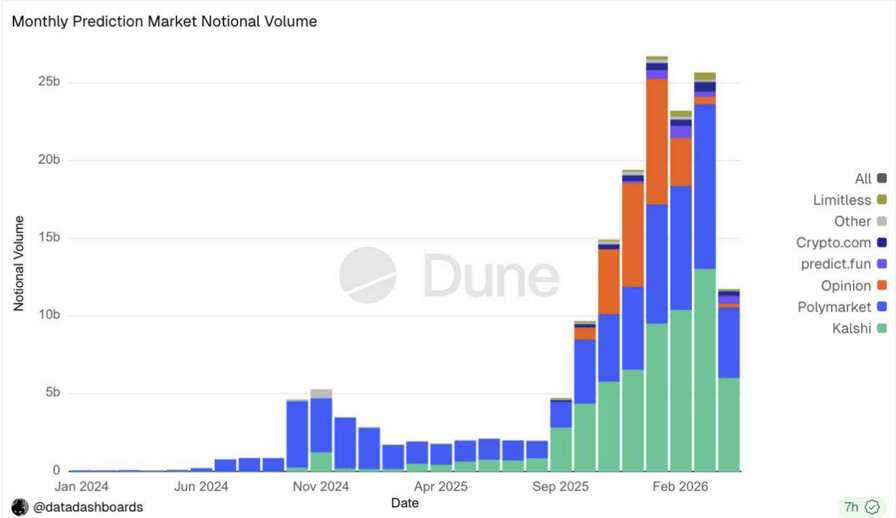
Trading volumes across various prediction markets. Source: Bitget Wallet
Polymarket, one of the largest platforms in the sector, operates on Polygon, allowing users to place onchain bets on real-world outcomes without intermediaries. By contrast, platforms such as Kalshi operate centralized marketplaces.
Related: Polymarket odds of Hormuz Strait traffic normalizing by end of May spike to 73%
Prediction market activity continues to grow
Industry projections cited in the report suggest prediction market volumes could reach $240 billion annually this year, with longer-term forecasts pointing toward the trillion-dollar mark.
That trajectory no longer seems far-fetched. Prediction markets have seen significant momentum since the 2024 US presidential election, benefiting early movers such as Polymarket and Kalshi. Both platforms are reportedly raising substantial capital at valuations exceeding $20 billion.
For Polymarket, evolving regulatory dynamics, particularly growing acceptance from the US Commodity Futures Trading Commission, have enabled more proactive steps around market integrity and transparency. The platform recently updated its governance framework to address risks related to insider trading and market manipulation.
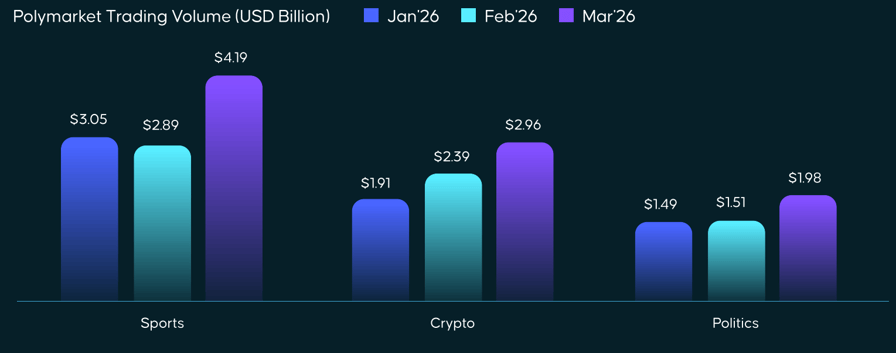
Sports, crypto and politics remain high-volume event categories on Polymarket. Source: Bitget Wallet
Magazine: Are DeFi devs liable for the illegal activity of others on their platforms?

NYSE XRP Commodity Filing Lands at SEC

Fortnite Users Debate Removing Cosmetics Amid Refunds

How Many Colors Do You Have In Your Wardrobe?

Manchester United reach agreement with Casemiro over contract clause amid transfer speculation

US brings back mandatory military draft registration

Steven Gerrard disagrees with Gary Neville over ‘shock’ Chelsea and Arsenal claim | Football

CRYPTO Waking Up As Institutions Pile Into Bitcoin & ETH

Premium Apartments | 40 Floors Luxury Towers in Puppalaguda | Near Financial District Hyderabad

#cat #anmals #funny #comedy #cutecat #animation #meow #cuteanimal #anaya #bandar #money #cartoon
-

 Tech2 days ago
Register Renaming | Hackaday
-

 Fashion5 days ago
Weekend Open Thread – Corporette.com
-
 Crypto World4 days ago
Hyperliquid $HYPE Rally Builds Momentum as AI Sector Enters Prove-It Phase
-

 Politics7 days ago
Making troops accountable for war crimes threatens US alliance, ex-SAS colonel warns
-

 Politics7 days ago
Disabled people challenge government SEND proposals over segregation concerns
-

 Business6 days ago
Patterson-UTI Energy, Inc. (PTEN) Q1 2026 Earnings Call Transcript
-
 Sports3 days ago
IPL 2026: Ruturaj Gaikwad registers slowest fifty of the season, enters all-time unwanted list | Cricket News
-

 Politics2 days ago
Drax board avoid their own AGM, accused of greenwashing & environmental racism
-

 Politics7 days ago
Zack Polanski responds to home secretary’s taser threat
-

 Politics7 days ago
Starmer handler McSweeney to be dragged from shadows by Foreign Affairs Committee
-

 Politics7 days ago
‘Iran is still a nuclear threat’
-

 NewsBeat3 days ago
LK Bennett closes all stores after entering administration
-
 Sports7 days ago
Tim Bradley names the current best in the world: “Better than Inoue and Usyk”
-

 Crypto World5 days ago
Michael Saylor says BTC winter is over. Market analyst disagrees, says bitcoin was in a pullback
-

 Fashion18 hours ago
Kylie Jenner’s KHY Enters a New Era with ‘Born in LA’
-
 Entertainment4 days ago
Mariah Carey Slams Deposition Claims In Brother’s Lawsuit
-
Entertainment6 days ago
Michael B. Jordan and Austin Butler's “Miami Vice” movie will bring the action back to the '80s
-
Business7 days ago
Altimmune prices $225 million public offering at $3 per share
-
Entertainment6 days ago
Russell Brand Had Sex With 16 Year Old When He Was 30
-
Crypto World6 days ago
Is Algorand One of the Few Quantum-Resistant Blockchains? Here’s What the Data Shows
You must be logged in to post a comment Login